


Hrastovlje, Church of the Holy Trinity
Century/year: 1490.
Historical-cultural period: Gothic style
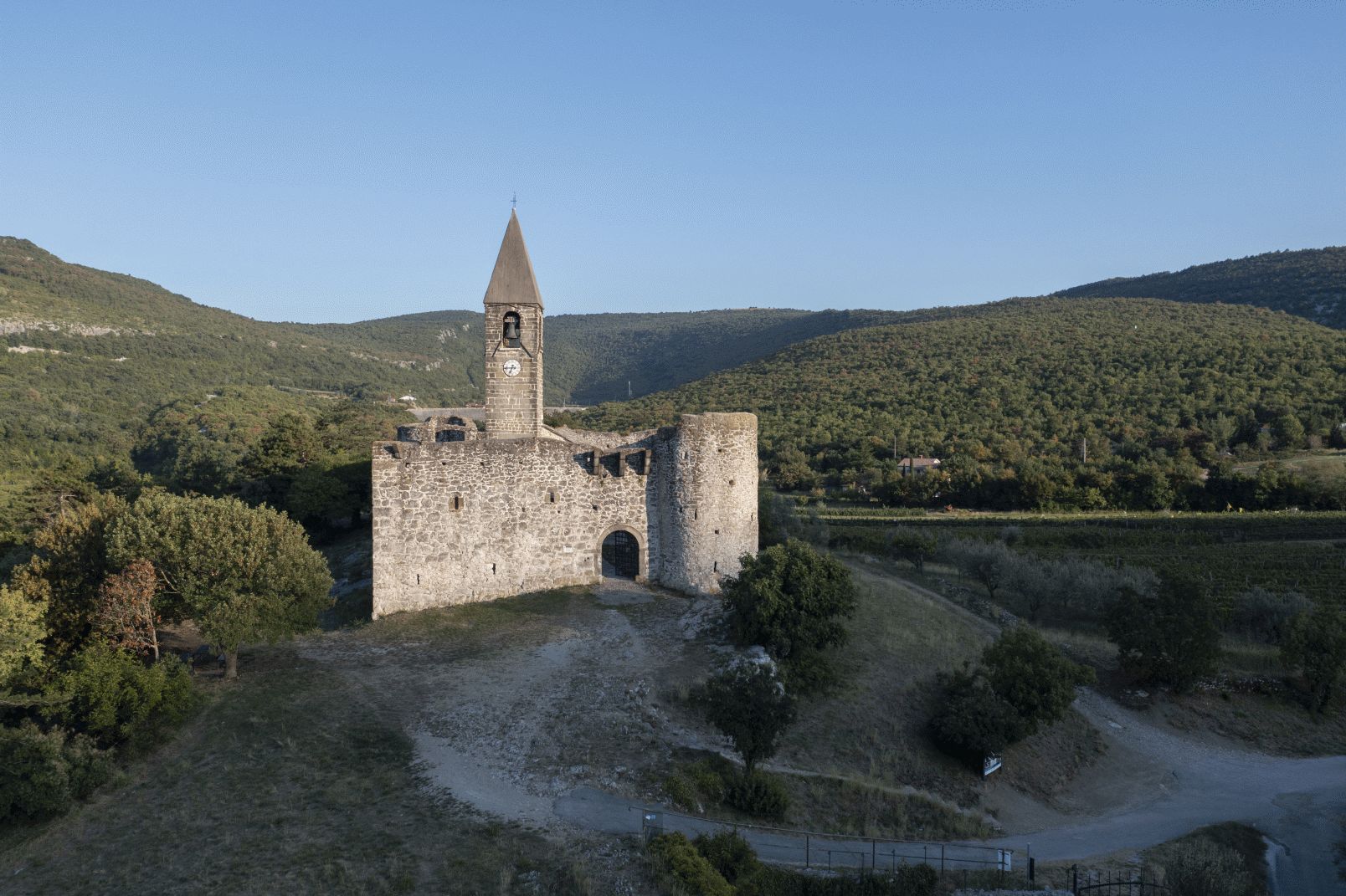
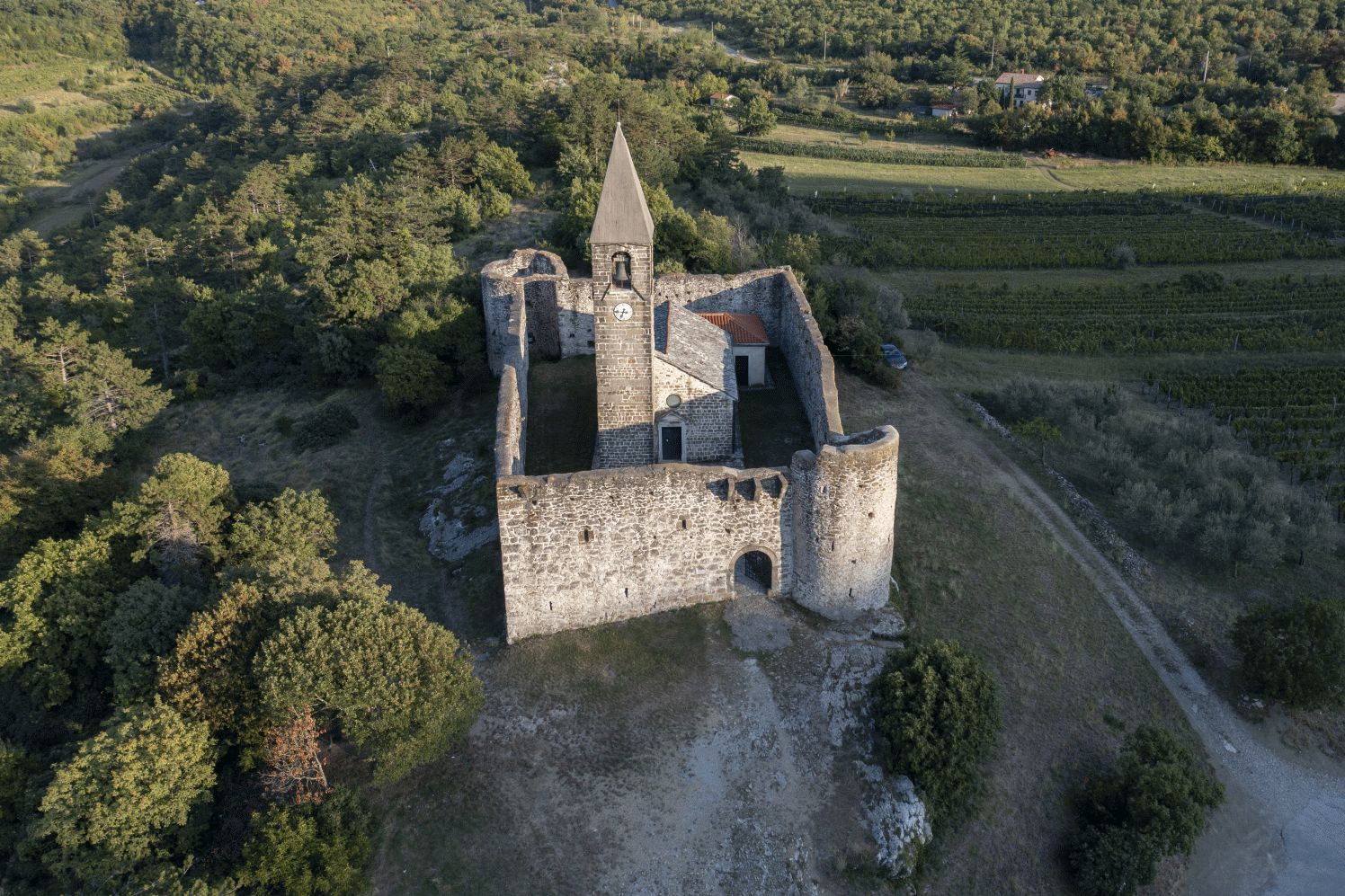
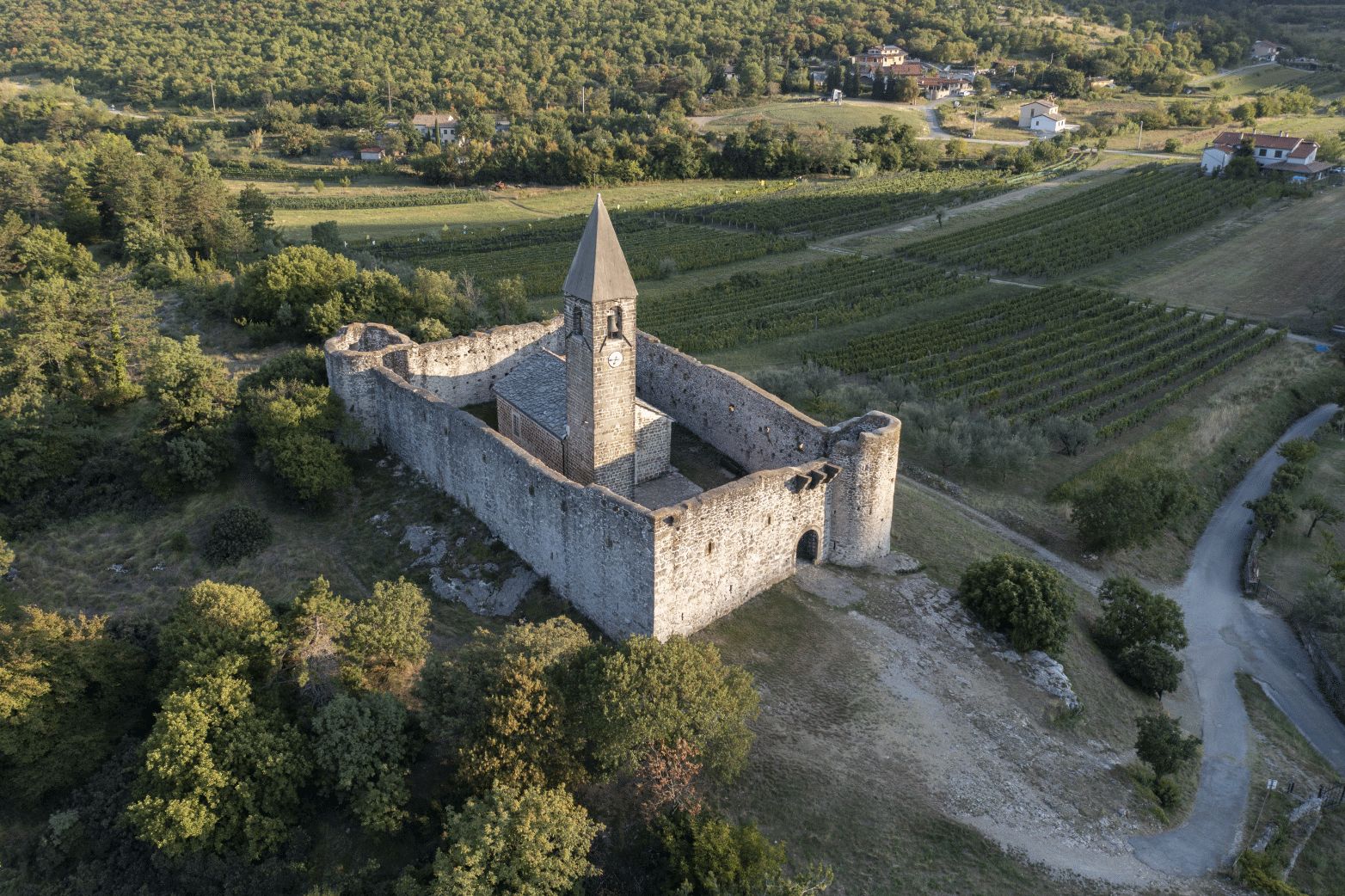
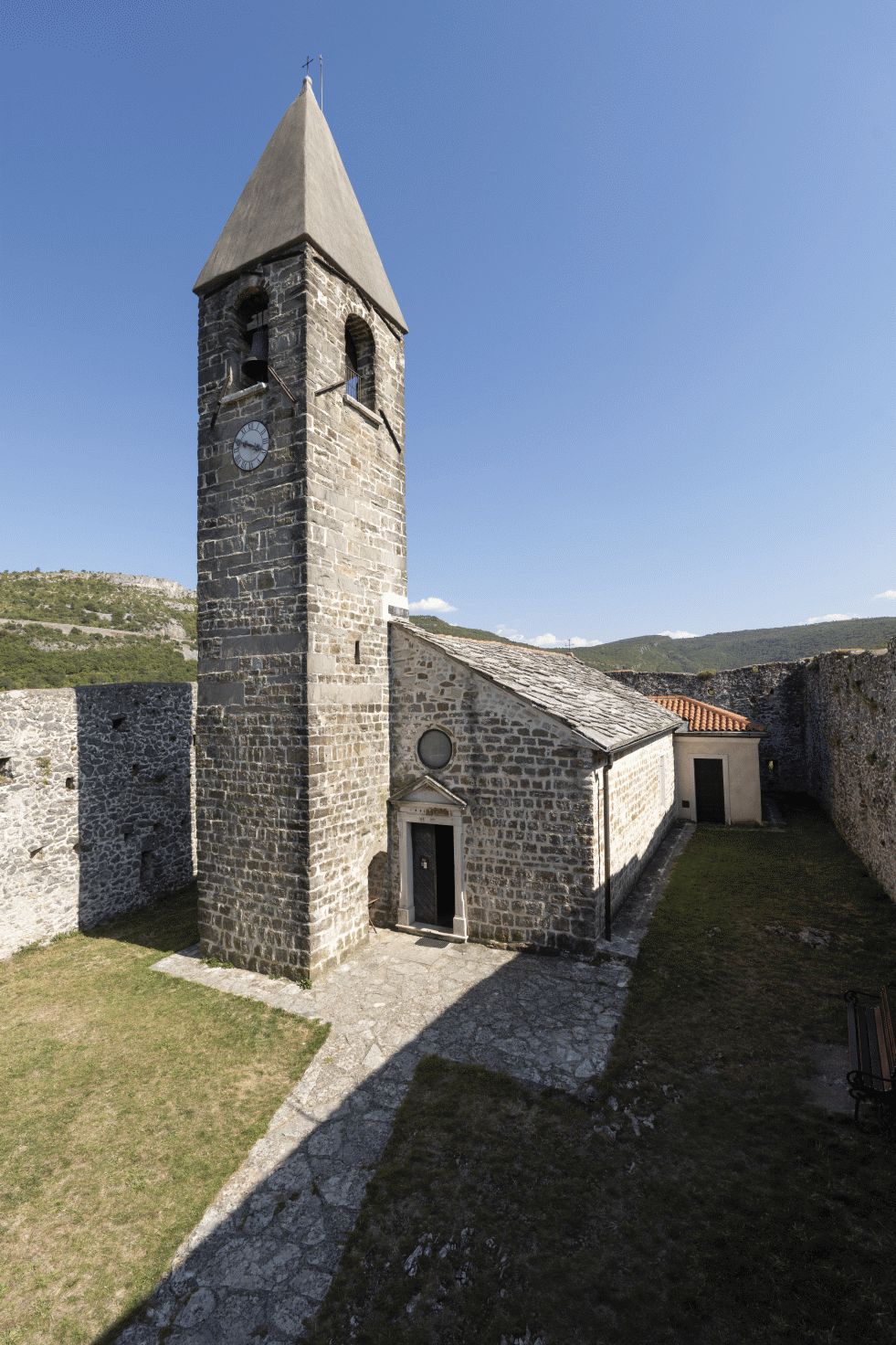
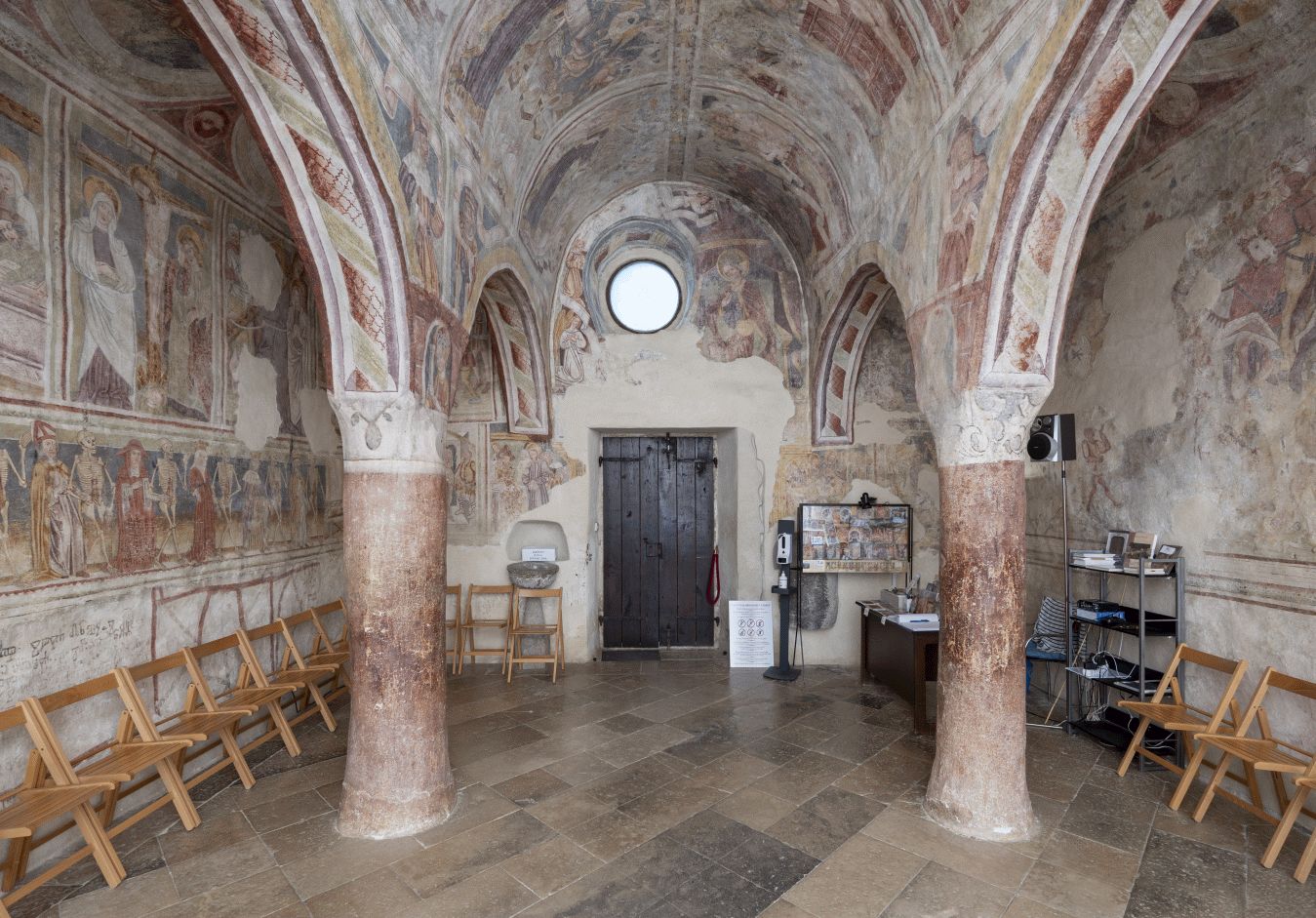
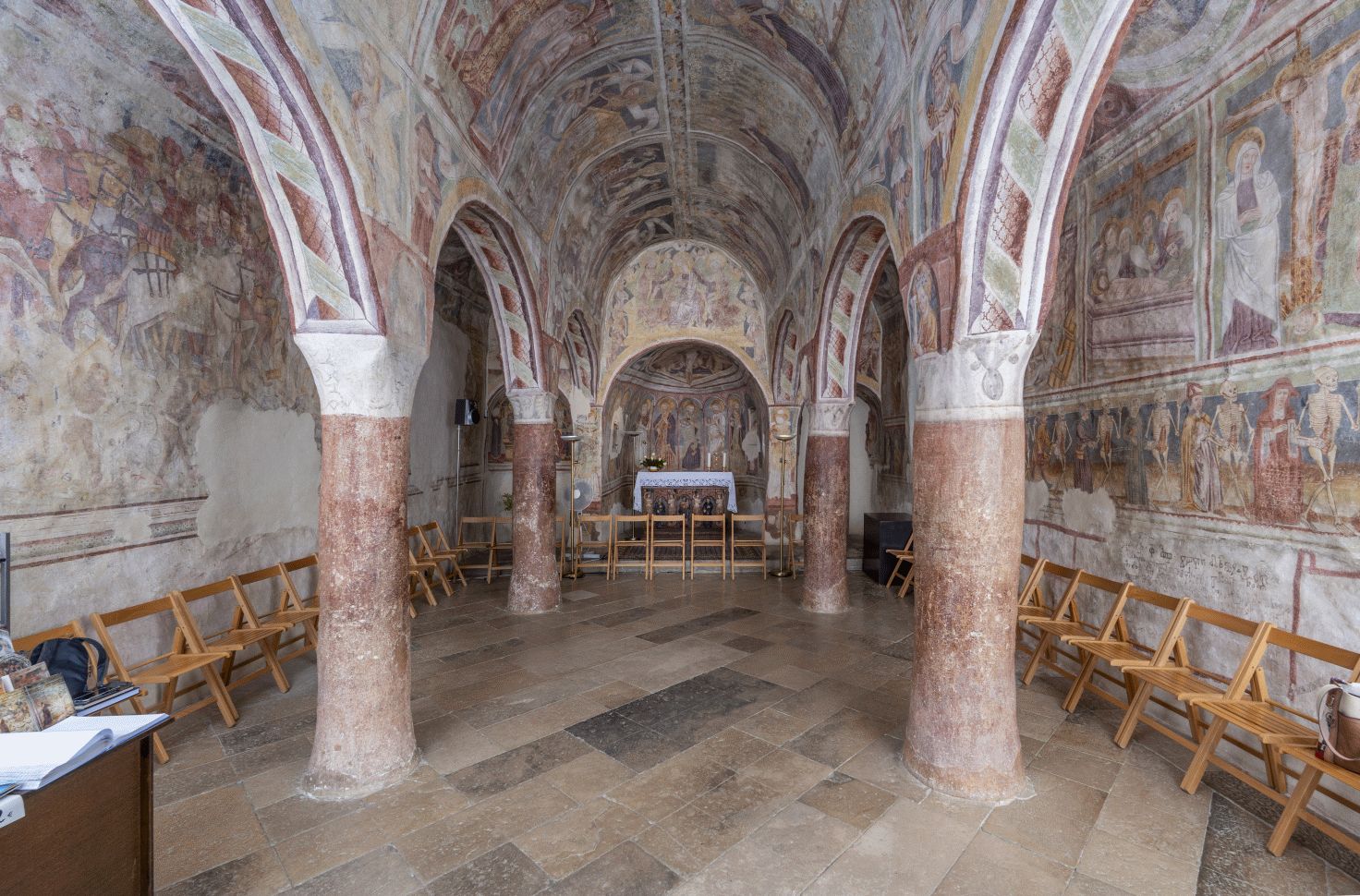
The Church of the Holy Trinity above the settlement of Hrastovlje is a three-nave building with semi-circular lateral apses integrated into the wall mass and a central polygonal apse outward. The church was most likely built in the second half of the 15th century, shortly before it was painted. The interior is articulated by columns, and the naves are covered by barrel vaults. In the 16th century, defensive walls were erected around the church for protection against Ottoman raids, and a sacristy was subsequently built on the site of the southern apse. The side entrance to the church was modified in 1776, while a bell tower was added to the northern side of the facade.
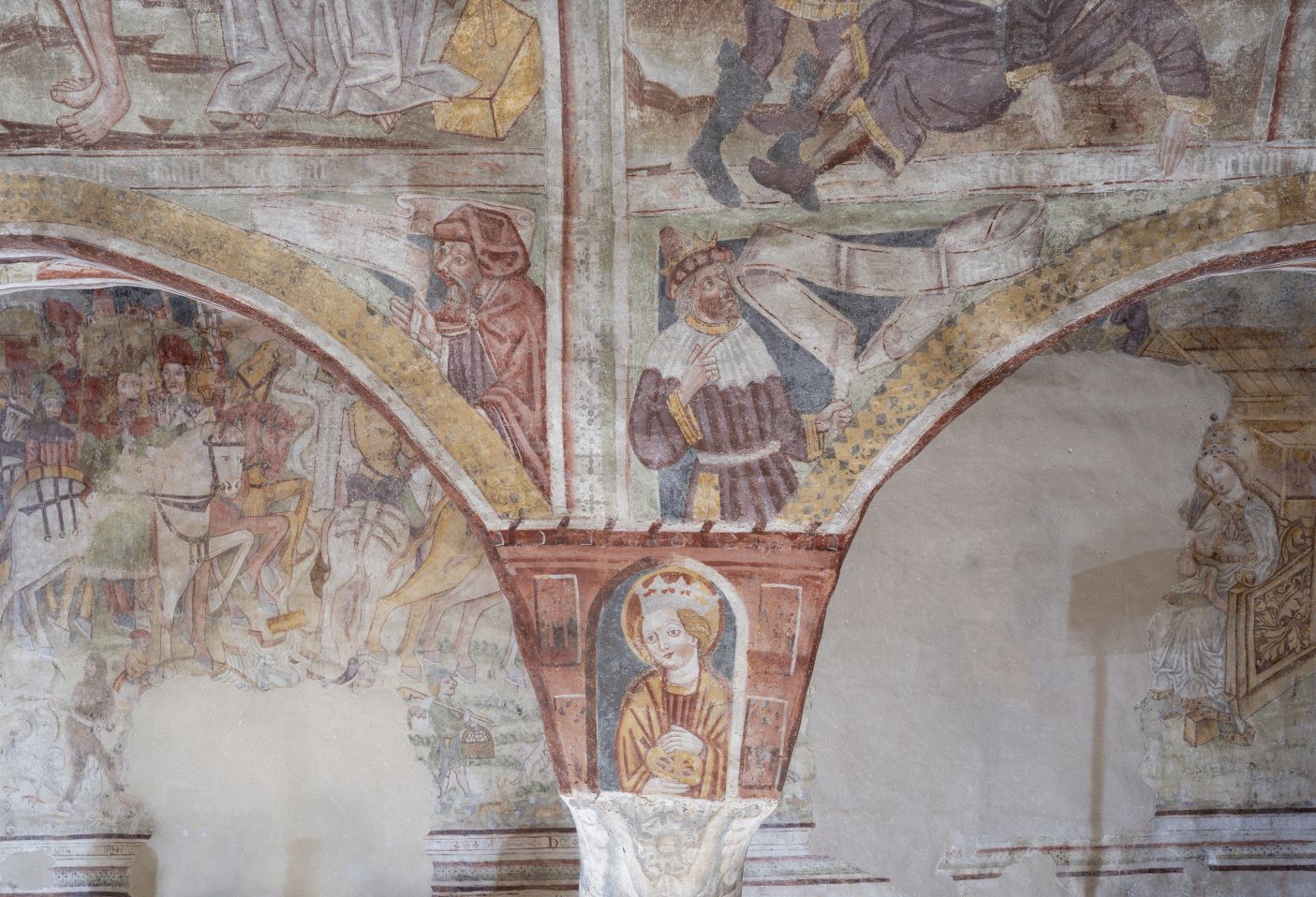
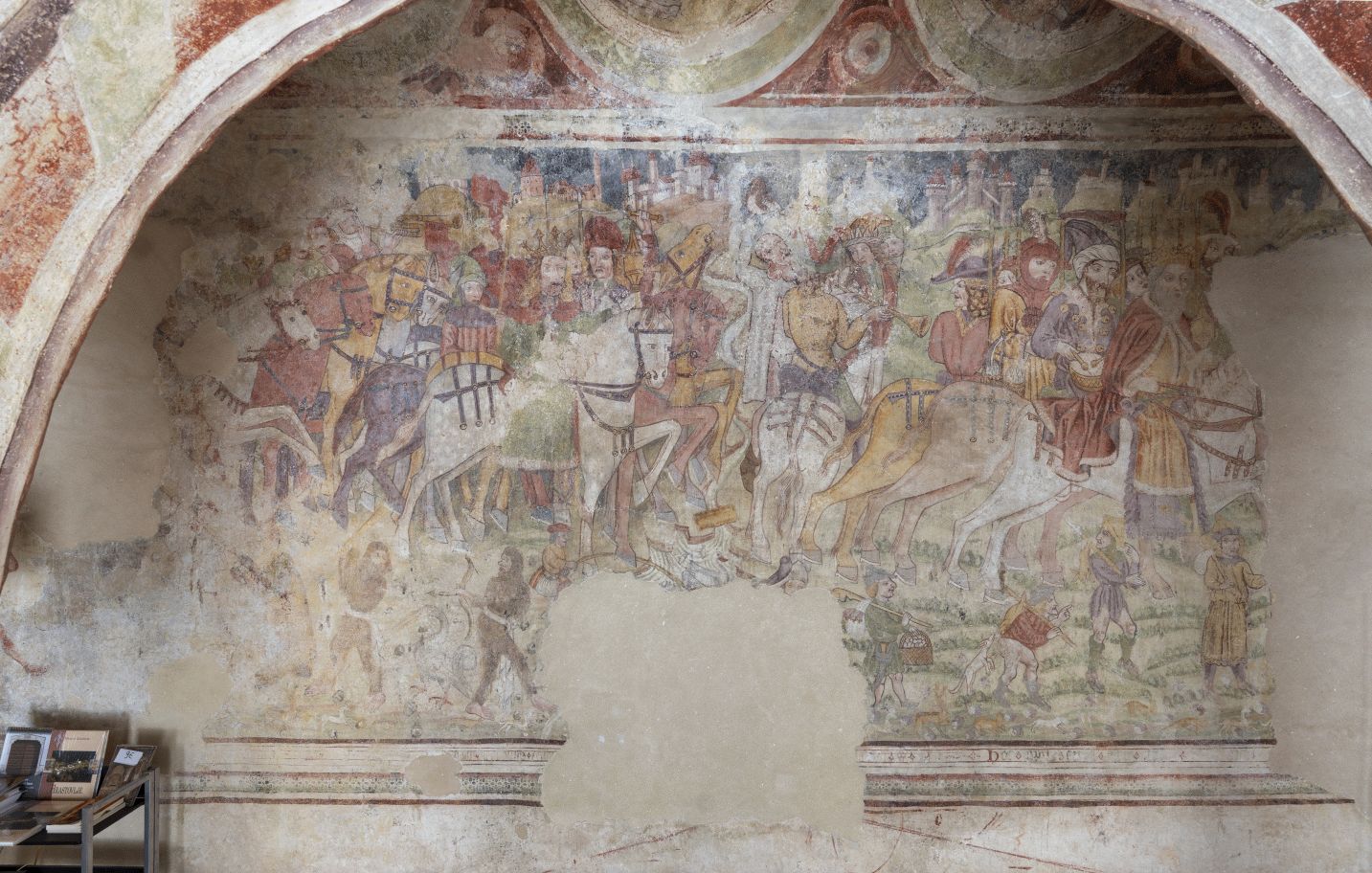
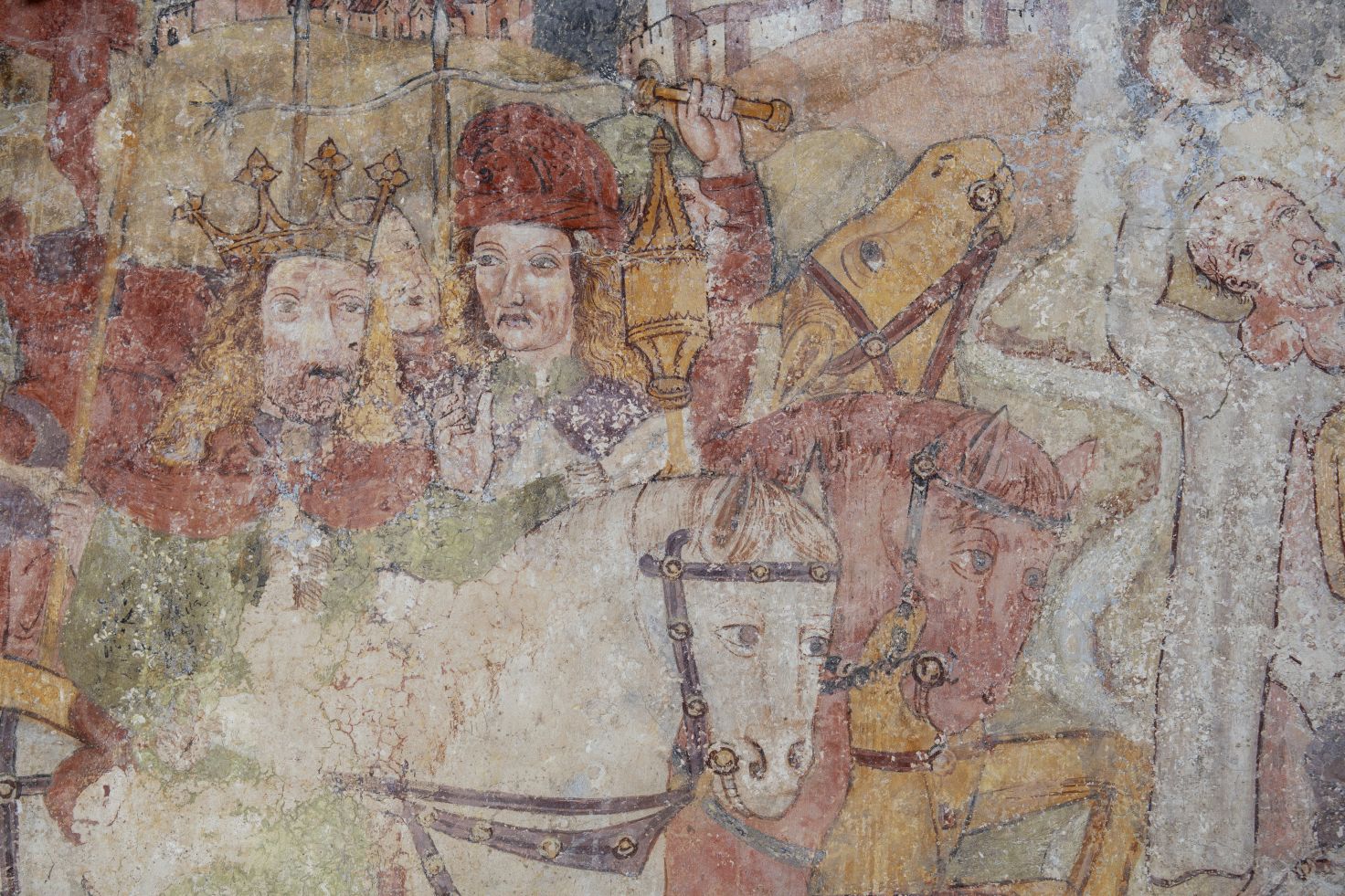
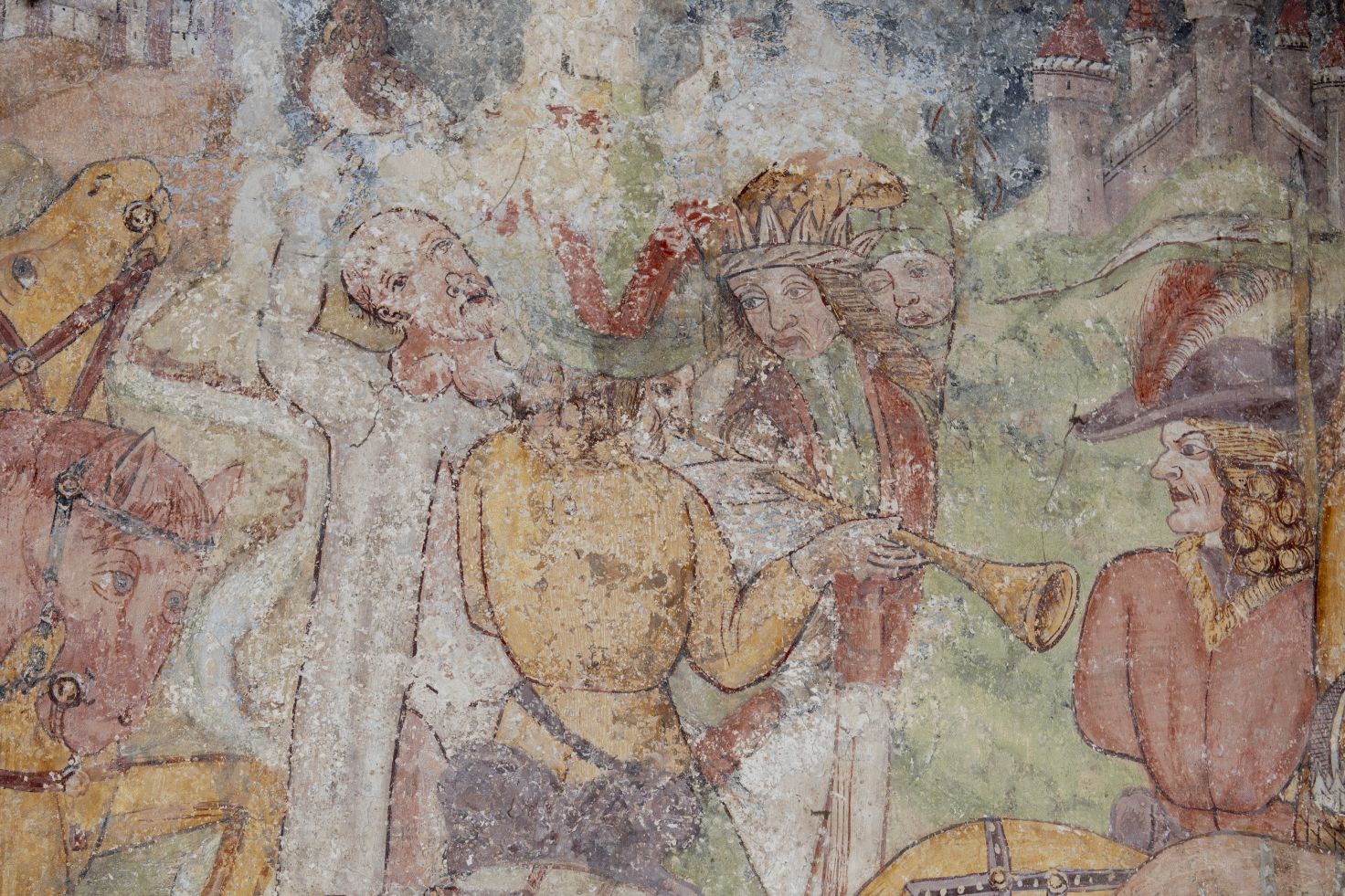
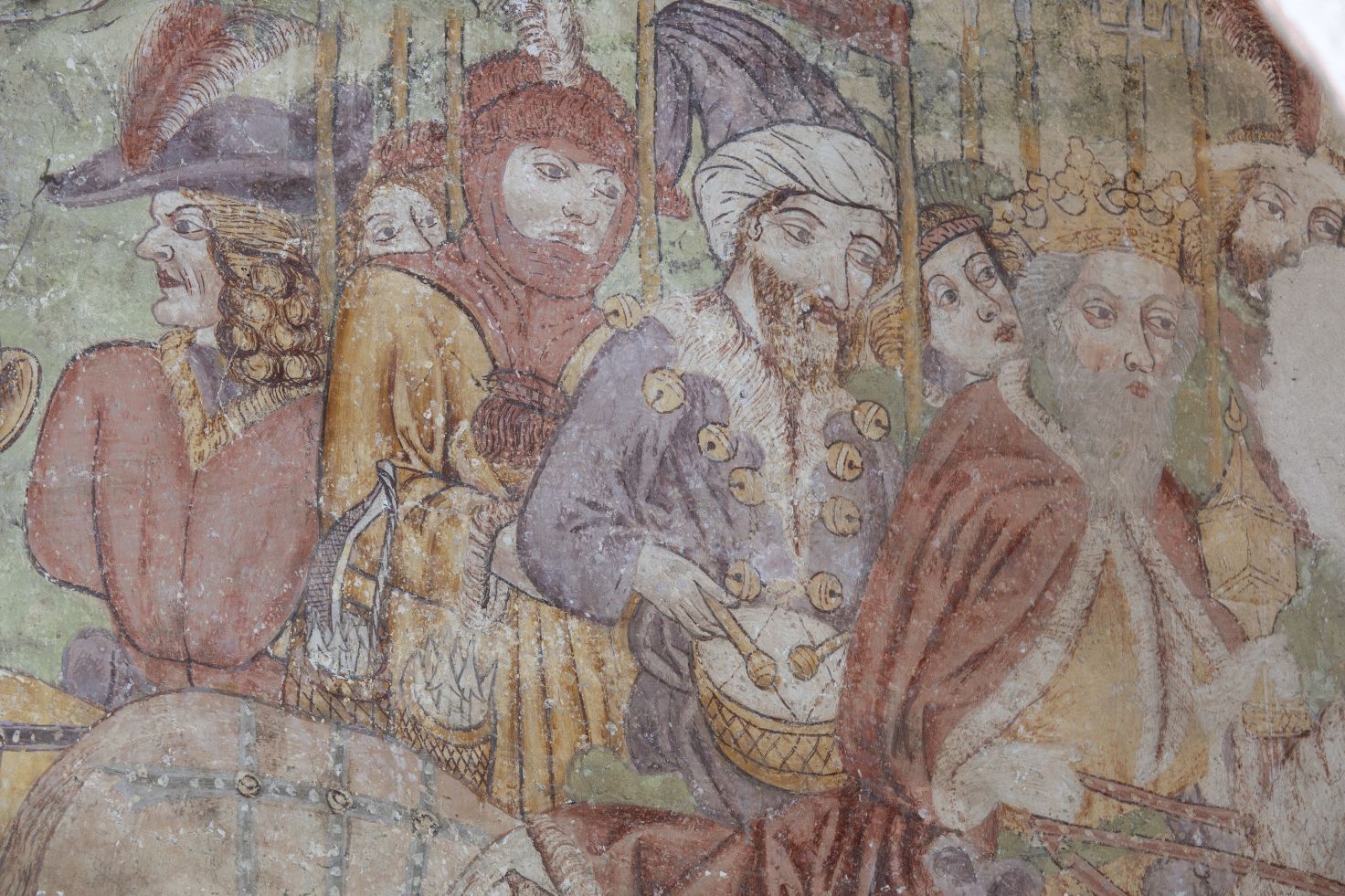
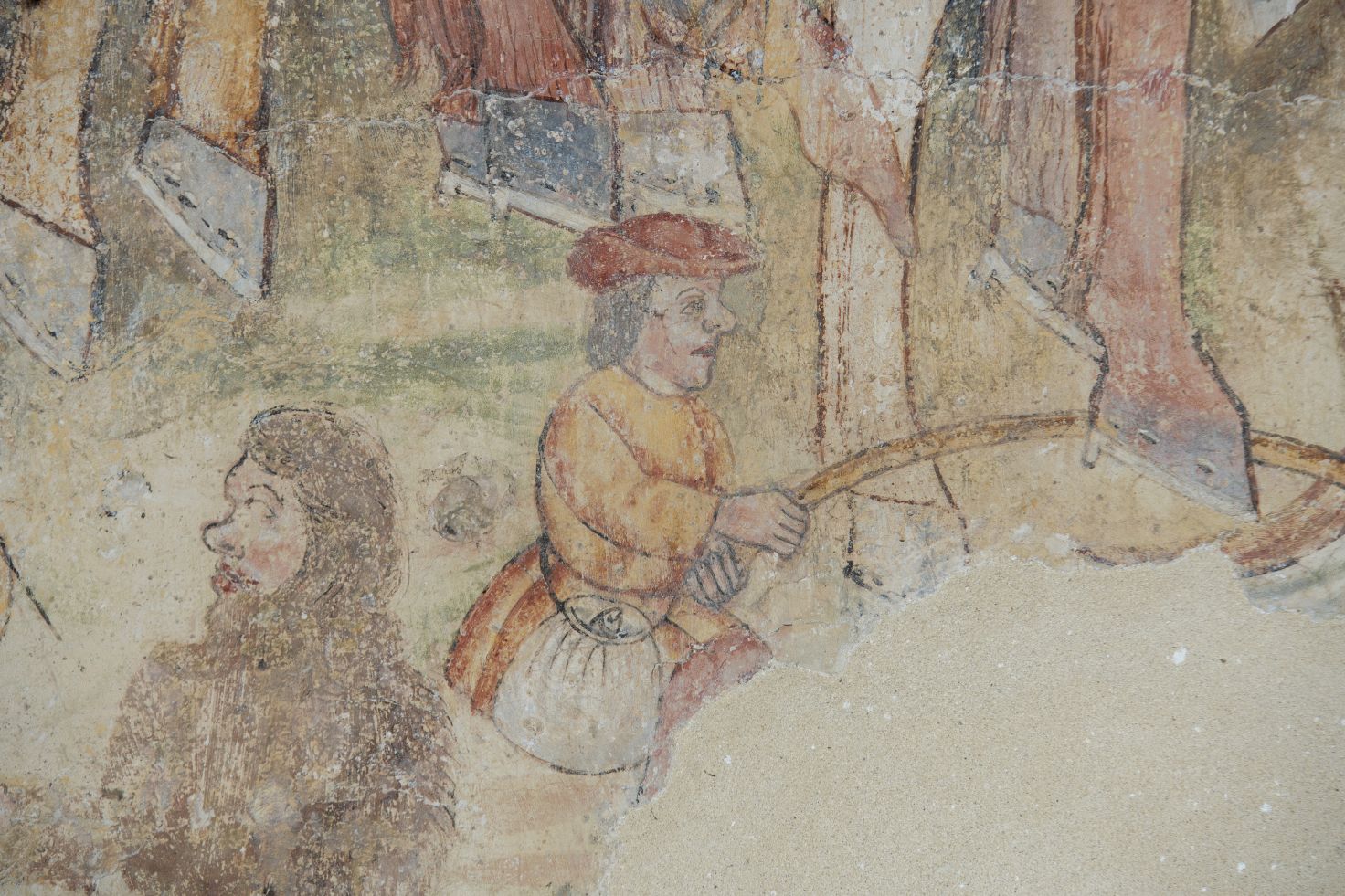
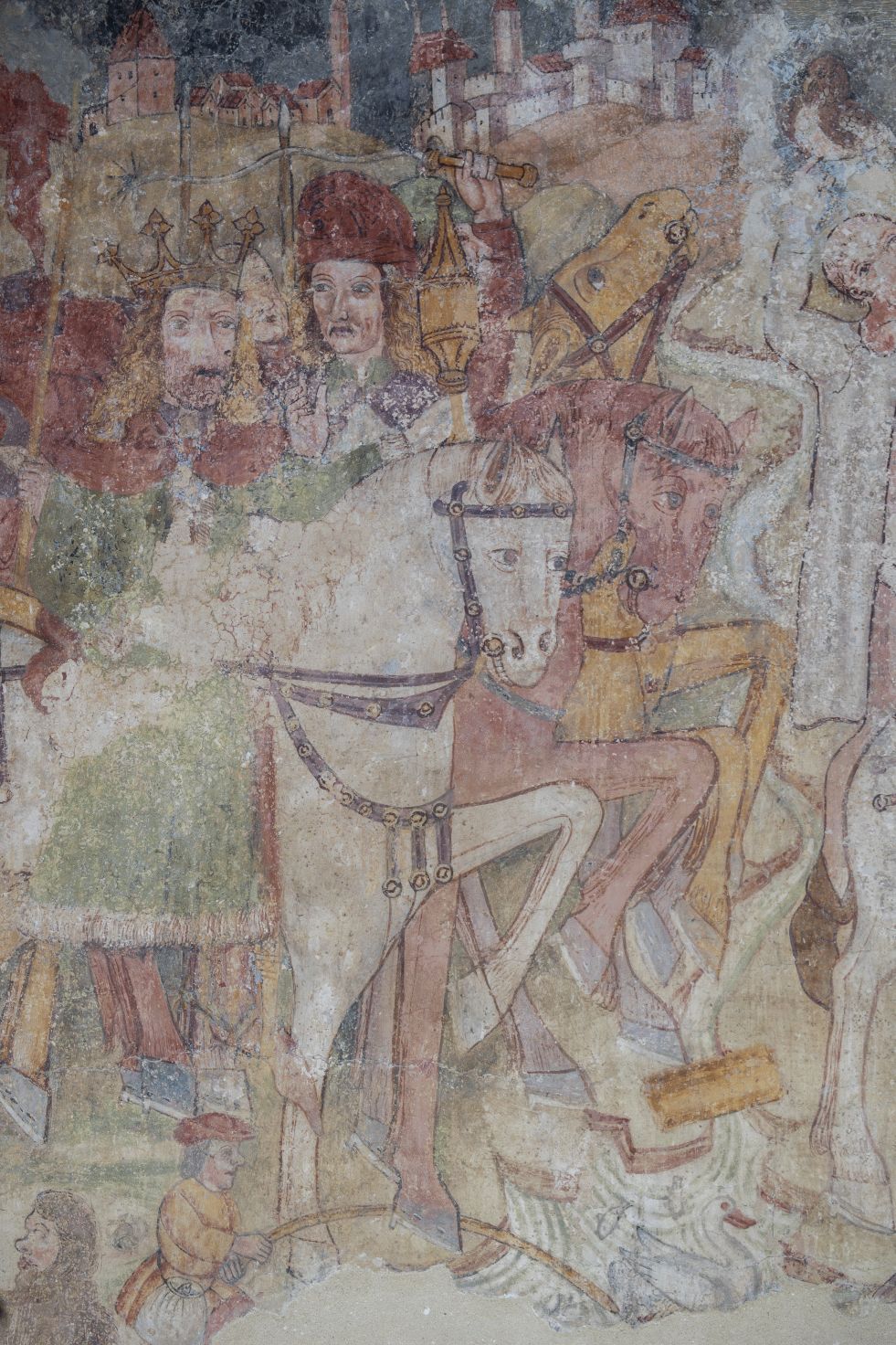
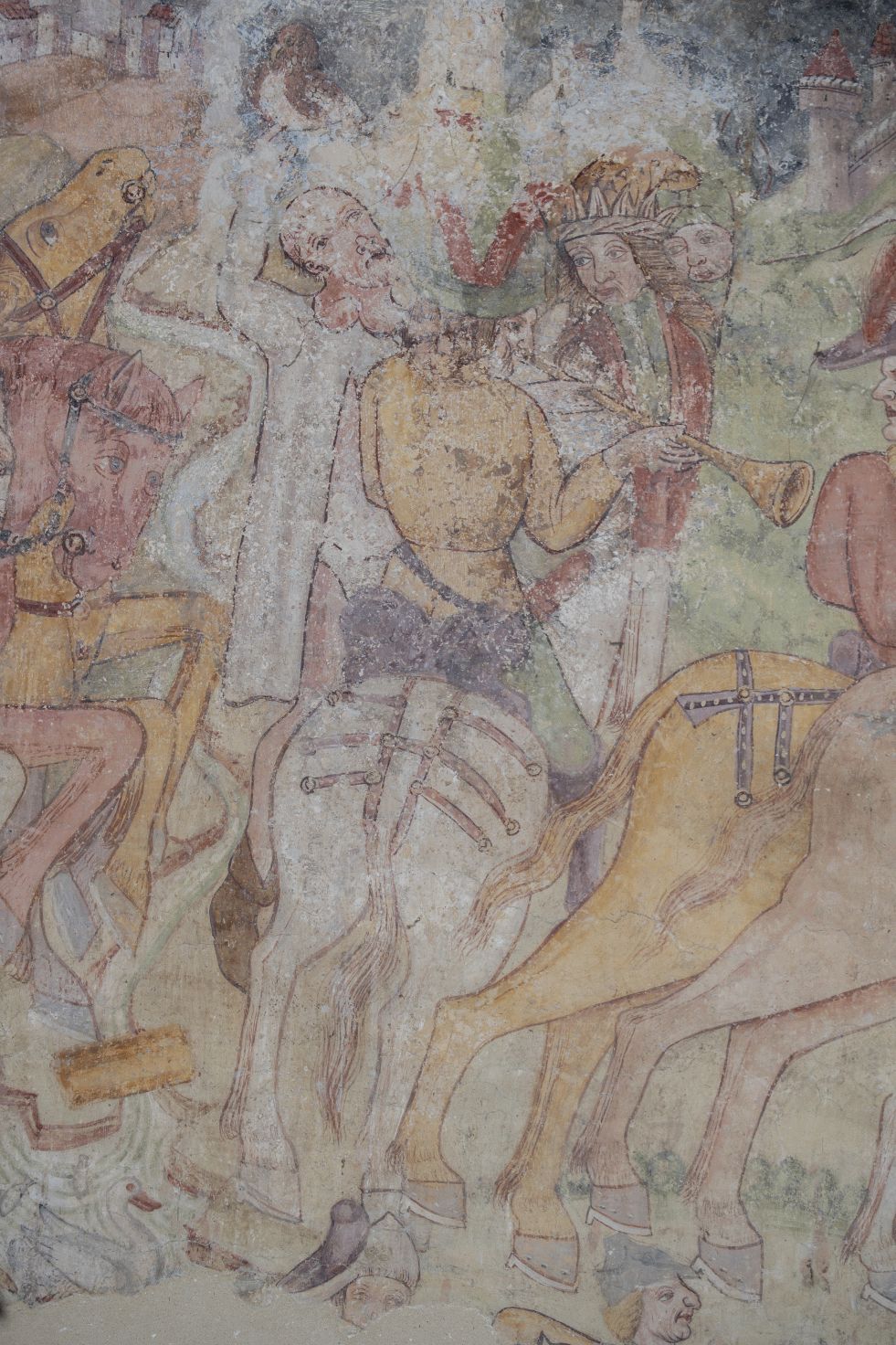
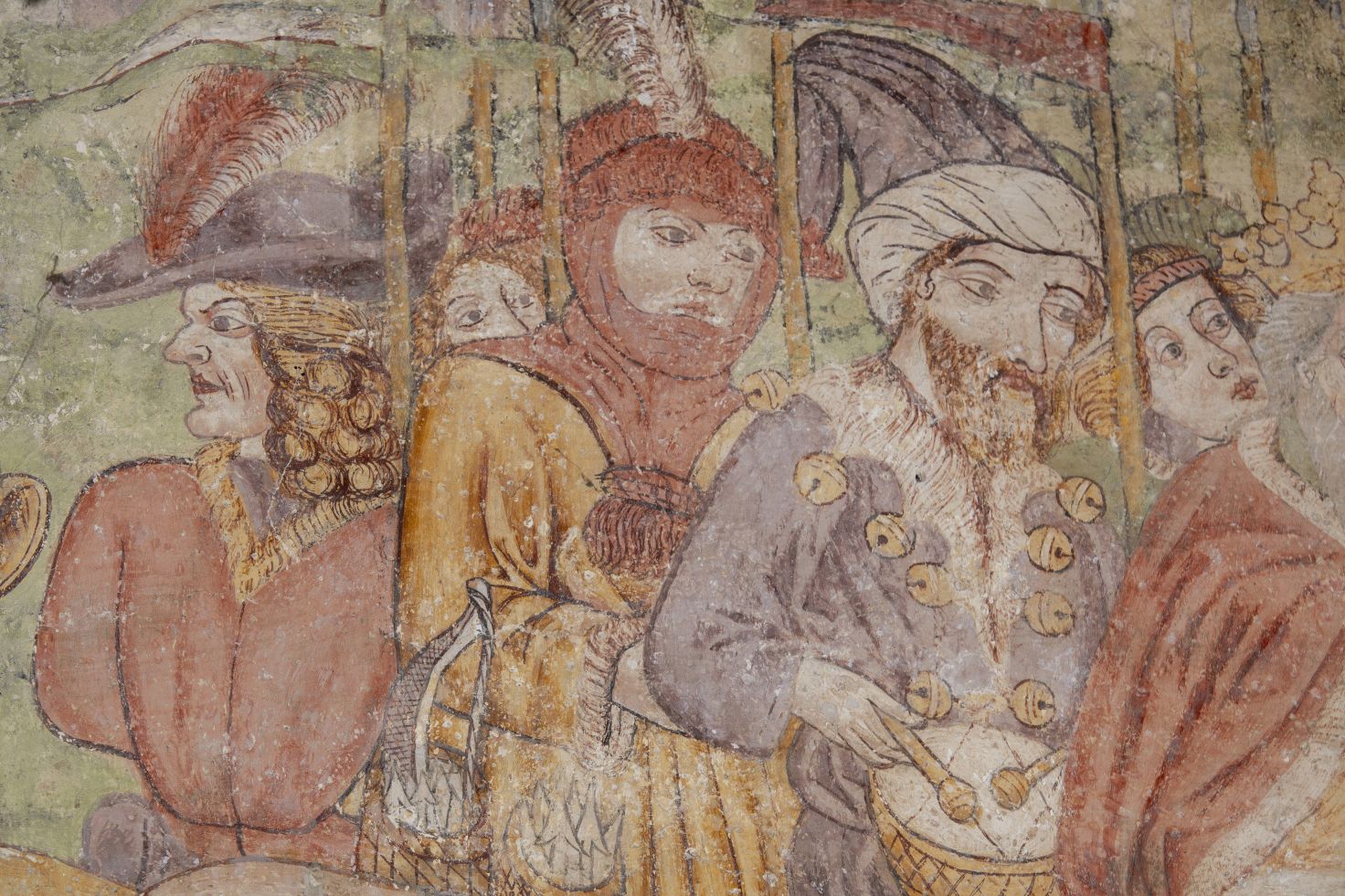
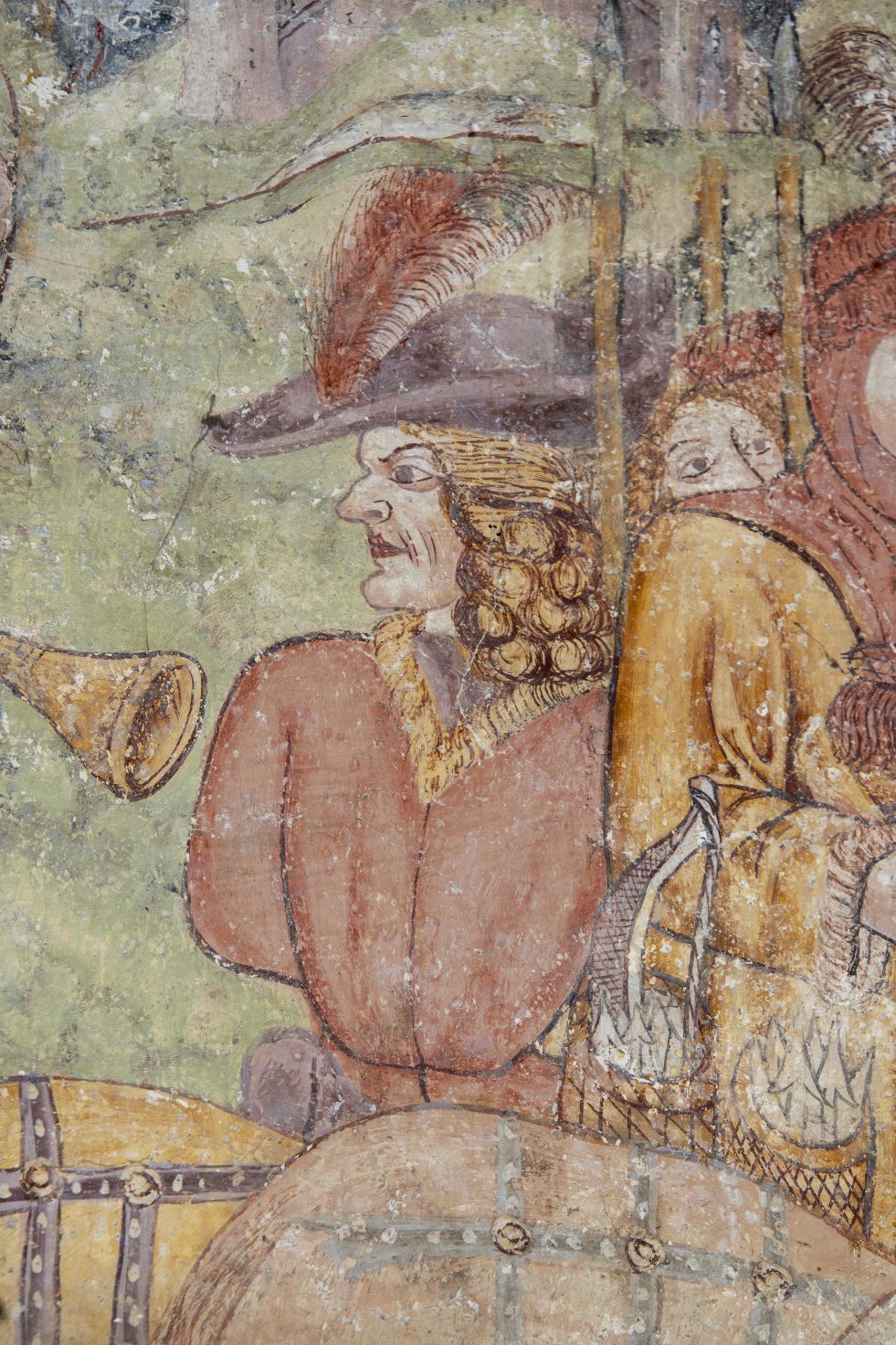
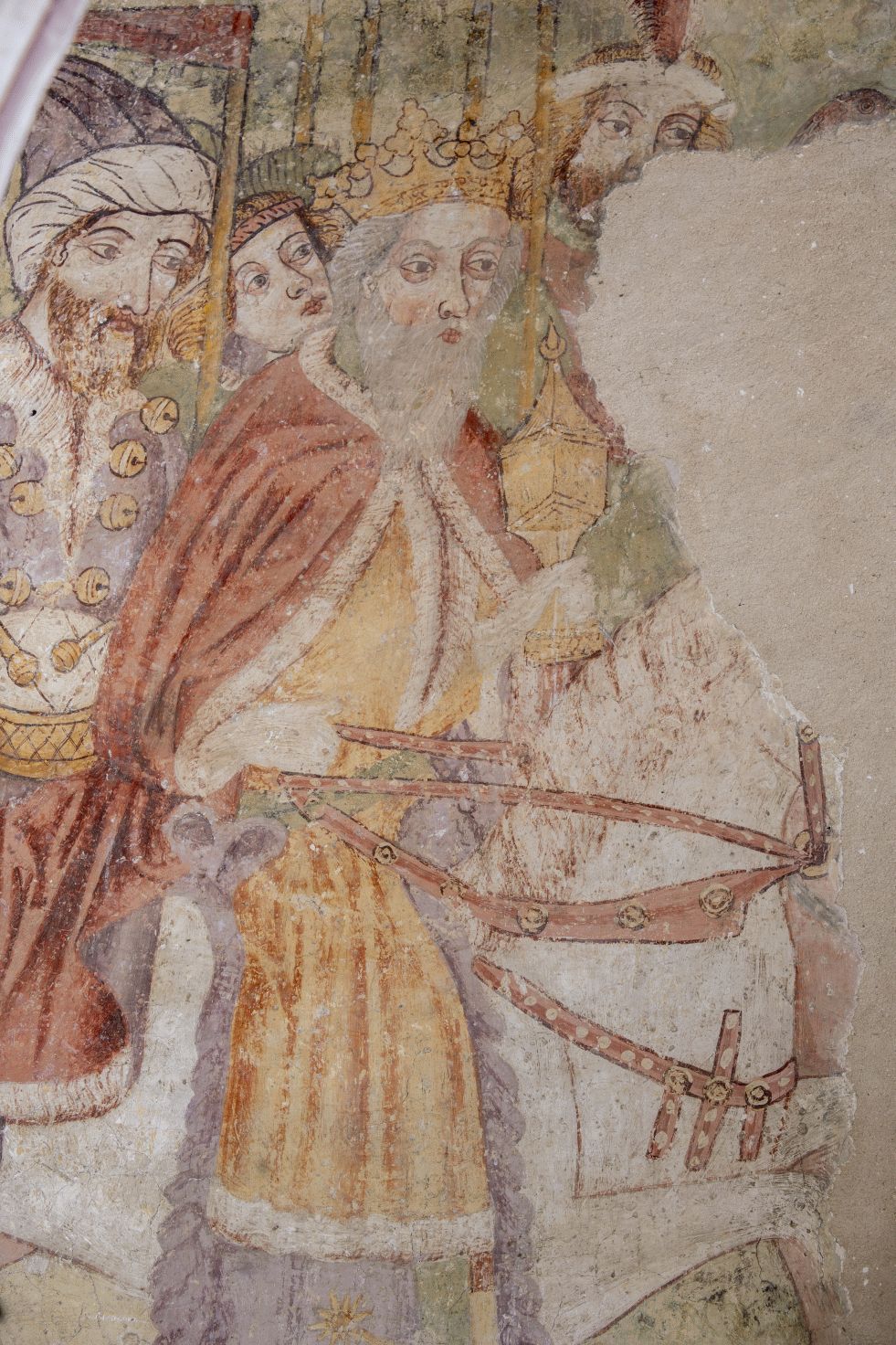
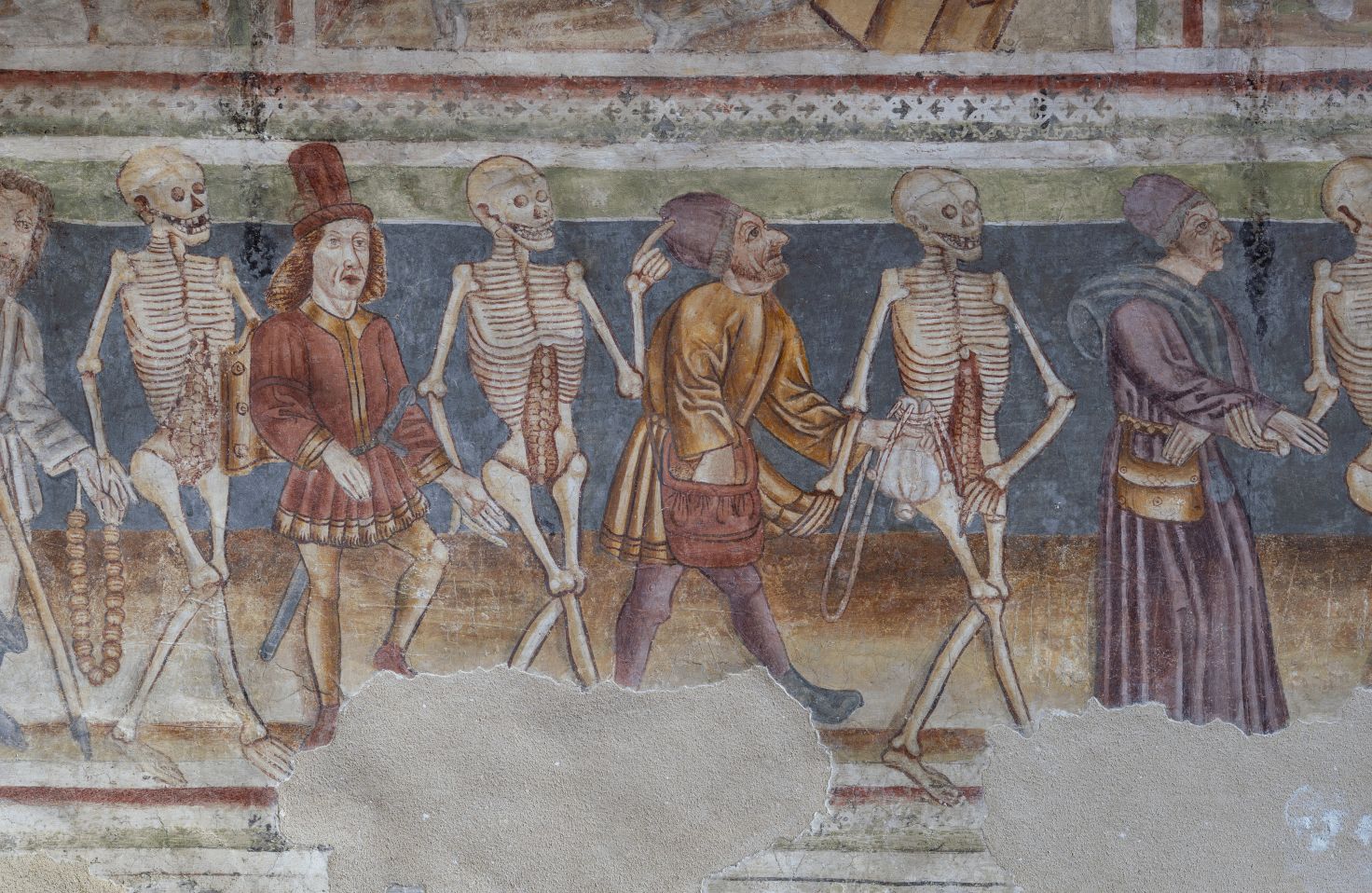
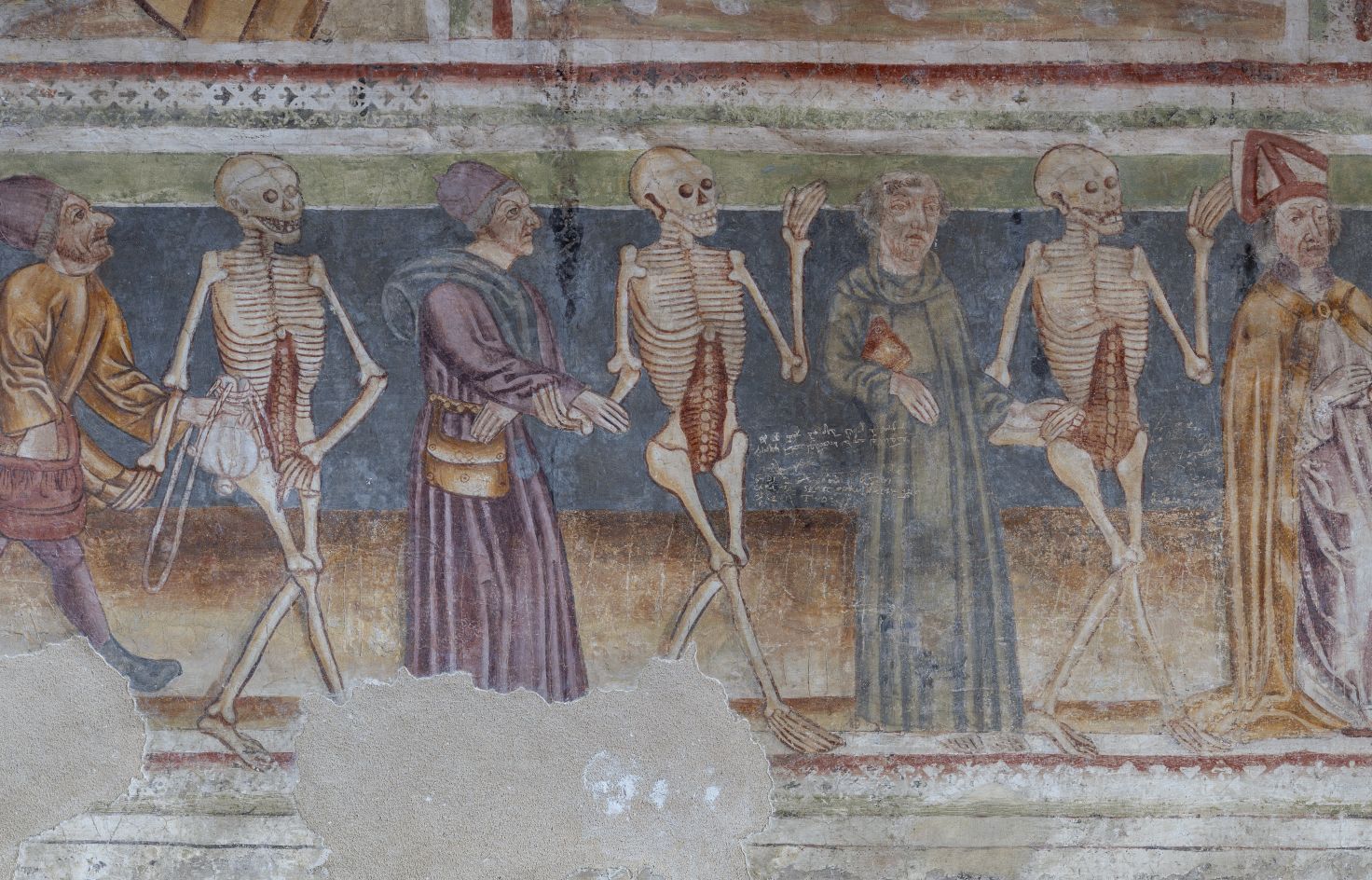
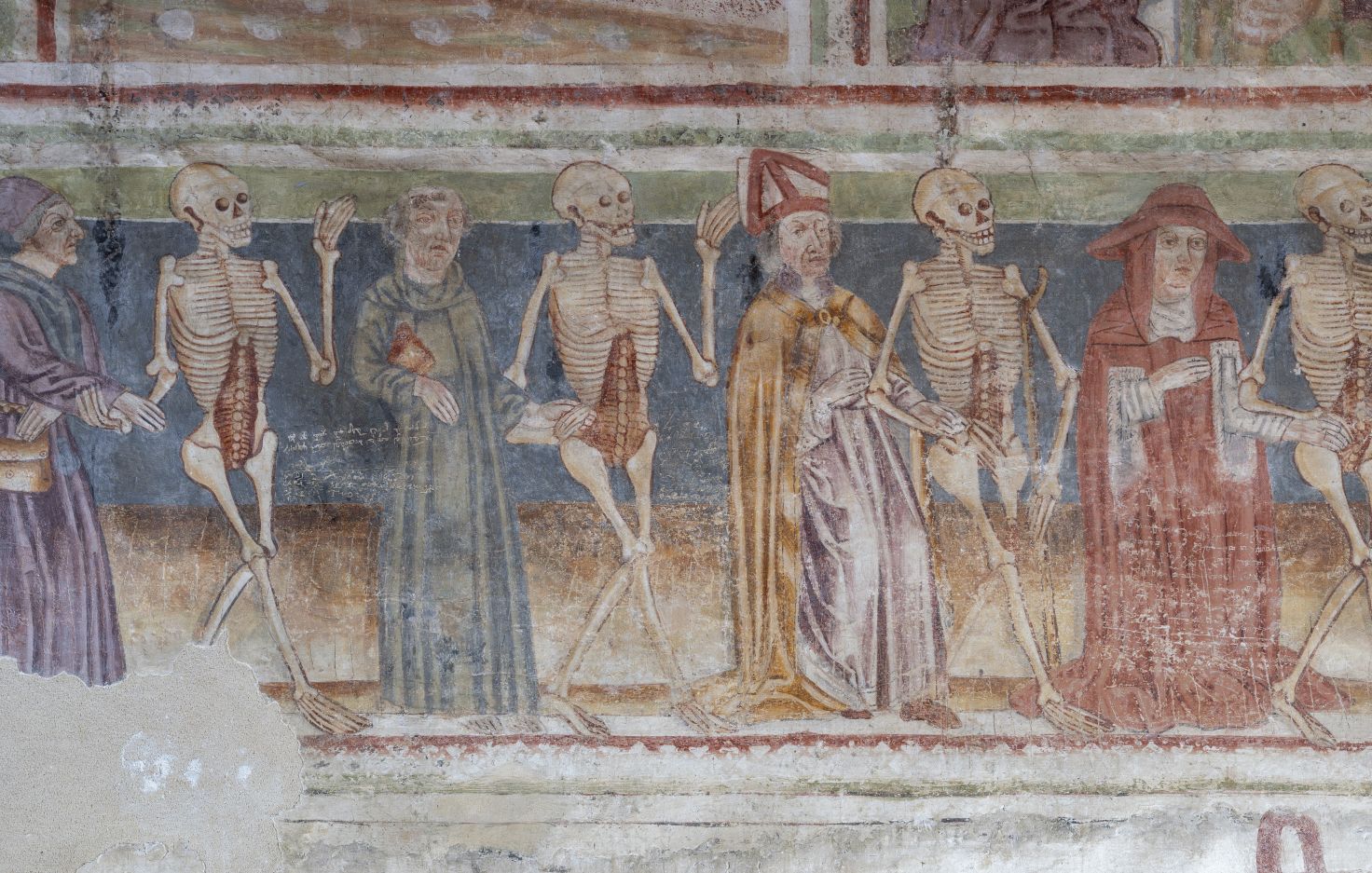
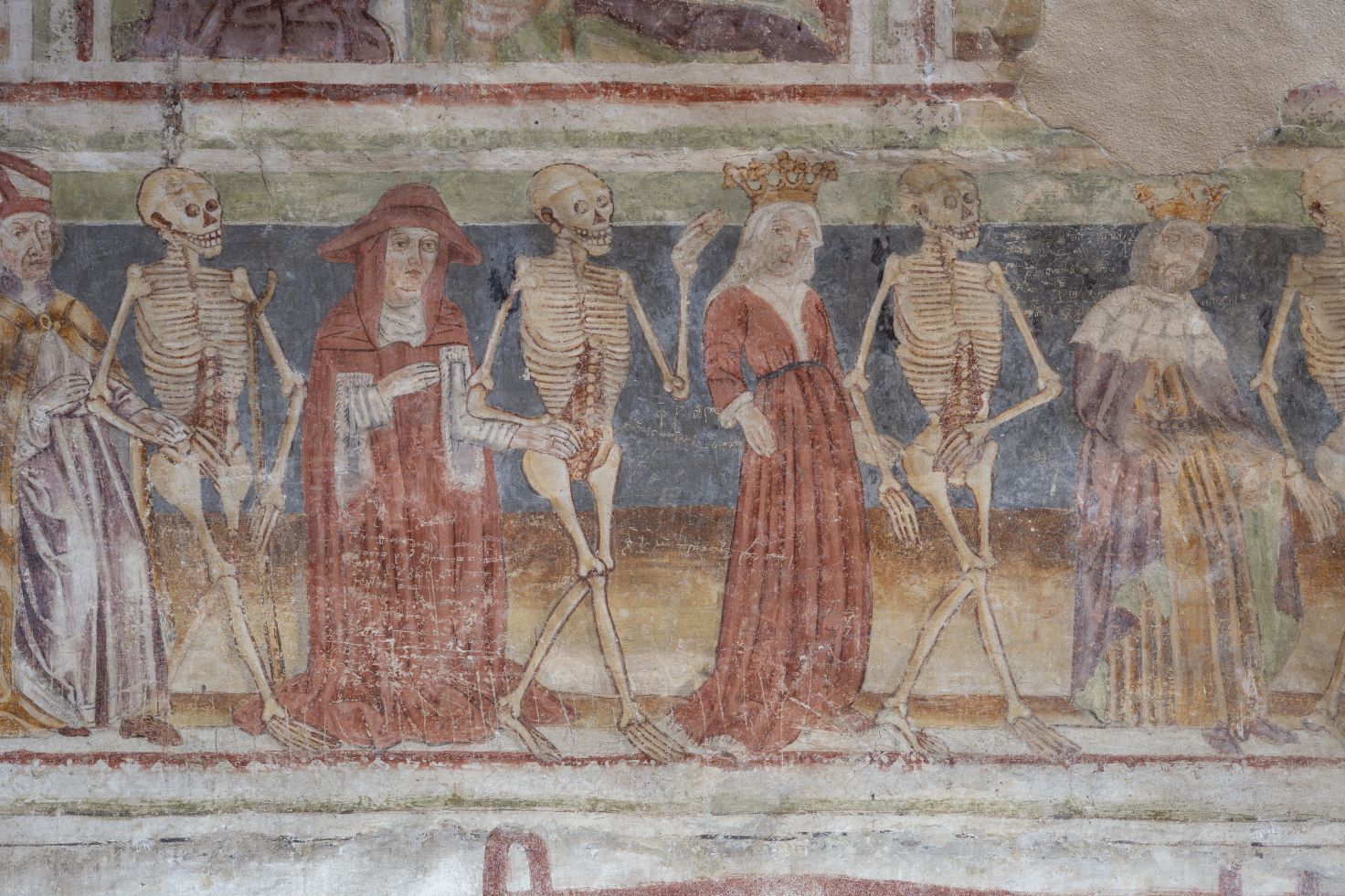
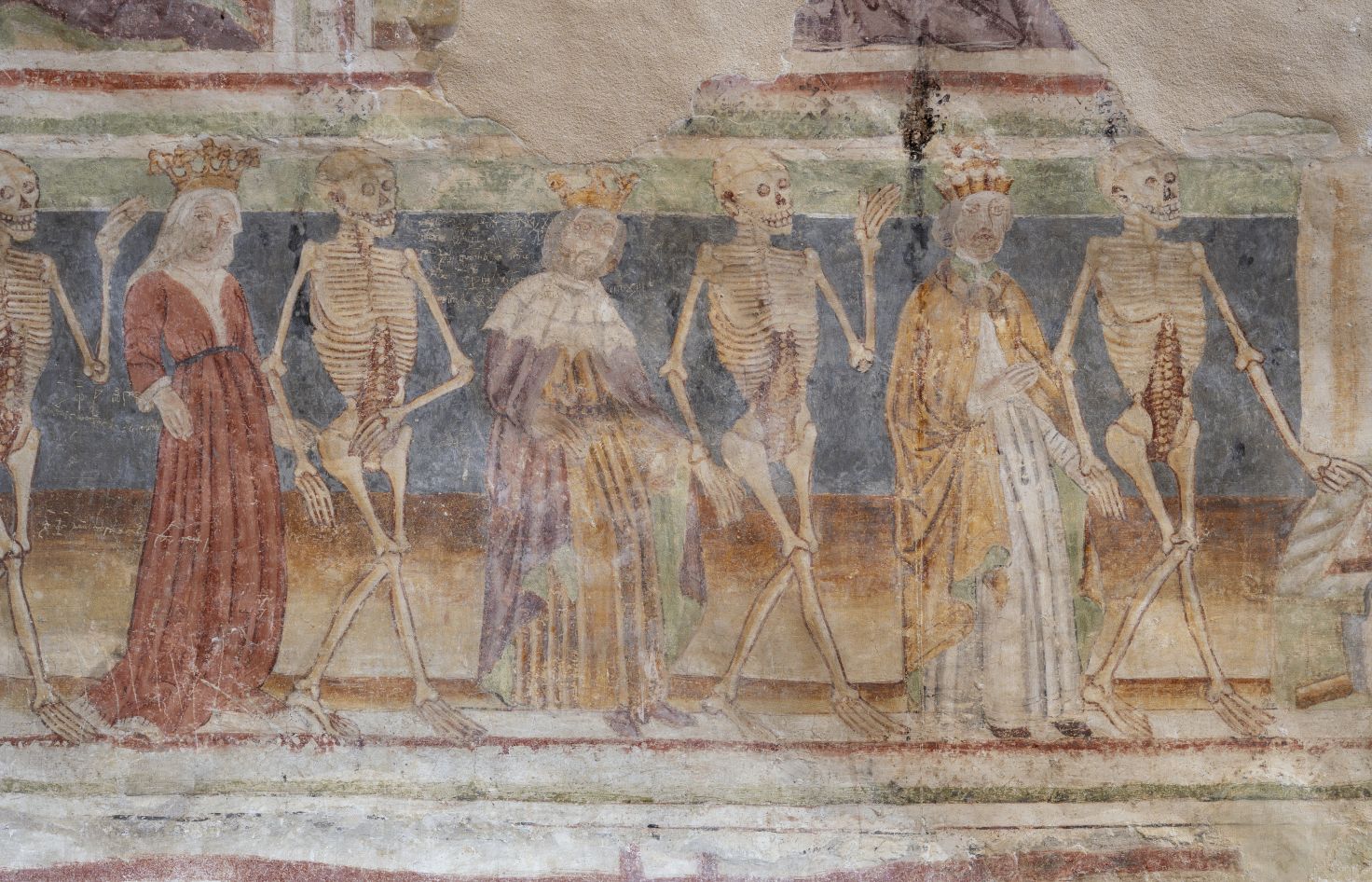
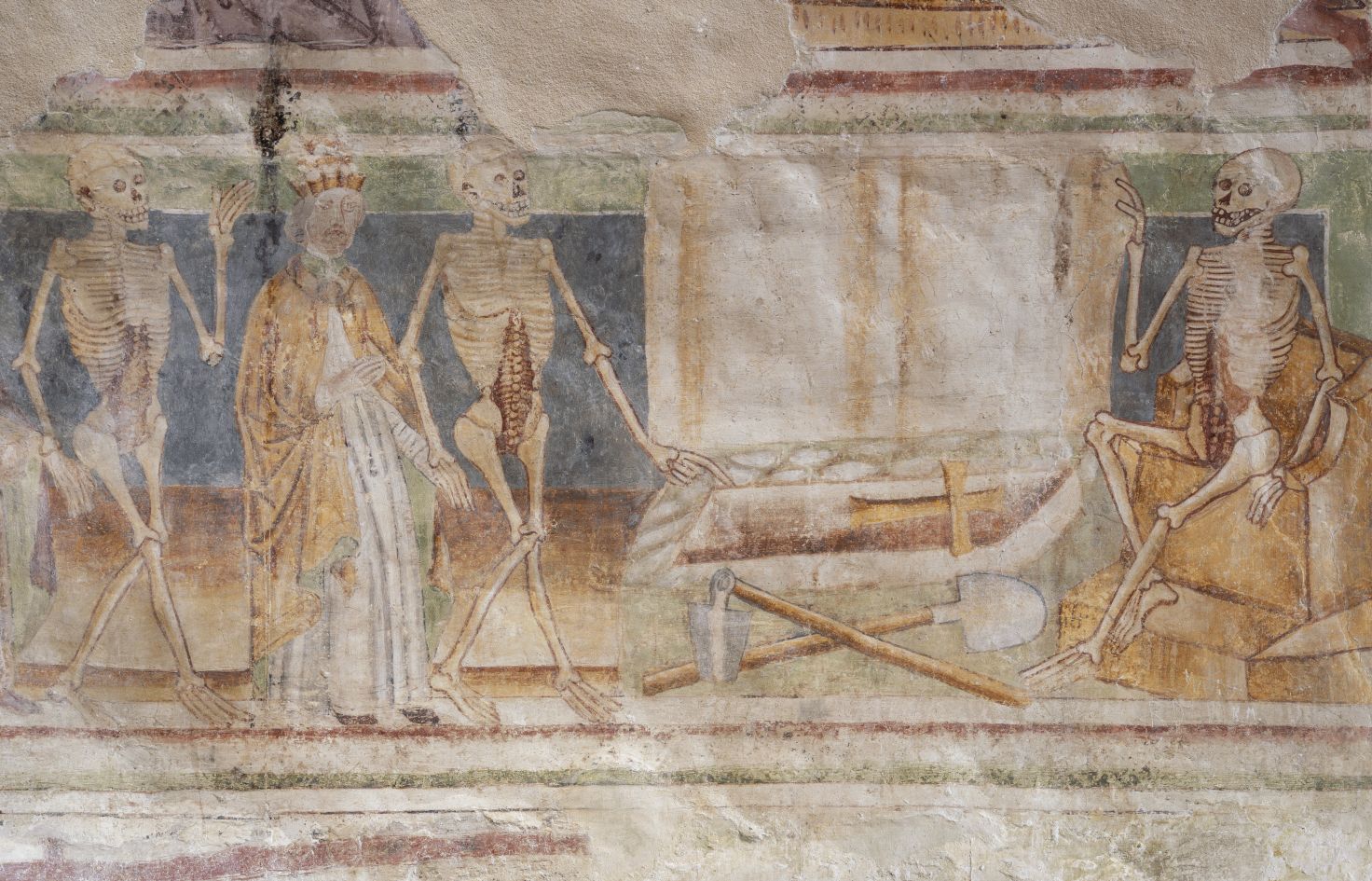
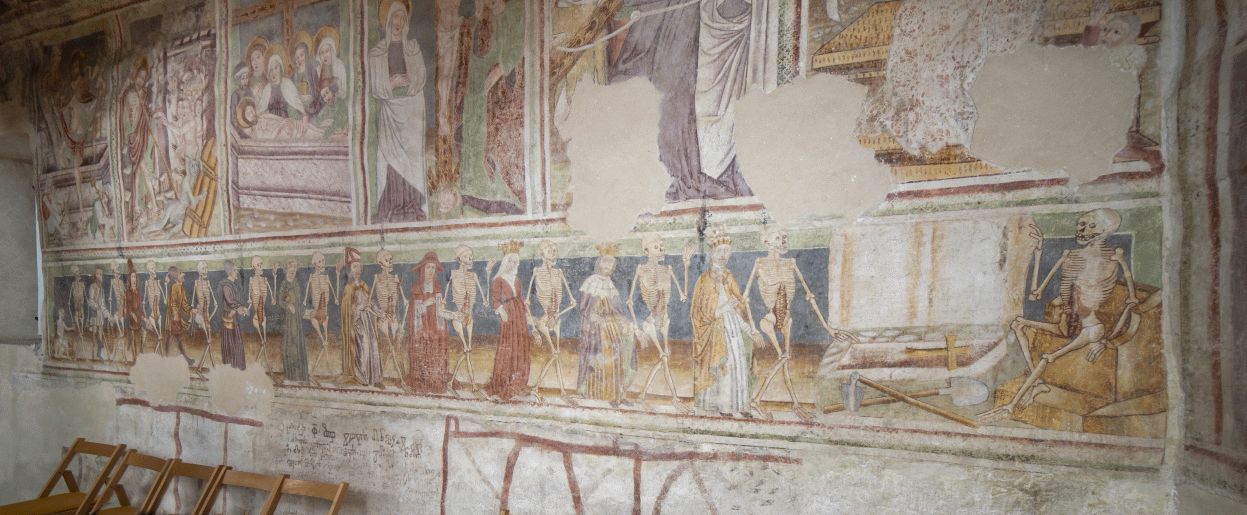
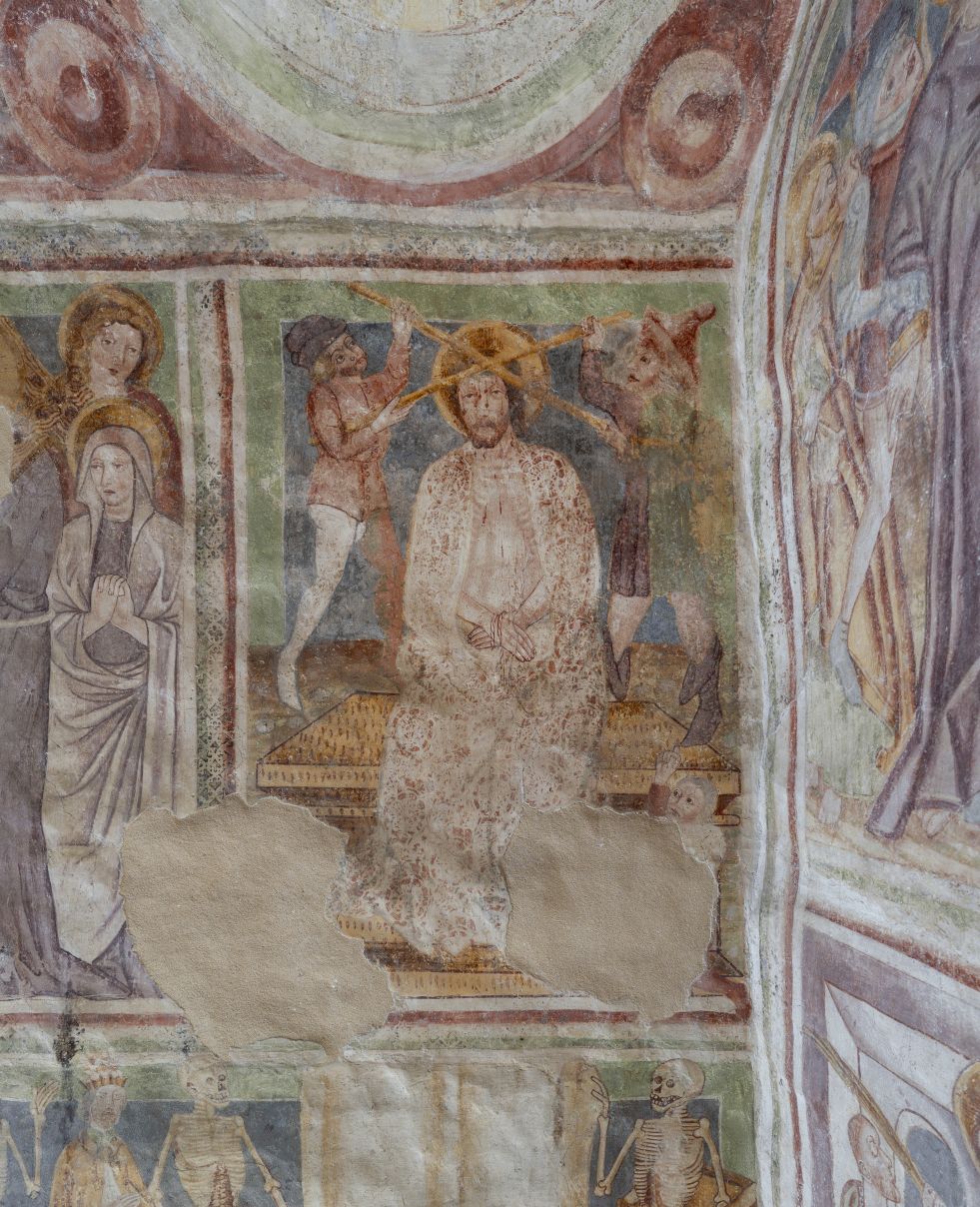
The interior of the church is entirely covered in frescoes of various themes, signed in 1490. This event is recorded in a Latin inscription located beneath the Adoration of the Magi on the northern wall, which also provides the name of the master who led the workshop that painted the church: Ivan of Kastav. In addition to him, an anonymous artist known as the Master of the Hrastovlje Passion also contributed to the creation of the paintings. He was named after the scenes of Christ's Passion he painted for this church. However, the painter also executed an important eschatological theme—the Dance of Death as well as individual figures in the Adoration of the Magi. The Hrastovlje cycle is among the best-preserved fresco cycles in all of Istria, with only the scenes from the removed southern apse currently missing.
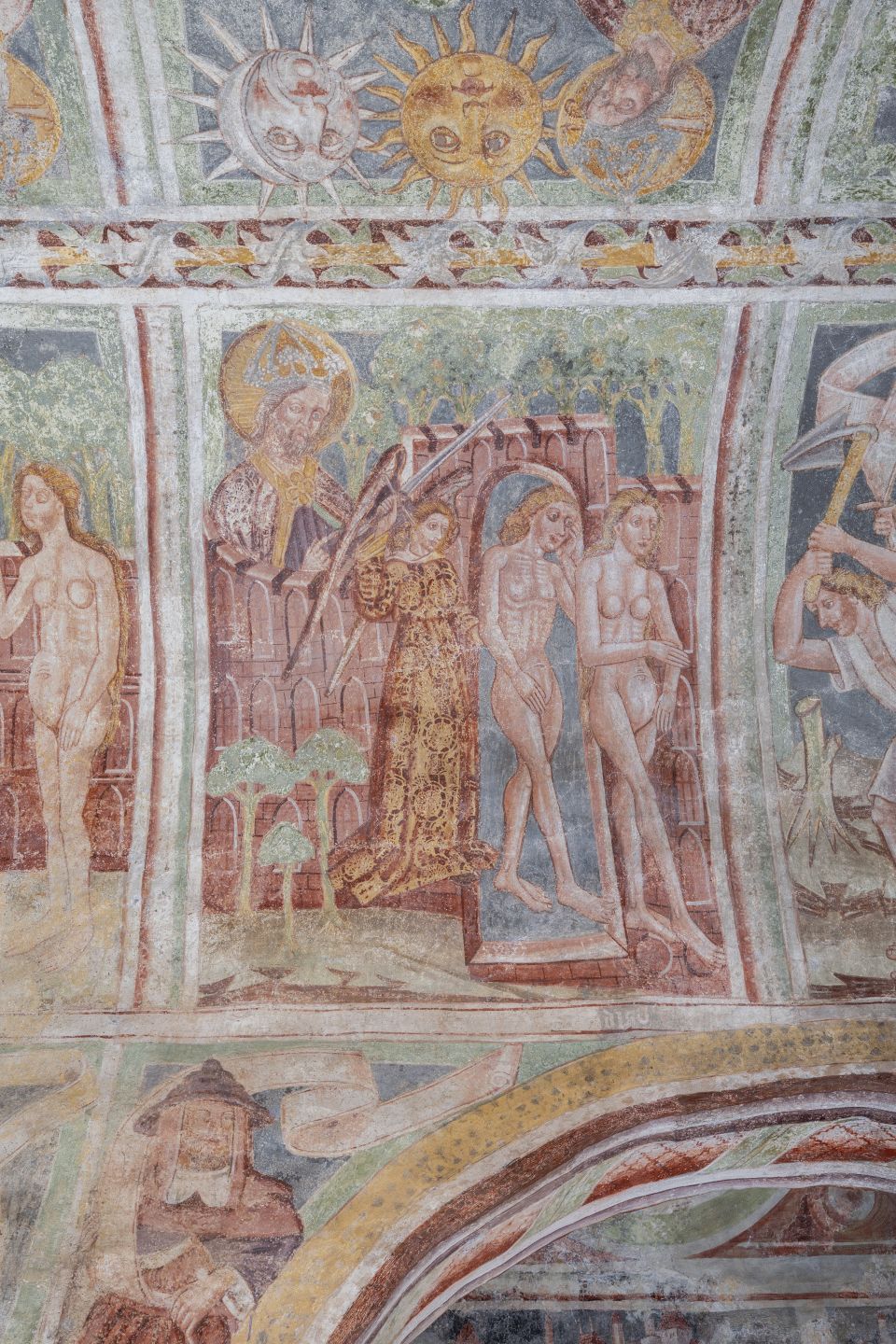
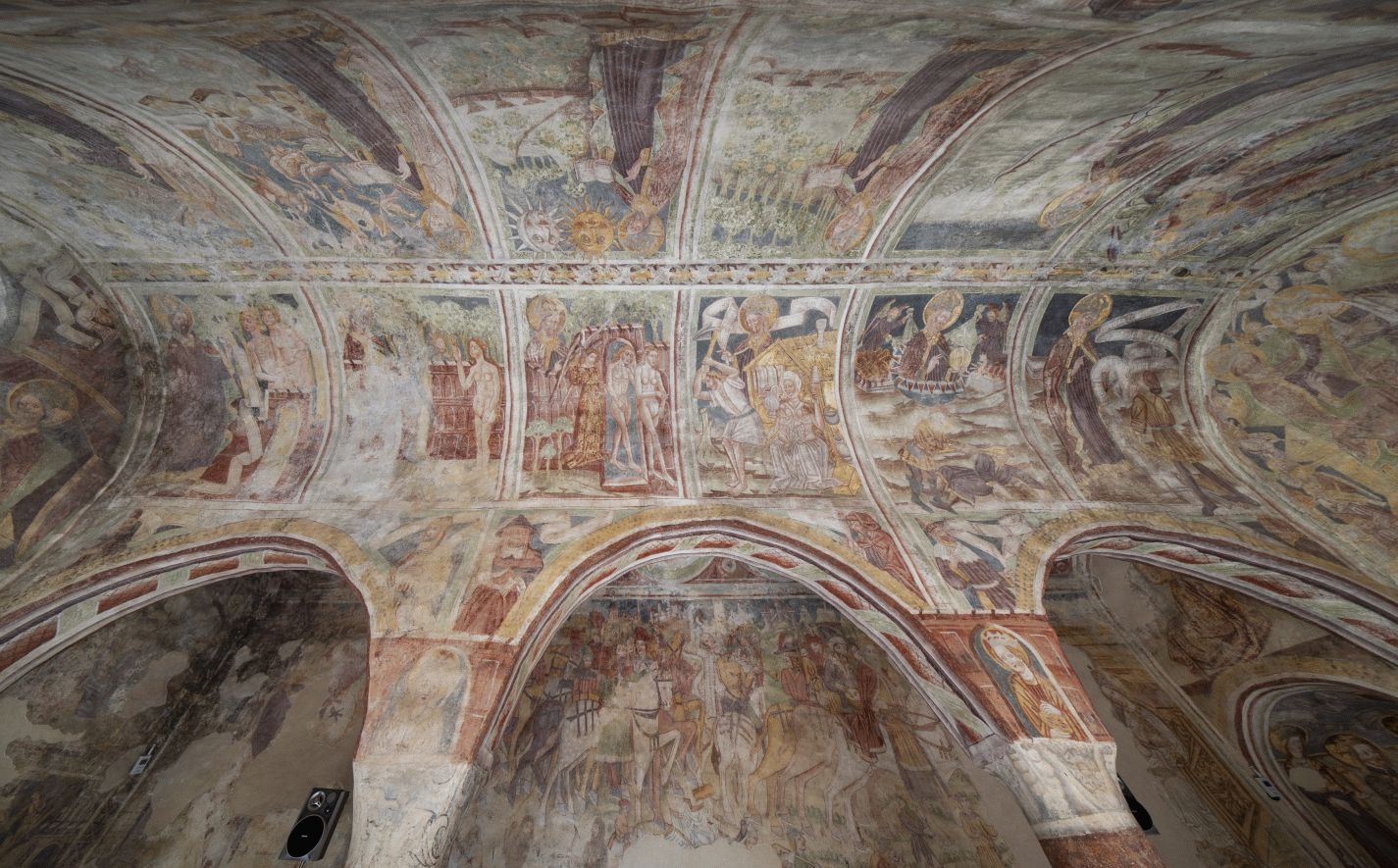
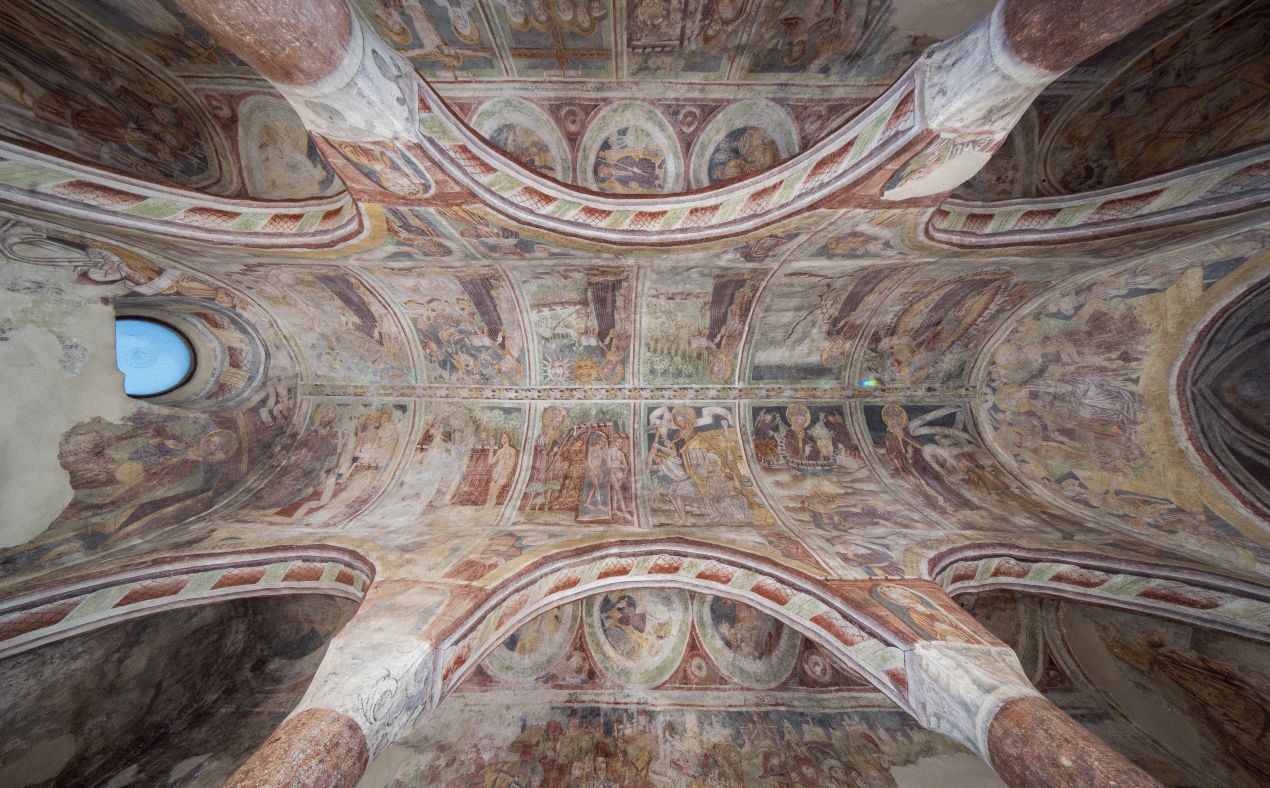
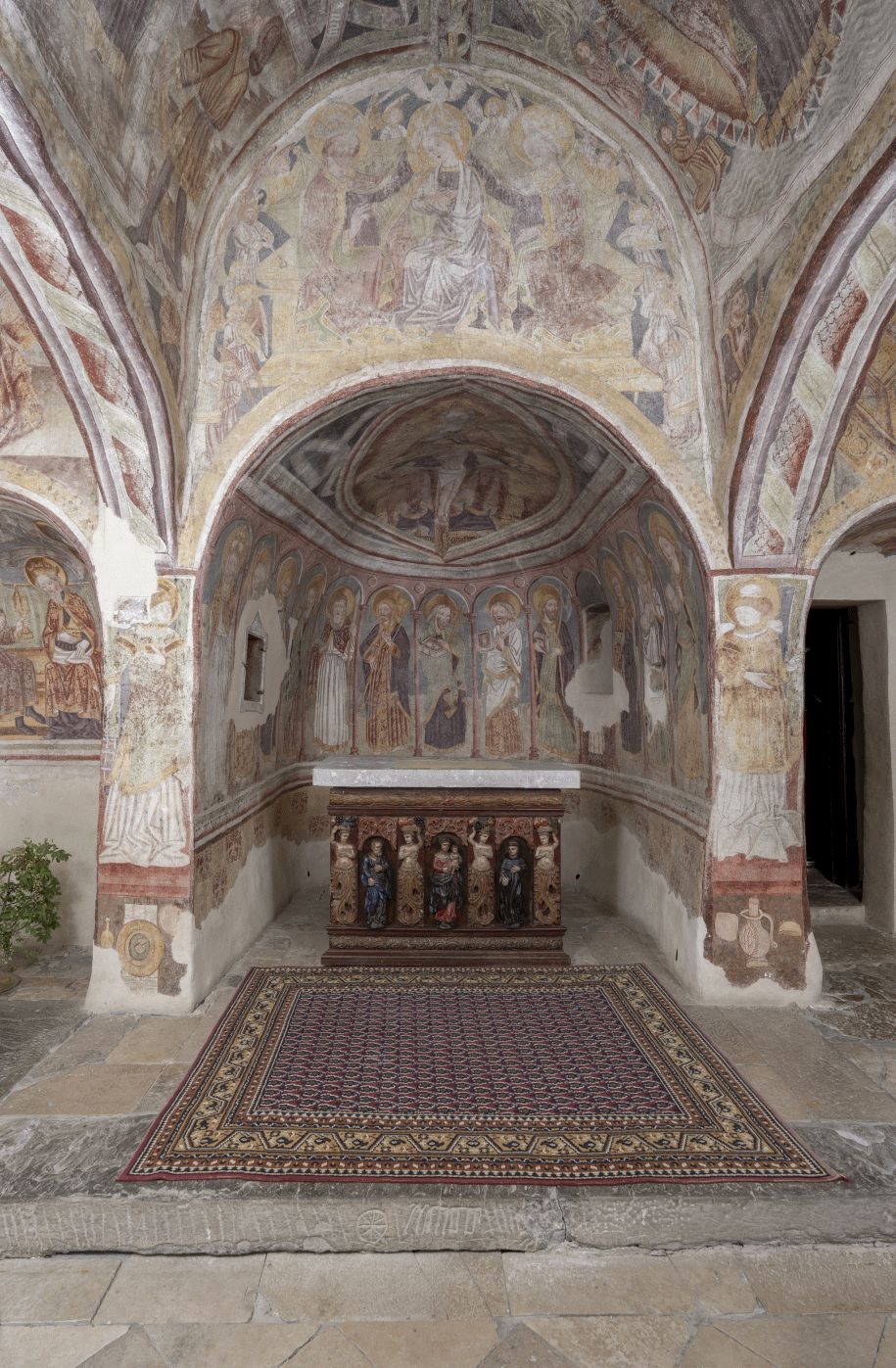
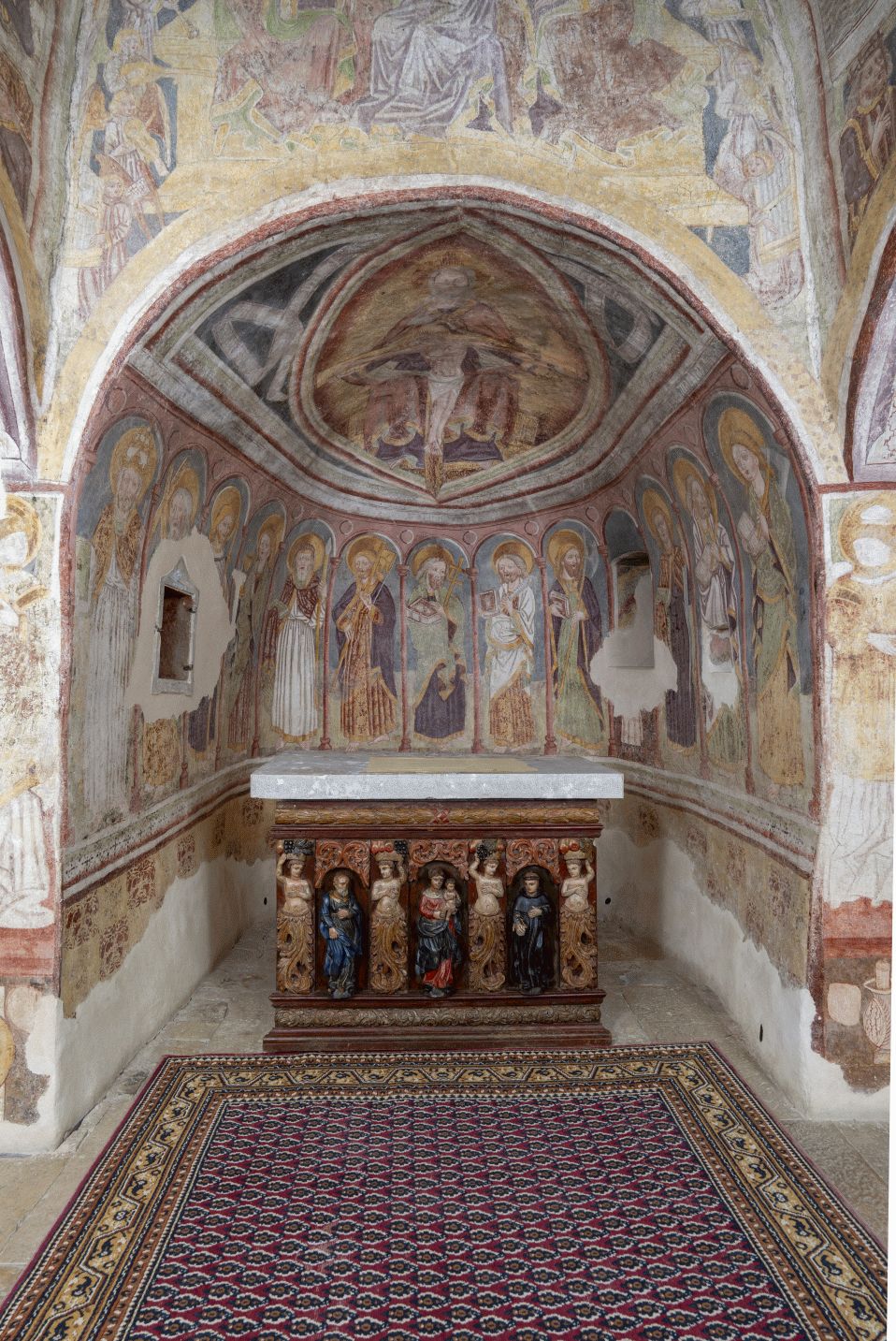
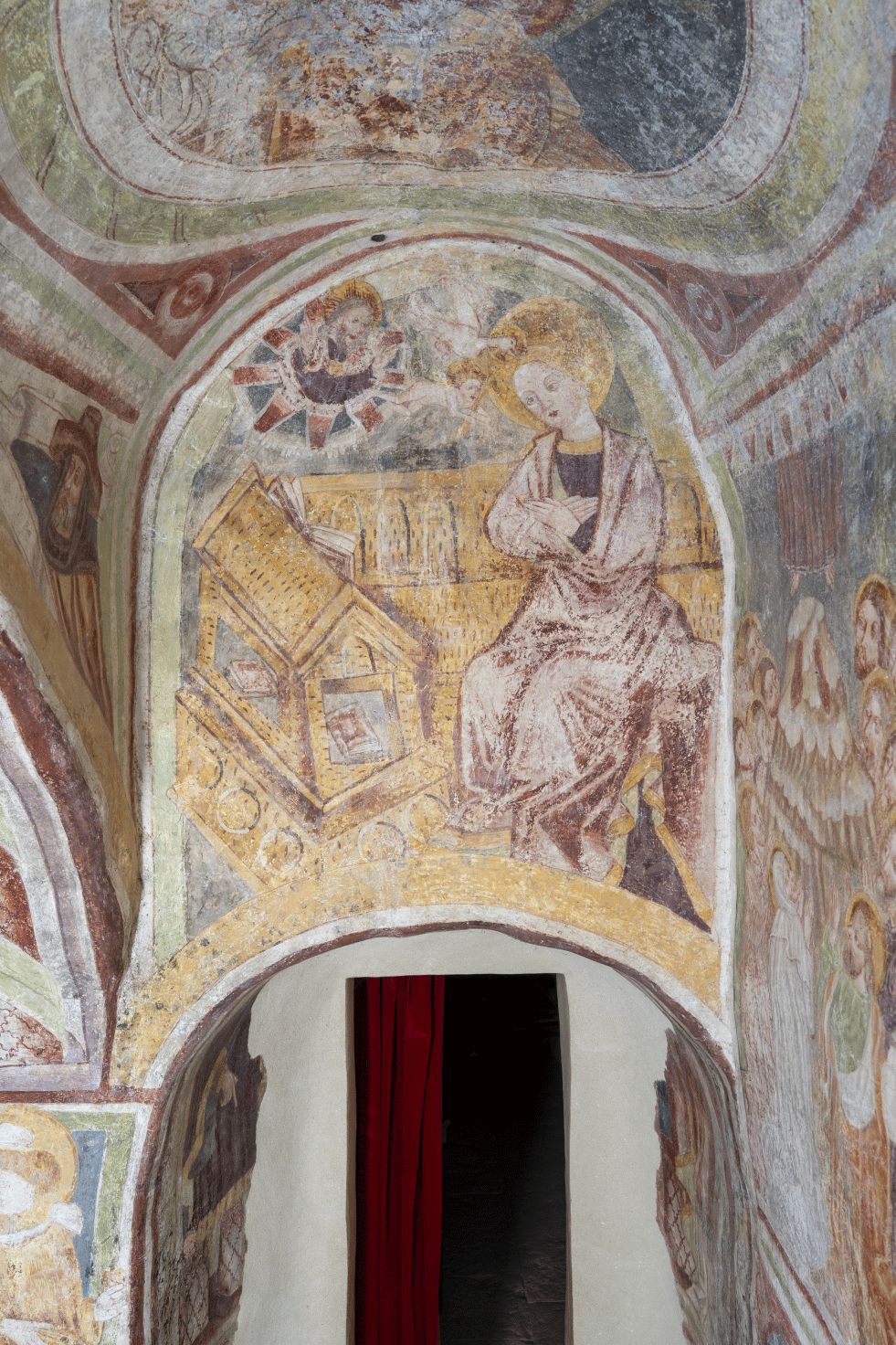
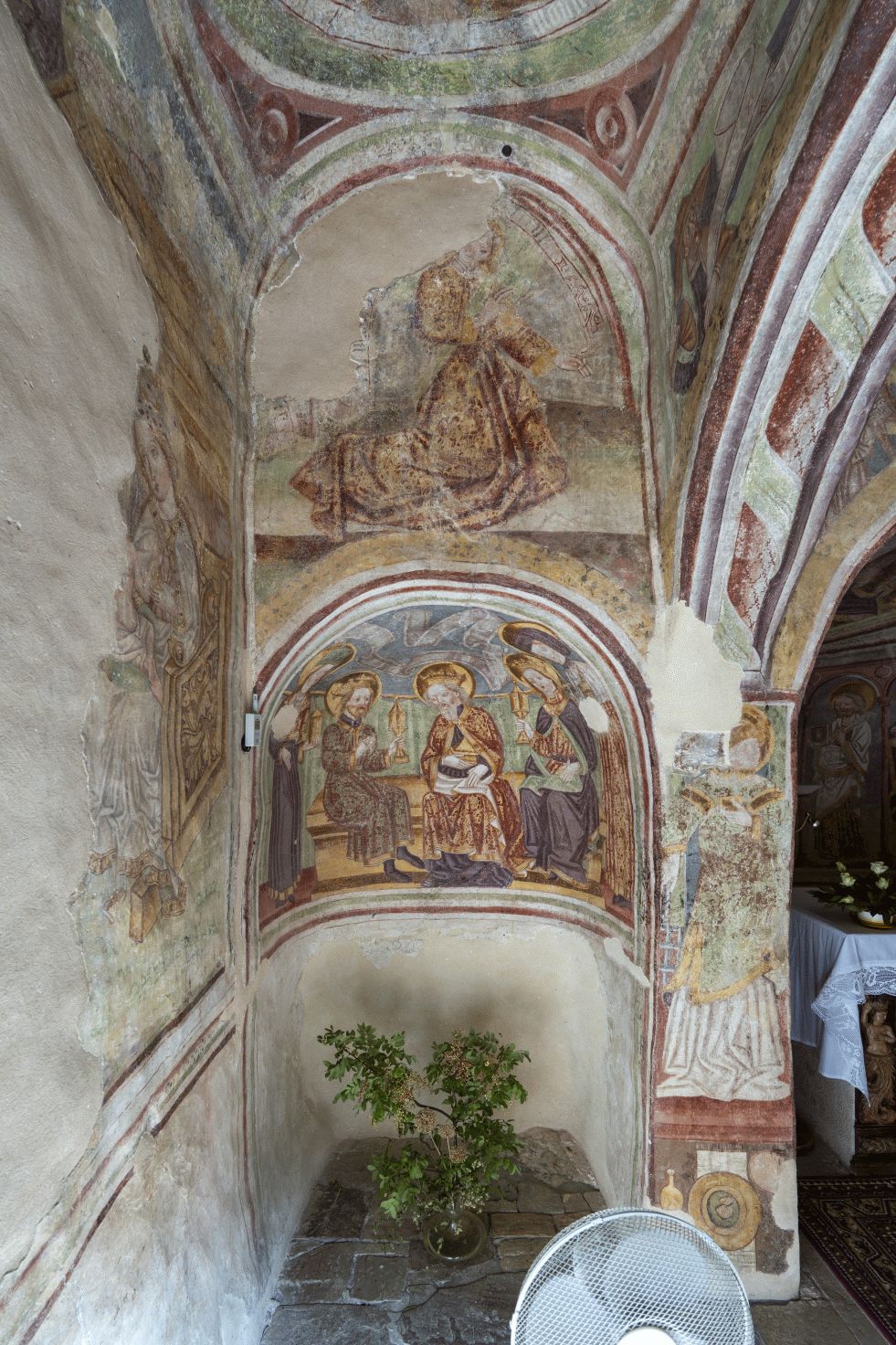
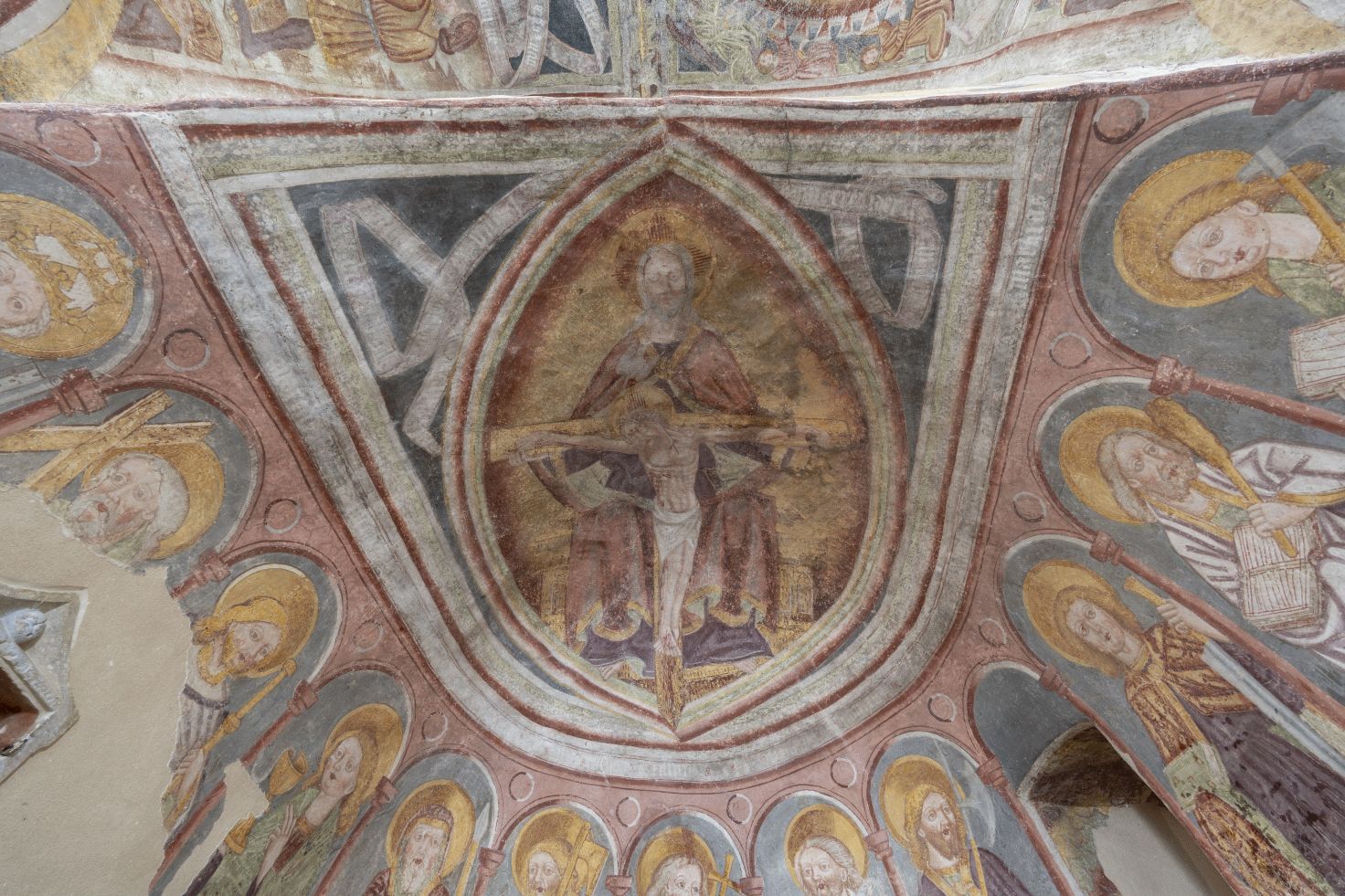
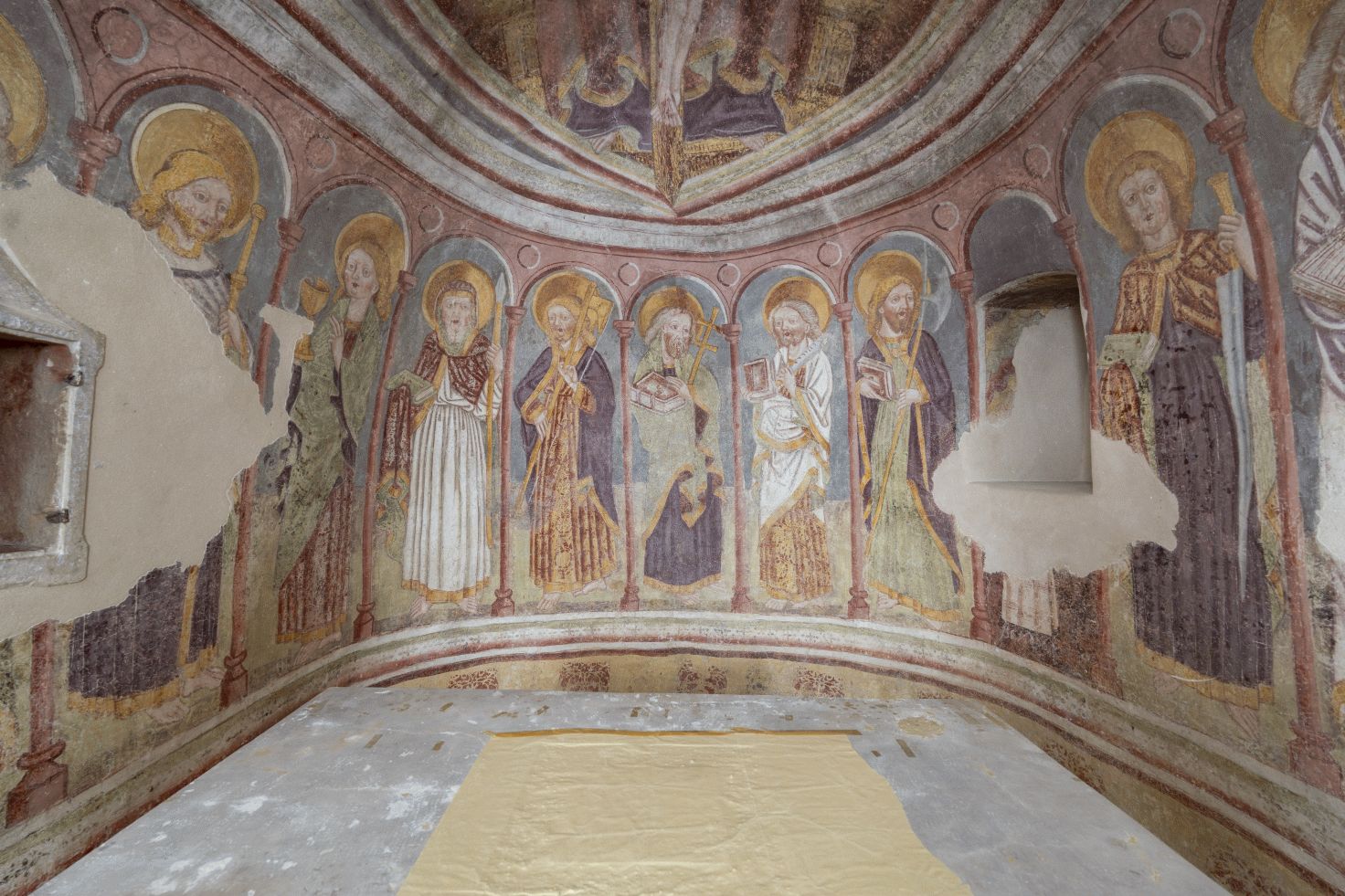
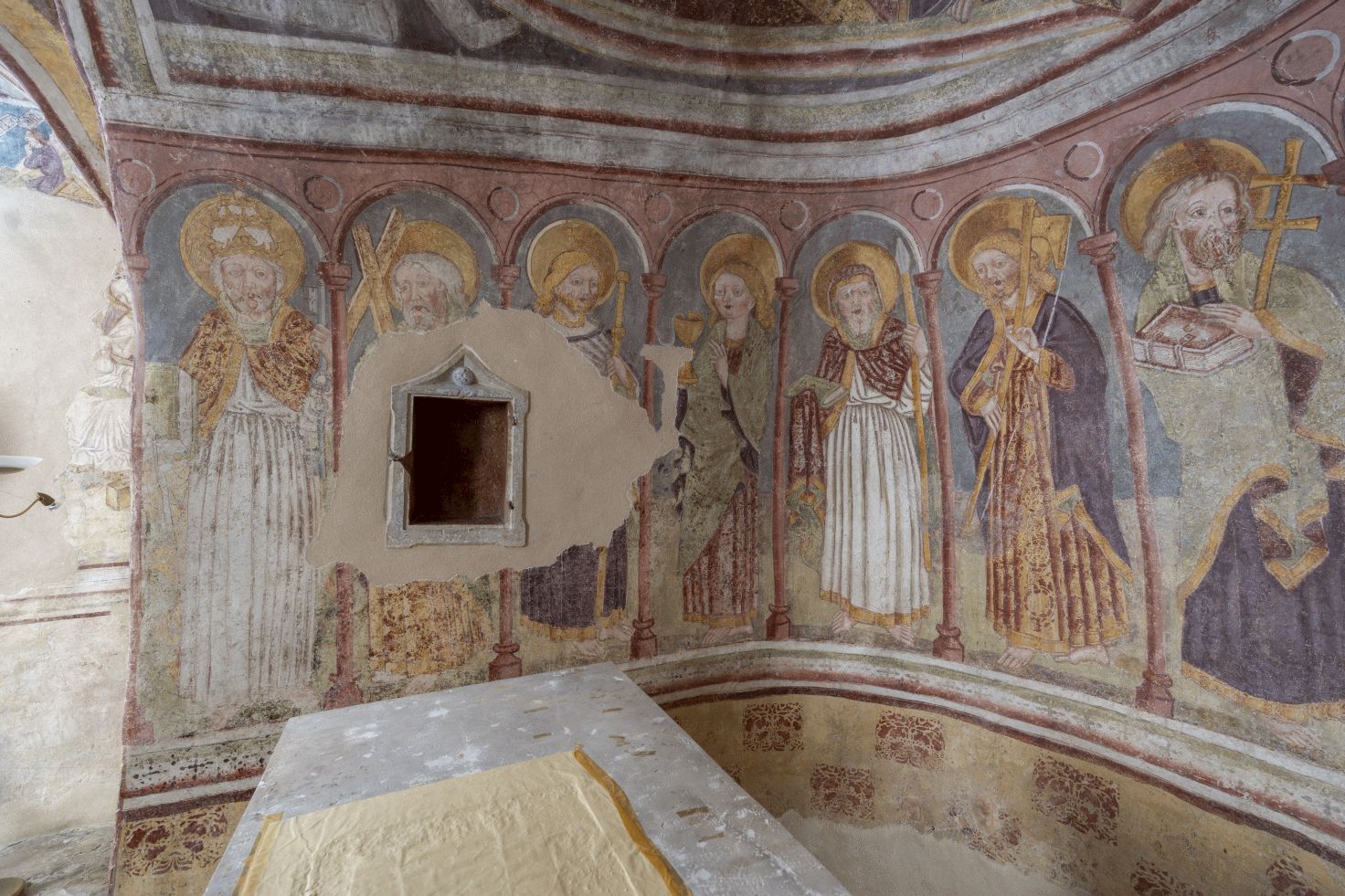
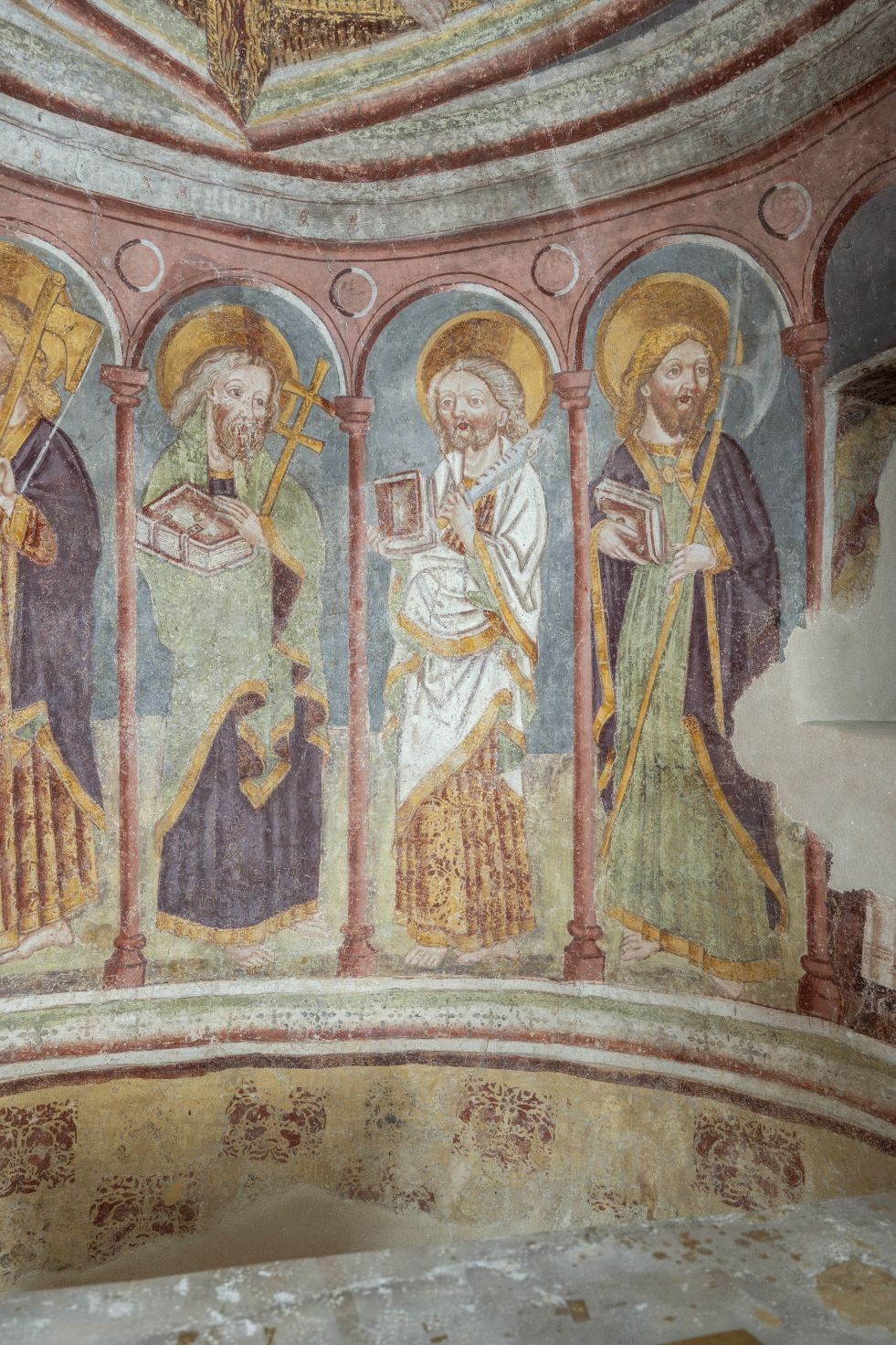
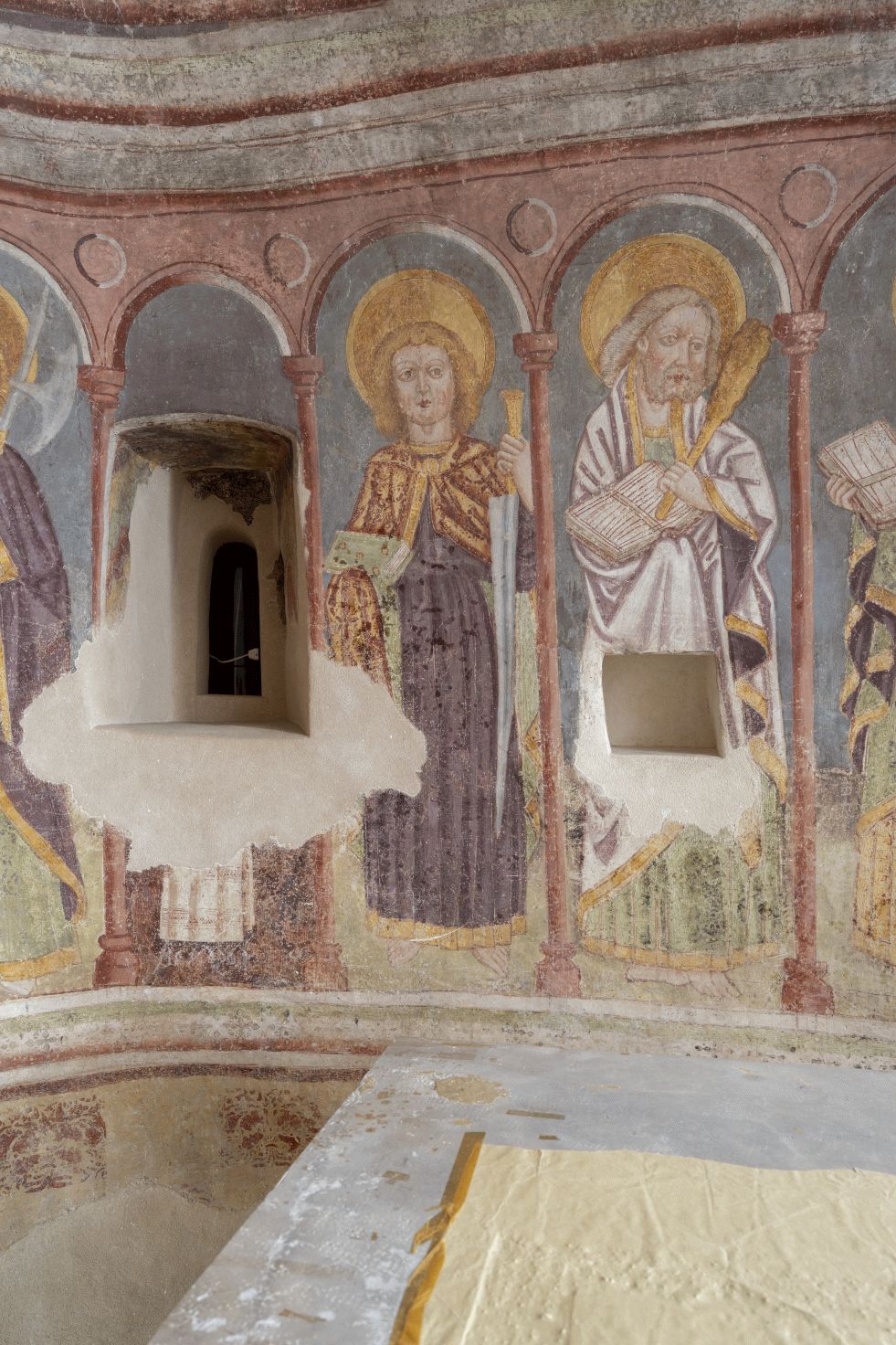
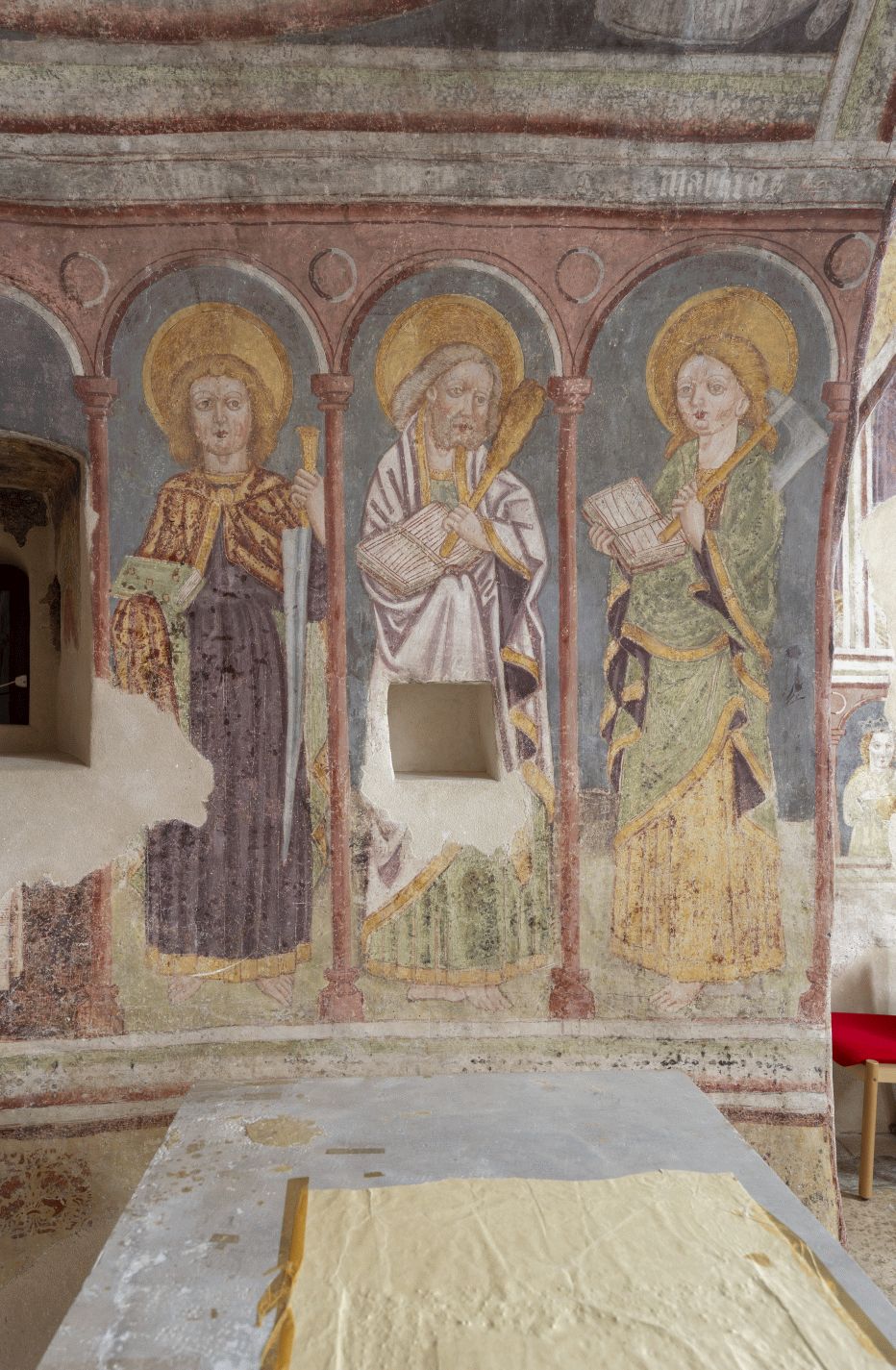
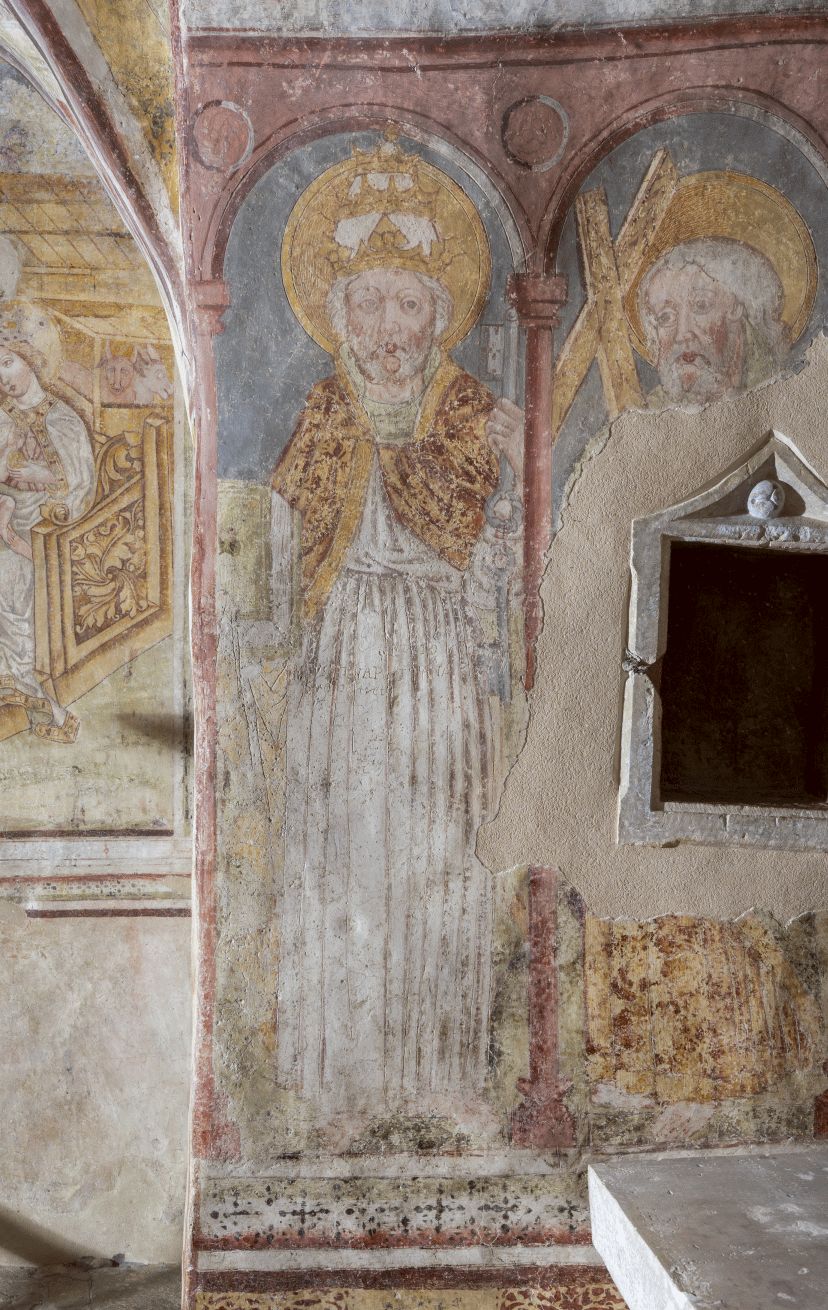
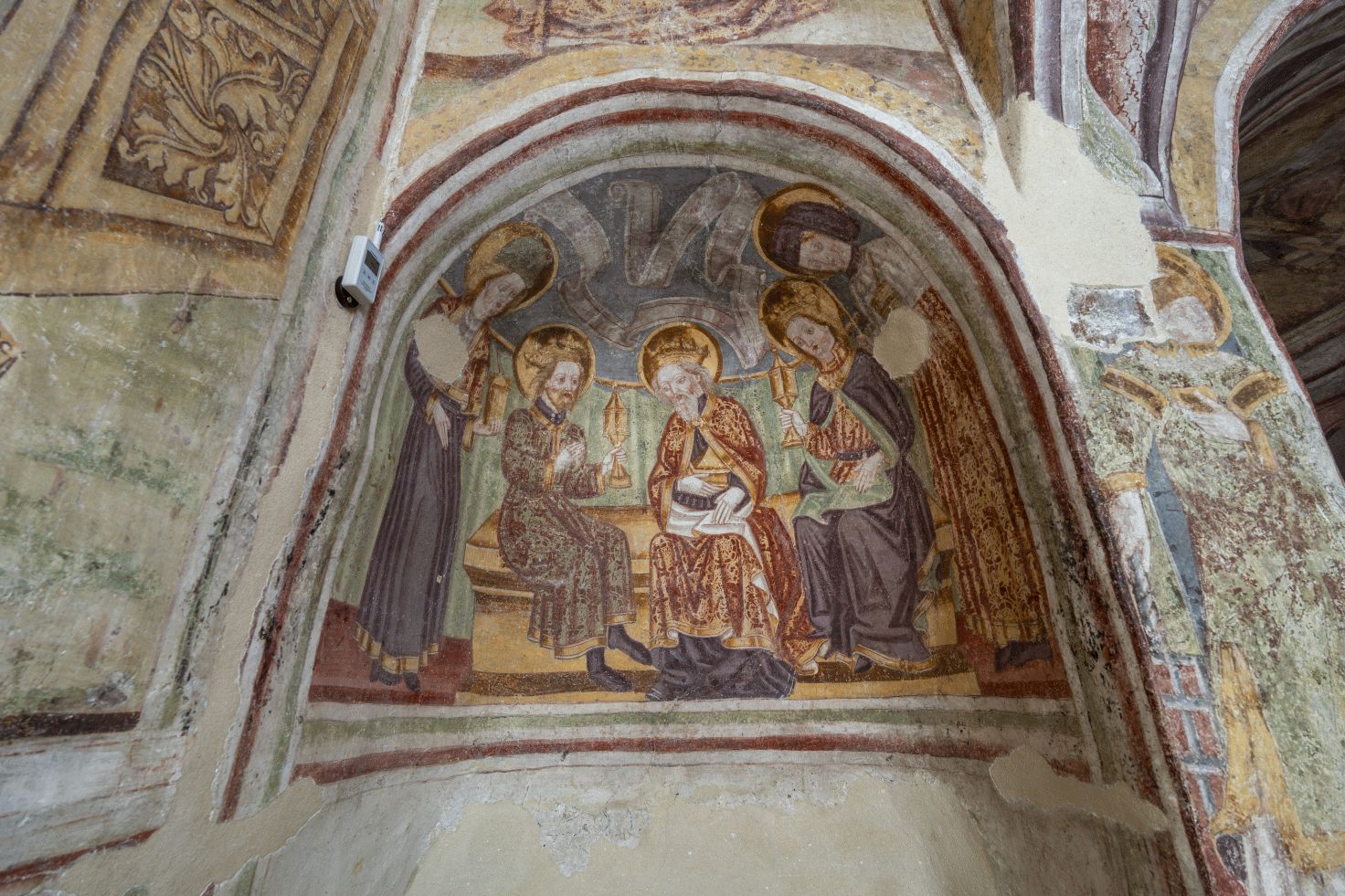
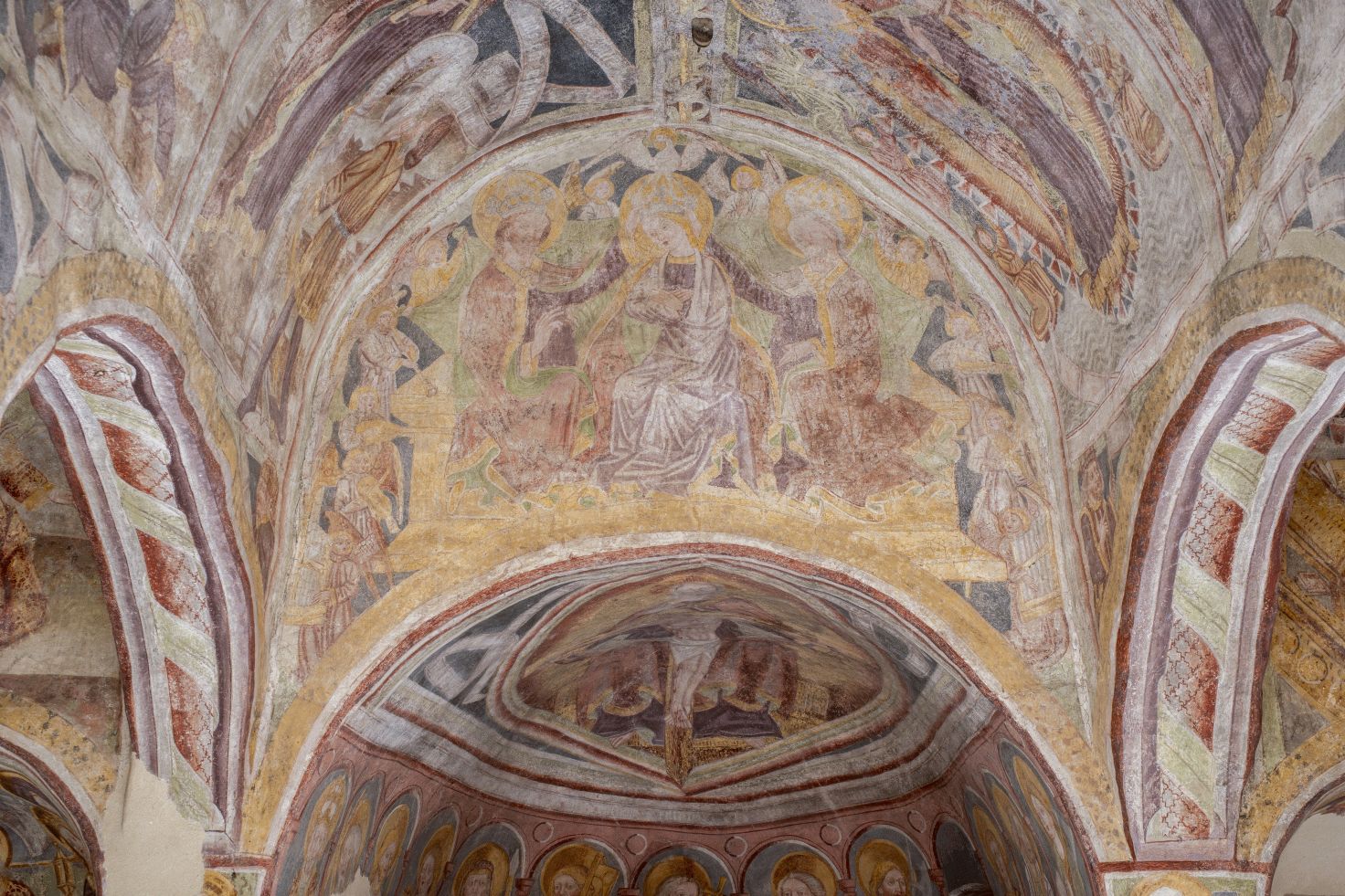
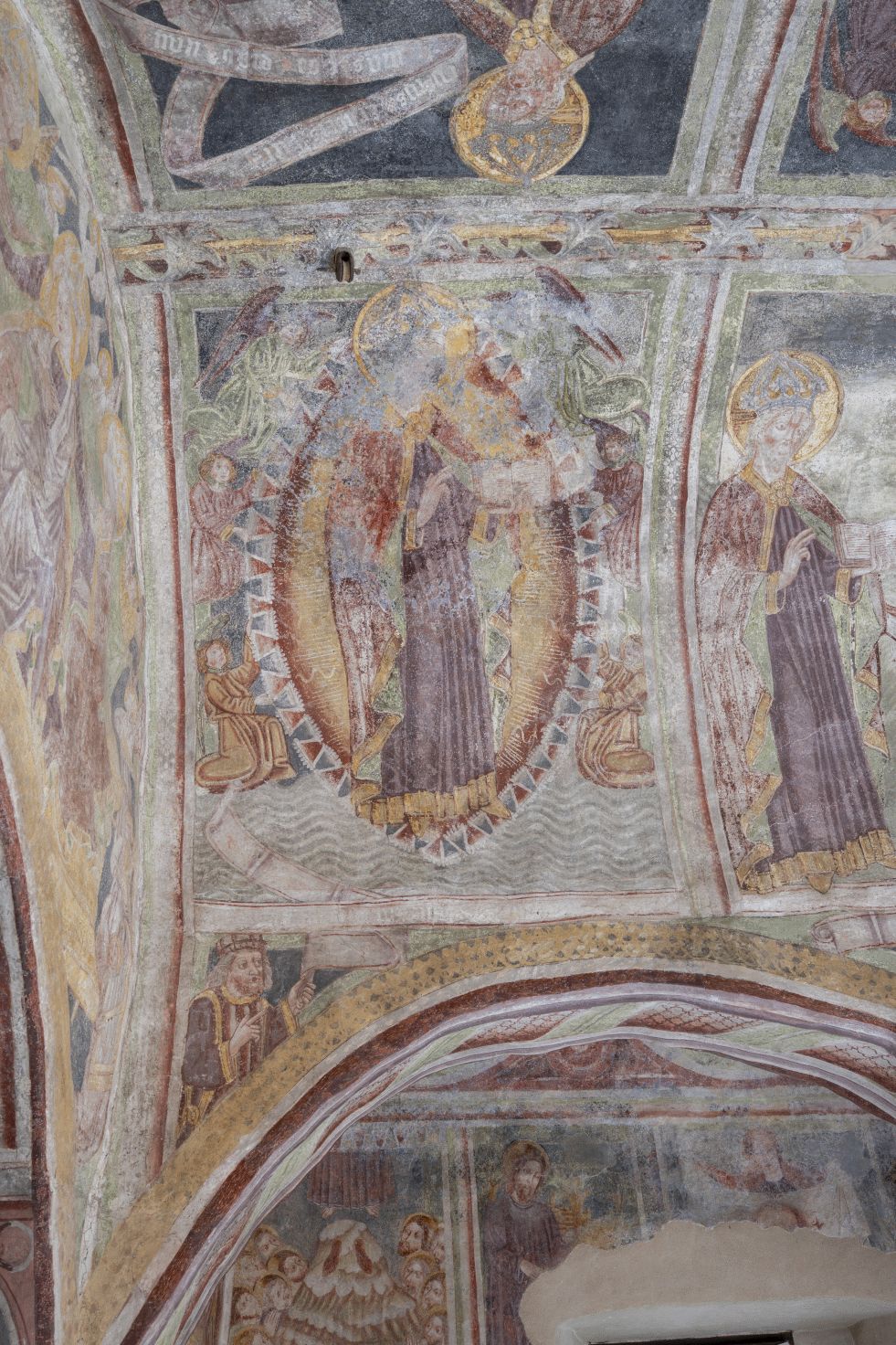
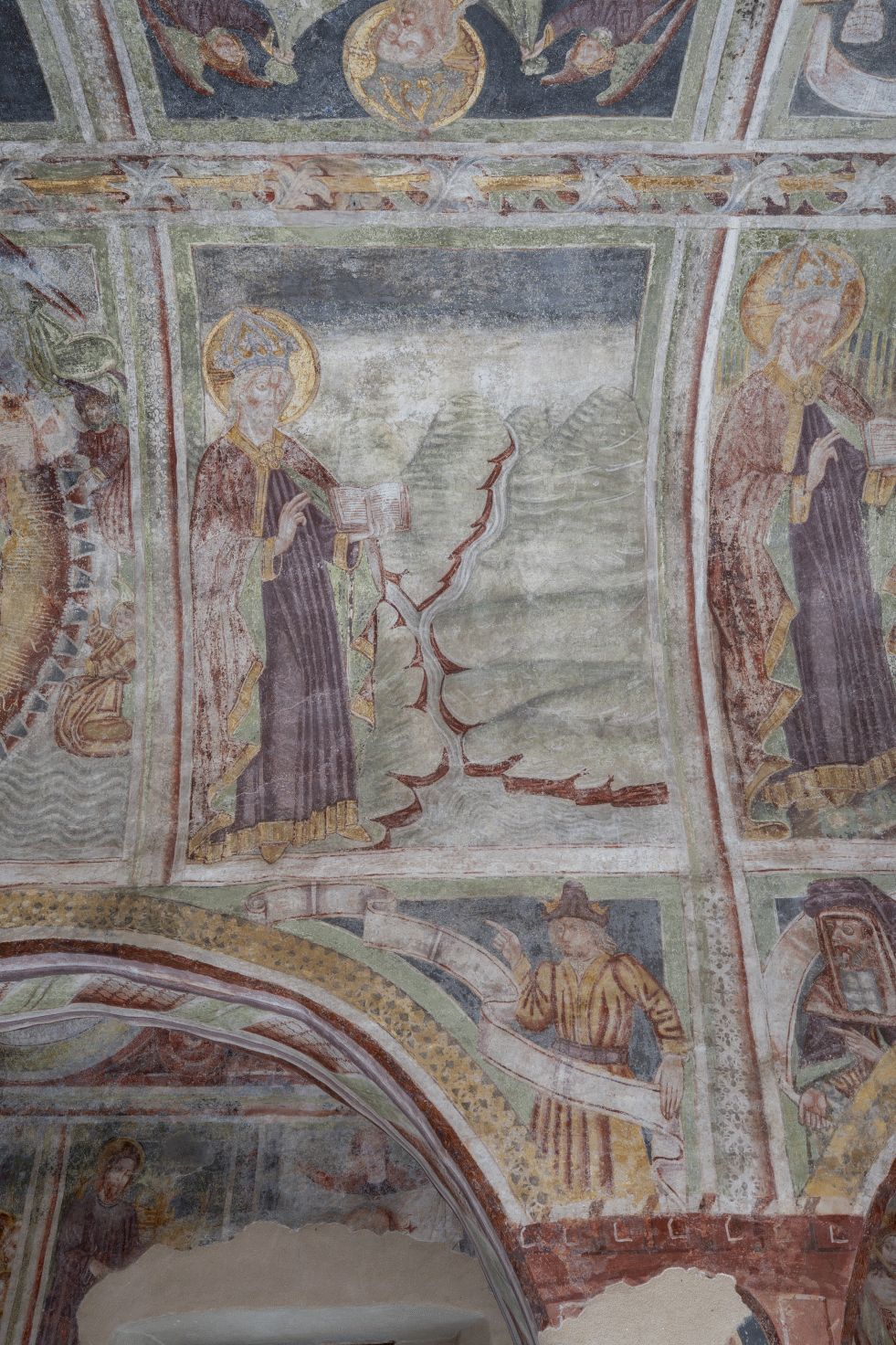
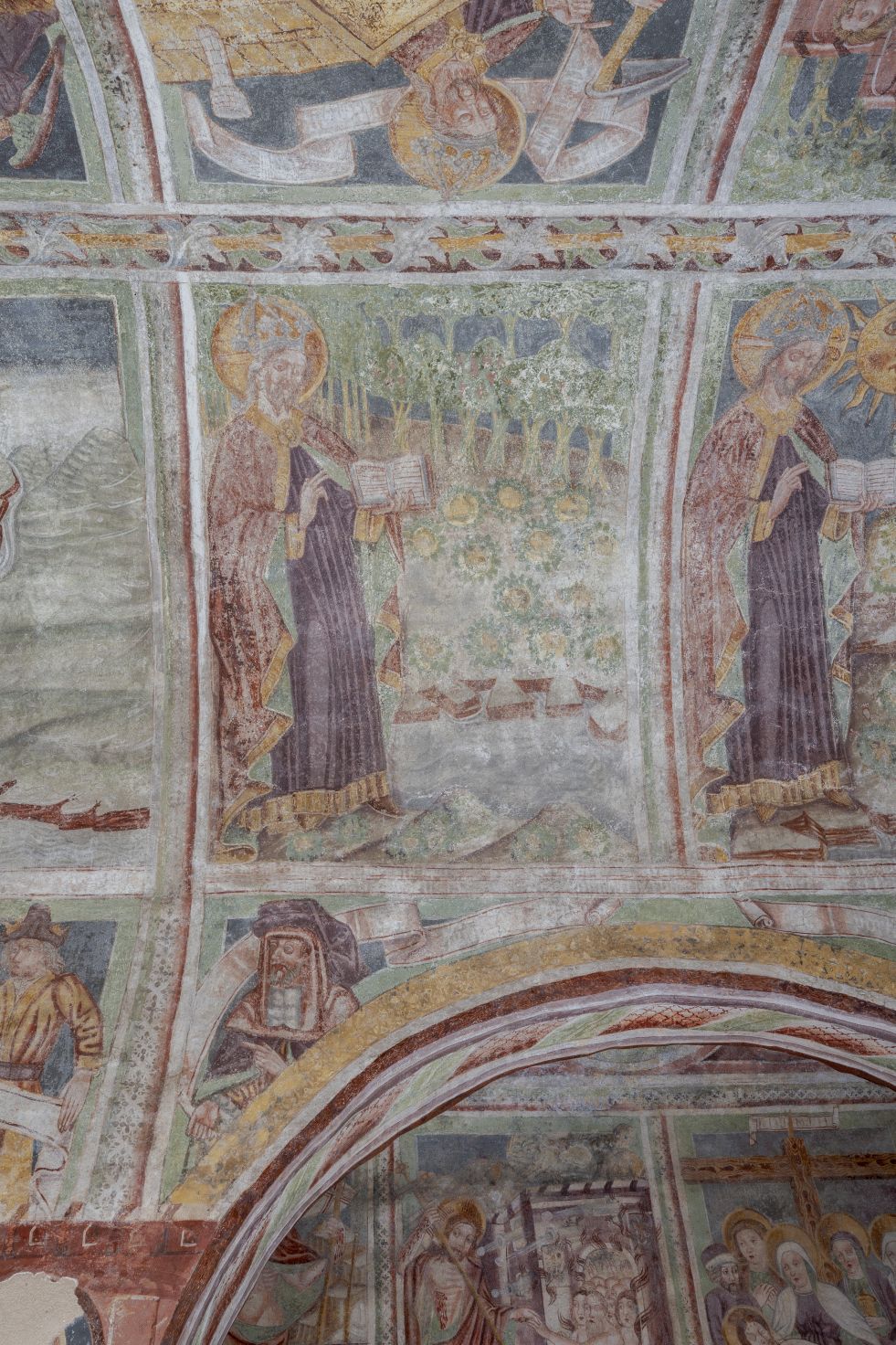
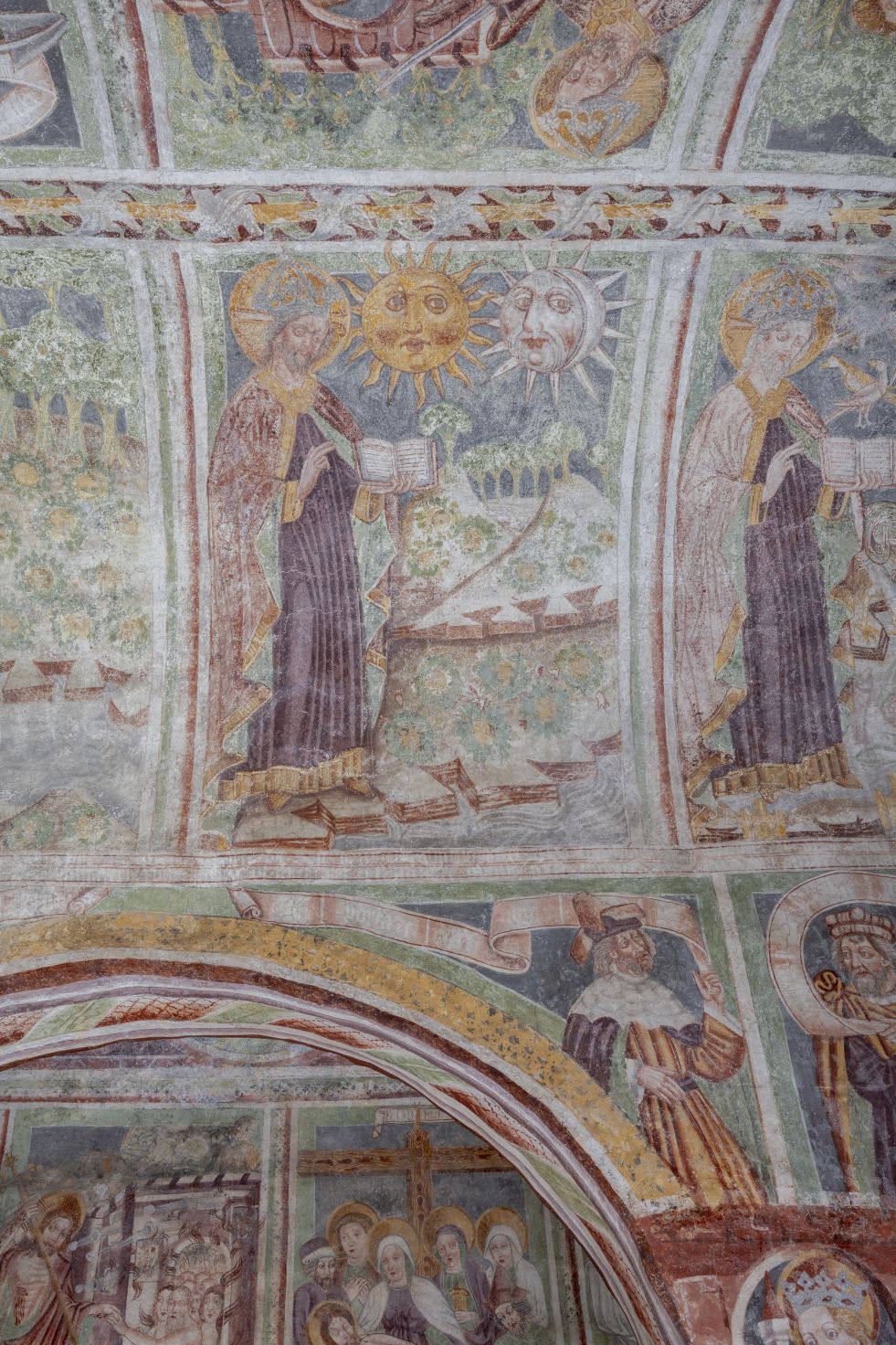
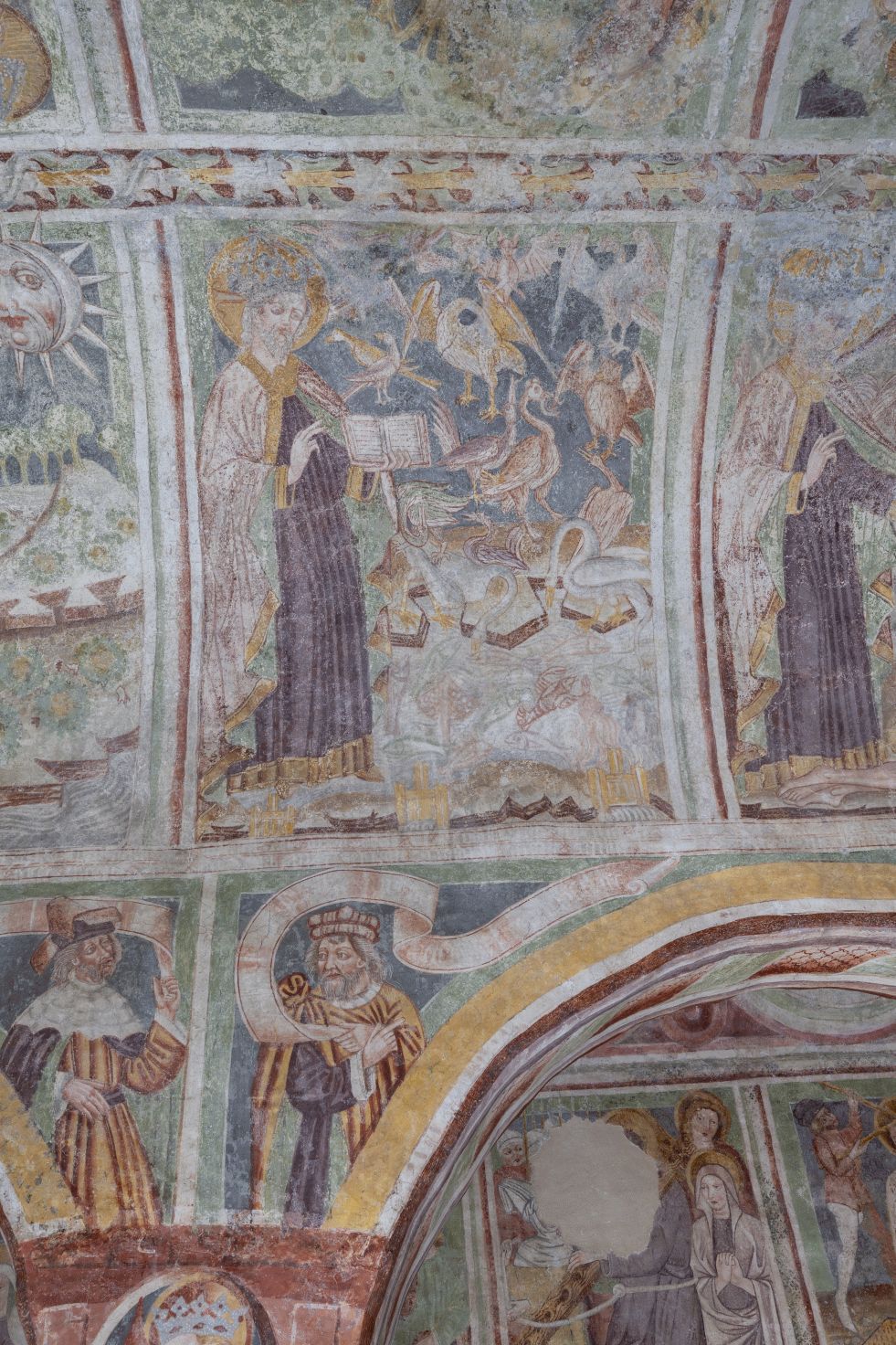
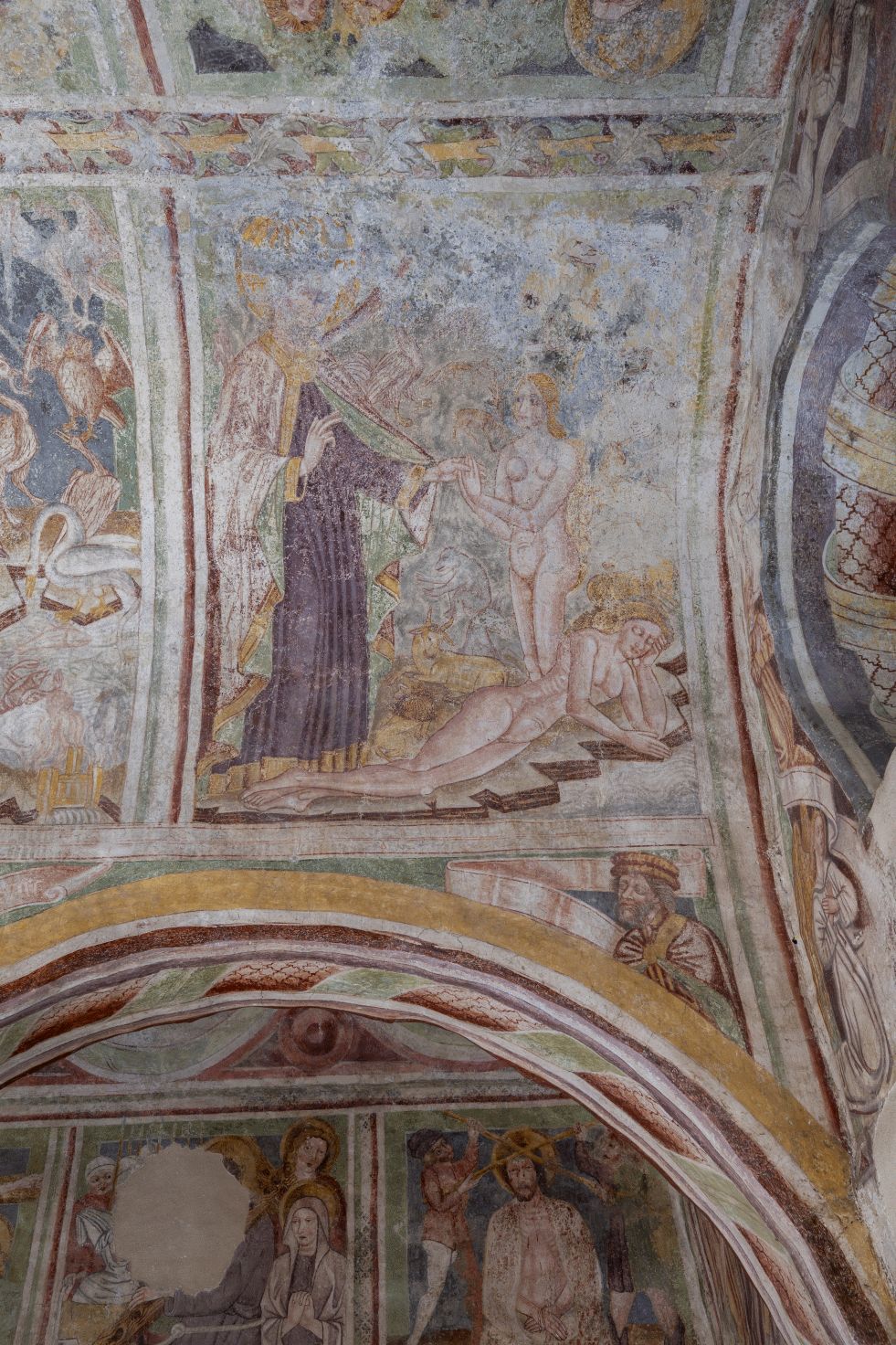
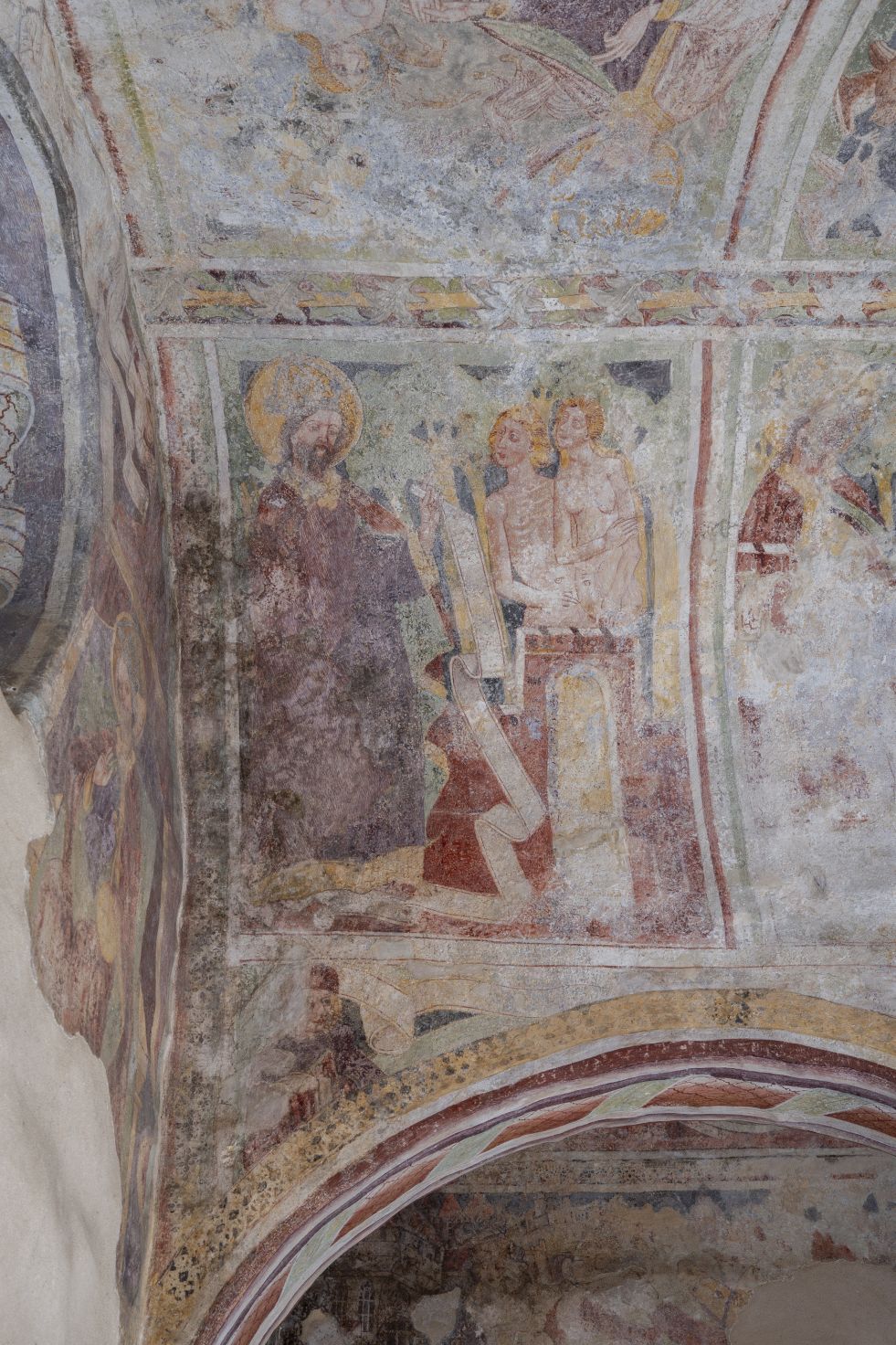
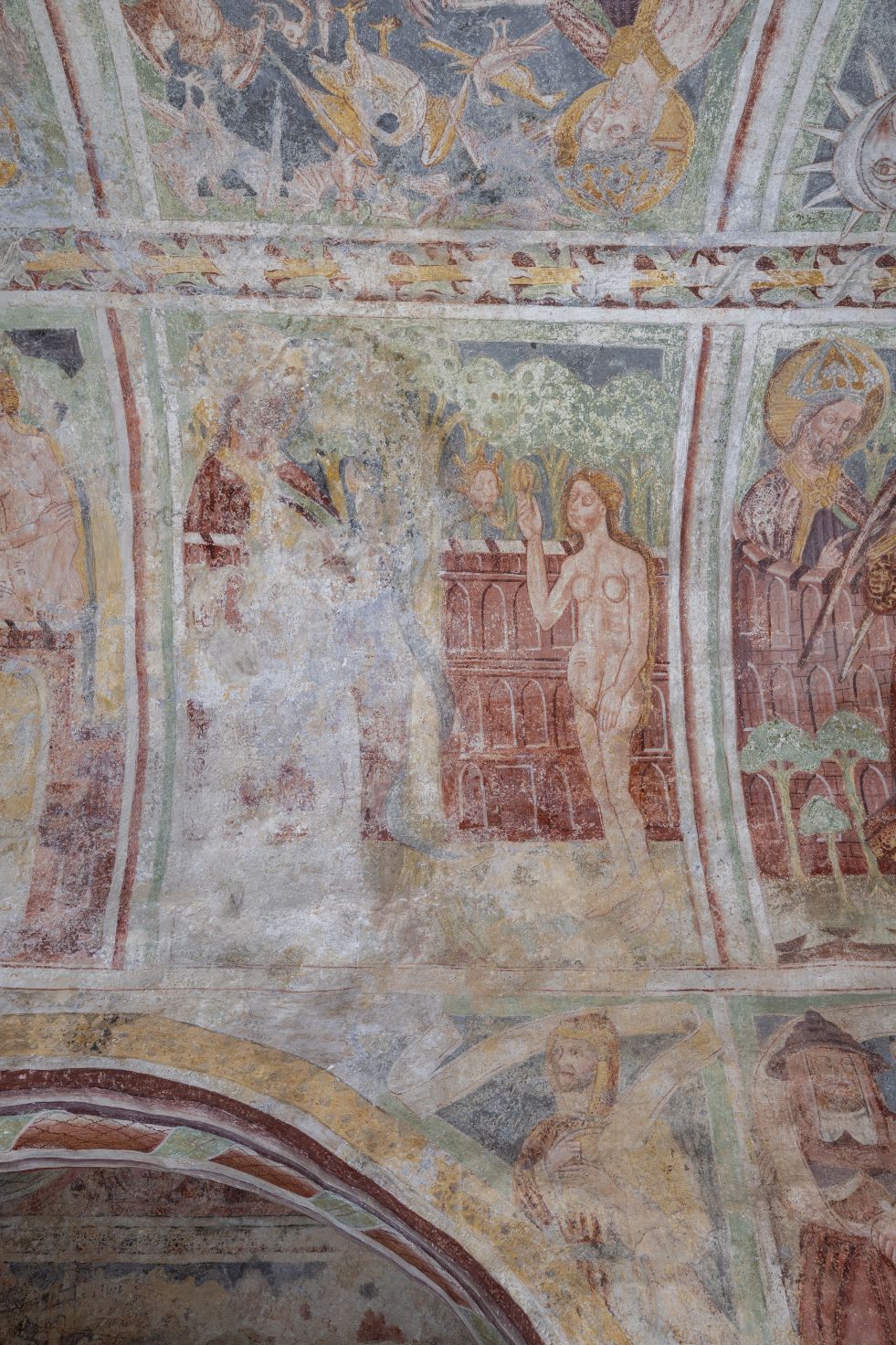
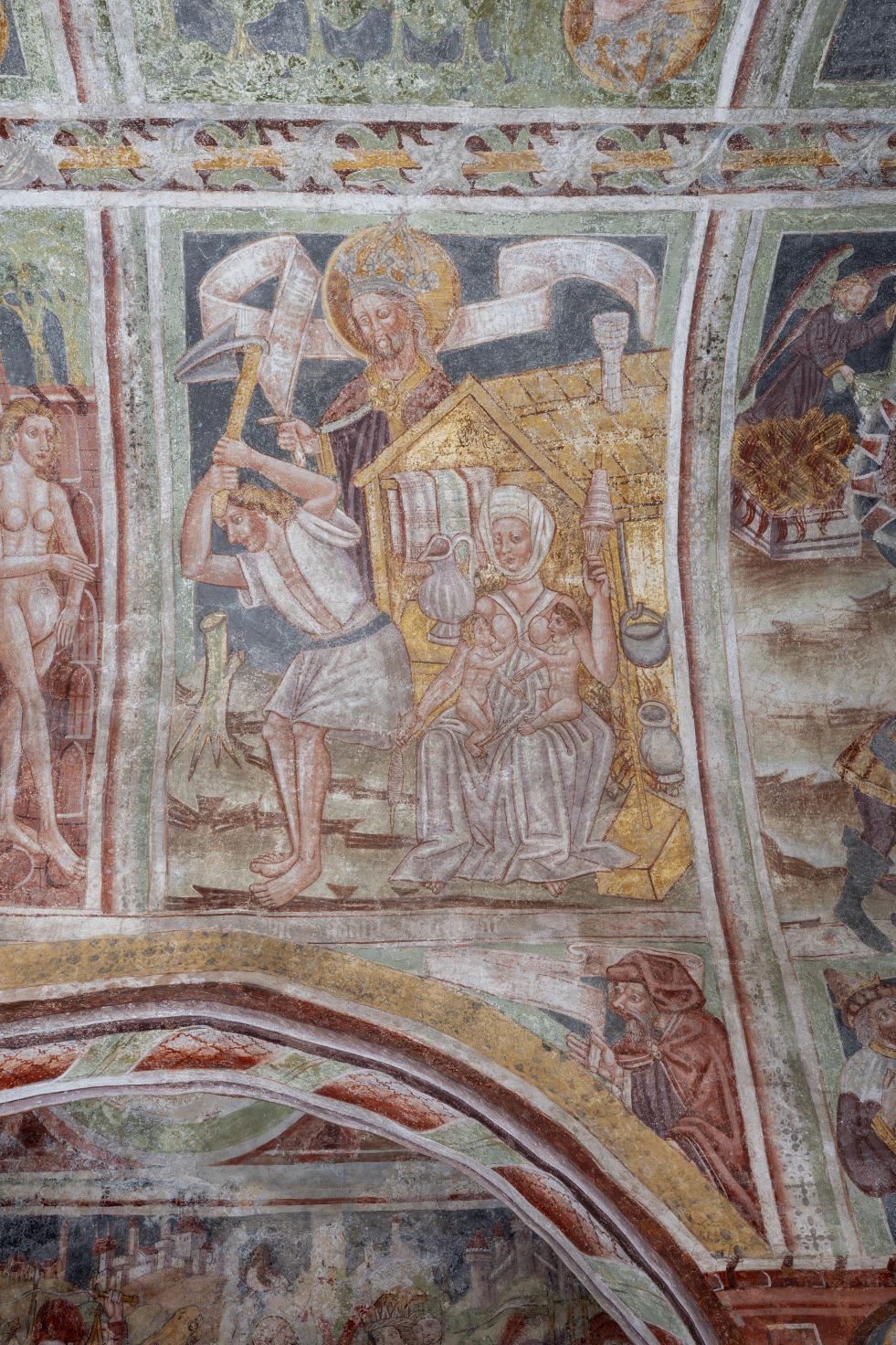
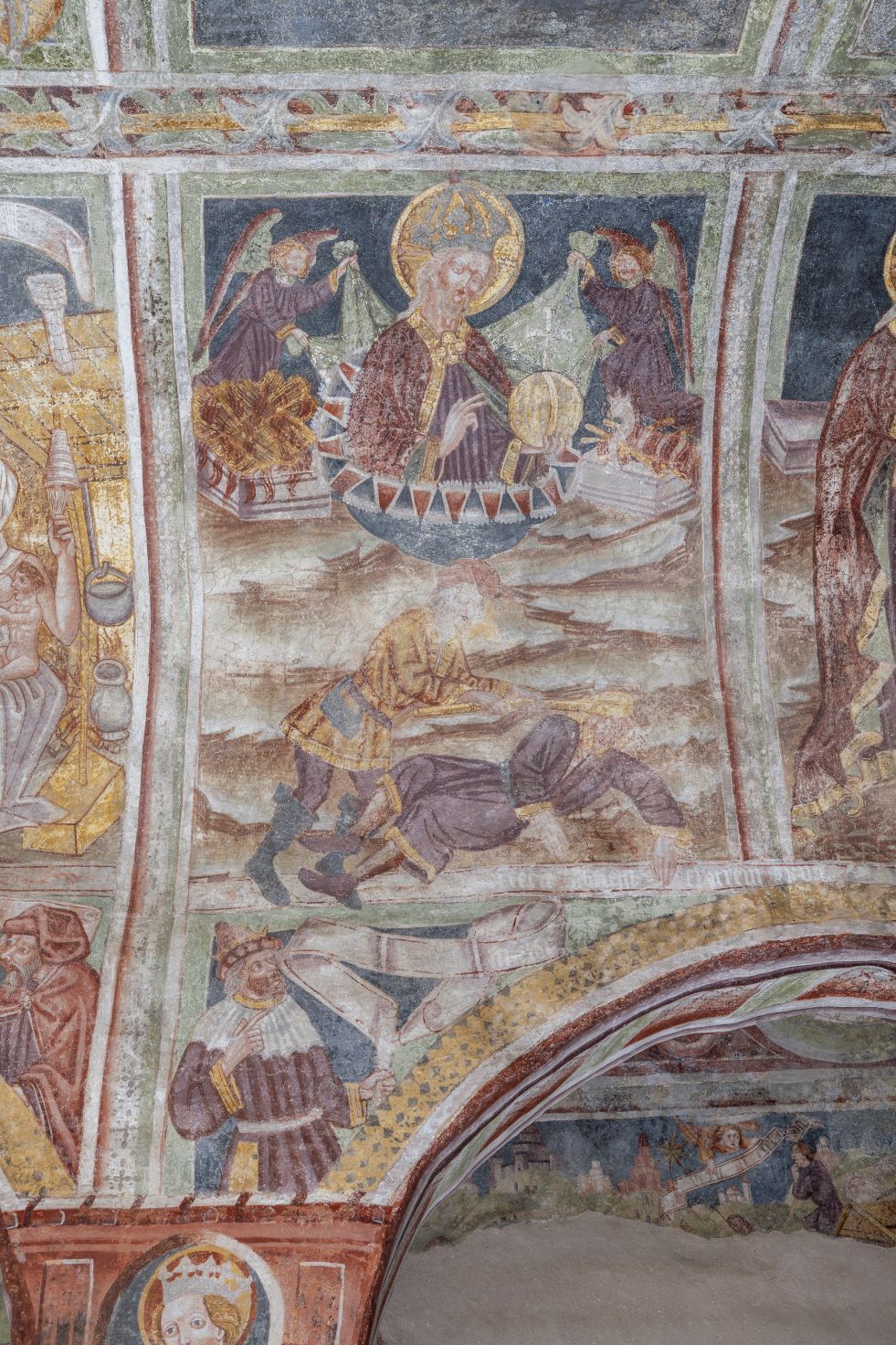
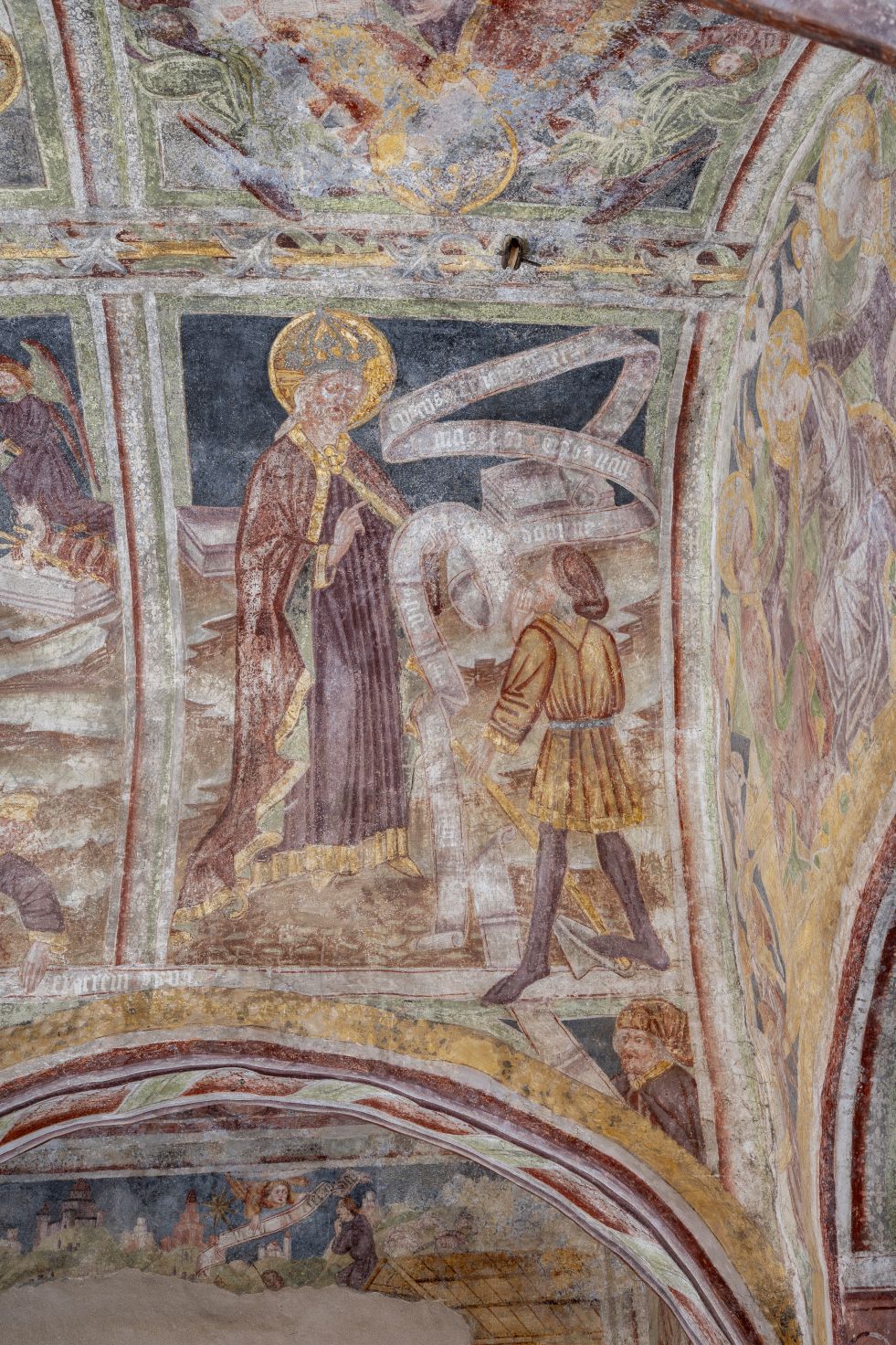
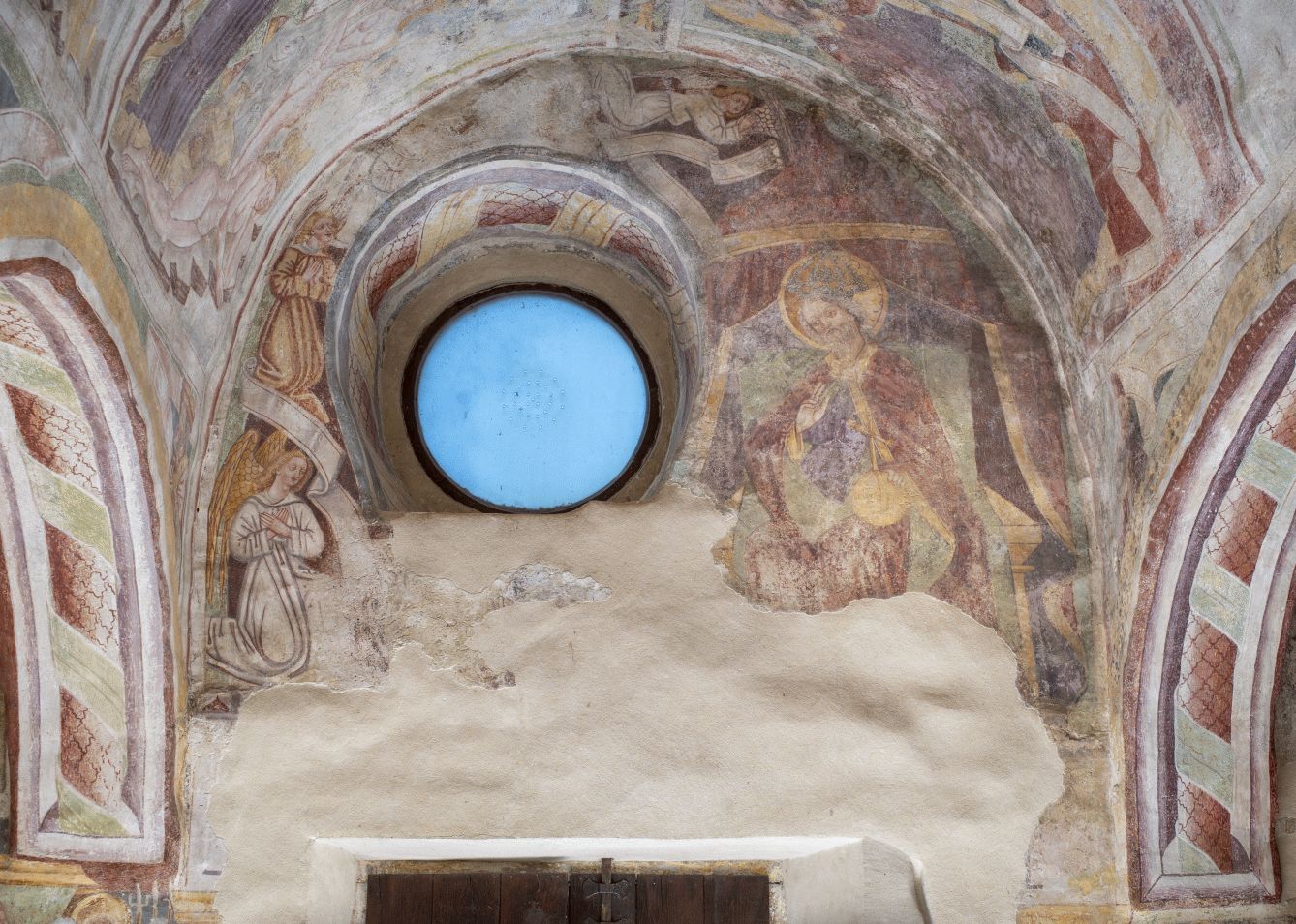
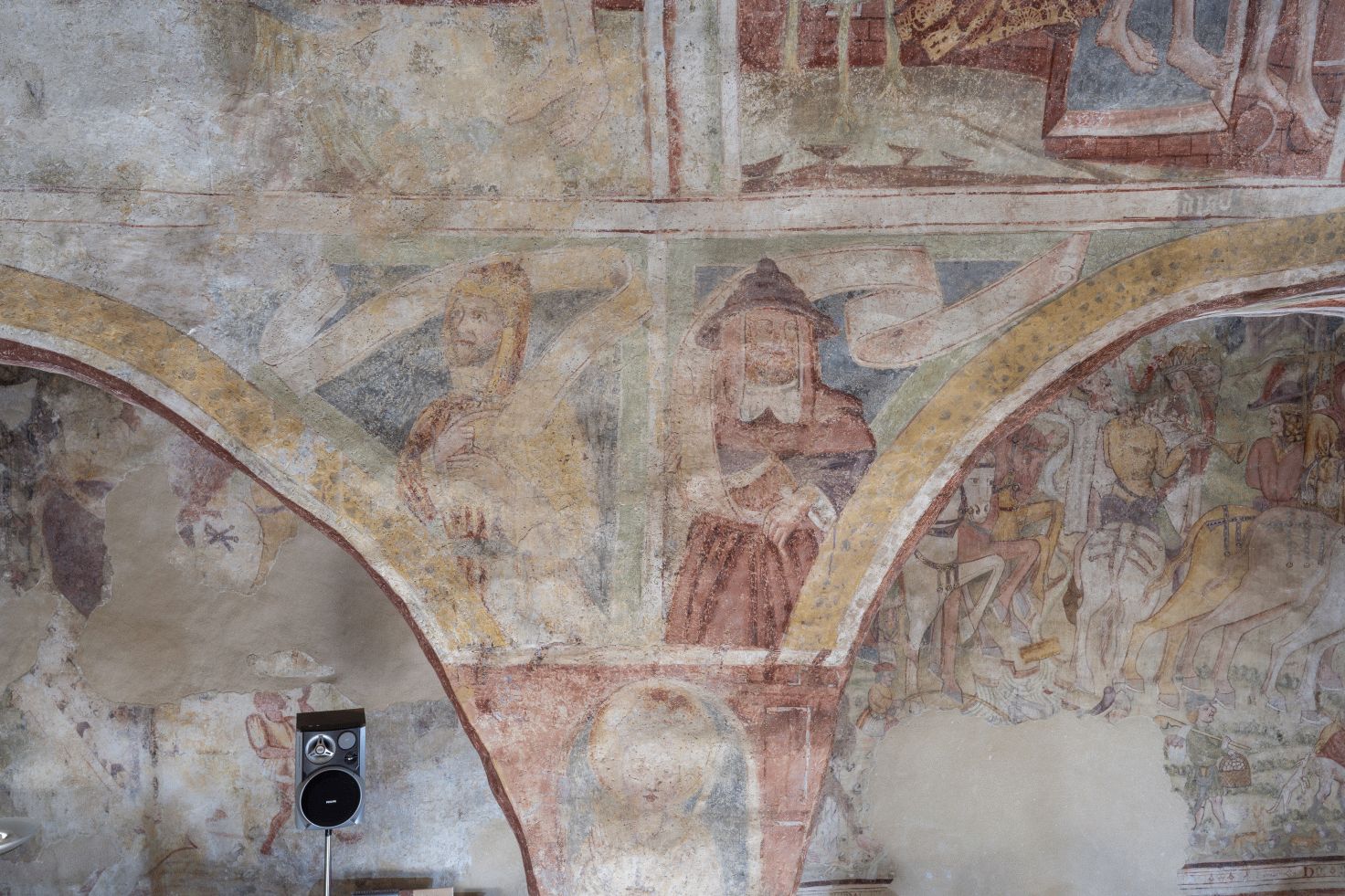
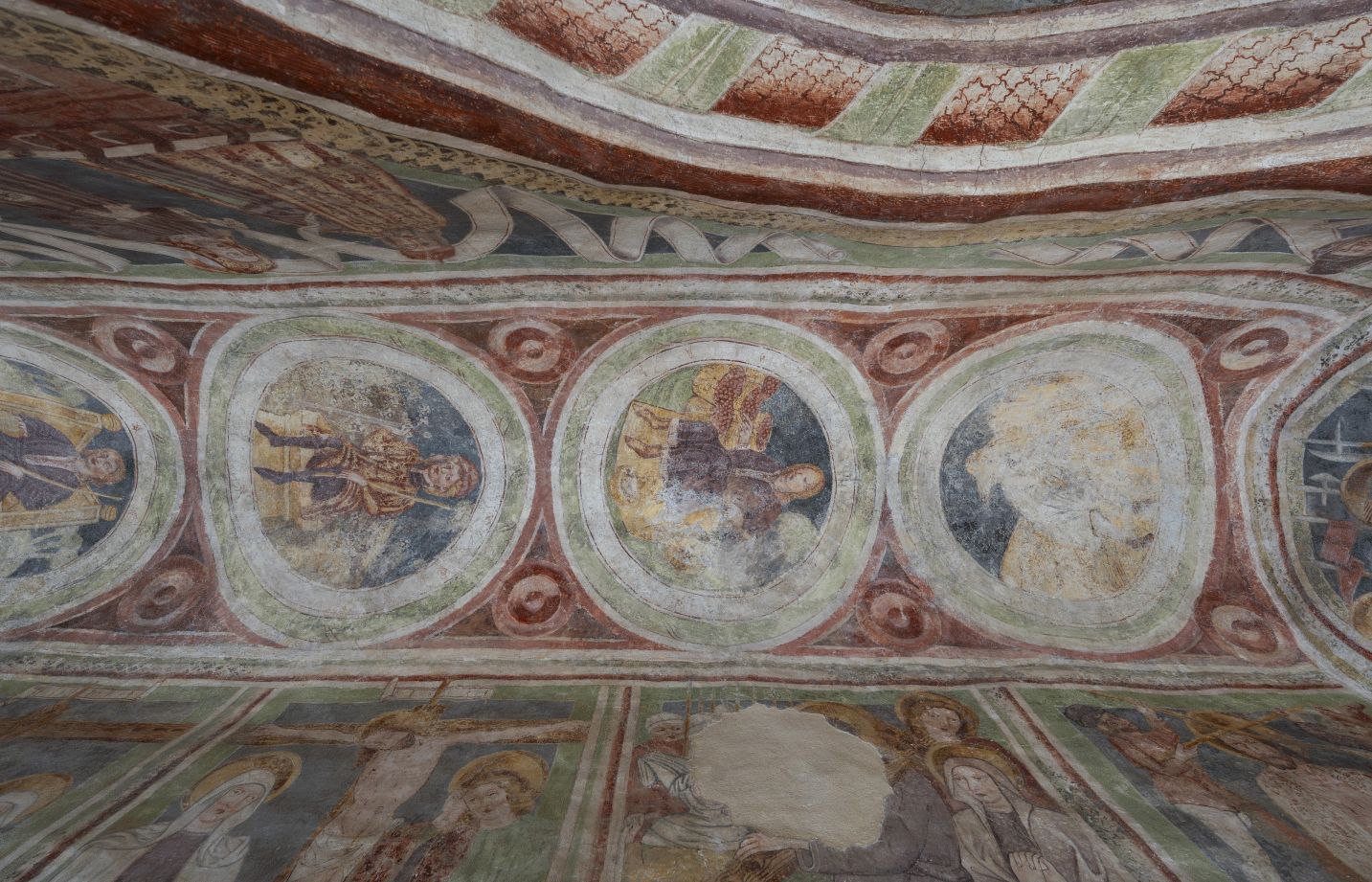
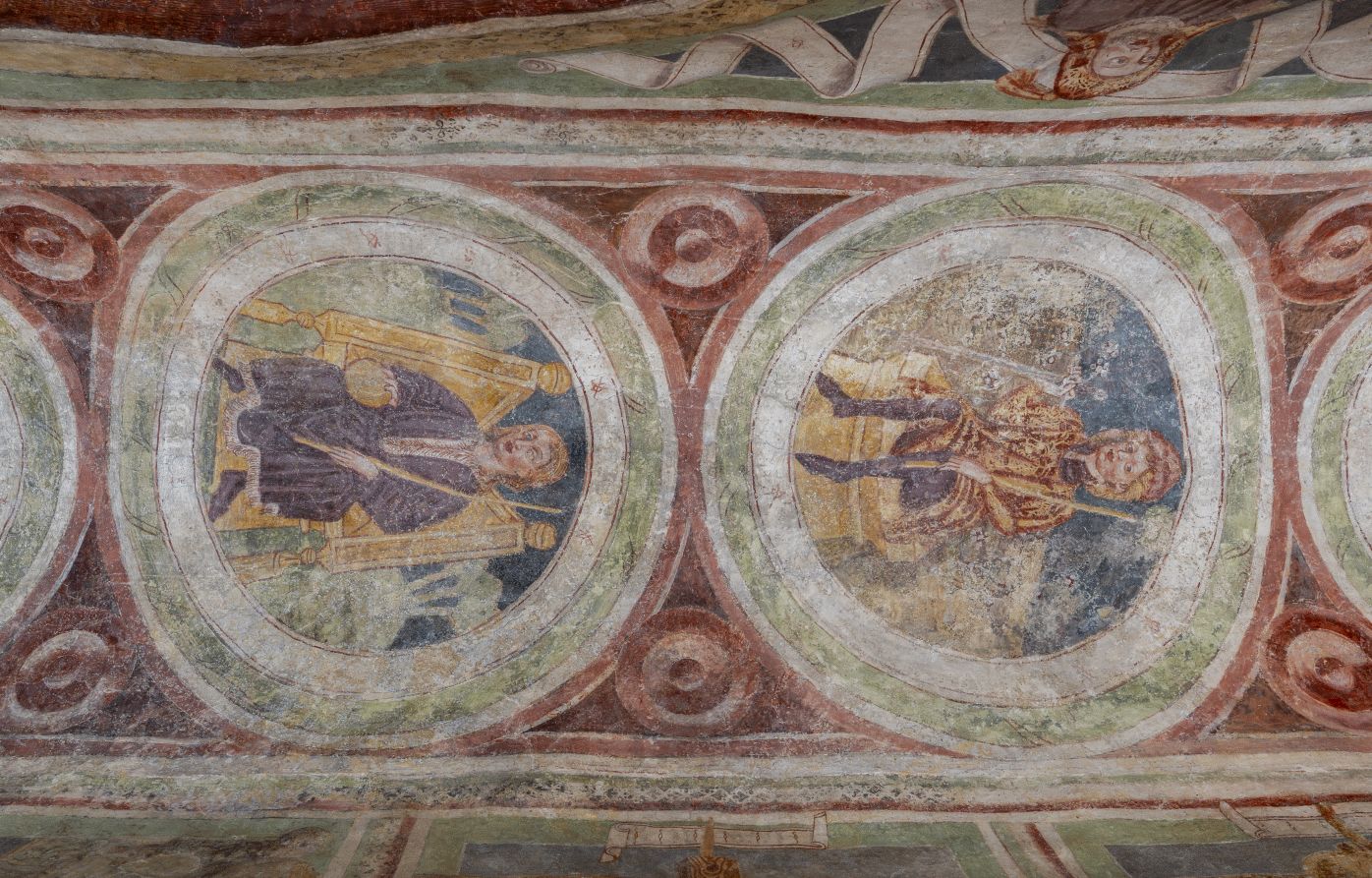
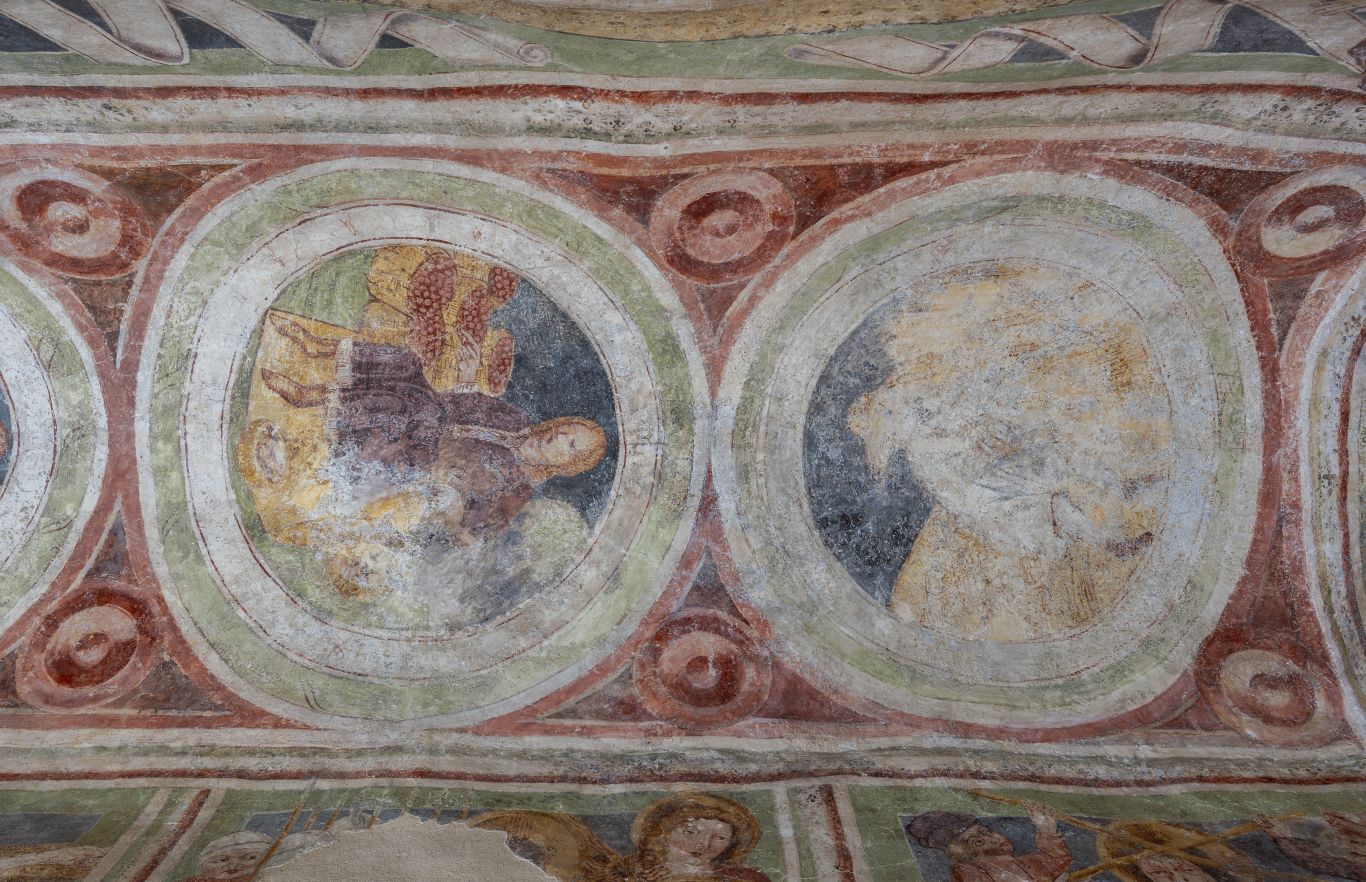
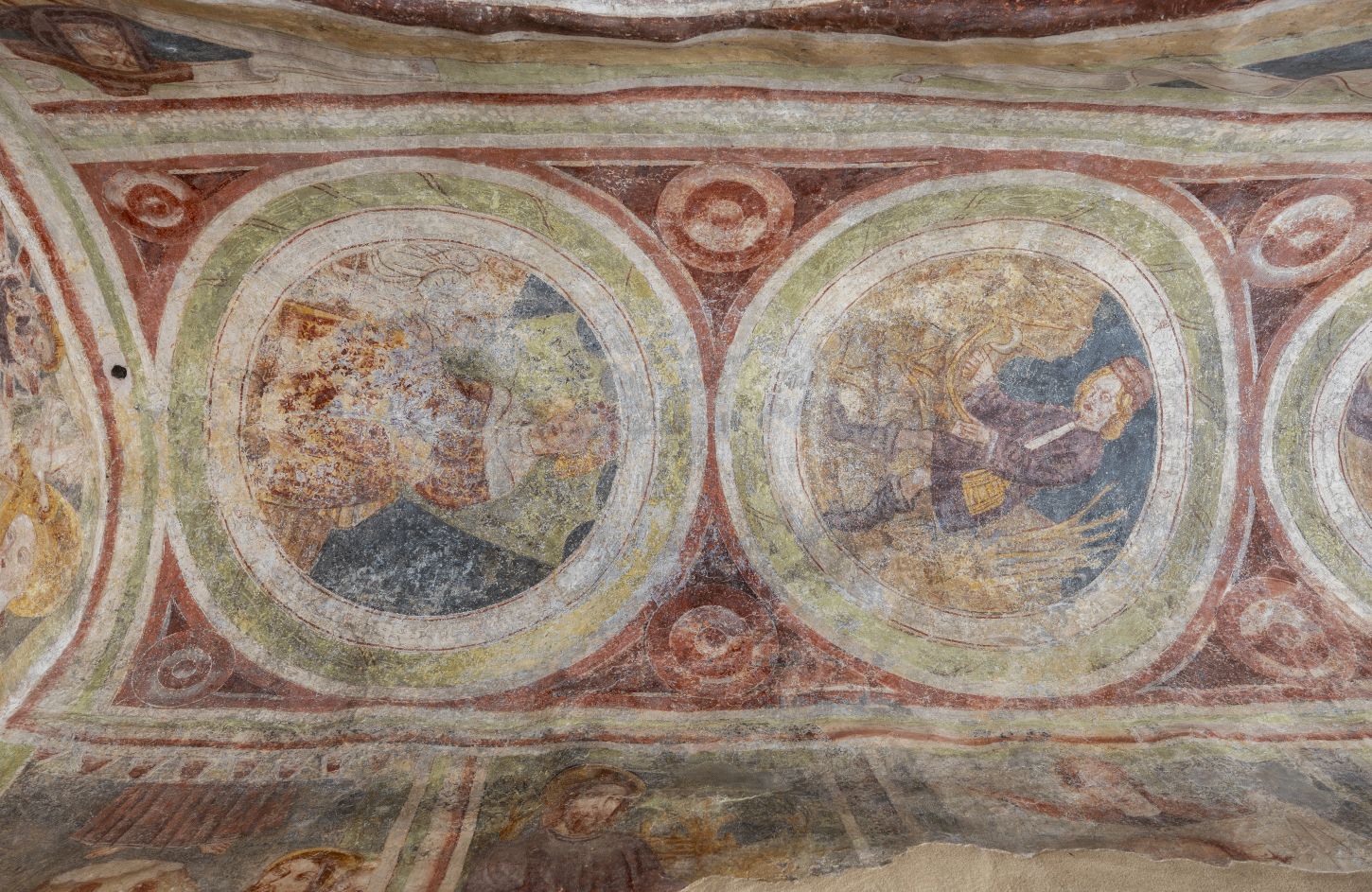
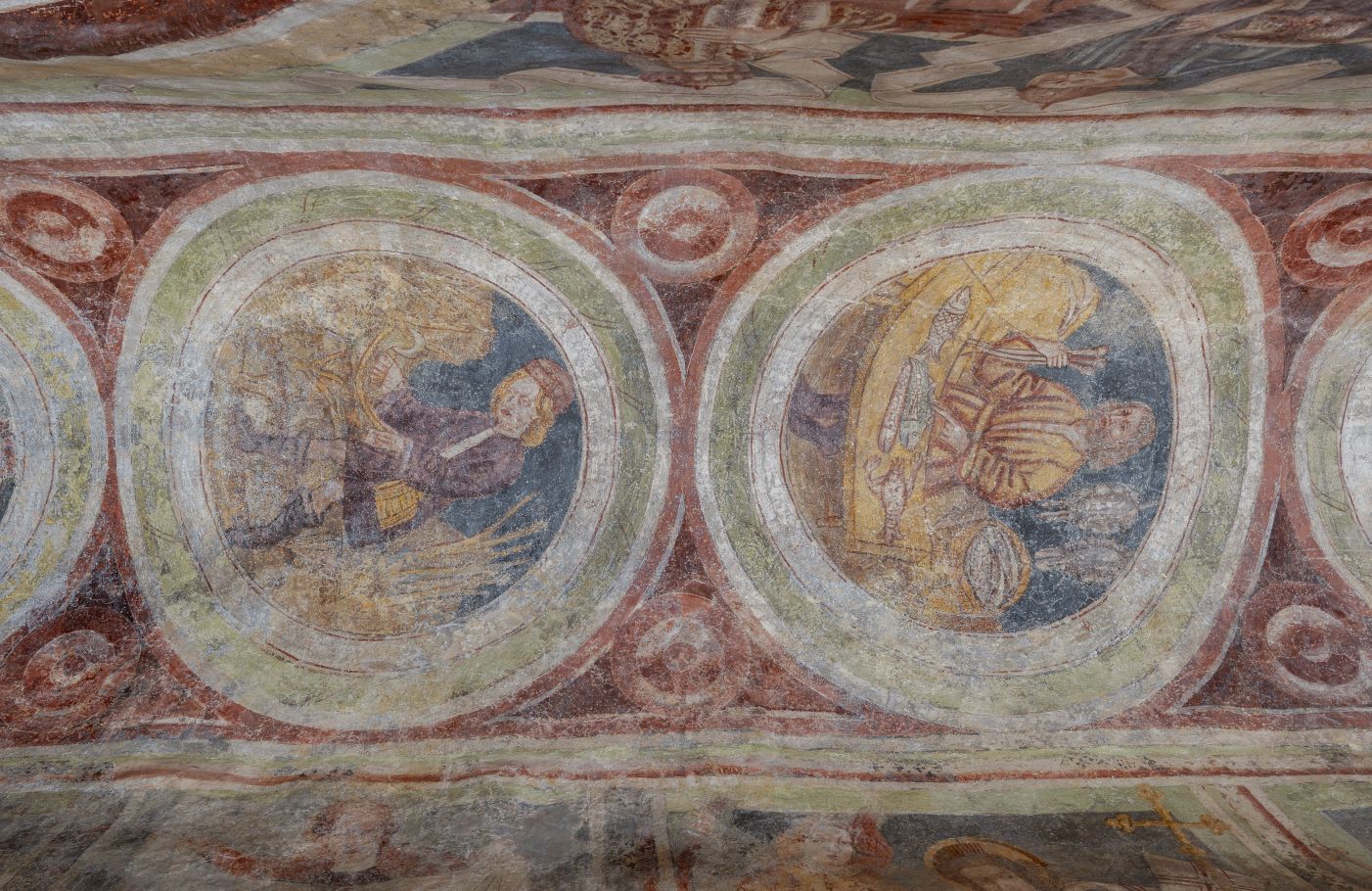
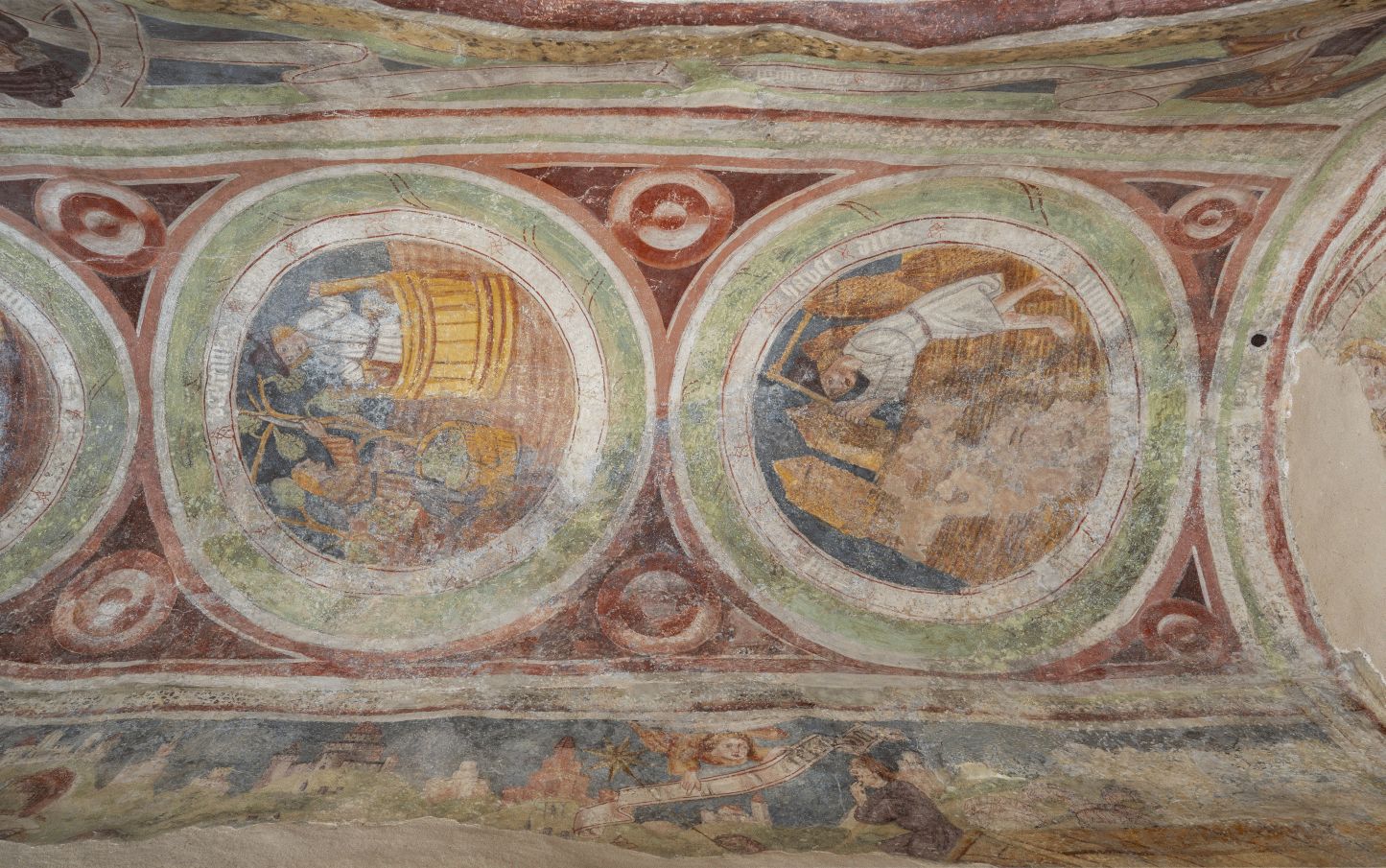
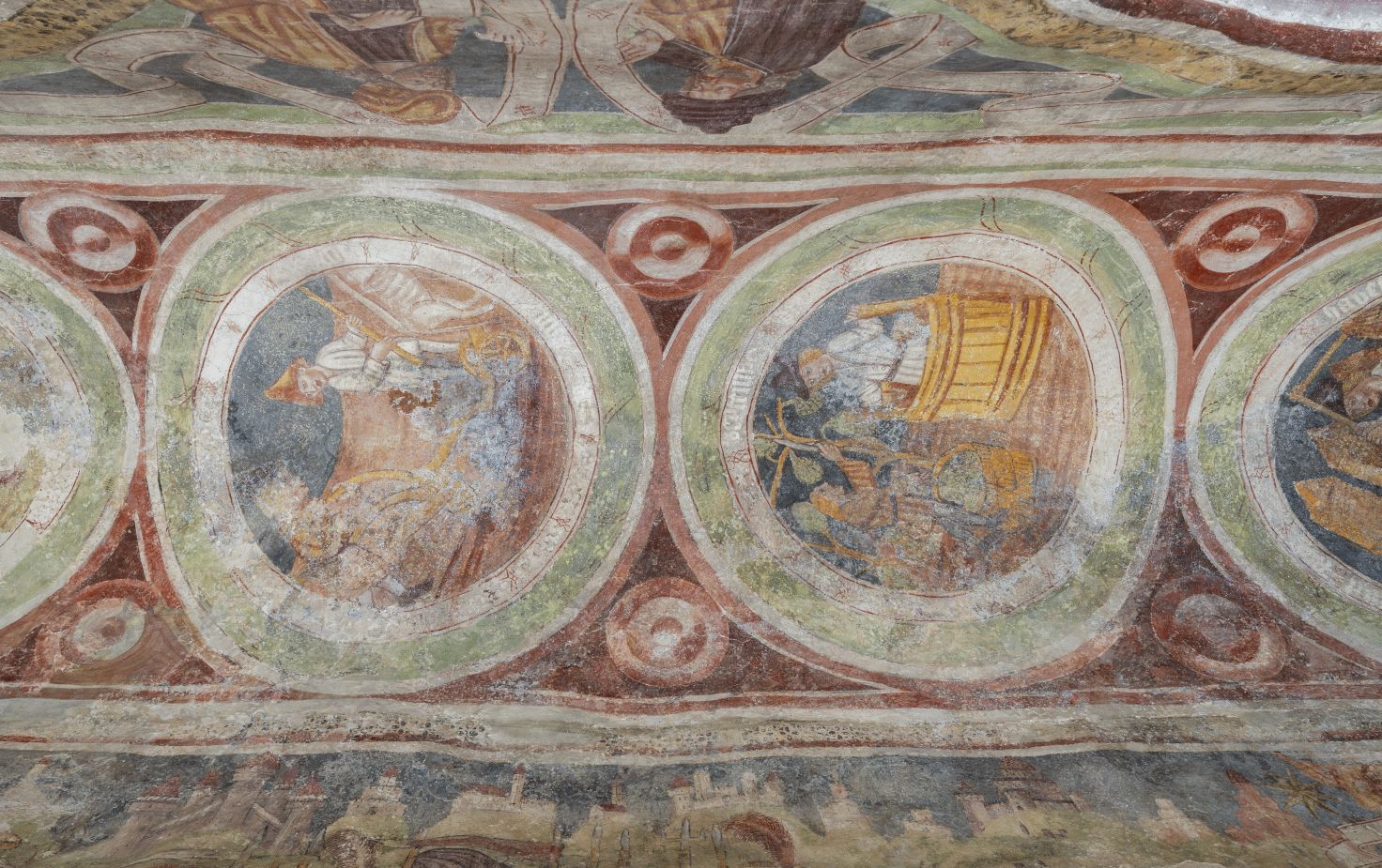
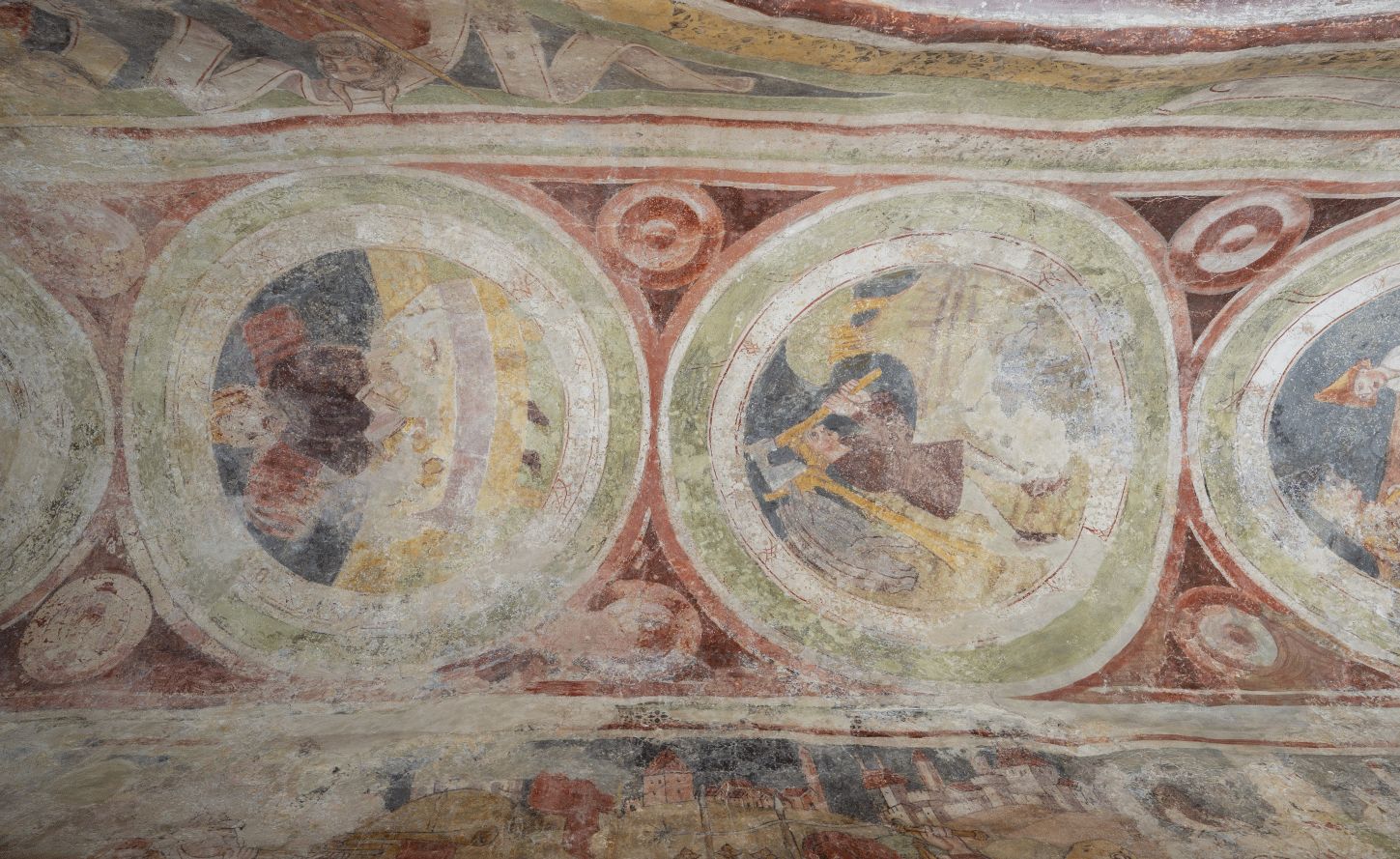
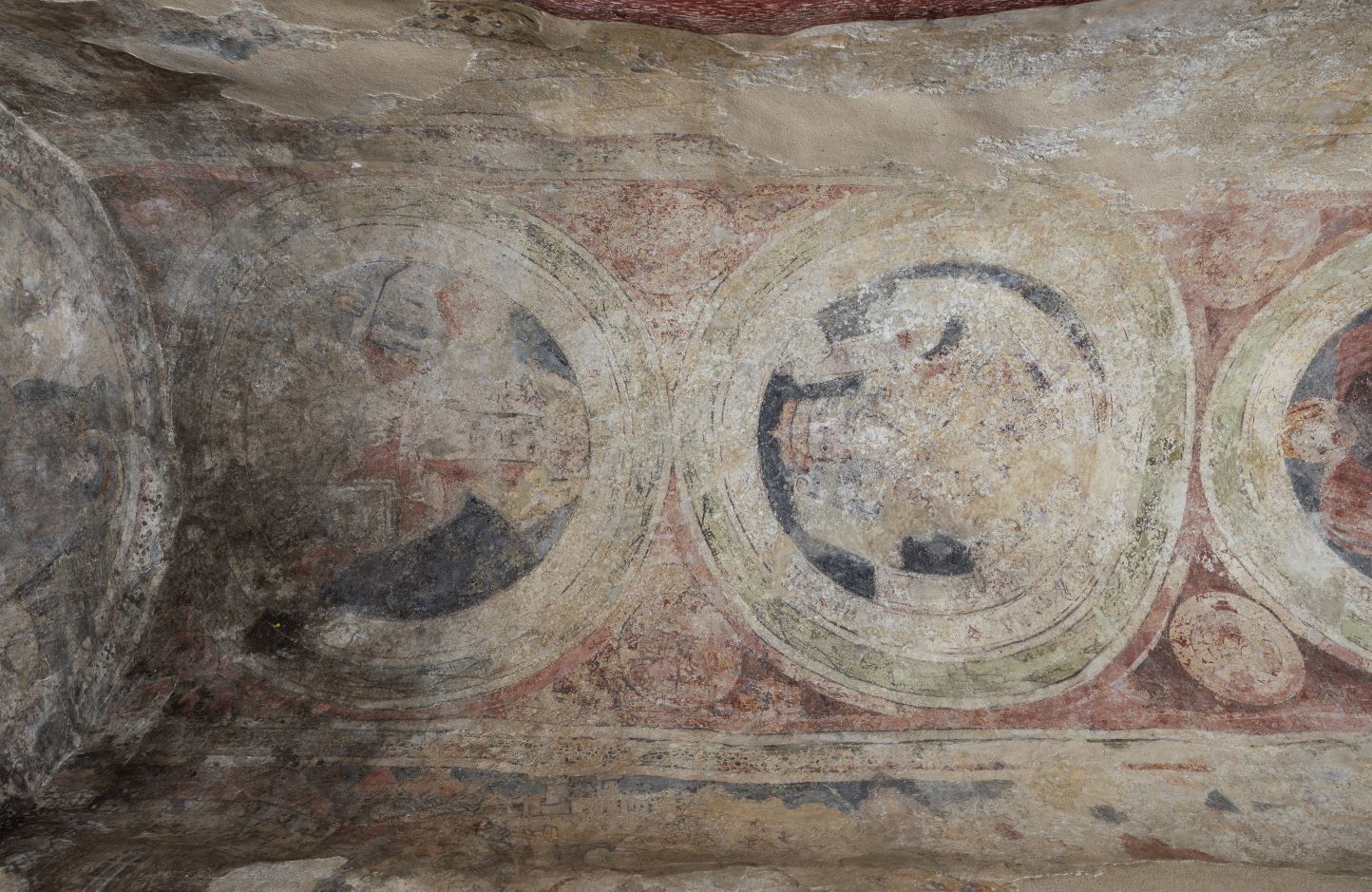
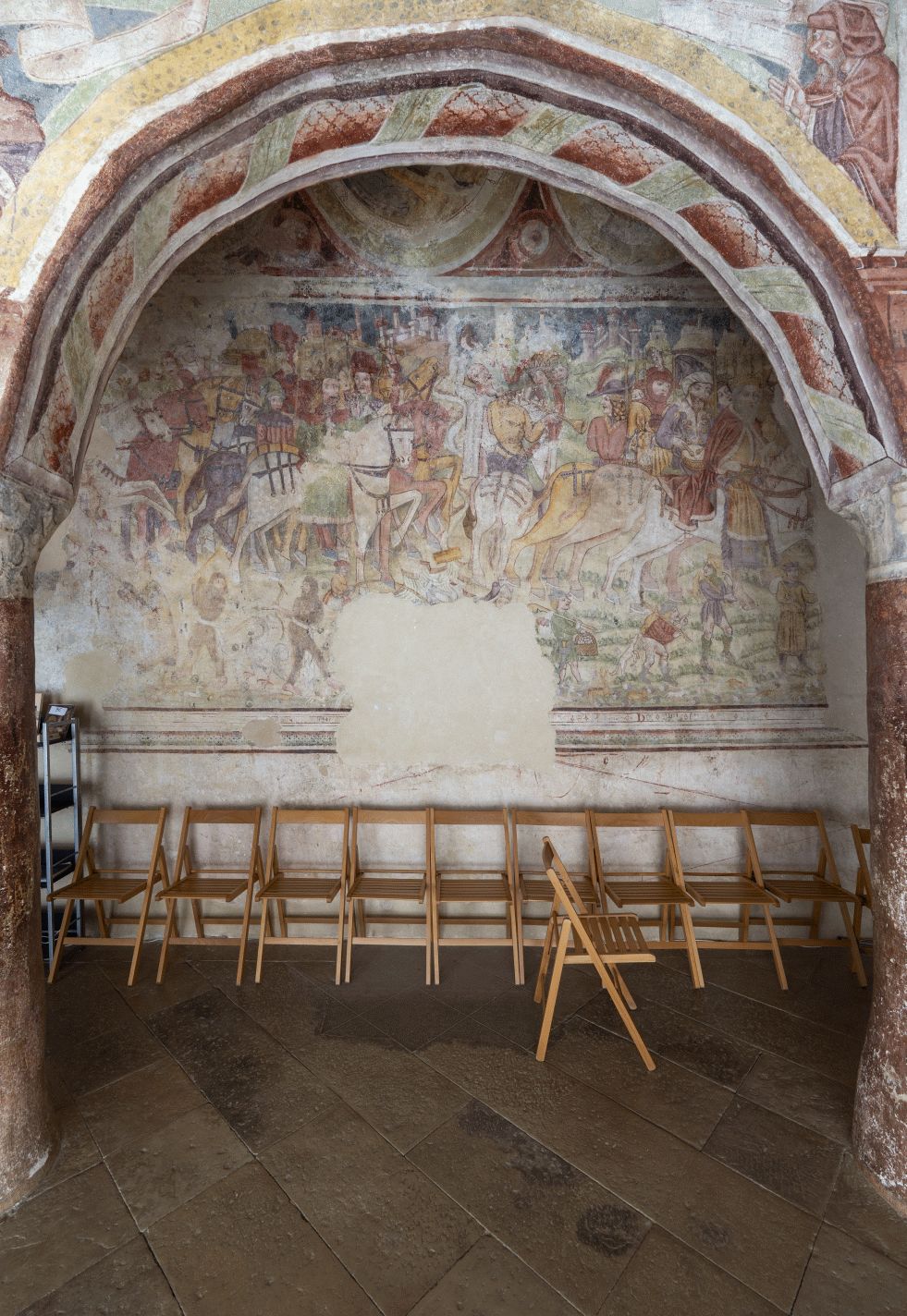
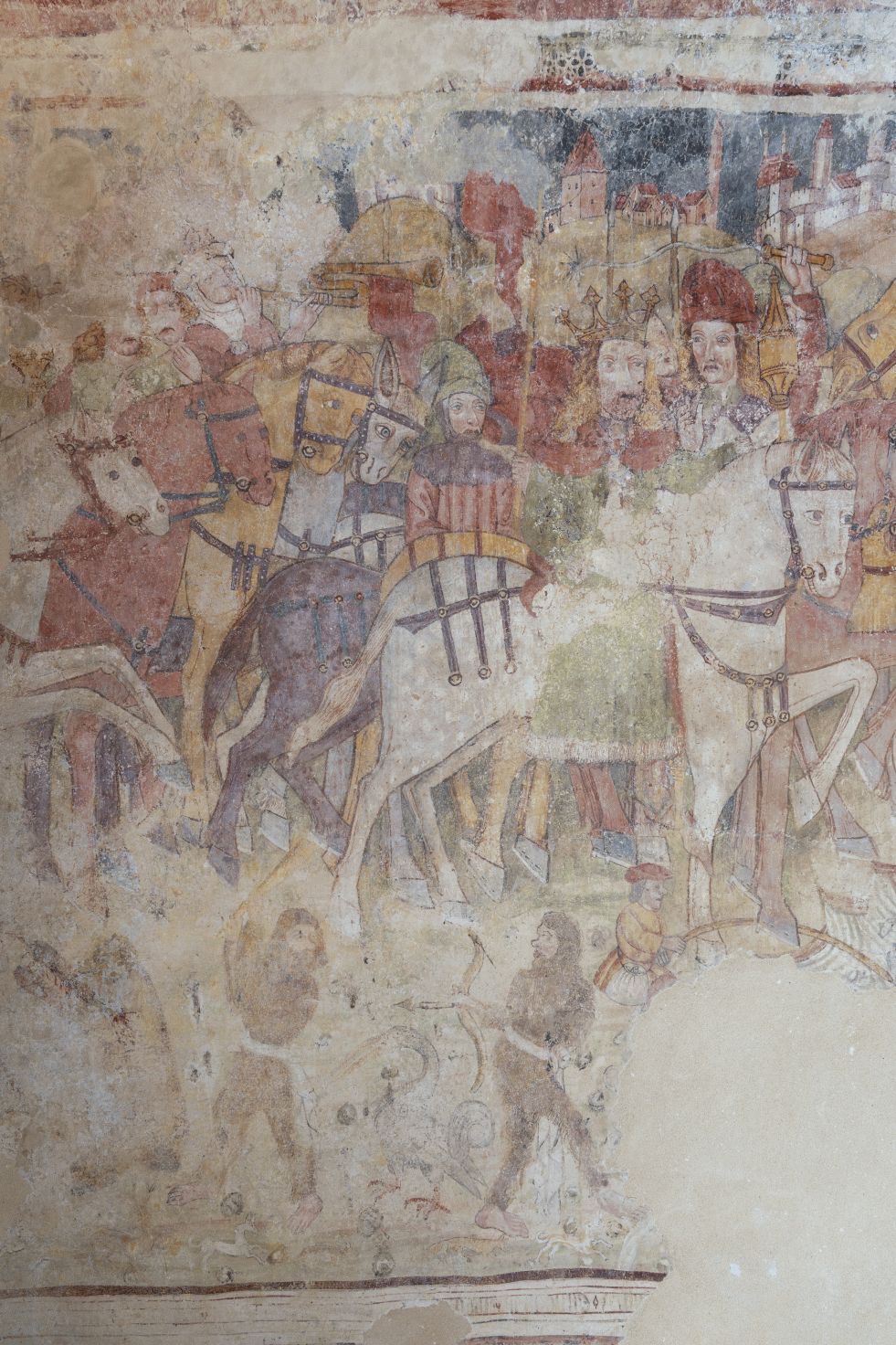
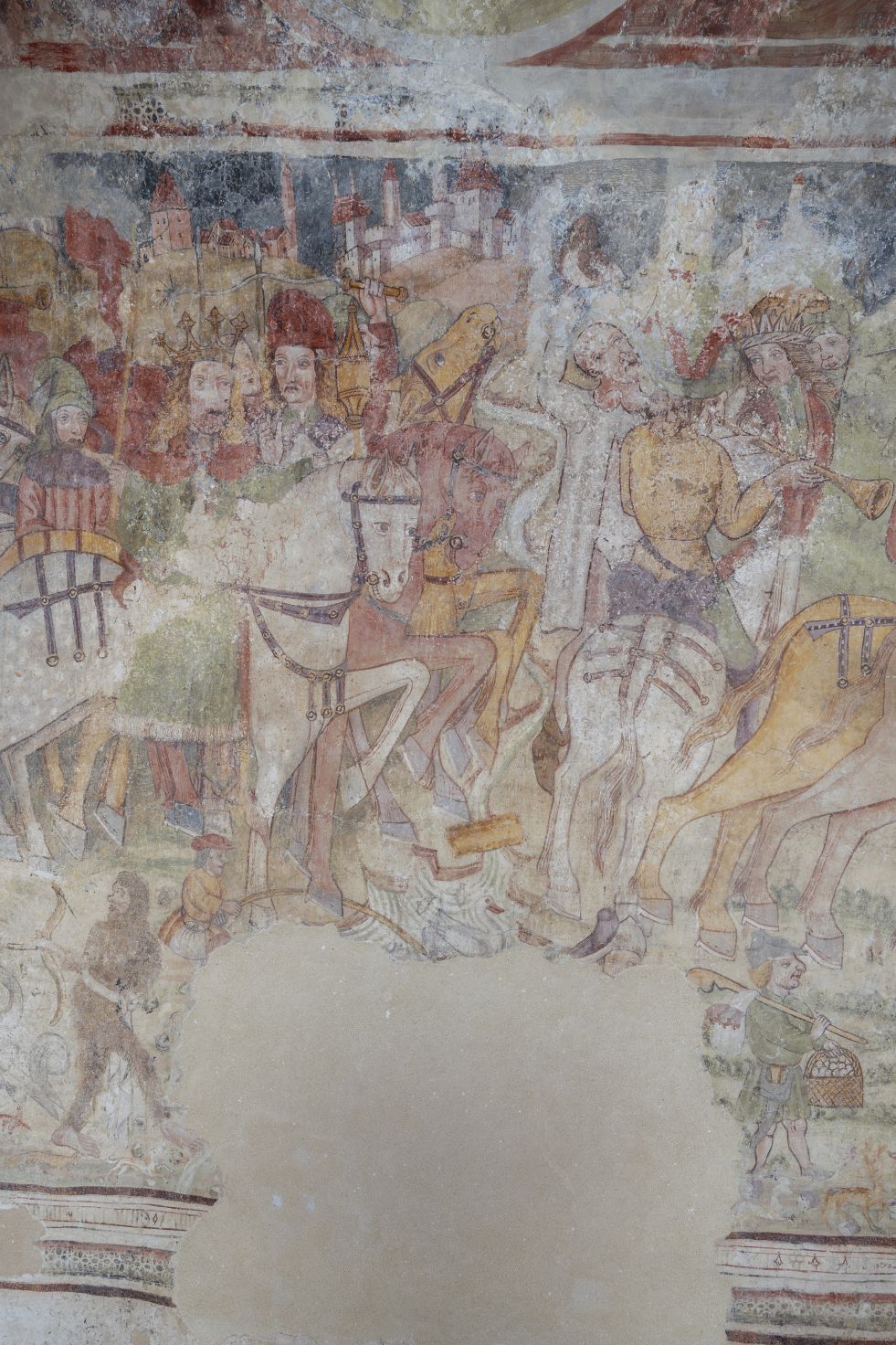
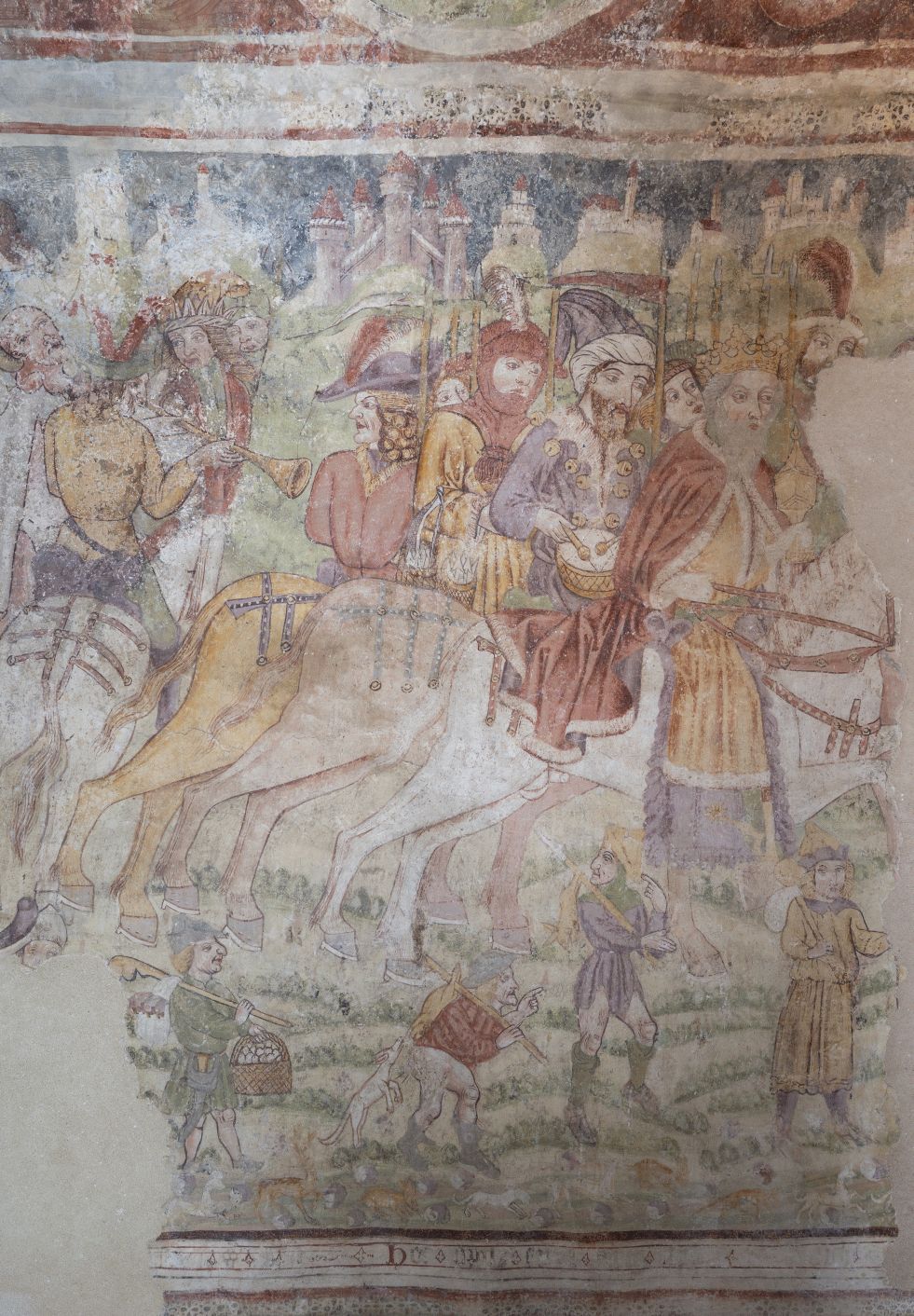
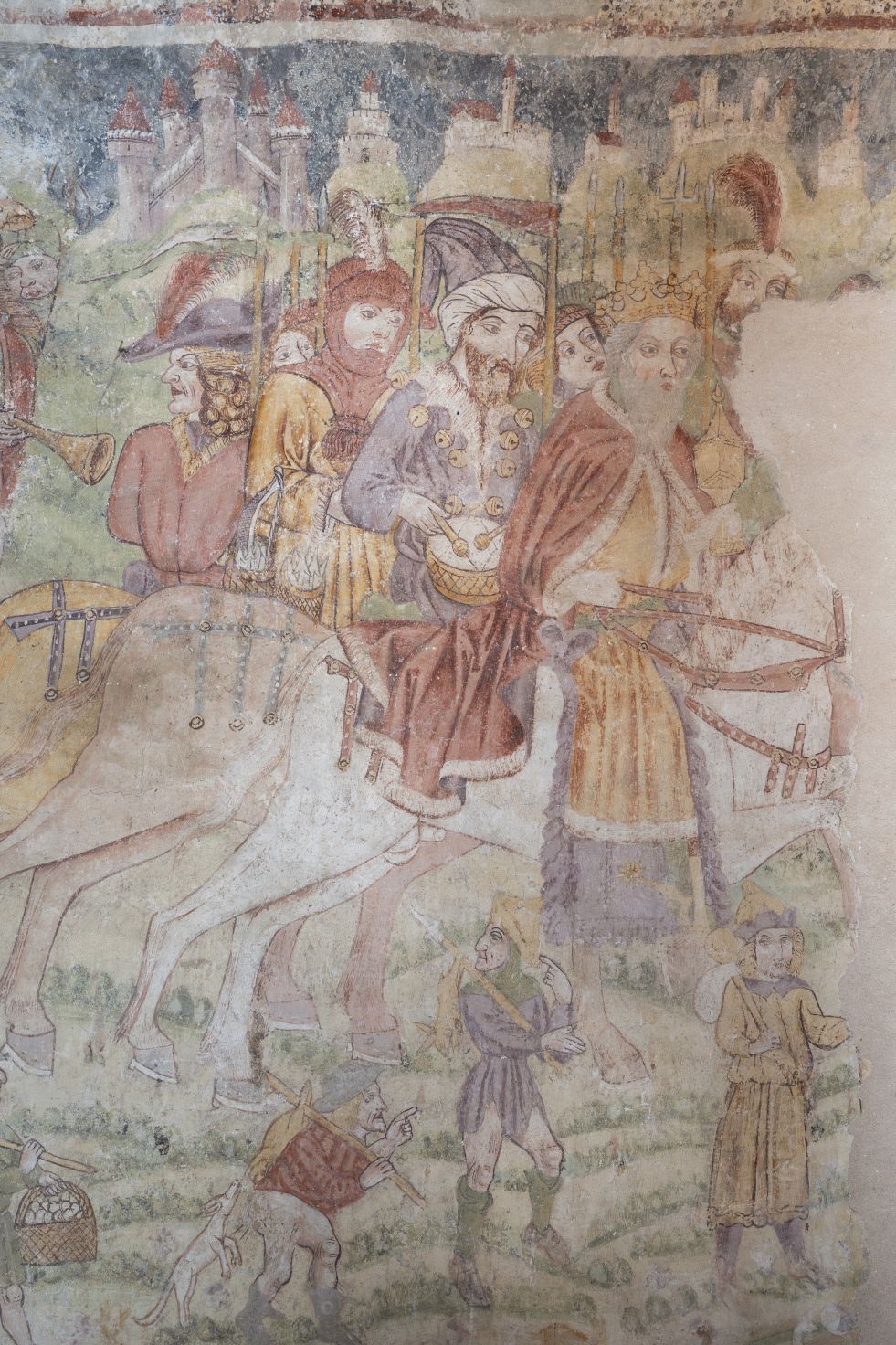
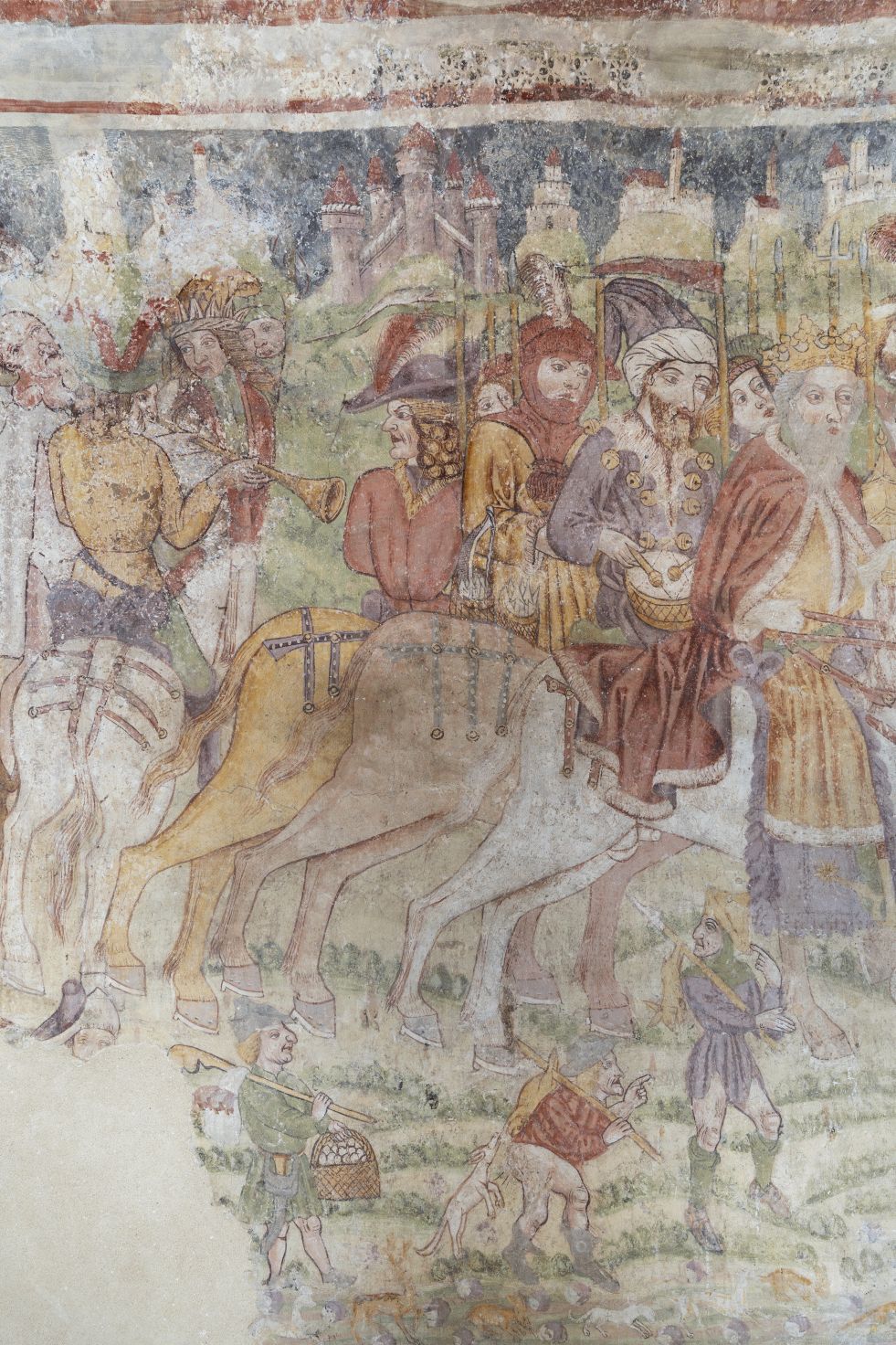
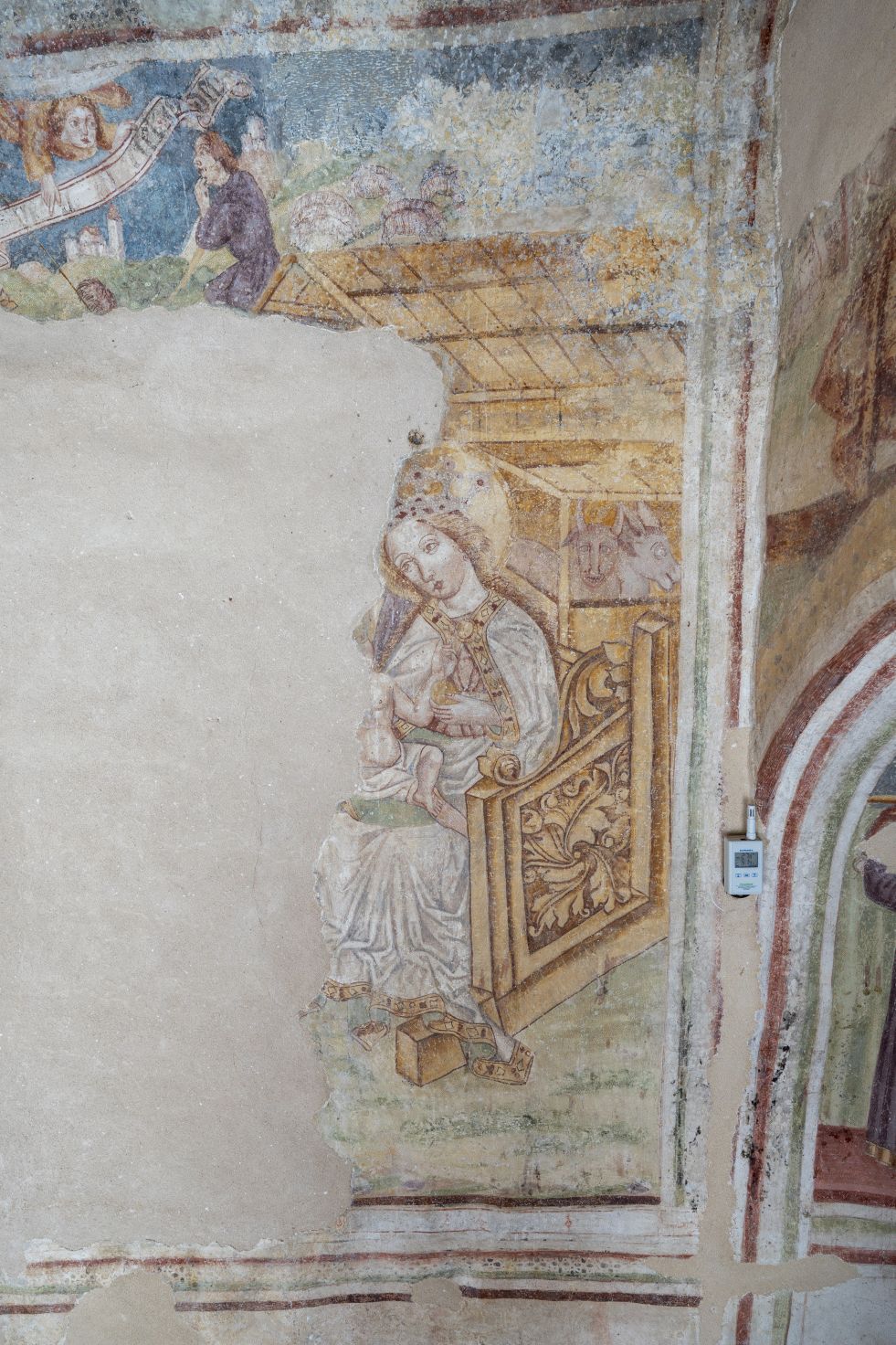
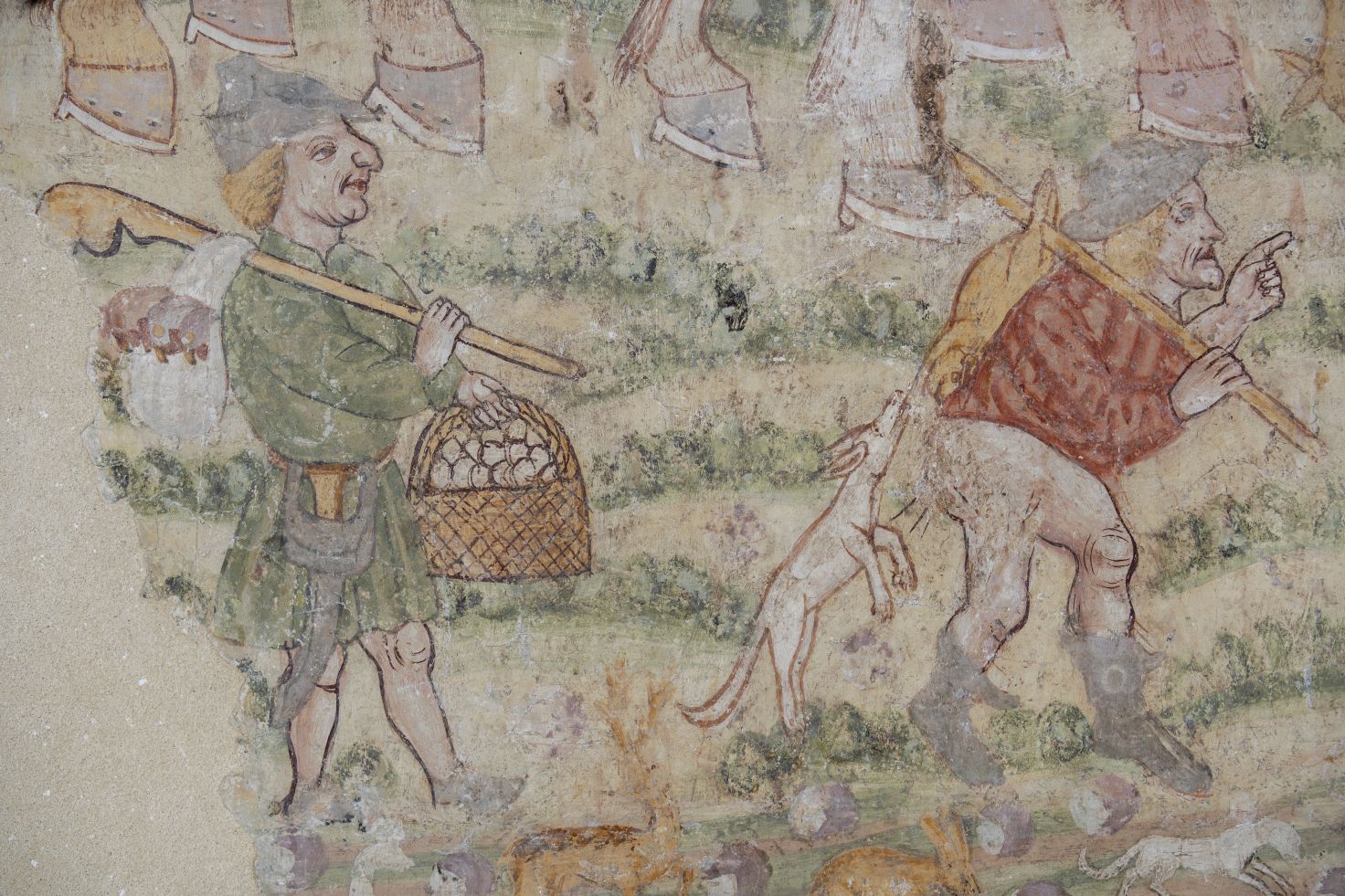
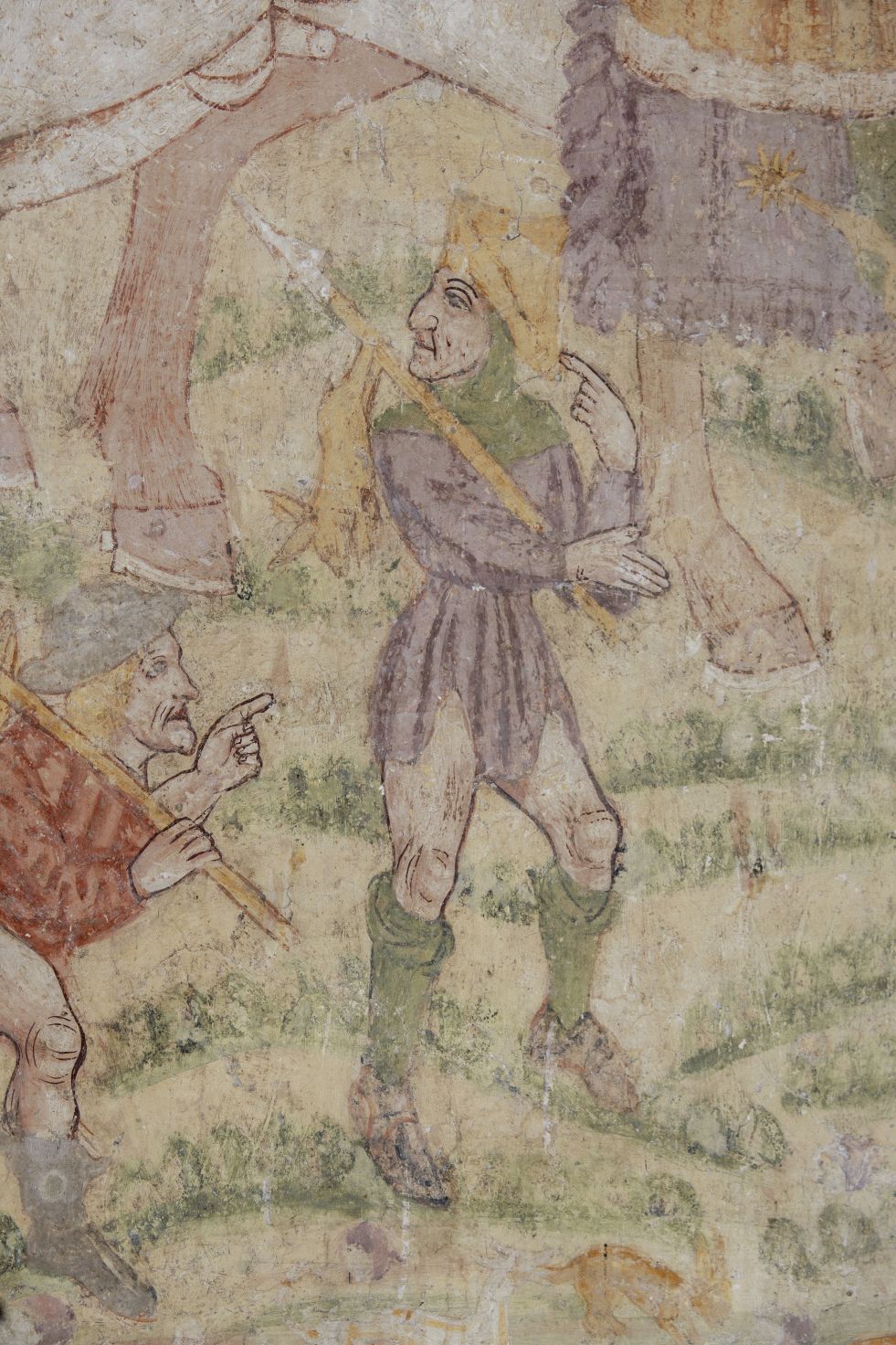
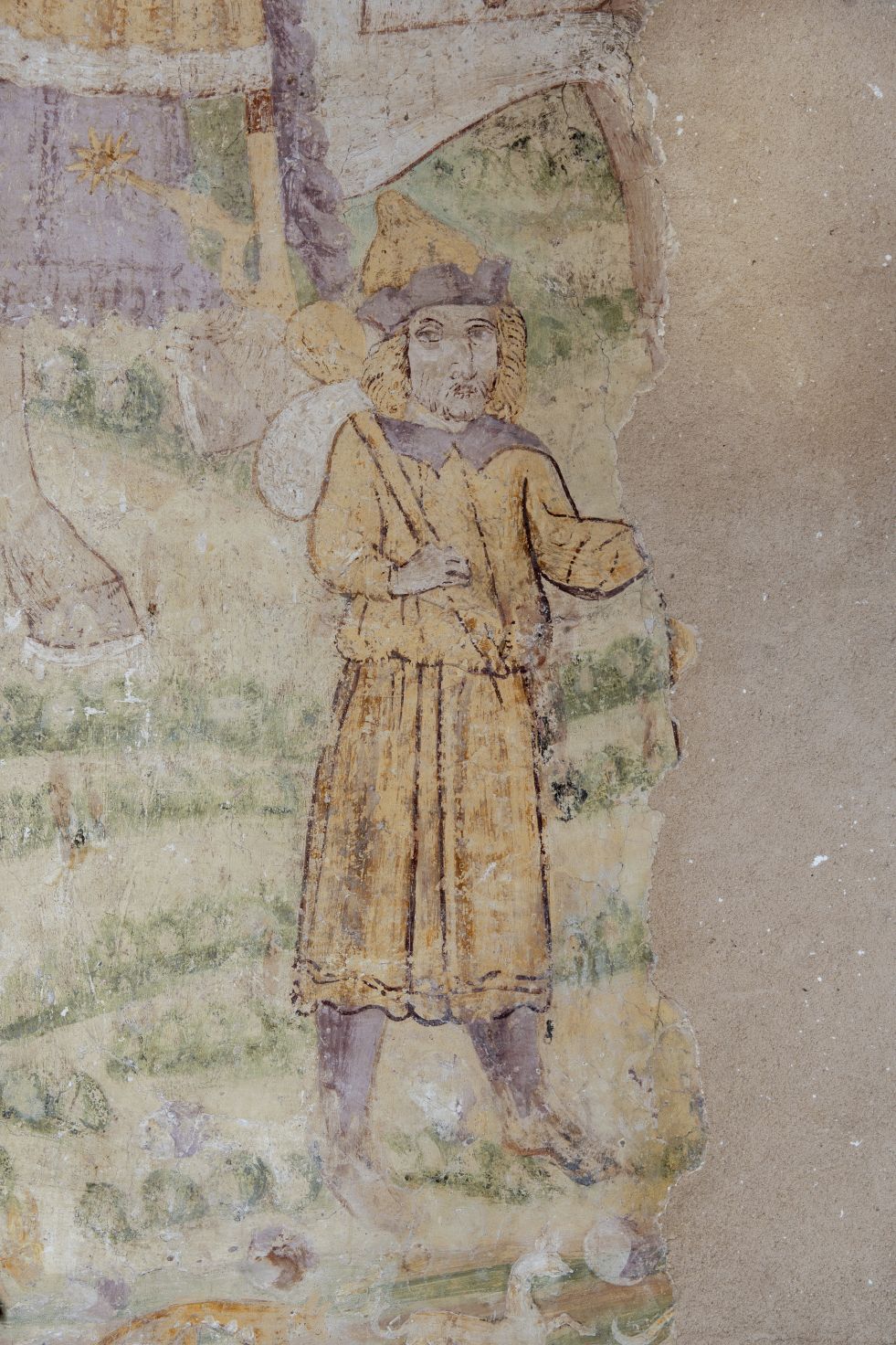
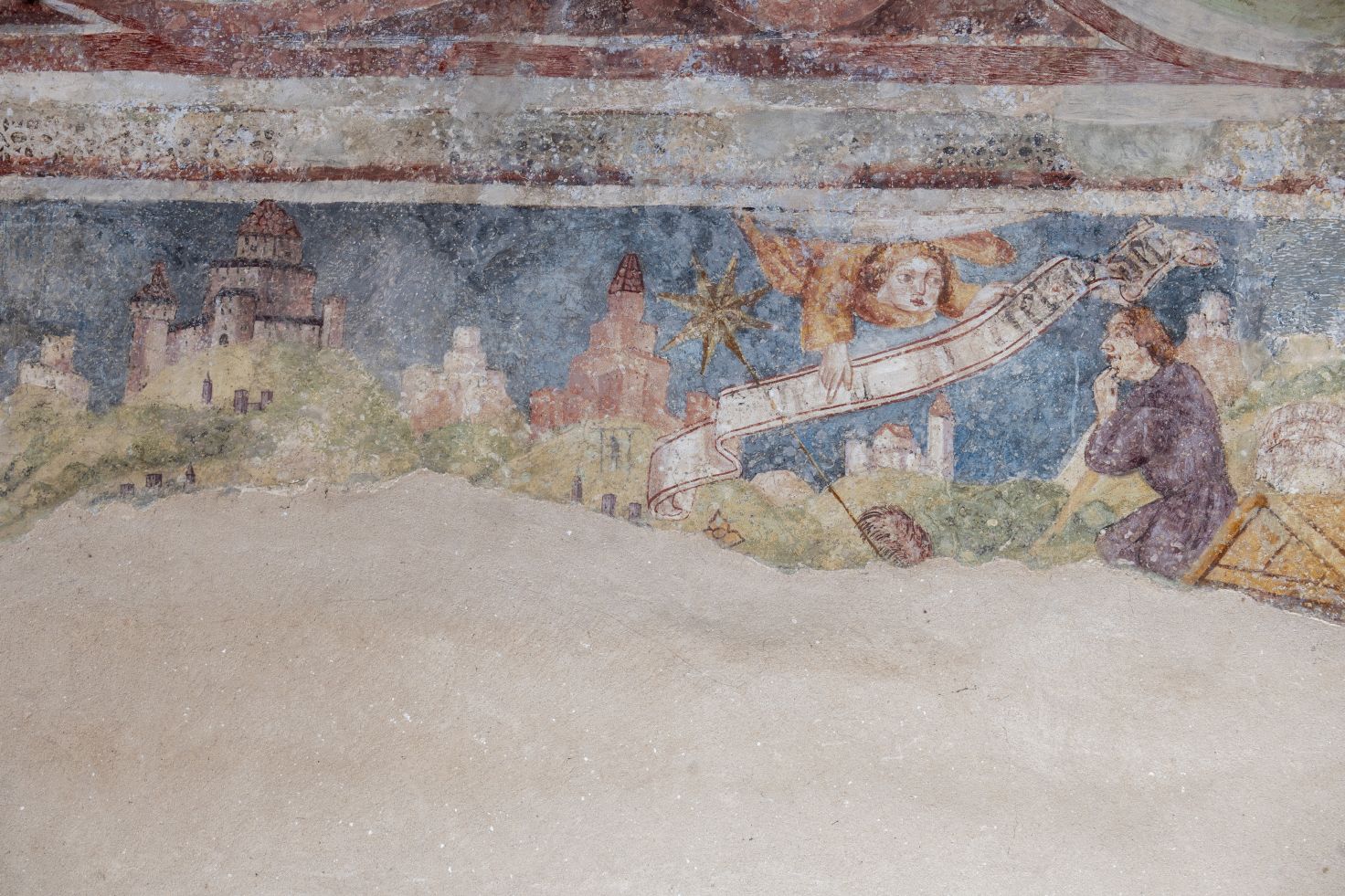
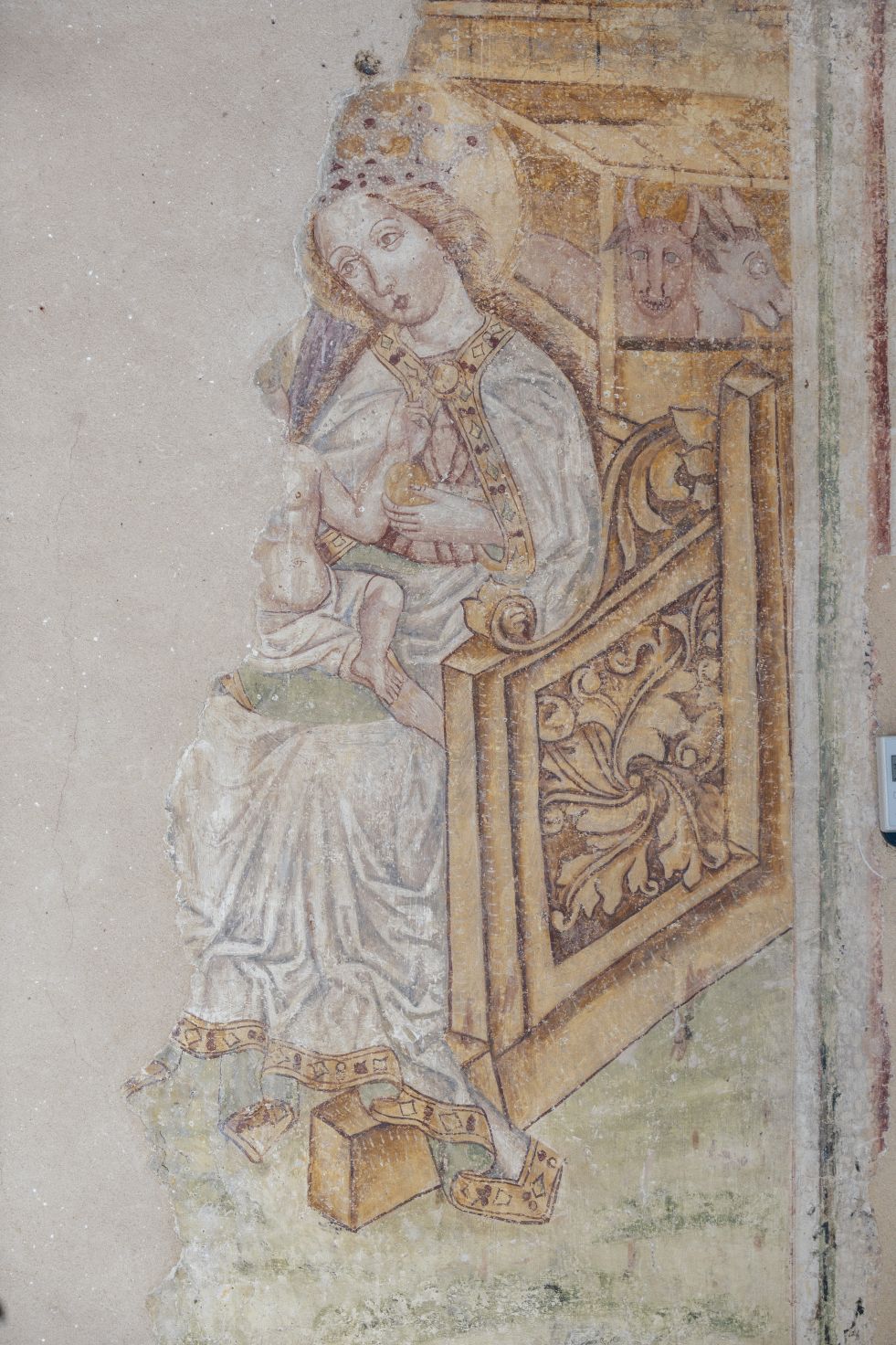
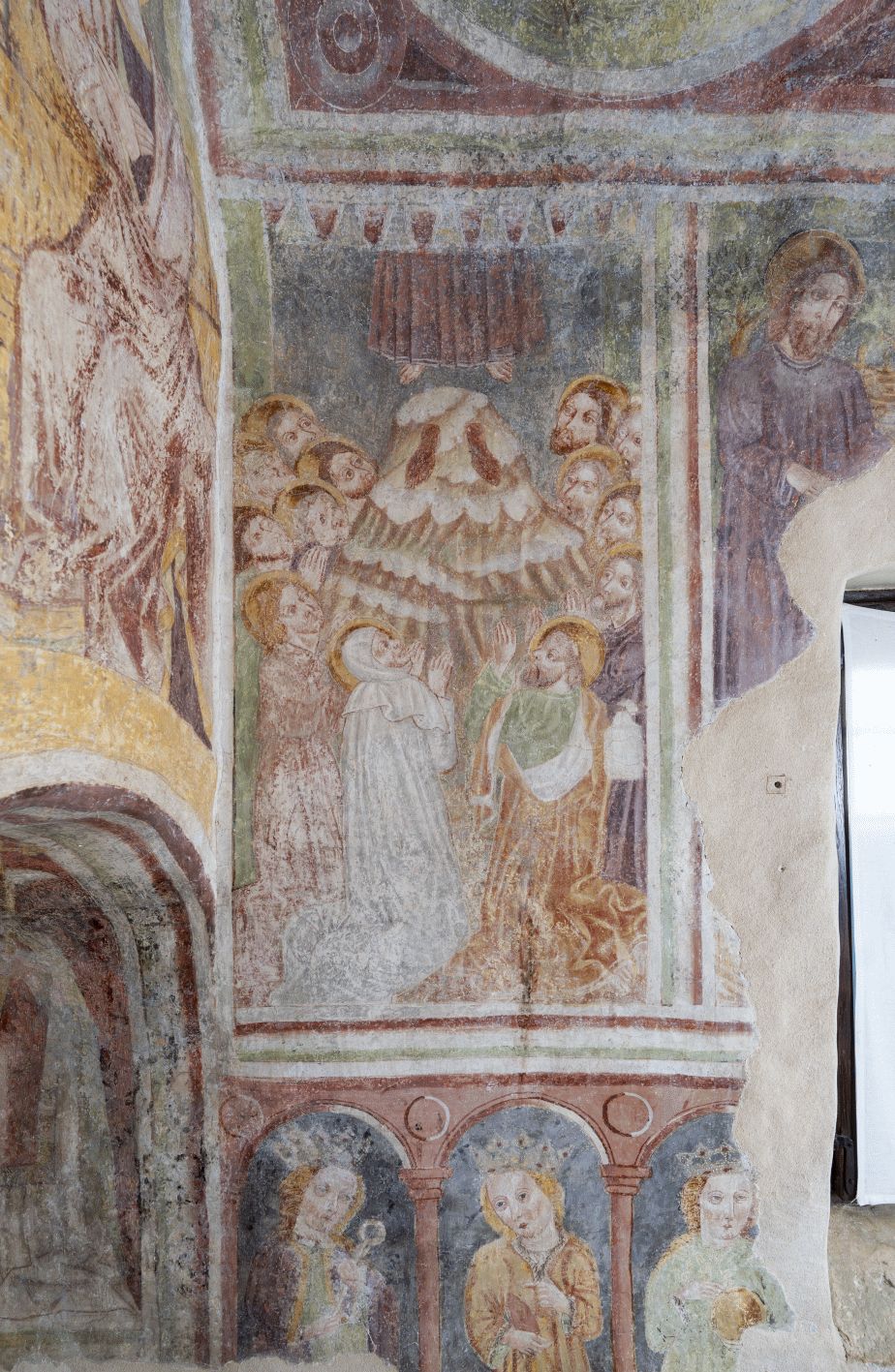
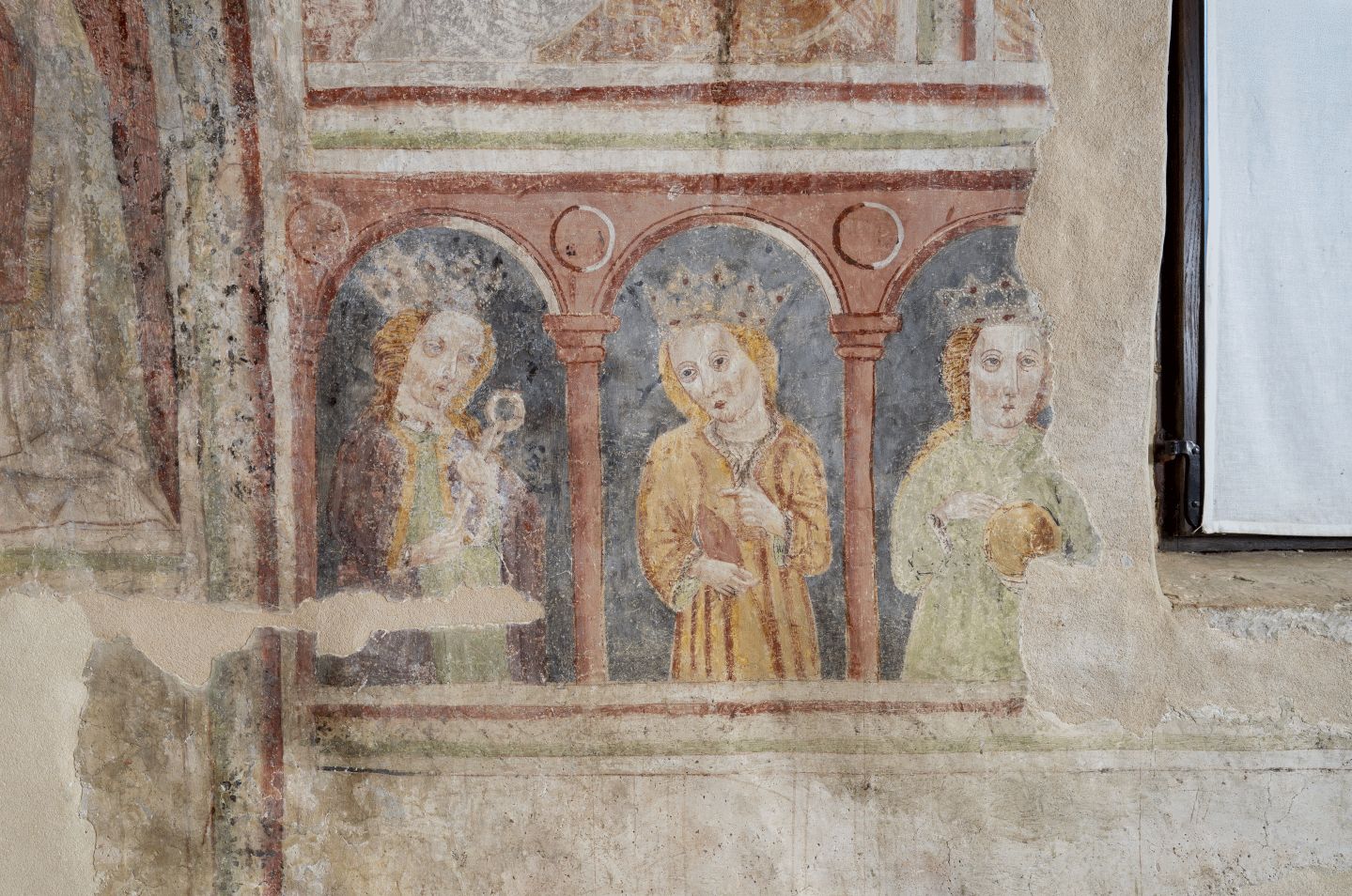
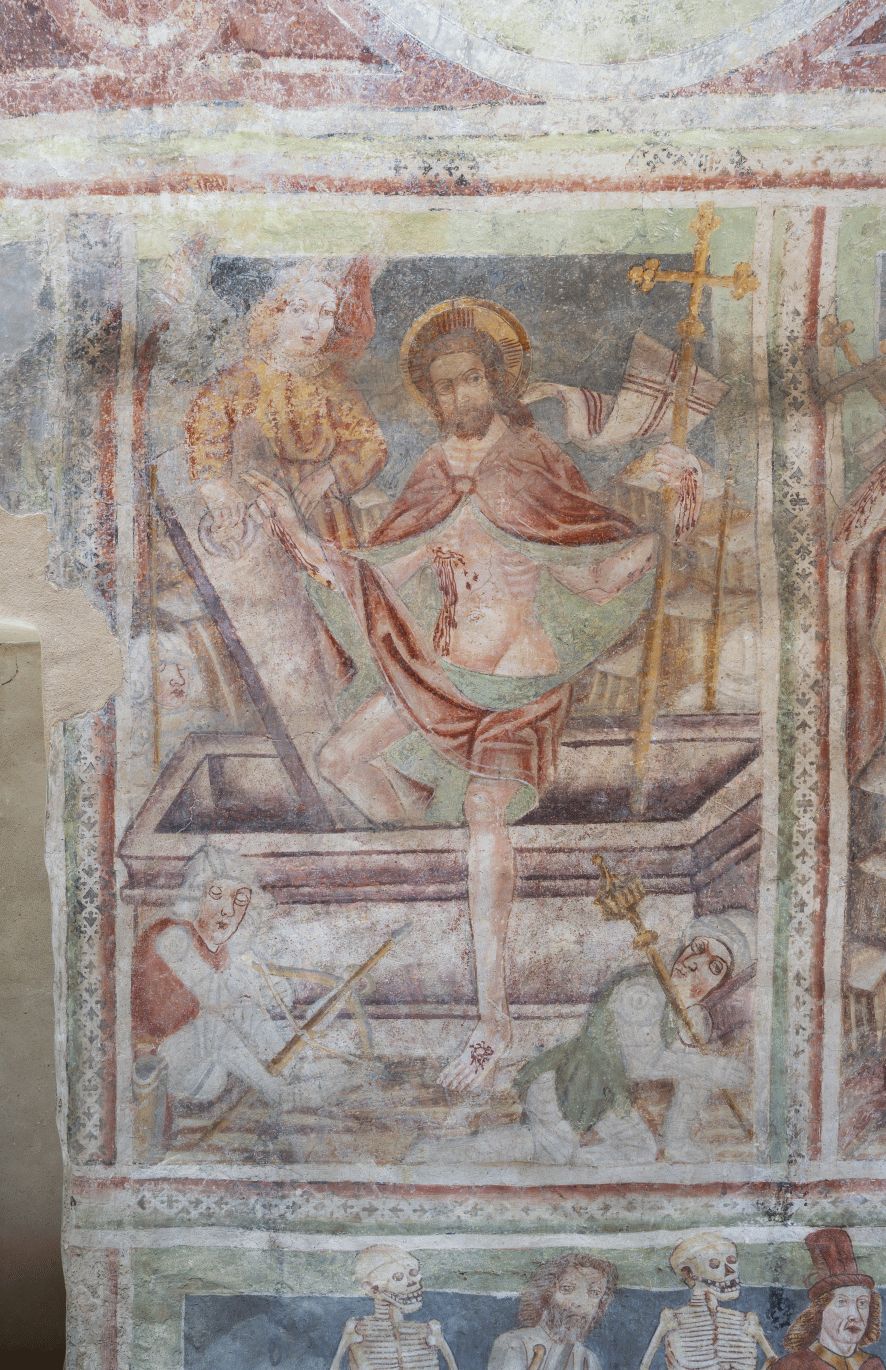
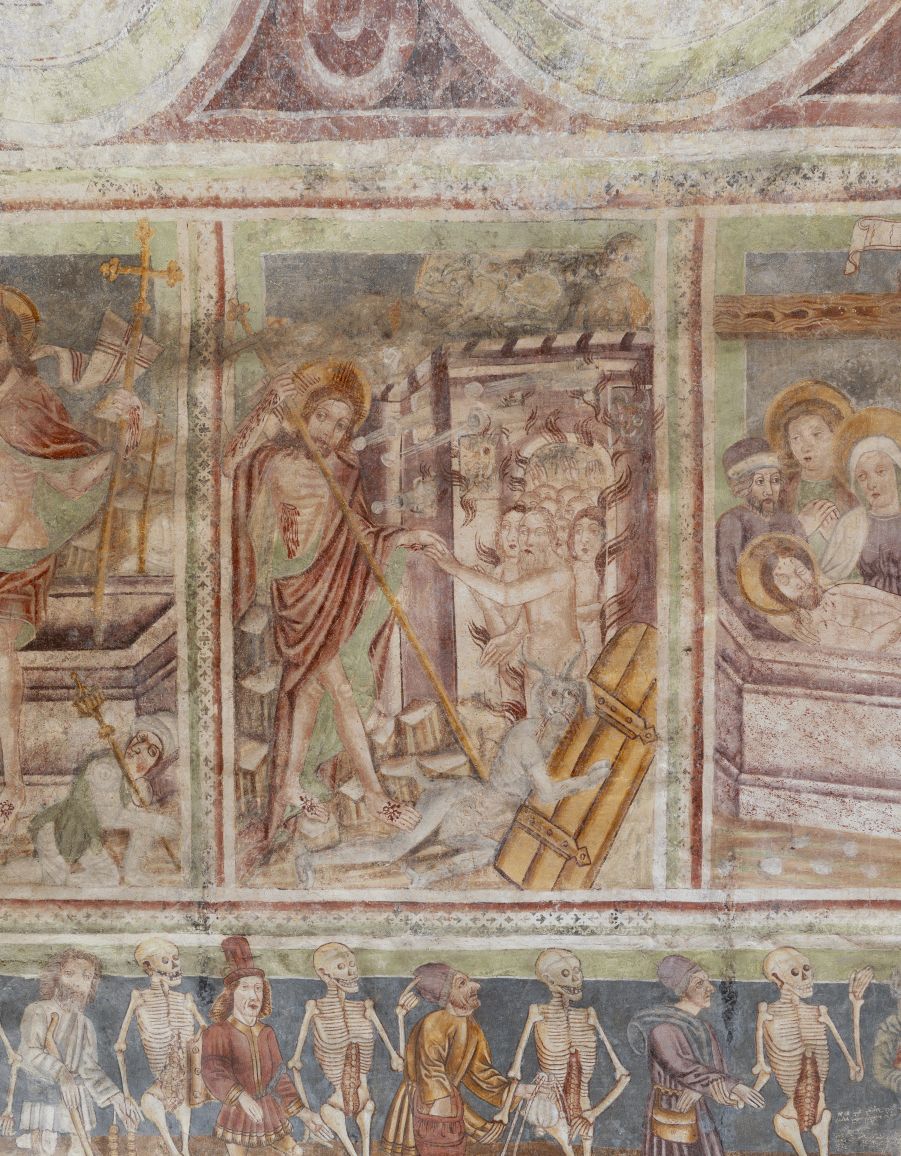
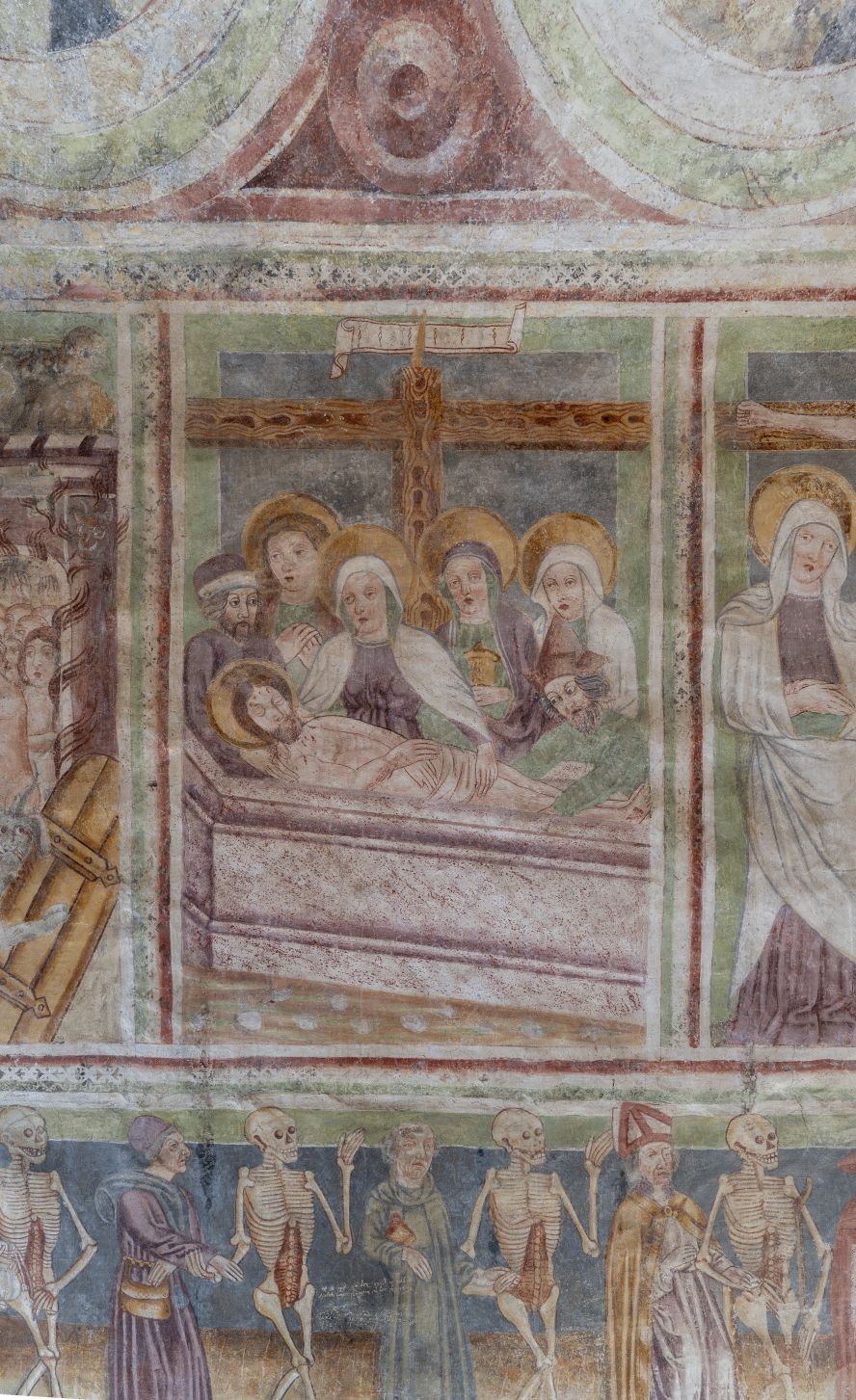
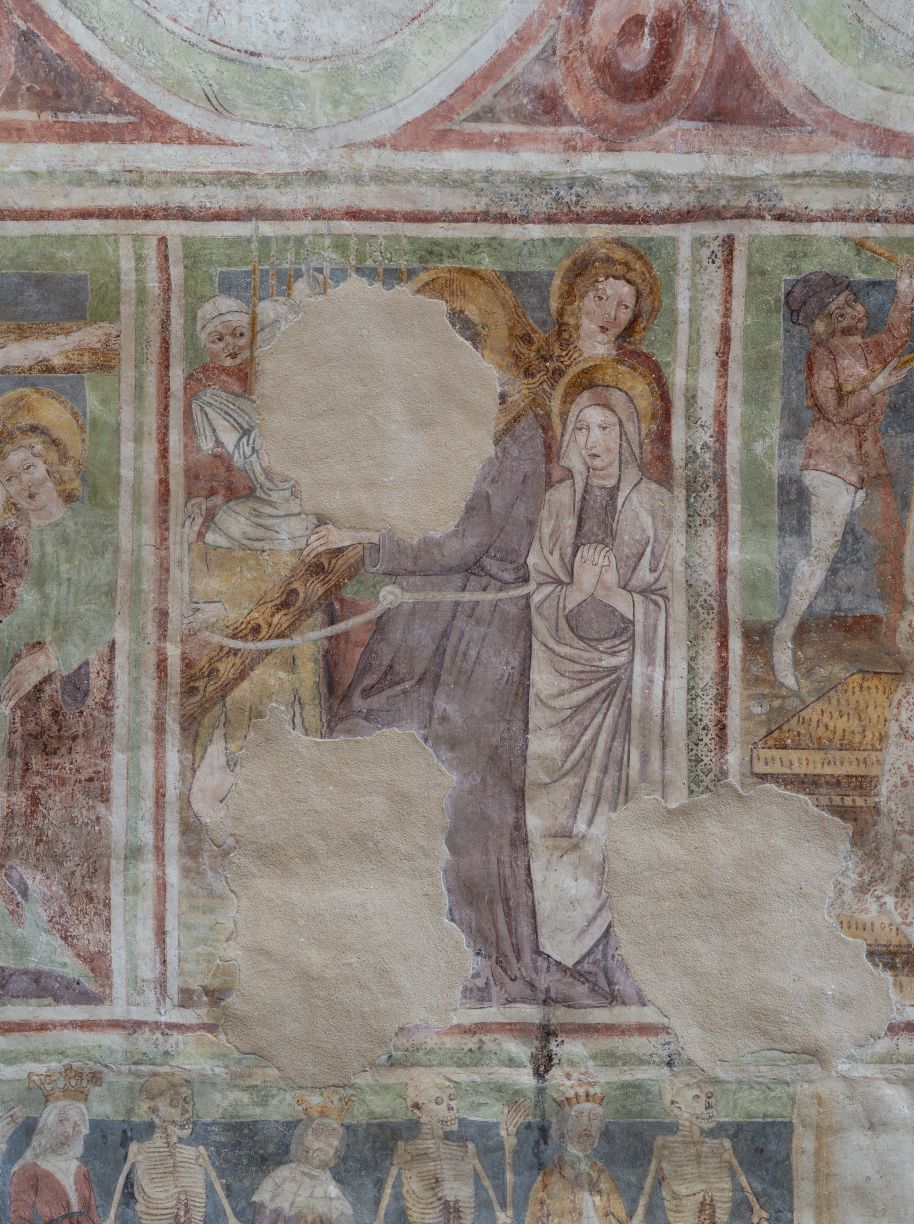
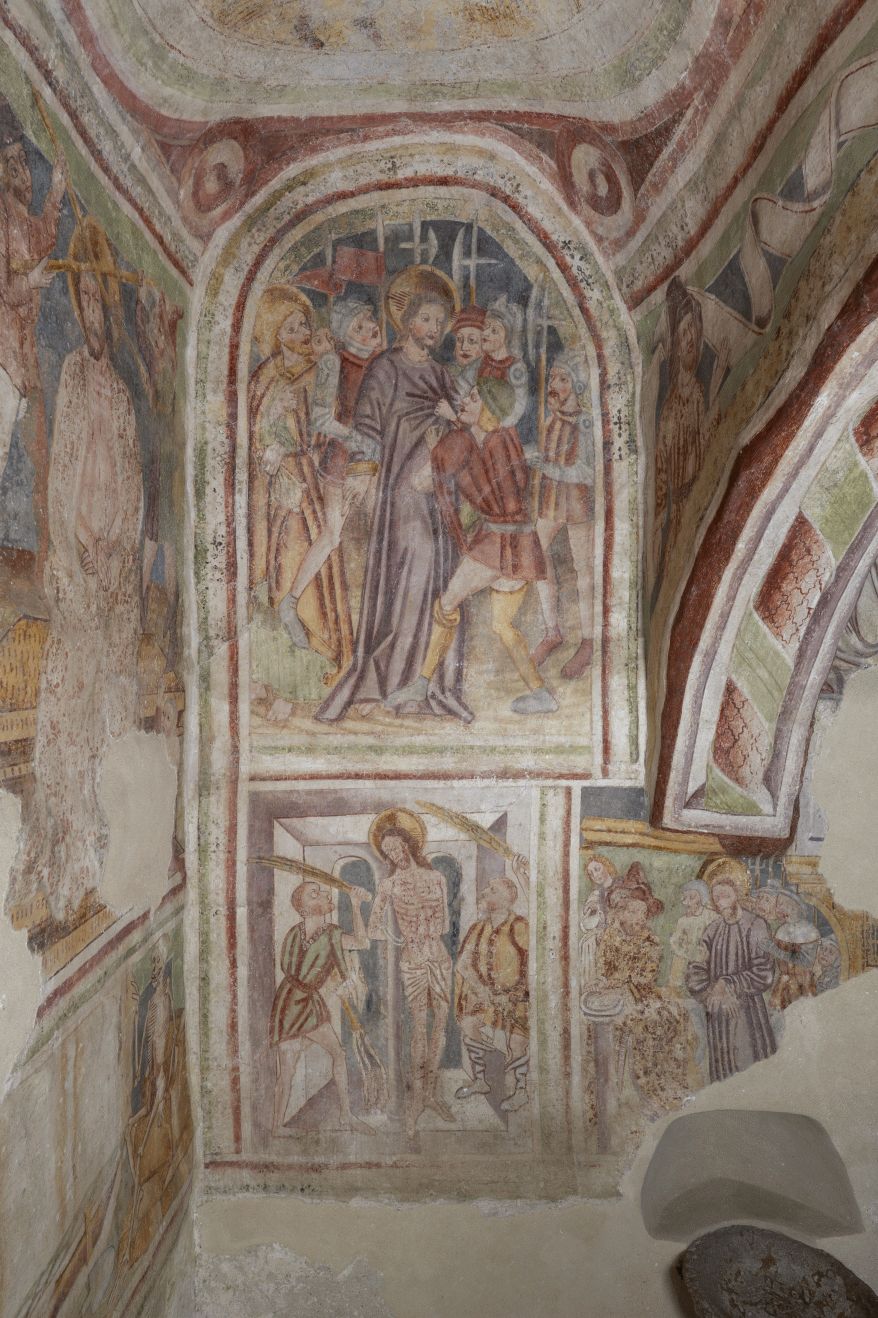
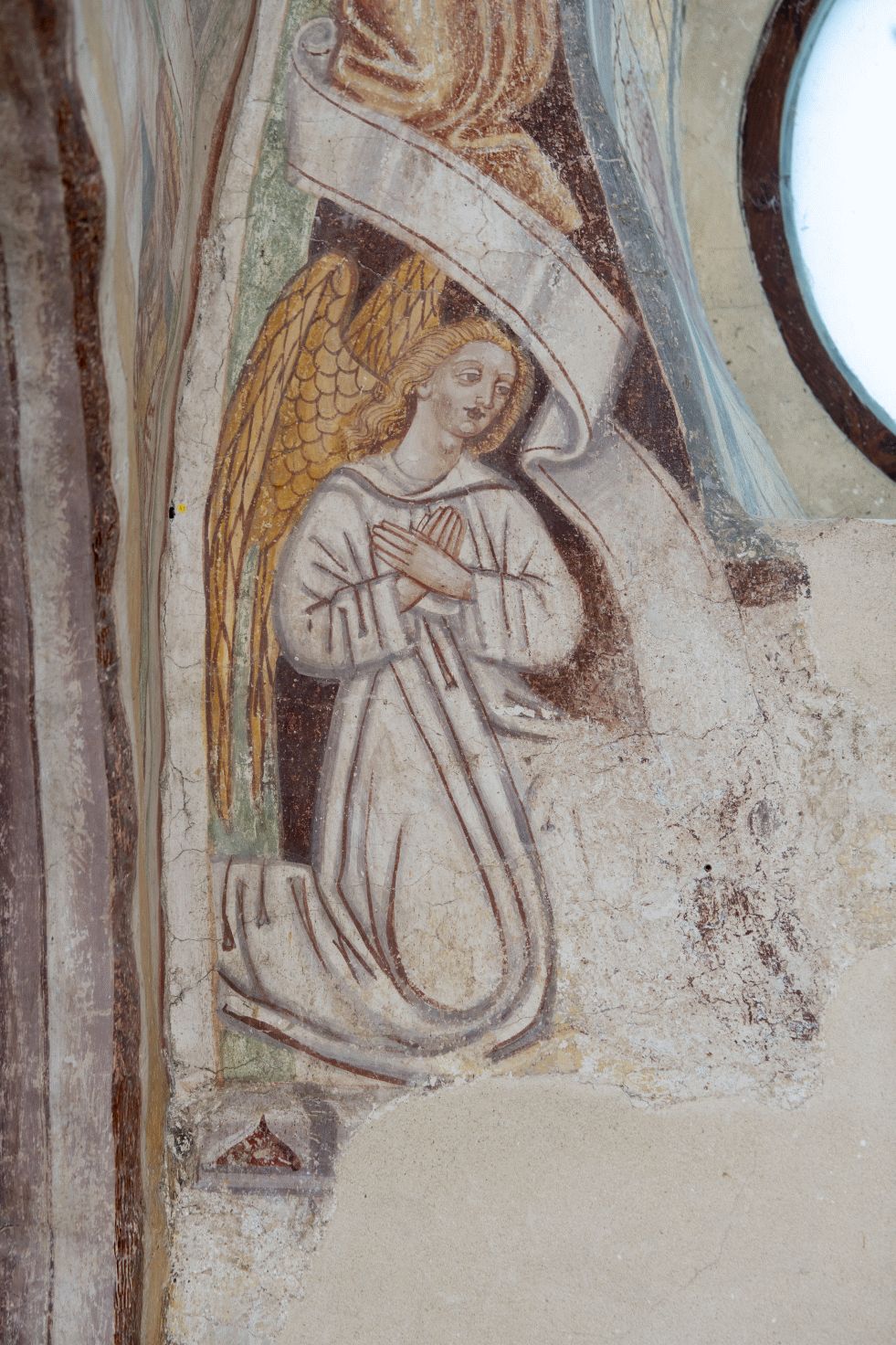
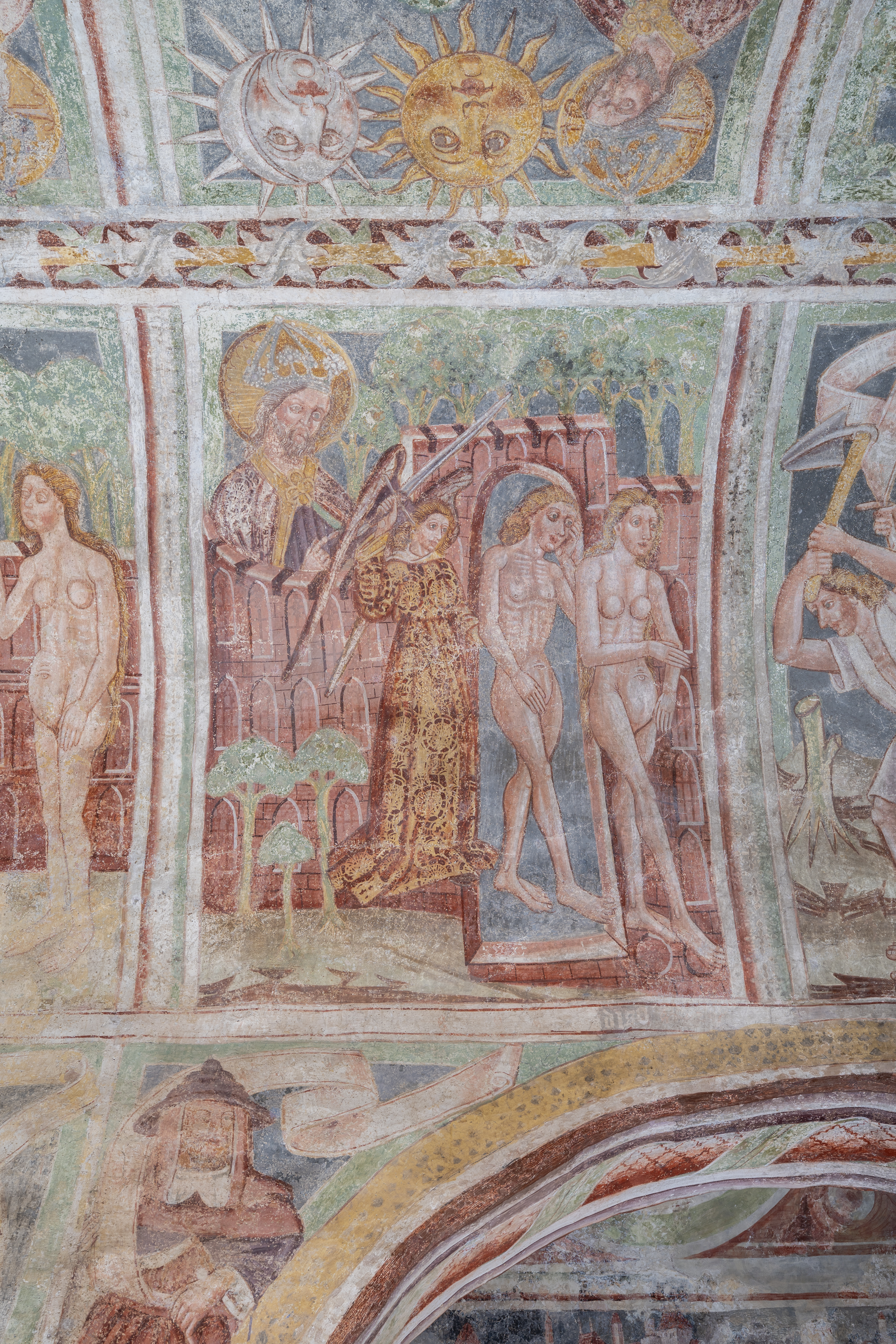
In the conch of the central apse, the Throne of Grace is depicted, with the Apostles arranged below within painted arcades. The space of the northern apse features a scene the Three Kings accompanied by Saints Cosmas and Damian, while the site of the former southern apse displays Saints Roch, Sebastian, and Fabian. Above the apse zone of the central nave is the Coronation of the Virgin, with the Annunciation arranged above the side apses. The vault of the main nave is painted with twelve scenes from Genesis. A thirteenth scene, located on the inner side of the western wall, depicts God the Father resting after Creation. This Old Testament cycle is considered one of the most complete pictoral interpretations of Genesis. Within the vaults of the side naves, circular medallions depict the twelve months, each corresponding to specific seasonal labours. The northern wall is occupied by the Adoration of the Magi. The upper register of the southern wall is covered with scenes from the Christological cycle, while the lower register features Saints Apollonia, Agatha, and Lucy under arcades, alongside the famous Dance of Death. The western wall contains scenes of Christ's Passion. Graphic influences from Israhel van Meckenem have been identified in the compositions, as well as prototypes by the Master of the Scrolls and Florentine models for the calendar scenes.
The frescoes were discovered in 1949 during field research led by Branko Fučić. The first monographic study on the master from Kastav was published by Fučić in 1959, in the article 'Majstor Ivan iz Kastva i njegova sredina', in the journal Zbornik za umetnostno zgodovino. Conservation works were initiated by the Slovenian Institute for the Protection of Monuments (Slovenski Zavod za zaščito spomenikov) in 1950, and a re-restoration was carried out in the 1980s under the leadership of the Institute for the Protection of Monuments of the SR Slovenia (Zavod za spomeniško varstvo LR Slovenije)
Iconographic program:
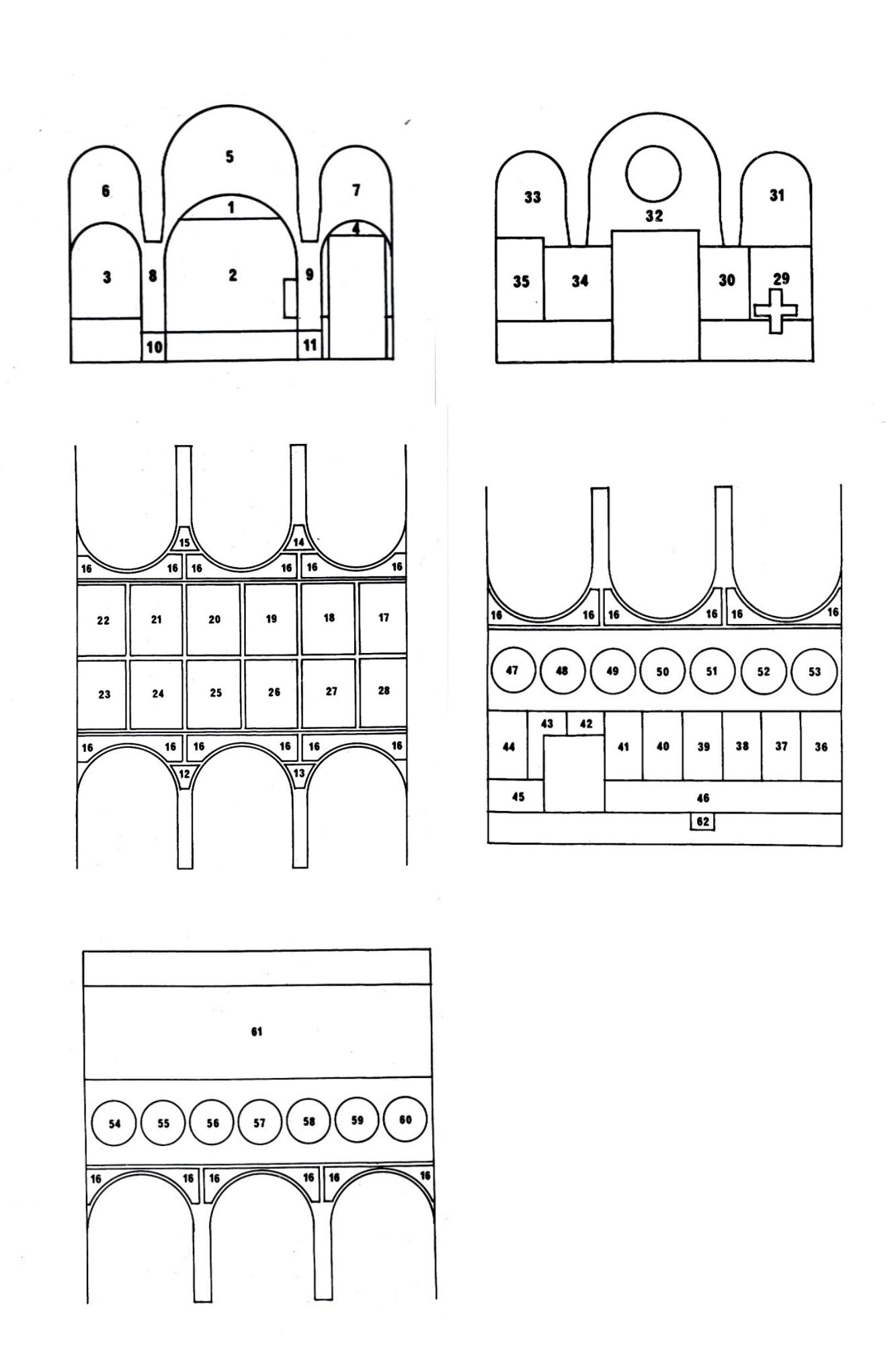
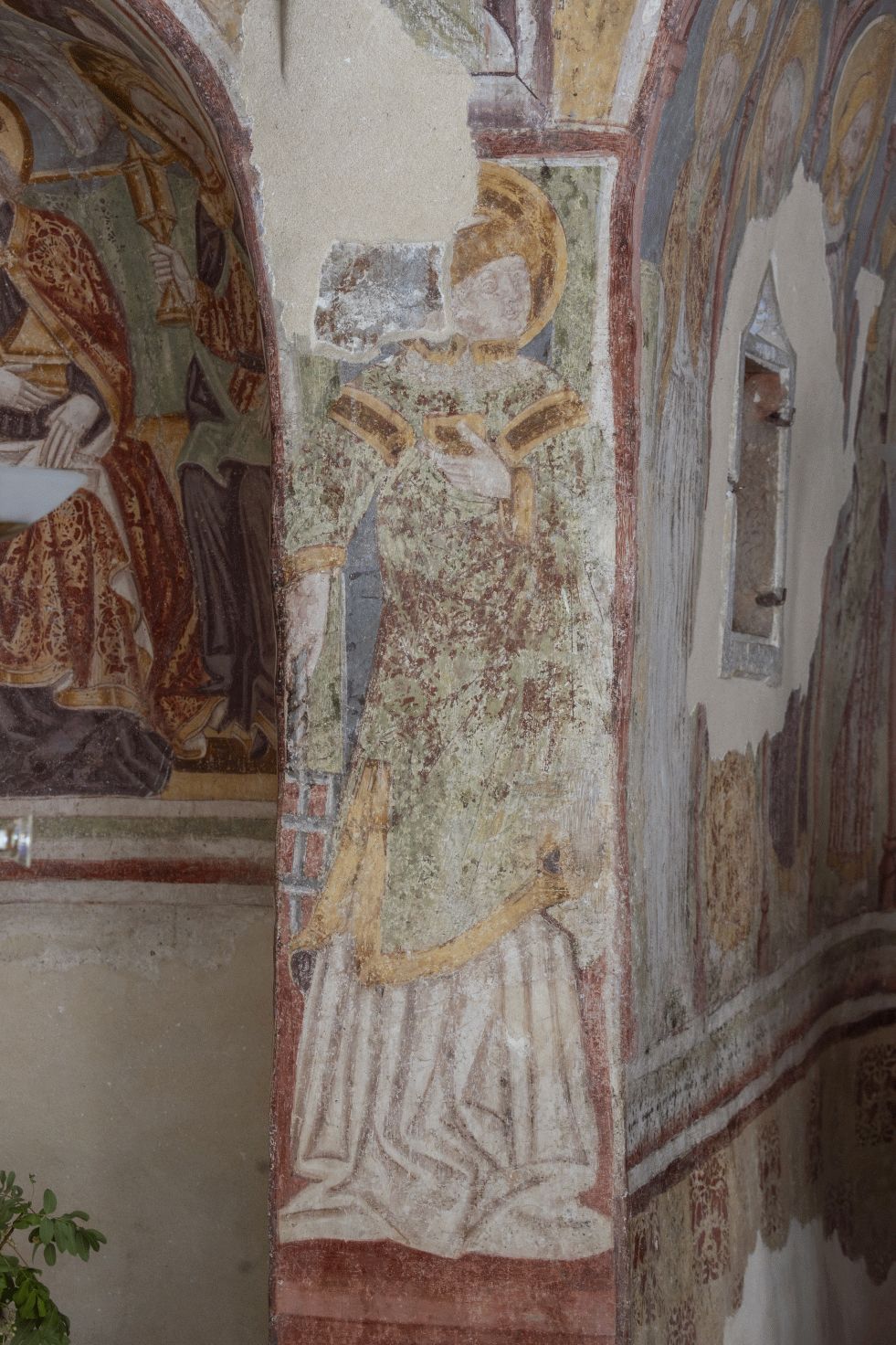
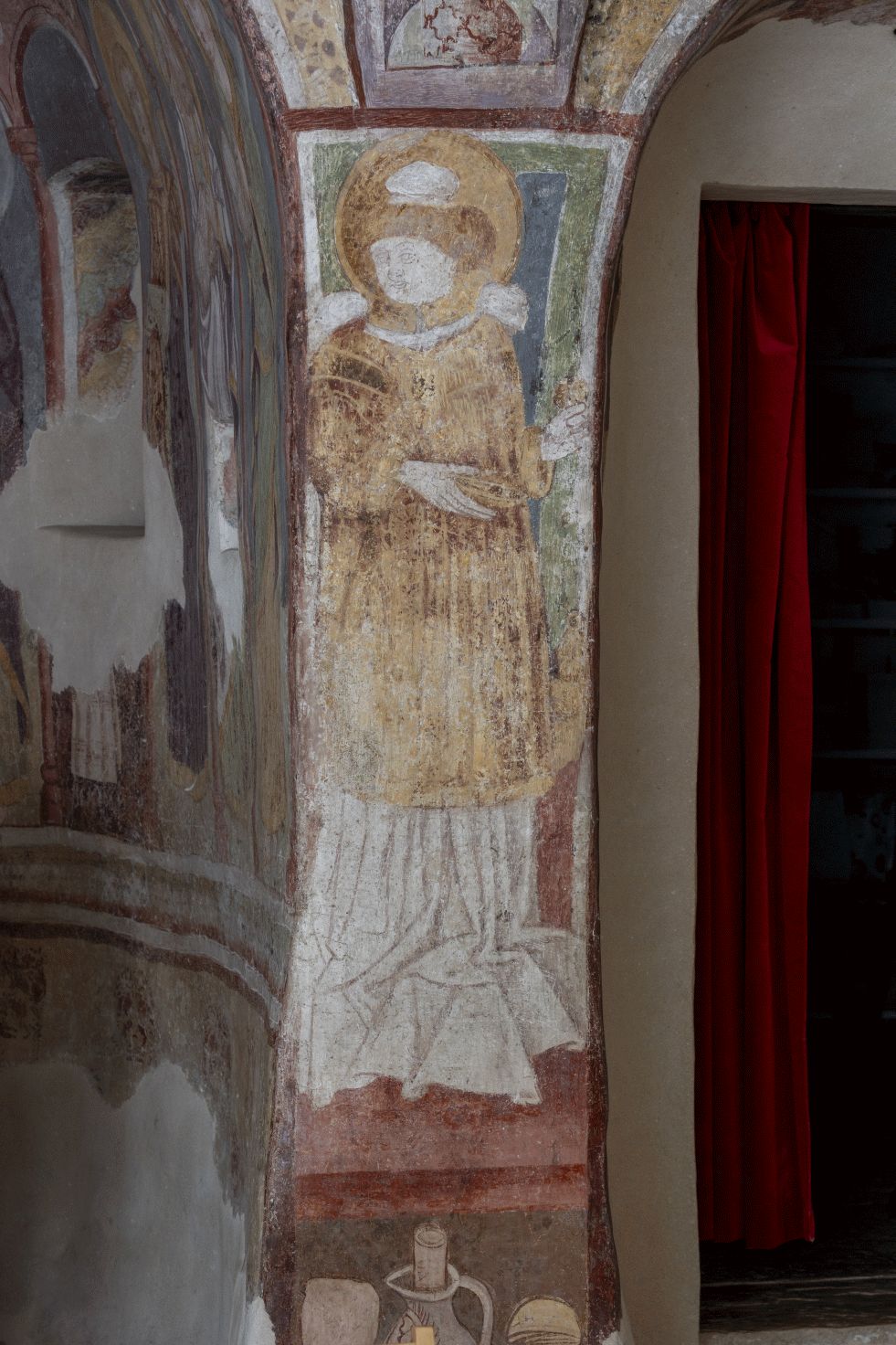
Eastern wall: 1 Throne of Mercy, 2 Row of Apostles, 3 Three Kings with Saints Cosmas and Damian, 4 Saints Roch, Sebastian, and Fabian, 5 Coronation of the Virgin, 6 Angel of the Annunciation, 7 Virgin of the Annunciation, 8 Saint Lawrence, 9 Saint Stephen, 10 Still life with a plate, 11 Still life with a pitcher. Main nave vault: 12 Saint Ursula, 13 Saint Catherine, 14 Saint Margaret, 15 Saint Barbara, 16 Series of 24 Prophets and Church Fathers, 17 Separation of Light from Darkness, 18 Separation of Land from Water, 19 Creation of the Plant World, 20 Creation of the Sun and Moon, 21 Creation of Fish and Birds, 22 Creation of Man, 23 Adam and Eve in Paradise and the Divine Prohibition, 24 Original Sin, 25 Expulsion from Paradise, 26 Labours of Adam and Eve, 27 Cain Slaying Abel, 28 God Questioning Cain. Western wall: 29 Entry into Jerusalem, 30 Last Supper, 31 Agony in the Garden, 32 God’s Rest, 33 Arrest of Christ, 34 Christ before Pilate, 35 Flagellation. Northern wall: 36 Crowning with Thorns, 37 Christ Carrying the Cross, 38 Crucifixion with the Virgin and Saint John, 39 Entombment, 40 Christ’s Descent into Limbo, 41 Resurrection, 42 Veil of Veronica, 43 Noli me tangere, 44 Ascension, 45 Saints Apollonia, Agatha, and Lucy, 46 Dance of Death, 62 A Glagolitic inscription regarding the paving from 1518. Southern nave vault: 47 January, 48 February, 49 March, 50 April, 51 May, 52 June, 53 July. Northern nave vault: 54 August, 55 September, 56 October, 57 November, 58 December, 59 Annus Tempus (?), 60 Saint Jerome, 61 Journey and Adoration of the Magi.
Scene locations
C. VELEPIČ, 1949., Kulturni spomeniki Slovenske Istre, Varstvo spomenikov, II, 1949., 116–117.; M. ZADNIKAR; M. ŠUBIĆ, 1953., Odkrivanje stenskih slikarij v Hrastovlju, Varstvo spomenikov, IV, 1951-1952, Ljubljana, 1953., 23-25.; M. ZADNIKAR, 1955., Hrastovlje – spomenik umetnosti preteklosti v koprskem zaledju, Turistični vesnik, 7, Ljubljana, 1955., 237-239.; F. STELÈ: 1957., Die mittelalterliche Wandmalerei in Slowenien im mitteleuropäischen Rahmen, Südost-Forschungen, München, 16, 1957., 295.; S. MIKUŽ, 1958., Ko je Adam kopal, Slovenski poročevalec, 247, Ljubljana, 1958., 6.; Č. ŠKOLDAR, 1958., Tihožitjiv Hrastovljah. Slovenski poročevalec, 19/229, (ur.) Vošnjak S., Ljubljana, 1958., 6.; F. STELÈ, 1958., Spätgotische Wandmalerei in Slowenien, Klagenfurt, 1958.; B. FUČIĆ, 1959., Majstor Ivan iz Kastva i njegova sredina, Zbornik za umetnostno zgodovino, 5-6, Ljubljana, 1959., 305-322.; F. STELÈ, 1959., Srednjeveške freske na Slovenskem, katalog izložbe 30. 6. - 30. 9. 1959., (ur.) Zupan, F., Ljubljana: Narodne galerije, 1959.; F. STELÈ, 1960., Umetnost v Primorju, Ljubljana, 1960.; M. ZADNIKAR, 1961., Hrastovlje, Spomeniški vodniki, Ljubljana, 1961.; ISTI, 1962., Hrastovlje, Enciklopedija likovnih umjetnosti, II, Zagreb, 1962., 576.; B. FUČIĆ, 1962, Grafički listovi 'Majstora sa svicima' u kastavskoj radionici, Bulletin Zavoda za likovne umjetnosti Jugoslavenske akademije znanosti i umjetnosti, 10/3, Zagreb, 1962., 179, 180, 185.; ISTI, 1963, Istarske freske, Zagreb, 1963., 22, 25–26, 28–30, 71–77., kat. 22–24.; M. ZADNIKAR, 1963., Eine ikonographisch unbekannte Dreikönigendarstellung zu Hrastovlje, Kölner Domblatt, 21/22, Köln, 1963., 152-156.; B. FUČIĆ, 1964., Srednjovjekovno zidno slikarstvo u Istri, doktorska disertacija, Filozofski fakultet Sveučilišta u Ljubljani, Rijeka-Ljubljana, 1964.; F. STELÈ, 1964., Slovenska gotska podružnica in njen ikonografski kanon, Zbornik Narodnog muzeja u Beogradu, 4, 1964., 320; ISTI, 1969., Slikarstvo v Sloveniji od 12. do srede 16. stoletja, Ljubljana, 1969., 237–242.; ISTI, 1971., Die istrische Lokalschule der gotischen Wandmalerei, Studi di storia dell'arte in onore di Antonio Morassi, Venezia, 1972., 57-67.; ISTI, 1972., Gotsko stensko slikarstvo, izredna knjiga zbirke Ars Sloveniae, Ljubljana, 1972.; B. FUČIĆ, 1974., O meštru Vincentu, o meštru Ivanu i o meštru Gallianu, Istra, 12/6, 1974., 106.; M. ZADNIKAR, Hrastovlje, zbirka spomeniških vodnikov, sv. 39, Ljubljana 1973.; Isti, Hrastovlje, Ljubljana, 1973., DZS (monografija); A. BADURINA, 1977., Prijedlog za rješenje nekih ikonografskih problema, Zbornik za umetnostno zgodovino (Nova vrsta), Ljubljana, n.v. 13, 1977., 154–156.; B. FUČIĆ, 1977., Biblija pauperum i istarske freske, Zbornik za umetnostno zgodovino, Ljubljana, 13, 1977., 138.; ISTI, 1982., Glagoljski natpisi, Zagreb, 1982., 180–181., 183.; M. ZADNIKAR, 1988., Hrastovlje. Romanska arhitektura in gotske freske, Ljubljana, 1988.; I. BOGOVČIĆ, 1986., Hrastovlje. Restavratorski posegi na stenskih slikah, Ljubljana, 1990., 149.; R. IVANČEVIĆ, 1989., Crkva Sv. Trojstva u Hrastovlju: romanika ili renesansa?, Radovi Instituta za povijest umjetnosti, Zagreb, 12/13, 1989., 127–137.; I. BOGOVČIĆ, 1990., Hrastovlje. Restavratorski posegi na stenskih slikah, Ljubljana, 1990.; B. FUČIĆ, 1990., Ročke freske i majstor Ivan iz Kastva, Buzetski zbornik, 5, Buzet, 1990., 35.; ISTI, 1992., Vincent iz Kastva, Zagreb – Pazin, 1992., 108, 142.; M. JENKO, 1995., Janez iz Kastva, Gotika v Sloveniji, katalog izložbe 6.-1.10-1995., (ur.) Höfler, J., Ljubljana: Narodna galerija, 1995., 289-291.; J. HÖFLER, 1997., Srednjeveške freske v Sloveniji. Primorska, 2, Ljubljana, 1997., 28–29., 89–98.; ISTI, 1998., O grafičnih virih za freske v Hrastovljah, Acta historiae artis Slovenica, 3, Ljubljana, 1998., 23-38.; R. IVANČEVIĆ, 1999., Crkva u Hrastovlju, dokazano renesansna, Peristil, Zagreb, 42/43, 1999., 77–79.; J. HÖFLER, 2000., Hrastovlje, Dioecesis Justinopolitana. Spomeniki gotske umetnosti na območju koprske škofije, Koper, Pokrajinski muzej Koper, 2000., 234–240.; M. ZADNIKAR, 1988.; J. L. SCHEFER, 2002., A propos des fresques de Hrastovlje – notes sur le programme iconographique, Annales, 12, 2002., 2., 255-268.; T. VIGNJEVIĆ, 2007., Ples smrti, Koper, Založba Annales, 2007.