


Plomin, Church of St George
Century/year: 1475.
Historical-cultural period: Gothic style
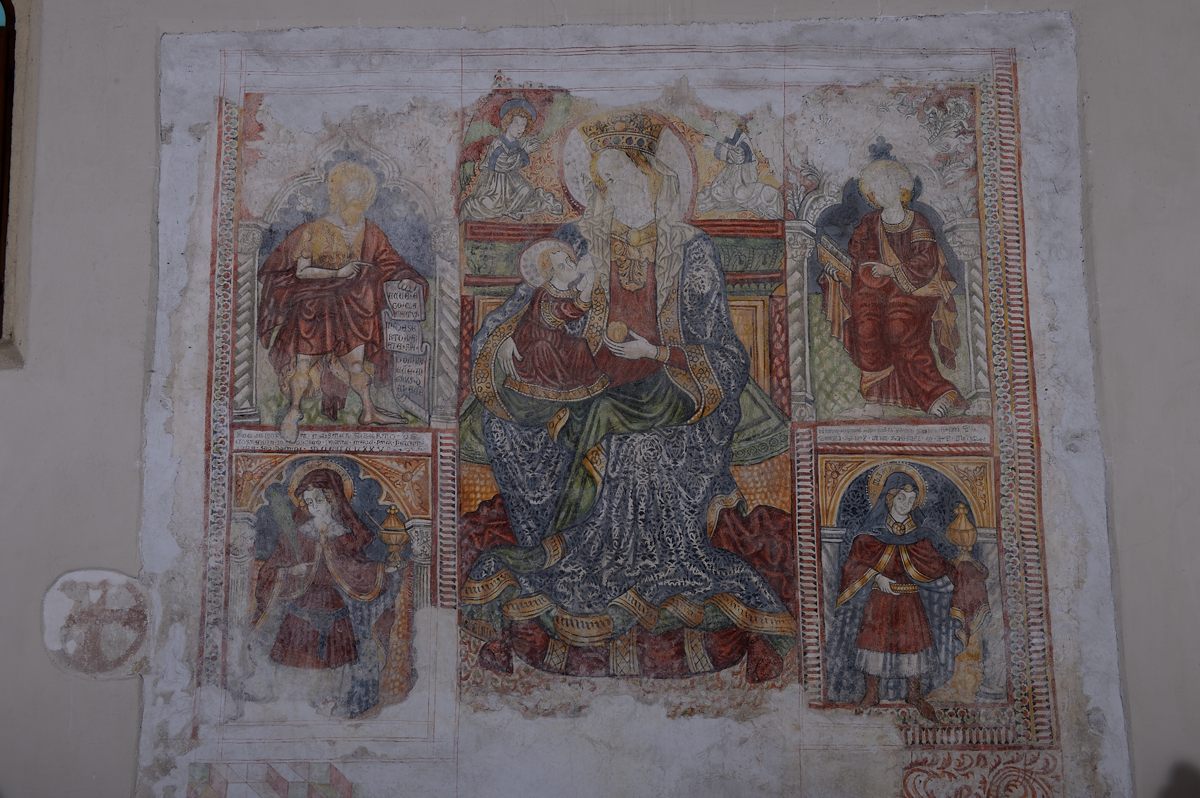
The parish church of the Blessed Virgin Mary, also known as St George the Younger, was erected at the end of the fifteenth century in the northern sector of the historic centre of Plomin. It is a single-nave structure with a flat east wall and a sanctuary covered by a ribbed cross vault. During the Baroque remodellings of the seventeenth century, the church was extended westwards, and its spatial orientation was altered. In this context, it is assumed that the preserved Gothic wall painting, today located on the north-western wall, originally constituted the central image of the sanctuary’s east wall.
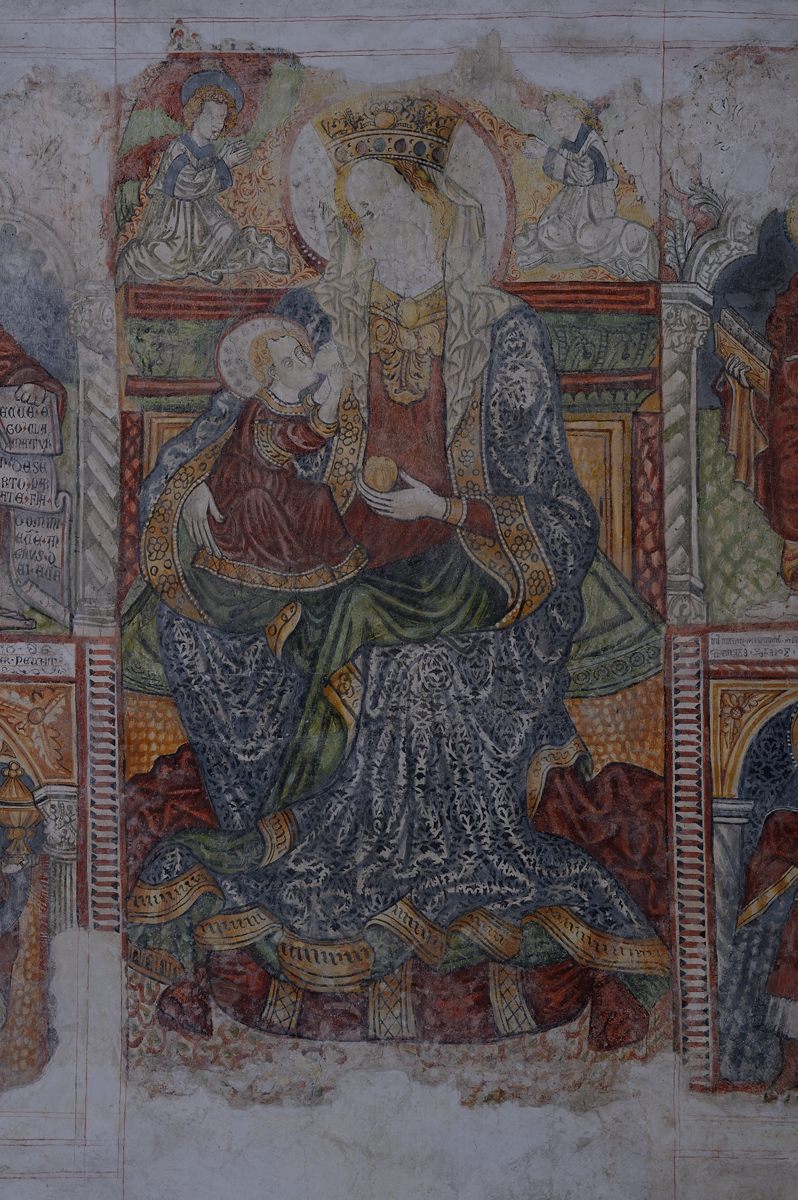
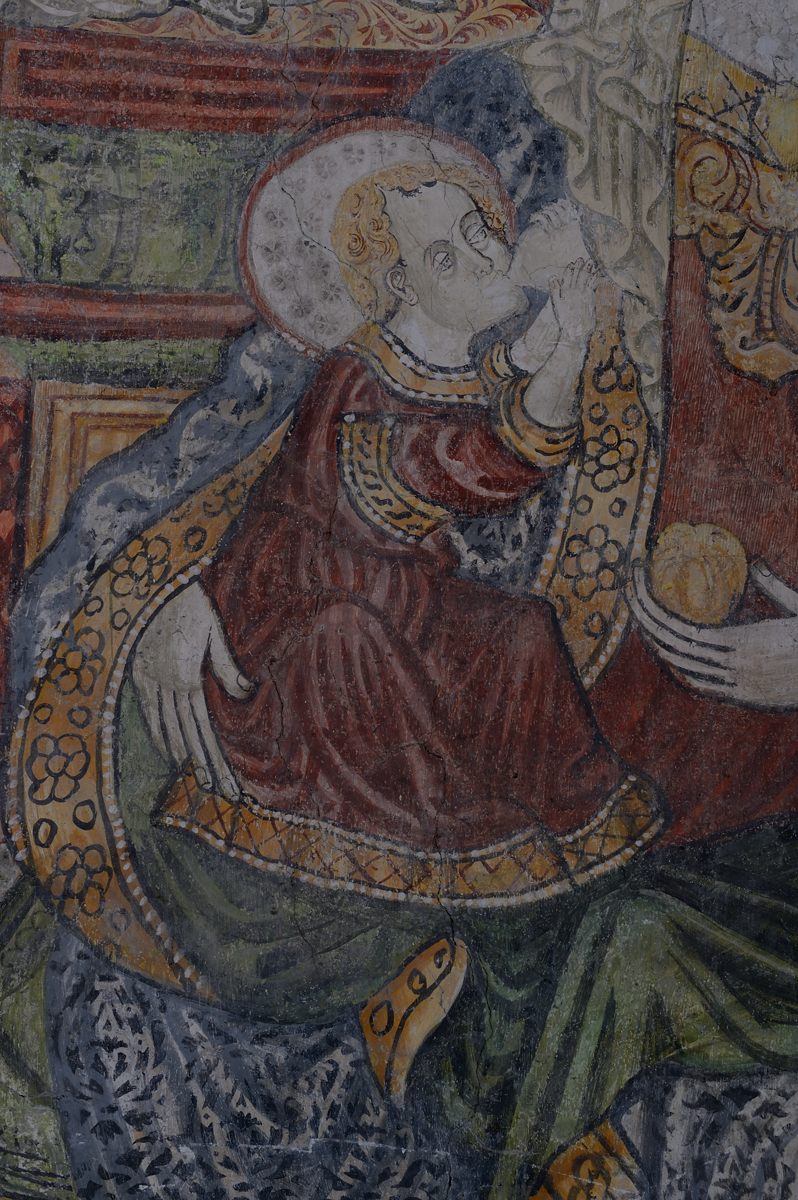
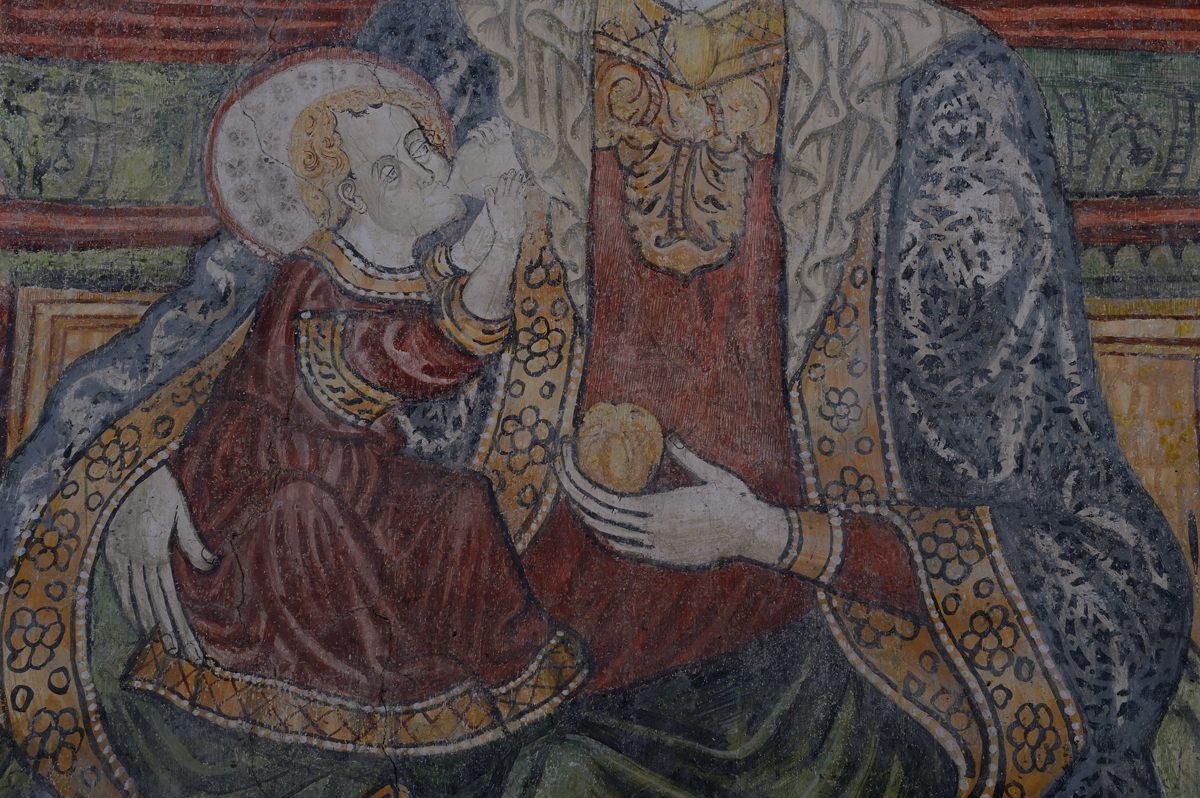
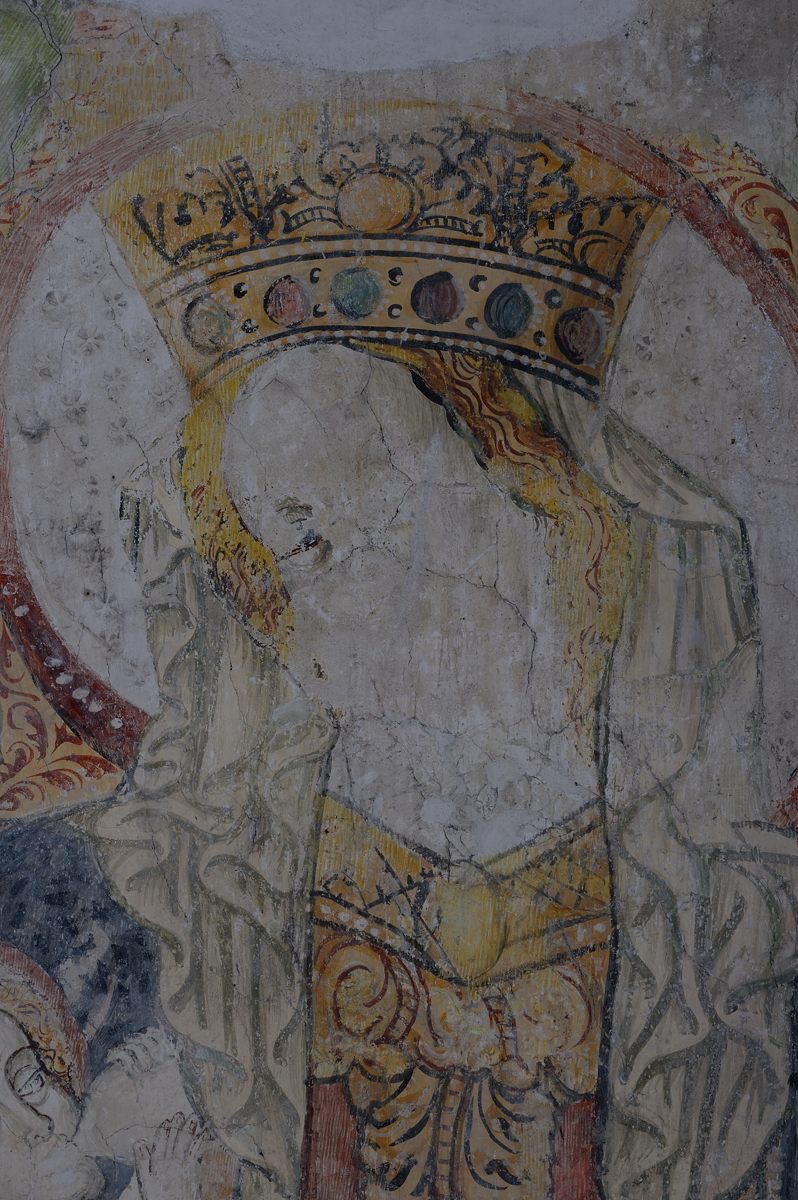
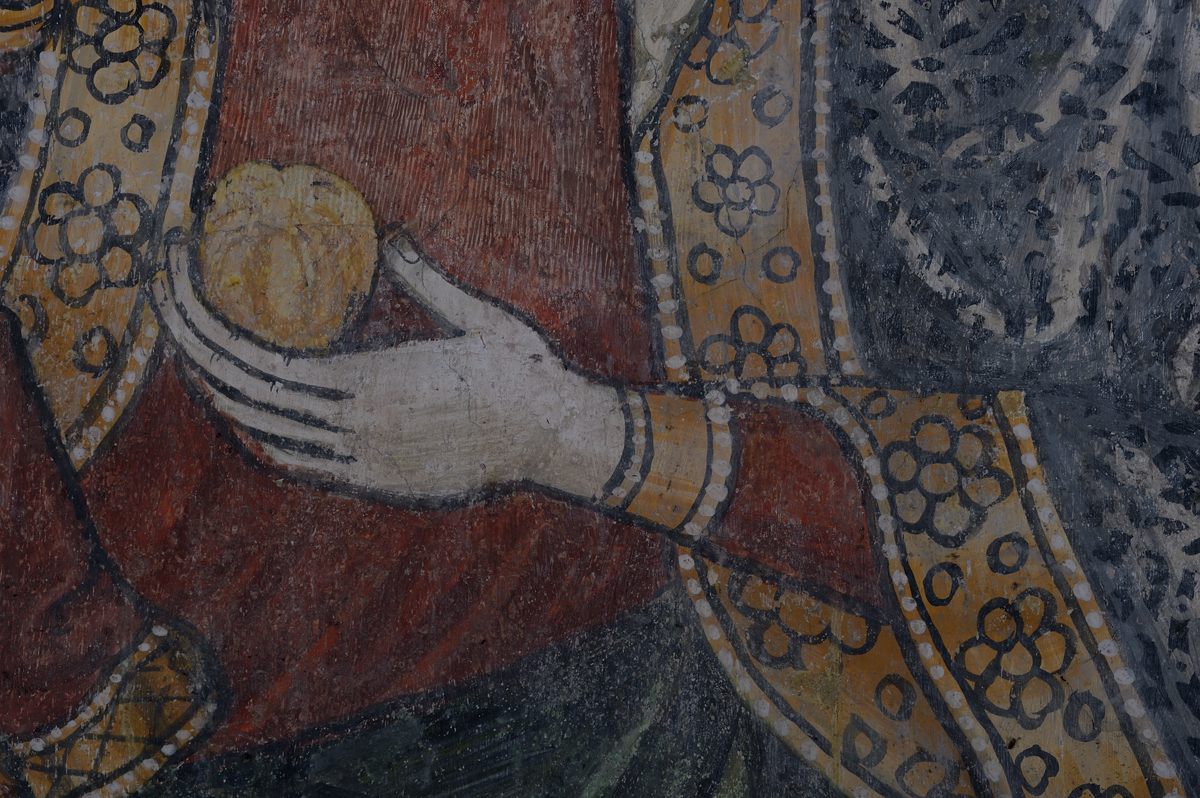
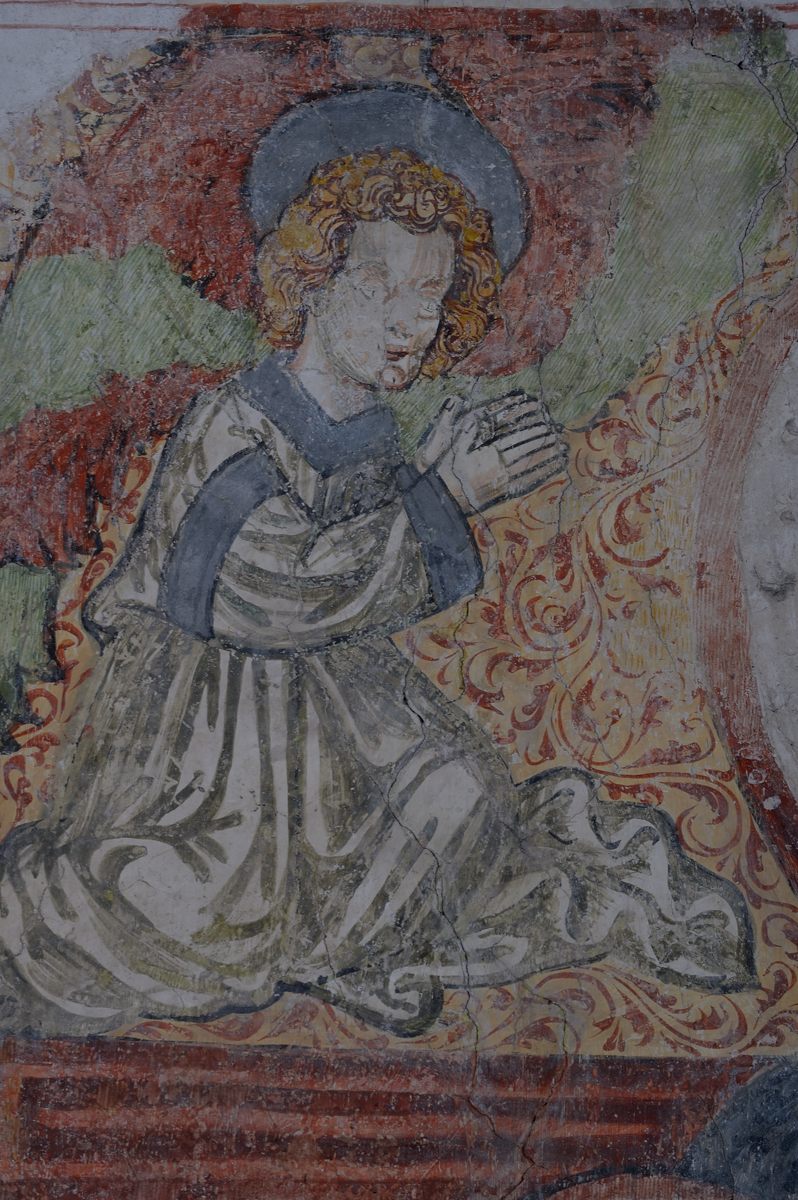
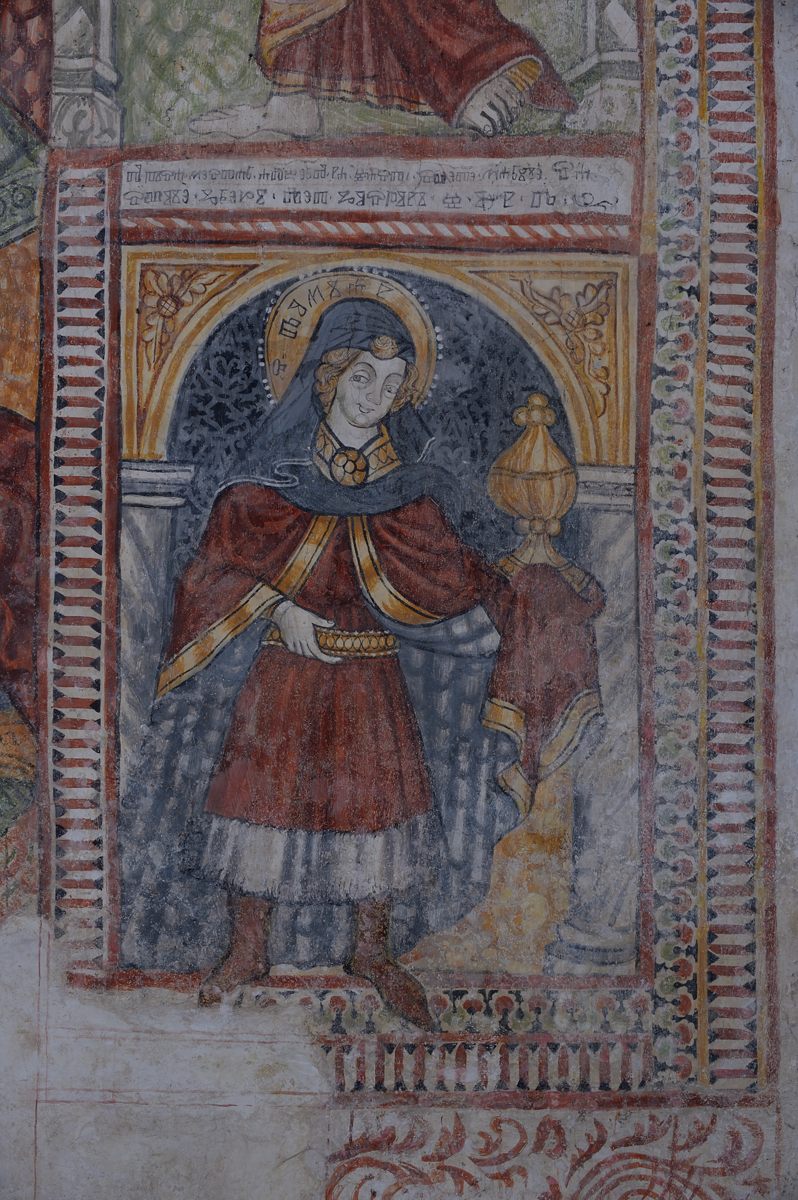
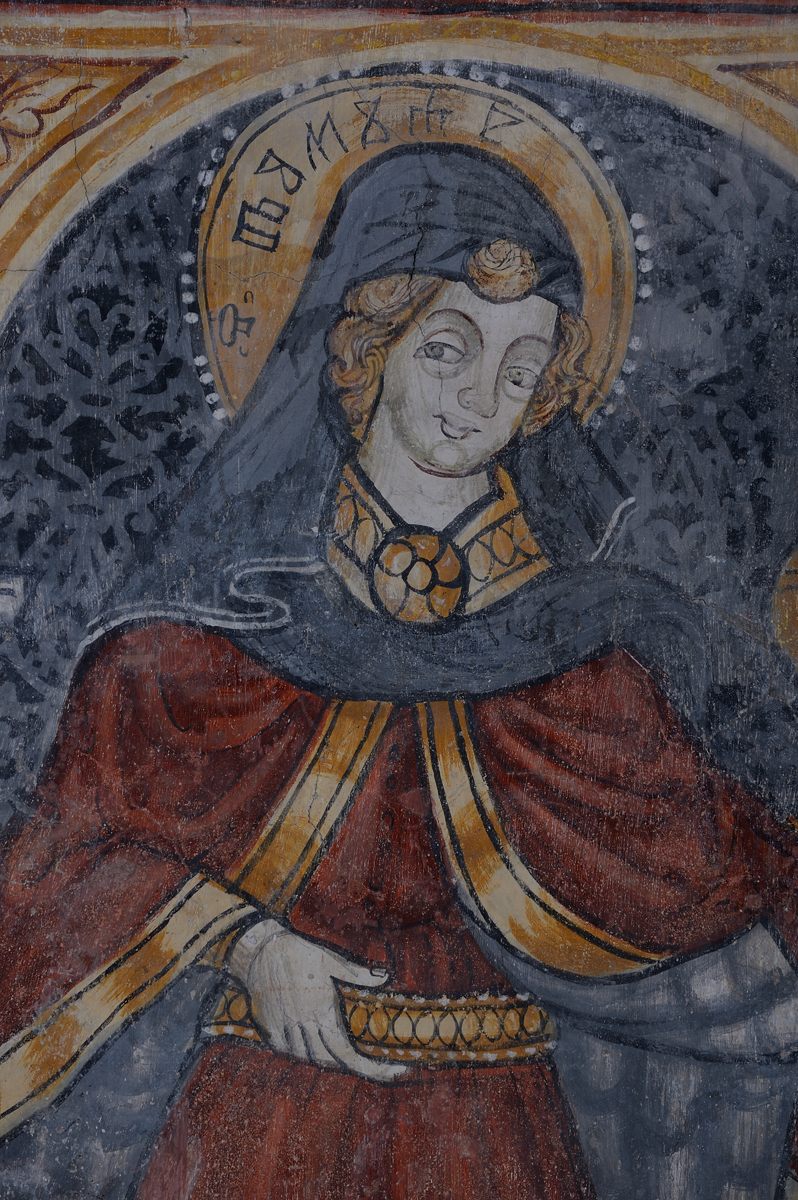
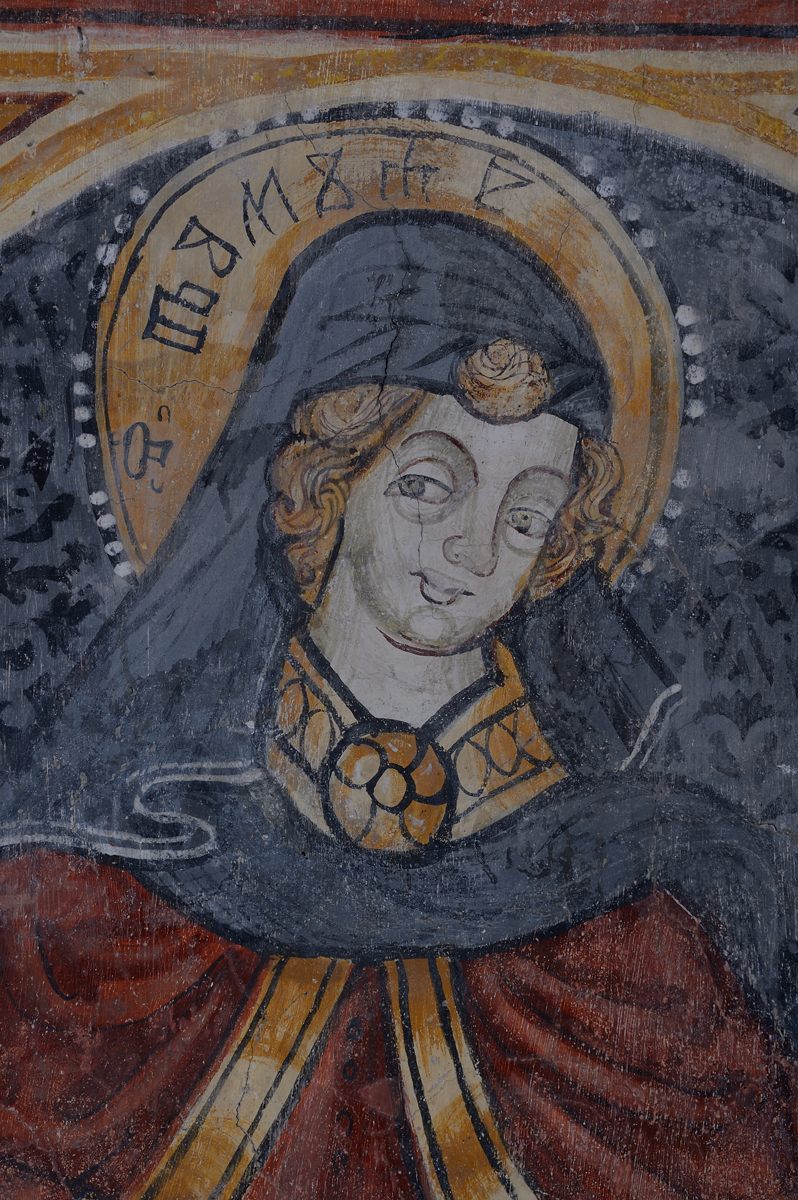
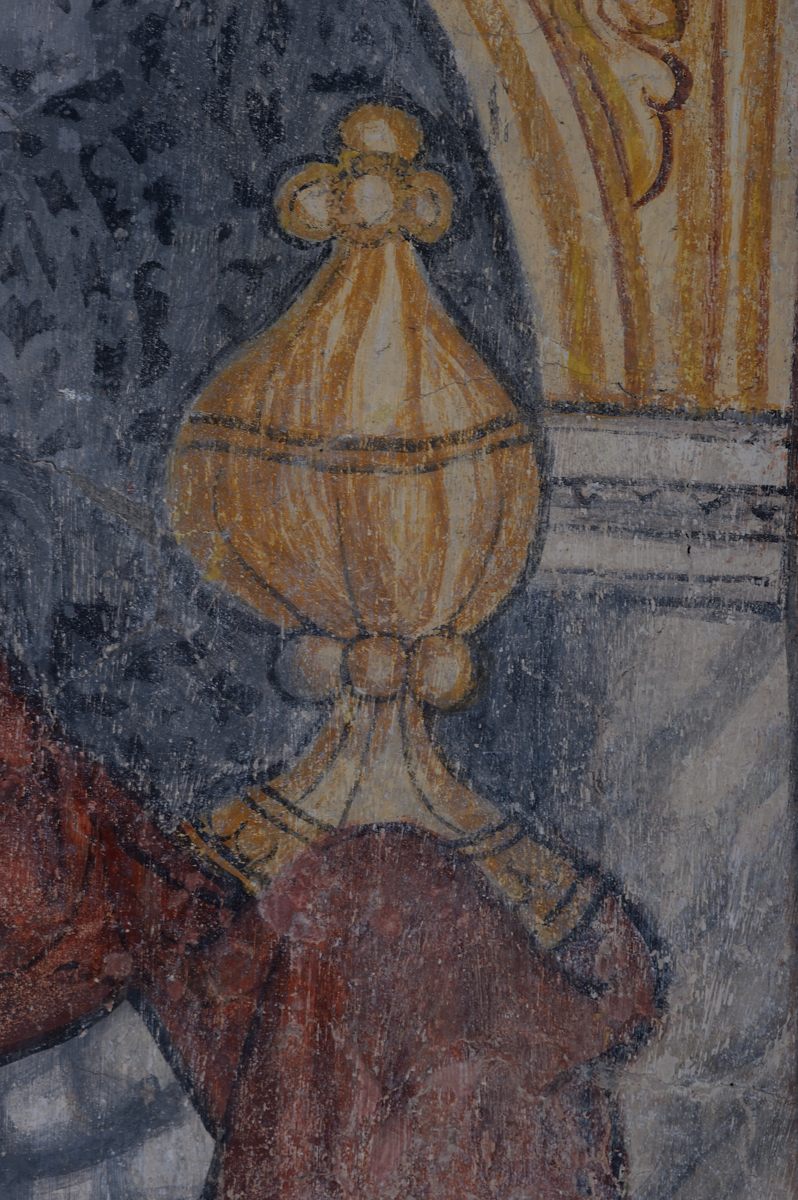
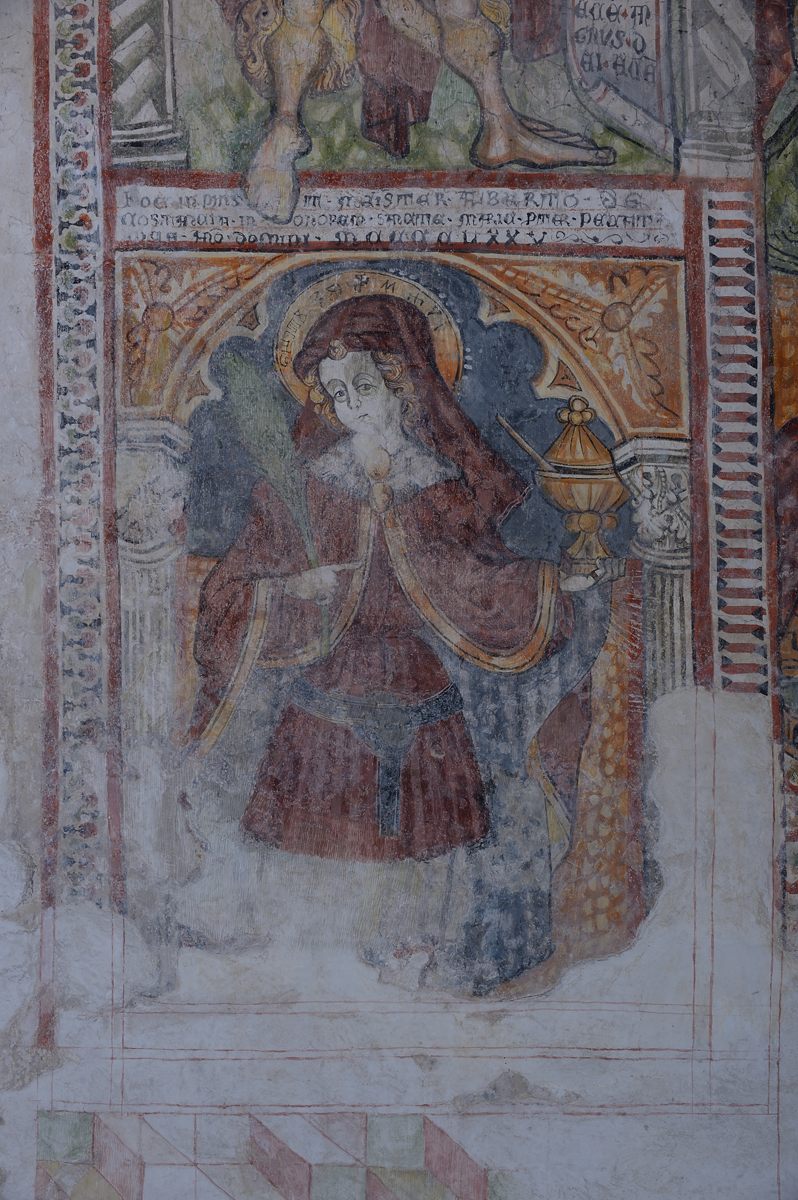
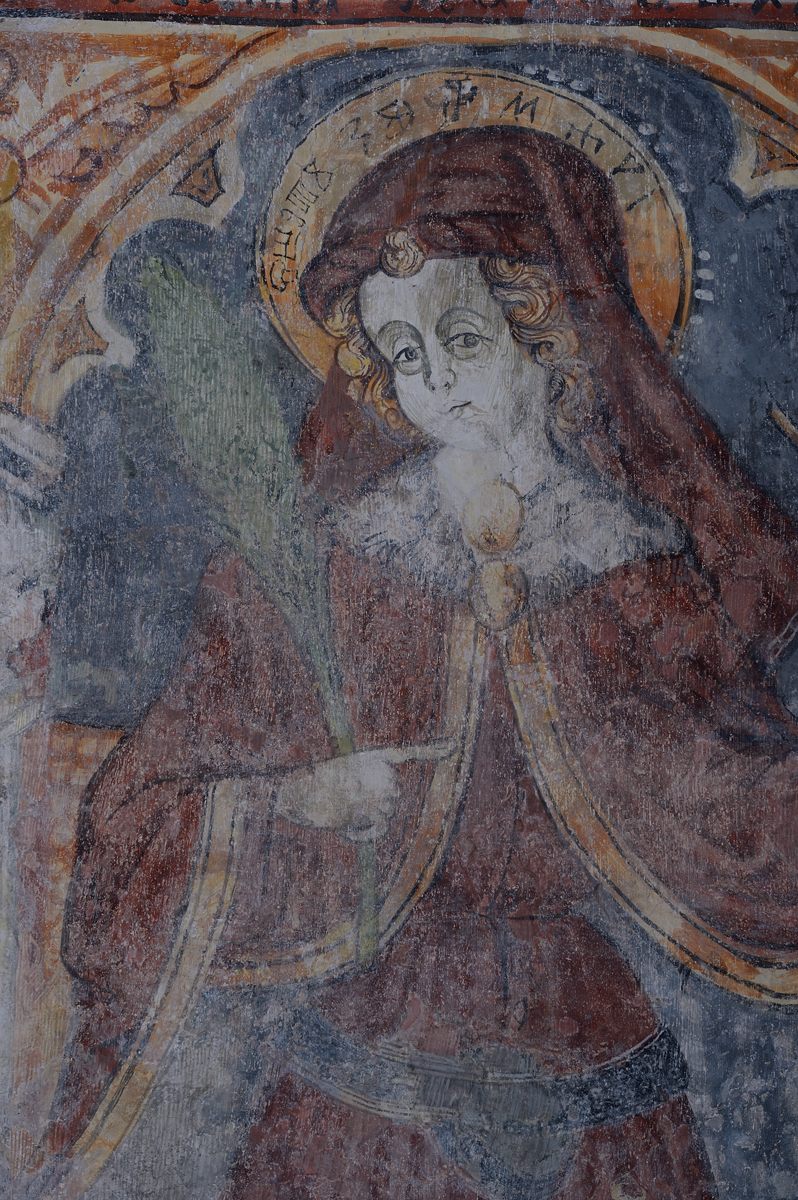
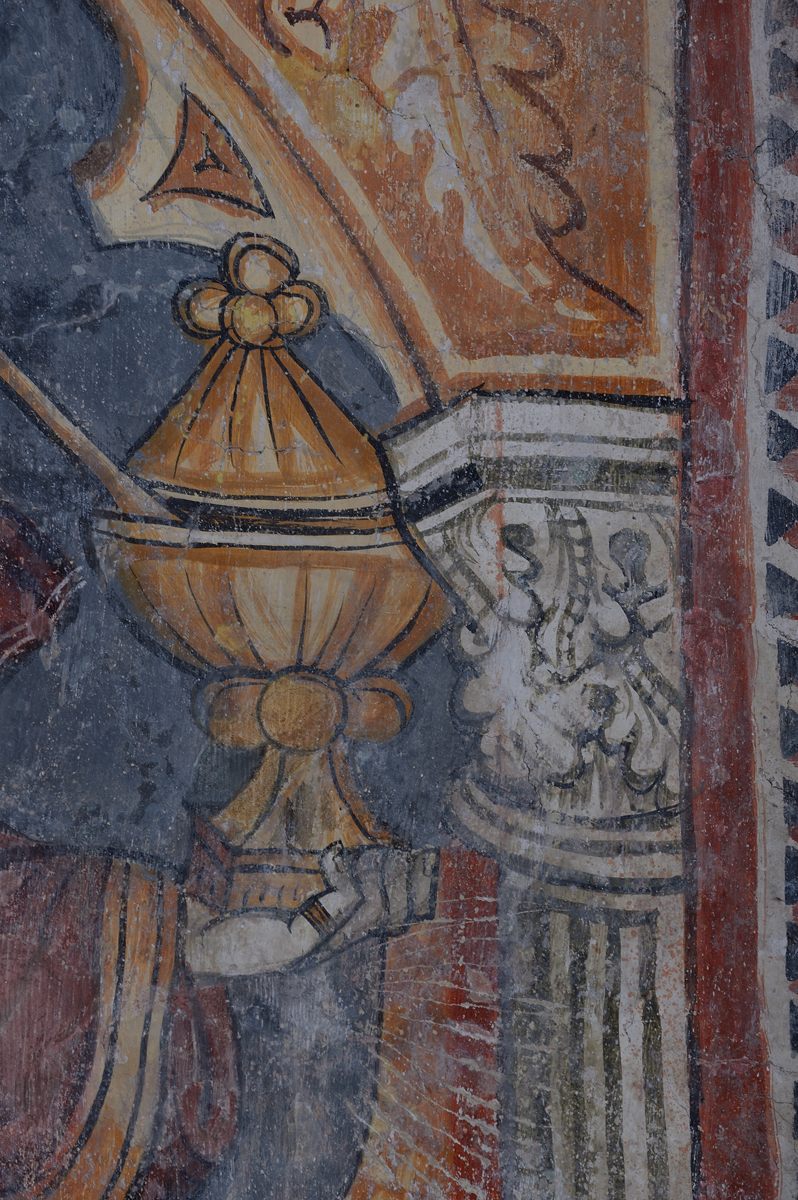
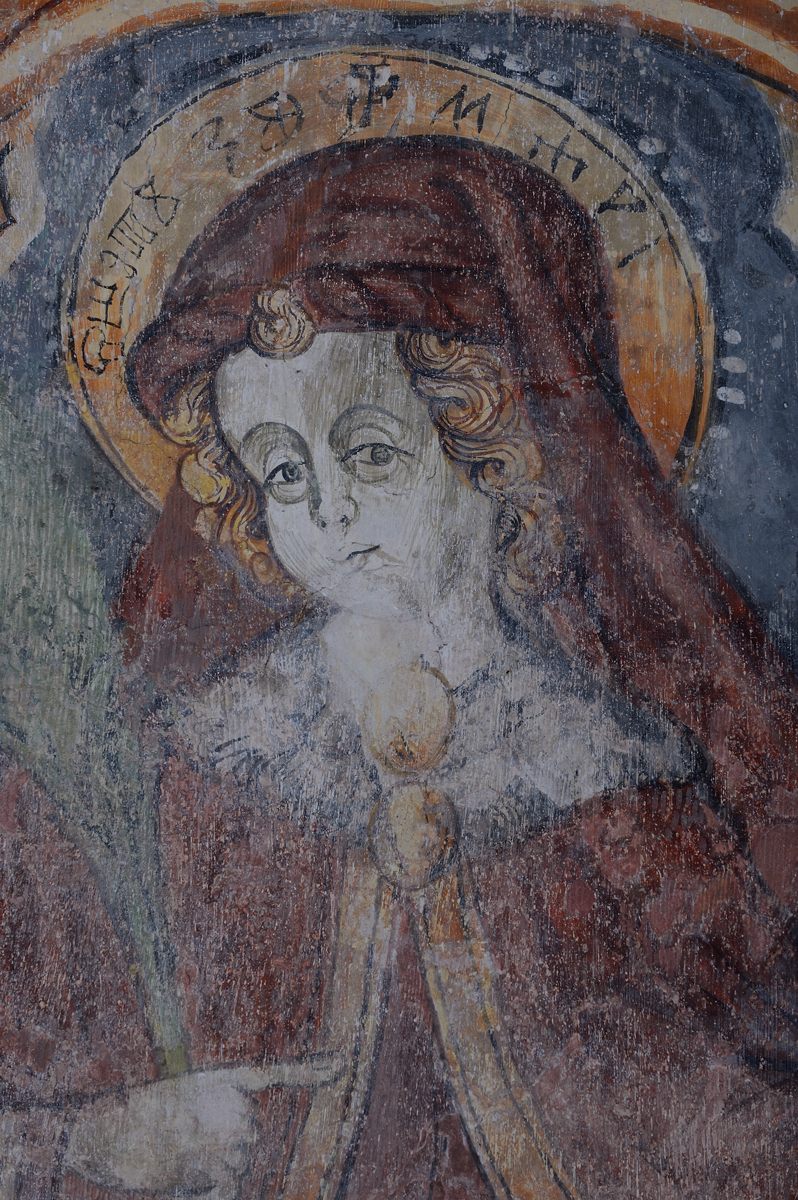
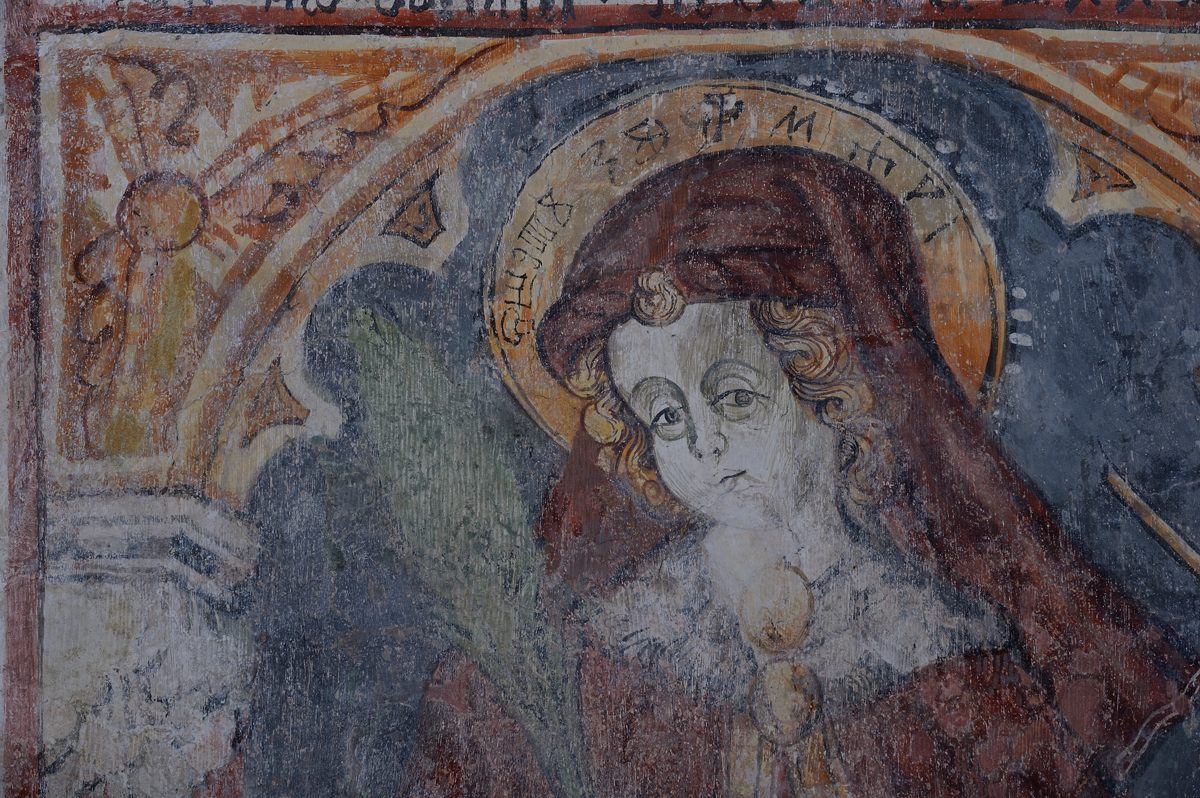
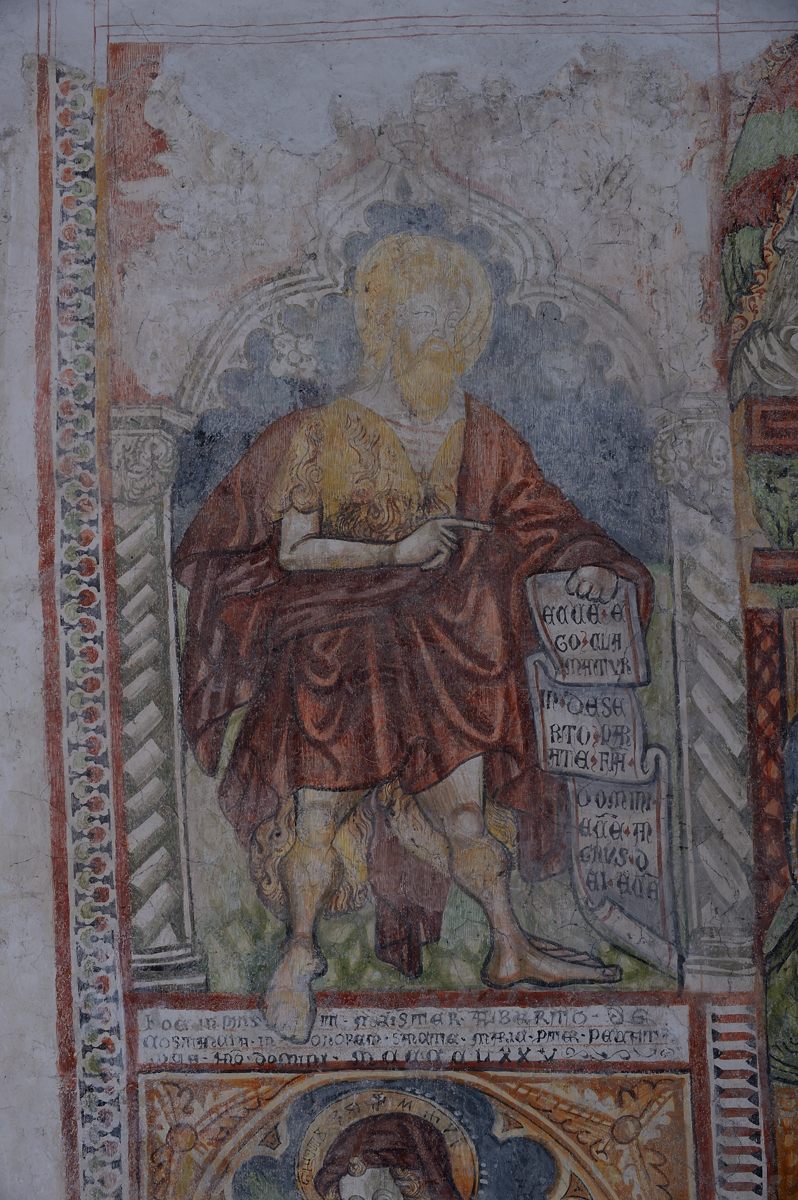
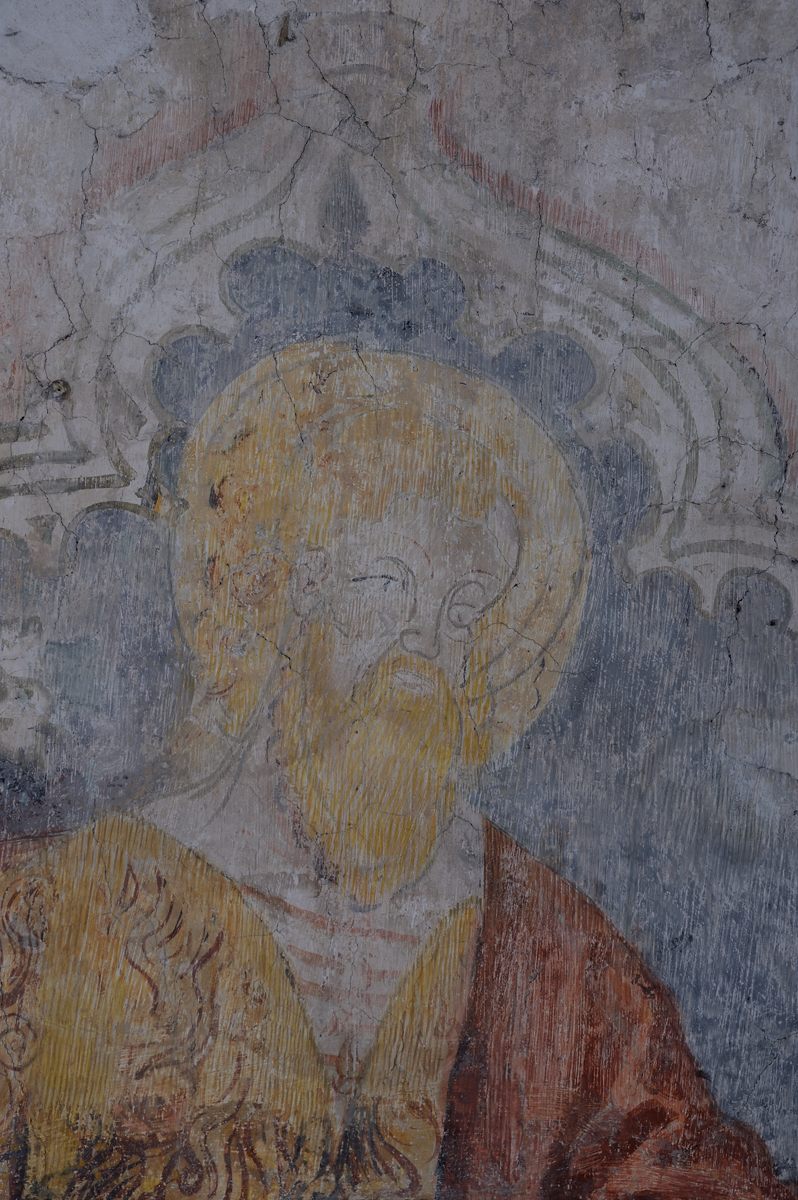
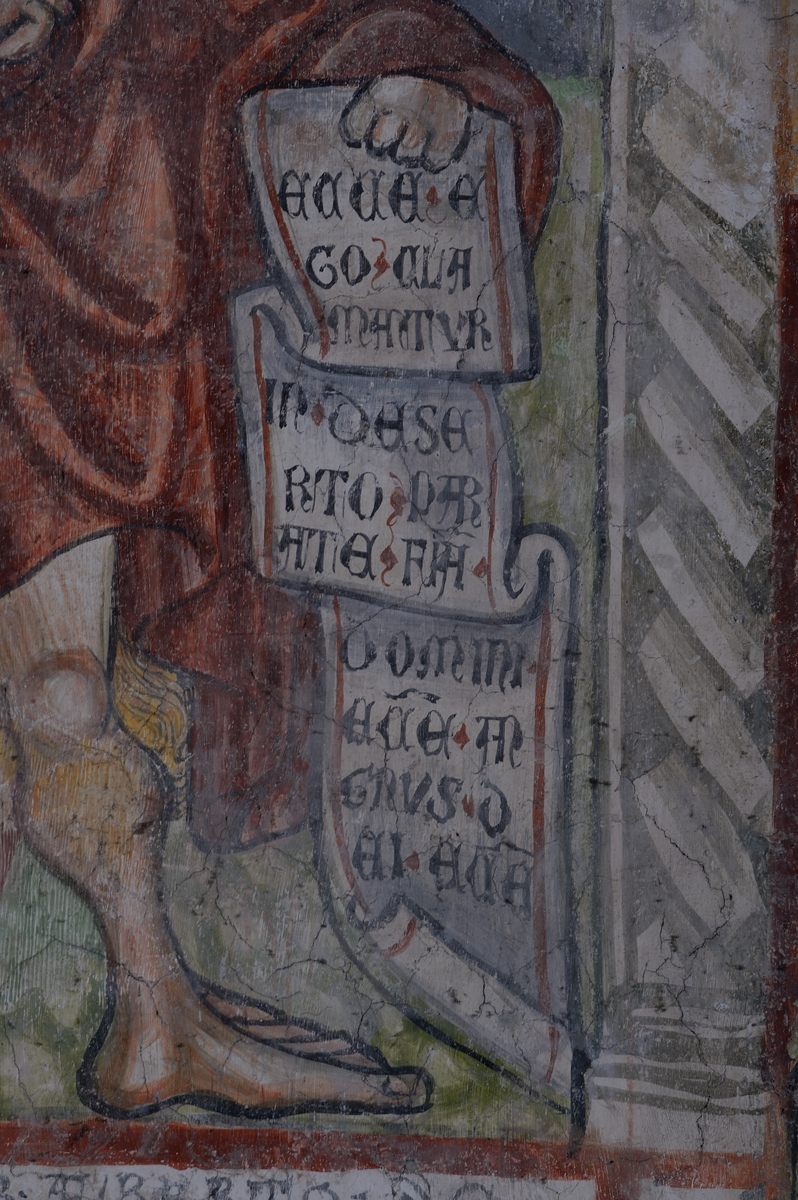
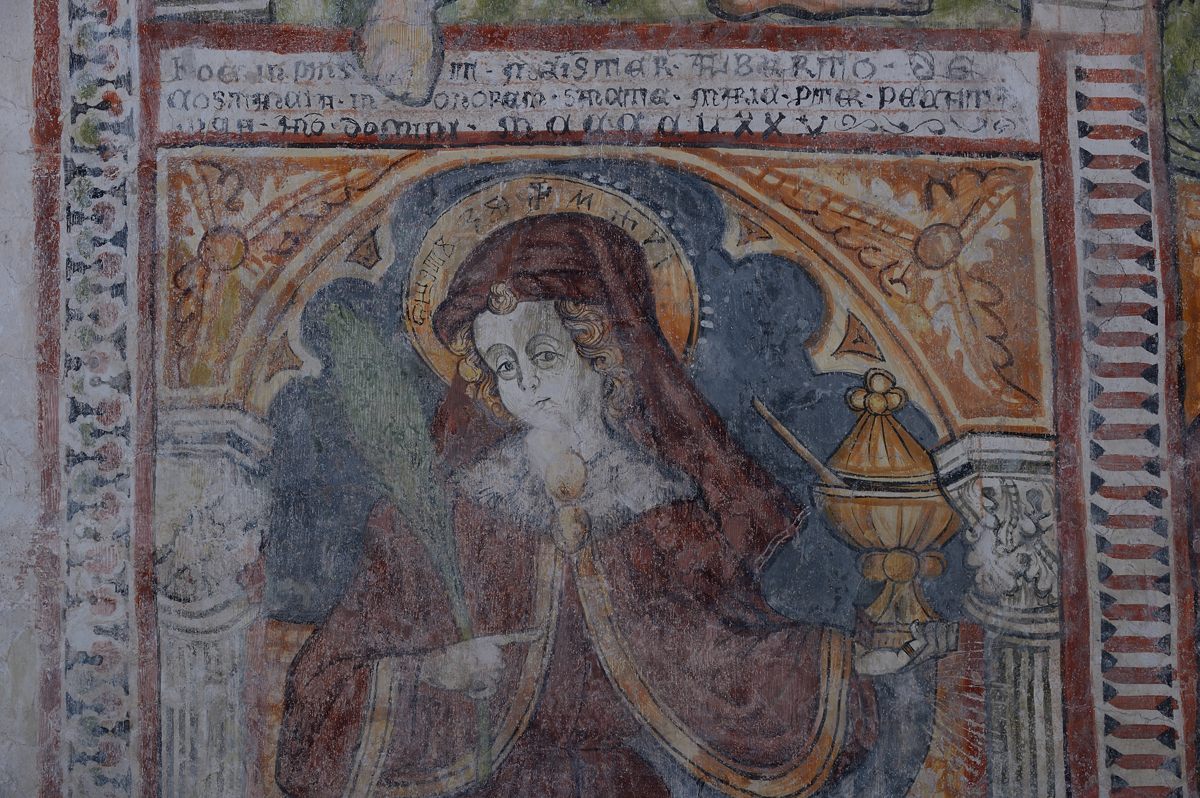
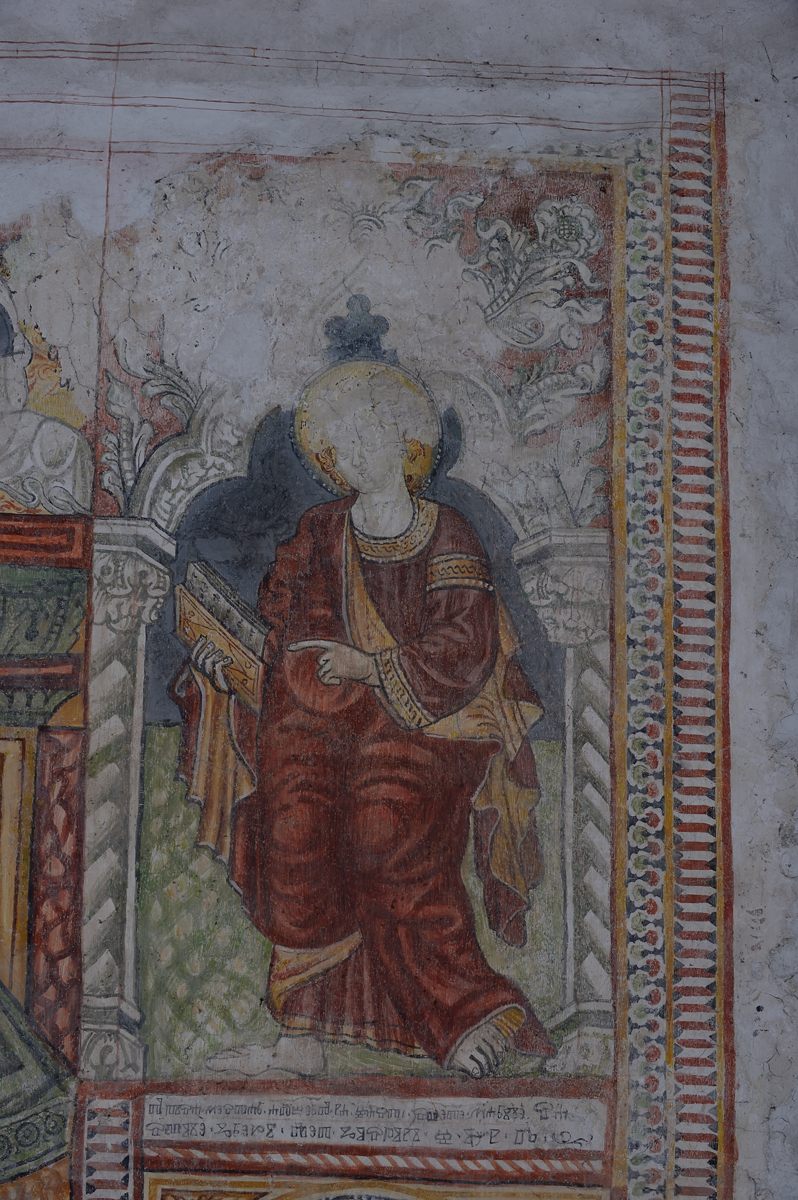
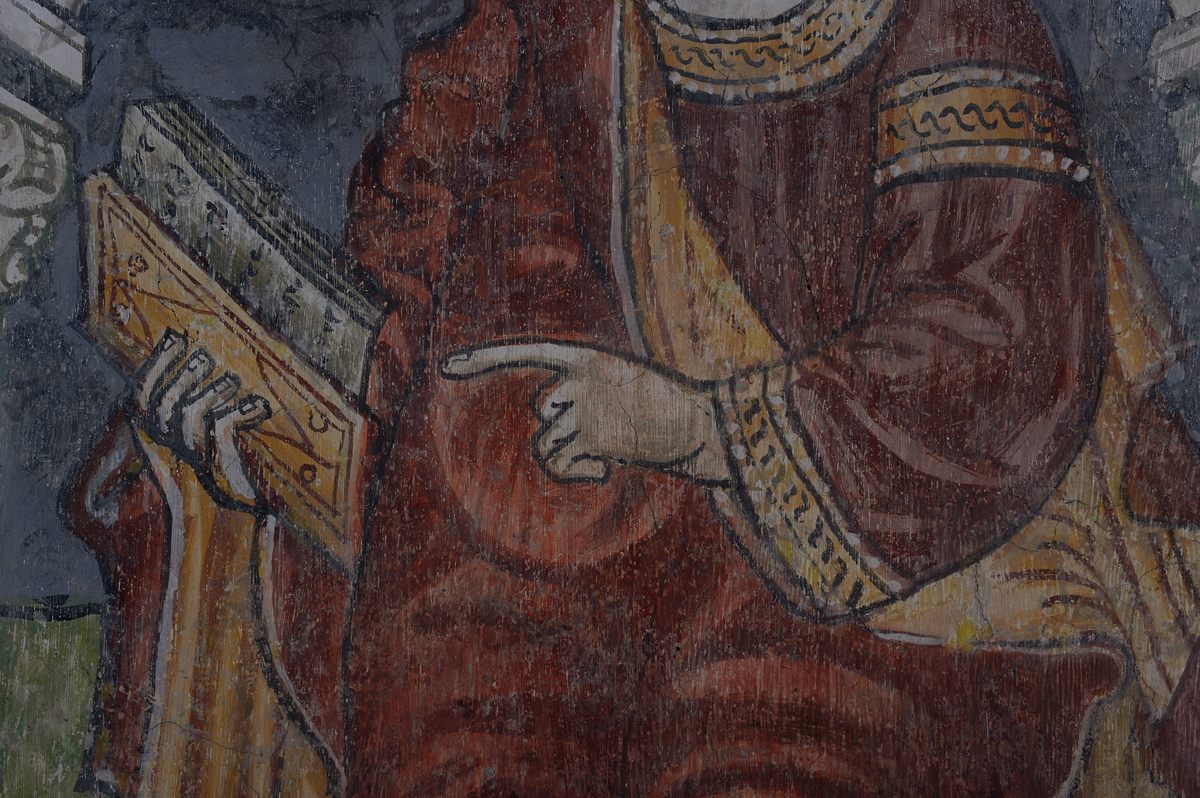
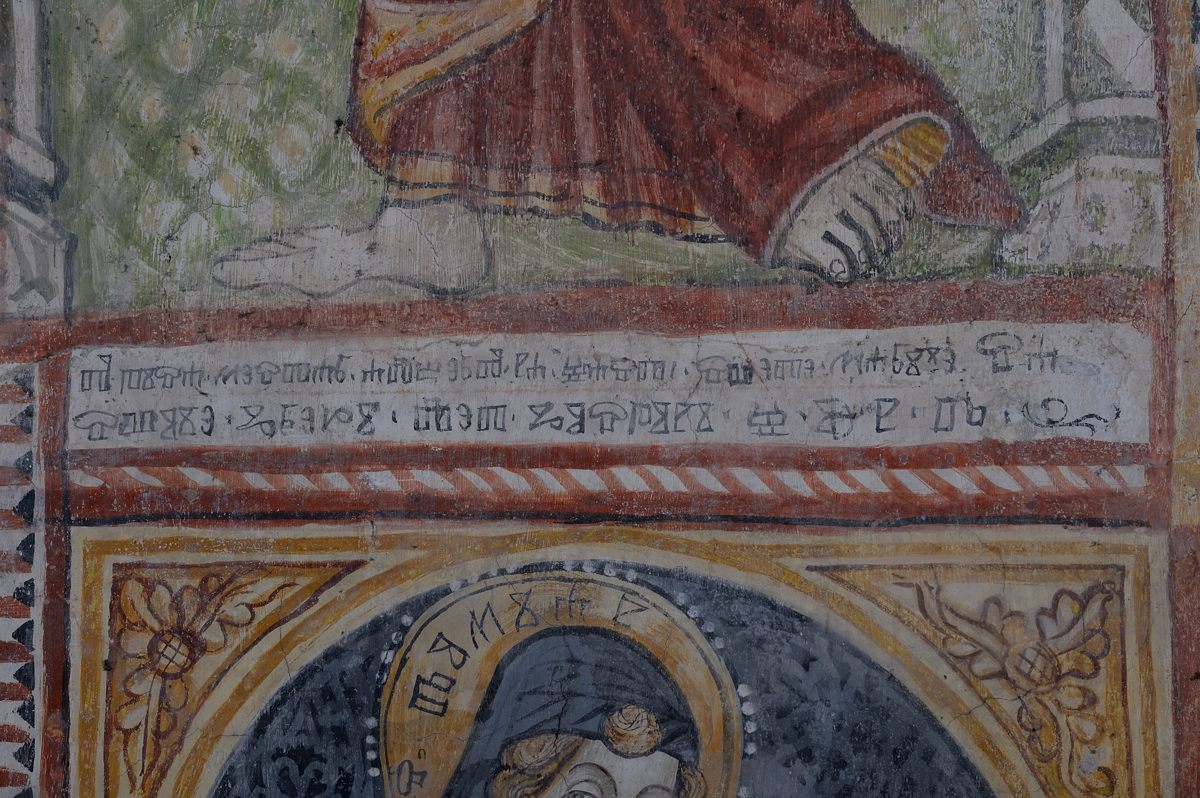
The painted composition is conceived after the model of an altarpiece retable in the form of a triptych with five fields. The central position is occupied by the Virgin and Child, clad in a sumptuous mantle with a brocaded pattern and a gilded hem. In the lateral niches, articulated by Gothic arcades, saintly figures are arranged. The upper zone contains St John the Baptist and St John the Evangelist, while the lower zone depicts St Cosmas and St Damian. The saints of the upper and lower fields are separated by a white band bearing a preserved inscription, from which it is known that the painting was executed in 1475 by Master Albert of Constance. On the left, the inscription is written in Latin script, while on the right, the same text appears in Glagolitic script. In the lowest zone, beneath the figural representations, two painted fields with geometric and floral ornamentation have been preserved.
The wall painting was uncovered during conservation and restoration works in 1995, and was subsequently discussed by Srećko Greblo in 1996 in the article “Freska majstora Alberta (1475) u Plominu,” published in the annual Peristil.
Iconographic programme:
North-western wall: 1. Virgin and Child, 2. St John the Baptist, 3. St John the Evangelist, 4. St Cosmas, 5. St Damian.
S. GREBLO, 1996, Freska majstora Alberta (1475) u Plominu, Peristil, 39, 1996, 57-68; B. FUČIĆ. 2000., Majstor Albert iz Konstanza, Zagreb – Brseč, 2000; Ž. BISTROVIĆ, 2011., Šareni trag istarskih fresaka, Pula, 2011., 250-253.