


Hum, Church of St Jerome
Century/year: Late 12th or early 13th century
Historical-cultural period: Romanesque period
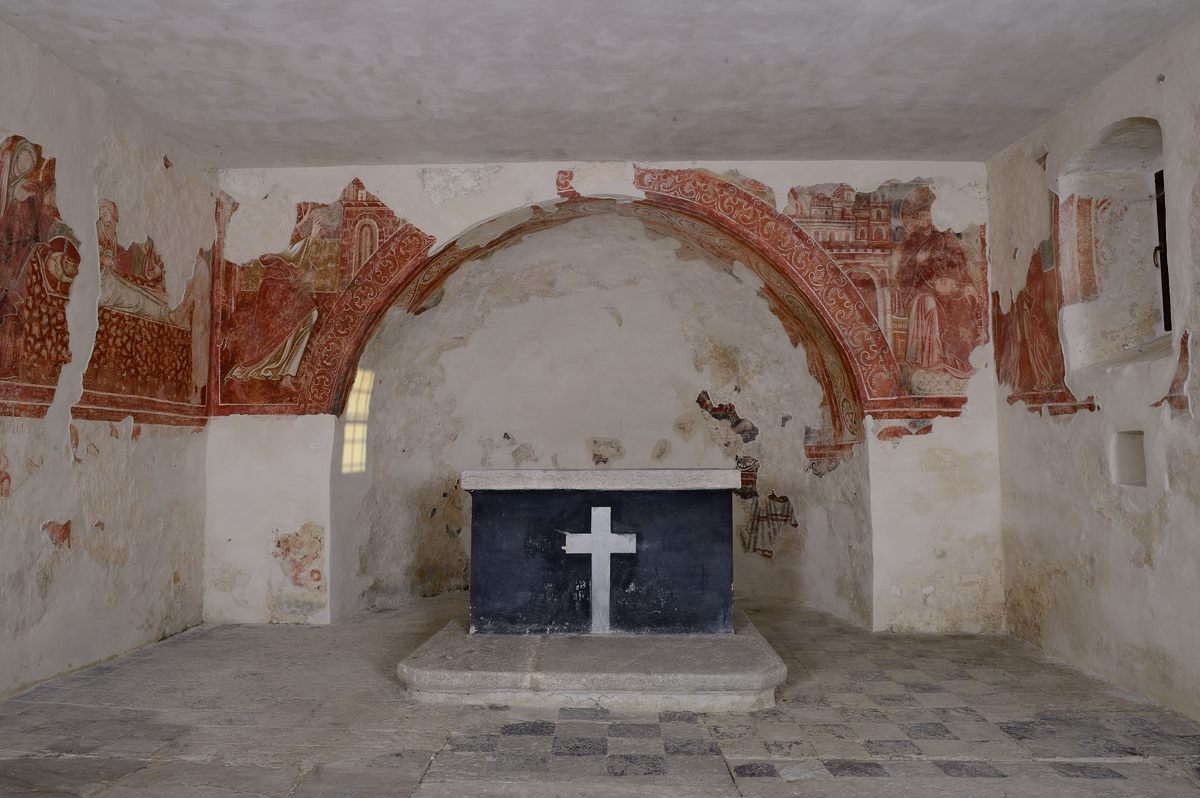
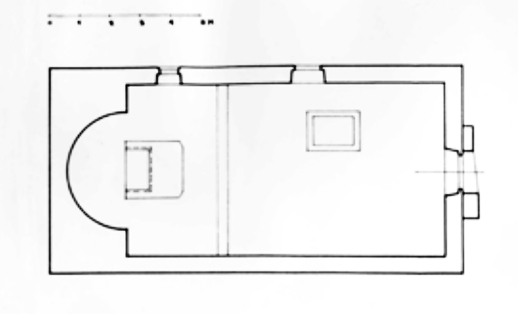
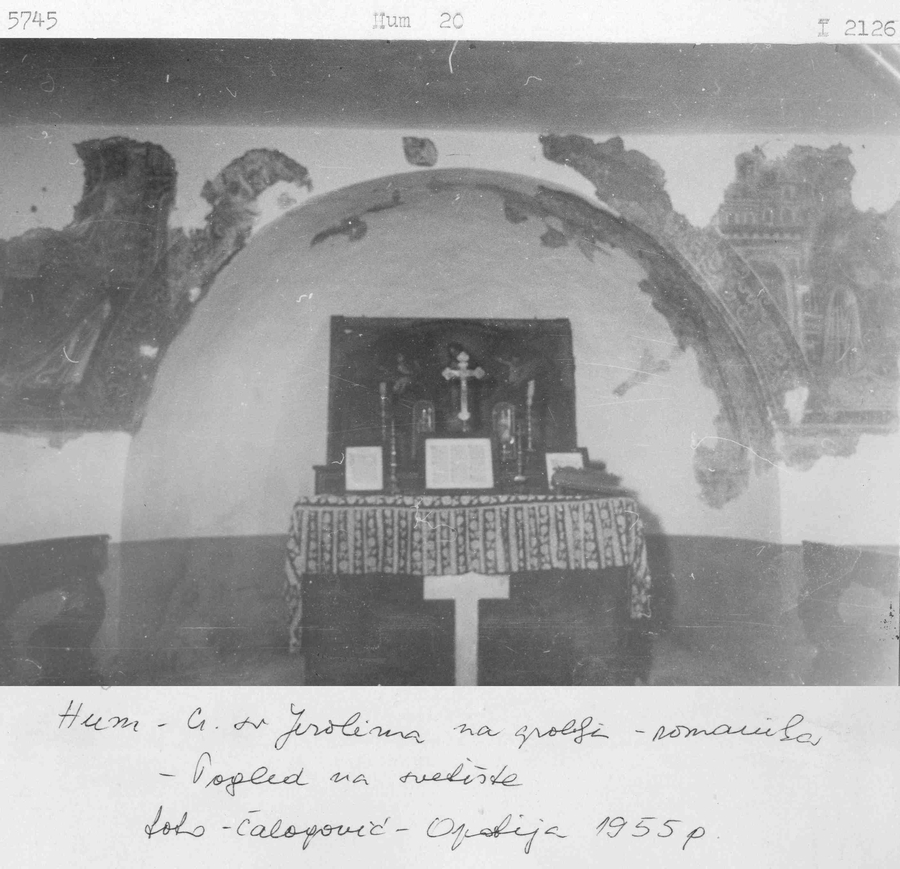
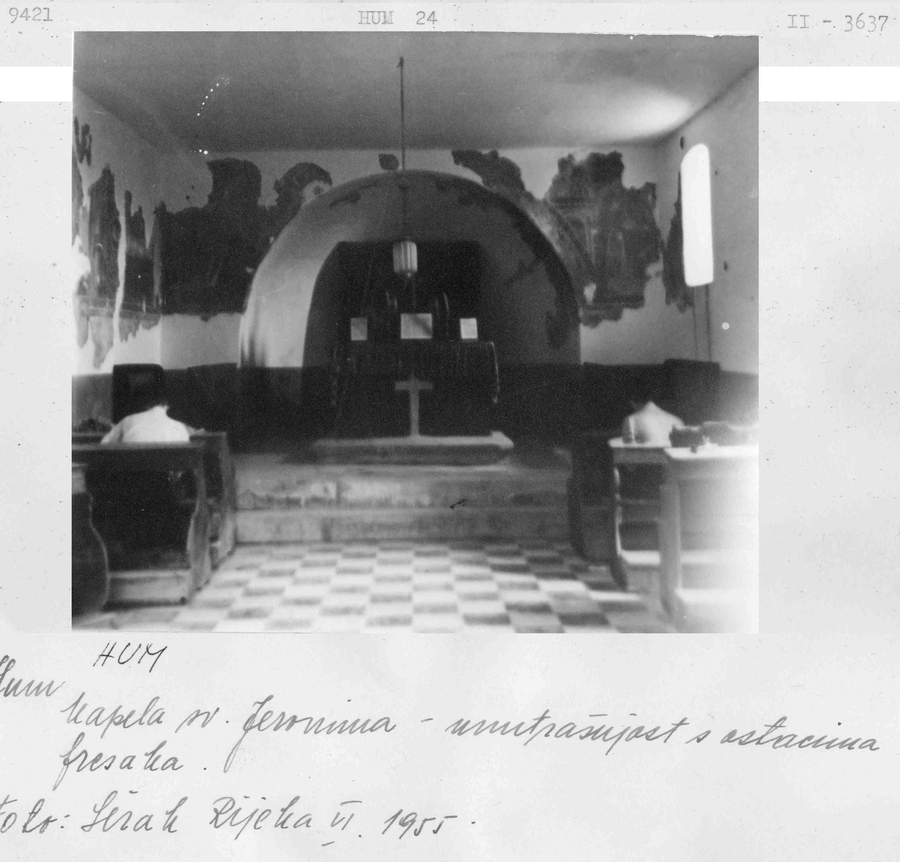
The church of St Jerome is situated in the local cemetery, opposite the fortified town of Hum. It is a single-nave structure with a rectangular ground plan and an inscribed semicircular apse. The façade is articulated by a shallow projecting bell tower terminating in a bell gable with two bells. A porch (lopica) was added to the façade in the sixteenth century, its present form resulting from a reconstruction carried out in 1991.
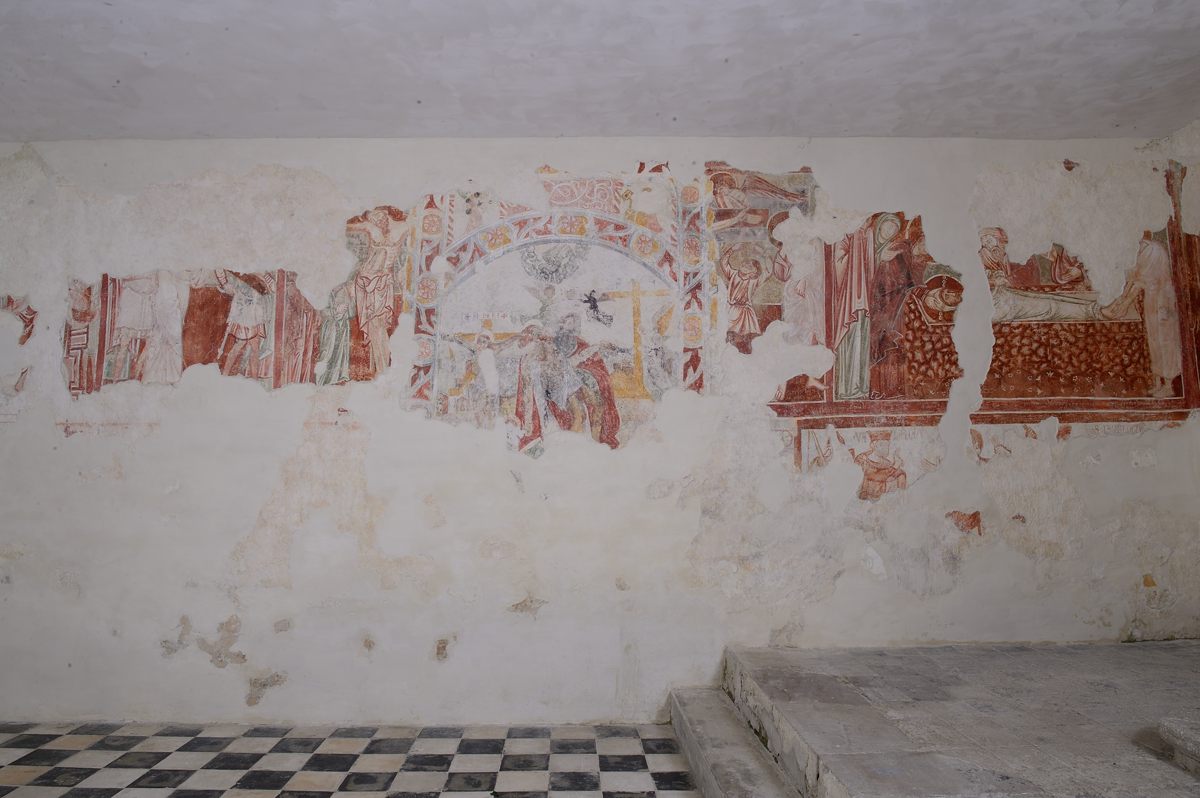
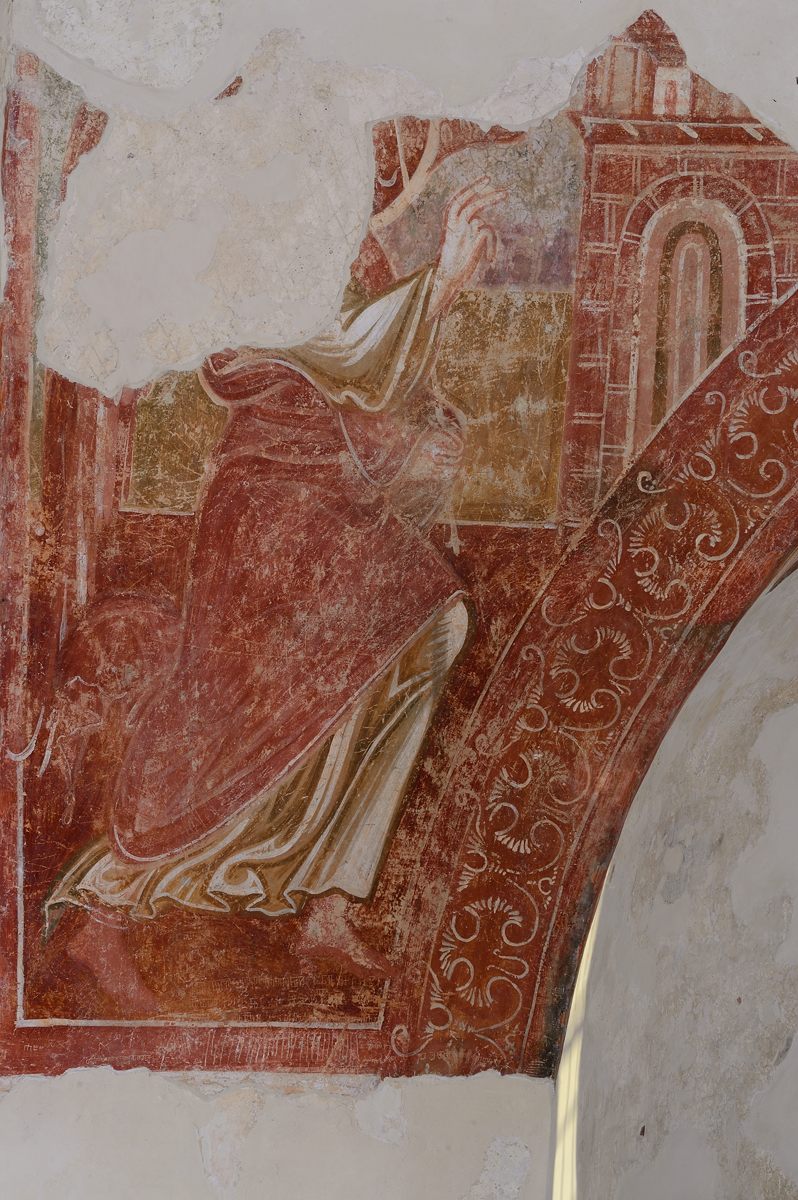
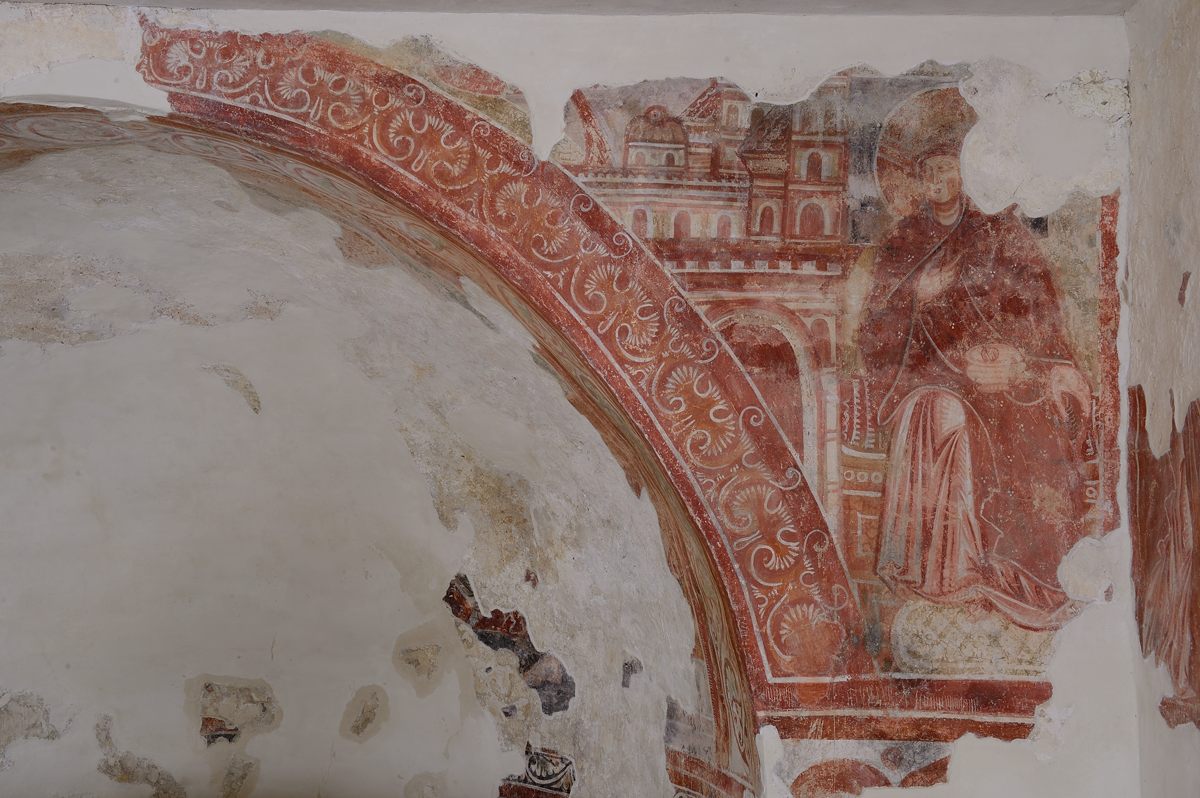
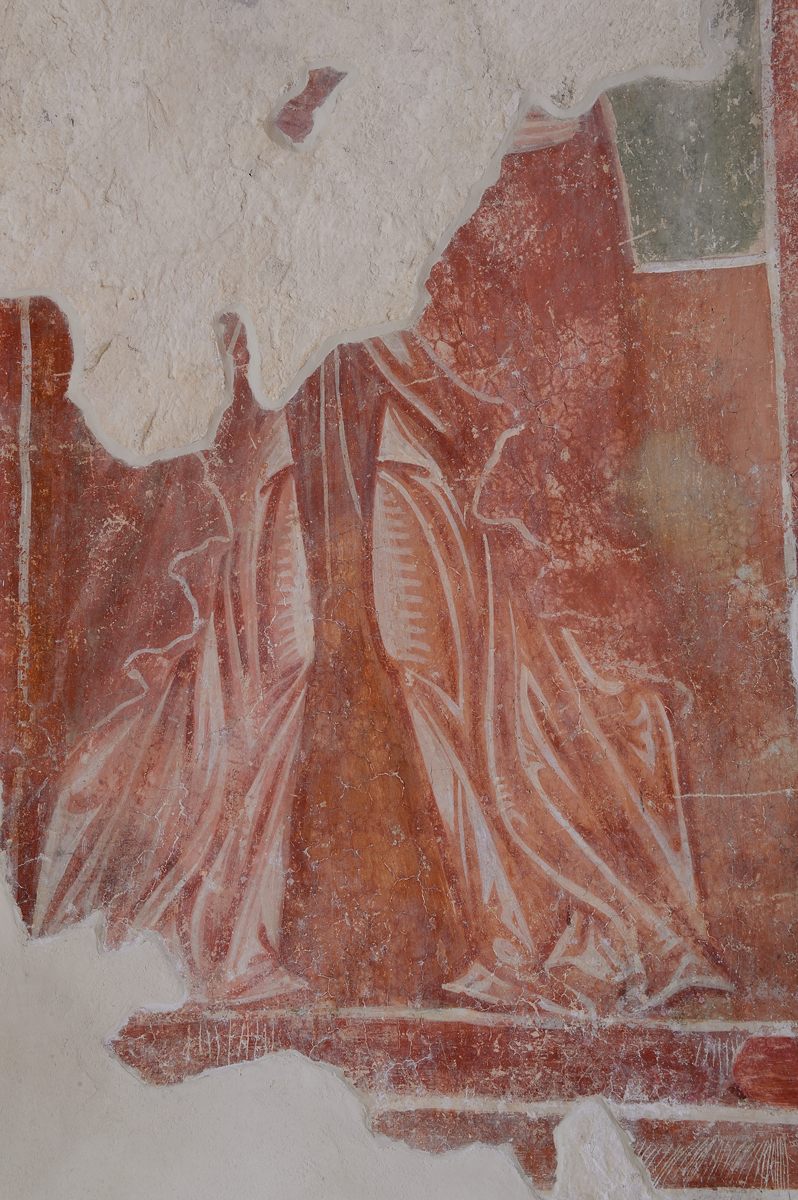
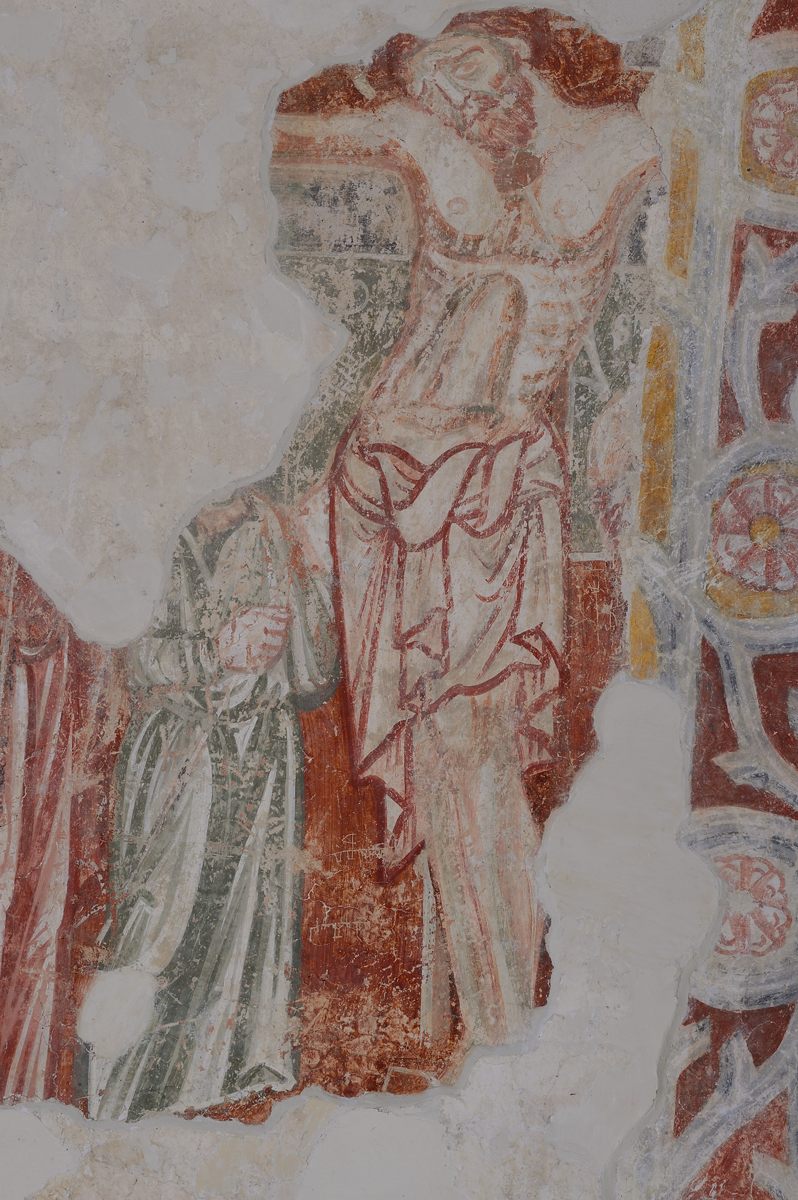
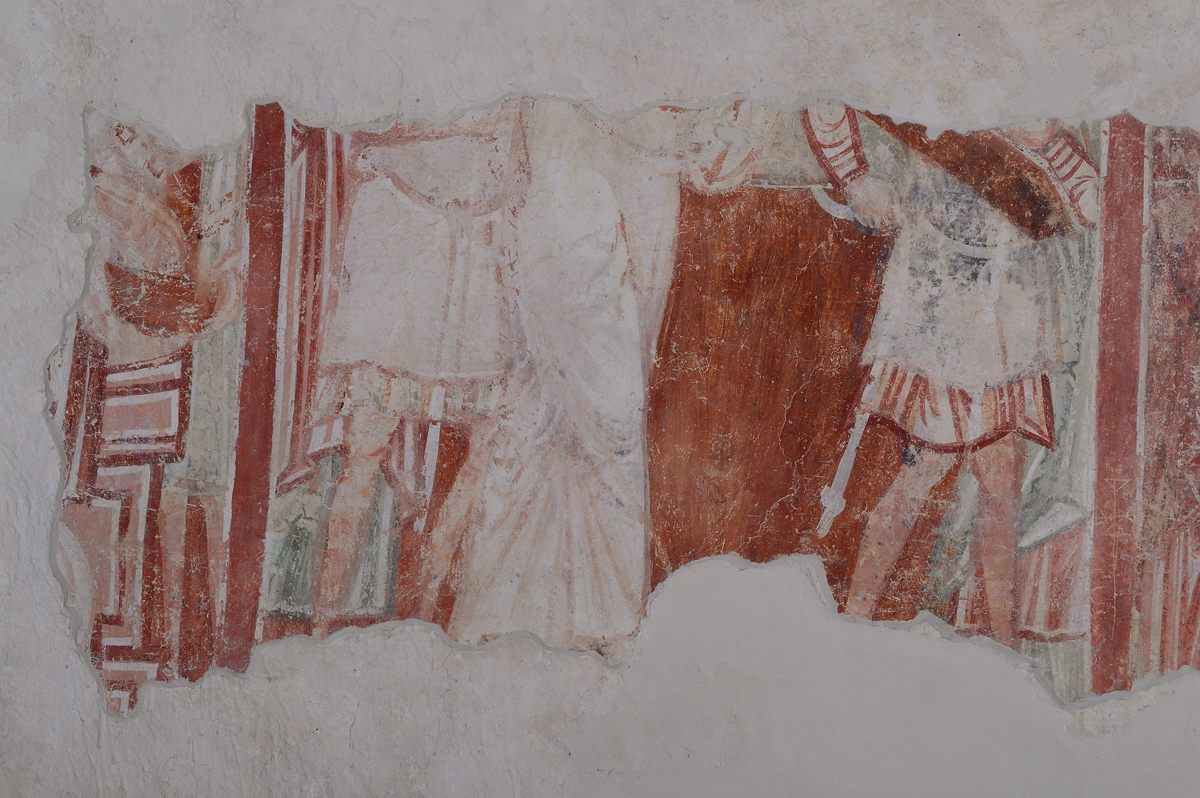
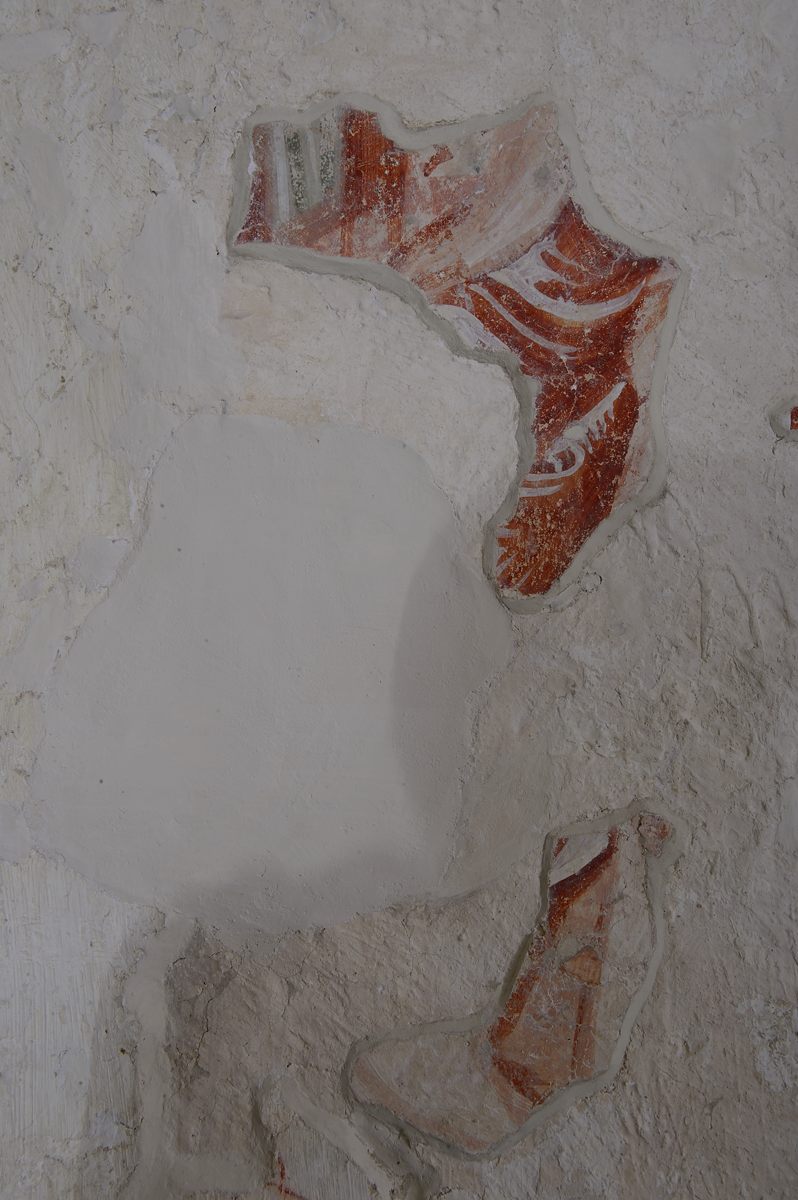
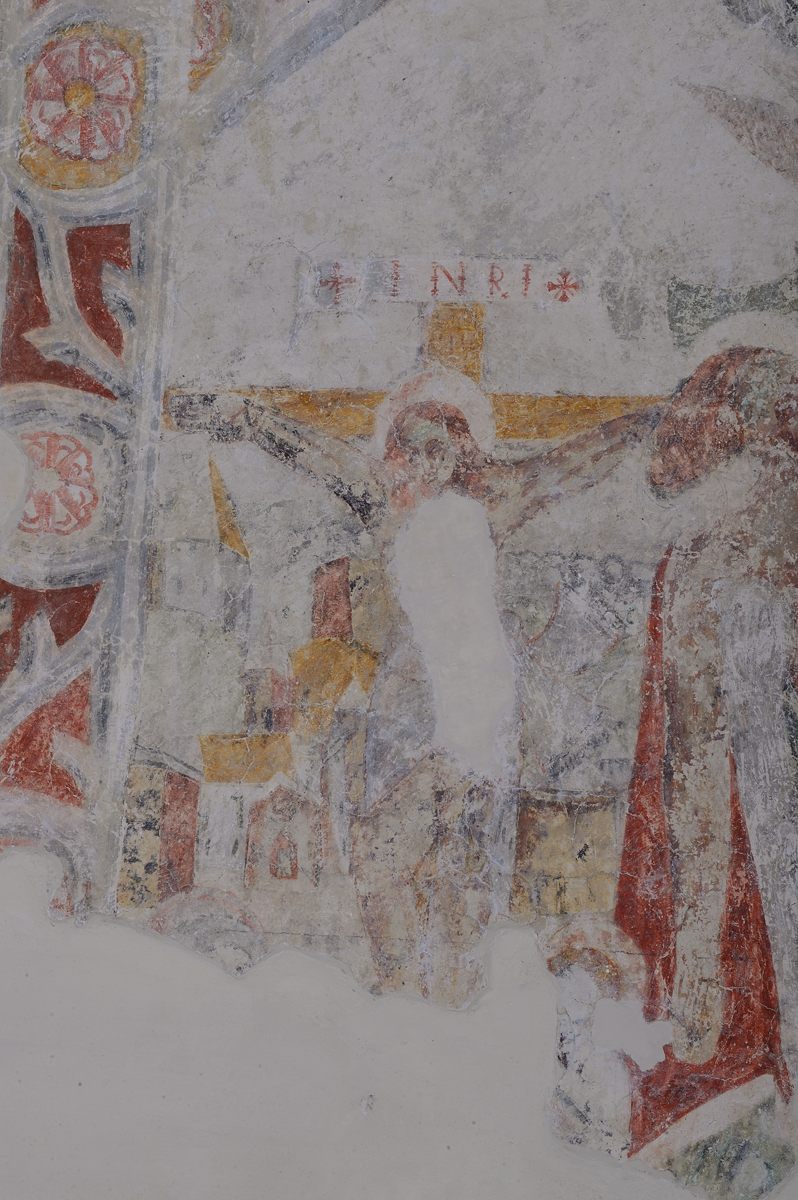
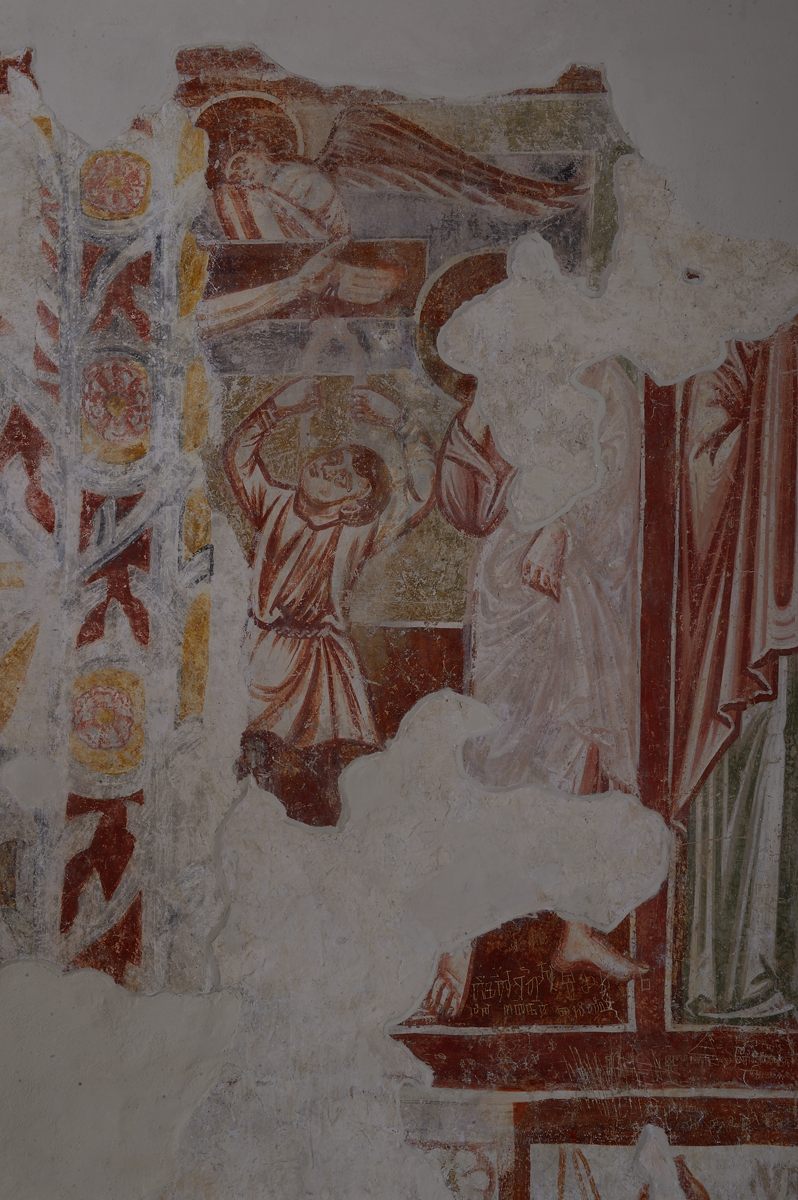
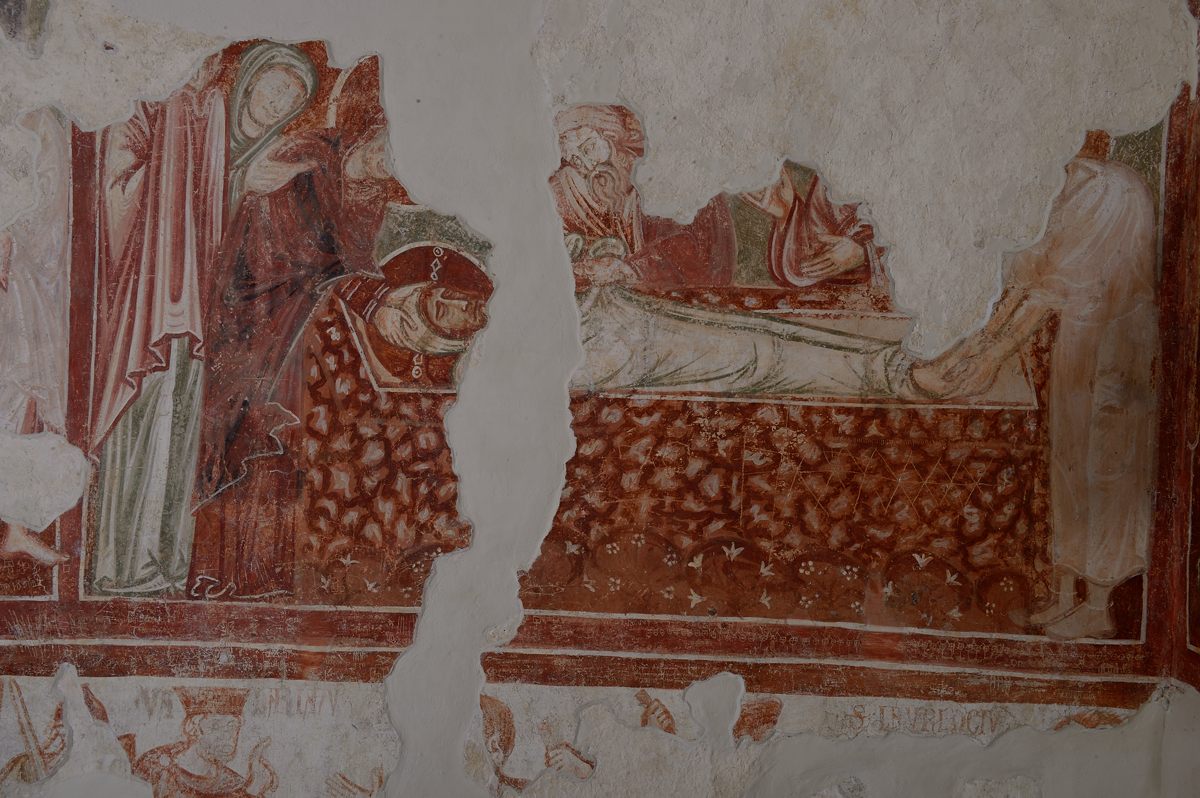
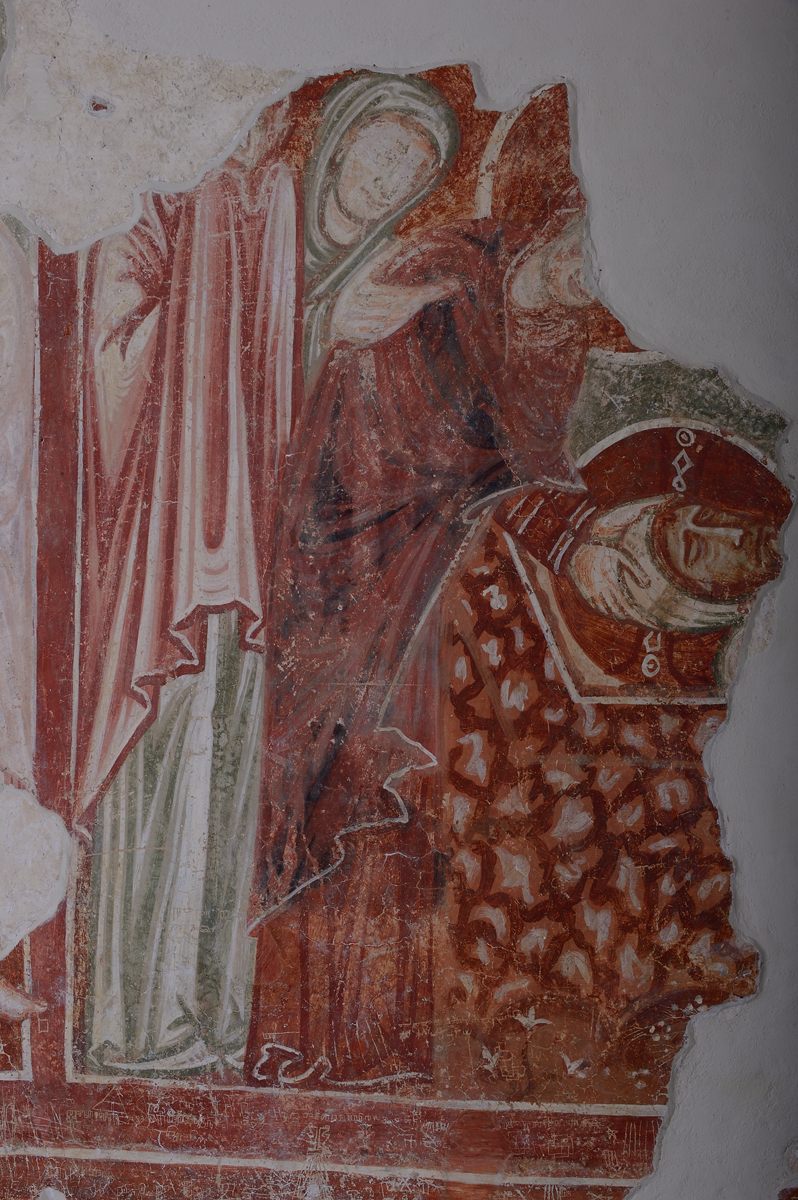
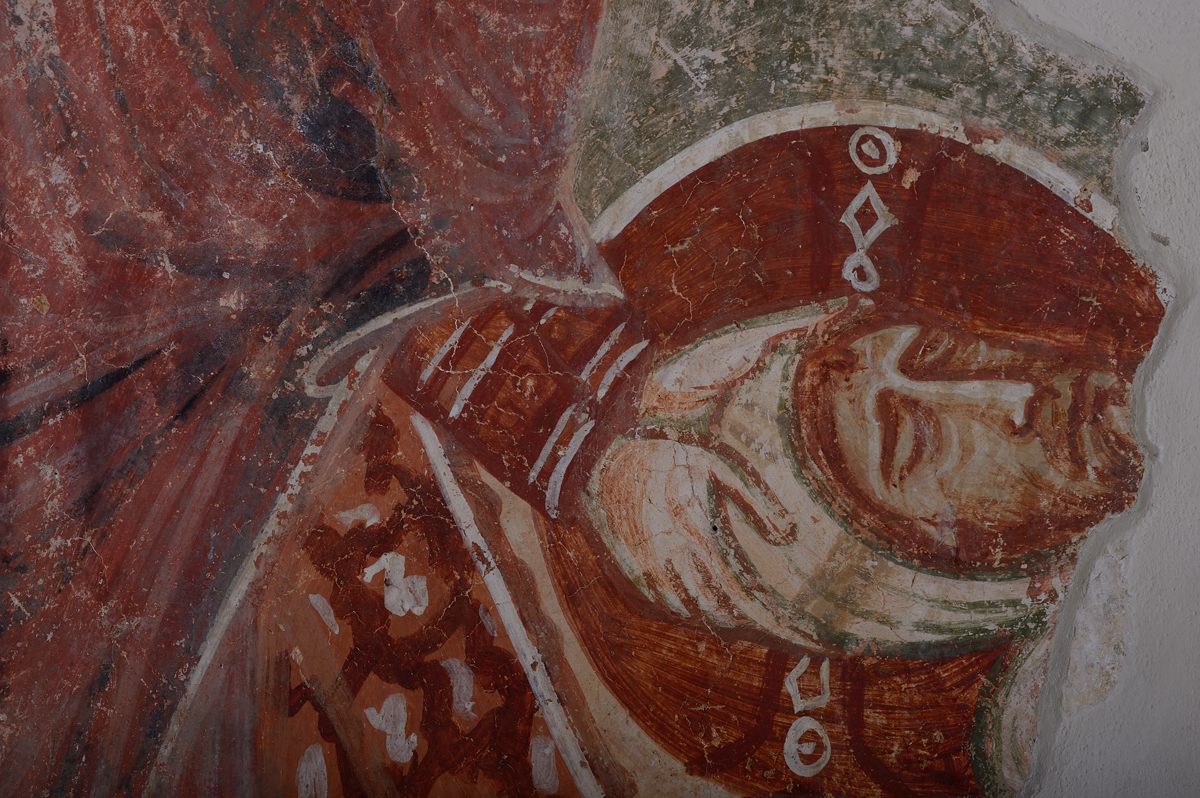
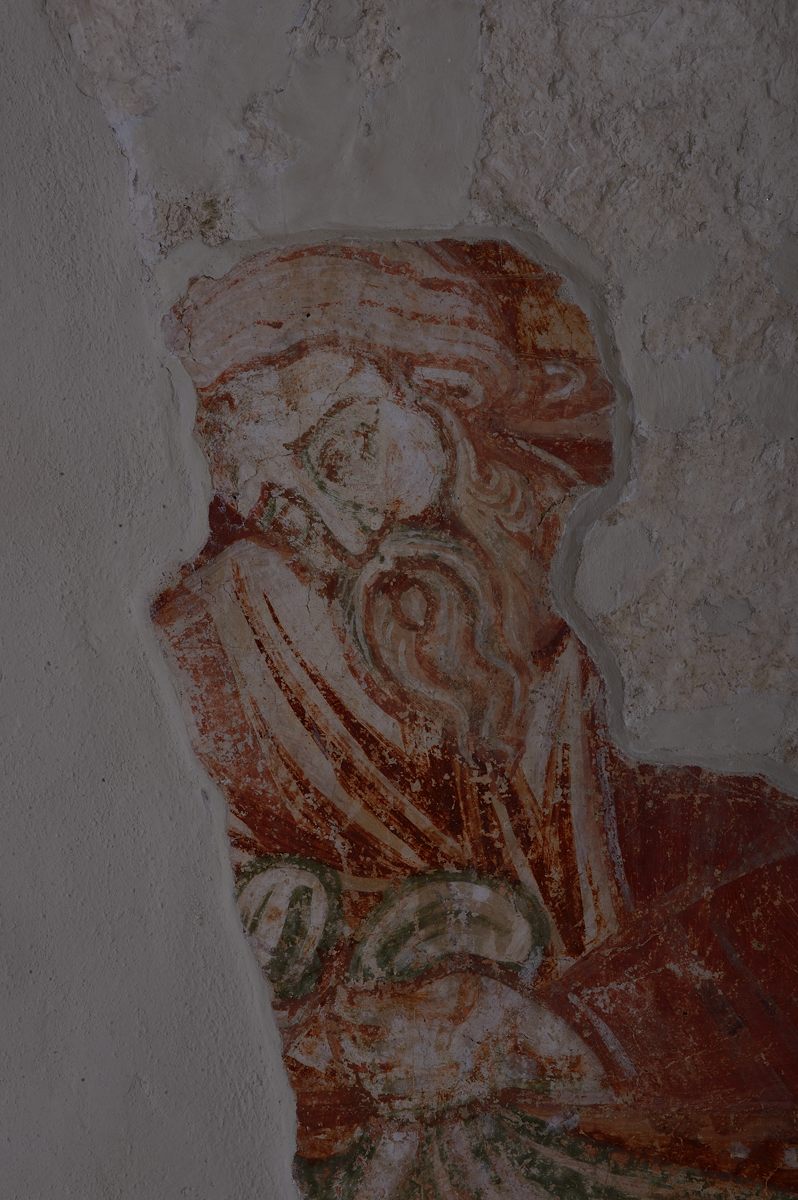
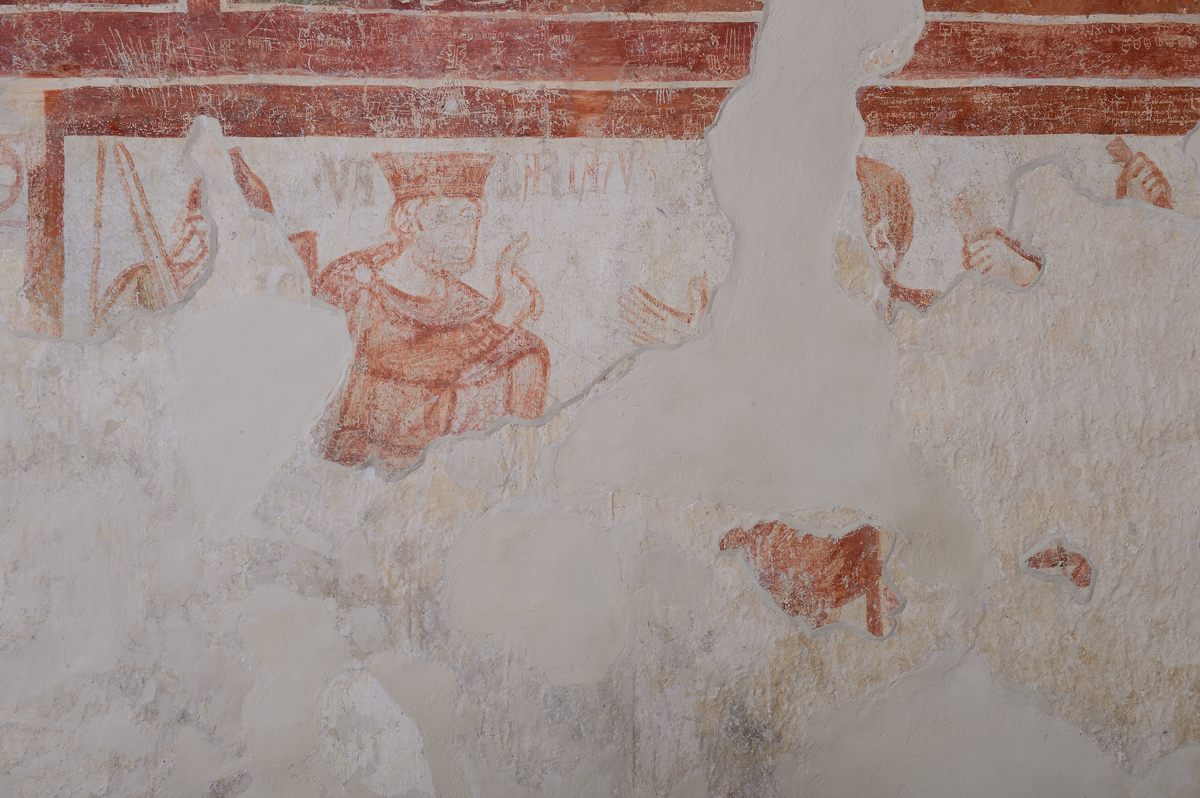
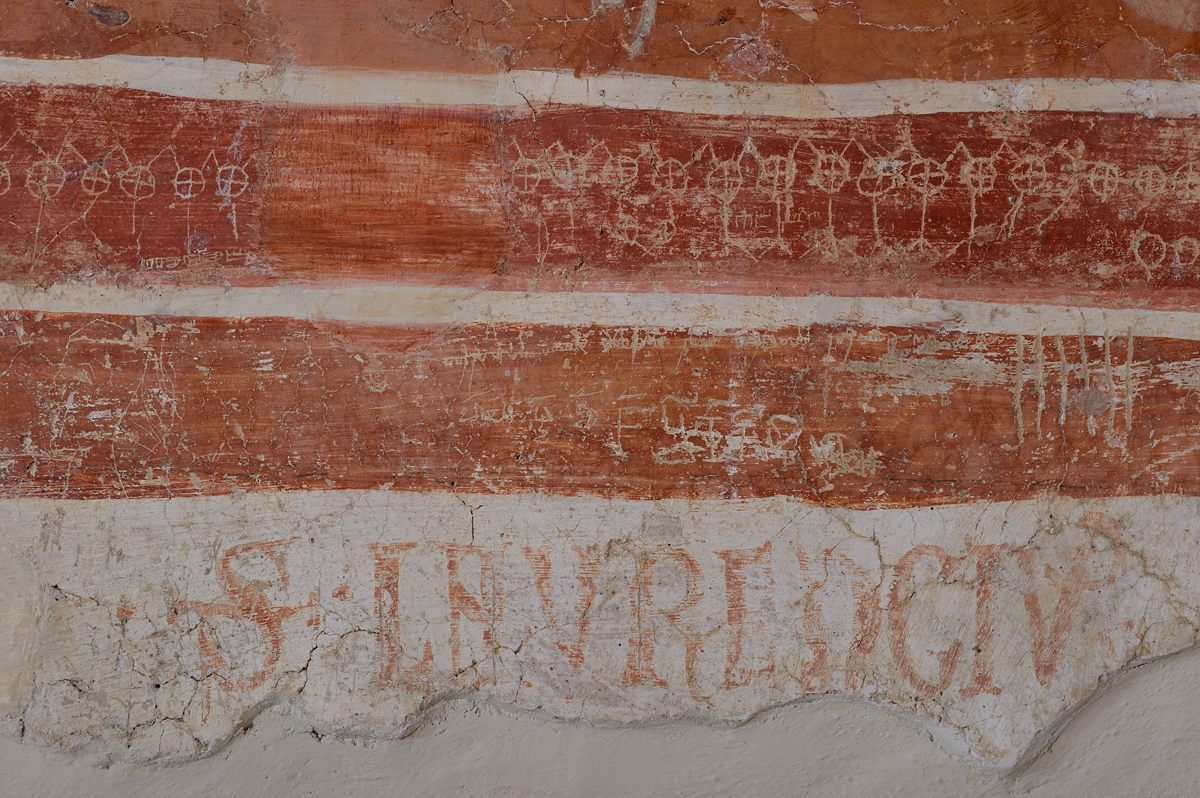
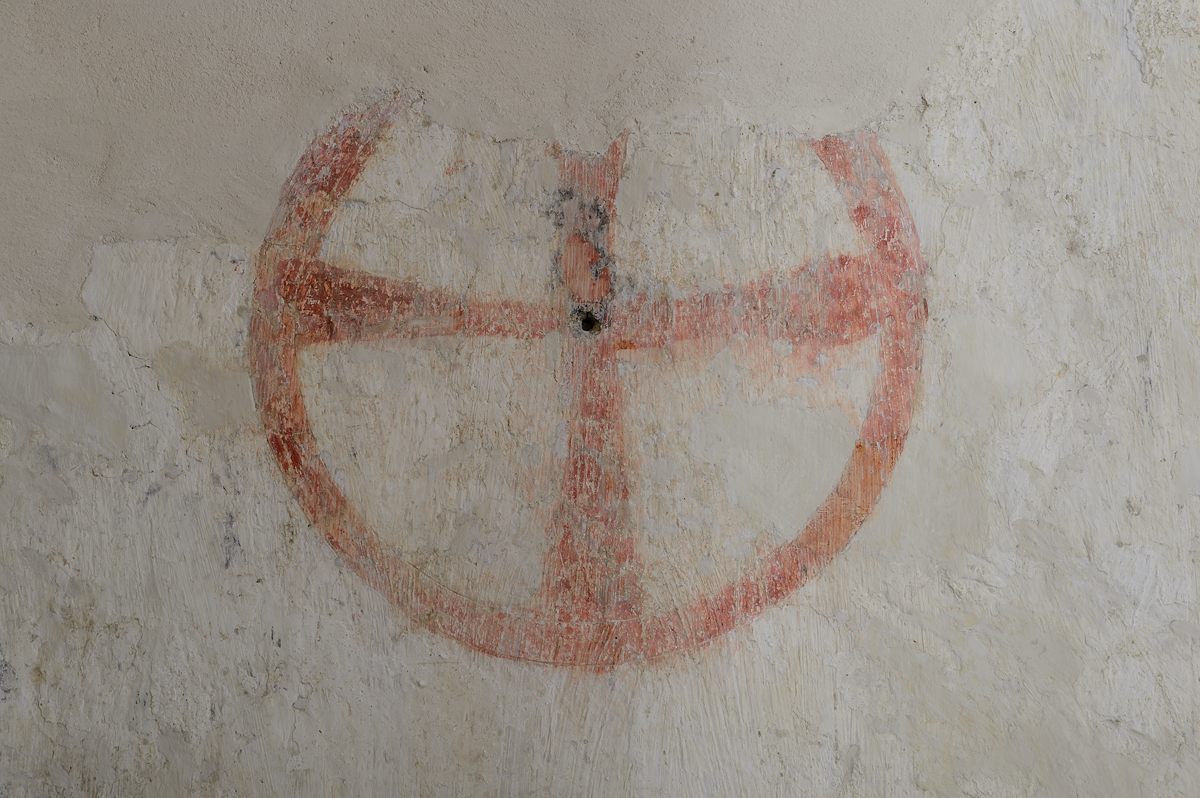
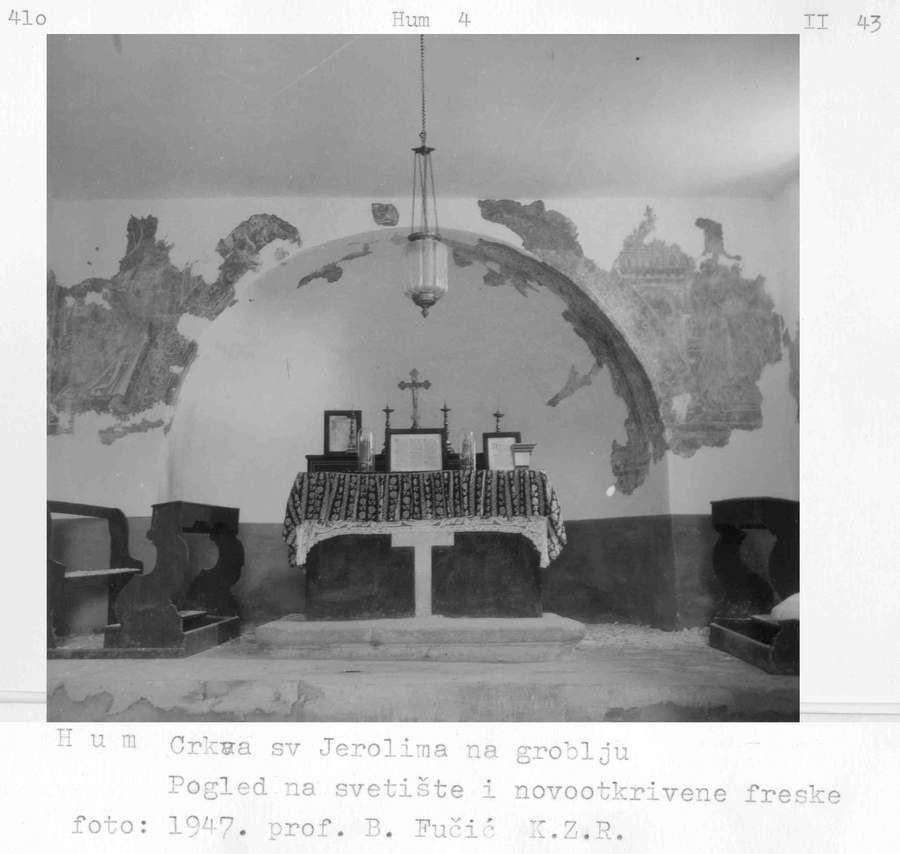
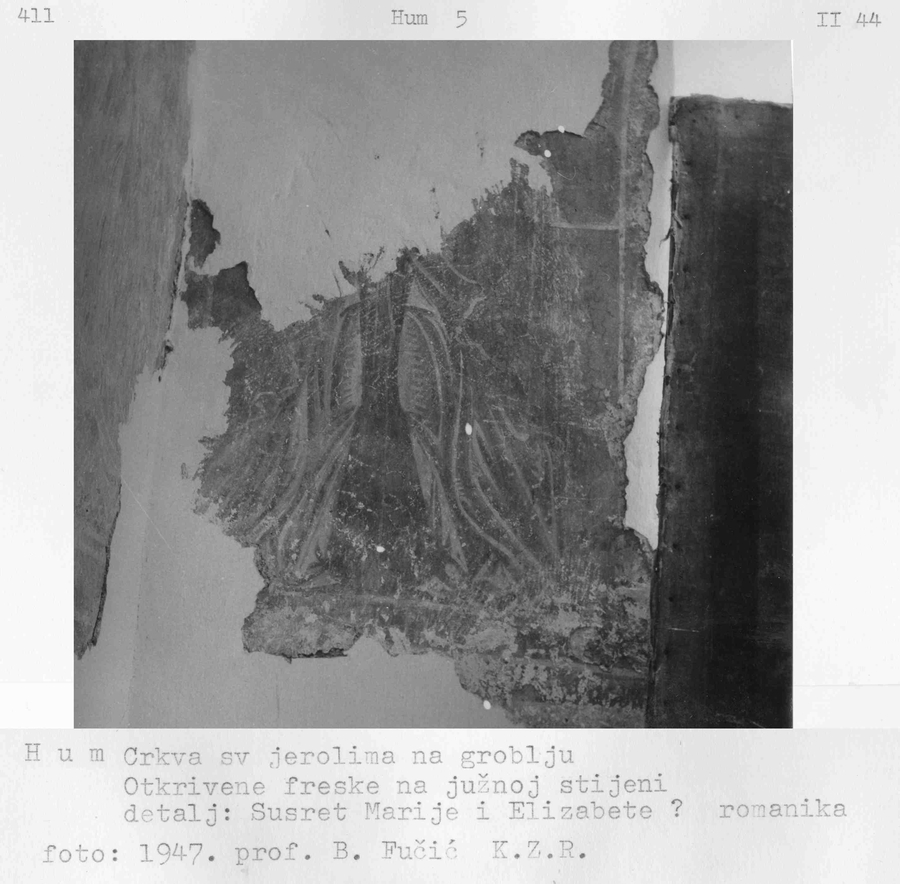
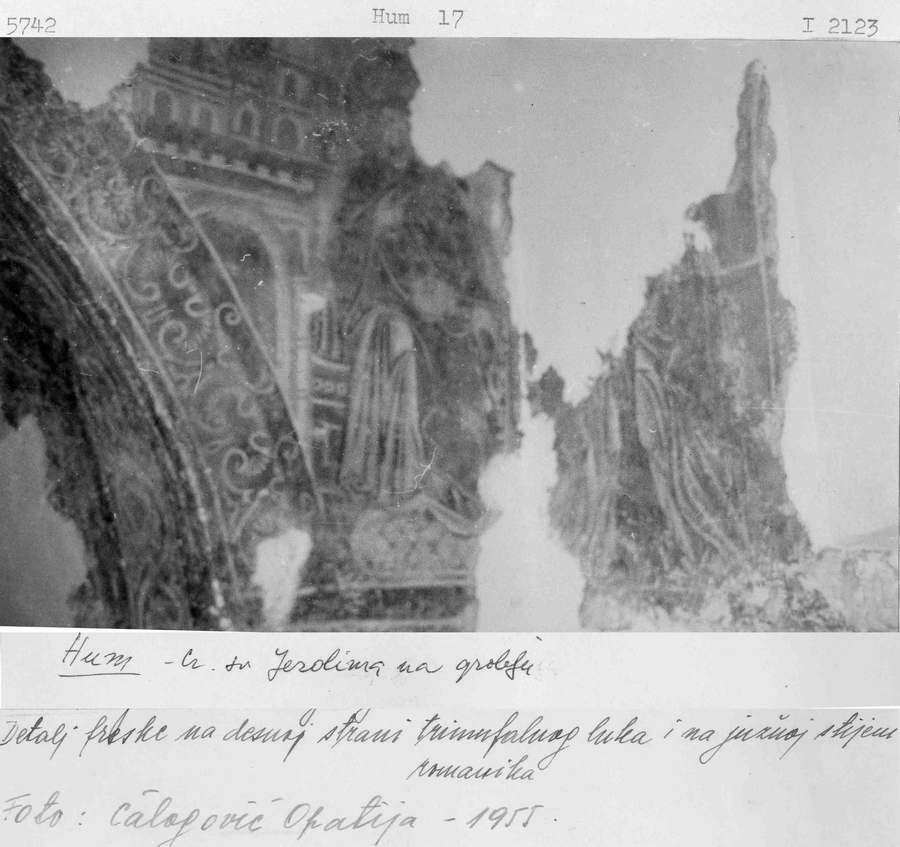
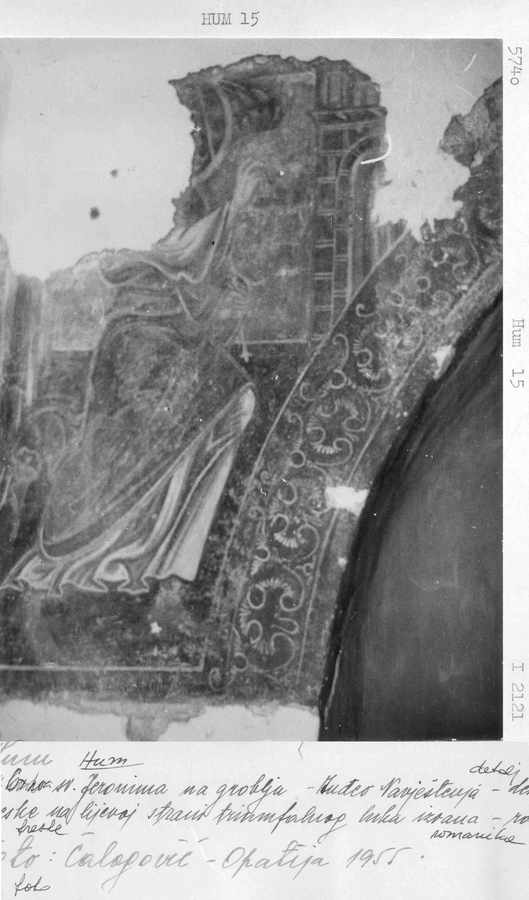
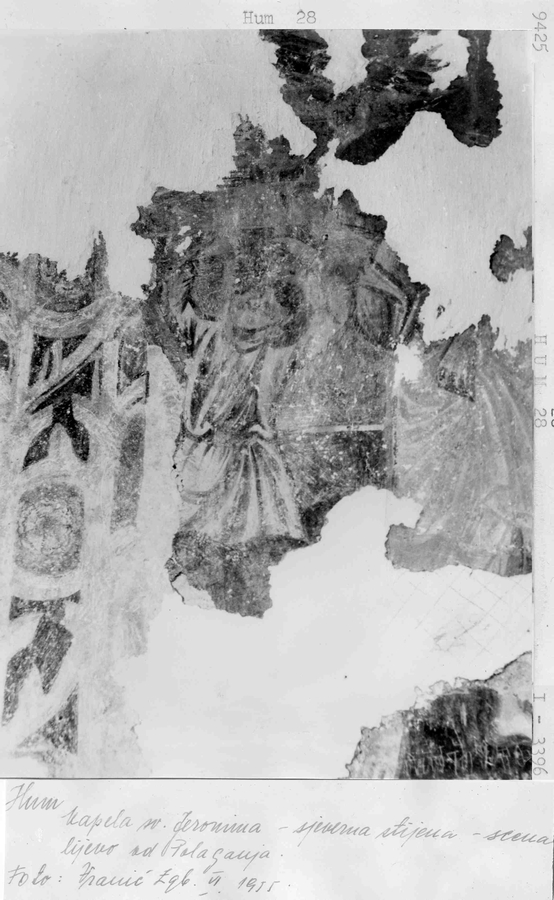
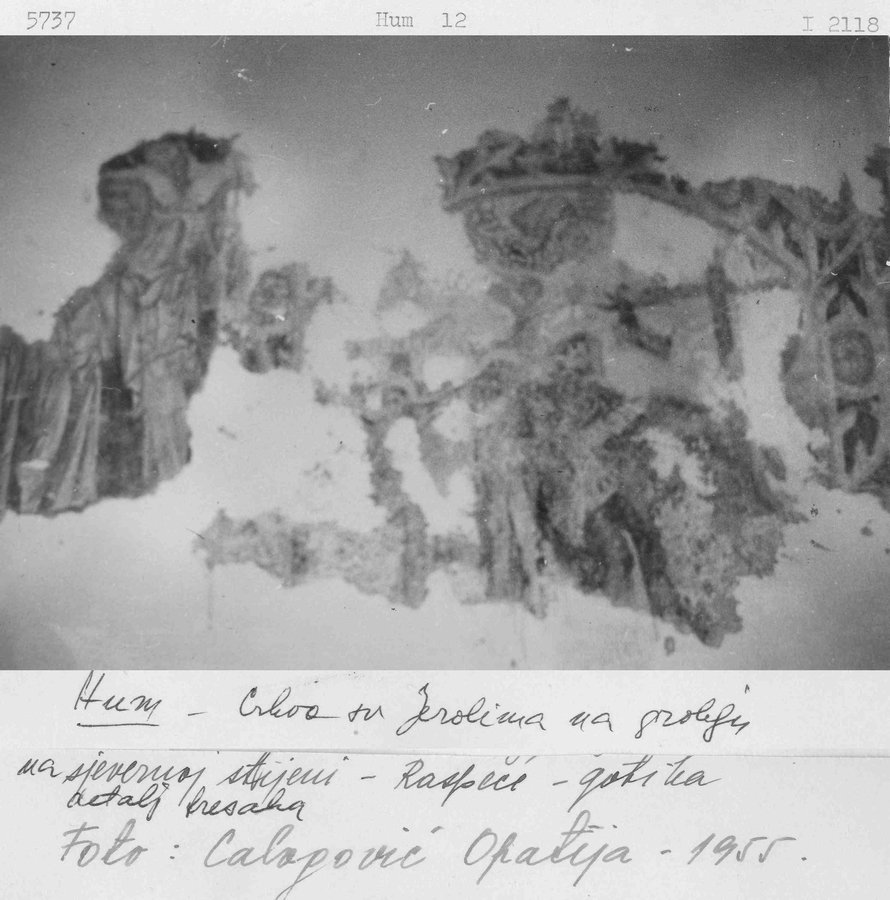
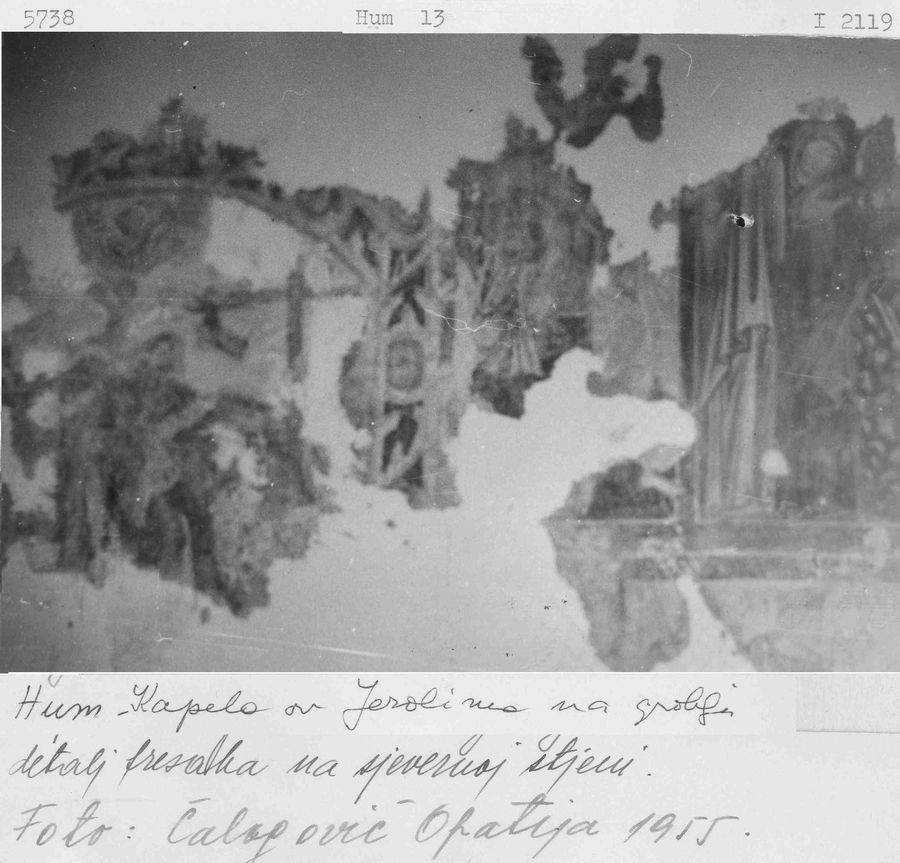
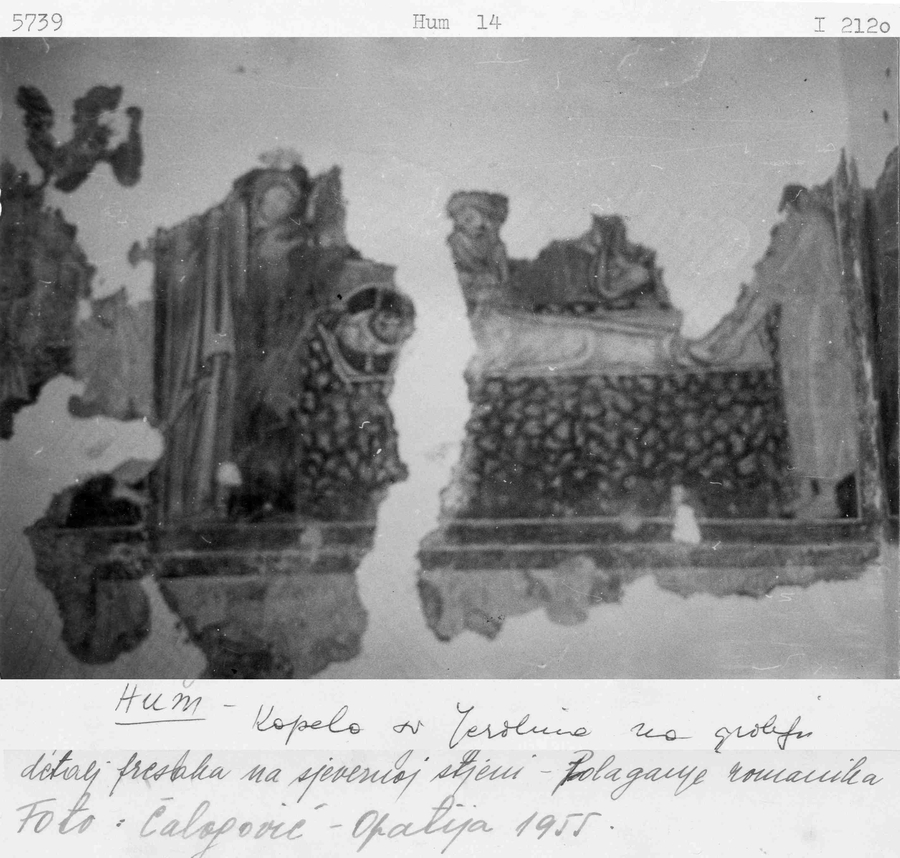
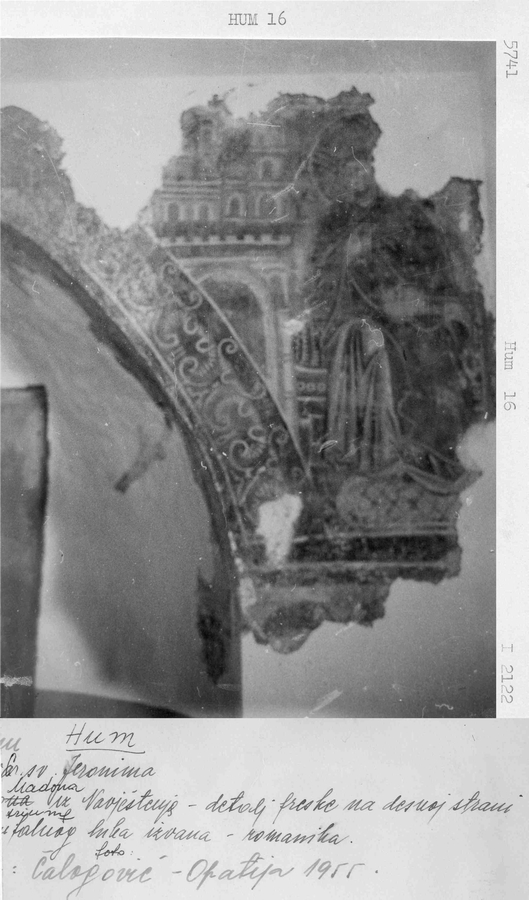
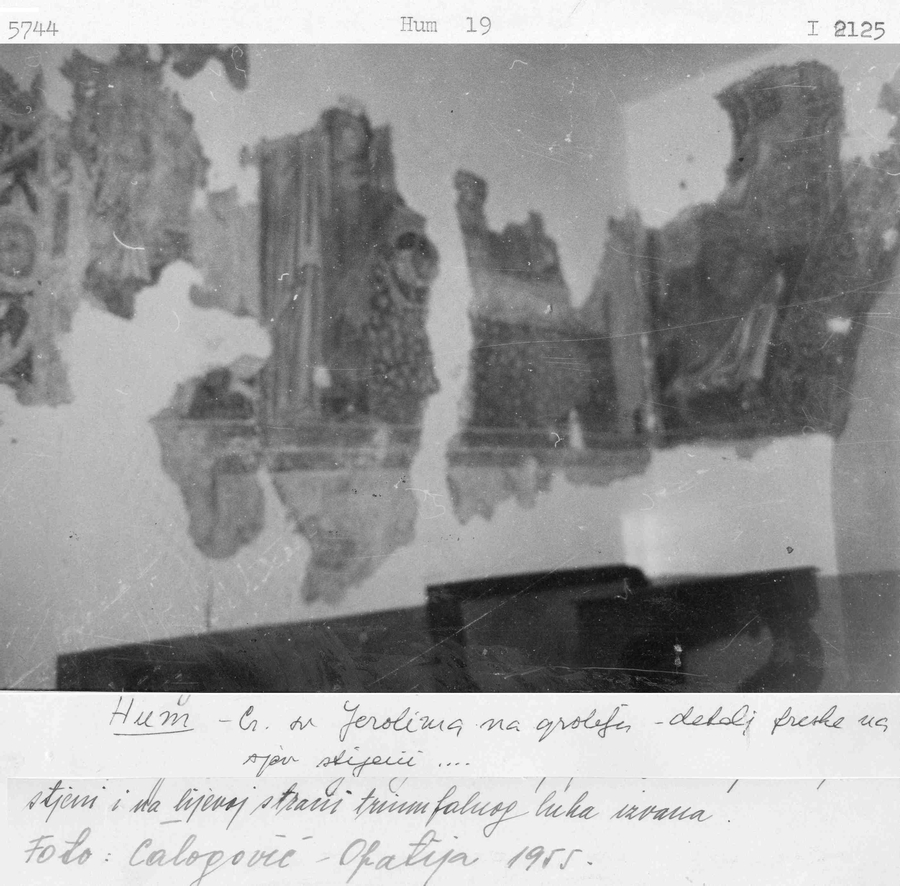
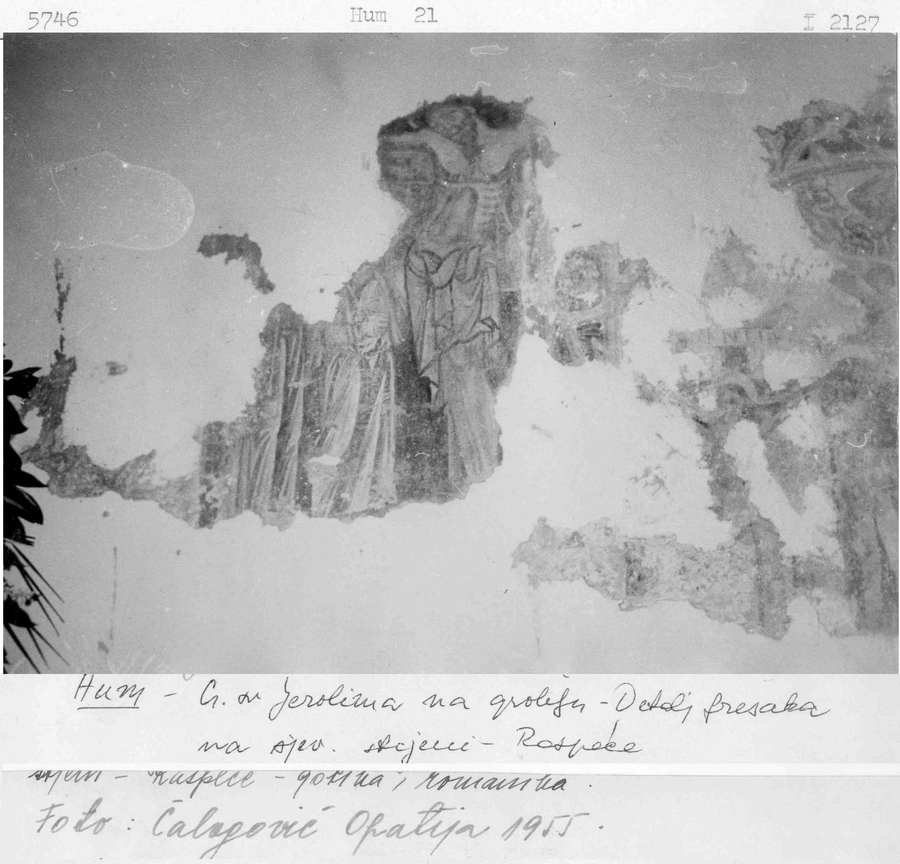
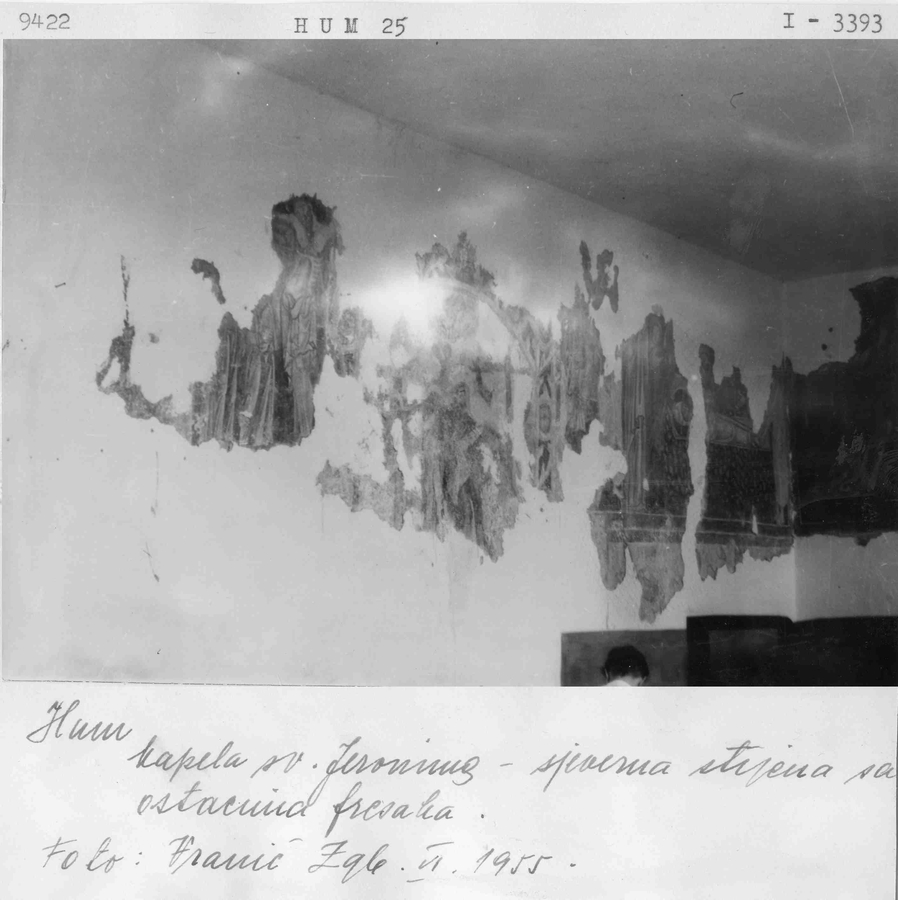
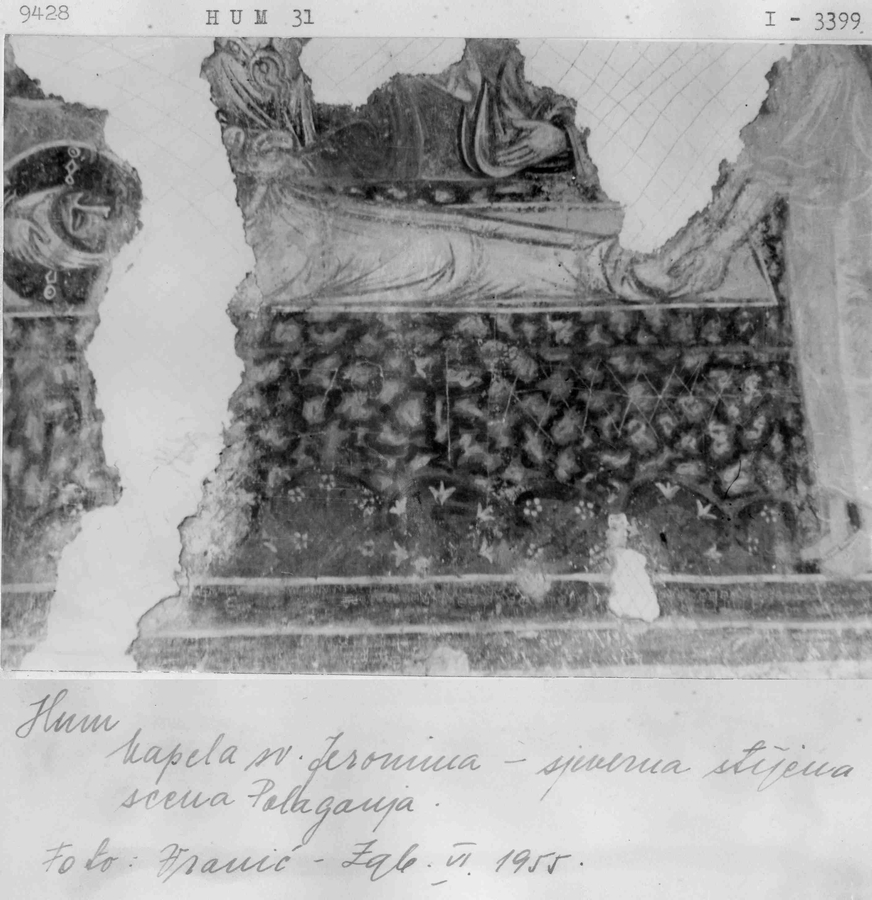
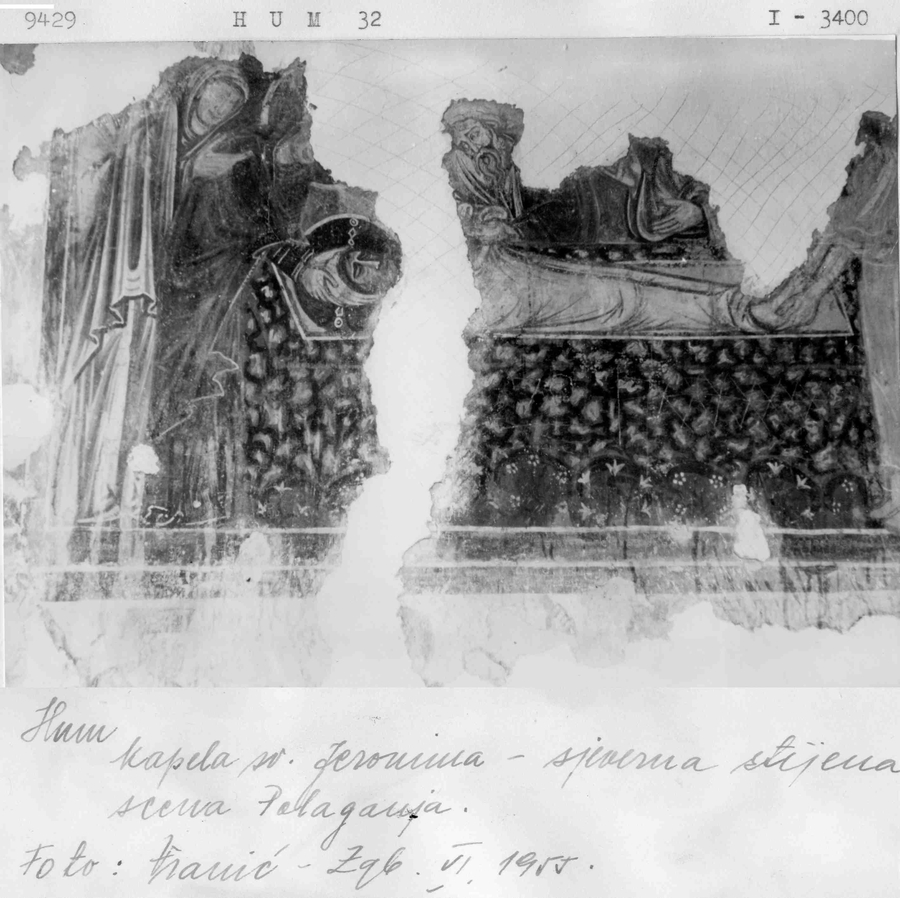
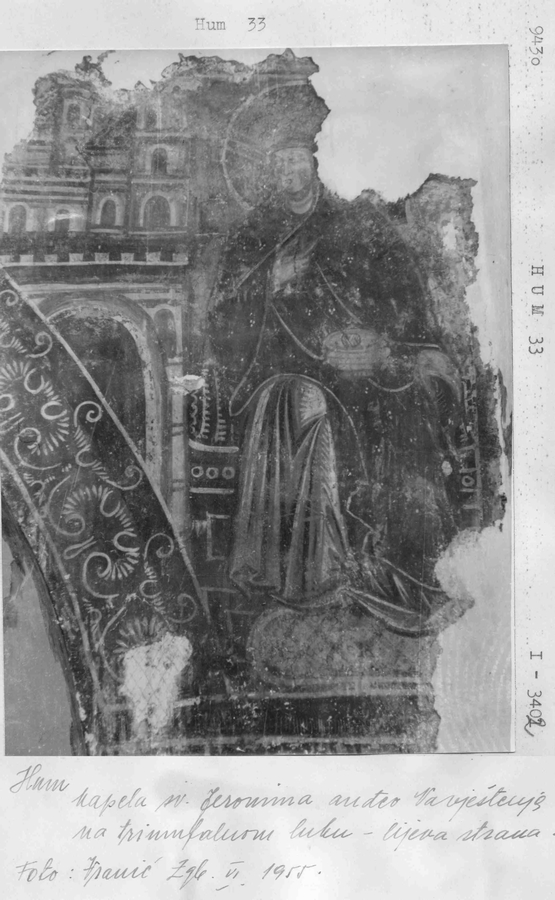
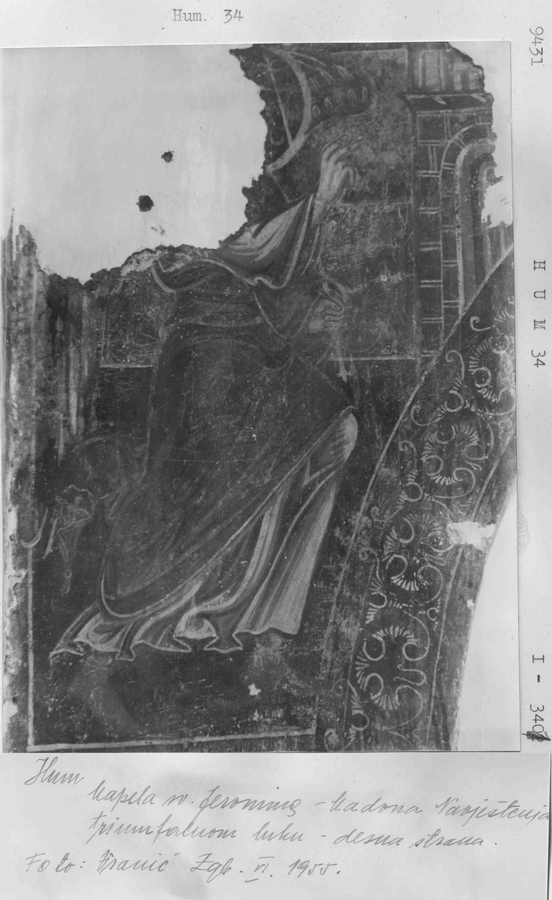
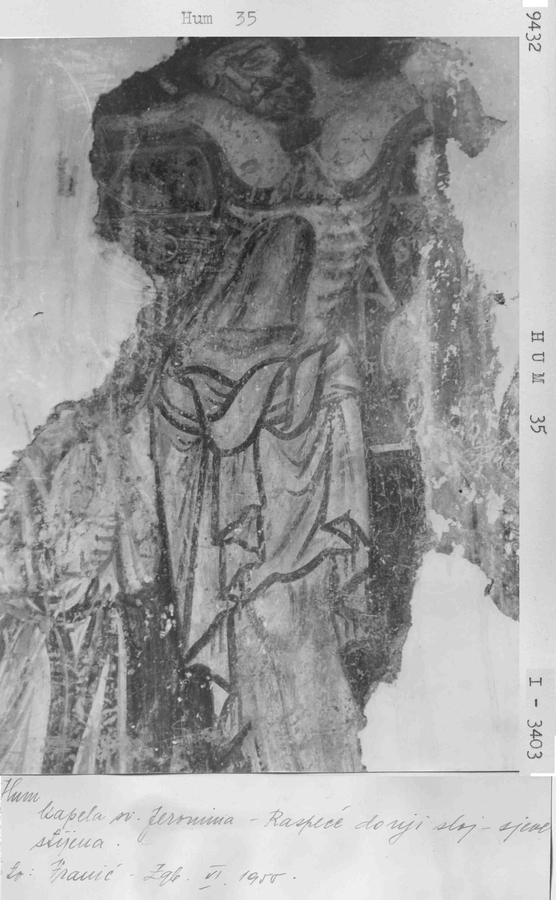
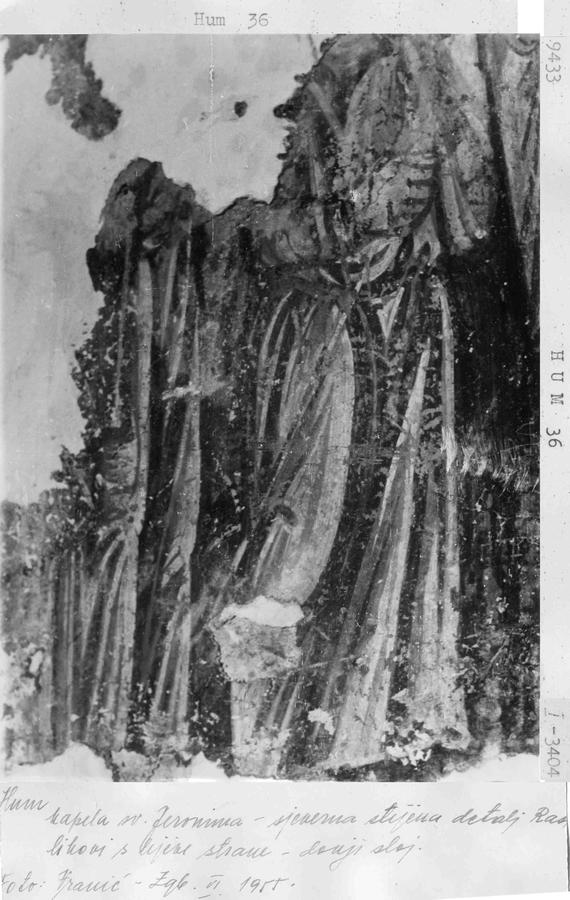
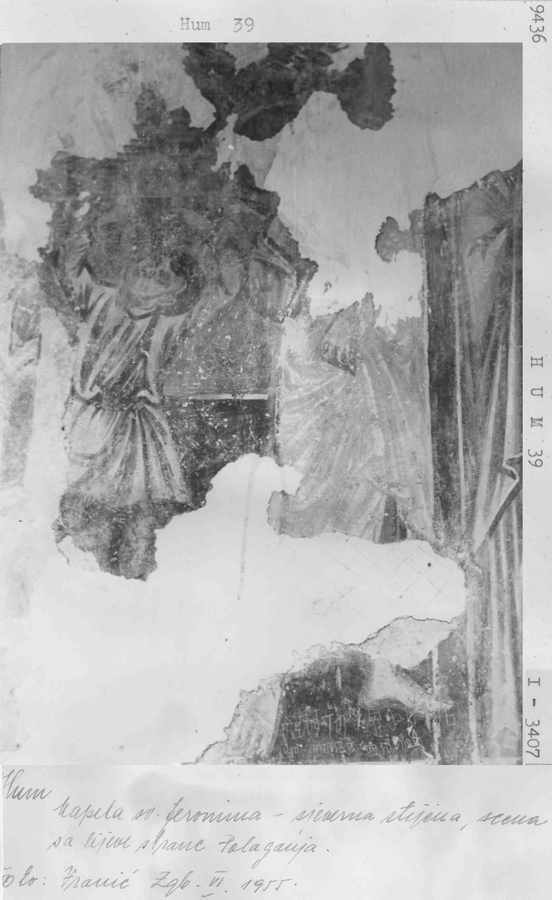
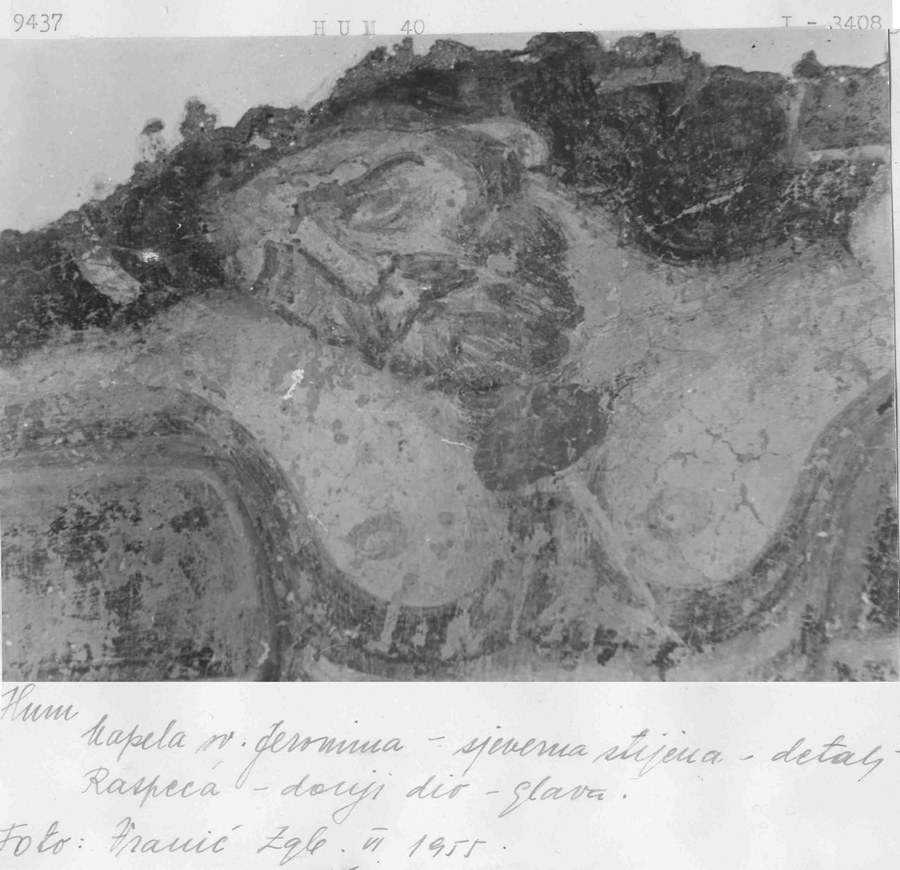
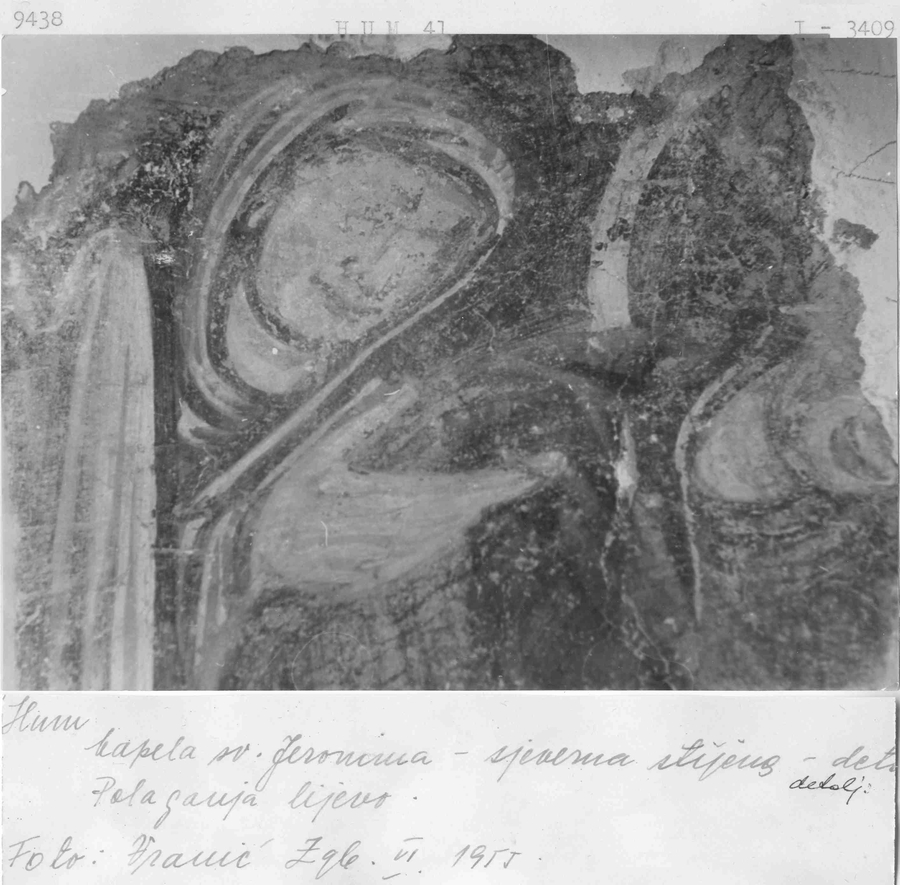
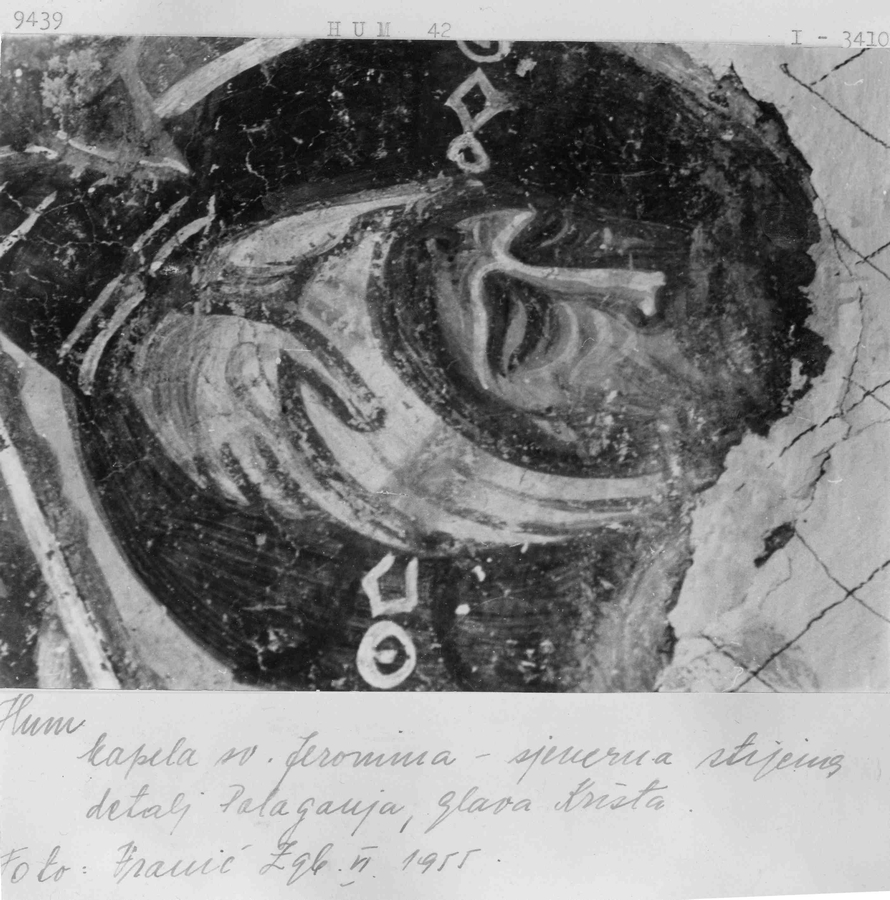
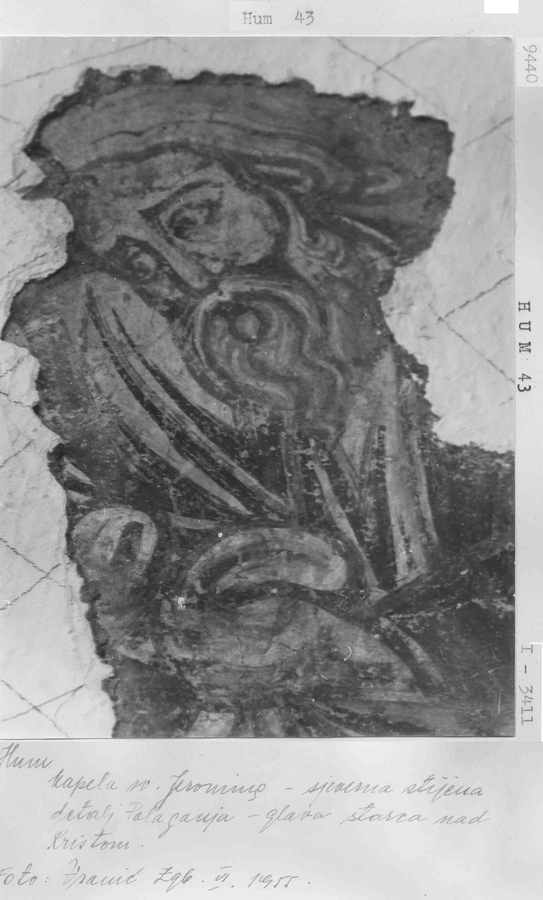
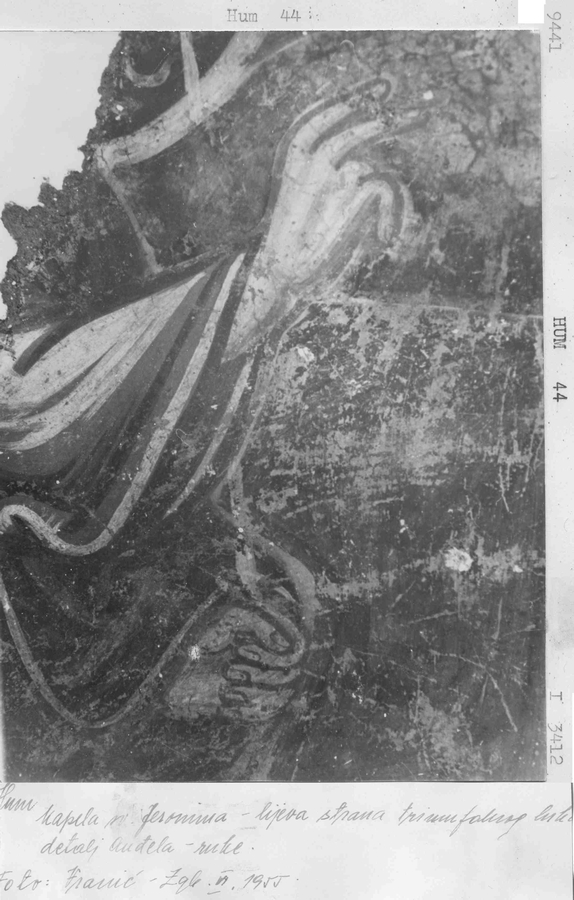
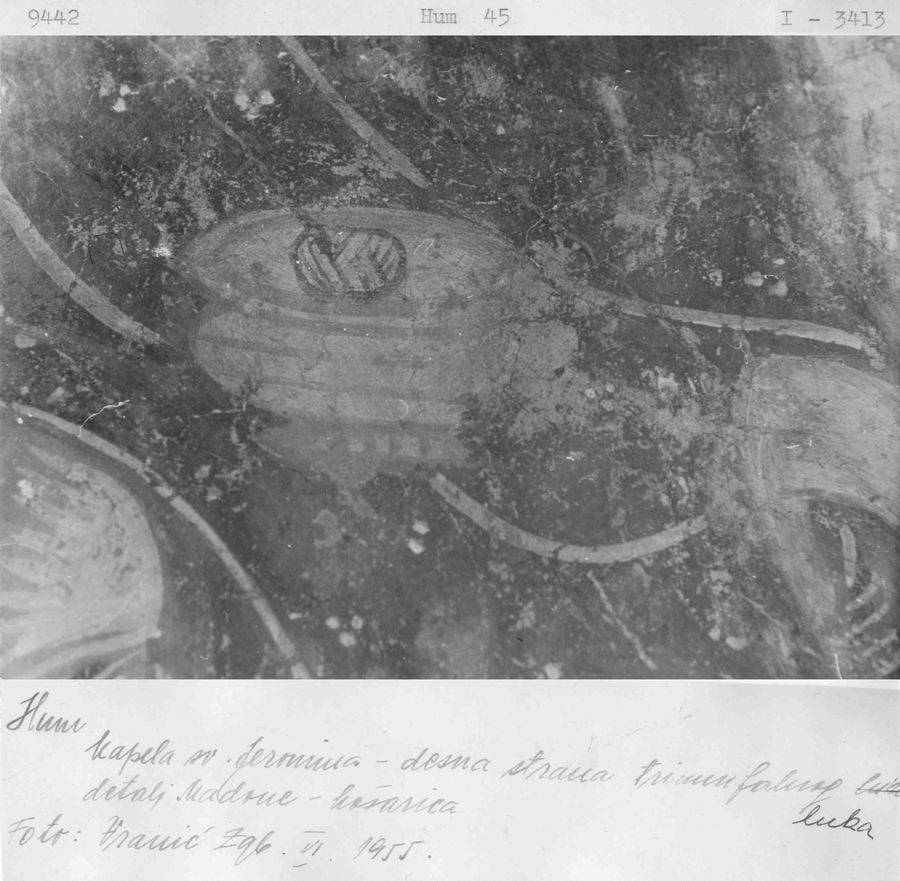
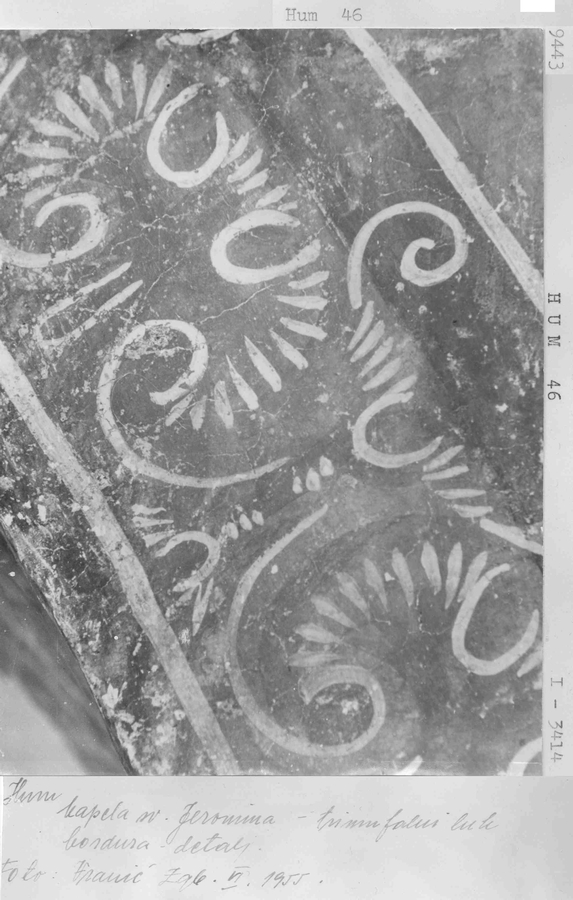
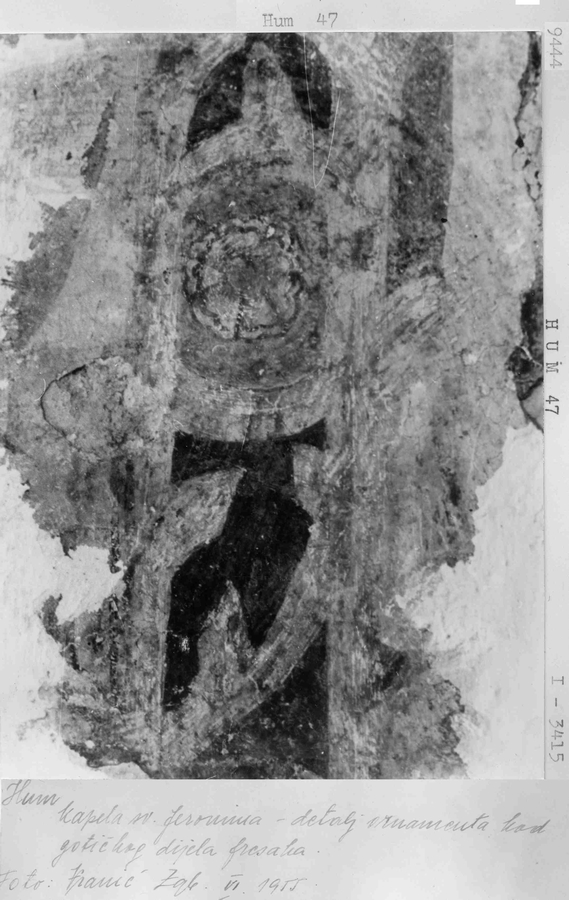
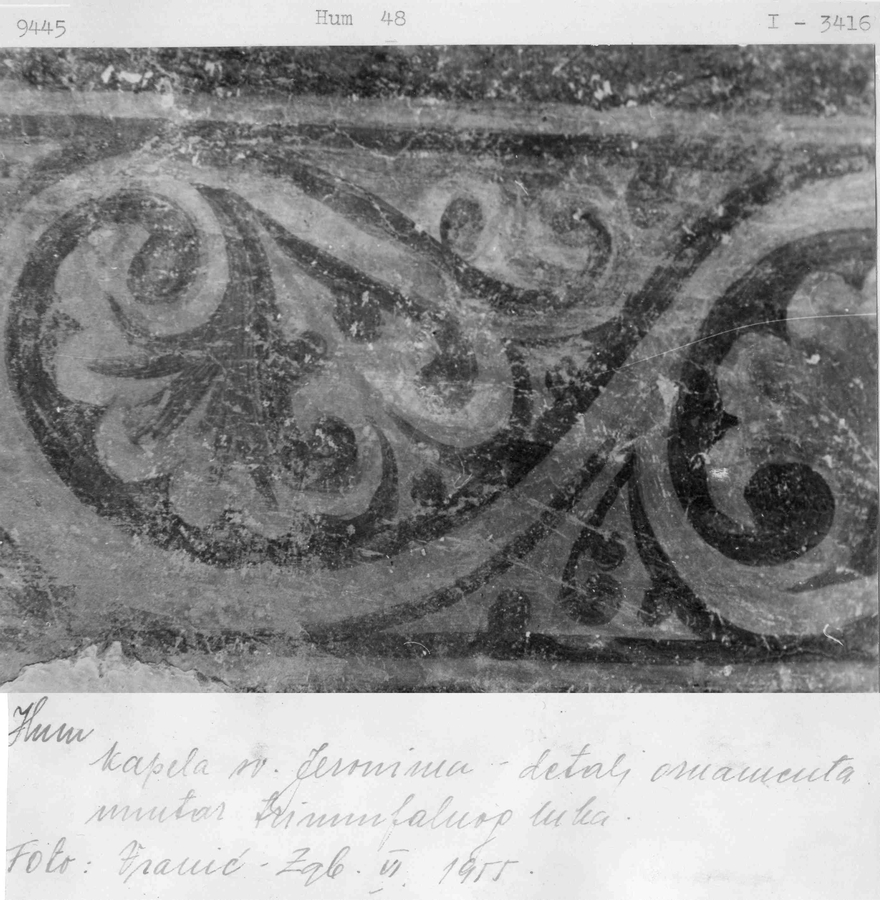
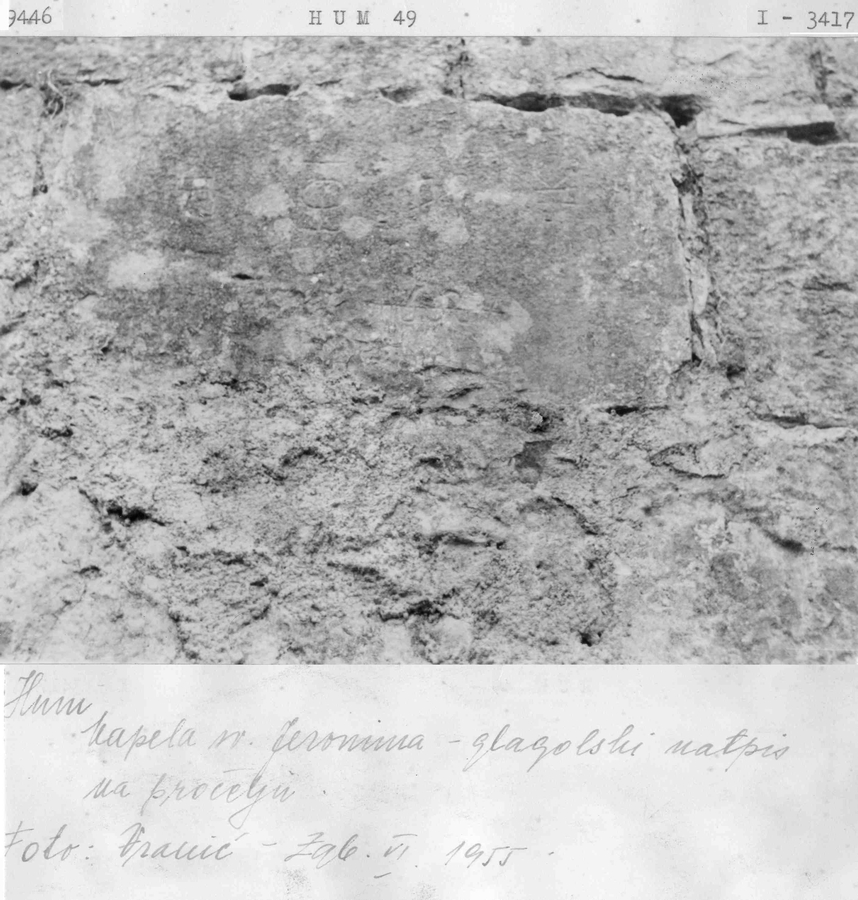
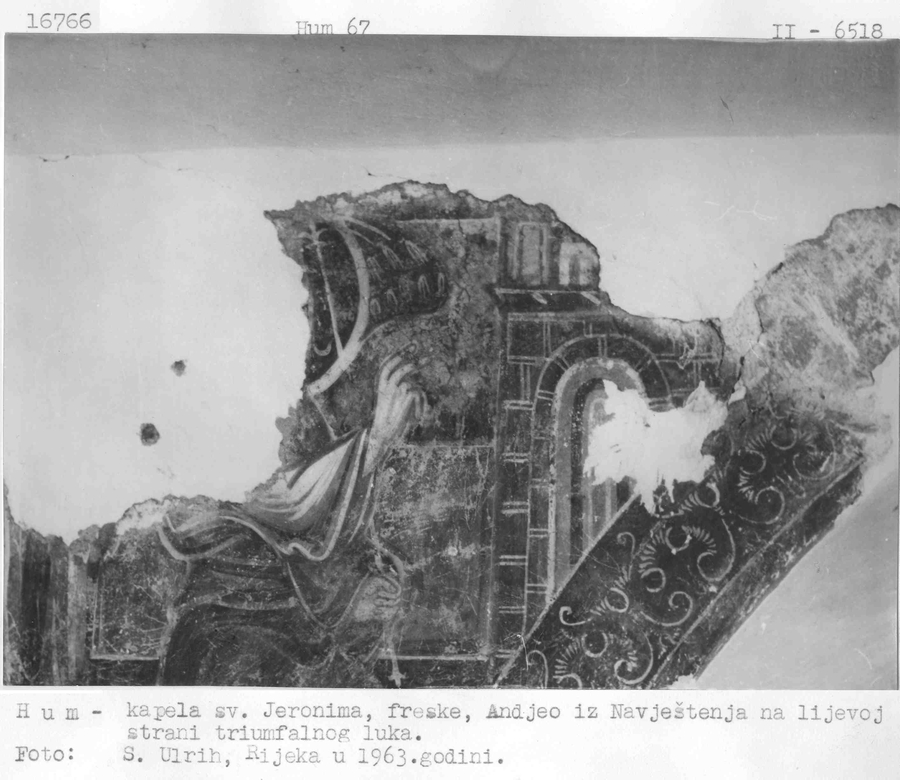
Wall paintings dated to the late twelfth or early thirteenth century have been preserved on the north wall and the triumphal arch, while smaller fragments survive in the apse conch and on the south wall of the church. Two painted layers can be distinguished on the wall surfaces. The earlier, Romanesque layer comprises parts of a Christological cycle. On the north wall, scenes of the Passion of Christ are arranged in sequence, while the south wall originally contained scenes from the Life of Christ, of which only the Visitation can now be identified. In the velarium zone of the south wall, the scene of the Martyrdom of St Lawrence has been preserved. The Annunciation, located on the triumphal arch, stands out as the best-preserved scene of this painted layer. In the semicircular apse, only fragmentary remains of a painted decorative textile are visible. The dating of these paintings relies on a Glagolitic inscription from the early thirteenth century, as well as on iconographic and morphological features closely related to contemporary artistic currents in northeastern Italy, Austria, and southern Germany.
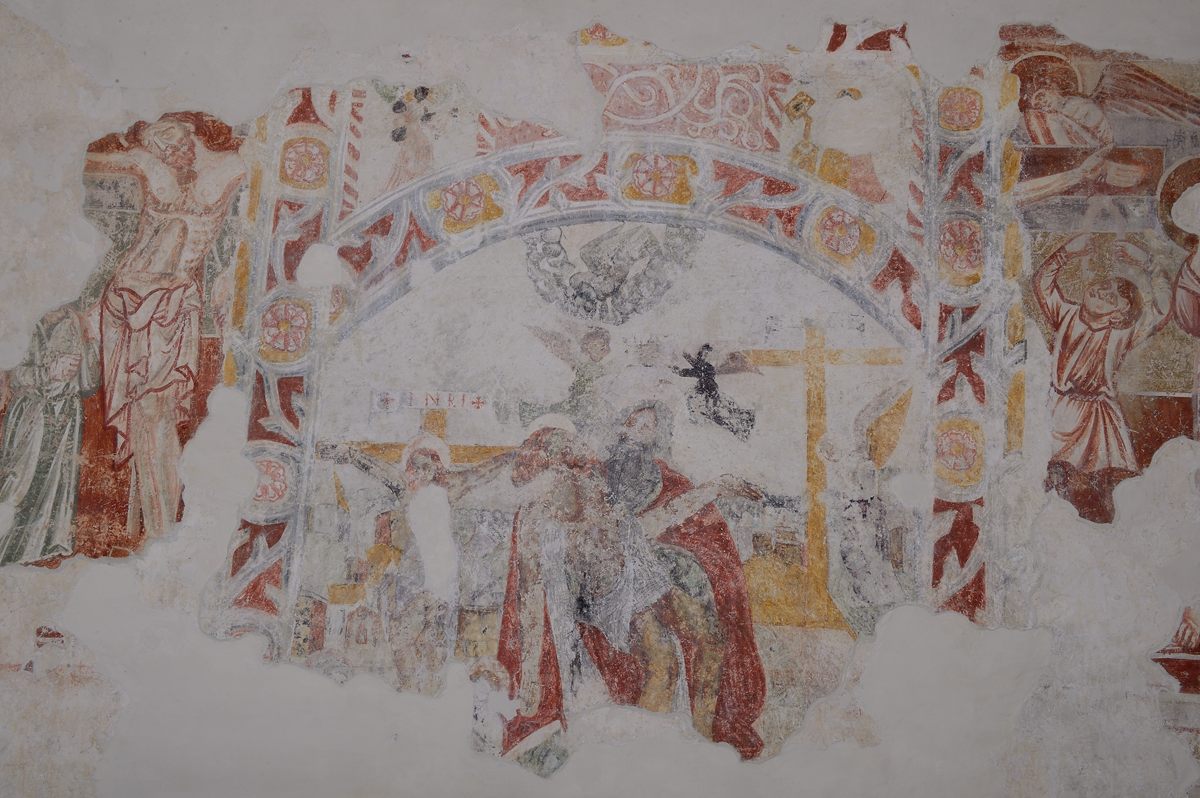
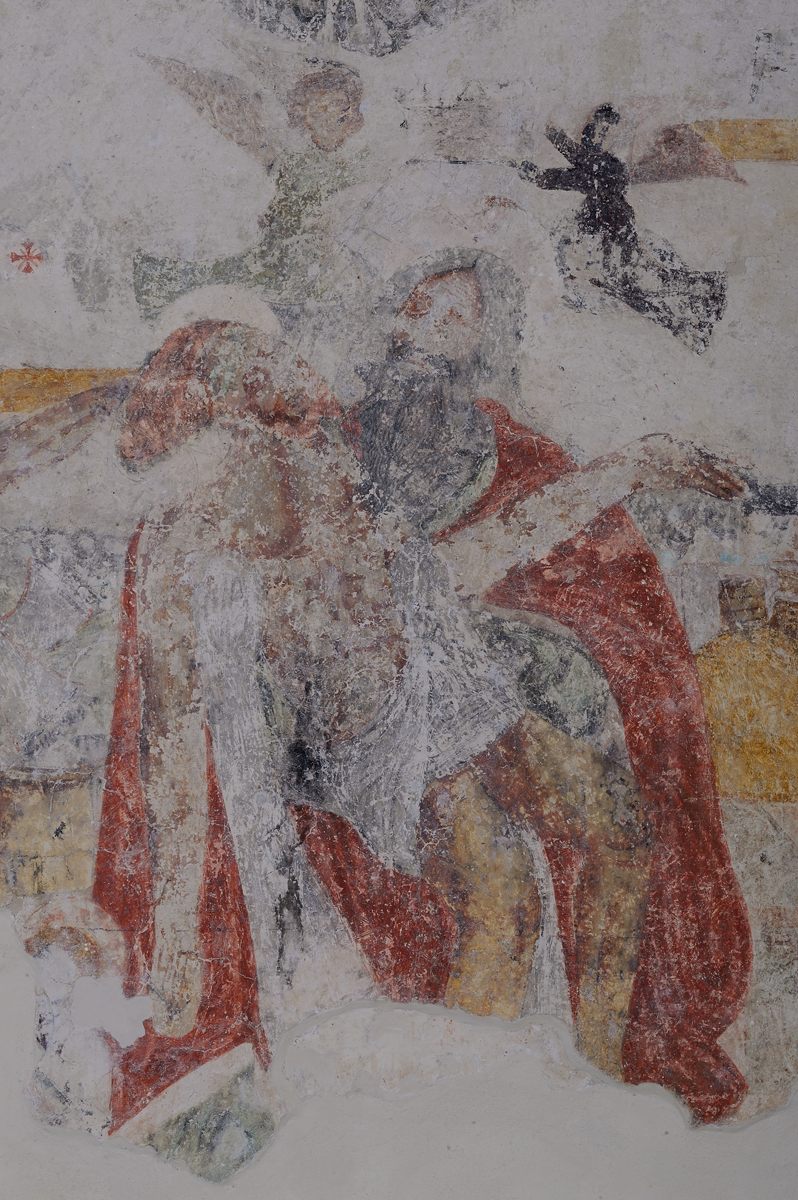
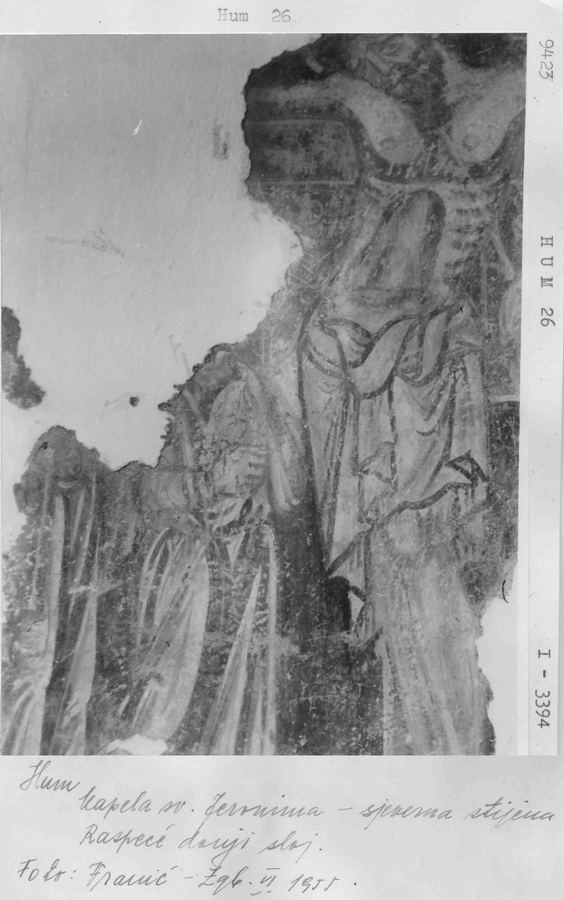
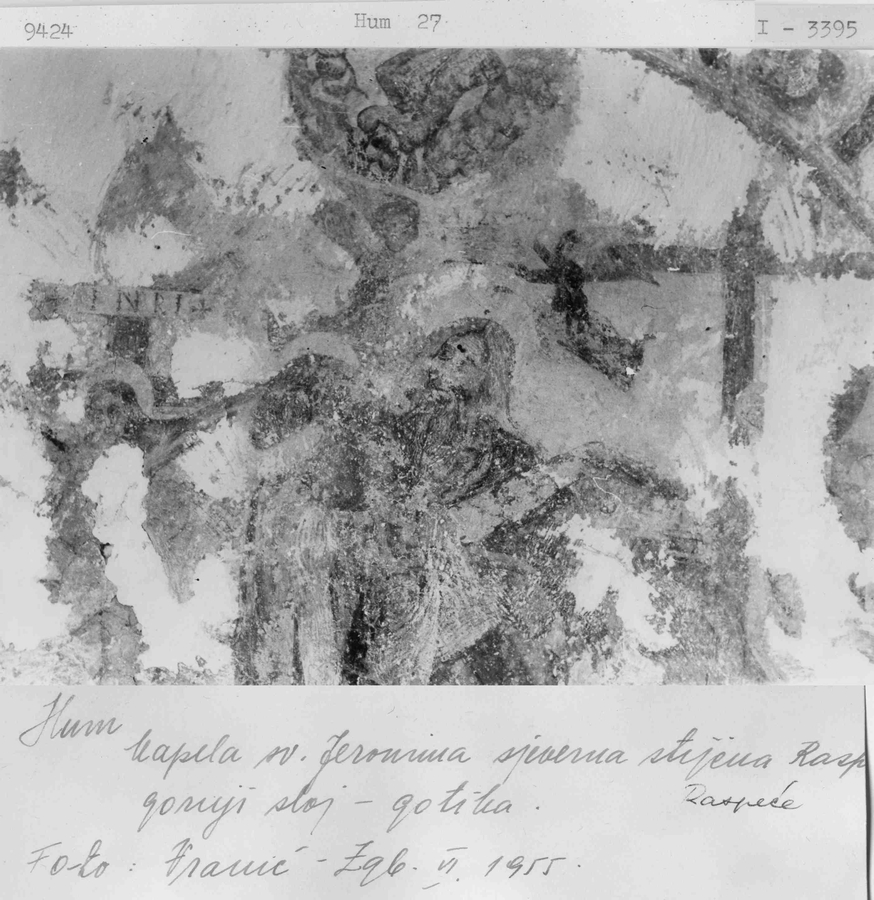
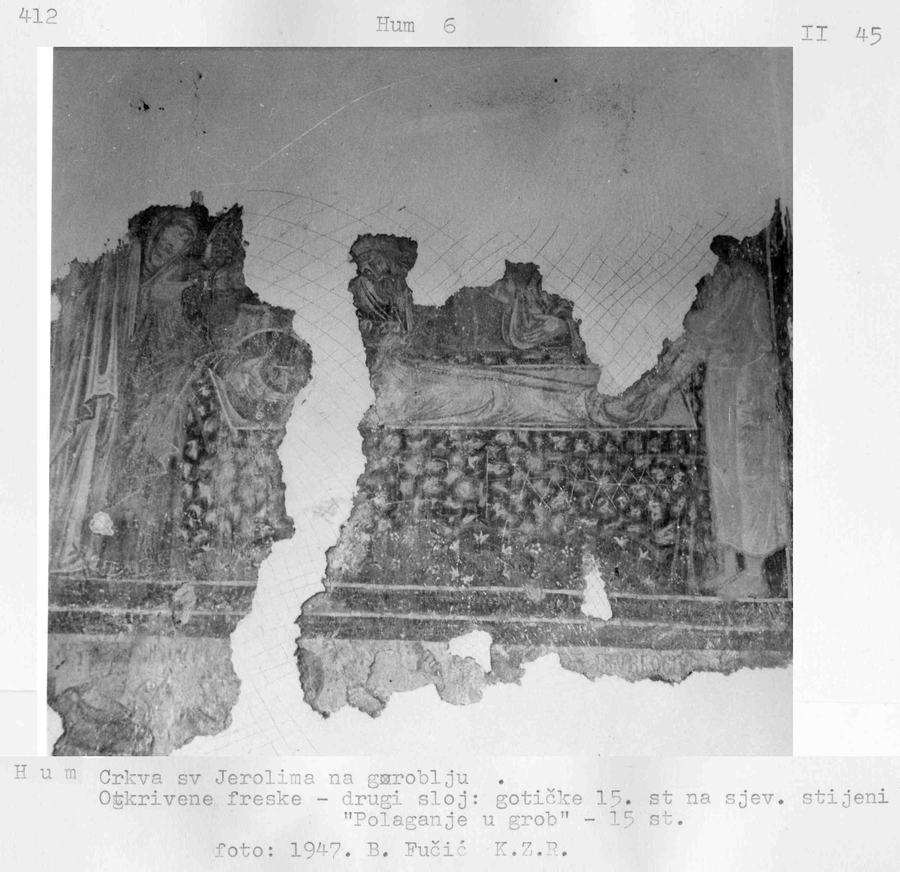
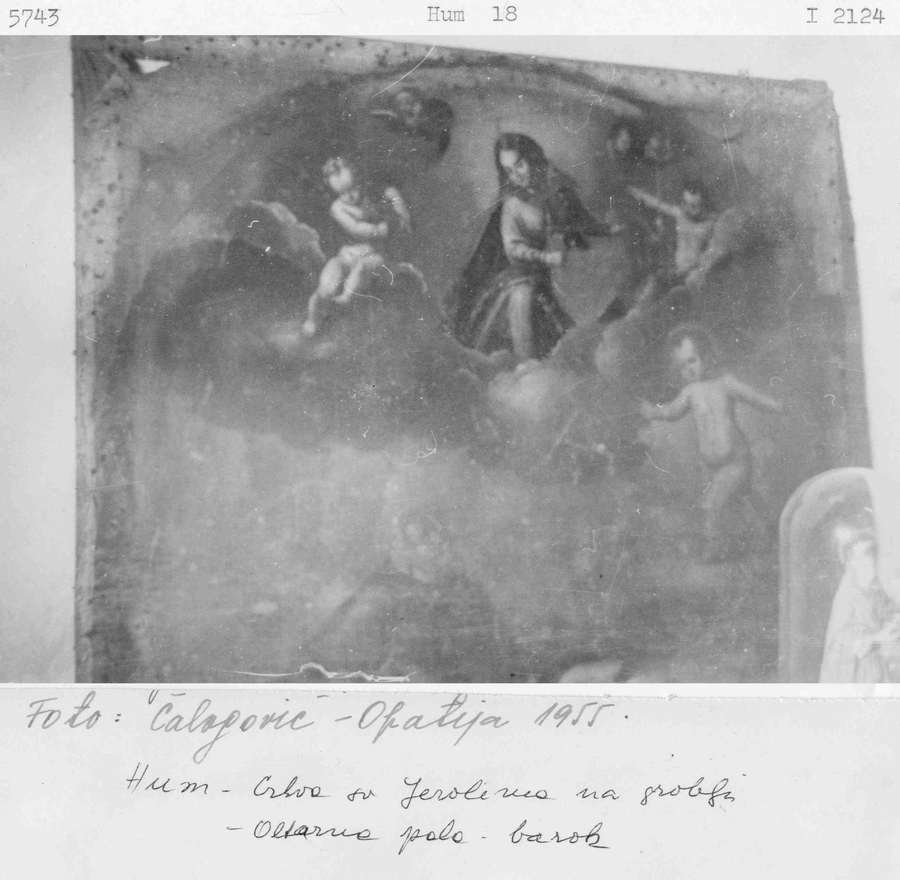
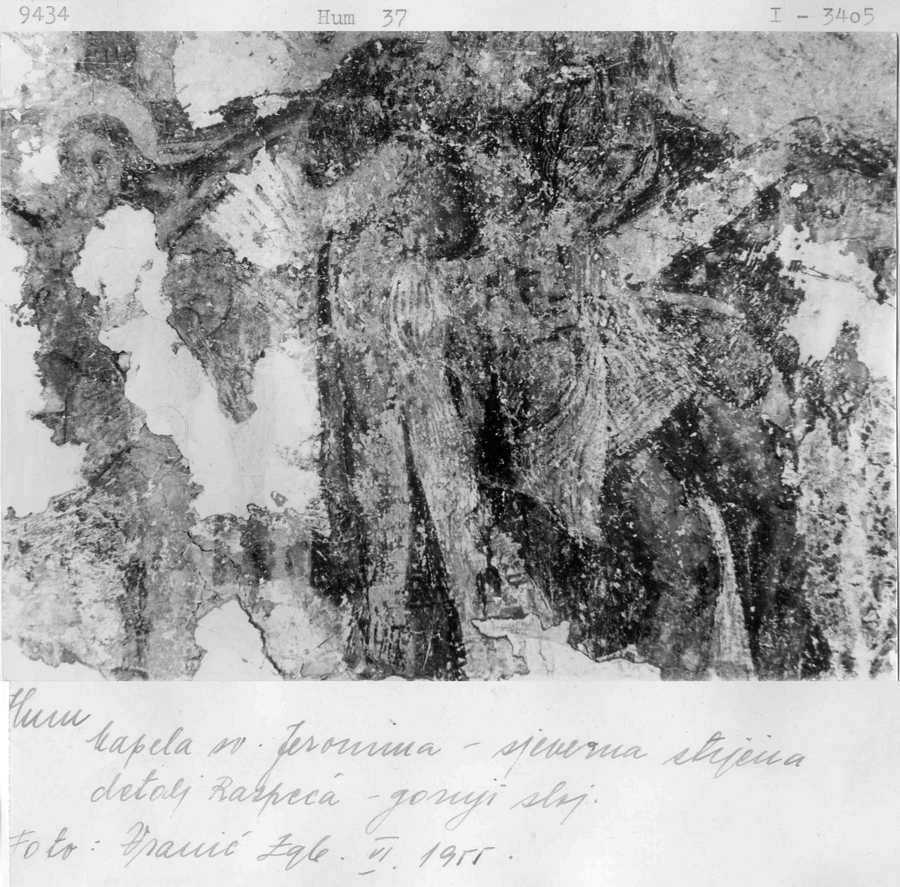
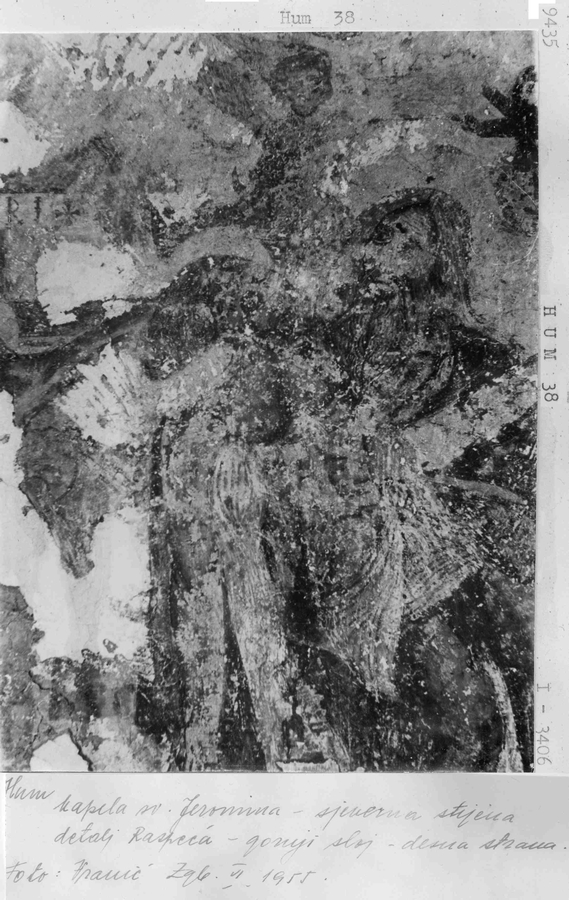
The later painted layer, preserved in the central section of the north wall, is conceived in the form of an altarpiece retable. Within a square frame terminated by a segmental arch, a Calvary scene with two crosses is depicted. At the centre of the composition, St Anthony supports the lifeless body of Christ wrapped in a shroud. Above the scene hovers the dove of the Holy Spirit, accompanied by two angels holding the Crown of Thorns, while on the right an angel in mourning is shown. This painting is associated with the master Anton of Padua, the author of a triptych that was once located in the church. Based on the inscription on the triptych, the wall painting is dated to around 1529.
The wall paintings were discovered by Branko Fučić in 1947, and their first comprehensive analysis was presented in his study “Hum – ciklus romaničko-bizantinskih zidnih slikarija,” published in 1963 in the journal Peristil.
Iconographic programme:
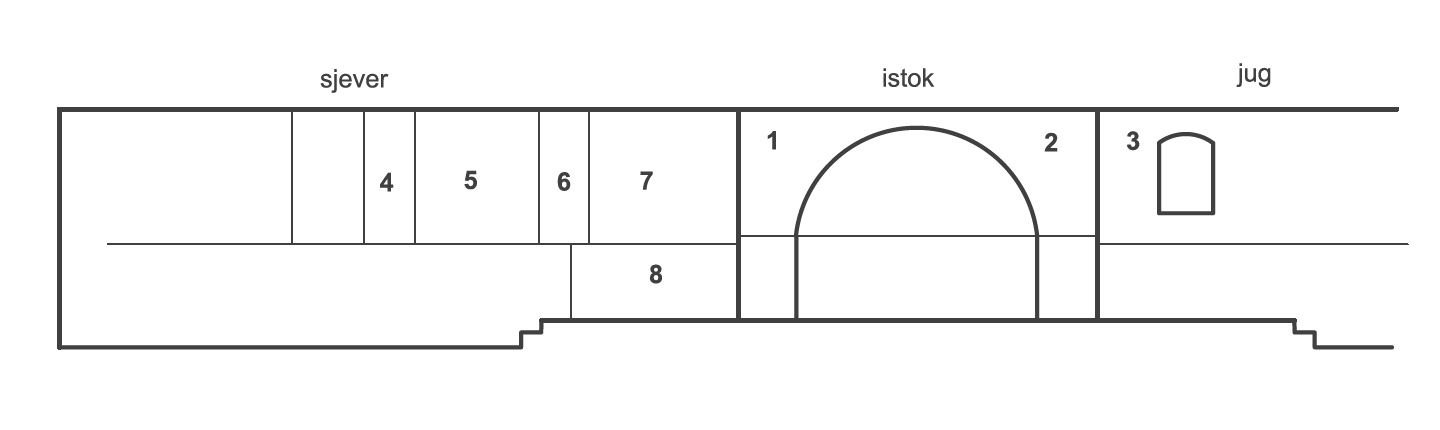
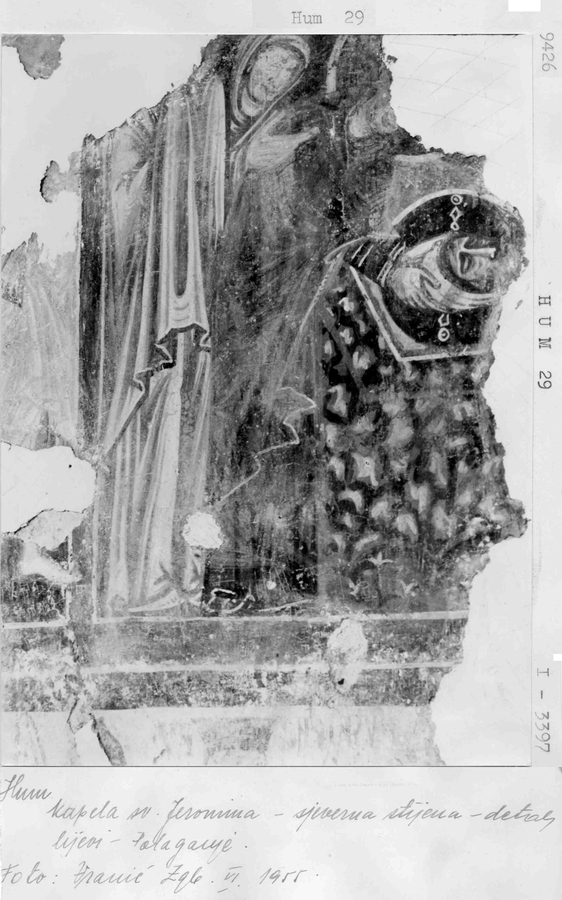
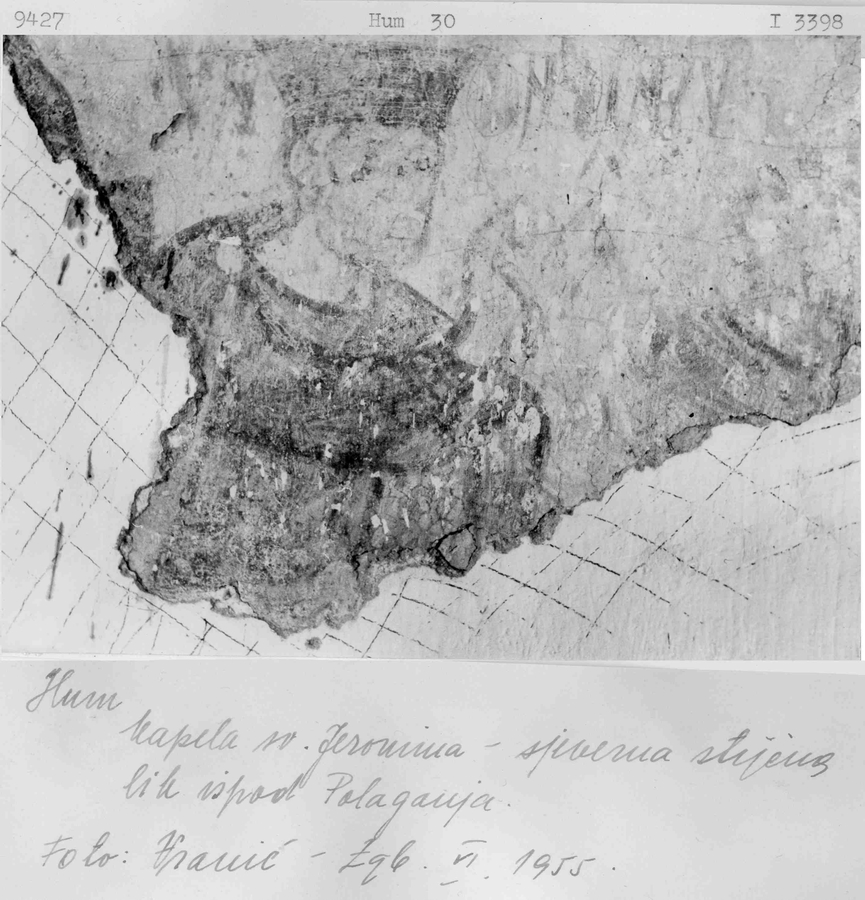
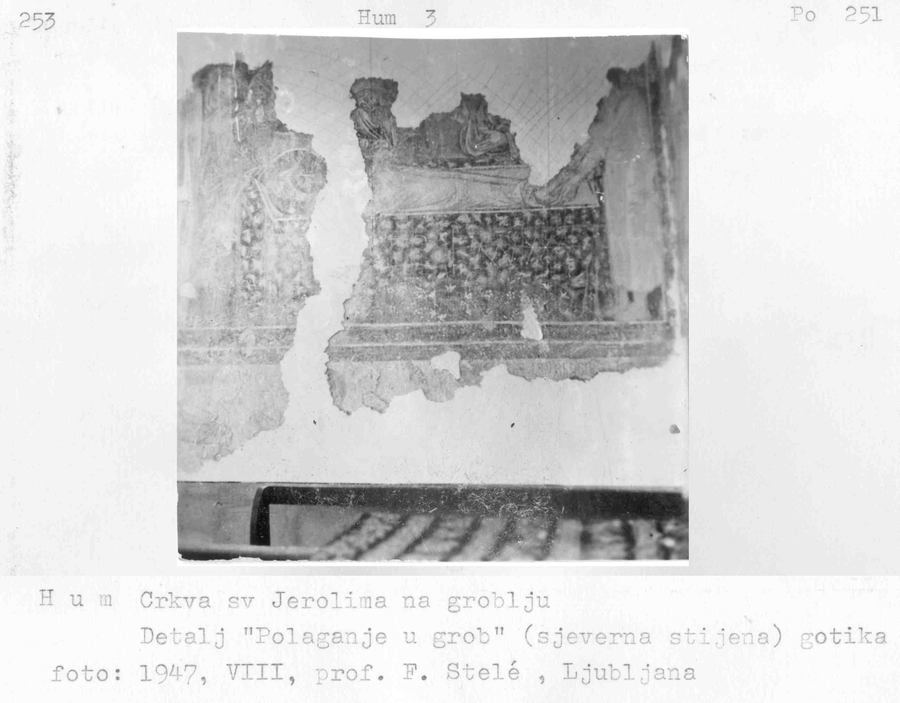
East wall: 1. – 2. Annunciation, South wall: 3. Visitation, North wall: 4. Crucifixion, 5. Wall painting of the later layer, 6. Deposition from the Cross, 7. Entombment, 8. Martyrdom of St Lawrence.
Scene locations
LJ. KARAMAN, 1949, O srednjovjekovnoj umjetnosti Istre, Historijski zbornik, 2, 1949, 115-130, 121; F. STELÉ, 1953, Le bysantinisme dans la peinture murale yougoslave, u: Atti dello VIII Congresso Internazionale di Studi Bizantini, Palermo 3-10 aprile 1951, vol. II, Roma, 1953, 253-259., 257-258; LJ. KARAMAN, 1958, O putovima bizantskih crta u umjetnosti istočnog Jadrana, Starohrvatska prosvjeta, 6, 1958, 61-76., 64, 65; F. STELÉ, 1960, Umetnost v Primorju, Ljubljana, 1960., 69; B. FUČIĆ, 1963, Istarske freske, Zagreb, 1963., 13, 16, KAT. 5; I. PERČIĆ, 1963, Zidno slikarstvo Istre, katalog izložbe, Zagreb, 1963. KAT. 5-6; B. FUČIĆ, 1963a, Hum – ciklus romaničko-bizantinskih zidnih slikarija, Peristil, 6-7, 1963, 13-22; ISTI, 1964a, Srednjovjekovno zidno slikarstvo u Istri, doktorska disertacija, Filozofski fakultet Sveučilišta u Ljubljani, Rijeka-Ljubljana, 1964., OSOBITO 131-147 I 429-432; I. PERČIĆ, 1964, Ikonografija srednjovjekovnih istarskih fresaka, doktorska disertacija, Filozofski fakultet Sveučilišta u Zagrebu, 1964., 129-133; S. BETTINI, 1964-1965, La pittura veneta dalle origini al Duecento (II parte), dispense delle lezioni, Università degli Studi di Padova, Facoltà di Lettere e Filosofia, 1964-1965., 68; B. FUČIĆ, 1966, Slika i arhitektonski prostor u srednjovjekovnom zidnom slikarstvu u Istri, u: Ljetopis JAZU, 71, Zagreb, 1966, 391-412., 394; G. GHIRARDI, 1972, Affreschi Istriani del Medioevo, Padova, 1972., 61-67; F. SFORZA VATTOVANI, 1977, Persistenze italobizantine nella pittura duecentesca dell'Alto Adriatico, Aquileia e l'Oriente mediterraneo, u: Antichità Altoadriatiche, 12, 1977, 571-584., 584; B. FUČIĆ, 1982, Glagoljski natpisi, Zagreb, 1982. 192-199; S. TAVANO, 1983, Presenze bizantine nella prima pittura romanica del territorio di Aquileia, u: Il Friuli dagli Ottoni agli Hohenstaufen. Atti del Convegno internazionale di studio, 4-8 dicembre 1983, Udine, 1984, 425-455., 455; I. FISKOVIĆ, 1987, Romaničko slikarstvo u Hrvatskoj, Zagreb, 1987., 62-64; G. BERGAMINI – S. TAVANO, 1991, Storia dell'arte nel Friuli Venezia Giulia, Udine, 1991., 197; D. RUPNICH, 1994, La chiesa e gli affreschi di S. Girolamo a Colmo in Istria, Atti e Memorie della Società Istriana di Archeologia e Storia Patria, 94, 1994, 113-153; S. GRKOVIĆ, 1995 Bordure u srednjovjekovnome zidnome slikarstvu Istre, Peristil, 38, 1995, 43-50.; E. COZZI, 1996. Gli affreschi del XIII secolo recentemente scoperti nella chiesa di Sant'Andrea di Perteole, Hortus Artium Medievalium, 2, 1996, 27-42.; R. RATKOVČIĆ, 1998, Prostor i ornament u srednjovjekovnom zidnom slikarstvu Istre, magistarski rad, Filozofski fakultet Sveučilišta u Zagrebu, 1998., 44-49, 51-53; E. COZZI, 2007, Pittura murale romanica in Istria: il ciclo di Colmo/Hum, u: Il cielo, o qualcosa di più: scritti per Adriano Mariuz, E. Saccomani ur., Cittadella, 2007, 20-28; Ž. BISTROVIĆ, 2009, Predromaničko i romaničko slikarstvo u Istri, Annales. Series Historia et Sociologia, 19/1, 2009, 21-30; N. MARAKOVIĆ, 2009, Zidno slikarstvo u Istri od 11. do 13. stoljeća. Revalorizacija lokalne umjetničke baštine u europskom kontekstu, doktorska disertacija, Filozofski fakultet Sveučilišta u Zagrebu, 2009., 175-234, KAT. 06; ISTA, 2013, Le pitture murali di S. Gerolamo a Colmo. Alcune nuove proposte d'interpretazione, Atti del Centro di ricerche storiche di Rovigno, 2013, 25-58; E. COZZI, 2016, Affreschi medievali in Istria, Trieste, 2016., 127-143; N. NEFAT - M. FERNEŽIR, 2019/2020., Crkva sv. Jeronima u Humu – cjeloviti pregled radova i konzervatorsko-restauratorskih zahvata od otkrivanja zidnih slika do završne prezentacije, u: Godišnjak zaštite spomenika kulture Hrvatske, 43/44 - 2019/2020.