


Vranja, Church of St Peter and Paul
Century/year: around 1470.
Historical-cultural period: Gothic style
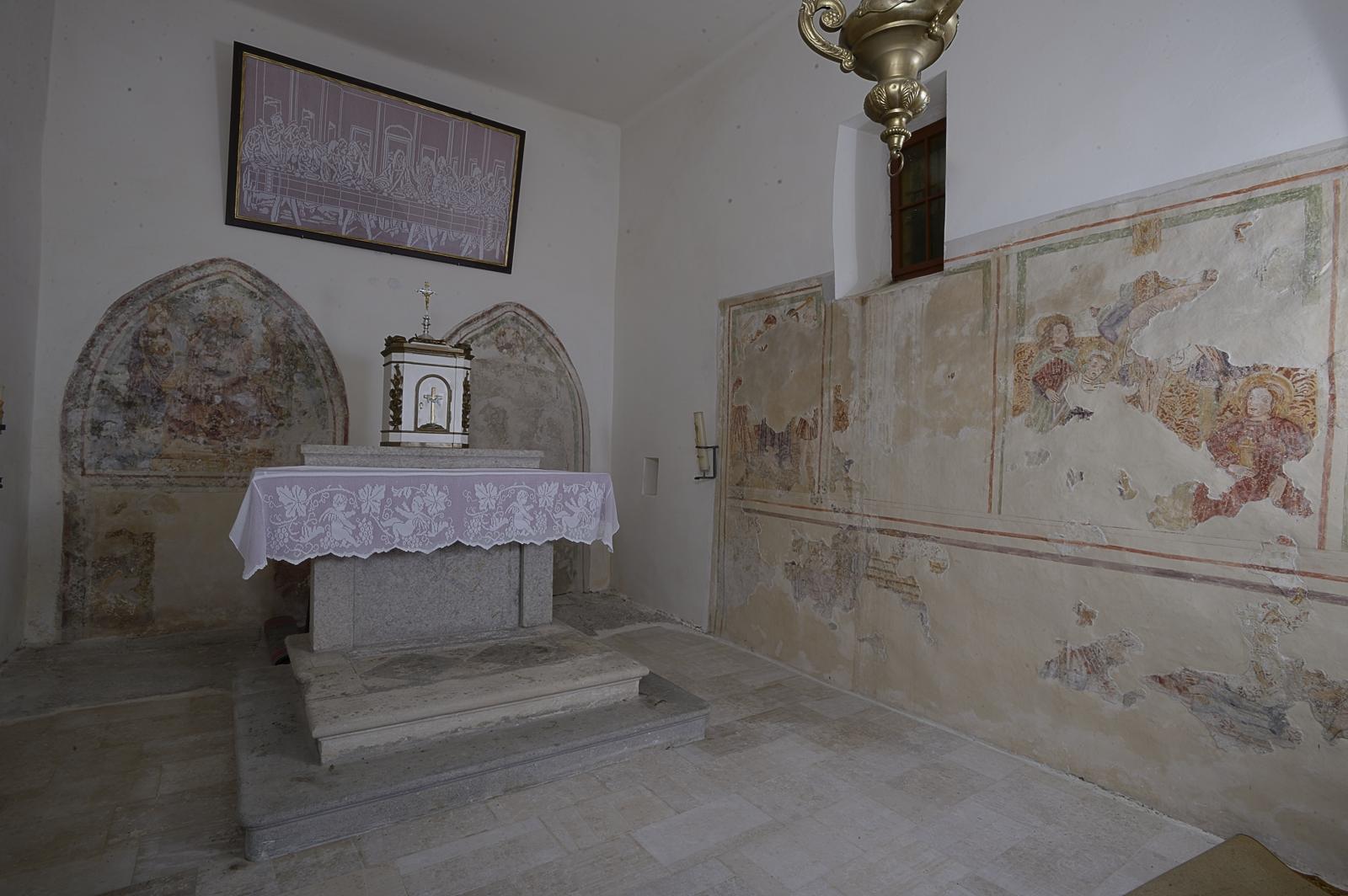
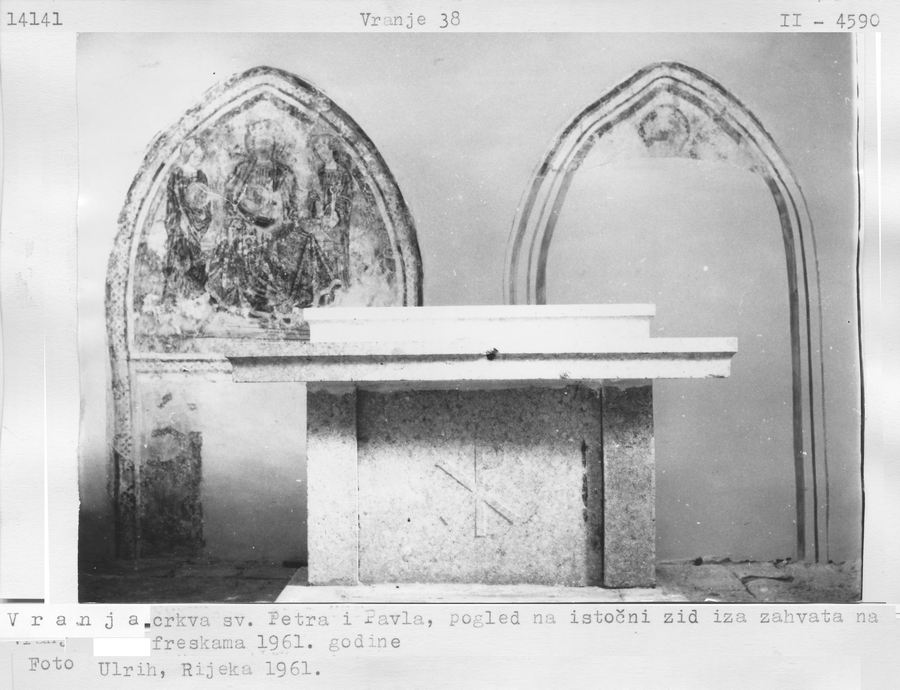
The cemetery church of St Peter and Paul was erected in the fifteenth century in the village of Vranja, at the foot of Mount Učka. Originally a Late Gothic structure, it is today preserved as the sanctuary of a more recent church. The medieval building featured a double-apsed sanctuary with inscribed apses of quadrangular ground plan, covered by pointed vaults. During the Baroque remodelling, the apses were removed and the church was extended; in the nineteenth century, lateral chapels and a façade bell tower were added.
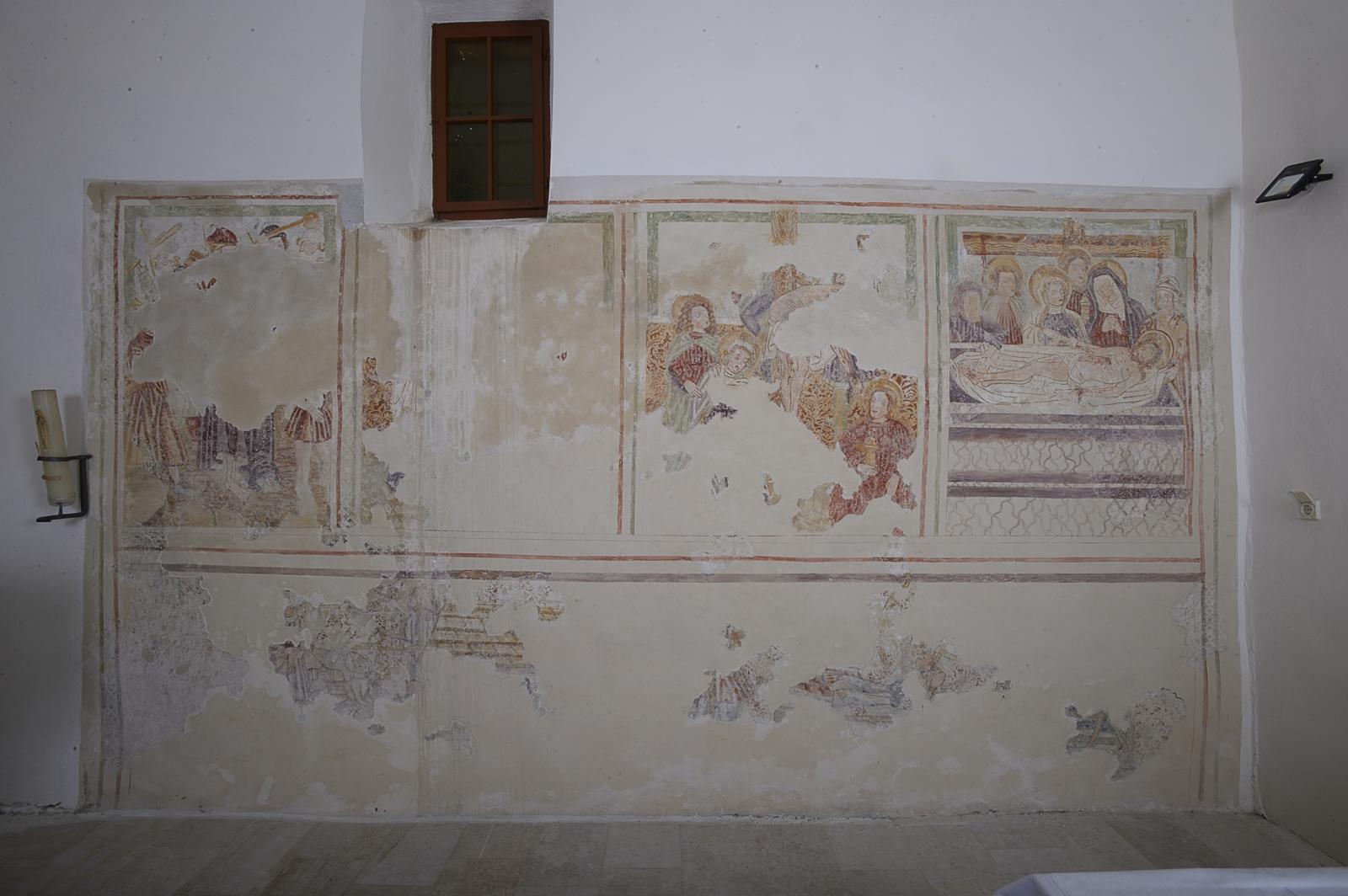
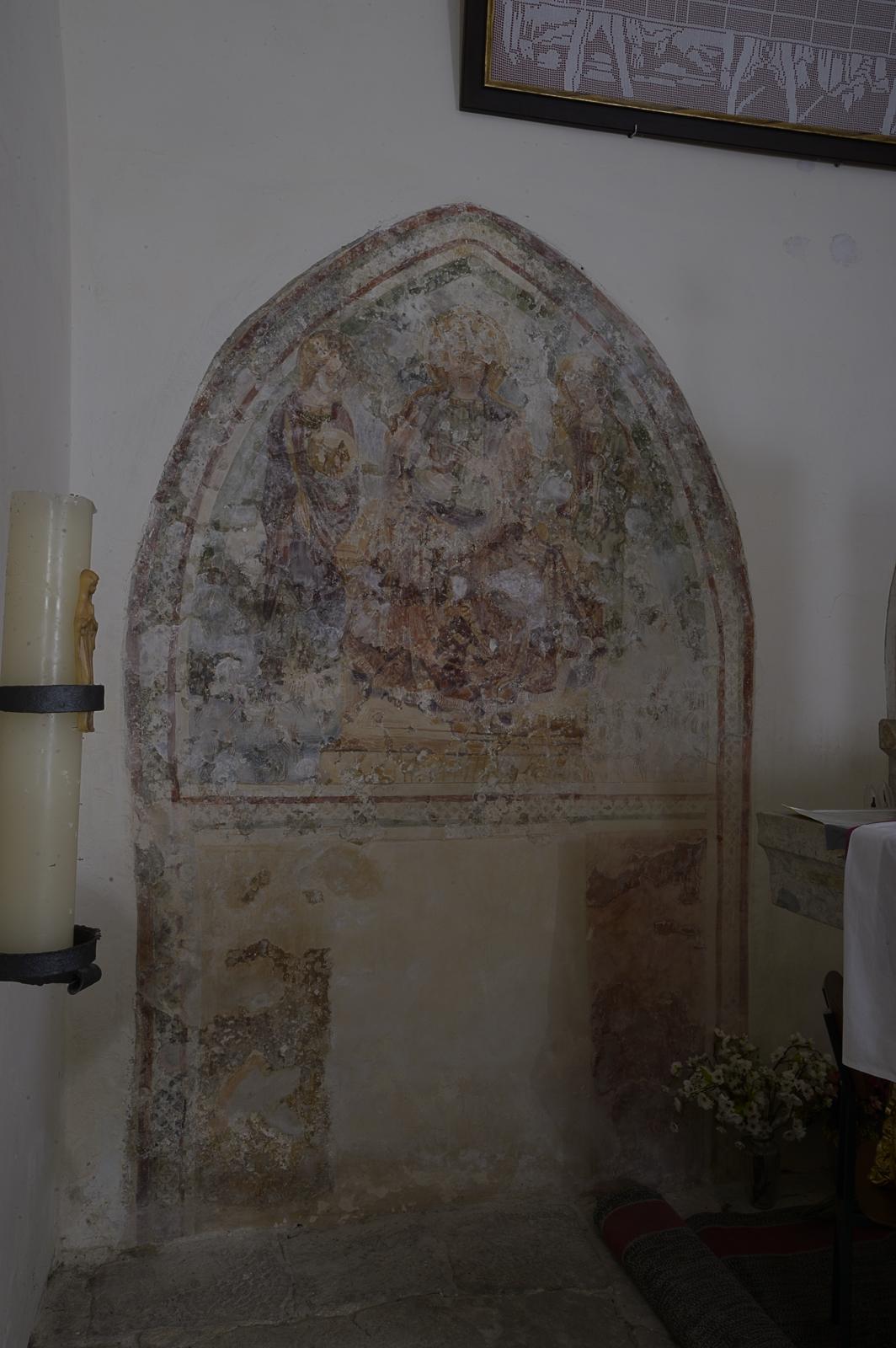
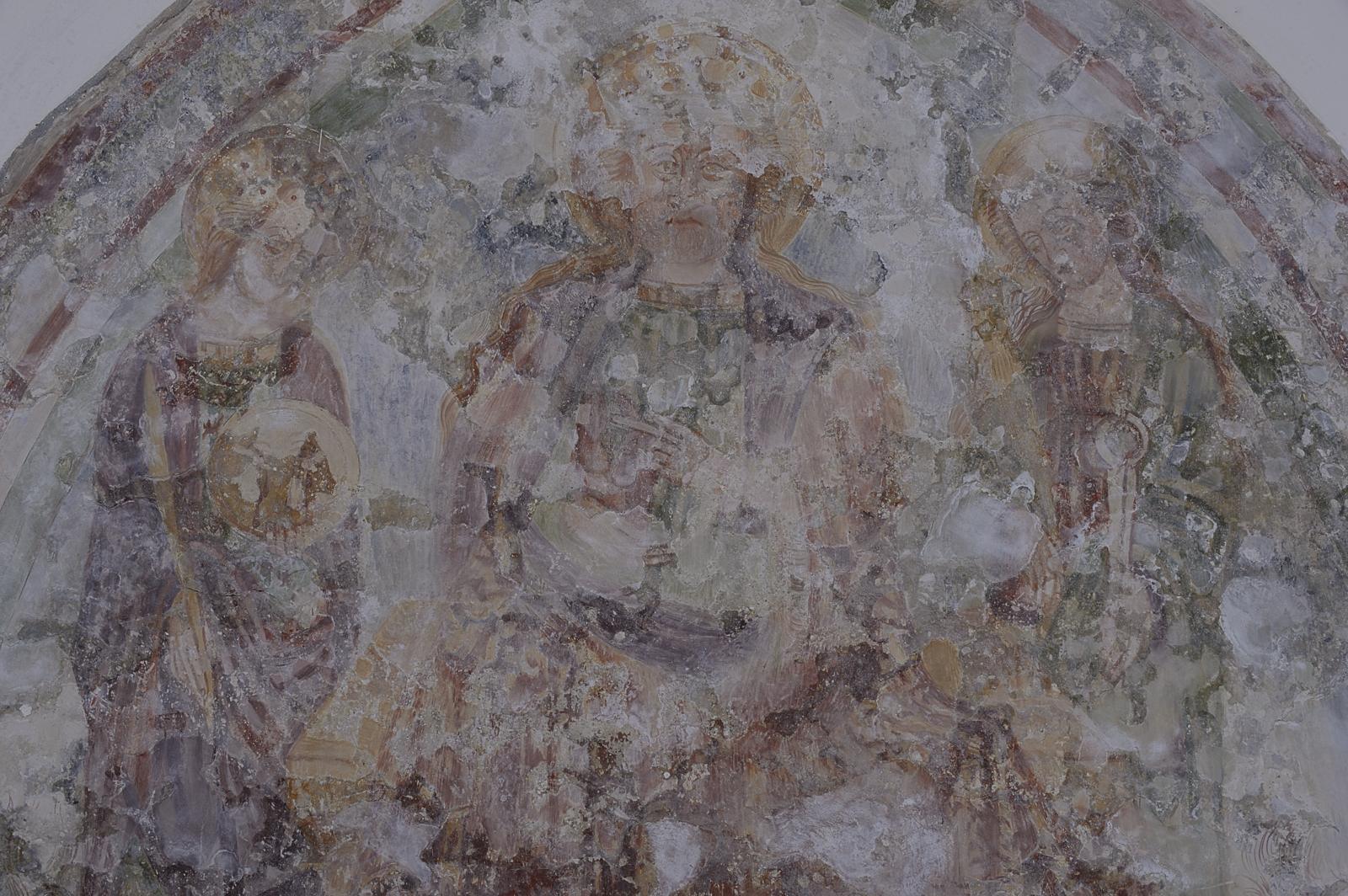
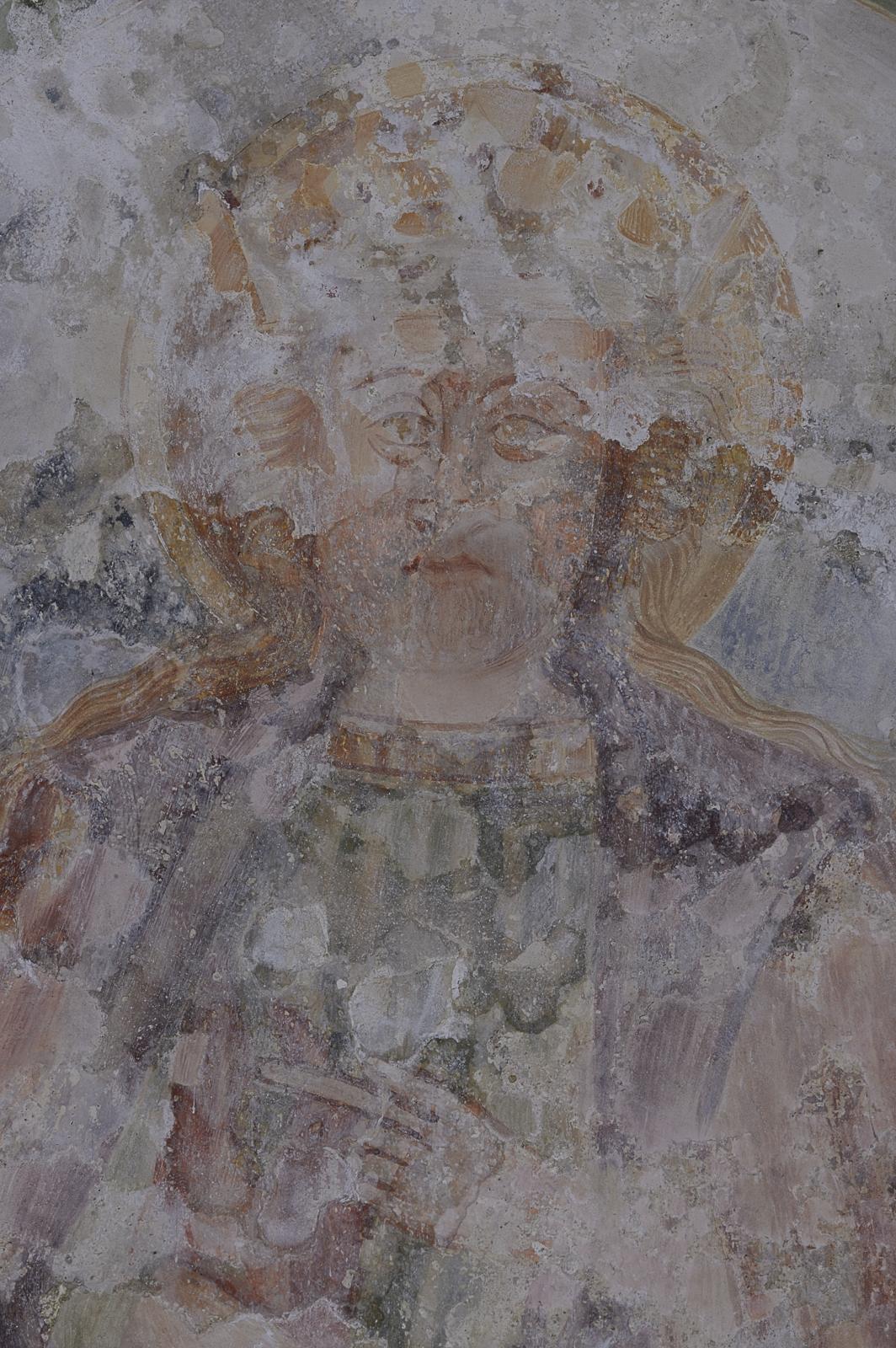
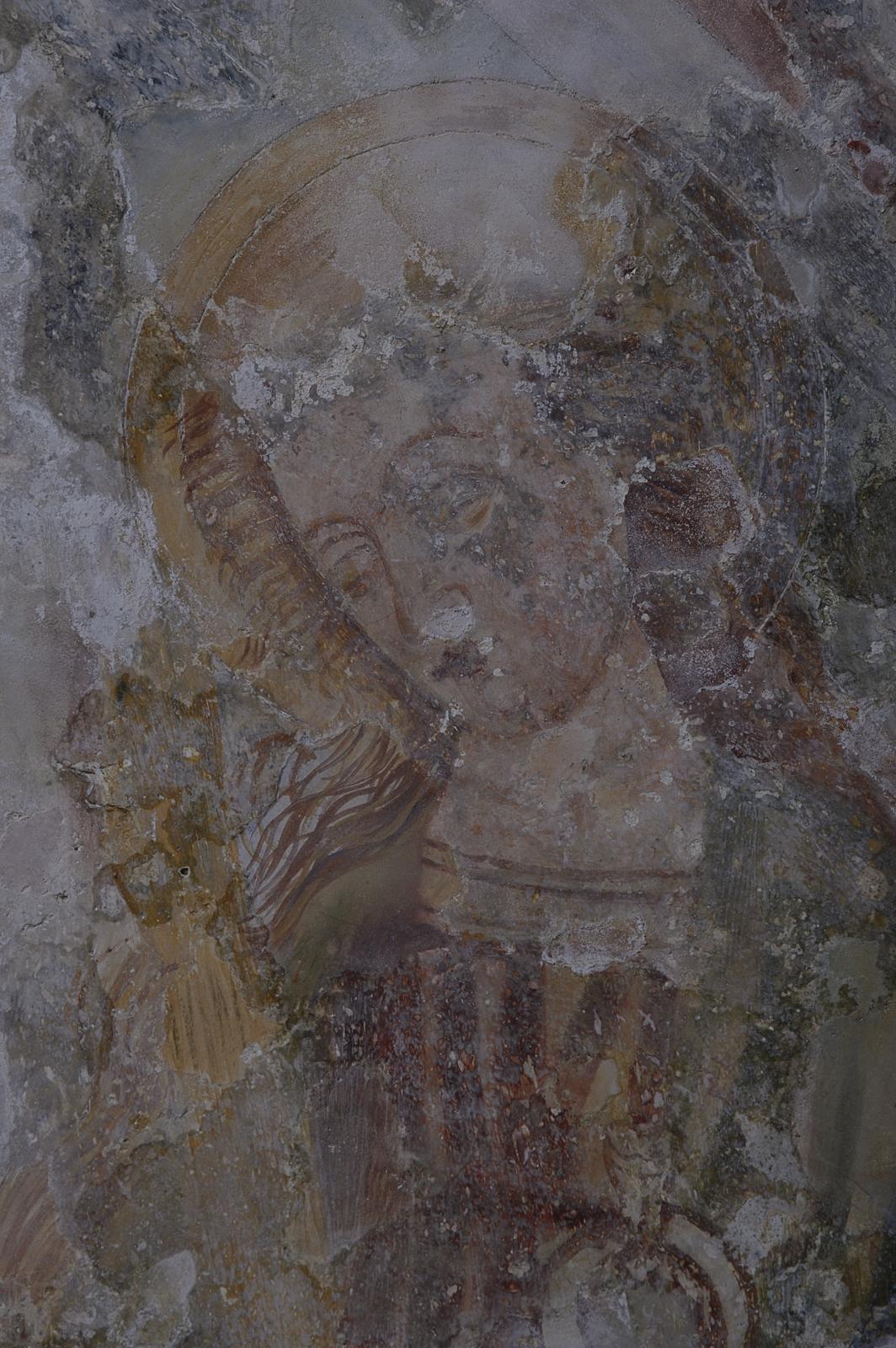
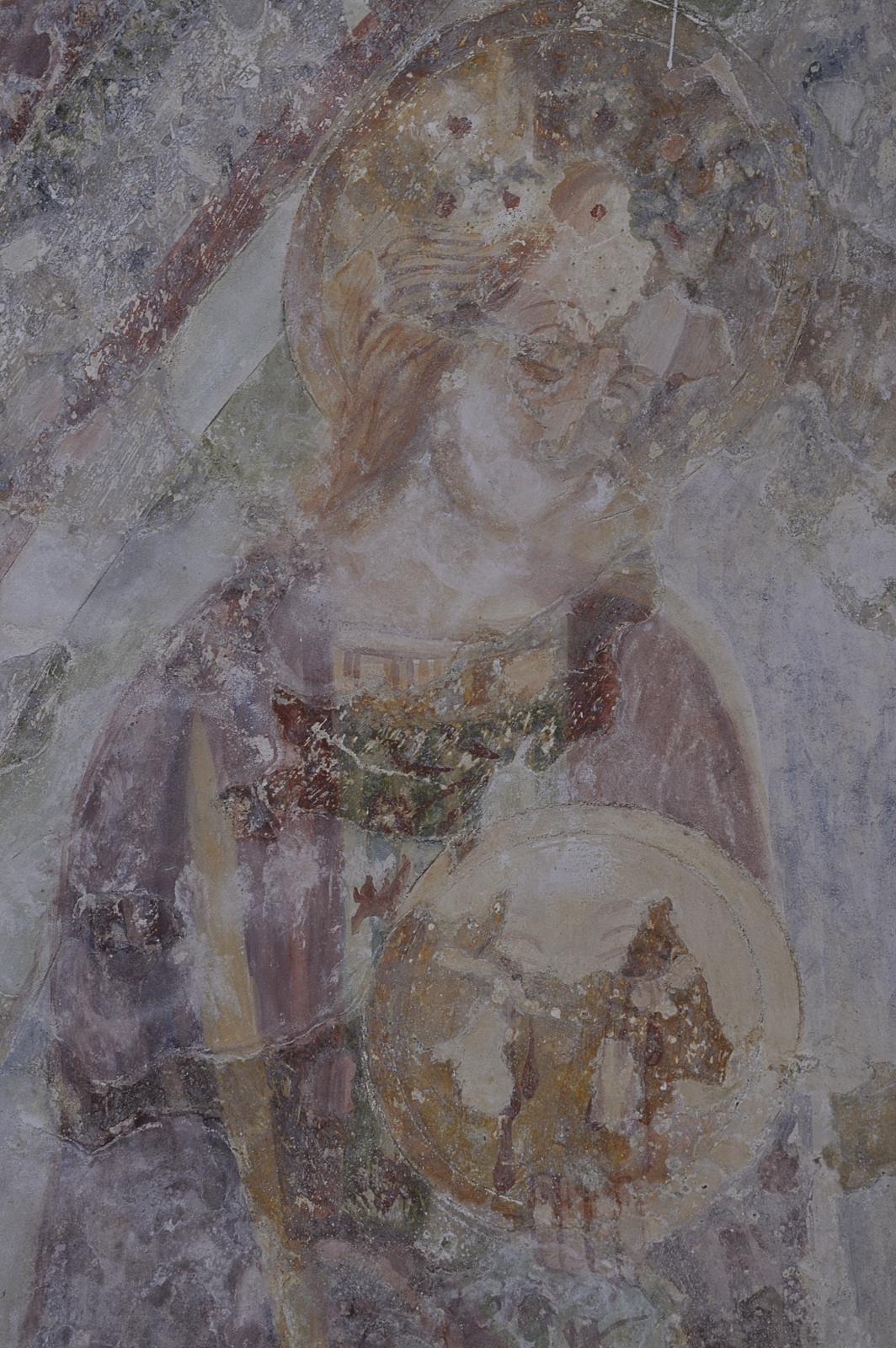
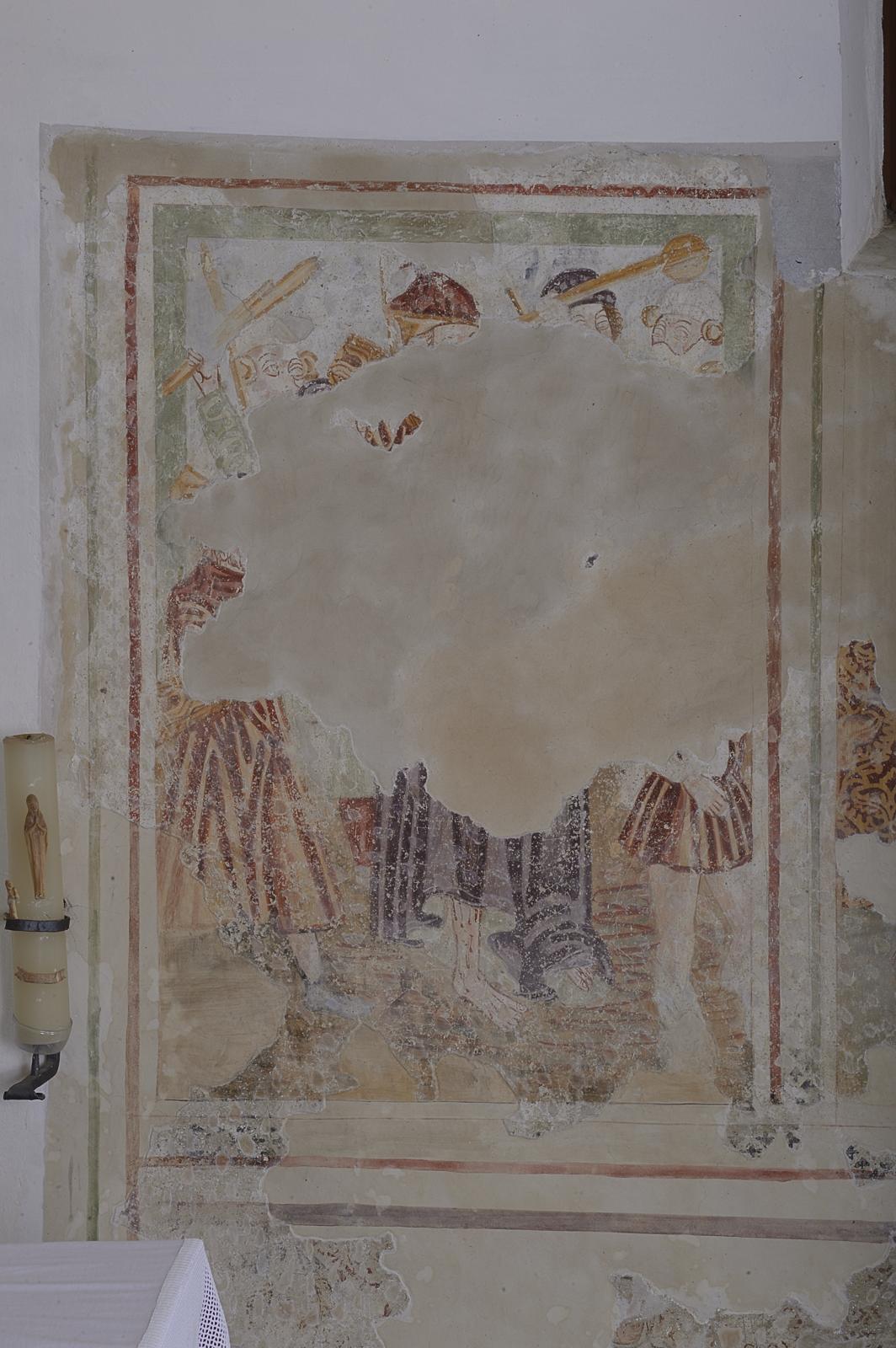
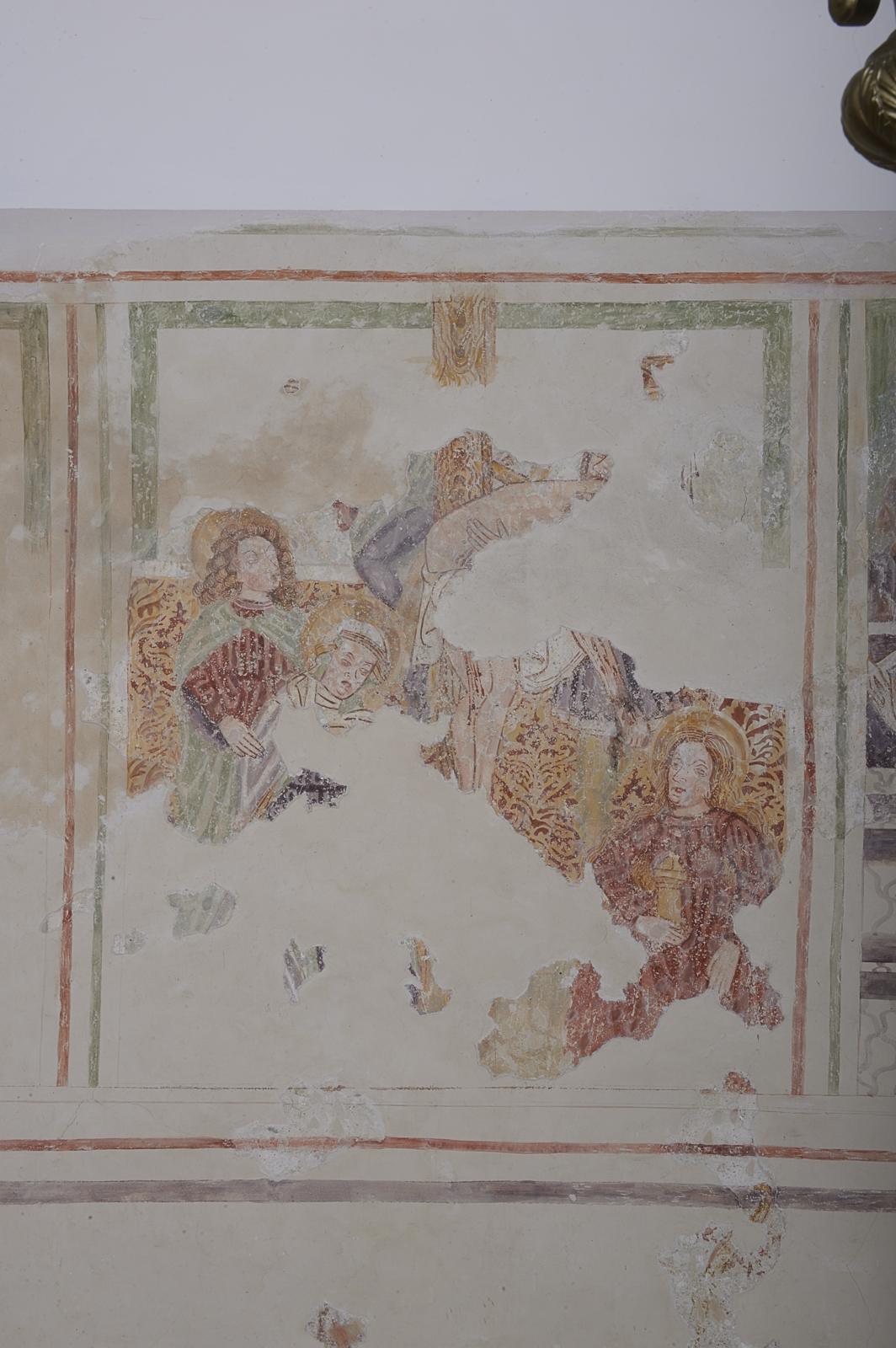
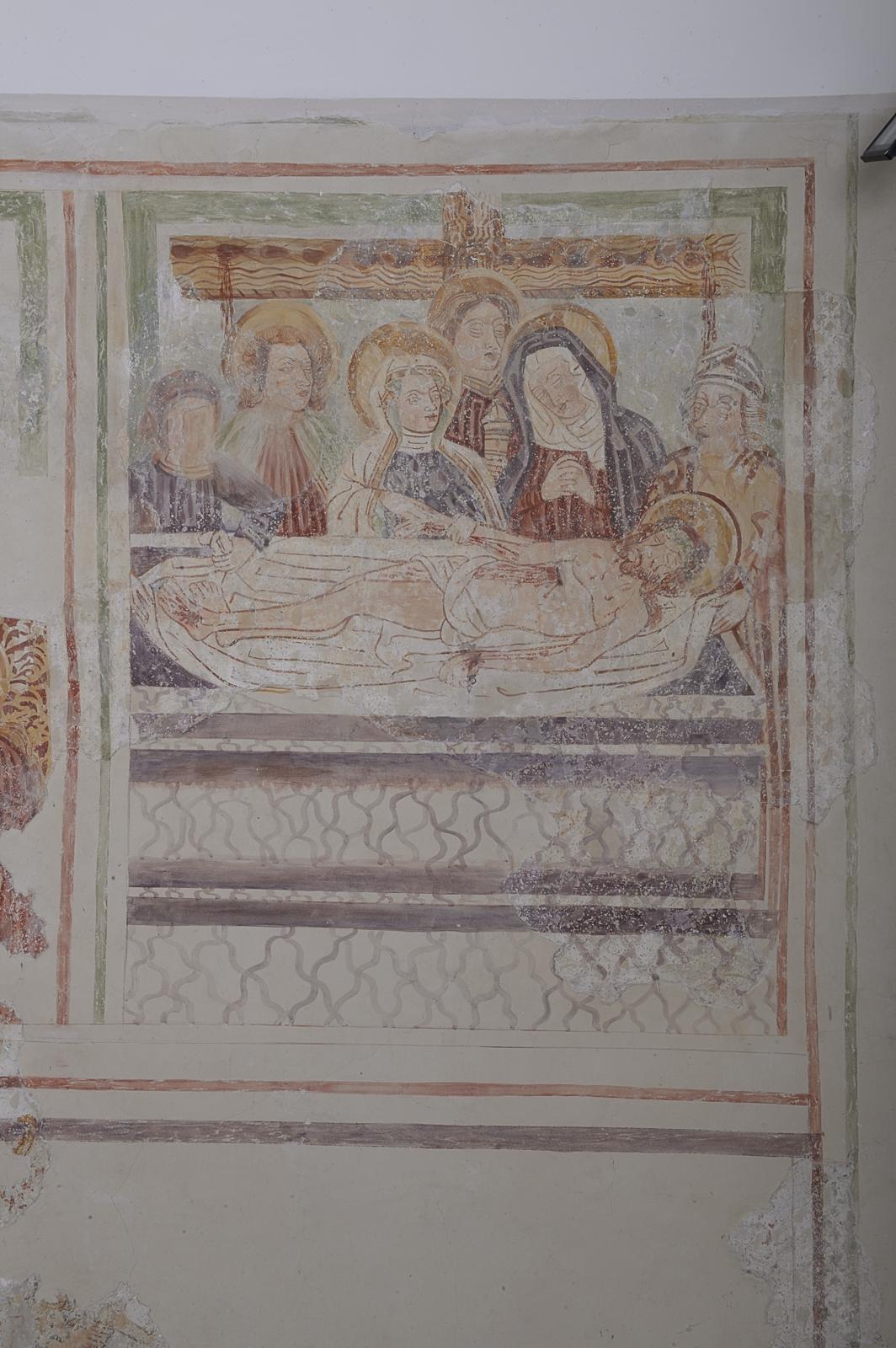
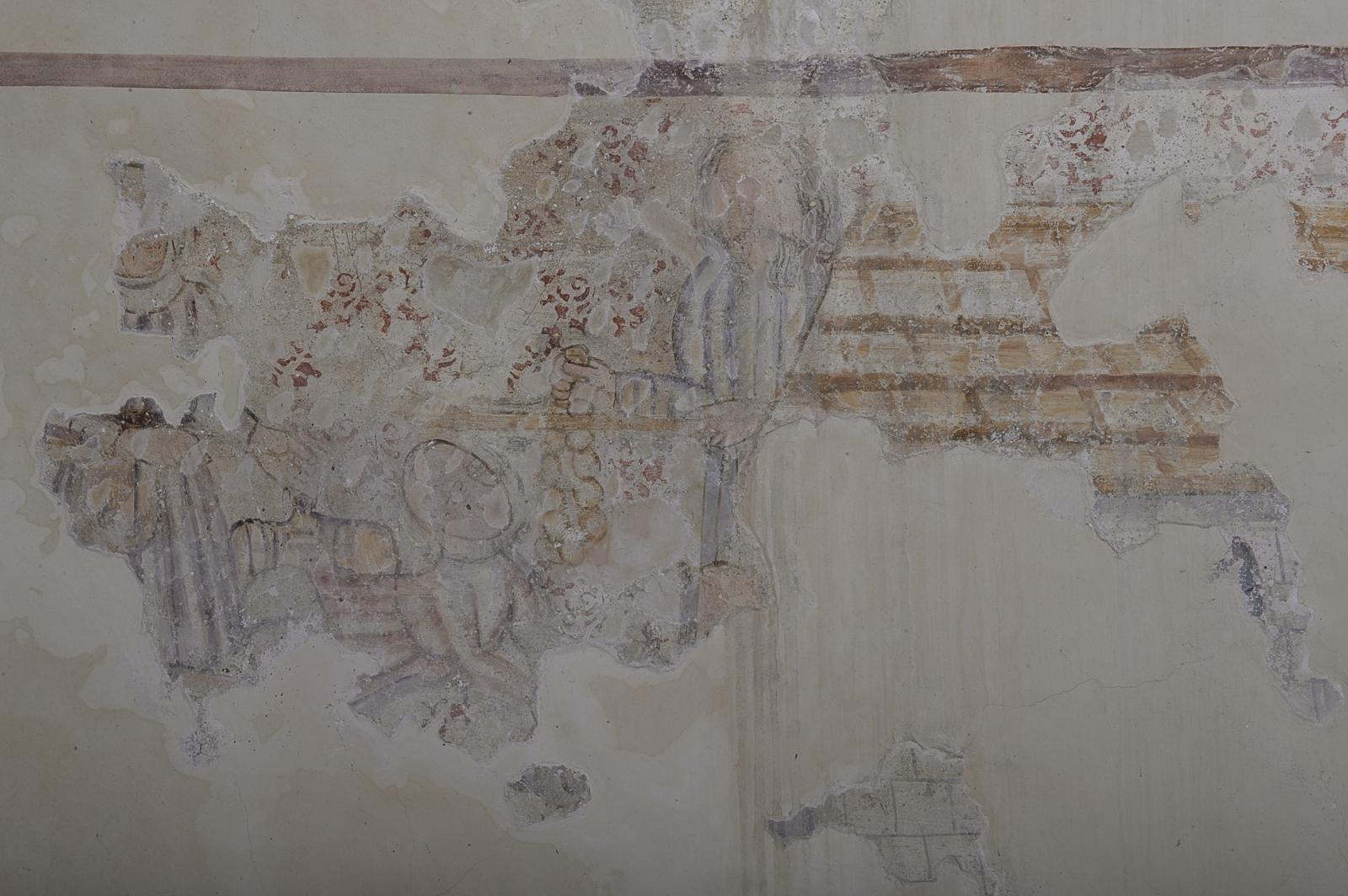
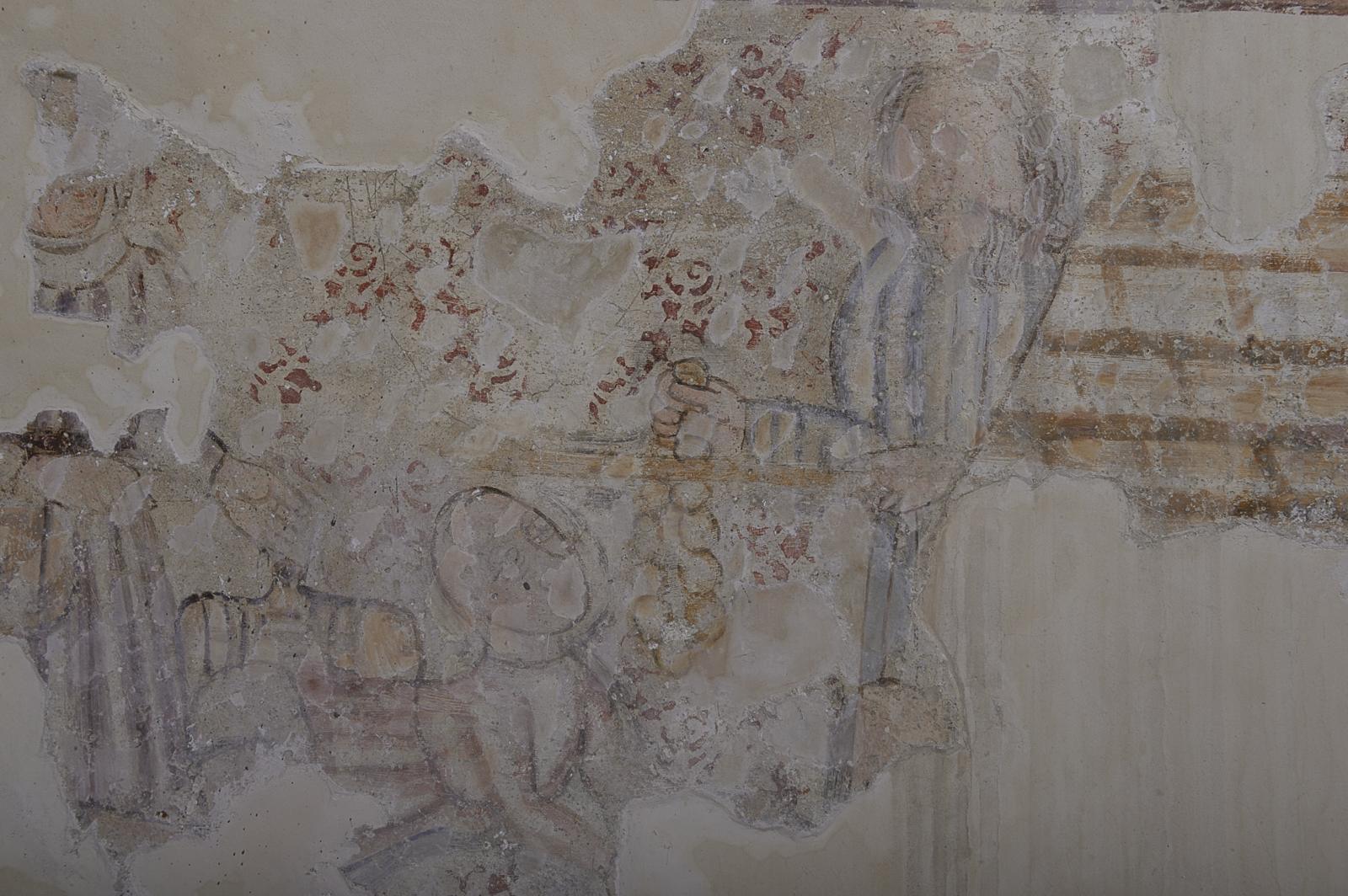
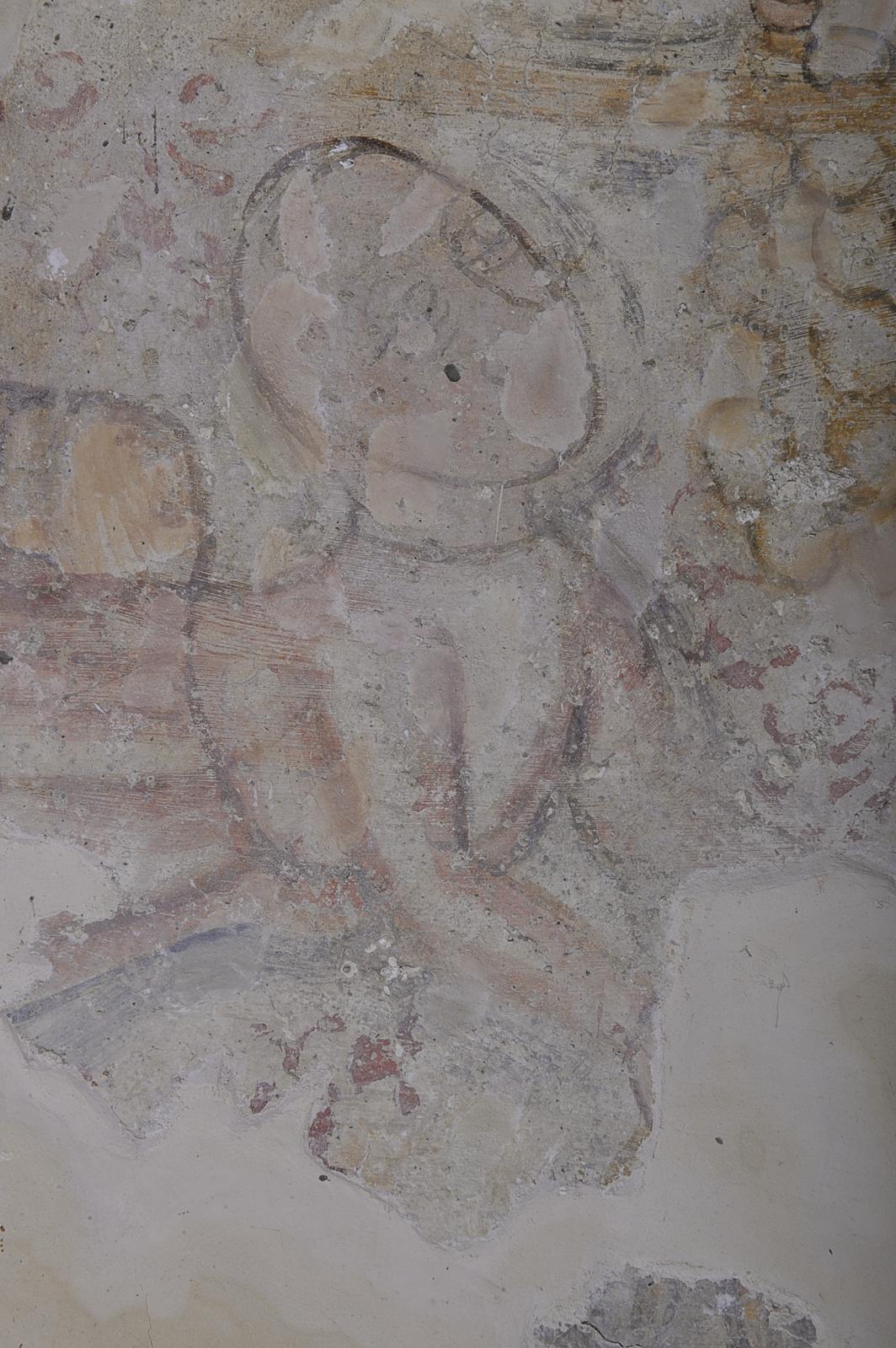
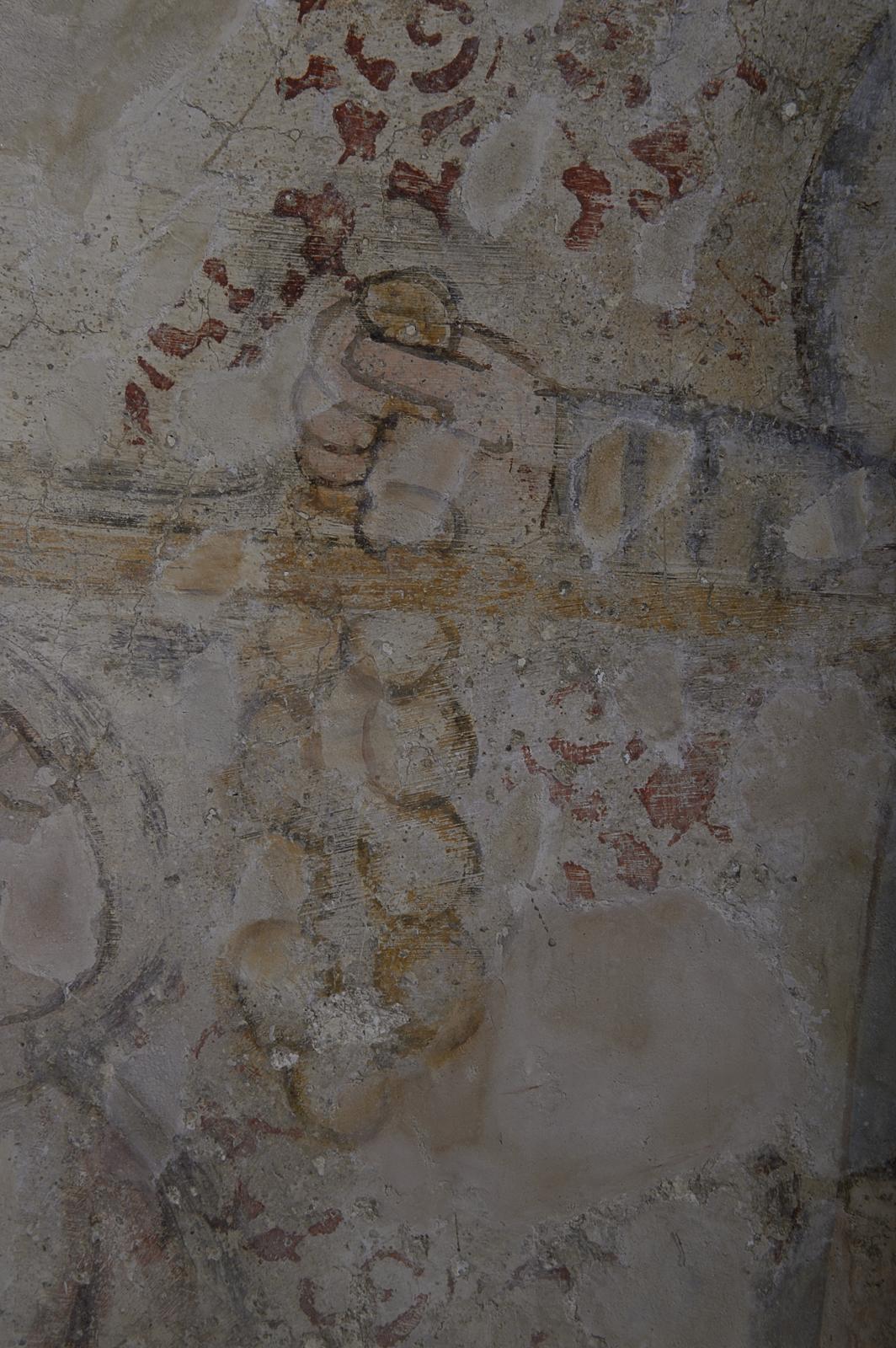
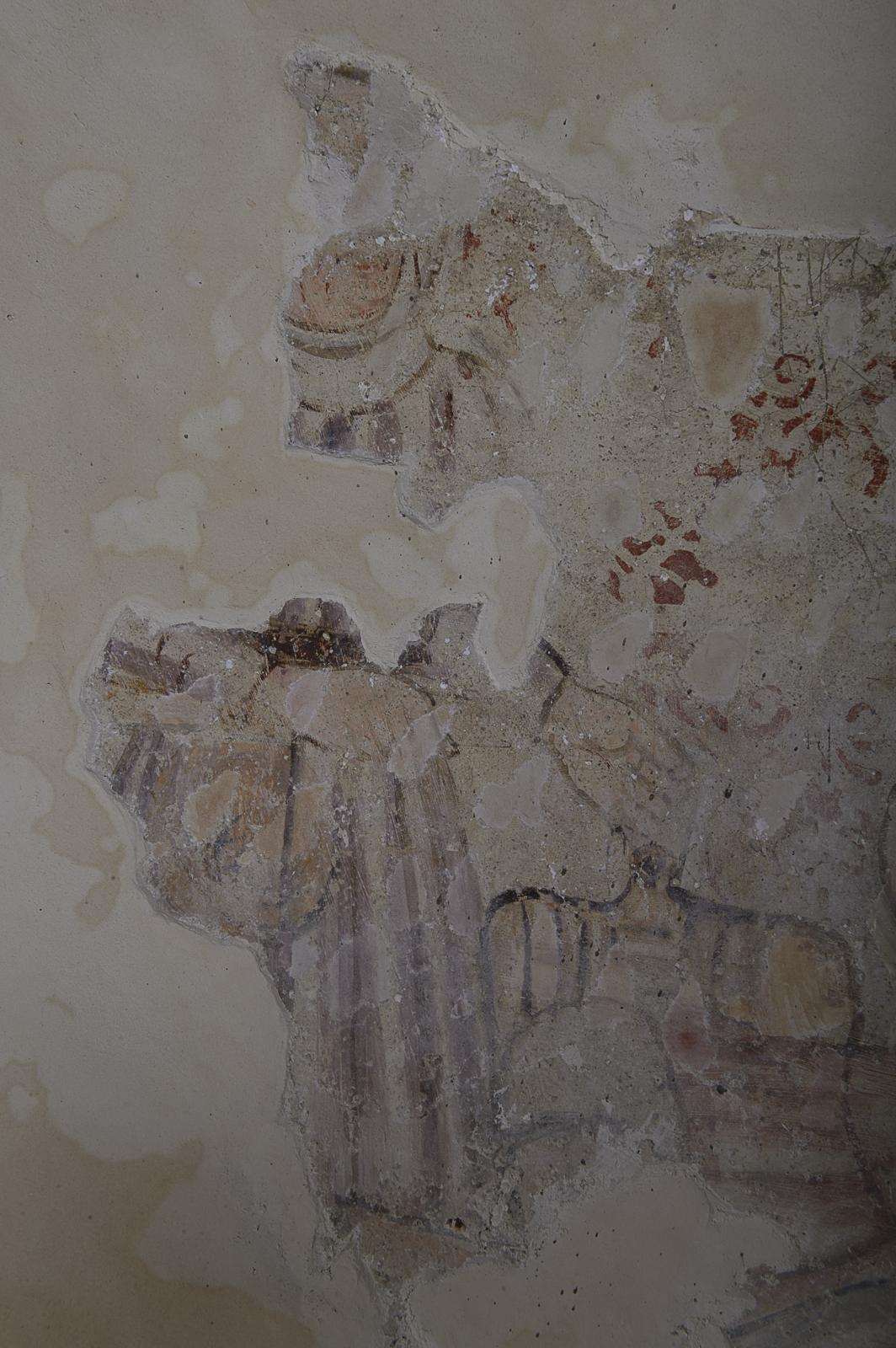
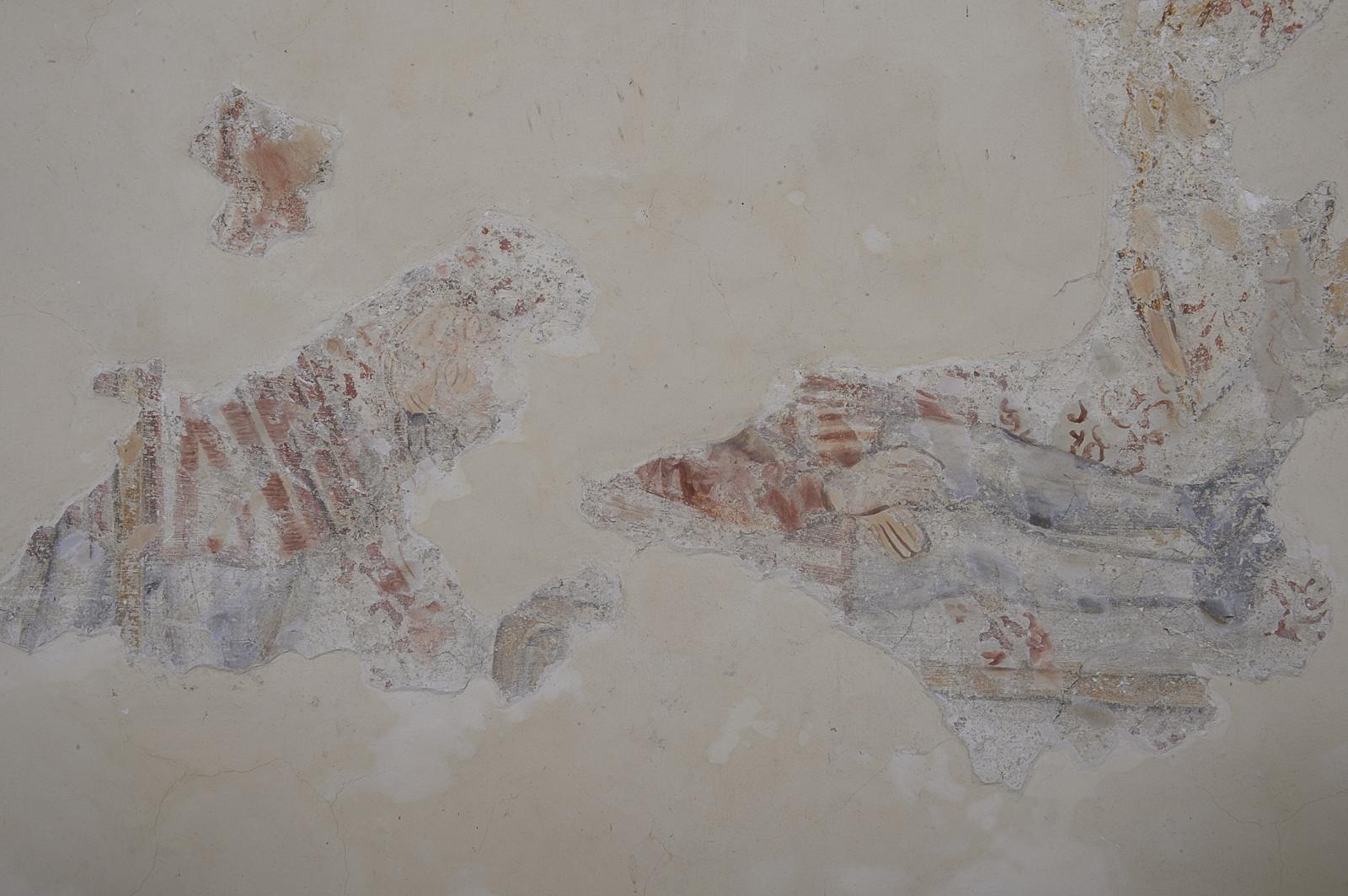
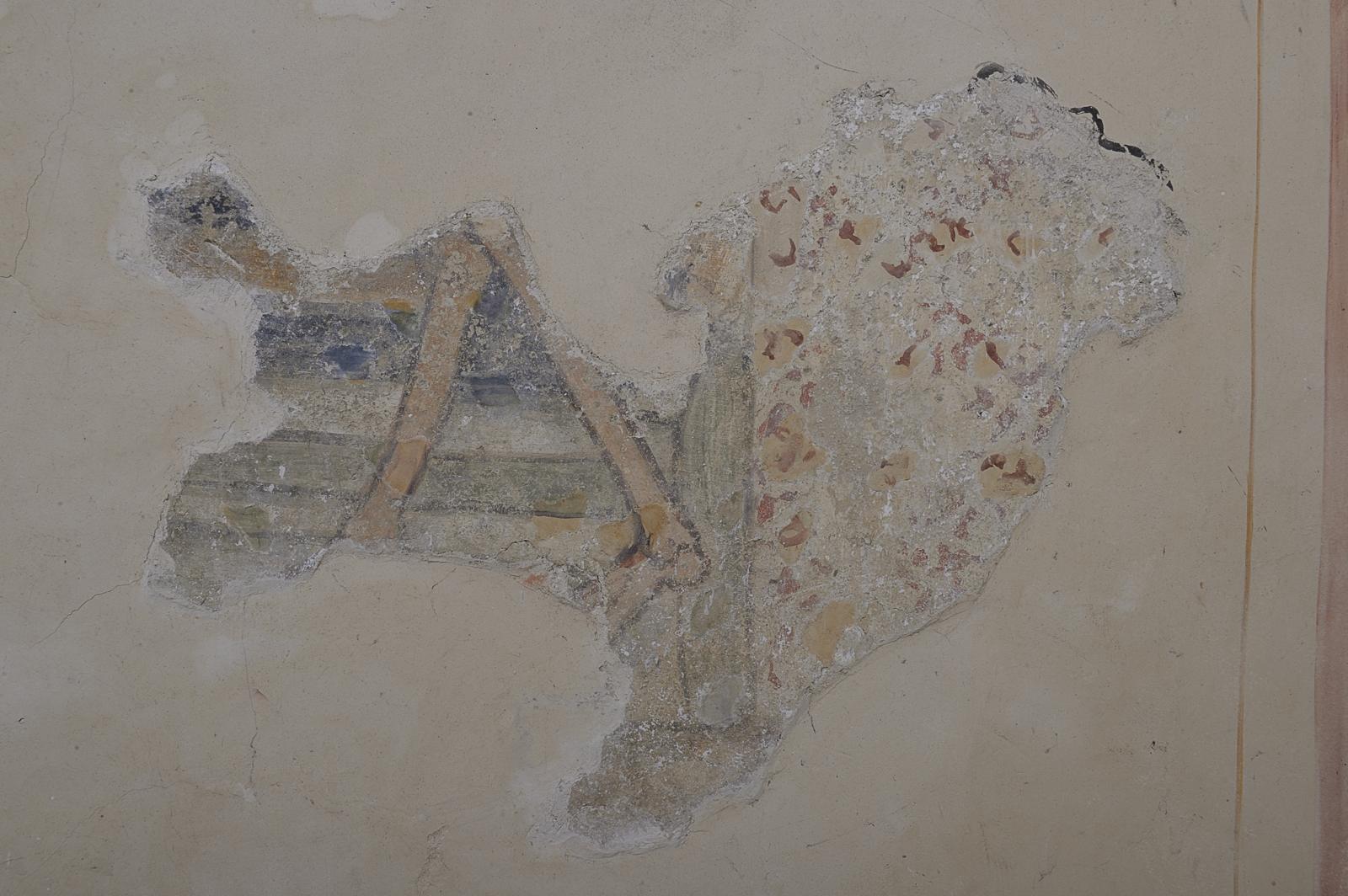
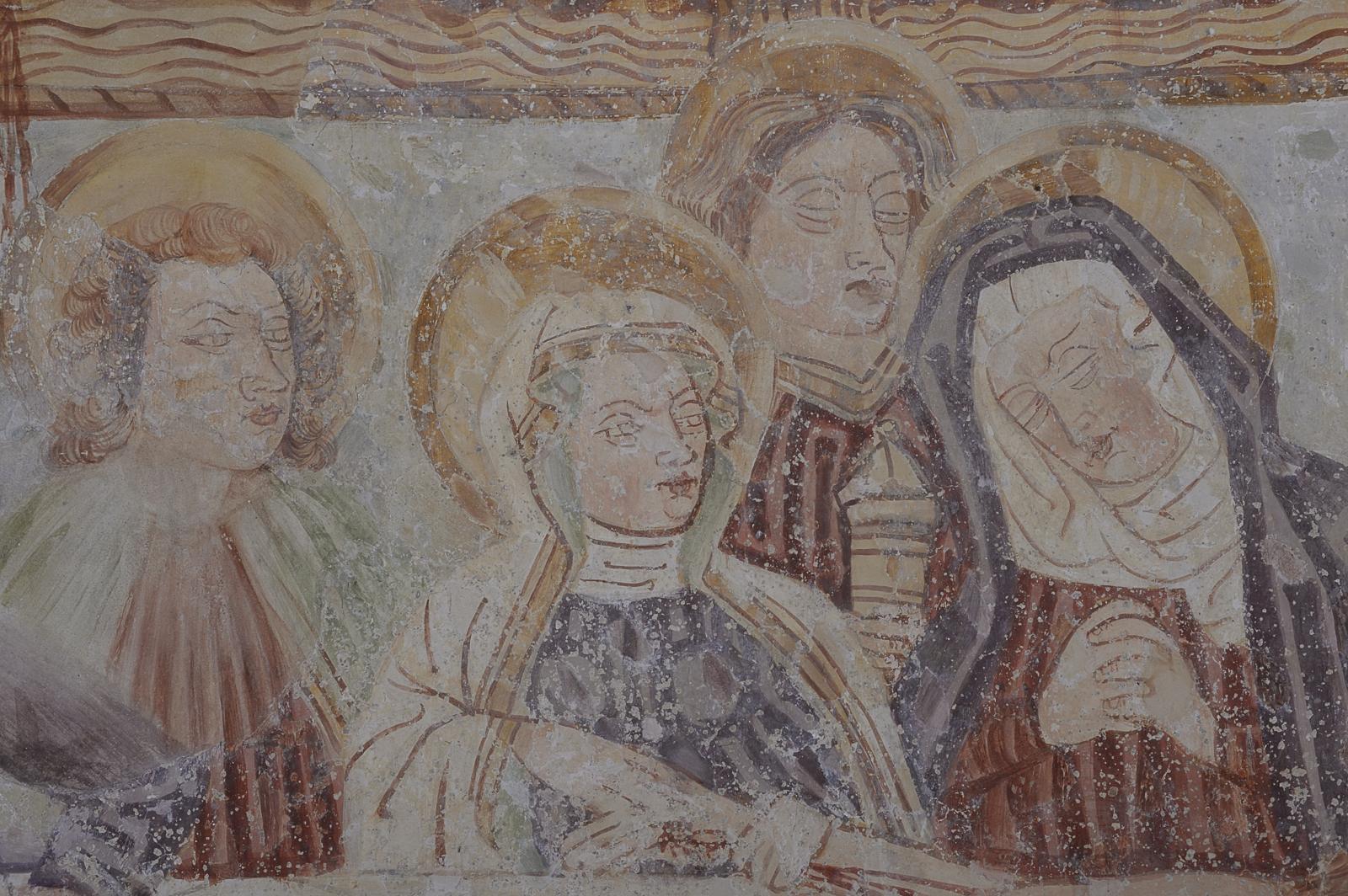
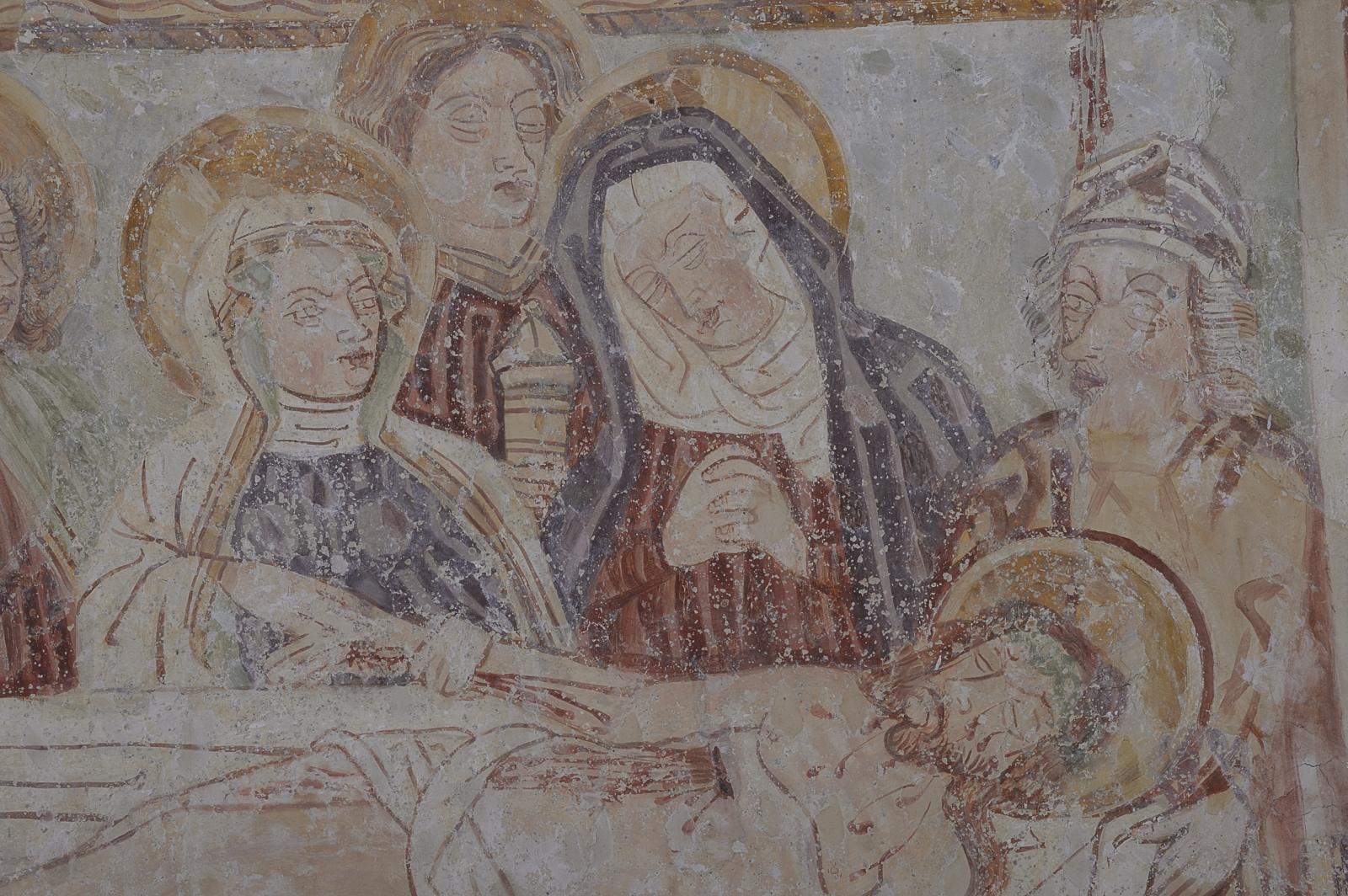
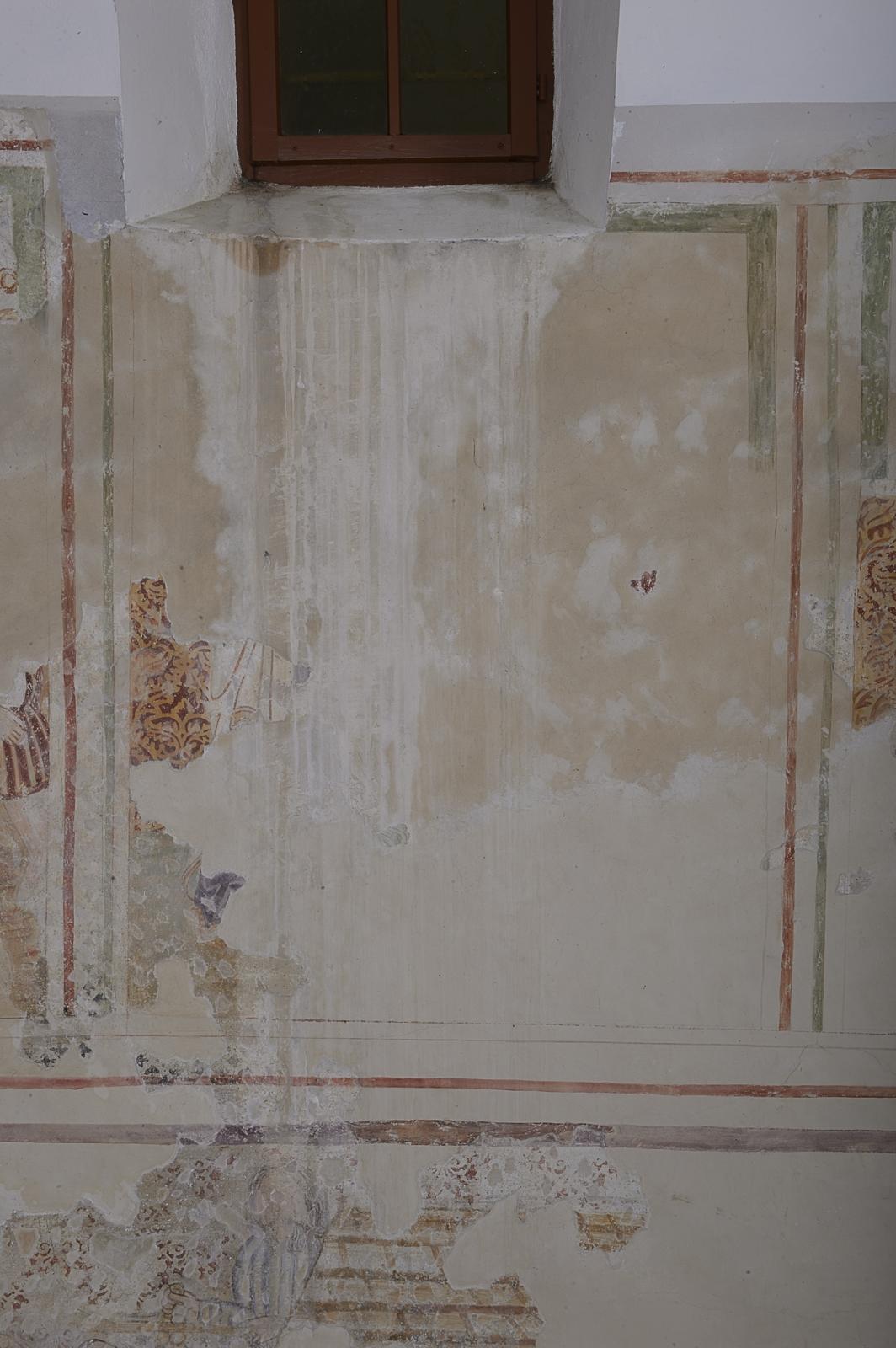
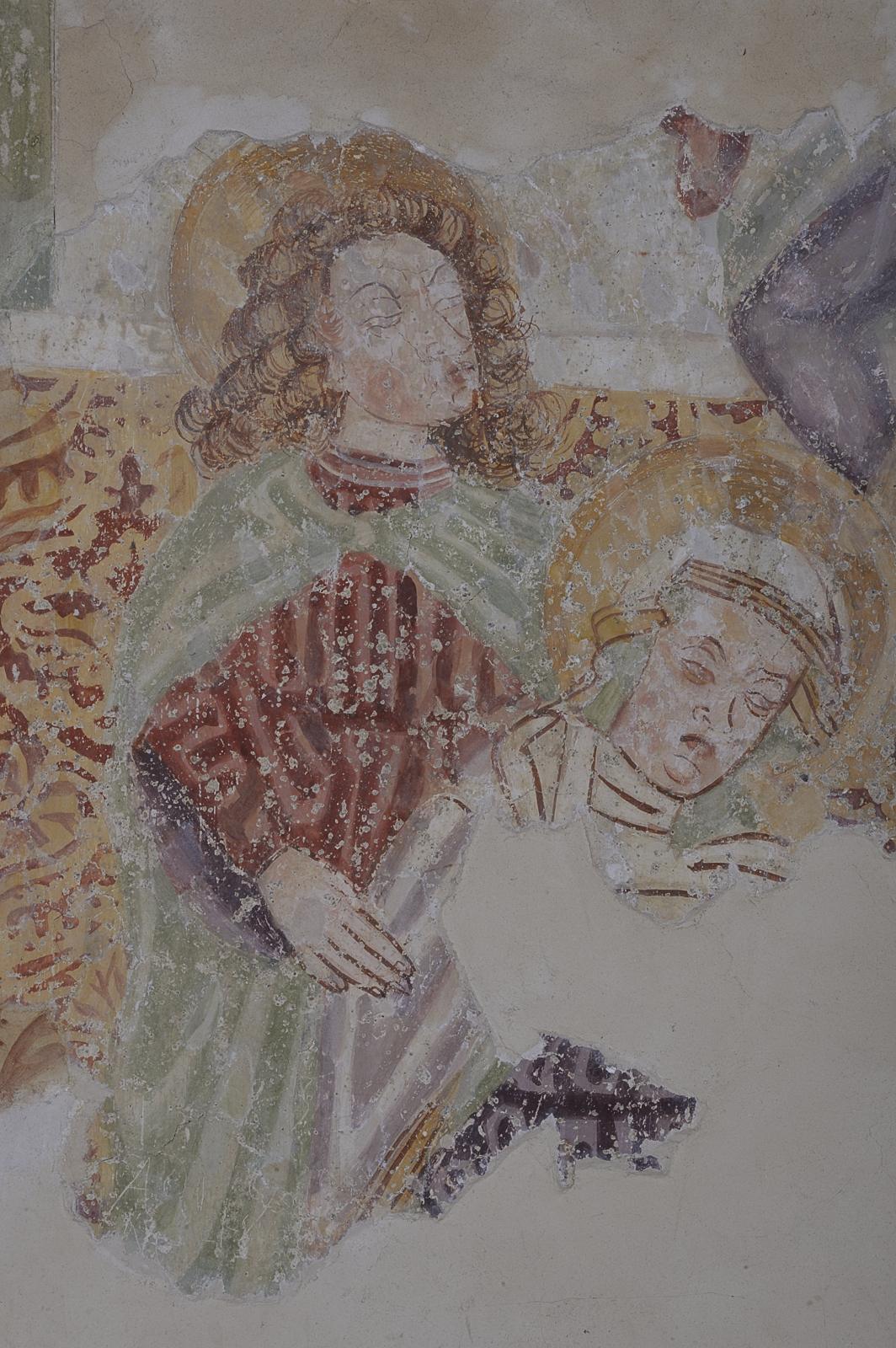
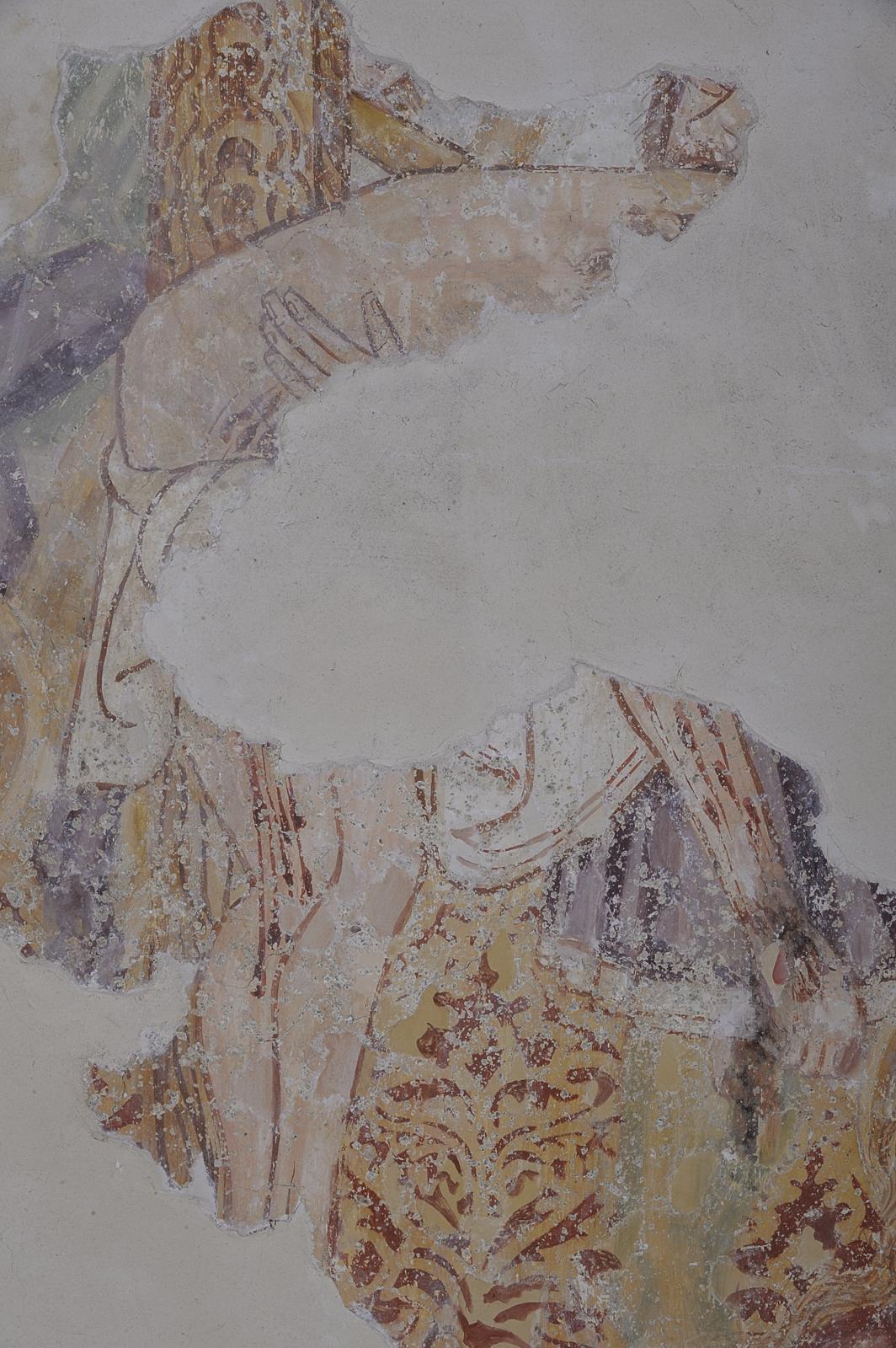
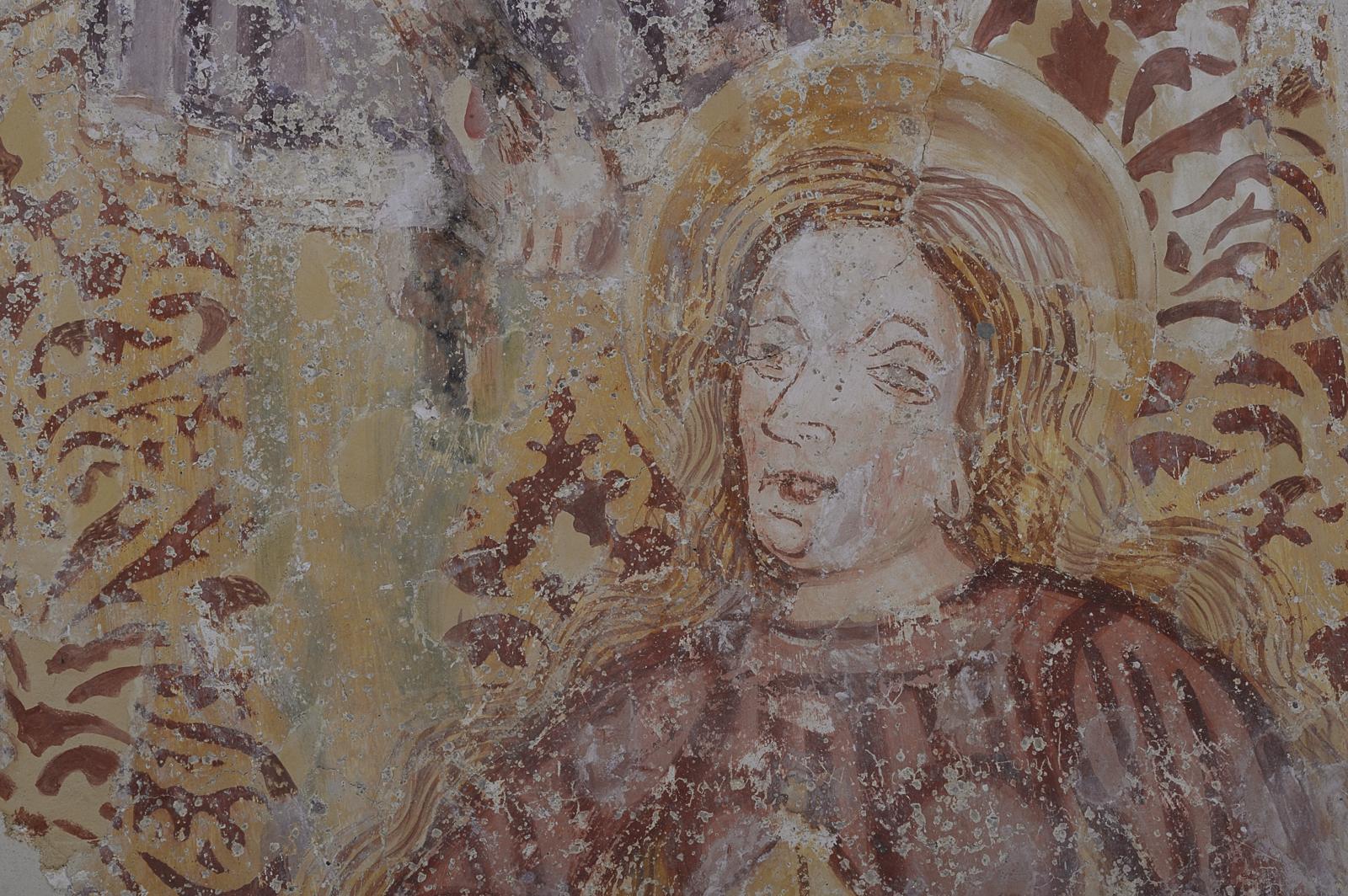
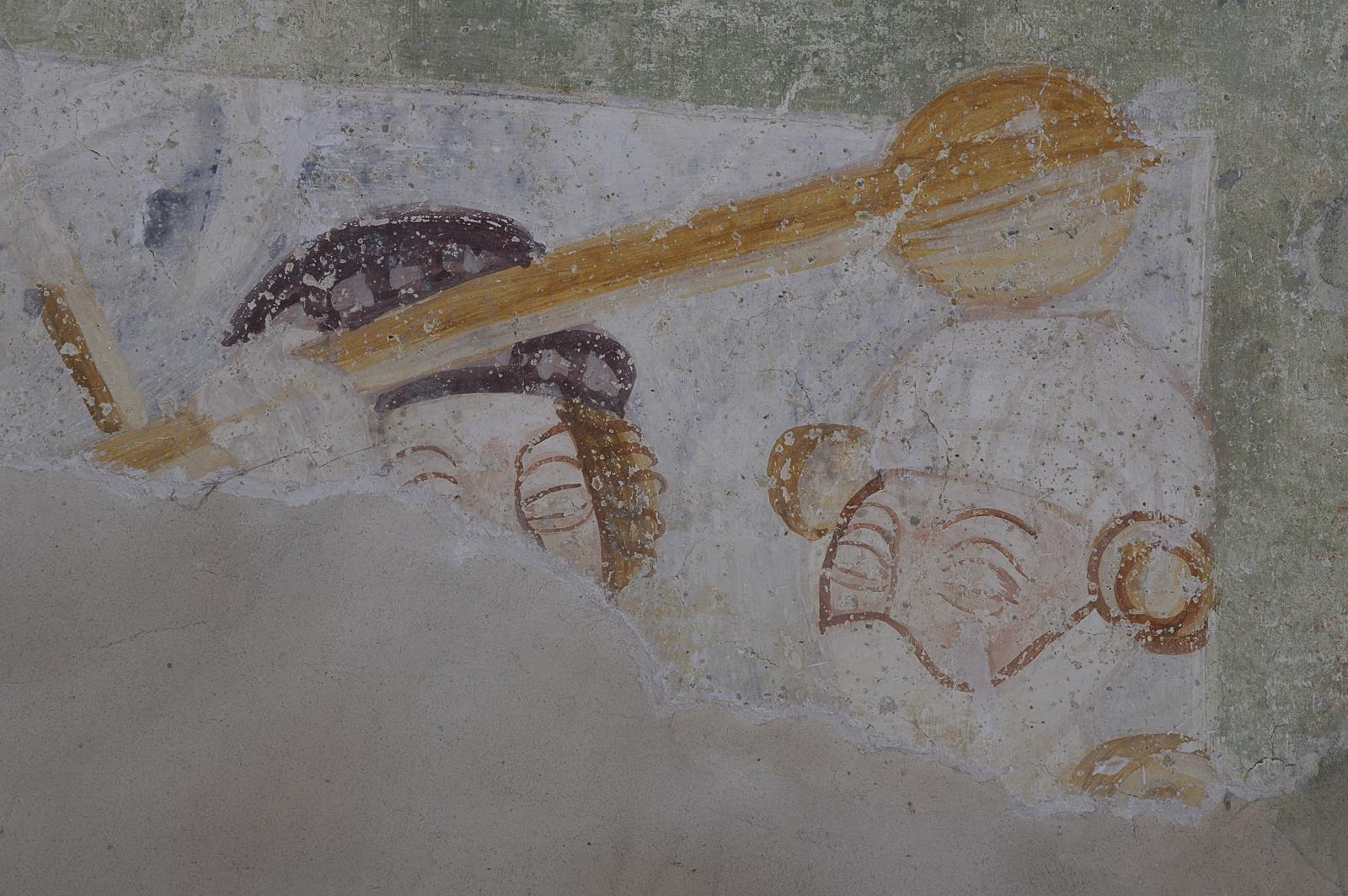
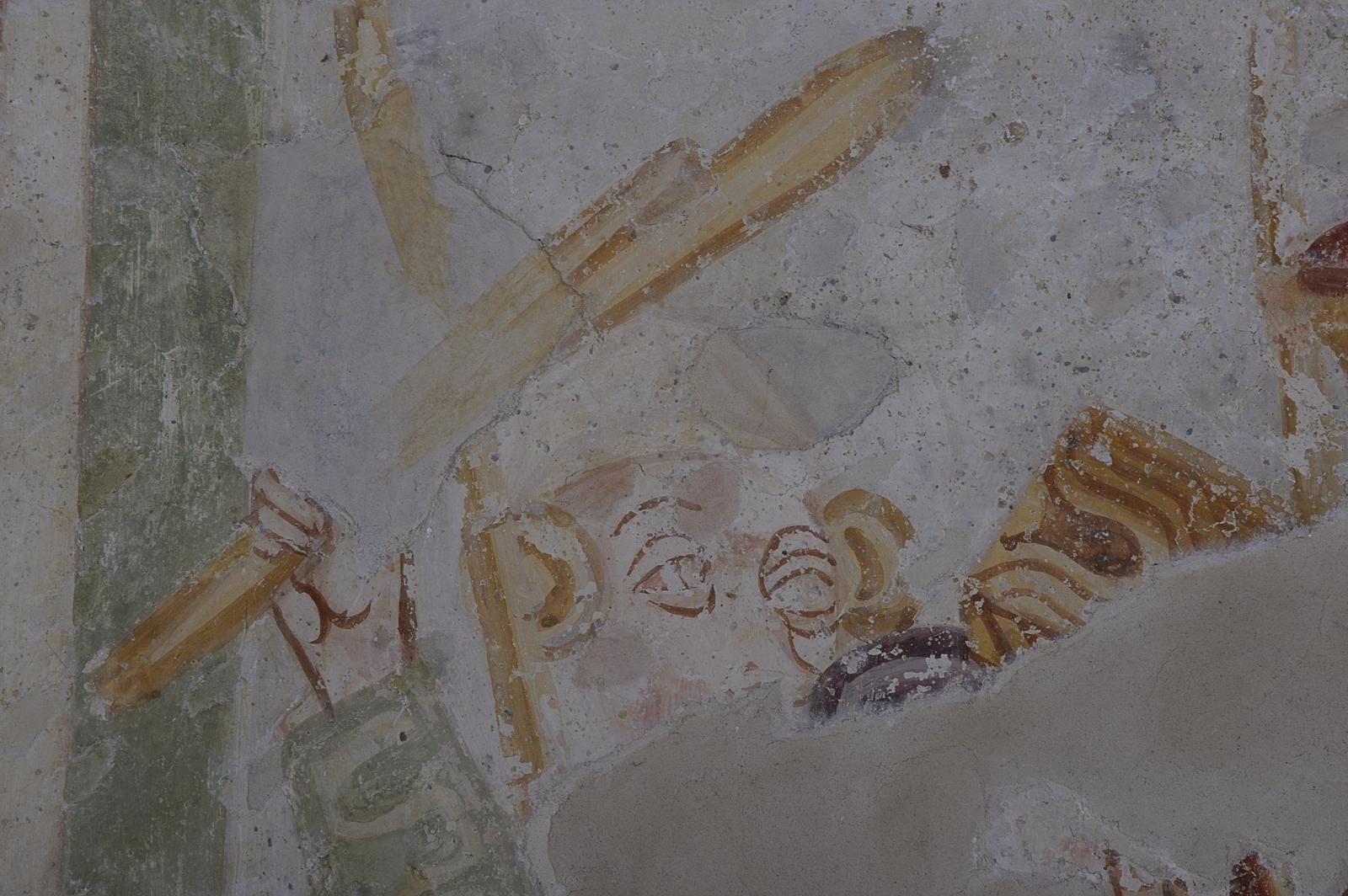
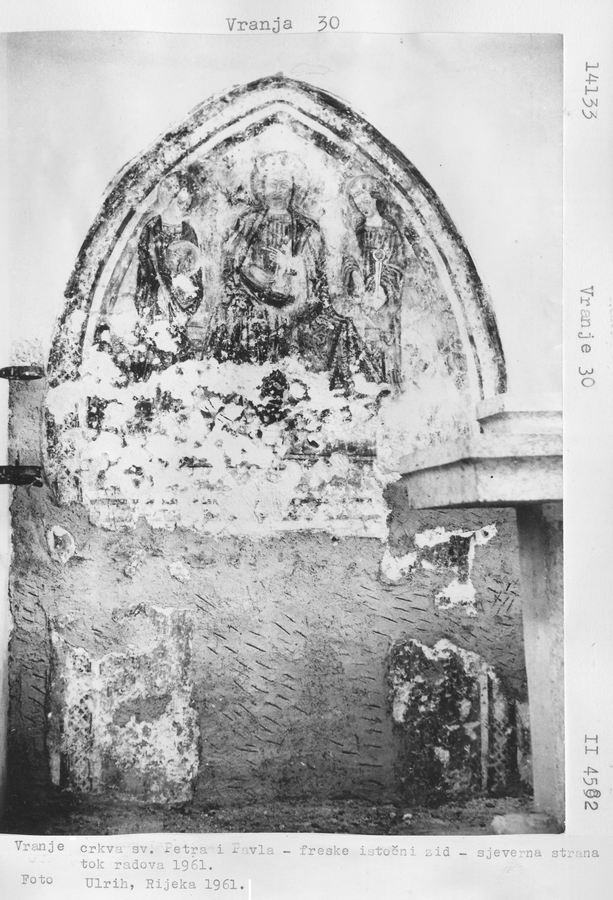
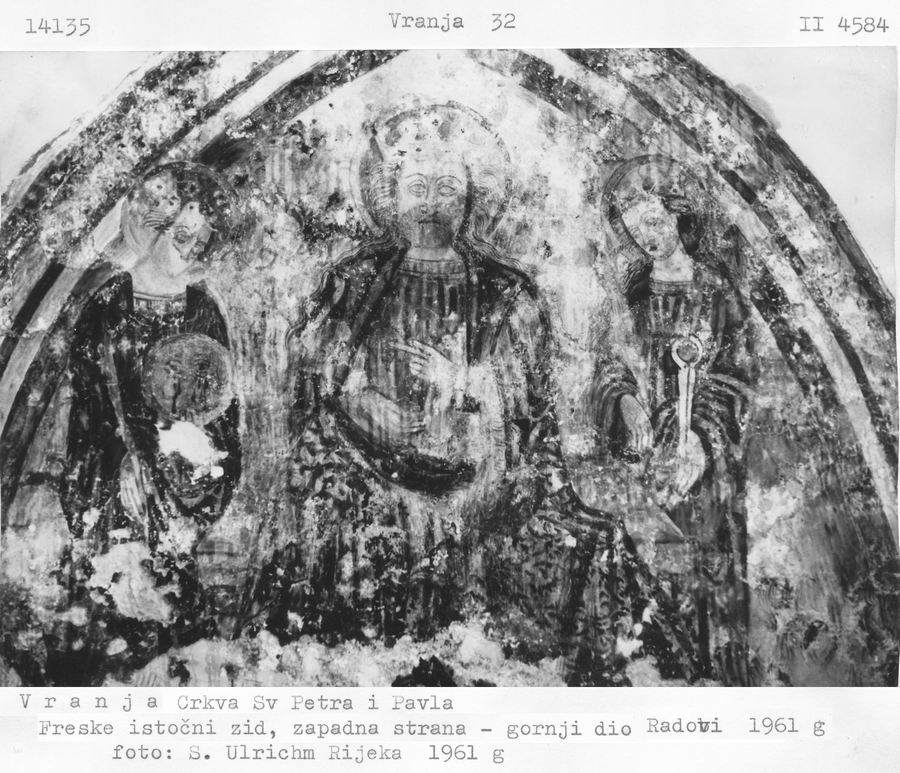
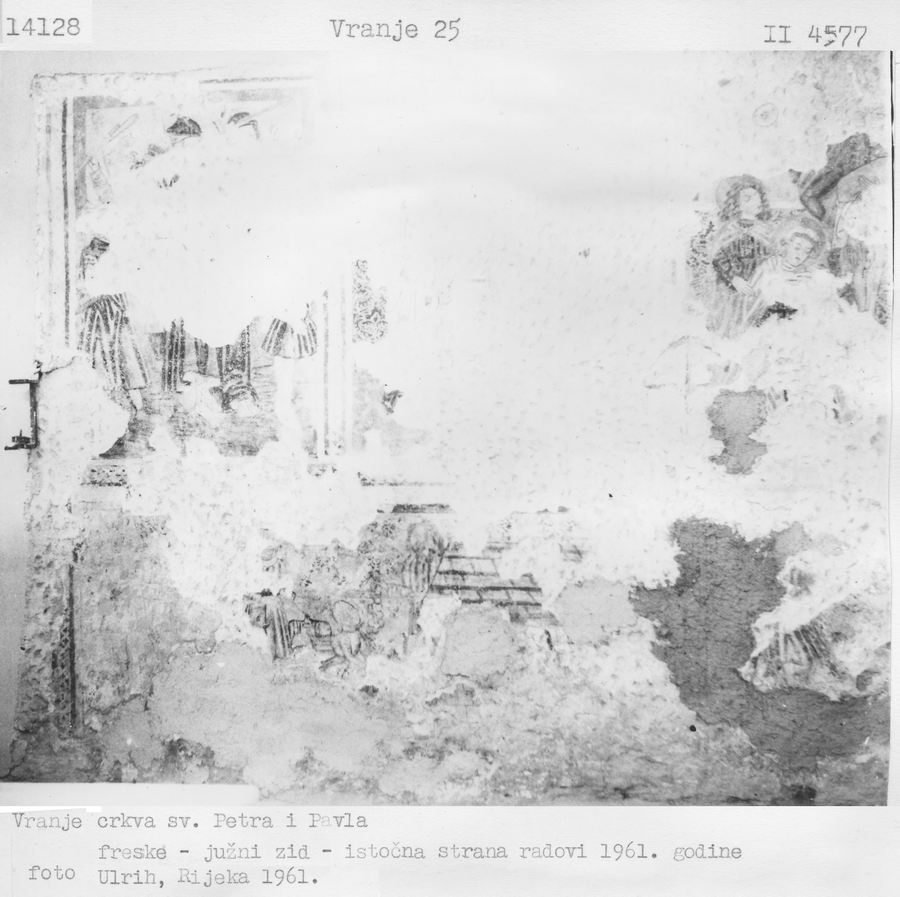
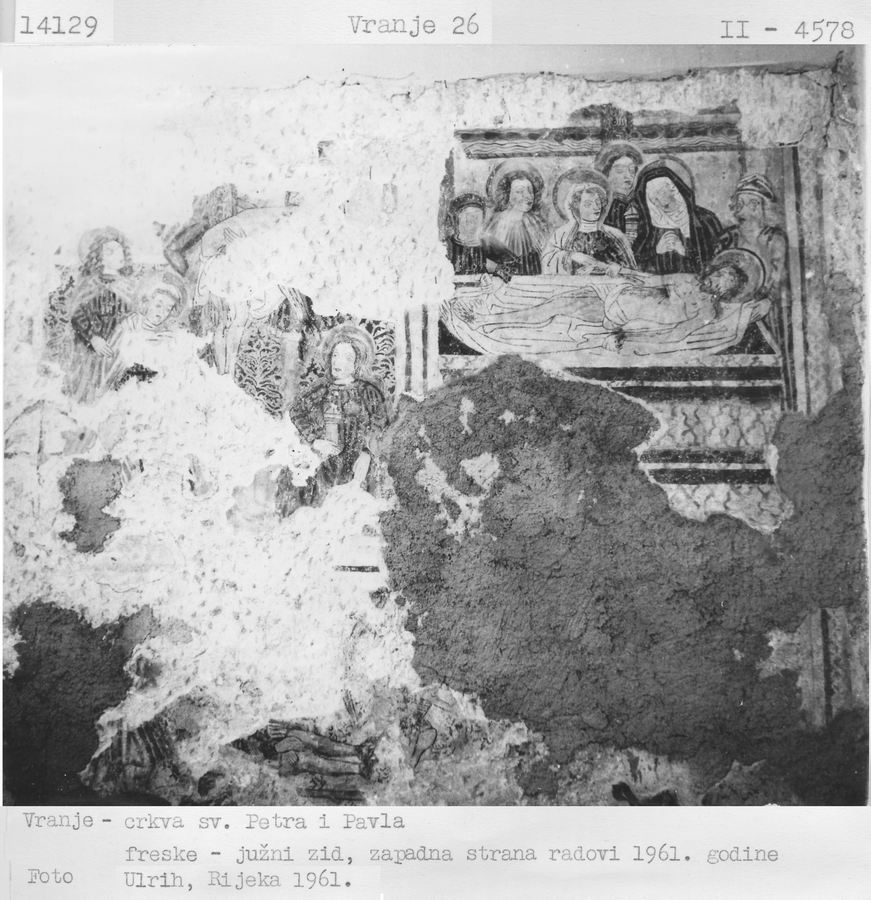
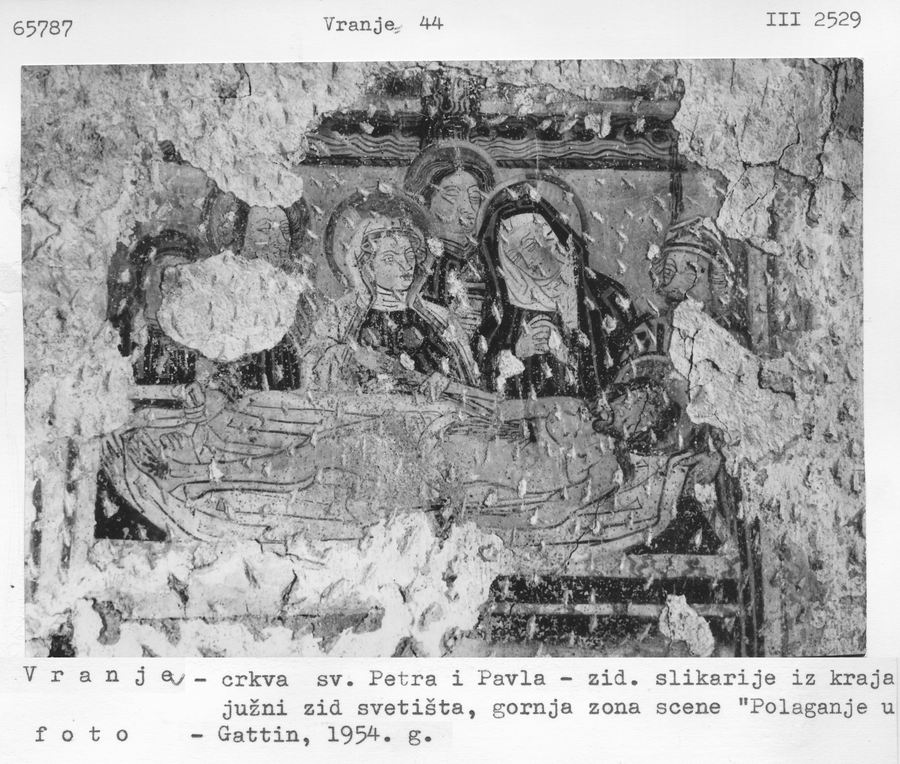
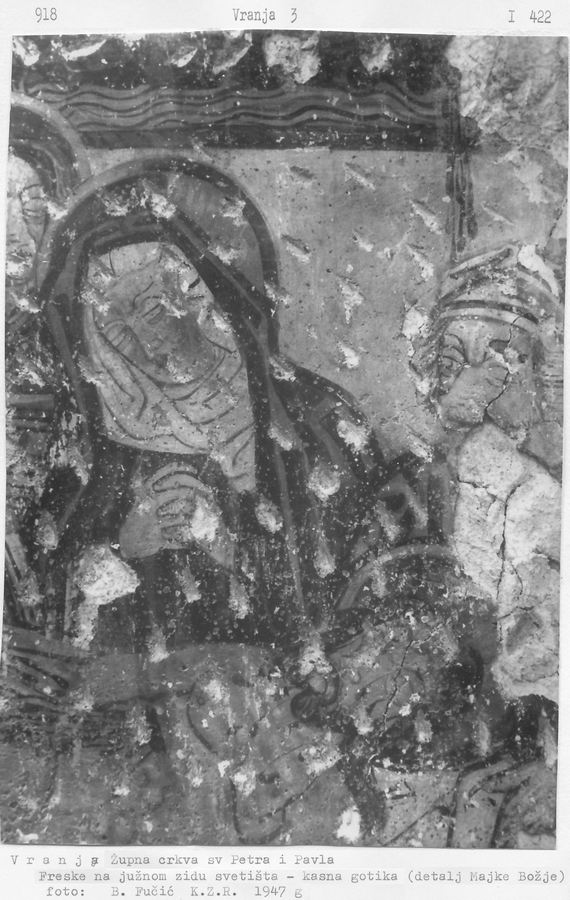
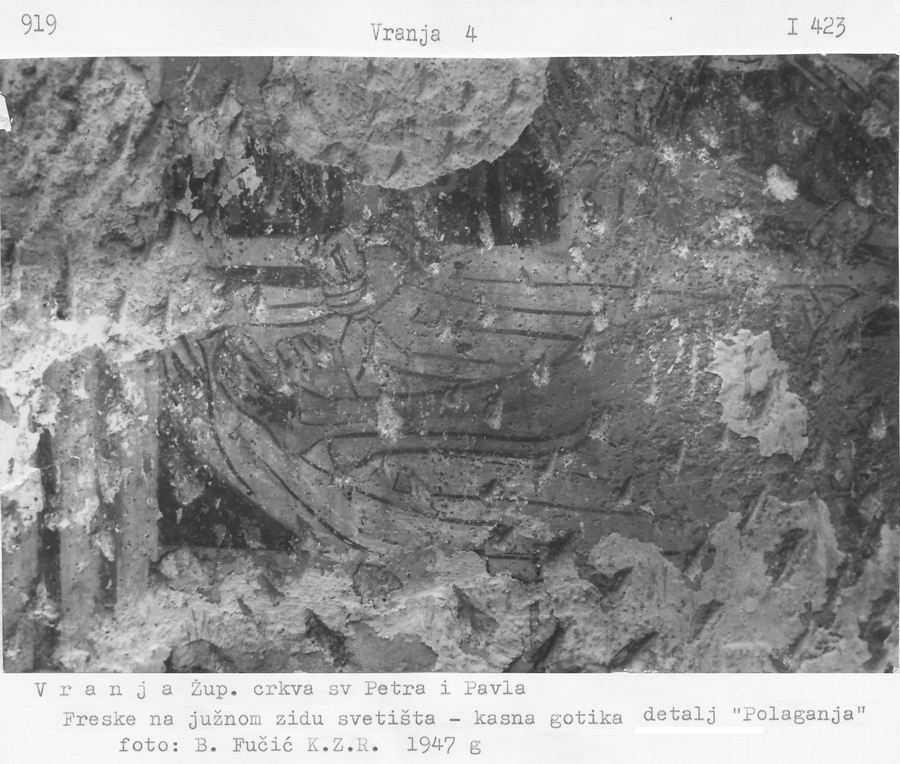
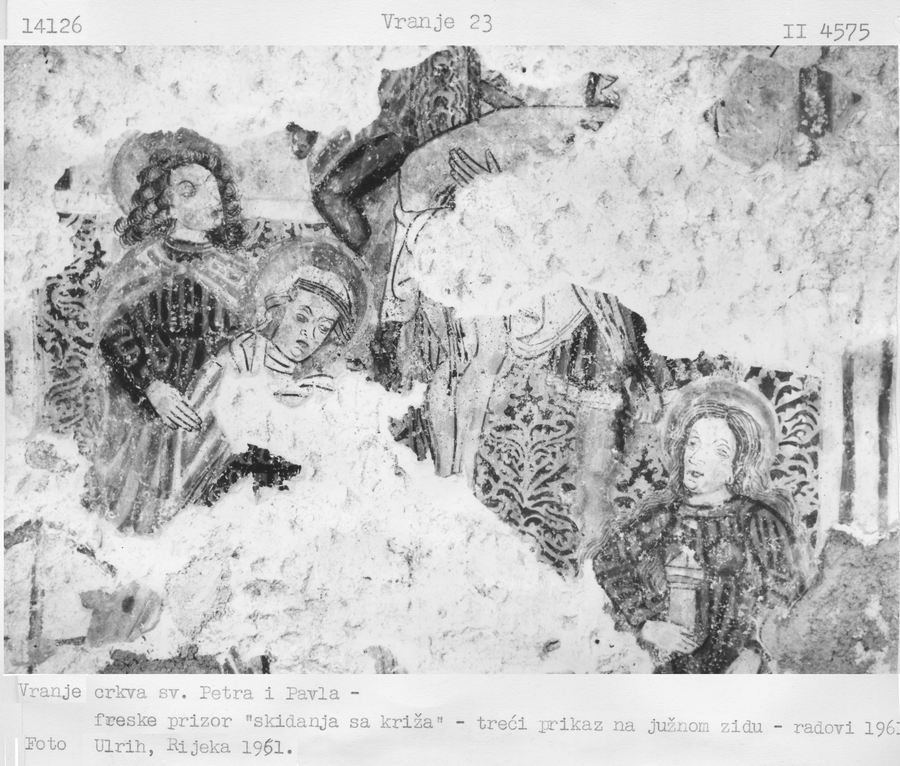
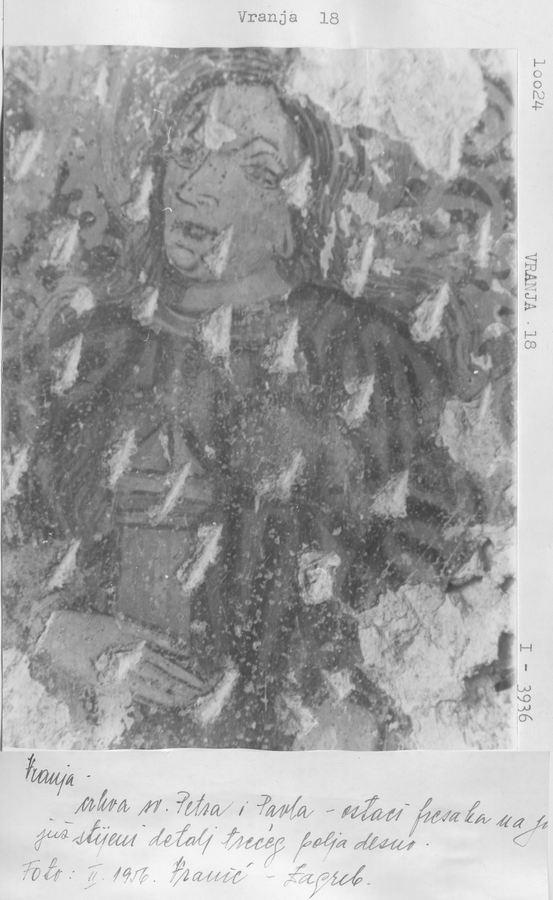
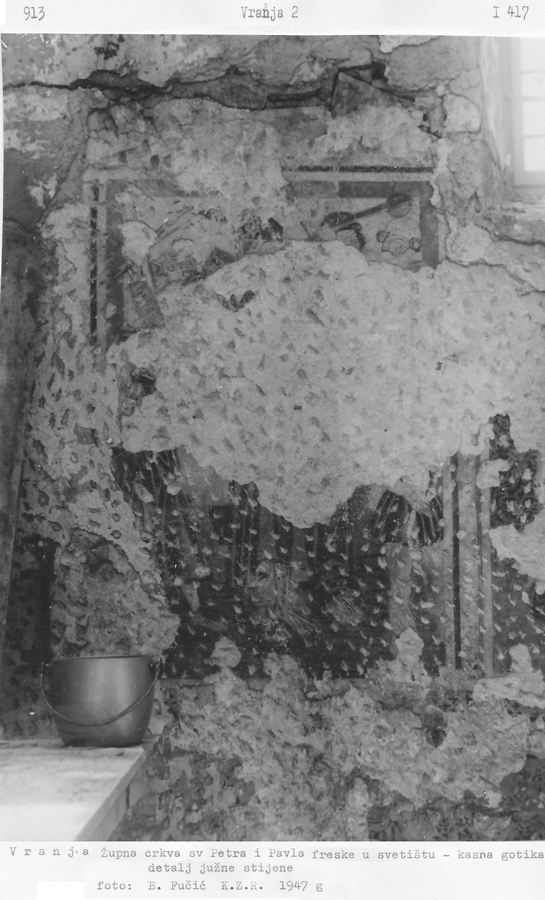
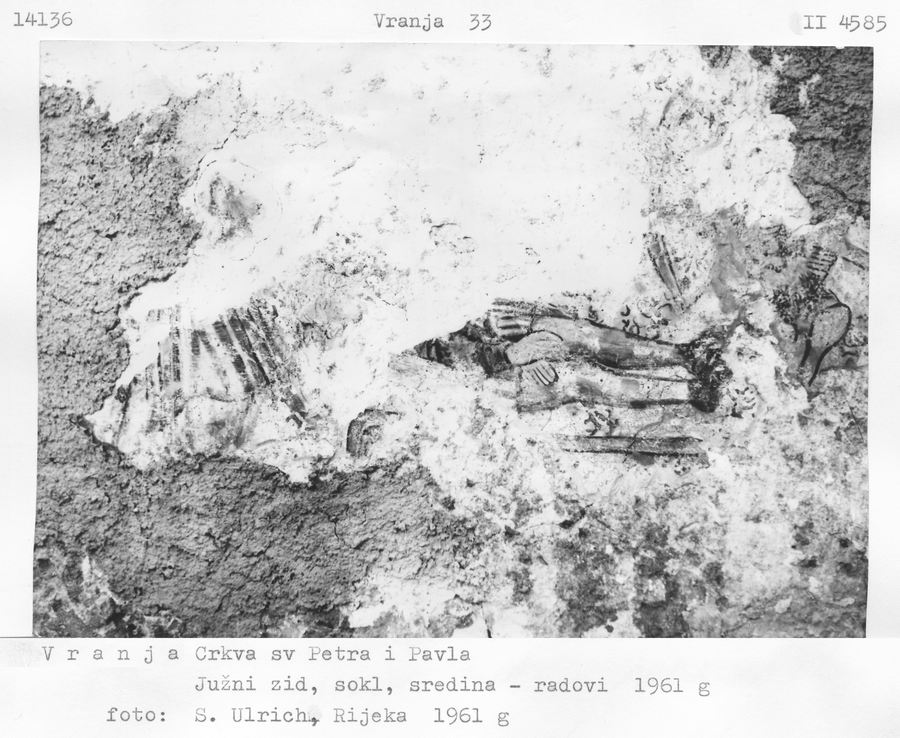
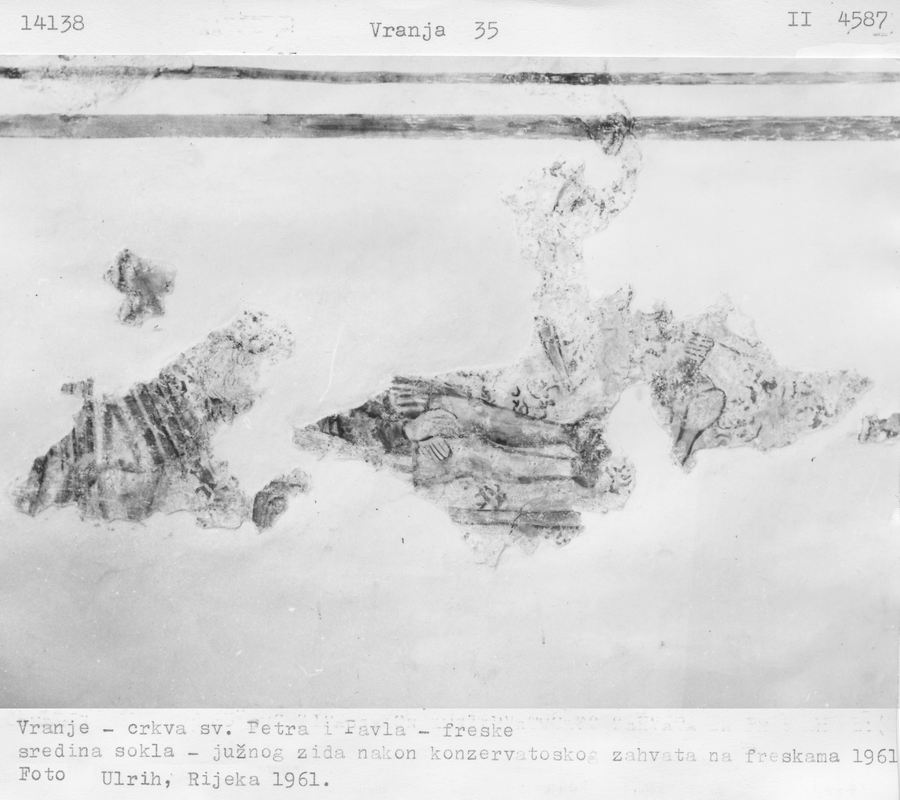
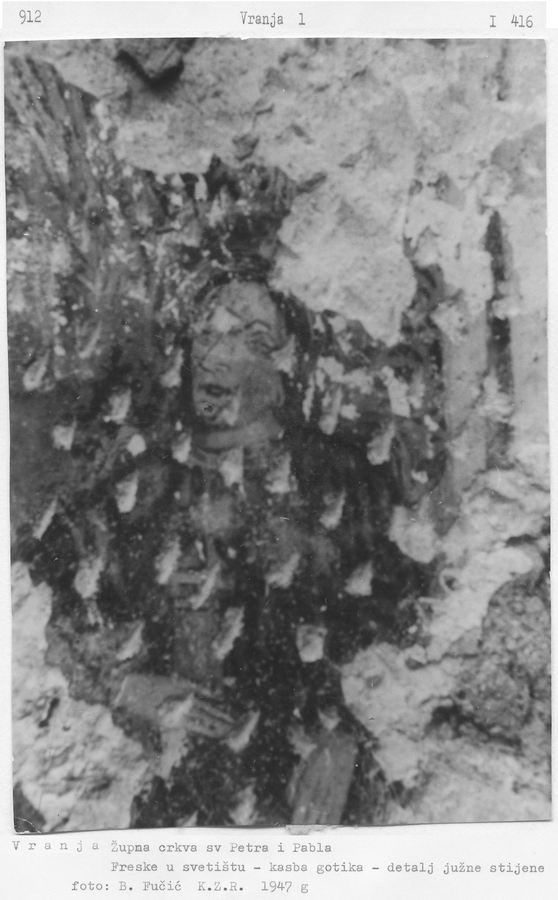
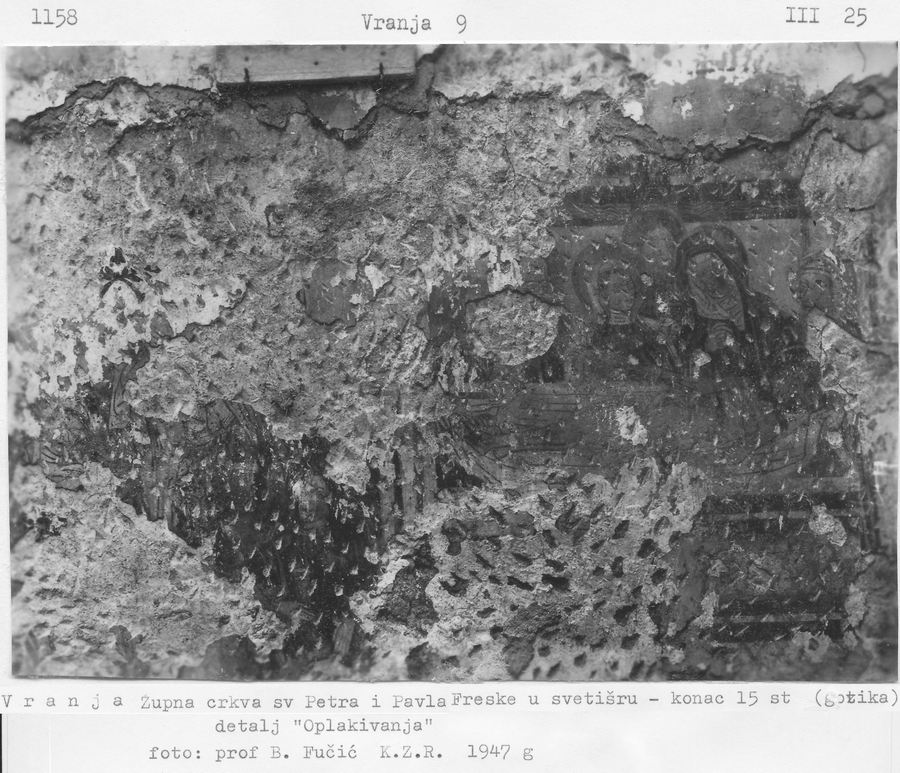
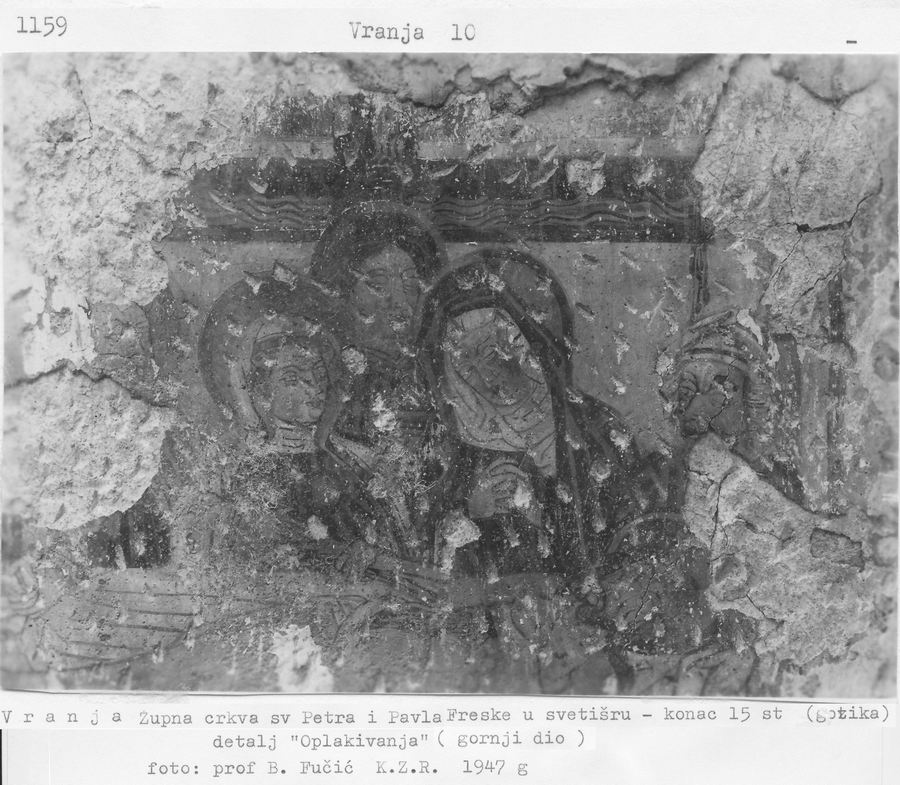
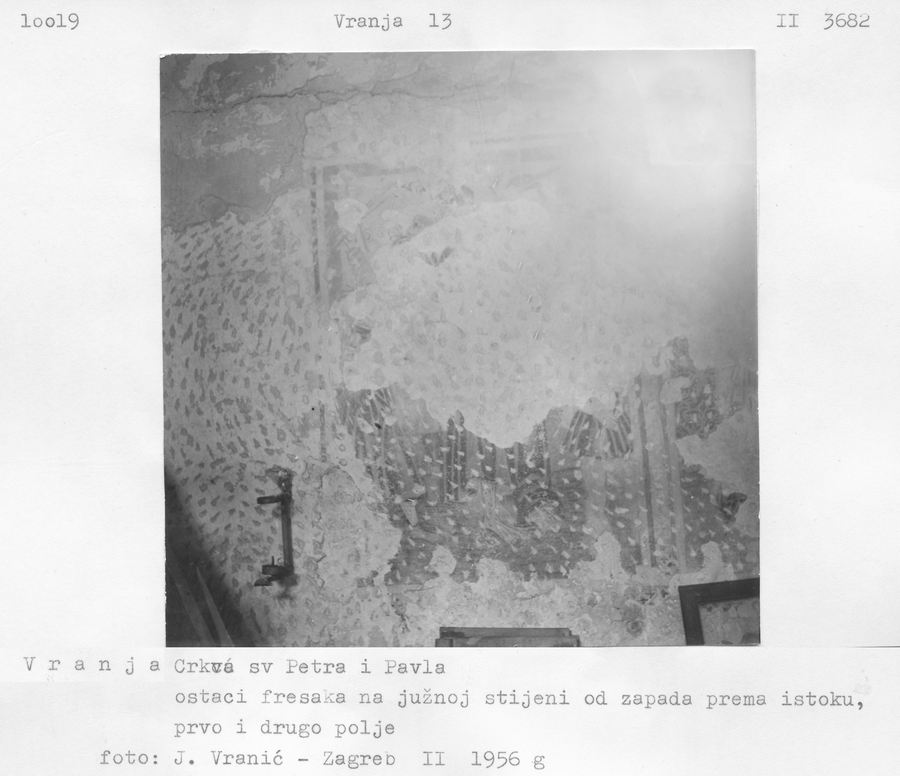
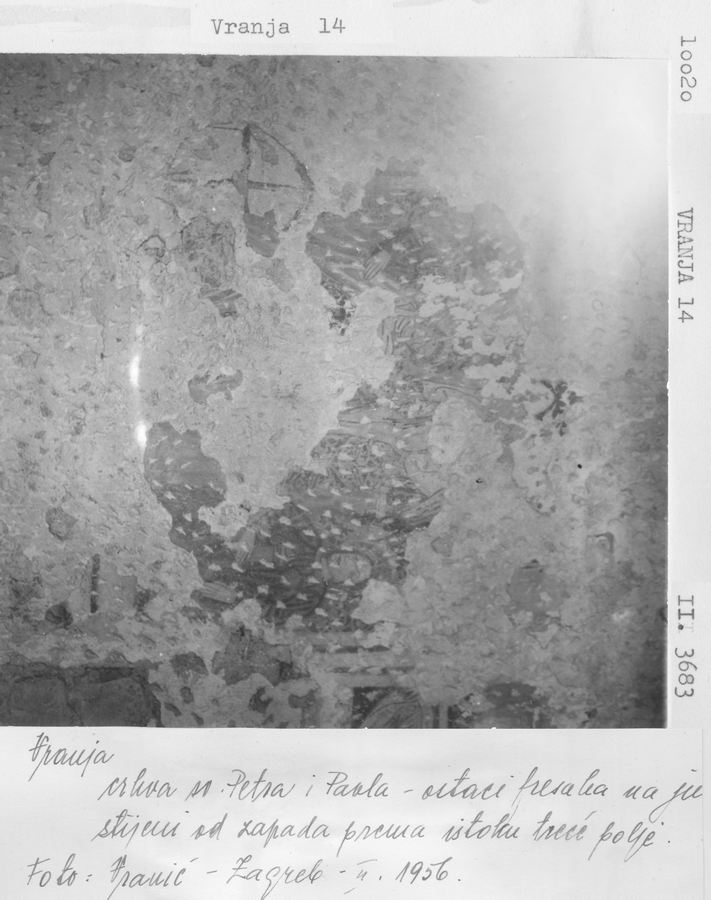
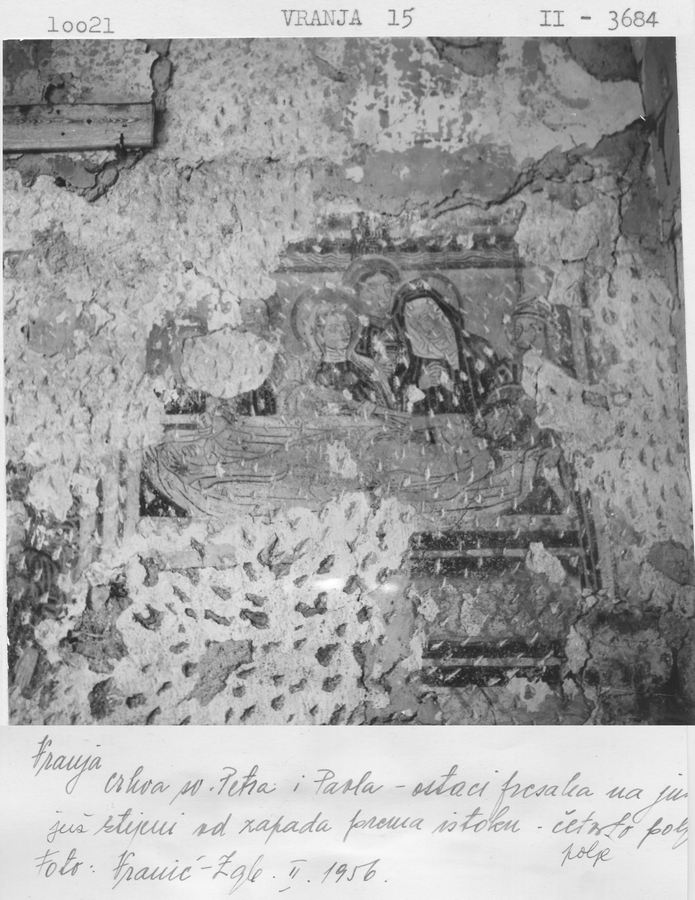
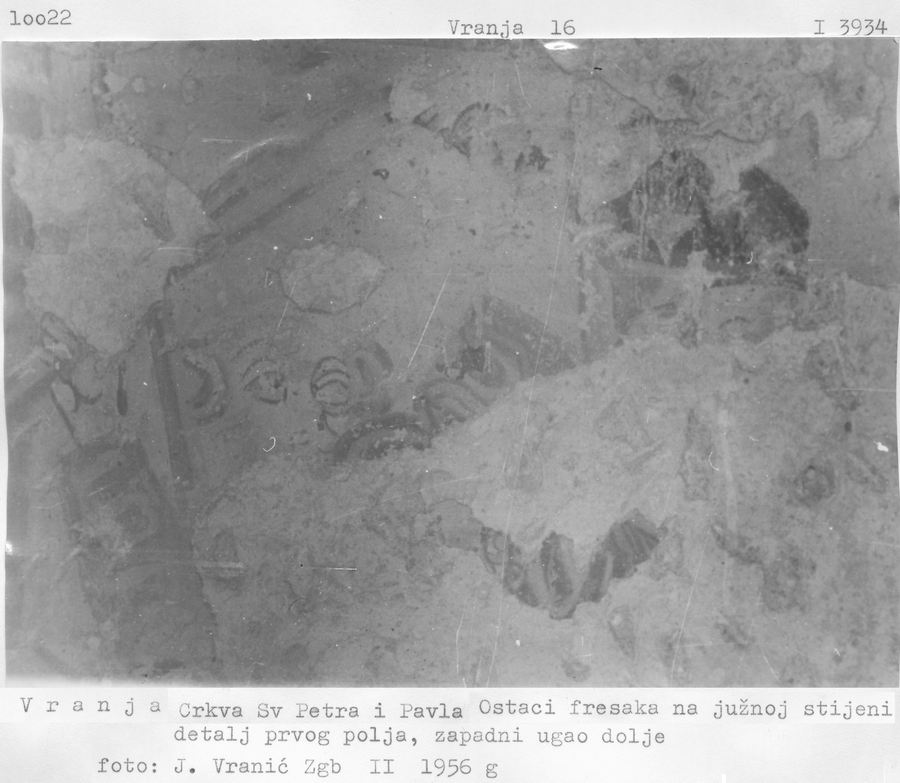
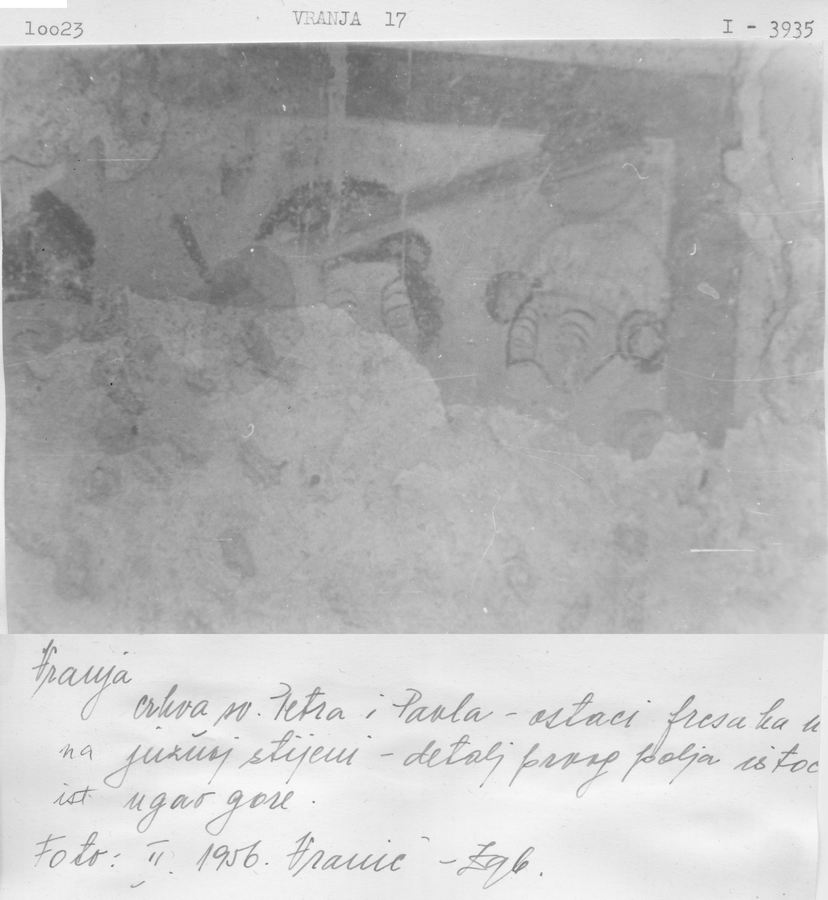
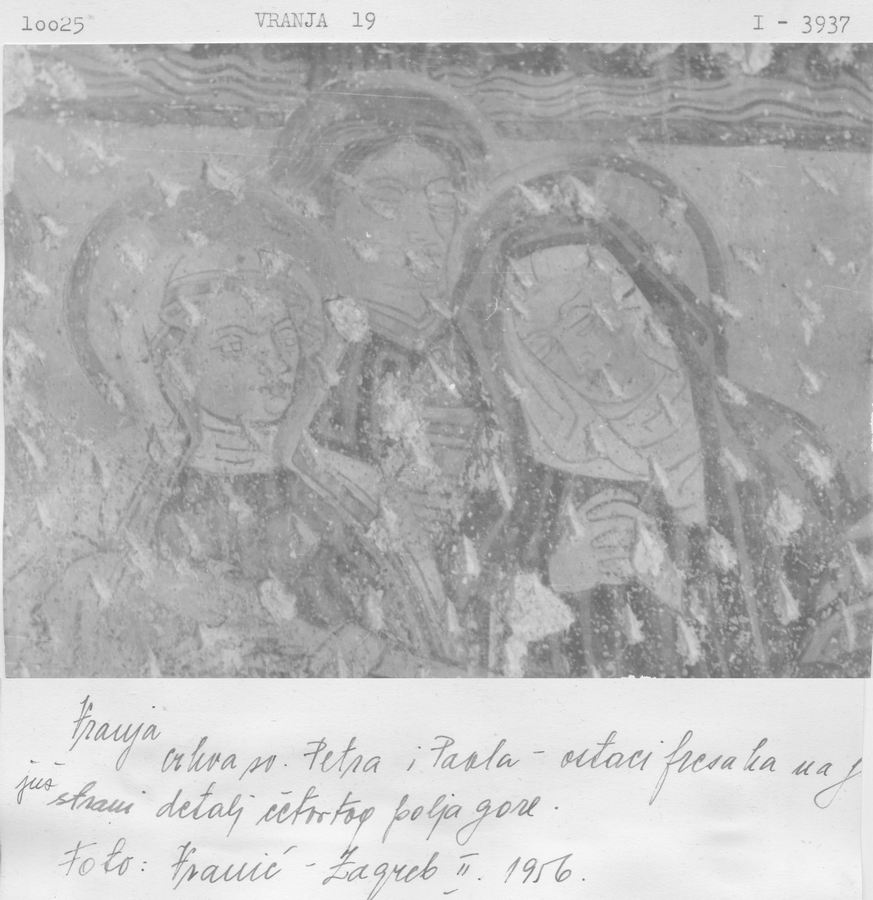
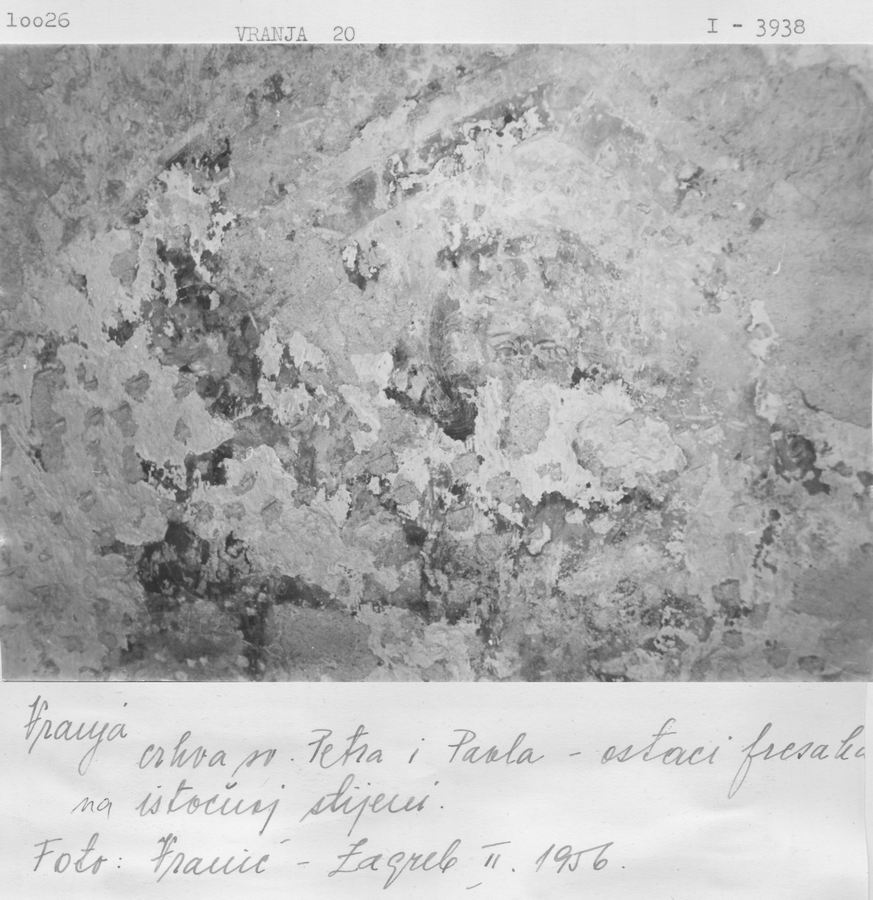
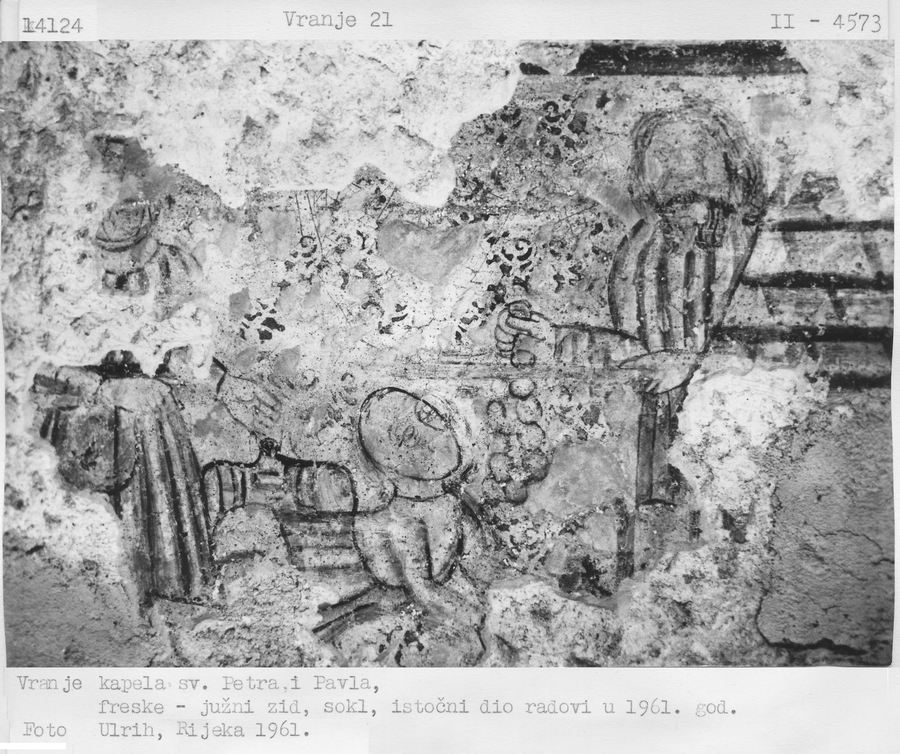
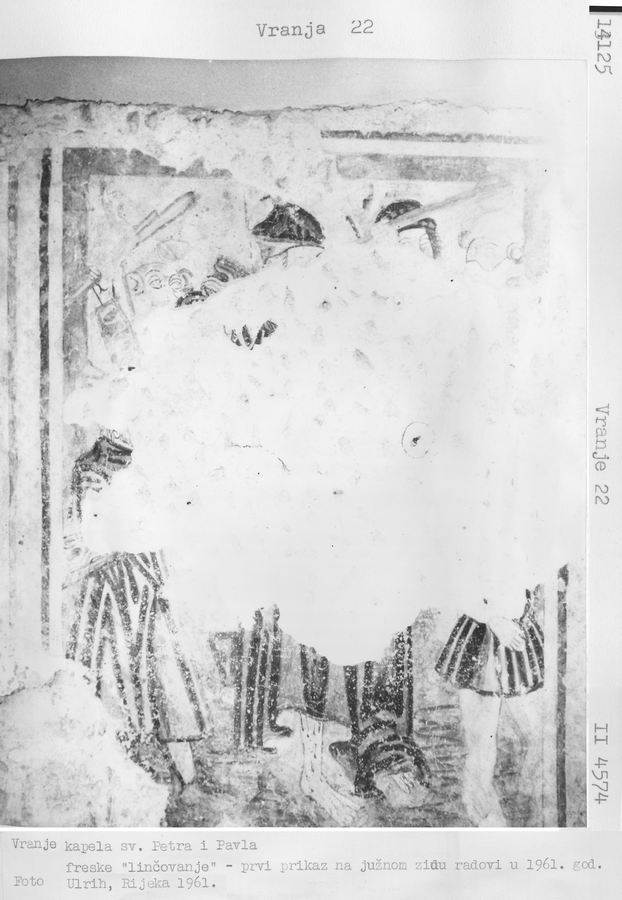
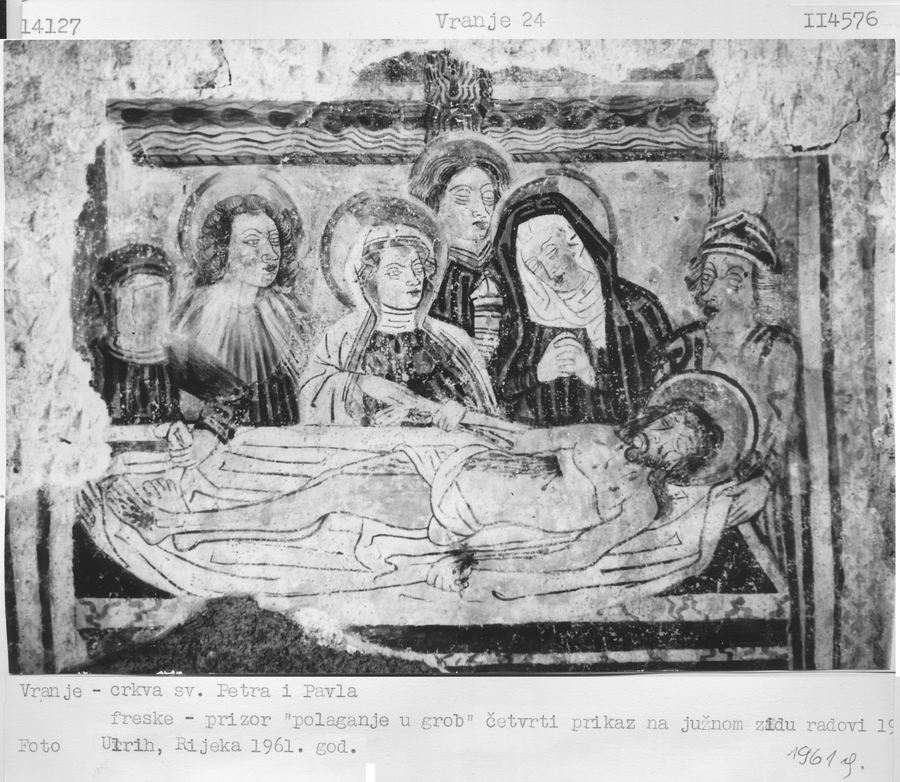
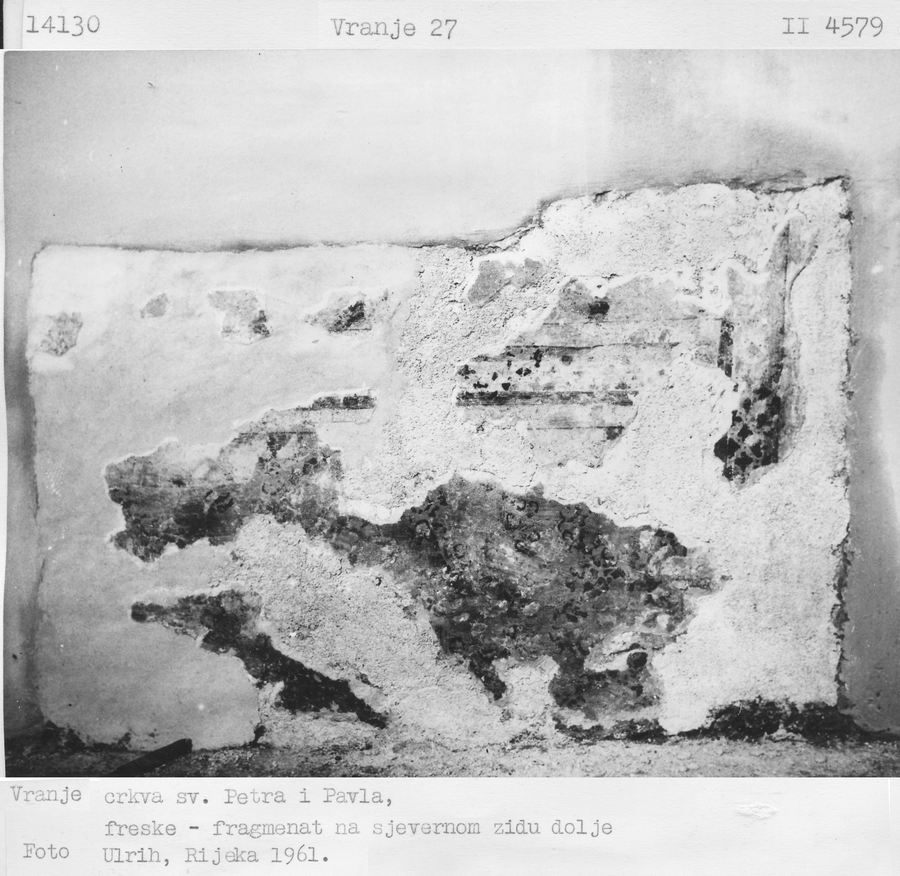
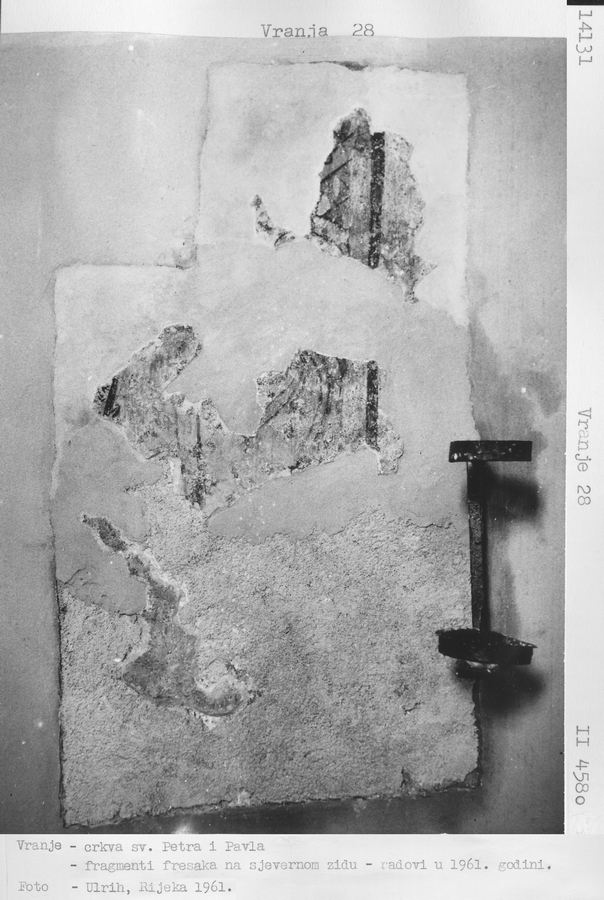
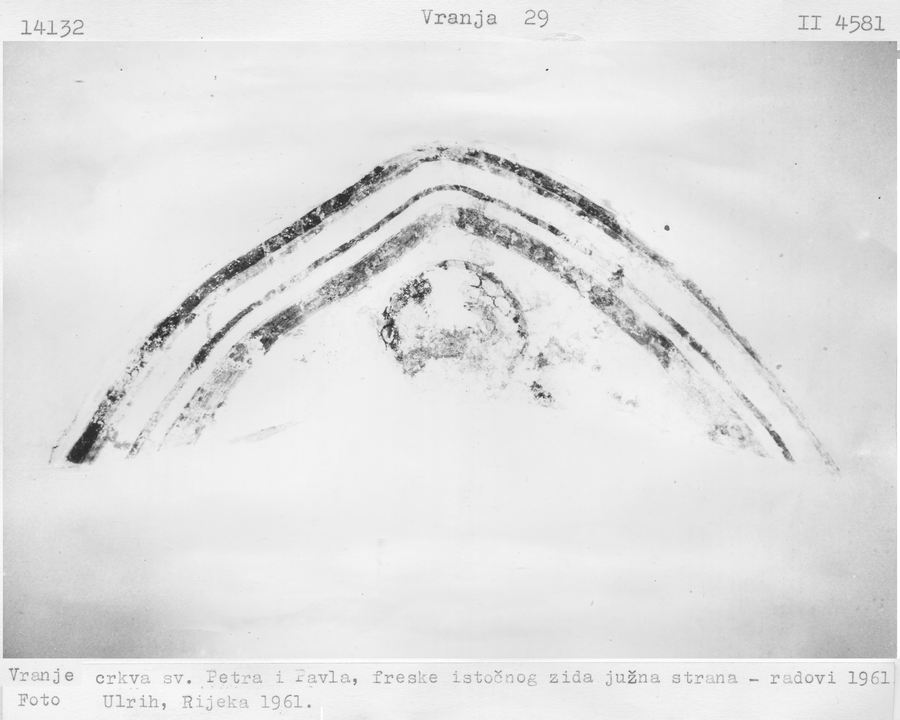
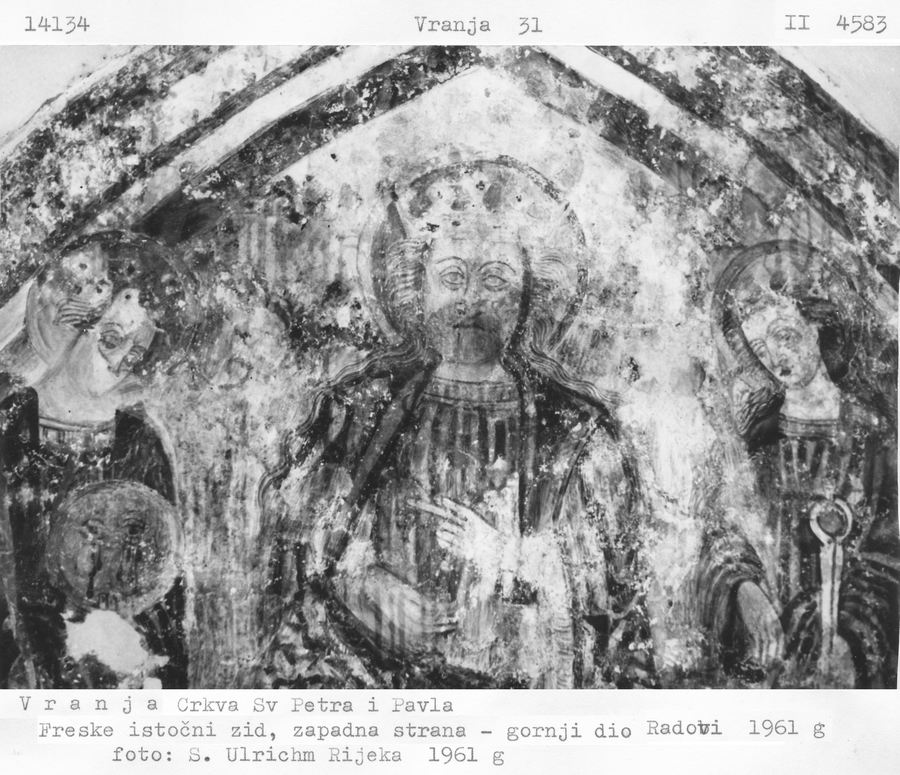
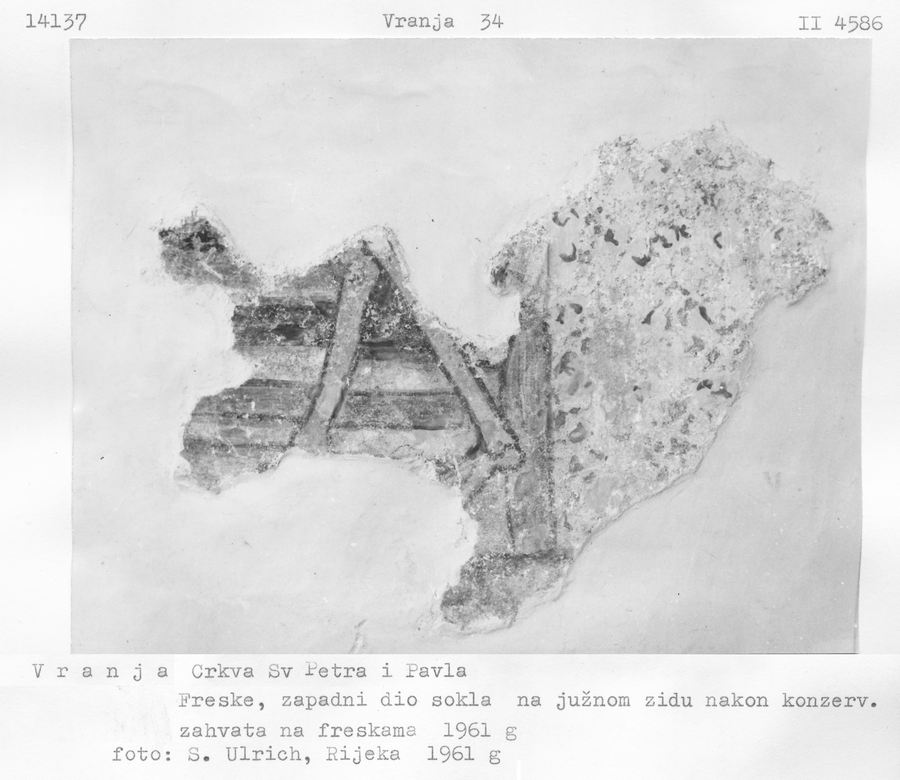
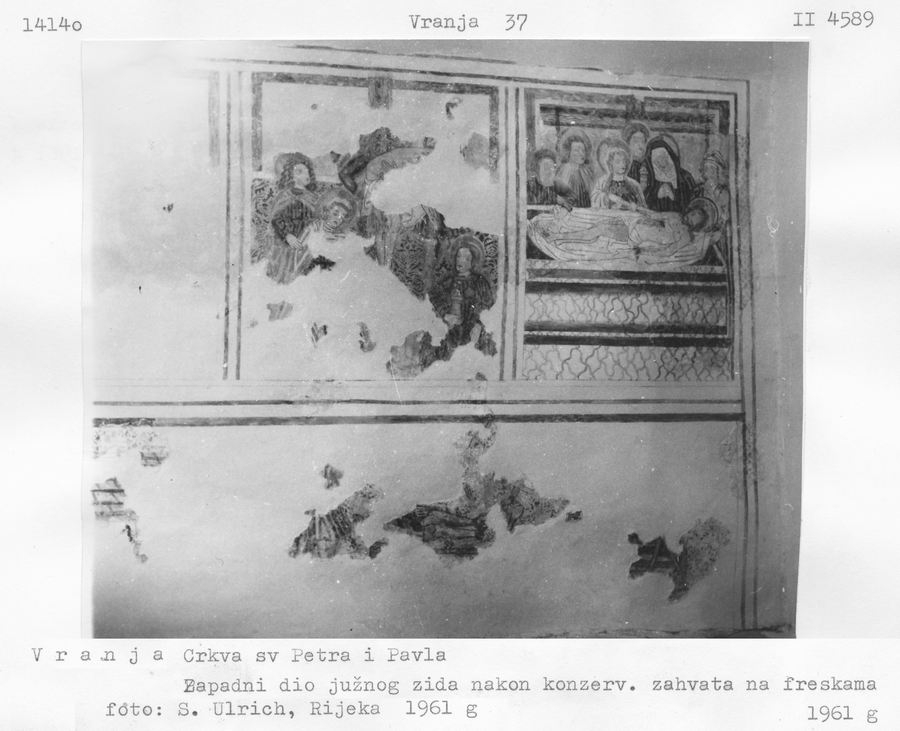
Within the sanctuary space, wall paintings by an anonymous master have been preserved, stylistically dated to around 1470. The mural decoration survives on the southern wall and on the eastern termination of the former apses. On the wall of the left apse, Madonna and Child is depicted, flanked by St Lucy and St Apollonia. The upper register of the southern wall contains a sequence of four scenes from the Passion of Christ, while in the lower zone, preserved only fragmentarily, a depiction of Death as an Archer can be discerned.
The wall paintings were uncovered after the bombardment during the Second World War and were introduced into scholarly discourse by Branko Fučić in 1963 in the publication Istarske freske.
Iconographic programme:
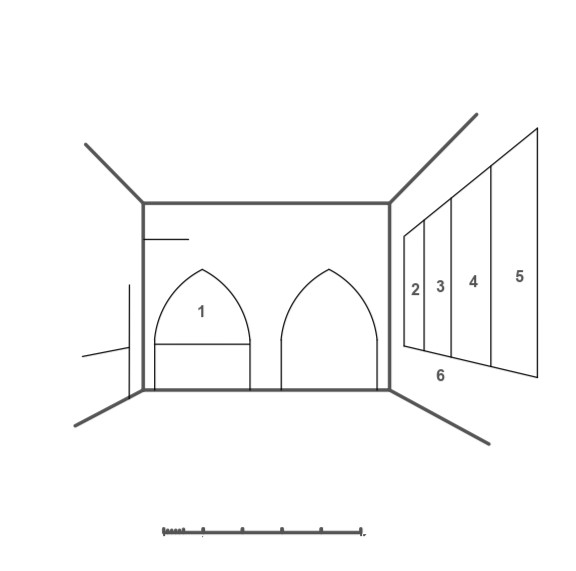
East wall: 1. Madonna and Child, St Lucy and St Apollonia. South wall: 2. Flagellation of Christ, 3. Crucifixion, 4. Deposition from the Cross, 5. Entombment, 6. Death as an Archer.
Scene locations
B. FUČIĆ, 1963., Istarske freske, Zagreb, 1963., 24, KAT. 14; ISTI, 1964a, Srednjovjekovno zidno slikarstvo u Istri, doktorska disertacija, Filozofski fakultet Sveučilišta u Ljubljani, Rijeka-Ljubljana, 1964., 218, KAT. 508-509; ISTI, 1990., Ročke freske i majstor Ivan iz Kastva, Buzetski zbornik, 15, Buzet, 1990, 33-38; D. VLAHOV, 2003., O jednom glagoljskom grafitu u crkvici sv. Roka u Roču, u: Buzetski zbornik, 29, Buzet, 2003, 75-78; Ž. BISTROVIĆ, 2007., Gotičko zidno slikarstvo u Istri (novi prilozi jednoj budućoj sintezi), Annales. Series Historia et Sociologia, 17/2, 2007, 277-290., 285; ISTI, 2011., Šareni trag istarskih fresaka, Pula, 2011., 53-55.