


Dvigrad, Church of St Mary of Lakuć
Century/year: last quarter of the 15th century
Historical-cultural period: Gothic style
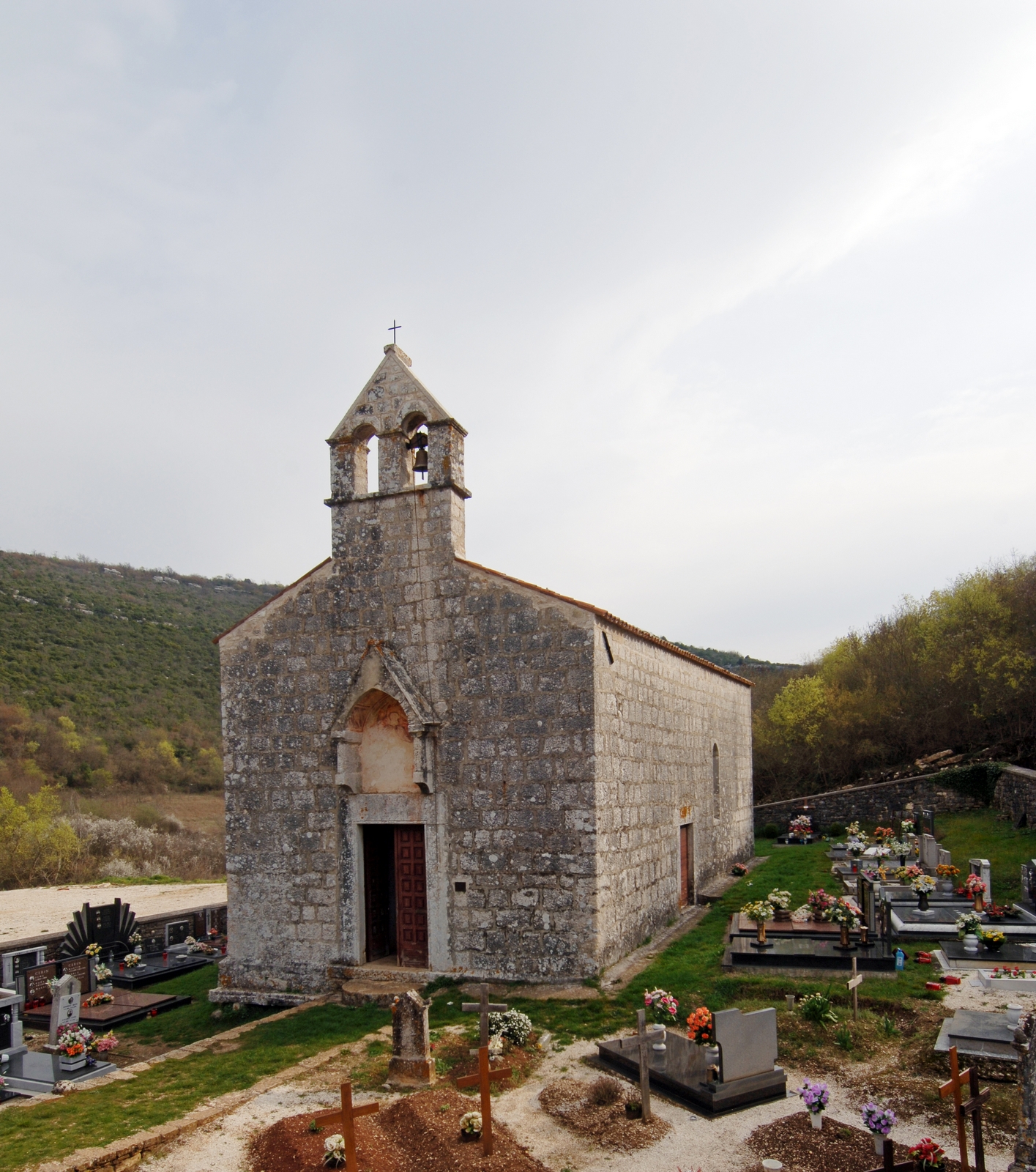
The church of St Mary of Lakuć is situated within the present-day cemetery of Dvigrad, at the foot of the fortified settlement. It is a single-nave structure of rectangular ground plan with an inscribed semicircular apse. The façade is articulated by an entrance portal surmounted by a stone baldachin and a bell-gable. Within the niche of the baldachin is a fresco depicting the Virgin Protectress, crowned by two angels.
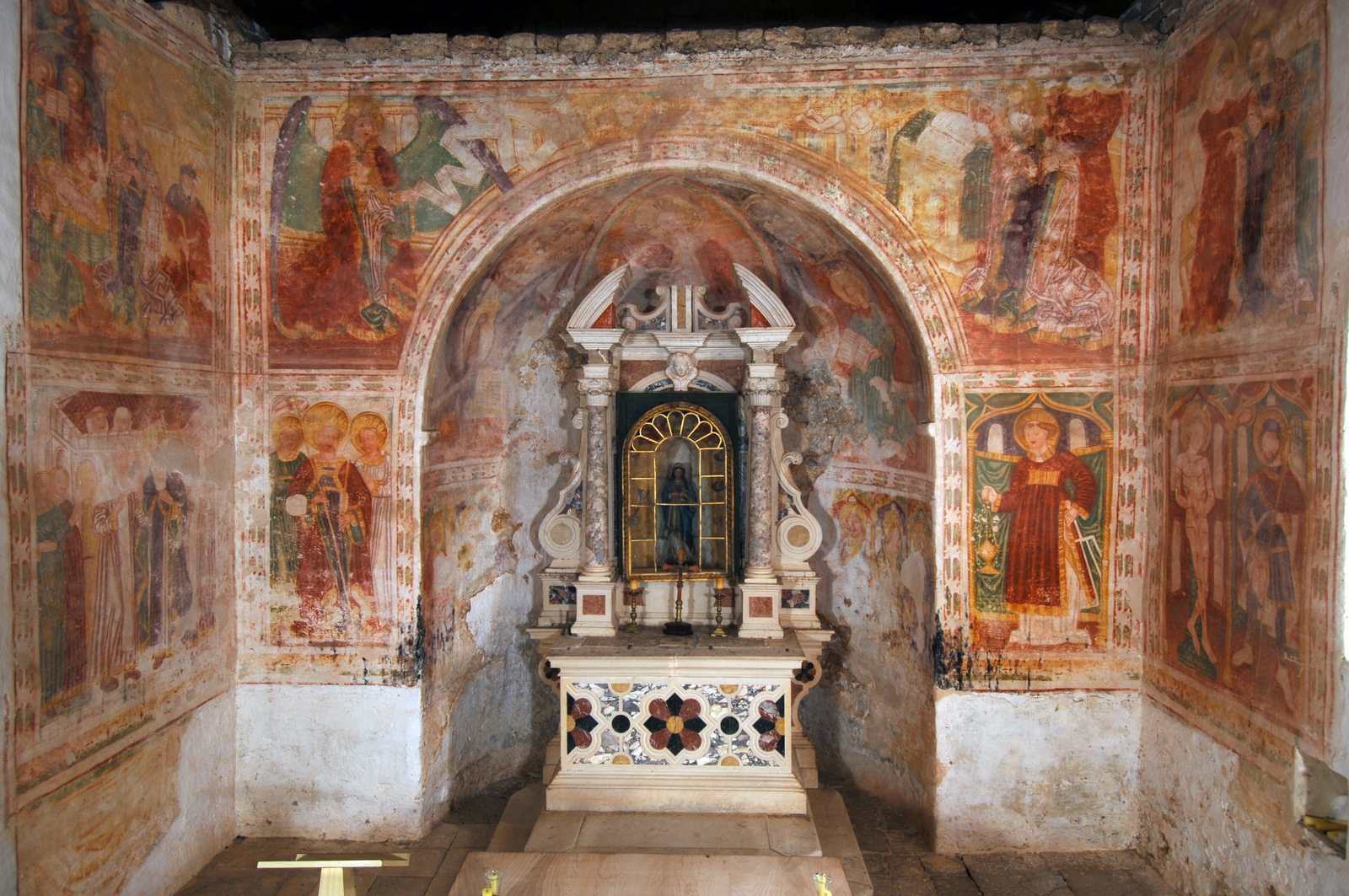
In the sanctuary, behind the balustraded communion rail, wall paintings from the last quarter of the fifteenth century have been preserved. They are attributed to an anonymous master emerging from the workshop of the Master of the Lovran Martyrdom of St George, and in earlier scholarship were associated with the activity of the so-called “Colourful Master.”
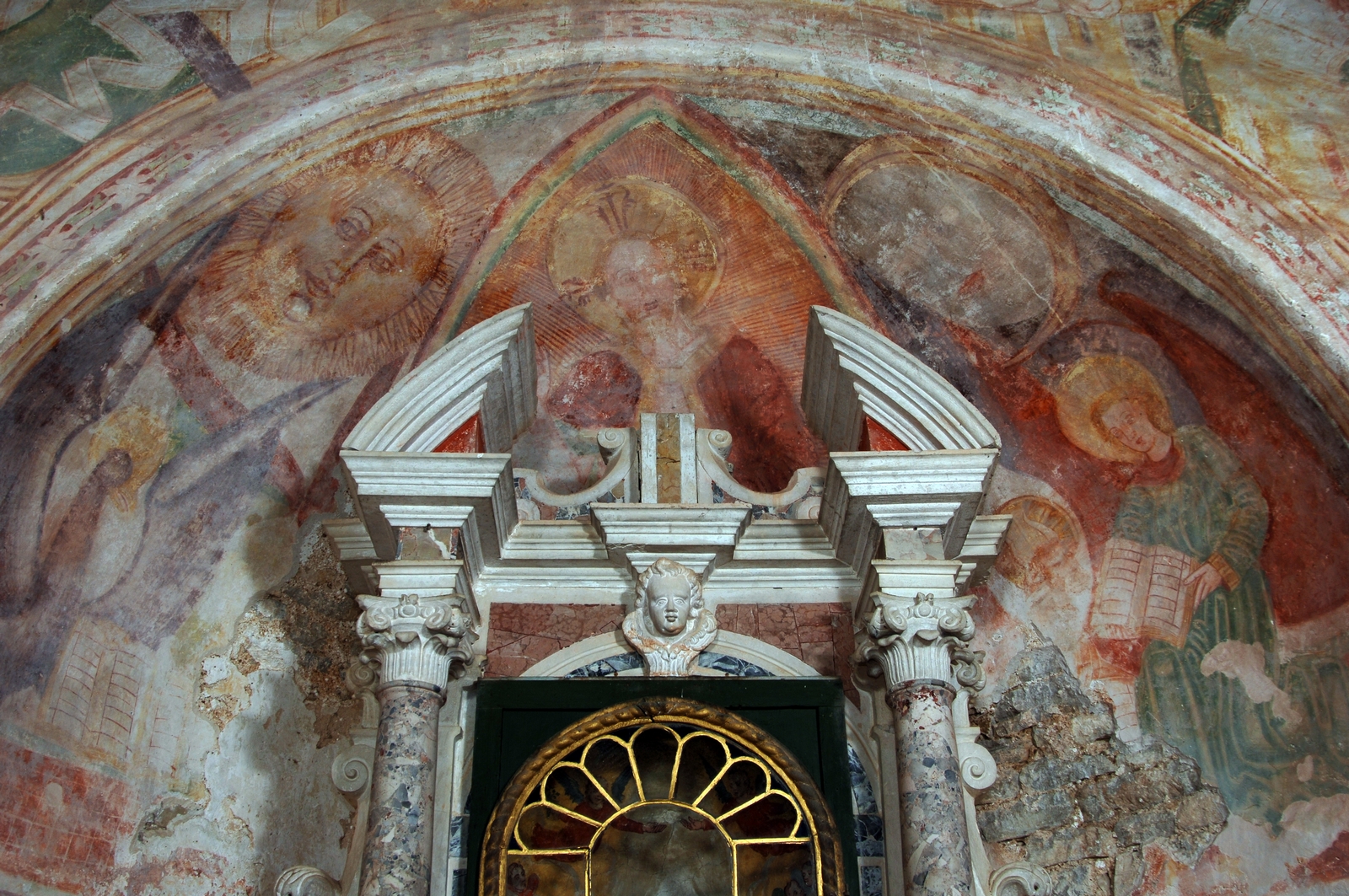
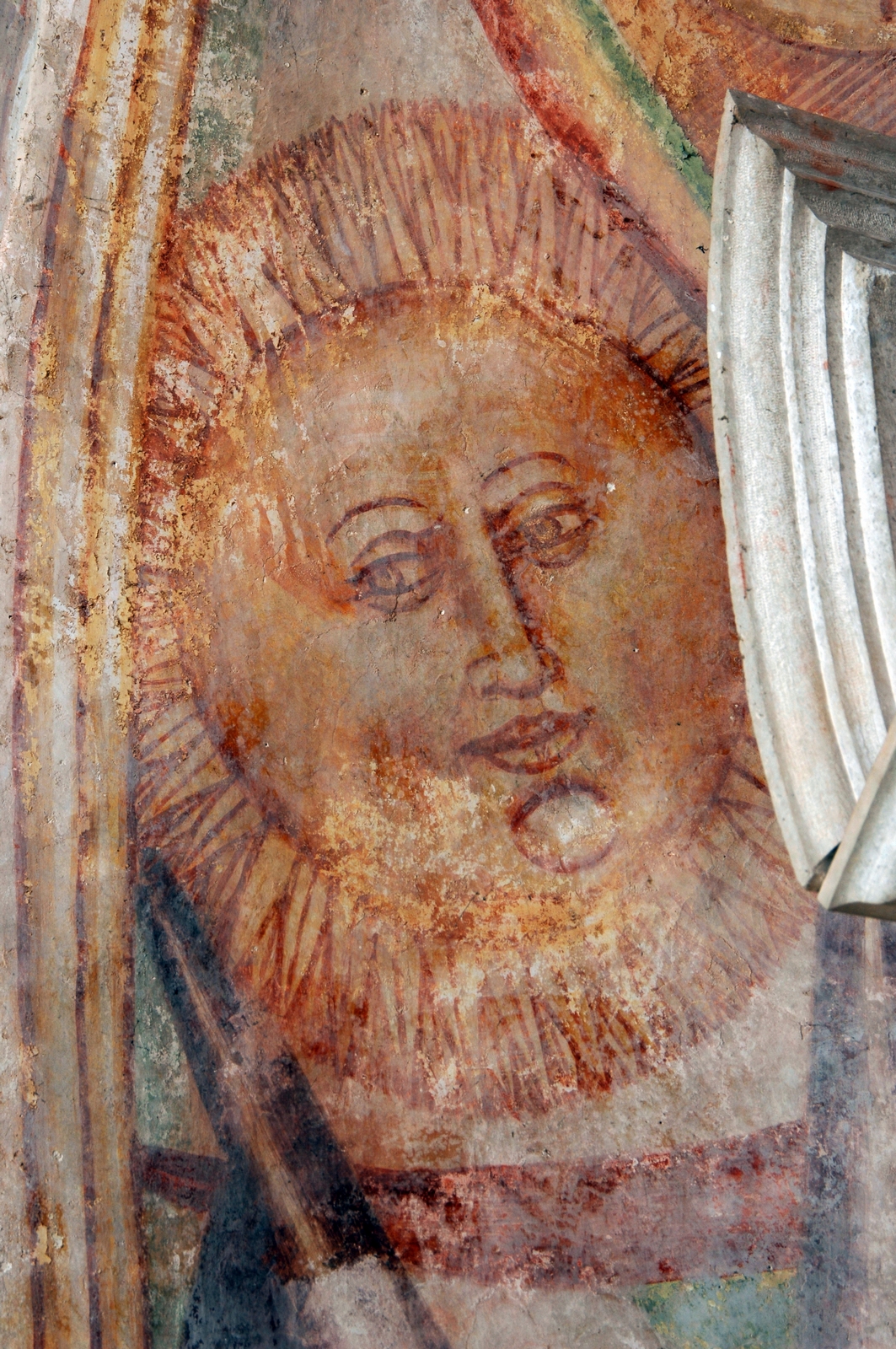
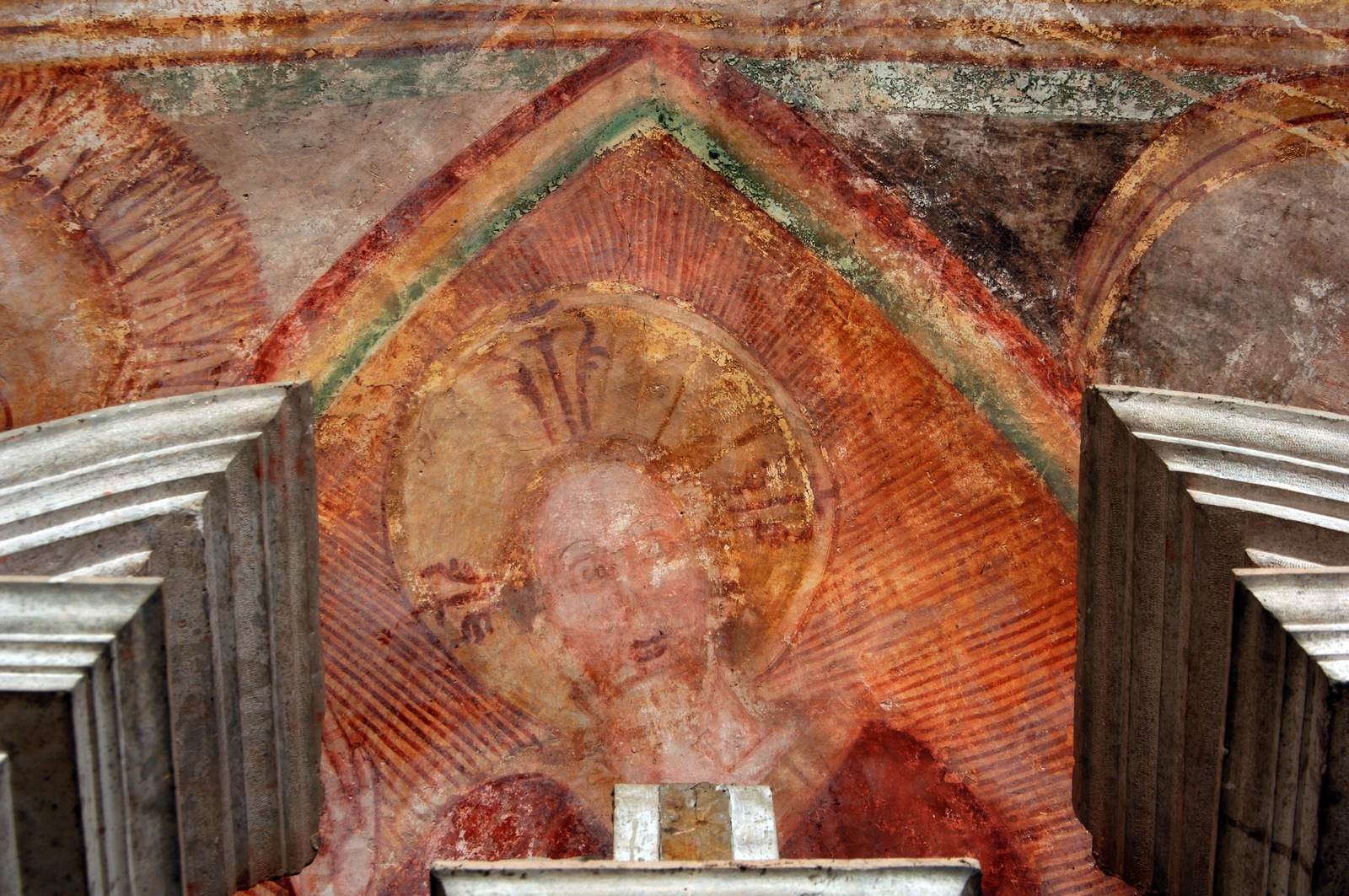
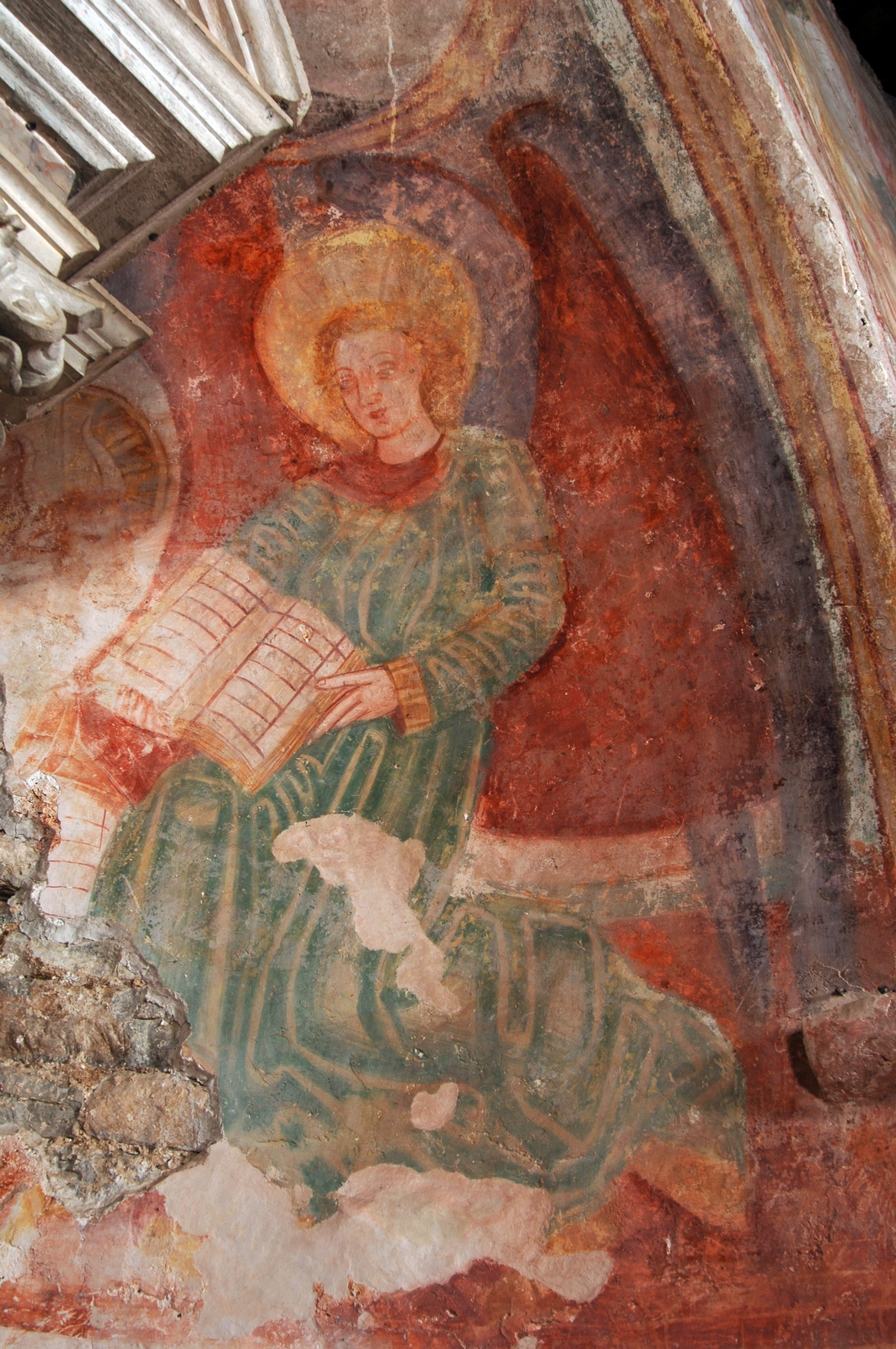
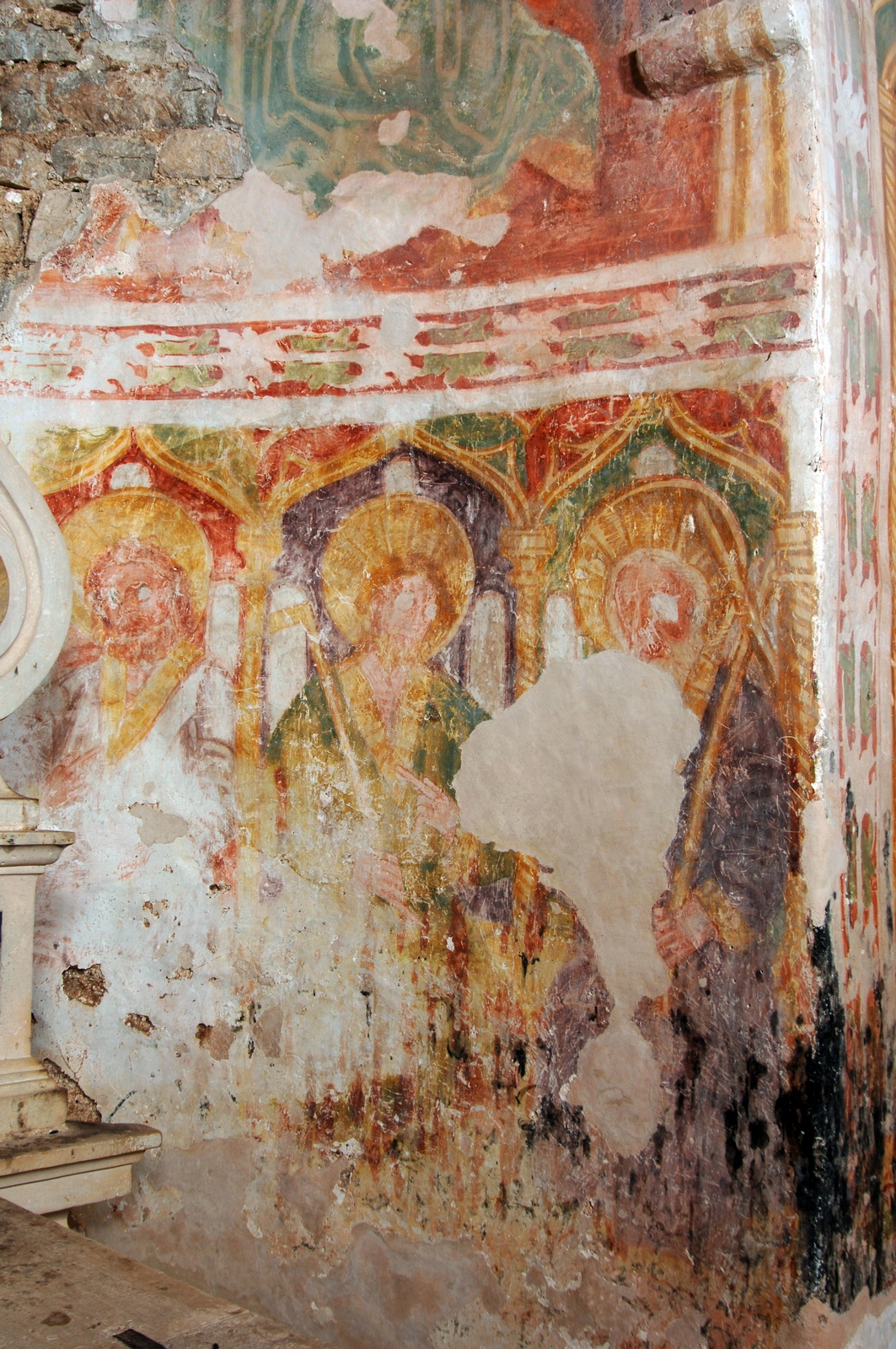
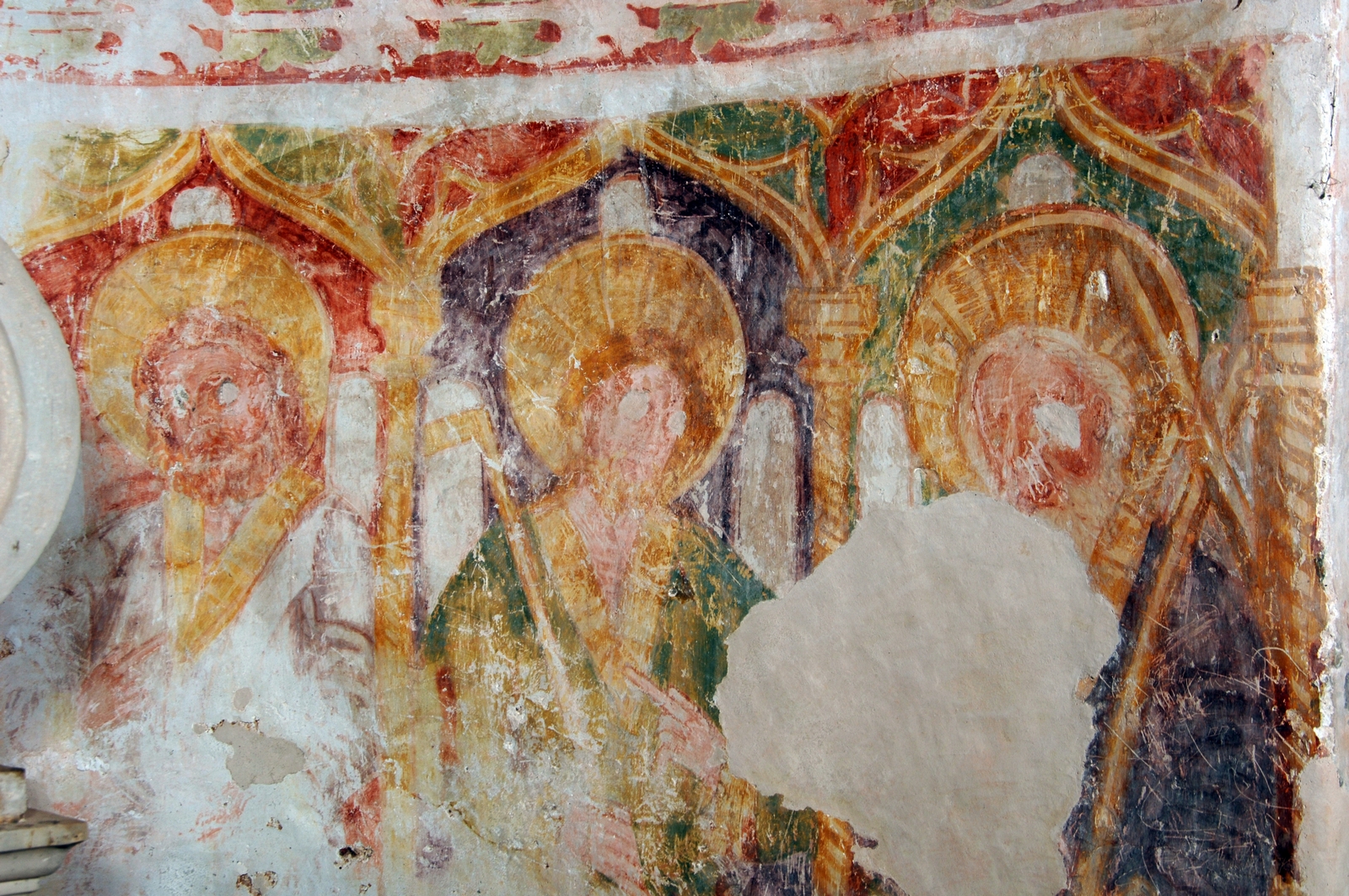
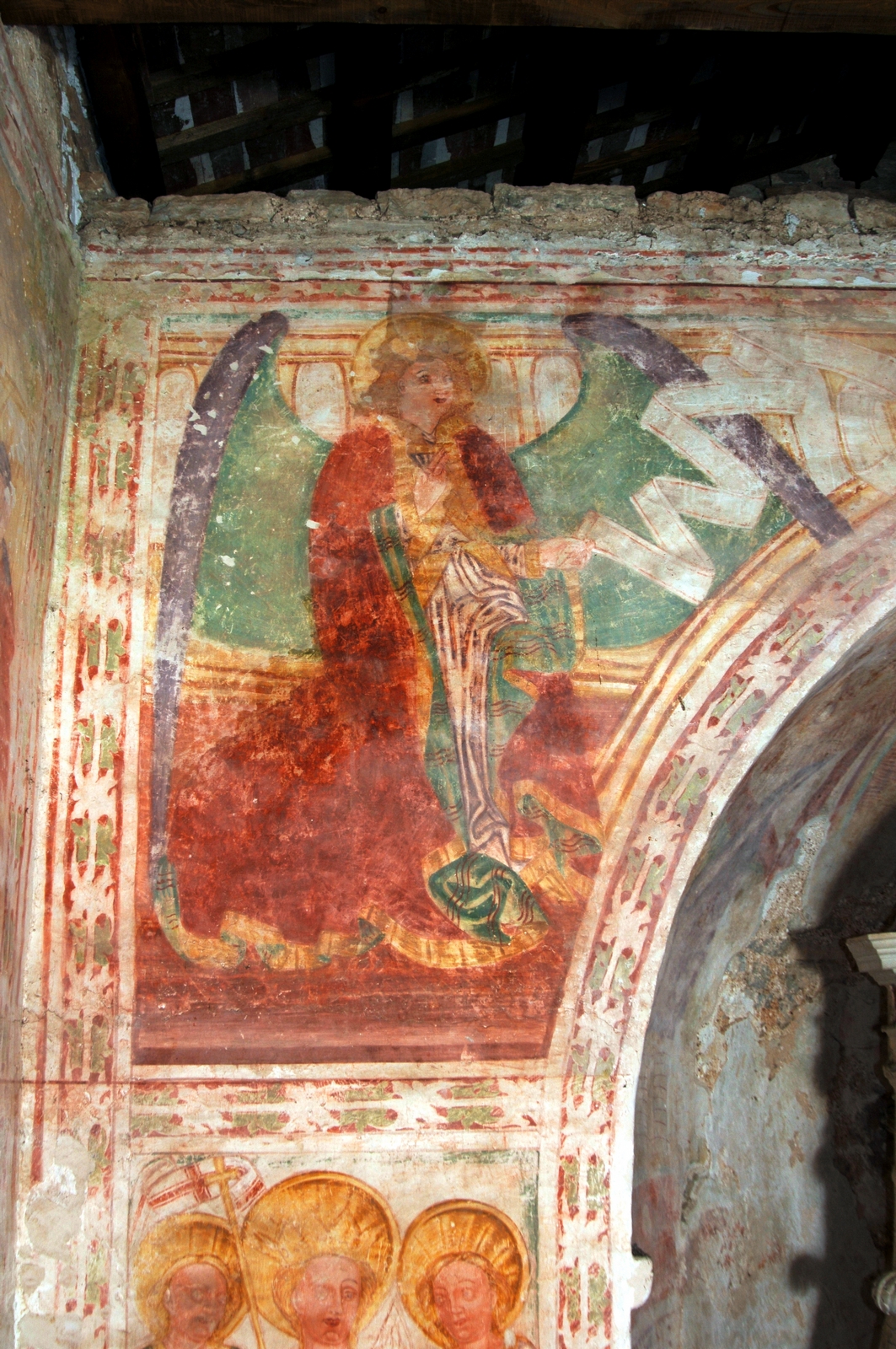
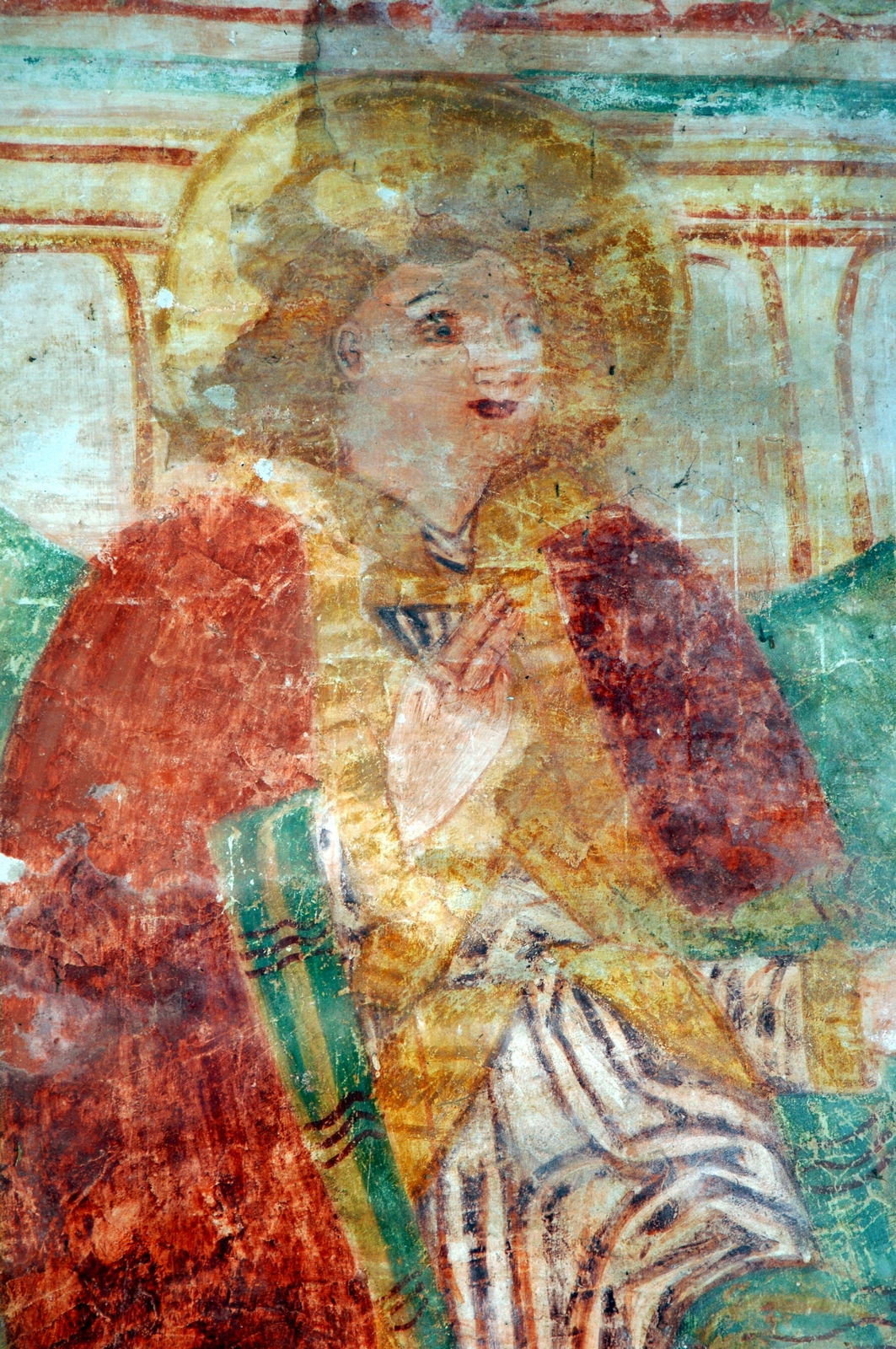
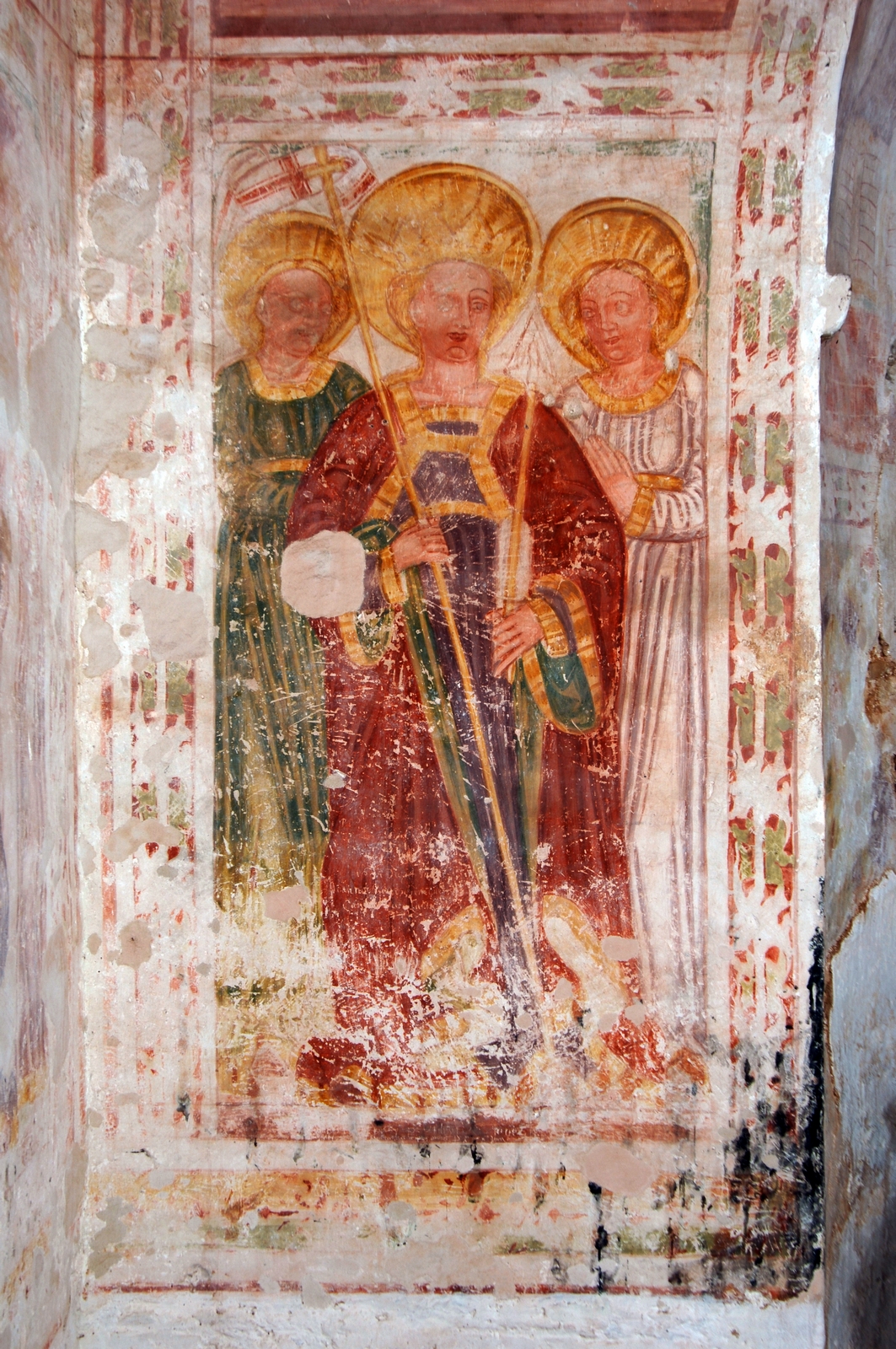
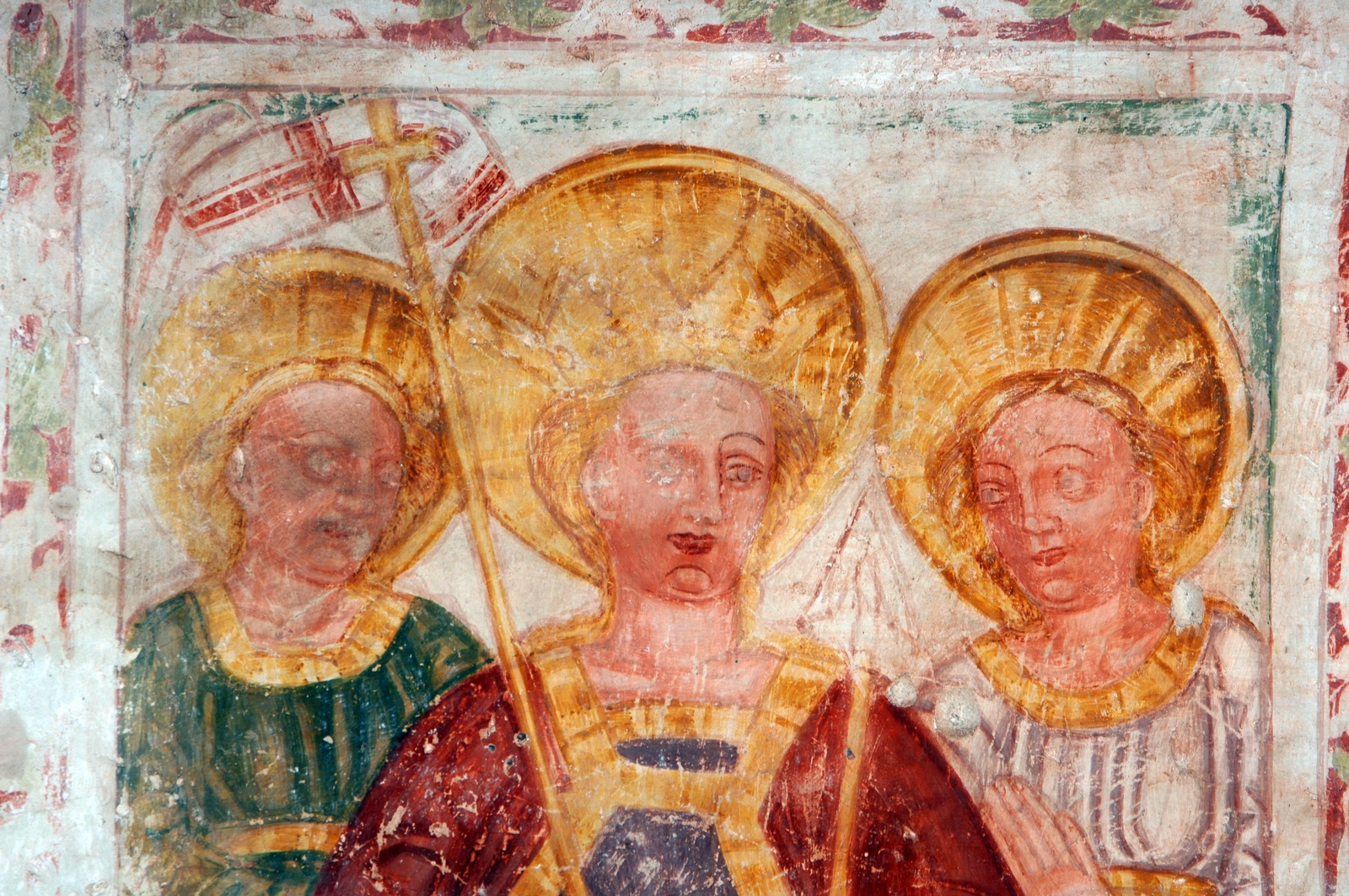
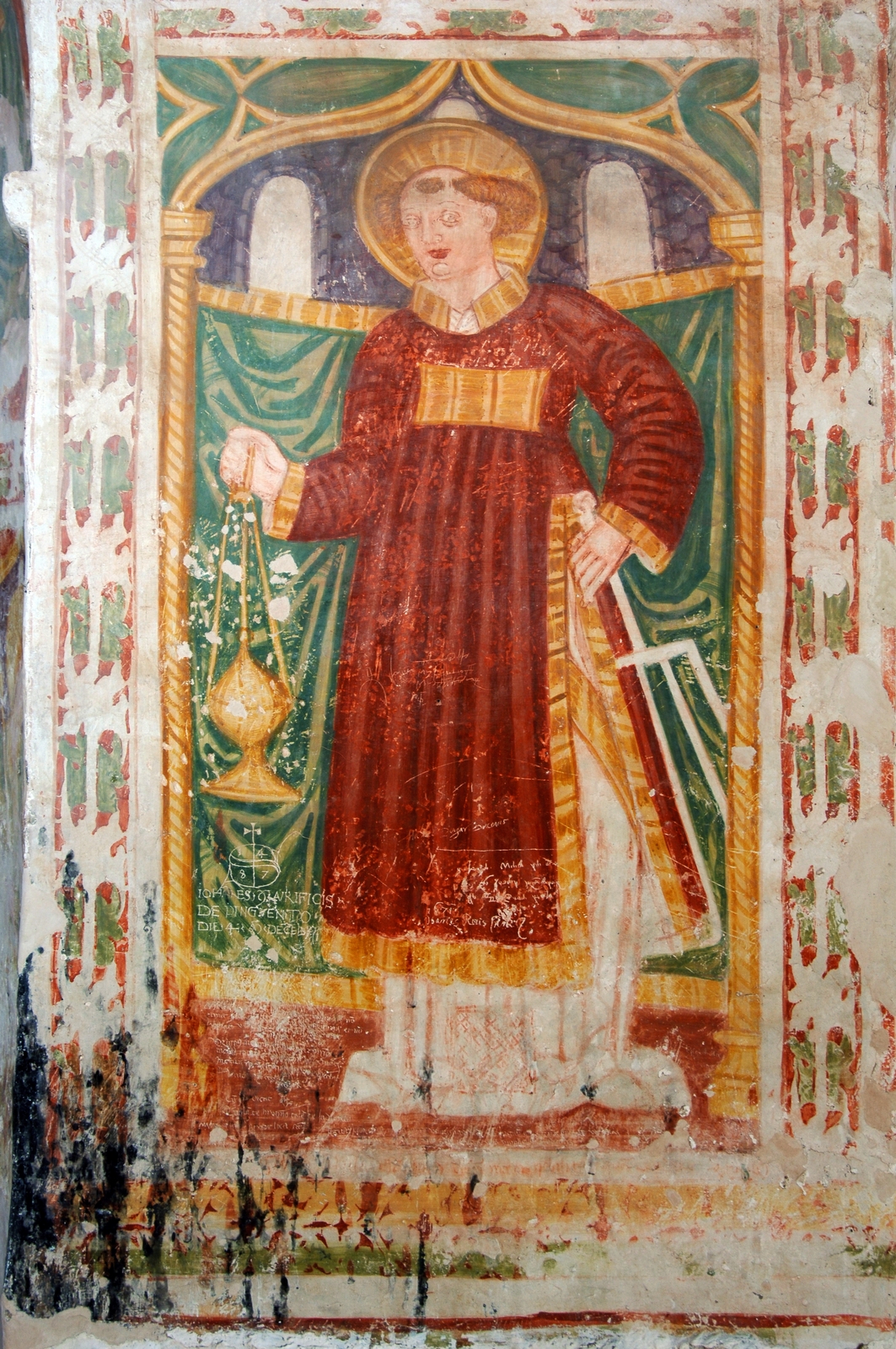
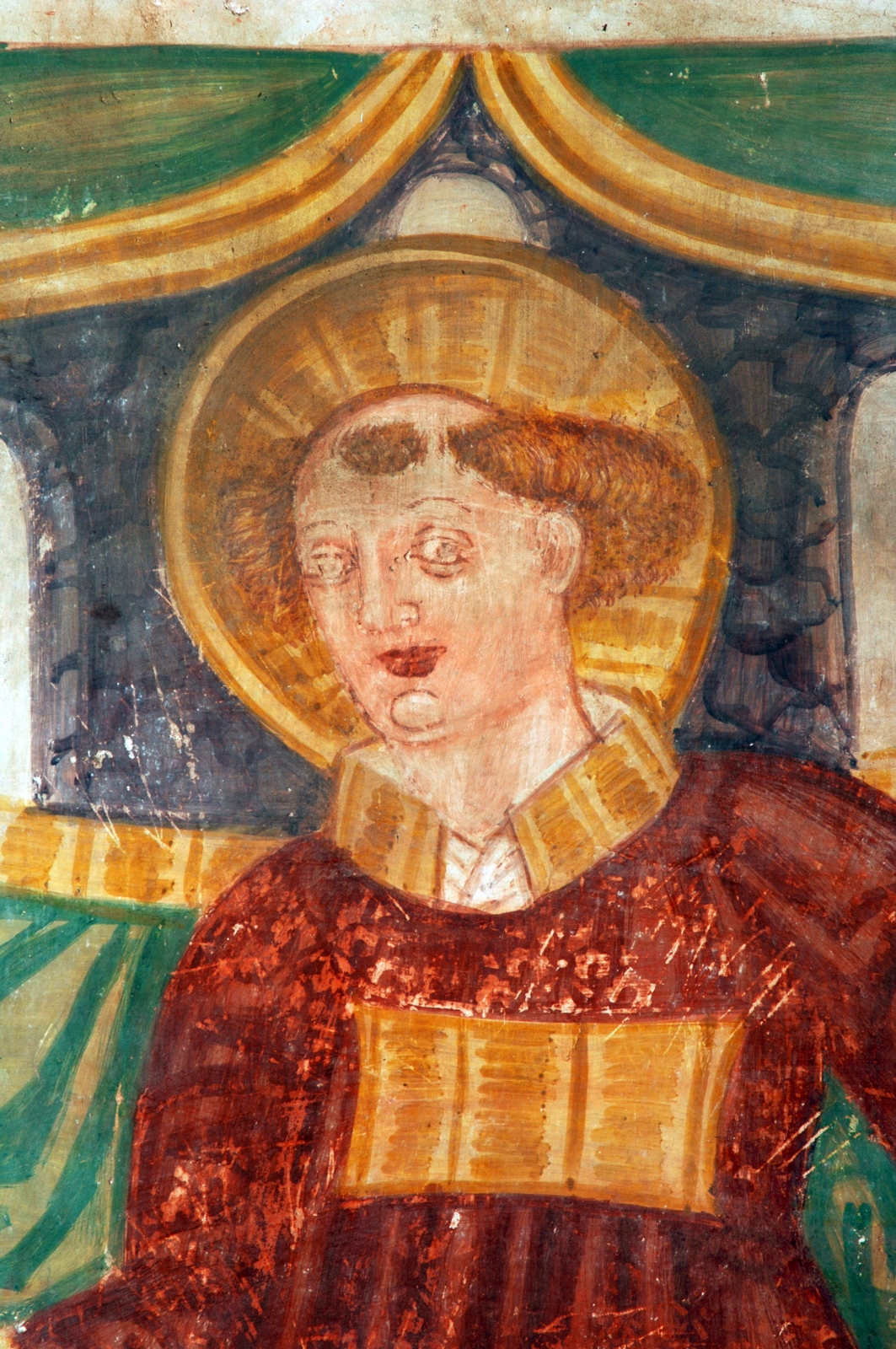
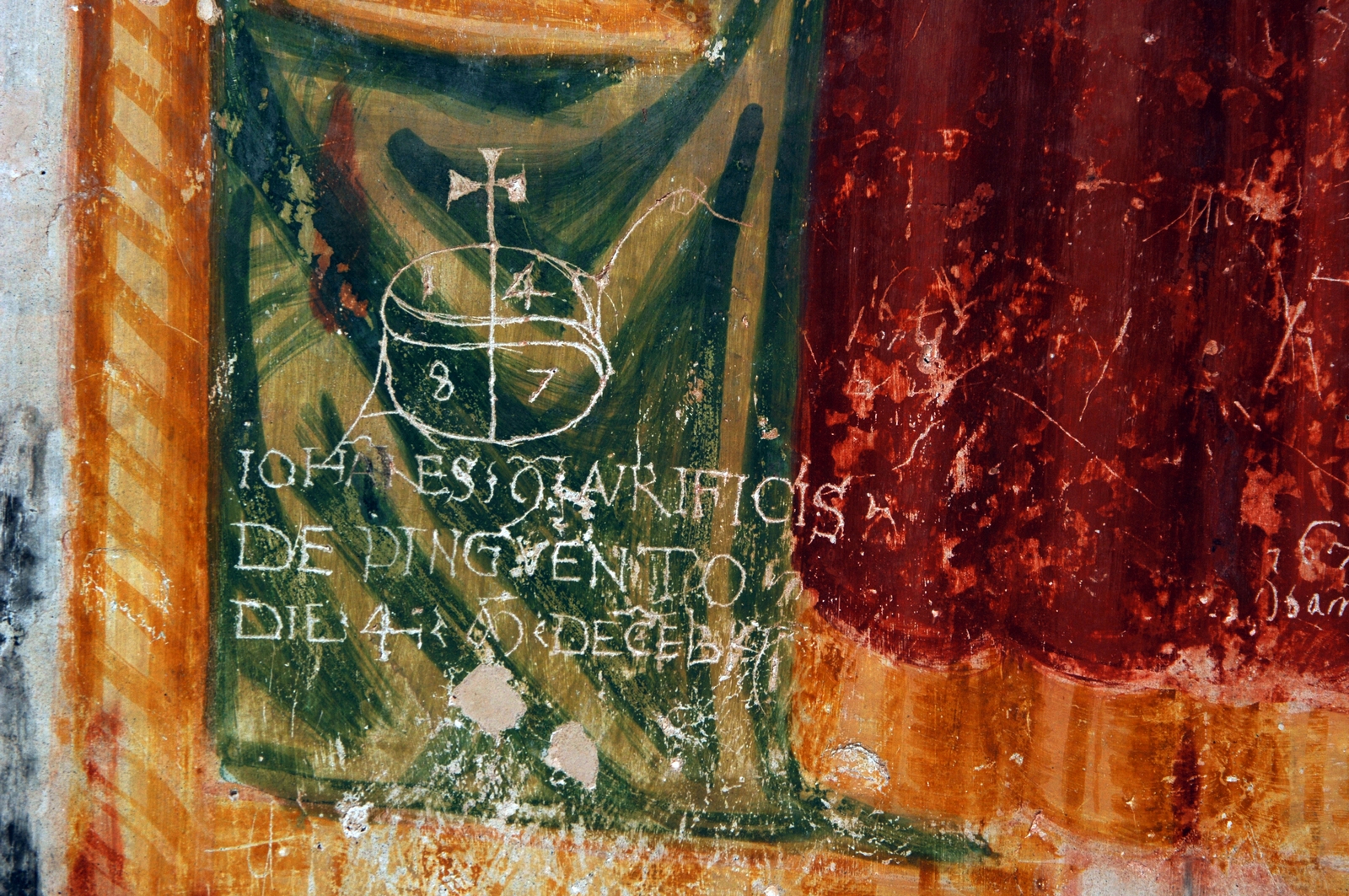
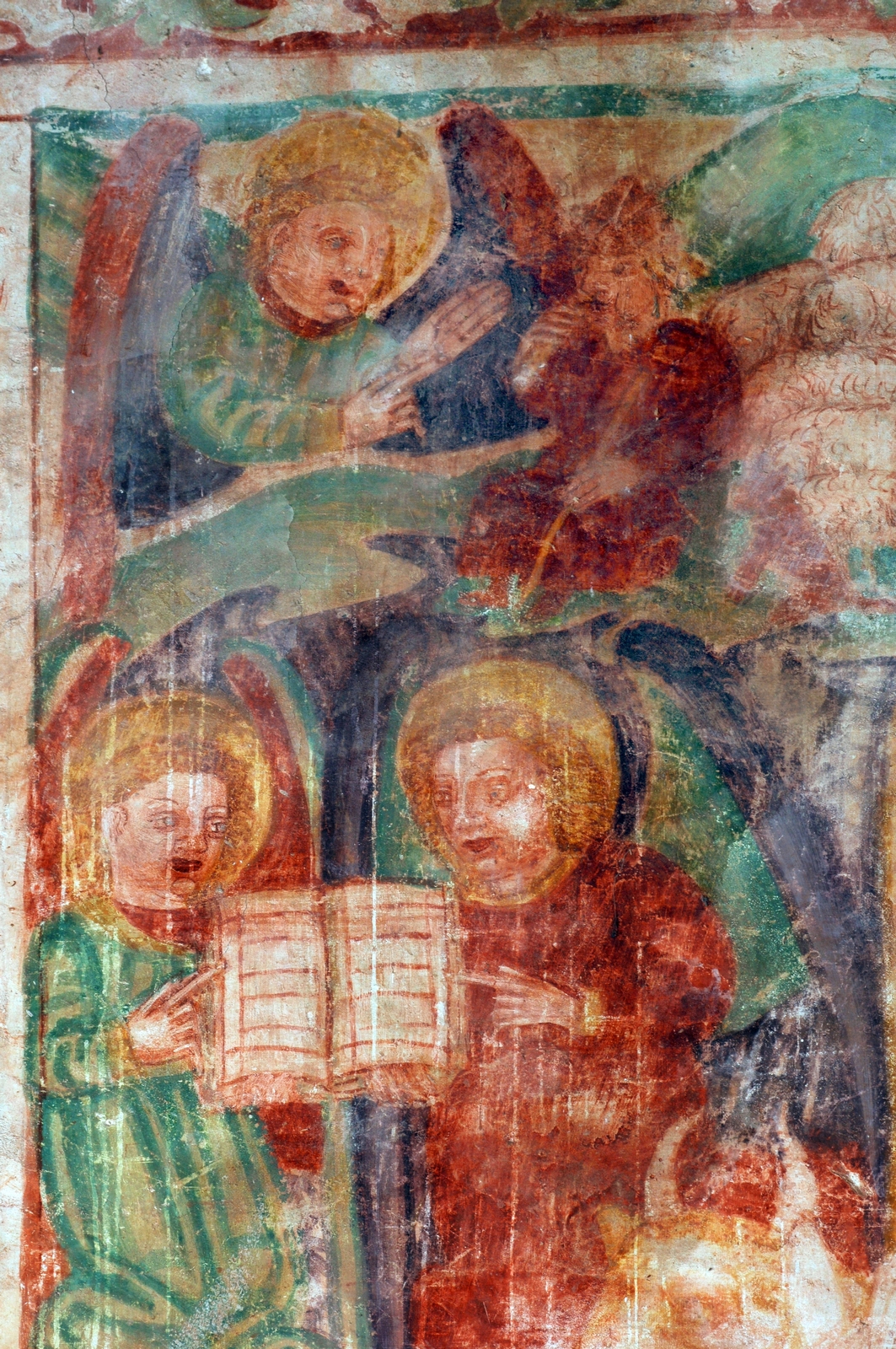
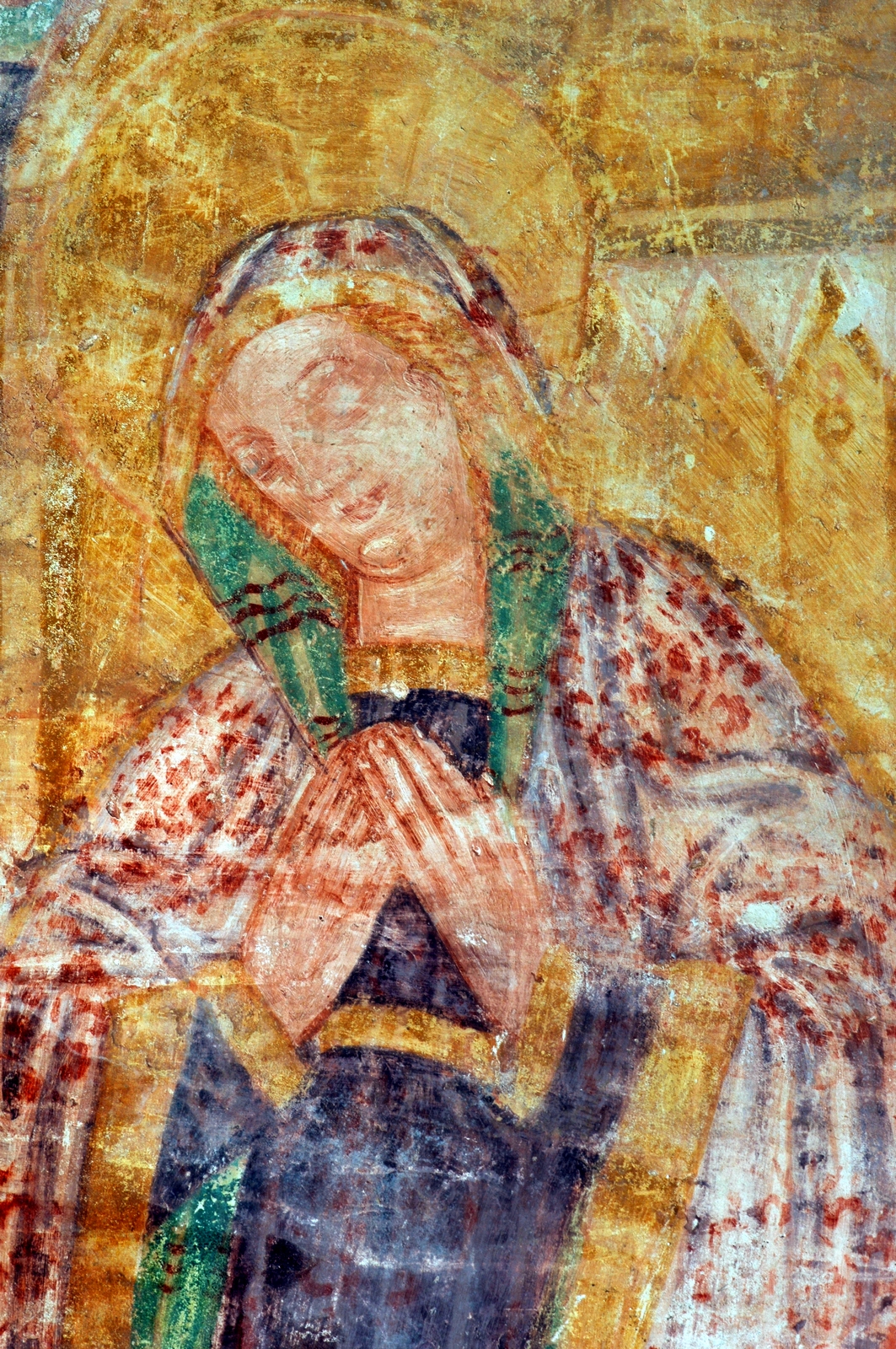
The conch of the apse presents Christ Enthroned within a mandorla, flanked by anthropomorphic representations of the Sun and the Moon, as well as the symbols of the Four Evangelists. The lower zone is filled with figures of the Twelve Apostles set within arcades. The decoration of the triumphal arch, together with the scenes on the lateral walls, is organised into two registers. The upper register of the triumphal arch contains the Annunciation, while below it are depicted St Ursula with two female saints on the left and St Lawrence on the right.
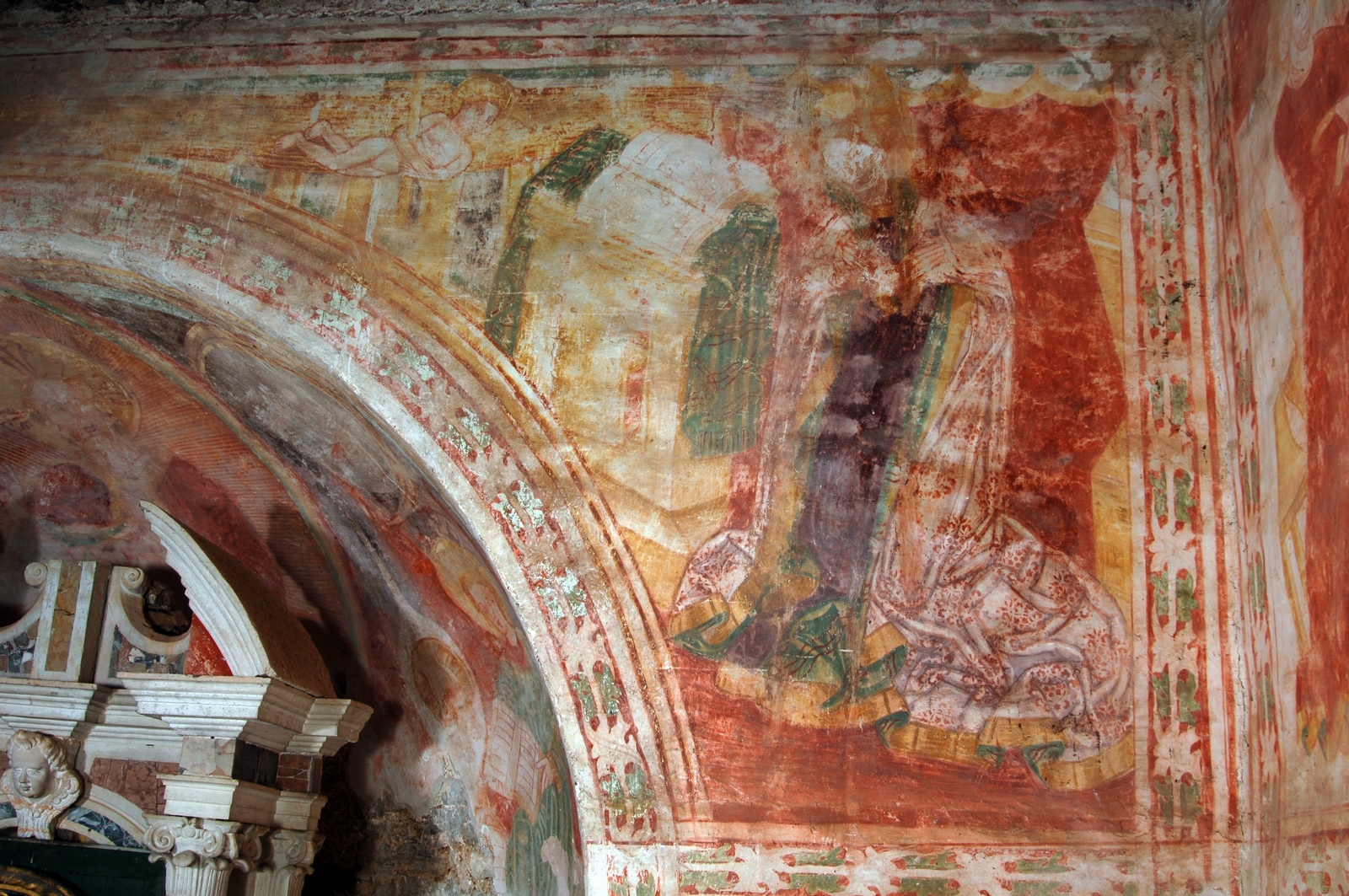
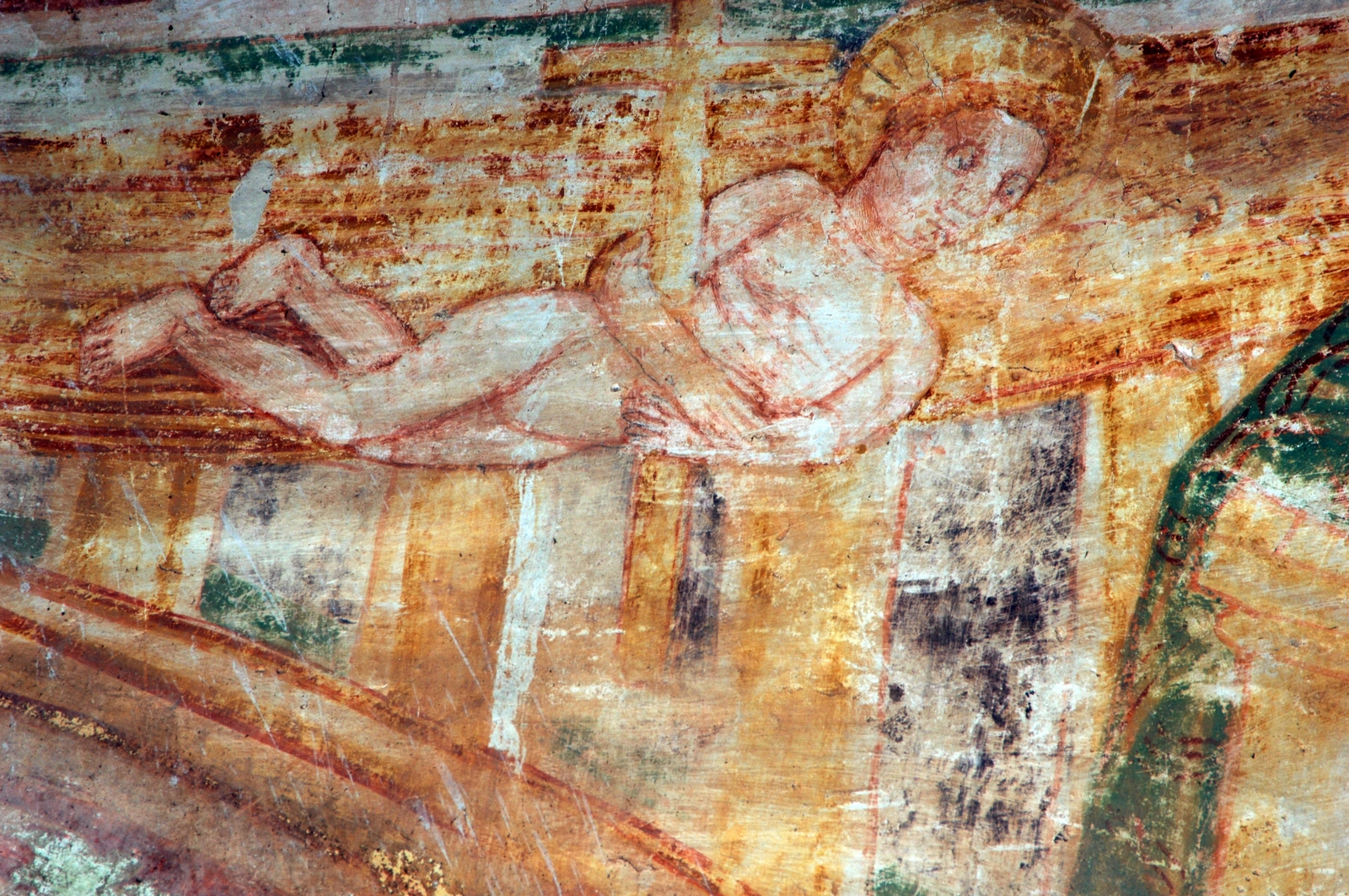
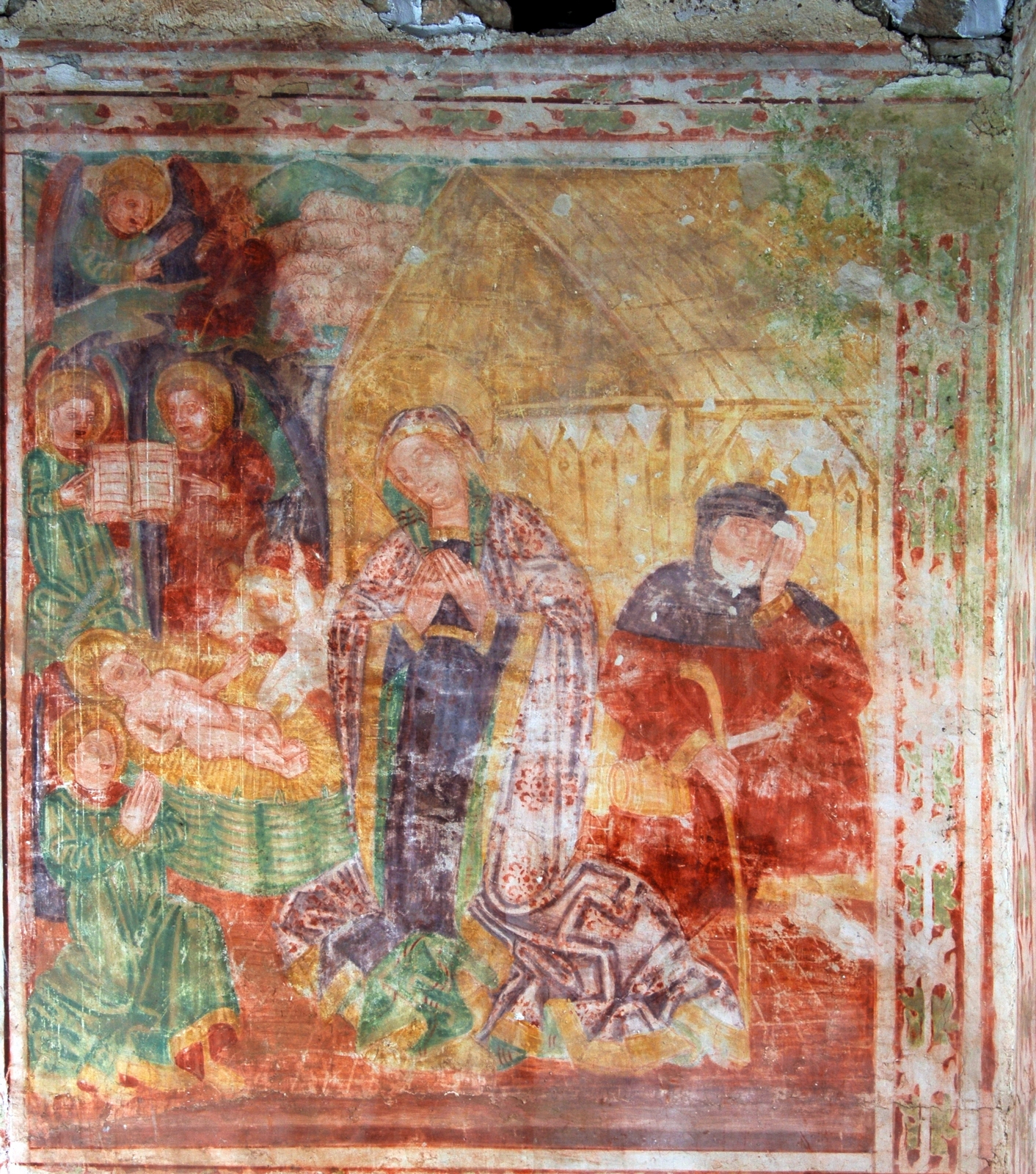
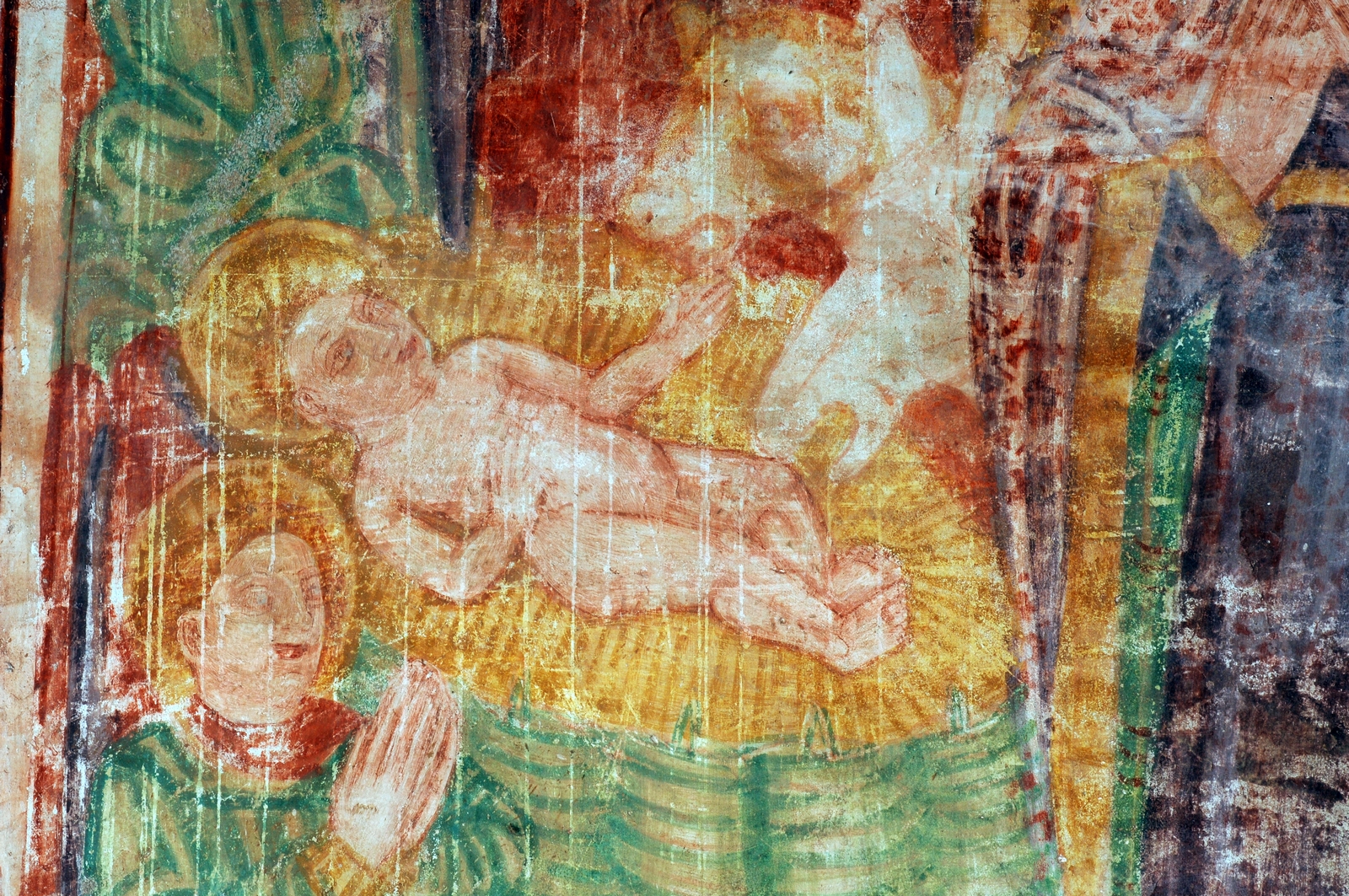
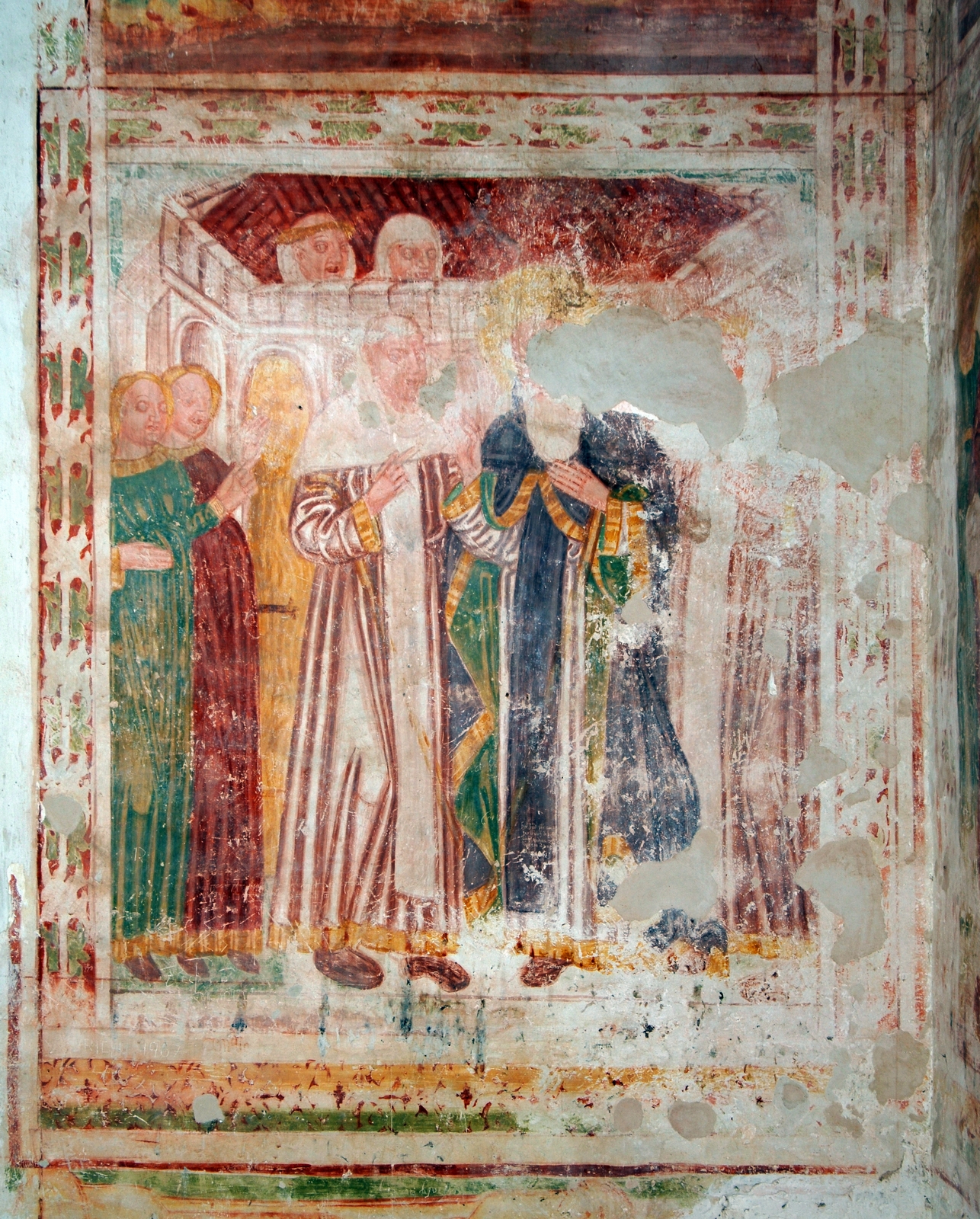
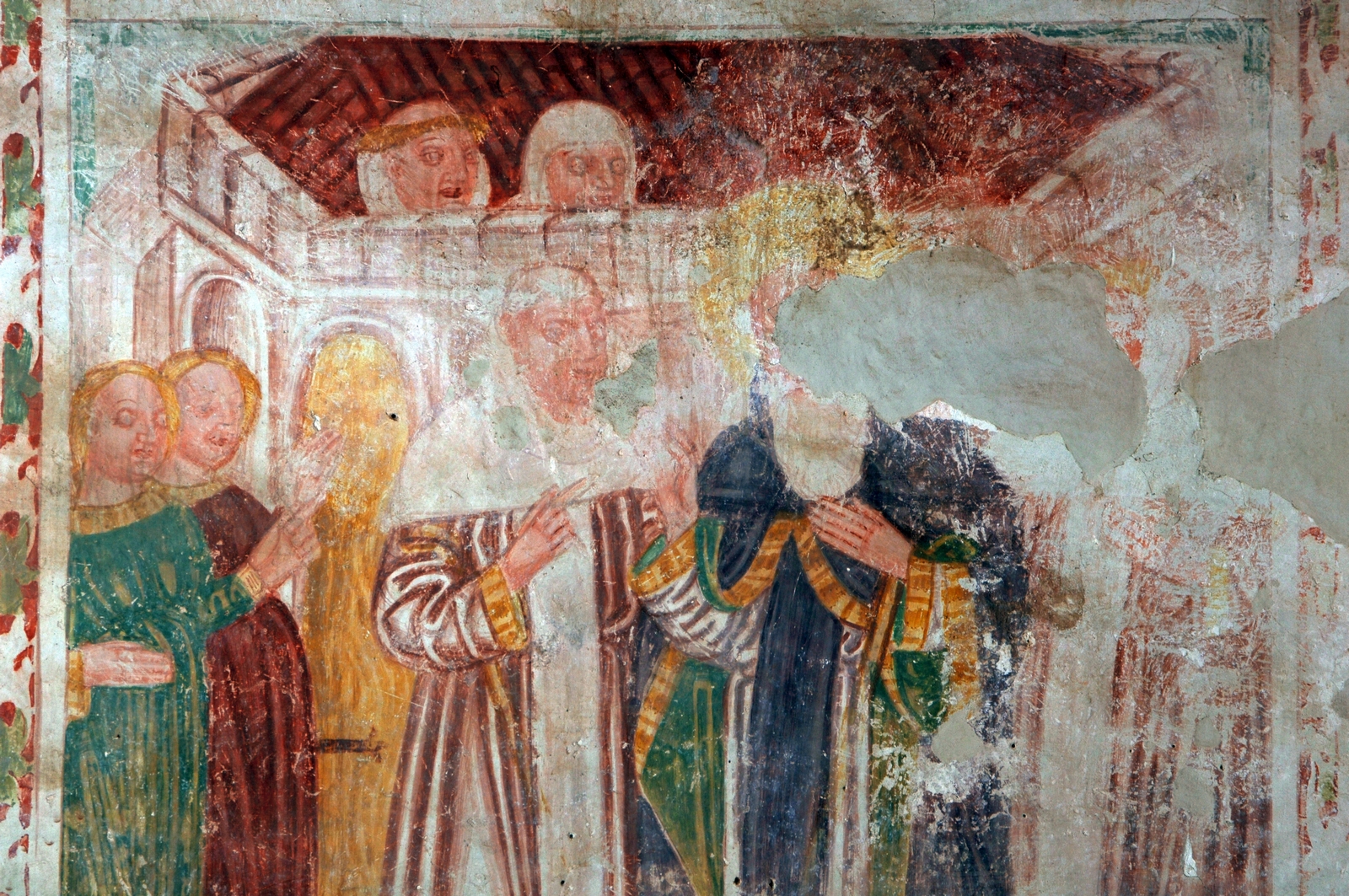
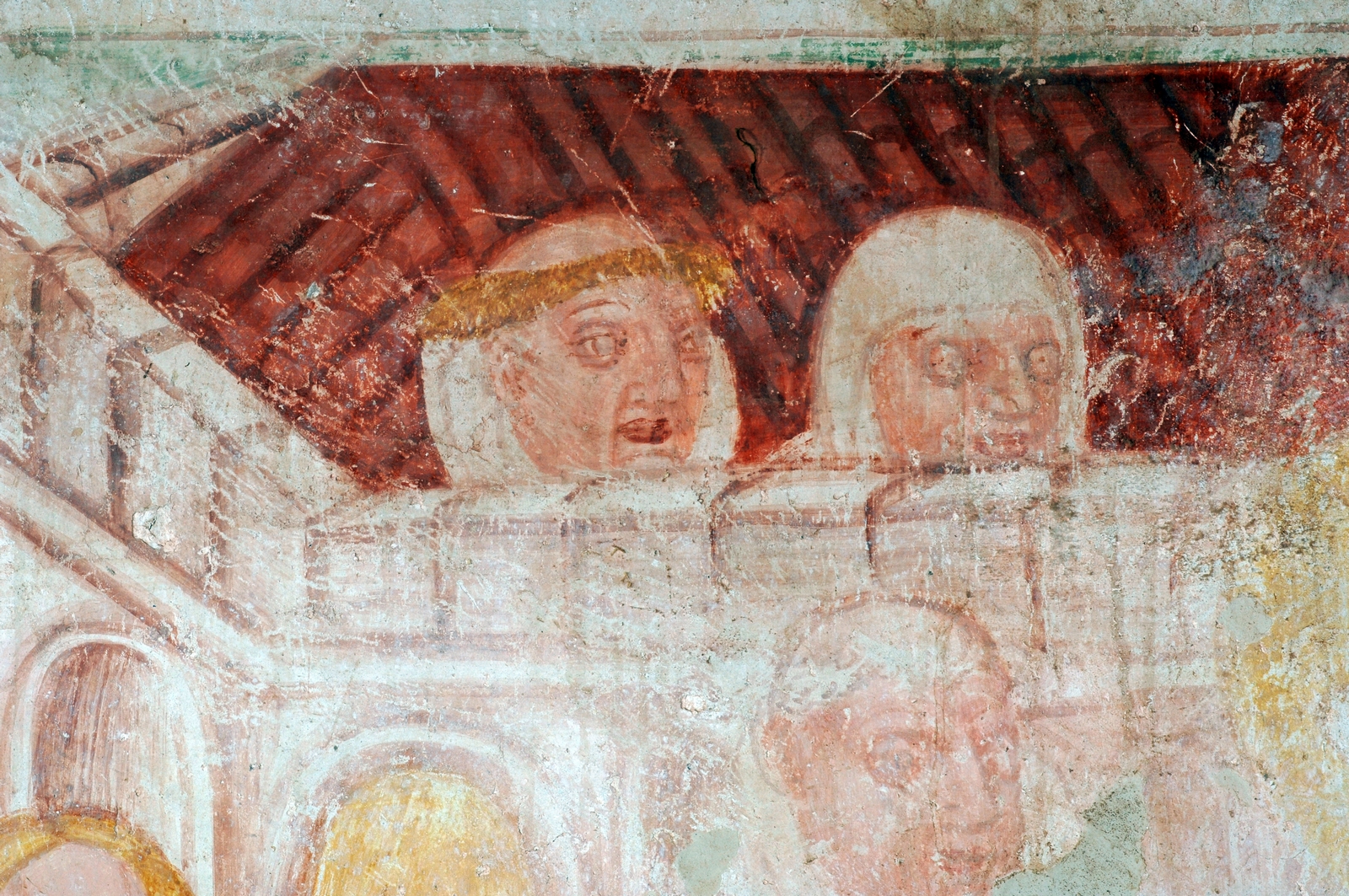
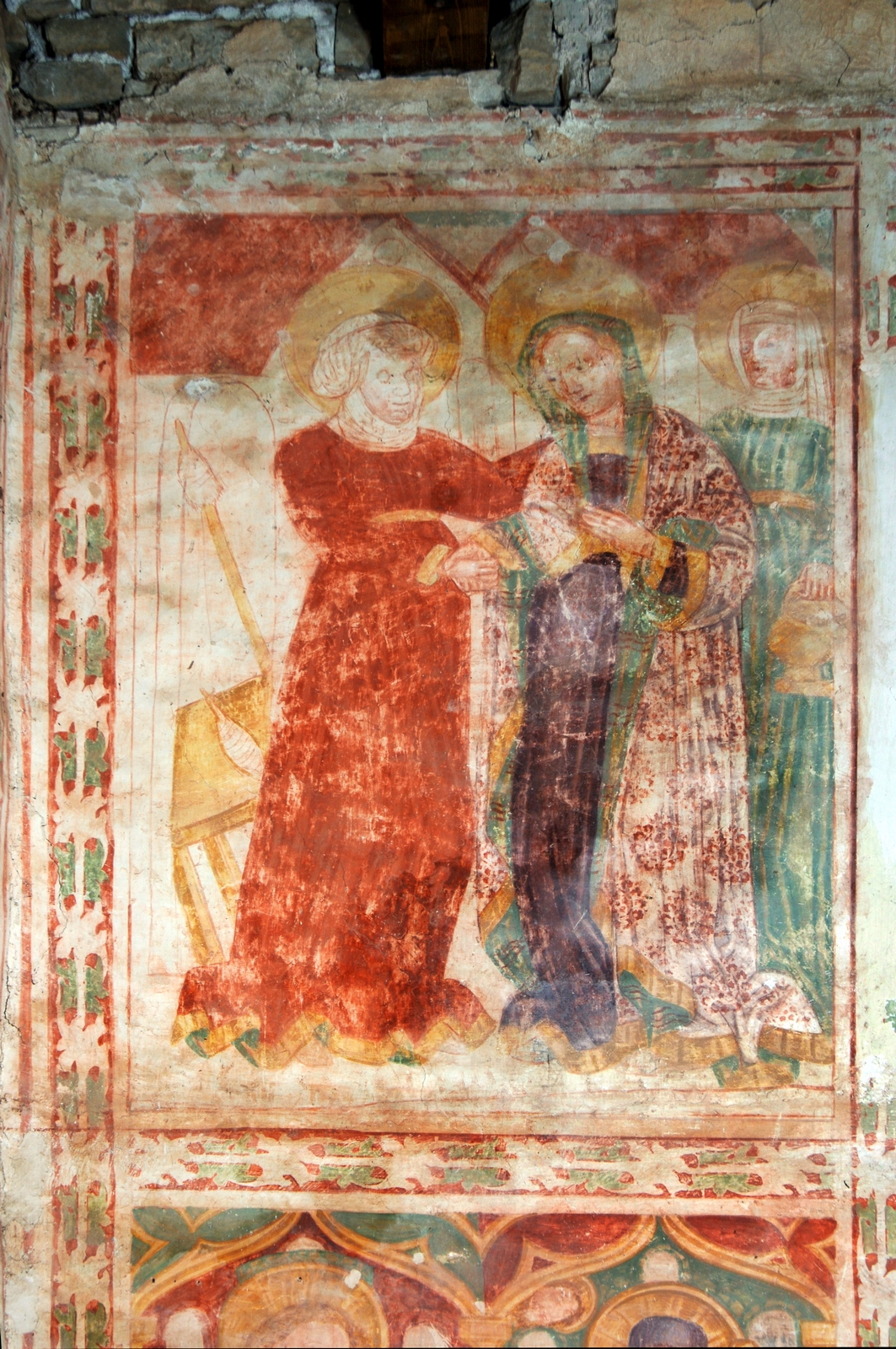
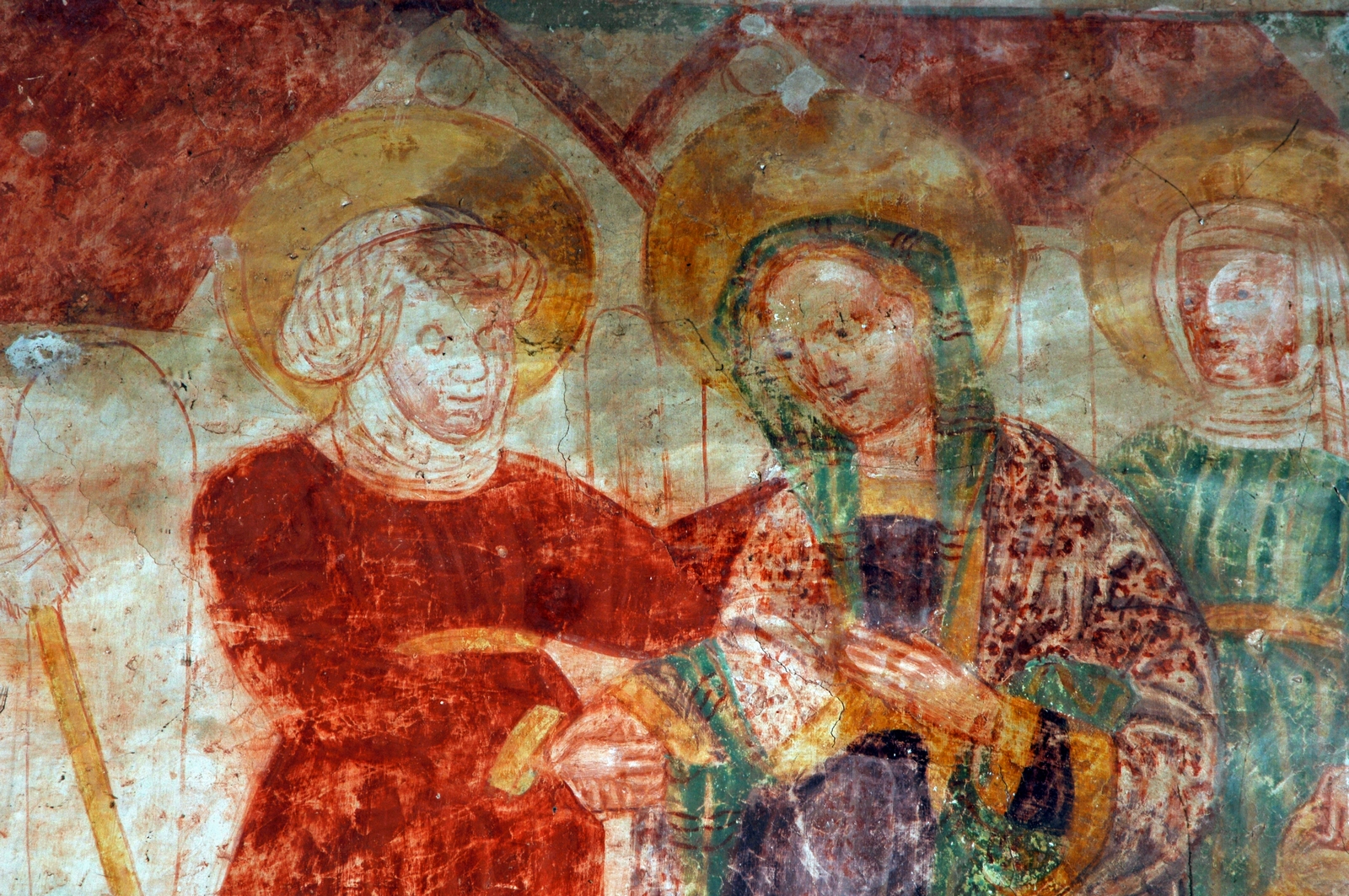
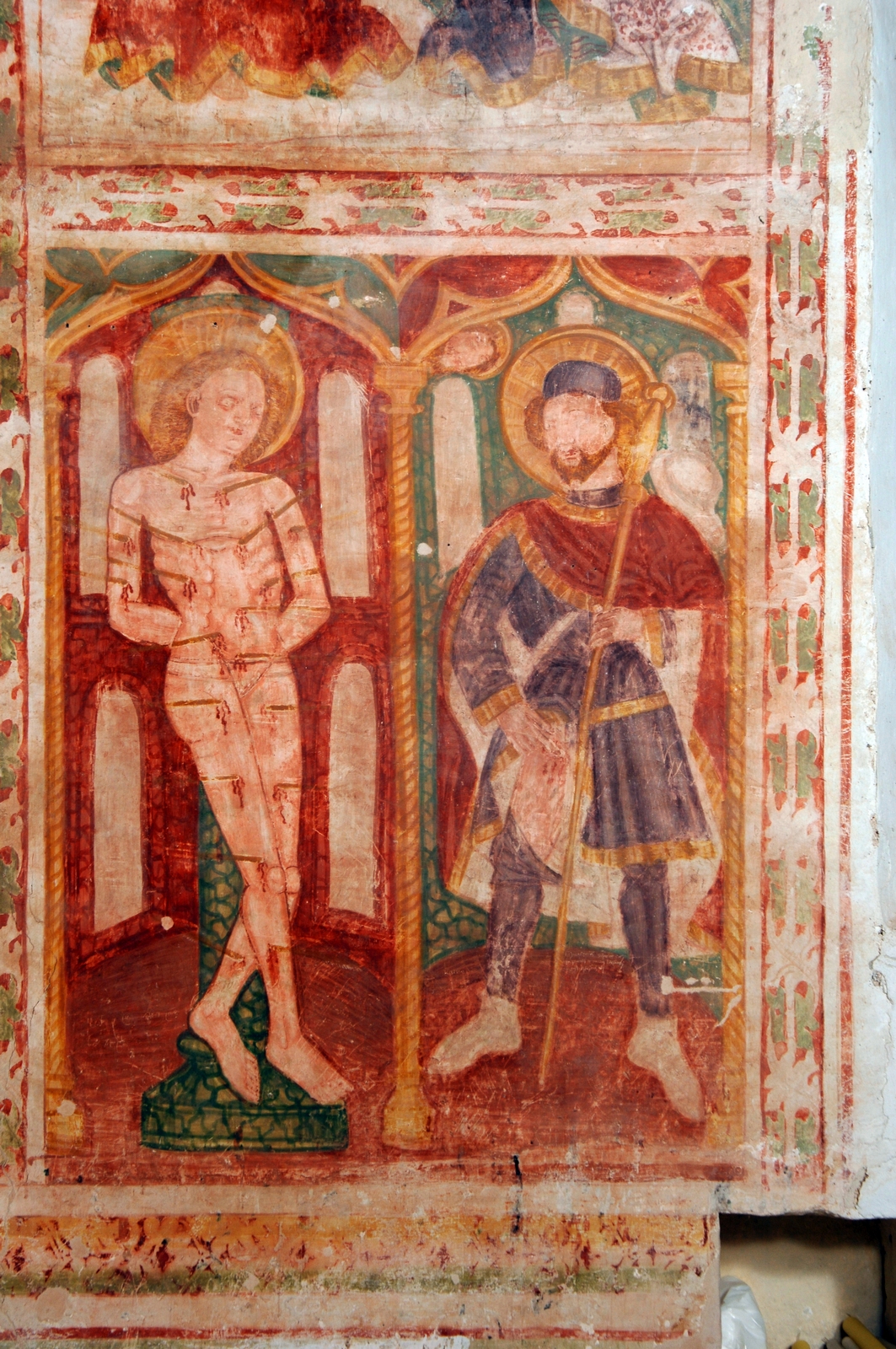
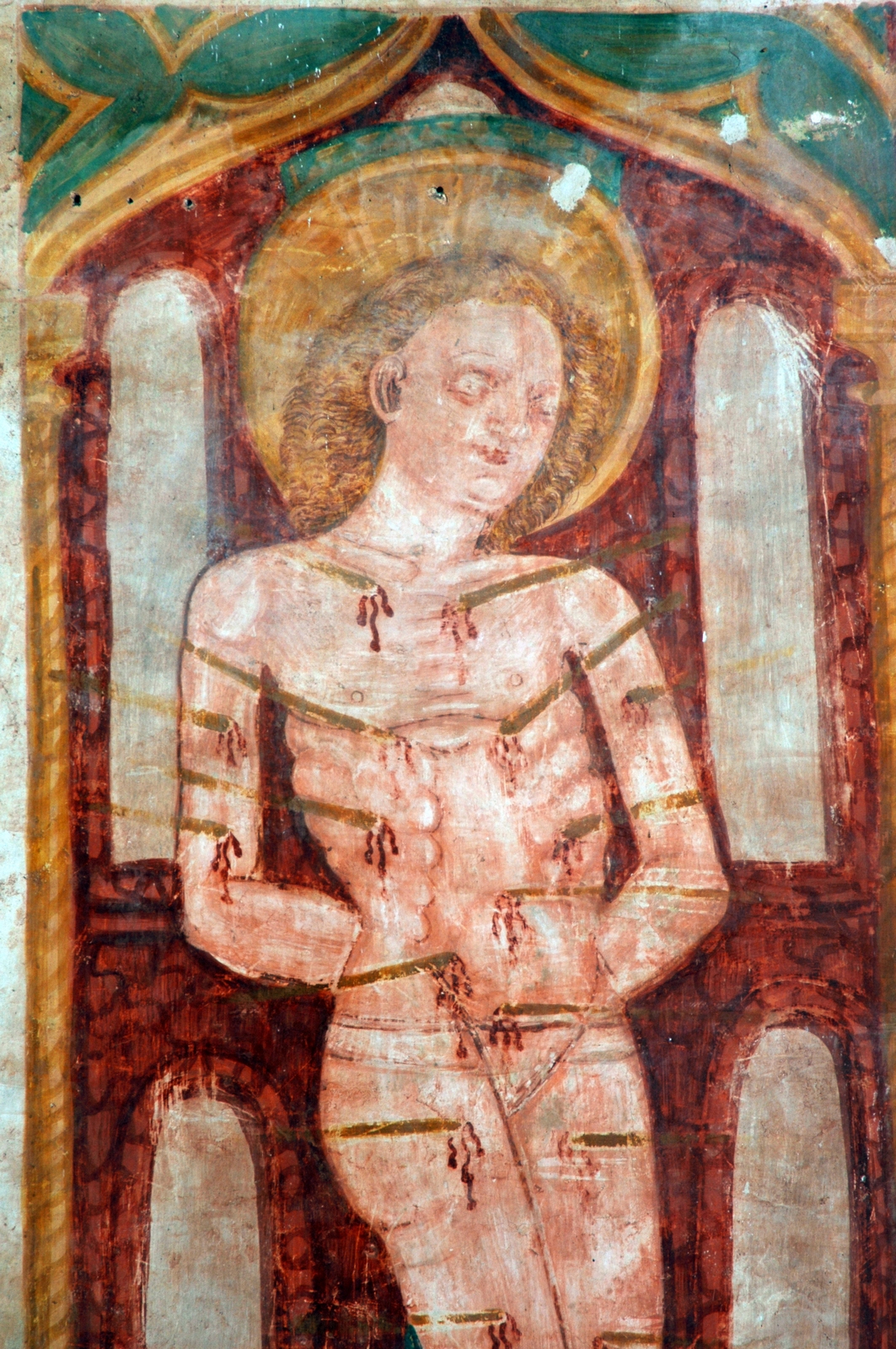
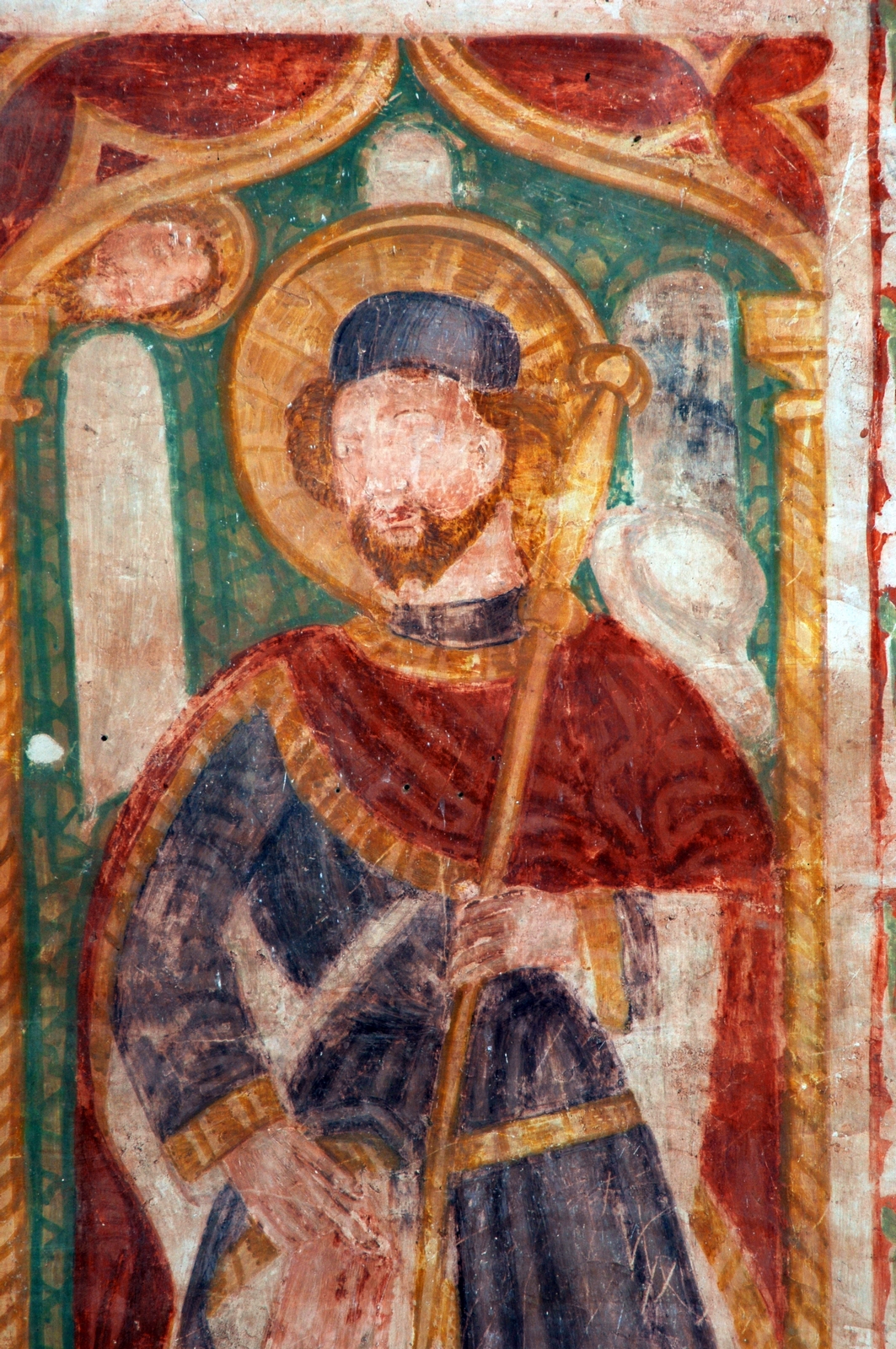
On the southern wall, the upper zone contains the Nativity of Christ, while the lower register shows a scene with a holy monk. The northern wall is adorned in its upper register with the Visitation, whereas the lower zone depicts St Sebastian and St Roch. A green border with red edging and a stencilled acanthus-leaf pattern frames the scenes.
The wall paintings were uncovered by Cornelio Budinich, who discussed them in 1916 in his work Spitzbogige Bauwerke in Istrien und den angrenzenden Gebieten.
Iconographic programme:
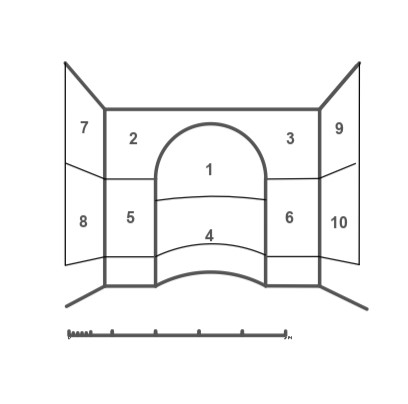
East wall: 1. Christ Enthroned in a Mandorla, Symbols of the Four Evangelists, Sun and Moon; 2–3. Annunciation; 4. Apostles; 5. St Ursula and Two Female Saints; 6. St Lawrence. North wall: 7. Nativity of Christ; 8. Scene with a Holy Monk. South wall: 9. Visitation; 10. St Sebastian and St Roch.
Scene locations
C. BUDINICH, 1916.,Spitzbogige Bauwerke in Istrien und den angrenzenden Gebieten, Wien, 1916., 21-23; A. MORASI, 1924., Antica pittura popolare nell'Istria, Le Vie d'Italia, 30/10 (ottobre) 1924; F. STELÈ, 1960., Umetnost v Primorju, Ljubljana, 1960, 74; B. FUČIĆ, 1963, Istarske freske, Zagreb, 1963., KATALOG 18; ISTI, 1964a, Srednjovjekovno zidno slikarstvo u Istri, doktorska disertacija, Filozofski fakultet Sveučilišta u Ljubljani, Rijeka-Ljubljana, 1964., 269-280, 408-410; ISTI, 1975., Pisani mojster na Bregu ob Kokri, Kranjski zbornik, 1975., 197-198; N. BABIĆ, 1996., Pisani mojster, diplomski rad (mentor Janez Höfler), Filozofska fakulteta Univerze v Ljubljani, Ljubljana, 1996; B. FUČIĆ, 1998., Šareni majstor, u: Kanfanar i Kanfanarština: zbornik radova sa znanstvenog skupa povodom 900. obljetnice prvog pisanog spomena Kanfanara, 5. listopada 1996, Kanfanar, 1998; 59-68; Ž. BISTROVIĆ, 2007, Gotičko zidno slikarstvo u Istri (novi prilozi jednoj budućoj sintezi), Annales. Series Historia et Sociologia, 17/2, 2007, 277-290., 285; ISTI, 2017a, Kastavska slikarska škola – problemi geneze i stila, doktorska disertacija, Sveučilište u Zadru – Humanističke studije, Zadar, 2017.