


Božje polje, Church of the Blessed Virgin Mary
Century/year: late 1480s
Historical-cultural period: Gothic style
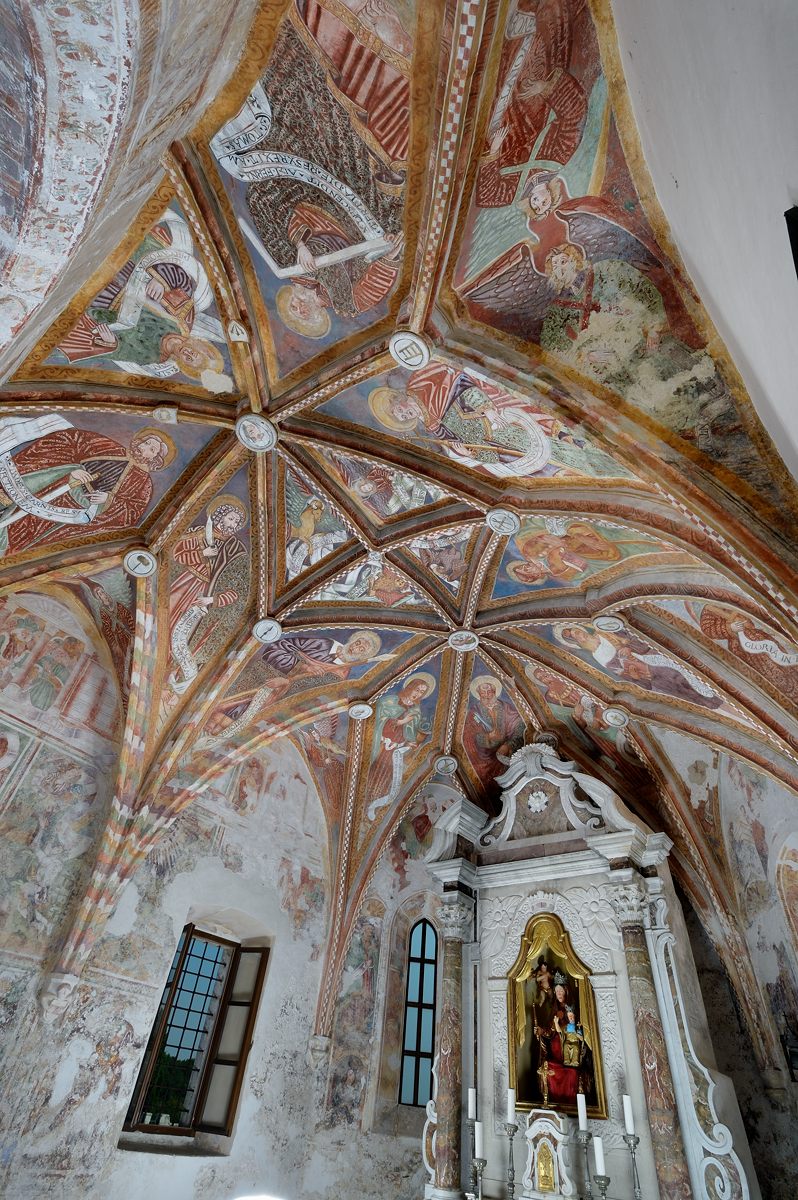
The cemetery church of the Blessed Virgin Mary in Božje polje is situated not far from Vižinada. Although first mentioned as early as the twelfth century, it acquired its present appearance in the fifteenth century, while the sacristy was added in the eighteenth century. Historiography has advanced the hypothesis that the site was previously occupied by a hospice of the Knights Hospitaller, located along an important pilgrimage route to the Holy Land. In the early sixteenth century, the church, together with the adjacent monastery, was taken over by the Franciscan Tertiaries.
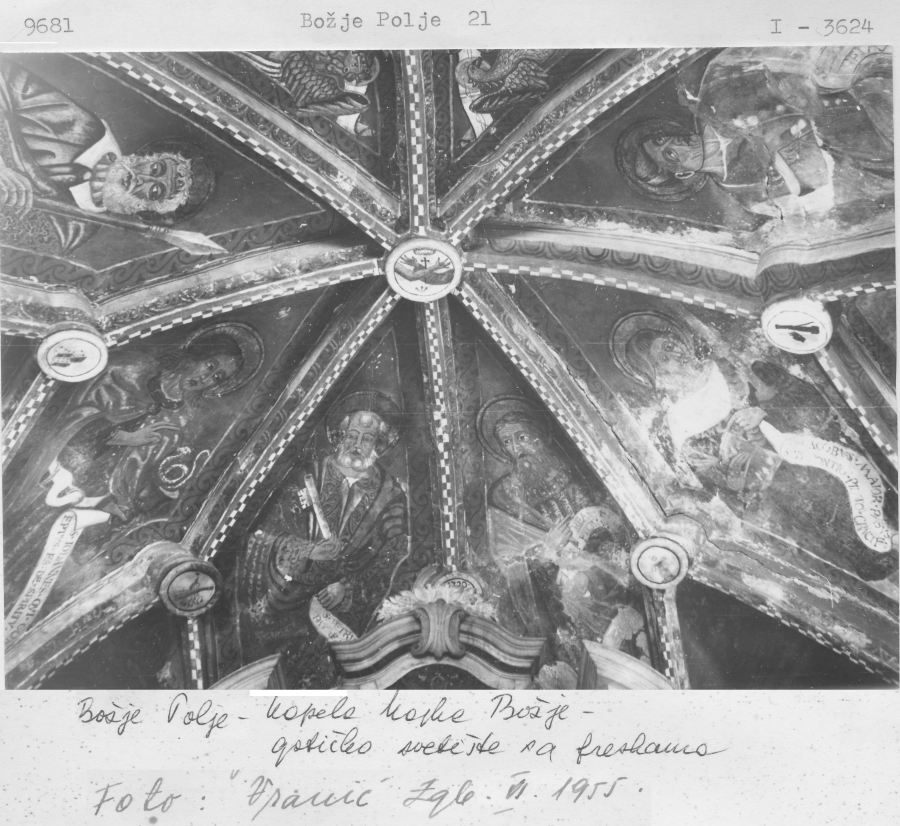
The building is a single-nave Gothic church with a polygonal sanctuary covered by a stellar ribbed vault, a characteristic feature of Late Gothic architecture. The sanctuary is externally reinforced by buttresses, reflecting the structural demands of the vaulting system. The church façade is articulated by an entrance portal with an arched termination, above which is a high relief depicting Attila. The upper zone of the façade contains a simple oculus and a bell-cote with three bells.
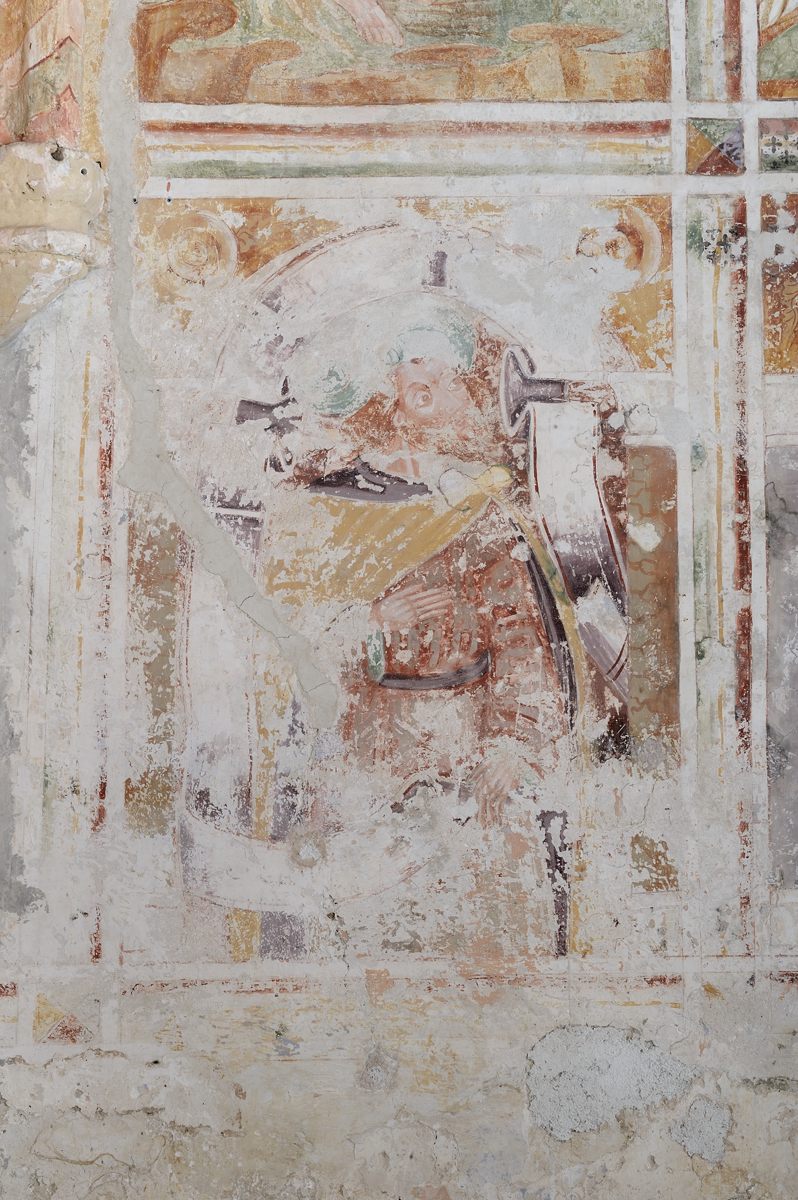
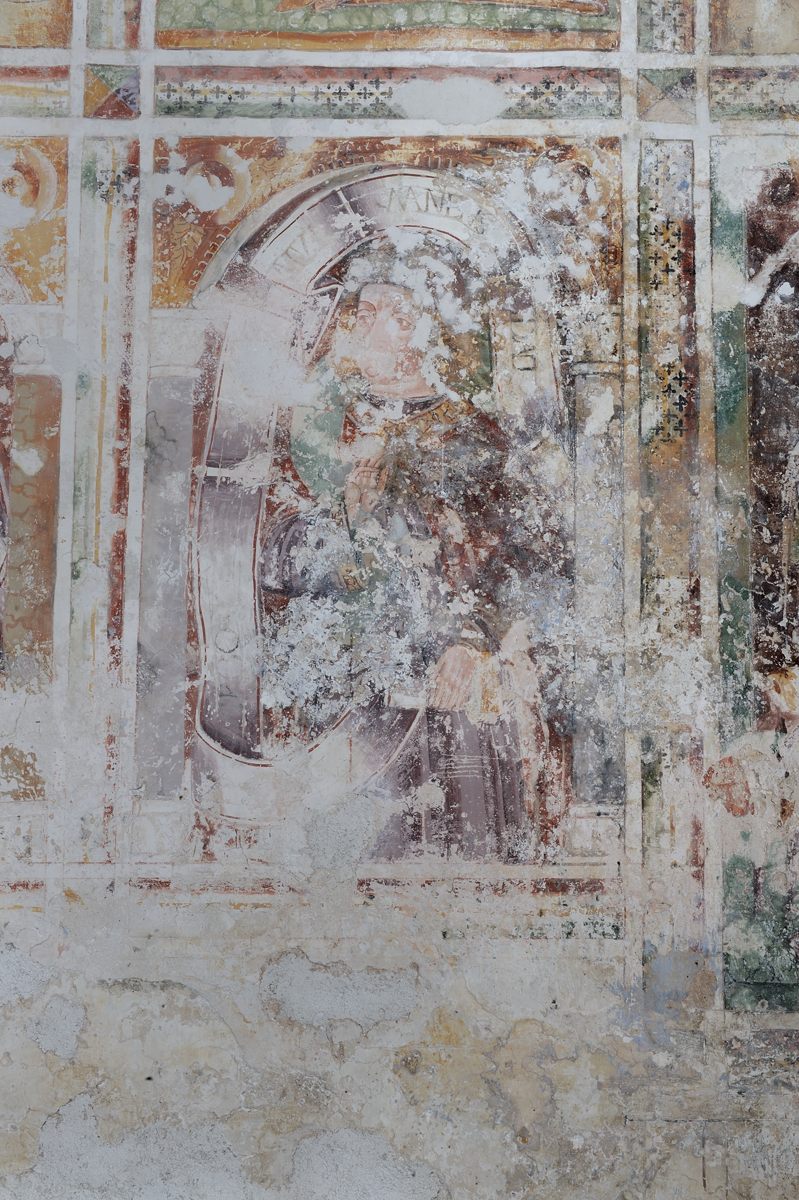
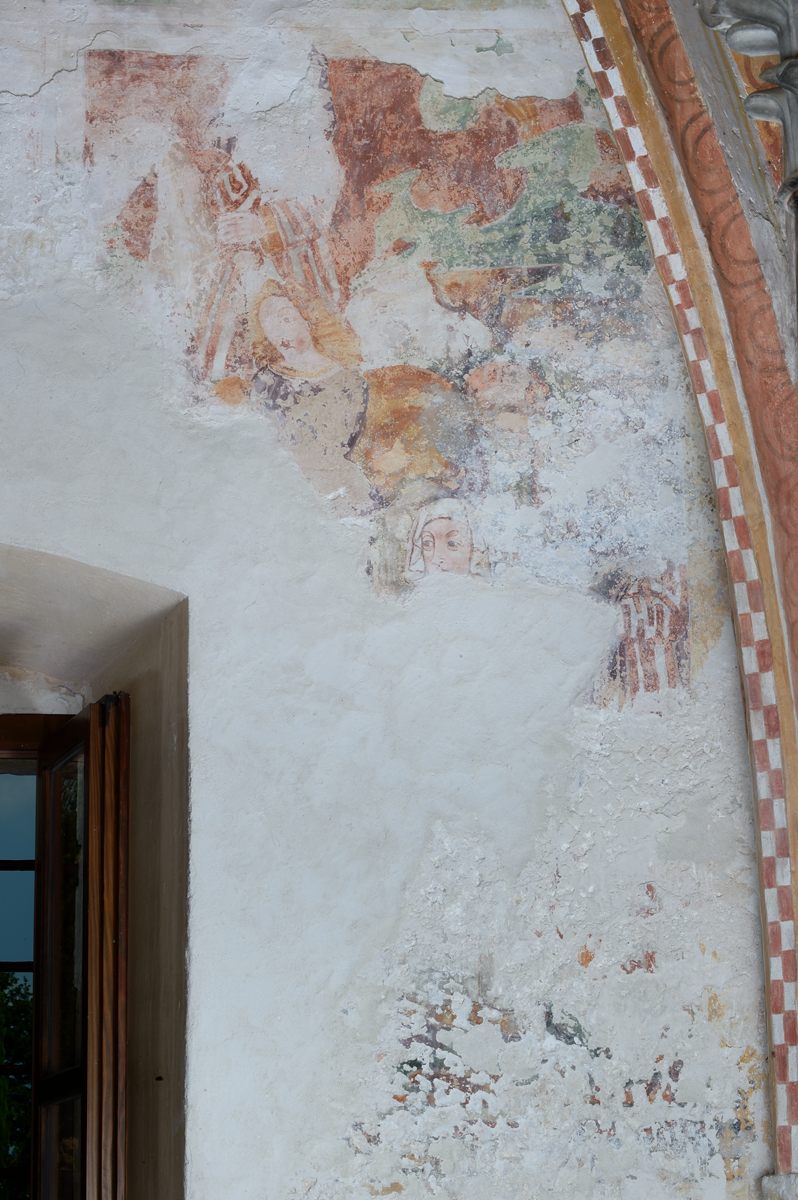
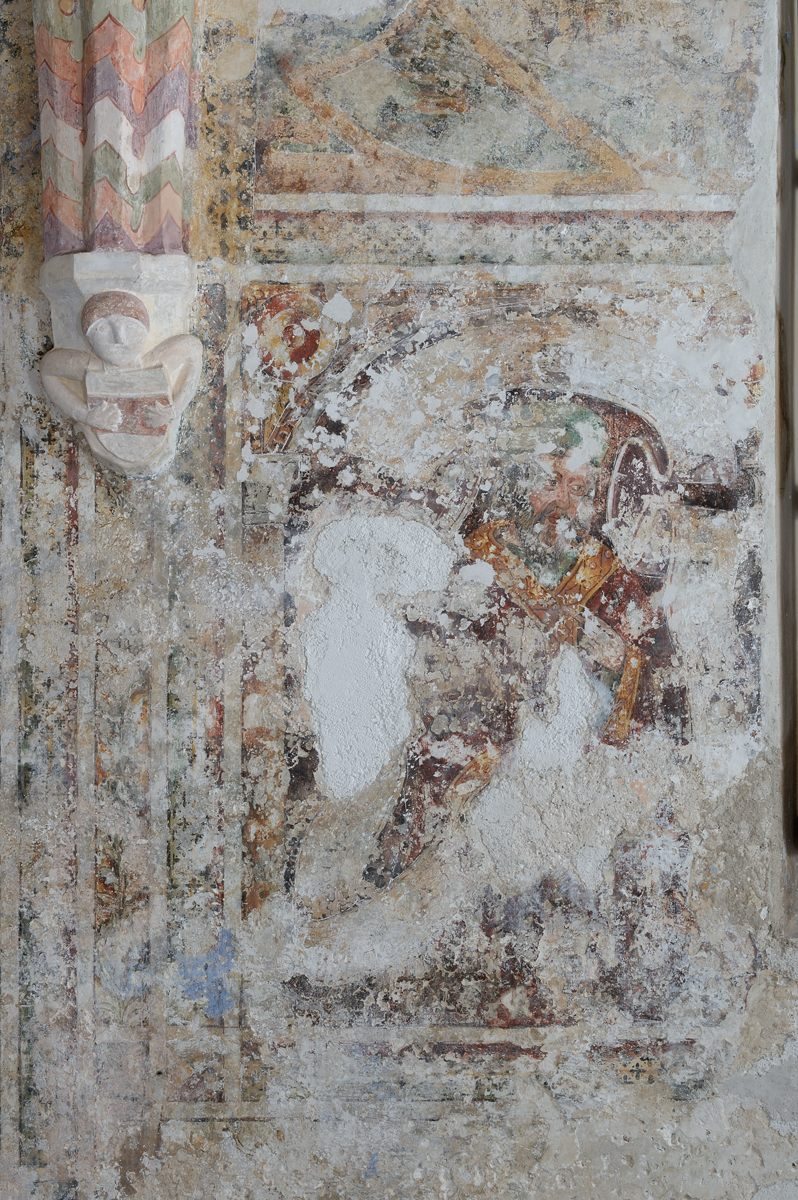
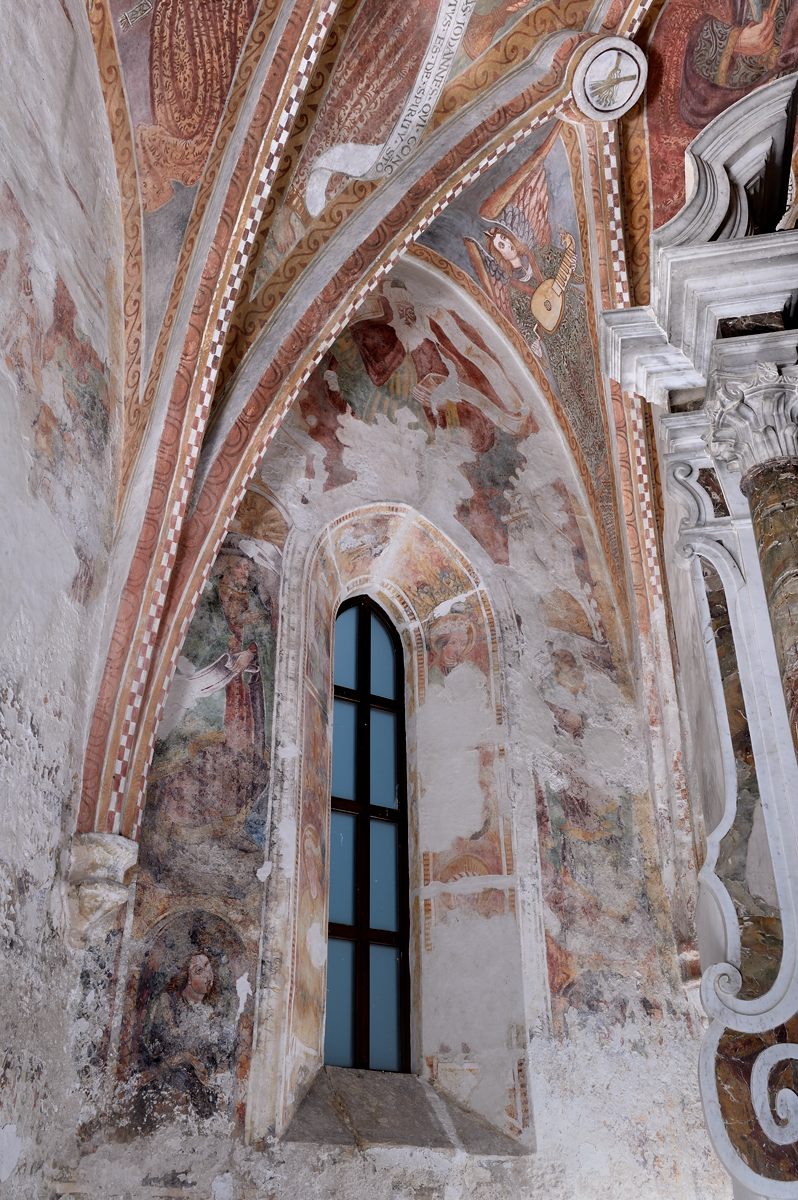
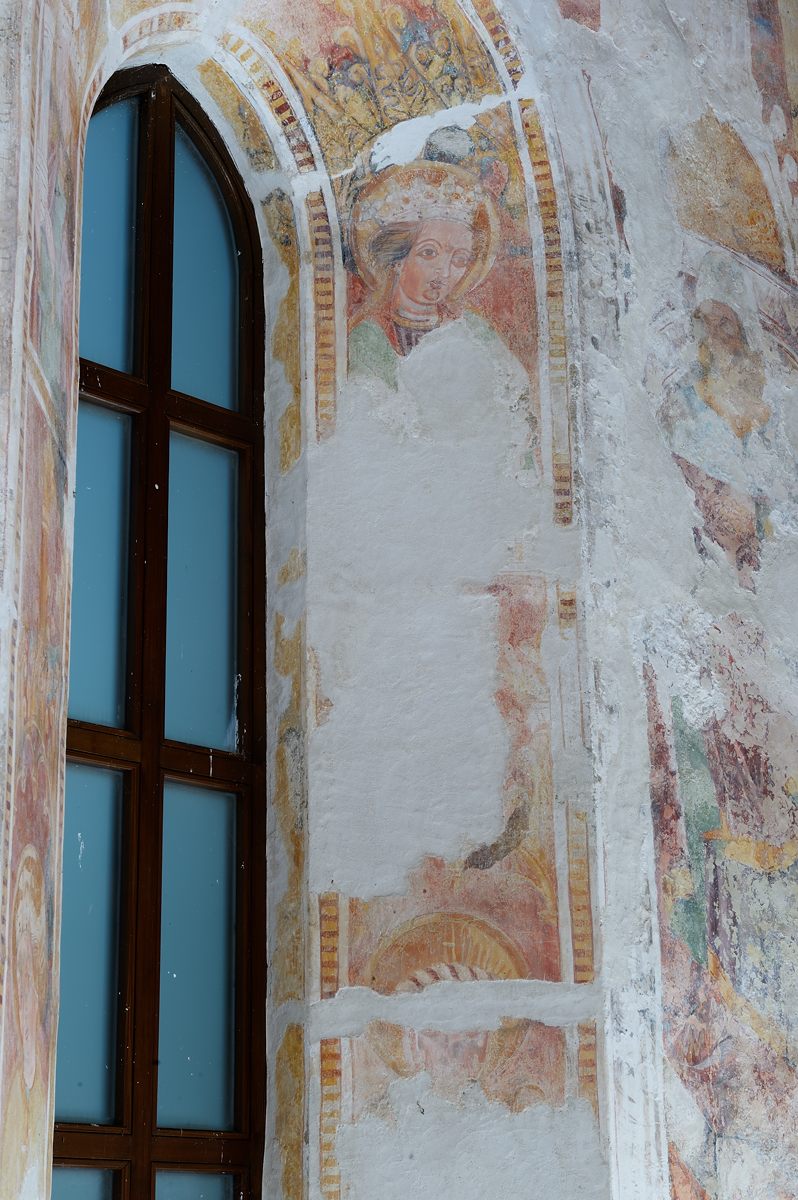
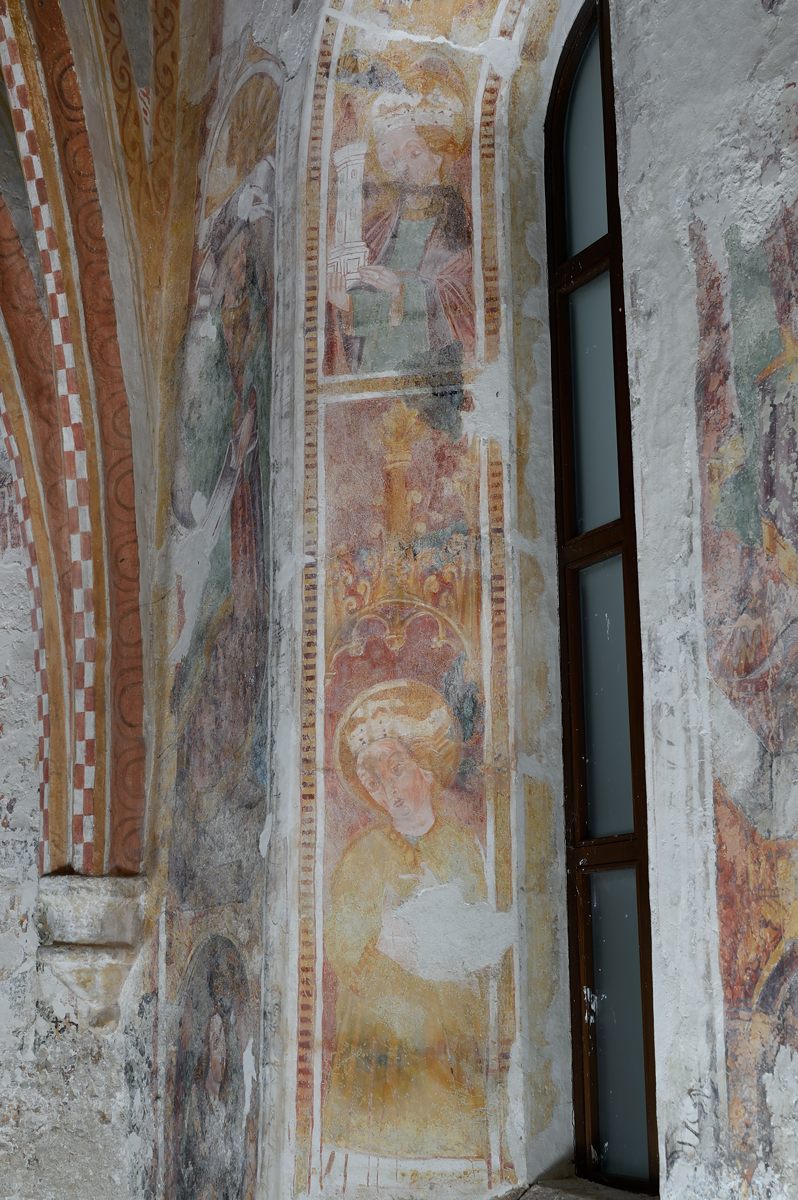
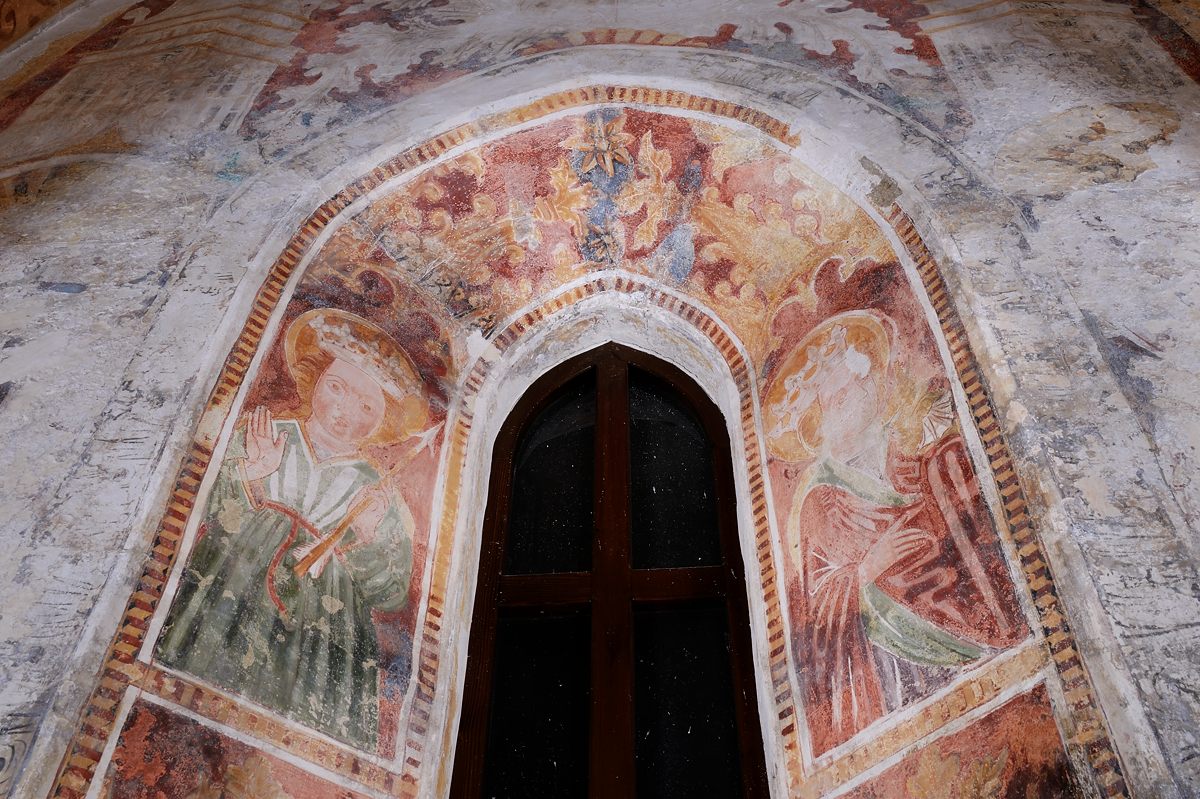
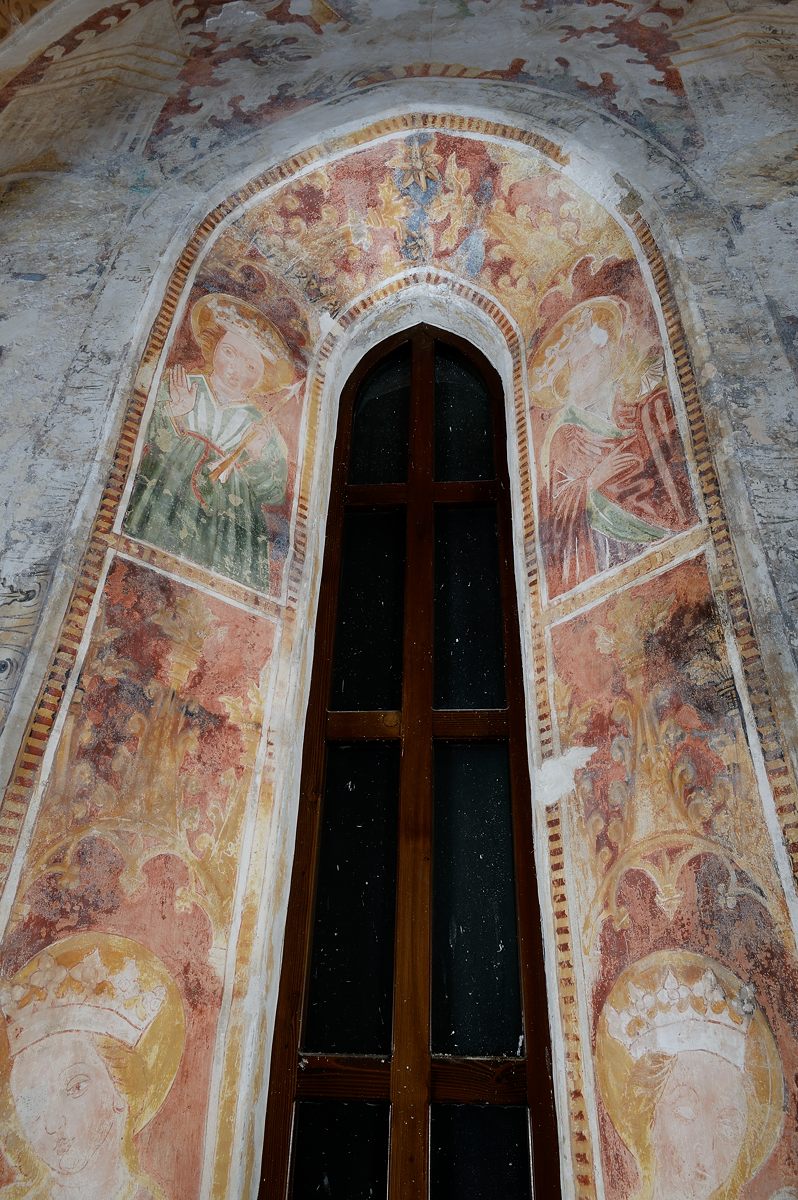
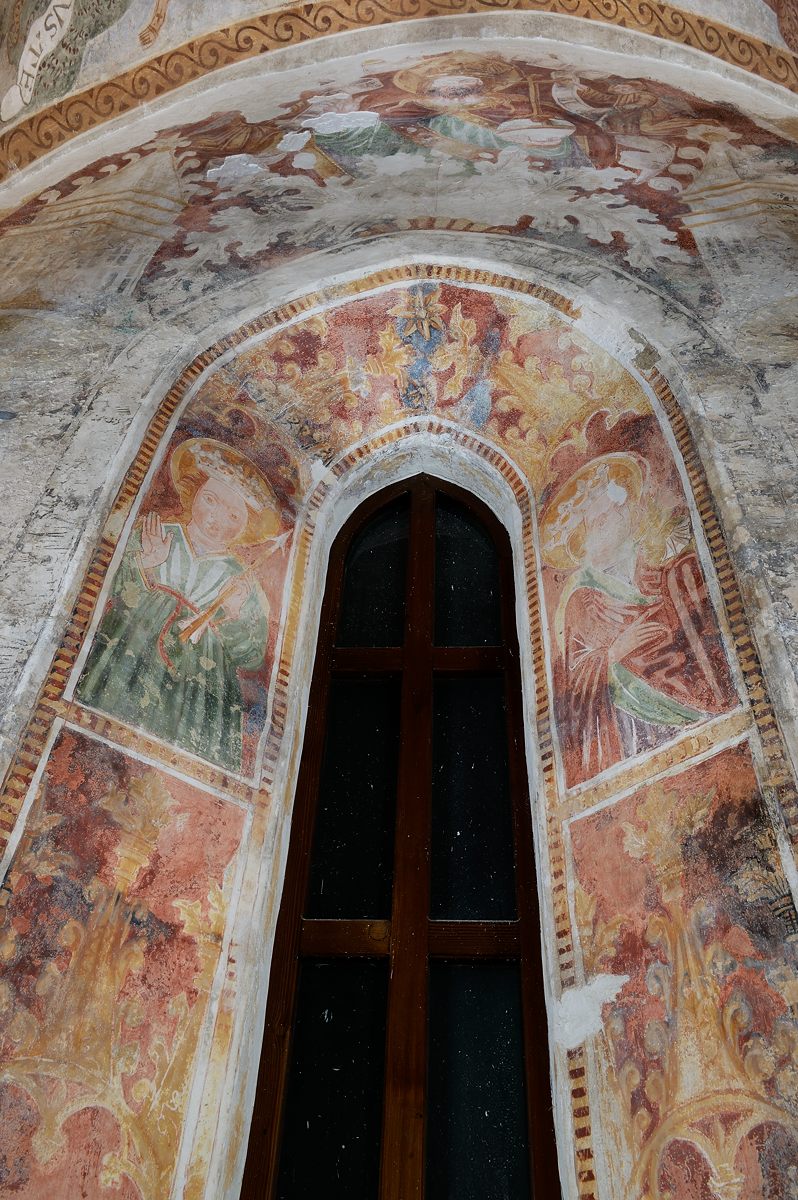
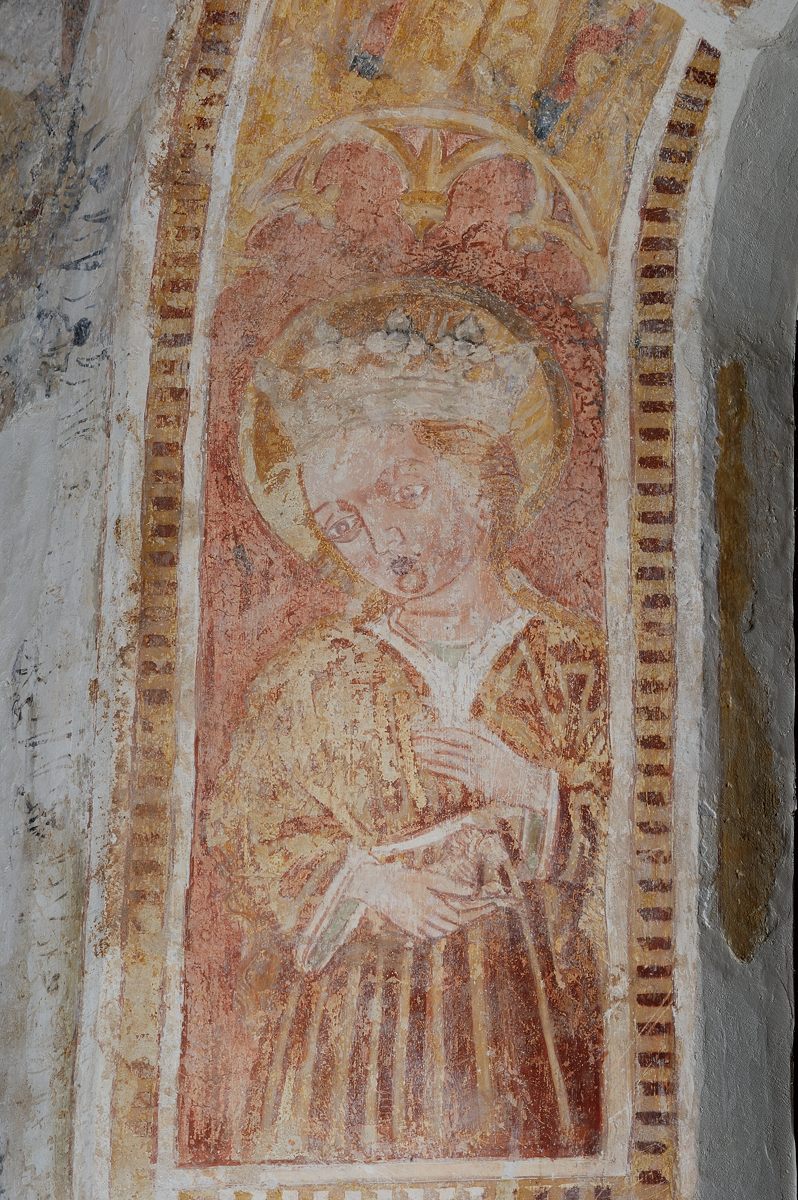
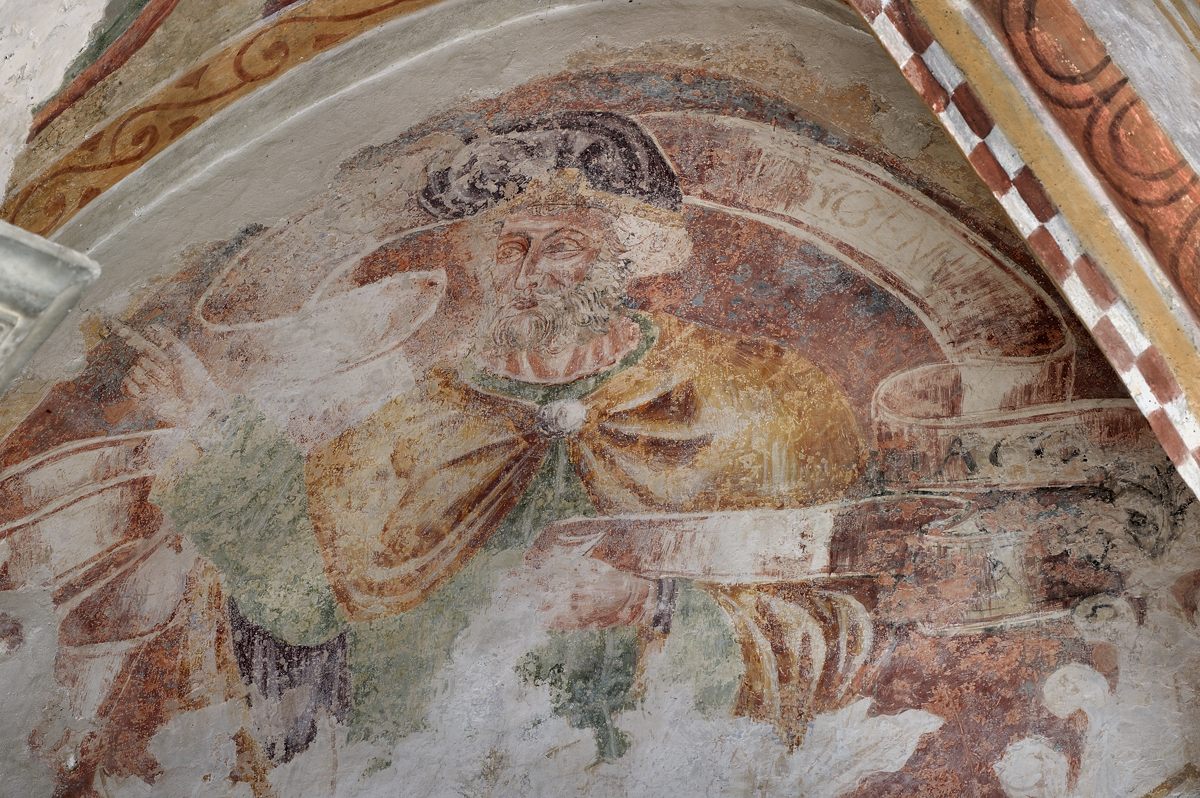
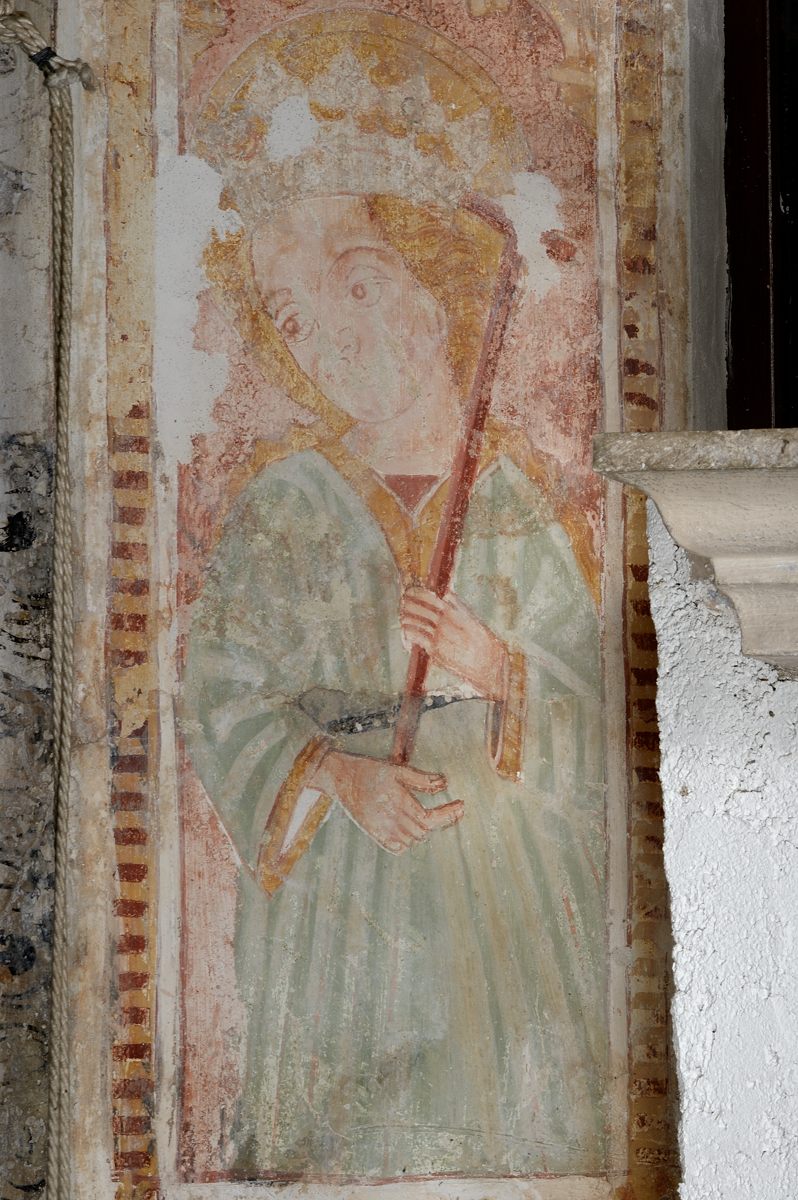
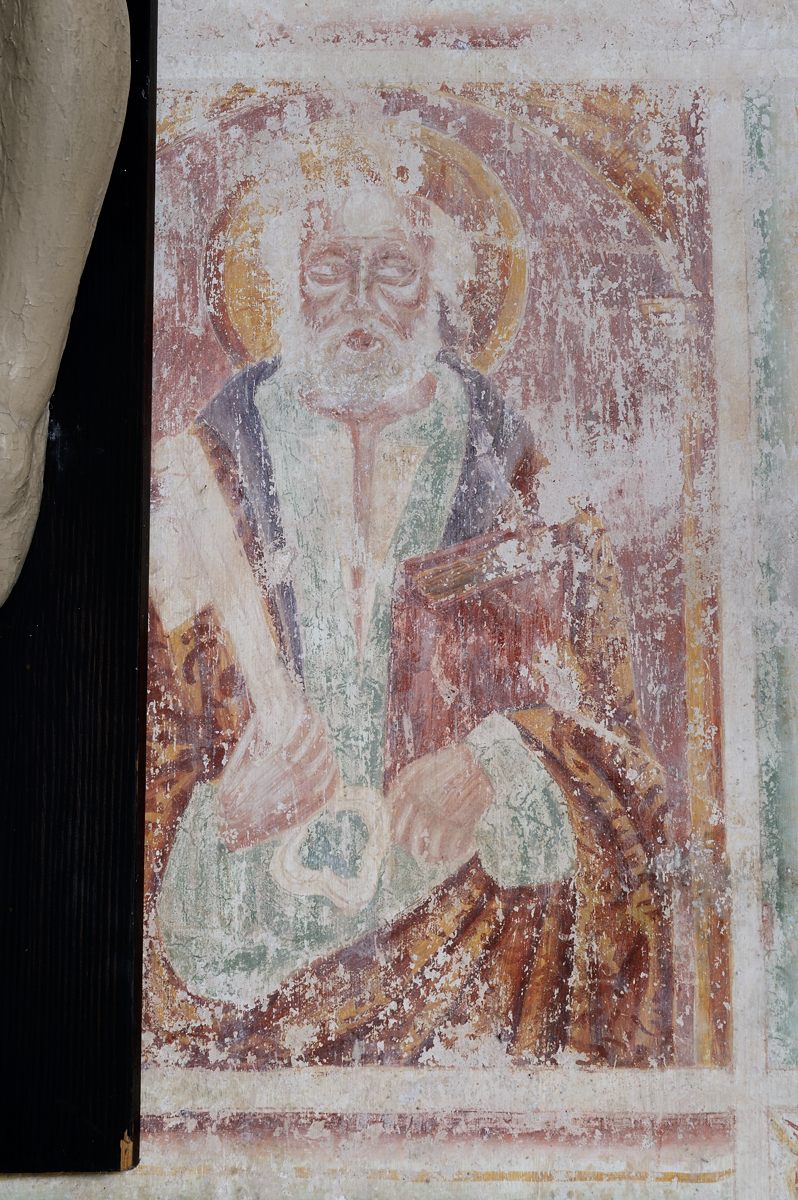
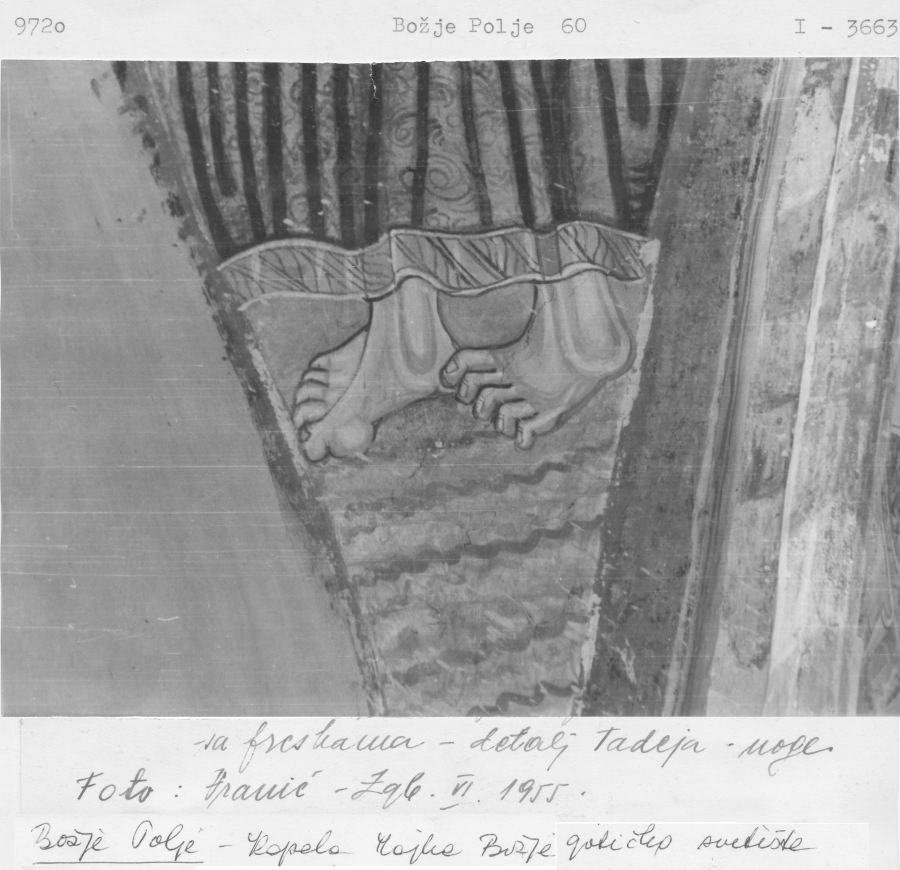
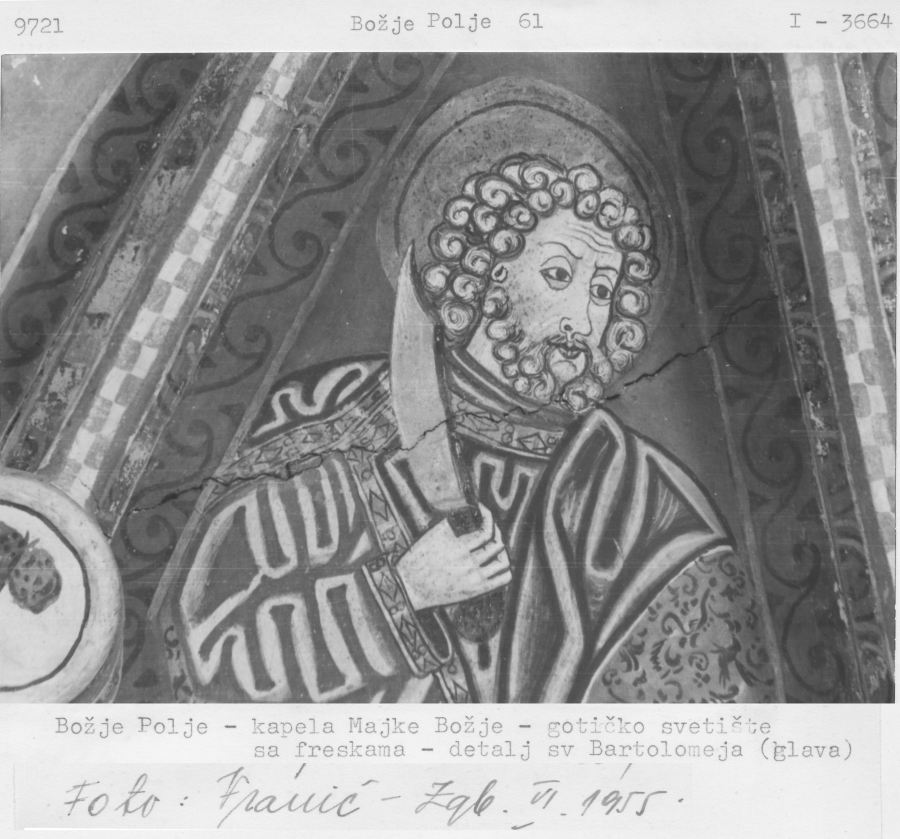
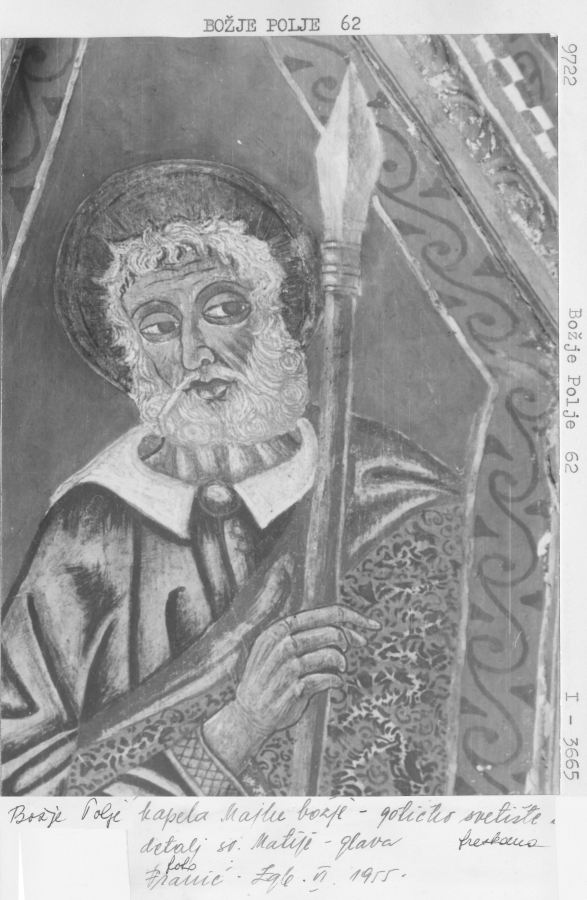
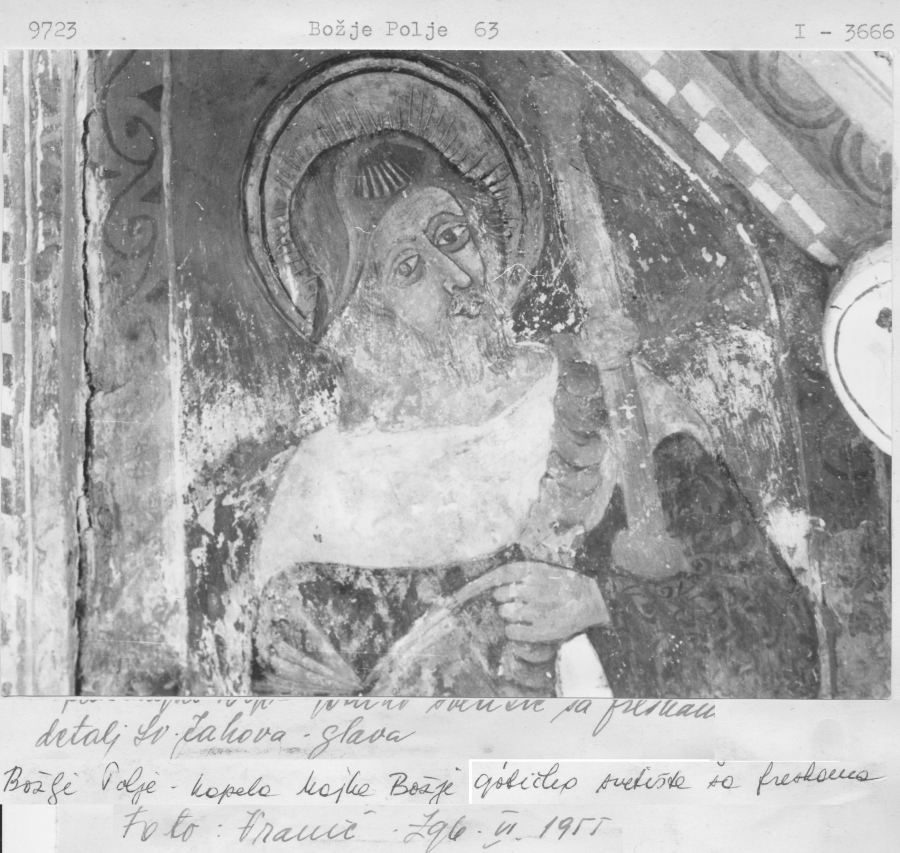
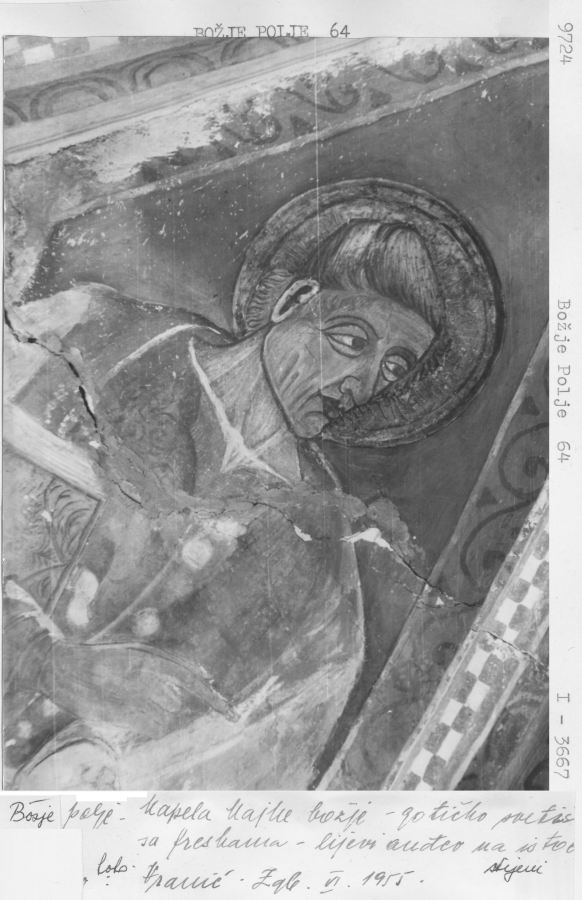
Original Gothic wall paintings have been preserved on the lateral walls of the sanctuary, within the embrasures of the Gothic windows, and on the south wall of the nave. Their authorship has been associated with the workshop of John of Kastav. The wall paintings are dated to the late 1480s and are considered among the earliest known works of this workshop.
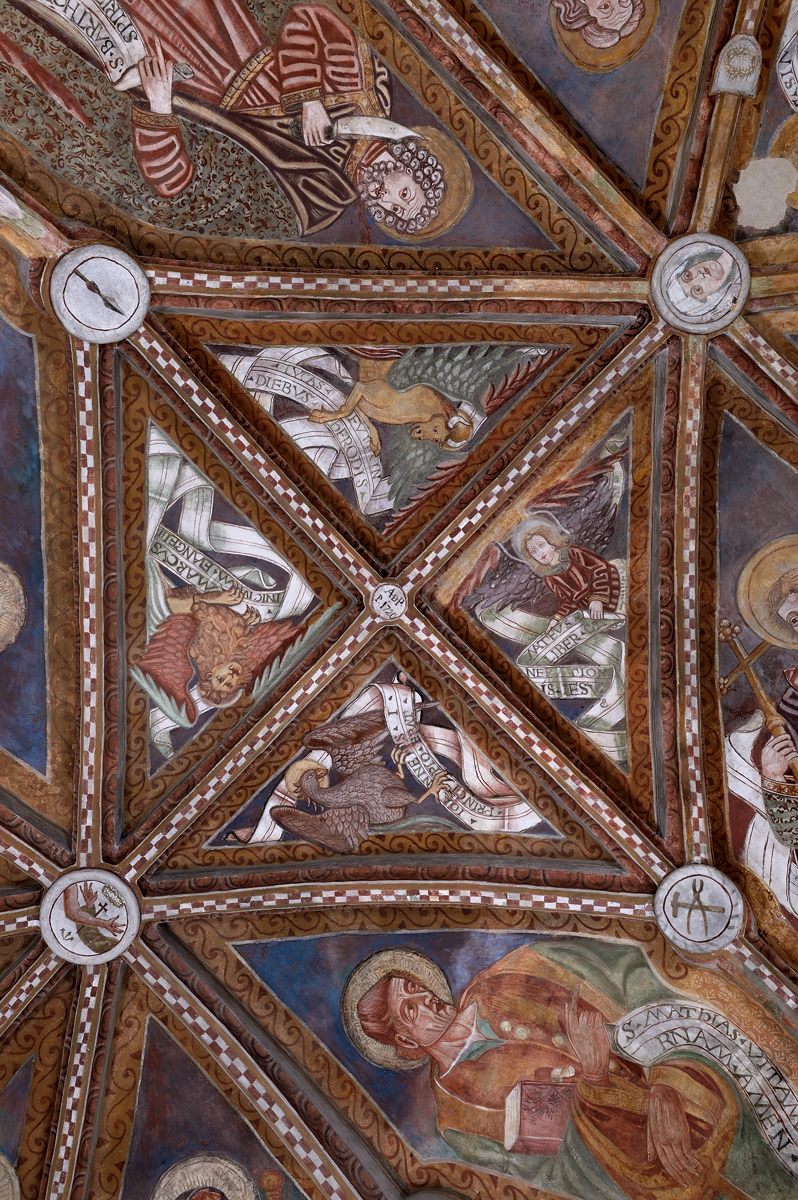
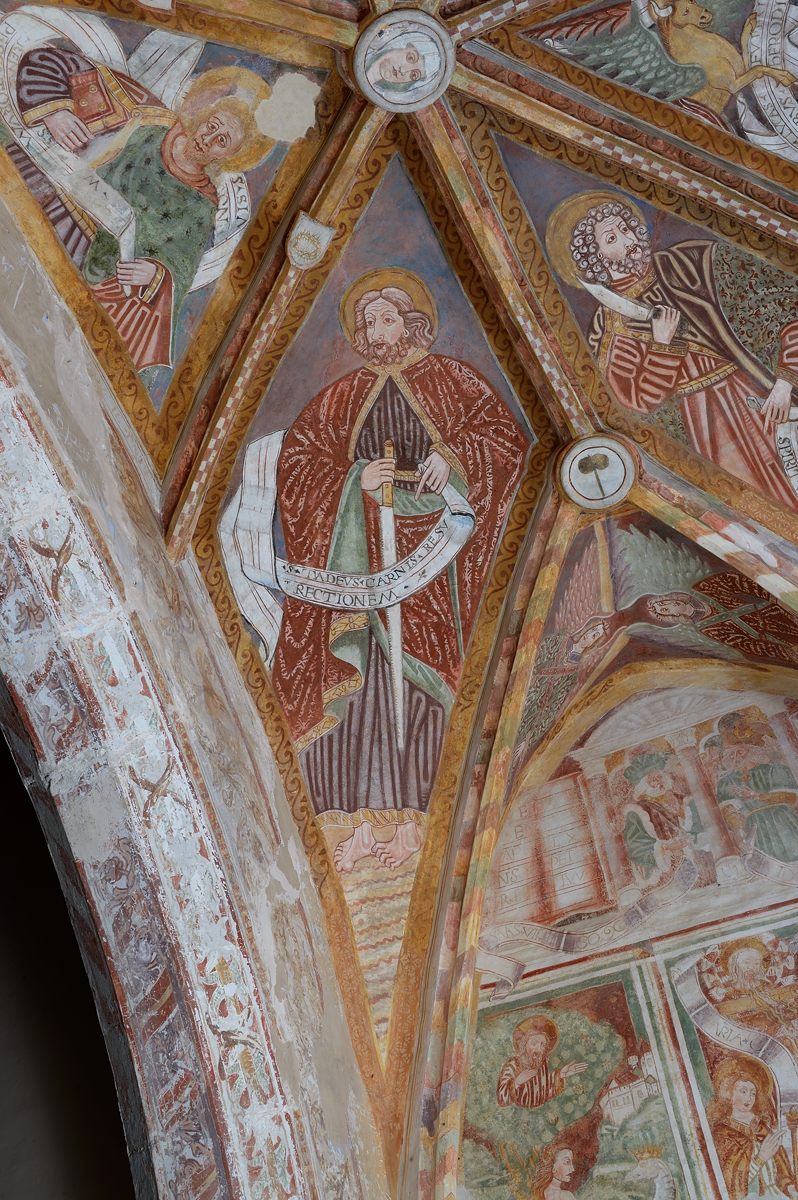
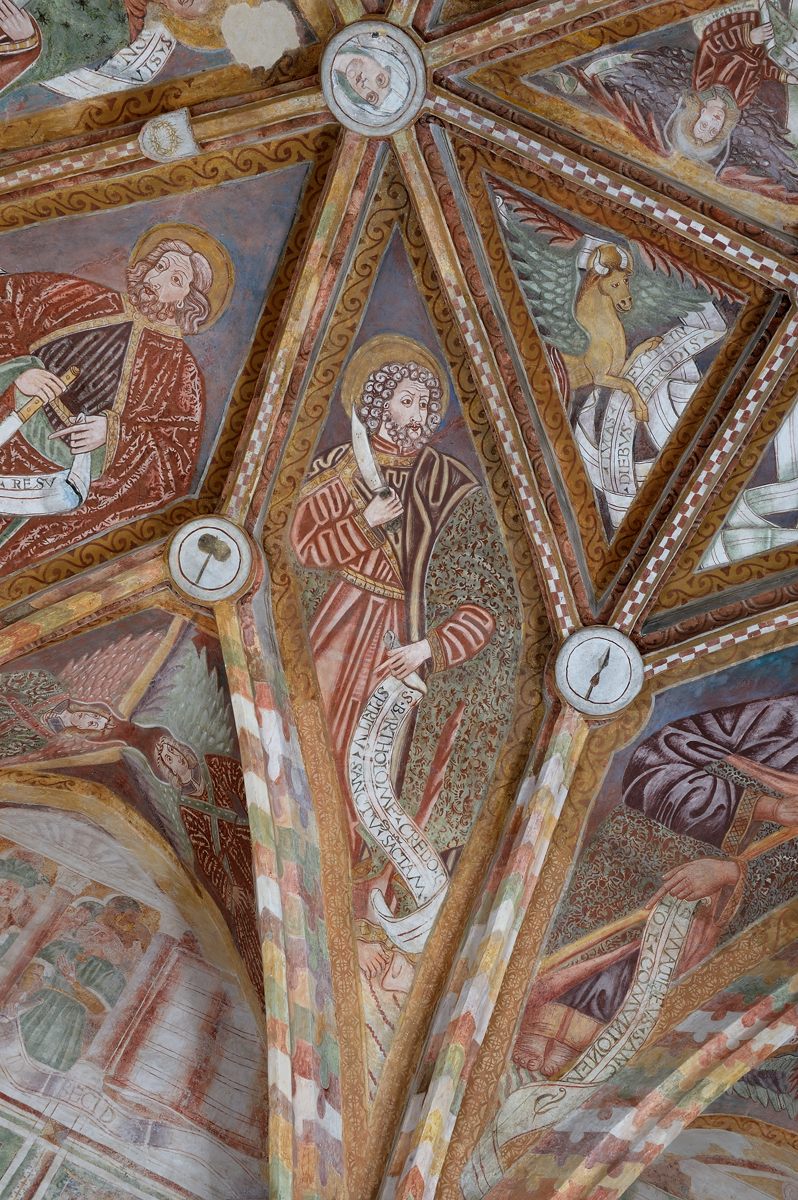
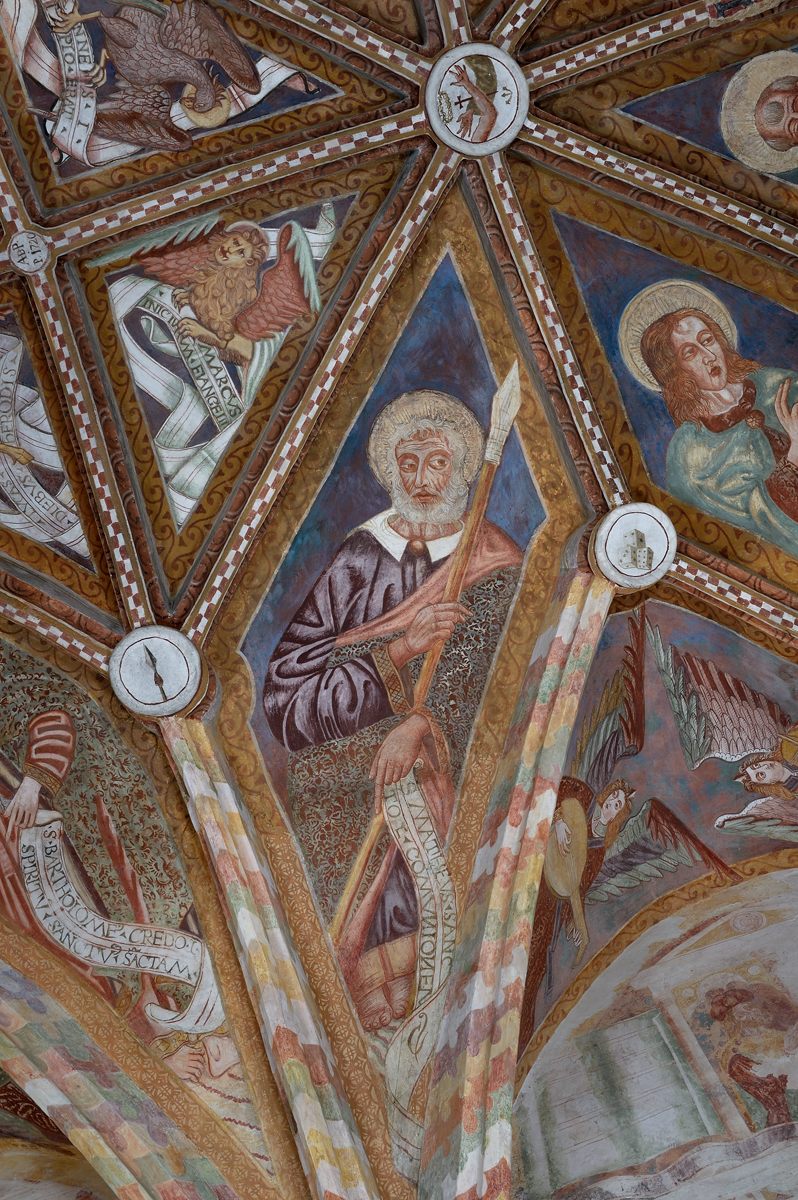
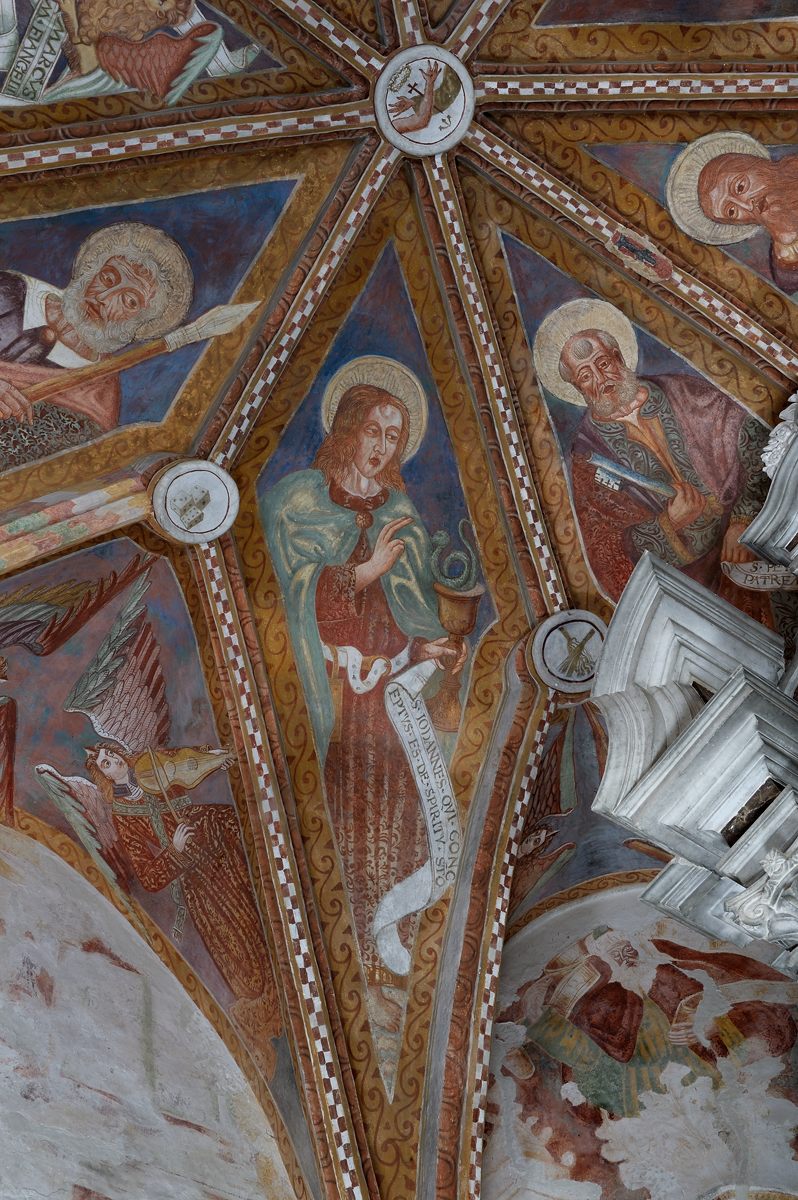
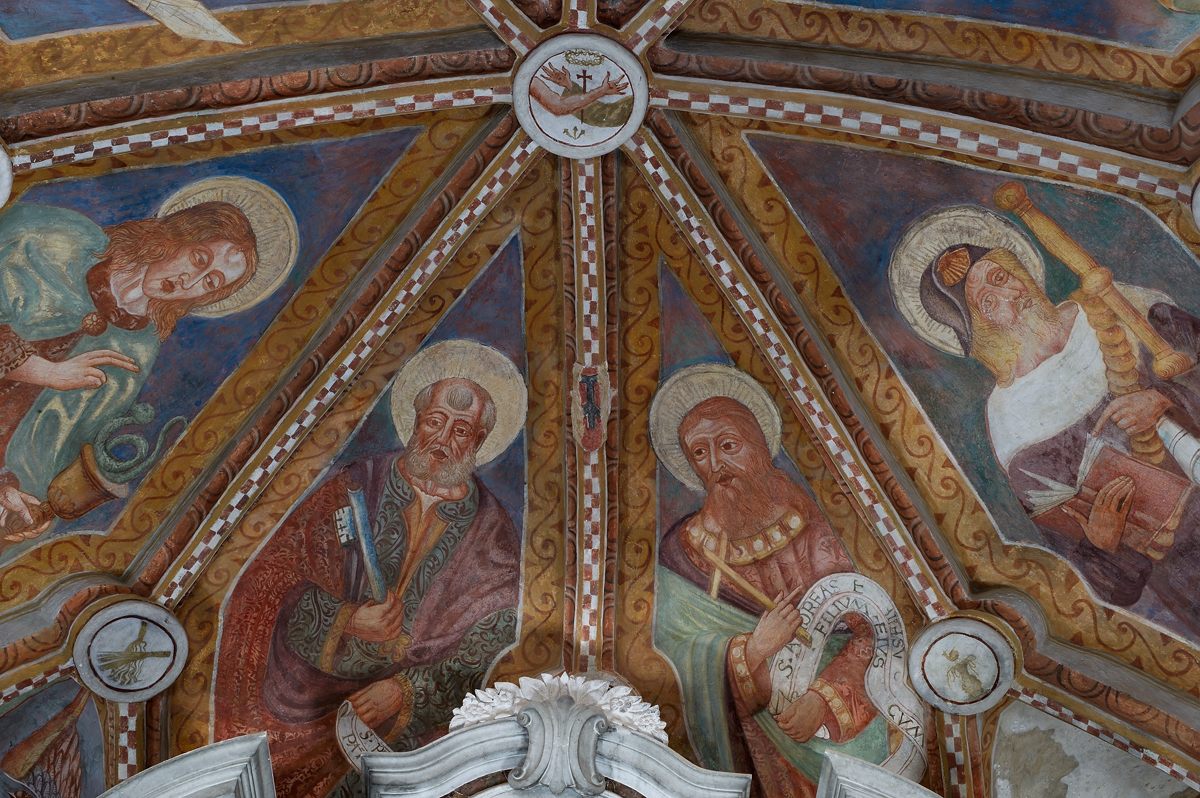
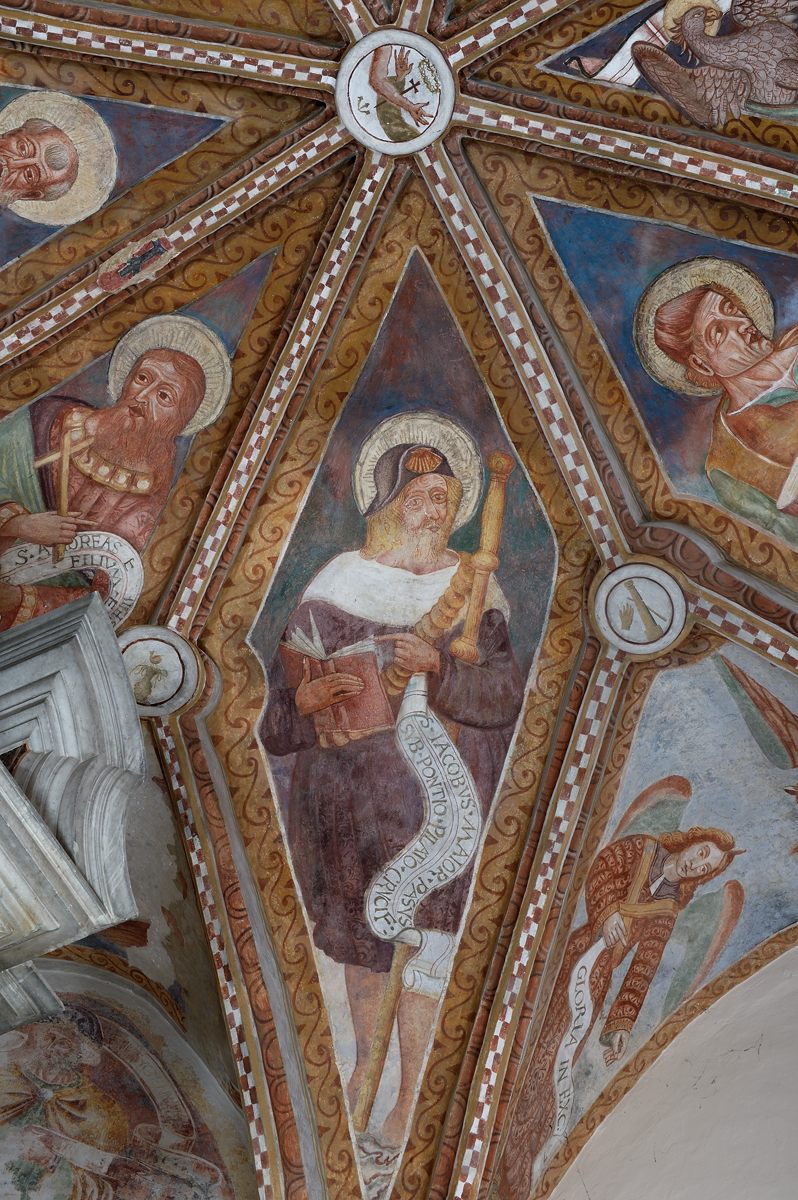
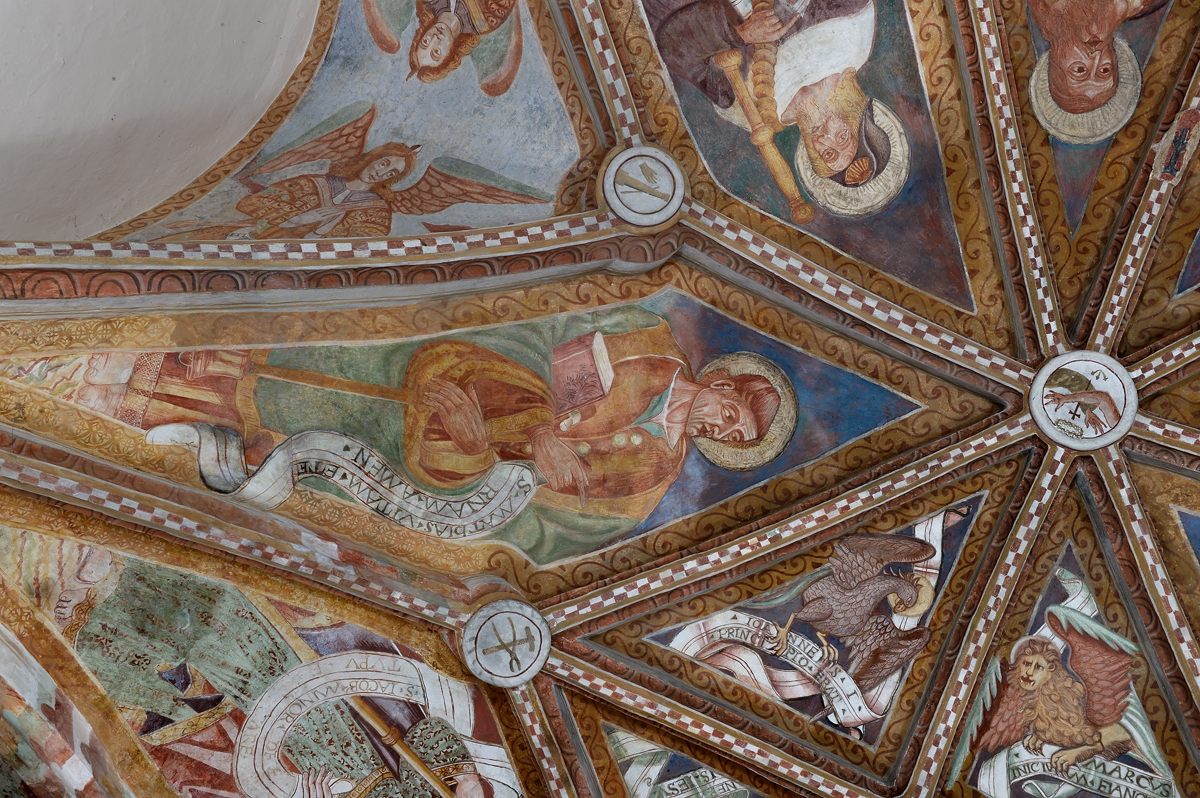
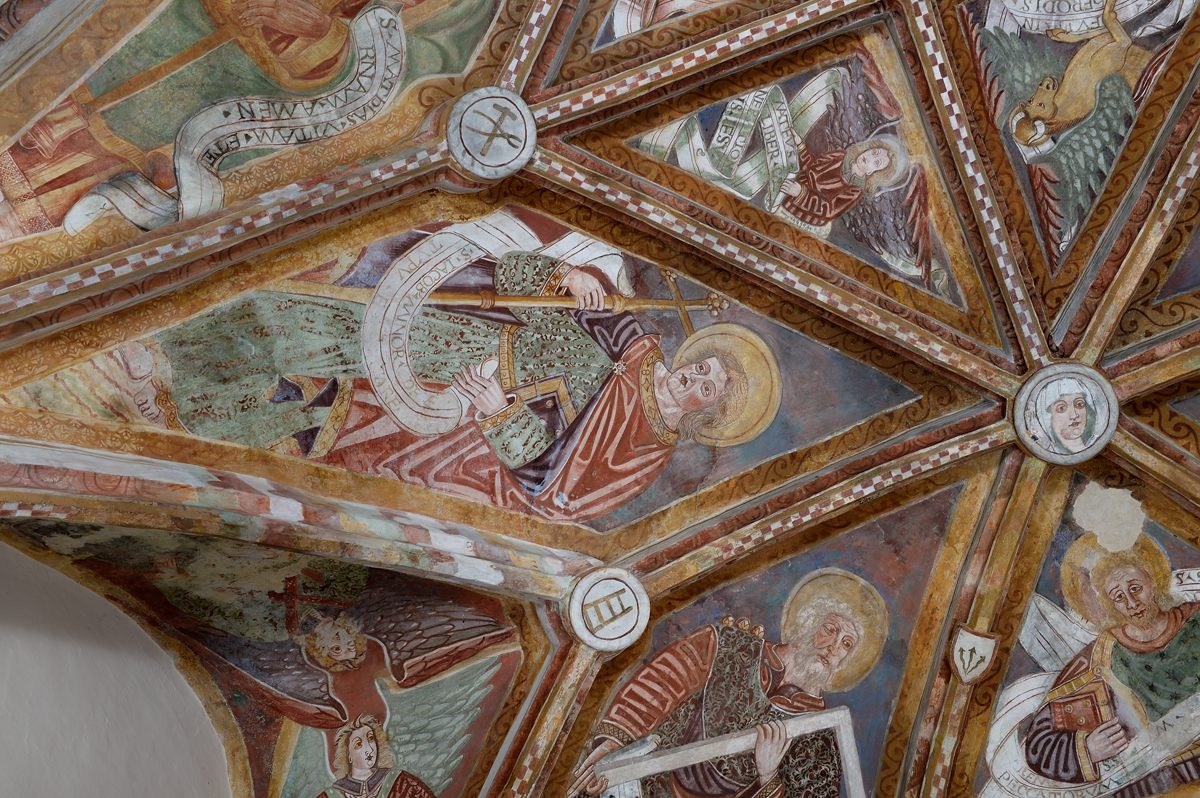
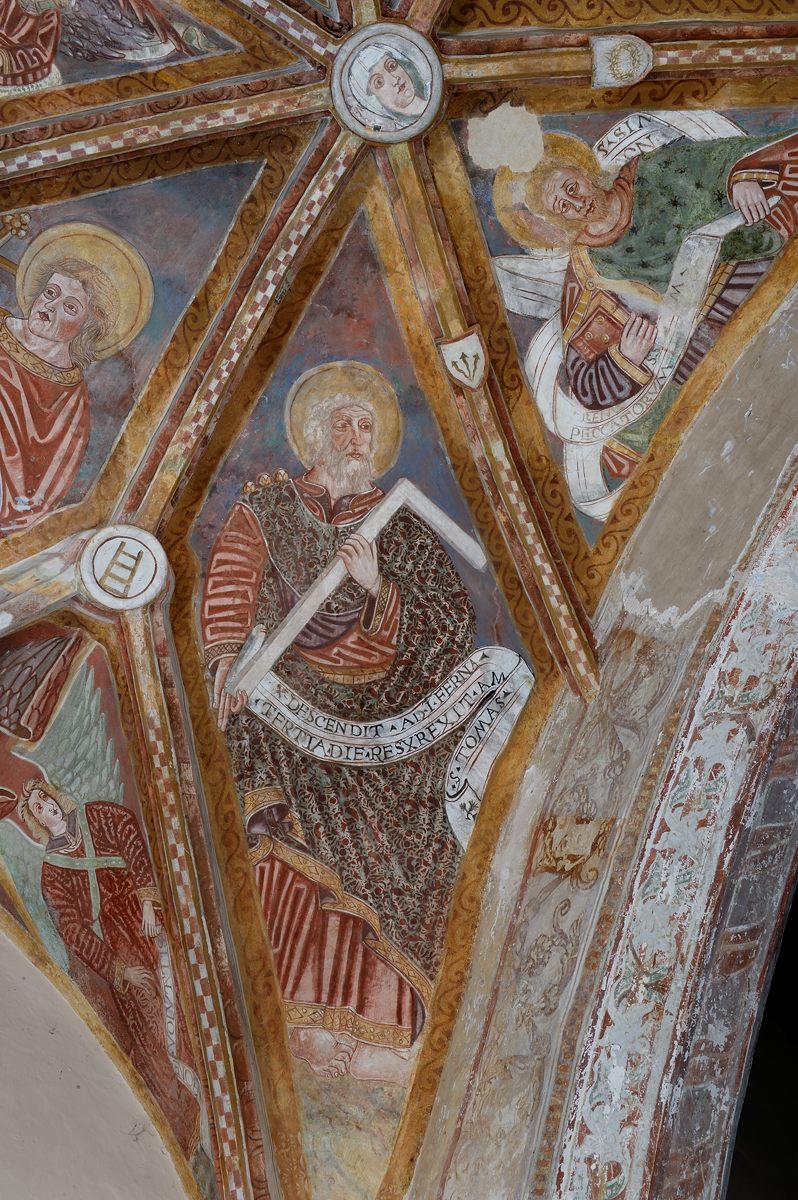
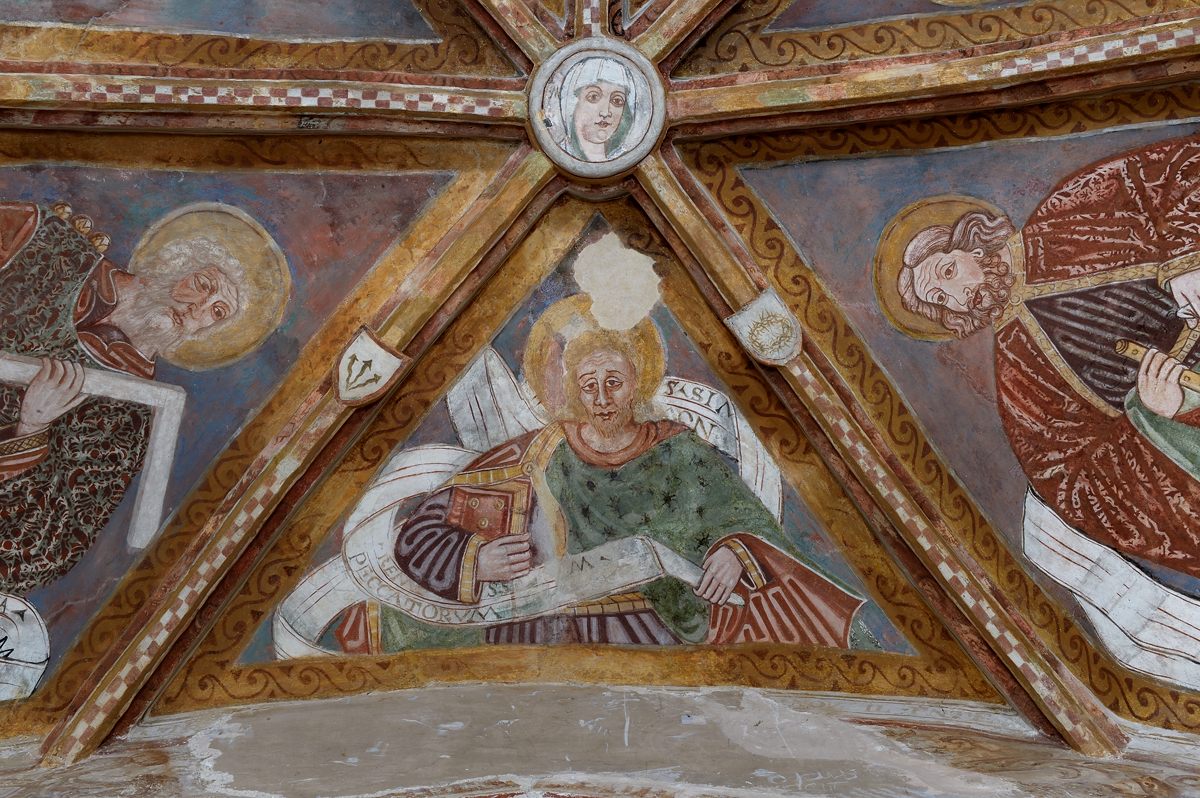
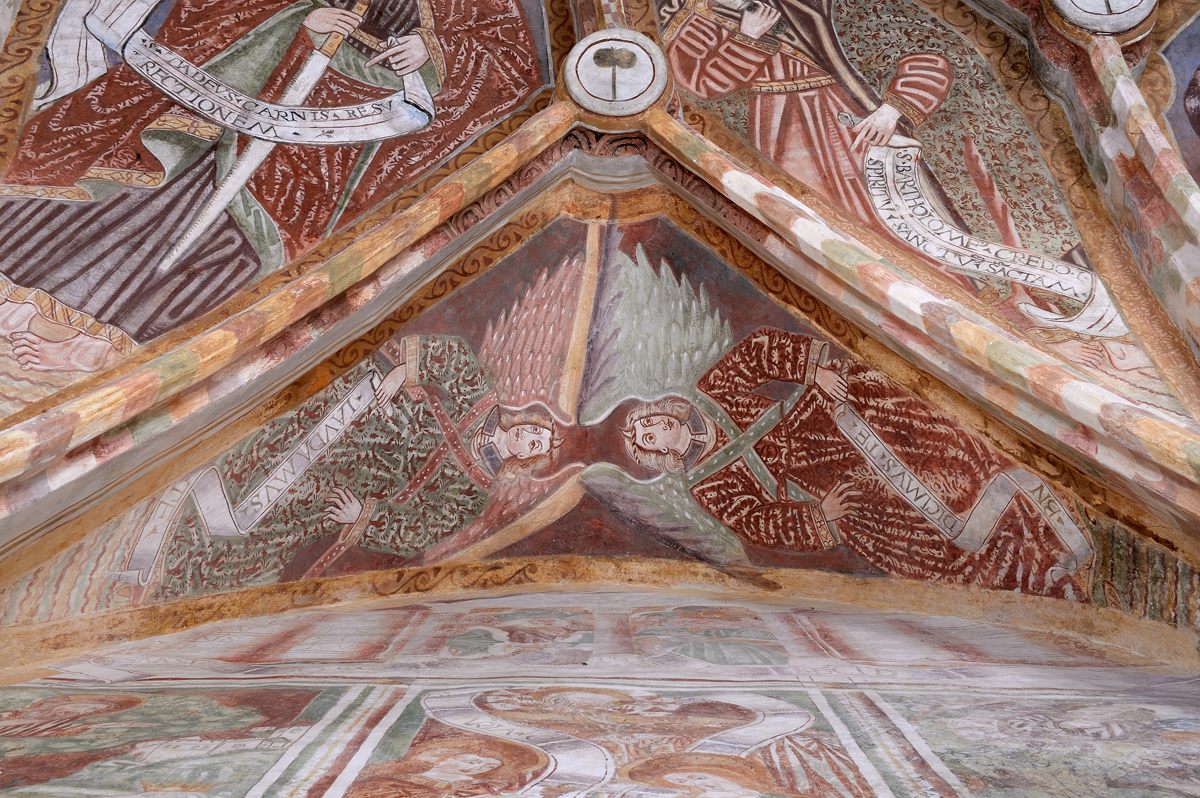
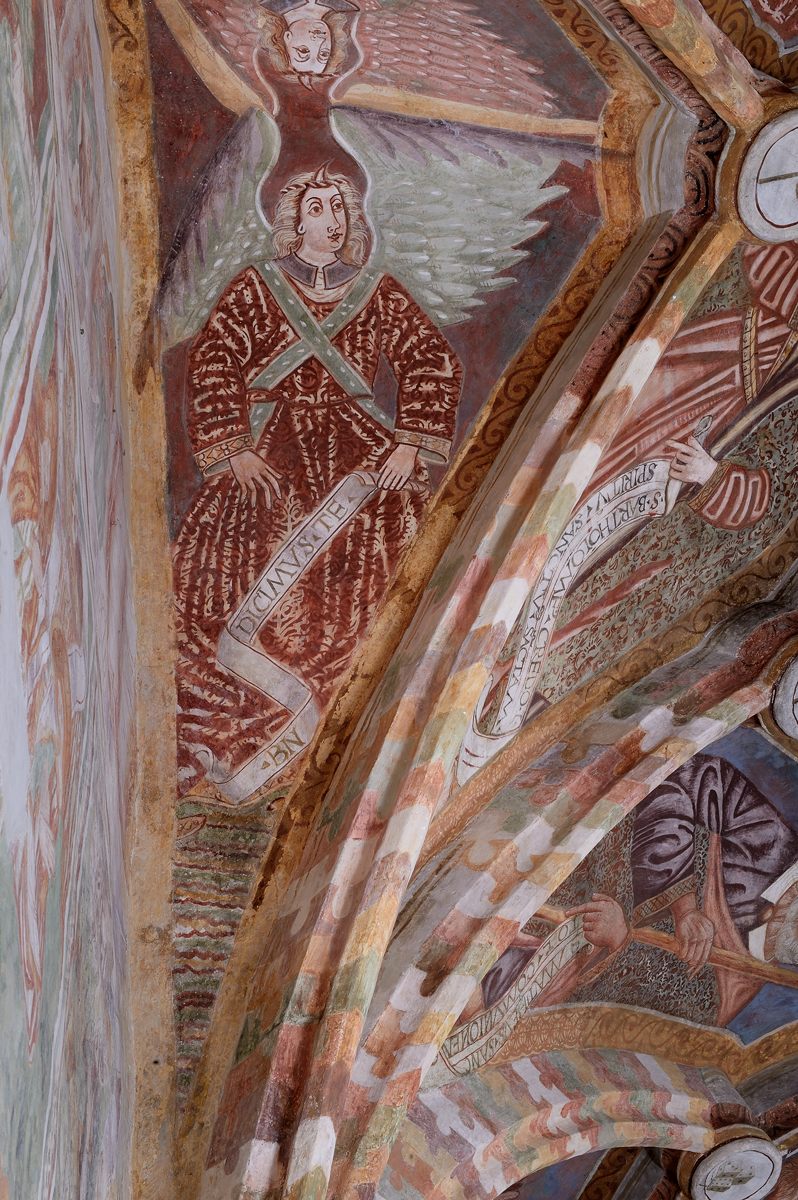
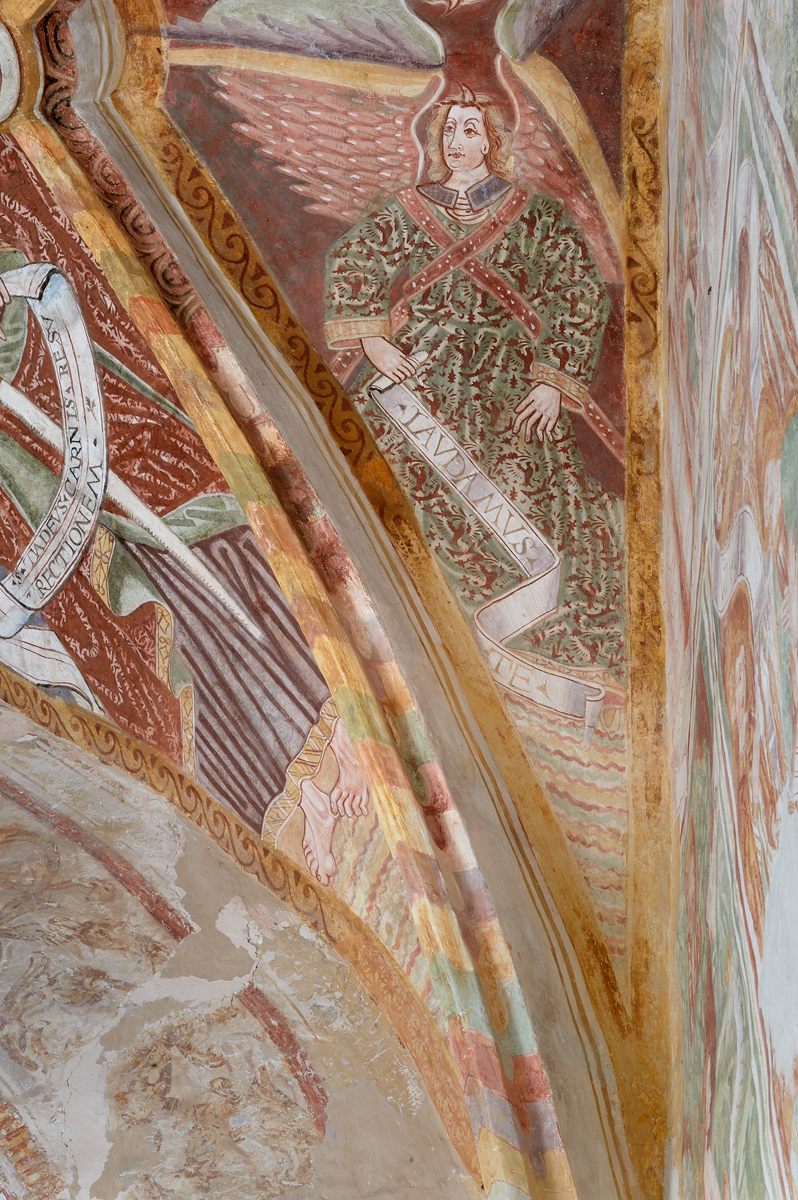
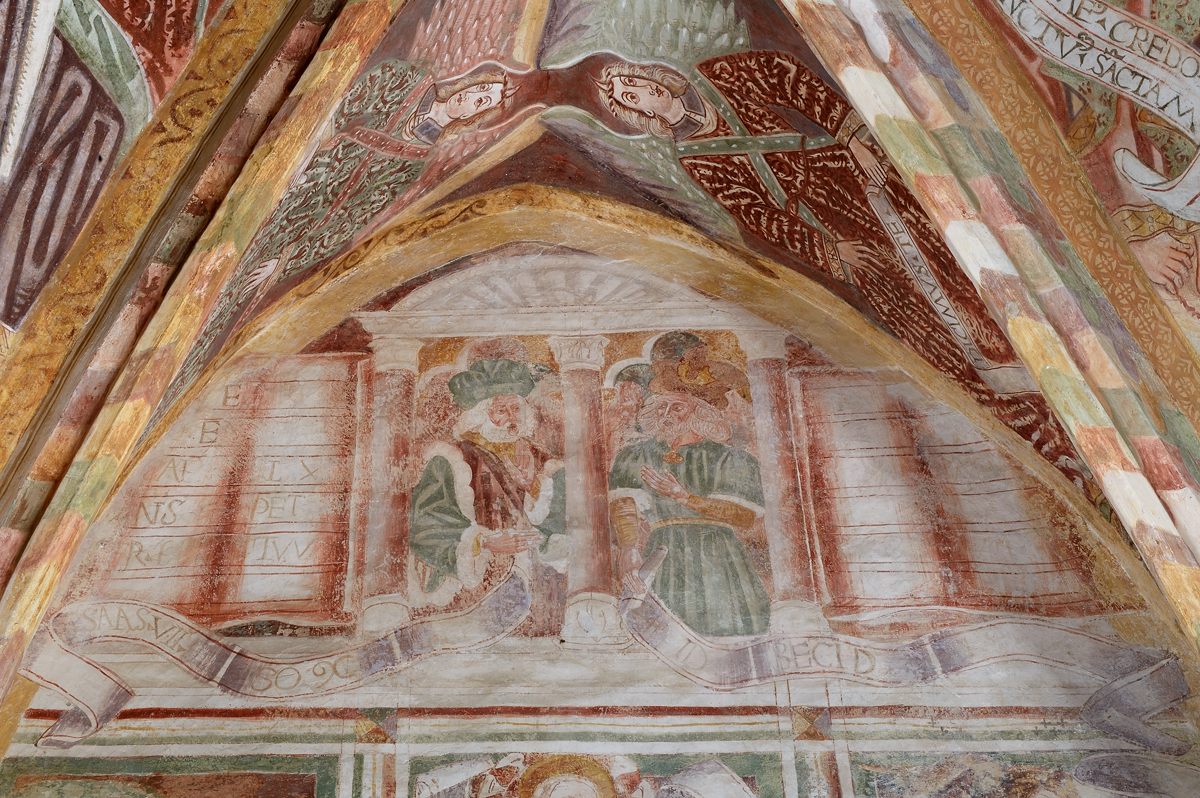
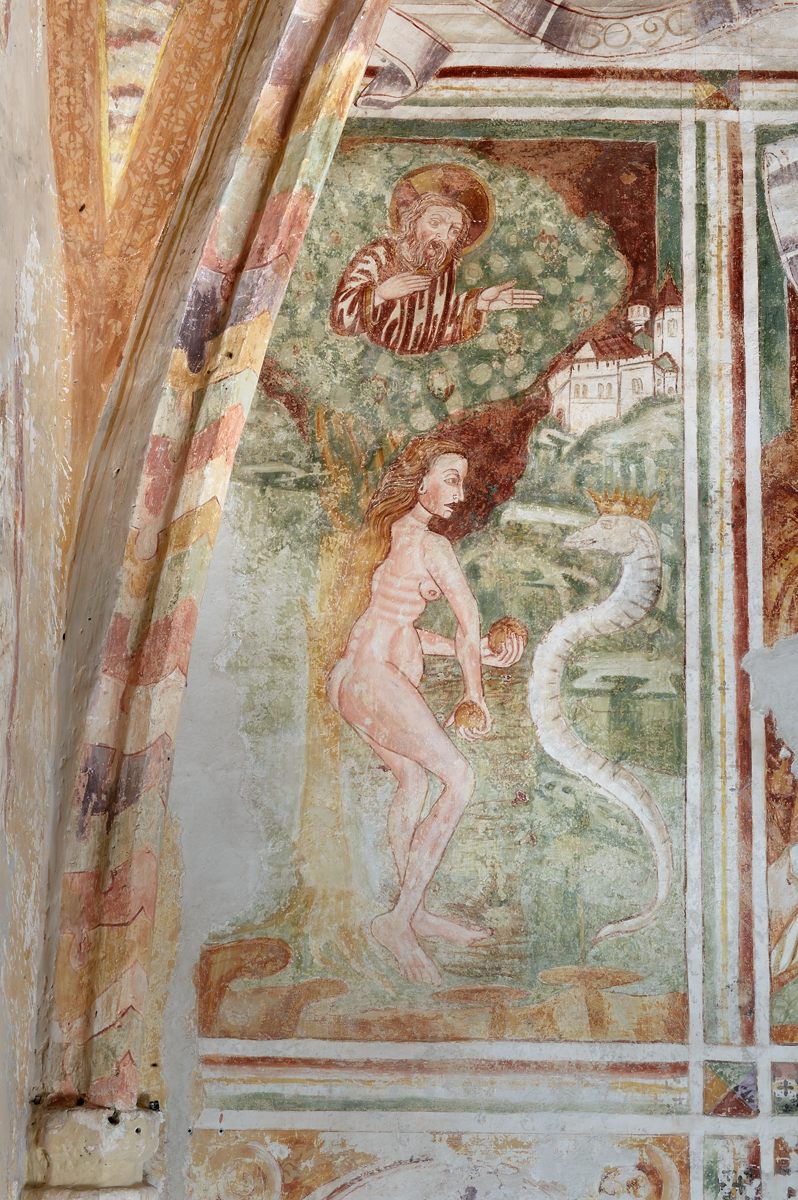
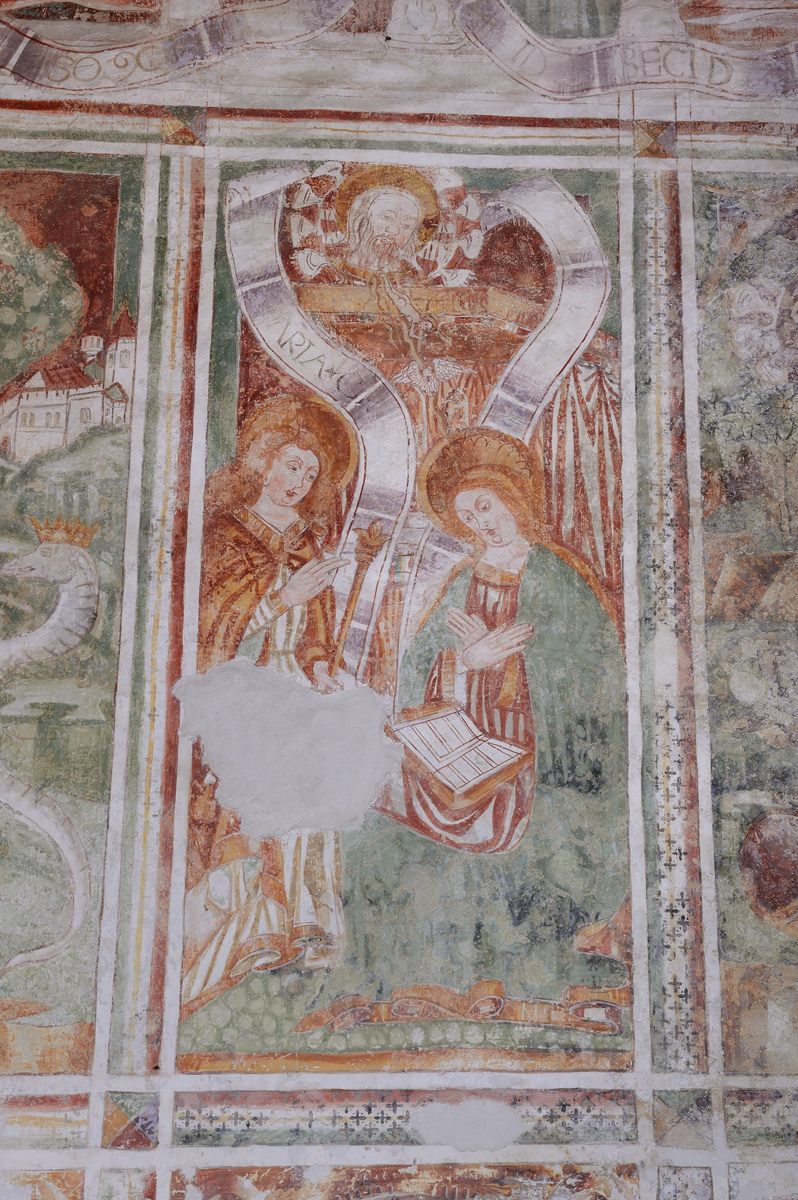
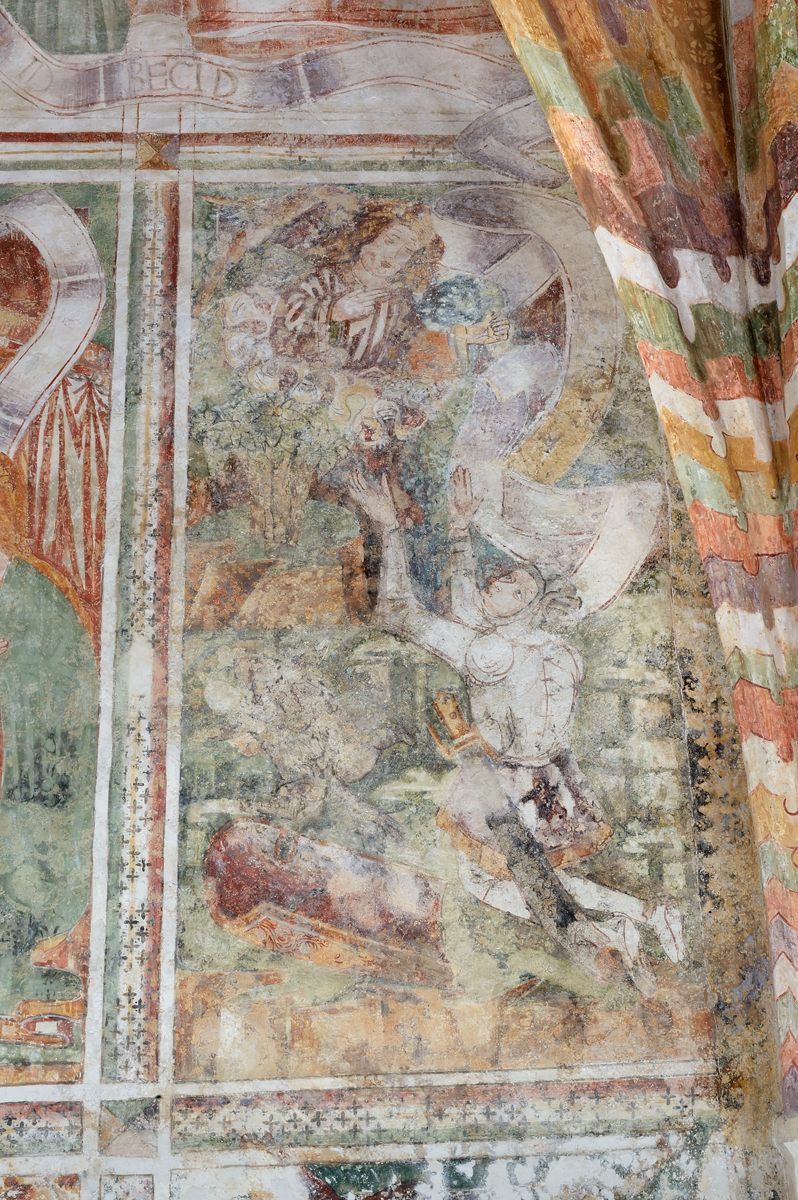
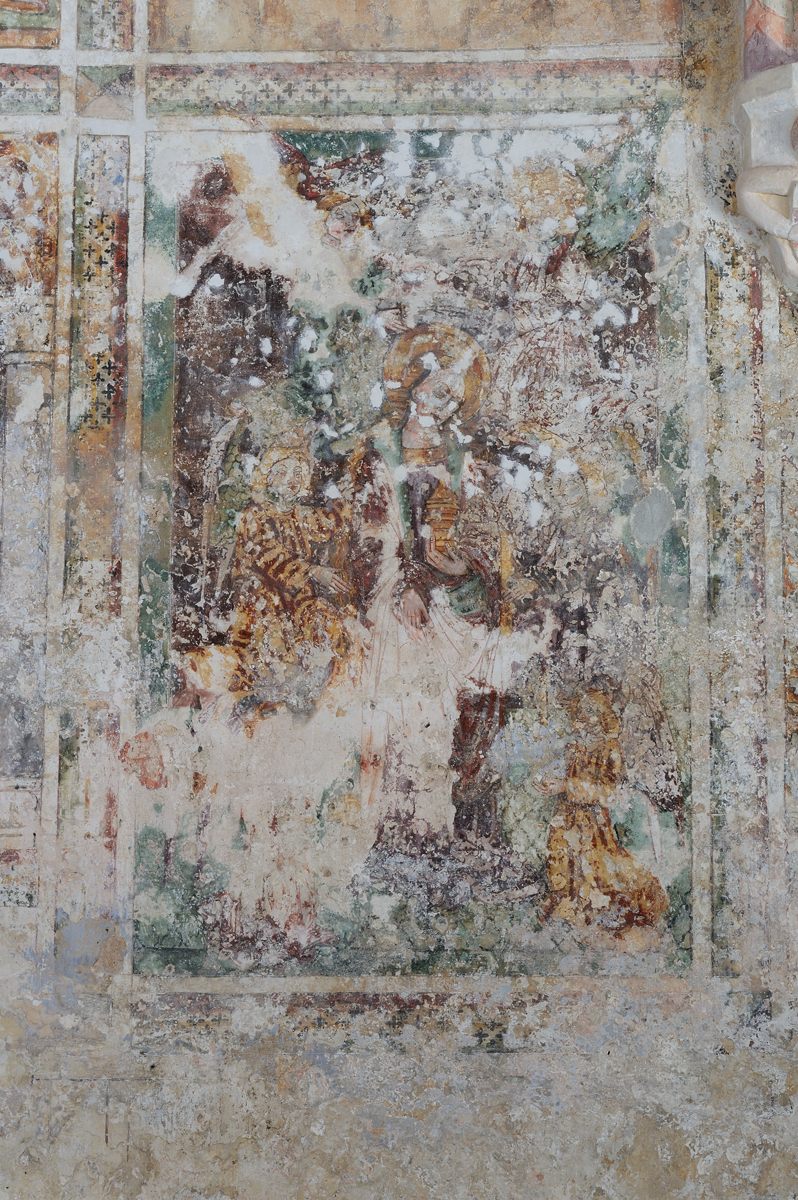
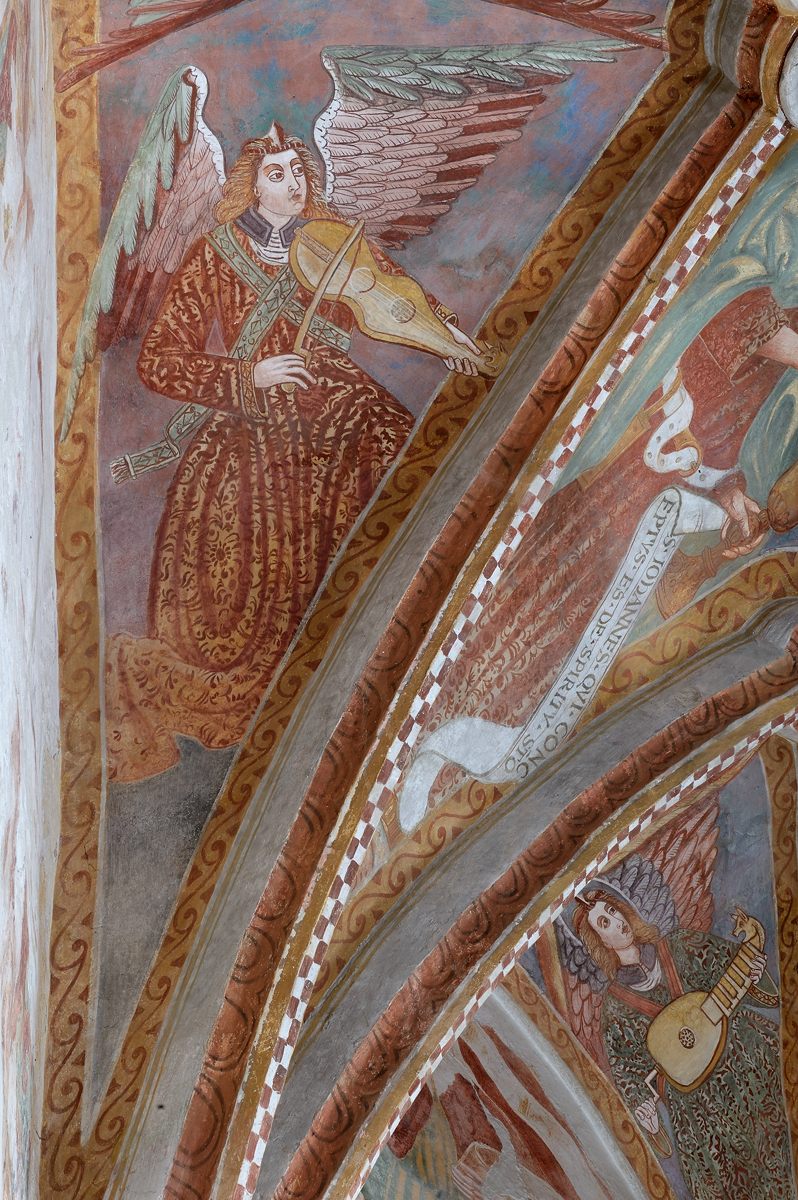
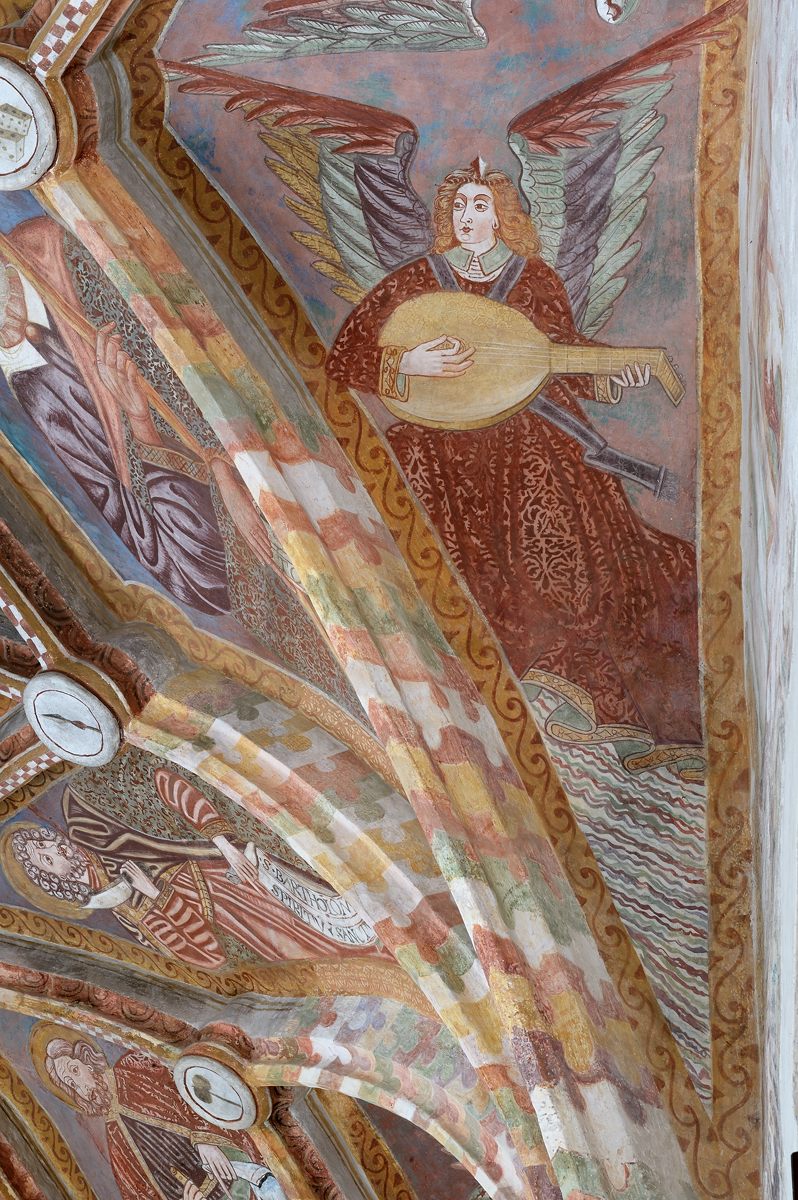
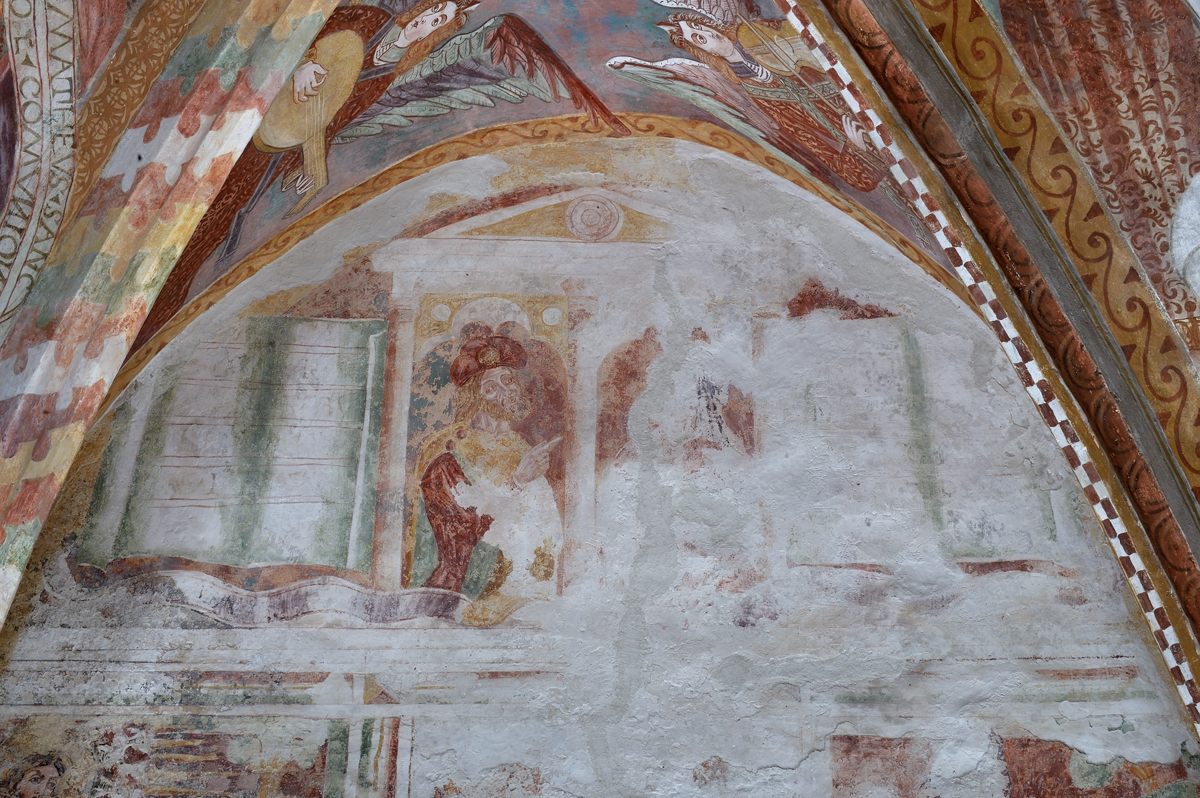
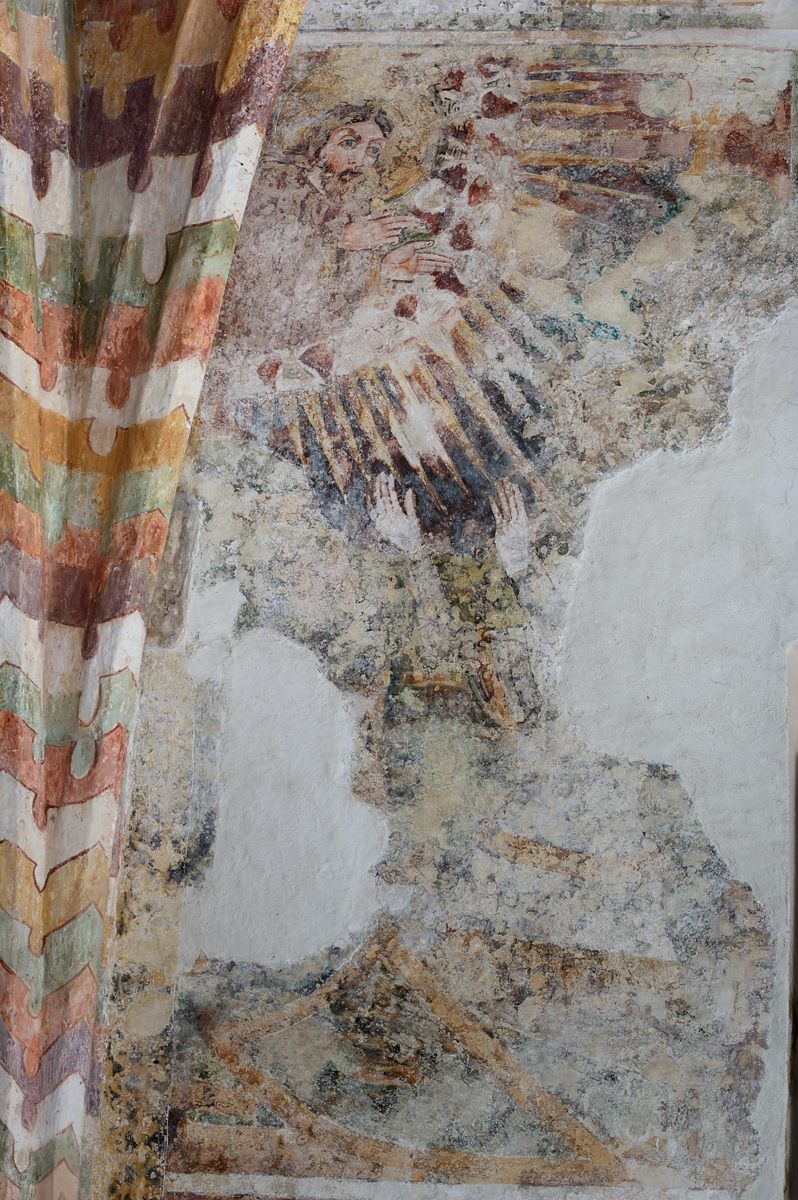
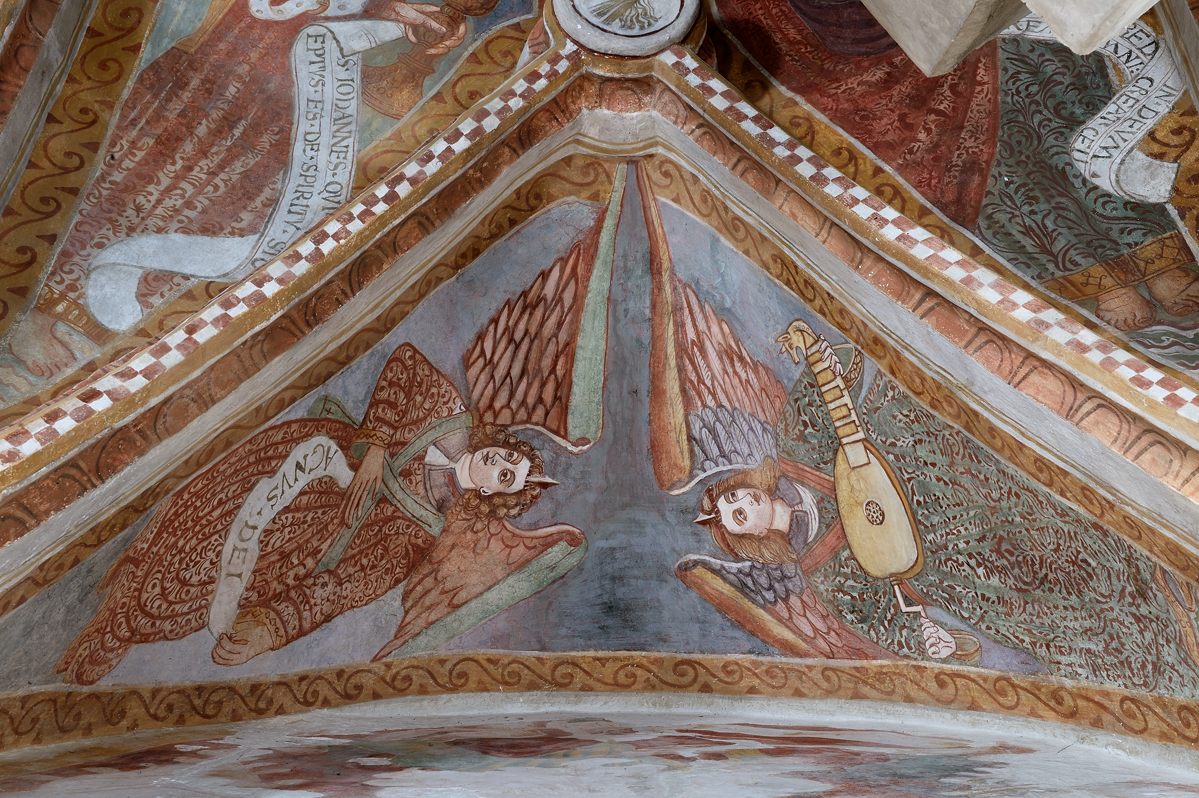
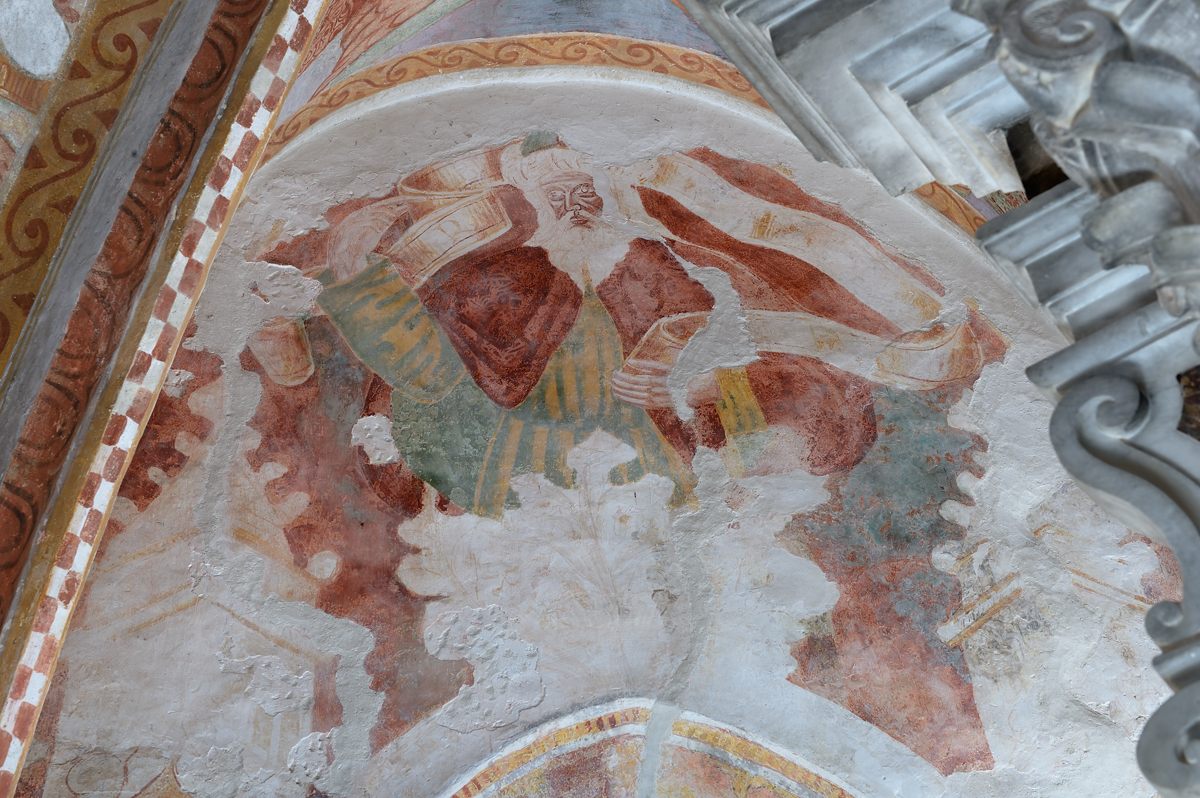
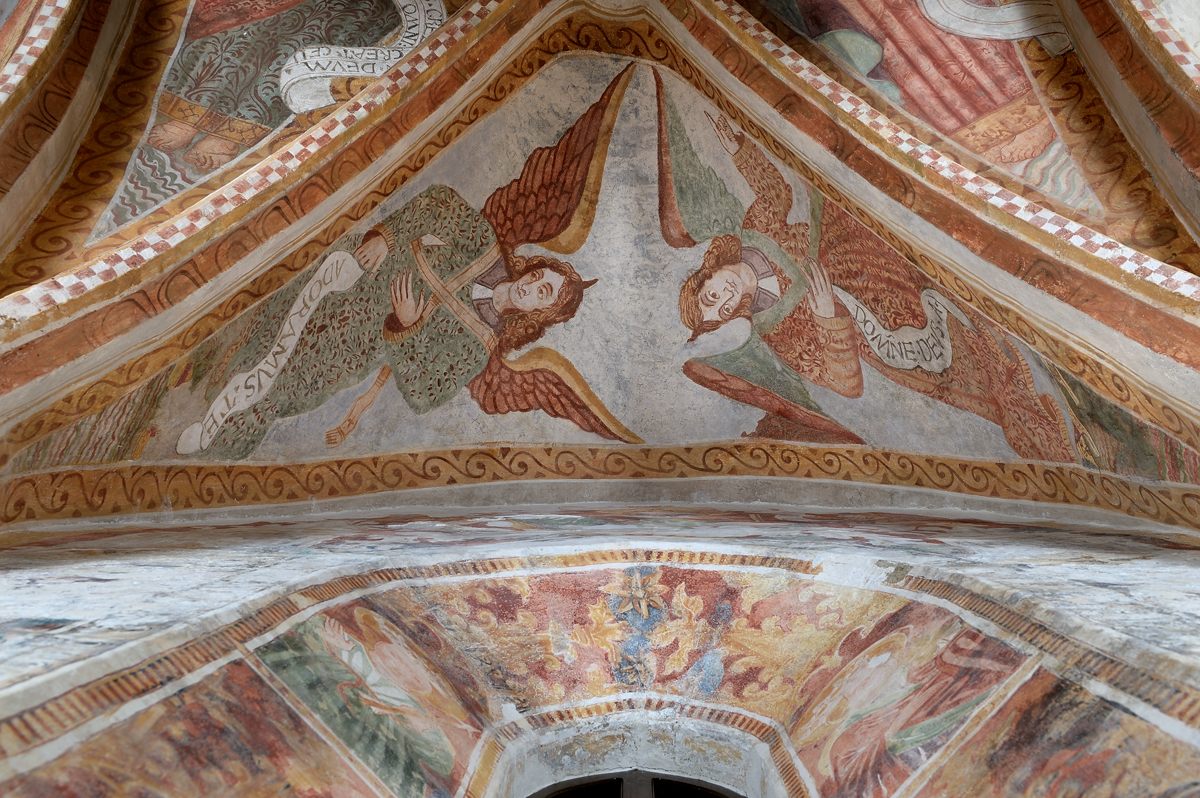
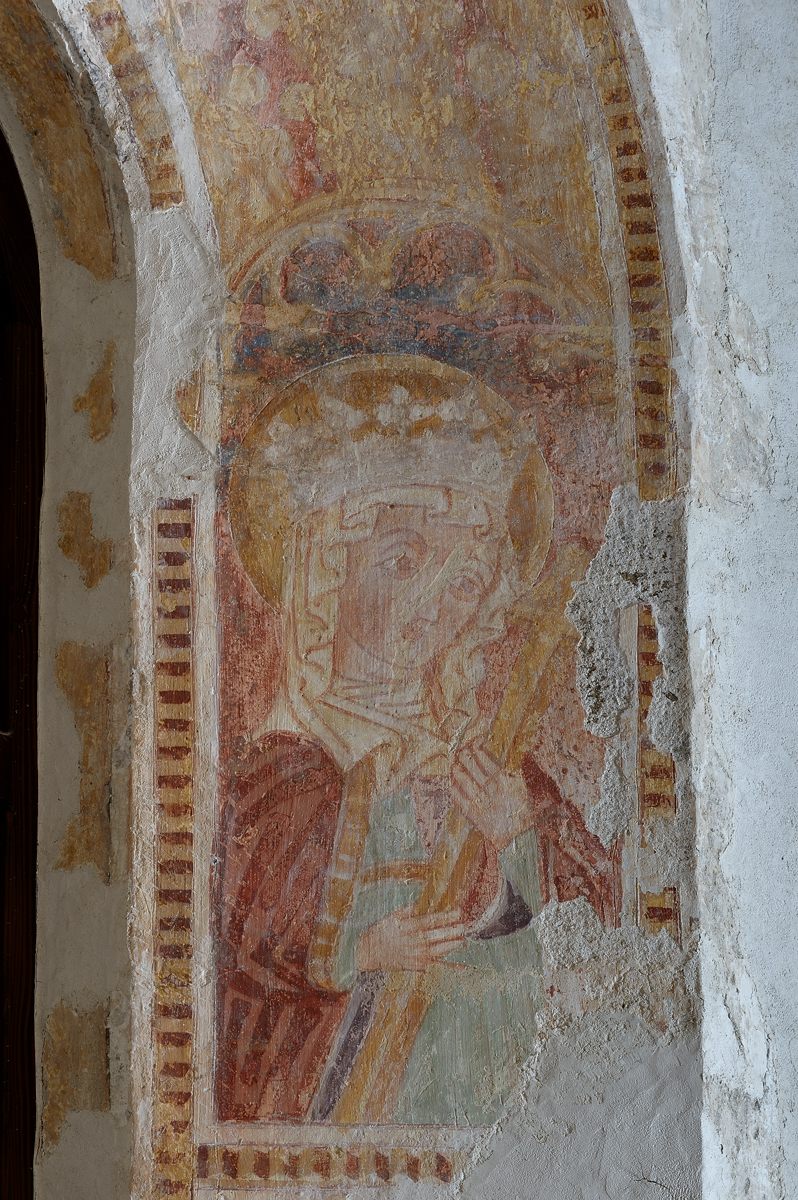
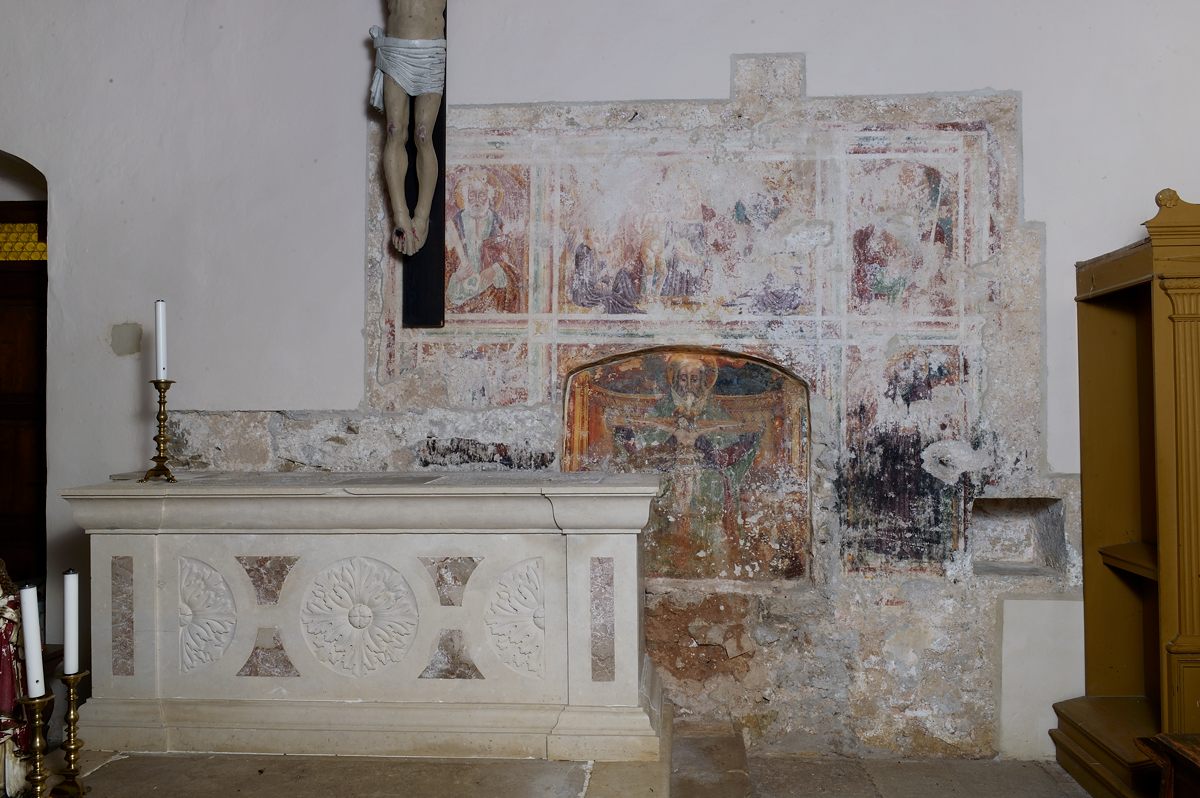
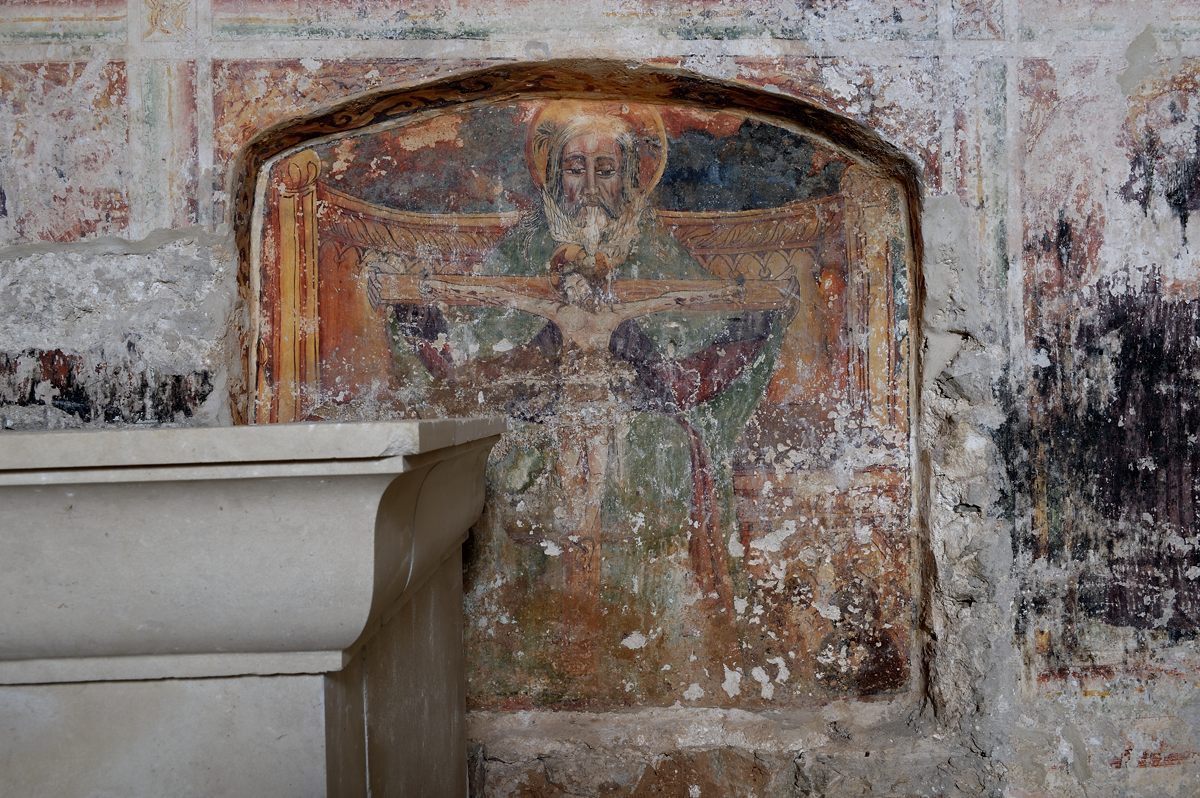
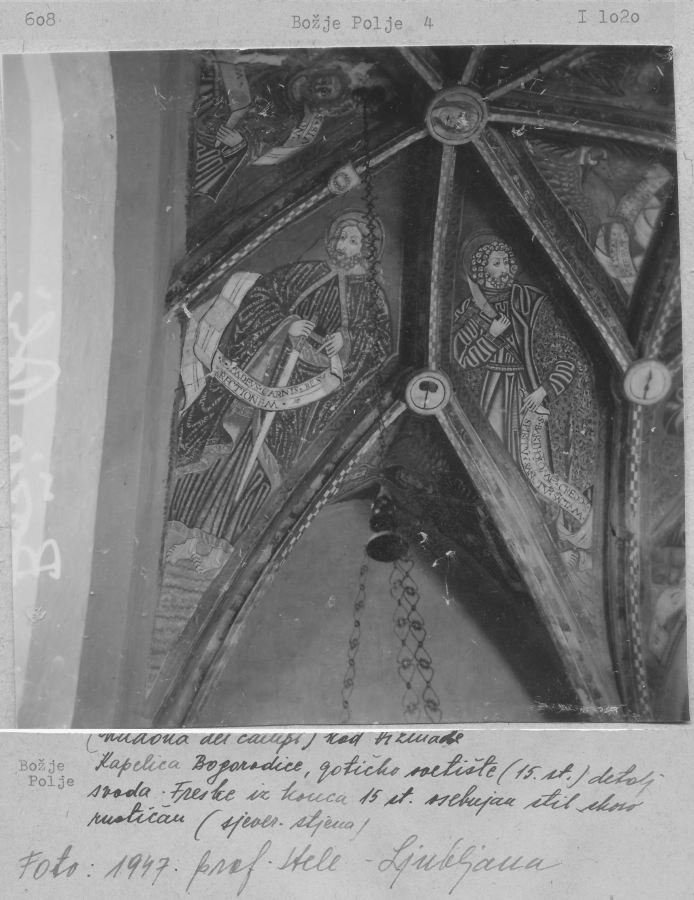
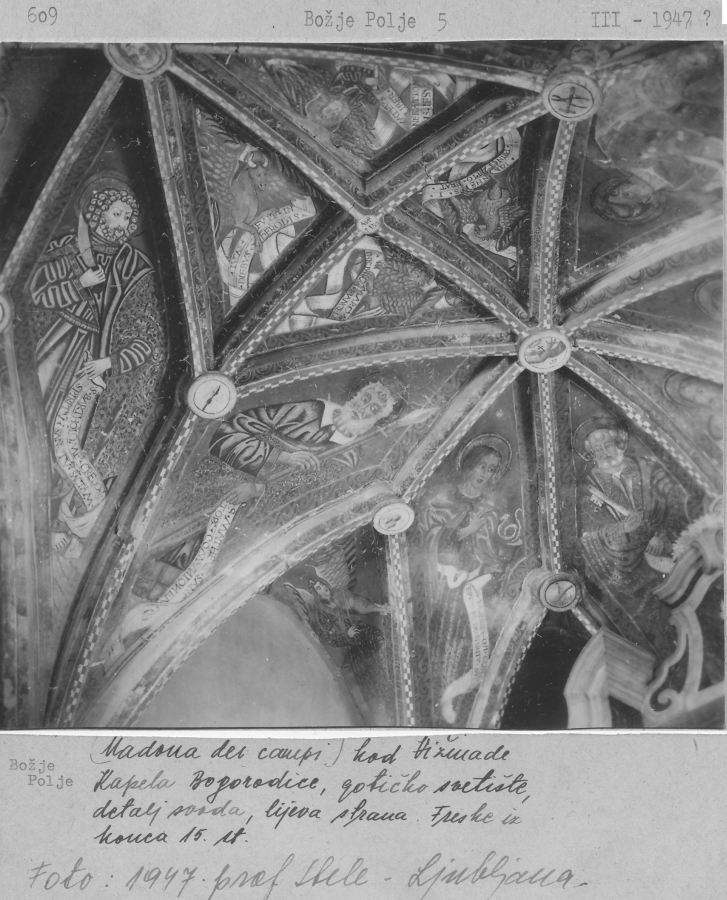
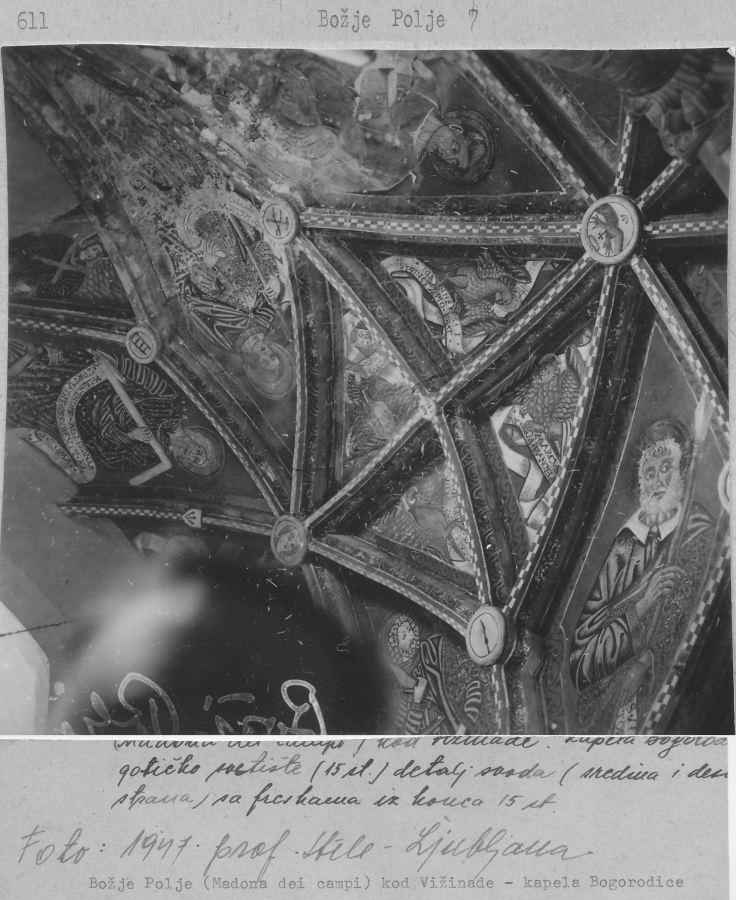
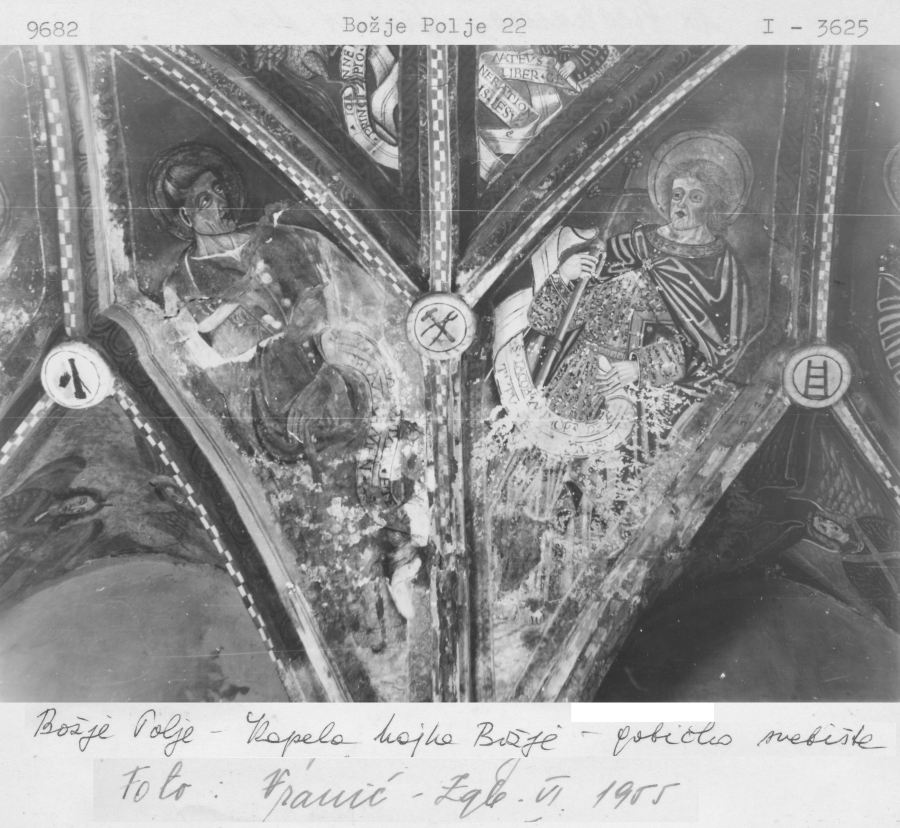
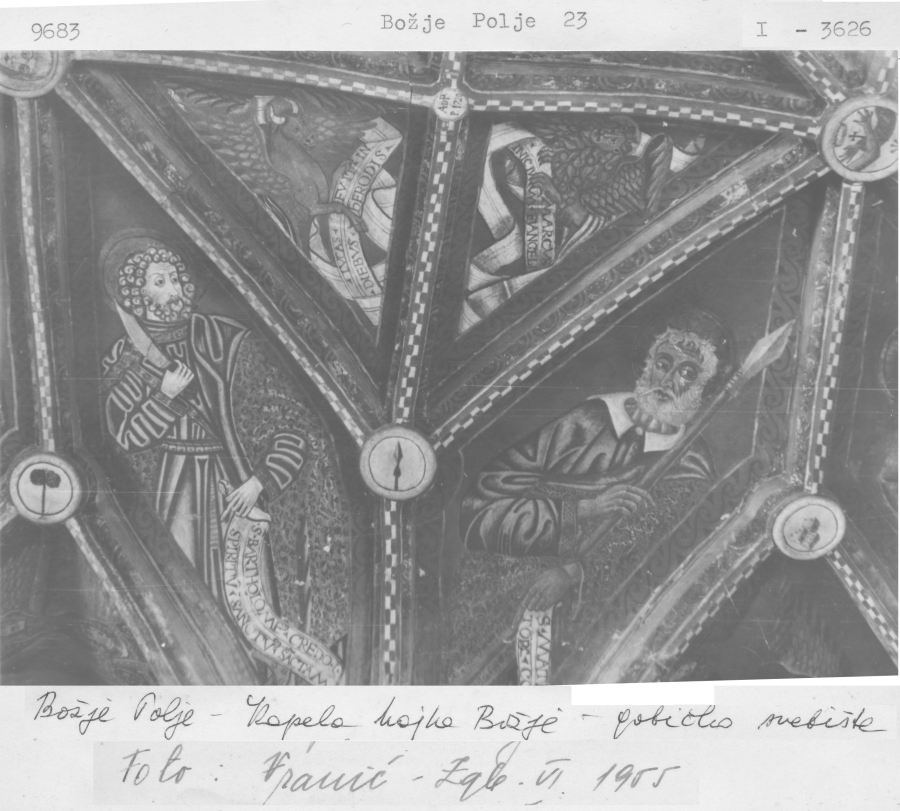
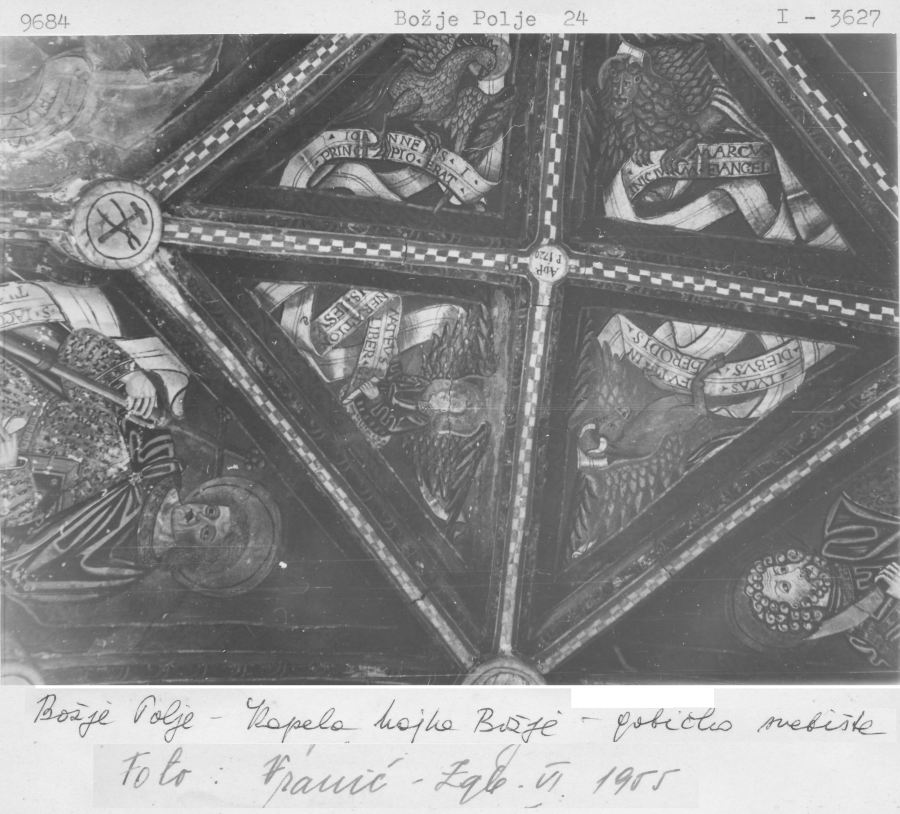
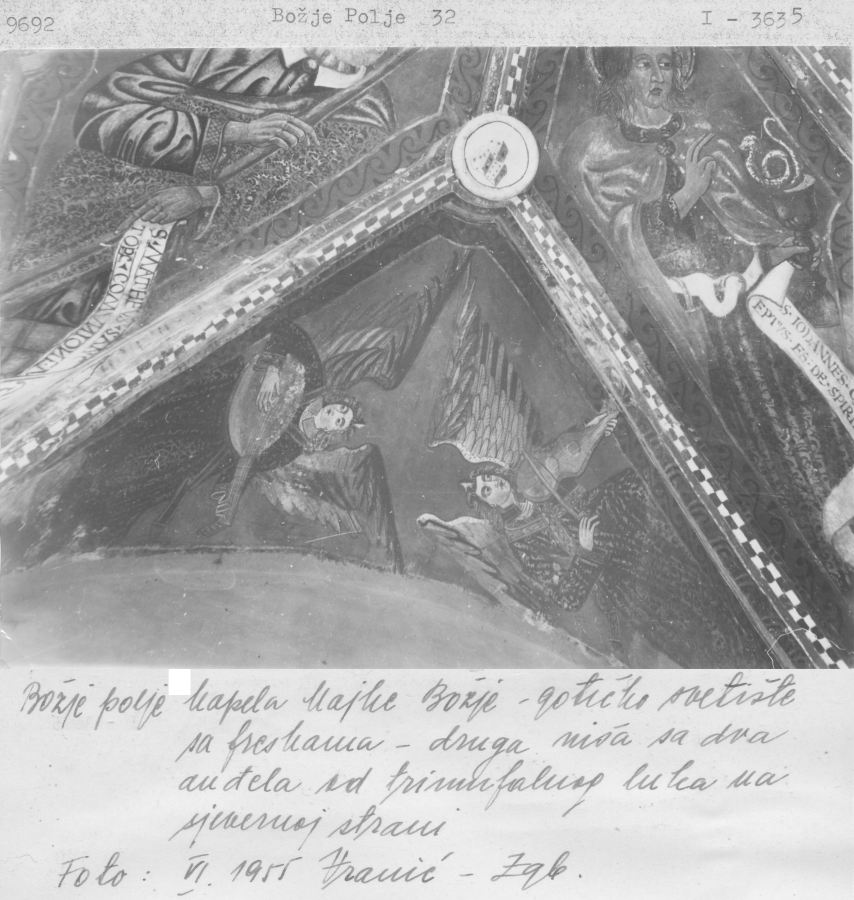
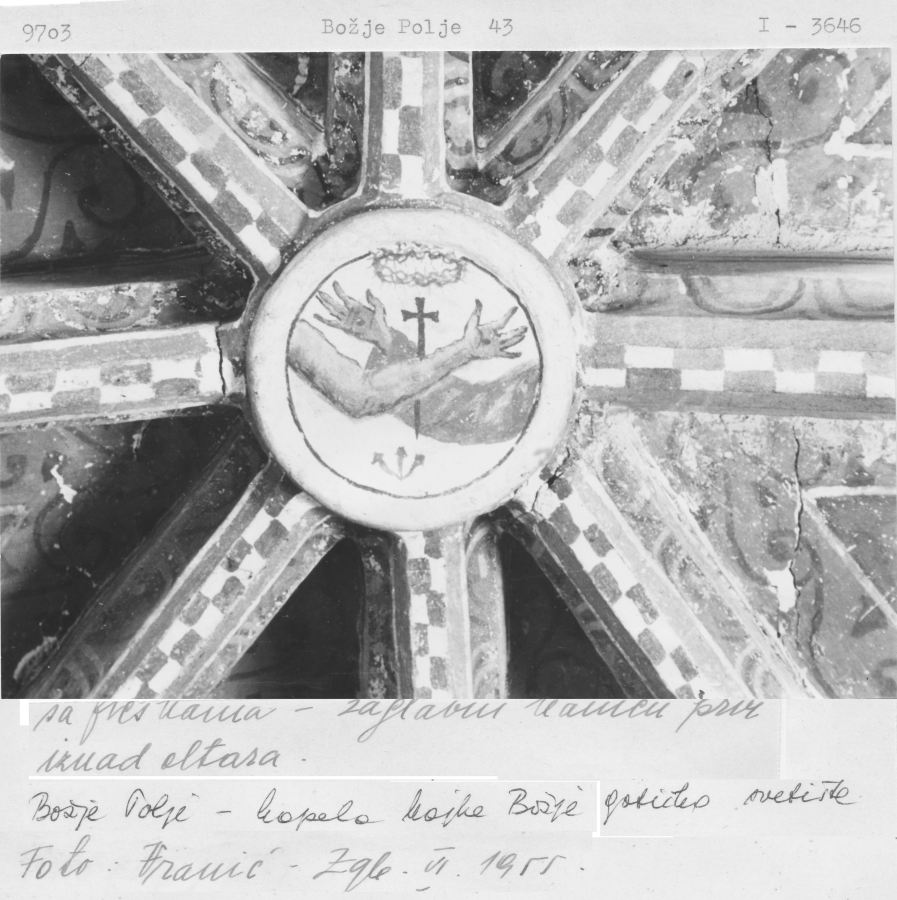
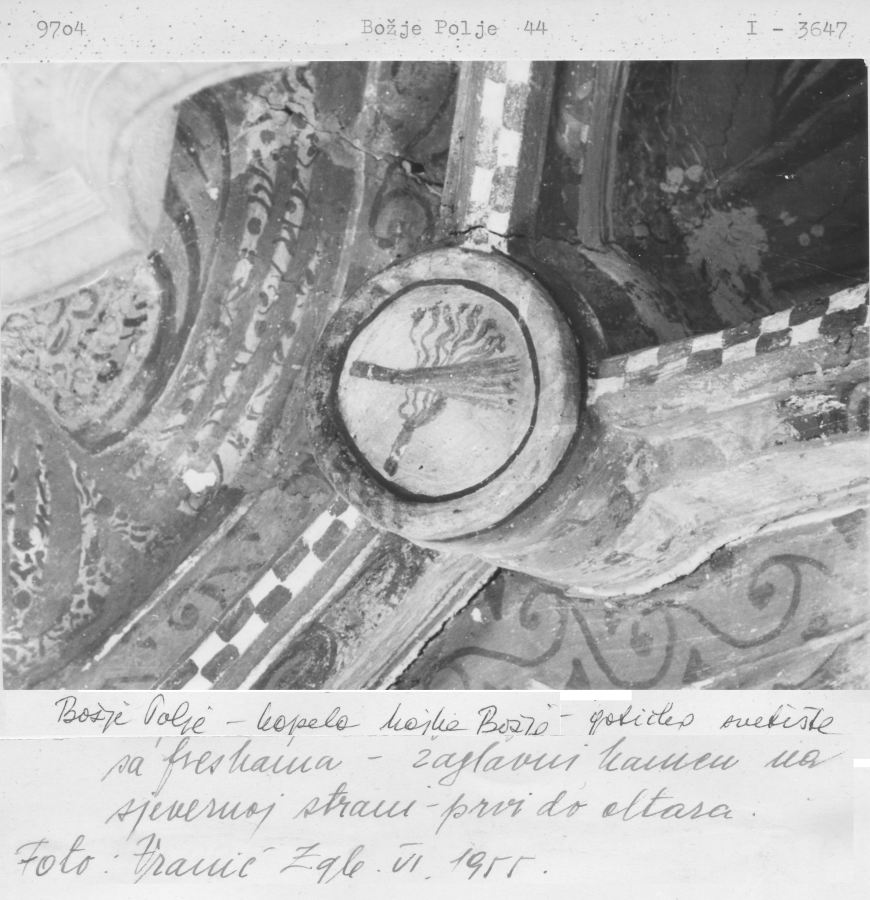
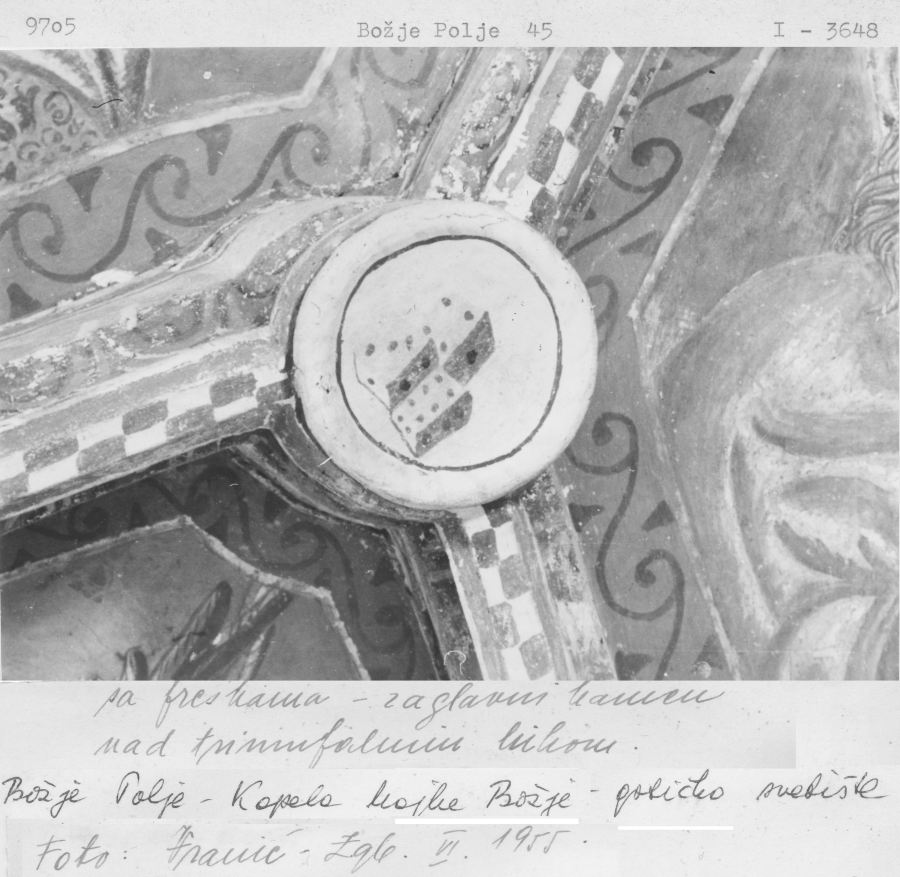
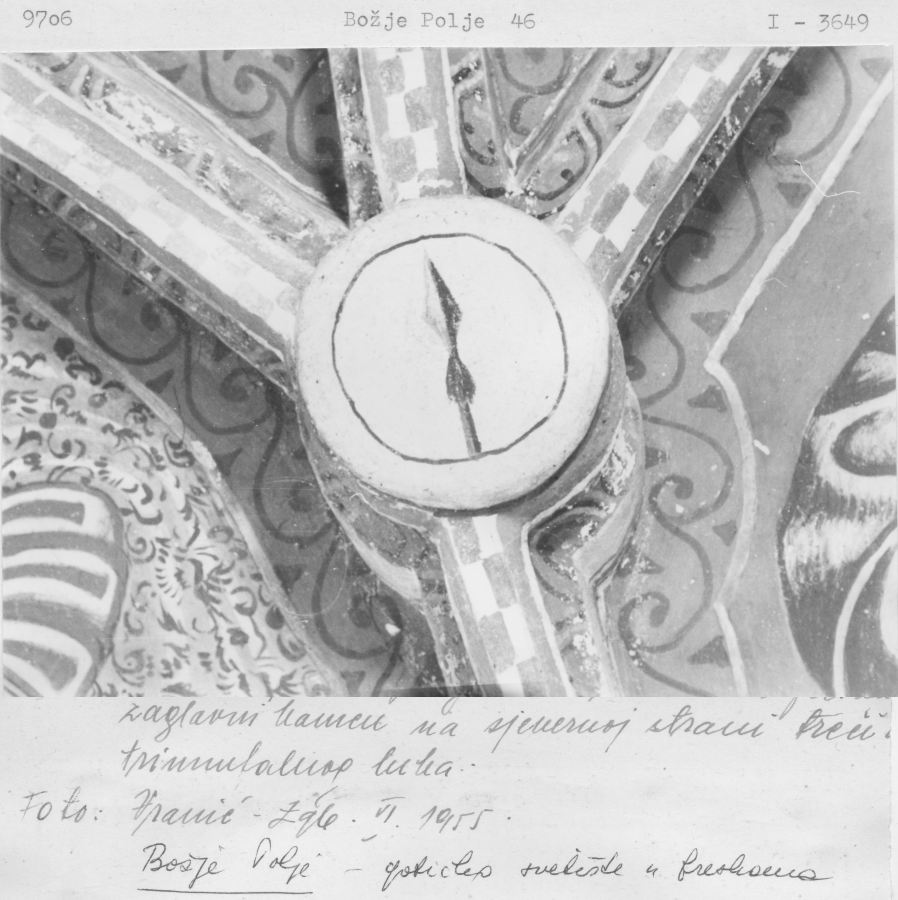
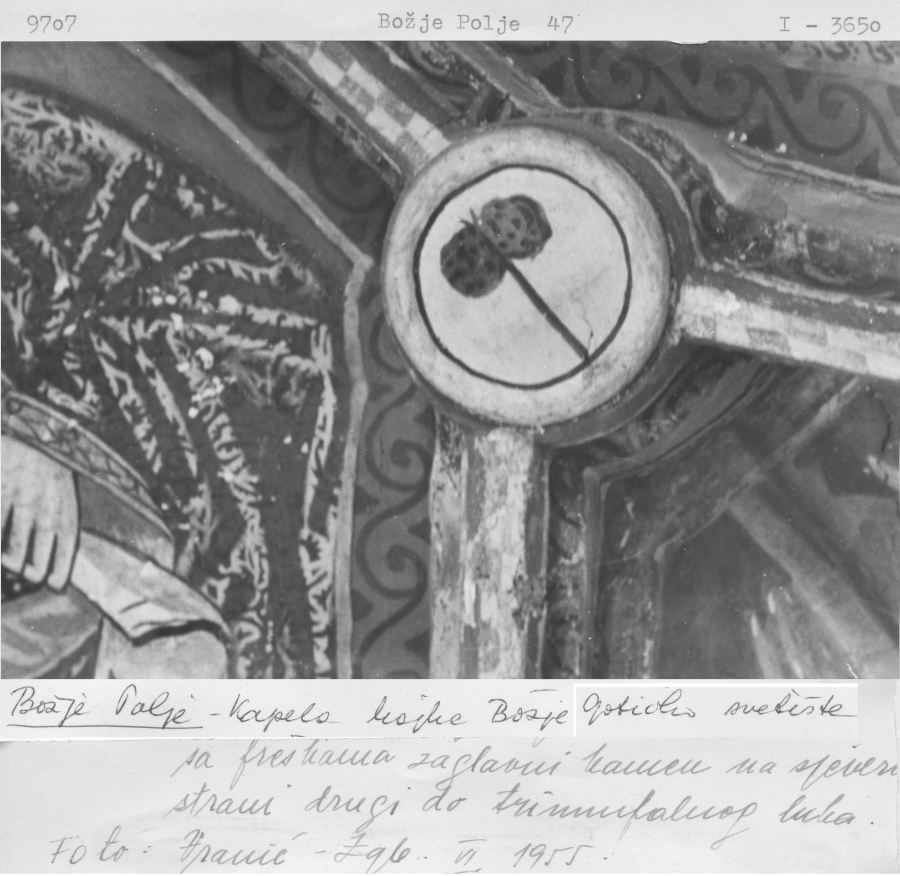
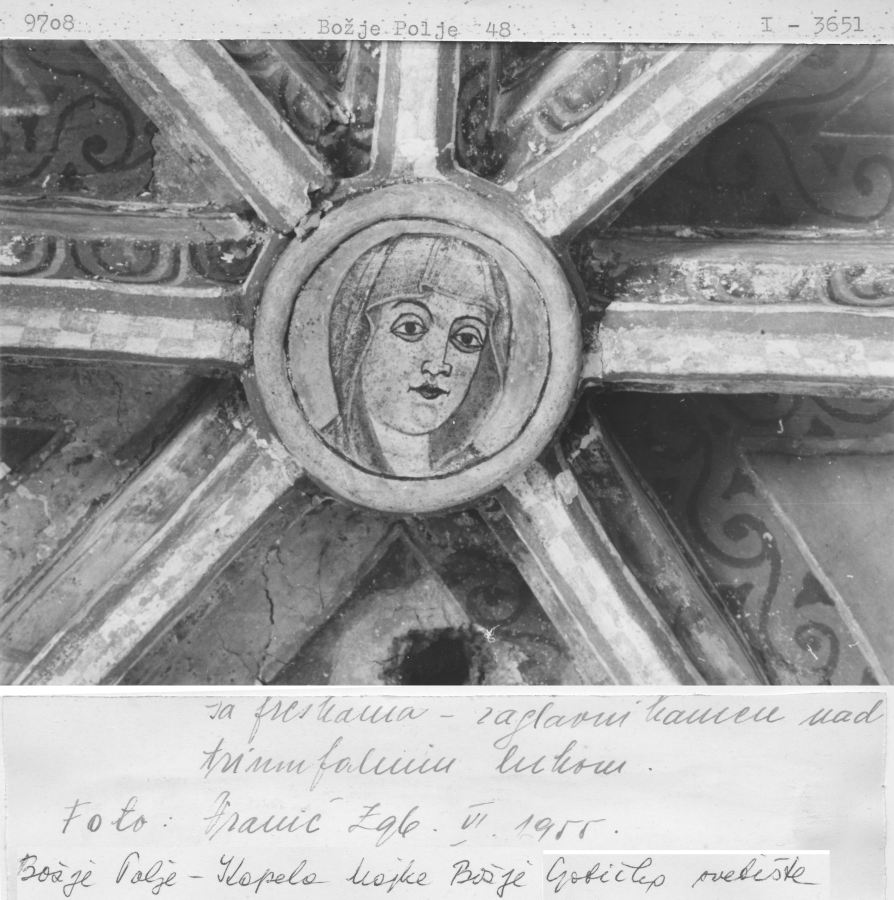
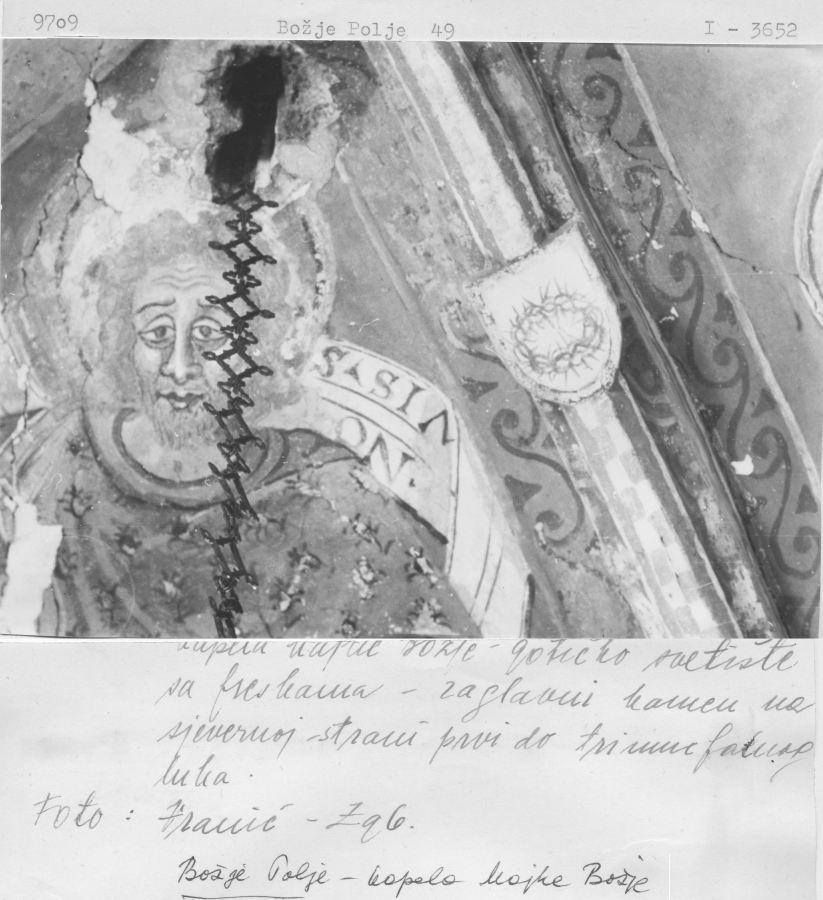
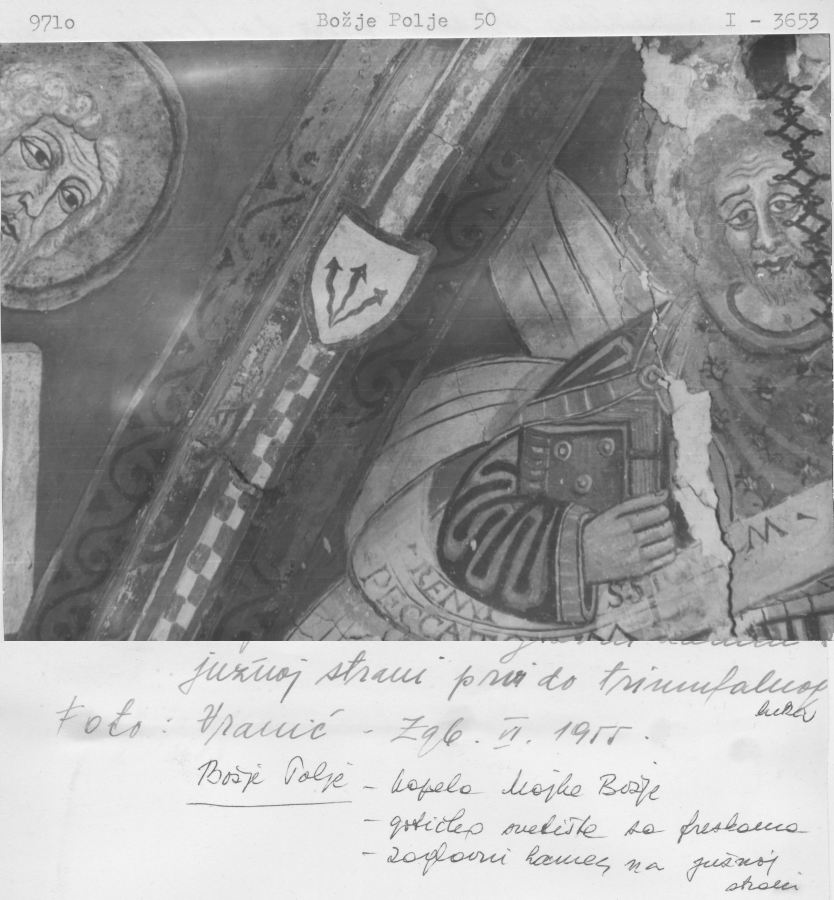
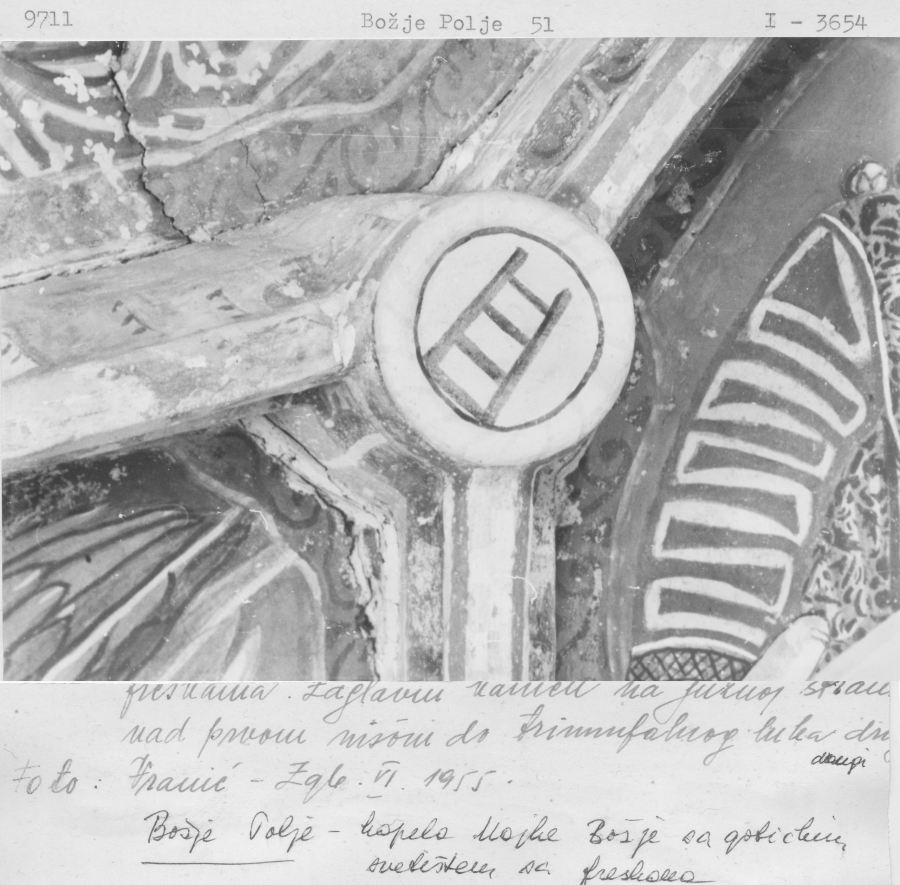
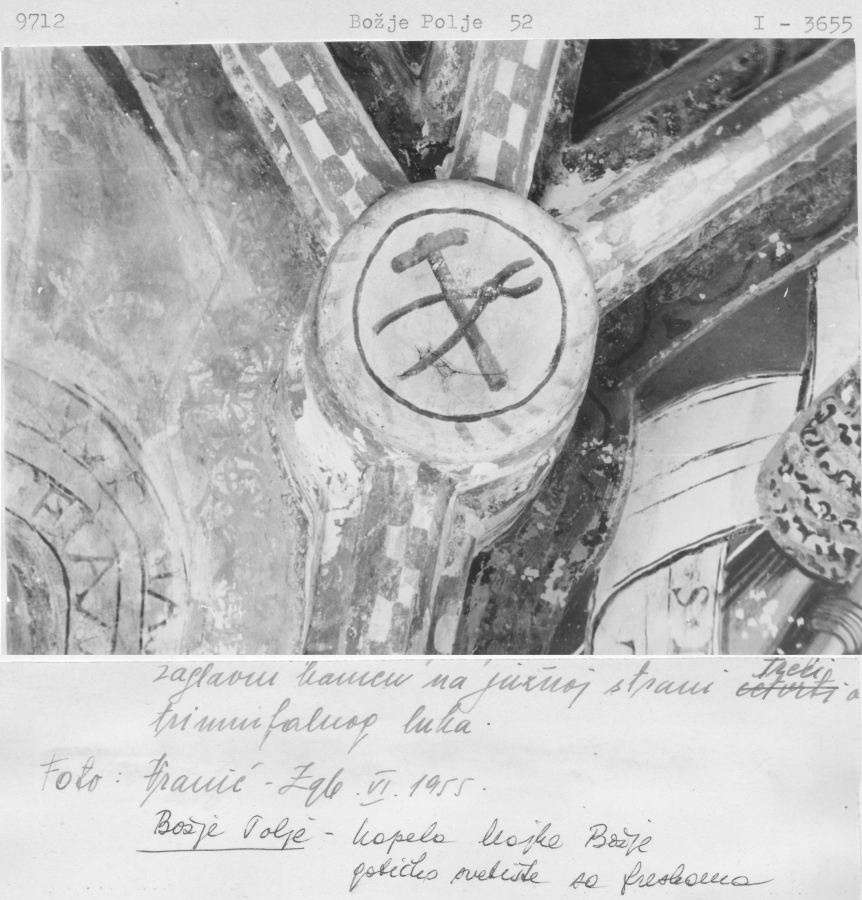
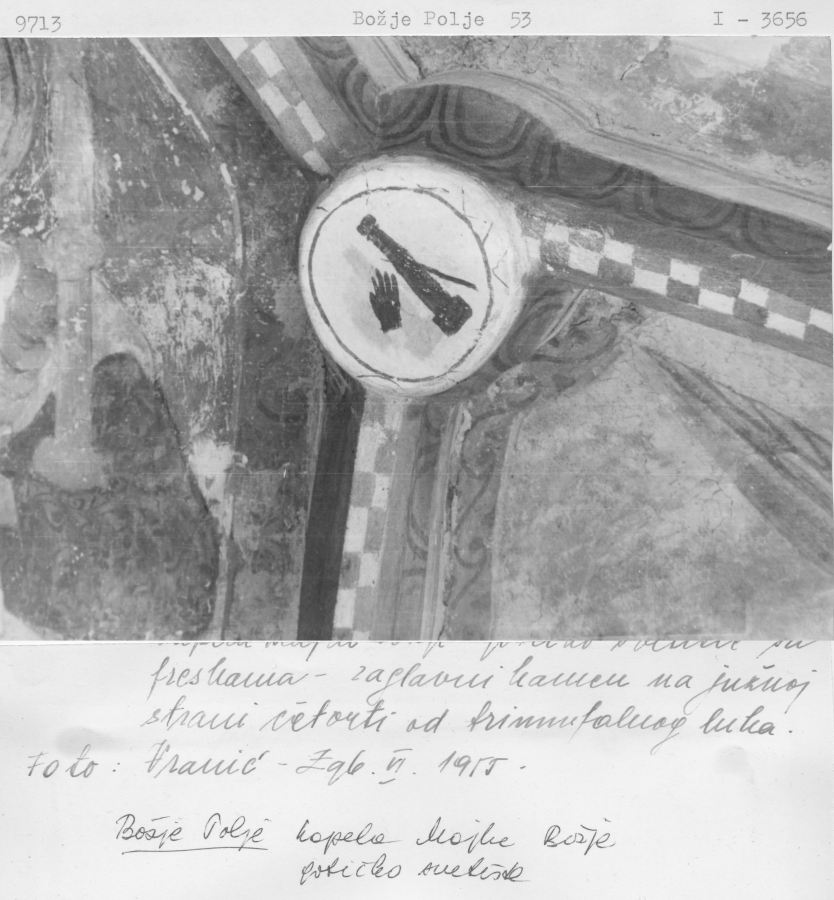
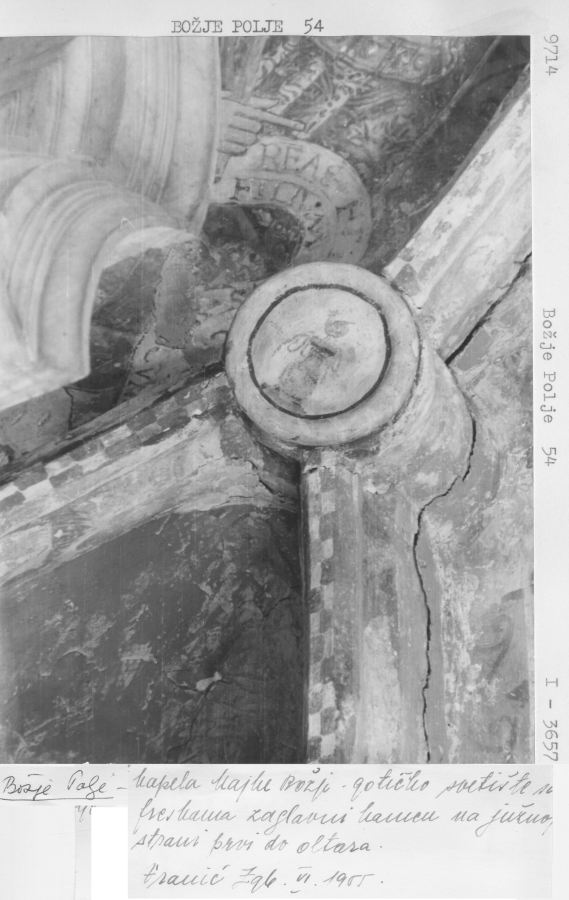
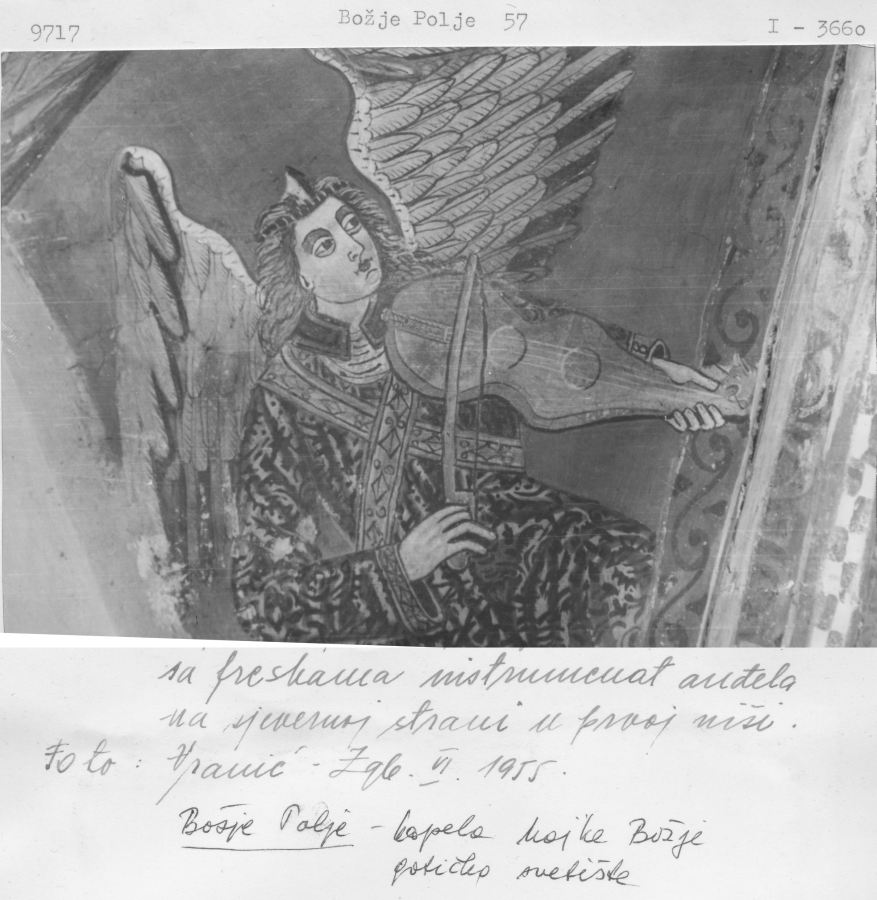
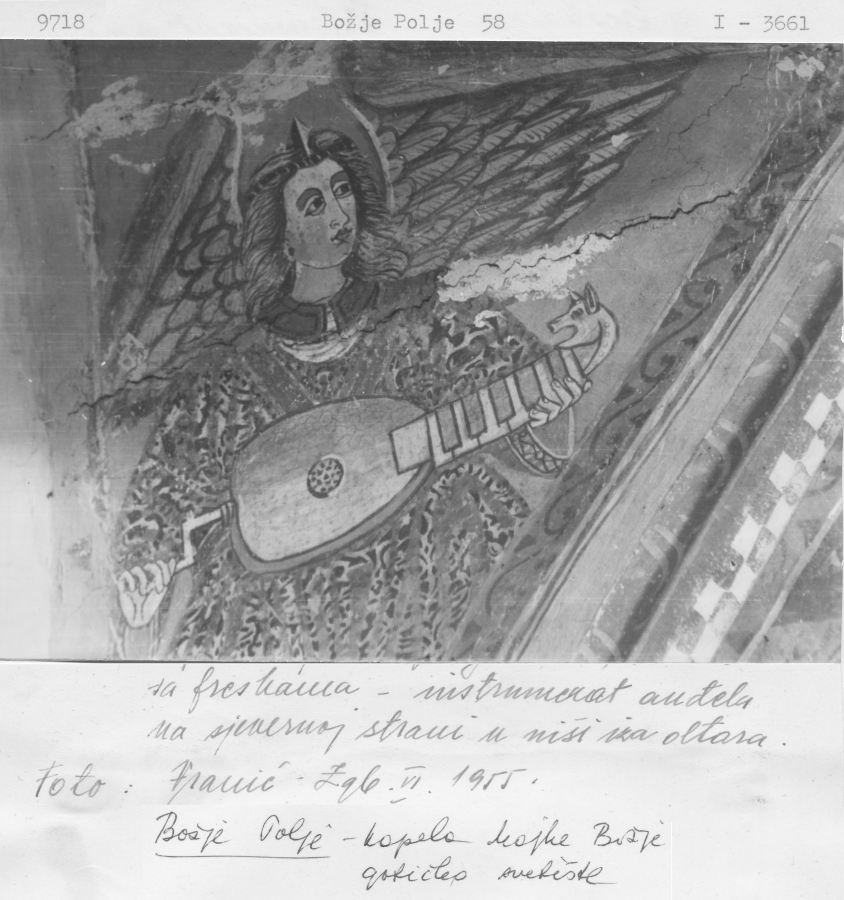
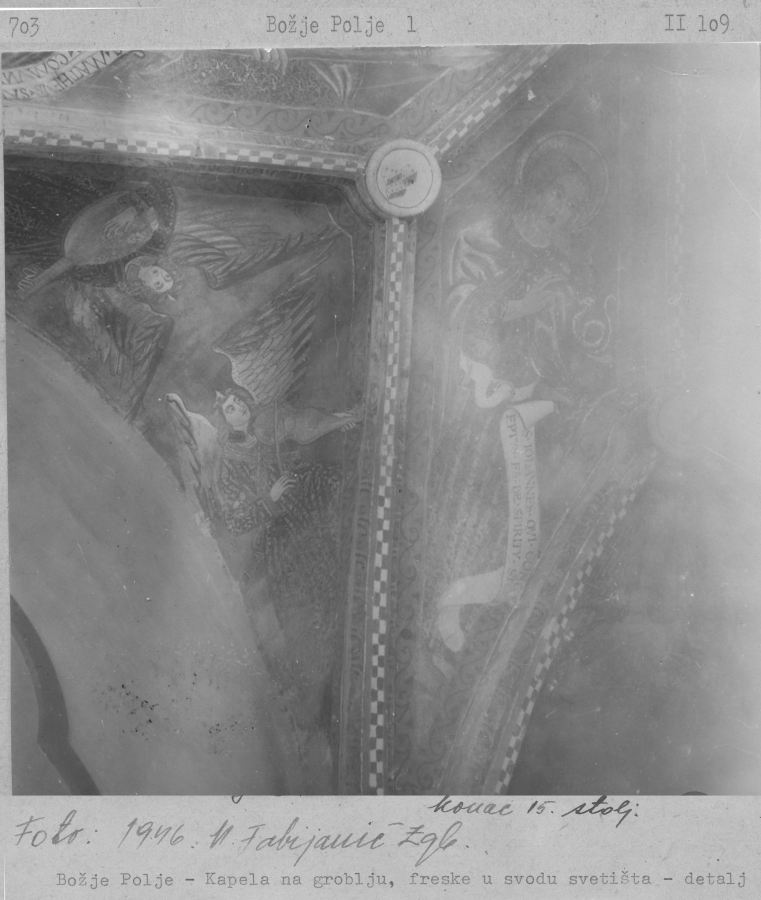
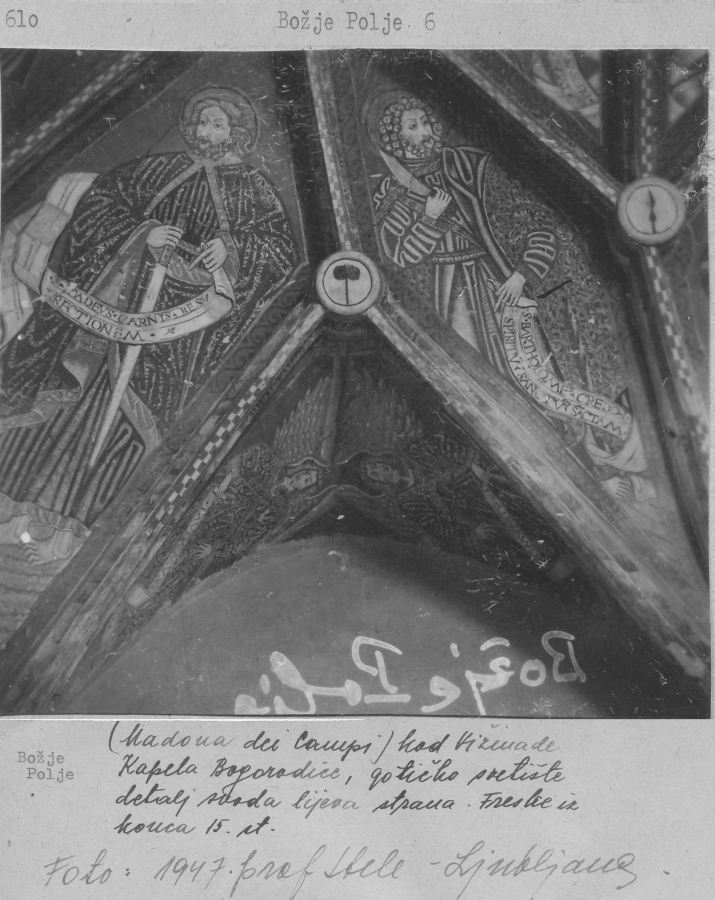
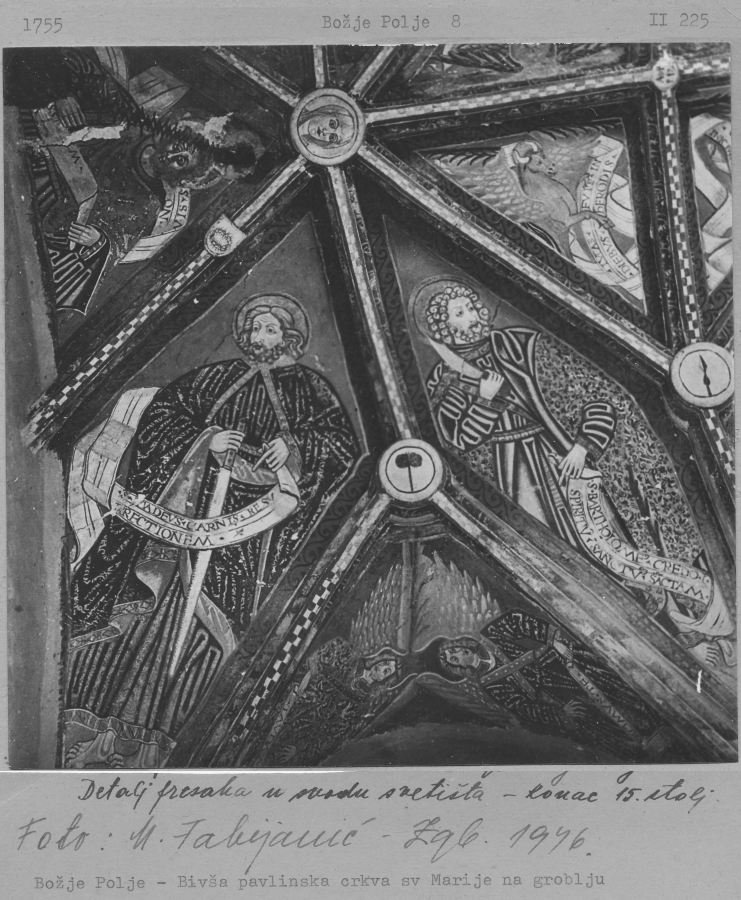
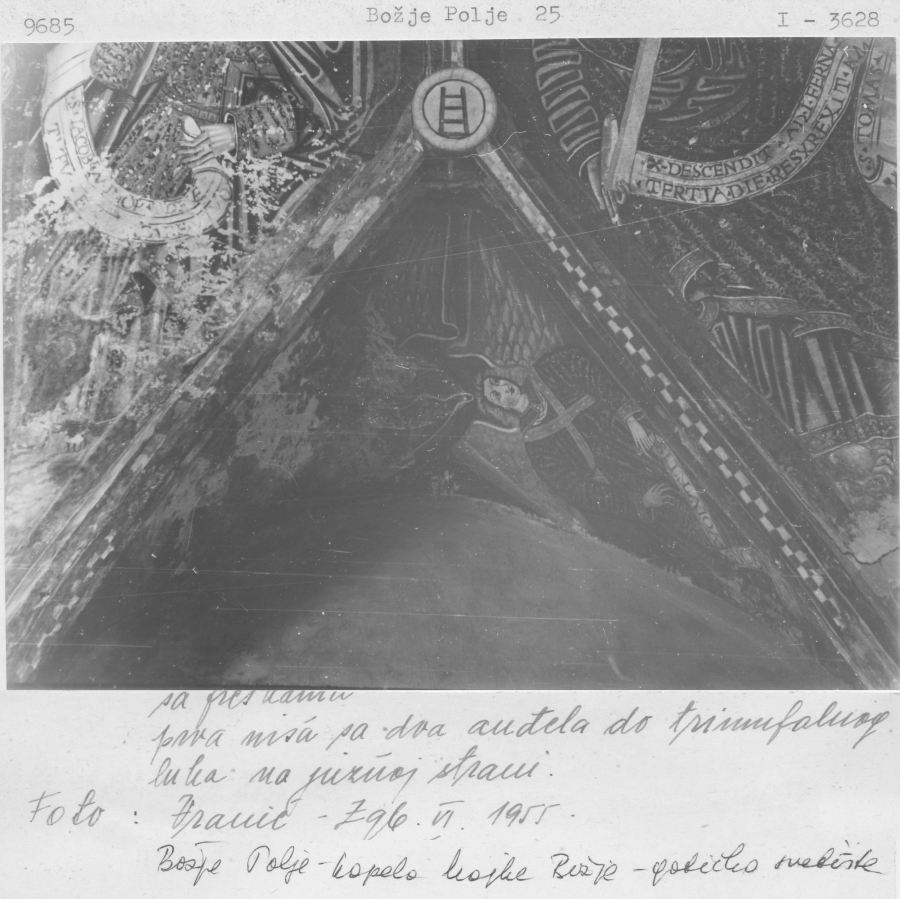
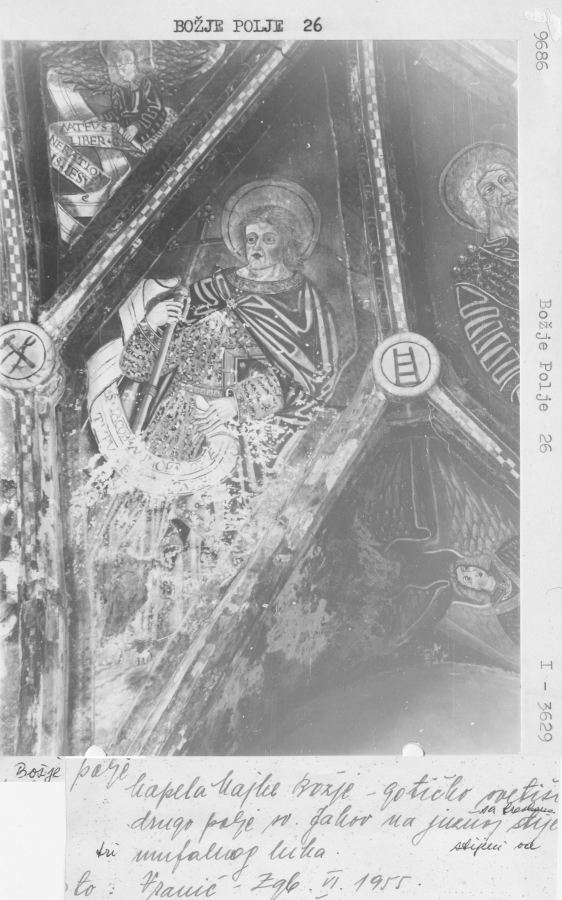
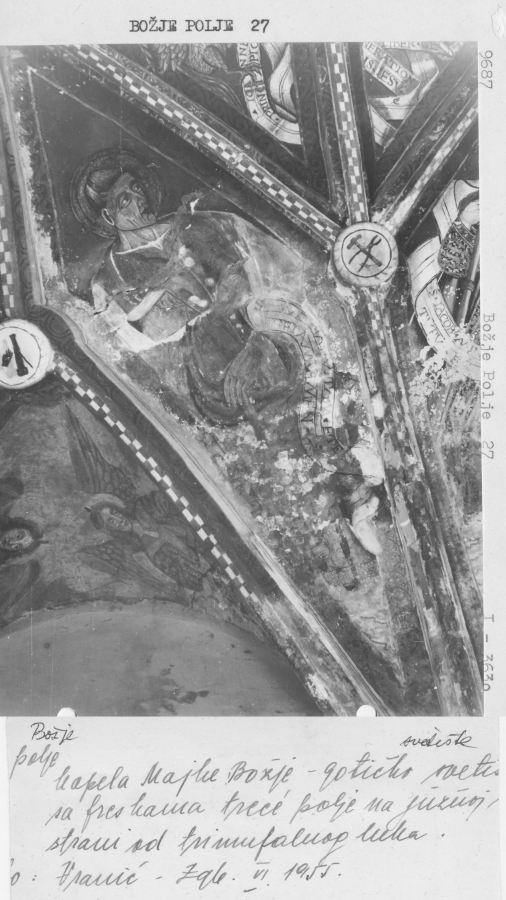
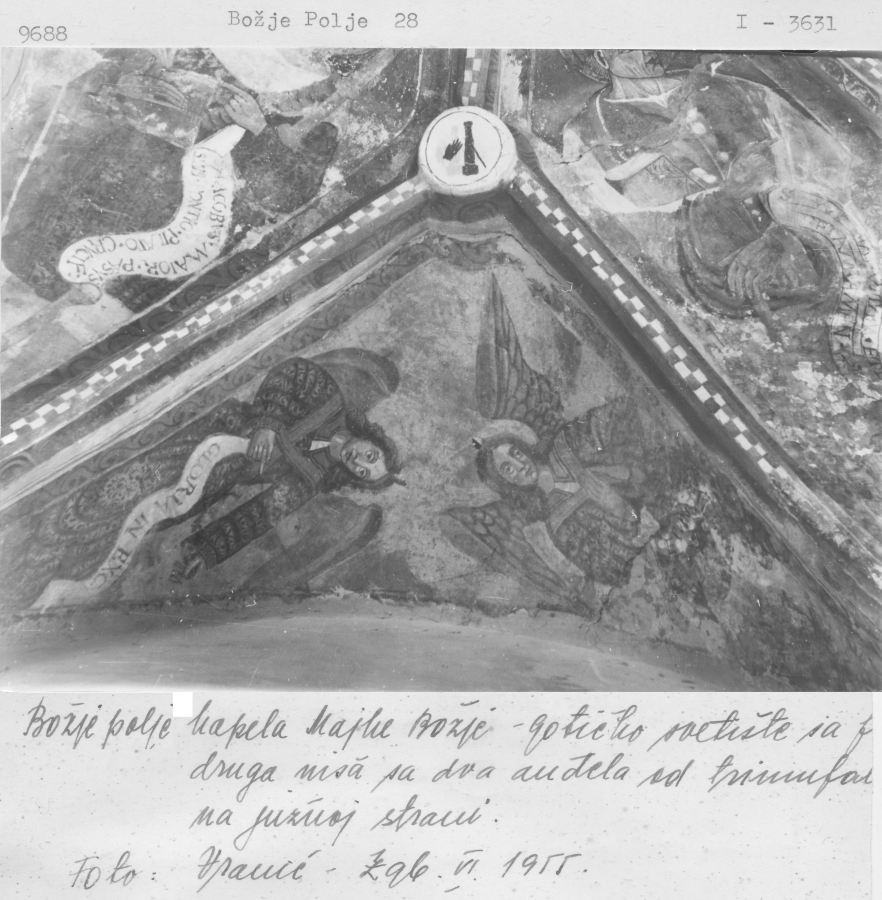
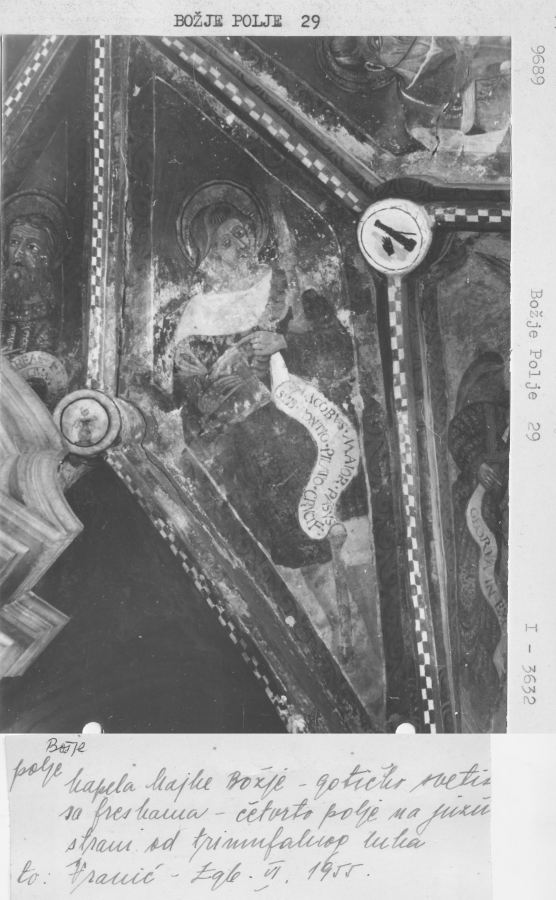
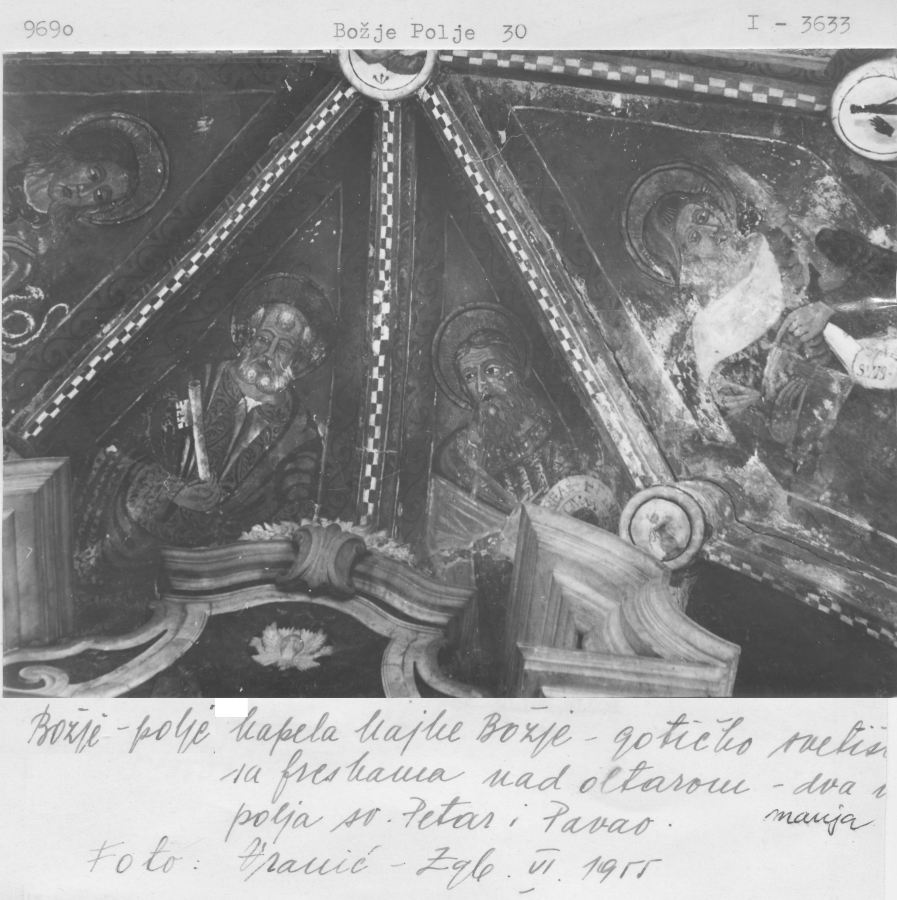
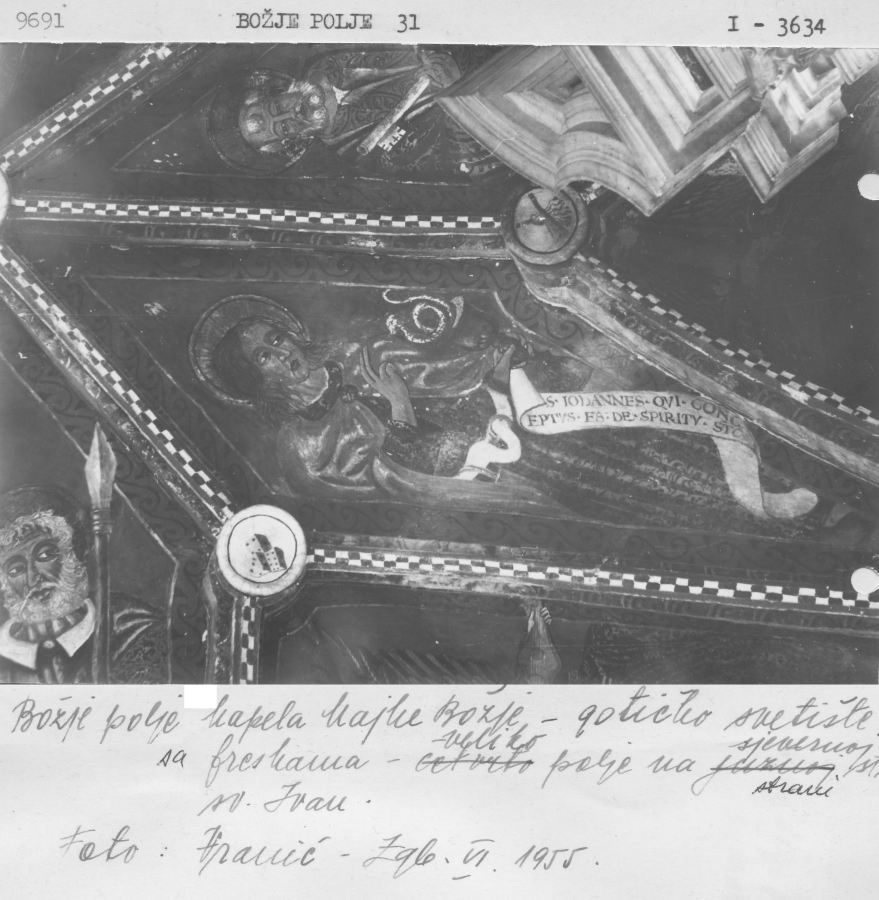
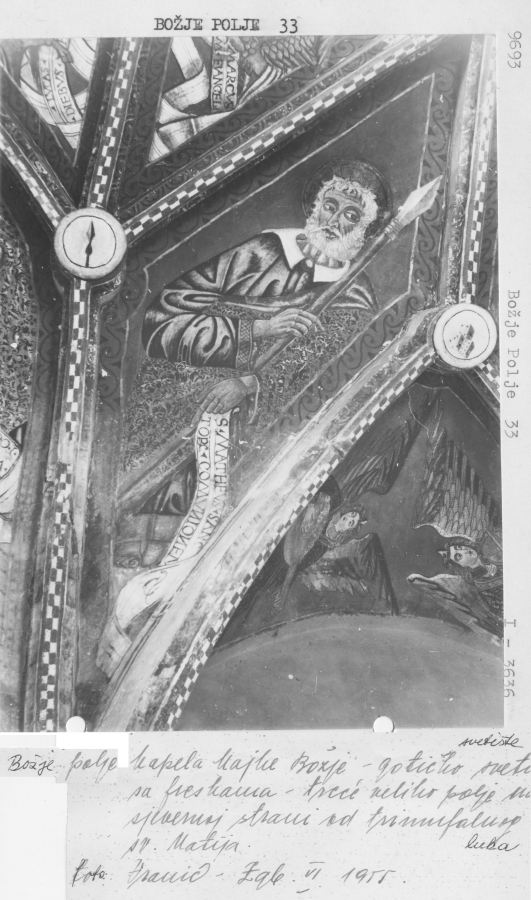
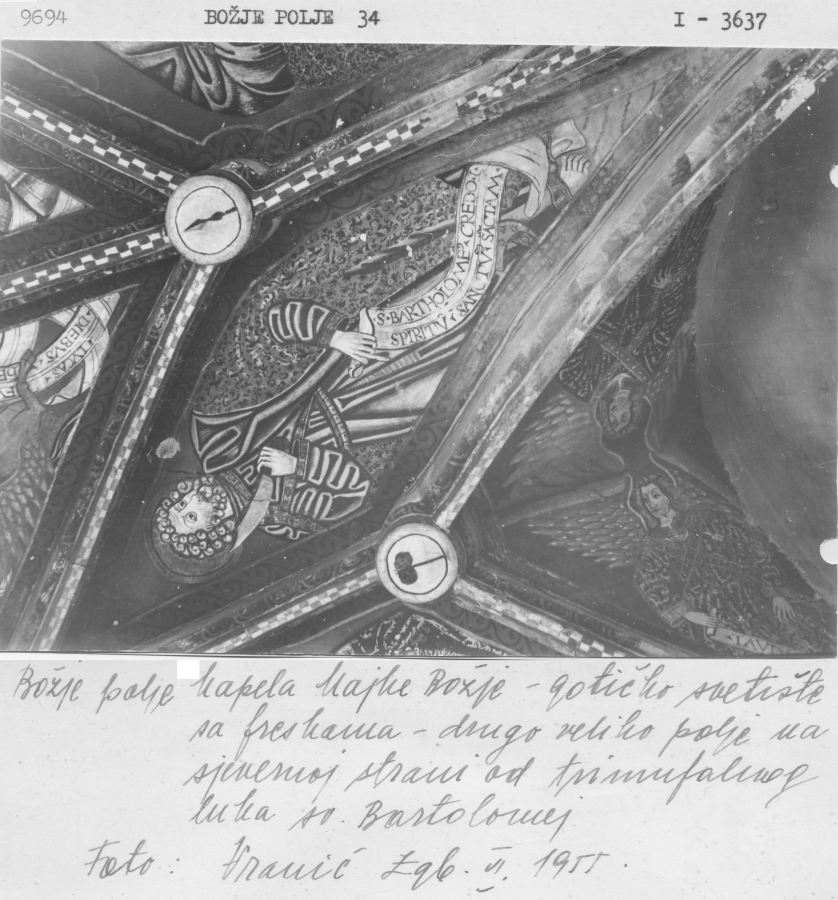
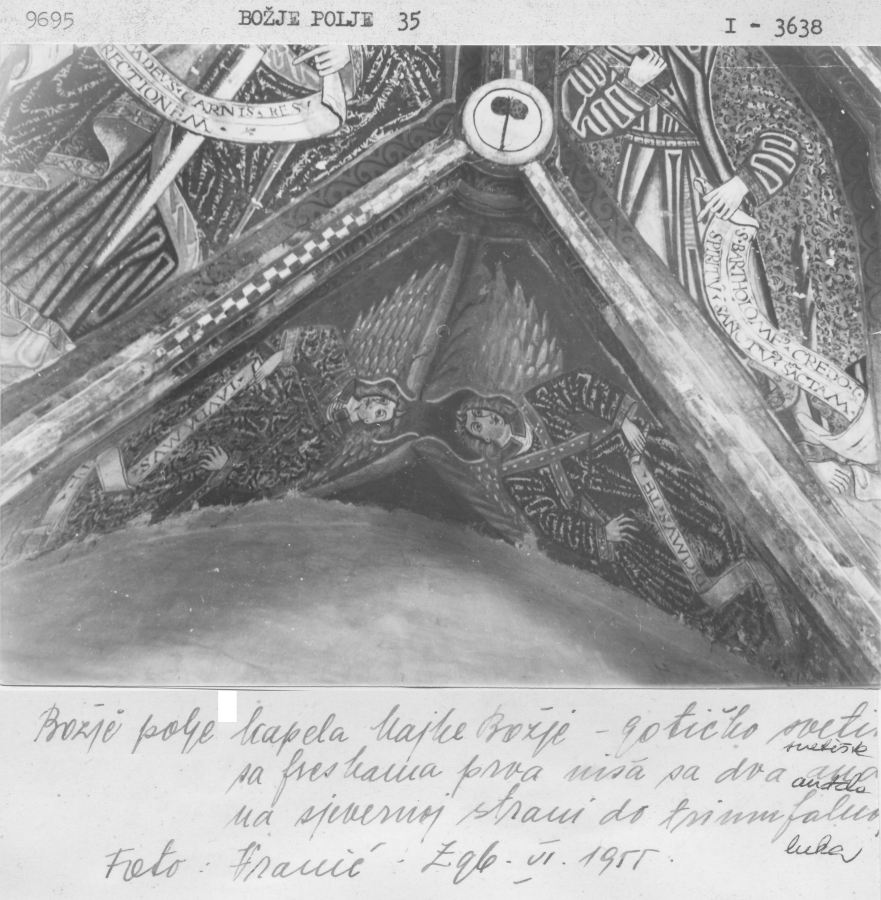
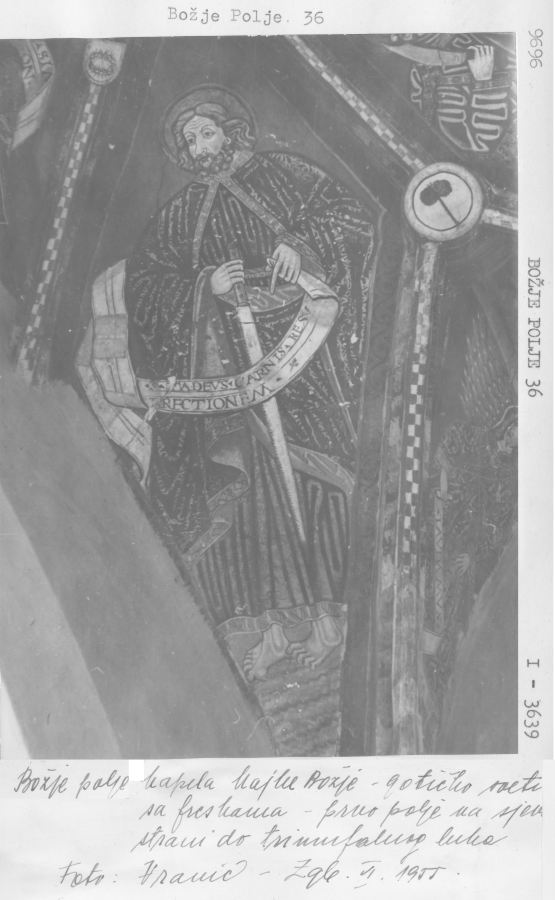
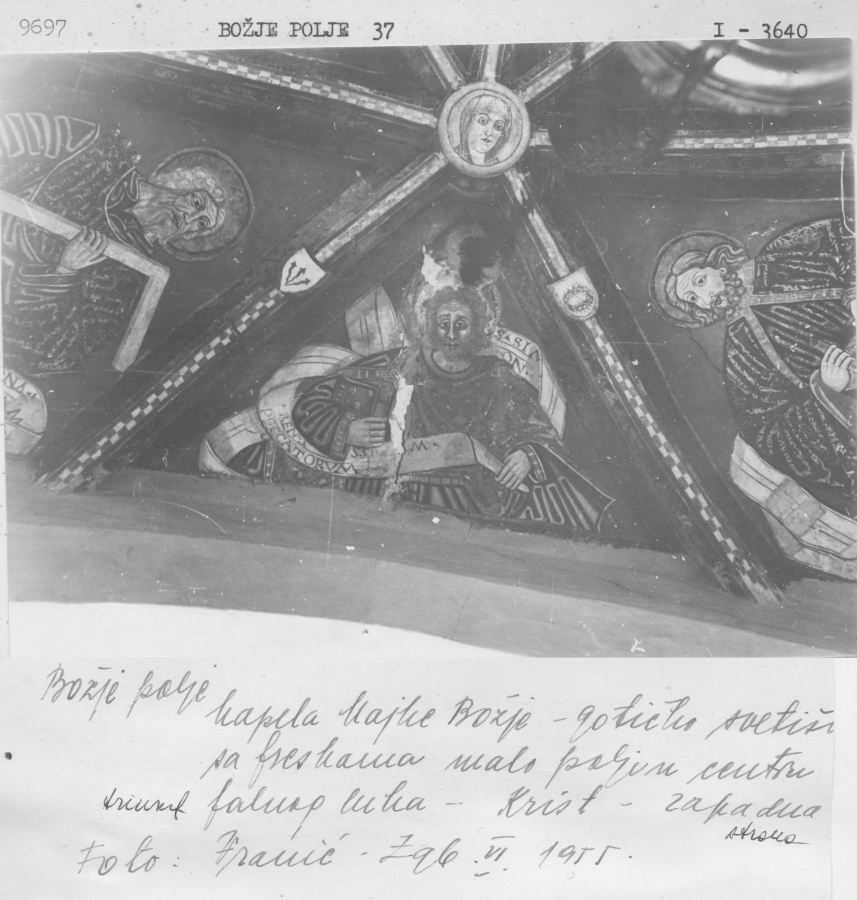
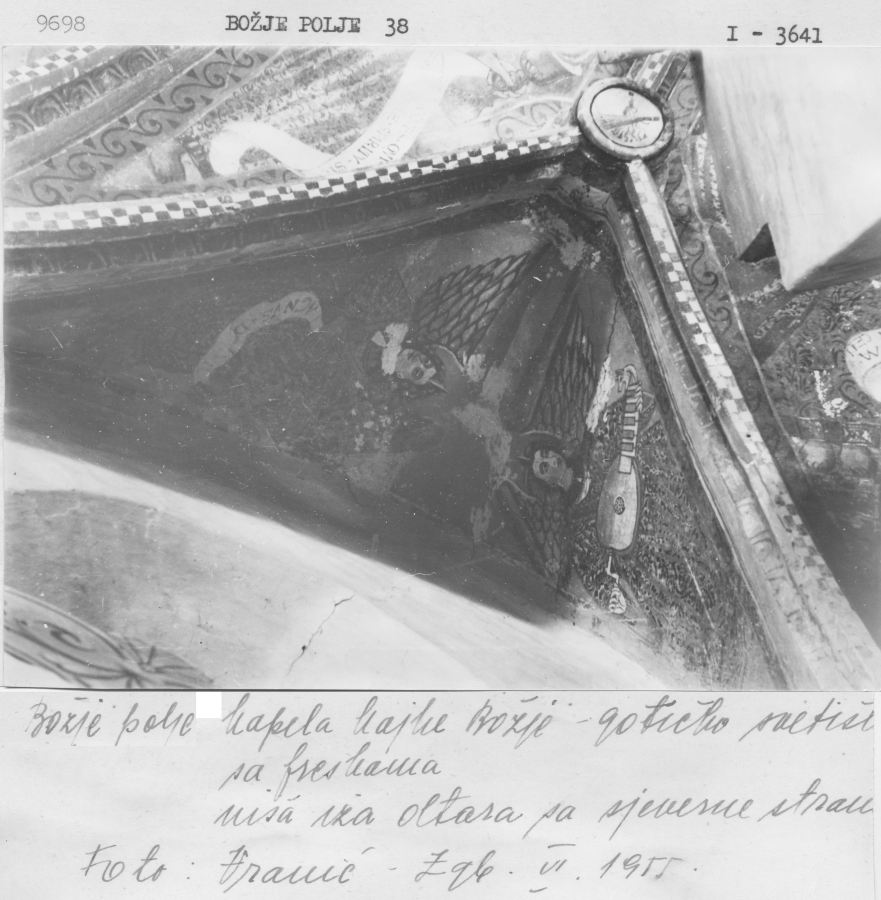
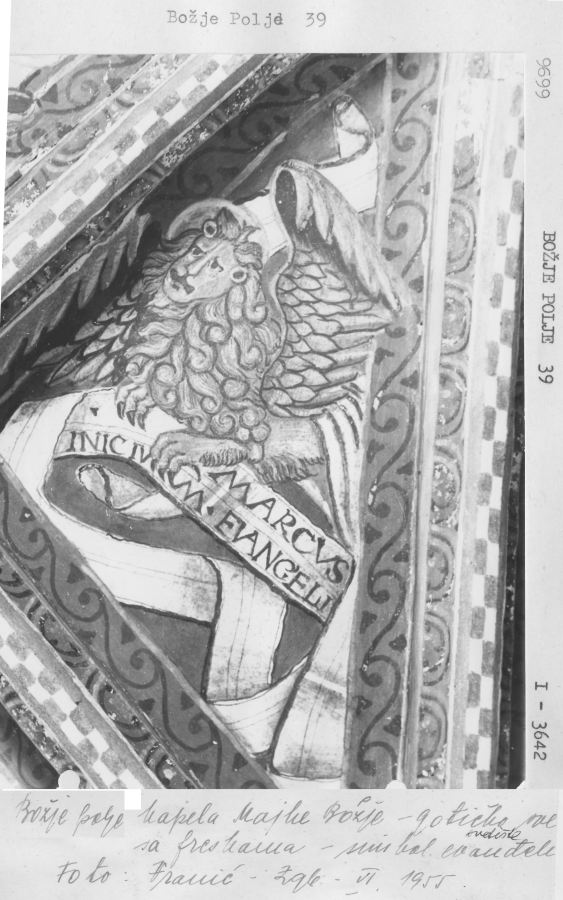
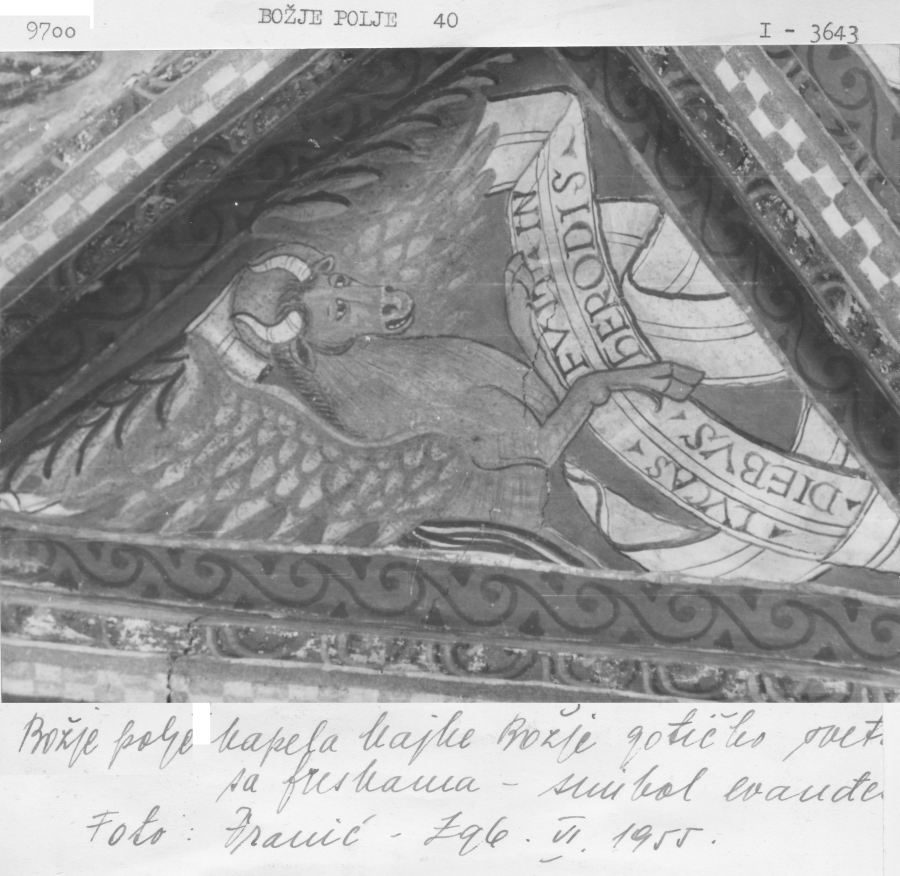
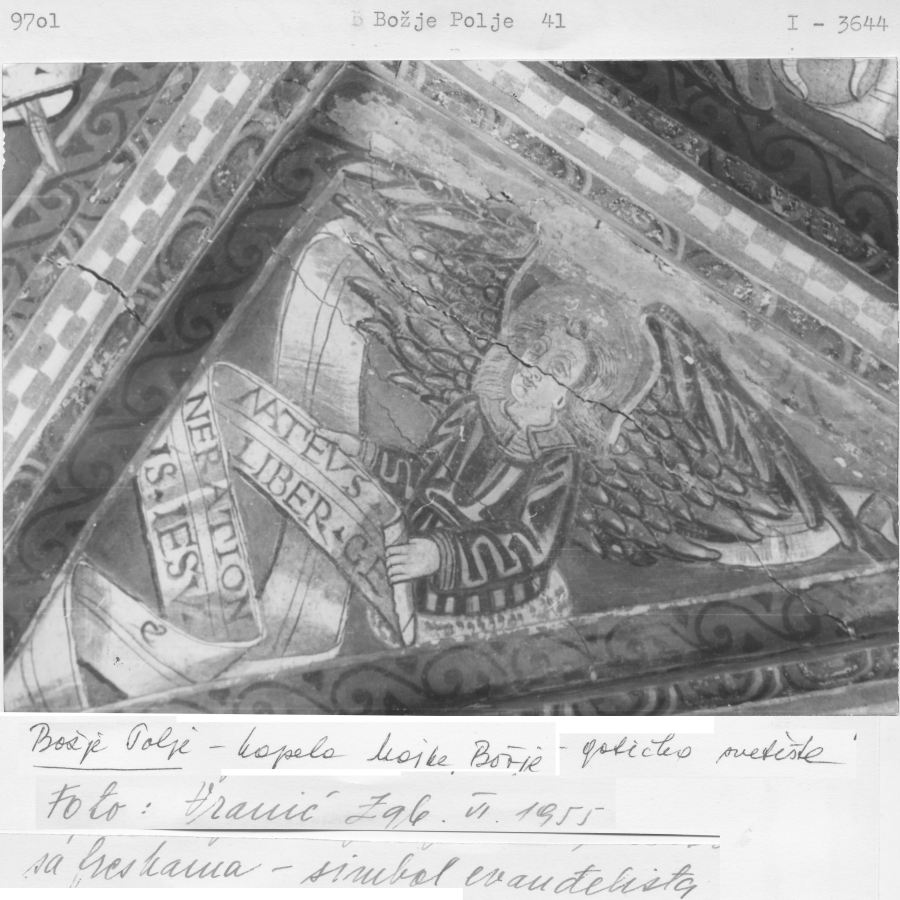
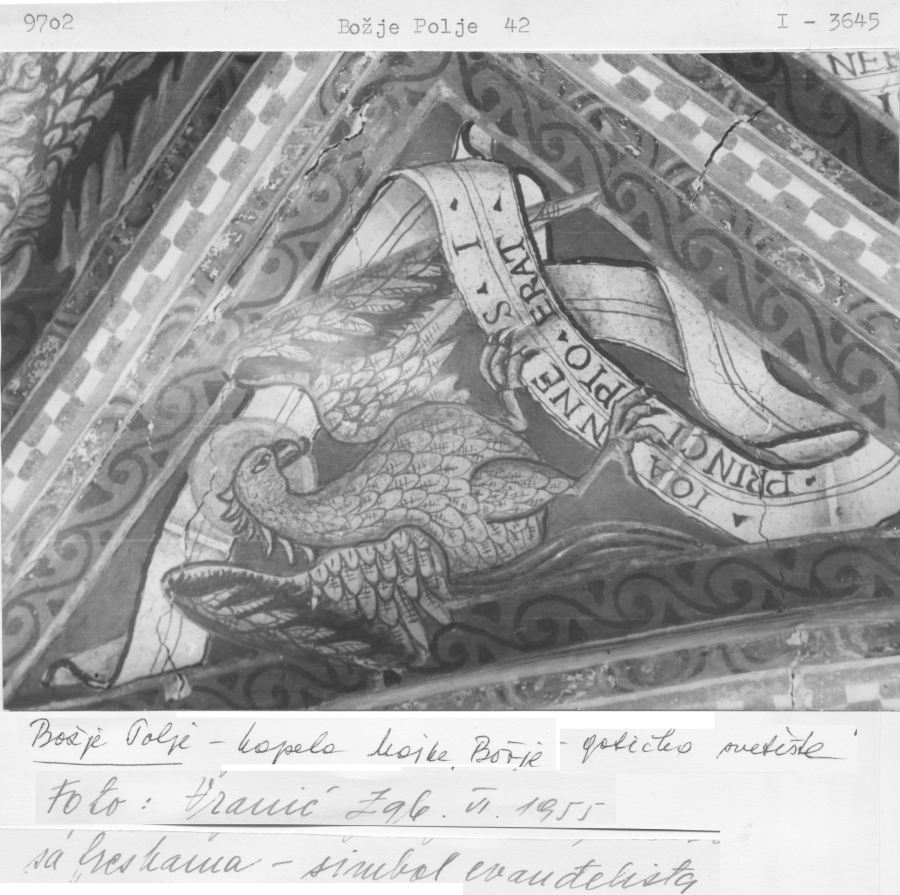
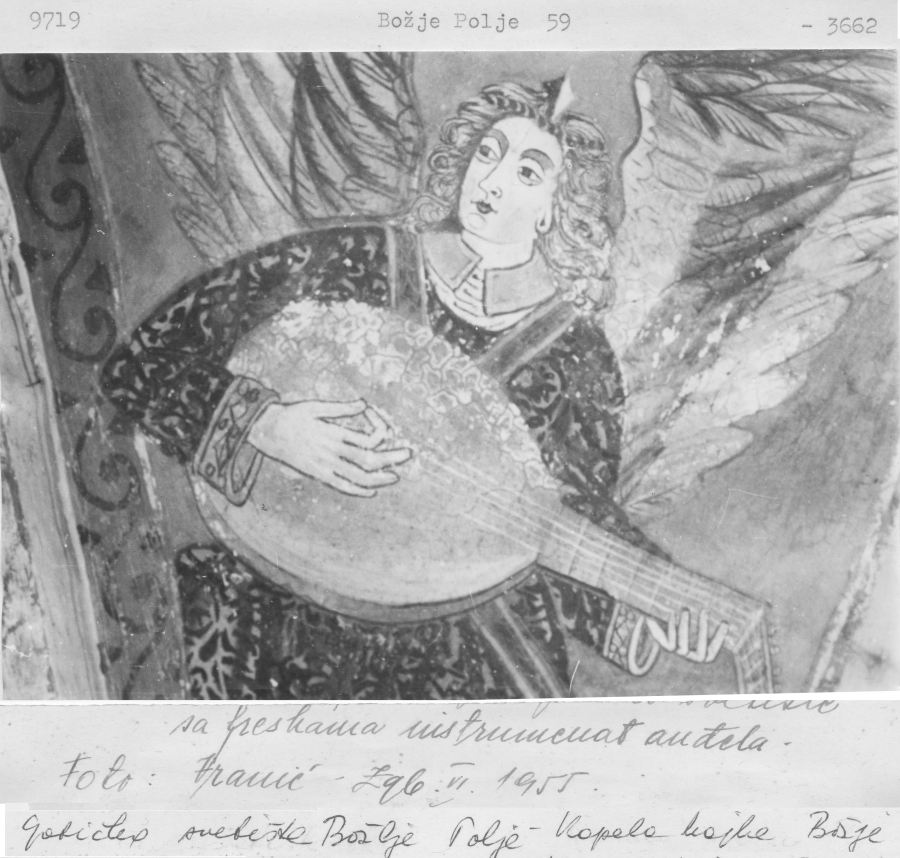
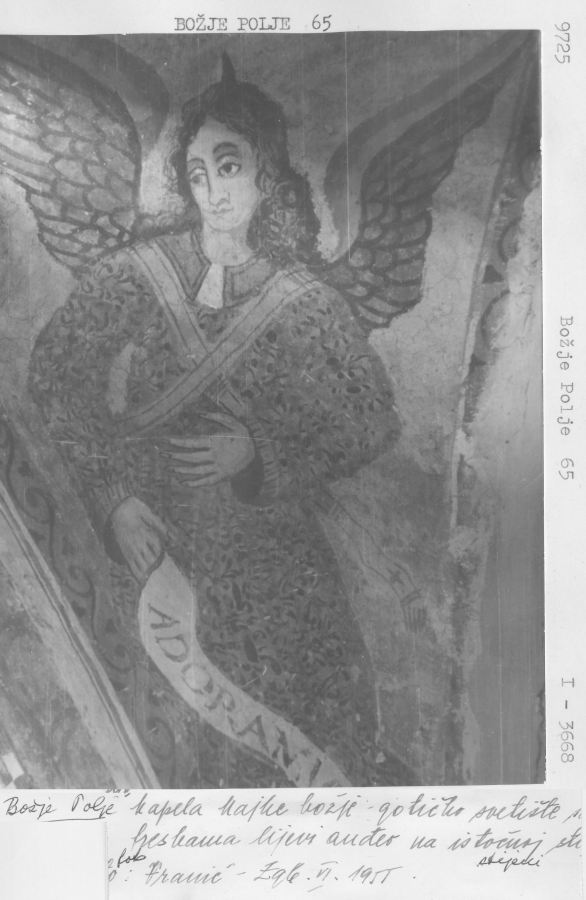
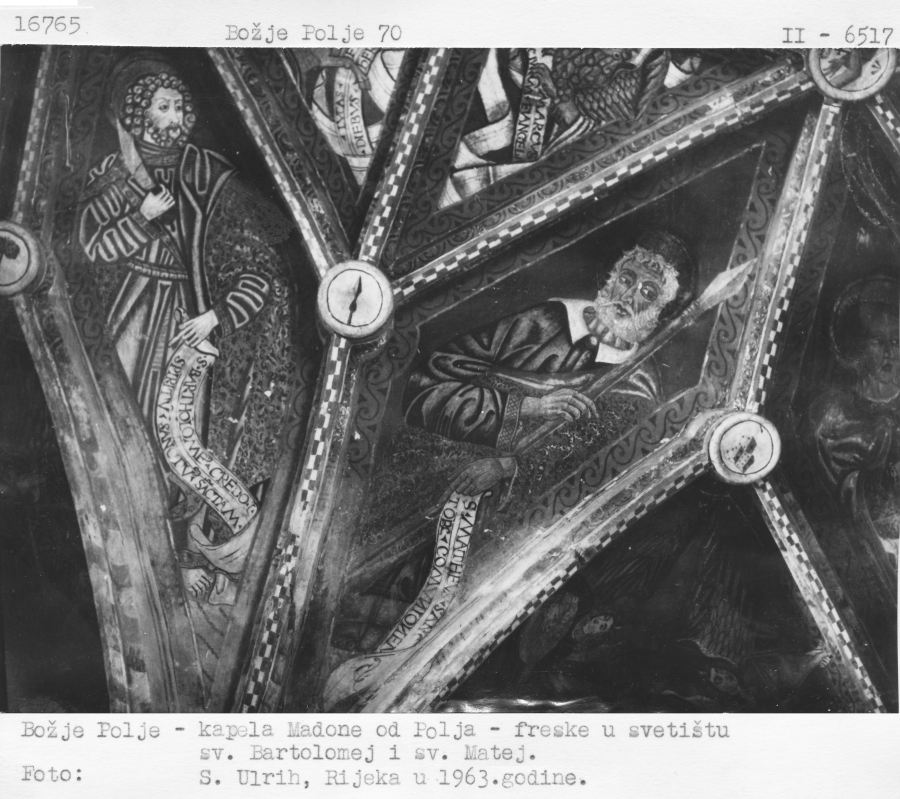
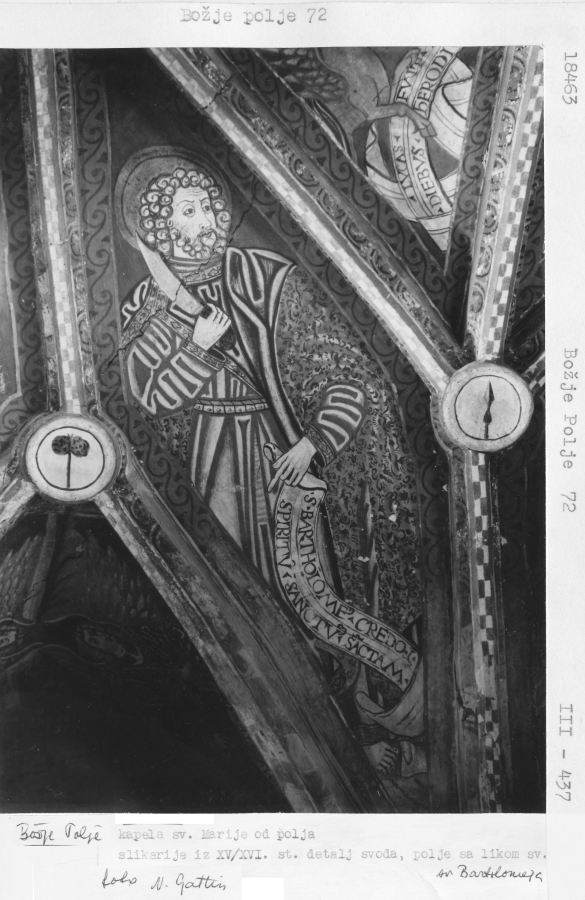
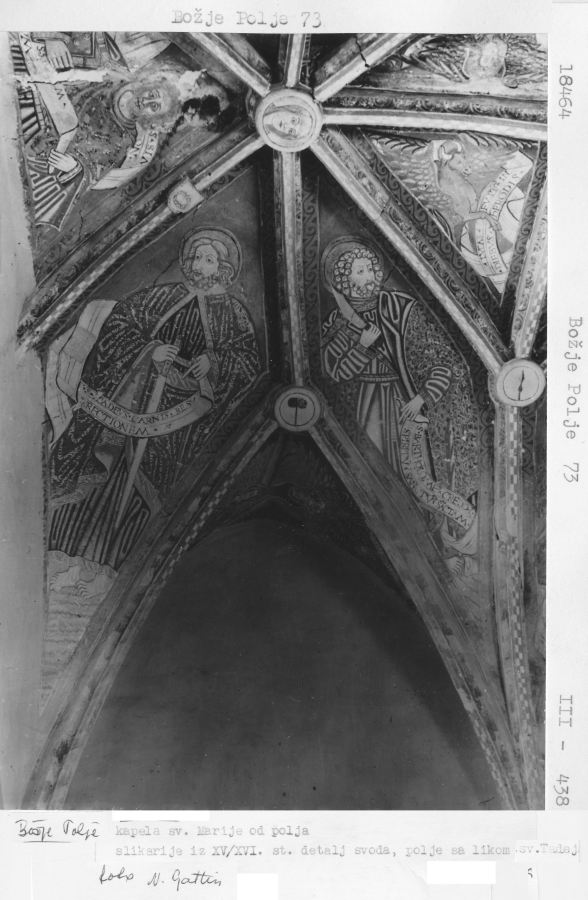
The sanctuary vault is richly decorated with depictions of the four Evangelists, apostles, and angels. Recent conservation interventions have established that in 1720 an anonymous Baroque painter completely repainted the frescoes on the vault; the date of this intervention is recorded on one of the vault’s keystones. The iconographic programme of the sanctuary continues across its wall surfaces. The east wall features Christ the King, surrounded by figures of unidentified female saints and prophets. The north wall of the sanctuary contains depictions of Old Testament prophets, The Fall of Man, the Coronation of the Virgin, and the Return of the Holy Family from Egypt. In the nave, on the north wall, four painted fields have been preserved, depicting the Throne of Mercy, the Virgin and Child, and Saints Peter and Paul.
The wall paintings were uncovered between 1963 and 1974. They were first discussed by Branko Fučić in 1964 in his doctoral dissertation Srednjovjekovno zidno slikarstvo u Istri.
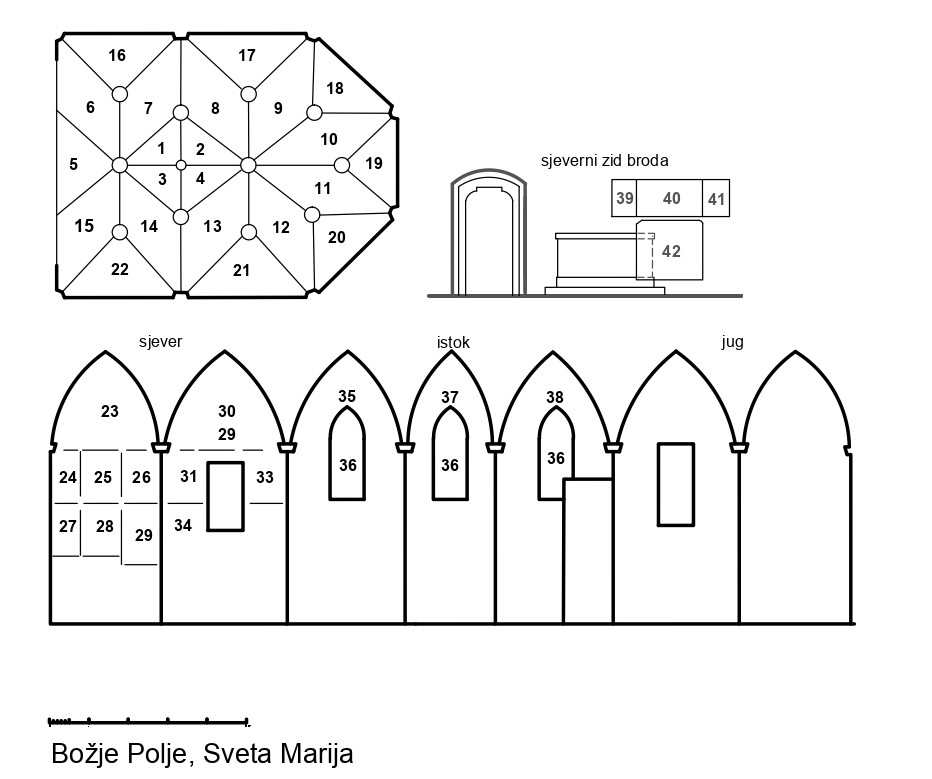
Sanctuary vault: 1. Symbol of the Evangelist; 2. Symbol of the Evangelist; 3. Symbol of the Evangelist; 4. Symbol of the Evangelist; 5. St Thaddeus; 6. St Bartholomew; 7. St Matthew; 8. St John; 9. Saint; 10. St Peter; 11. St James the Greater; 12. Saint; 13. St James the Lesser; 14. St Thomas; 15. St Simon; 16–22. Angels. North wall of the sanctuary: 23. Prophets; 24. The Fall of Man; 25. Annunciation; 26. Gideon’s fleece; 27–28. Prophets; 29. Coronation of the Virgin; 30. Prophets; 31. God addressing David after the death of King Saul; 32. Return of the Holy Family from Egypt; 33. Jacob’s return from Egypt; 34. Prophet. East wall of the sanctuary: 35. Prophet; 36. Female saints; 37. Christ the King; 38. Prophet. East wall of the nave: 39. St Peter; 40. Virgin and Child surrounded by two angels; 41. St Paul; 42. Throne of Mercy.
Scene locations
F. STELÈ, 1960., Umetnost v Primorju, Ljubljana, 1960., 80; I. PERČIĆ, 1963., Zidno slikarstvo Istre, katalog izložbe, Zagreb, 1963; B. FUČIĆ, 1963., Istarske freske, Zagreb, 1963., 25, KAT. 26; B. FUČIĆ, 1964a, Srednjovjekovno zidno slikarstvo u Istri, doktorska disertacija, Filozofski fakultet Sveučilišta u Ljubljani, Rijeka-Ljubljana, 1964., 287-295, KAT. 389-390; ISTI, 1974., Božje Polje, Bulletin Zavoda za likovne umjetnosti JAZU, 15/22, 1-3, Zagreb, 1974, 137-148; Ž. BISTROVIĆ, 2007, Gotičko zidno slikarstvo u Istri (novi prilozi jednoj budućoj sintezi), Annales. Series Historia et Sociologia, 17/2, 2007, 277-290, 286-288; ISTI, 2011., Šareni trag istarskih fresaka, Pula, .2011, 333-342; ISTI, 2017aKastavska slikarska škola – problemi geneze i stila, doktorska disertacija, Sveučilište u Zadru – Humanističke studije, Zadar, 2017., 9, 36, 59, 64.