


Pazin, Church of St. Nicholas
Century/year: sixth decade of the 15th century
Historical-cultural period: Gothic style
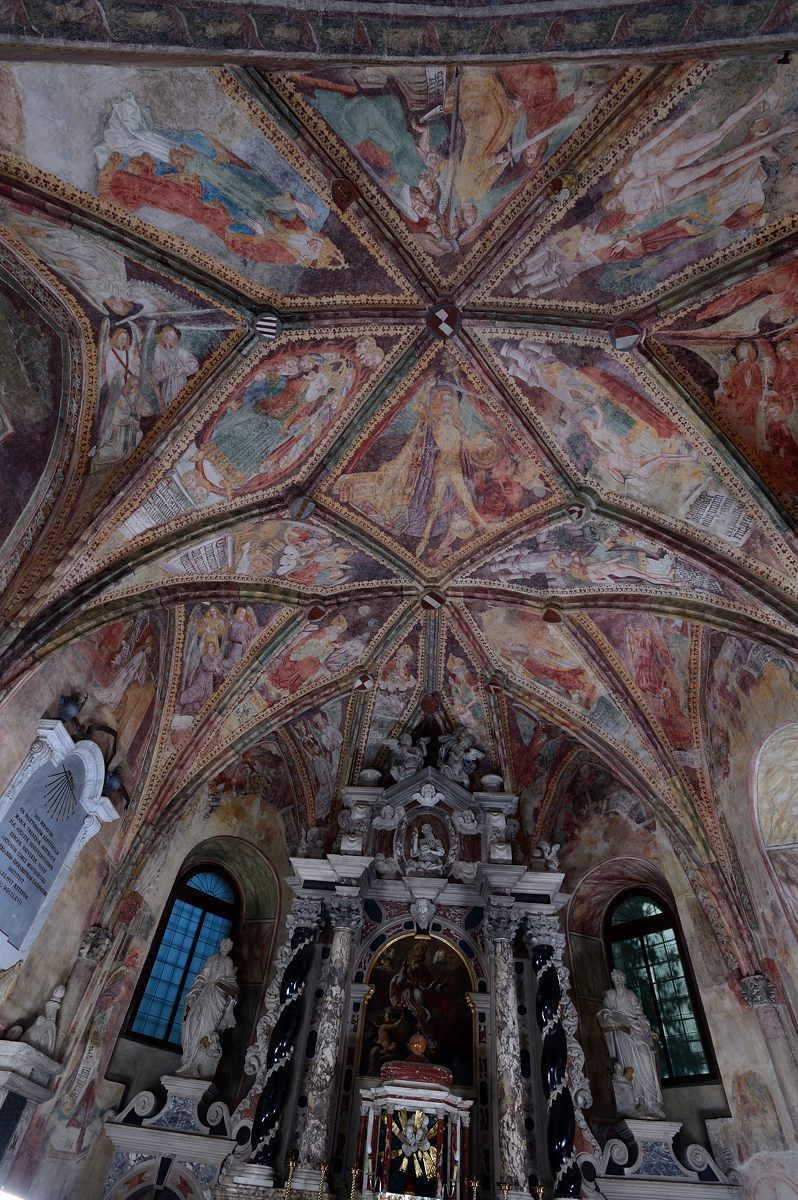
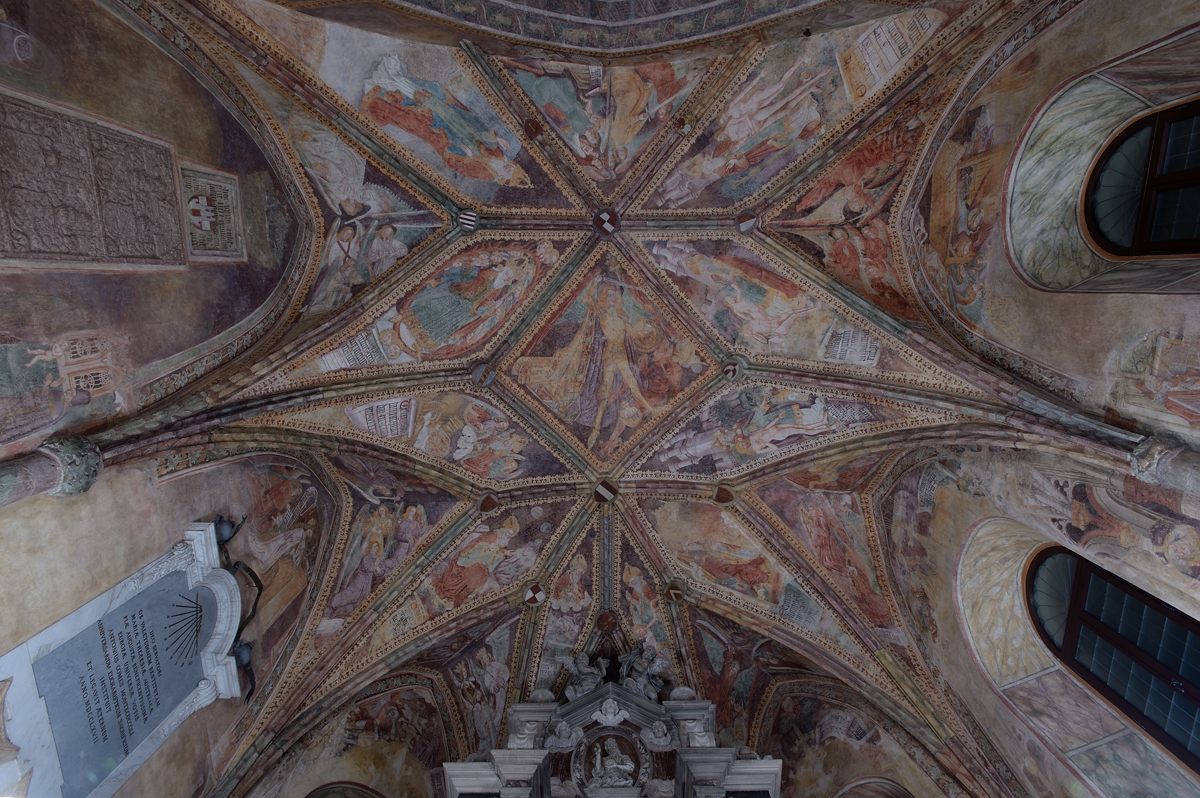
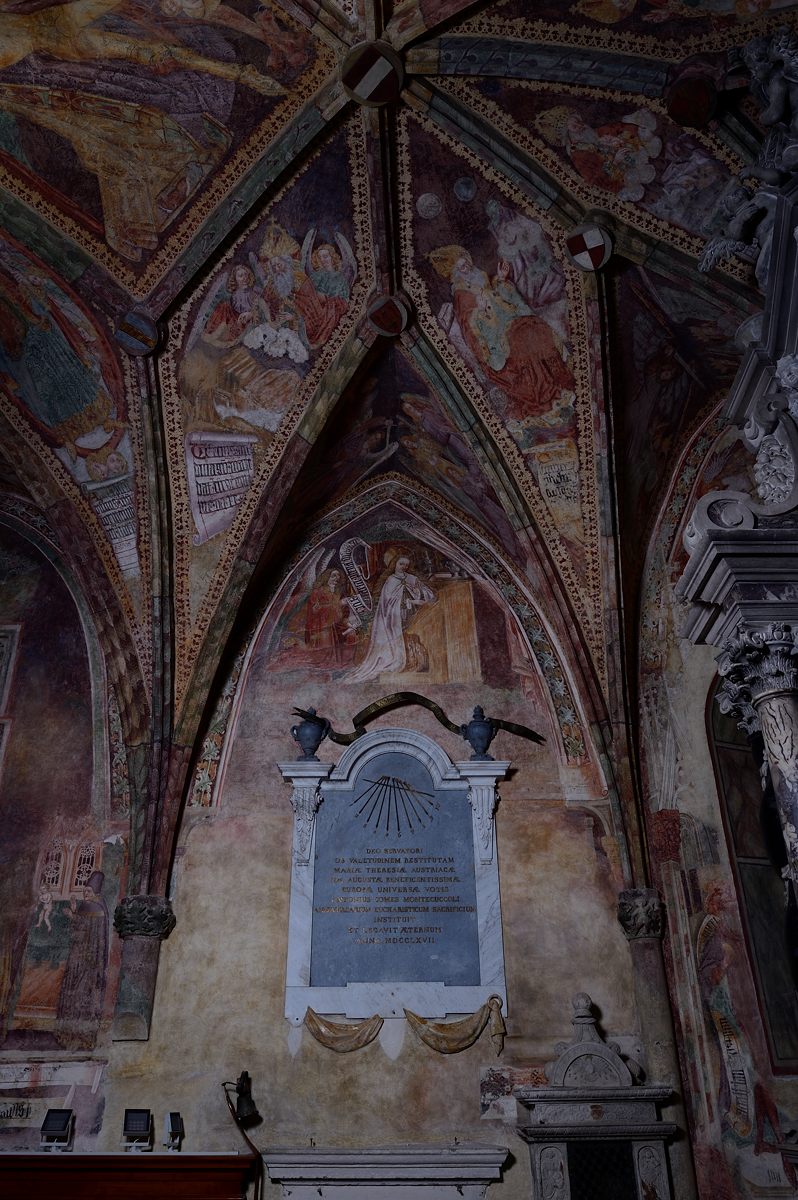
The Parish Church of St. Nicholas in Pazin is located in the northern part of the town's historical core. It is assumed that from its earliest phase it served a cemetery function, and it is first mentioned in written sources in 1266 as the centre of the prepositure of the Diocese of Poreč. The spacious polygonal sanctuary, covered by a star-ribbed vault, was built in 1441 and represents the earliest example of this type in Istria. Starting in 1659, side chapels were gradually added to the older single-nave church. During an extensive Baroque renovation in the 1760s, these chapels were integrated into side naves and equipped with new altars, giving the building its current three-nave spatial layout. At the beginning of the 18th century, a bell tower of the Aquileian type was built alongside the church.
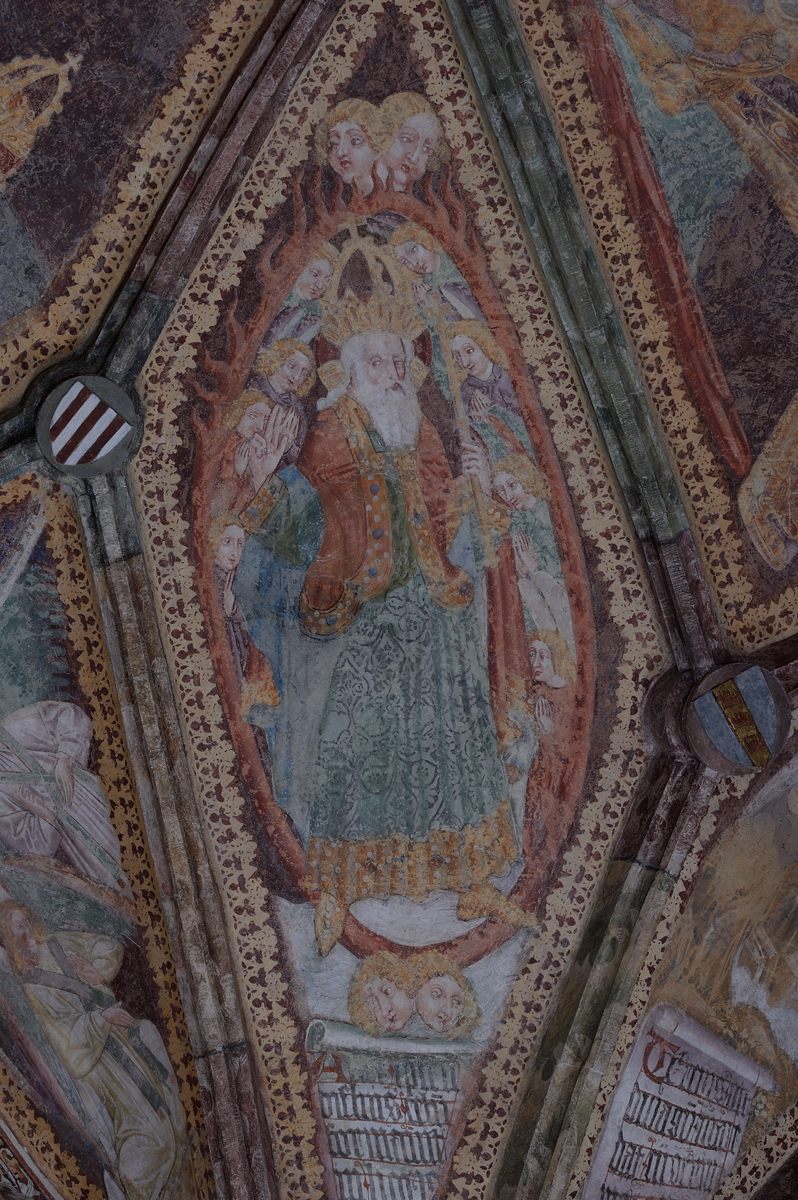
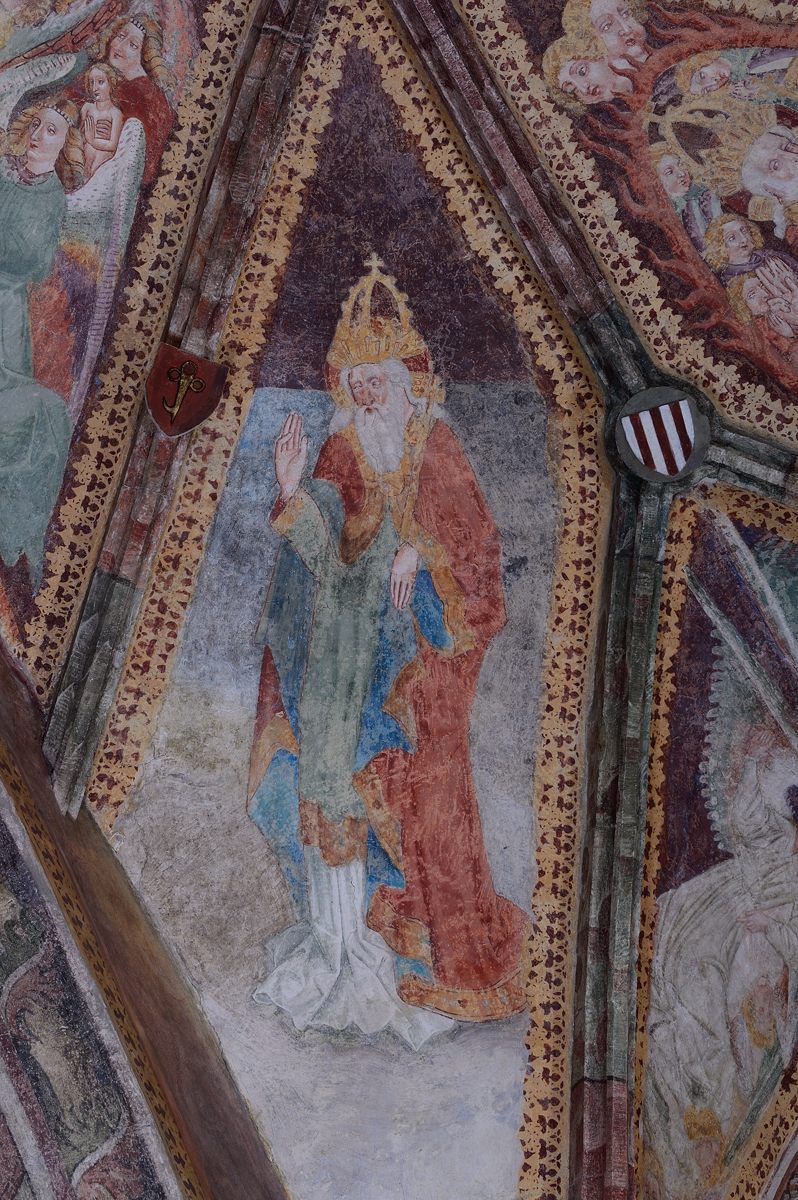
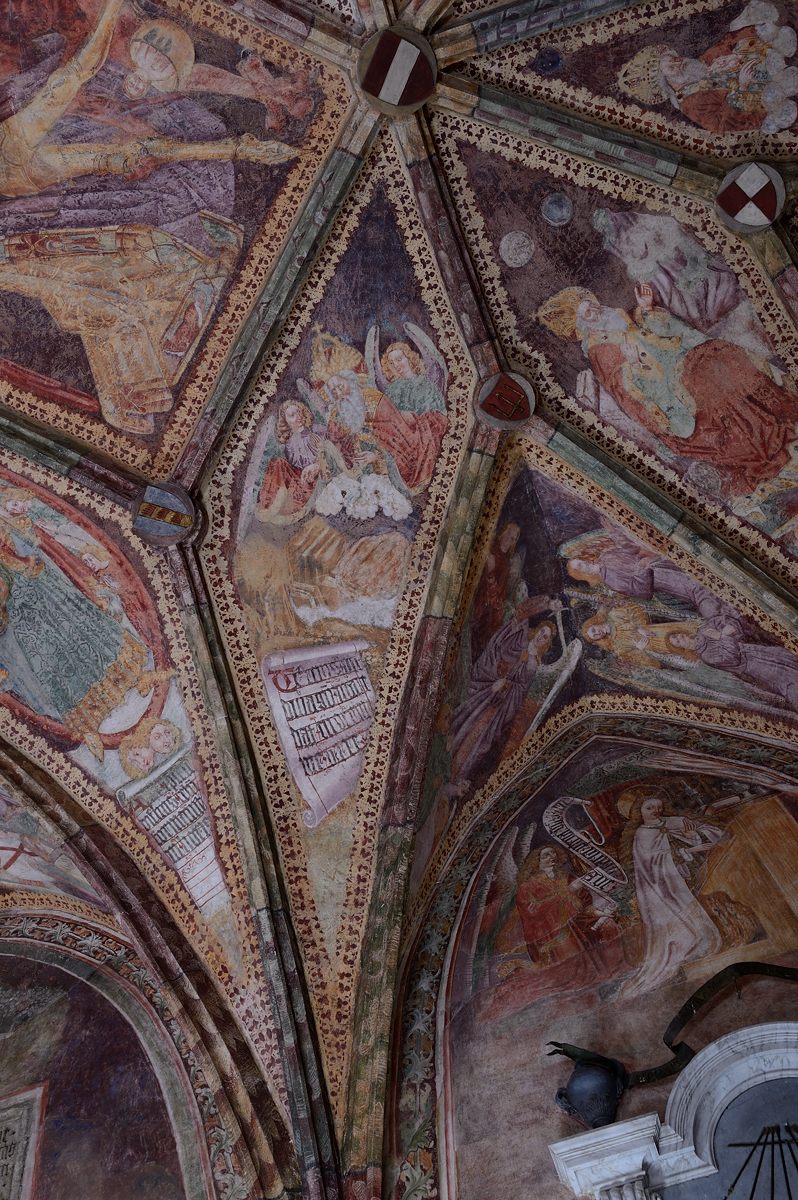
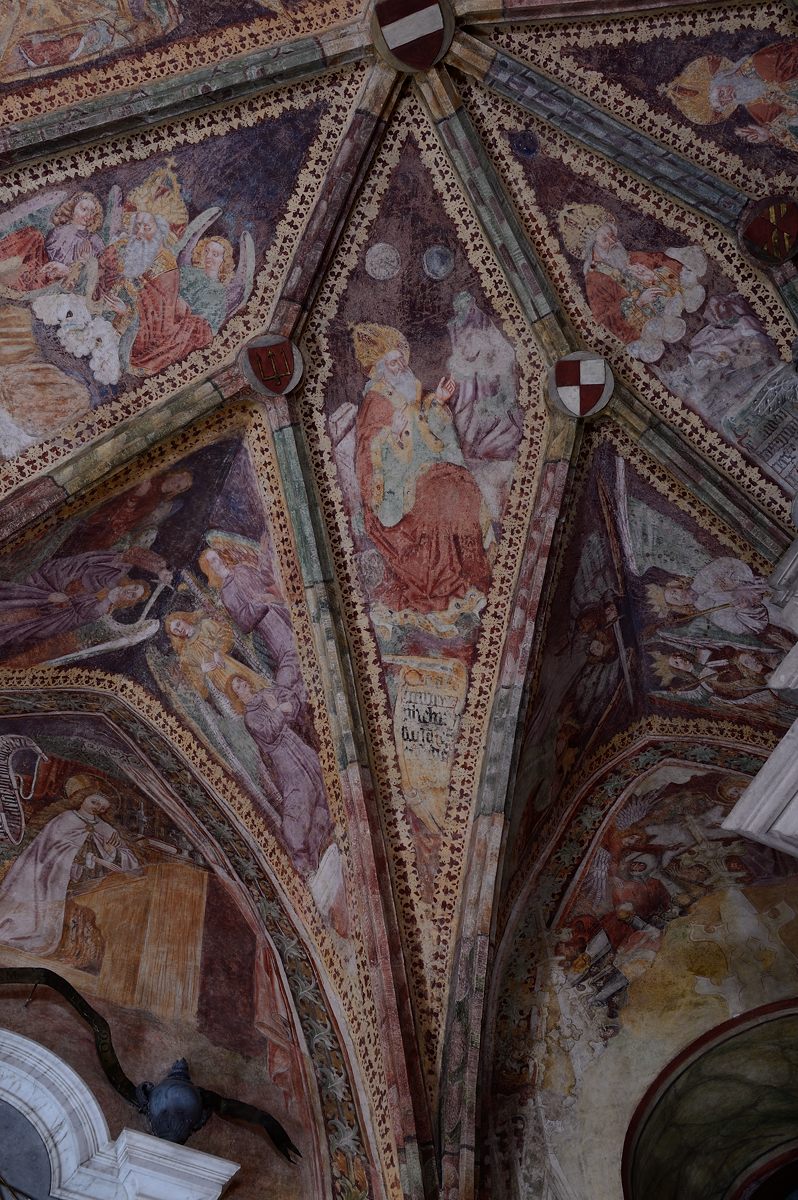
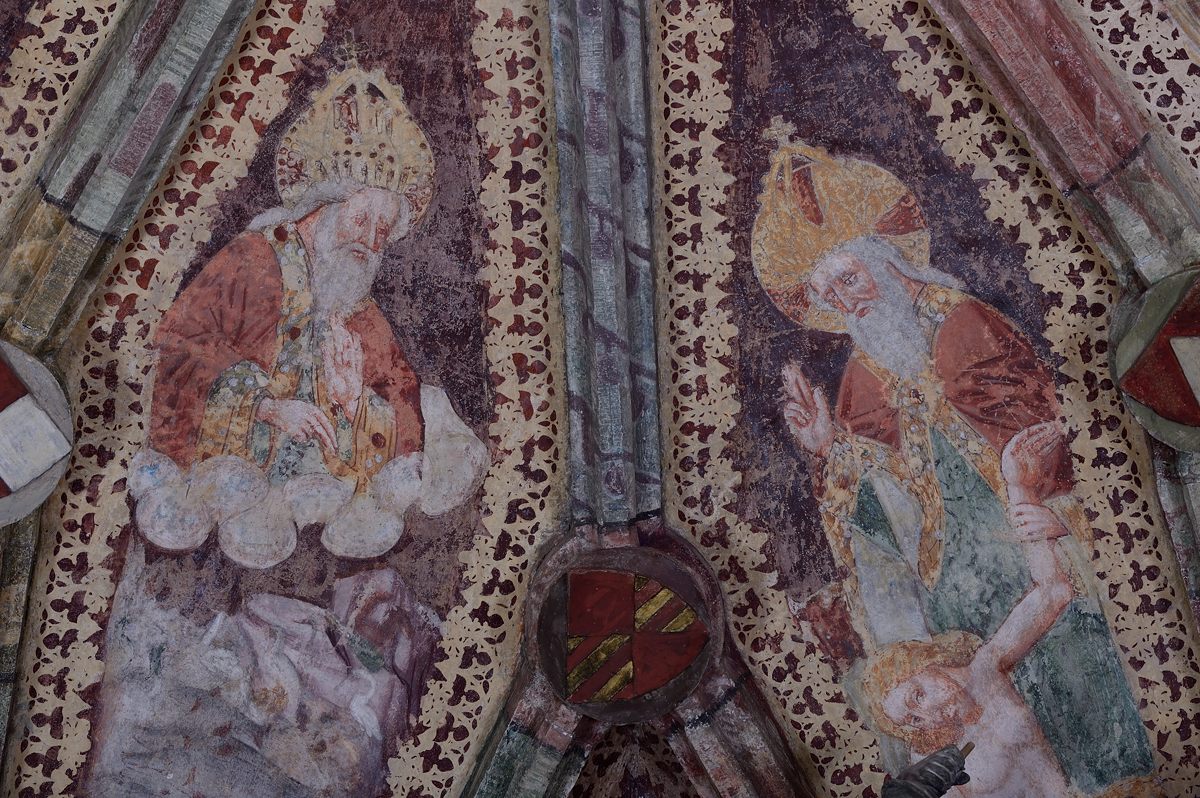
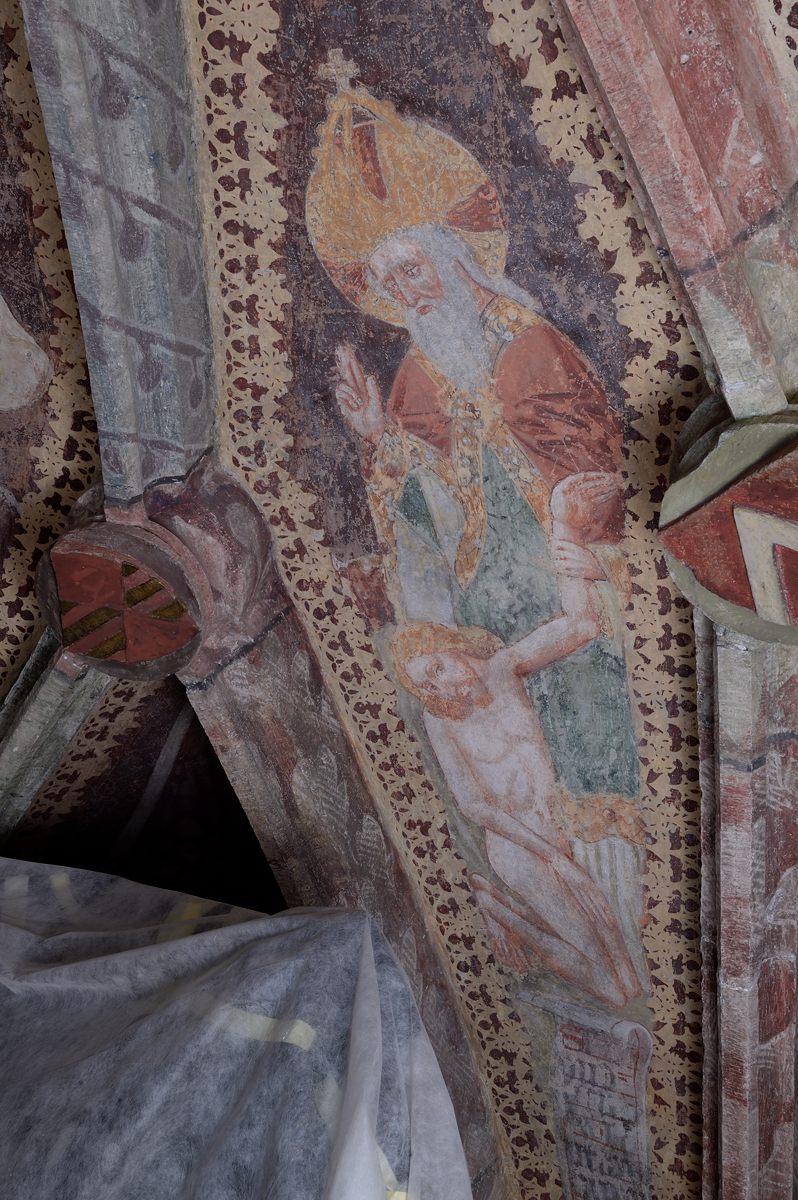
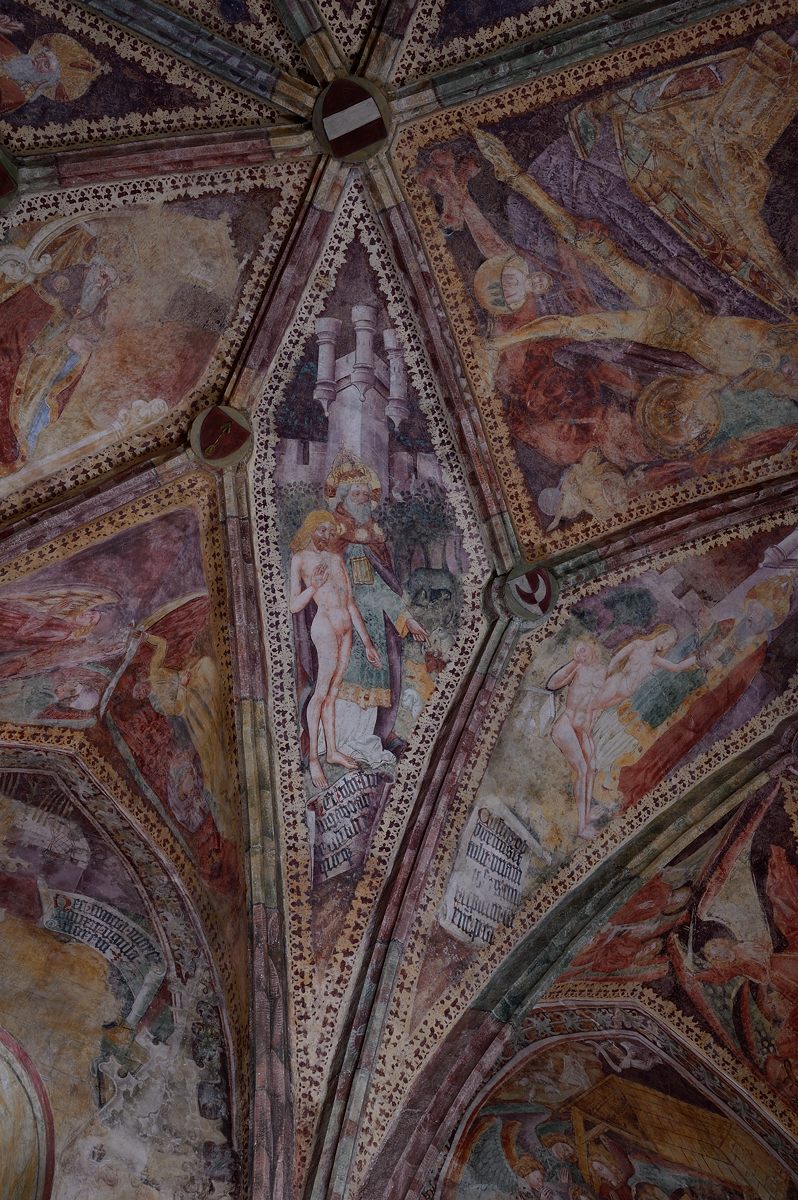
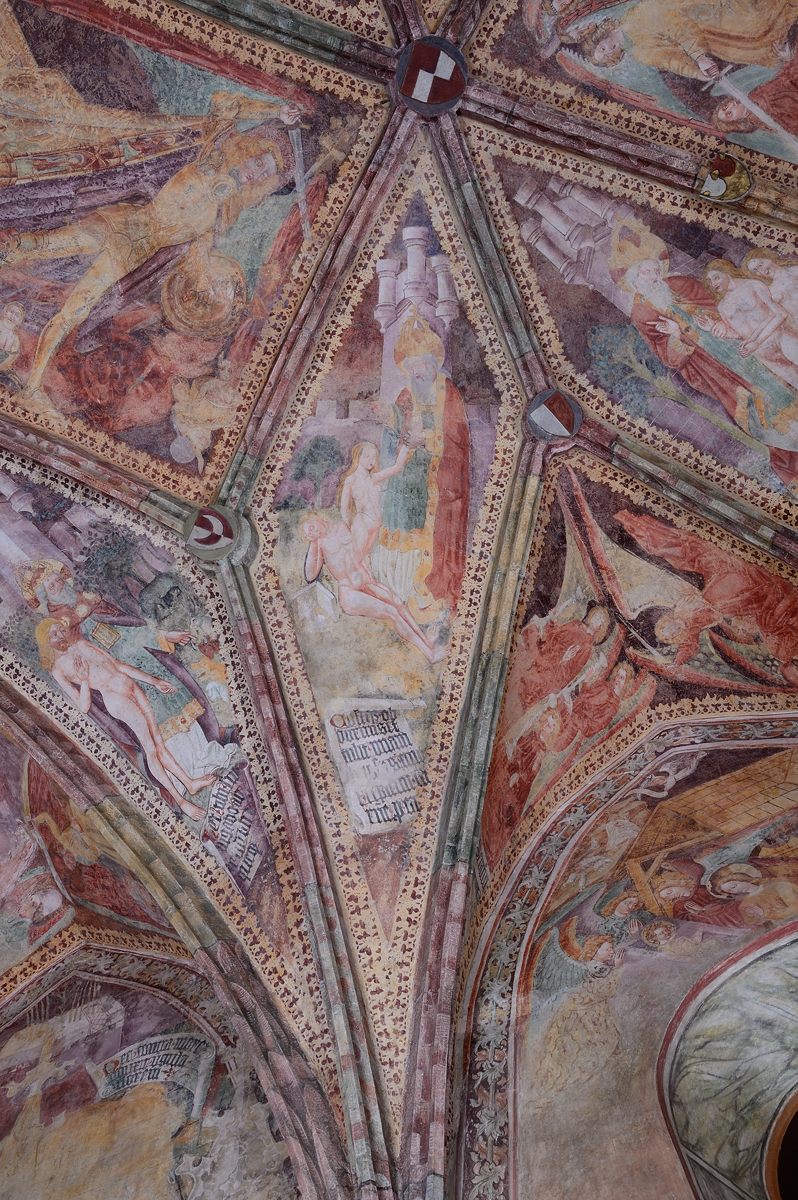
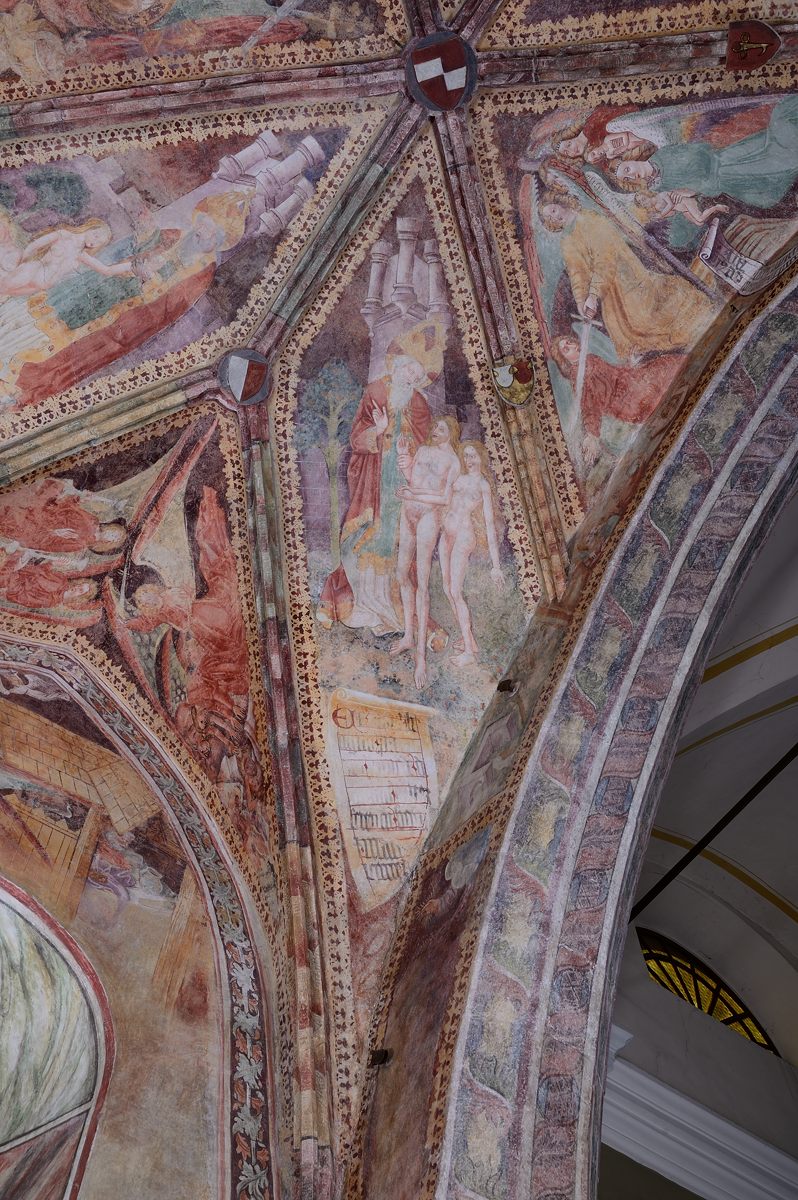
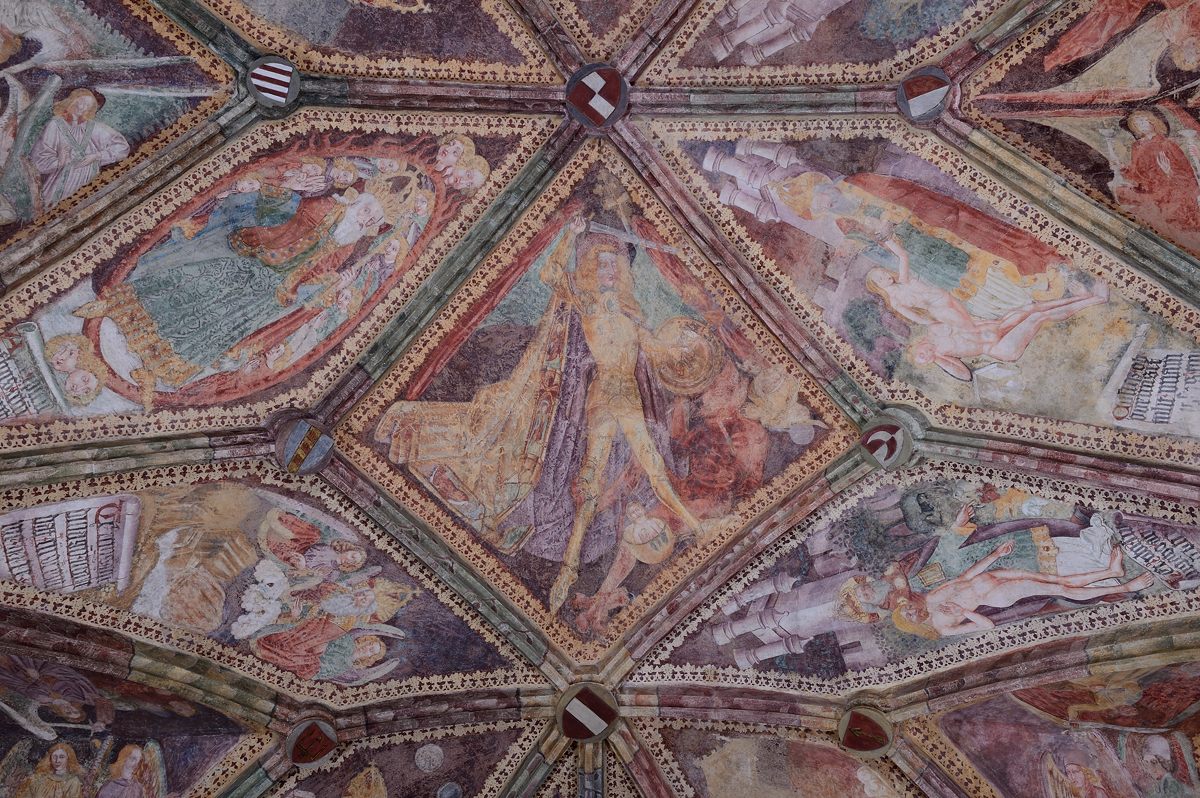
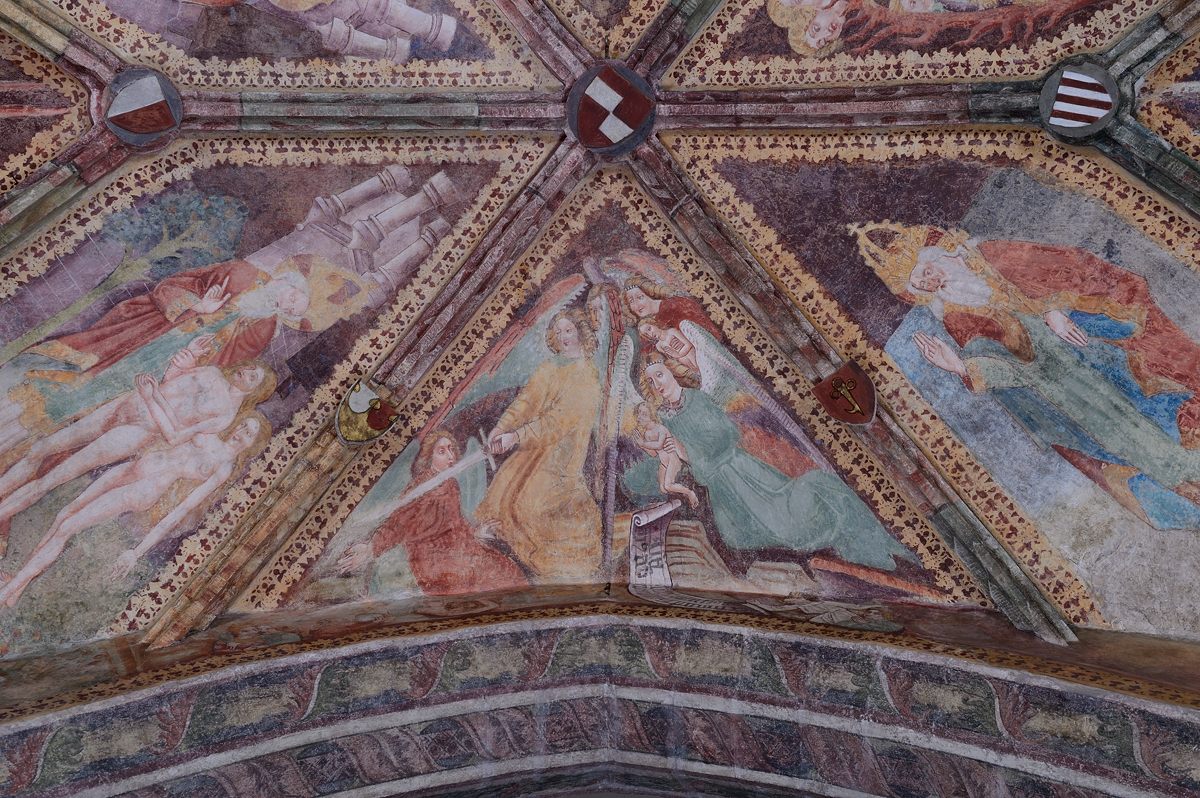
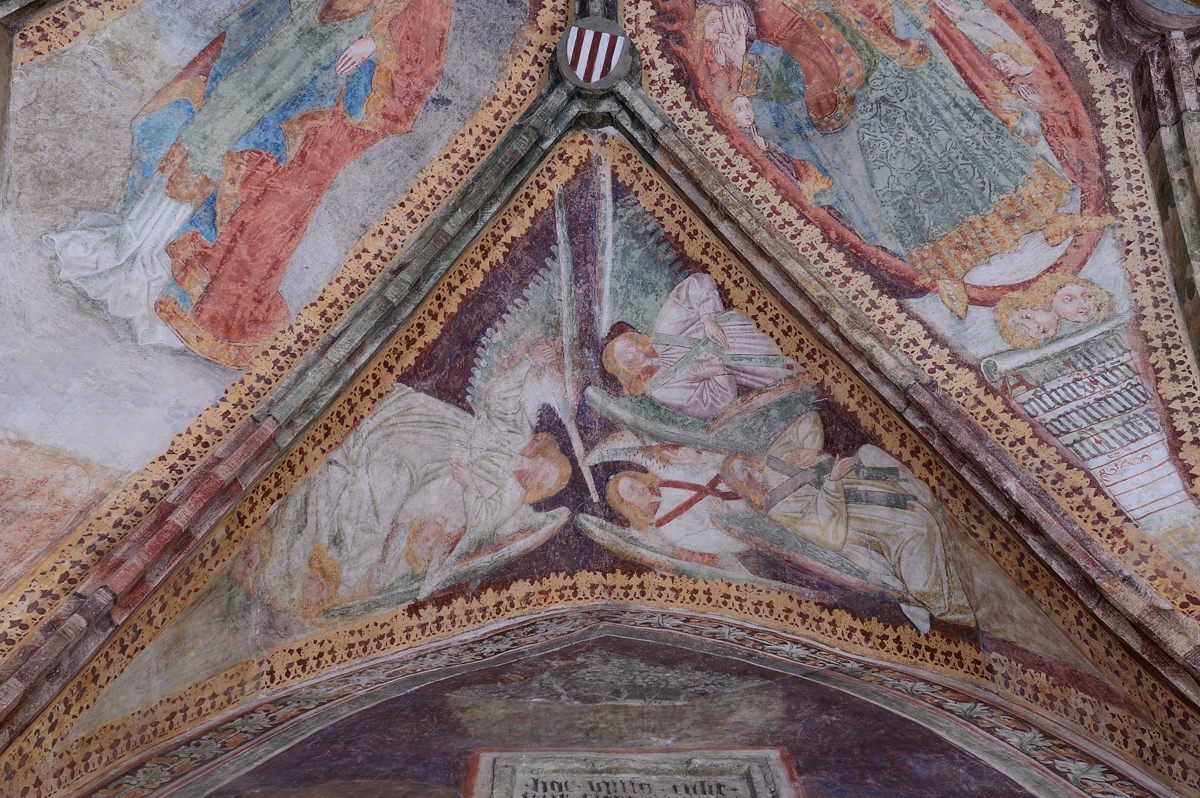
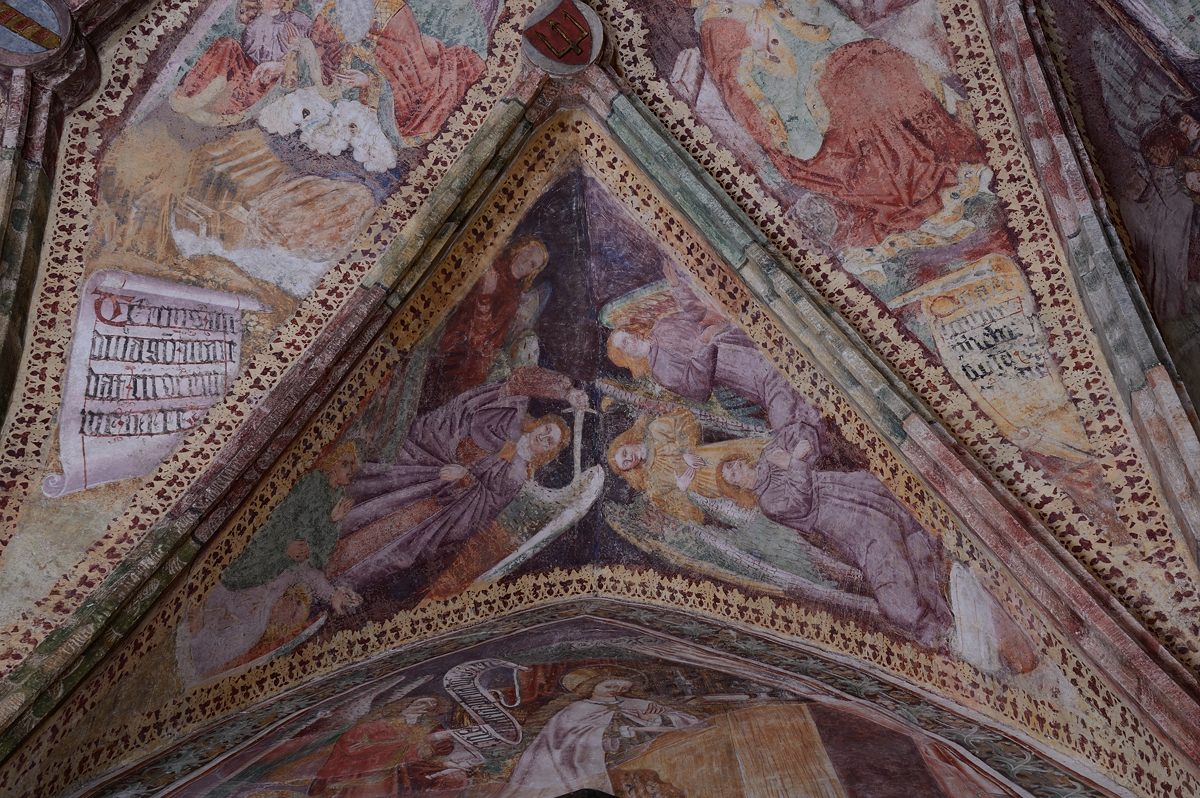
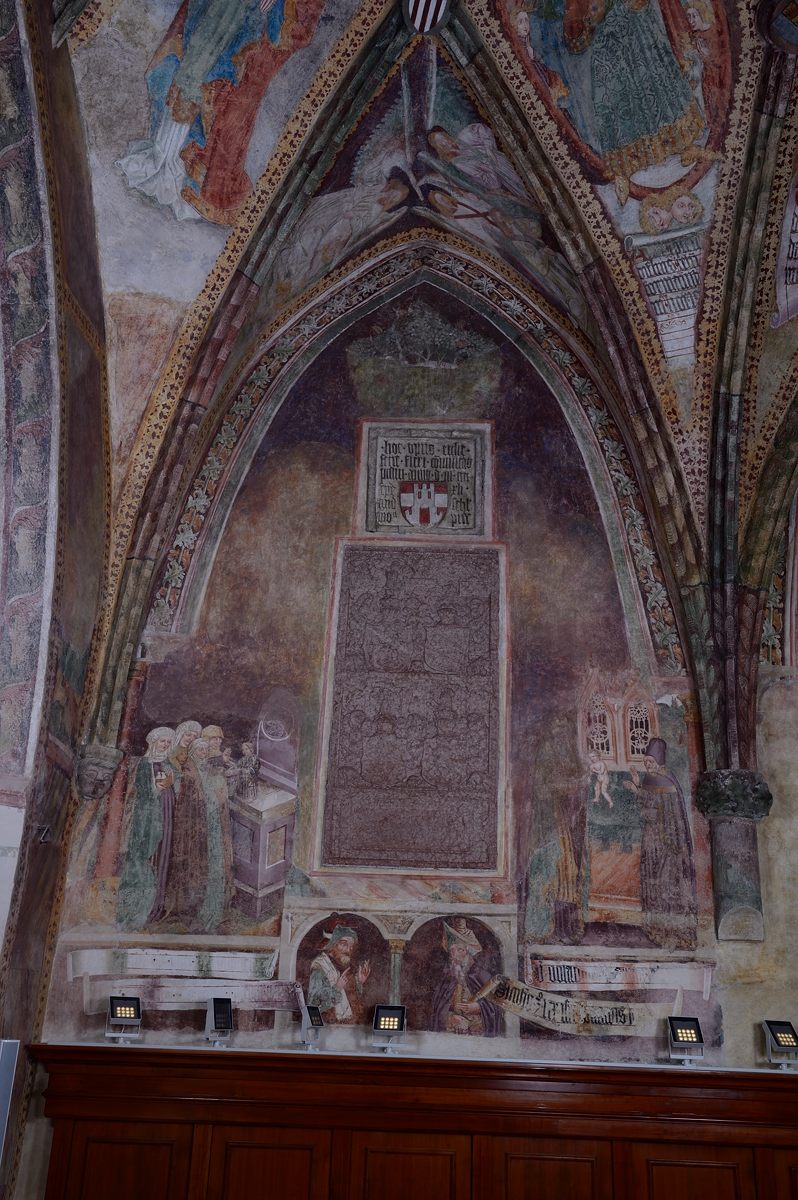
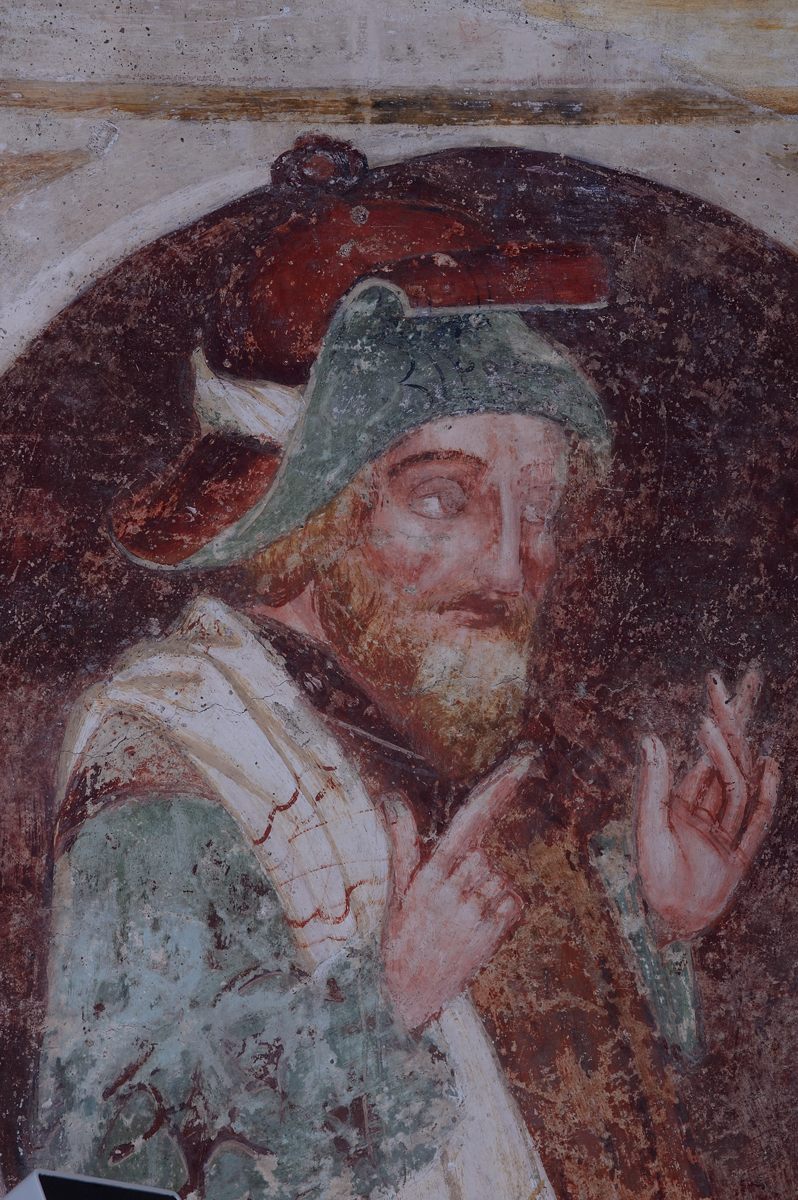
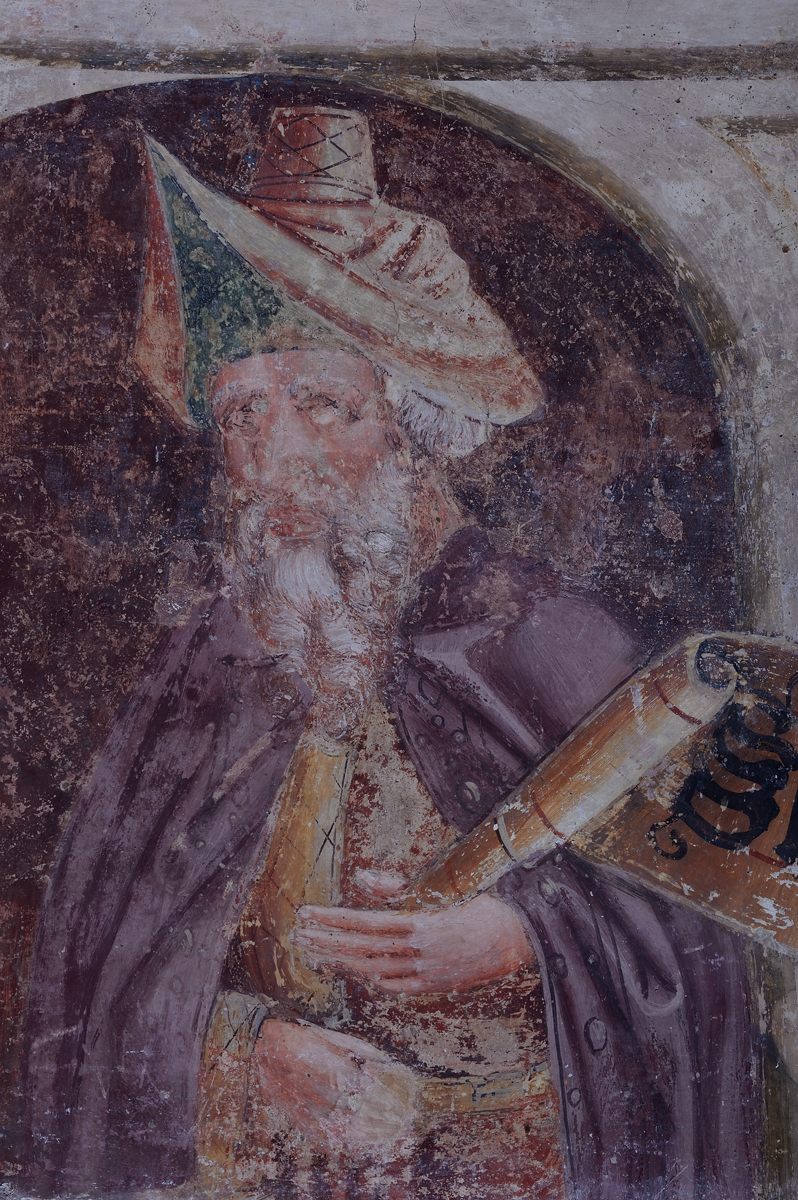
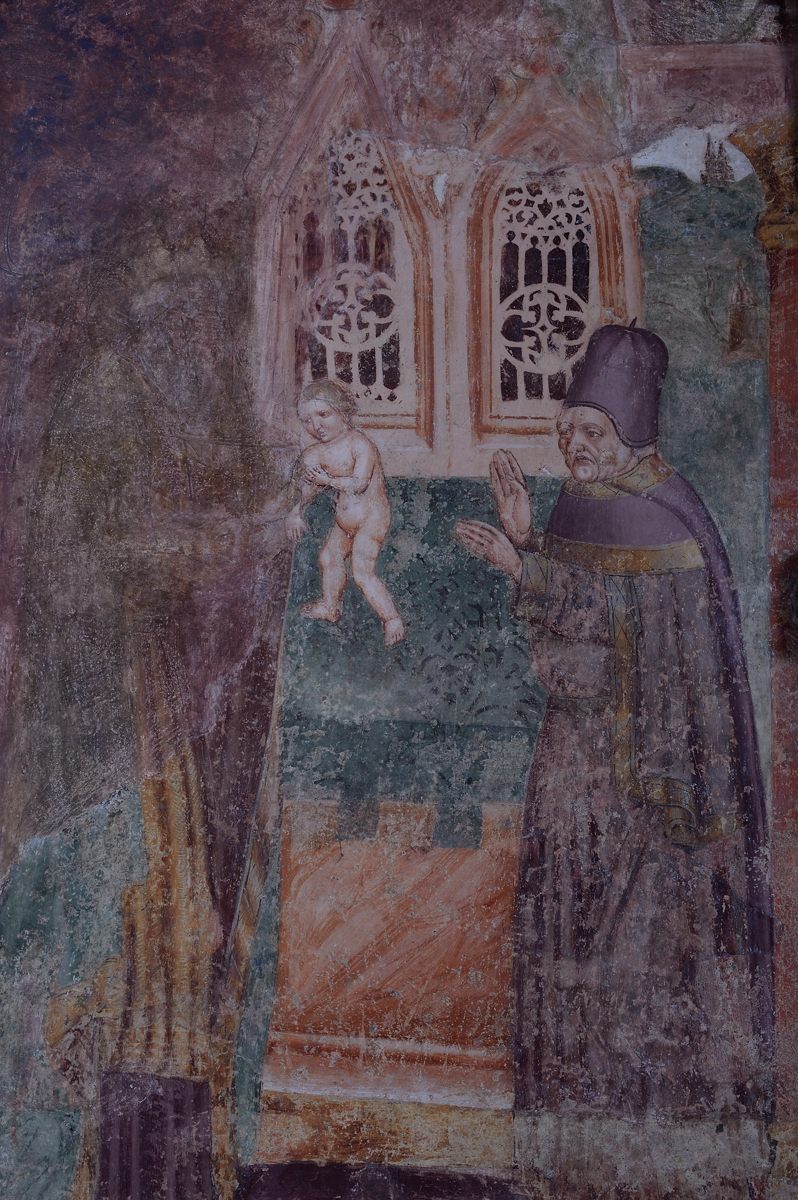
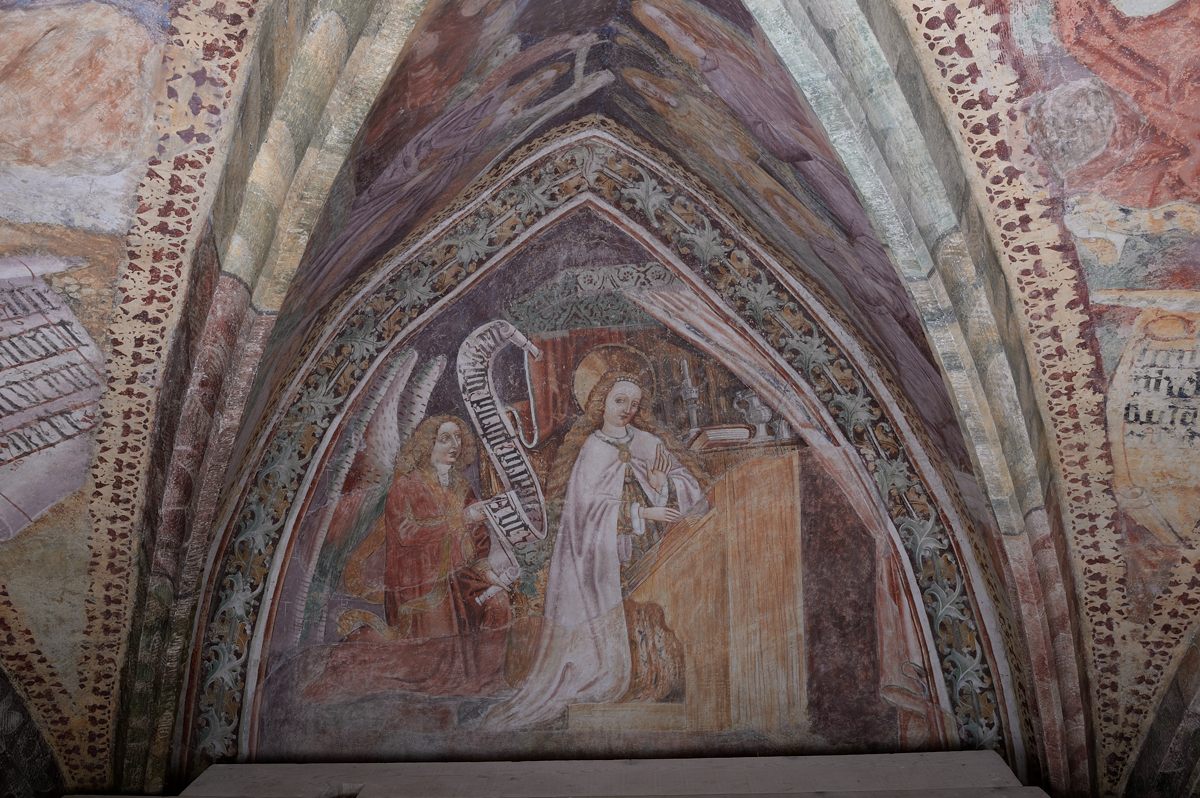
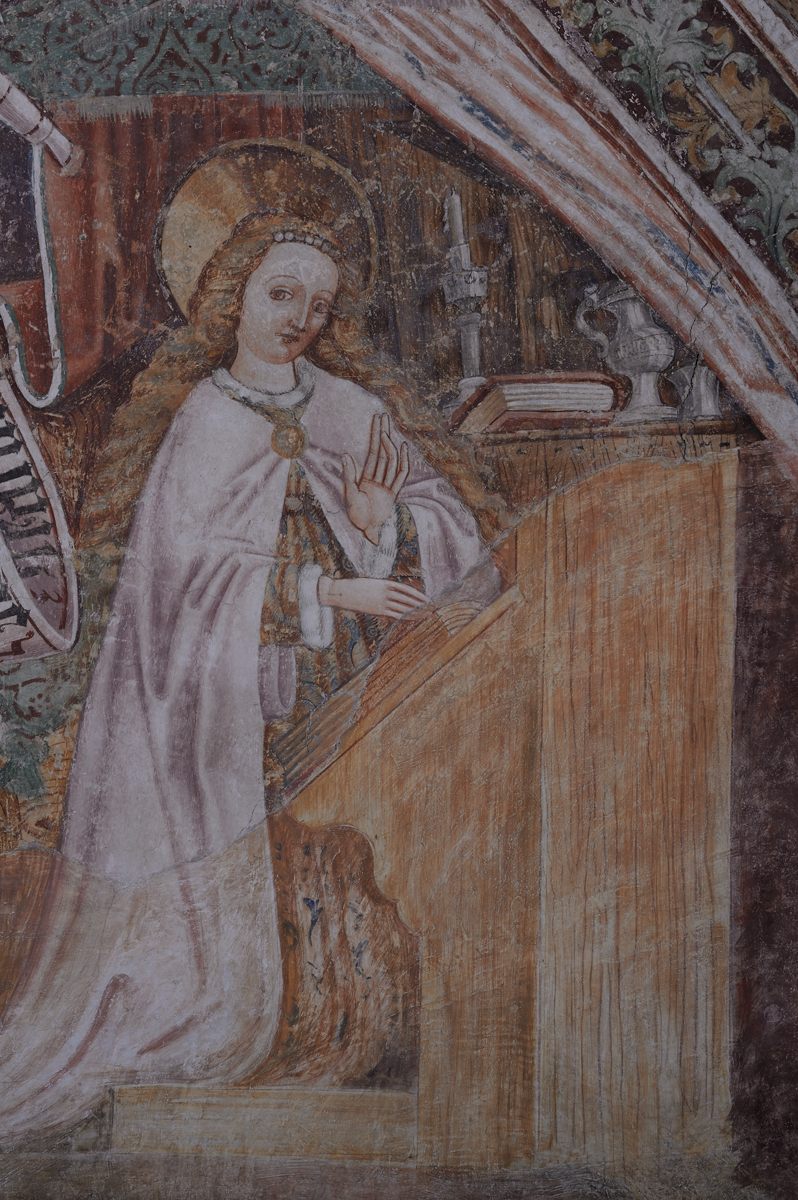
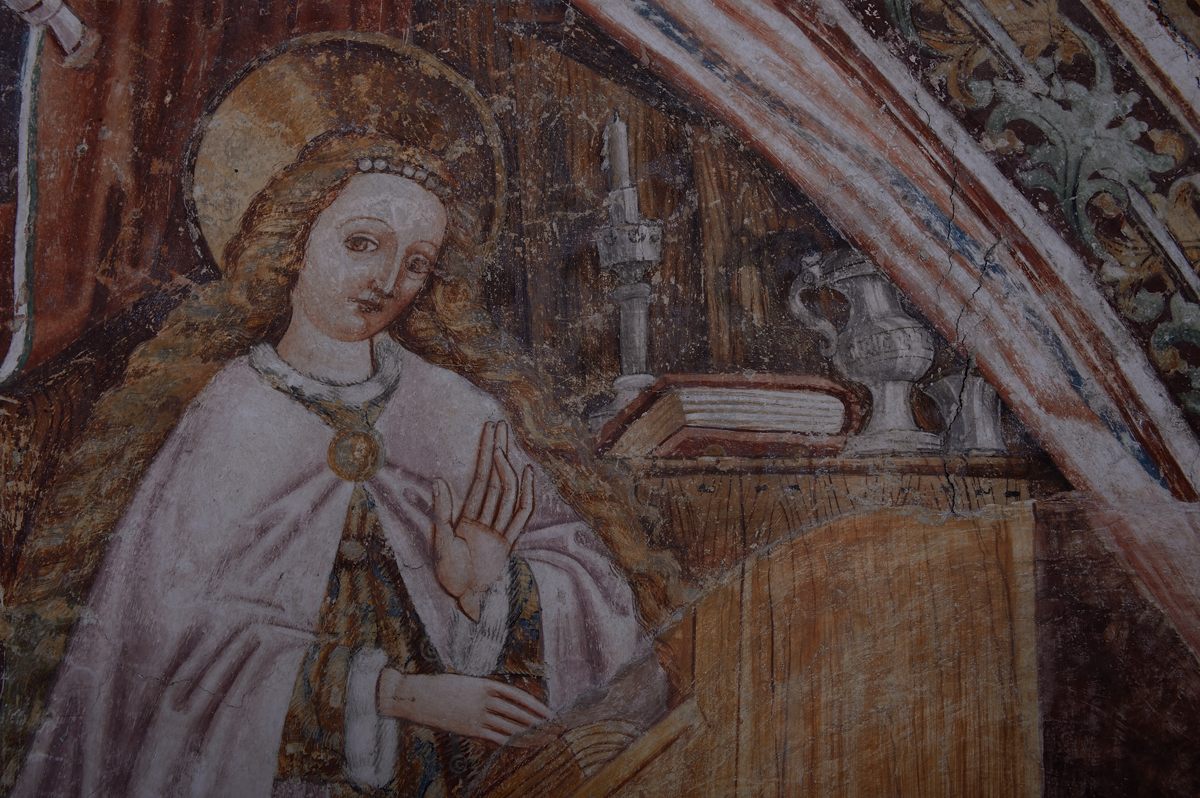
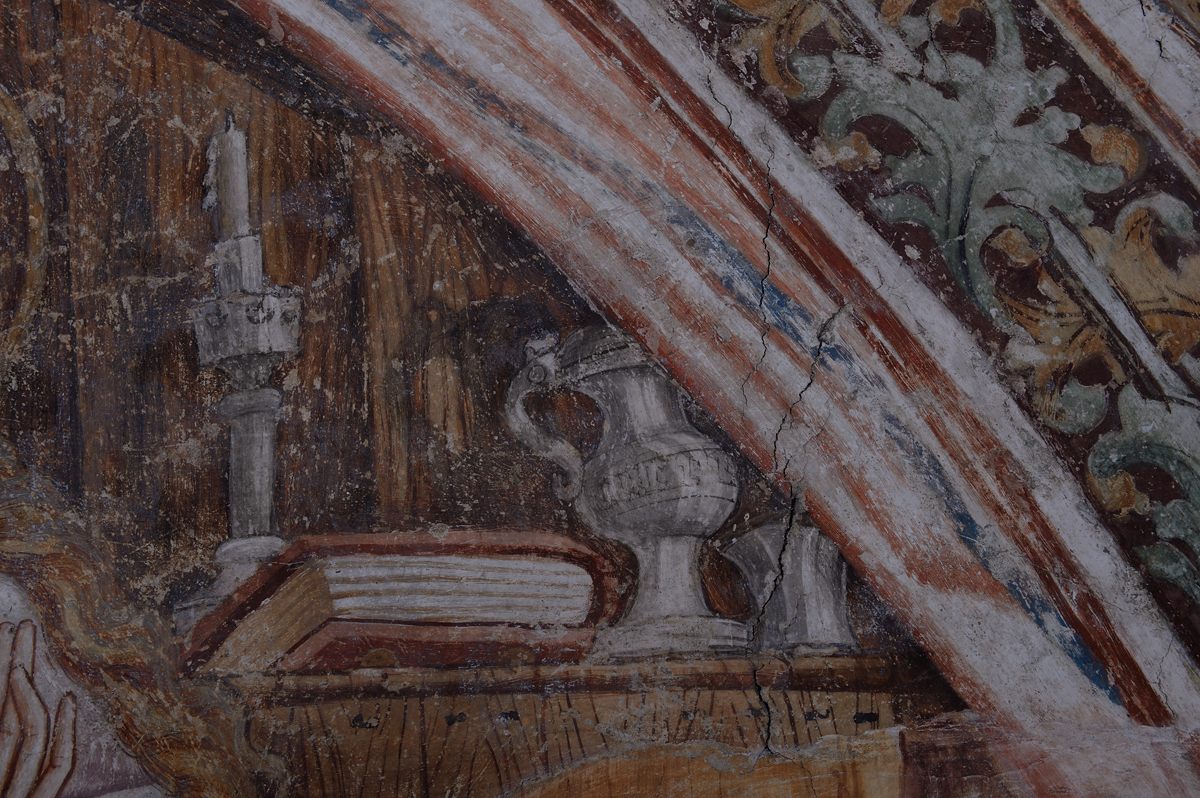
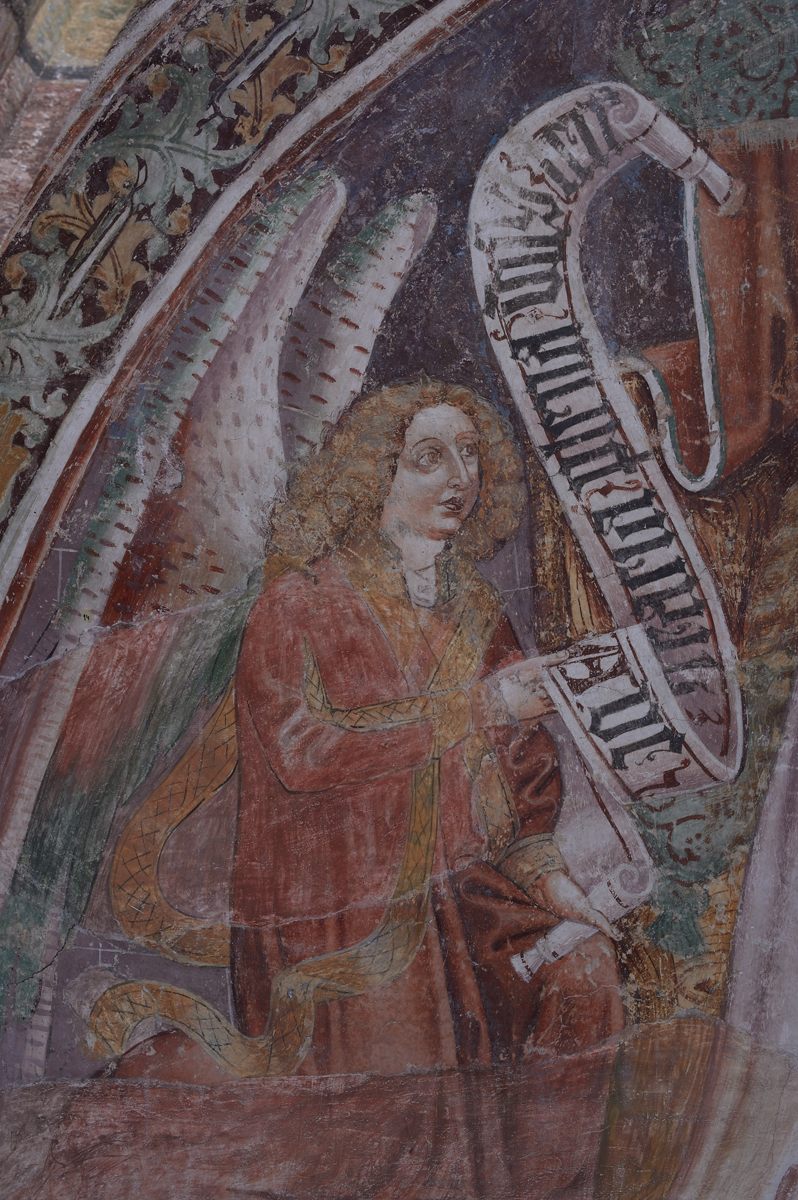
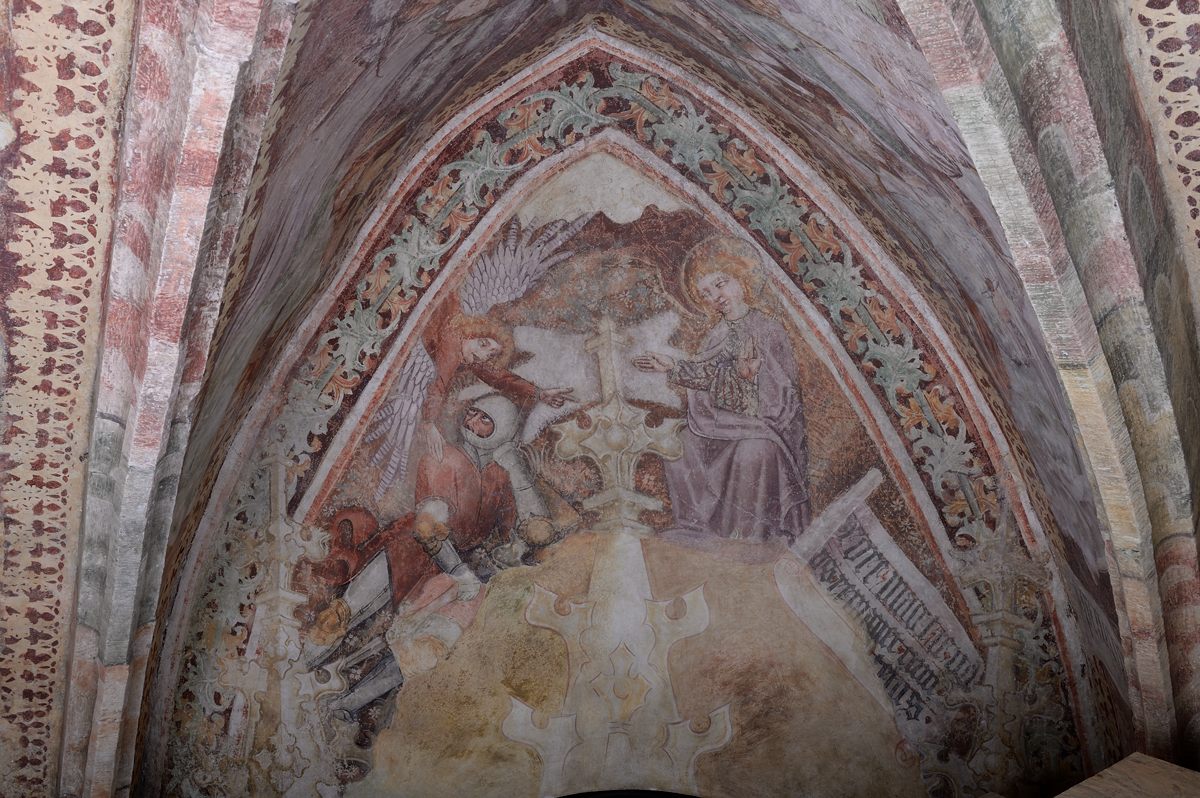
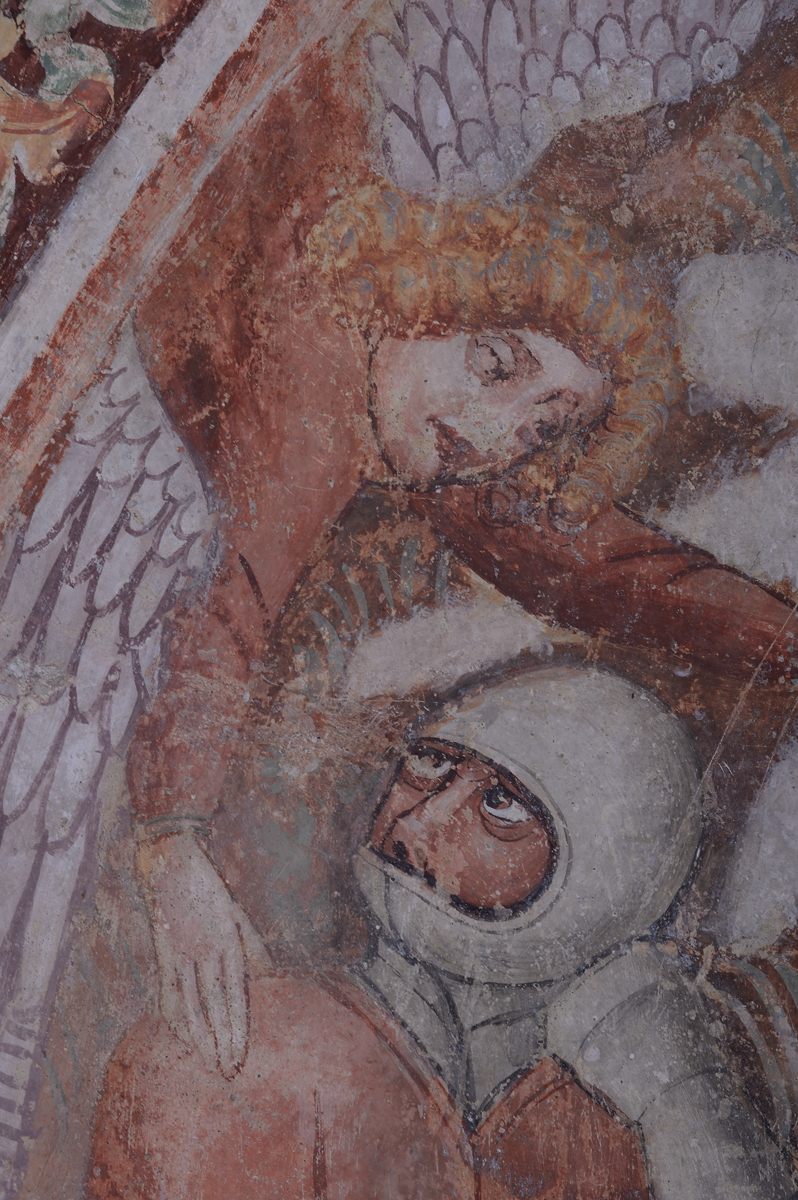
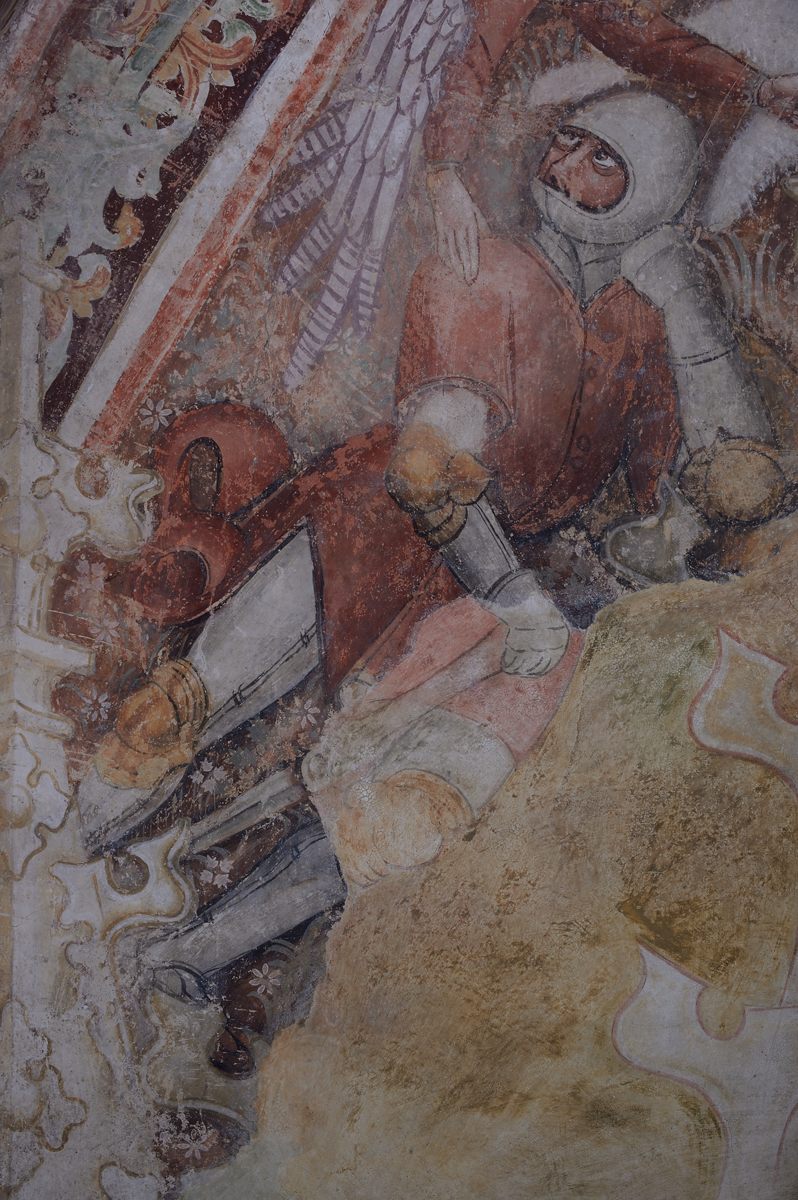
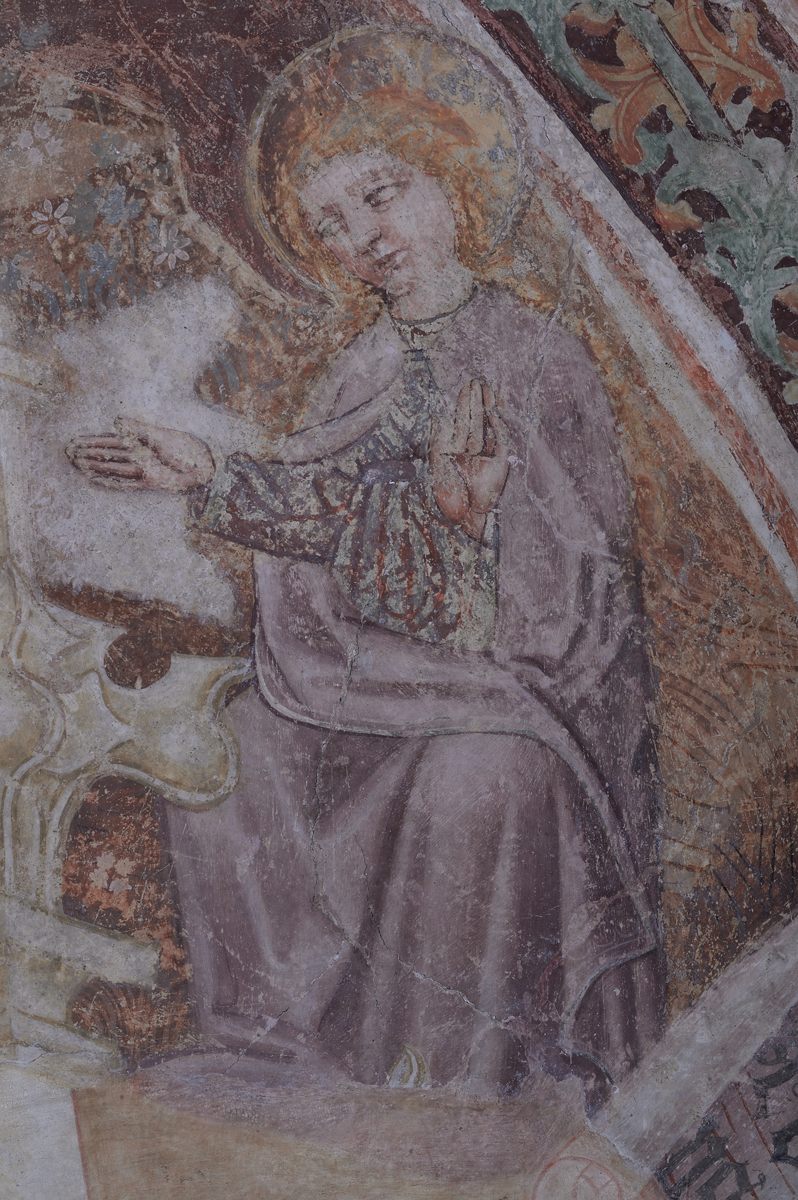
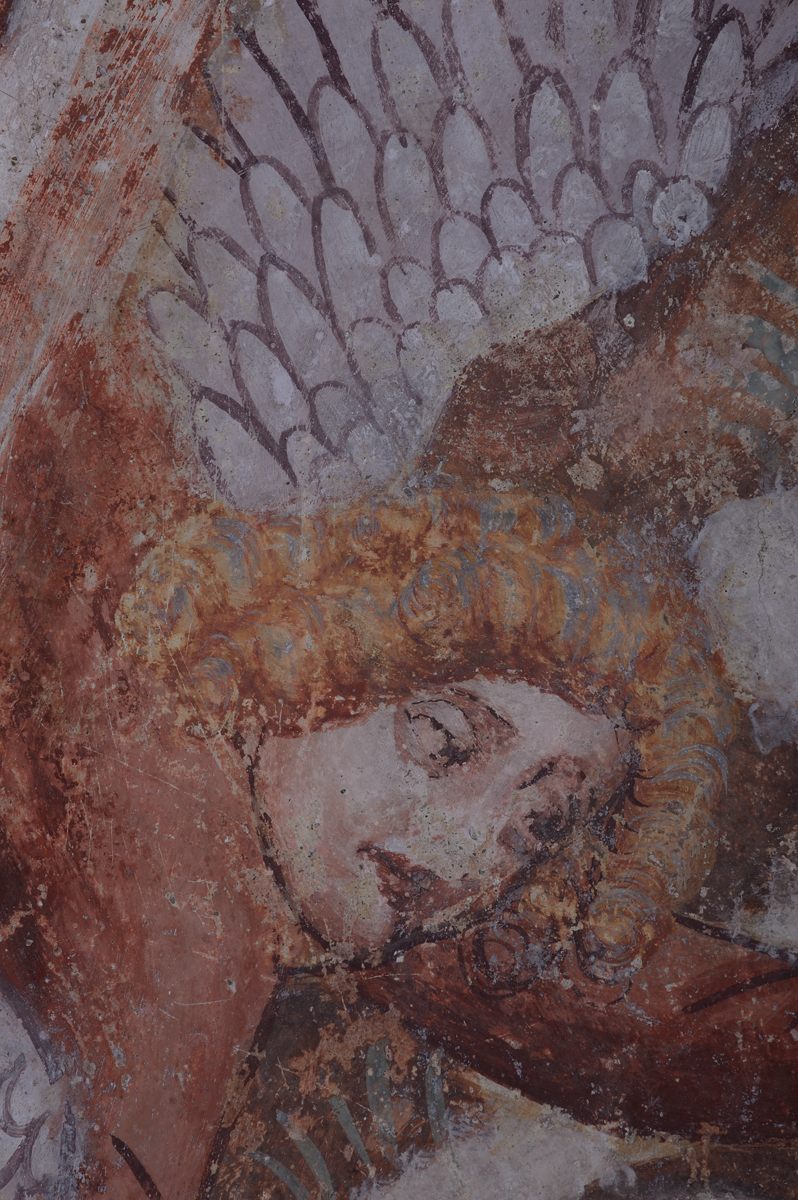
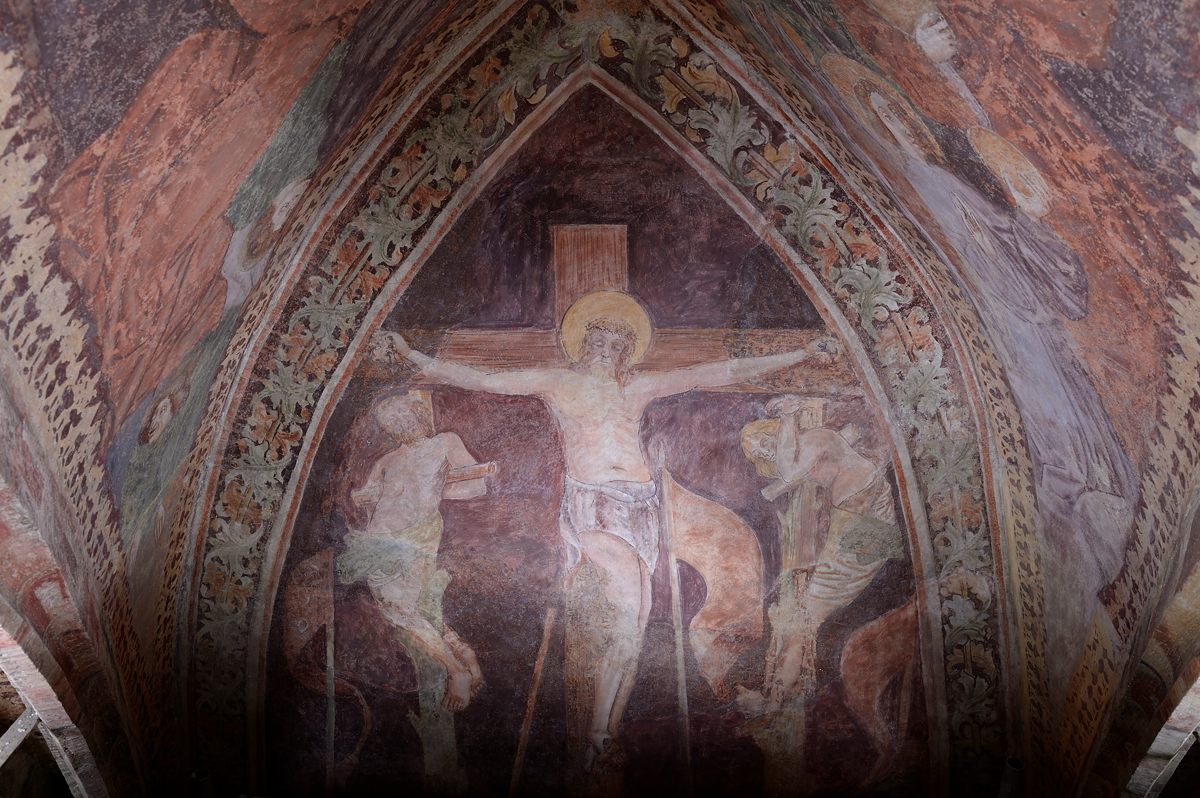
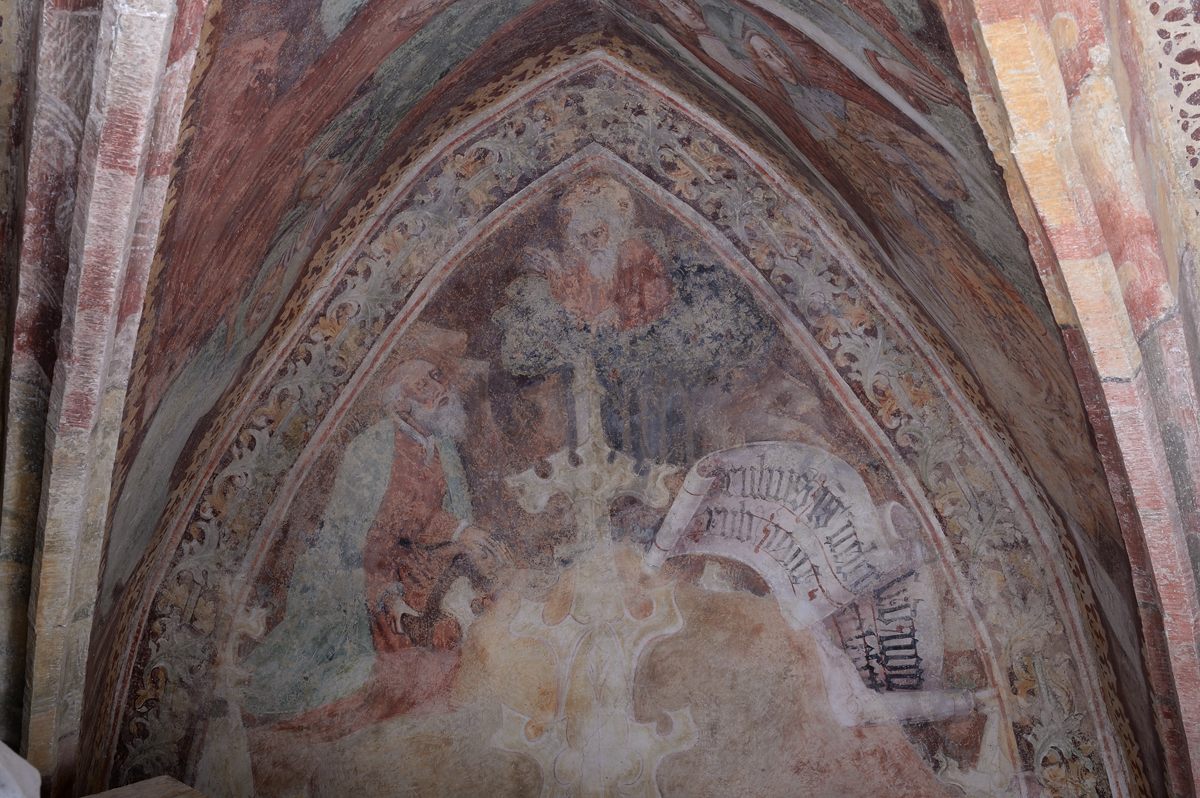
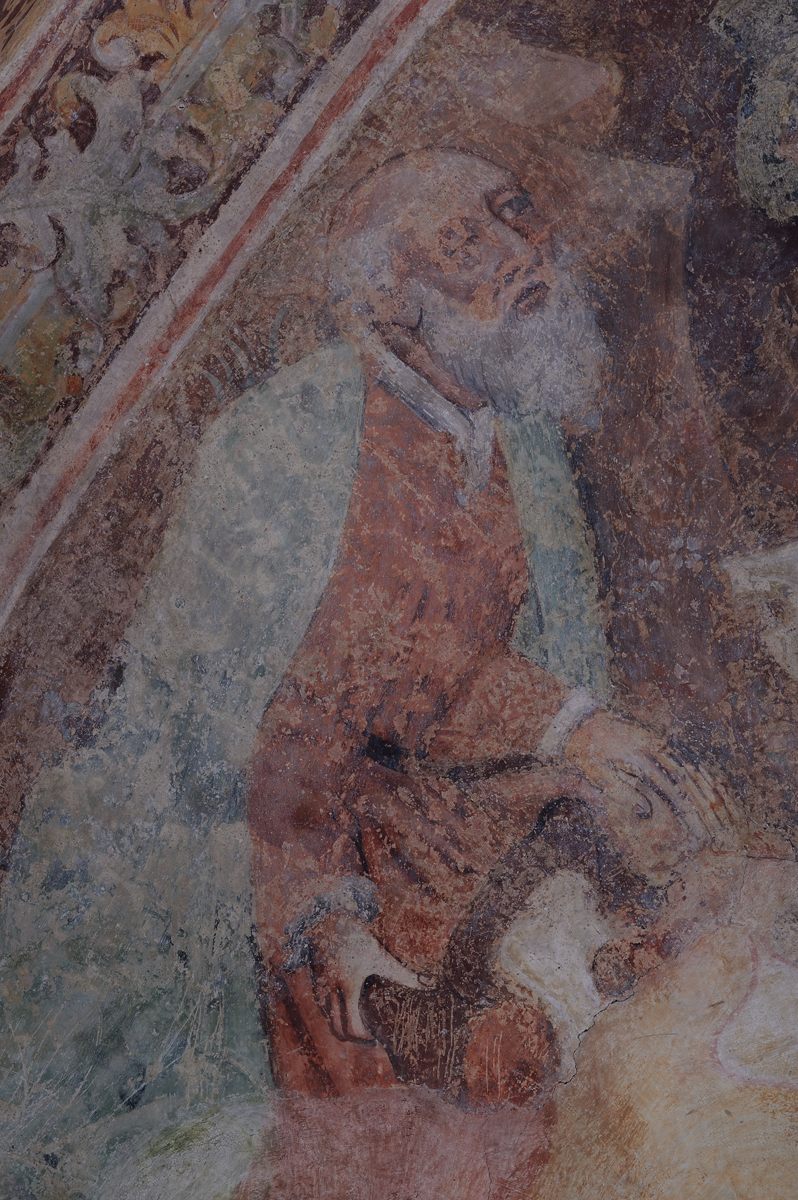
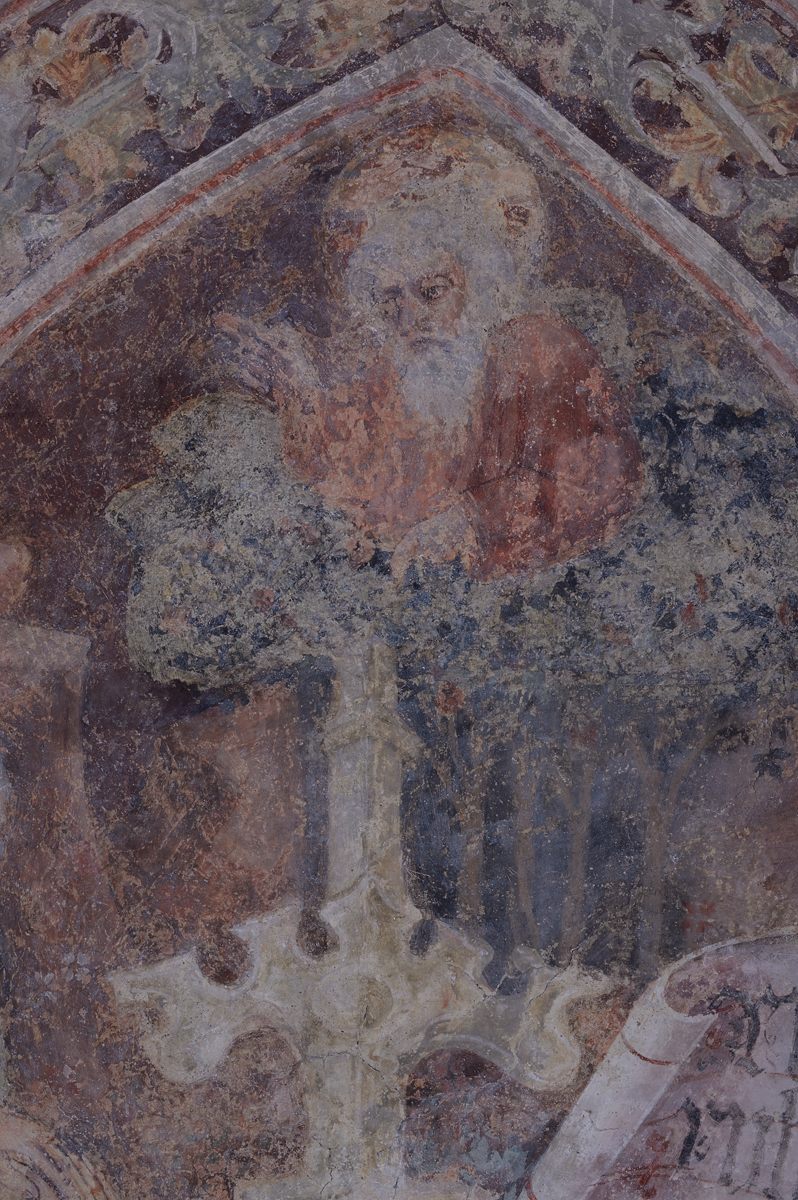
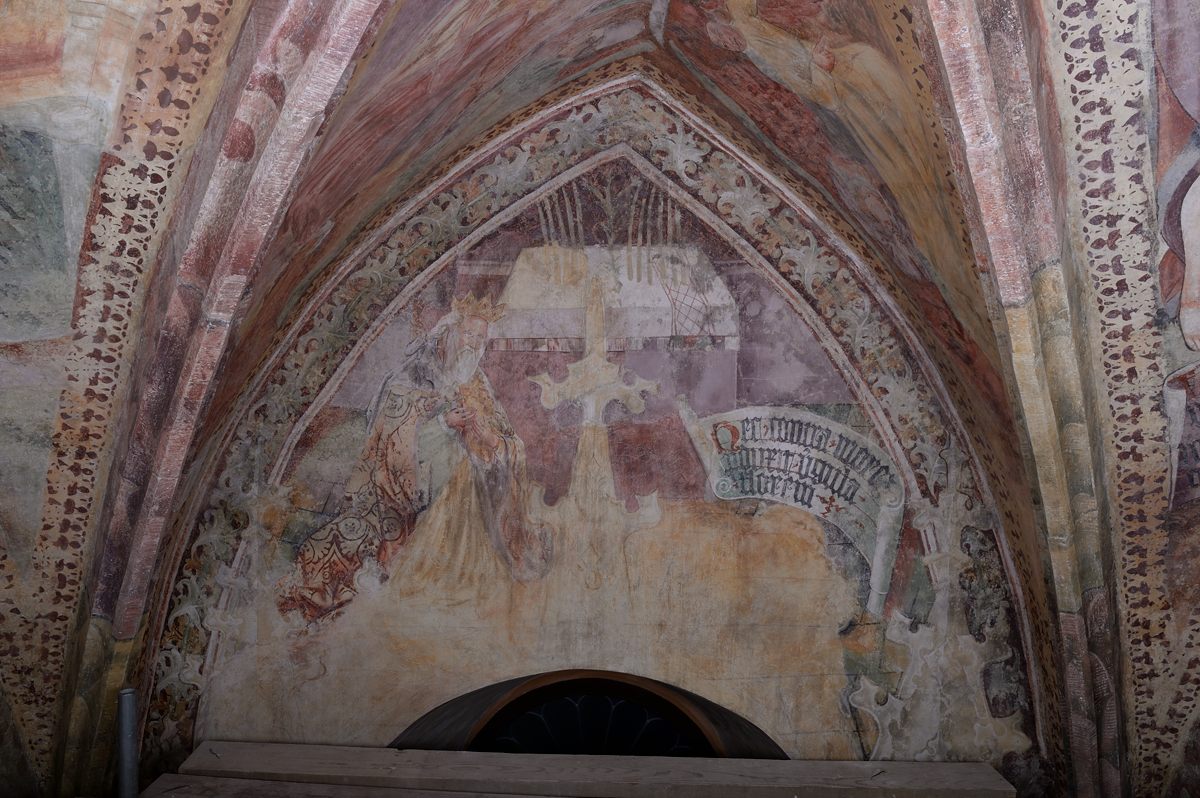
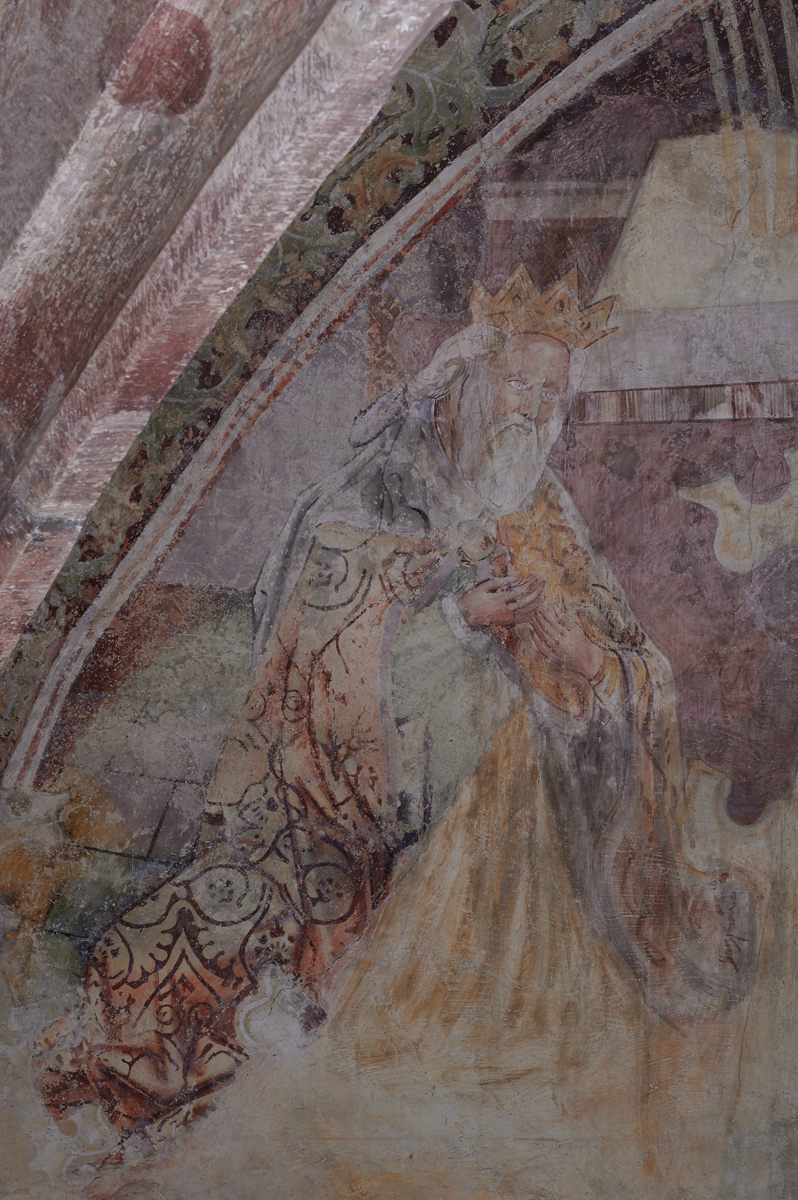
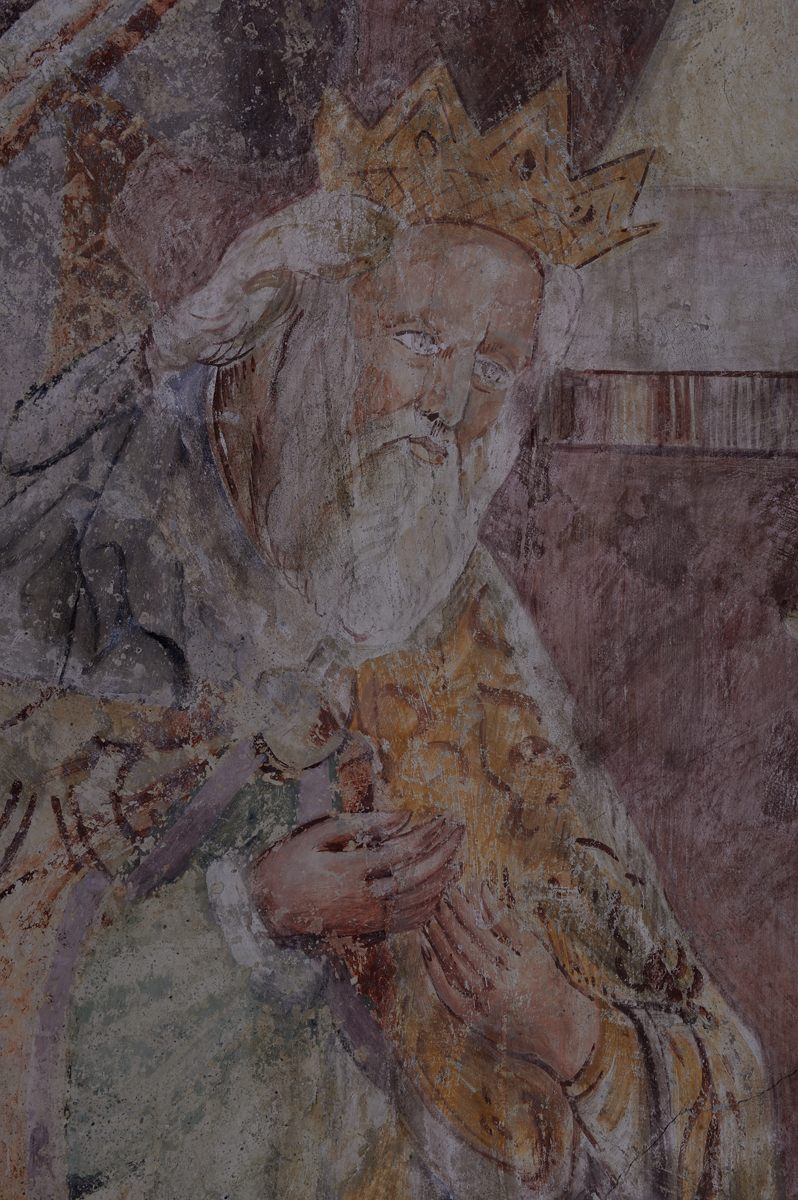
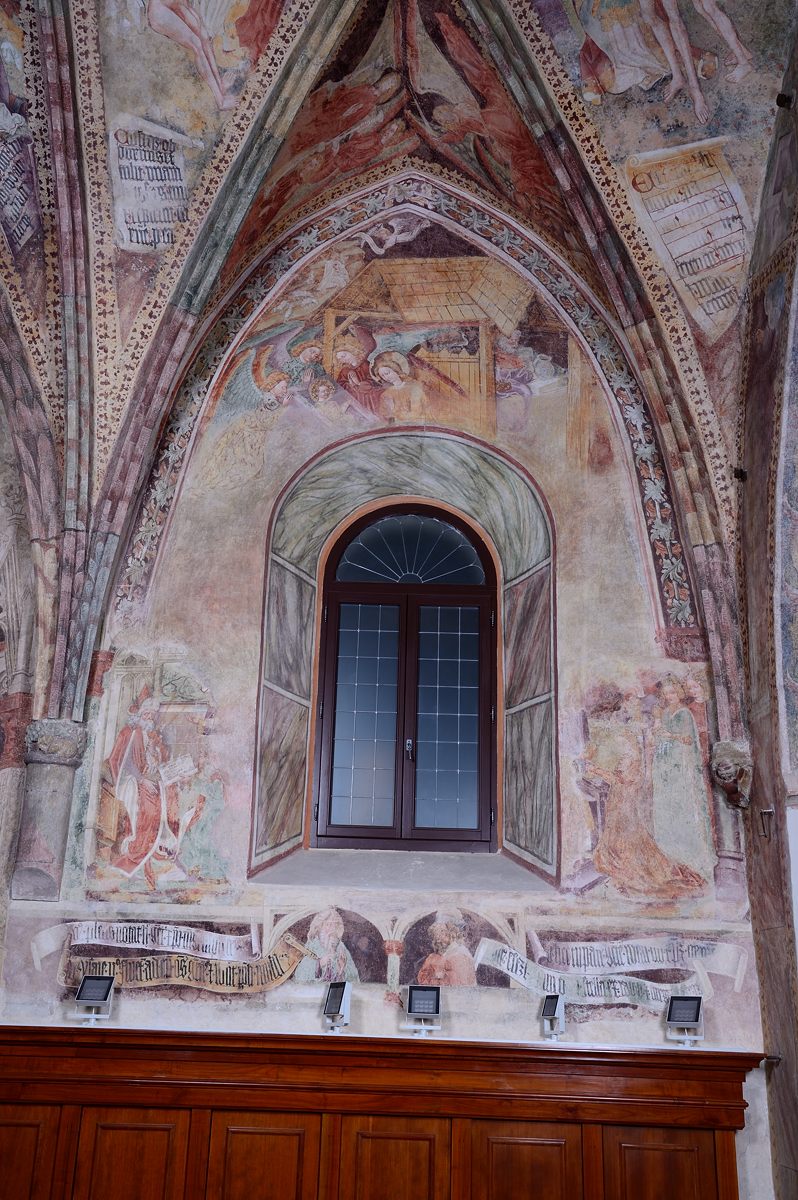
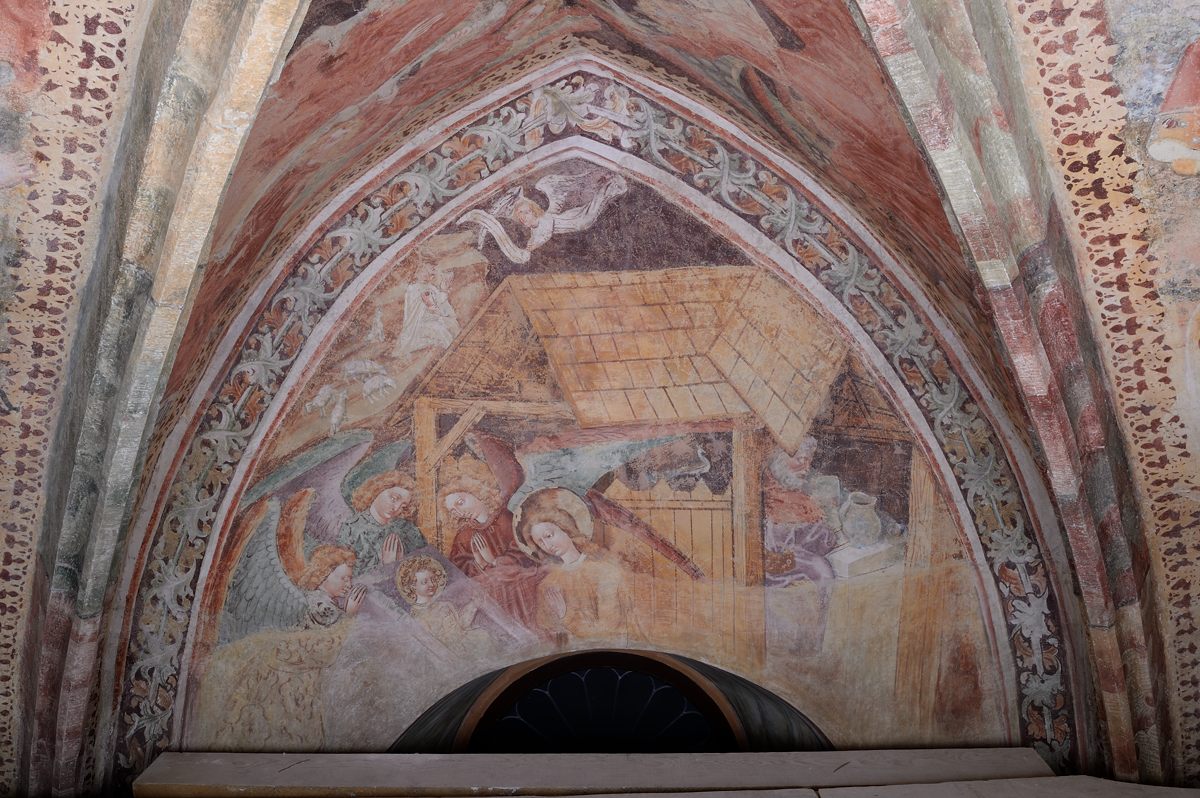
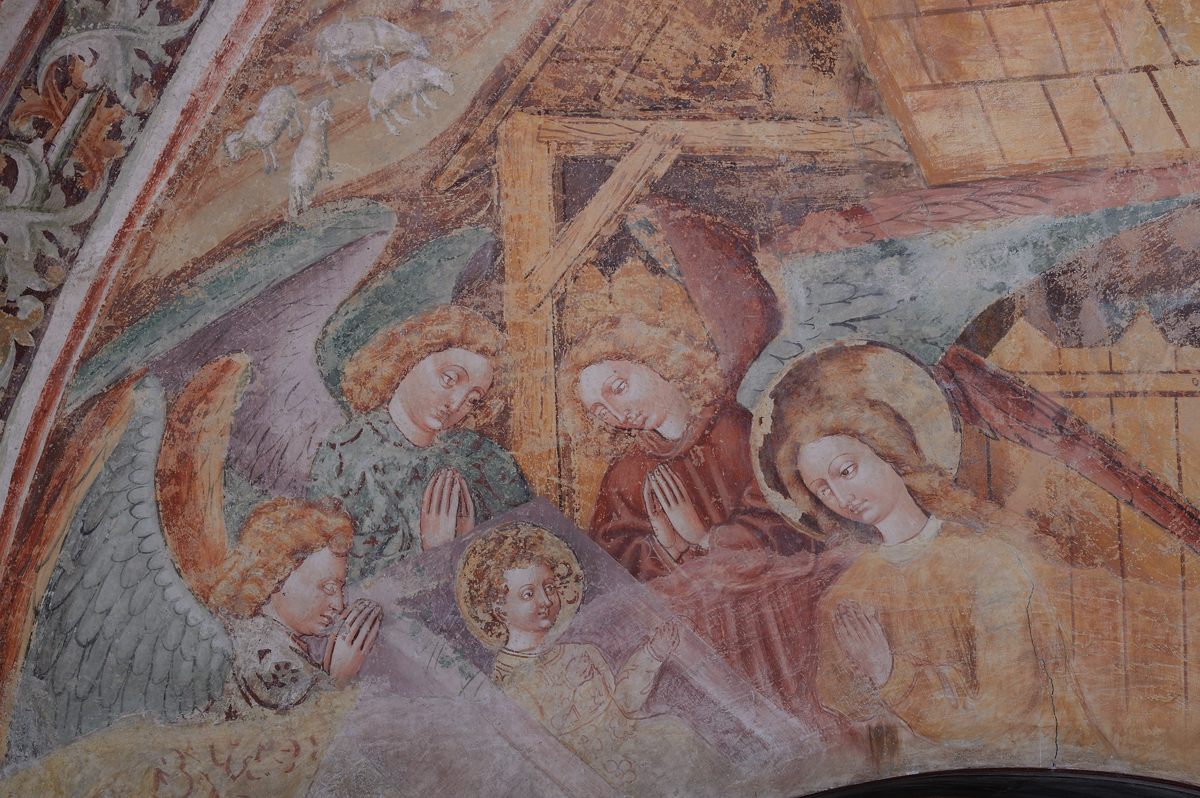
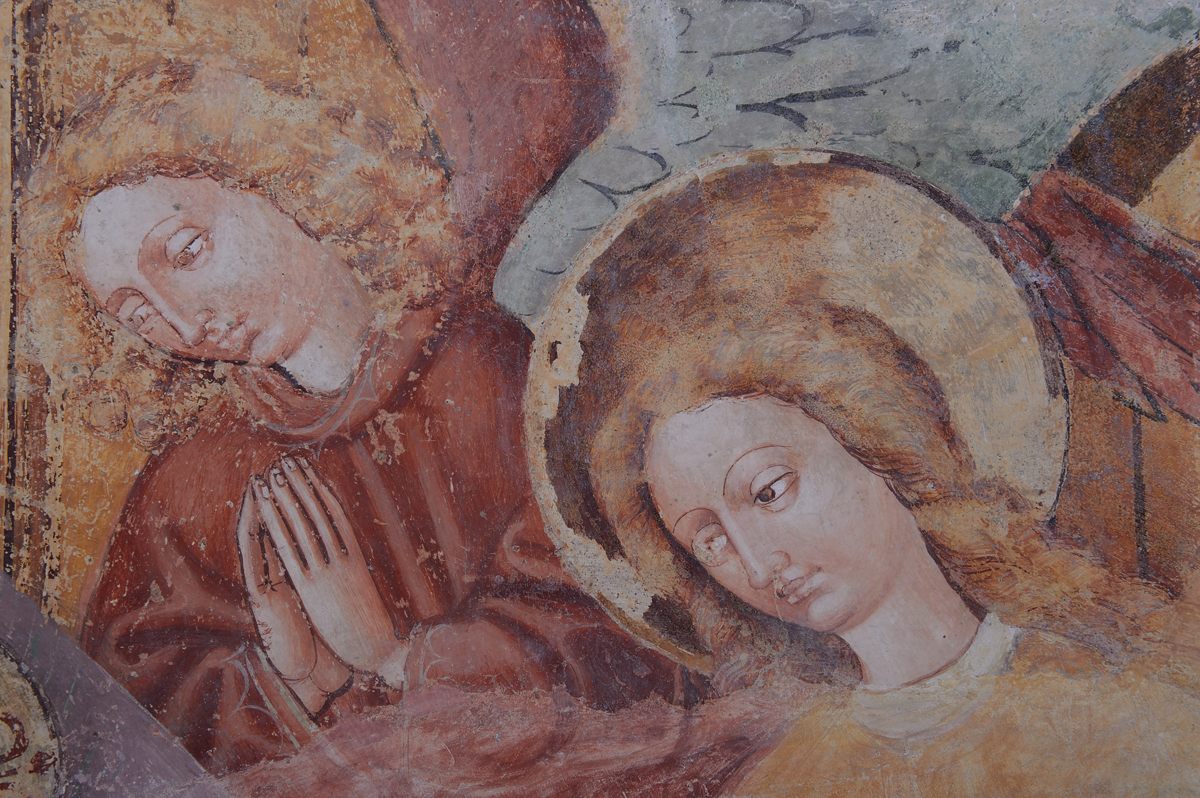
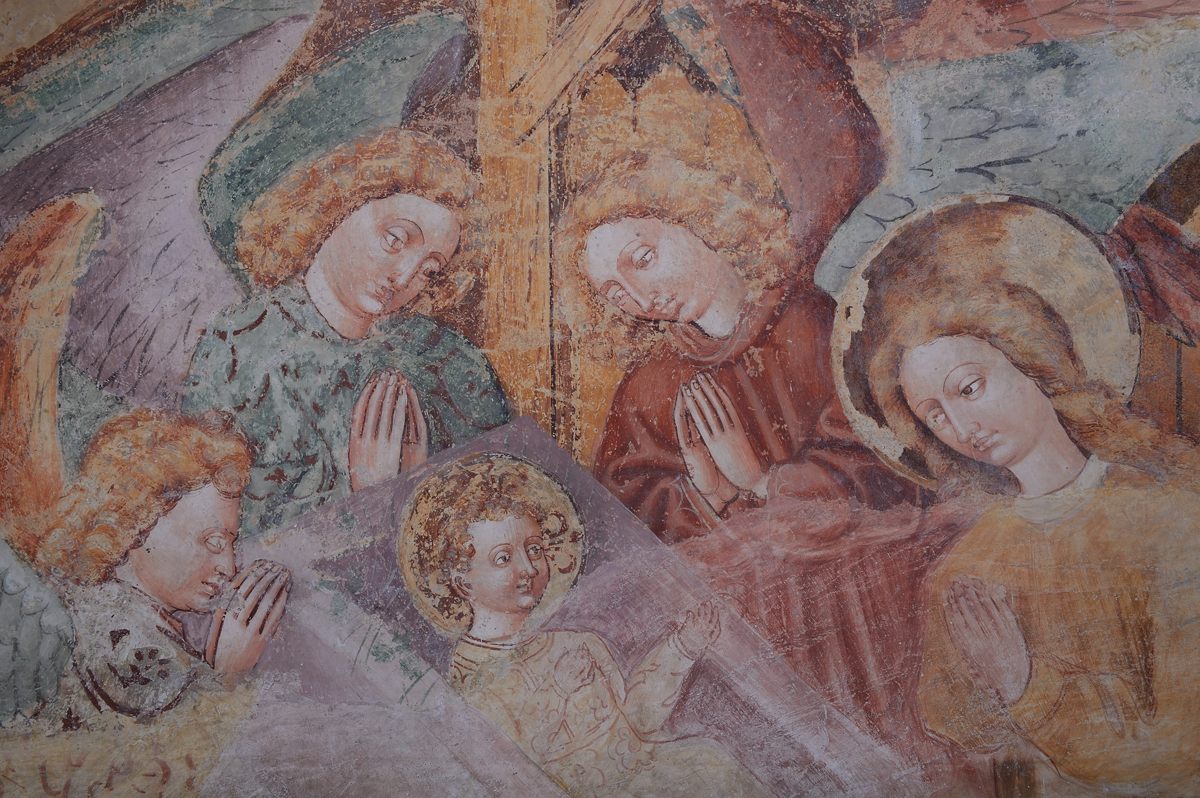
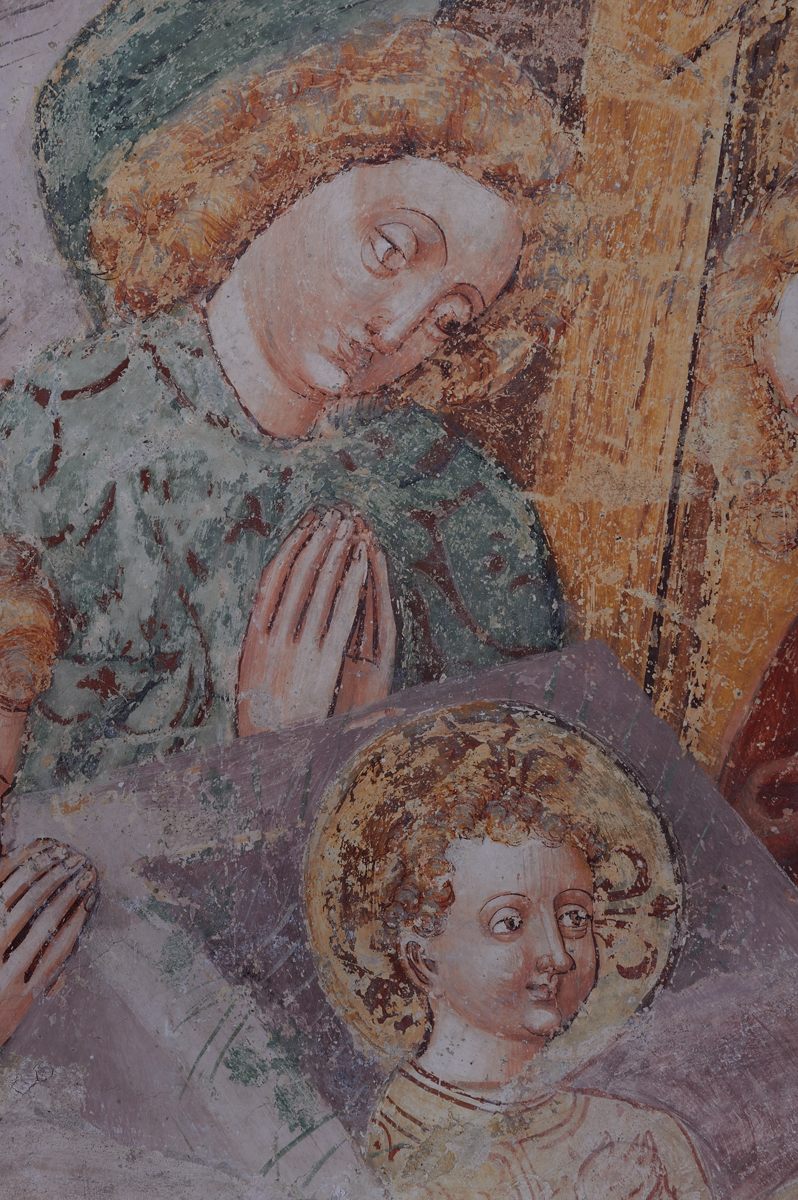
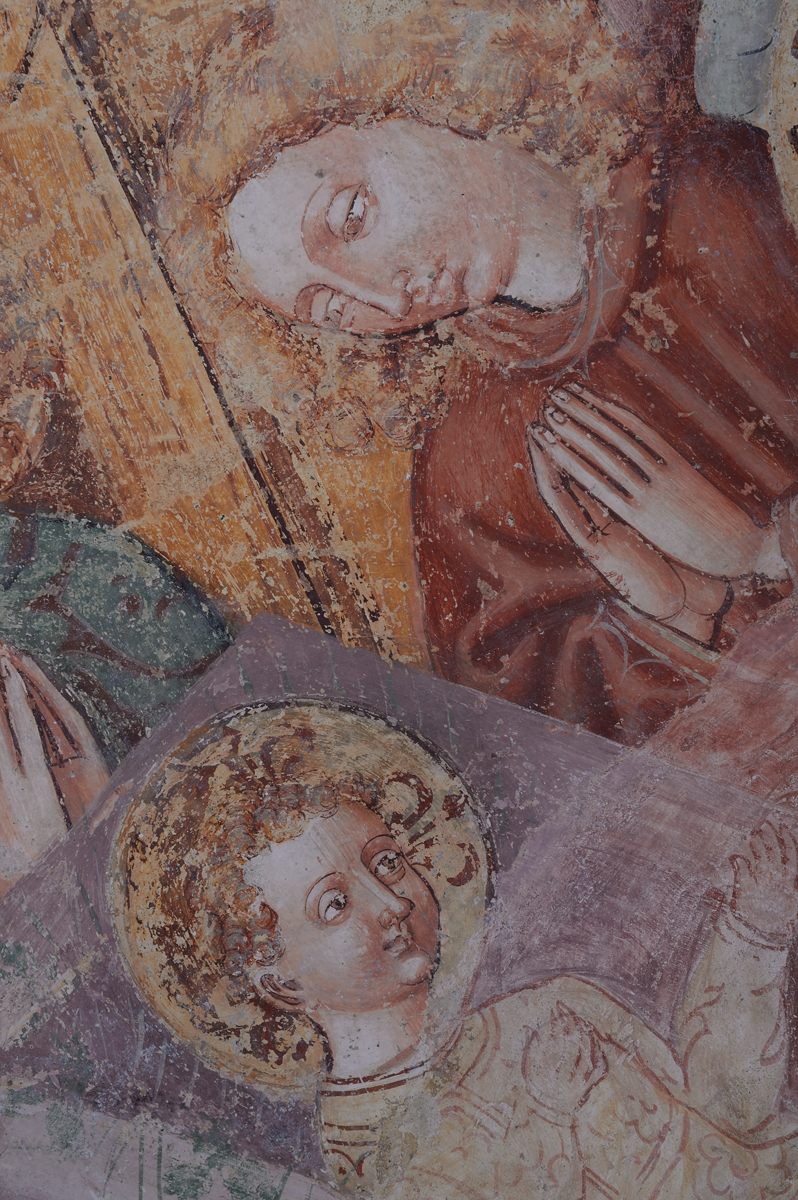
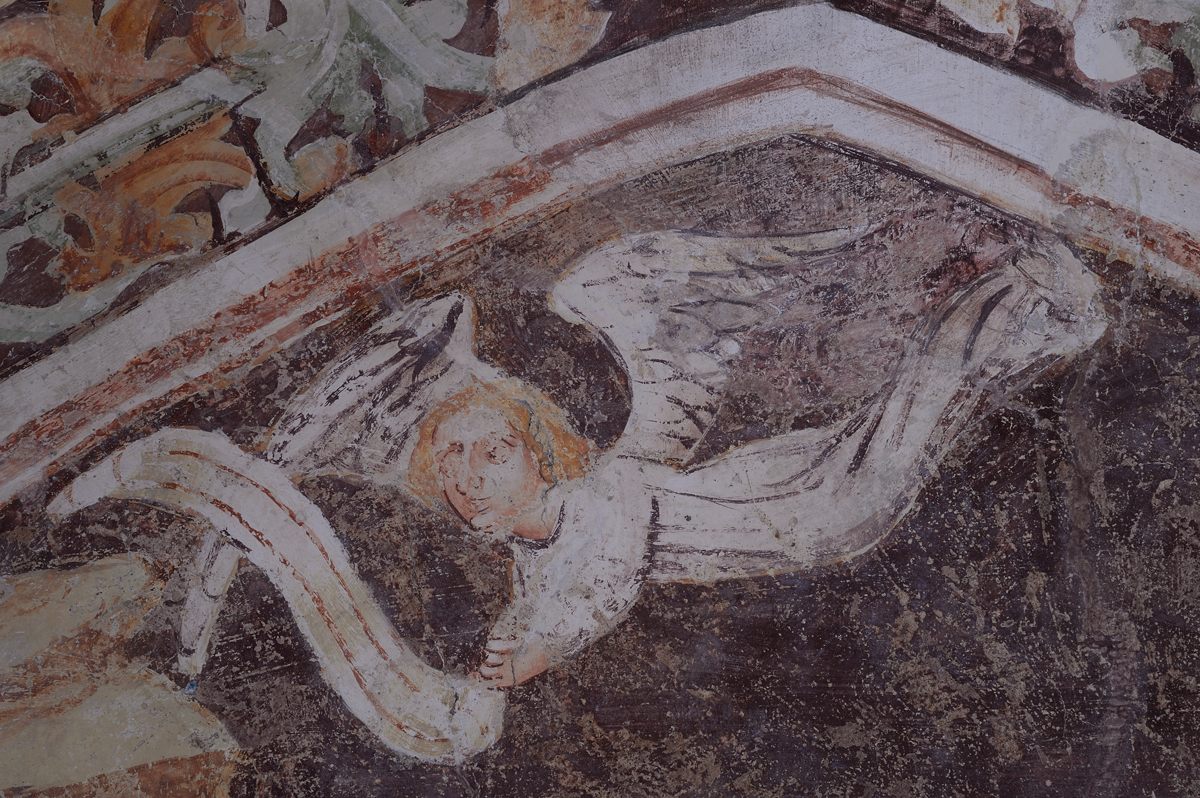
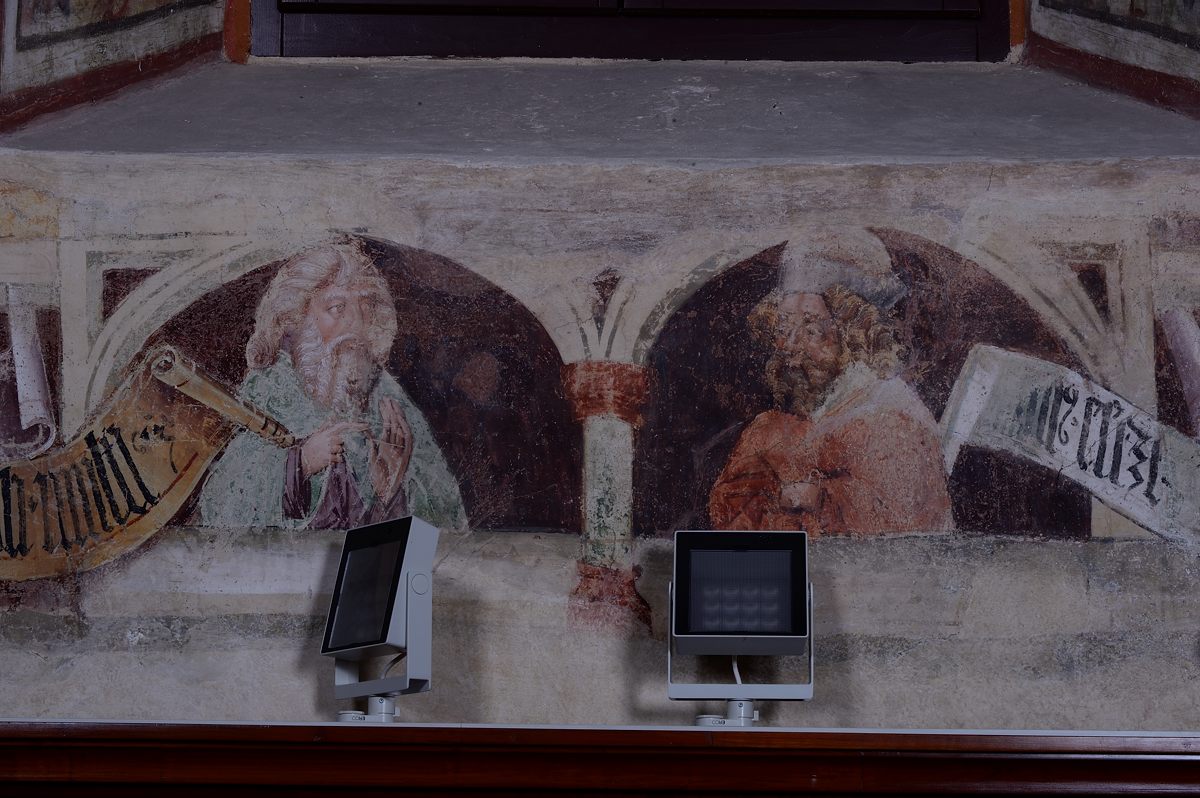
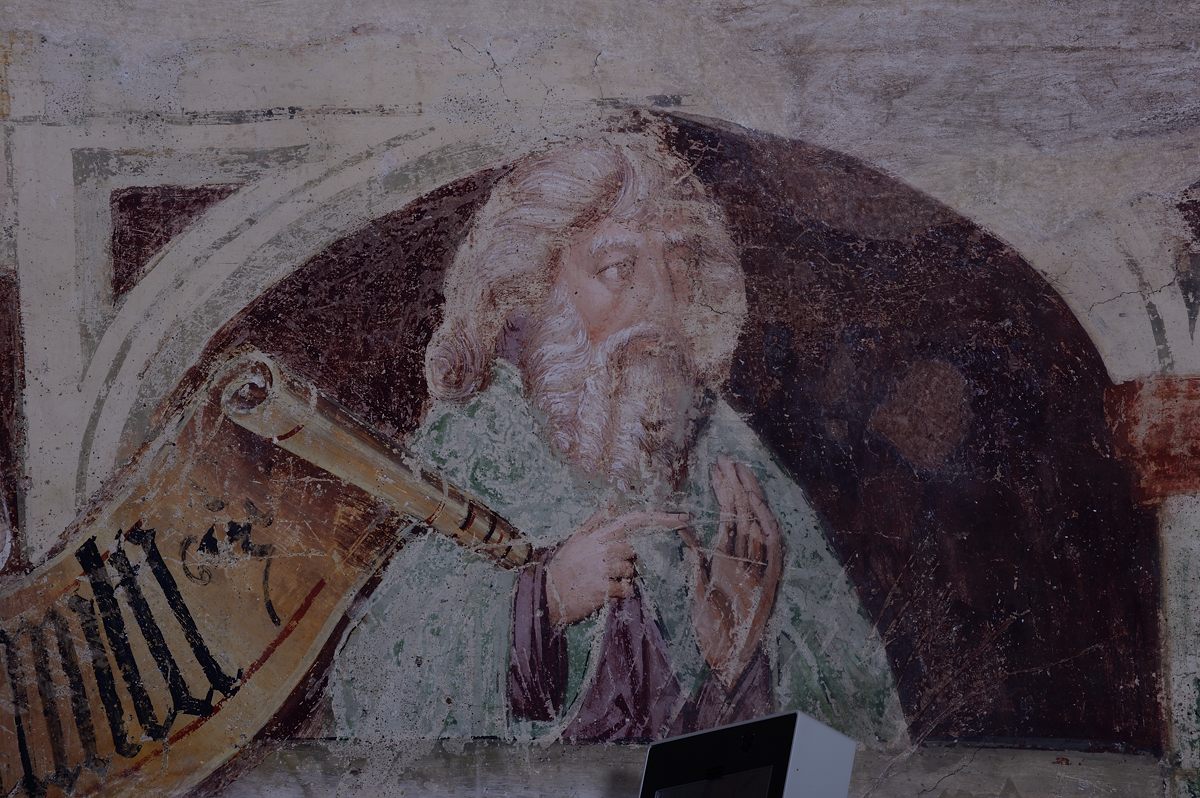
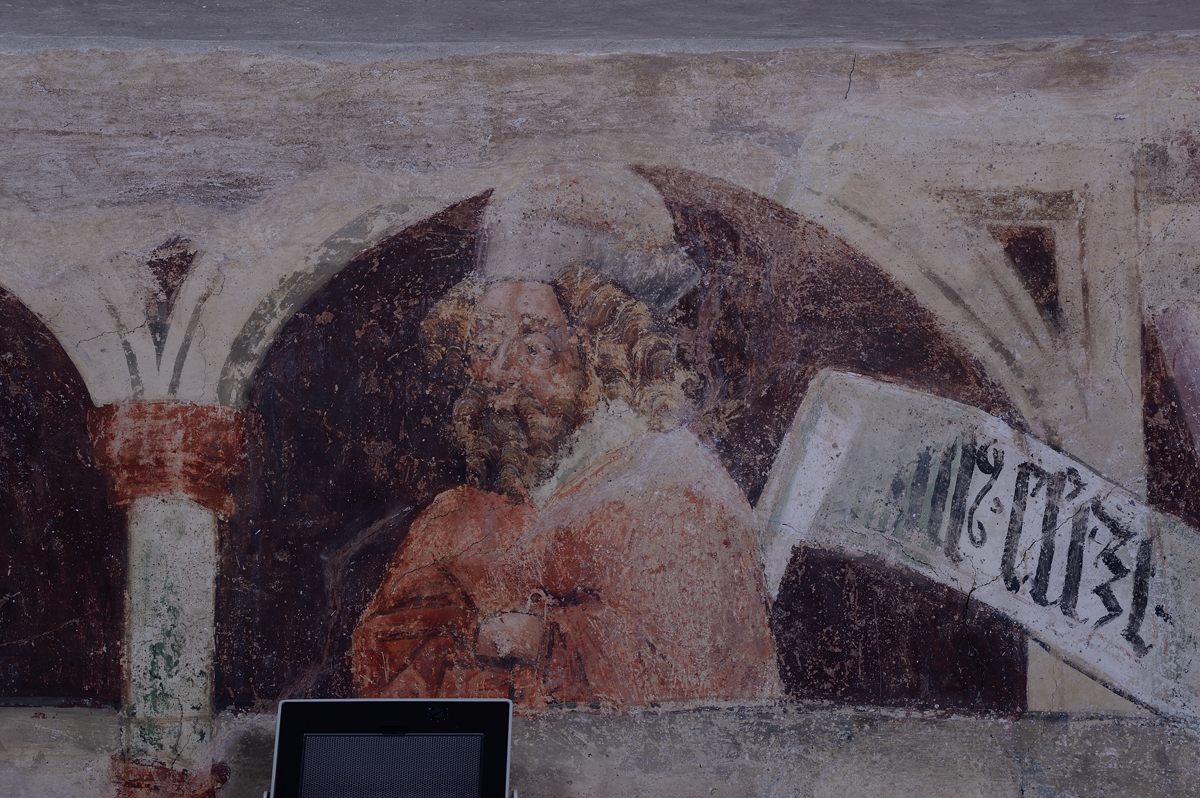
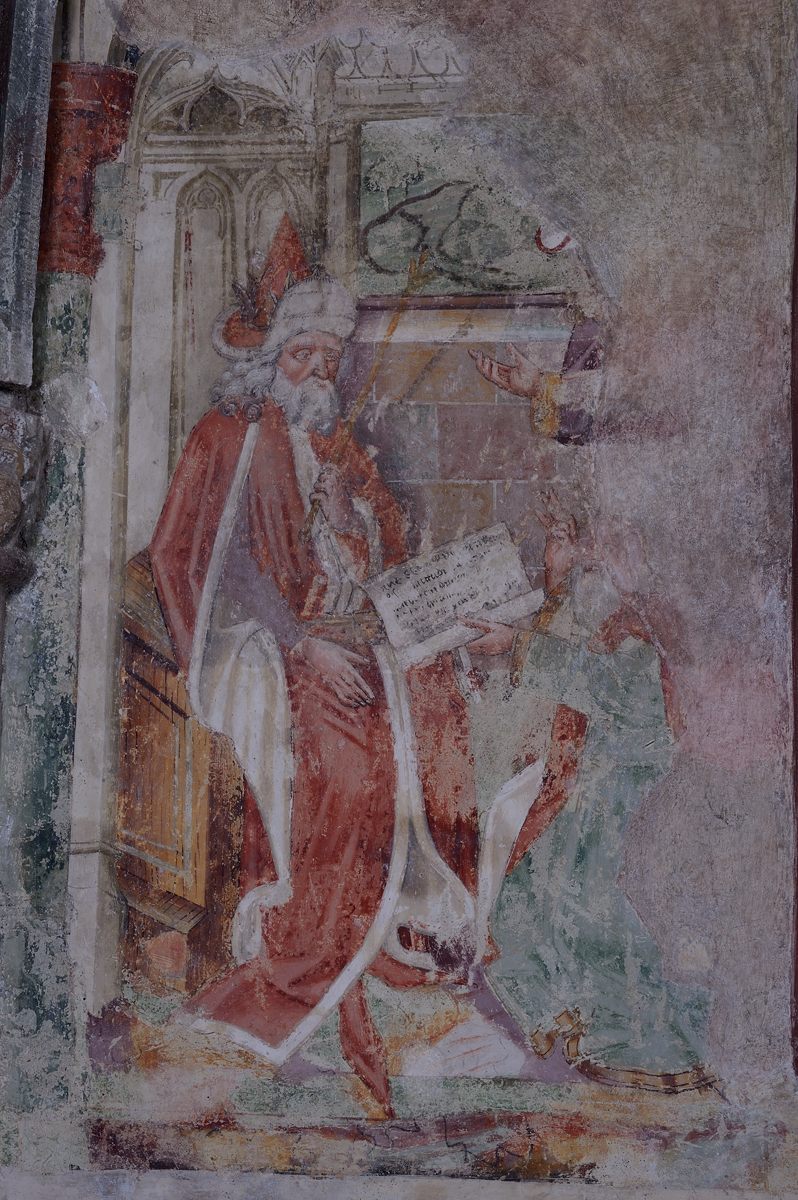
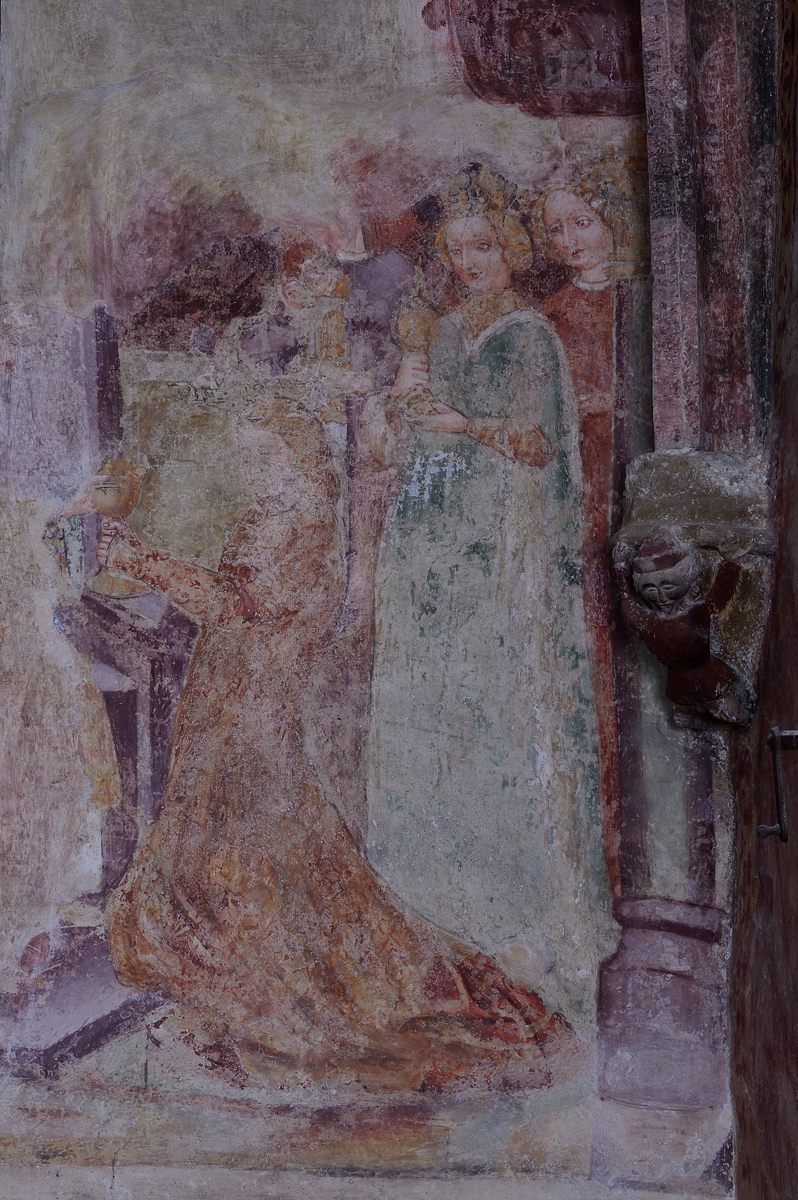
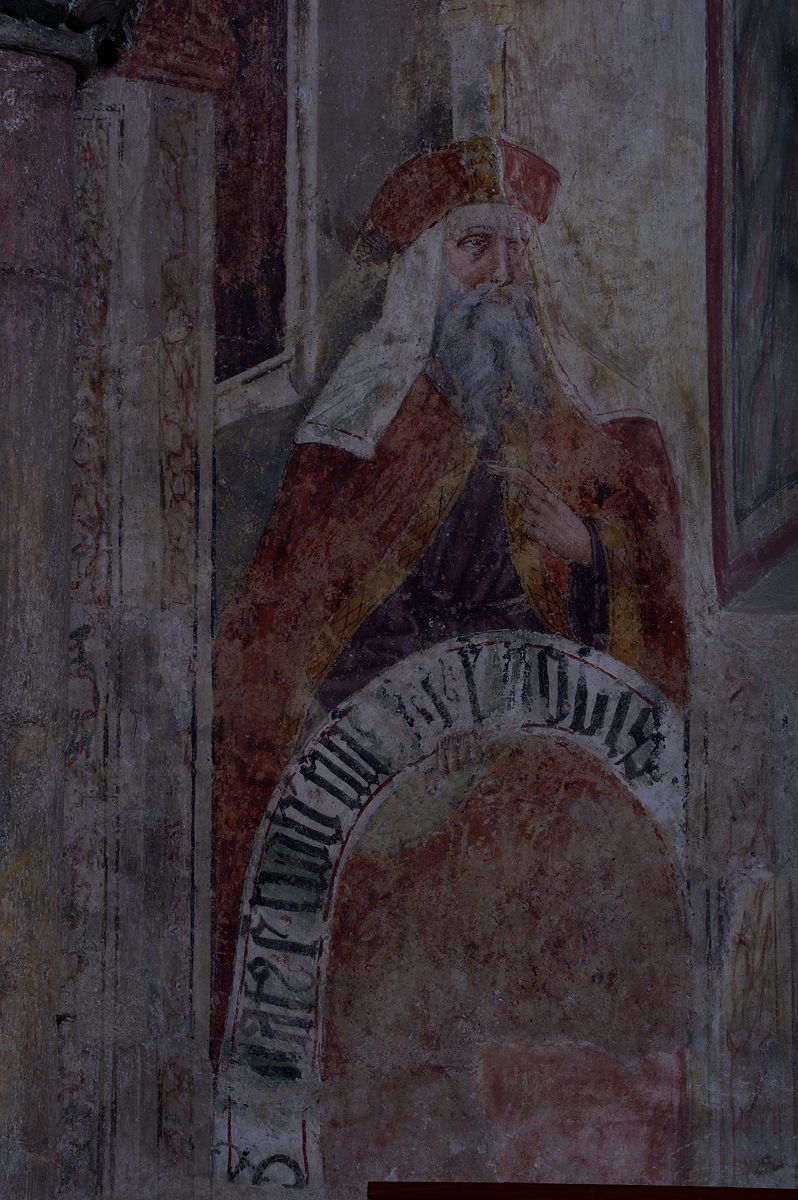
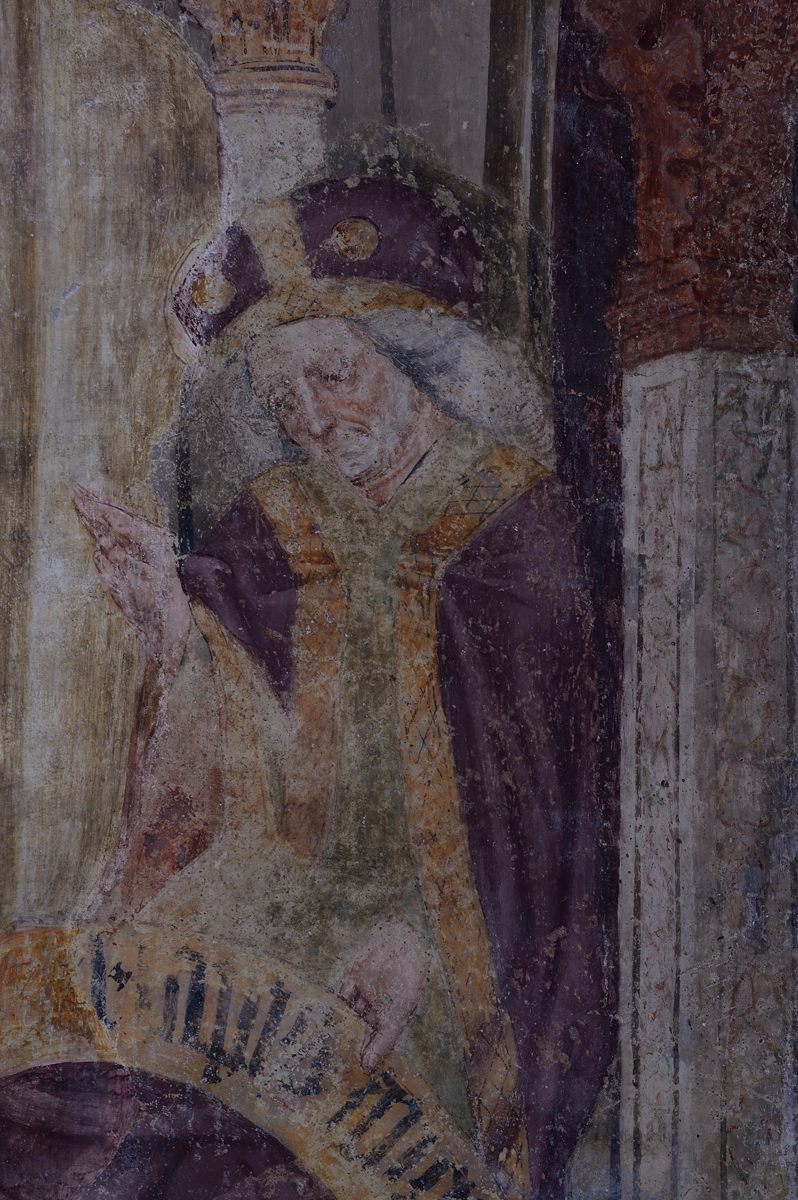
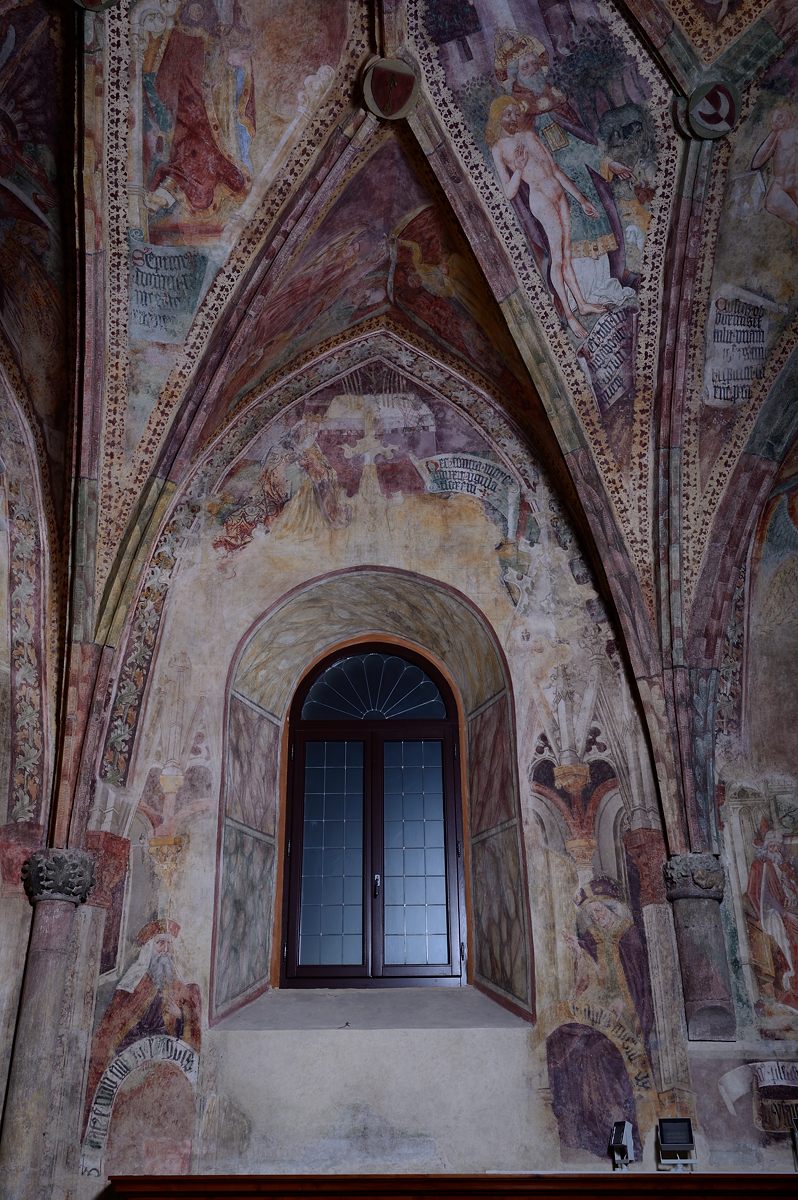
The Gothic sanctuary of the church was painted in the 1460s. Thirteen coats of arms belonging to the local Istrian-Karst nobility, the Duchy of Austria, and the Walsee family are painted on the keystones and ribs of the vault. The central vault field is occupied by the figure of Saint Michael, around which scenes from the Book of Genesis are arranged. The peripheral fields are filled with scenes of the Battle of the Angels and depictions of the Heavenly Choir. On the inner side of the triumphal arch and the adjacent vault field, the scene of the Separation of the Blessed and the Damned is depicted. Behind the Baroque altar, in the centre of the eastern wall, is the Crucifixion. The side walls of the sanctuary feature motifs from the Biblia Pauperum, while the lunettes of the northern wall contain the Annunciation and the Adoration. The lower zone of the walls is filled with half-length figures of prophets.
The iconographic content, high level of preservation, and artistic quality place this cycle among the most significant achievements of Gothic wall painting in Istria and the wider Subalpine region. The stylistic features point to a connection between the Master of the Pazin Presbytery and Central European as well as South Tyrolean artistic circles.
The frescoes were discovered during the church's renovation in 1927, and conservation-restoration works were carried out in 1933 under the guidance of experts from Trieste. They were first brought to public attention by A. Leiss in 1929 in the newspaper Il Piccolo di Trieste, while a more comprehensive scientific analysis of the frescoes was published by F. Stelè in 1947.
Iconographic Program:
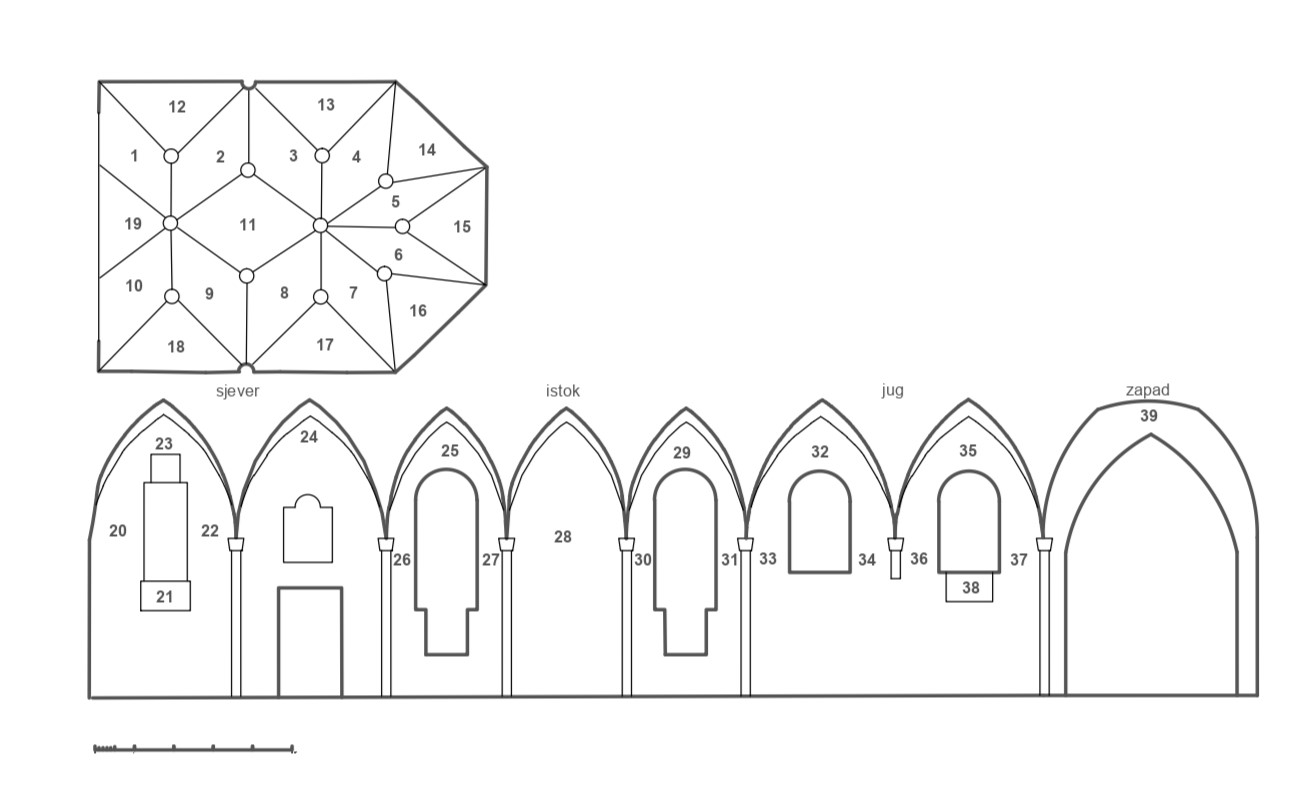
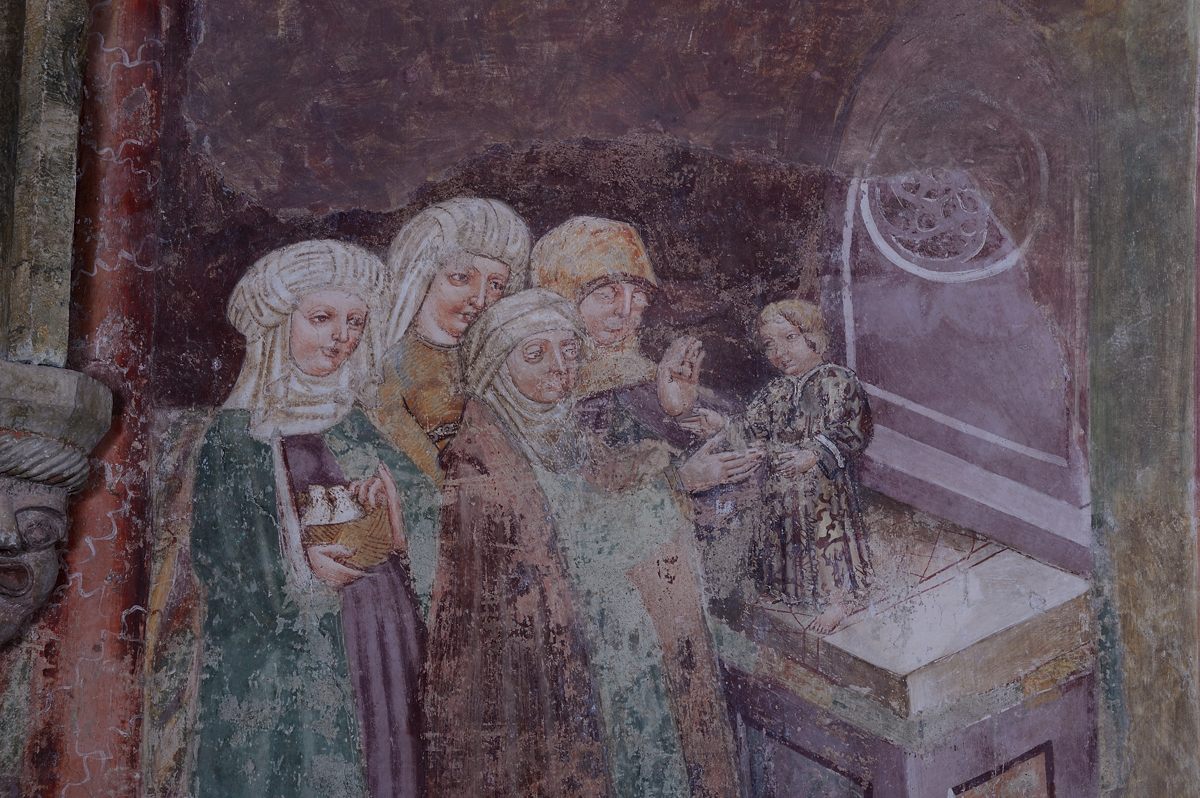
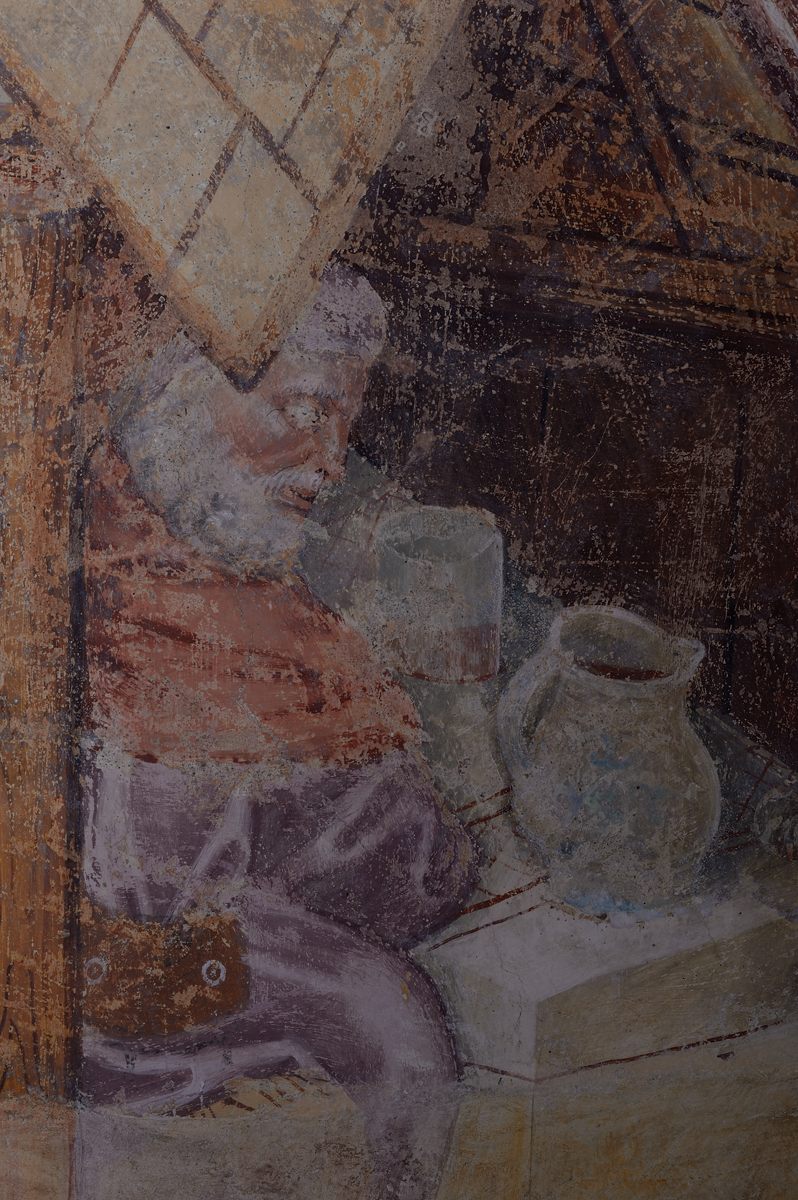
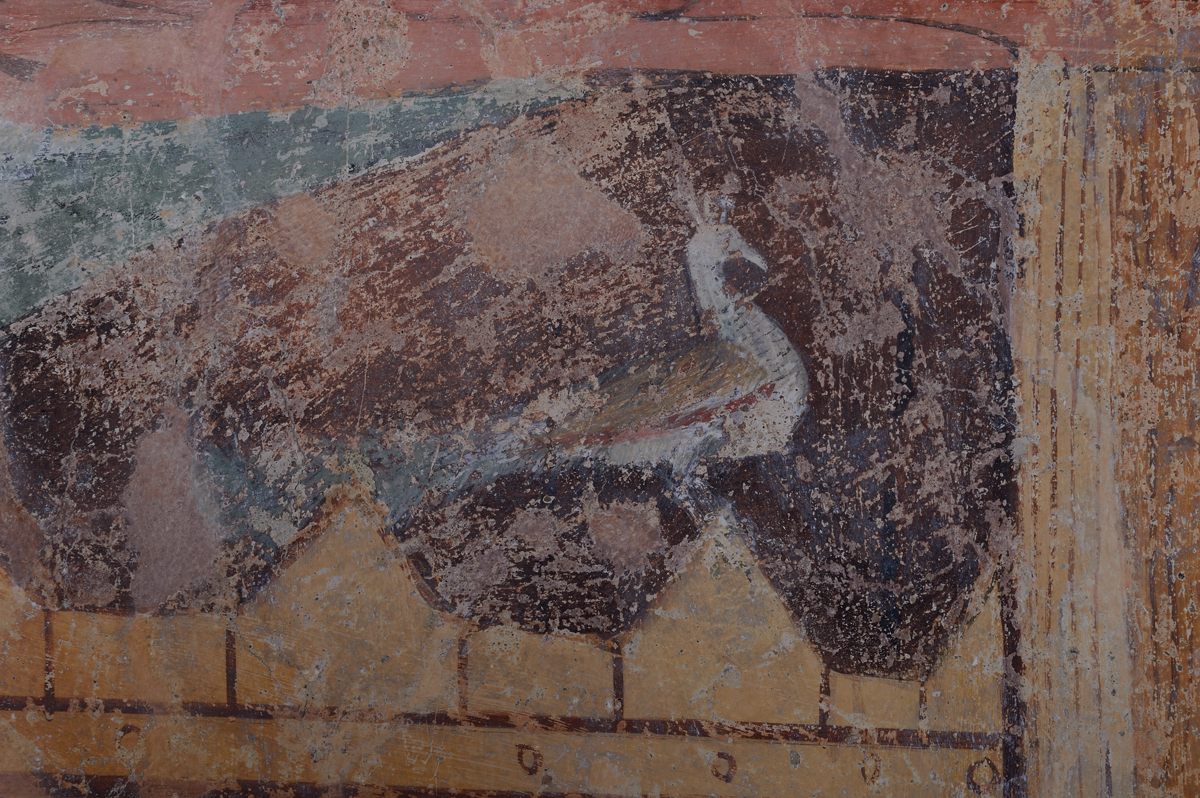
Sanctuary vault: 1 First Day of Genesis: Creation of Light, 2 Second Day of Genesis: Creation of the Heavens and Separation of the Waters, 3 Third Day of Genesis: Separation of Land from the Sea, 4 Fourth Day of Genesis: Creation of the Sun and the Moon, 5 Fifth Day of Genesis: Creation of Birds and Fish, 6 Sixth Day of Genesis: Creation of Adam, 7 Seventh Day of Genesis: God's Rest, 8 Adam Naming the Animals, 9 Creation of Eve, 10 Tree of Knowledge of Good and Evil, 11 Archangel Michael, 12 – 19 Angelic Choirs and the Battle of the Angels. Northern wall: 20 Presentation of Mary in the Temple, 21 Prophets Zechariah and Zephaniah, 22 Presentation of Samuel in the Temple, 23 Eve’s Sin, 24 Annunciation, 25 Gideon’s Fleece, 26 – 27 Prophets, 28 Crucifixion, 29 Burning Bush, 30 – 31 Prophets. Southern wall: 32 Aaron’s Rod That Budded, 33 Prophet Isaiah, 34 Prophet Daniel, 35 Nativity, 36 Abner Visiting David in Hebron, 37 Queen of Sheba Visiting Solomon, 38 Prophets Isaiah and Balaam. Western wall: 39 Separation of the Souls of the Blessed and the Damned (prefigurations of sin, lust, and intemperance in drink)
Scene locations
A. LEISS, 1929., Restauri di Duomo di Pisino, Il Piccolo di Trieste, 11. 08. 1929; F. STELÈ, 1947., Izvještaj o terenskom putu po Istri, Letopis SAZU, Ljubljana, 1947, 162-163; C. DE FRANCESCHI, 1963., Storia documentata della contea di Pisino, Atti e Memorie della Società Istriana di Archeologia e Storia Patria, 1963, 10-12, 252-262; B. FUČIĆ, Istarske freske, Zagreb, 1963, 20-21, KAT. 12-13; ISTI, 1964a, Srednjovjekovno zidno slikarstvo u Istri, doktorska disertacija, Filozofski fakultet Sveučilišta u Ljubljani, Rijeka-Ljubljana, 1964, 252-262, KAT. 480-483; F. STELÈ, 1971., „Die istrische Lokalschule der gotischen Wandmalerei“, u: Studi di storia dell'arte in onore di Antonio Morassi, Venezia, 1971, 58-67; B. FUČIĆ: 1977a, Biblija pauperum i istarske freske, Zbornik za umetnostno zgodovino, 13, Ljubljana, 1977, 143-152, 147-148; ISTI, 1992., Vincent iz Kastva, Zagreb-Pazin, 1992; F. PIETROPOLI, 1978., Gli affreschi, u: Feresini, Nerina - Gabrielli Pross, Gabriella - Pietropoli, Fabrizio, Il Duomo di Pisino, Calliano, 1978, 24-28; J. ŠIKLIĆ, 2006., Crkva Svetoga Nikole u Pazinu, Pula, 2006, 91-96; Ž. BISTROVIĆ, 2011., Šareni trag istarskih fresaka, Pula, 2011, 100-103; ISTI, 2017a, Kastavska slikarska škola – problemi geneze i stila, doktorska disertacija, Sveučilište u Zadru – Humanističke studije, Zadar, 2017, 10-11, 23-29.