


Barban, Church of St Anthony the Hermit
Century/year: beginning of the 15th century
Historical-cultural period: Gothic style
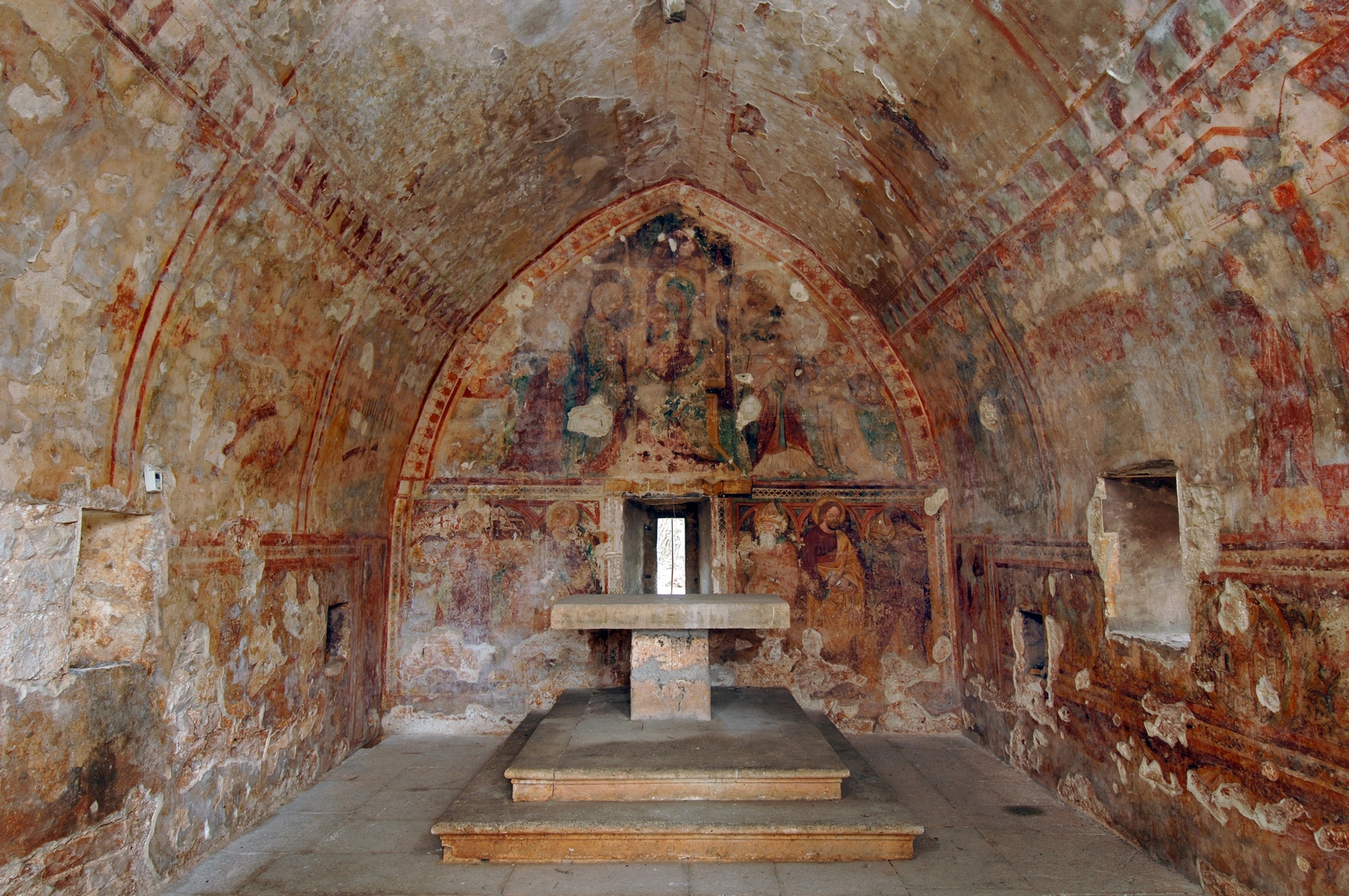
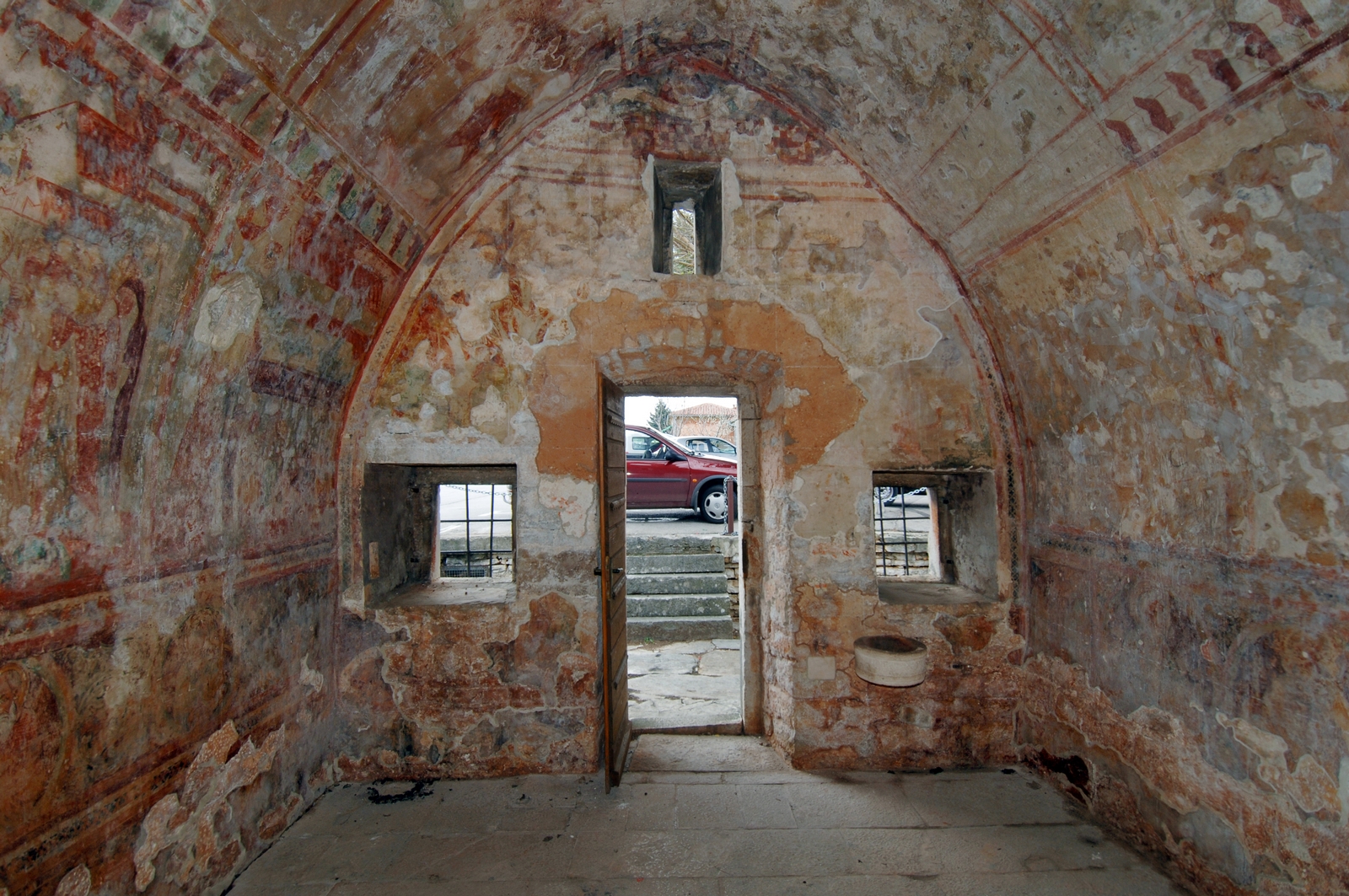
The Church of St Anthony the Hermit in Barban is situated in front of the Great Gate, the principal entrance to the settlement. It was erected in the early fifteenth century as a single-nave sacred structure with a rectangular ground plan, a straight eastern termination, and a pointed vault. Its façade is articulated by an entrance portal, three window openings, and a stone bell-cote.
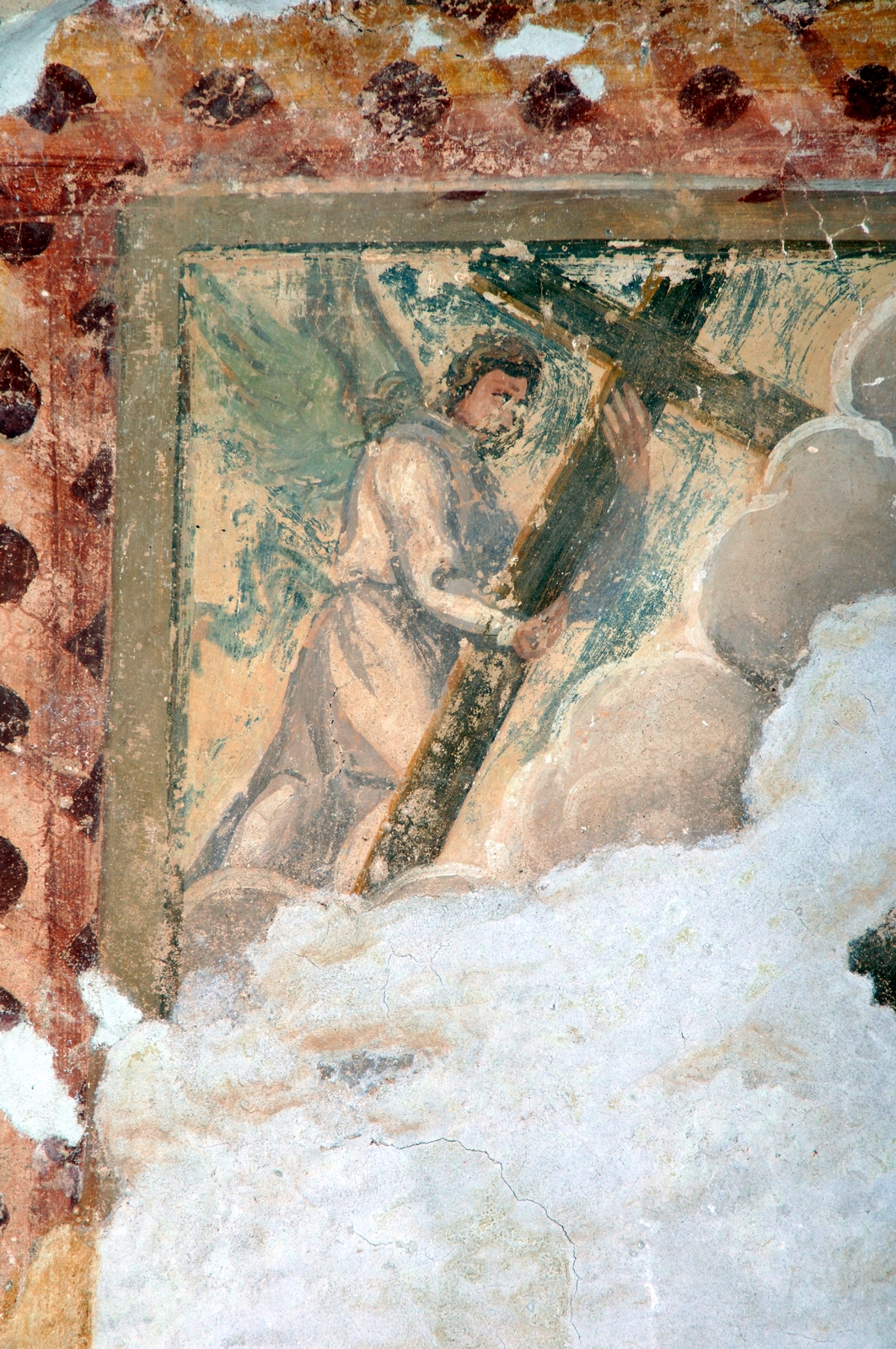
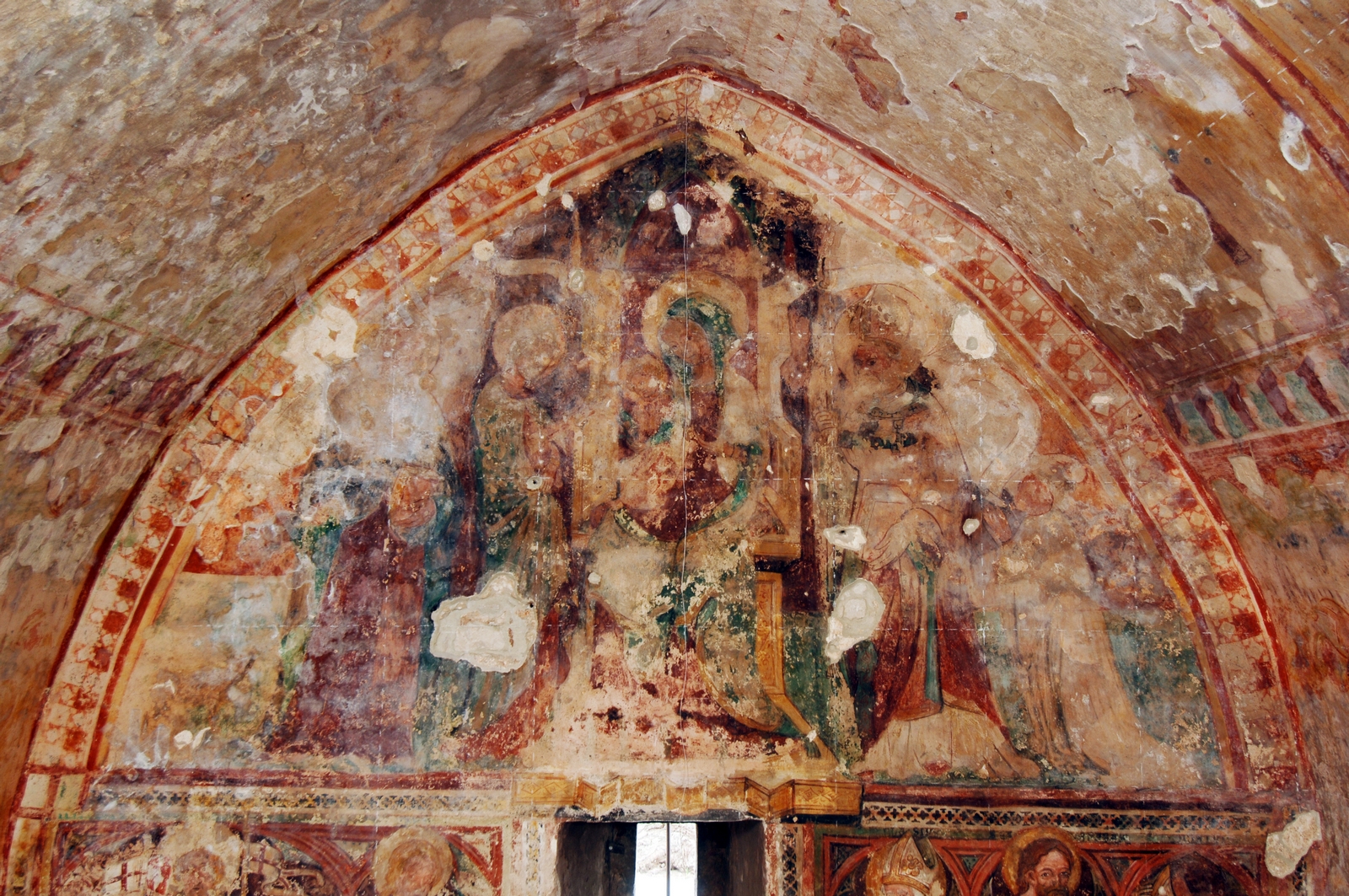
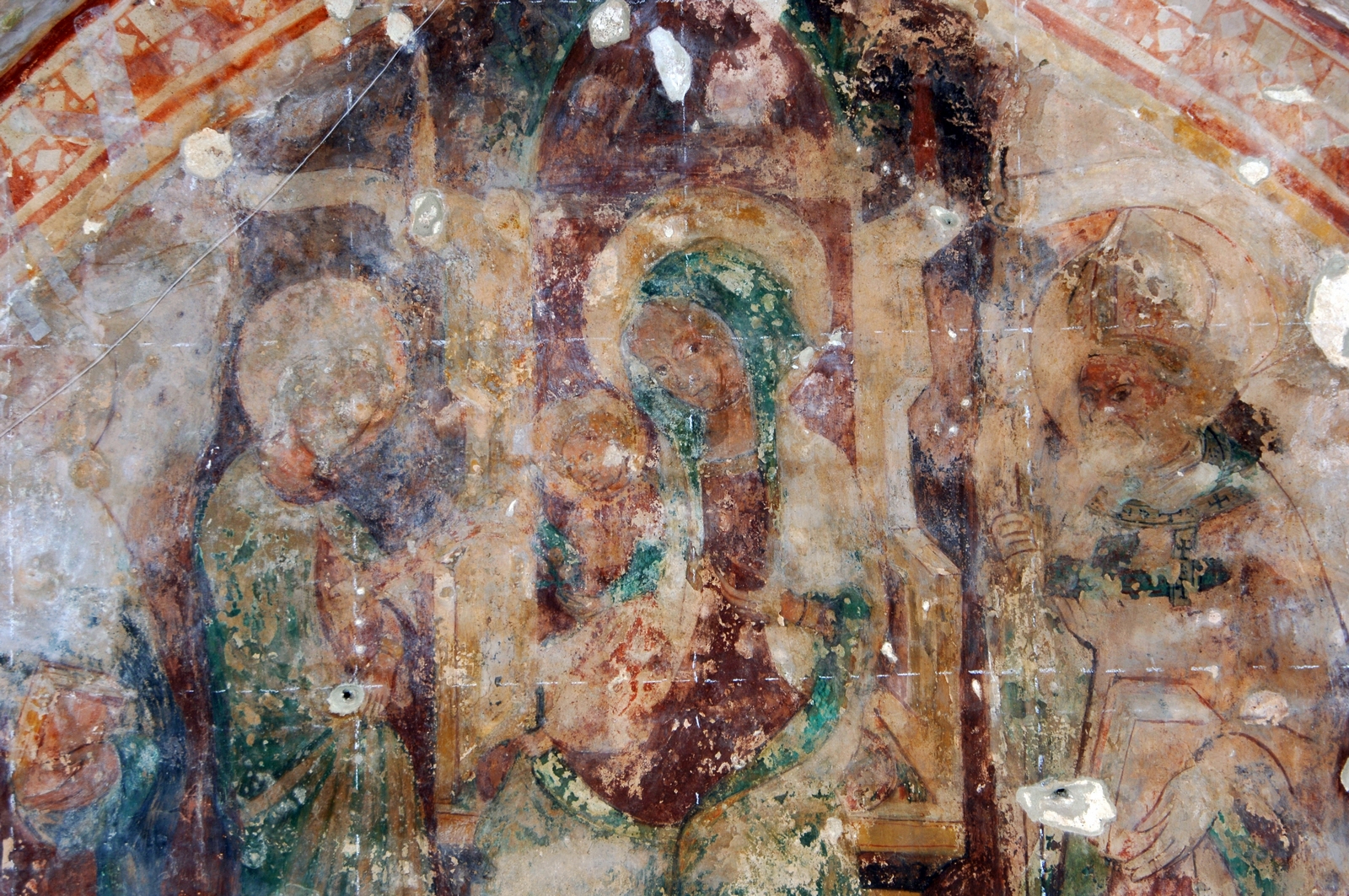
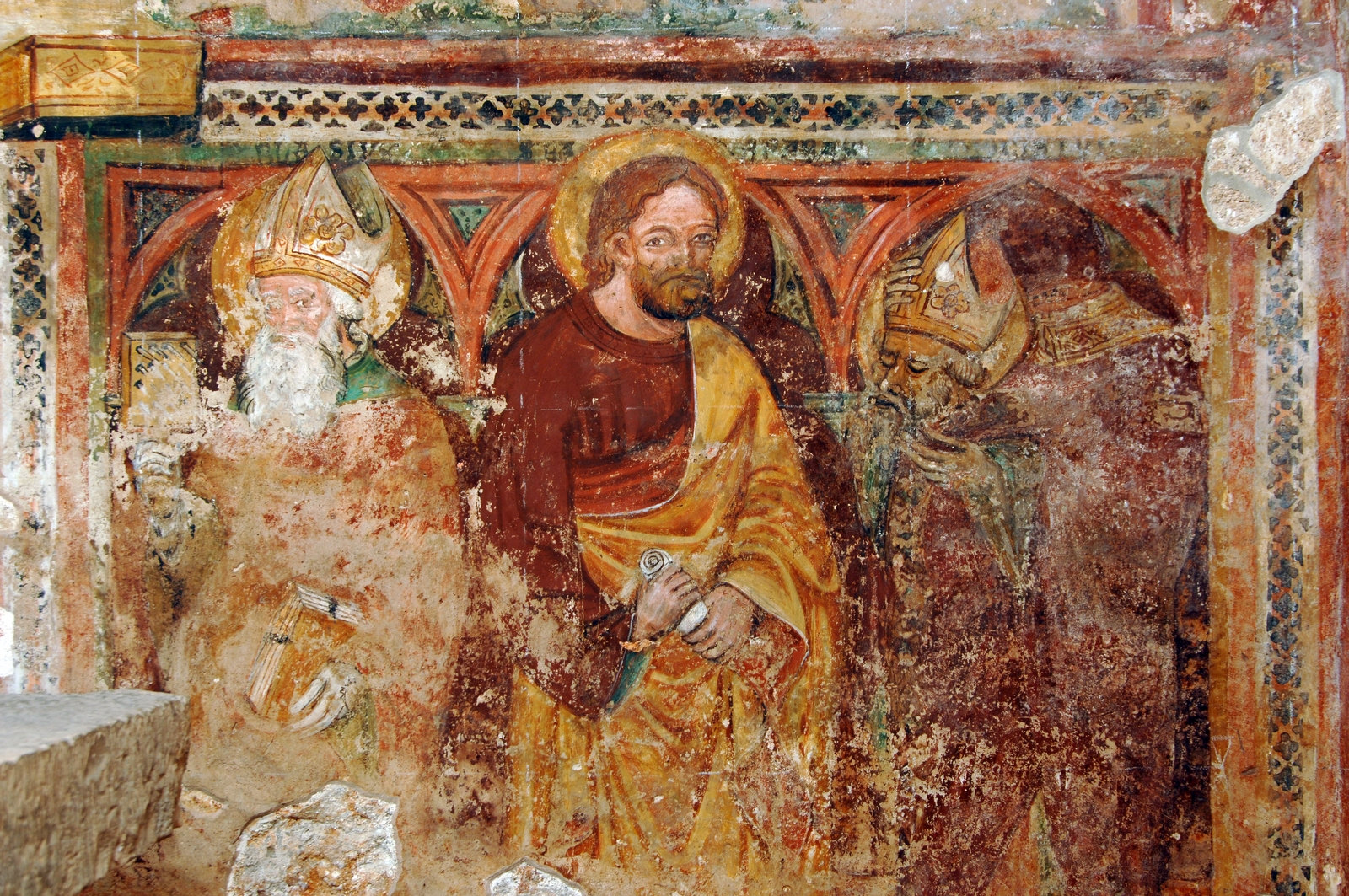
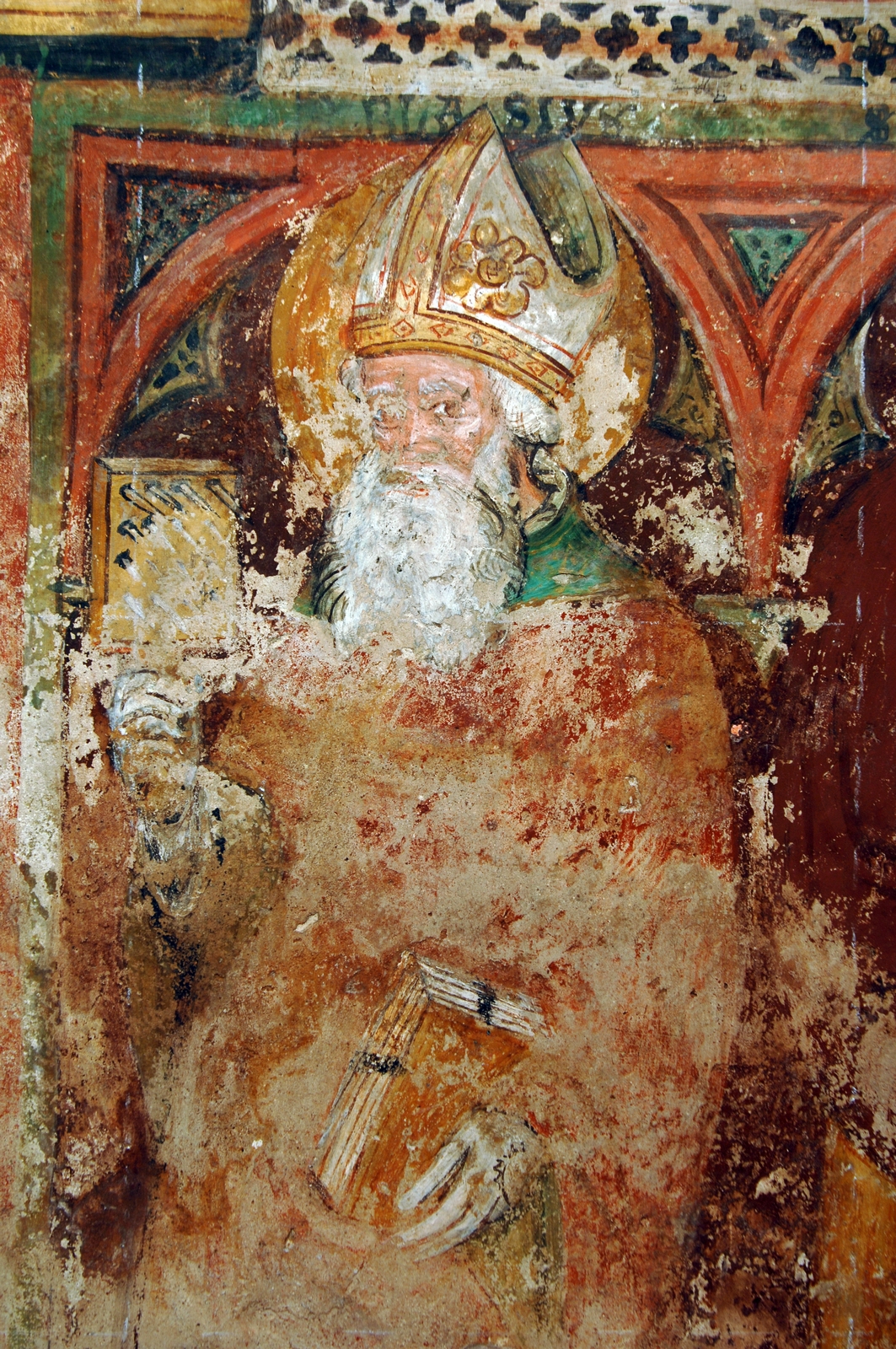
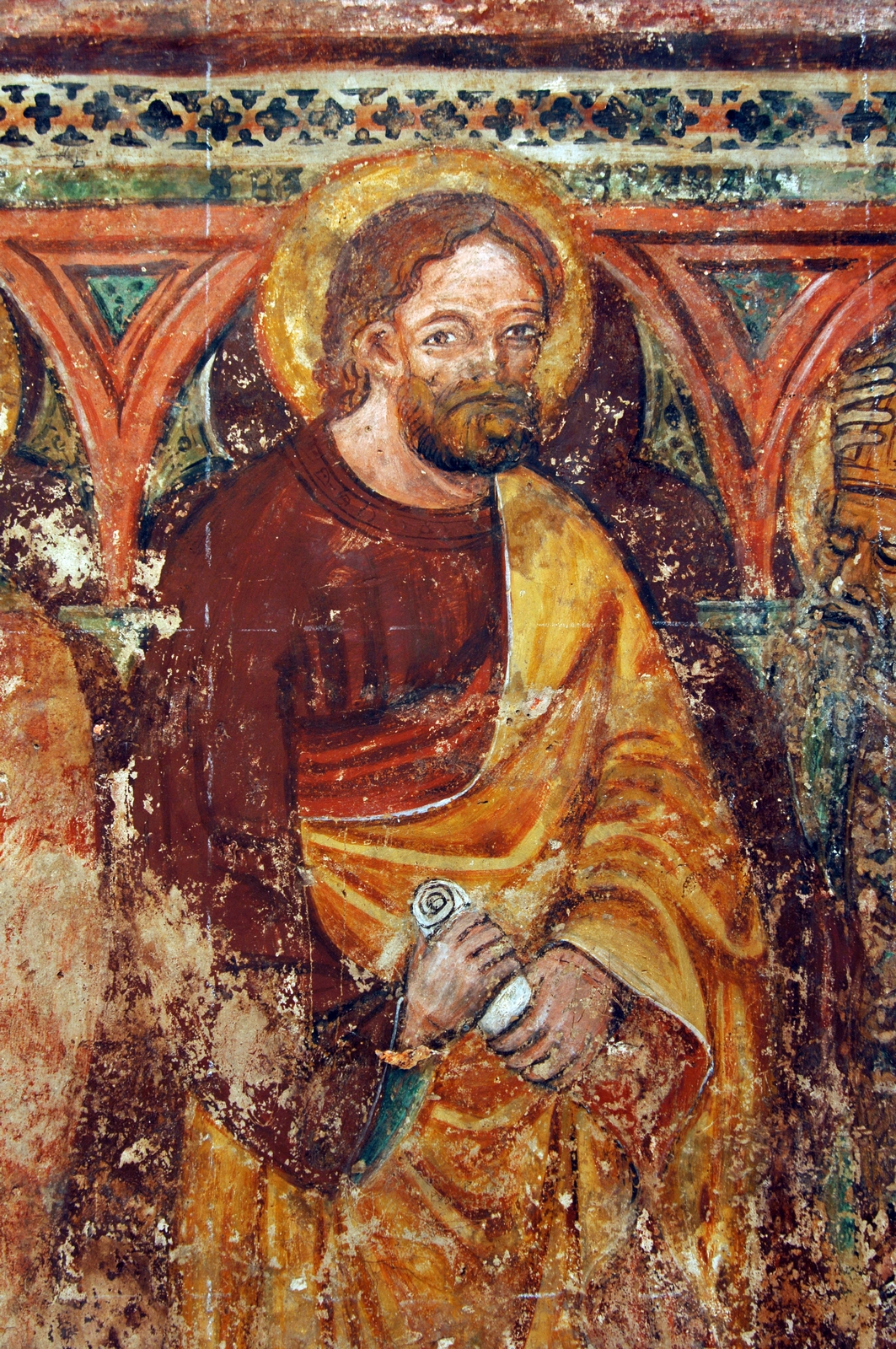
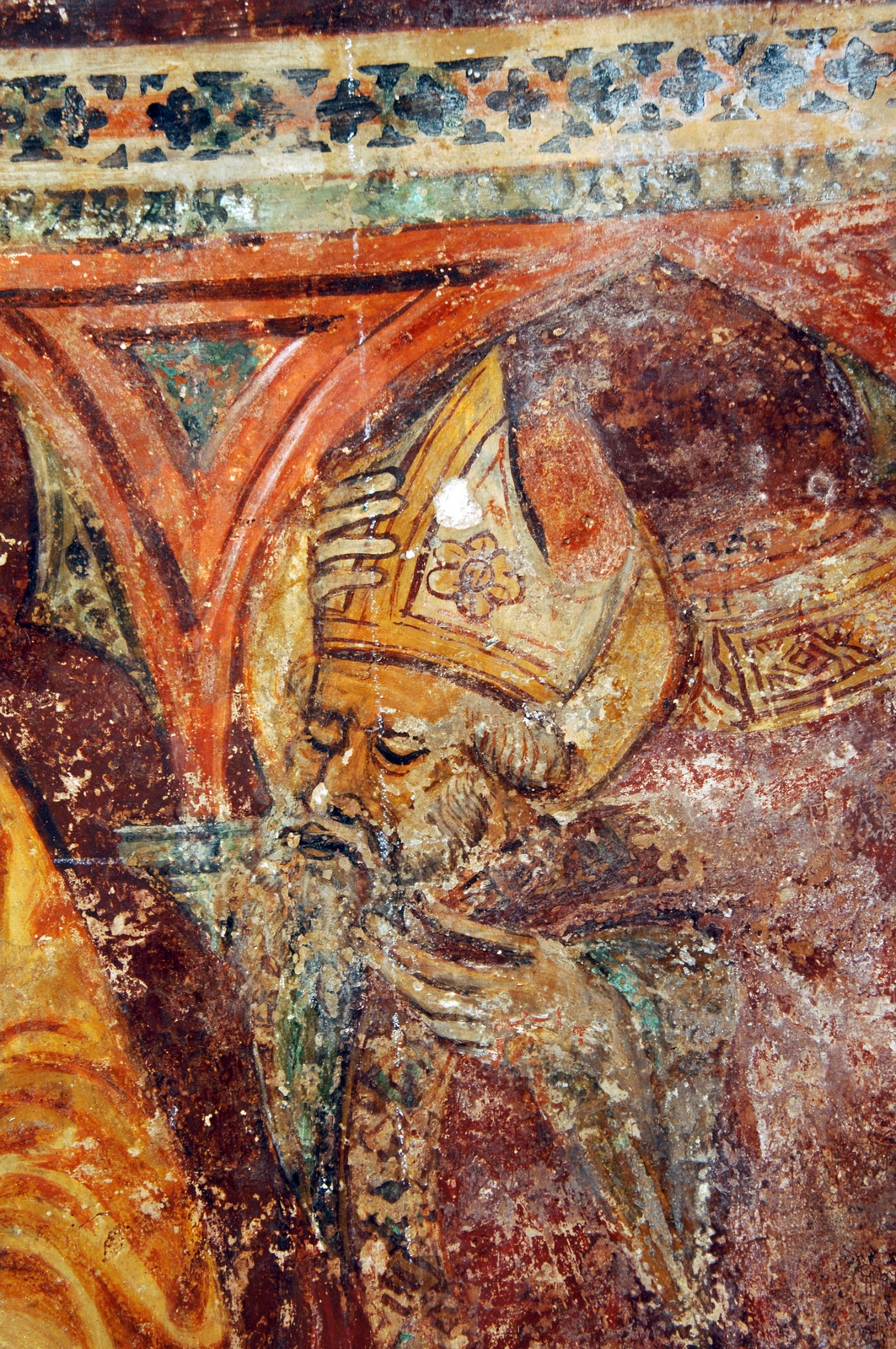
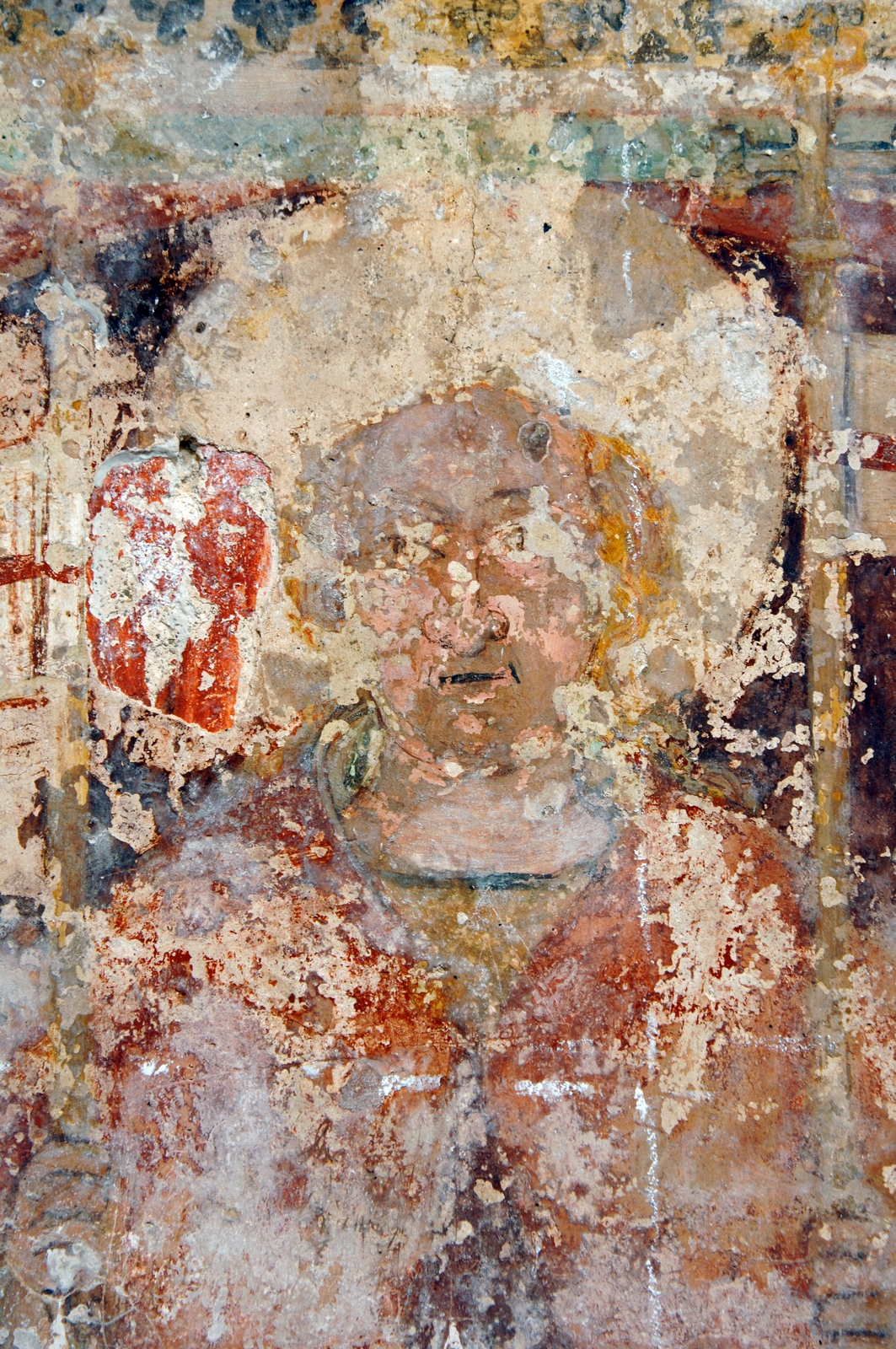
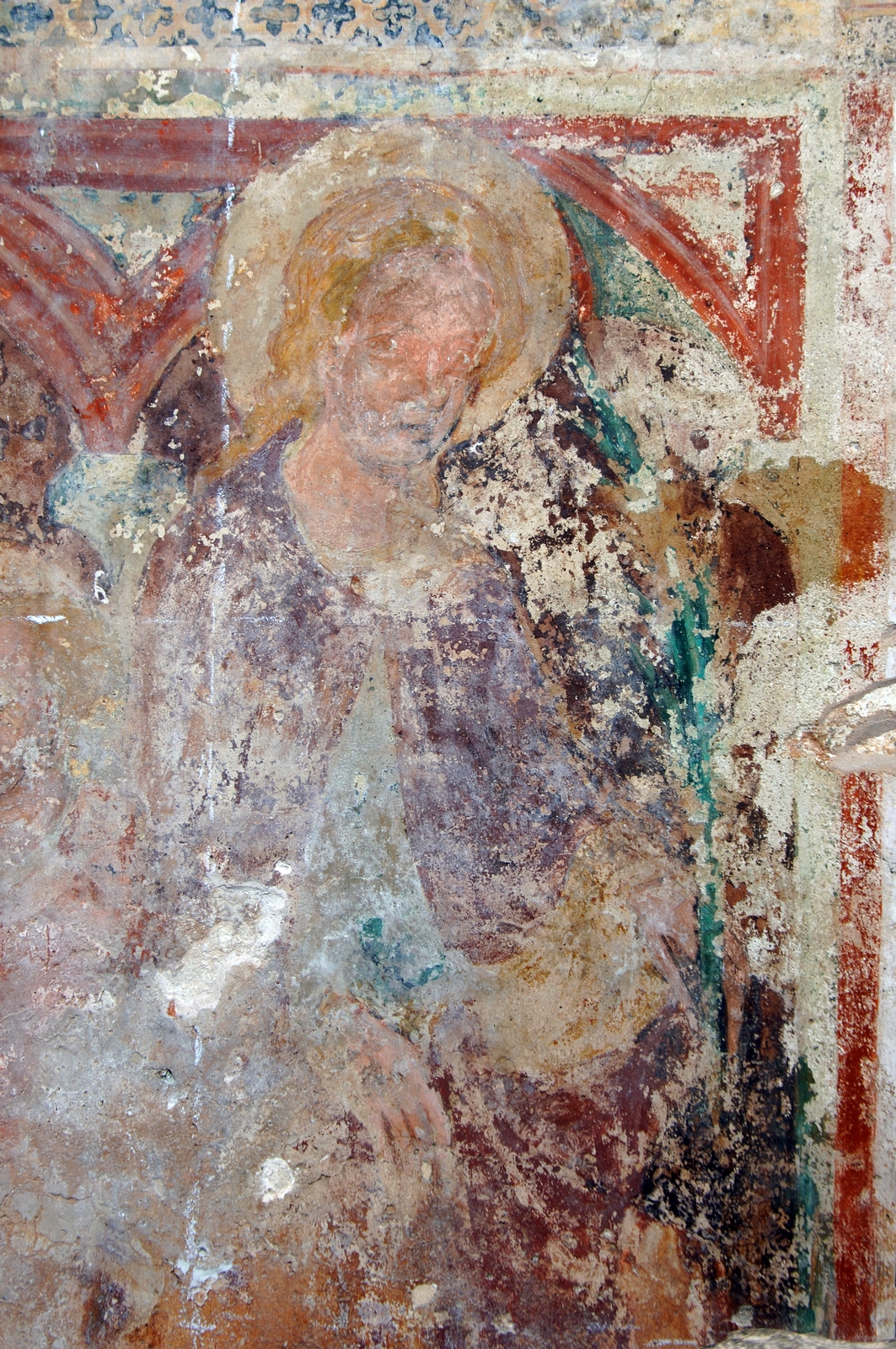
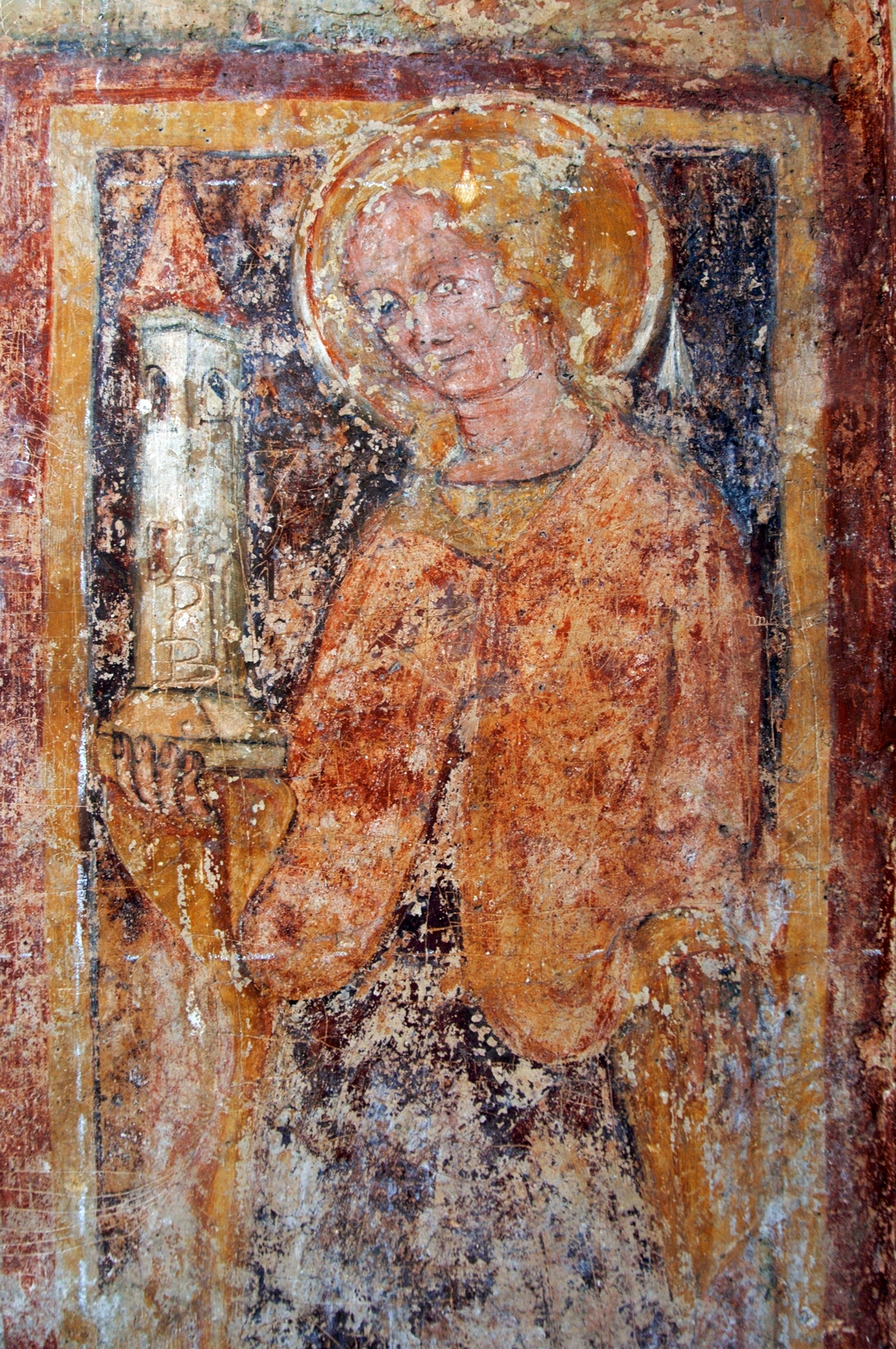
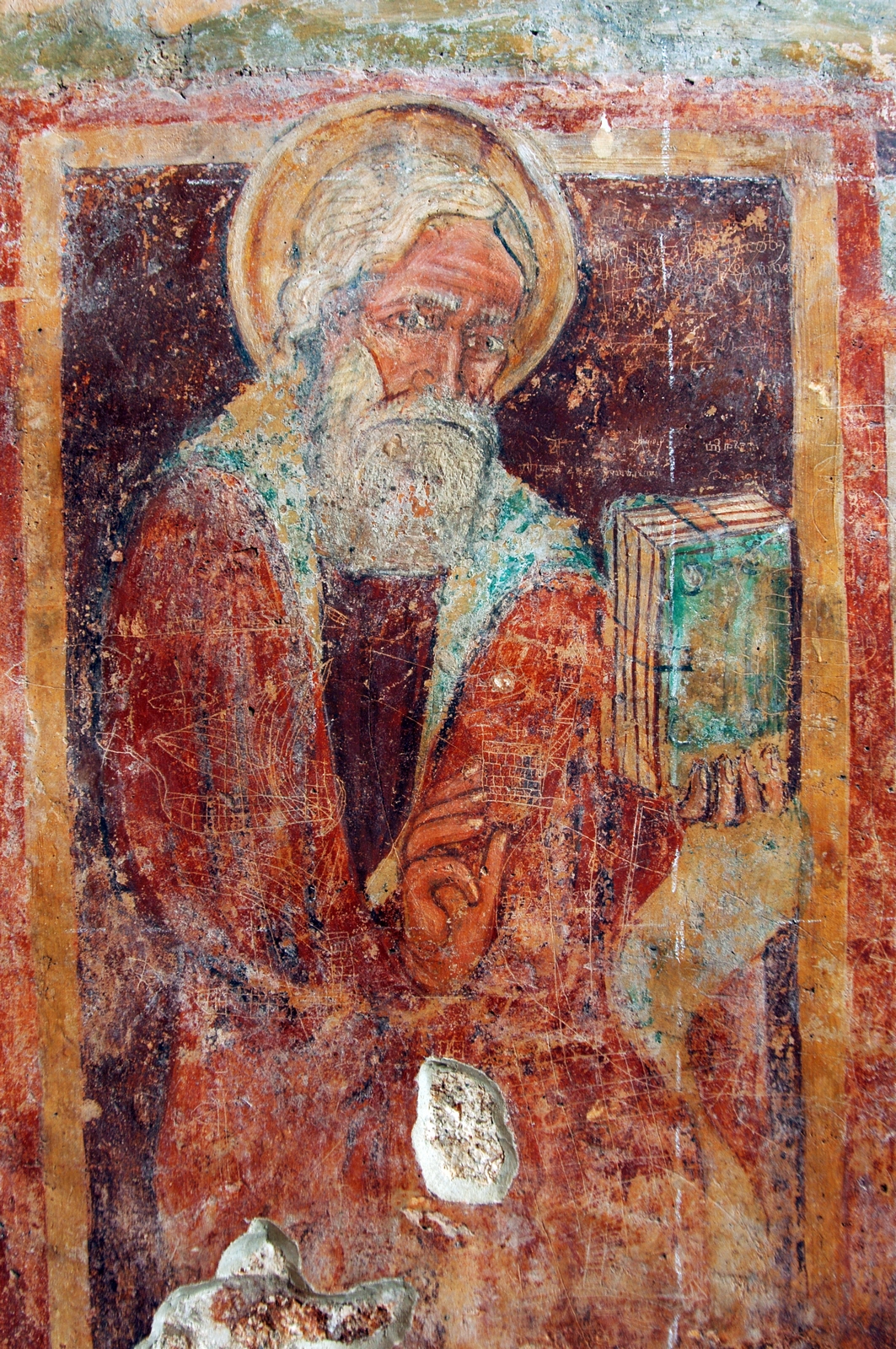
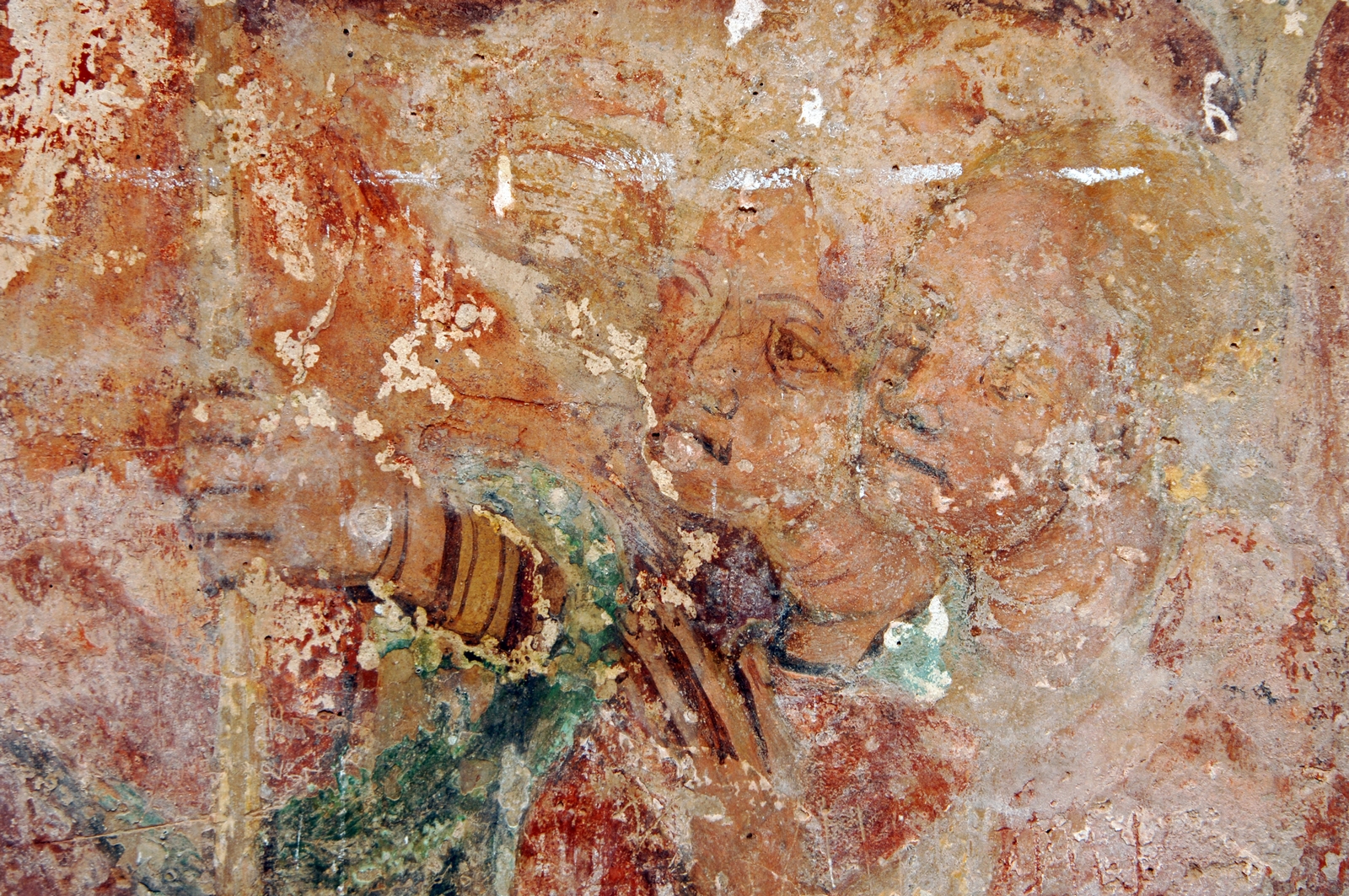
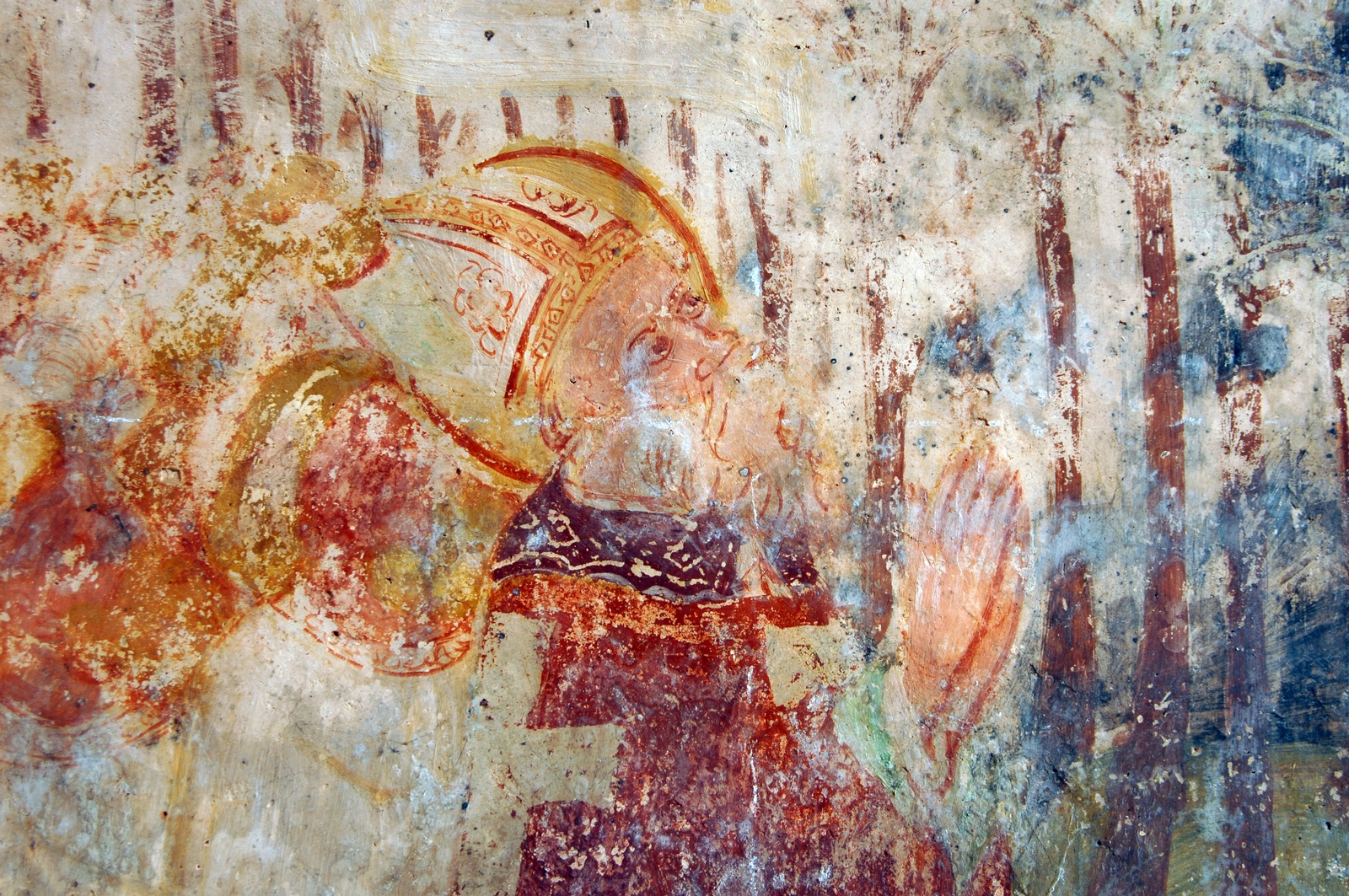
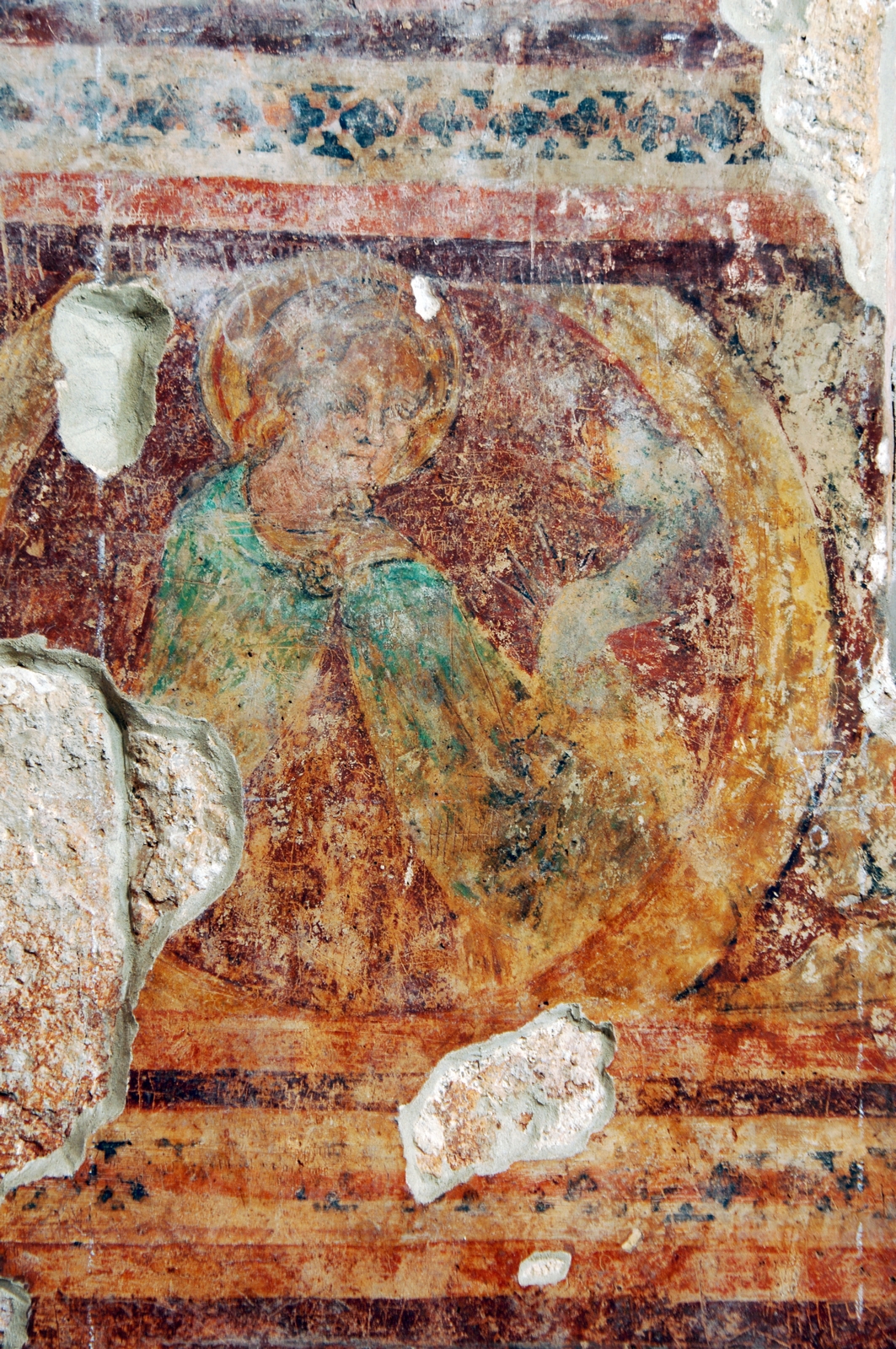
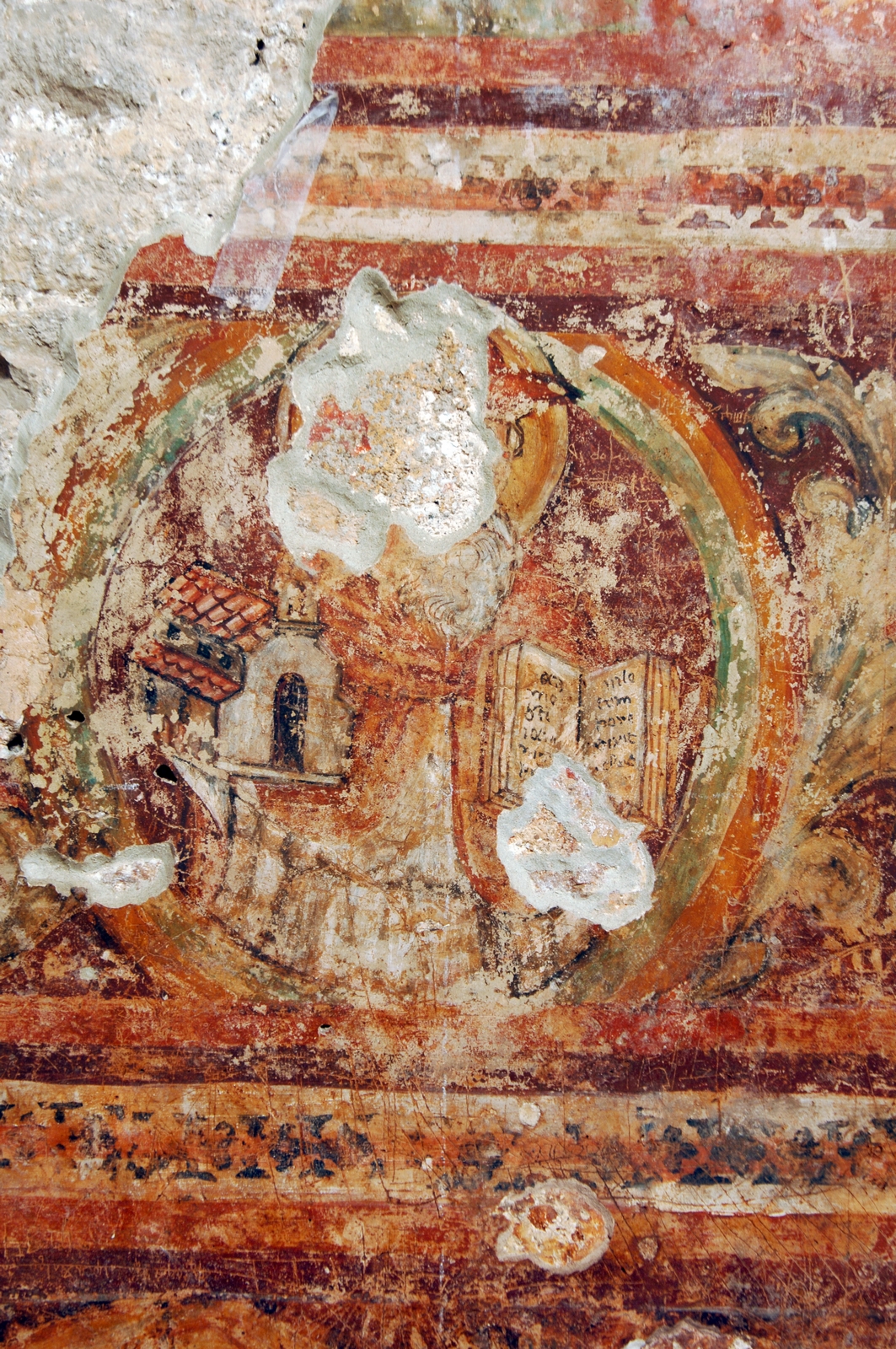
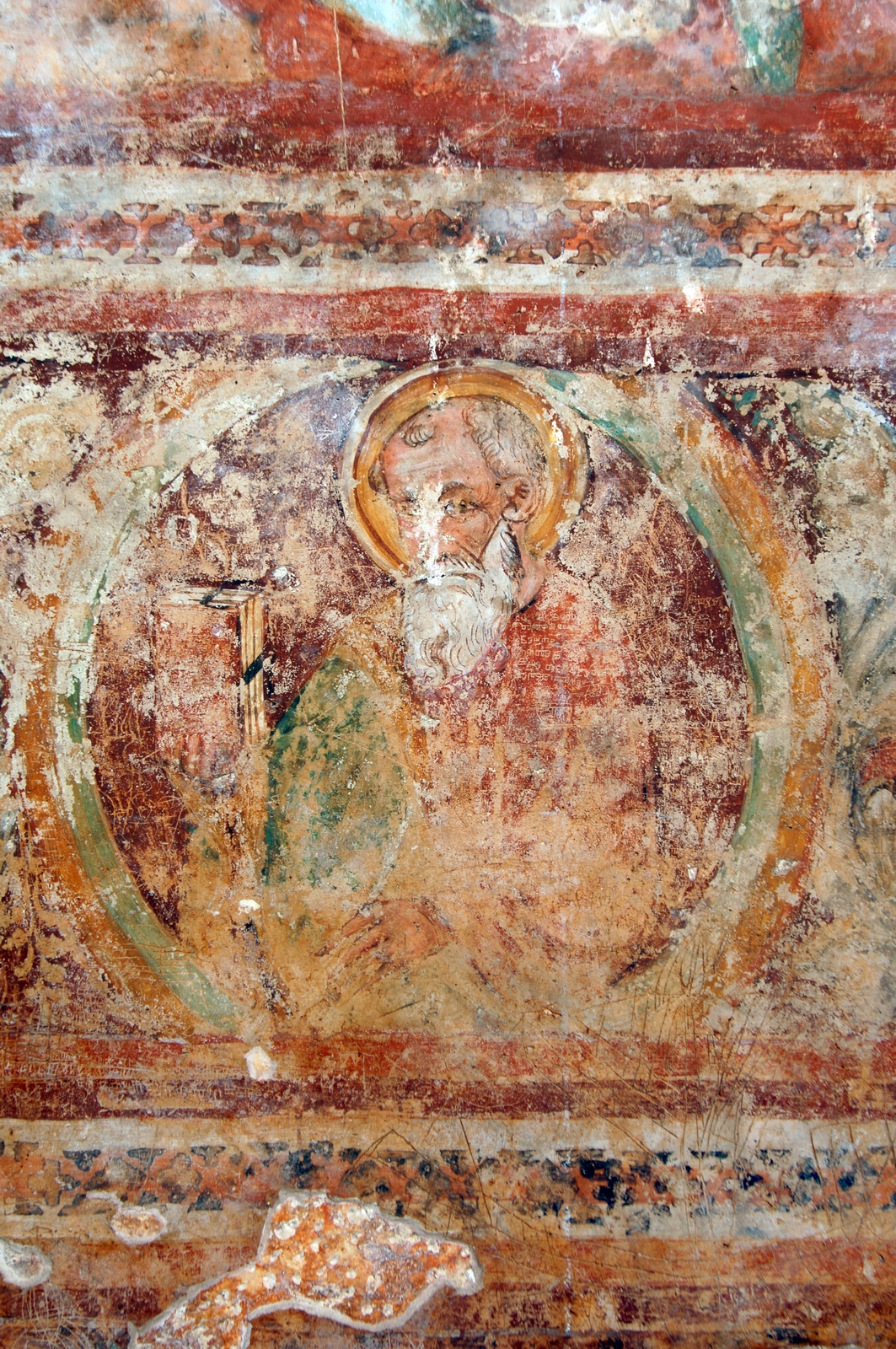
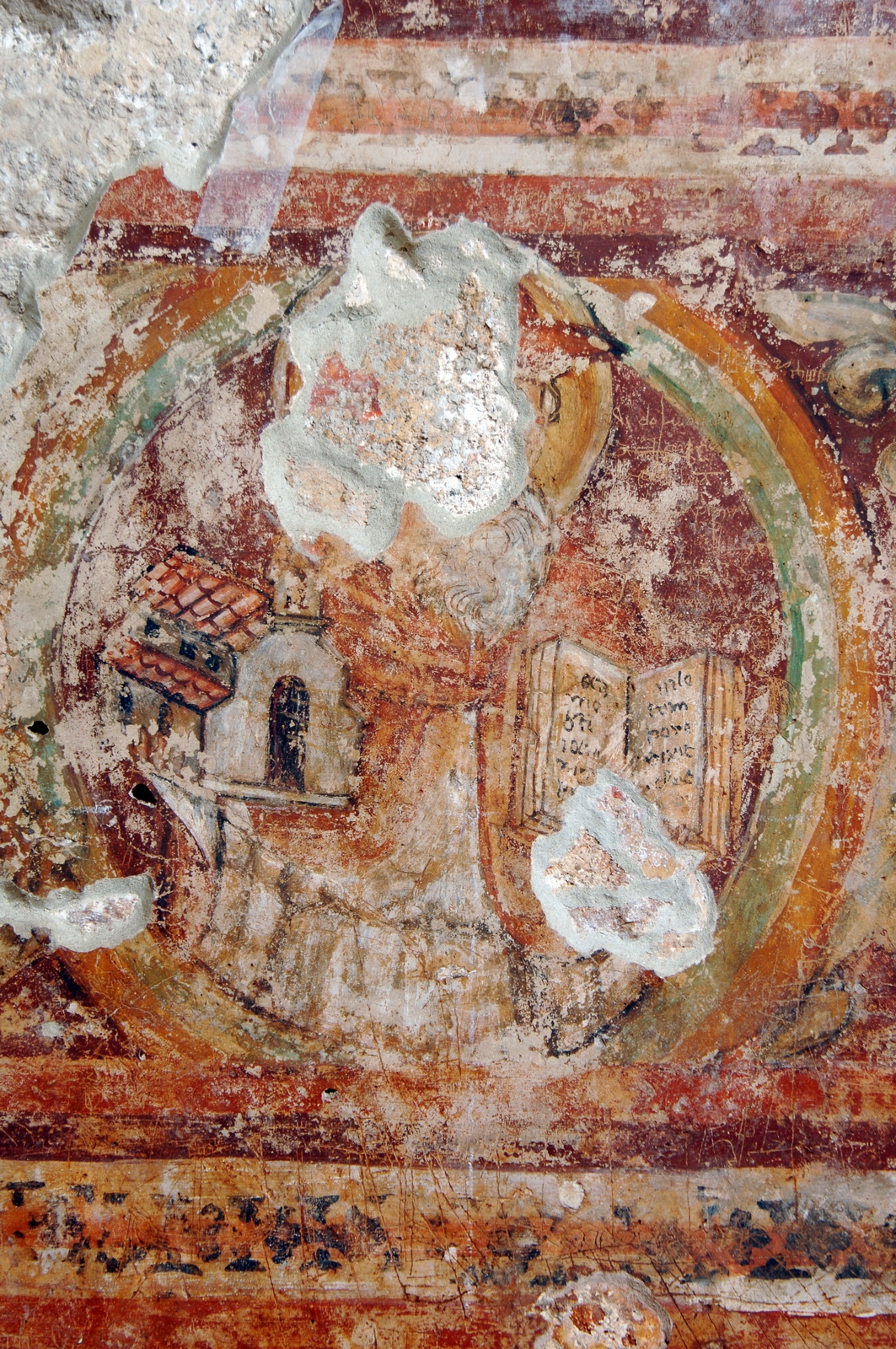
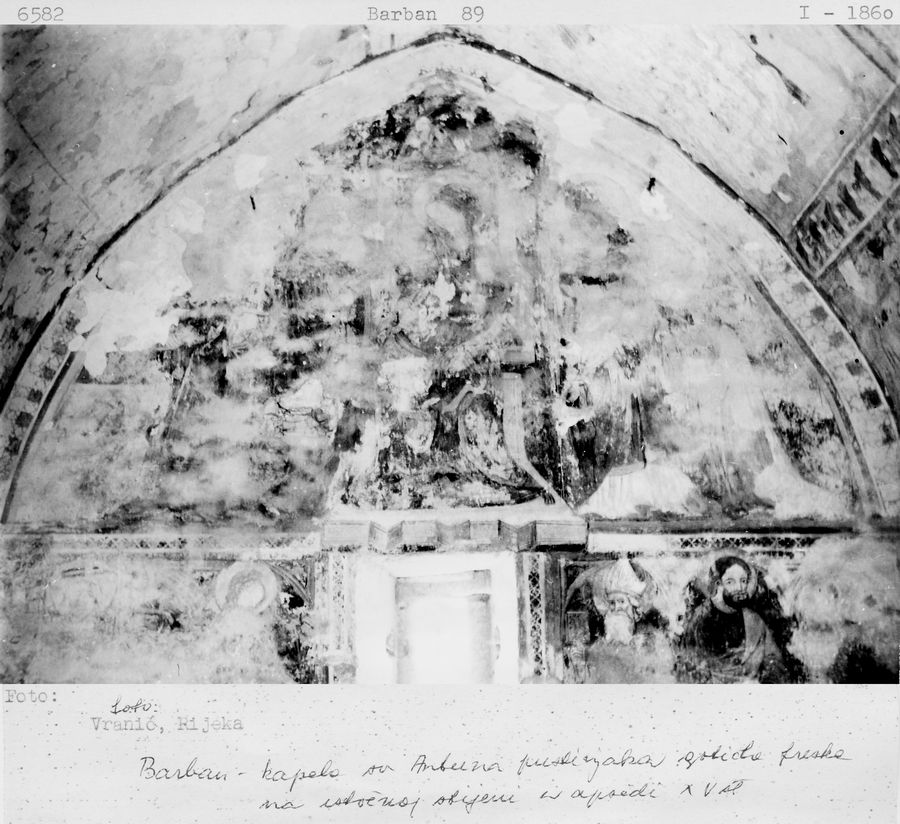
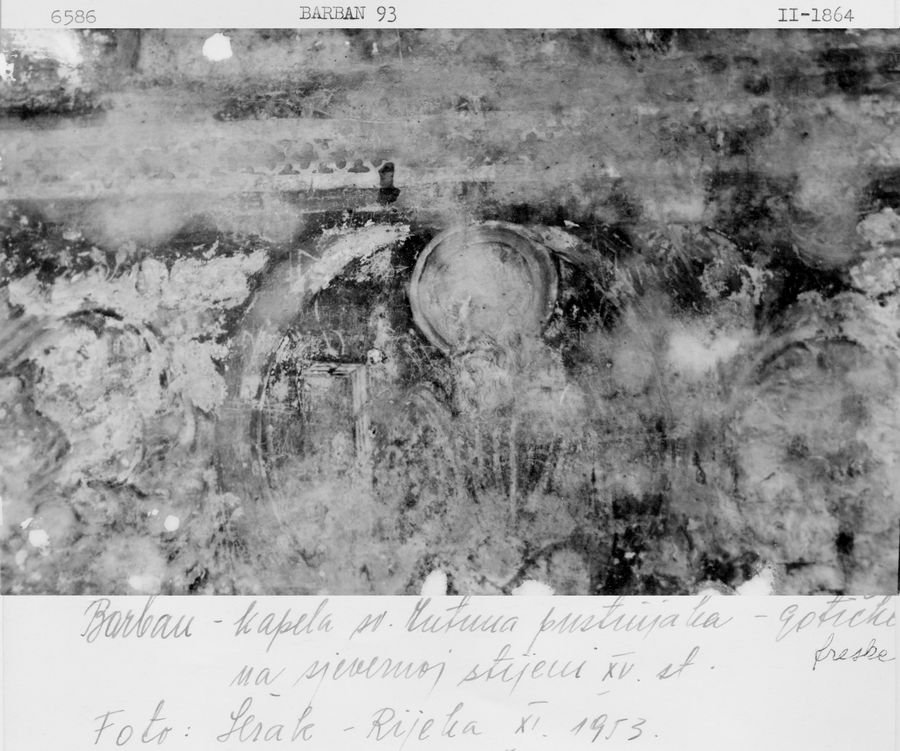
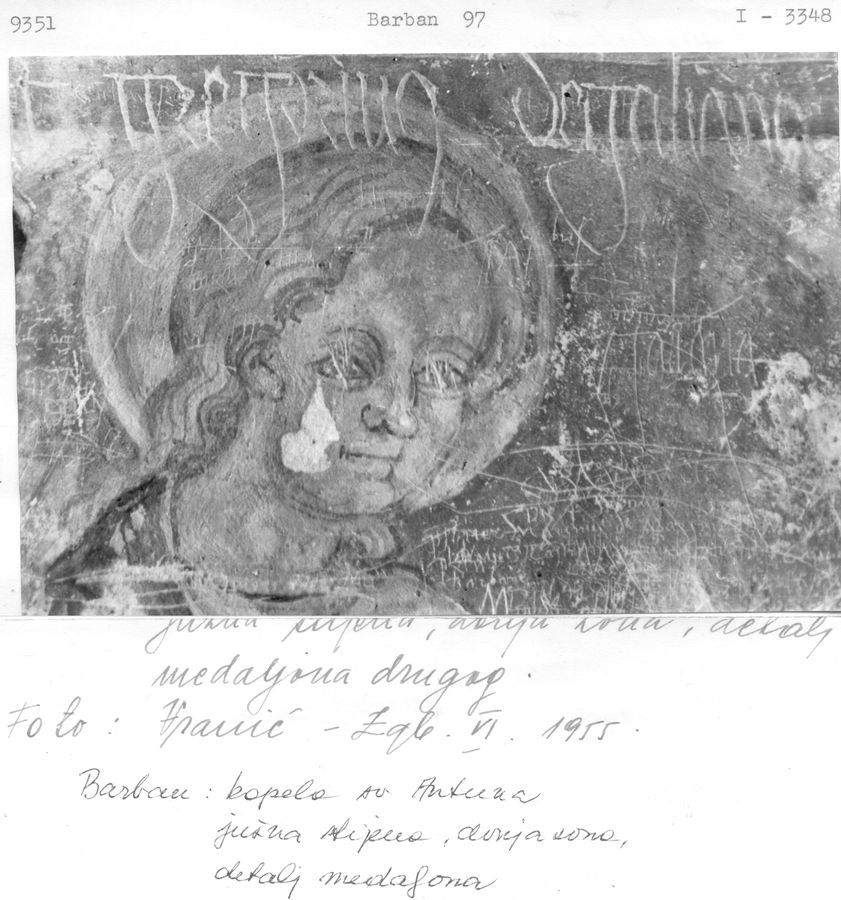
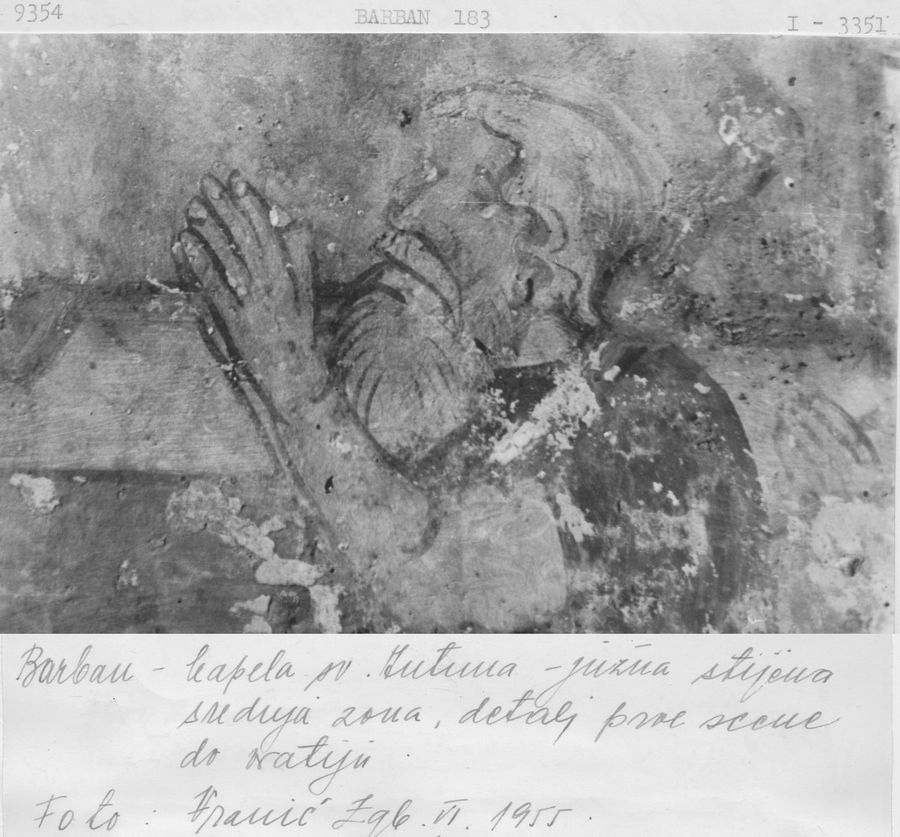
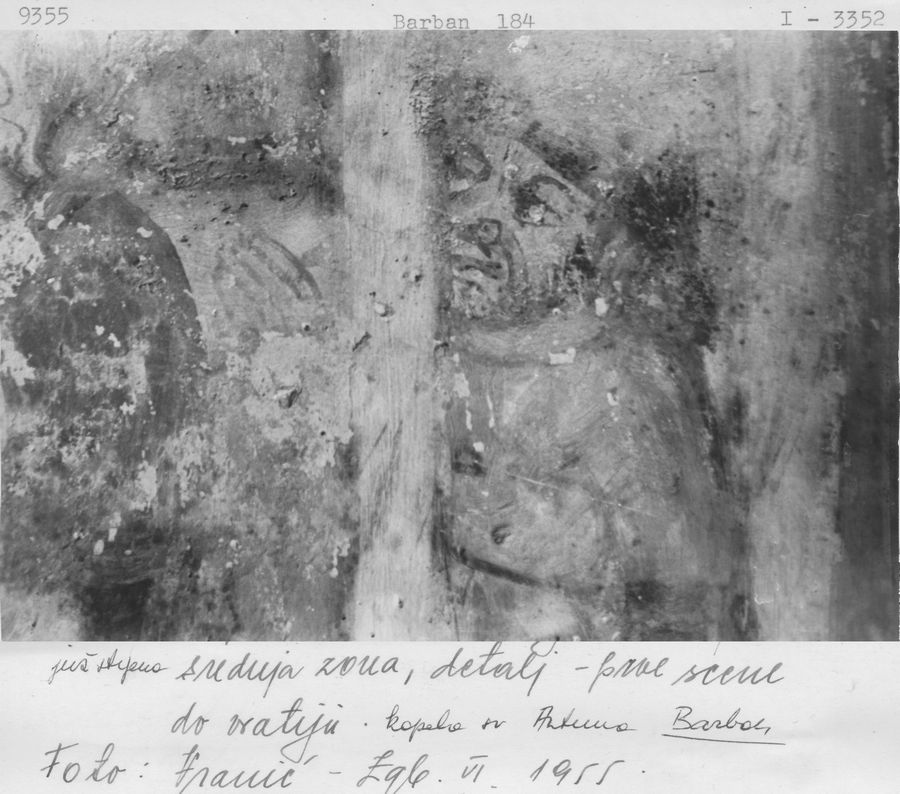
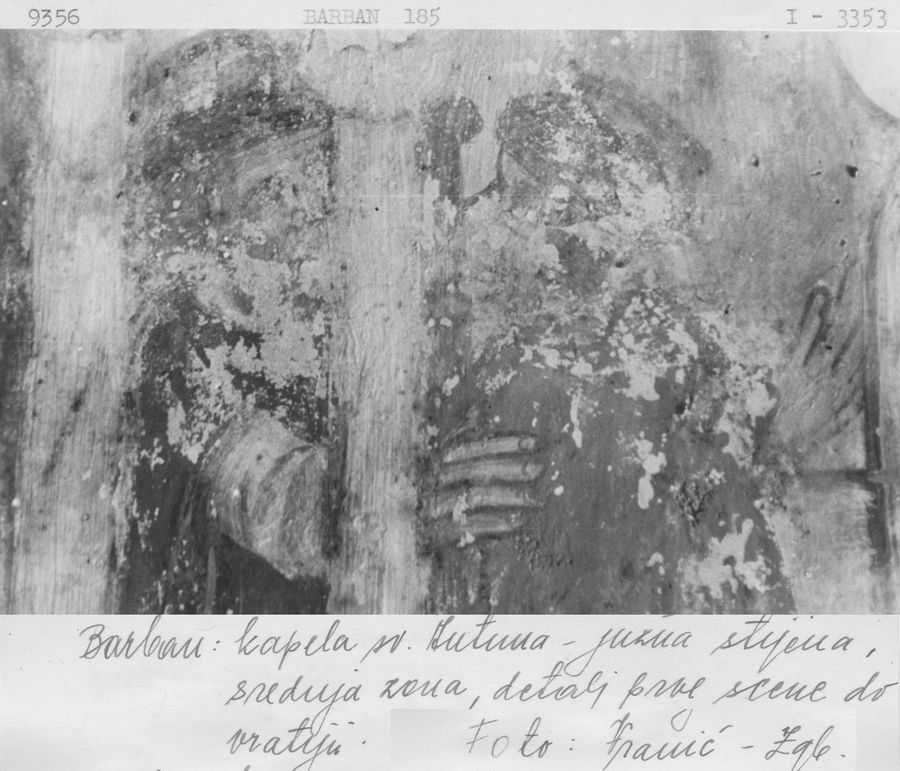
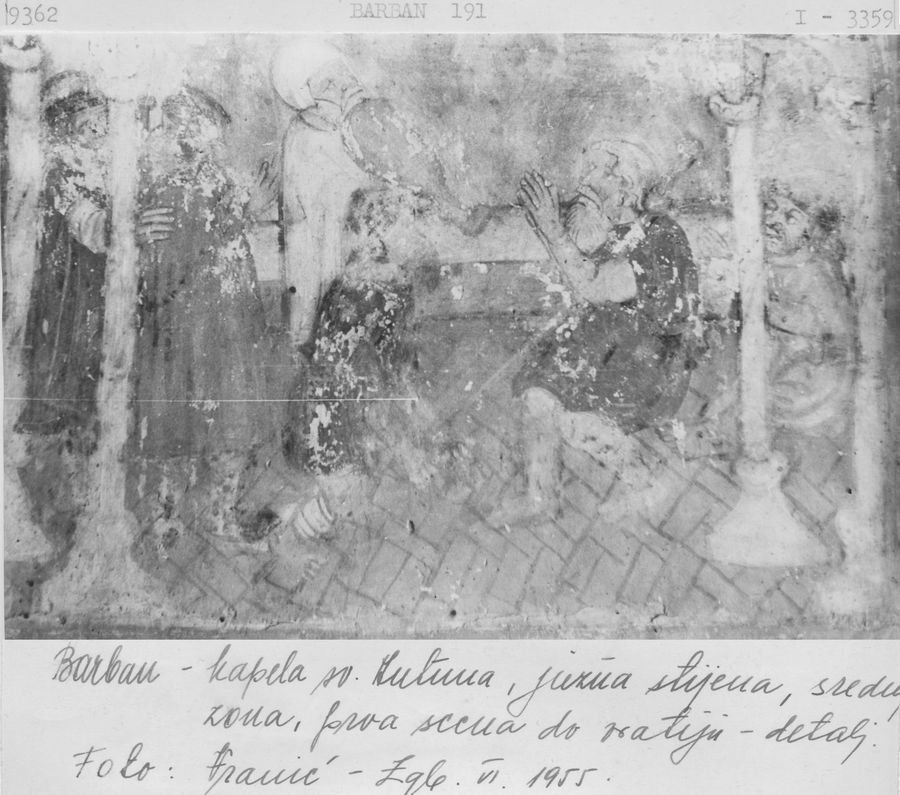
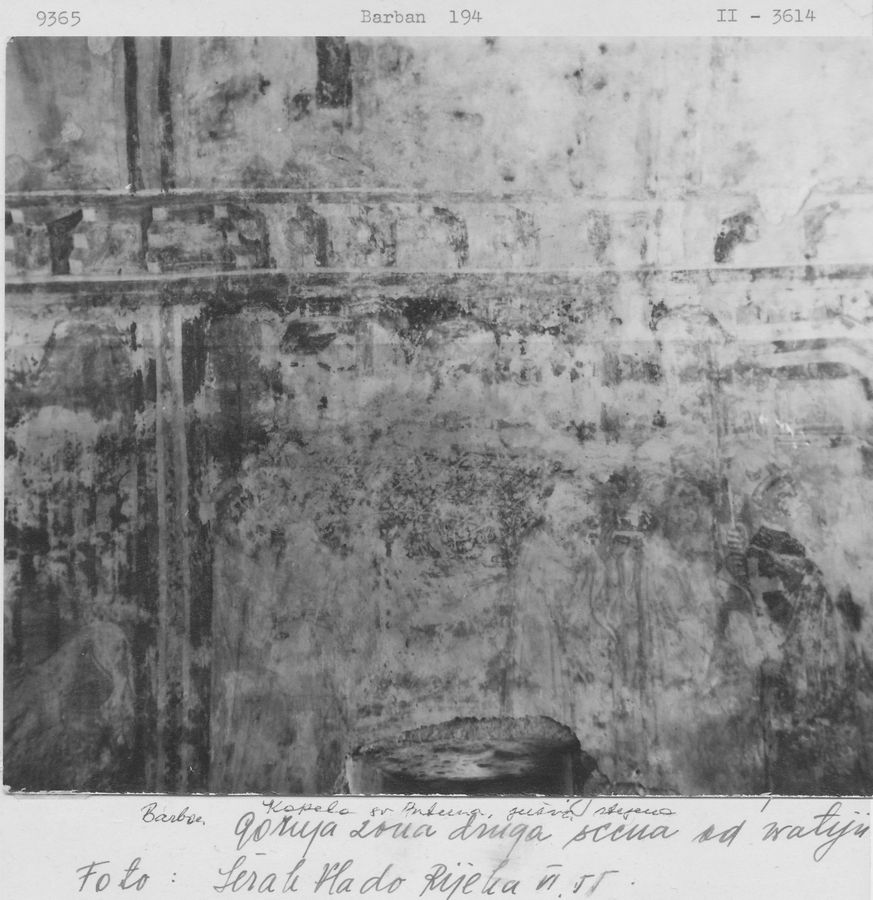
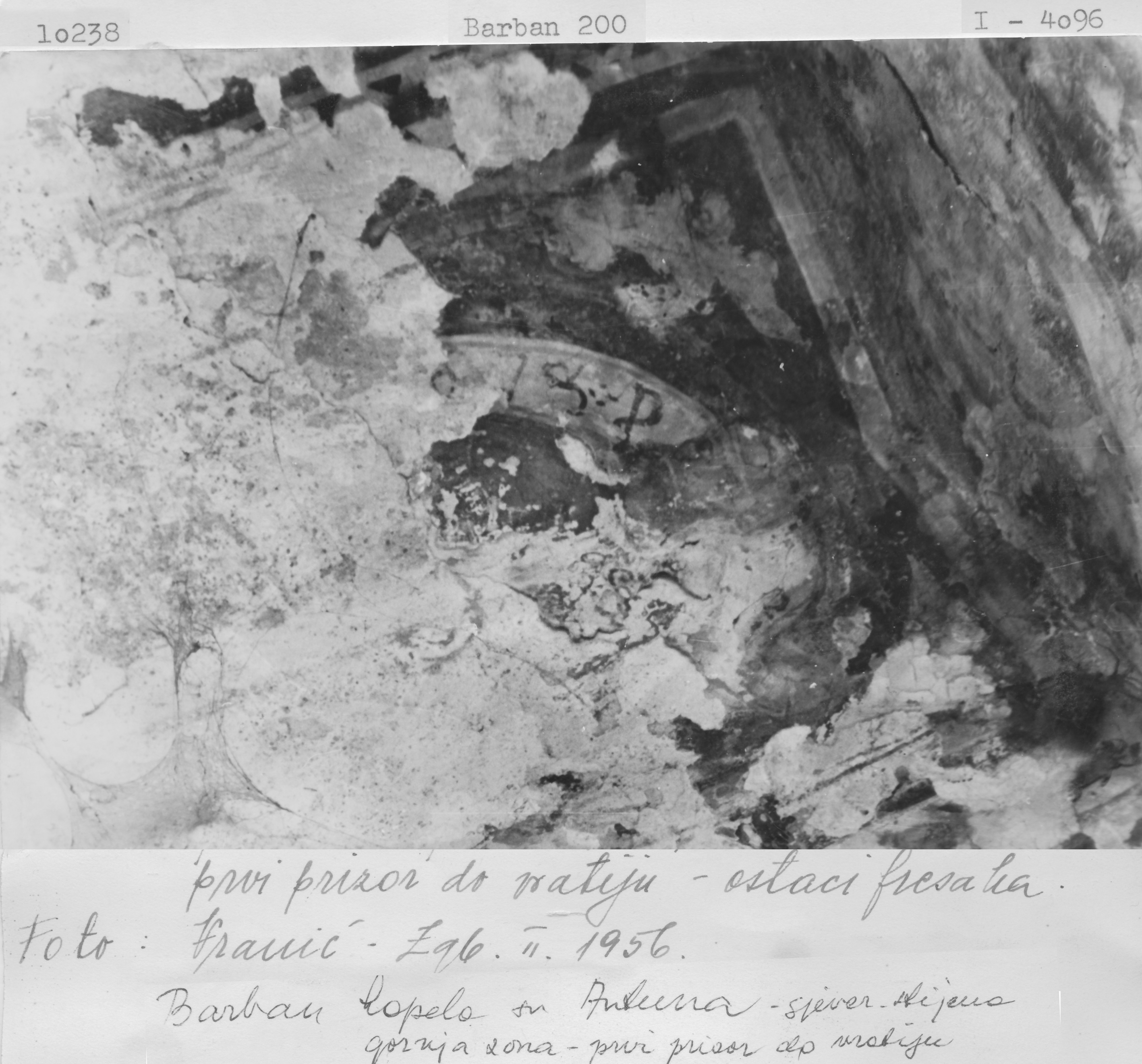
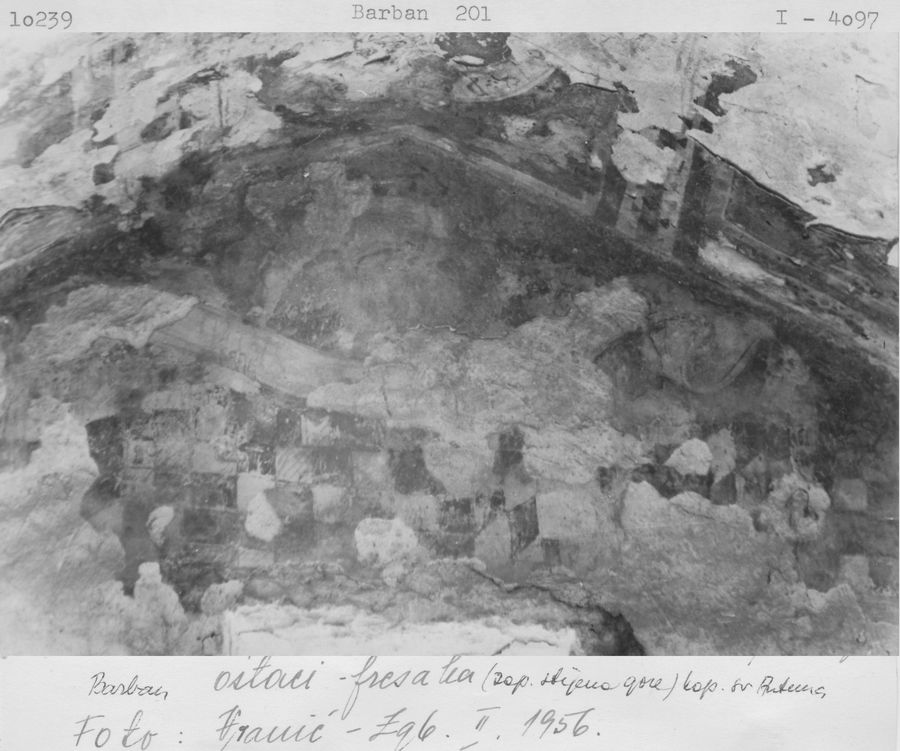
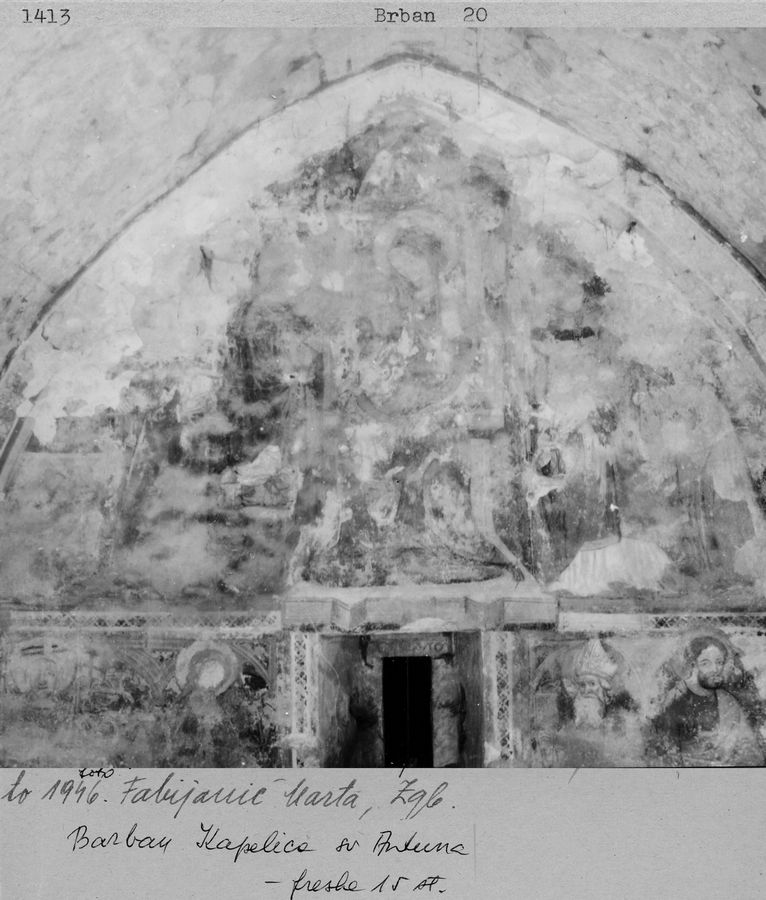
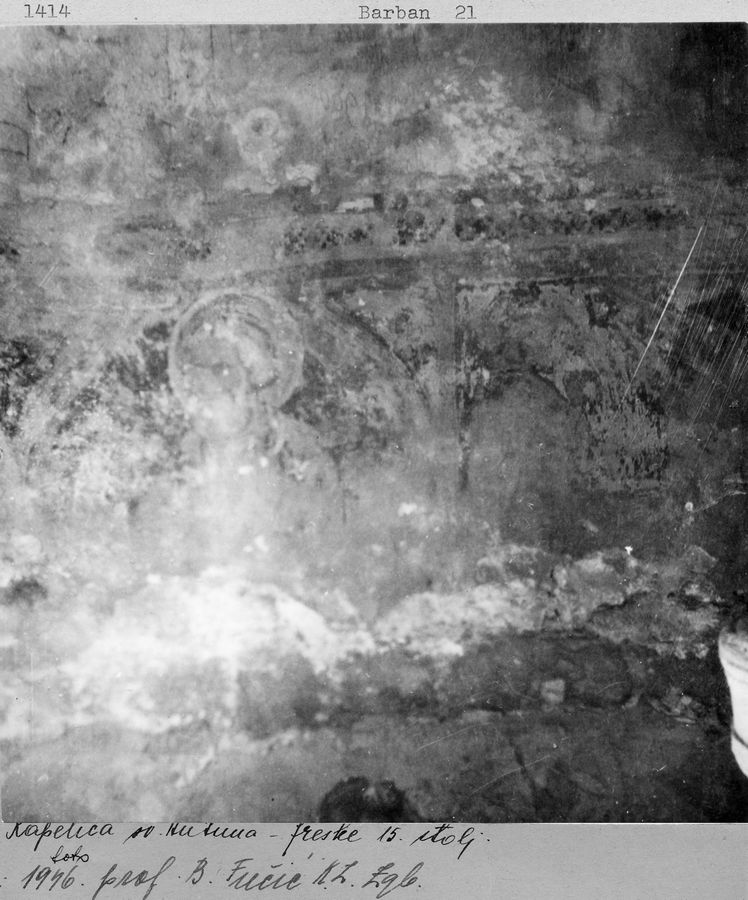
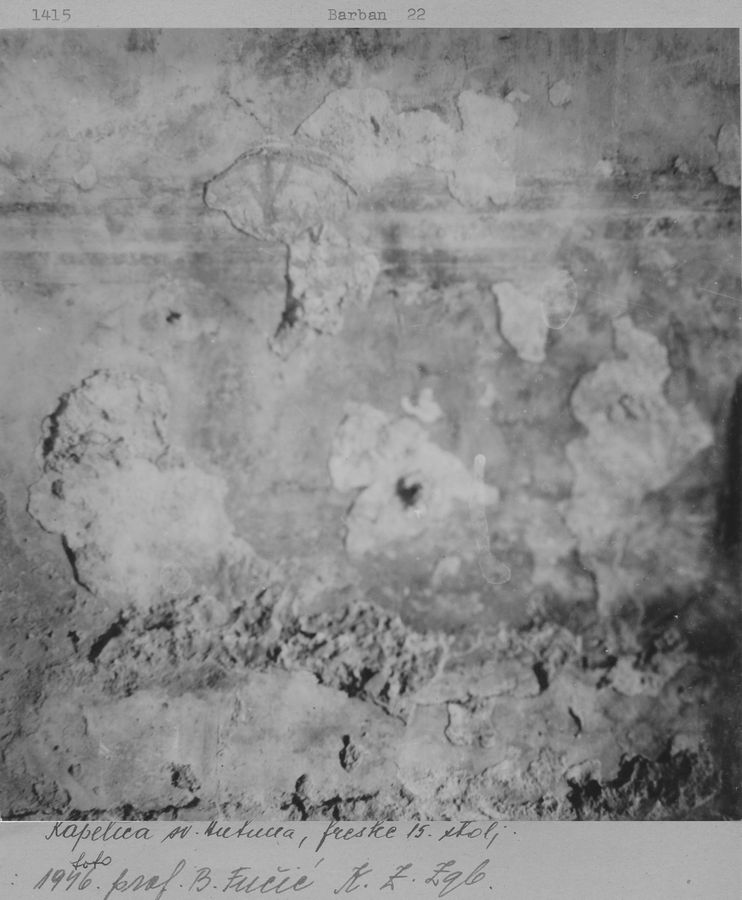
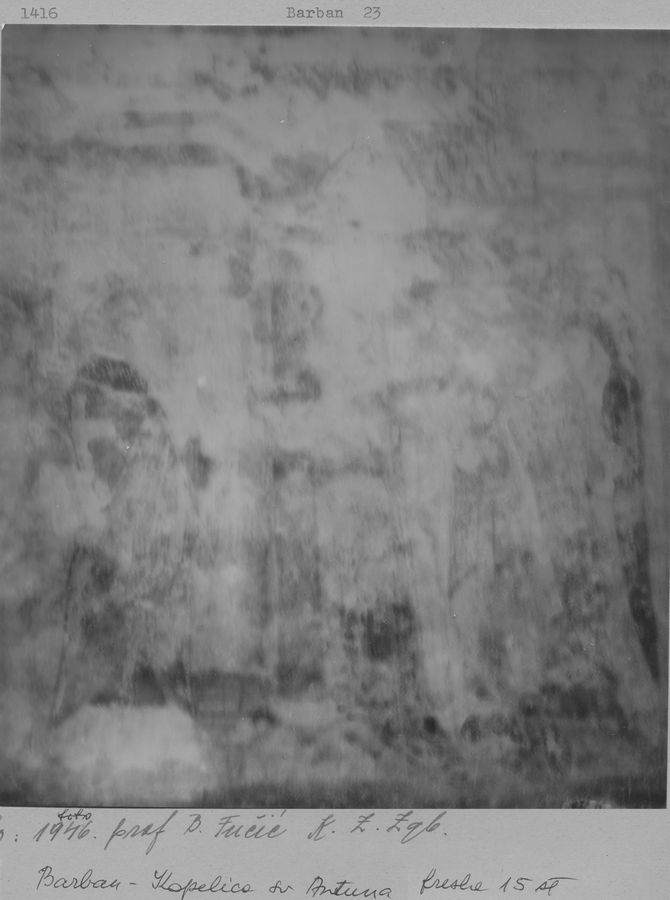
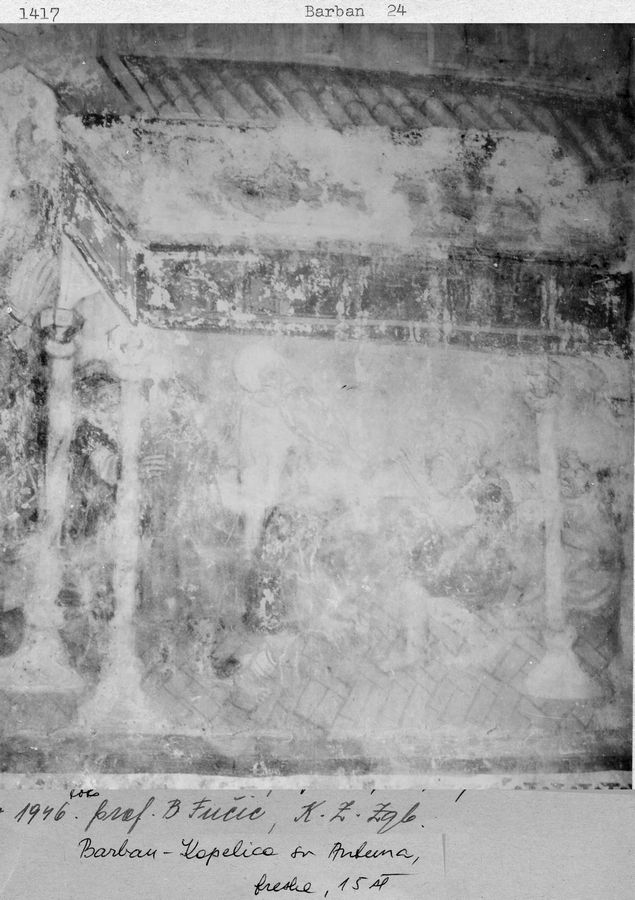
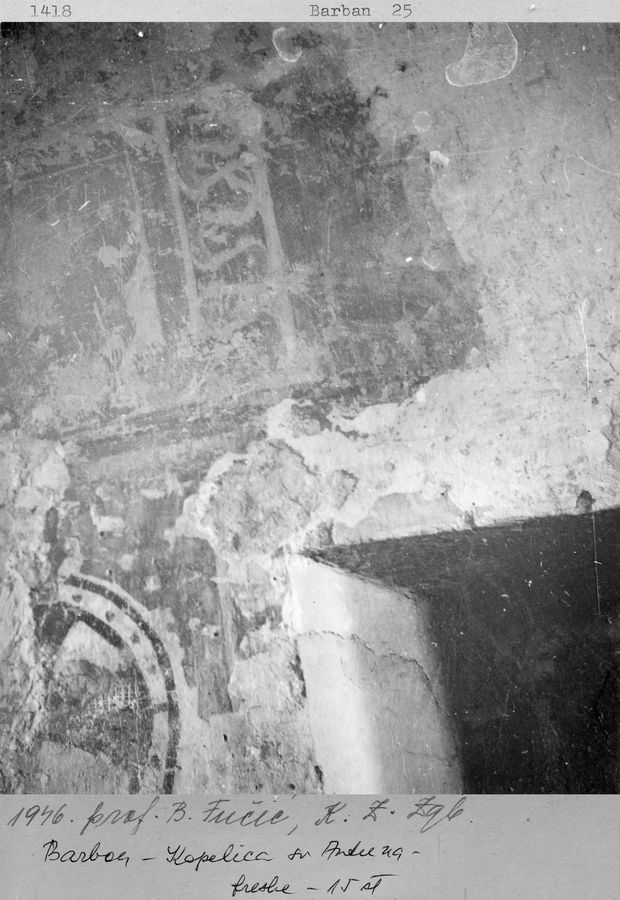
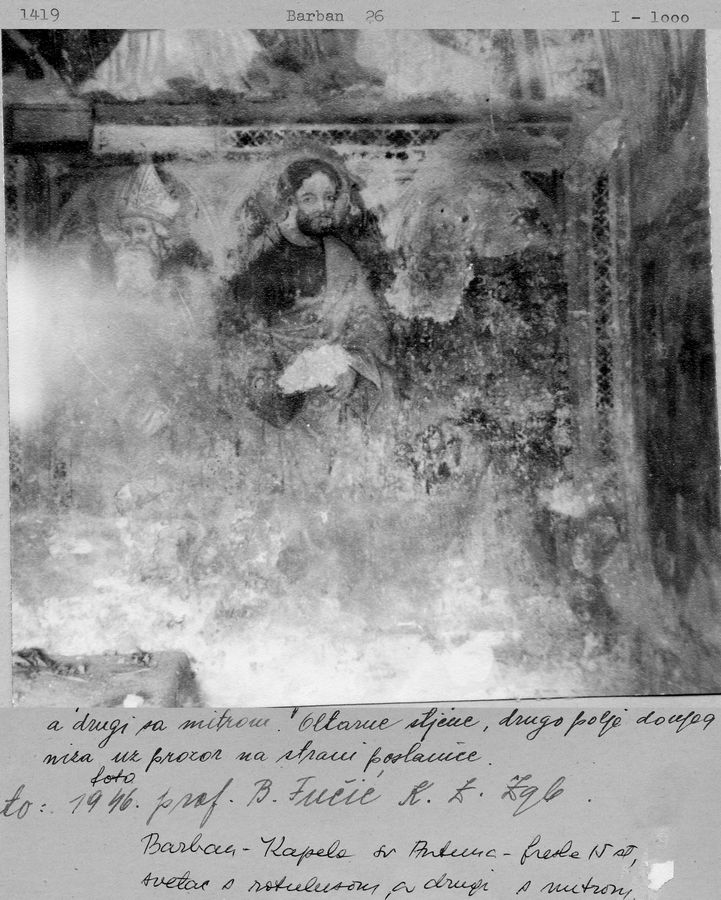
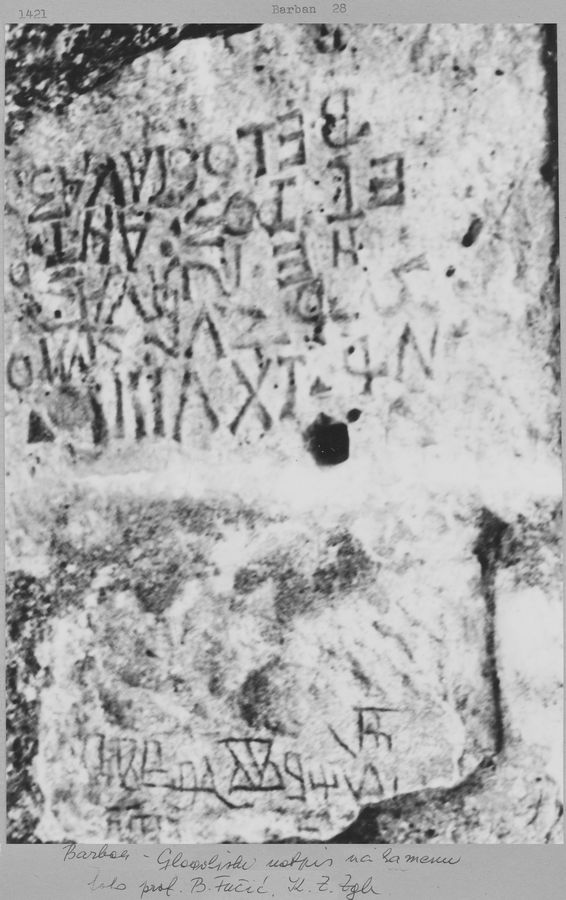
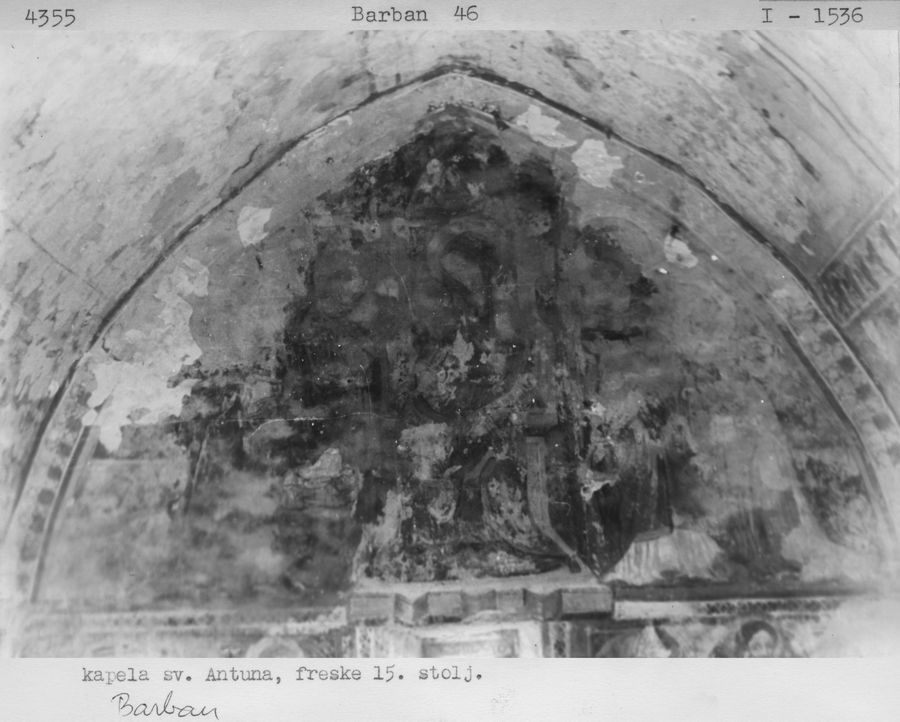
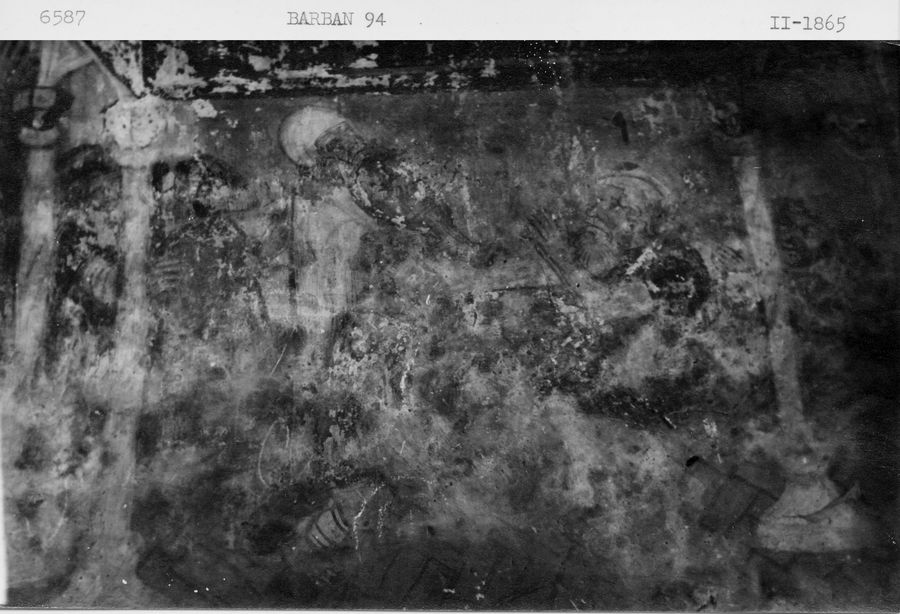
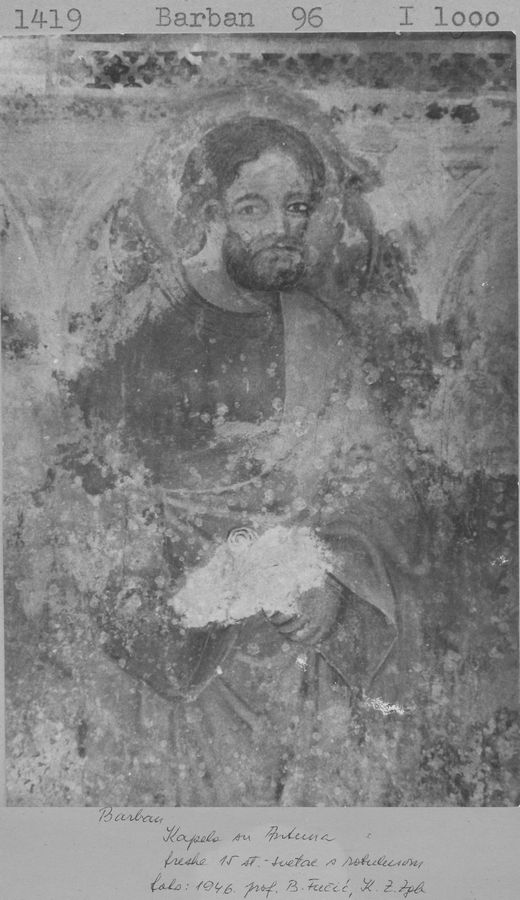
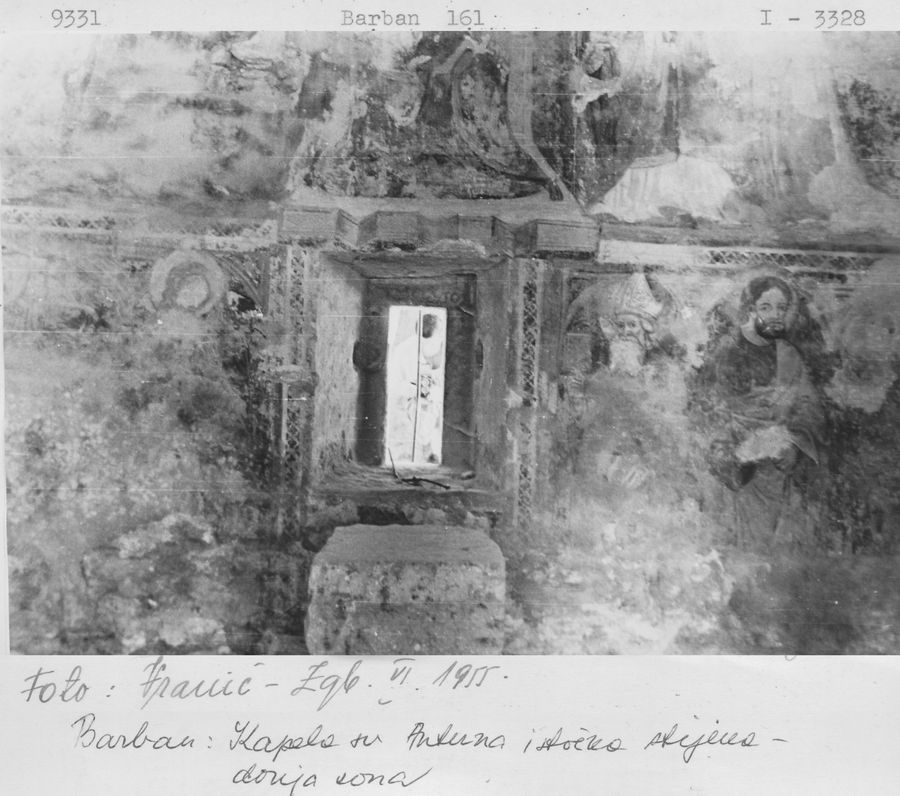
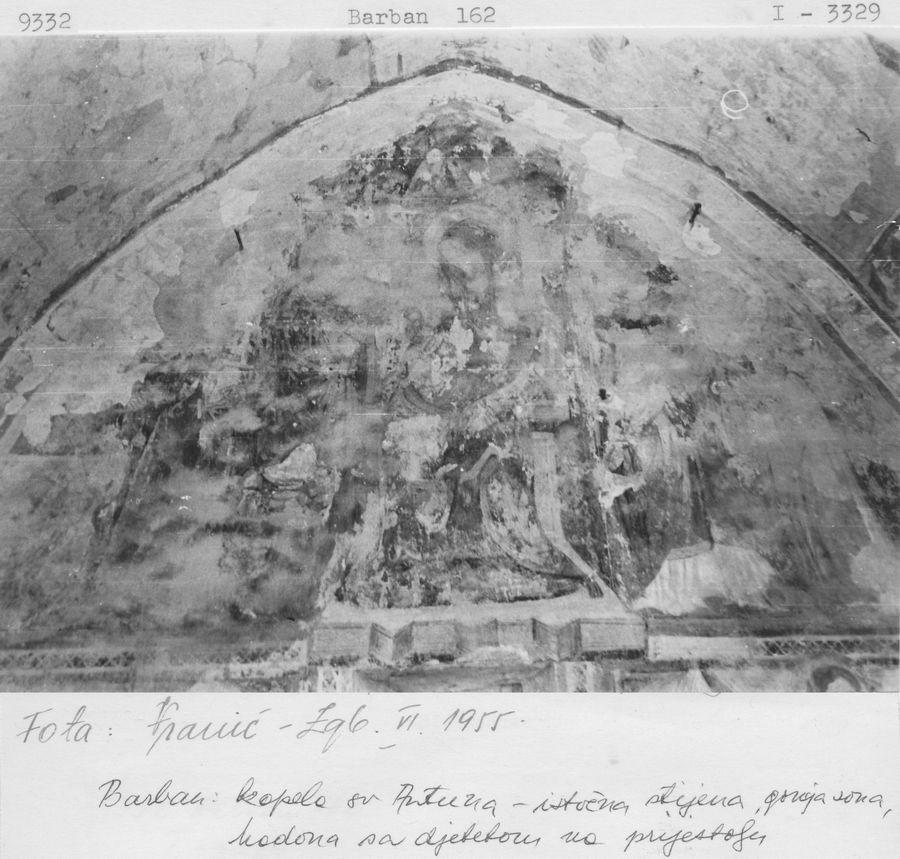
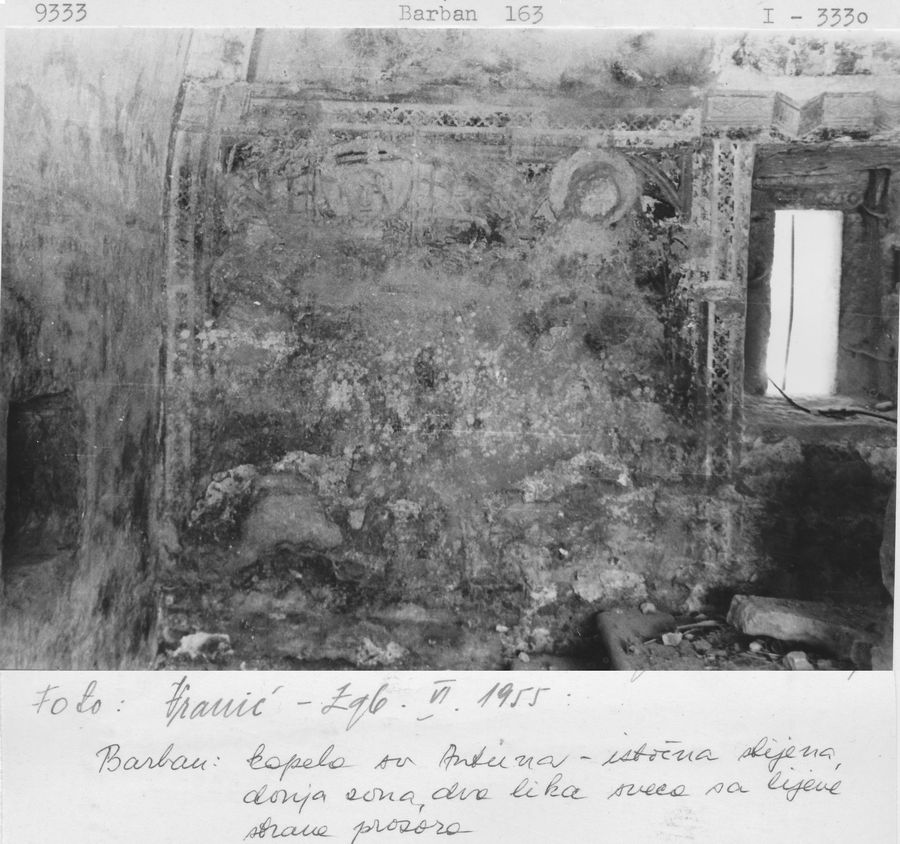
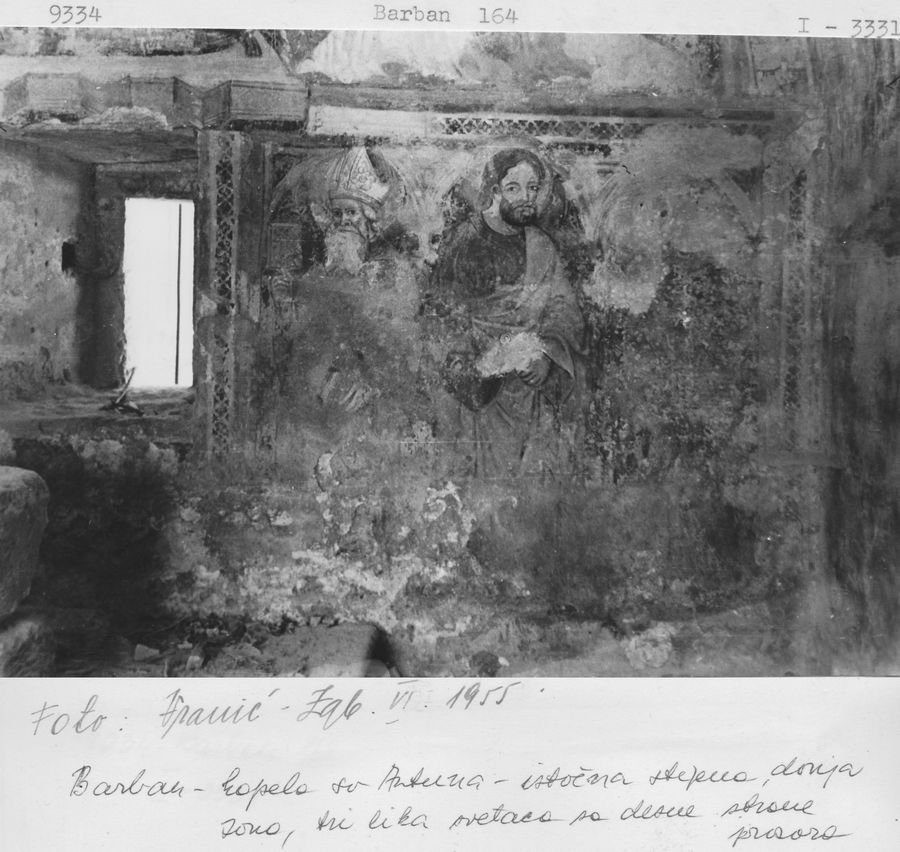
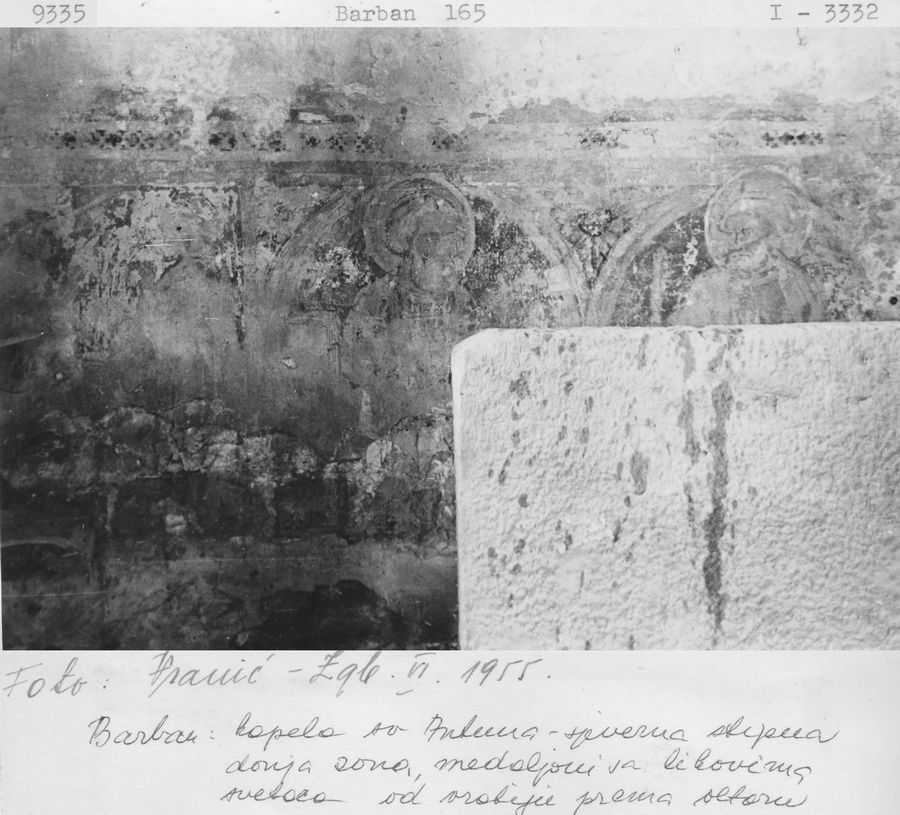
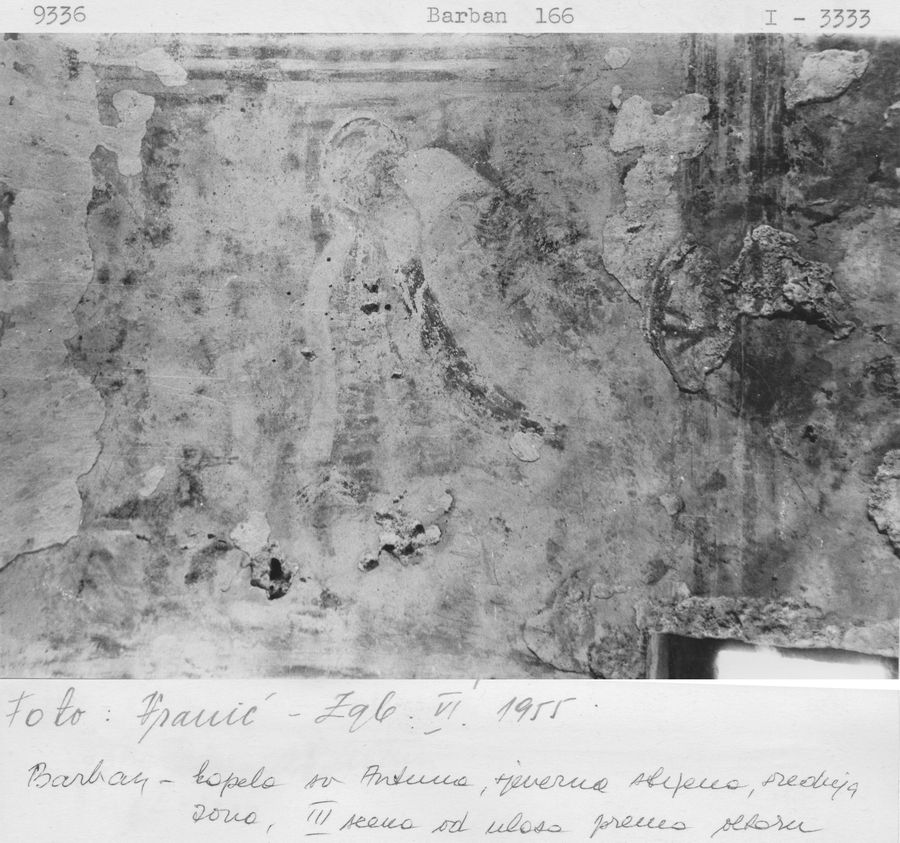
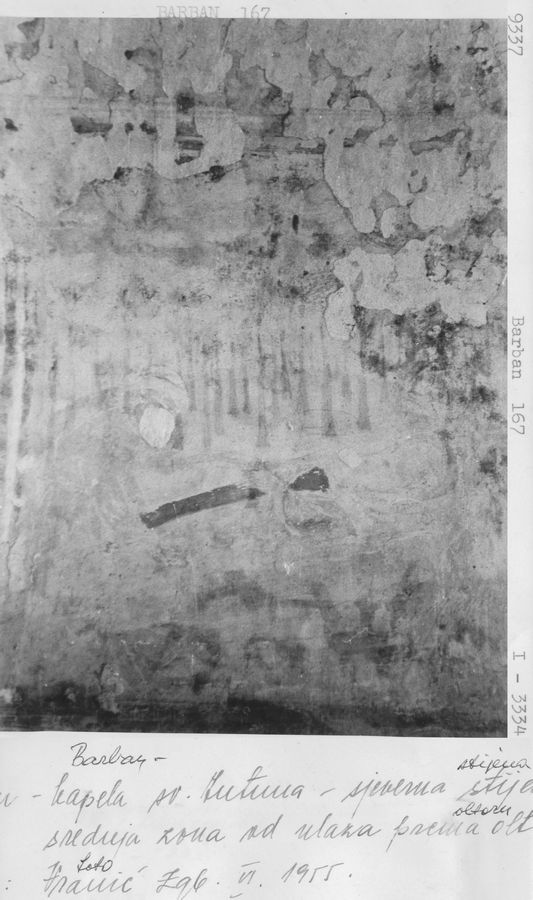
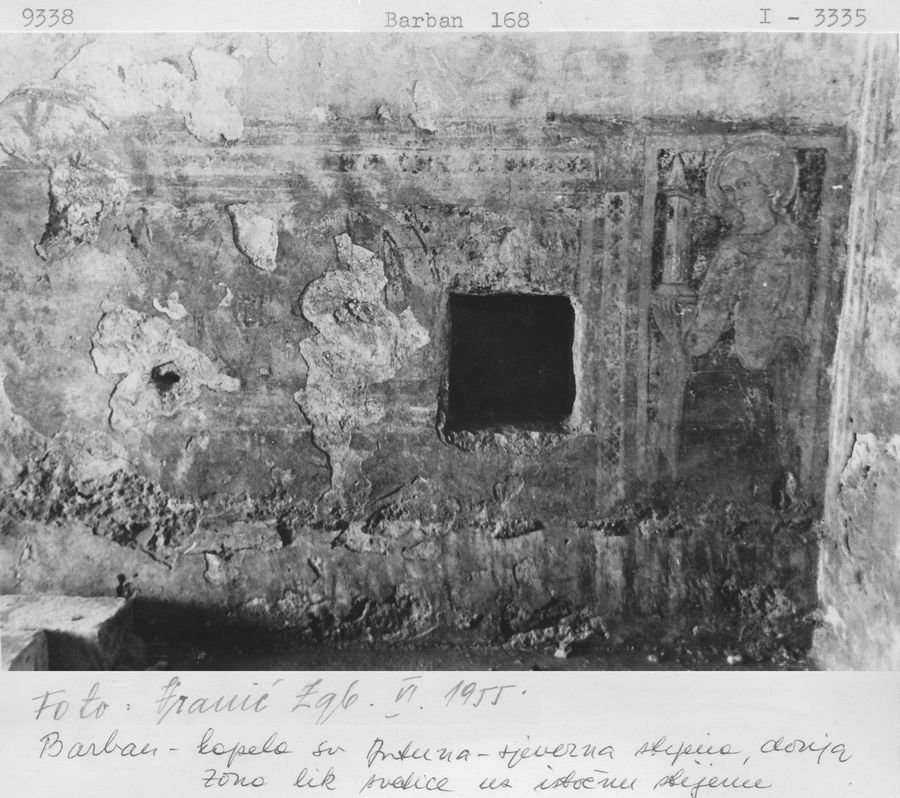
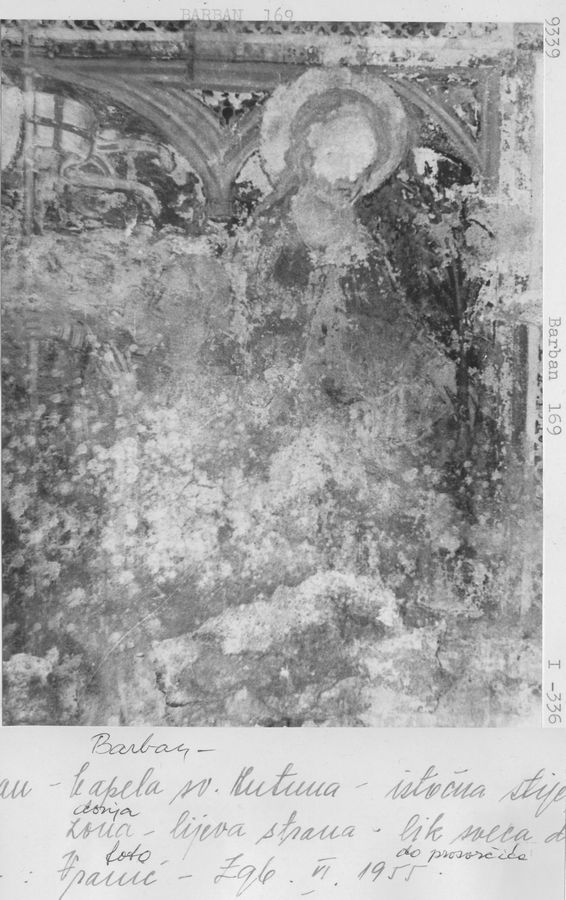
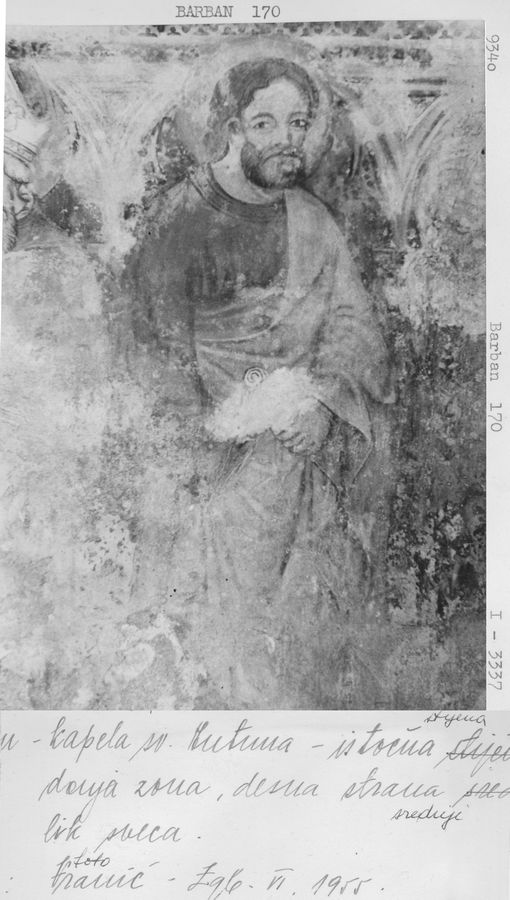
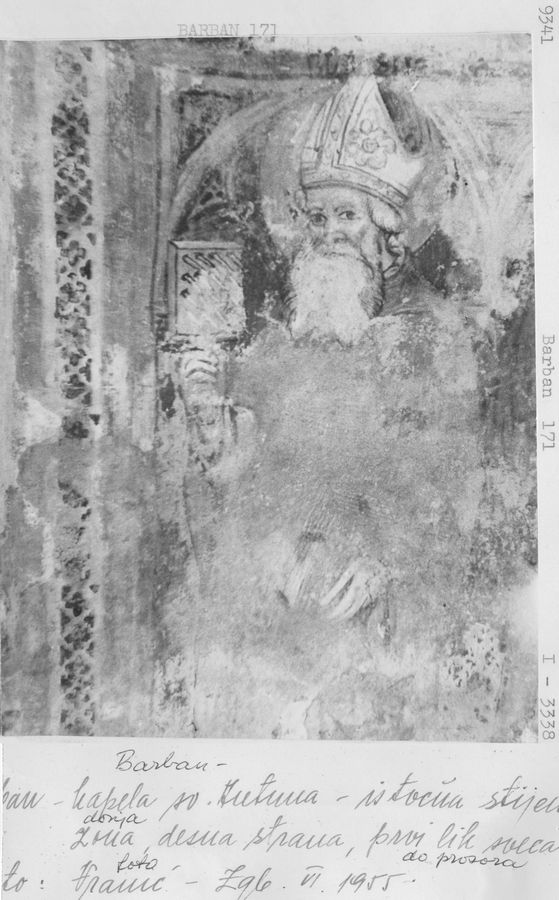
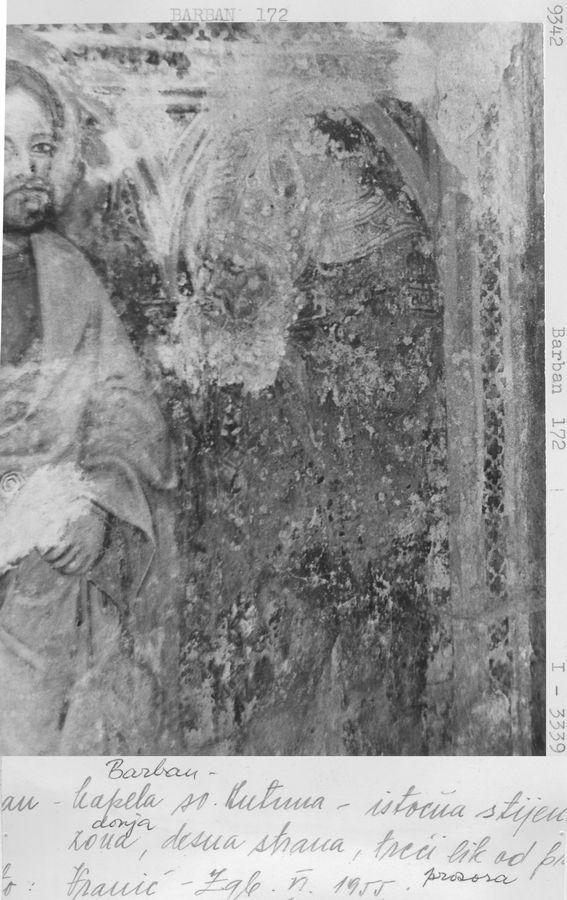
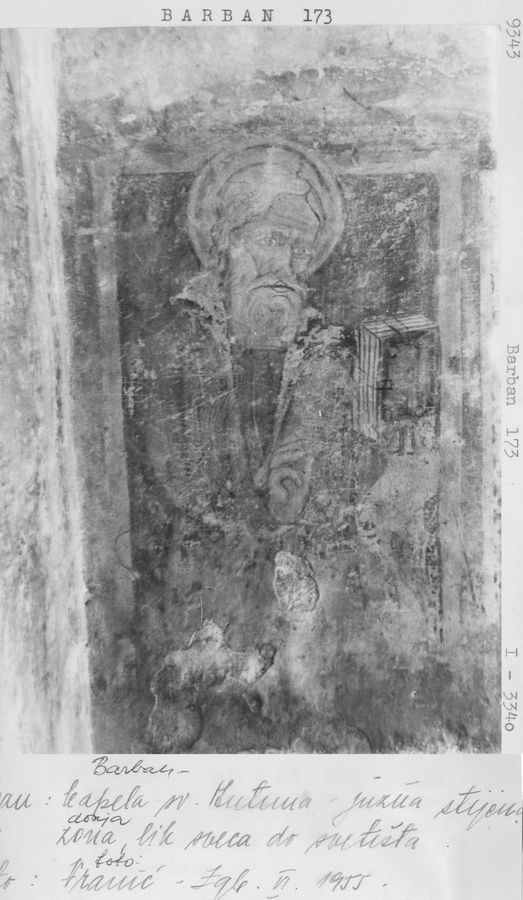
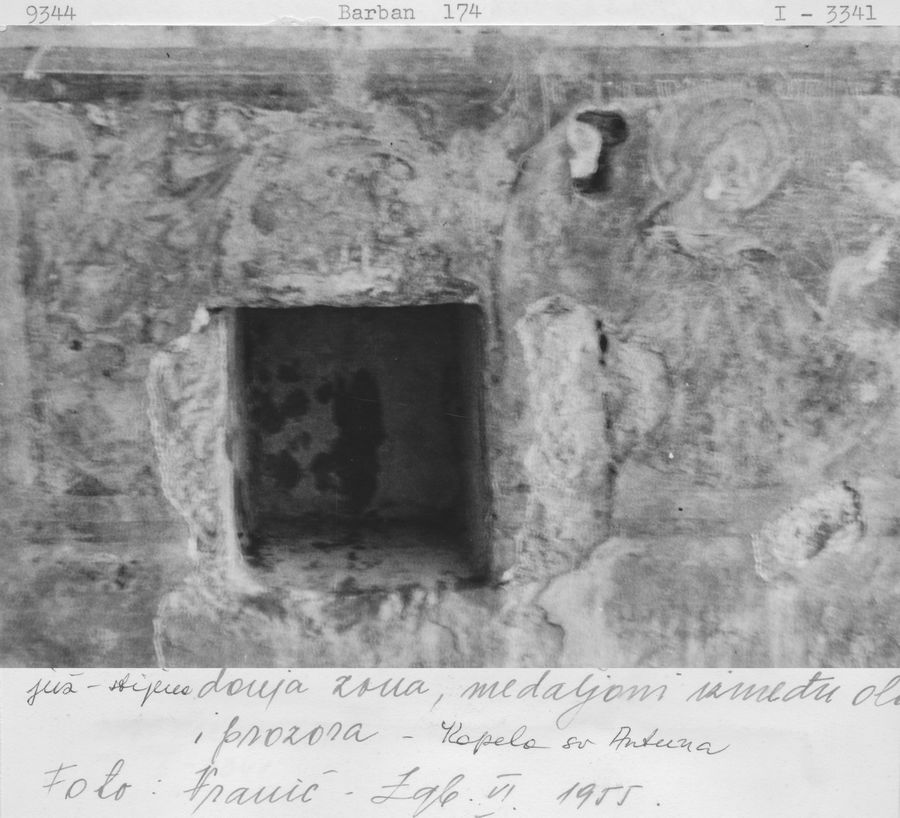
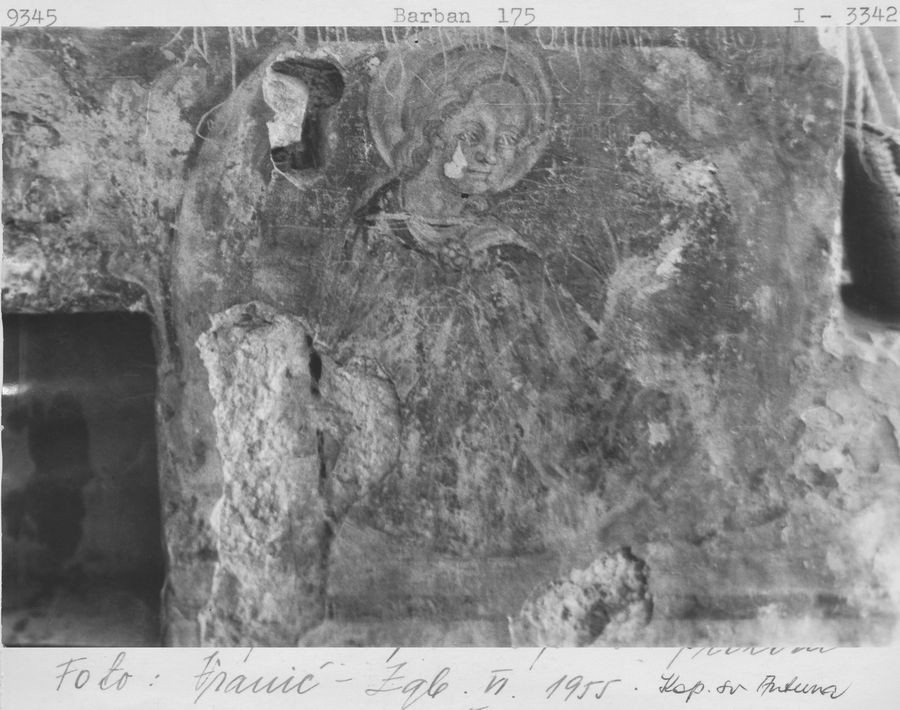
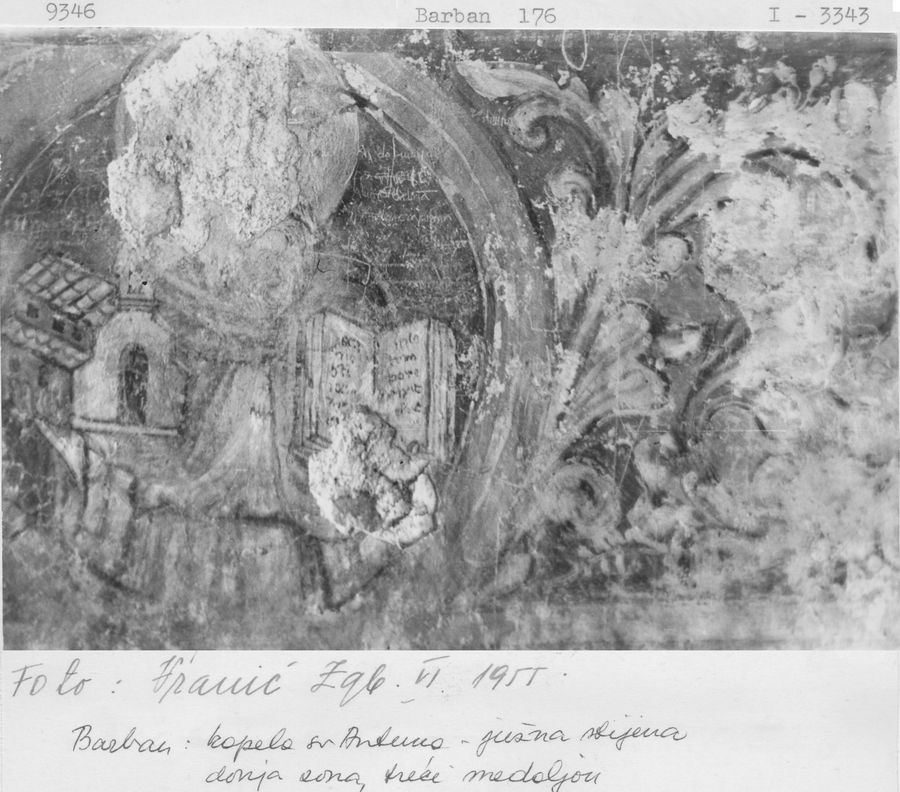
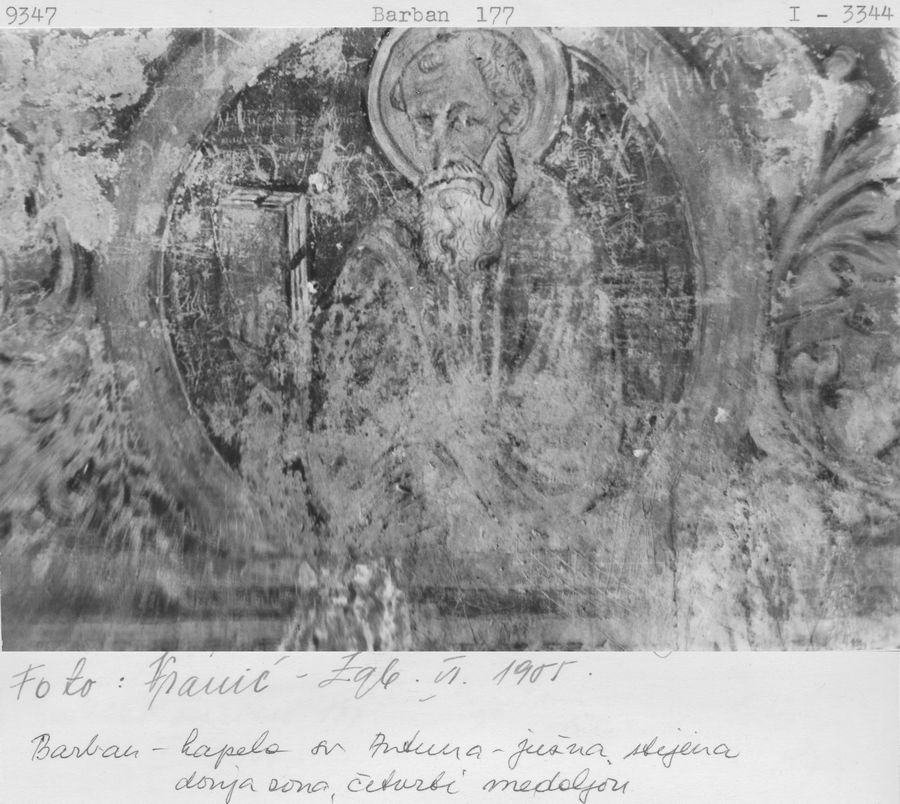
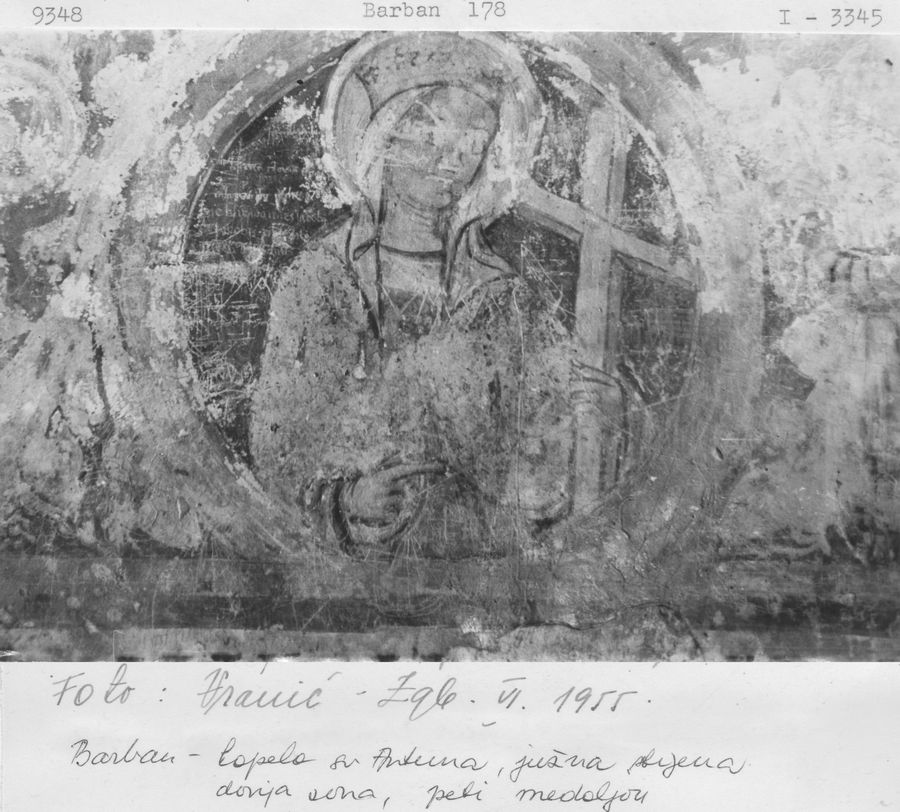
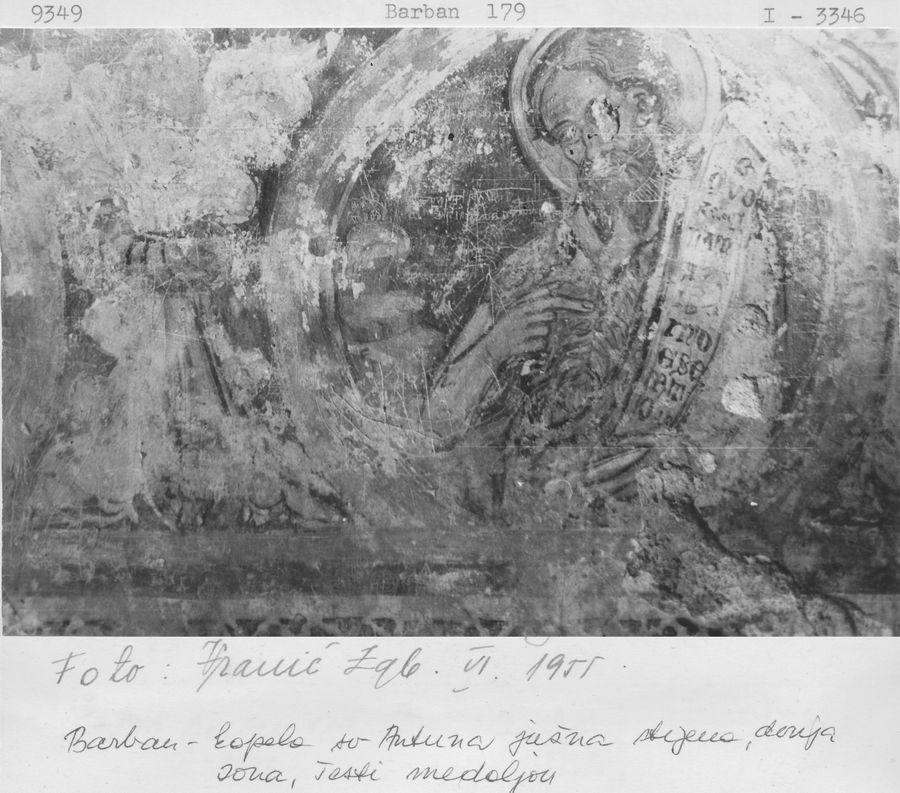
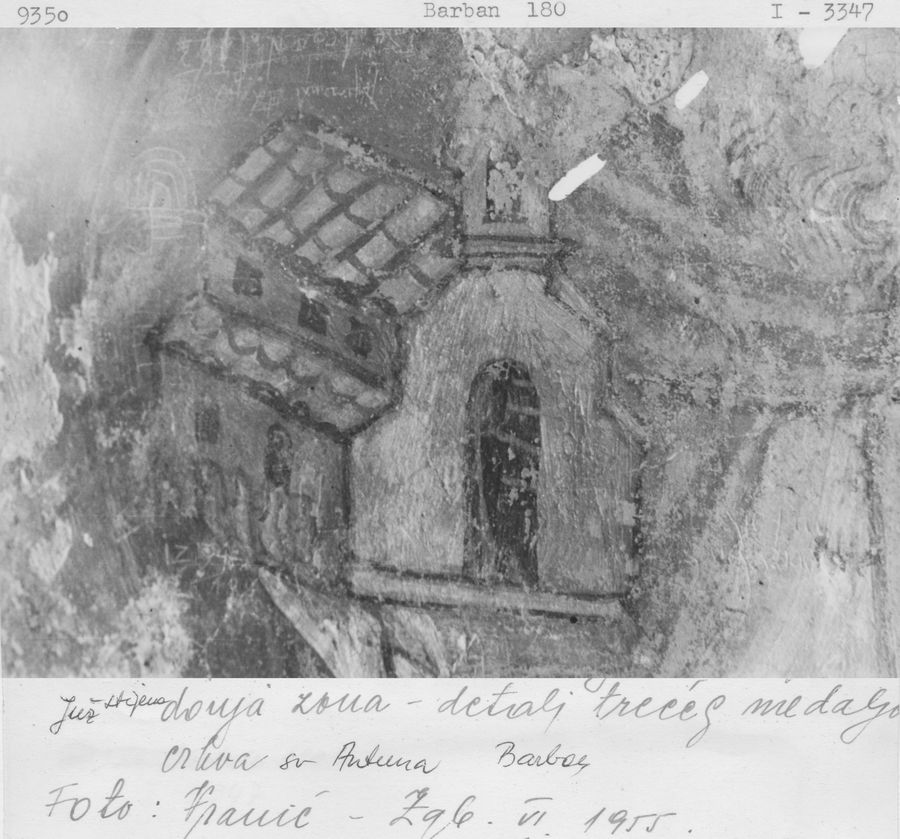
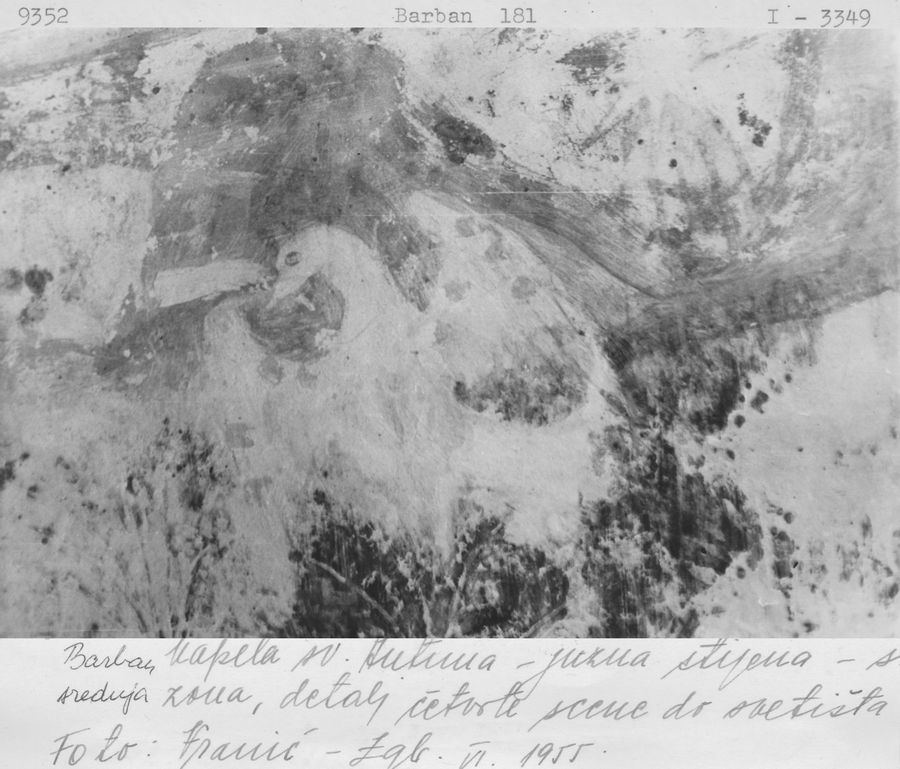
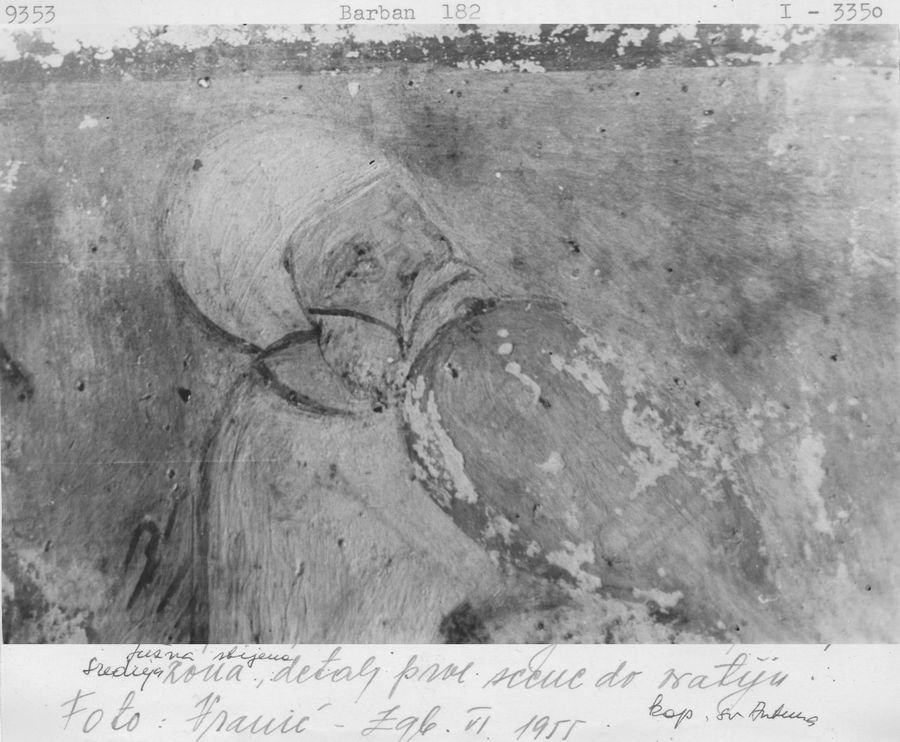
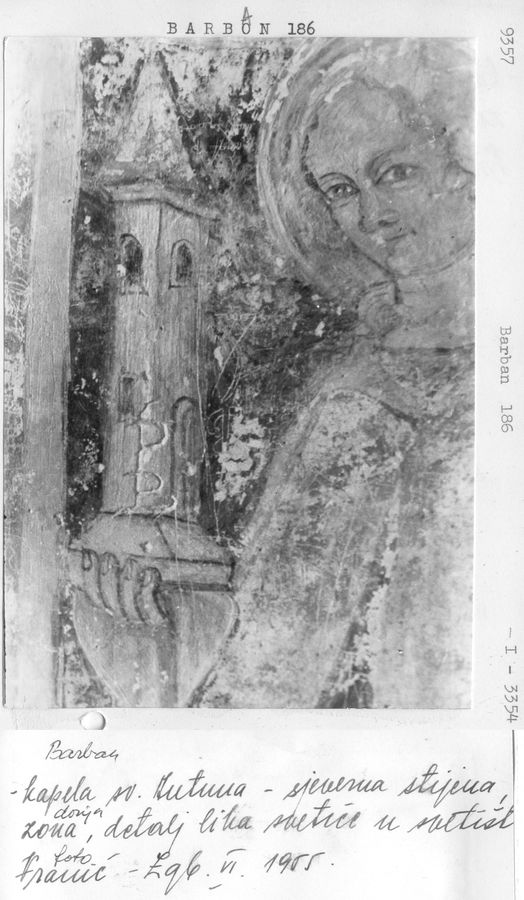
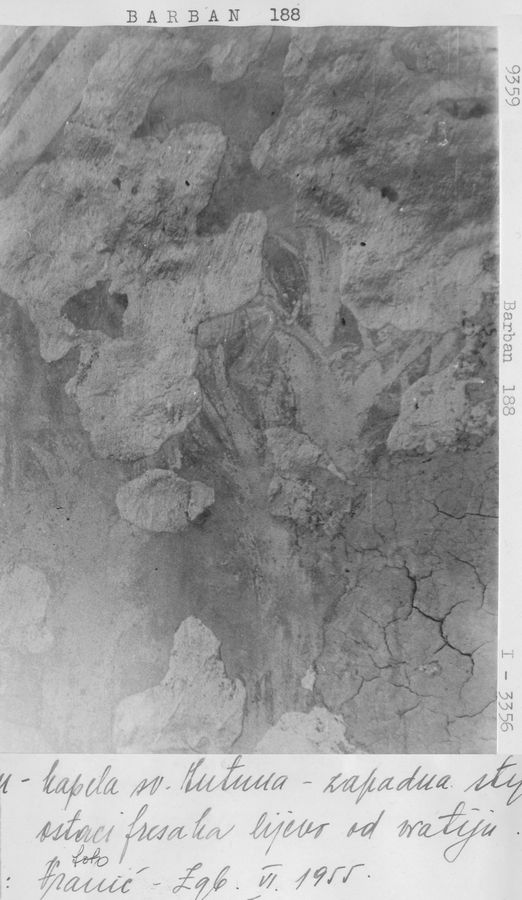
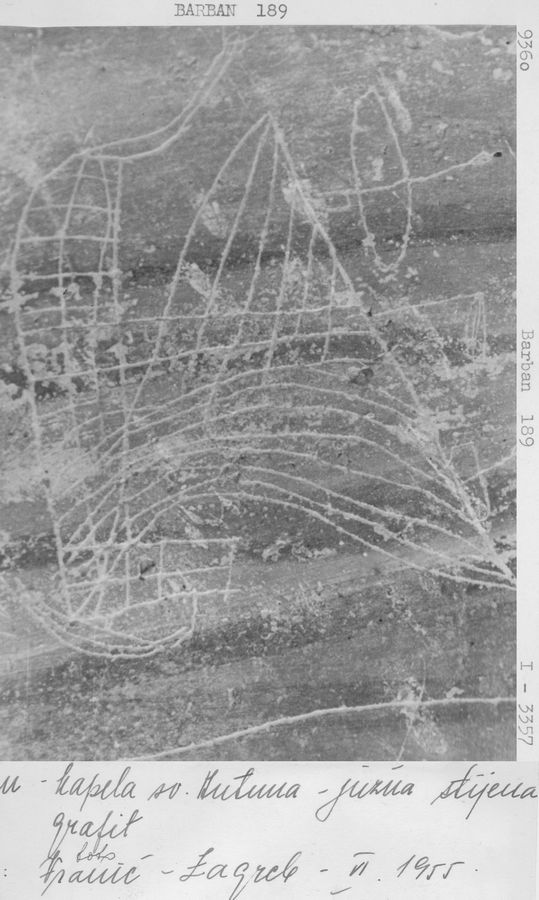
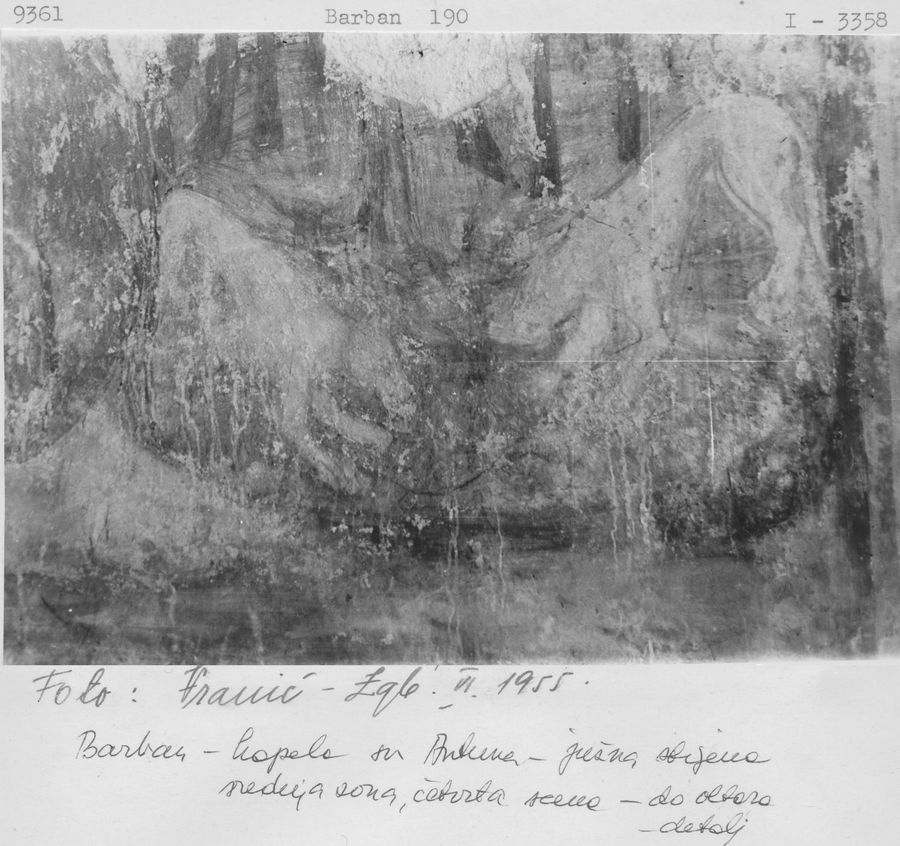
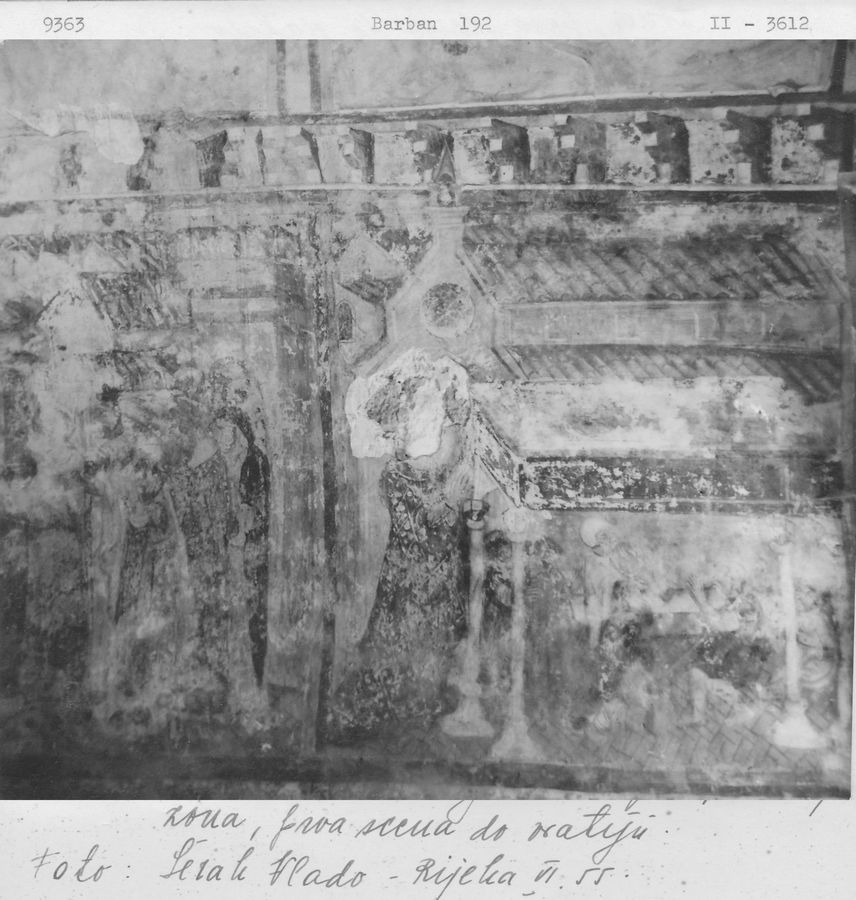
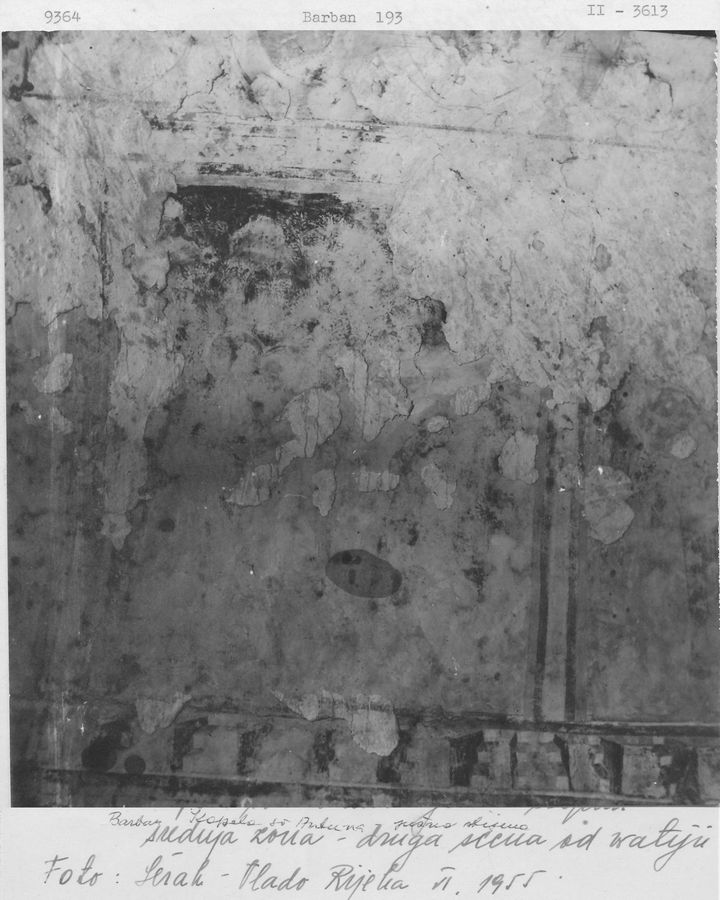
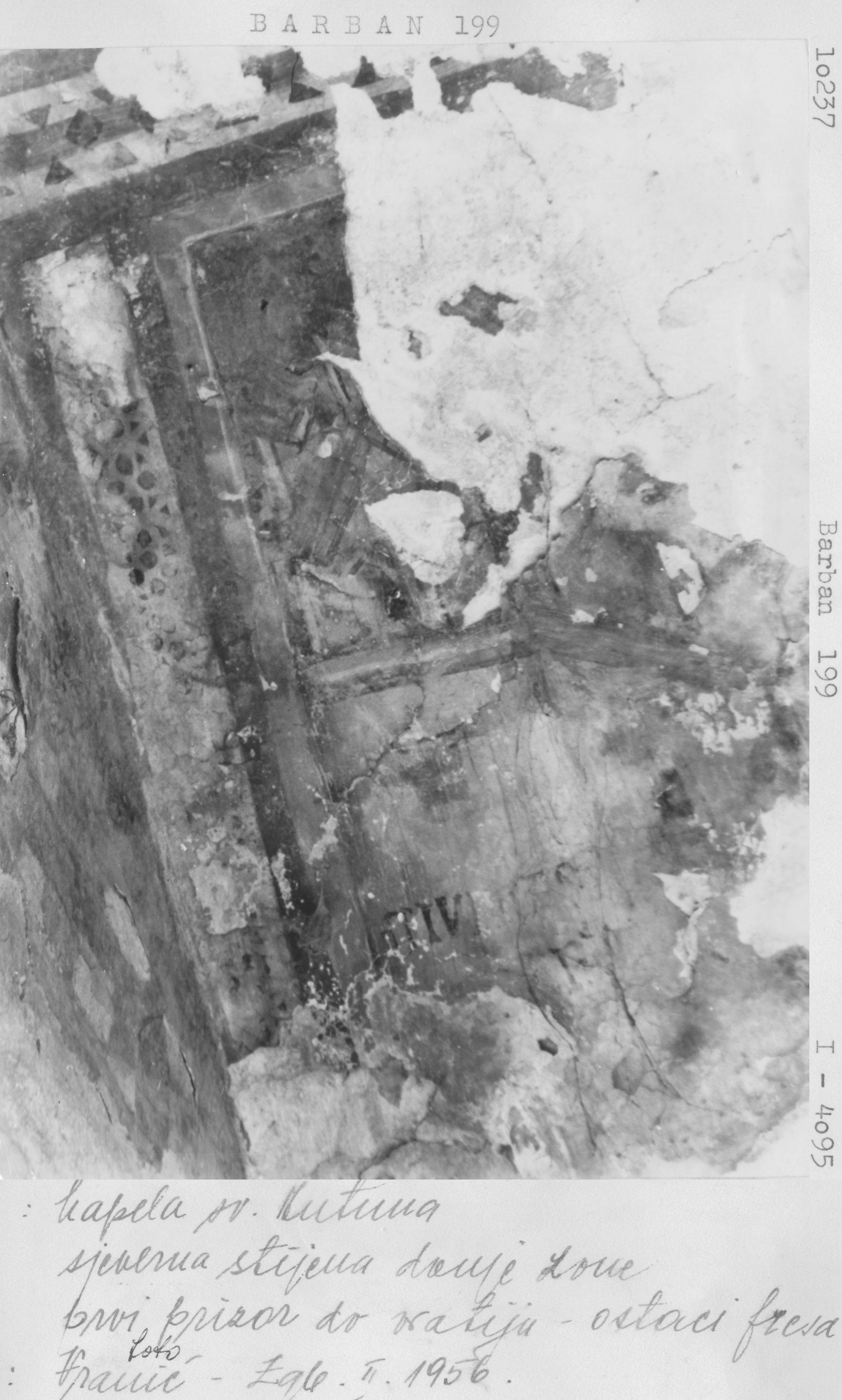
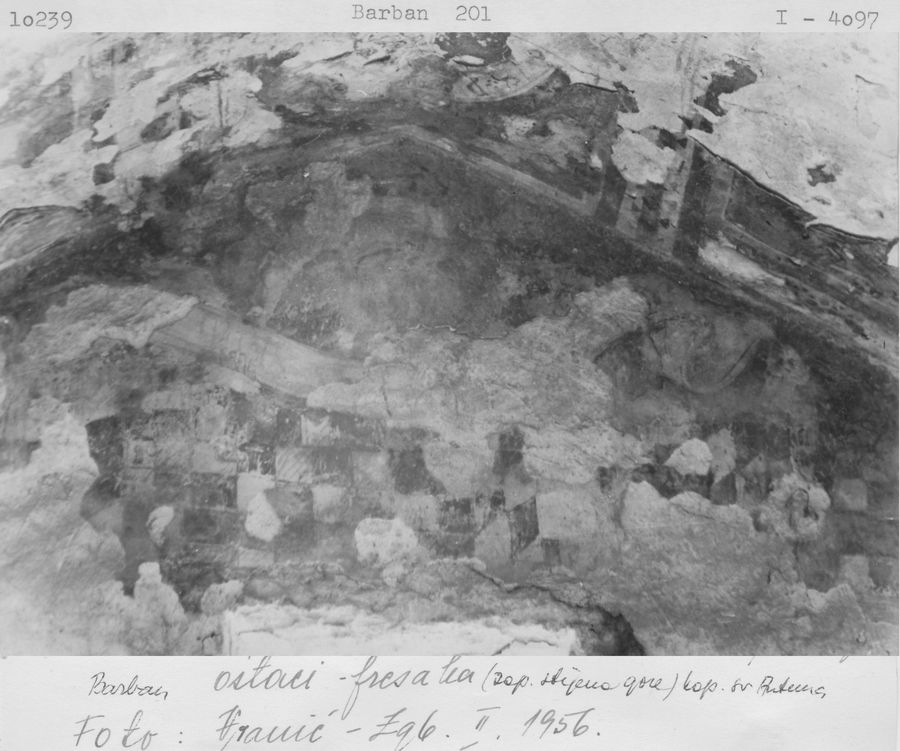
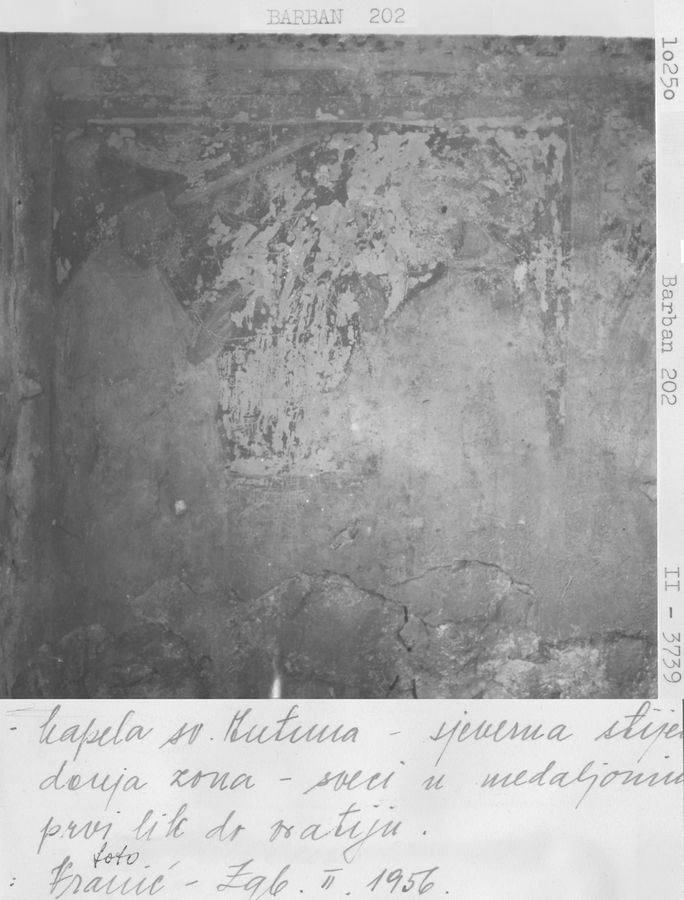
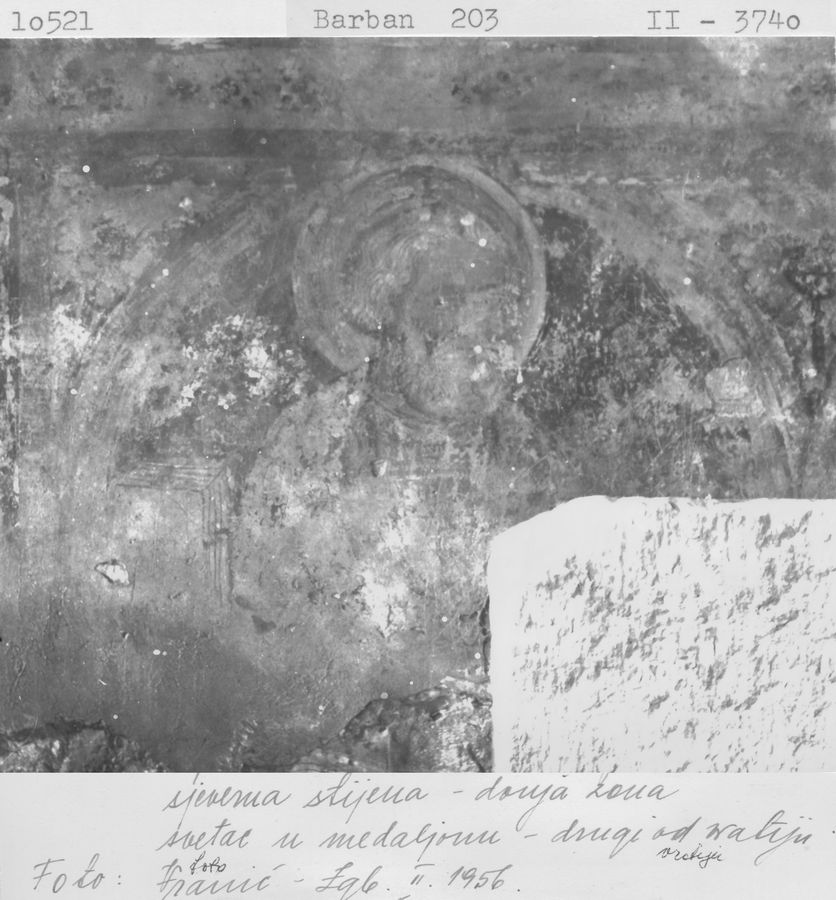
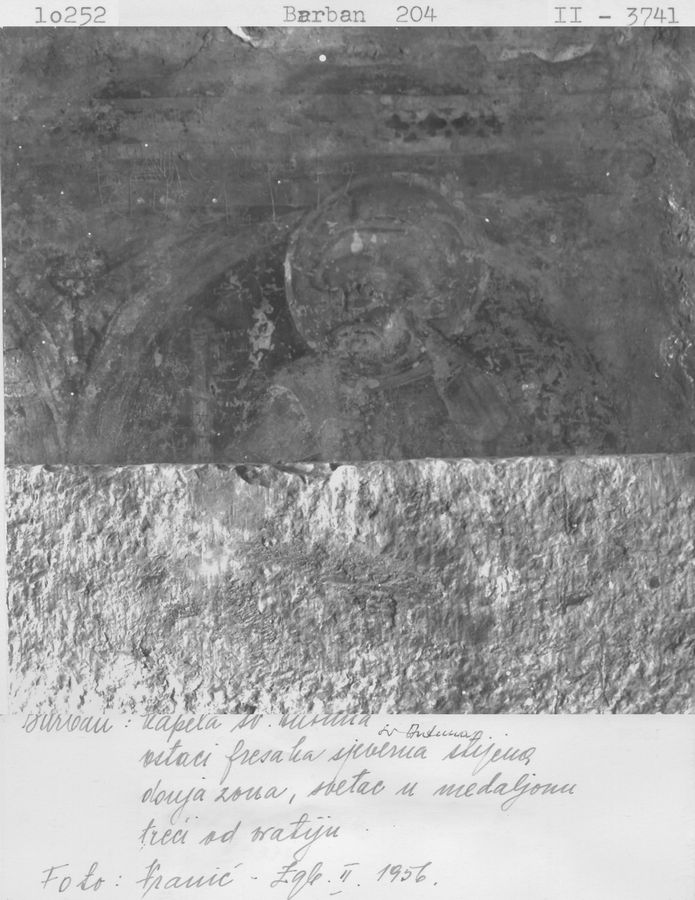
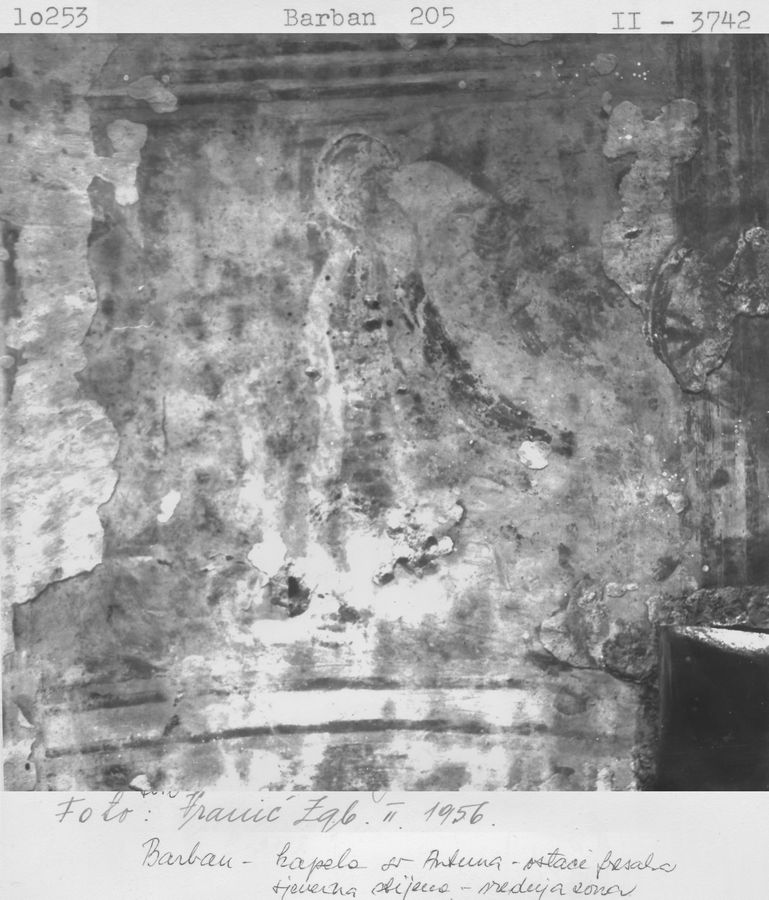
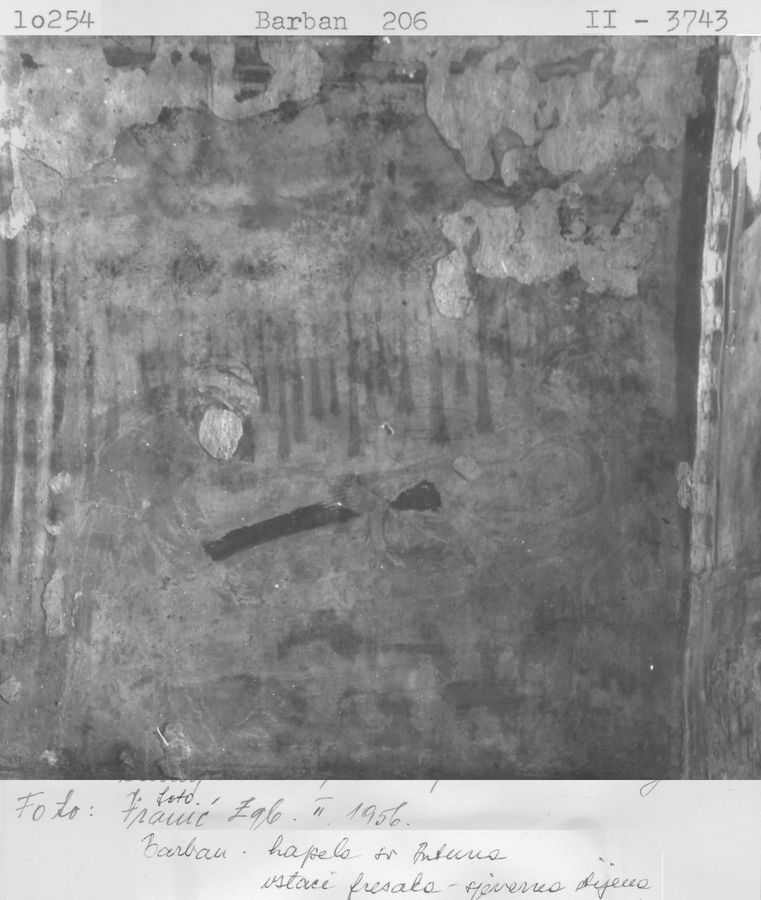
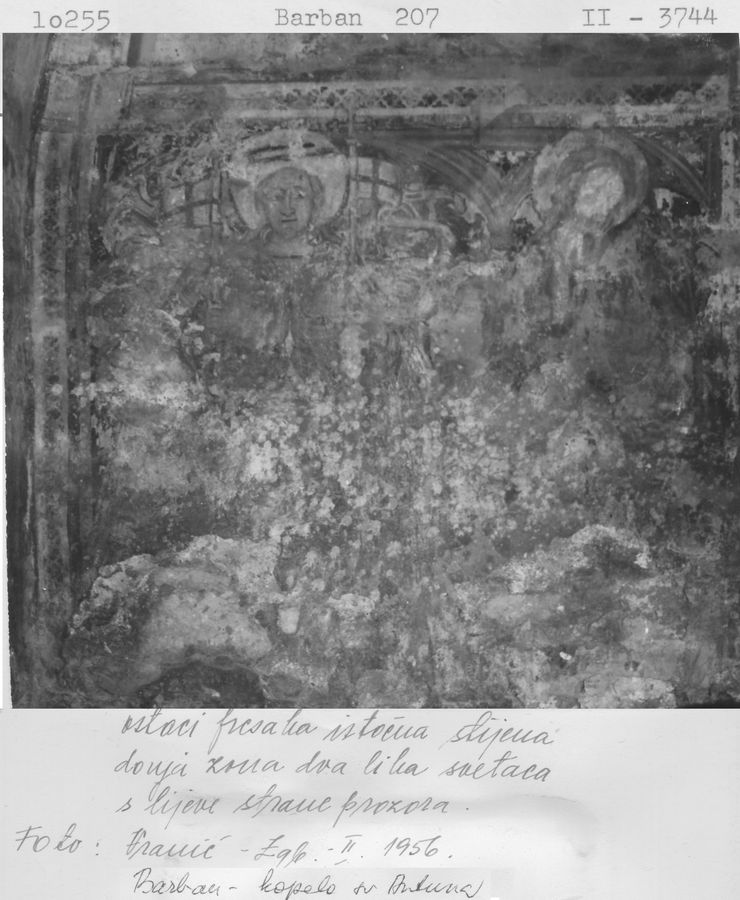
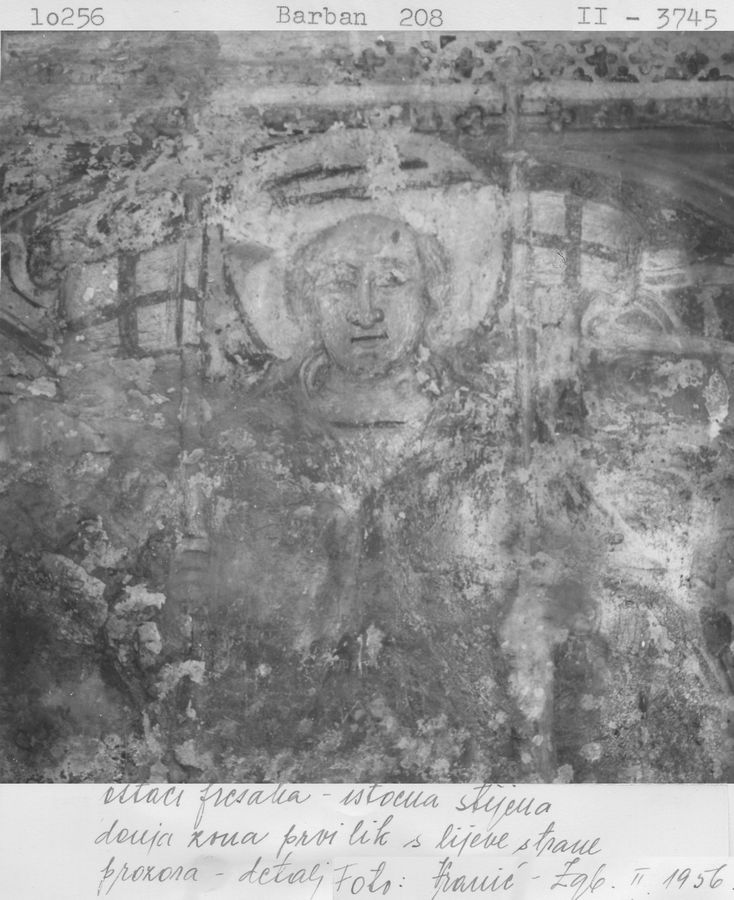
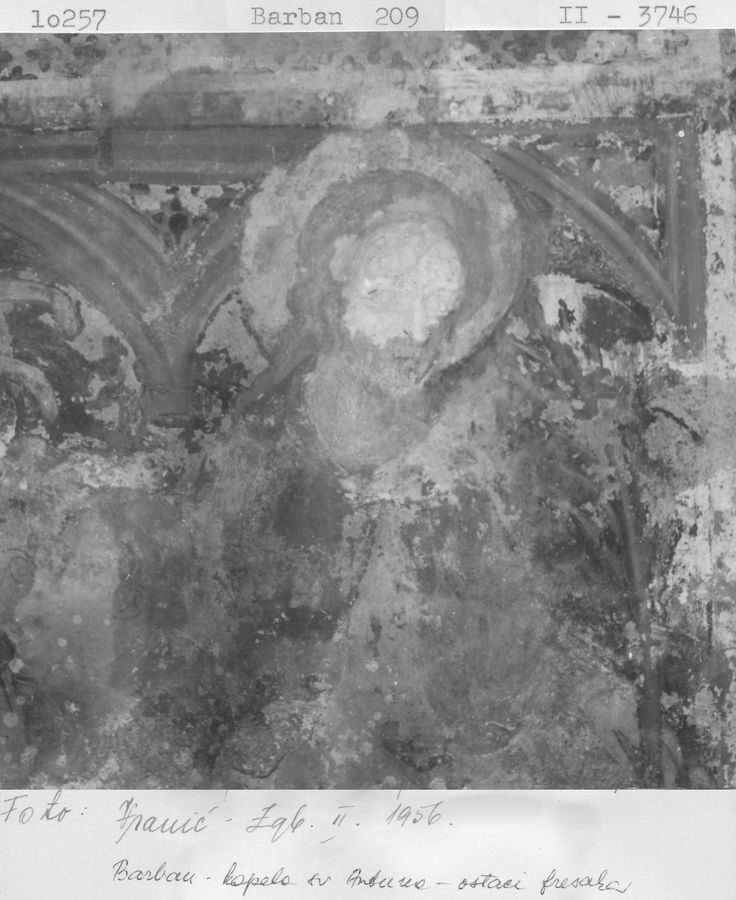
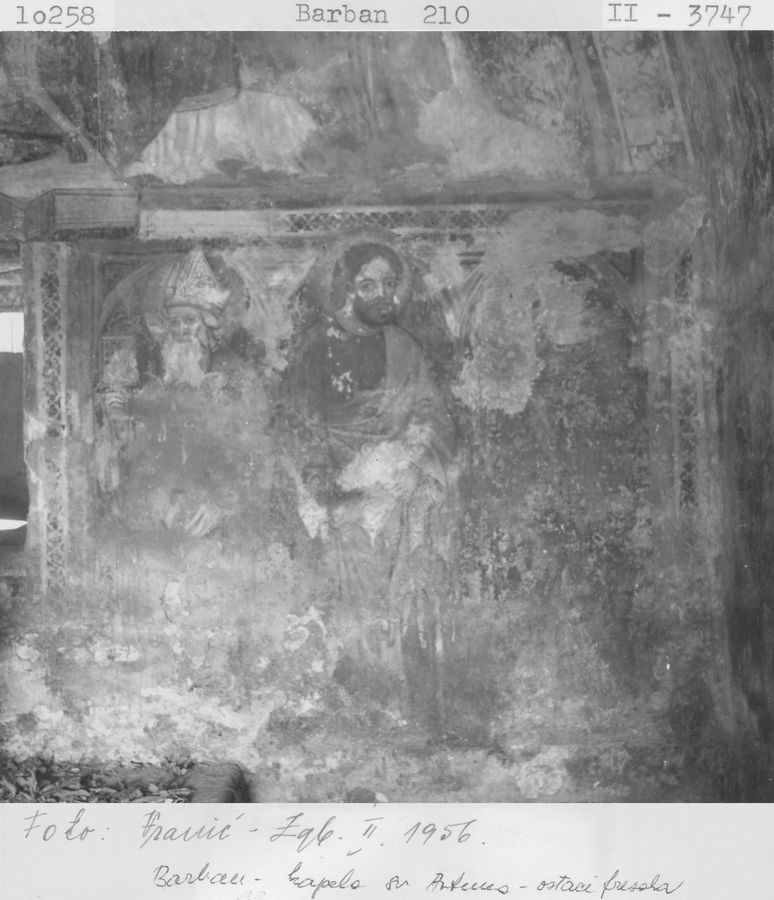
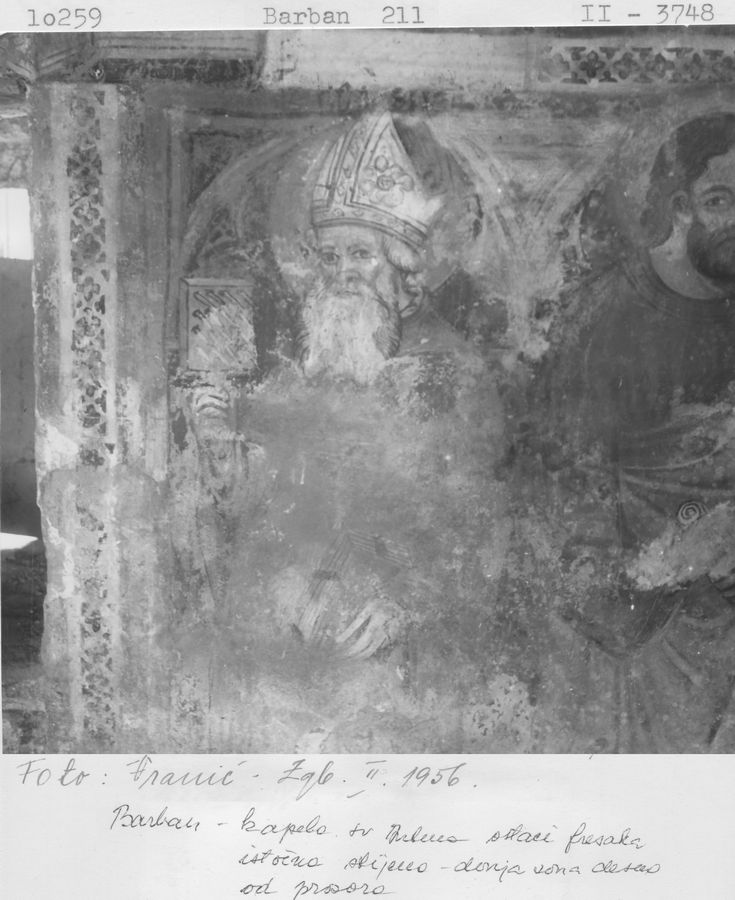
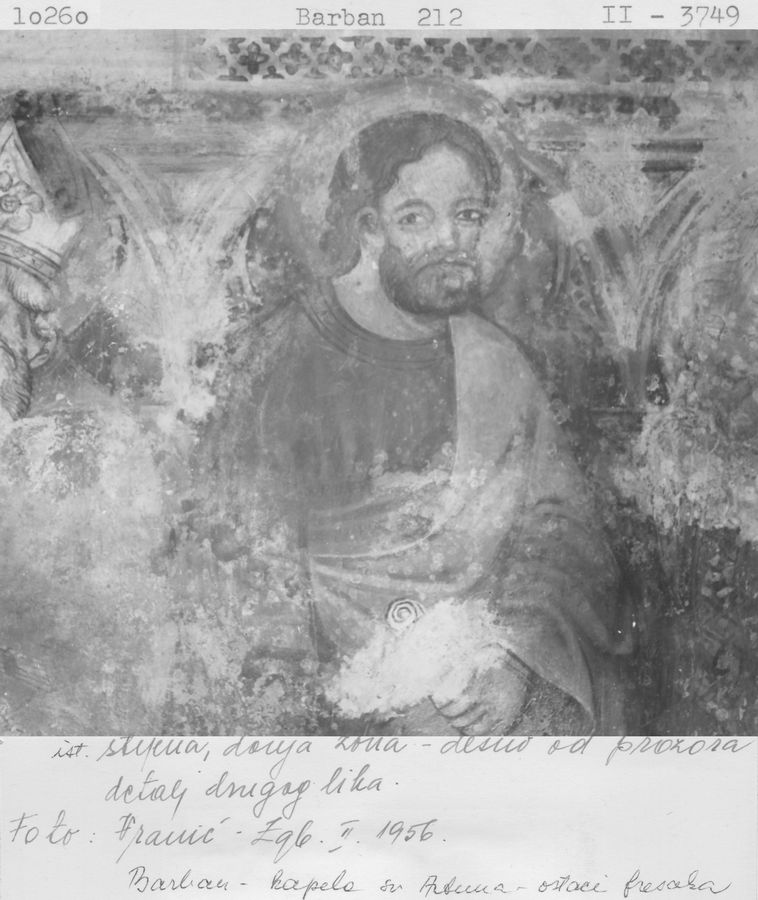
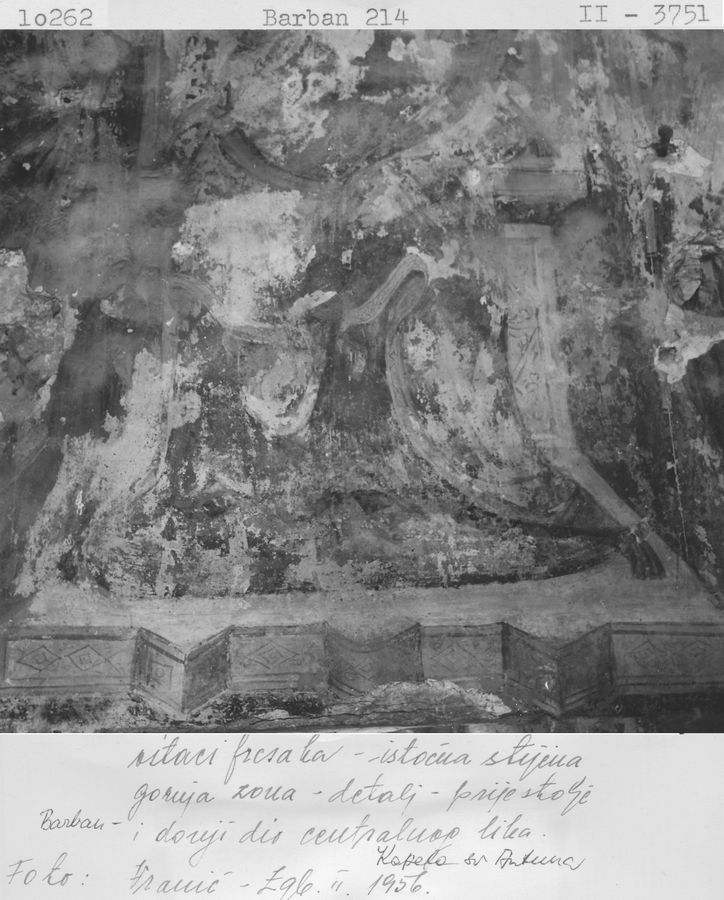
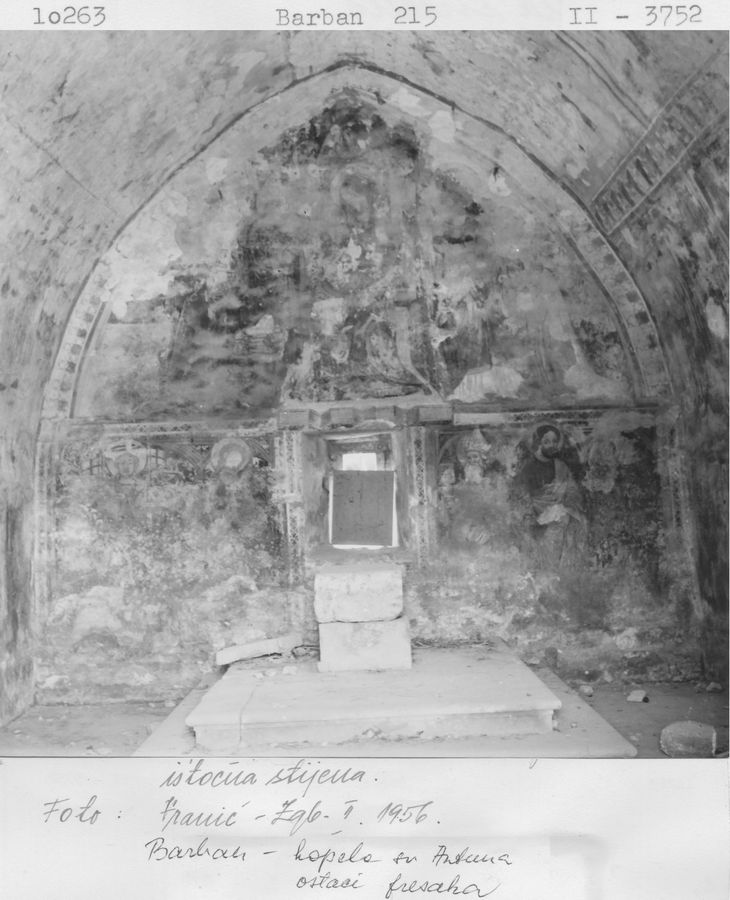
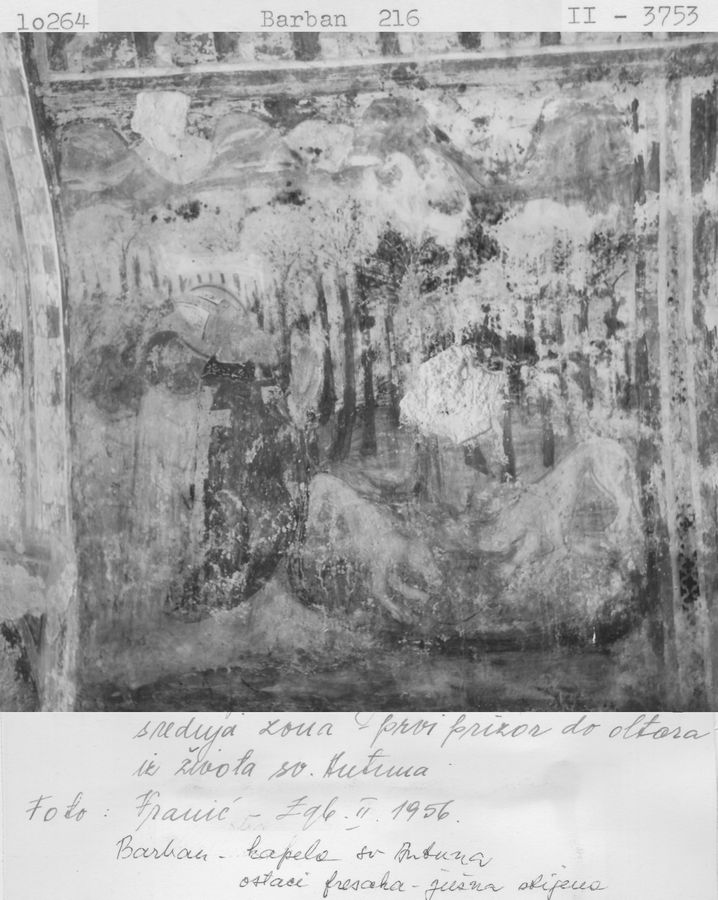
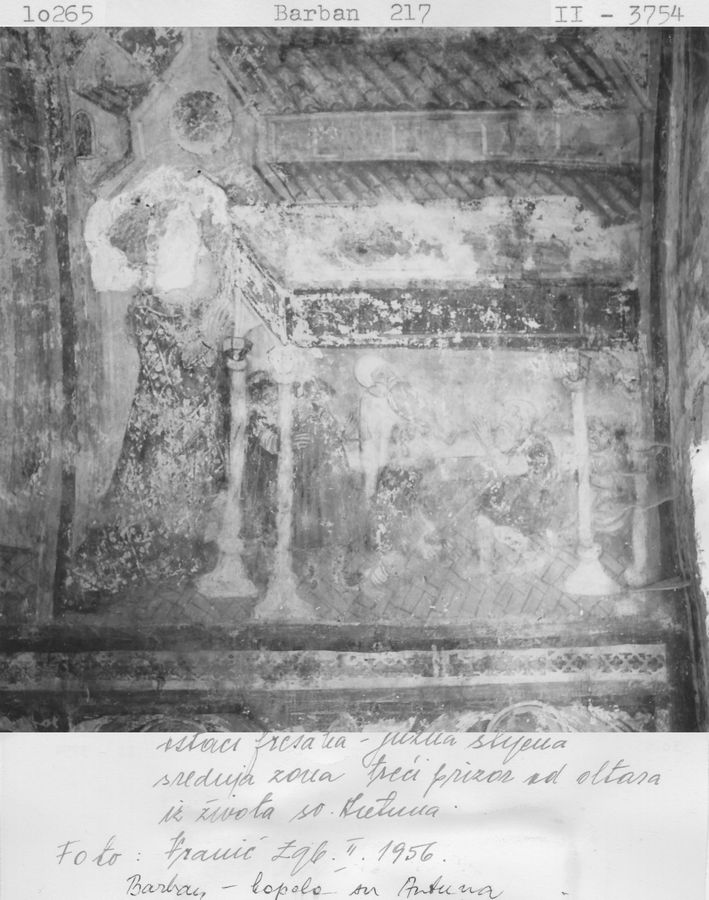
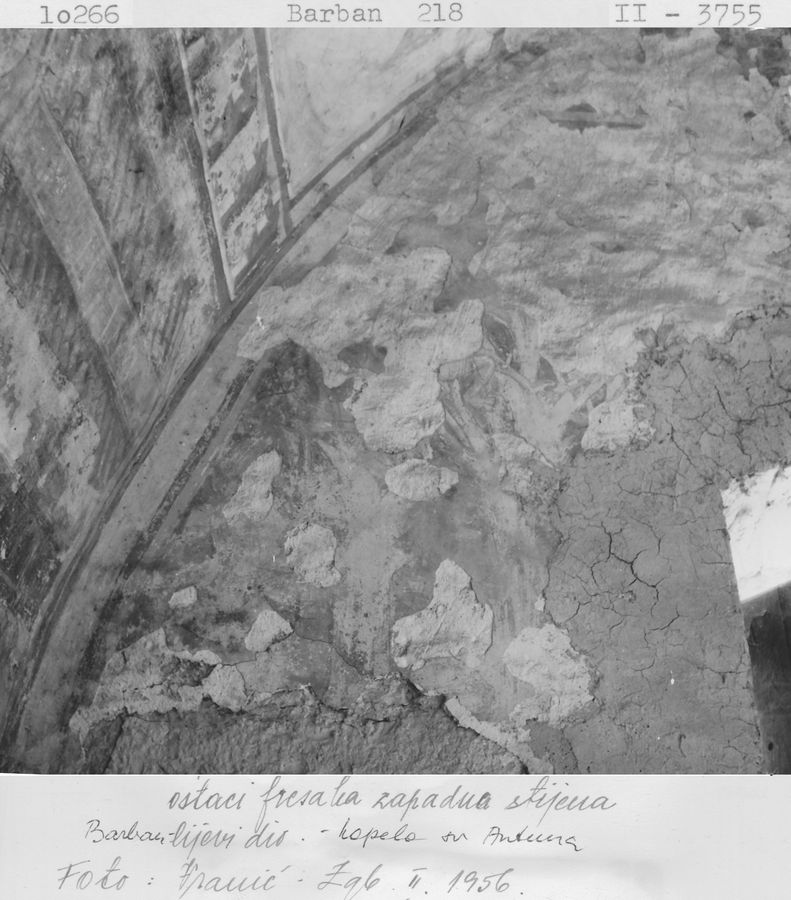
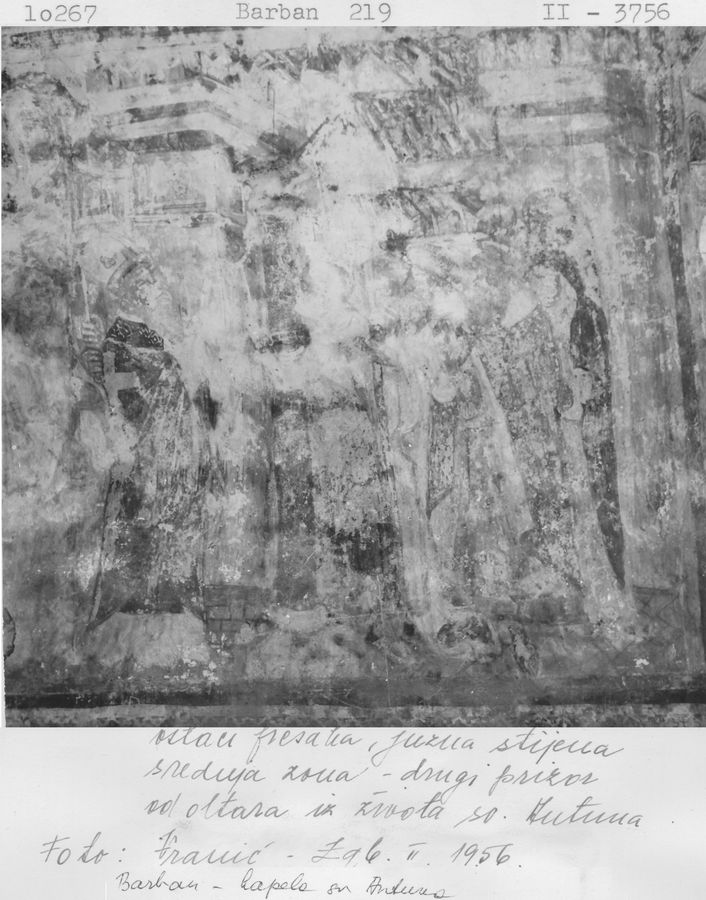
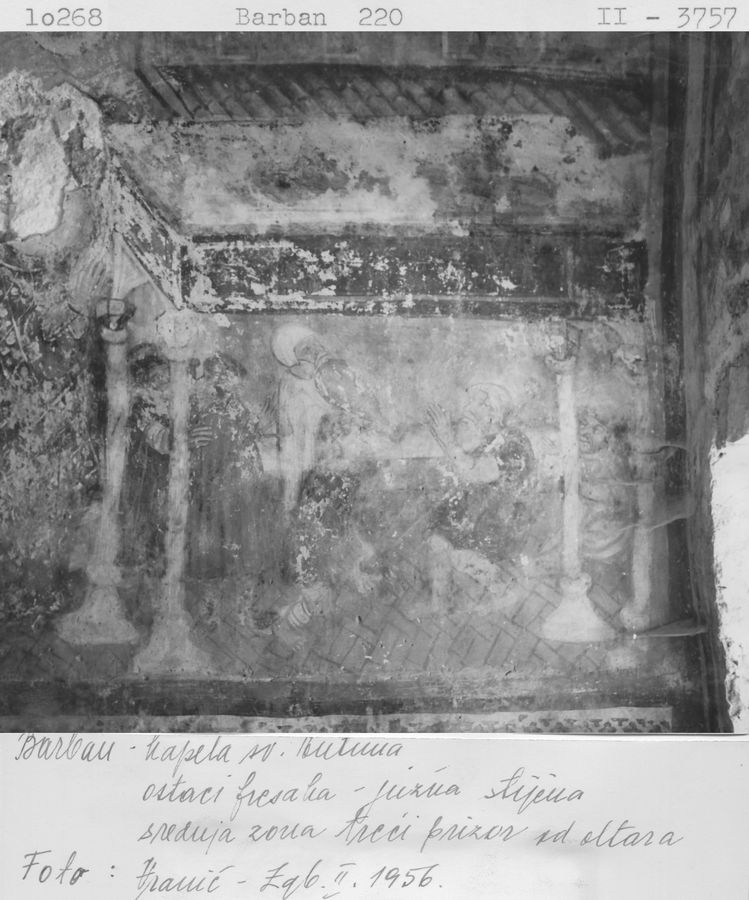
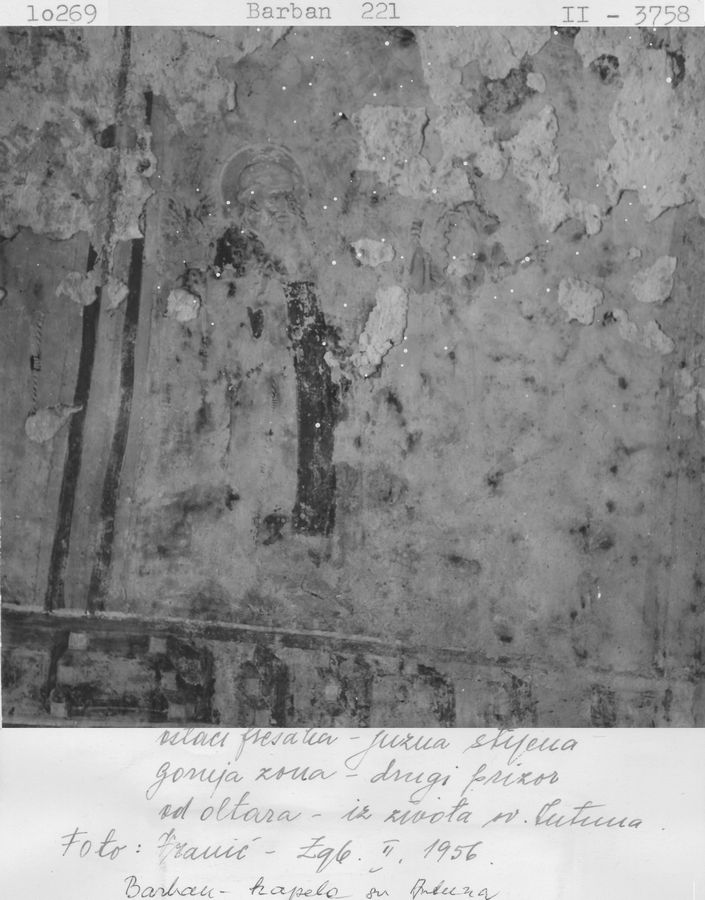
The interior of the church was entirely decorated with wall paintings around 1420, a date recorded in a Glagolitic inscription on the church wall. The surface of the vault and the lateral walls is adorned with scenes from the Life of St Anthony the Hermit, organised into two registers and separated by painted borders. Beneath the lower register, on the north, south, and west walls, saintly figures are depicted within medallions. The painted decoration of the east wall is likewise divided into two registers. The upper register features the Virgin and Child enthroned and flanked by saints, while the lower zone is occupied by figures of saints placed within painted niches. On the west wall, the upper zone preserves a depiction of God the Father holding a scroll, while the lower zone is occupied by the scene of the Martyrdom of St Acacius.
The wall paintings were uncovered in 1960, and in the same year they were discussed by Francè Stelè in his publication Umetnost v Primorju.
Iconographic programme:
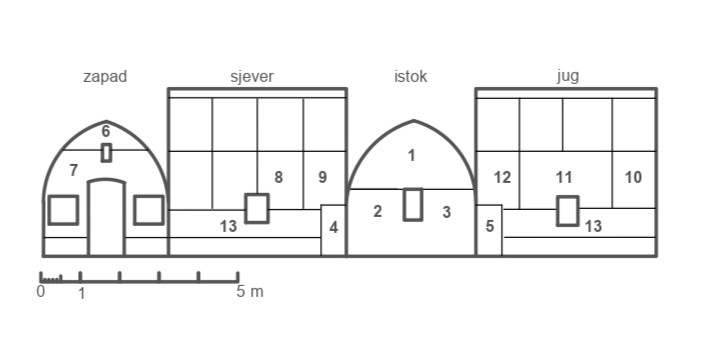
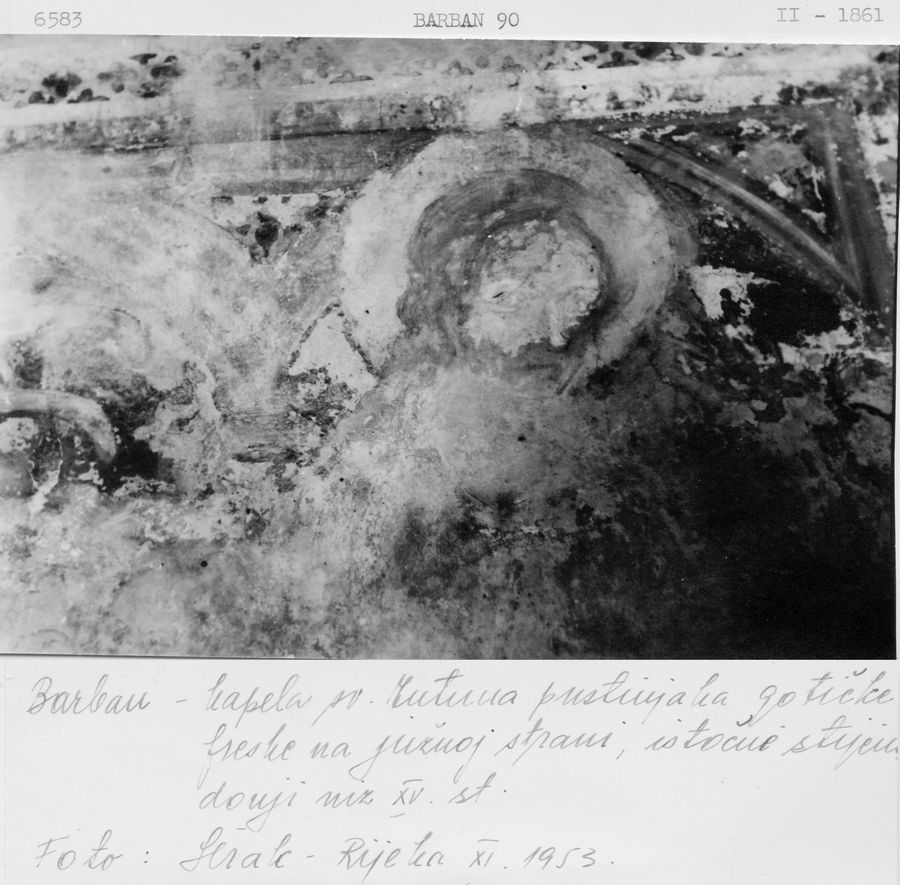
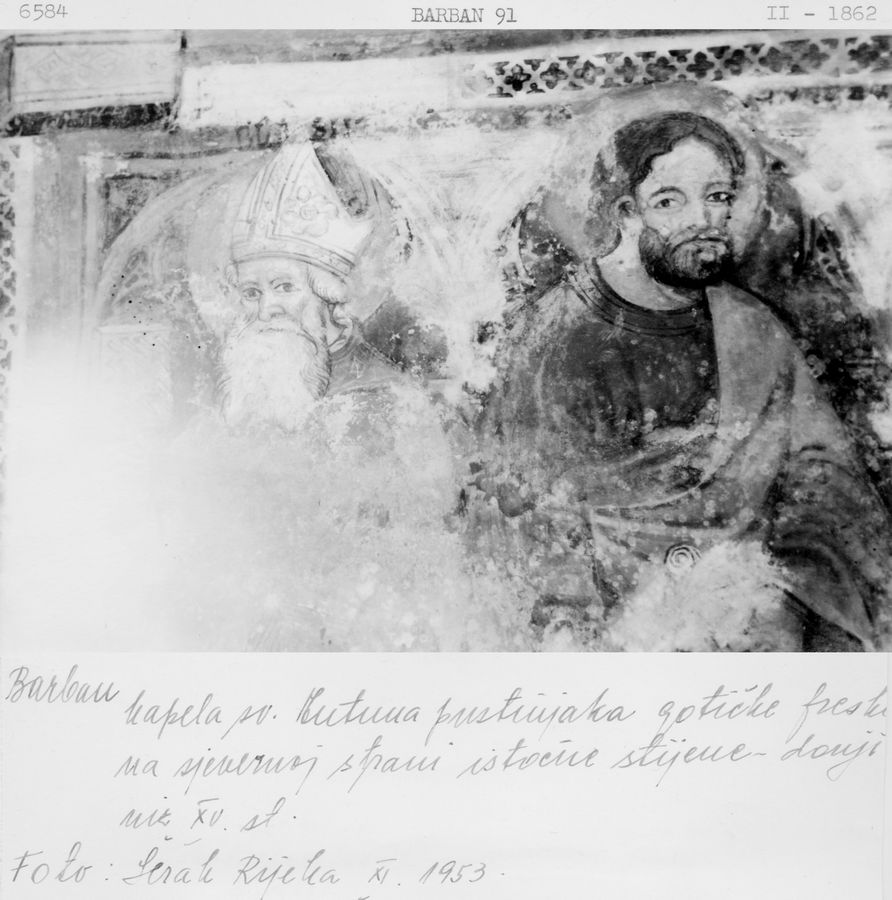
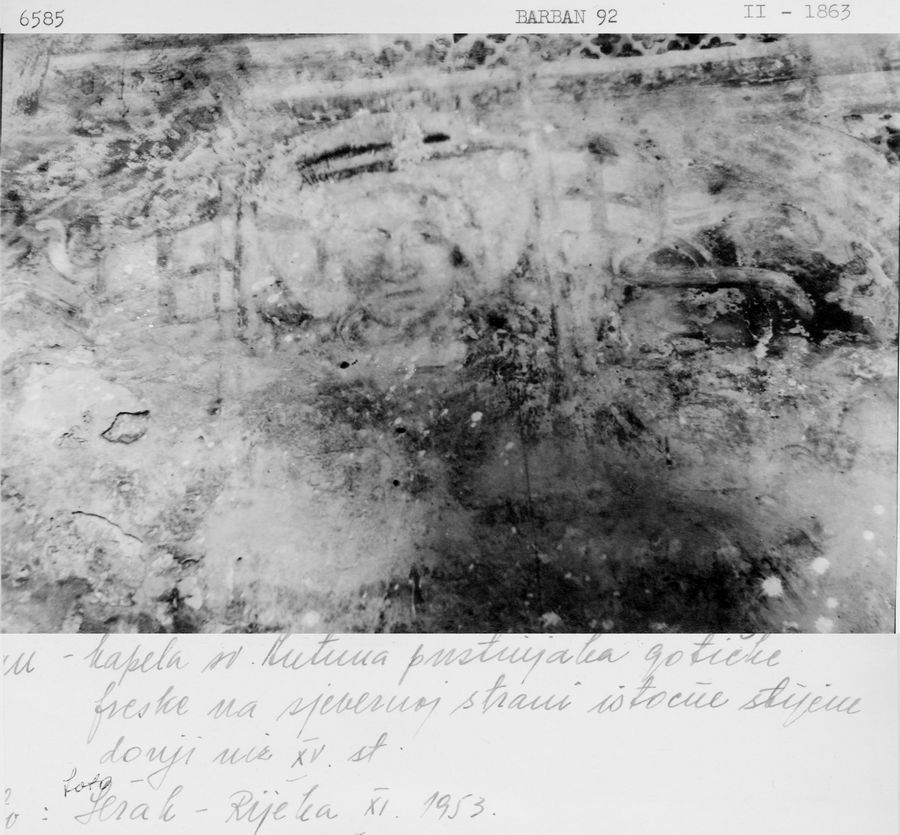
East wall: 1. Virgin and Child with saints; 2. St Ursula with saints and a female martyr holding a palm; 3. St Blaise, St Barnabas, and St Dionysius. South wall: 5. Saint holding a book; 10. Discovery of the tomb of St Anthony with Bishop Theophilus; 11. Translation of the body of St Anthony to Constantinople; 12. Healing of the sick at the saint’s intercession; 13. Half-length figures of saints in medallions and painted niches. North wall: 4. St Barbara; 8. Death of St Anthony; 9. Burial of St Anthony. West wall: 6. God the Father; 7. Martyrdom of St Acacius and the Ten Thousand Martyrs on Mount Ararat.
Scene locations
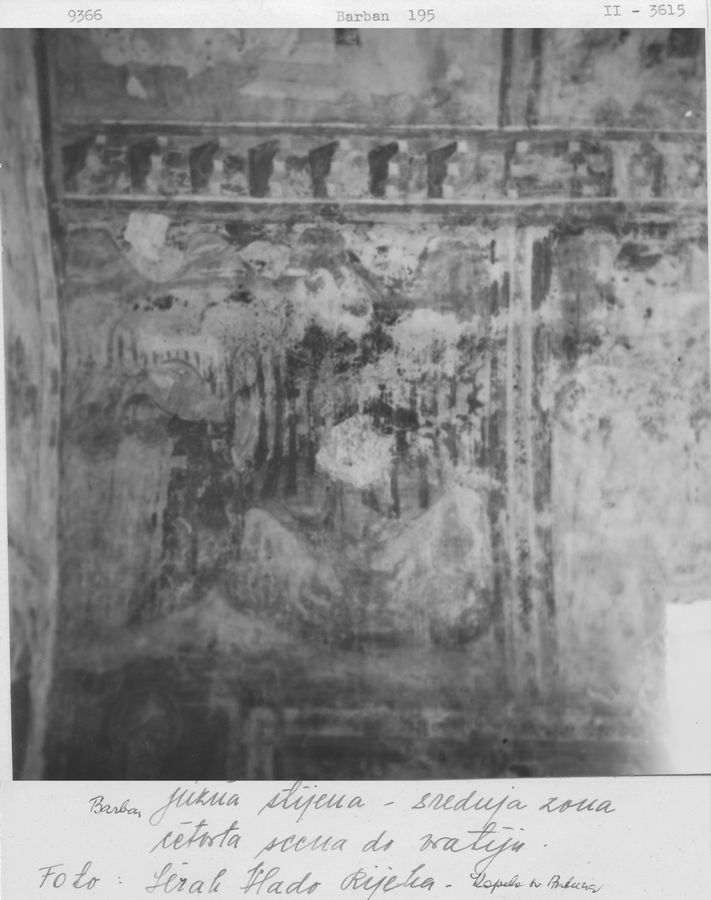
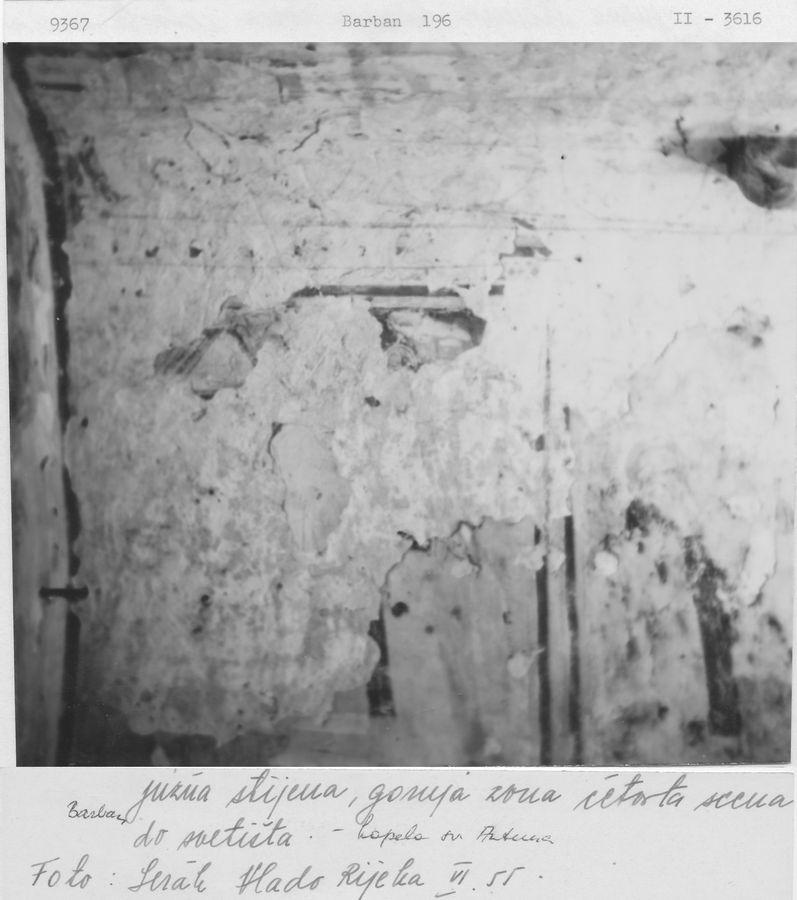
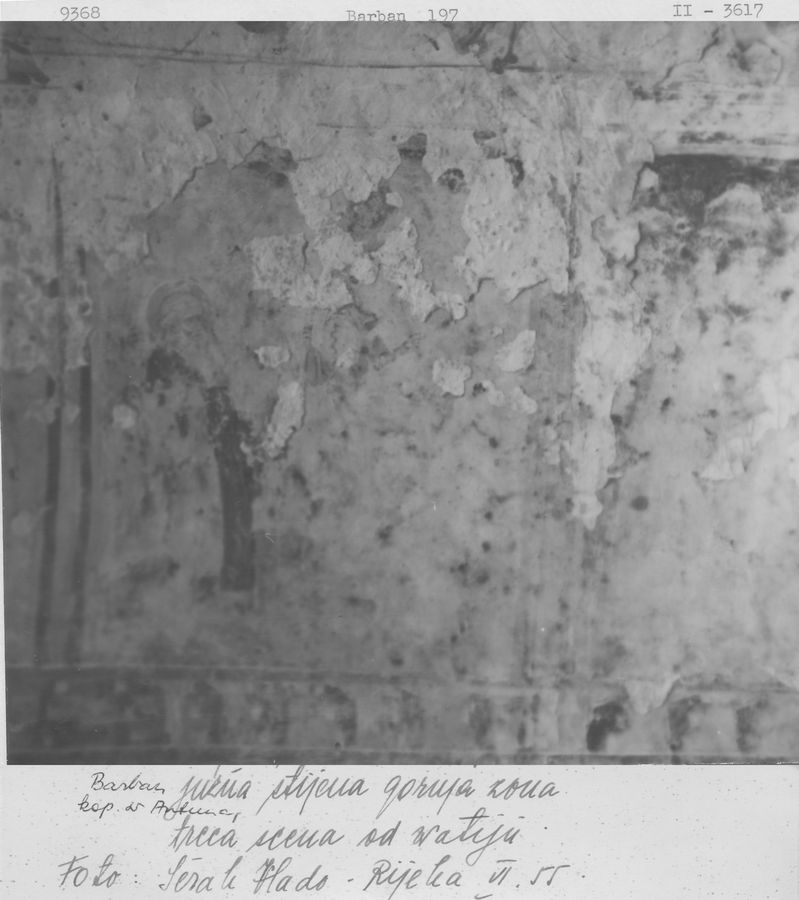
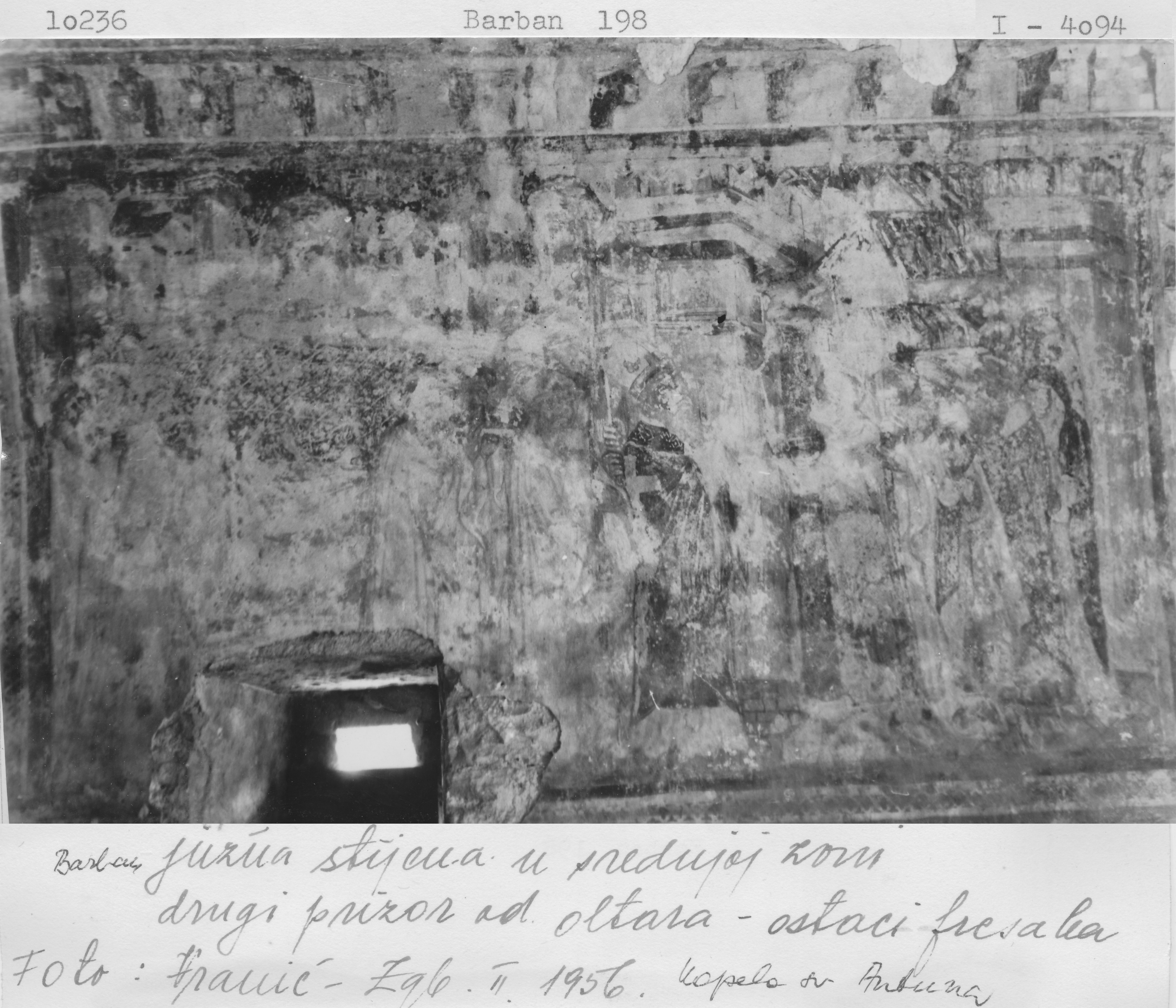
A. GNIRS, 1913a, Barbana, Mitteilungen der K.K. Zentral-Kommission für Denkmalpflege, 12, 1913, 162; F. STELÈ, 1960, Umetnost v Primorju, Ljubljana, 1960. 70; B. FUČIĆ, 1963, Istarske freske, Zagreb, 1963., 18, KAT. 11; ISTI, 1964a, Srednjovjekovno zidno slikarstvo u Istri, doktorska disertacija, Filozofski fakultet Sveučilišta u Ljubljani, Rijeka-Ljubljana, 1964. 219-221, KAT. 363-365.