


Poreč, Poreč Cathedral (remains of wall paintings in Poreč Cathedral)
Century/year: 13th and 14th centuries
Historical-cultural period: Gothic style
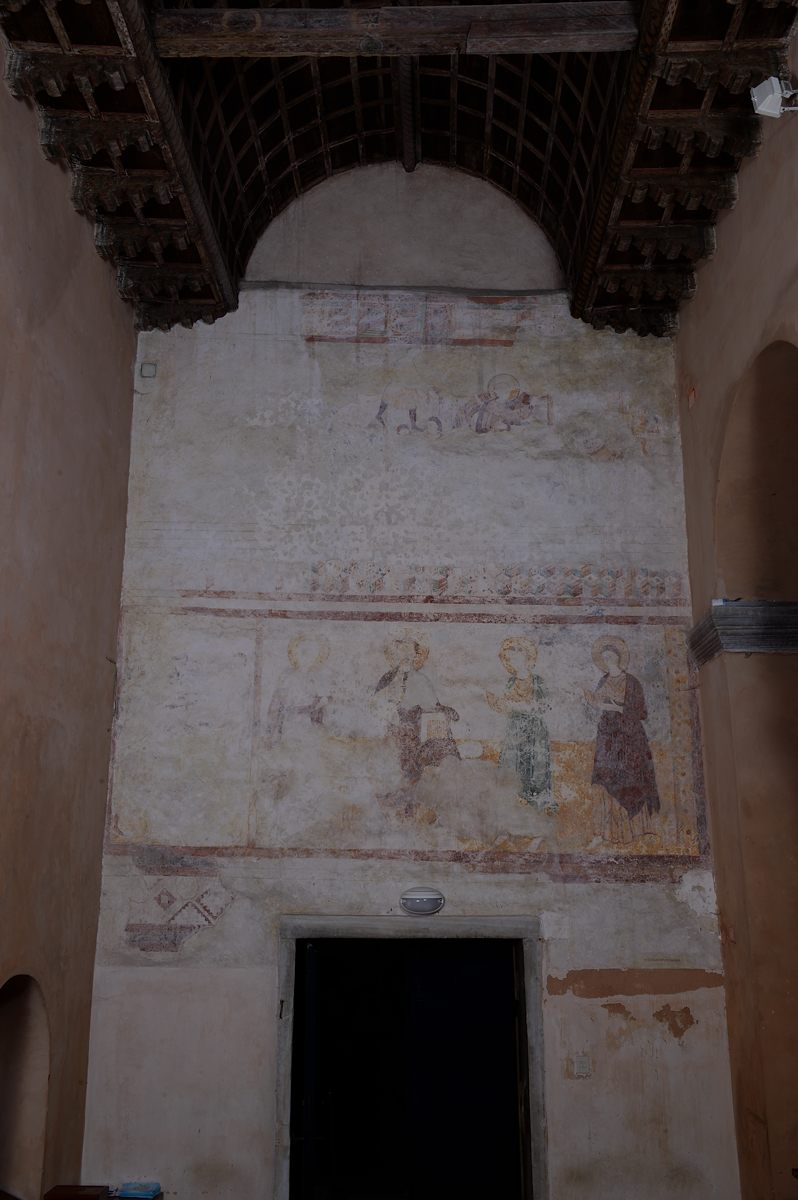
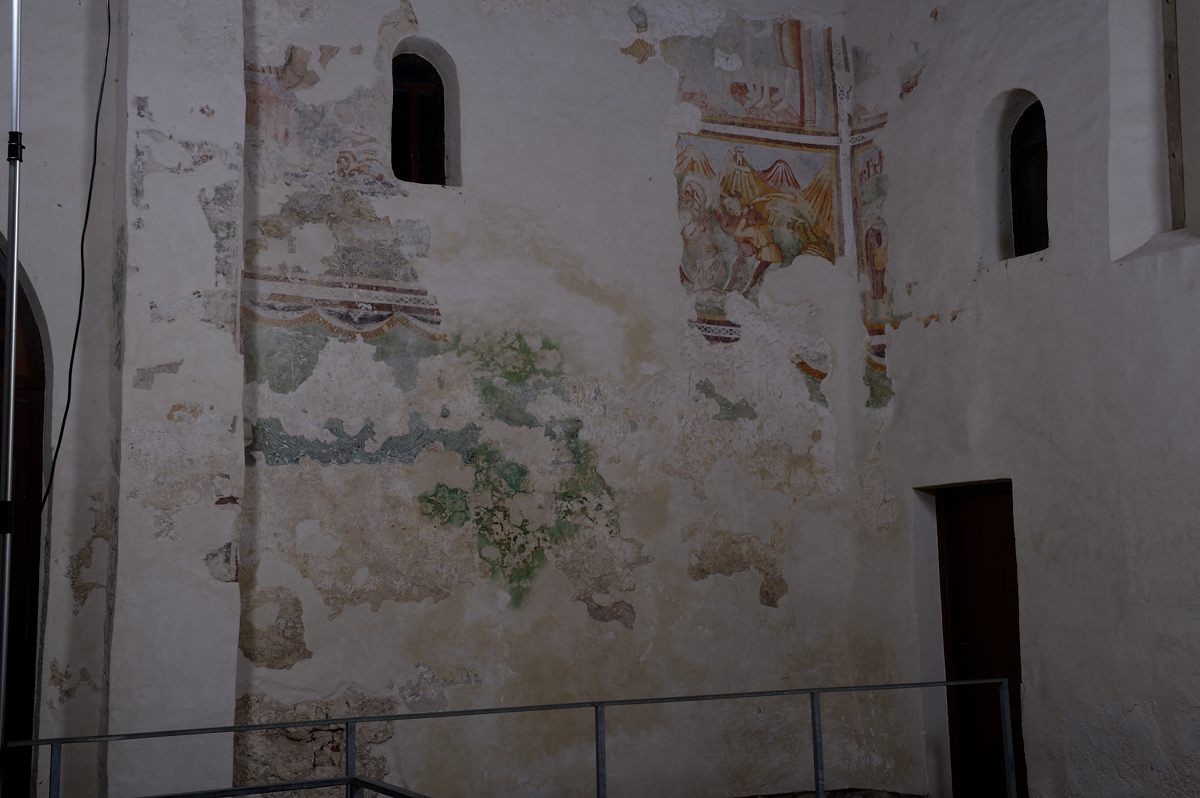
The cathedral complex in Poreč is best known for its architectural design and preserved mosaics, while its painted decoration is significantly less emphasized. However, research has shown that the space was painted on multiple occasions and that eight layers of wall paintings dating from the Middle Ages can be distinguished within it. Traces of frescoes have been documented in the apse of the northern nave of the basilica, in the lunette above the southern apse, on the inner side of the western wall, in the area of the former sacristy, as well as on the wall of the porch at the entrance to the Episcopal Palace.
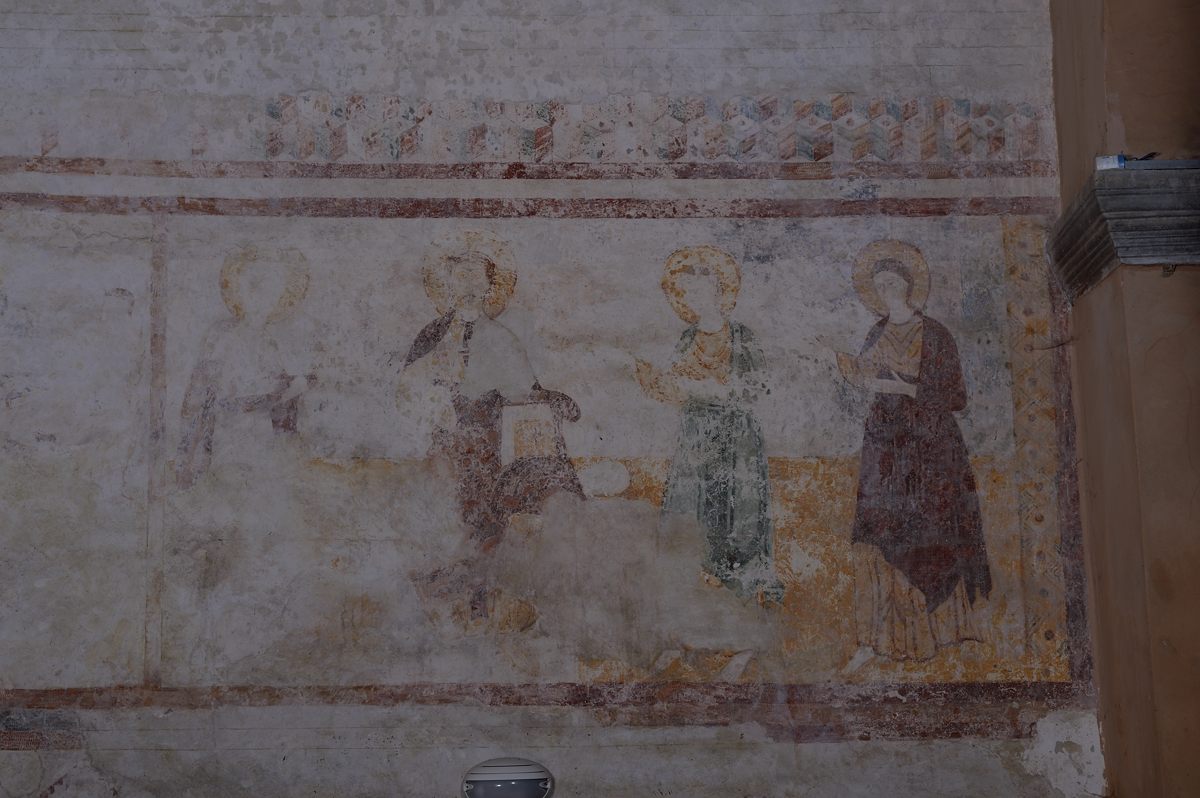
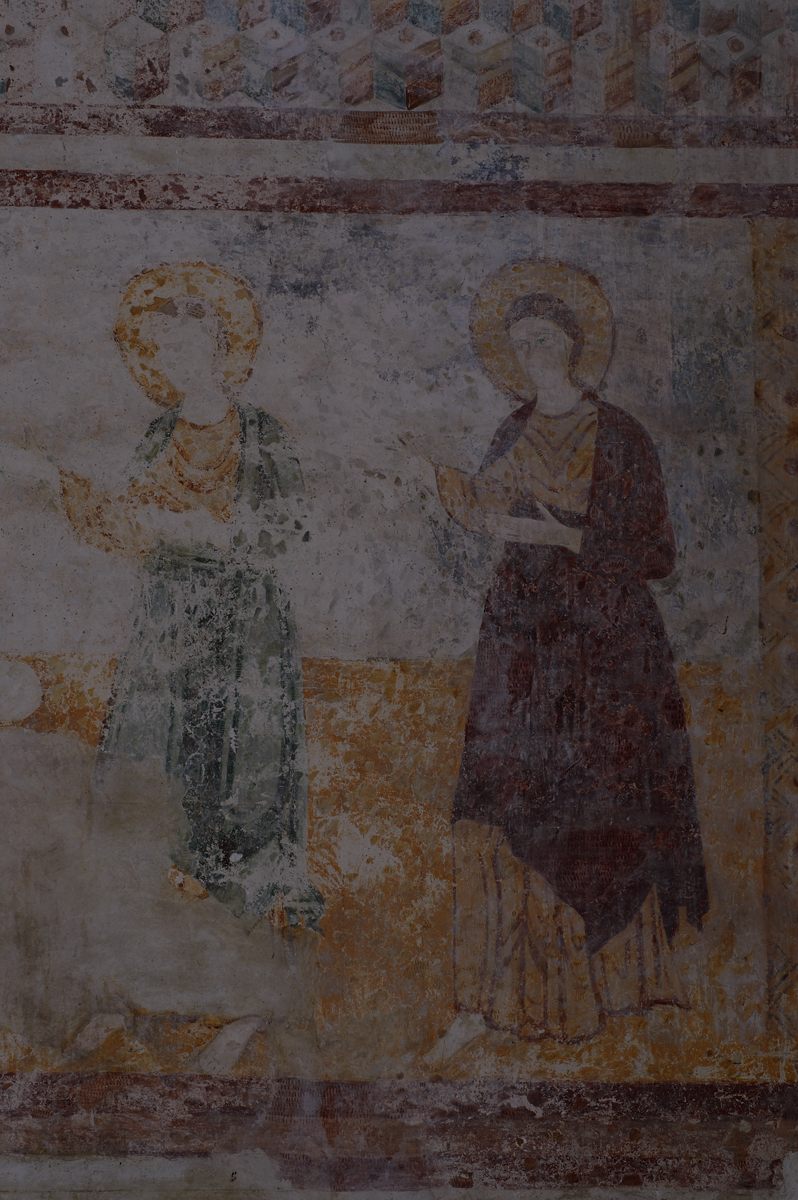
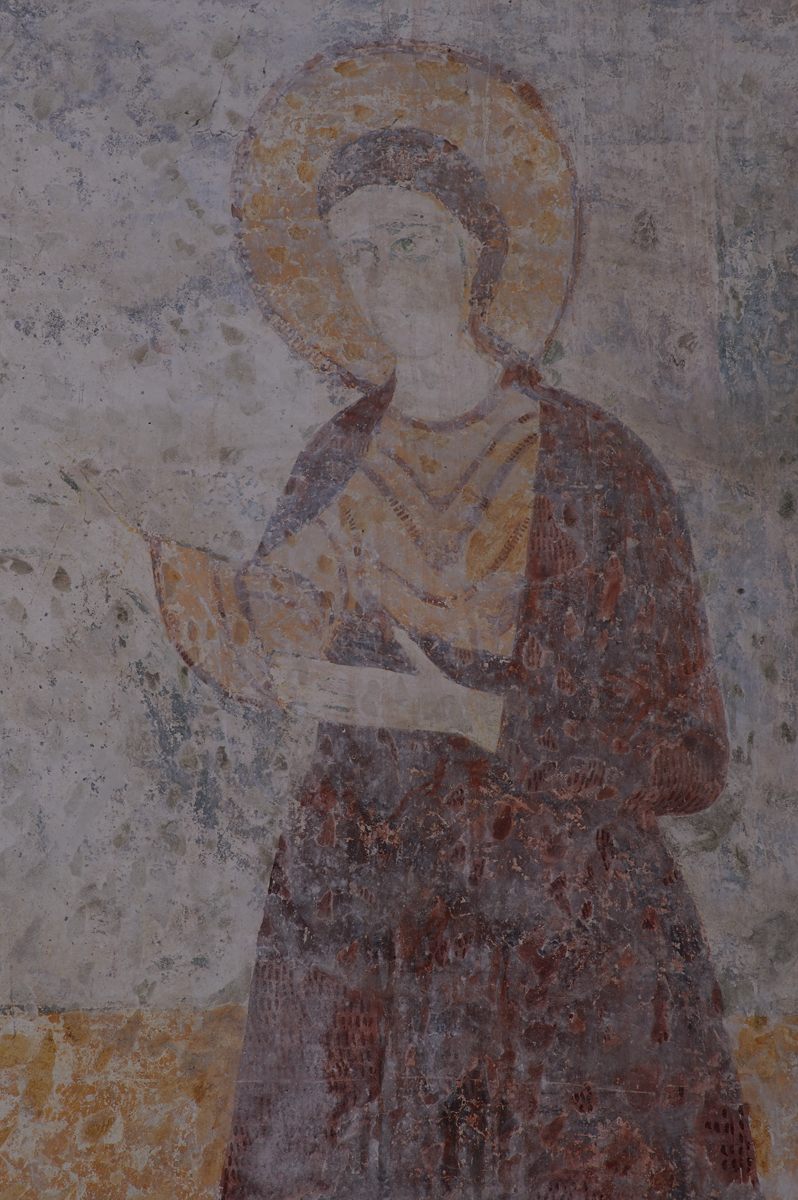
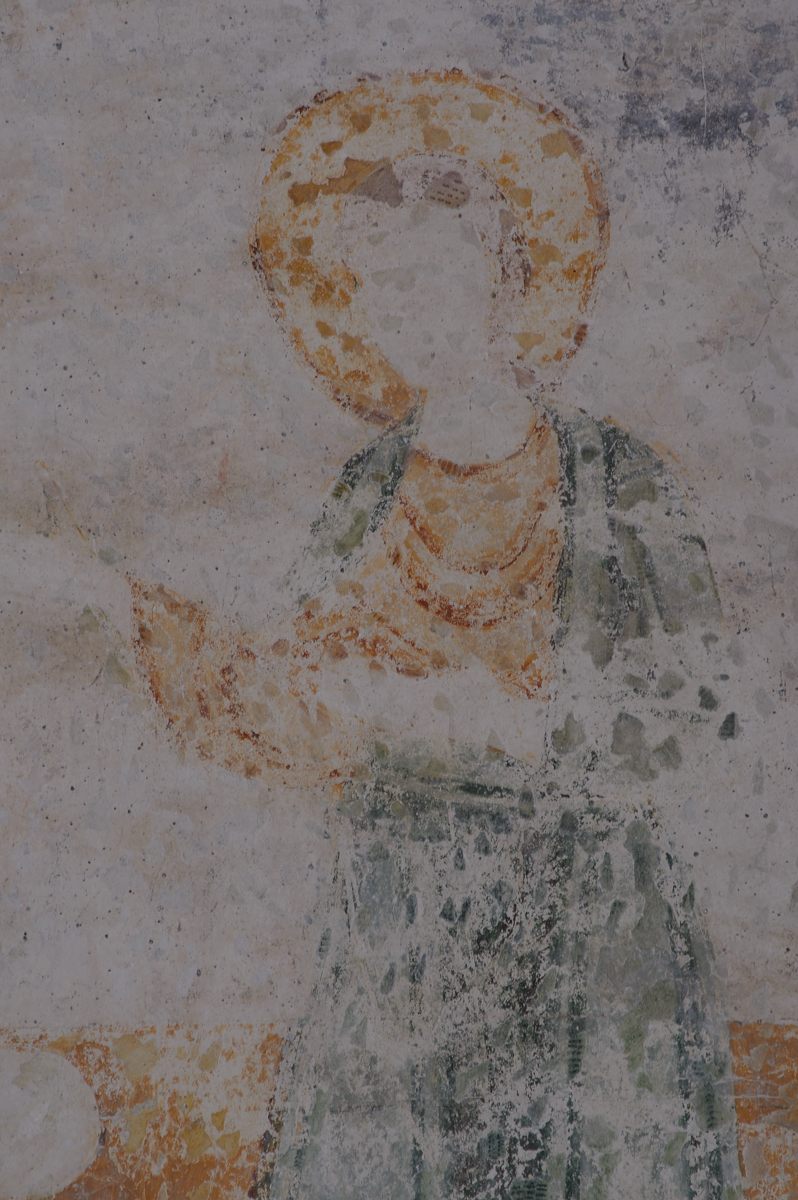
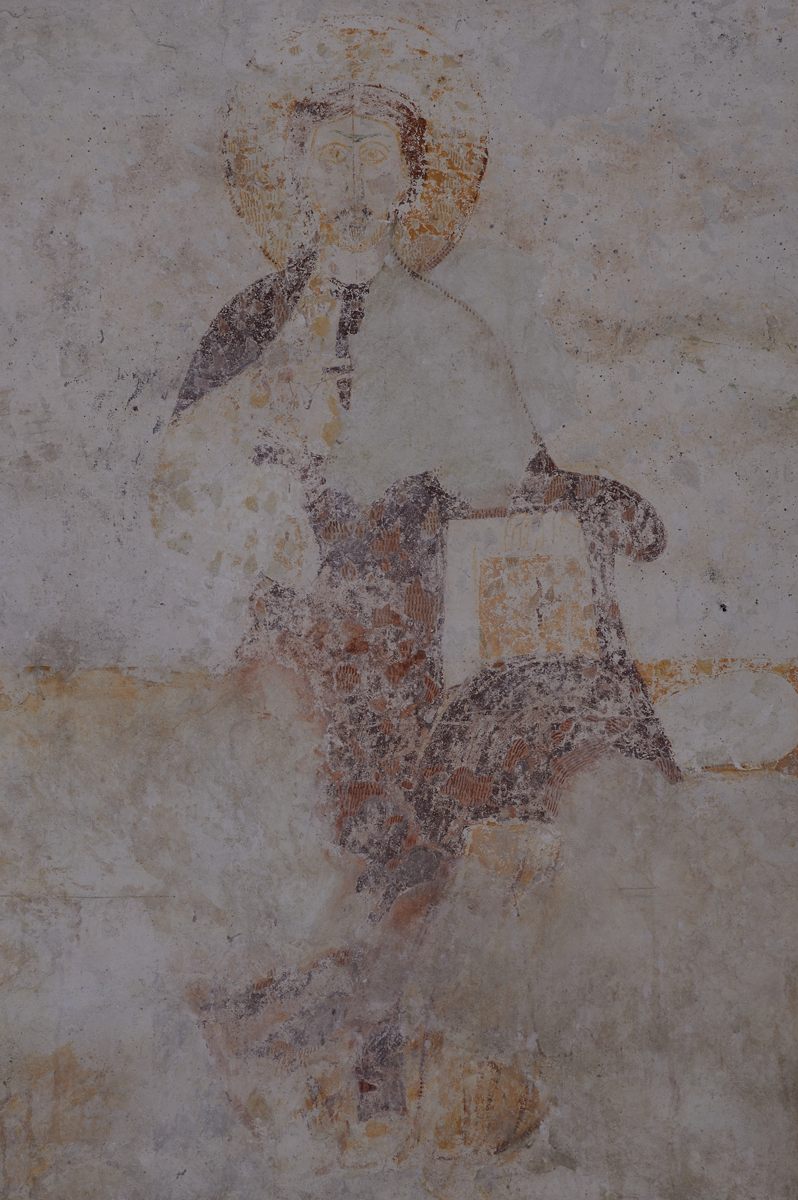
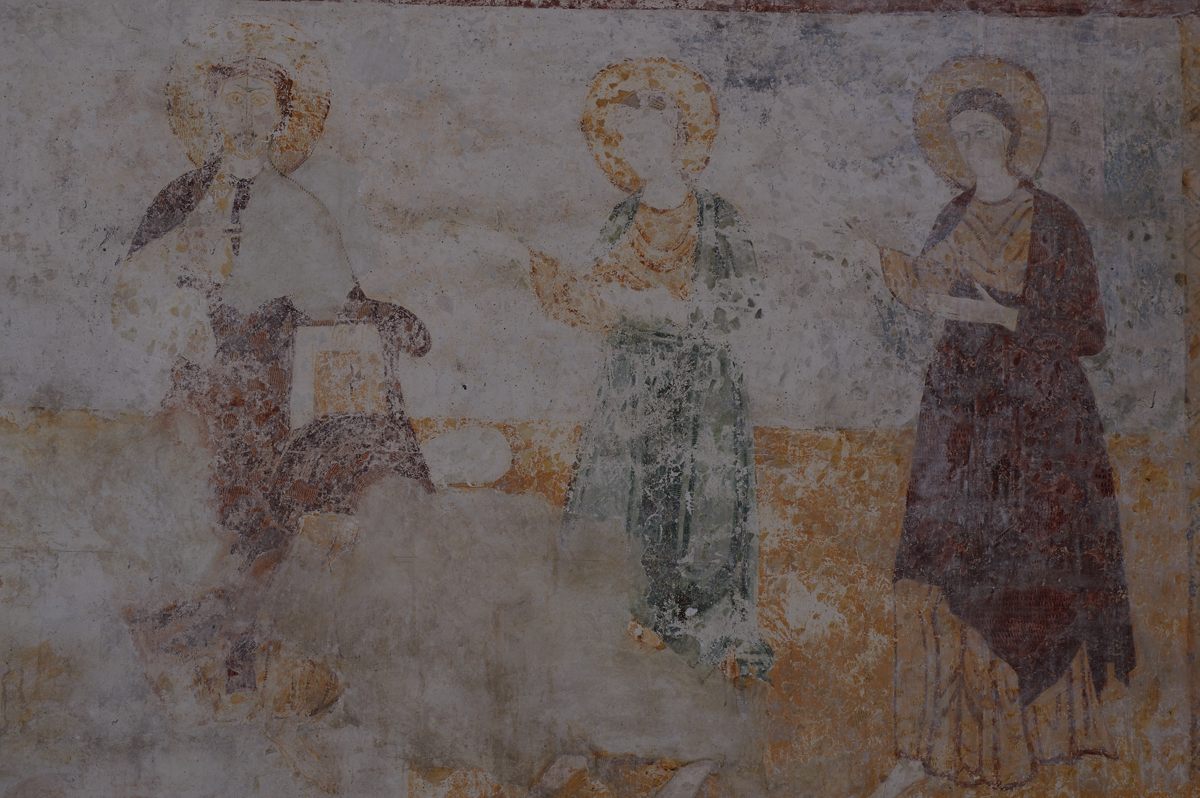
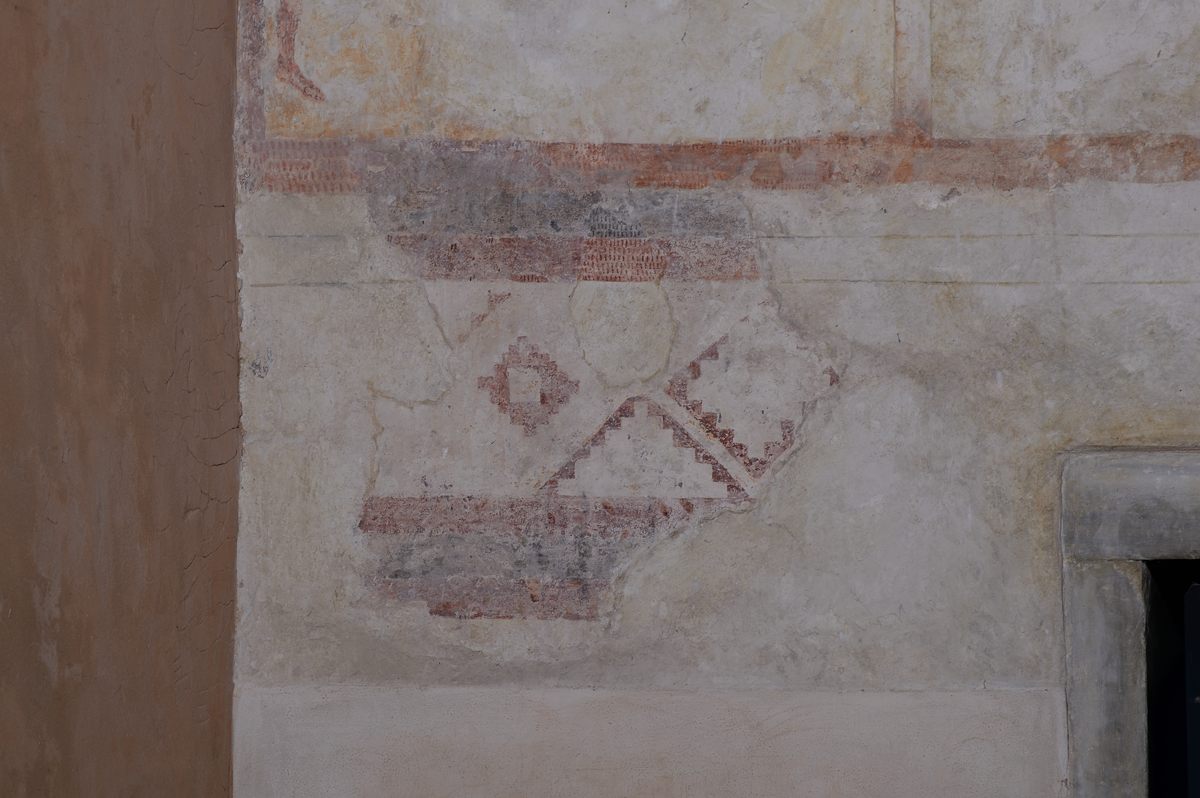
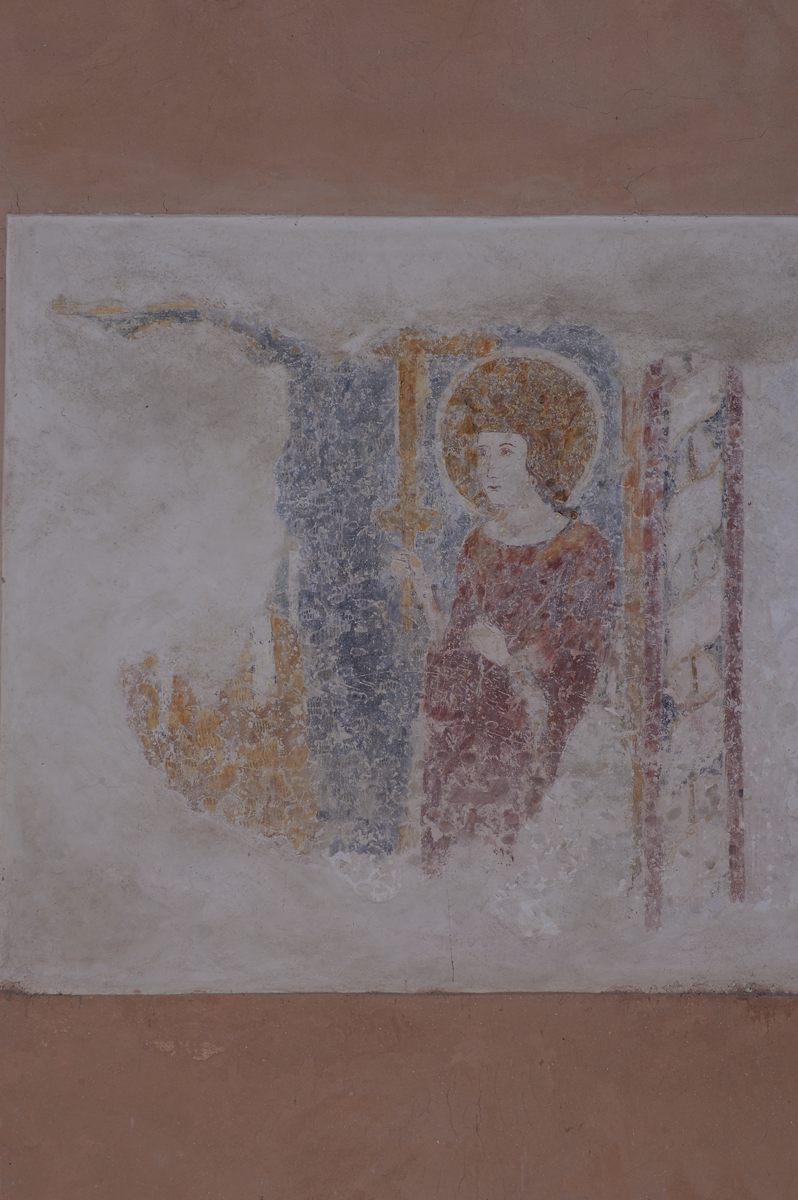
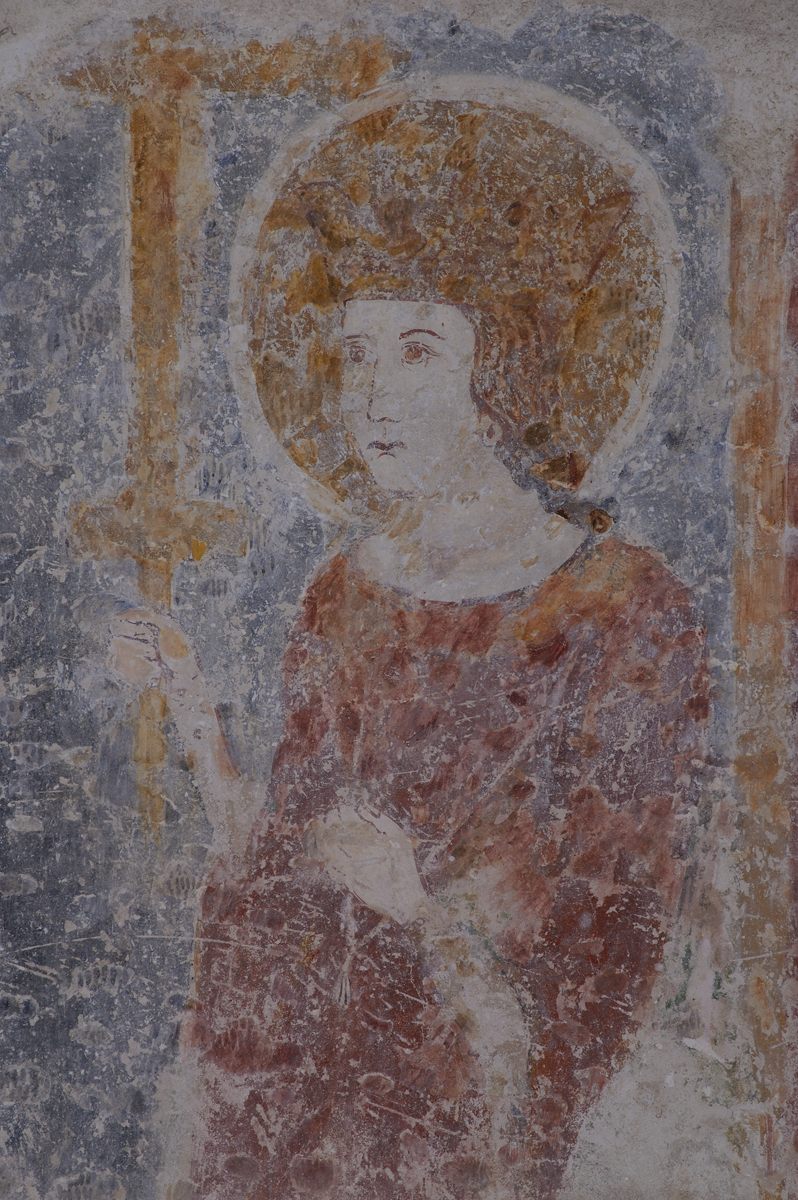
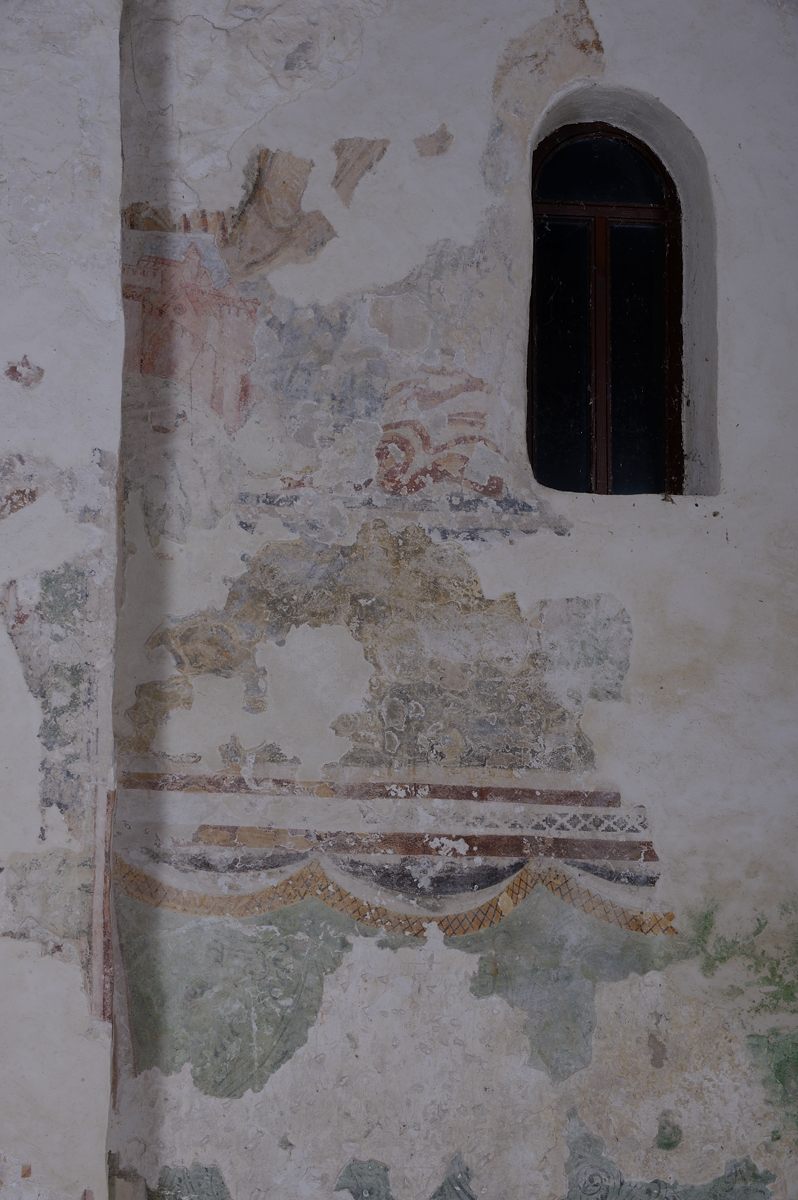
Within the church, three layers of Gothic frescoes from different chronologies have been preserved. The oldest layer consists of fragments of a painted velarium in the lower zone of the northern nave apse, dating back to the 13th century. The 14th-century layer is located on the inner side of the western wall, where the figures of Christ, the Virgin, and Saint John can be discerned above the southern entrance, along with a depiction of Saint Helena in the main nave.
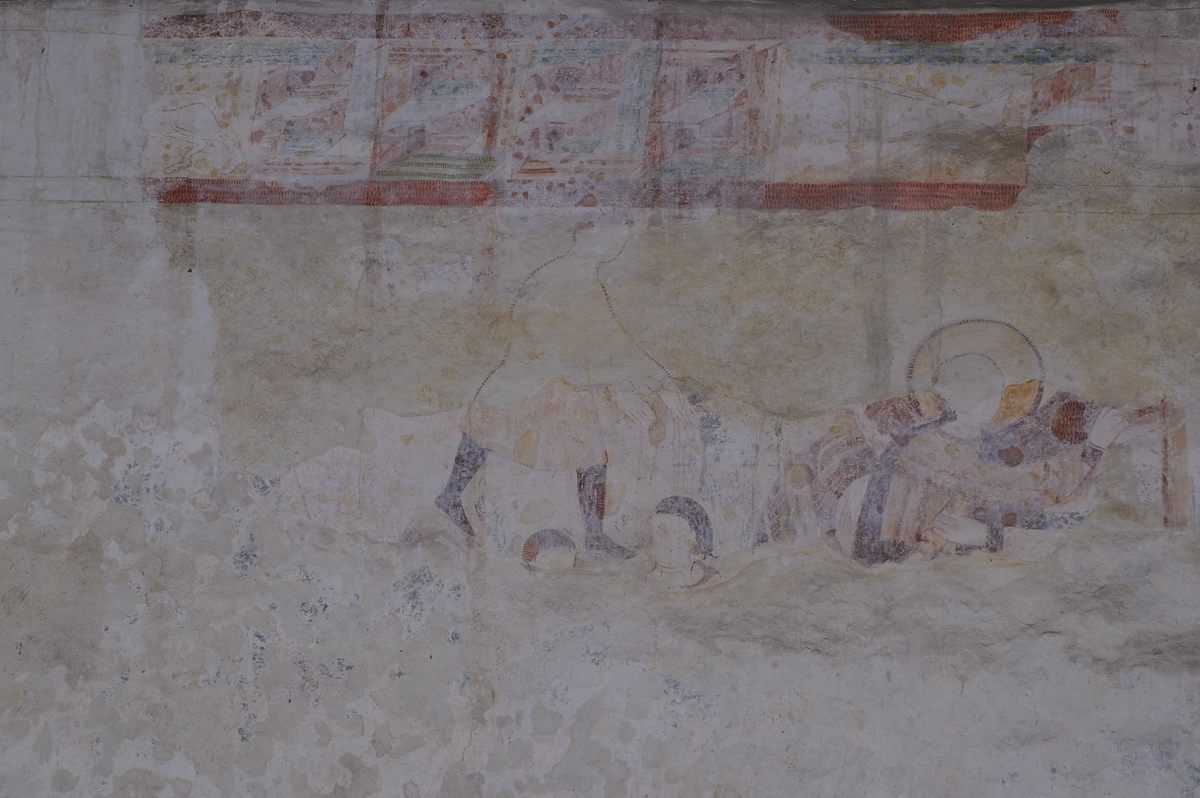
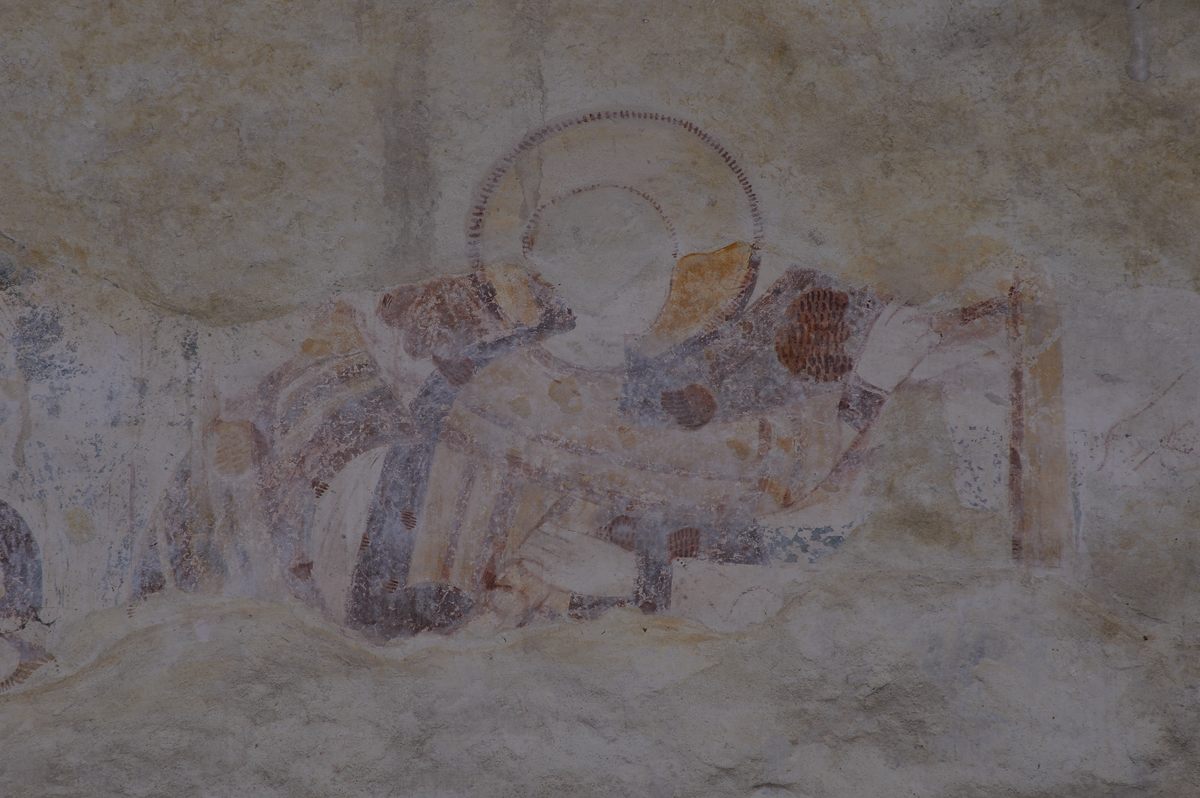
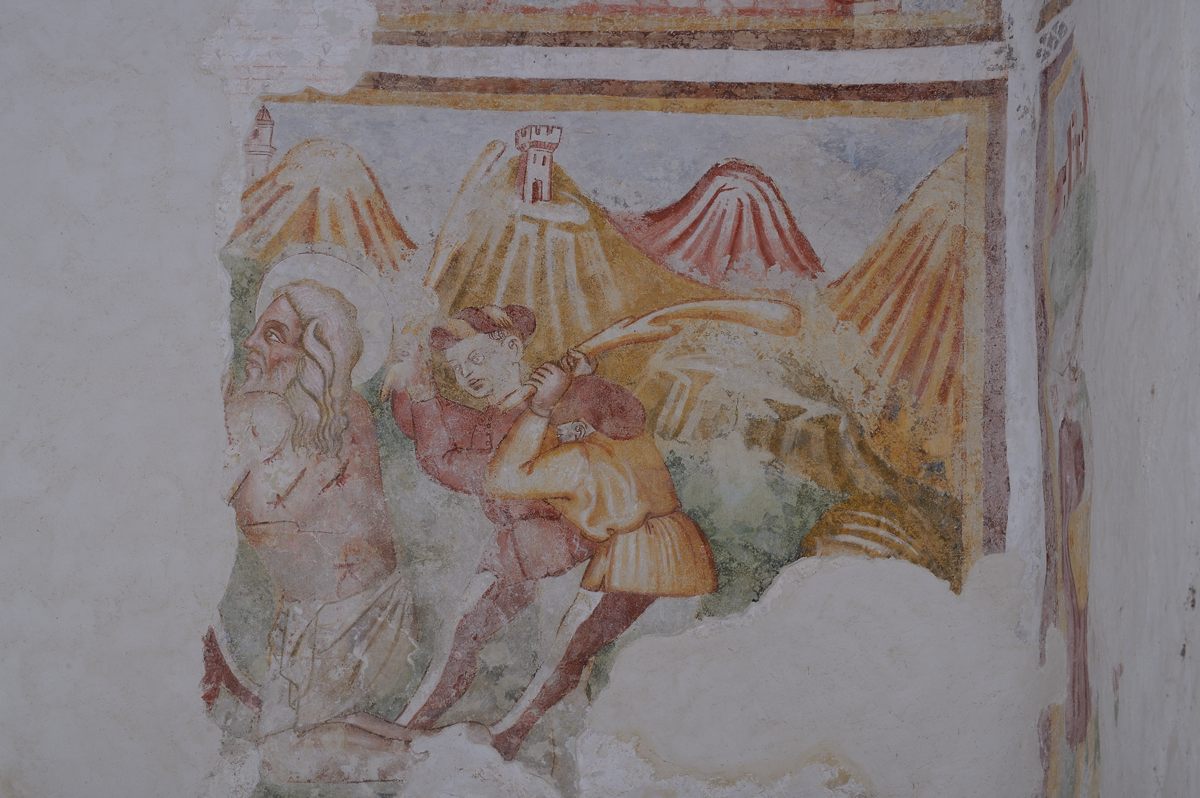
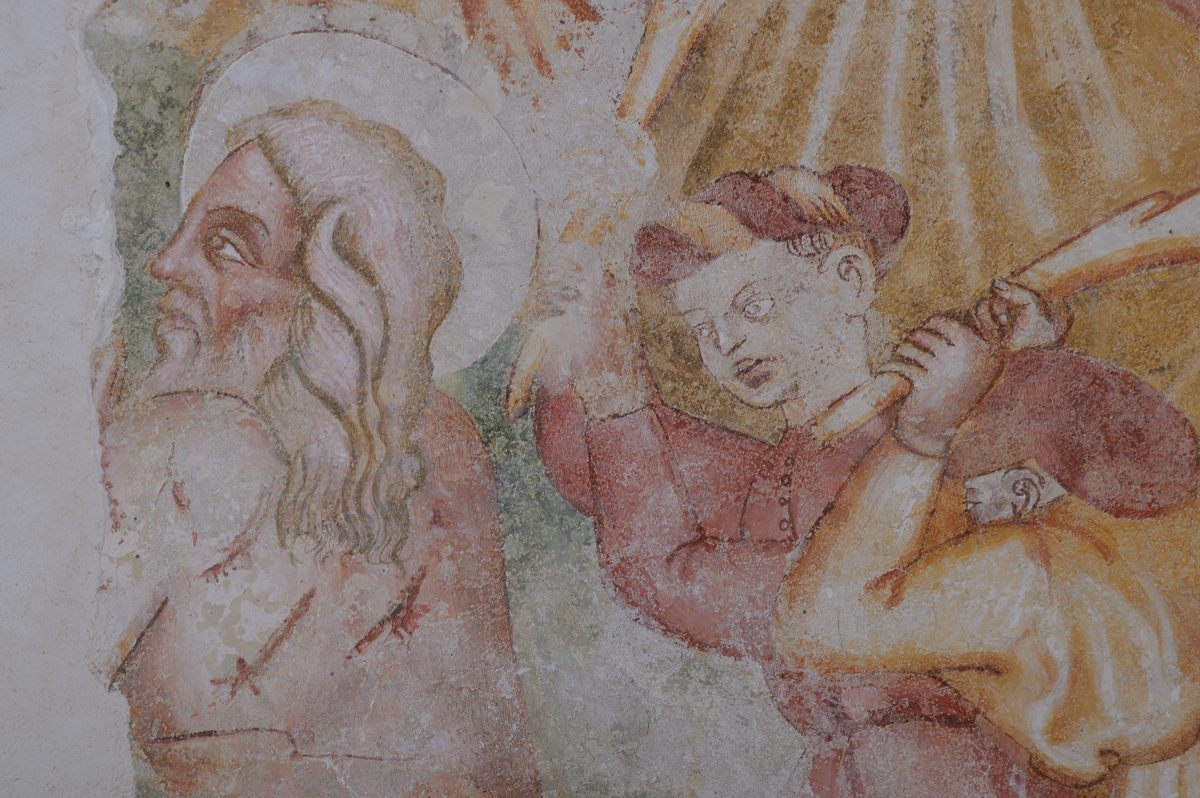
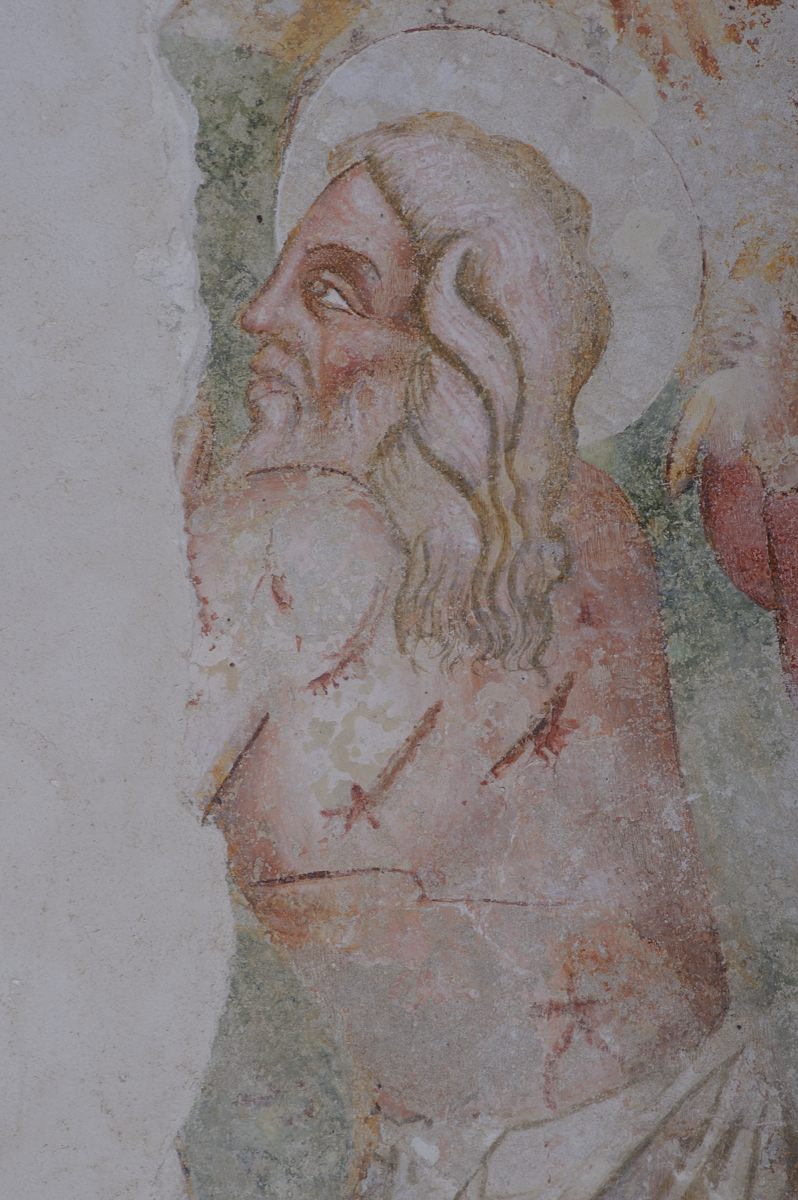
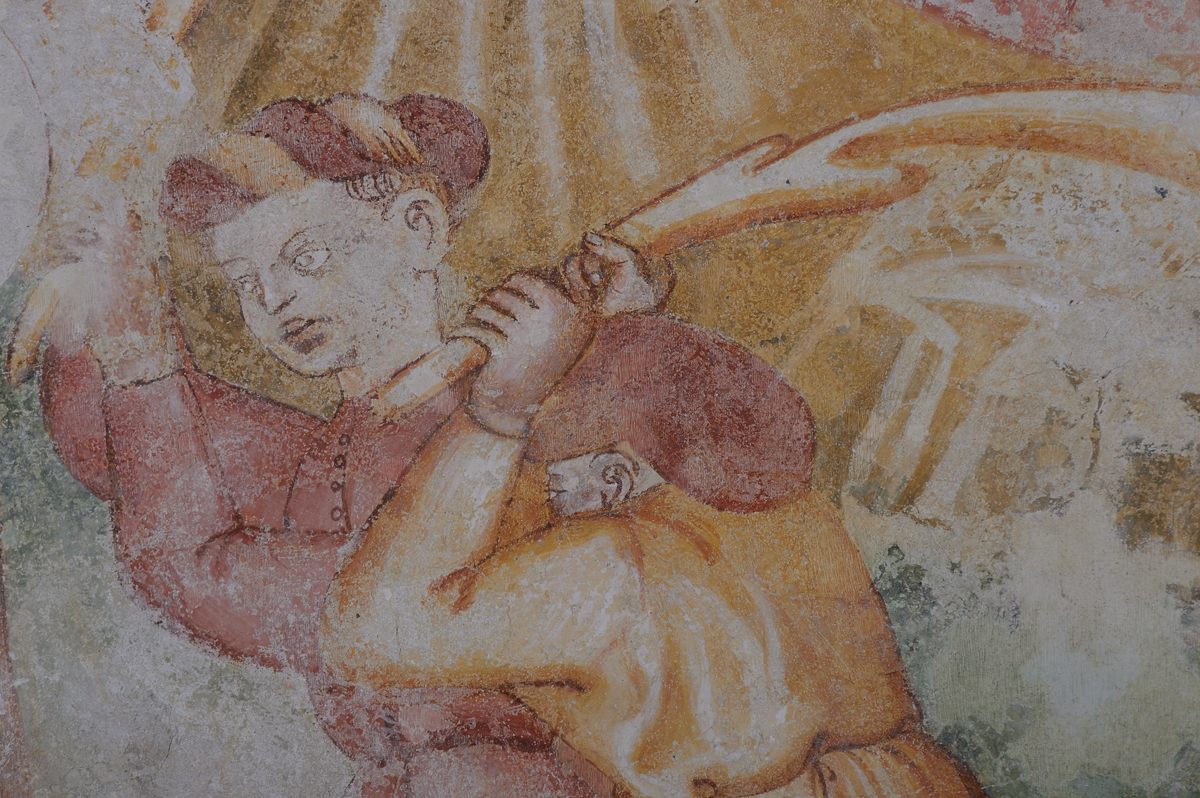
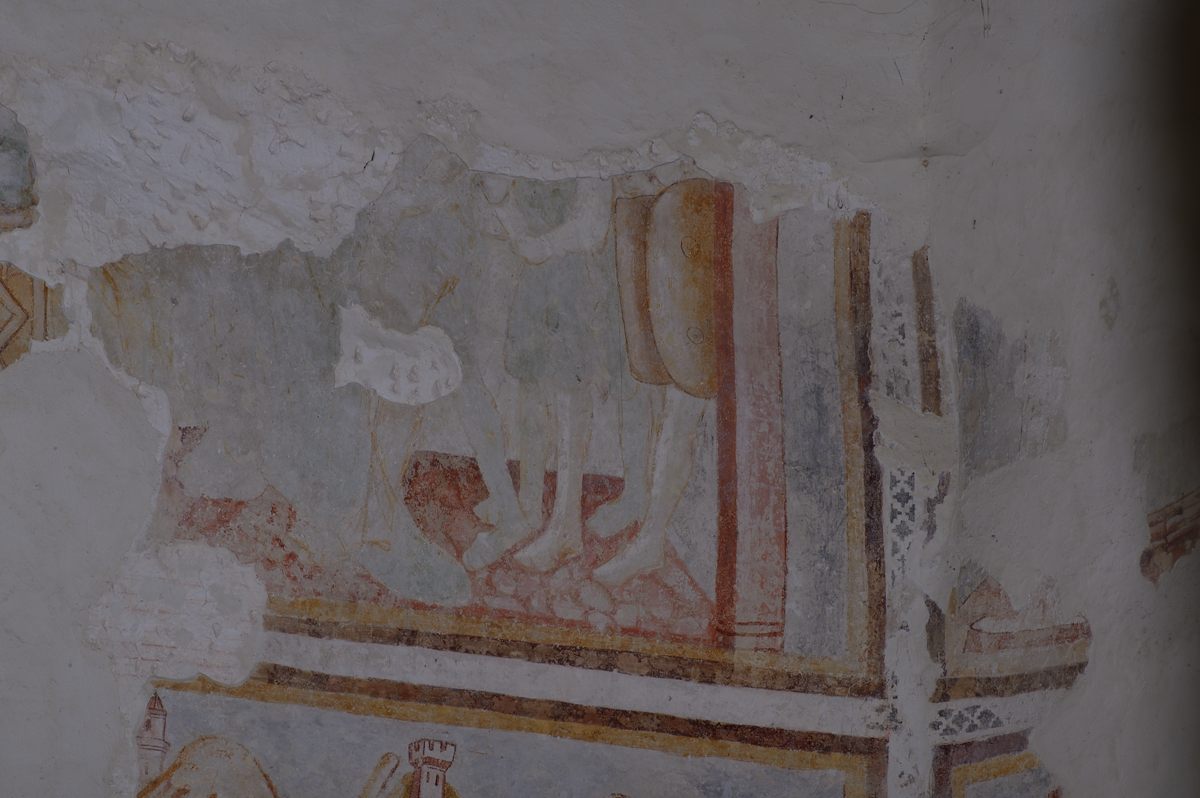
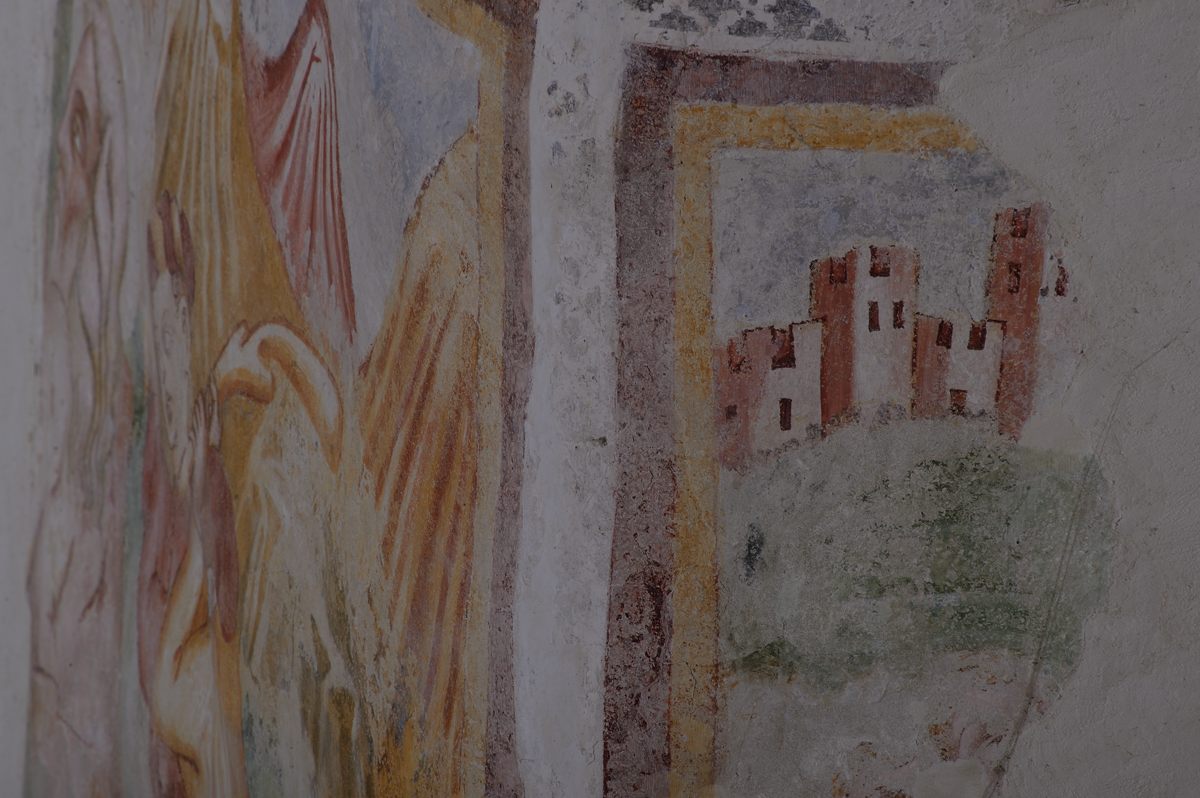
In the area of the former sacristy, fragments of frescoes are preserved on the northern and southern walls, arranged in two registers. A painted velarium is preserved in the lower zone of the northern wall, and beneath the Gothic layer, older fragments of red borders and figural depictions are visible, likely dating to the Early Middle Ages. In the far-right field of the upper register on the northern wall, a scene of a saint's martyrdom (Saint Bartholomew?) is depicted. The remaining scenes are in a poor state of preservation, with only figures situated in a hilly landscape with schematic city depictions being discernible. The southern wall was decorated with scenes from Christ's Passion, of which only two scenes in the upper zone are preserved today. The Gothic layer of frescoes in the former sacristy dates to the 15th century.
The frescoes were discovered during the restoration in 1930 and were first mentioned by Bruno Molajoli in 1943 in the work La basilica eufrasiana di Parenzo.
Iconographic Program:
Basilica, western wall: 1 Saint Helena, 2 Christ Enthroned, the Virgin, Saint John, and an unknown saint.
Former sacristy, northern wall: 1 Martyrdom of Saint Bartholomew (?), 2 Hilly landscape with schematic city depictions. Southern wall: 3 Kiss of Judas, 4 Christ before Herod, Caiaphas, or Pilate (?)
B. MOLAJOLI, 1943., La basilica eufrasiana di Parenzo, Padova (1940), 1943., 30, 53; M. PRELOG, 1957., Poreč, grad i spomenici, Beograd, 1957., 106, 113, 184-185; B. FUČIĆ, 1964a, Srednjovjekovno zidno slikarstvo u Istri, doktorska disertacija, Filozofski fakultet Sveučilišta u Ljubljani, Rijeka-Ljubljana, 1964., 223, KAT. 498-499.