


Labinci, Chapel of the Holy Trinity
Century/year: beginning of the 14th century
Historical-cultural period: Gothic style
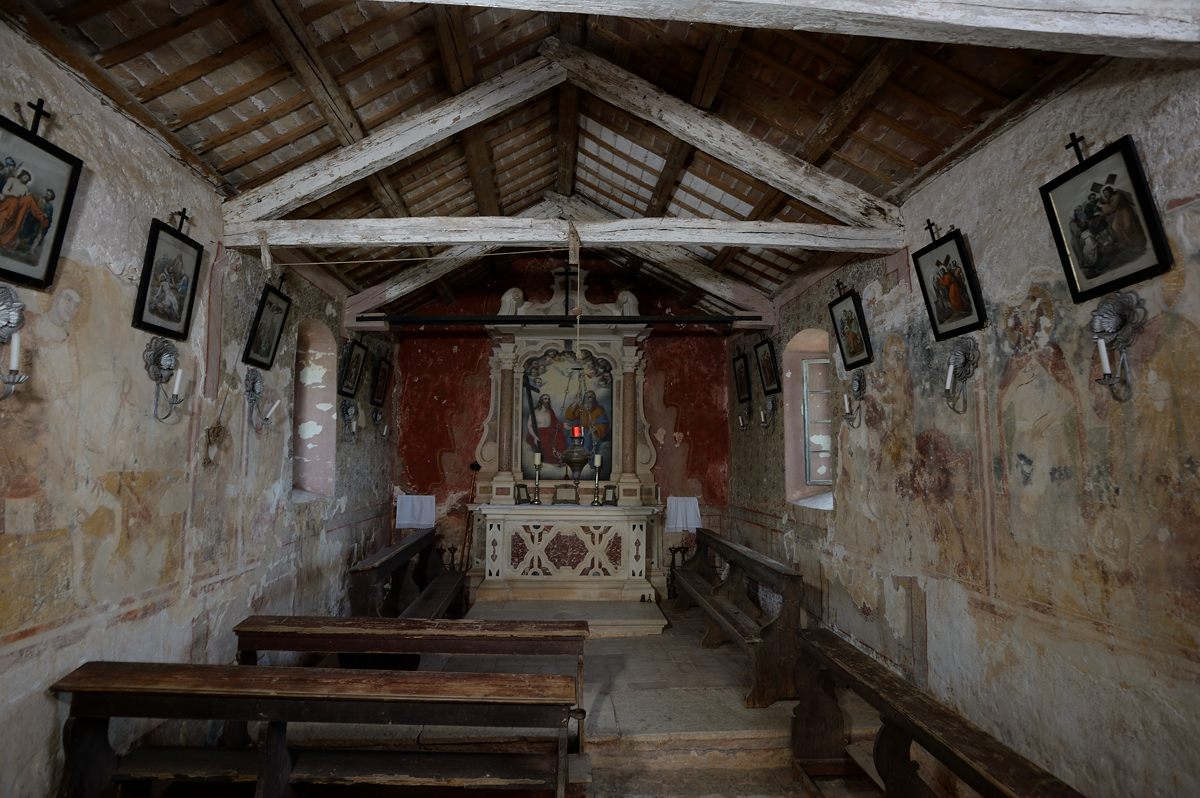
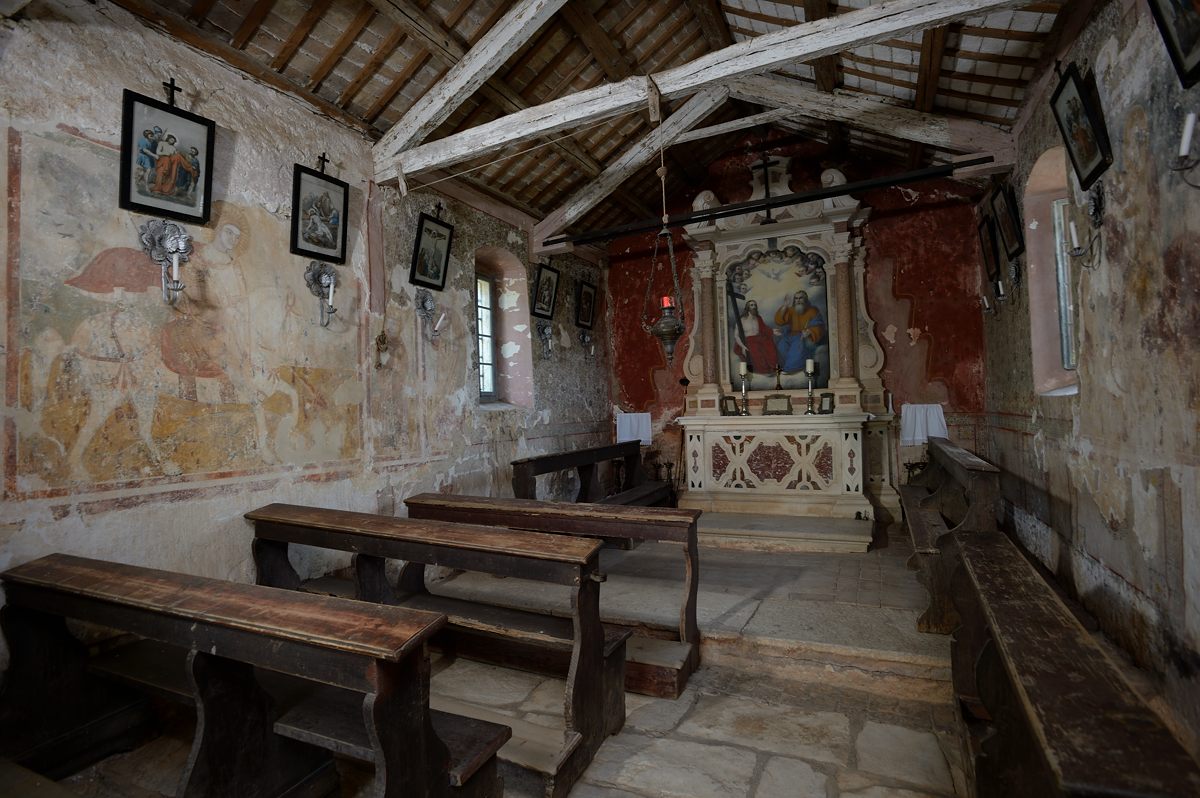
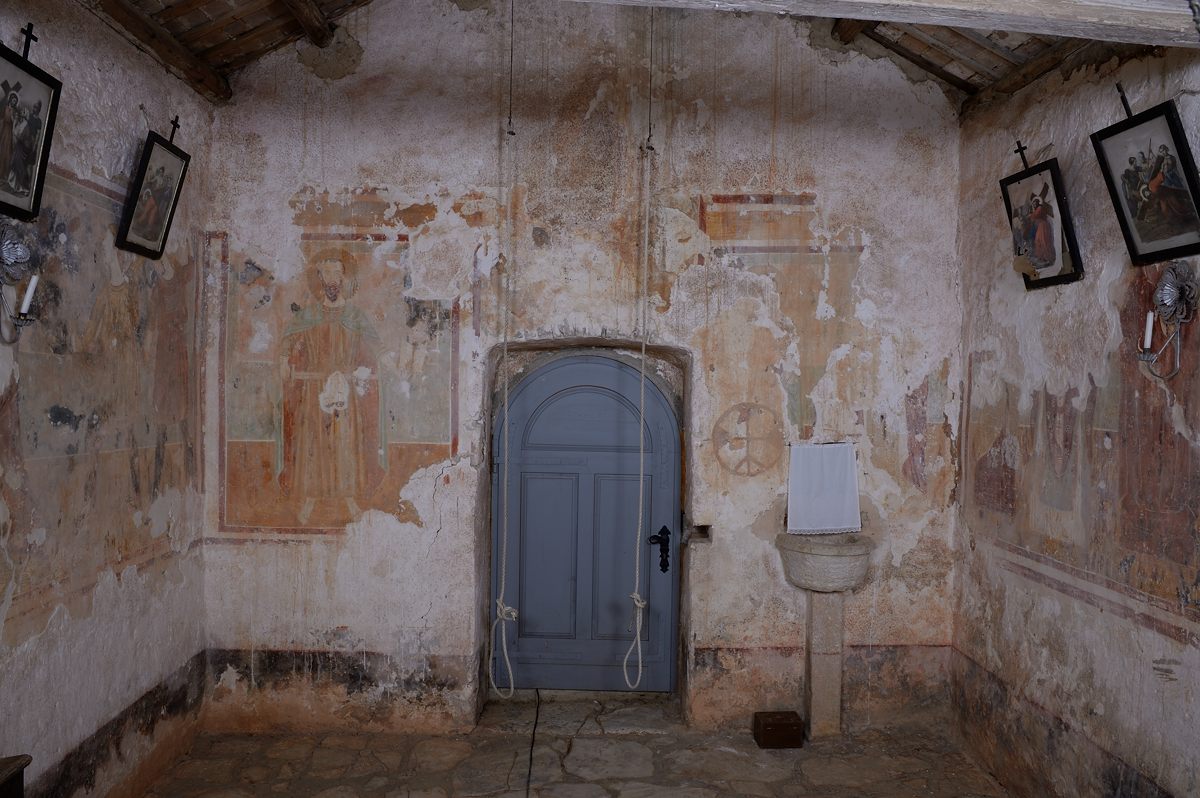
The chapel of the Holy Trinity in Labinci is situated at the crossroads of the road connecting Vižinada and Poreč. It is a single-nave structure of rectangular ground plan with an originally inscribed apse, remodelled during the Baroque period. In the course of this reconstruction, the original termination of the sanctuary was removed and replaced by a marble altar. The façade is articulated by a round-arched entrance portal and a bell-gable with two bells.
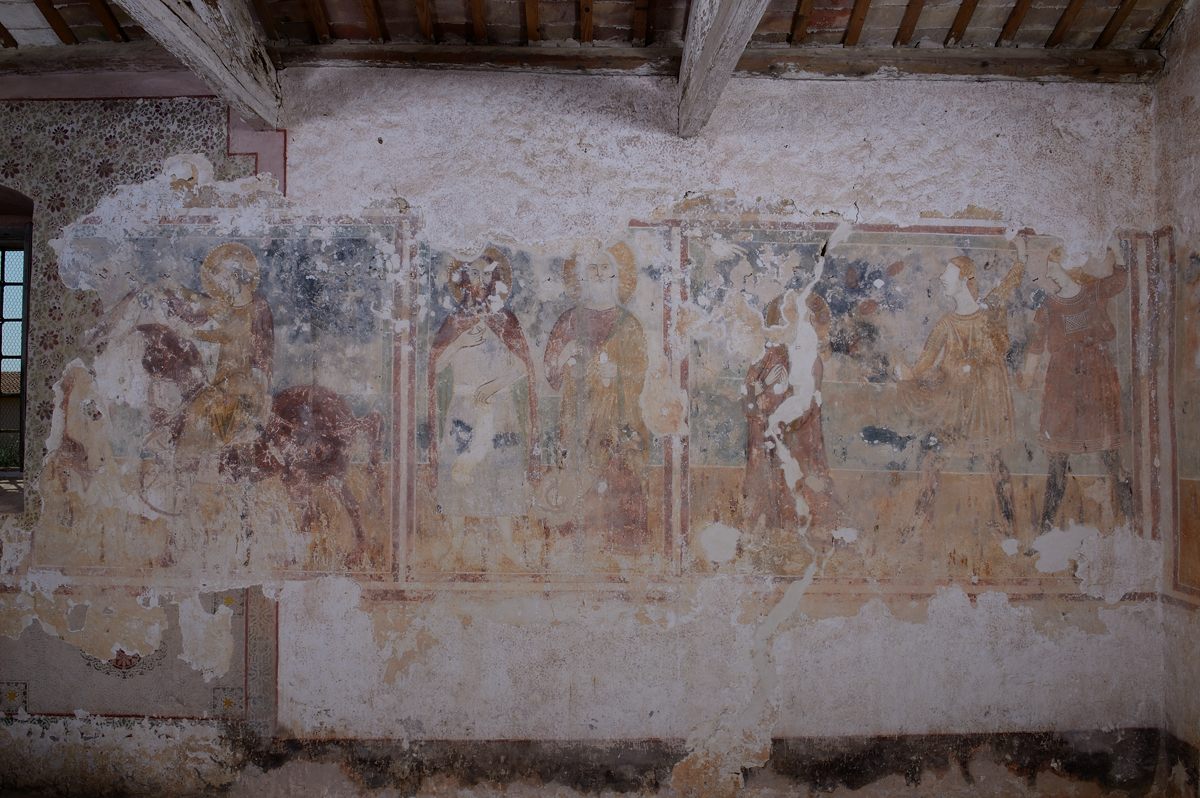
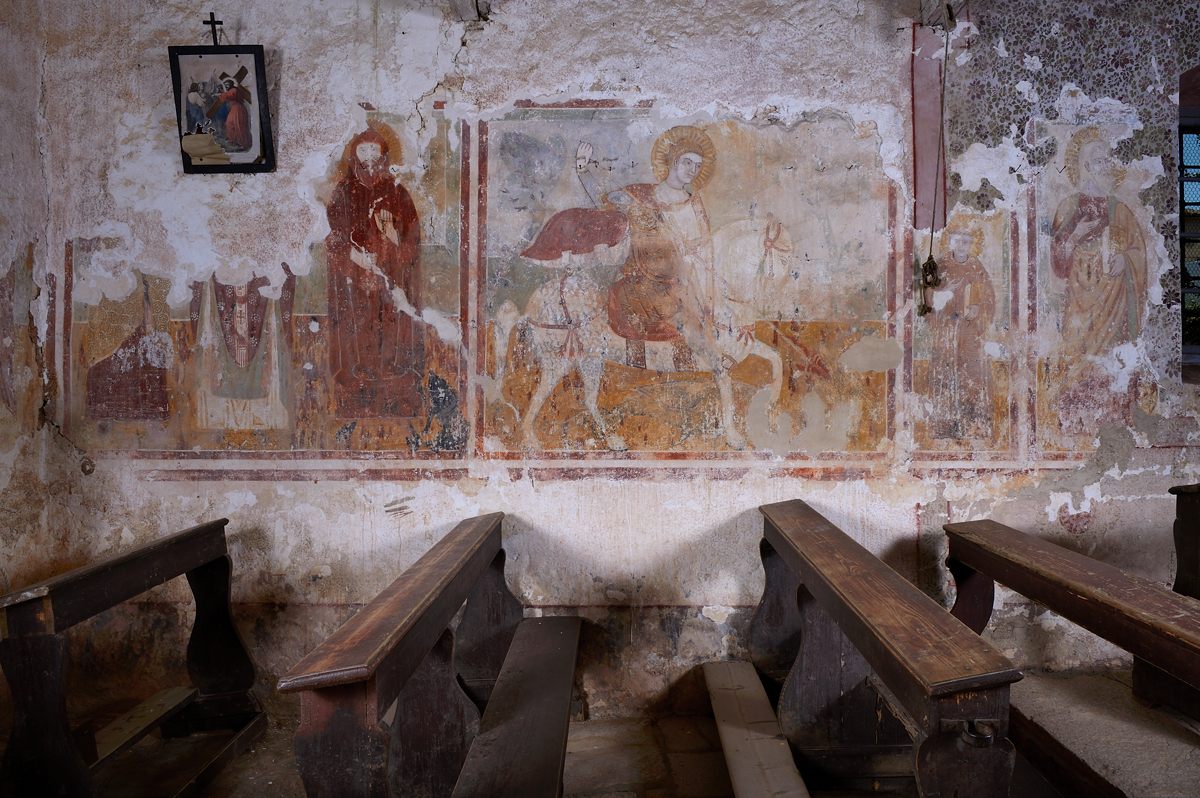
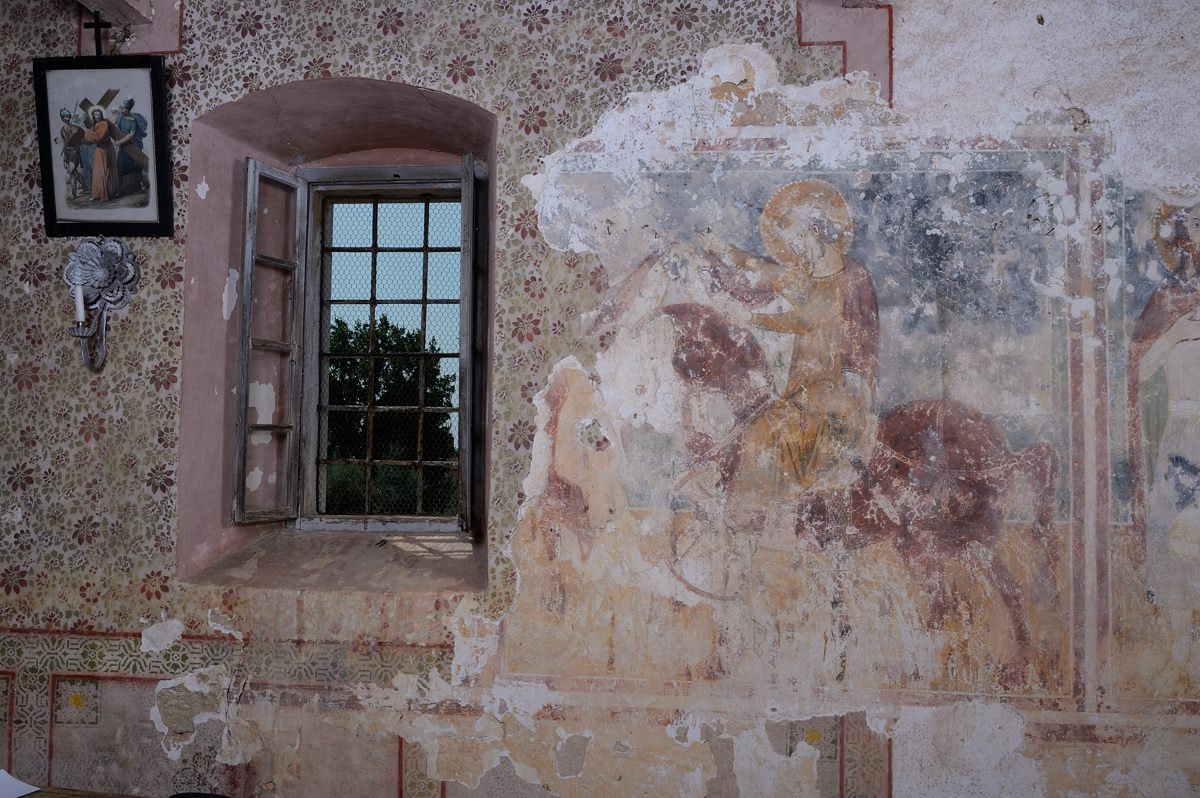
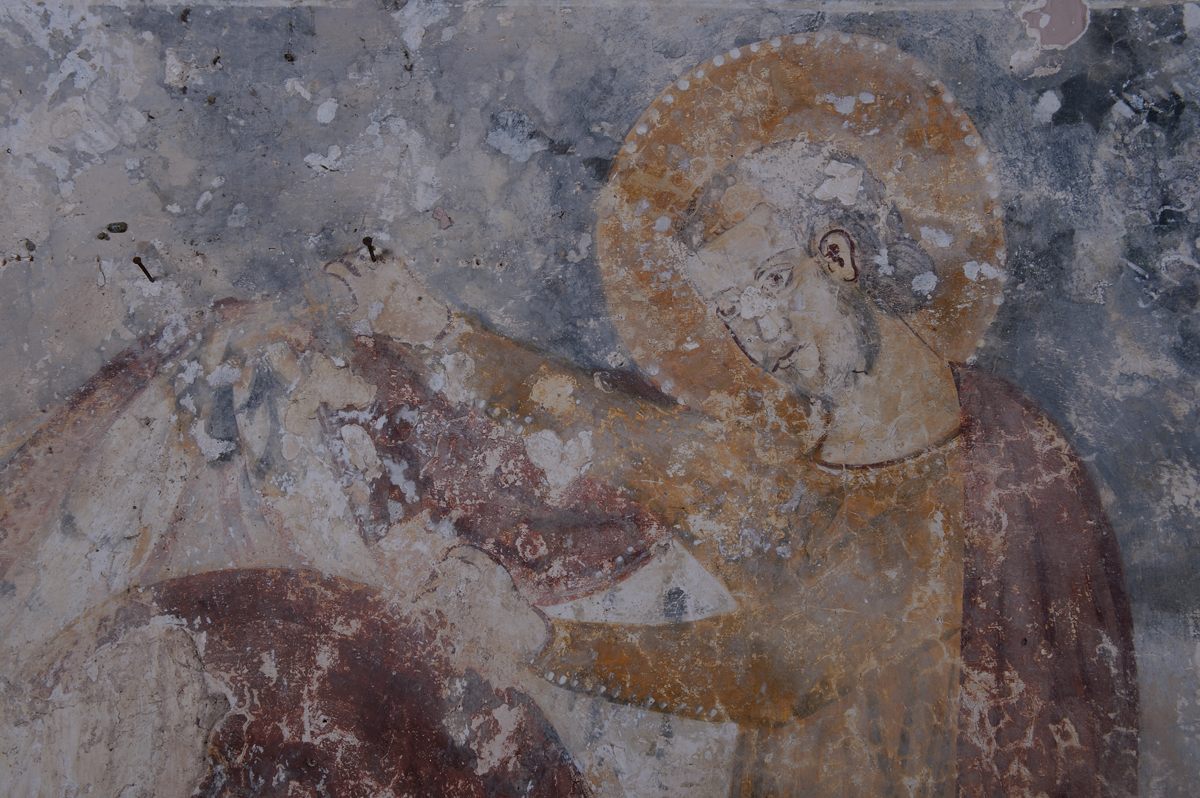
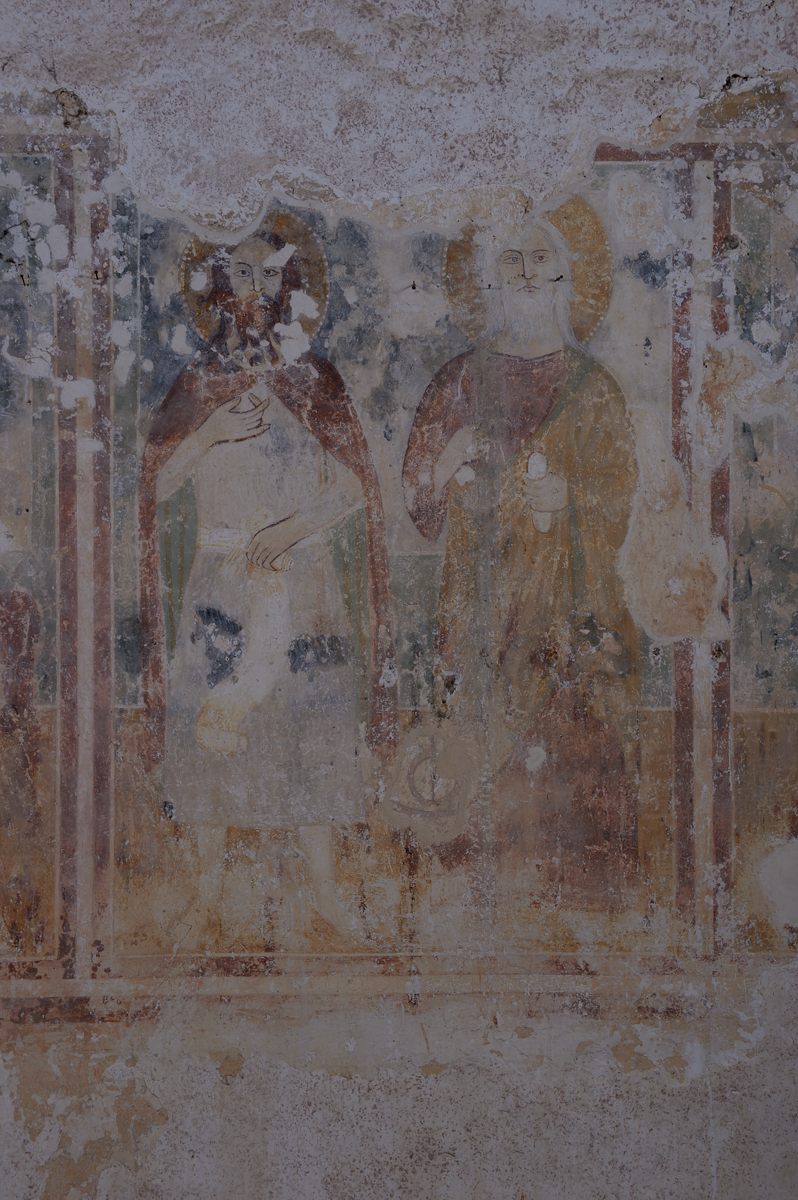
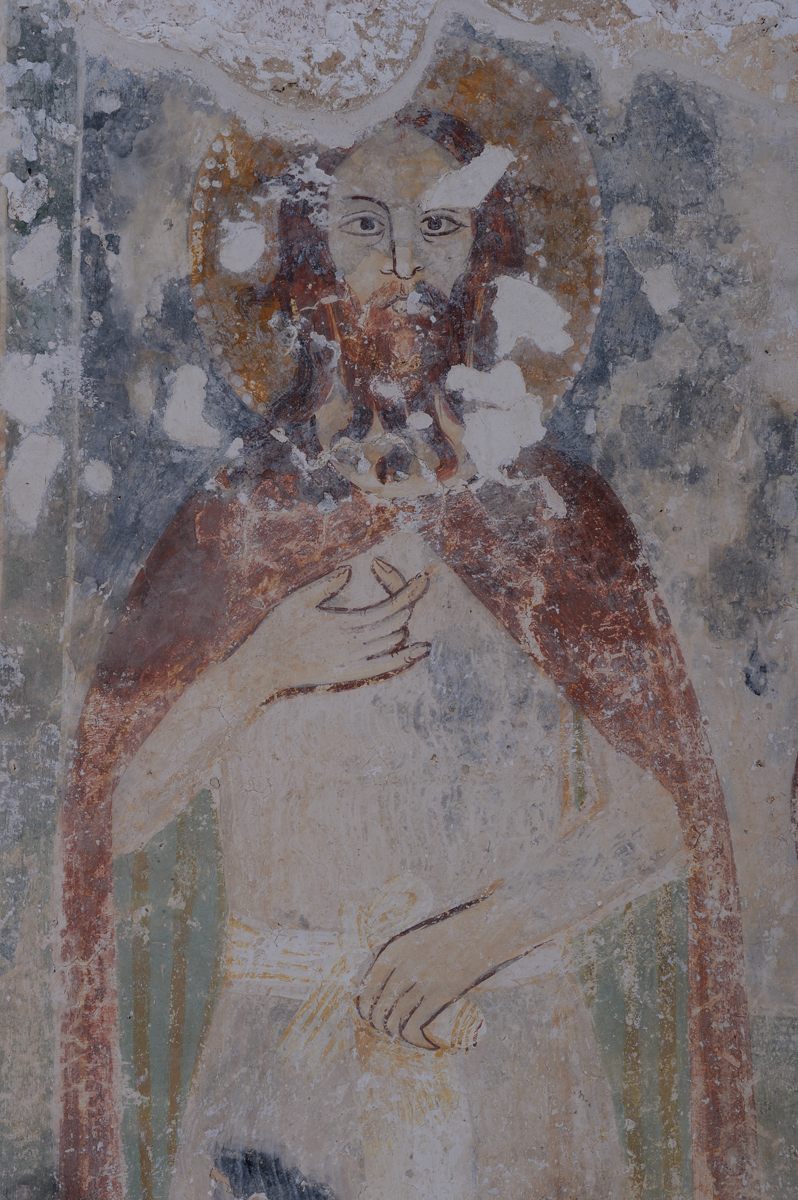
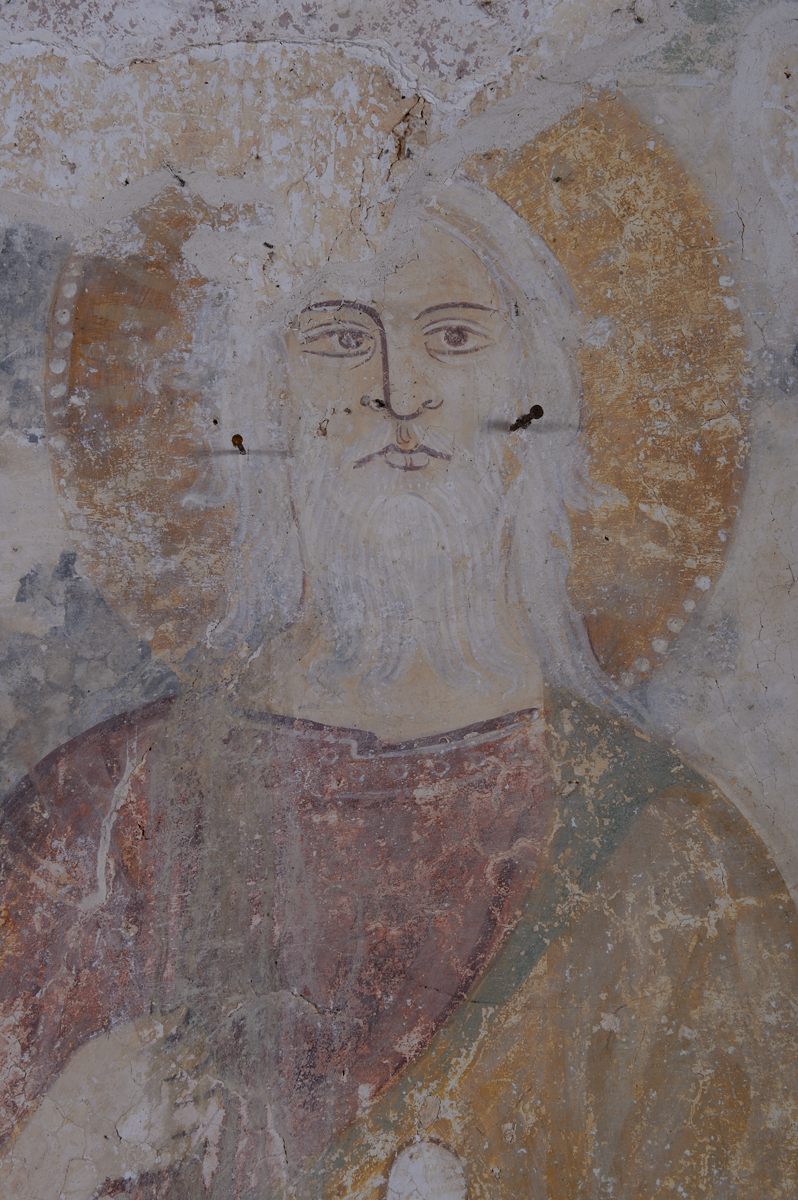
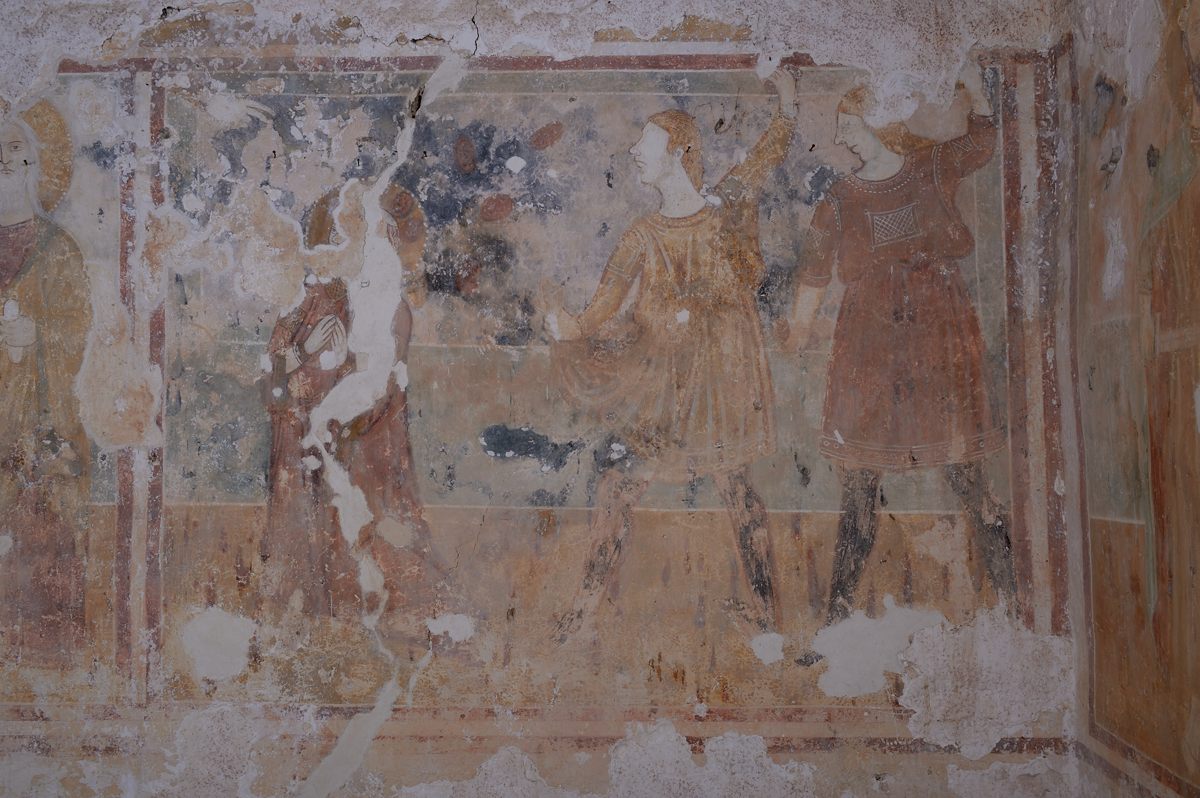
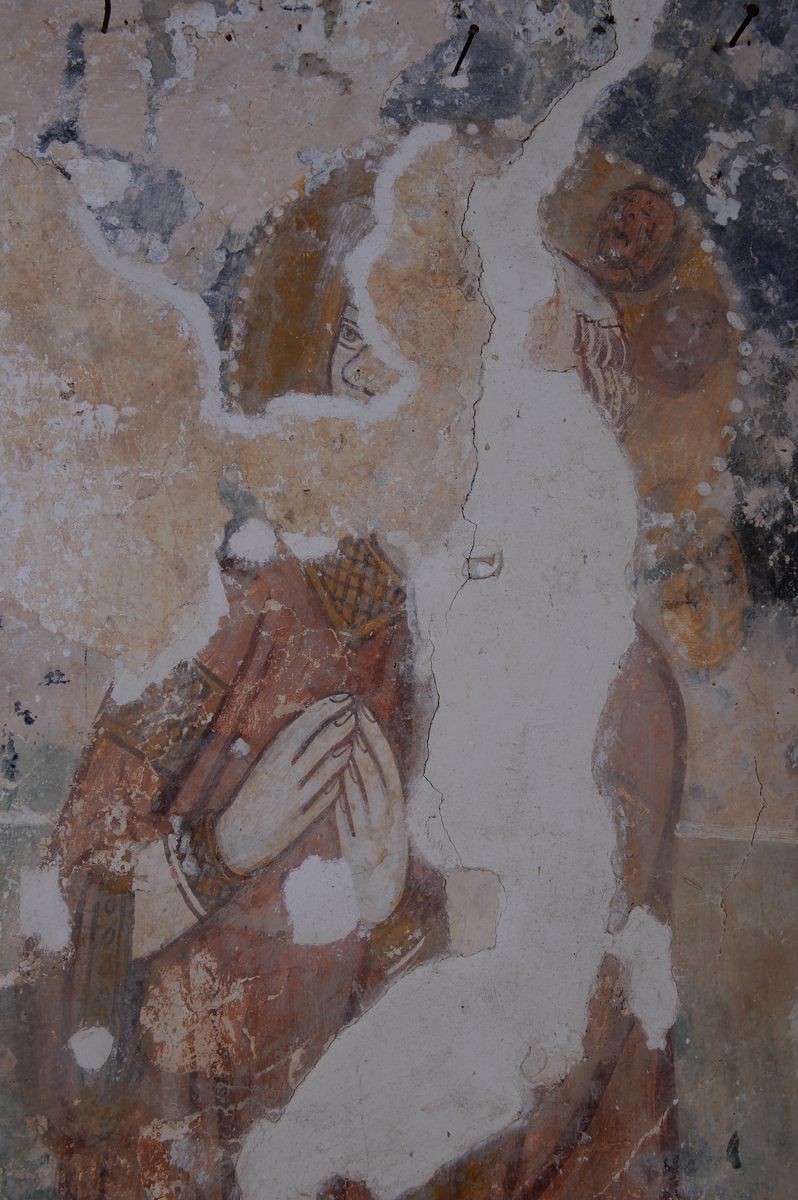
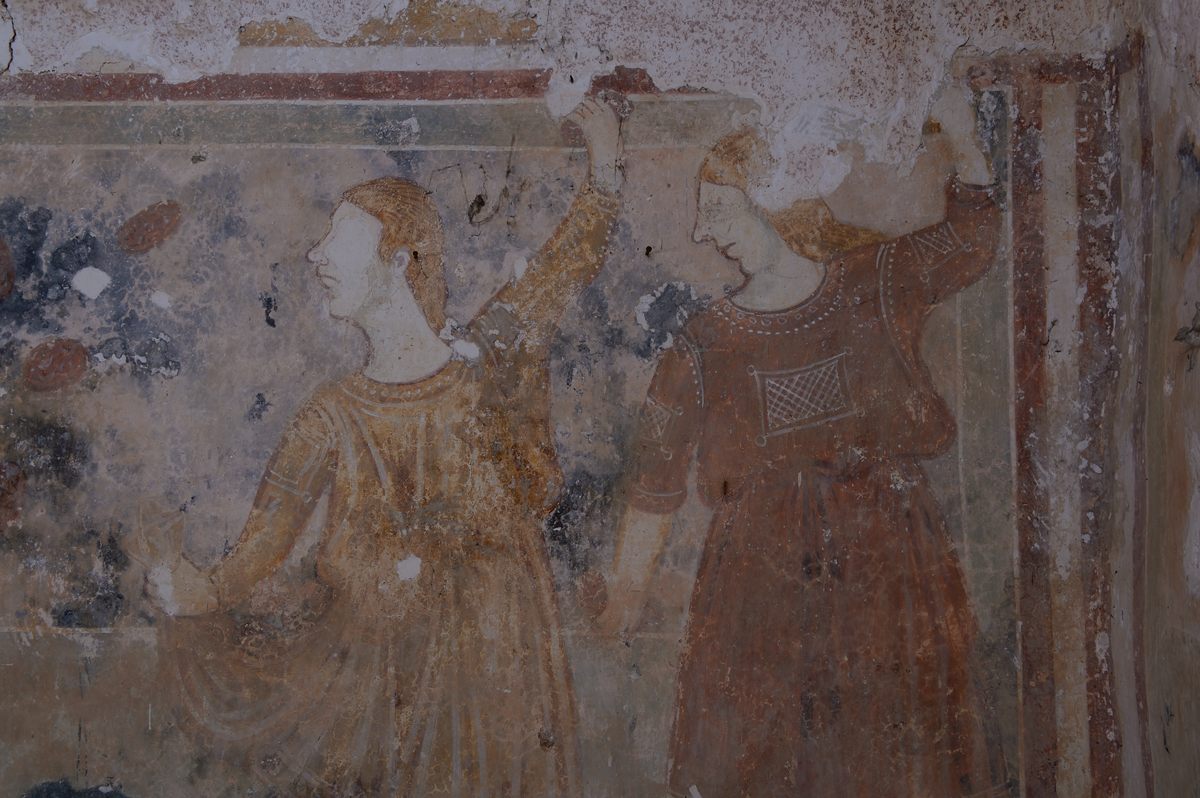
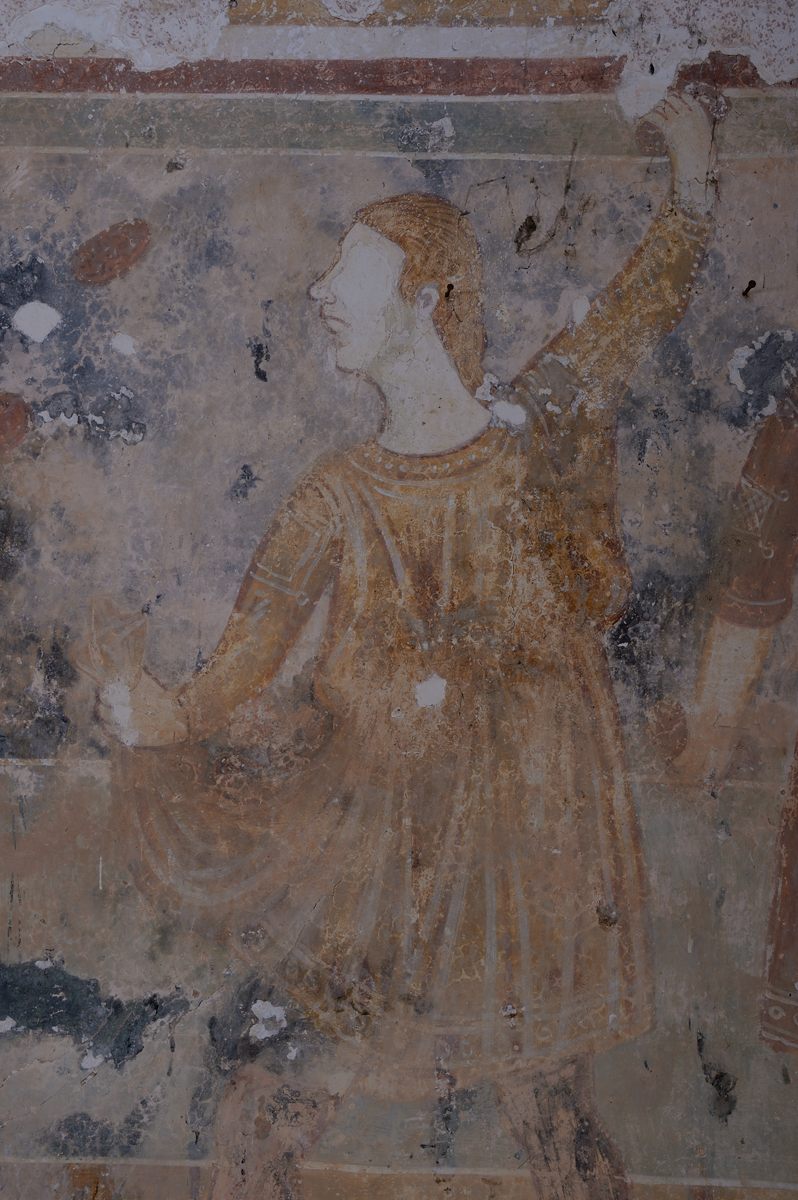
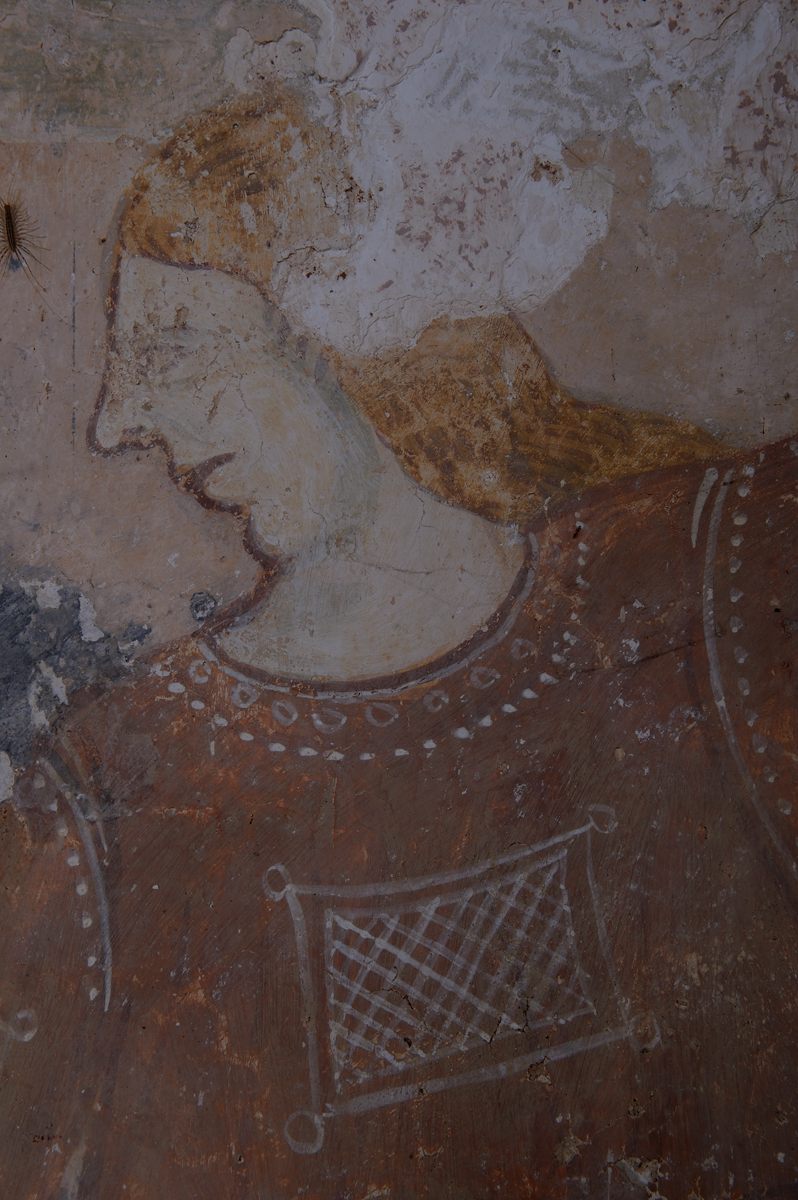
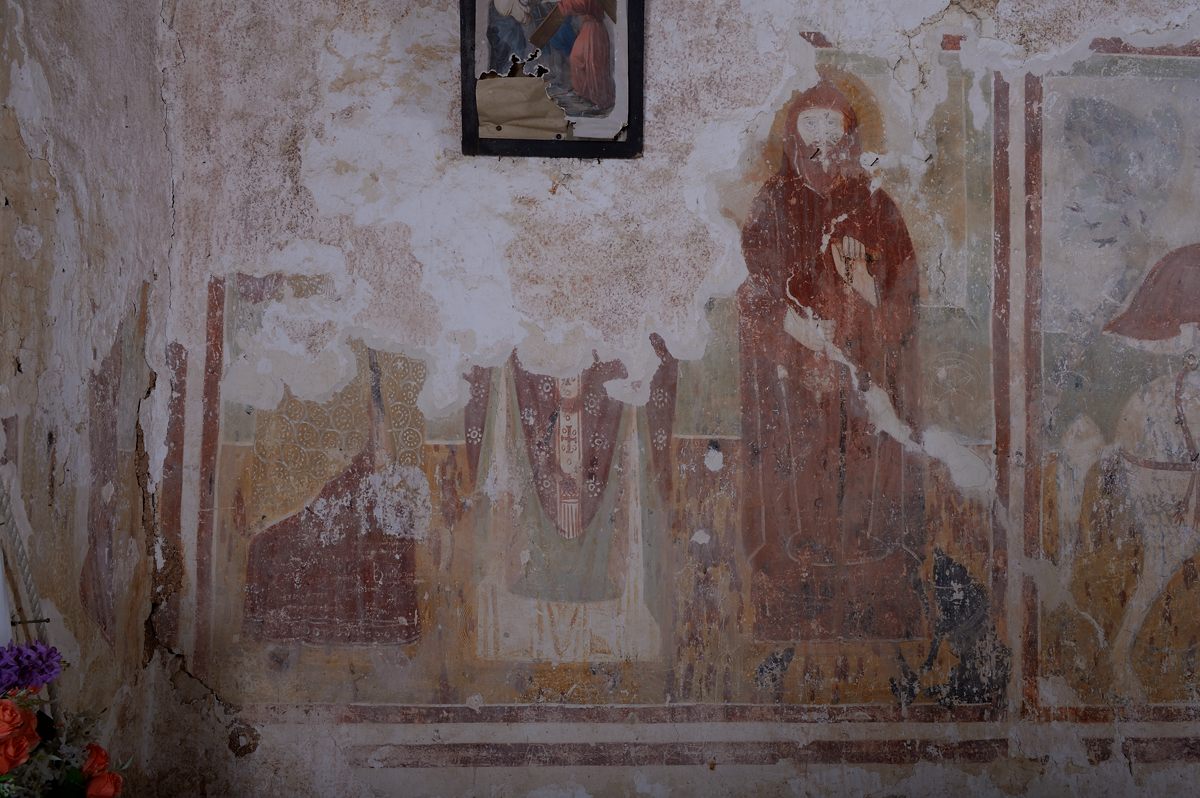
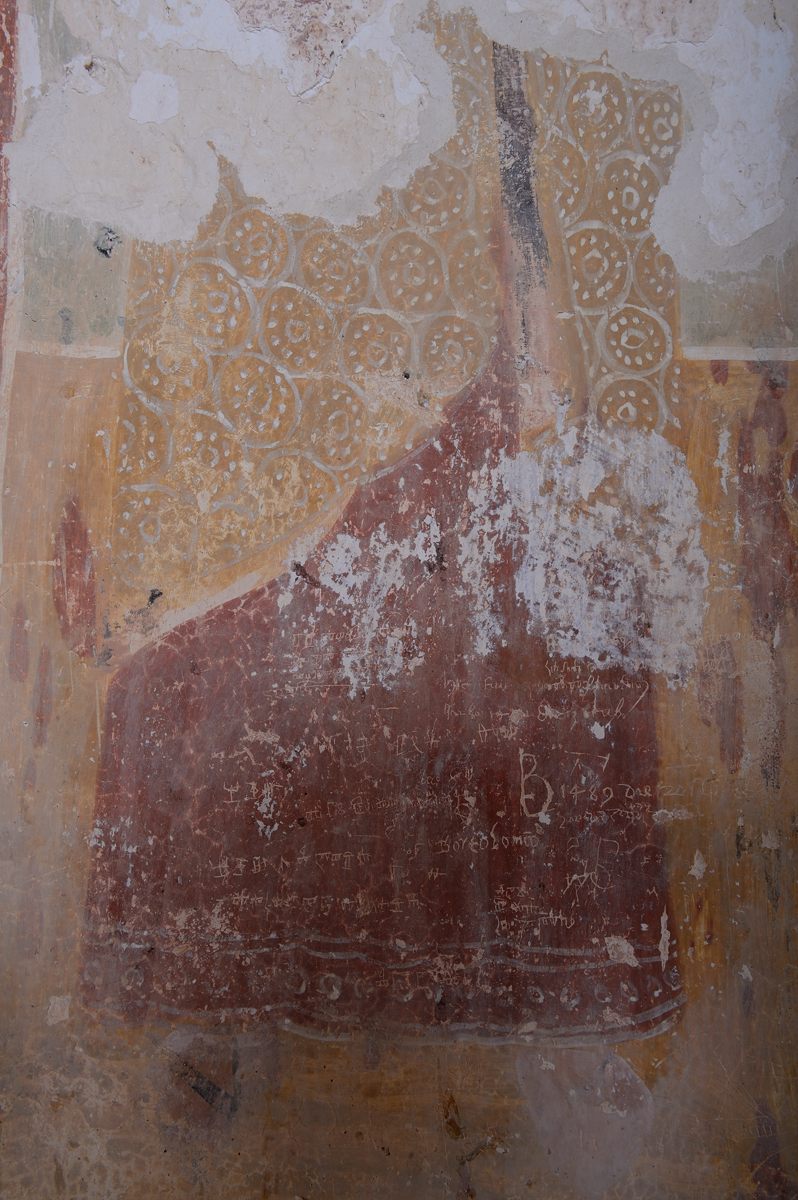
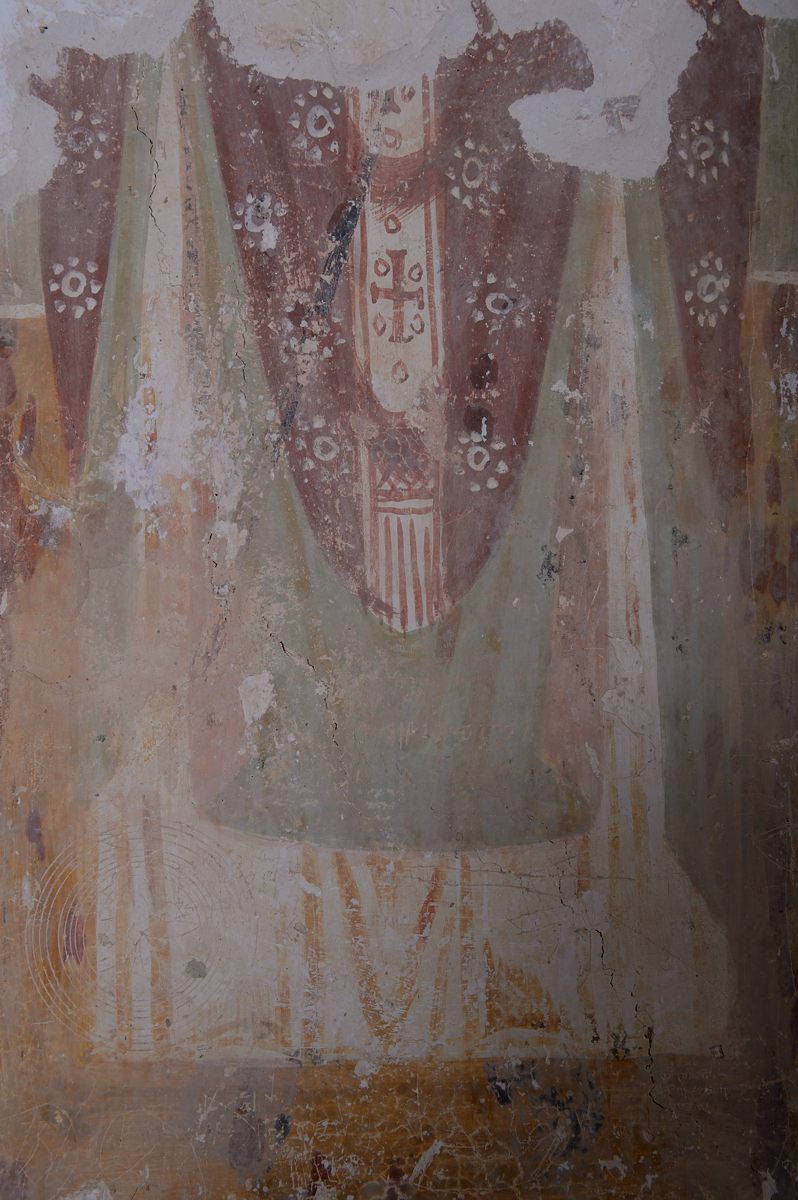
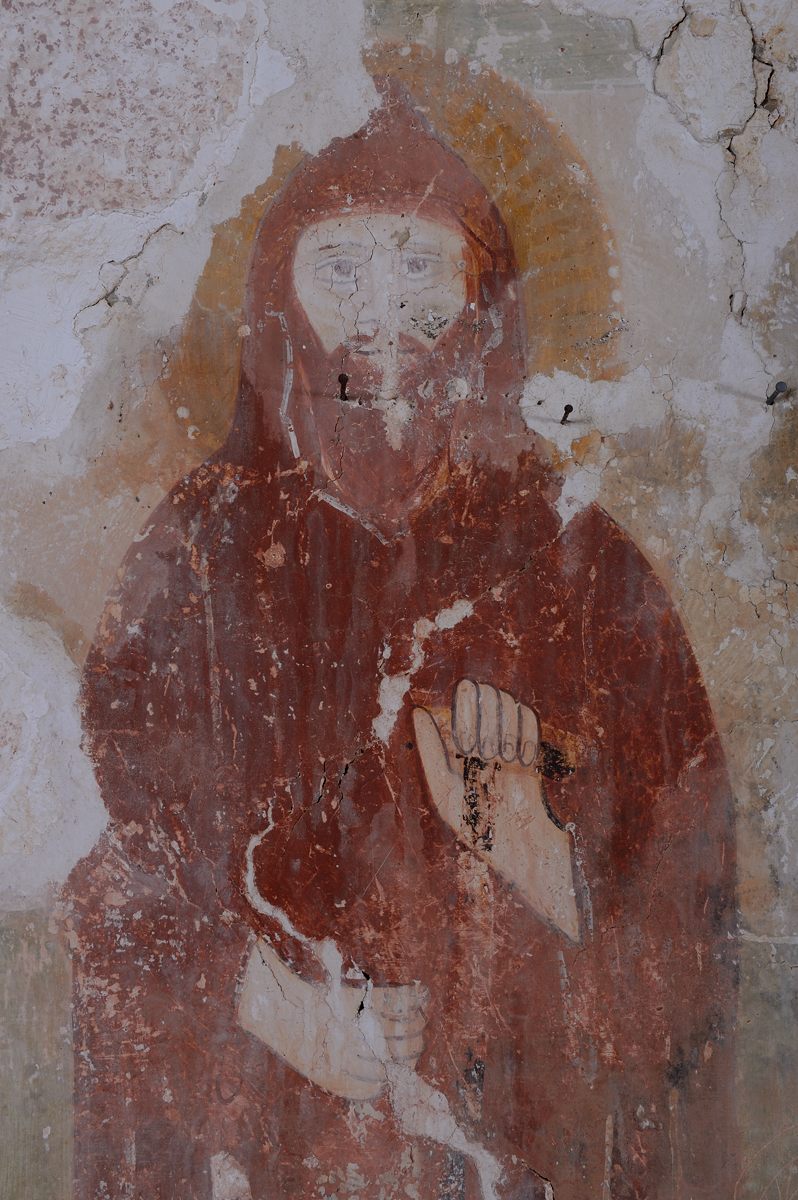
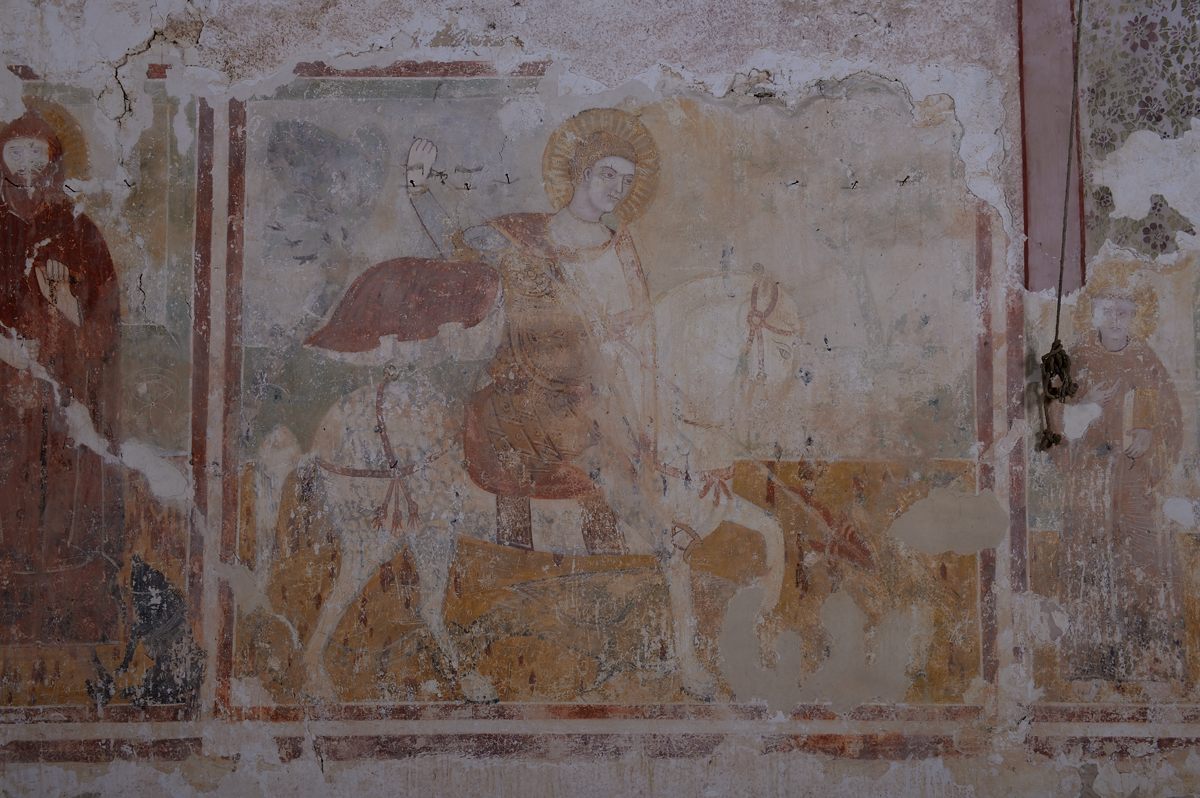
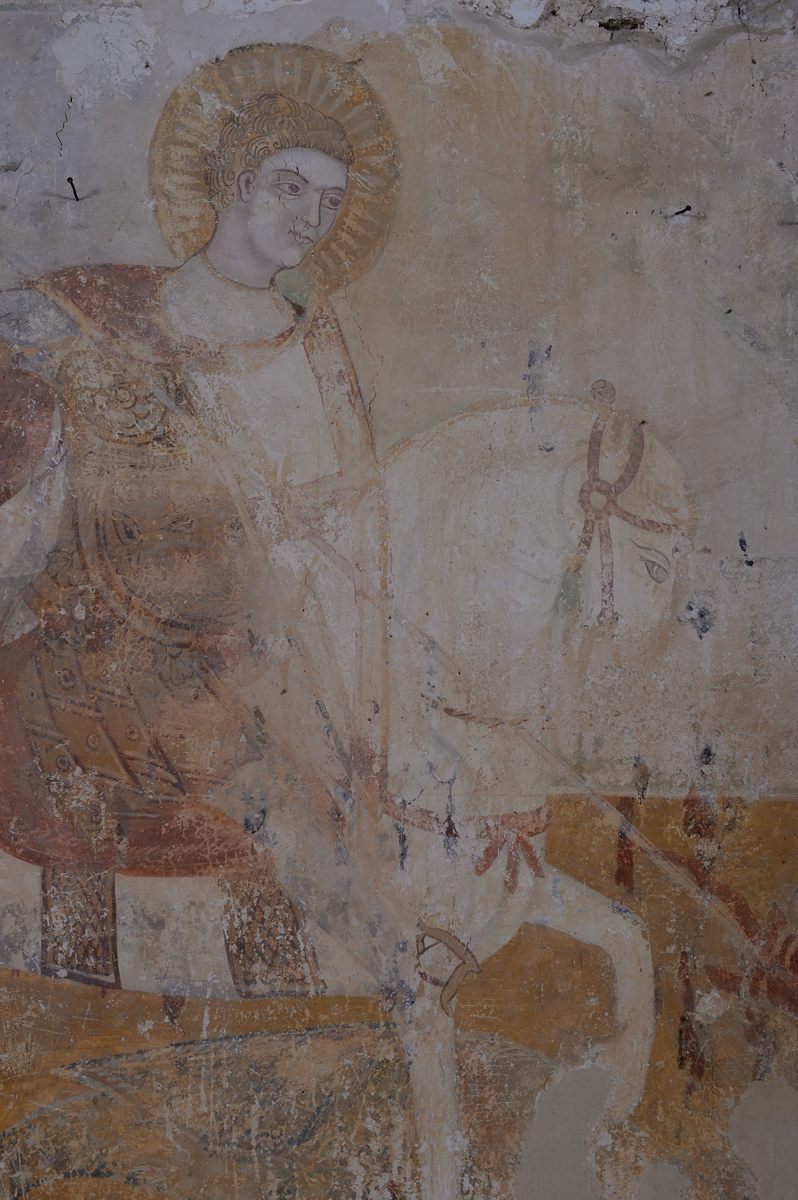
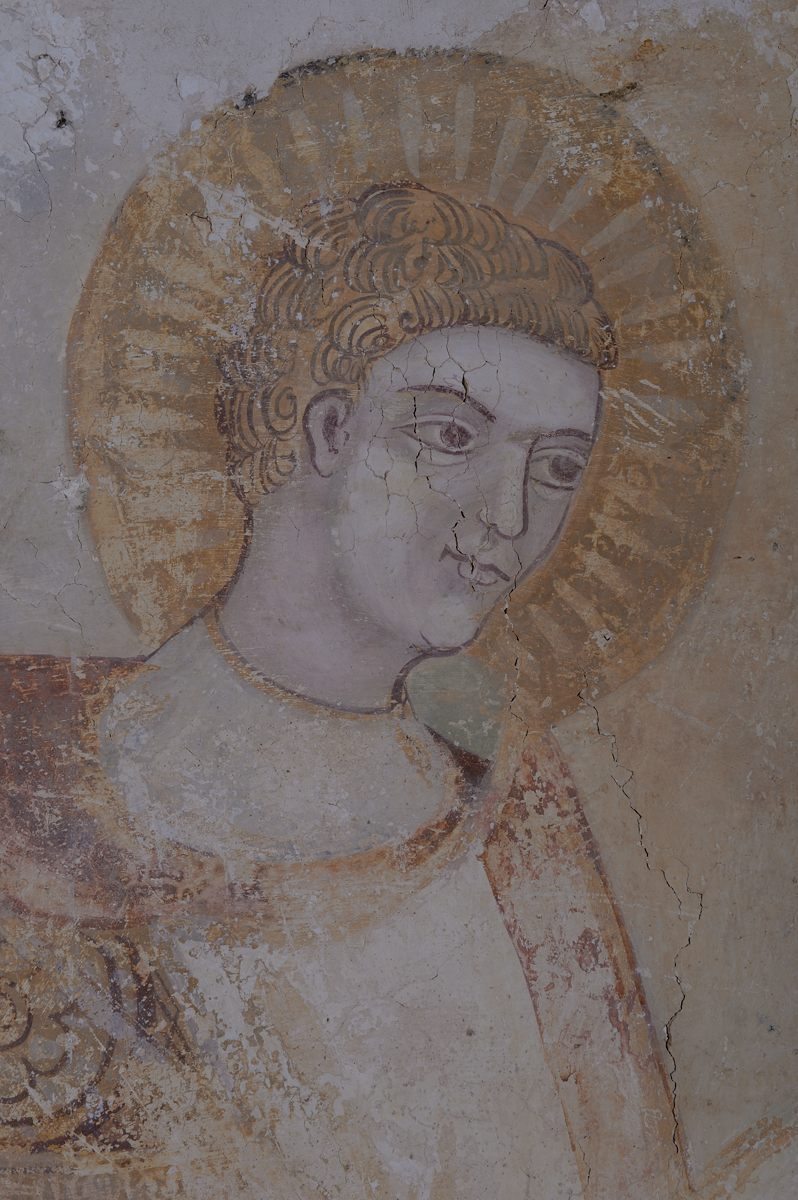
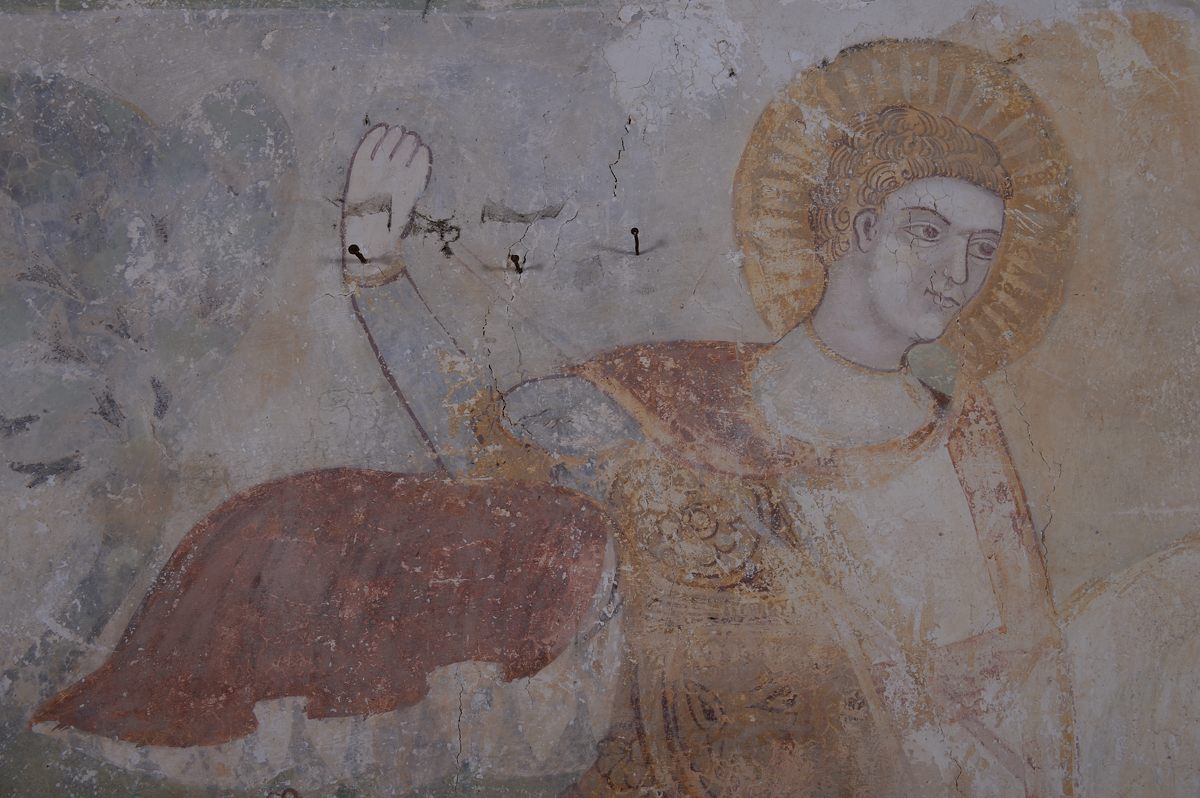
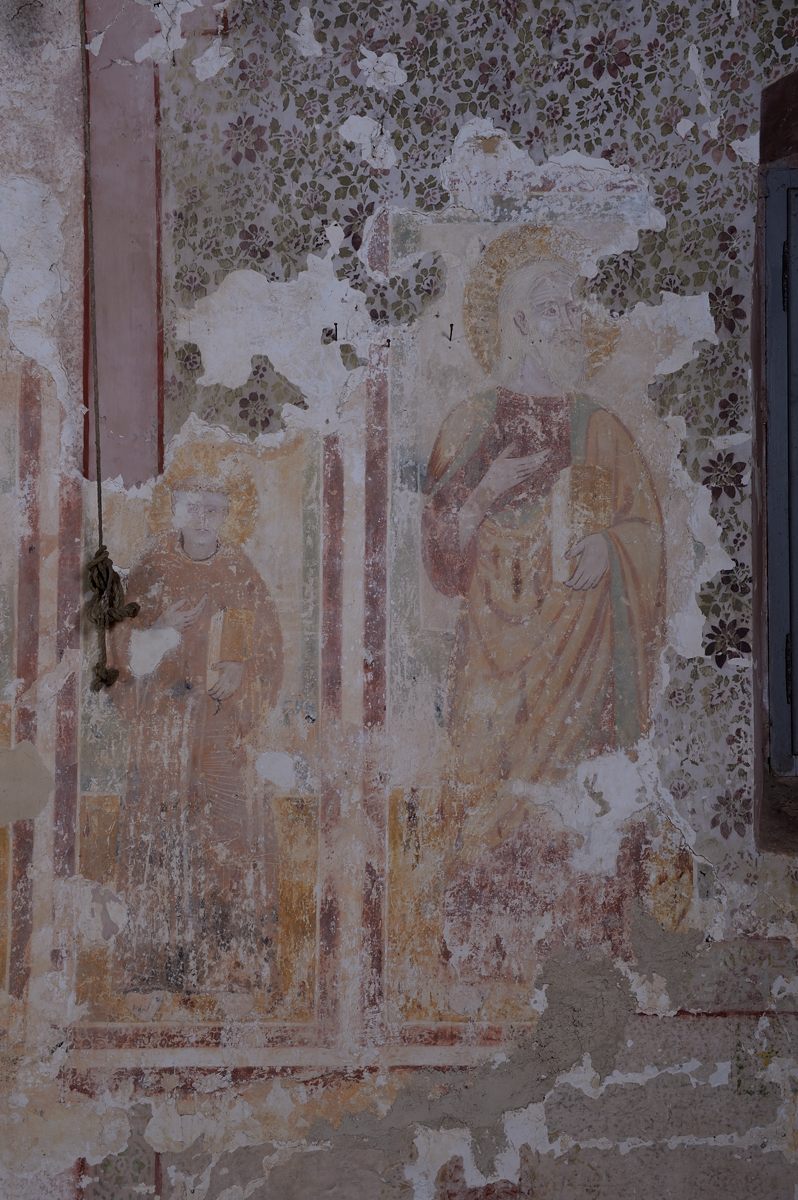
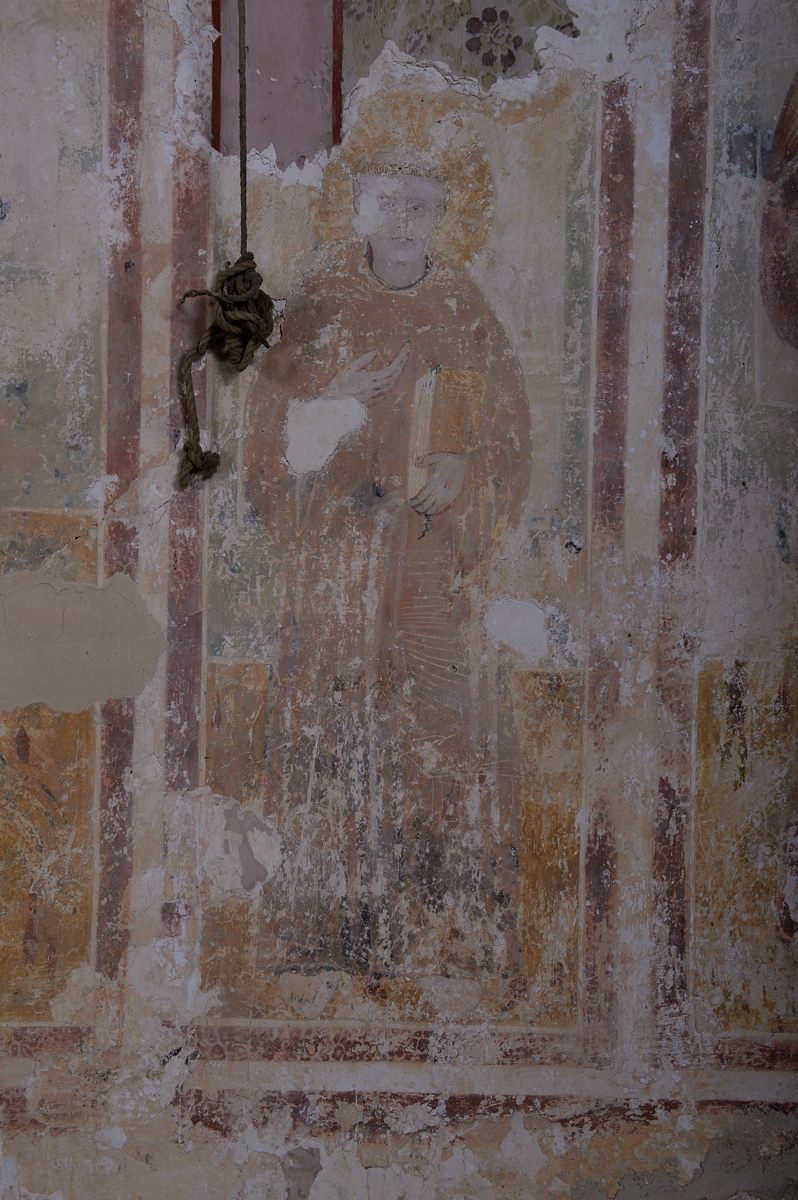
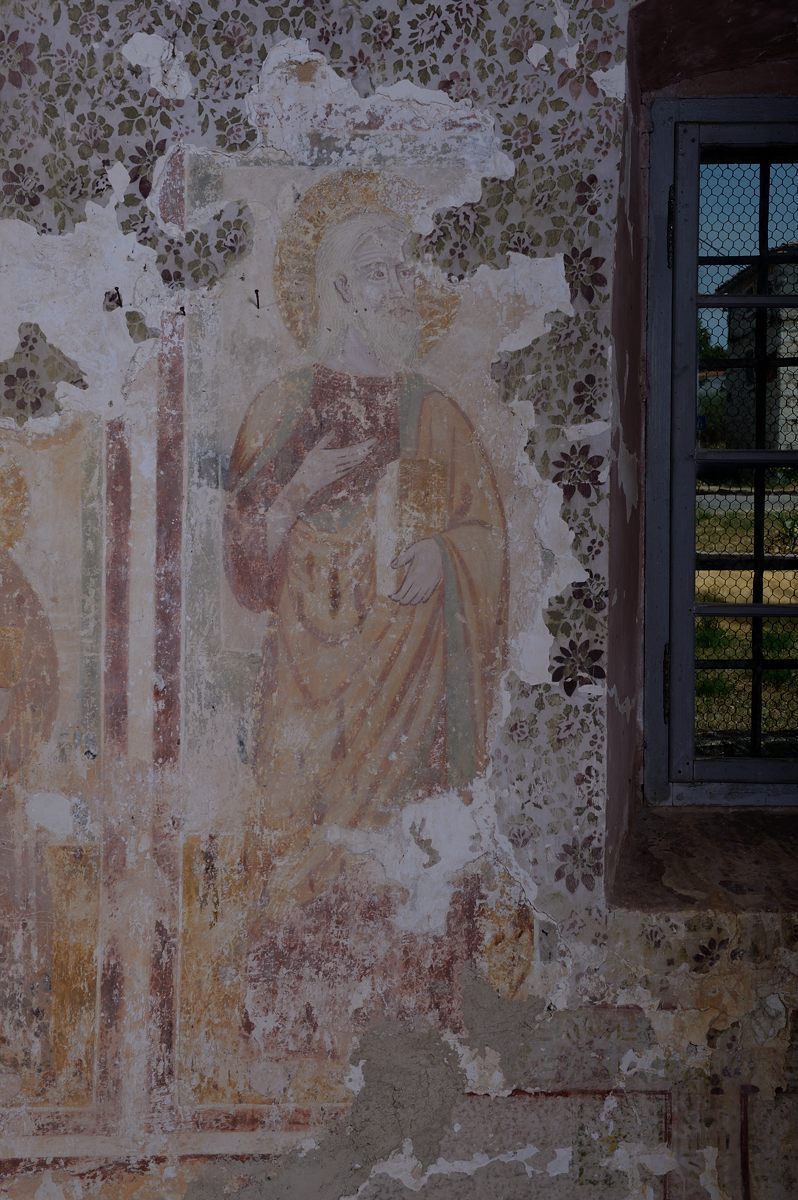
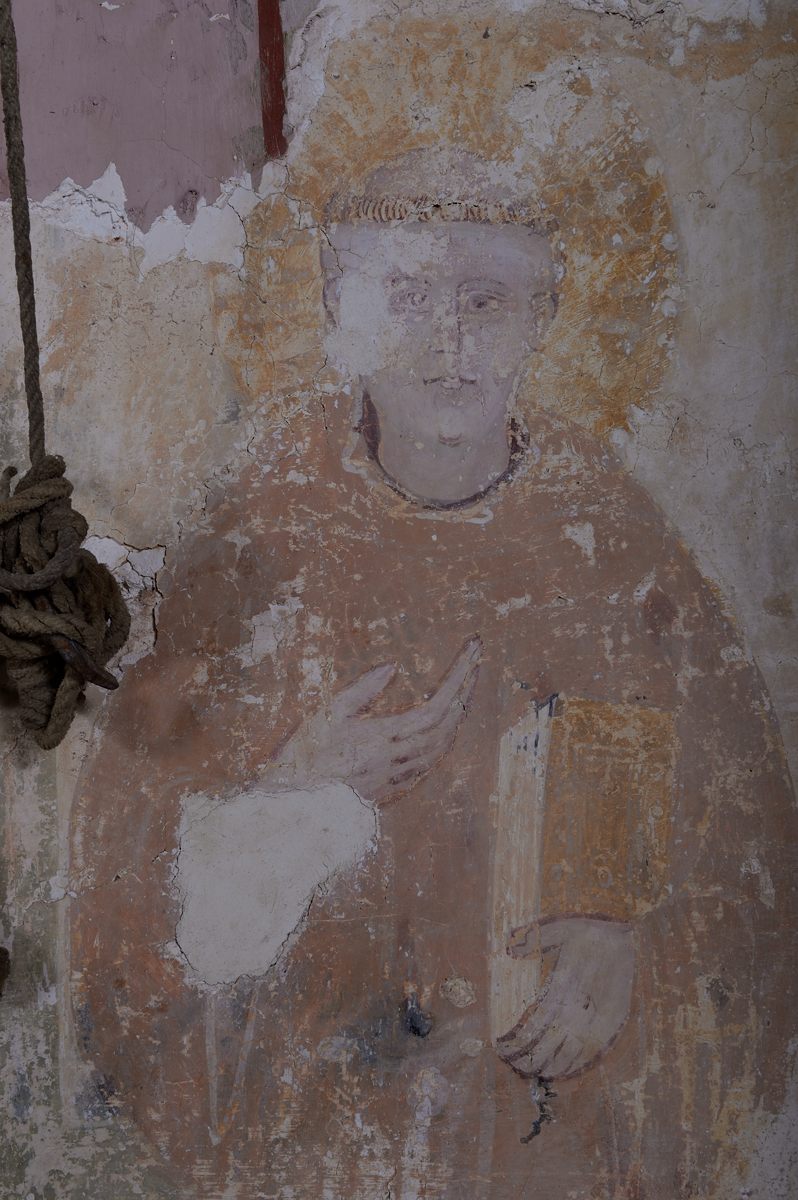
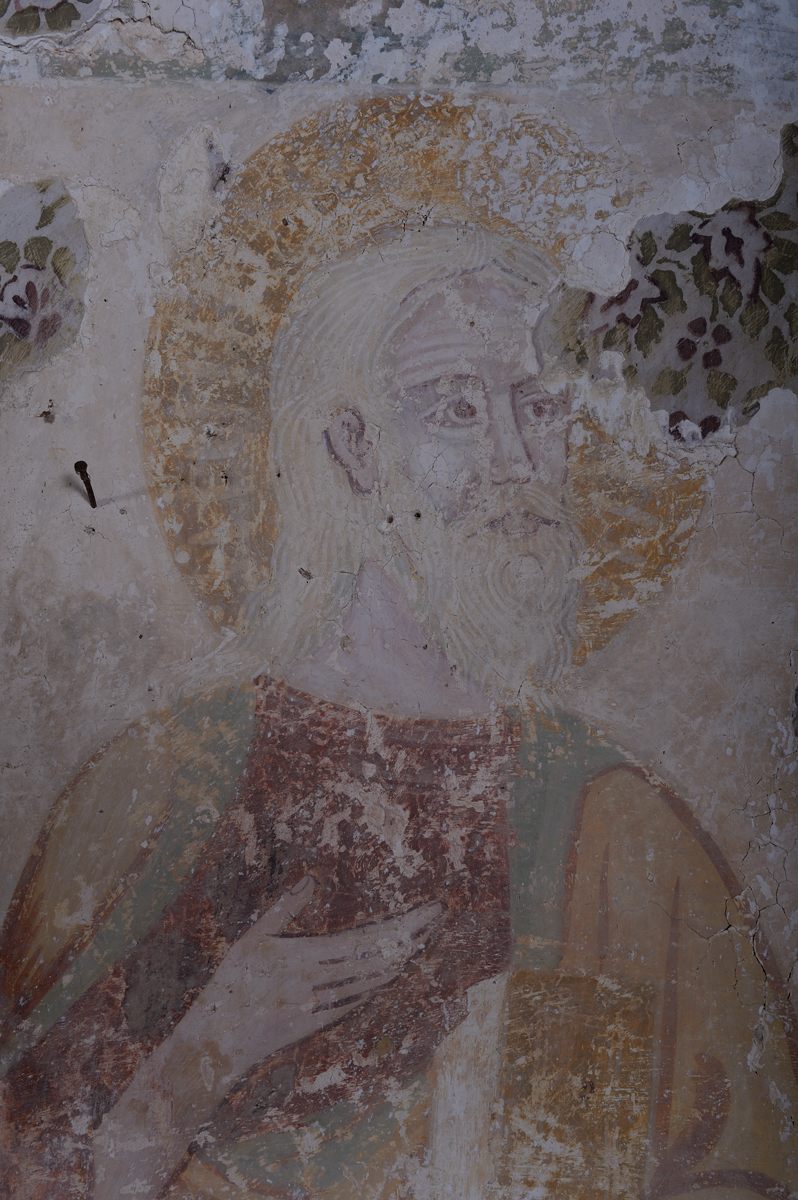
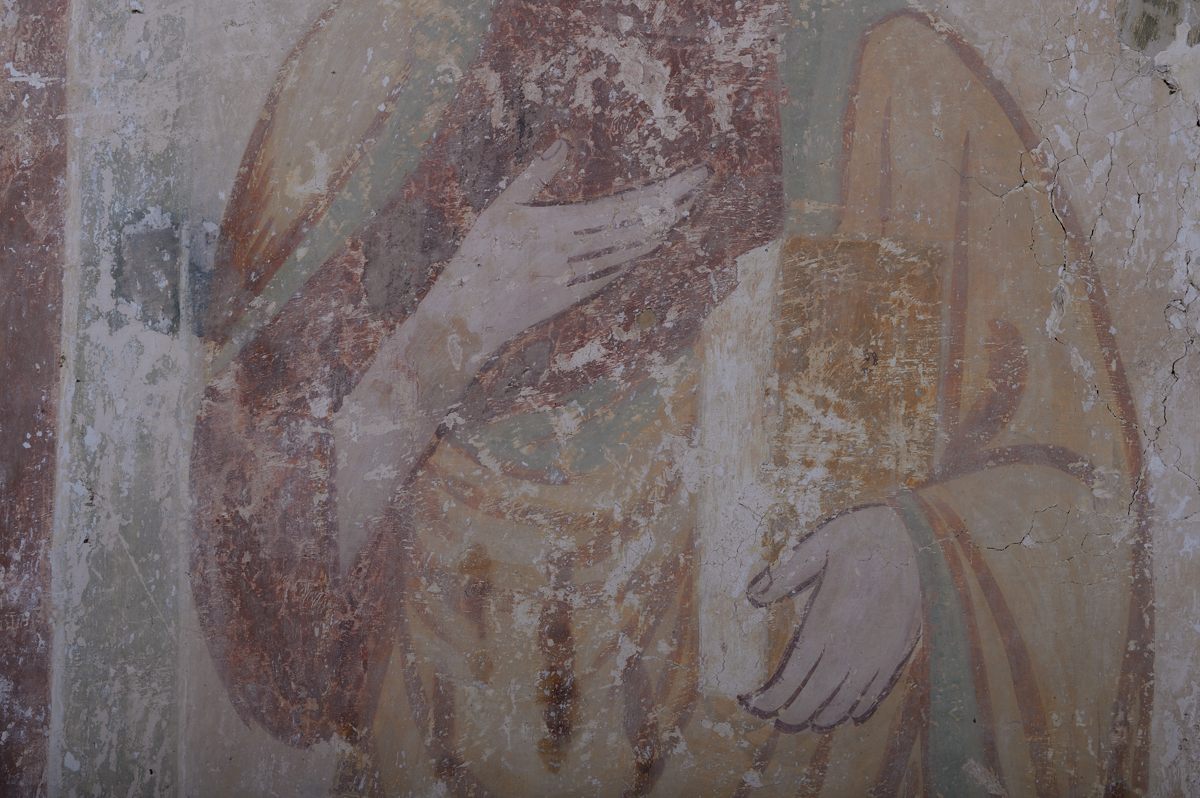
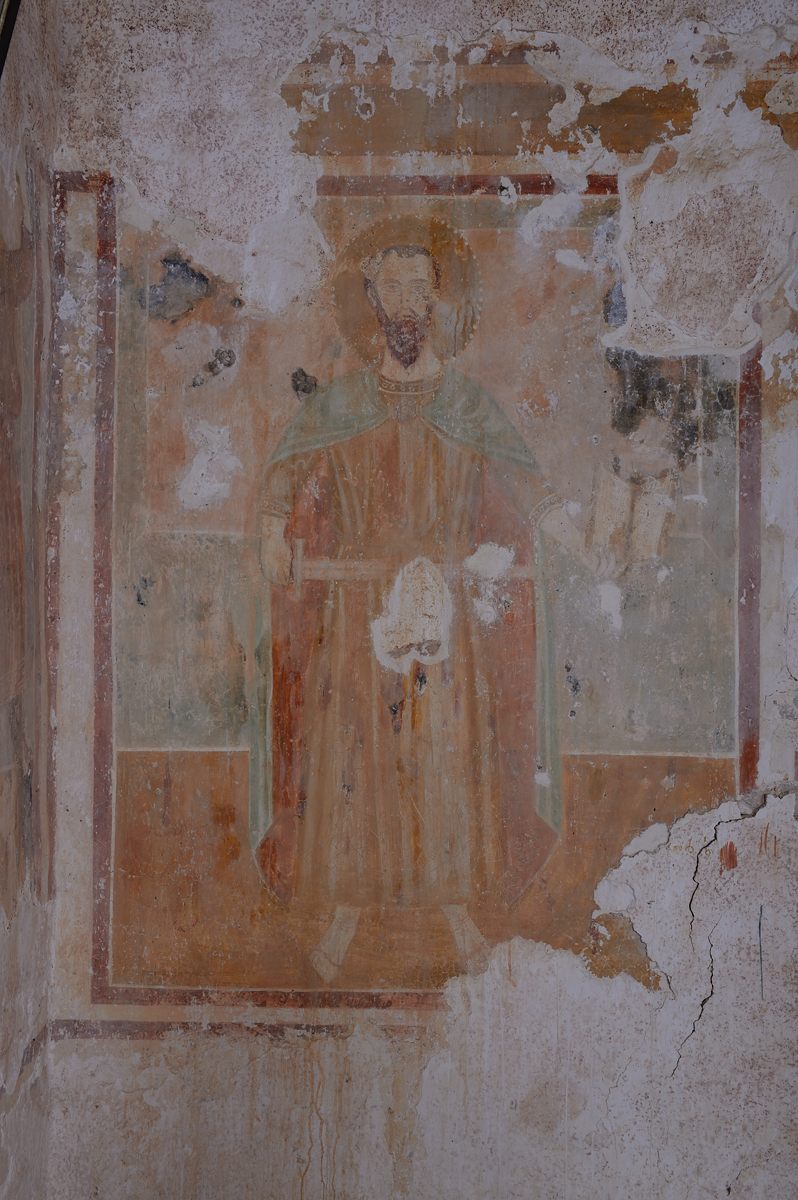
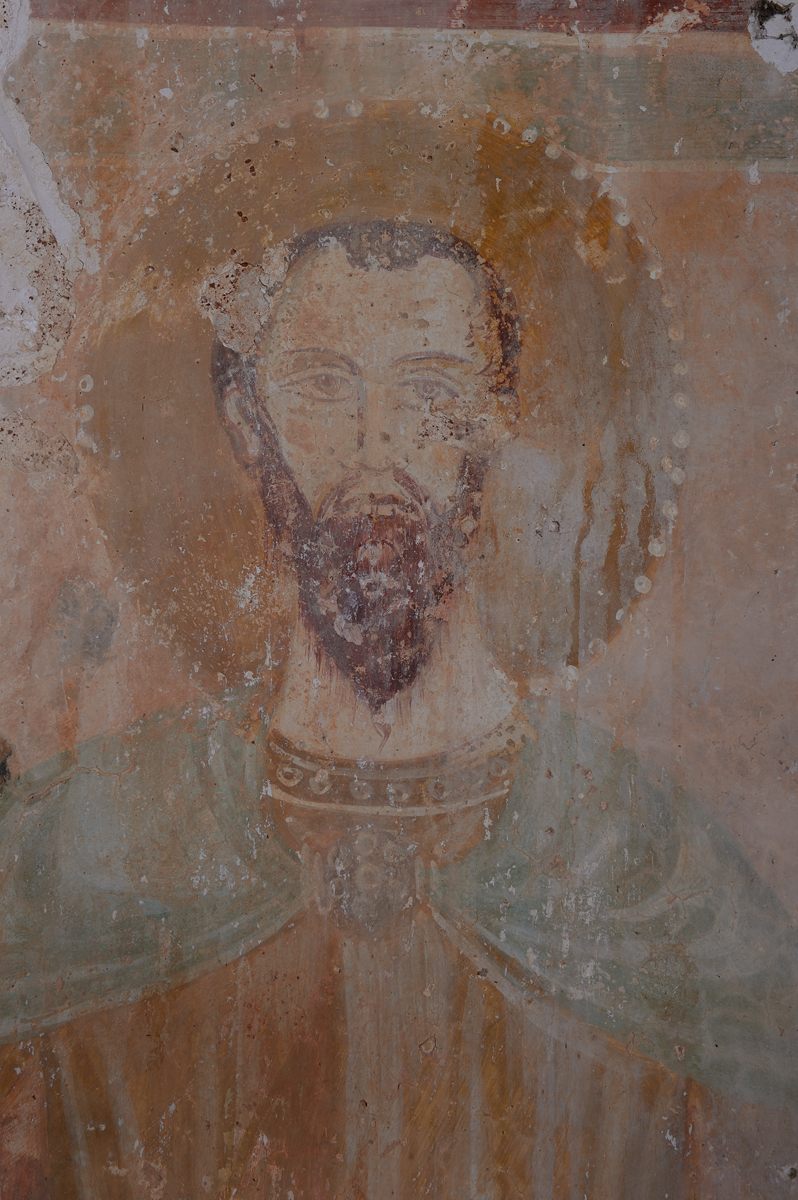
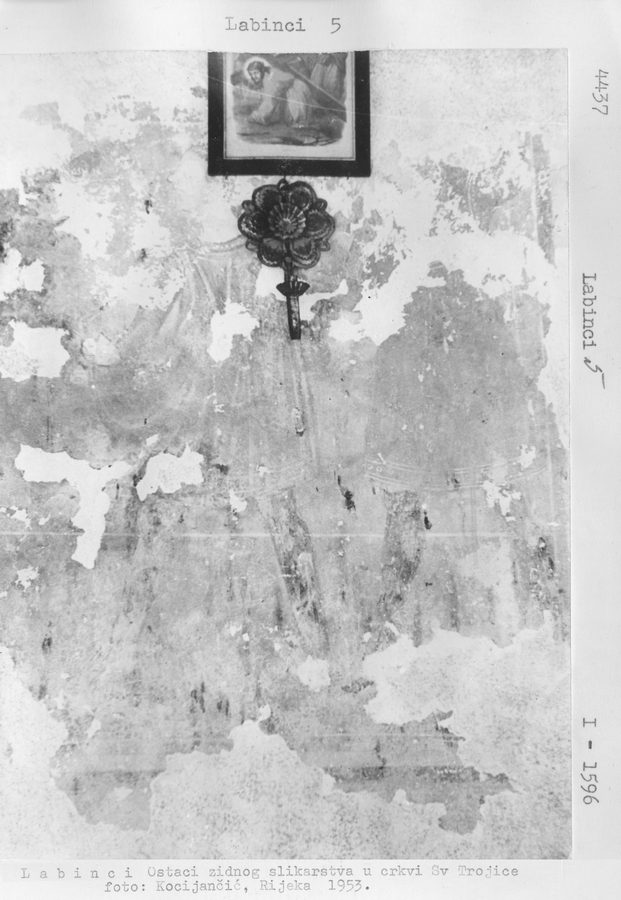
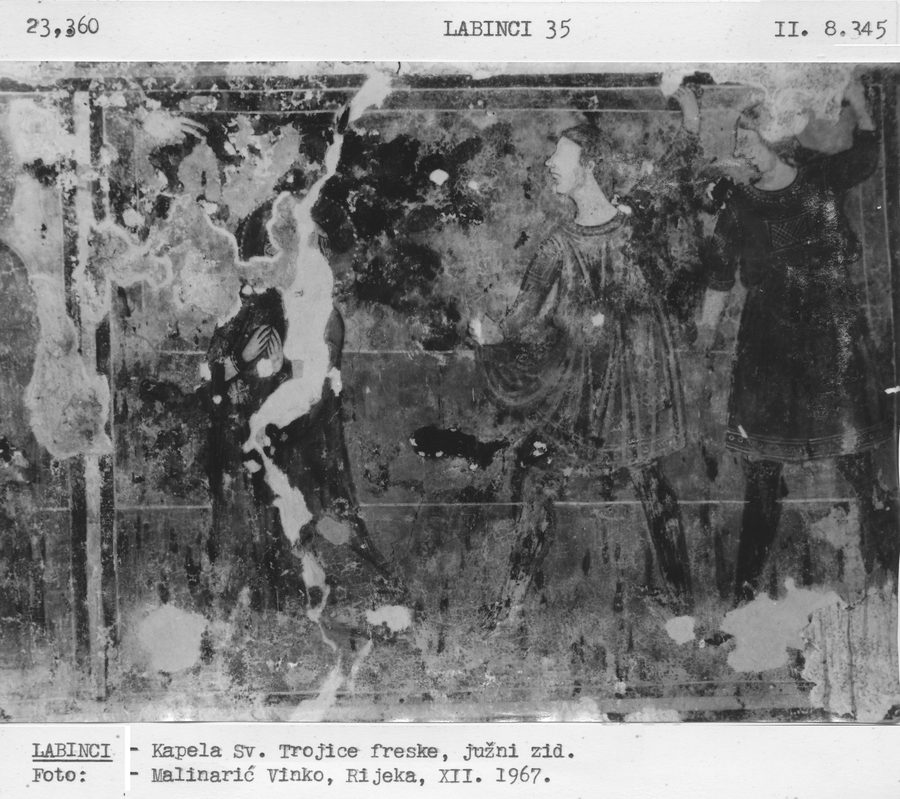
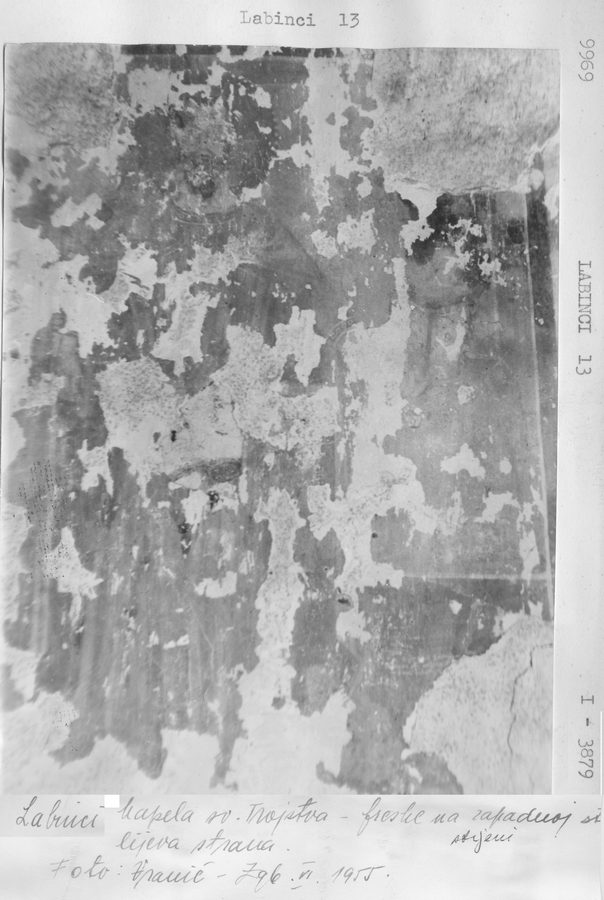
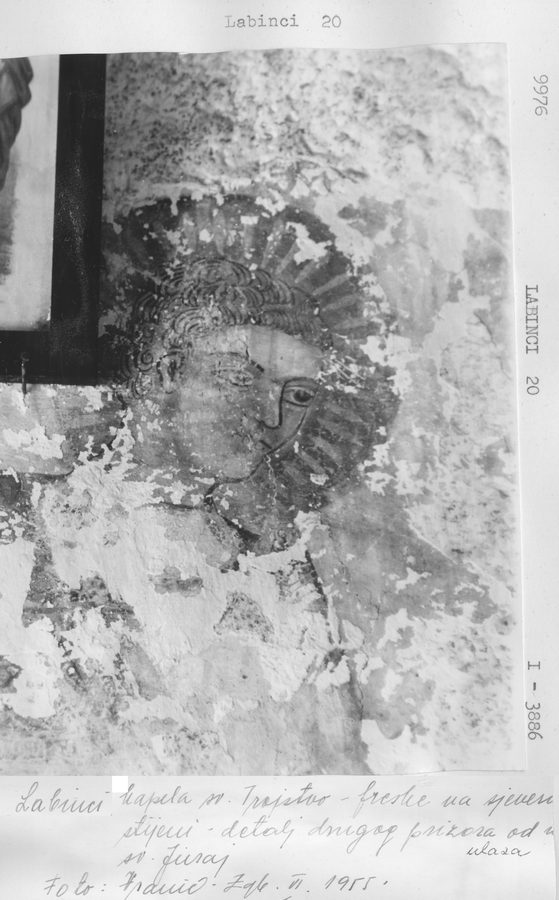
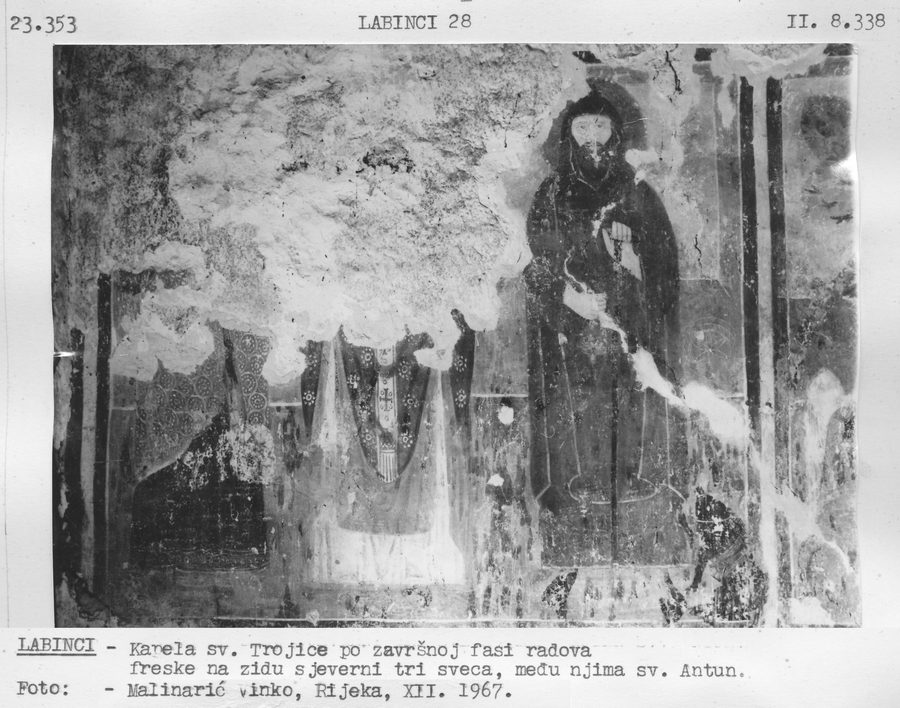
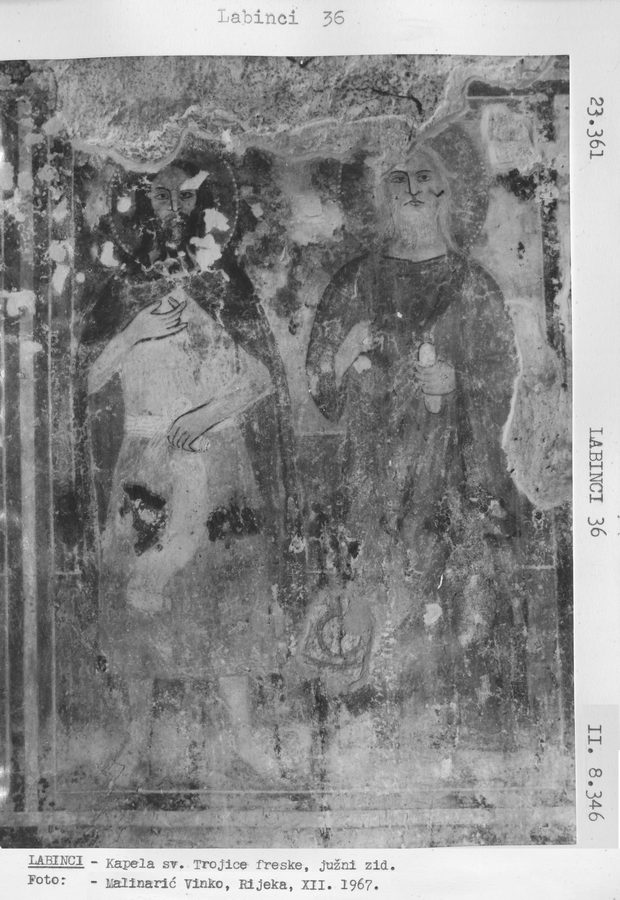
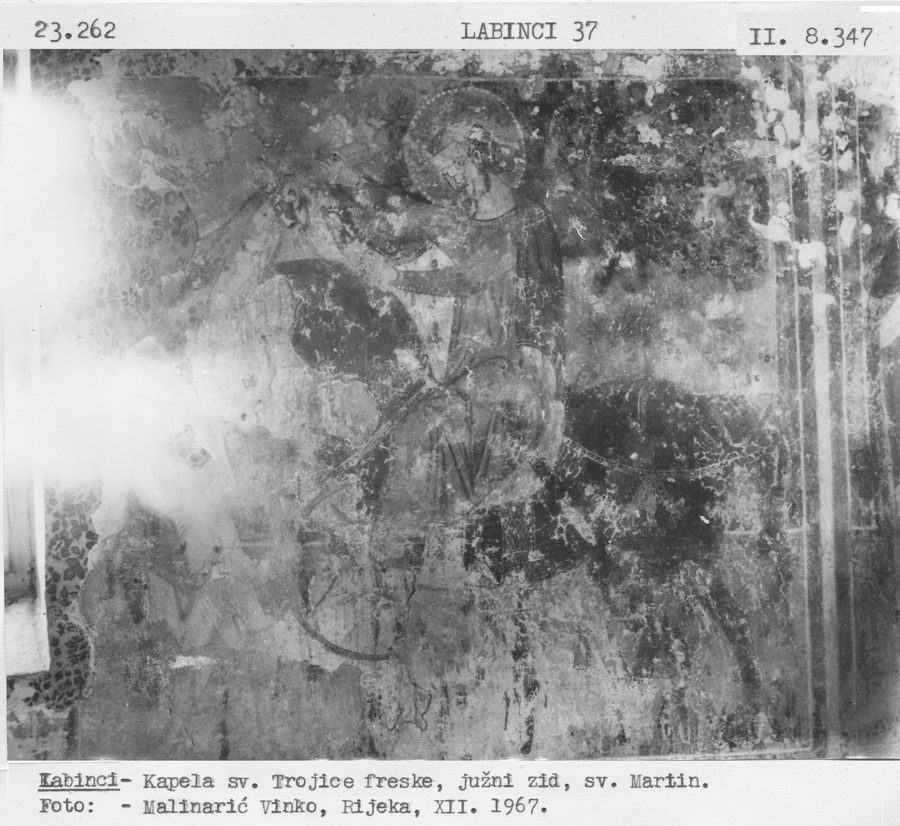
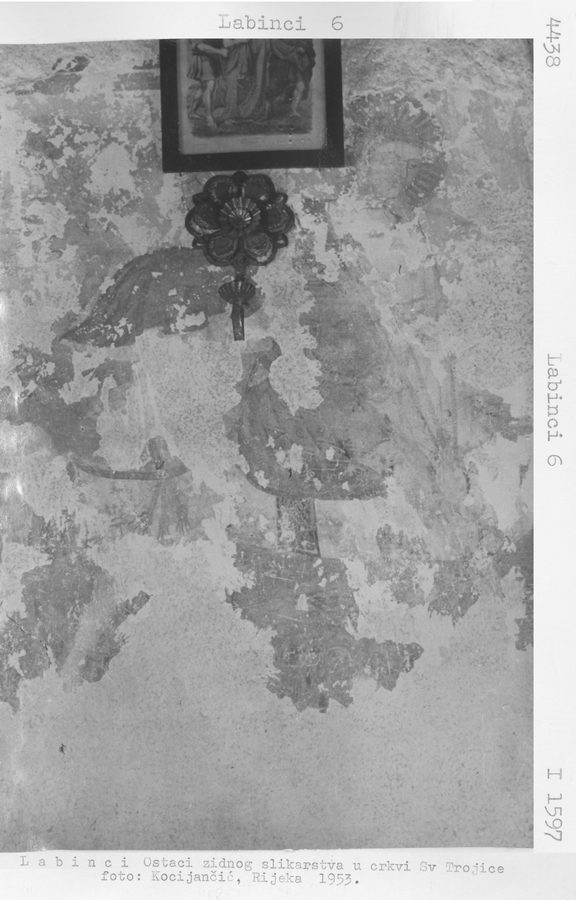
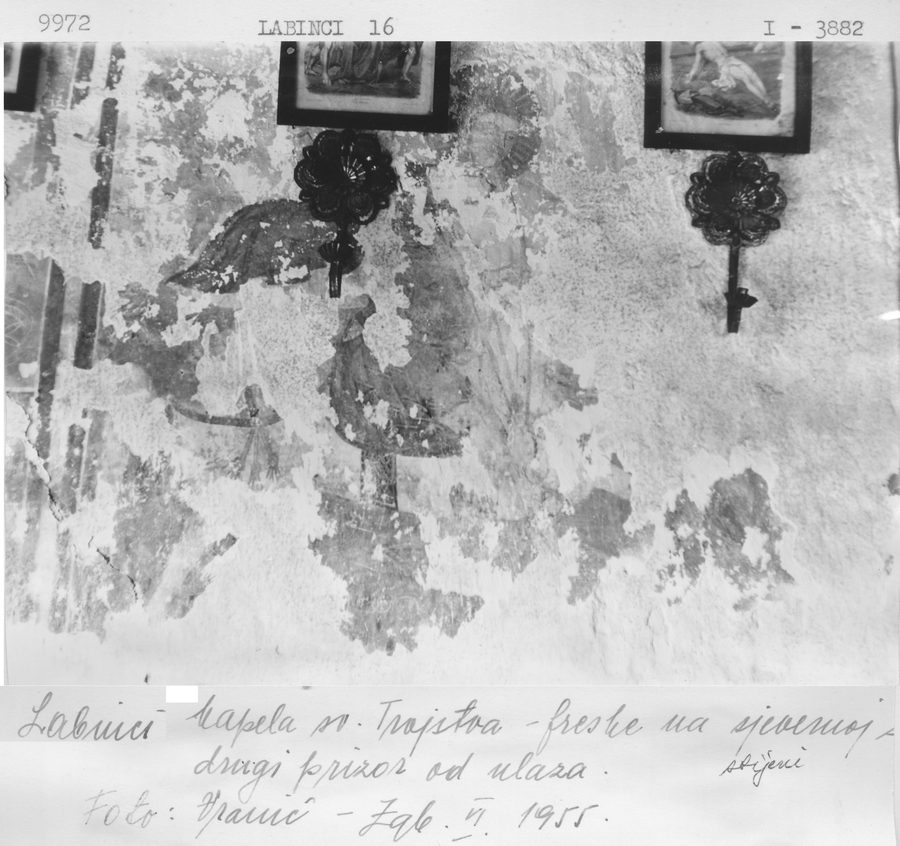
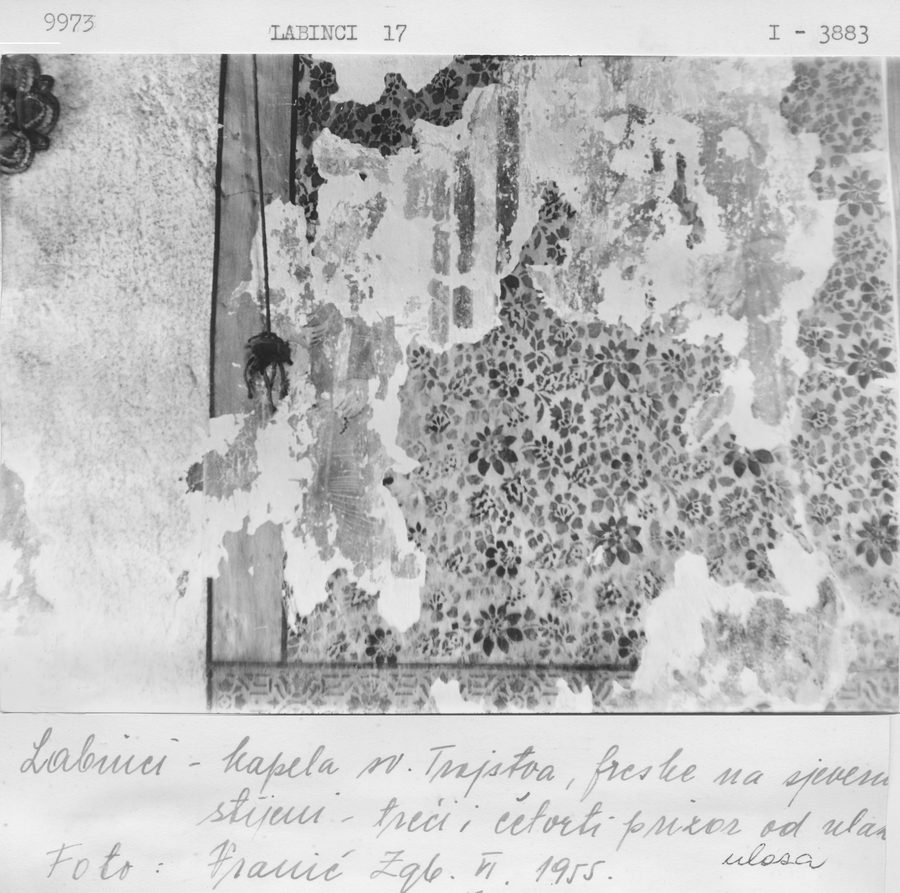
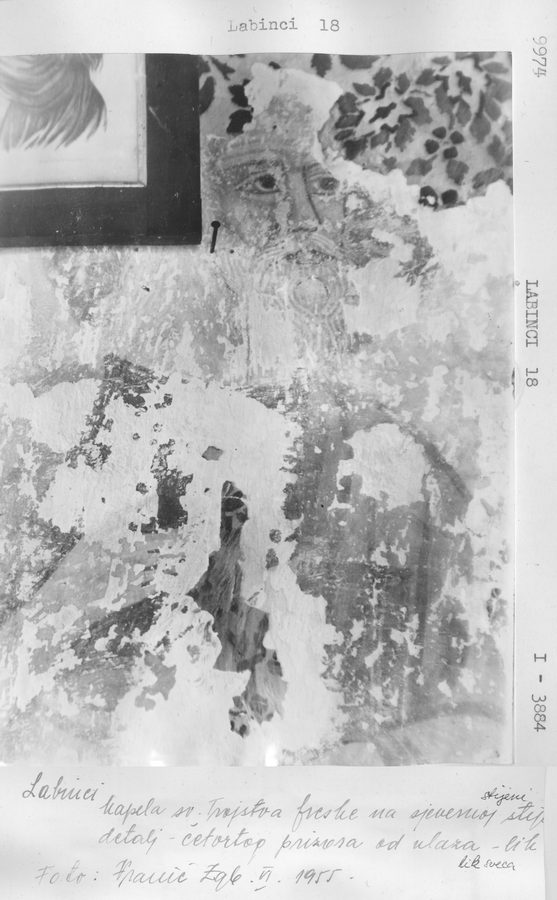
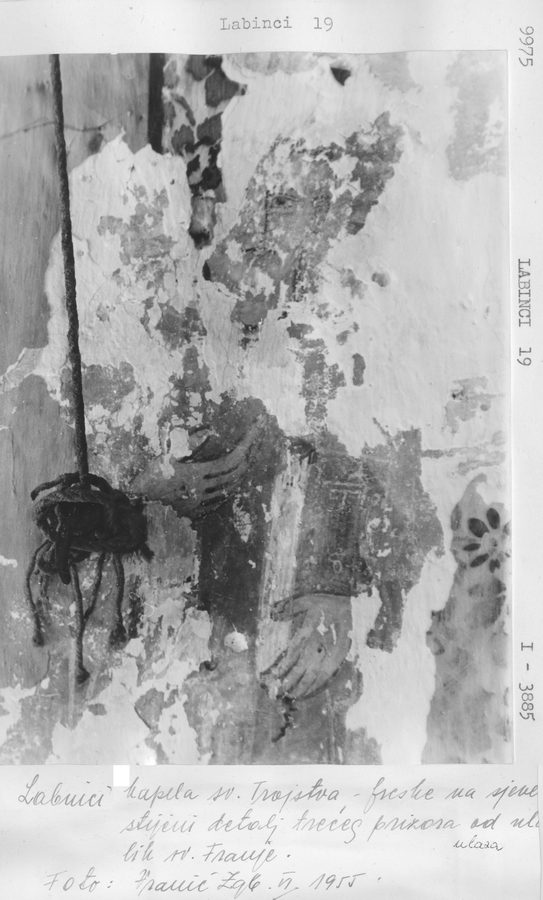
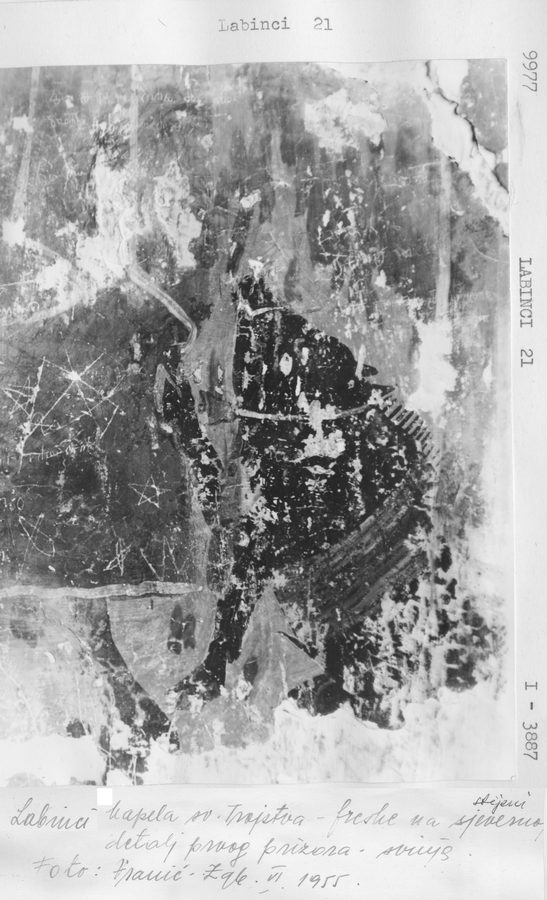
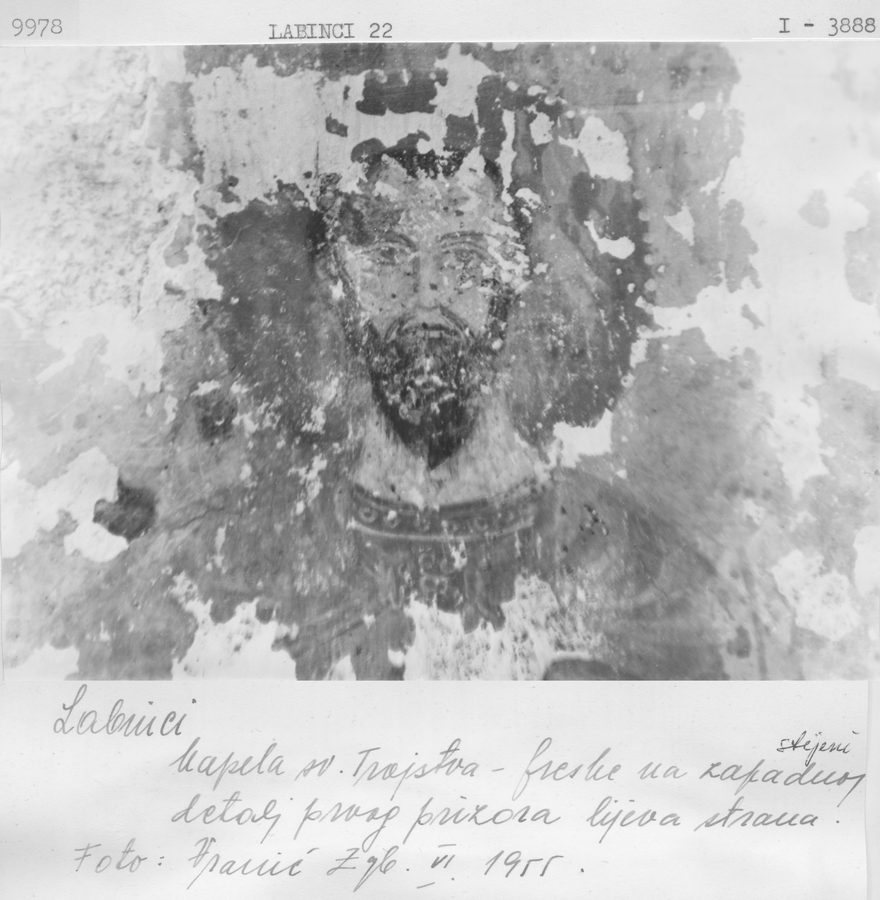
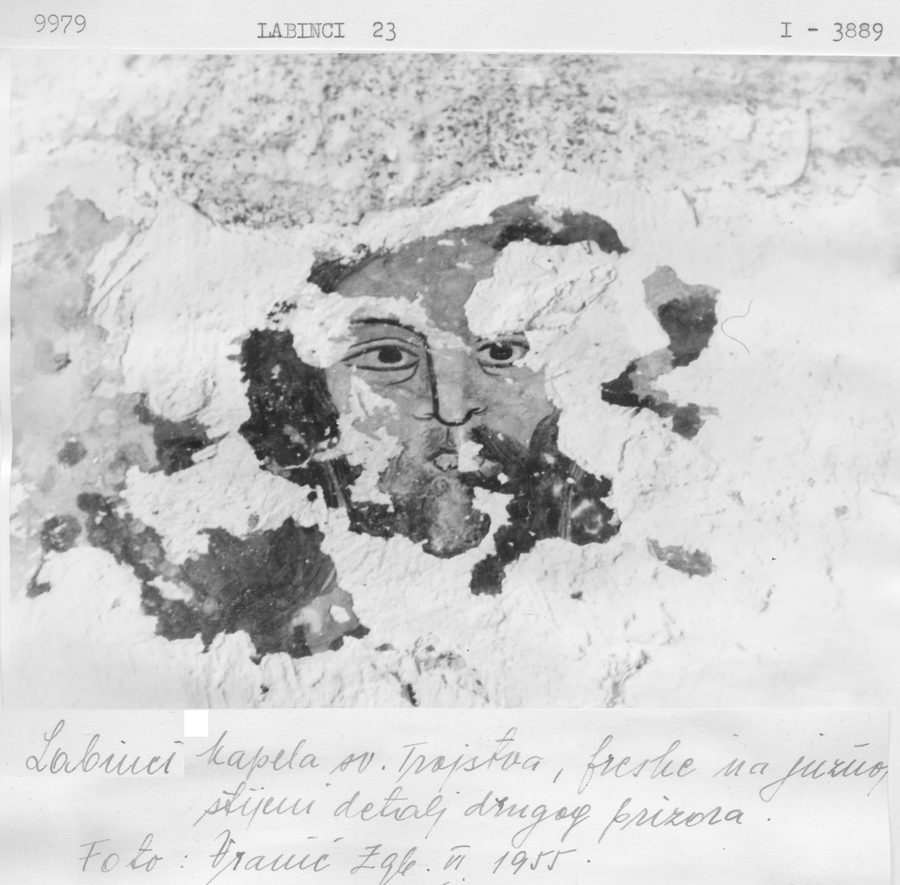
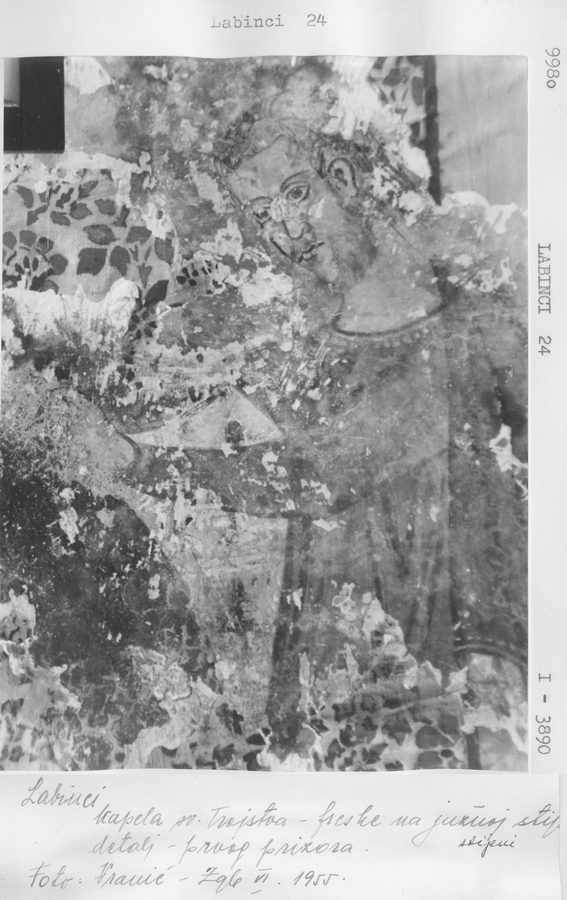
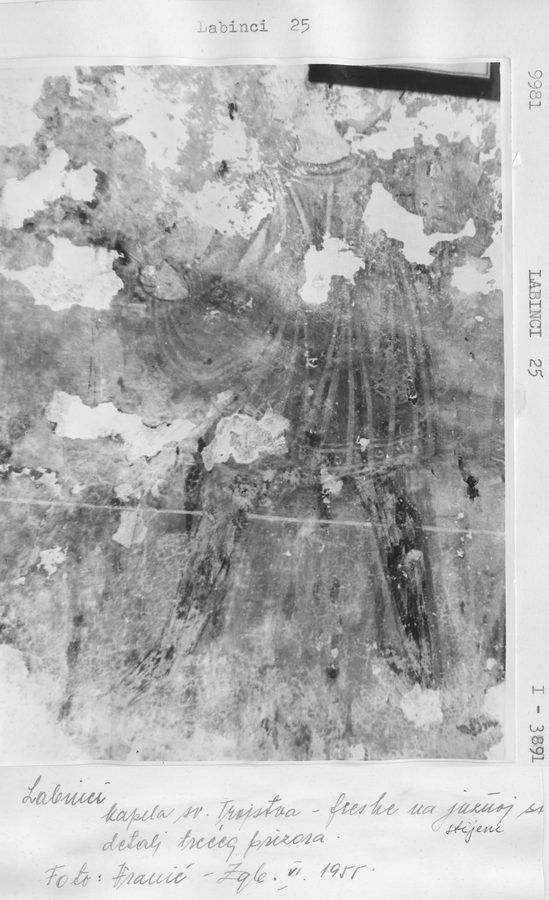
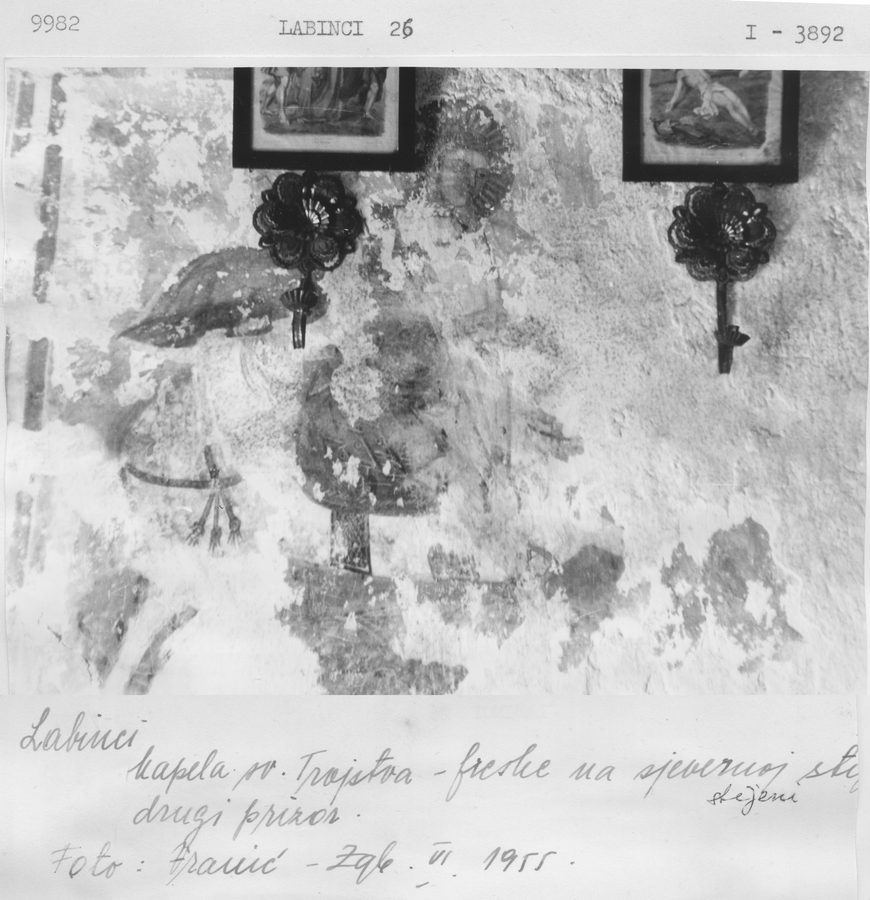
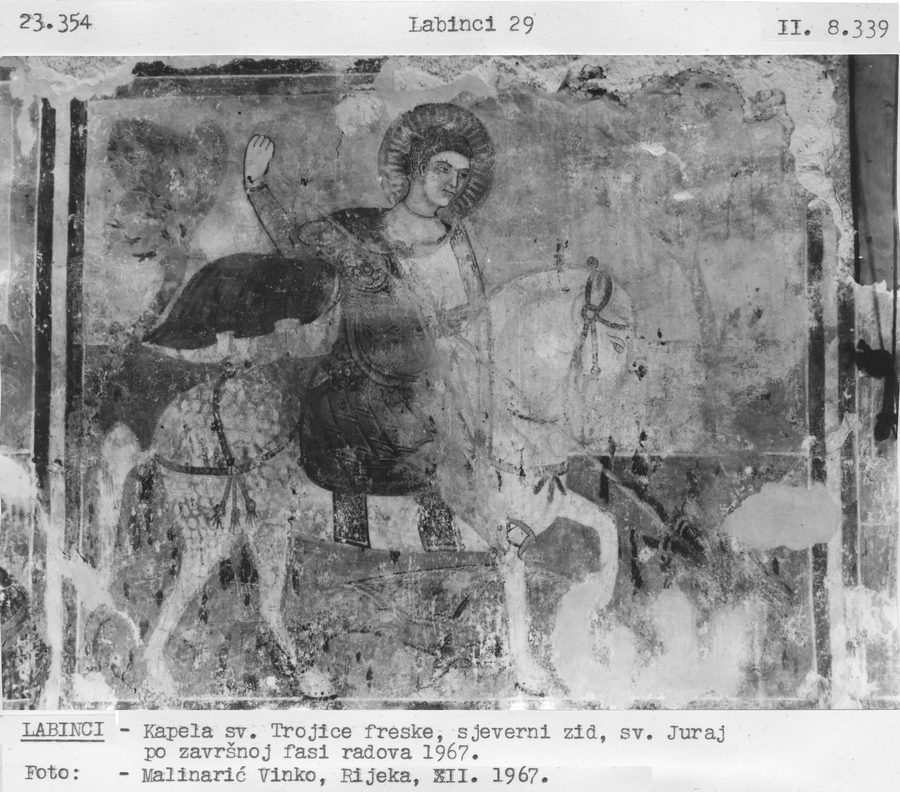
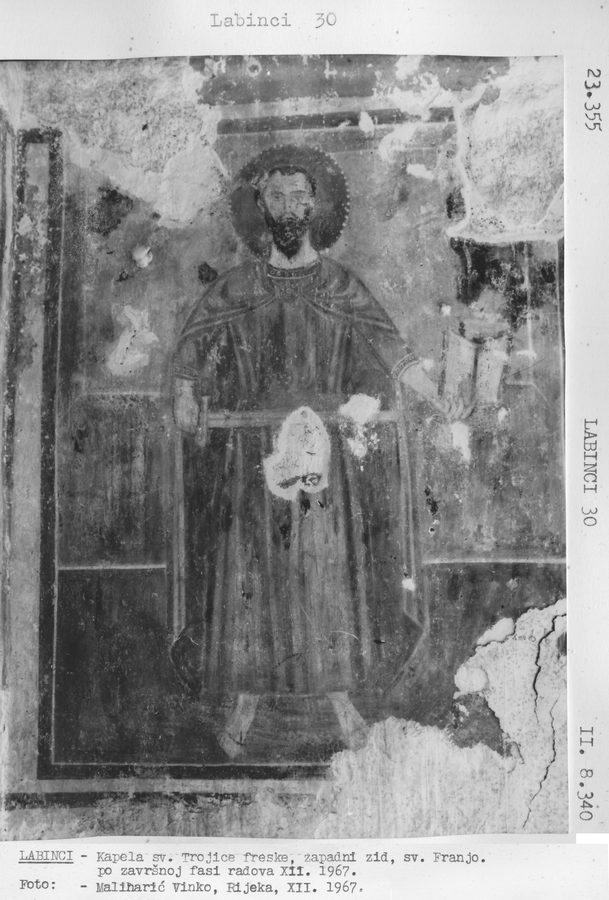
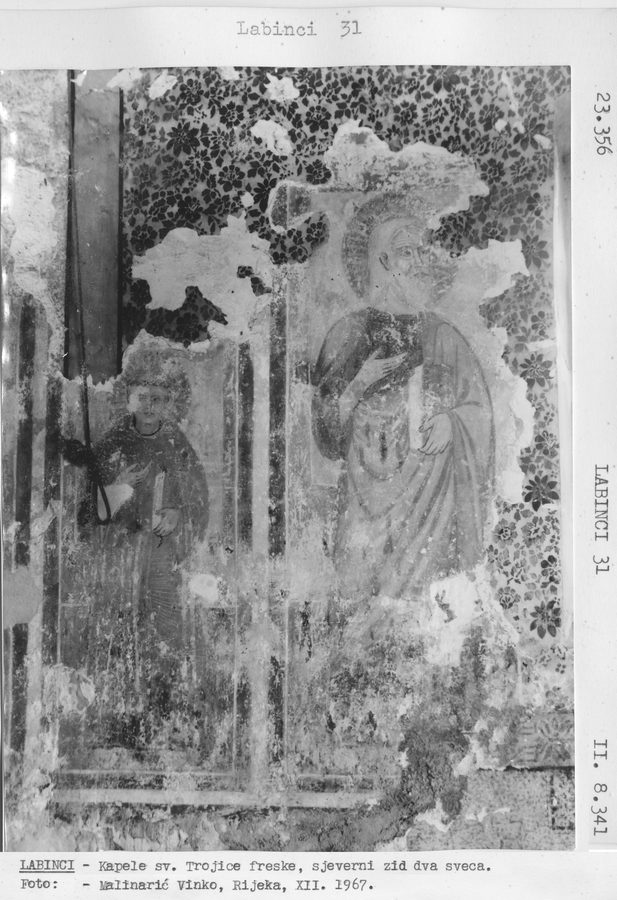
Within the interior, Gothic wall paintings dating to the early fourteenth century have been preserved. Eight painted fields contain representations of saints accompanied by their respective attributes. The background of the figural scenes is organised into three horizontal zones. The lower section is filled with a stylised landscape rendered in yellow and red tones, while the two upper areas, conceived in a cooler chromatic palette, evoke the sky and celestial space. The scenes are framed by a broad white border with a red edging and a thin white line along the inner edge of the pictorial field.
The author of the frescoes was formed within the Venetian artistic milieu, in which Trecento pictorial solutions intersect with the Romanesque-Byzantine tradition.
The wall paintings were uncovered in 1948 by Aleksander Perc, then director of the Conservation Institute in Rijeka, and were introduced into scholarly discourse by Branko Fučić in 1963 in his dissertation Srednjovjekovno zidno slikarstvo u Istri.
Iconographic programme:
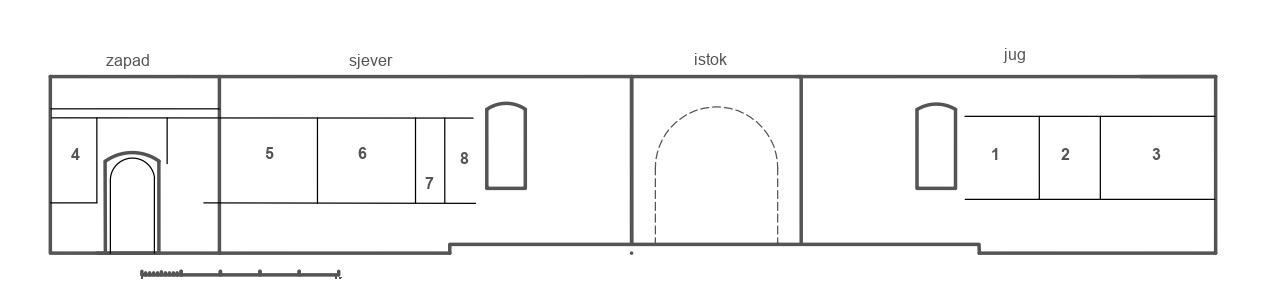
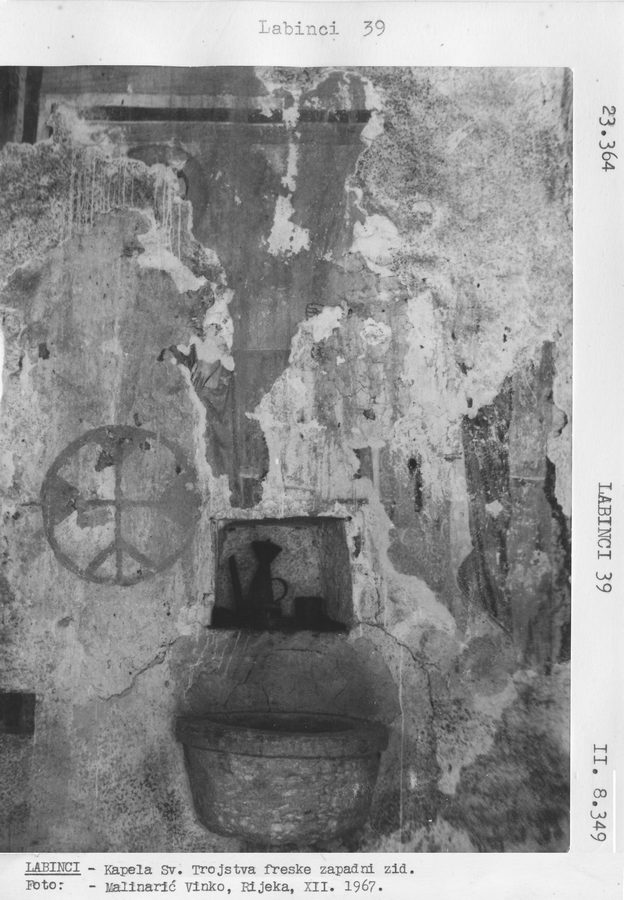
South wall: 1. St Martin on Horseback, 2. St John the Baptist and an Unknown Saint 3. Stoning of St Stephen. West wall: 4. St Paul. North wall: 5. Two Unknown Saints and St Anthony Abbot, 6. St George Slaying the Dragon, 7. Saint with a Book, 8. Saint with a Book.
Scene locations
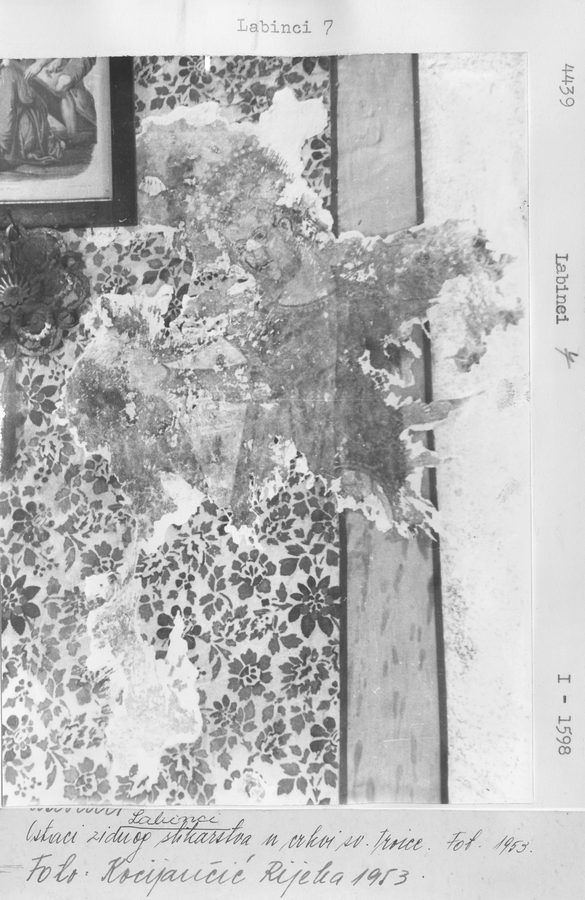
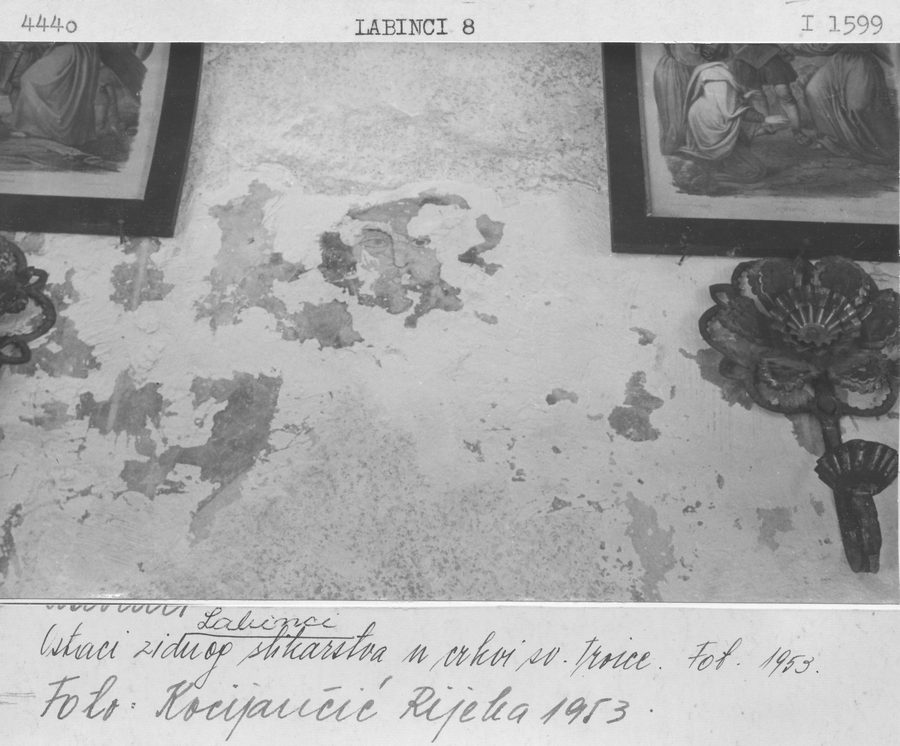
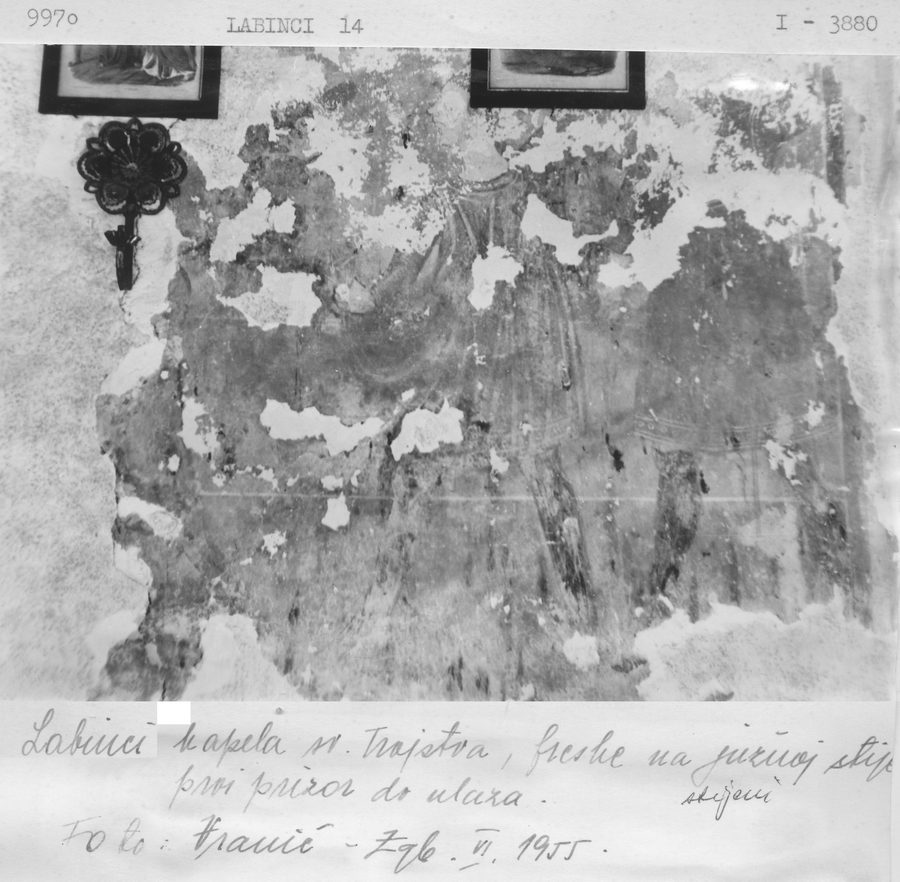
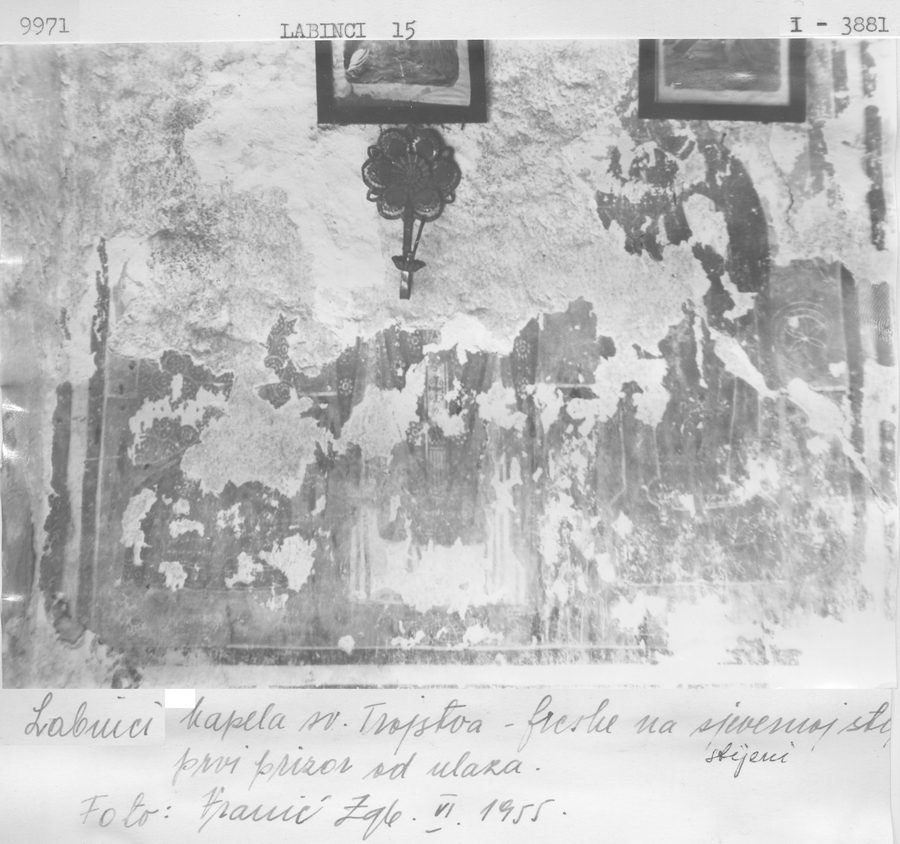
B. FUČIĆ, 1964a, Srednjovjekovno zidno slikarstvo u Istri, doktorska disertacija, Filozofski fakultet Sveučilišta u Ljubljani, Rijeka-Ljubljana, 1964., 184, KAT. 440; Ž. BISTROVIĆ, 2007, Gotičko zidno slikarstvo u Istri (novi prilozi jednoj budućoj sintezi), Annales. Series Historia et Sociologia, 17/2, 2007, 277-290., 278-279; ISTI, 2011, Šareni trag istarskih fresaka, Pula, 2011., 150-153.