


Draguć, Church of St Elisha
Century/year: end of the 13th or beginning of the 14th century
Historical-cultural period: Romanesque period
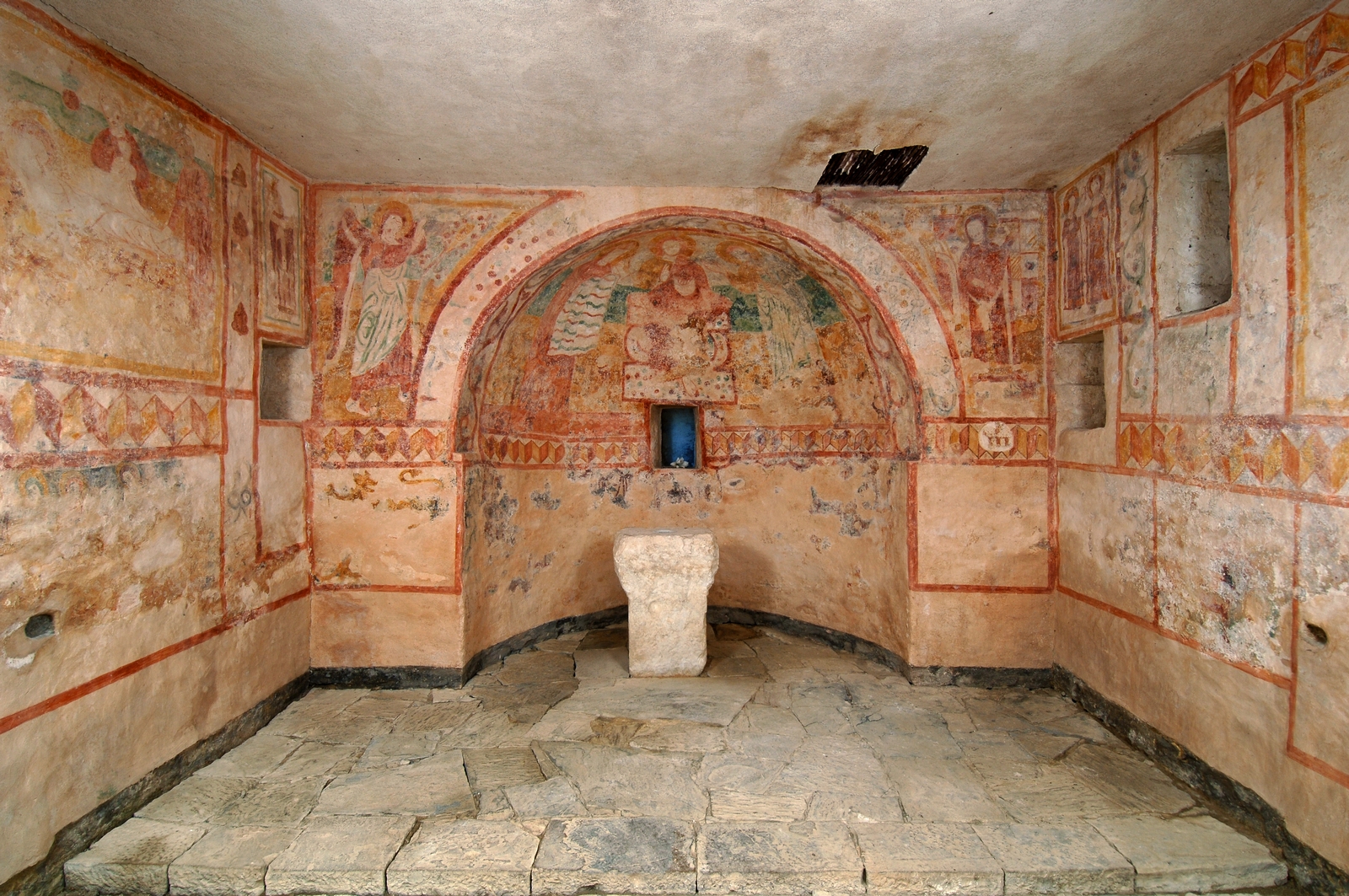
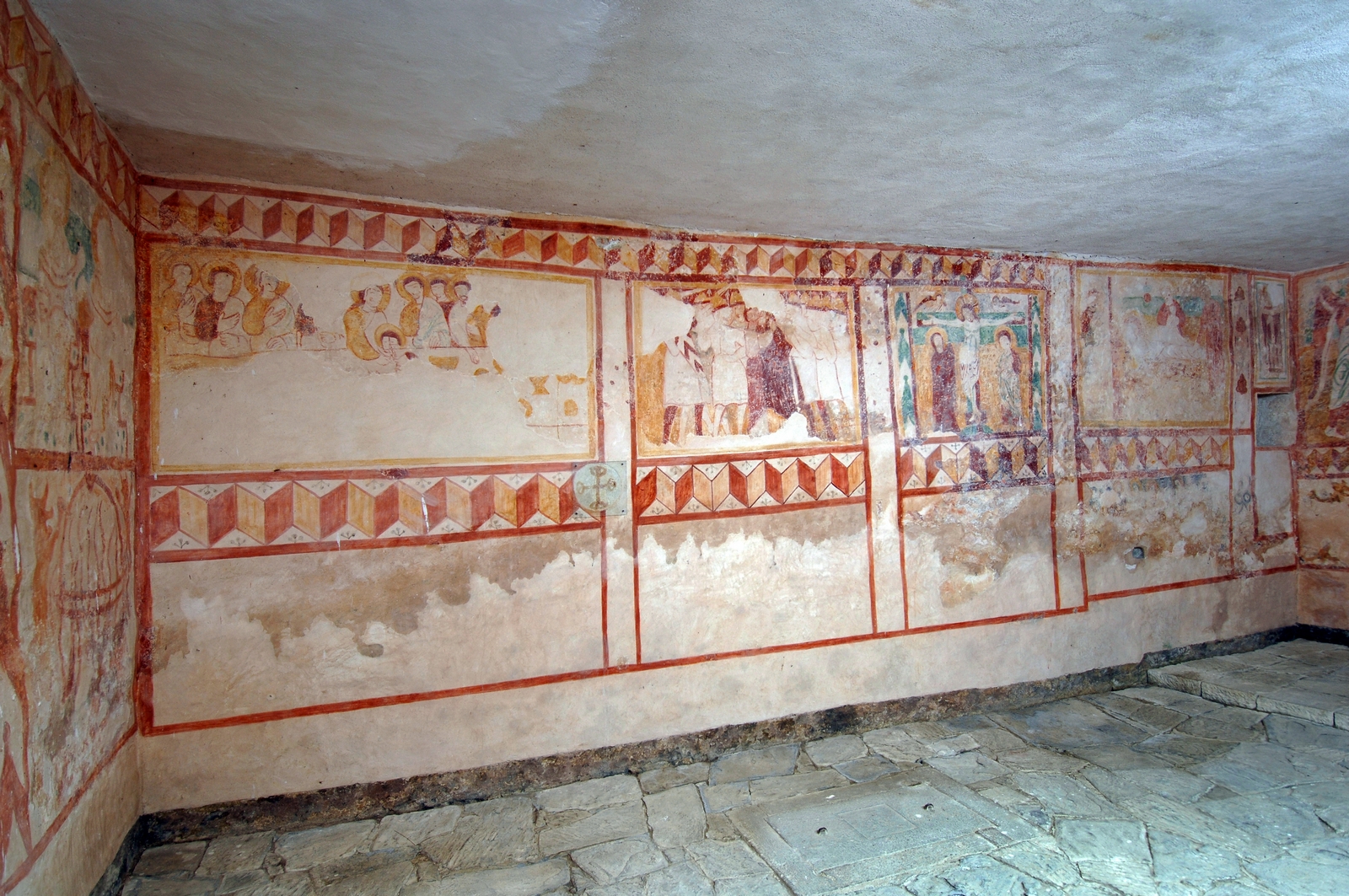
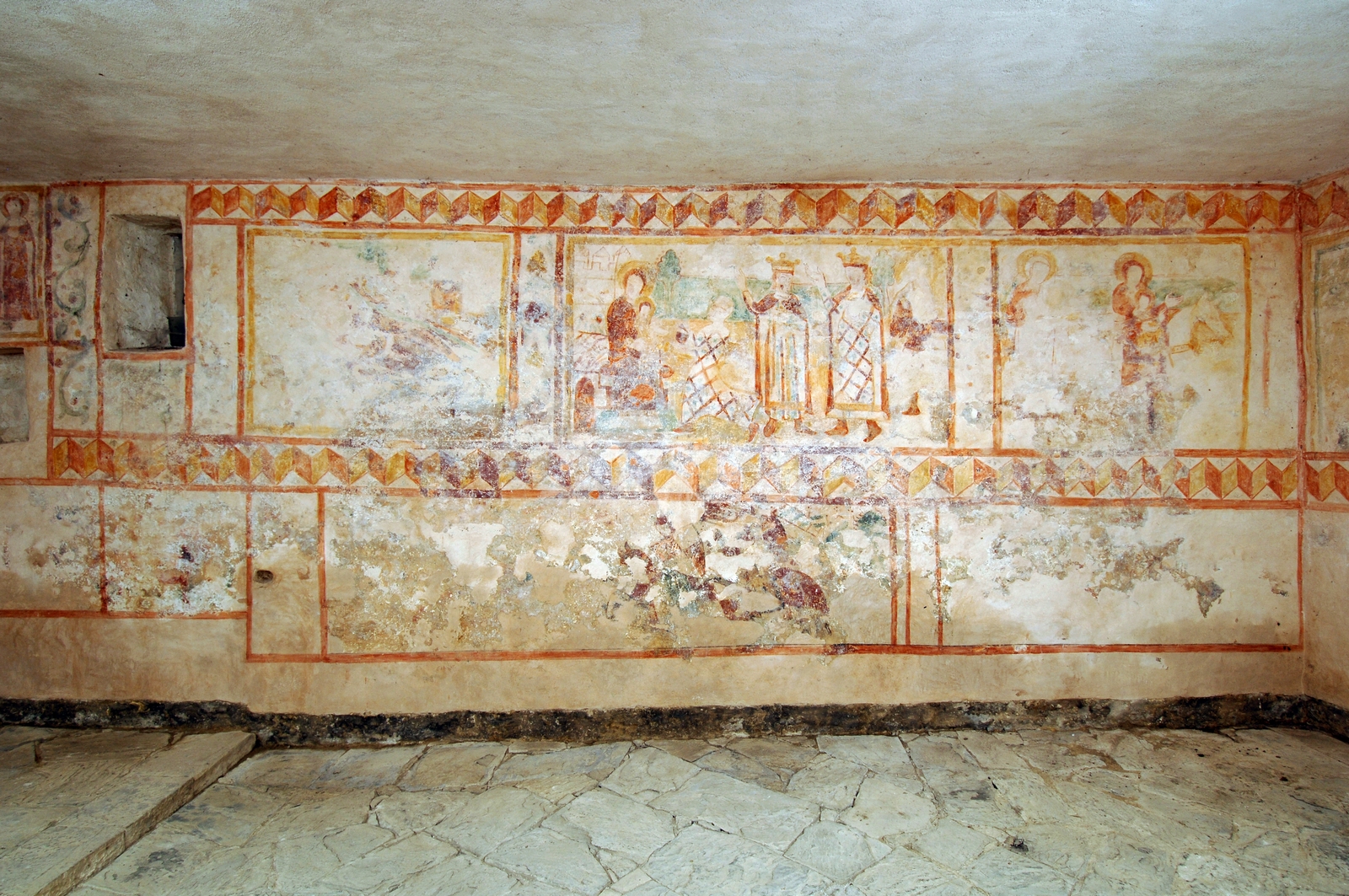
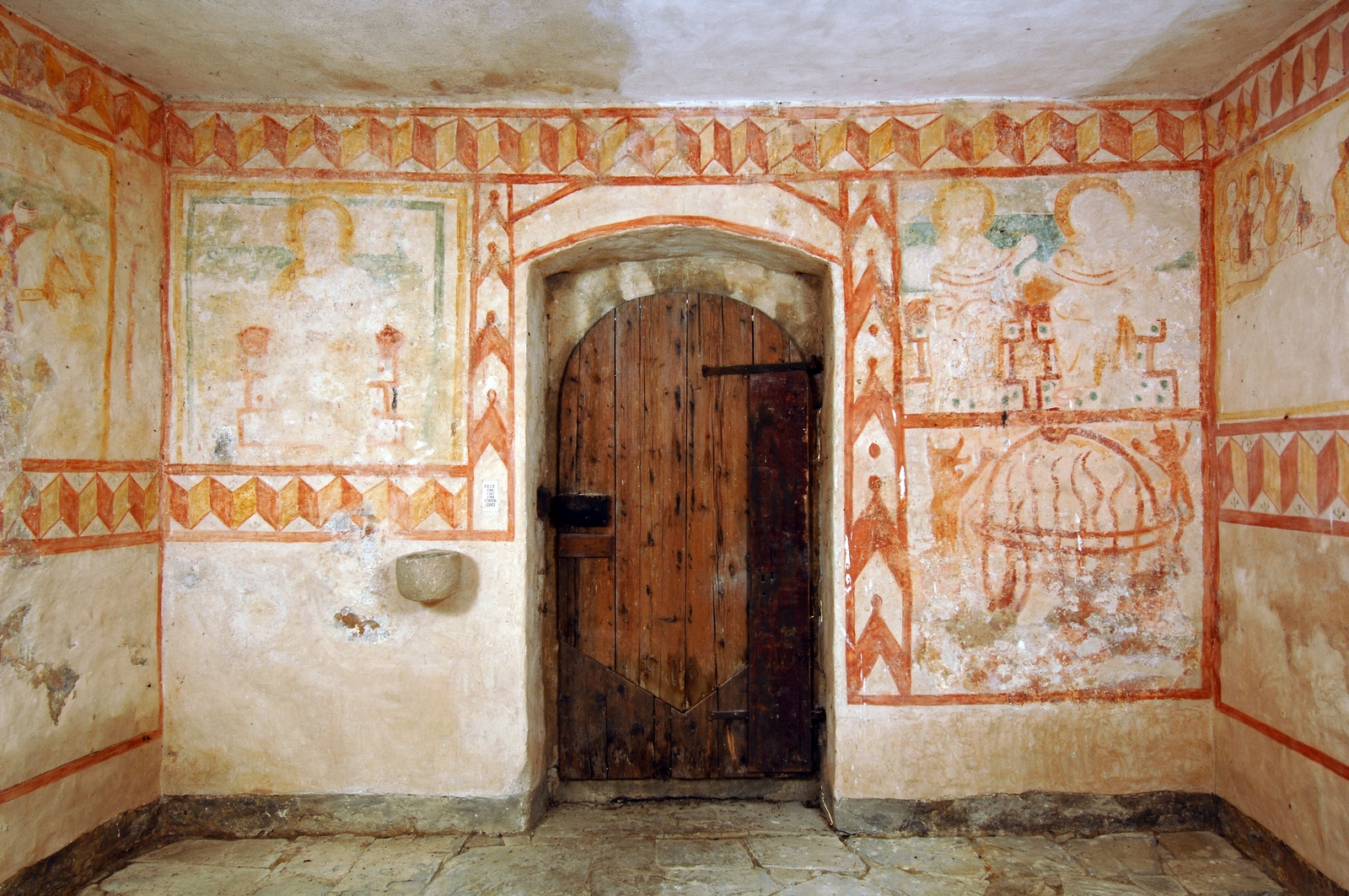
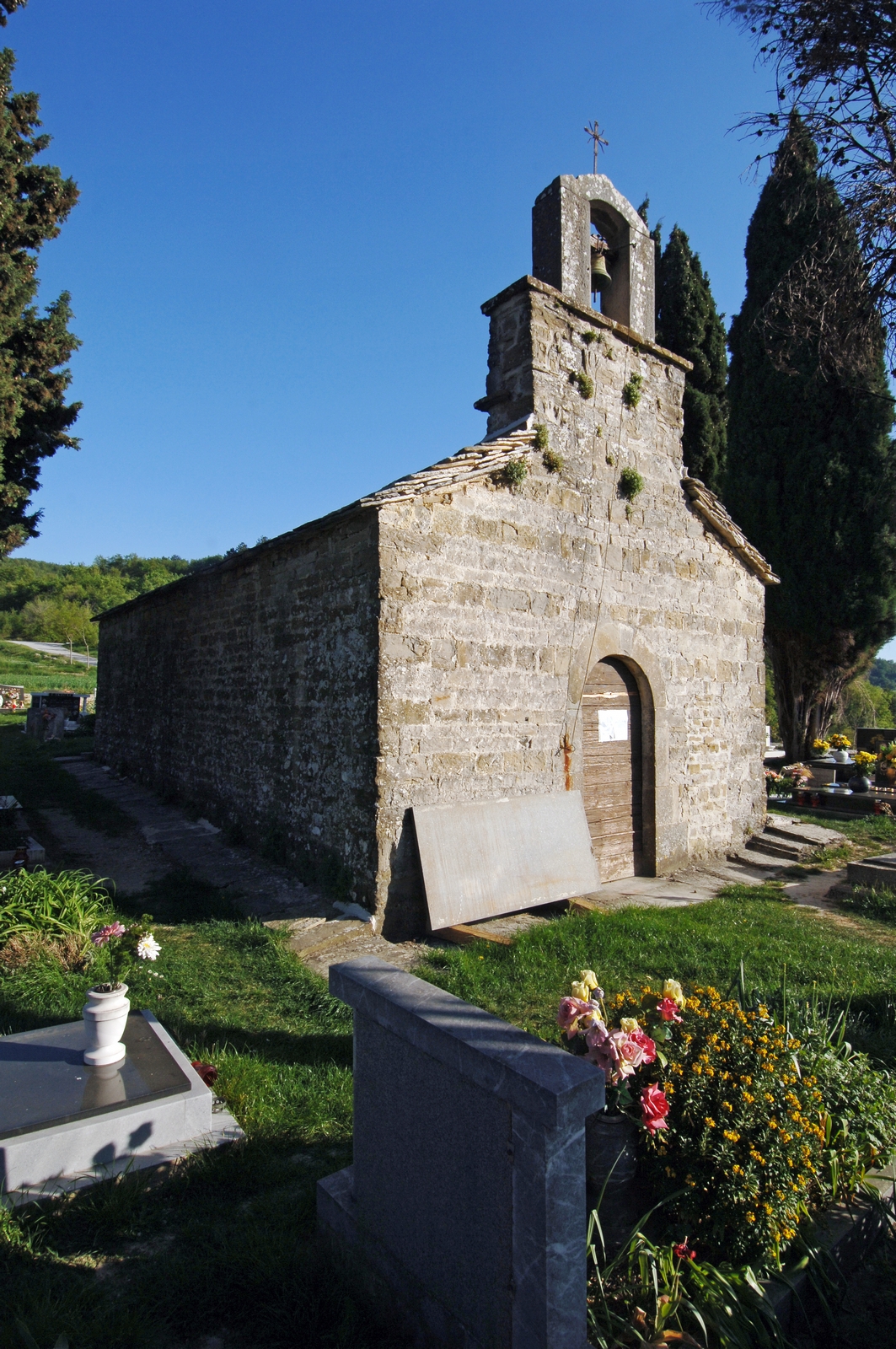
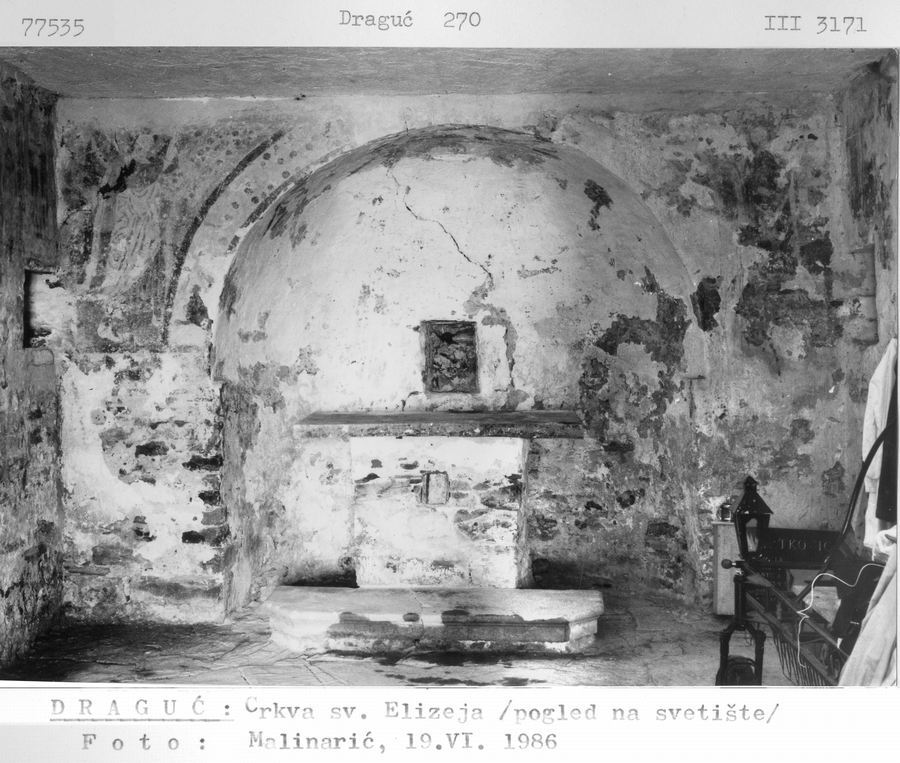
The cemetery church of St Elisha, erected in the thirteenth century, is situated at the eastern entrance to the settlement of Draguć. This single-nave sacred structure of rectangular ground plan with an inscribed semicircular apse represents a characteristic example of Late Romanesque architecture on the Istrian peninsula. It is constructed of regularly cut bichrome stone blocks, laid alternately in parallel horizontal courses. The façade is further accentuated by a stone bell-gable with a bell.
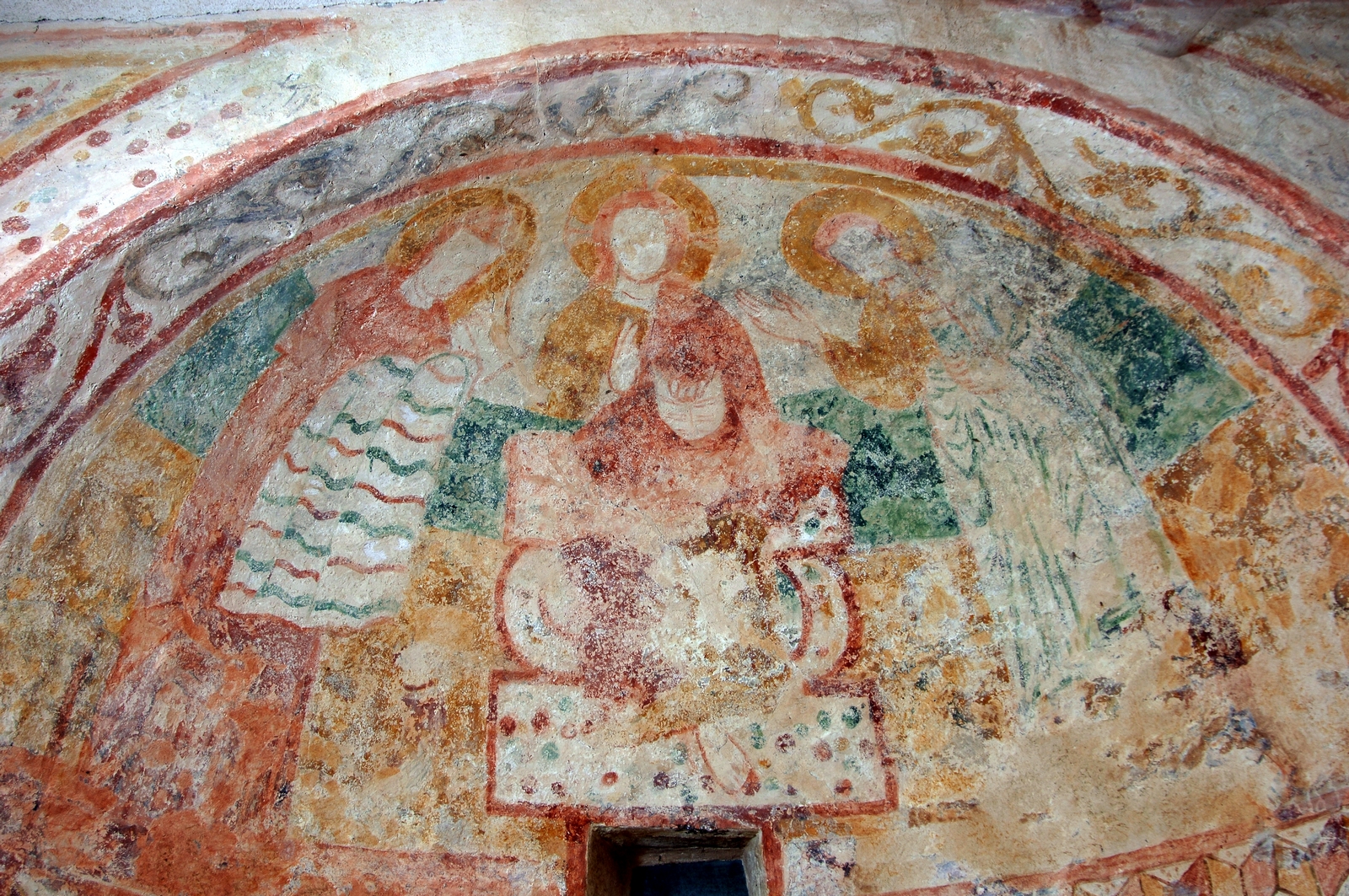
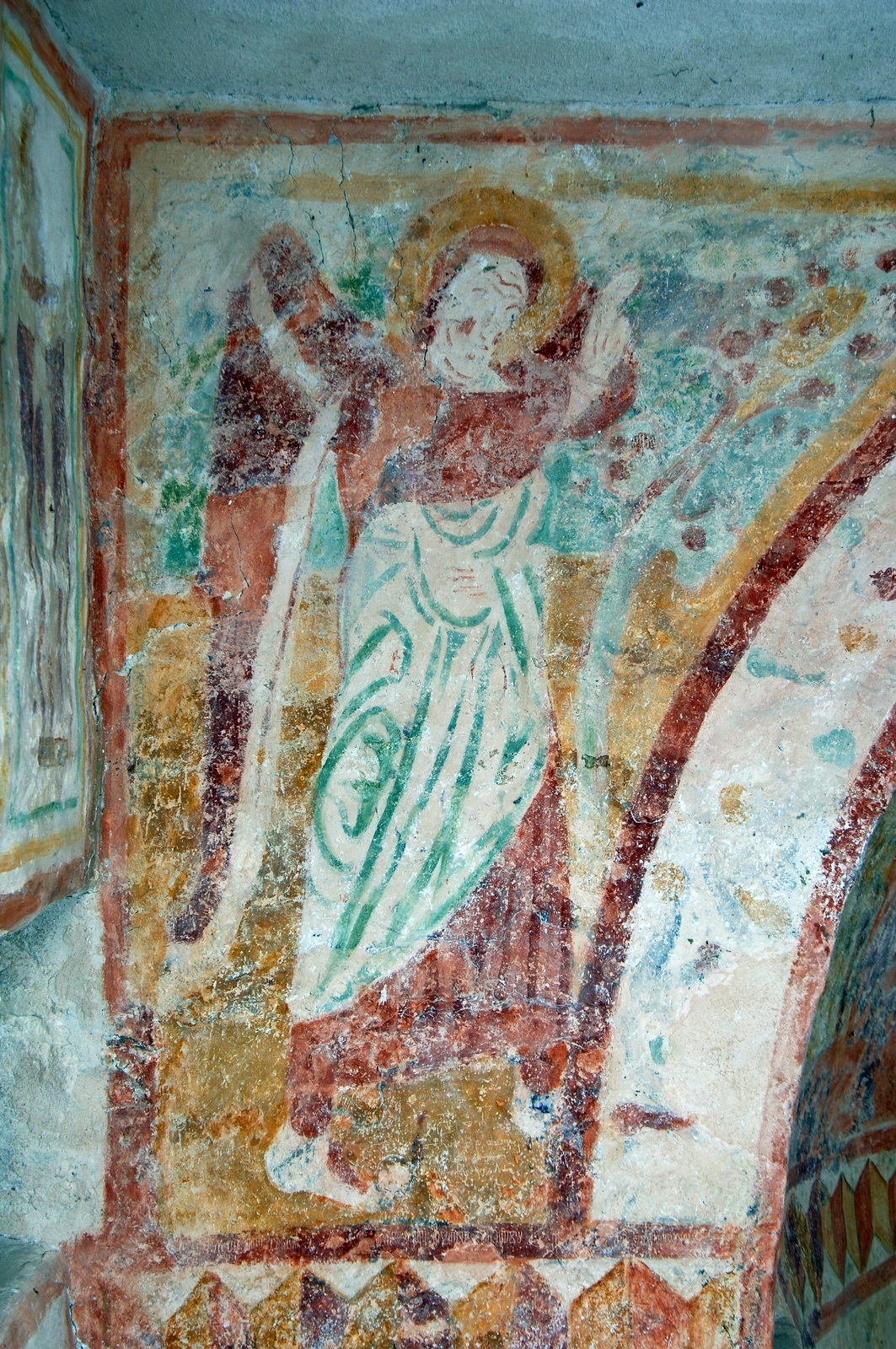
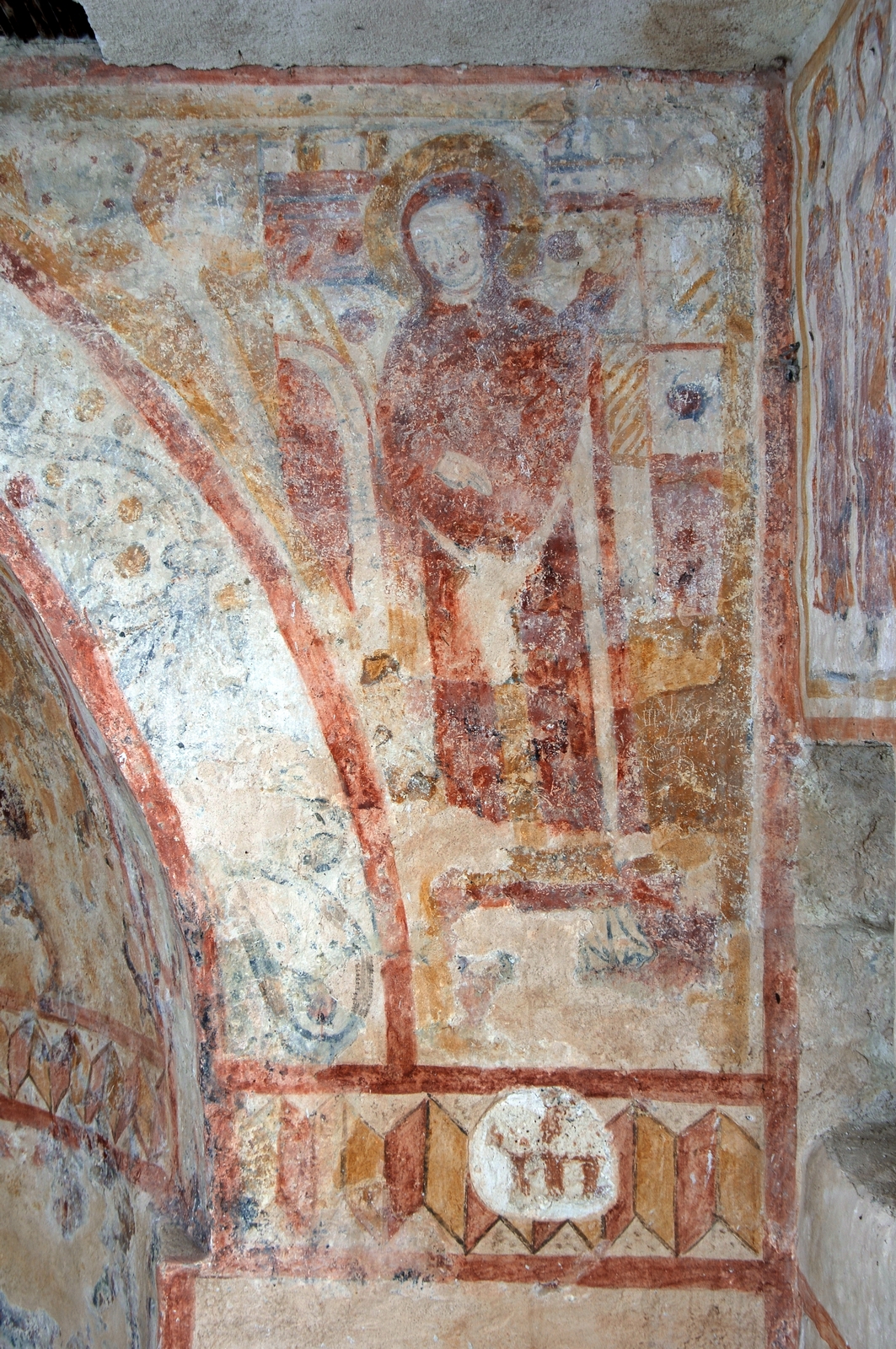
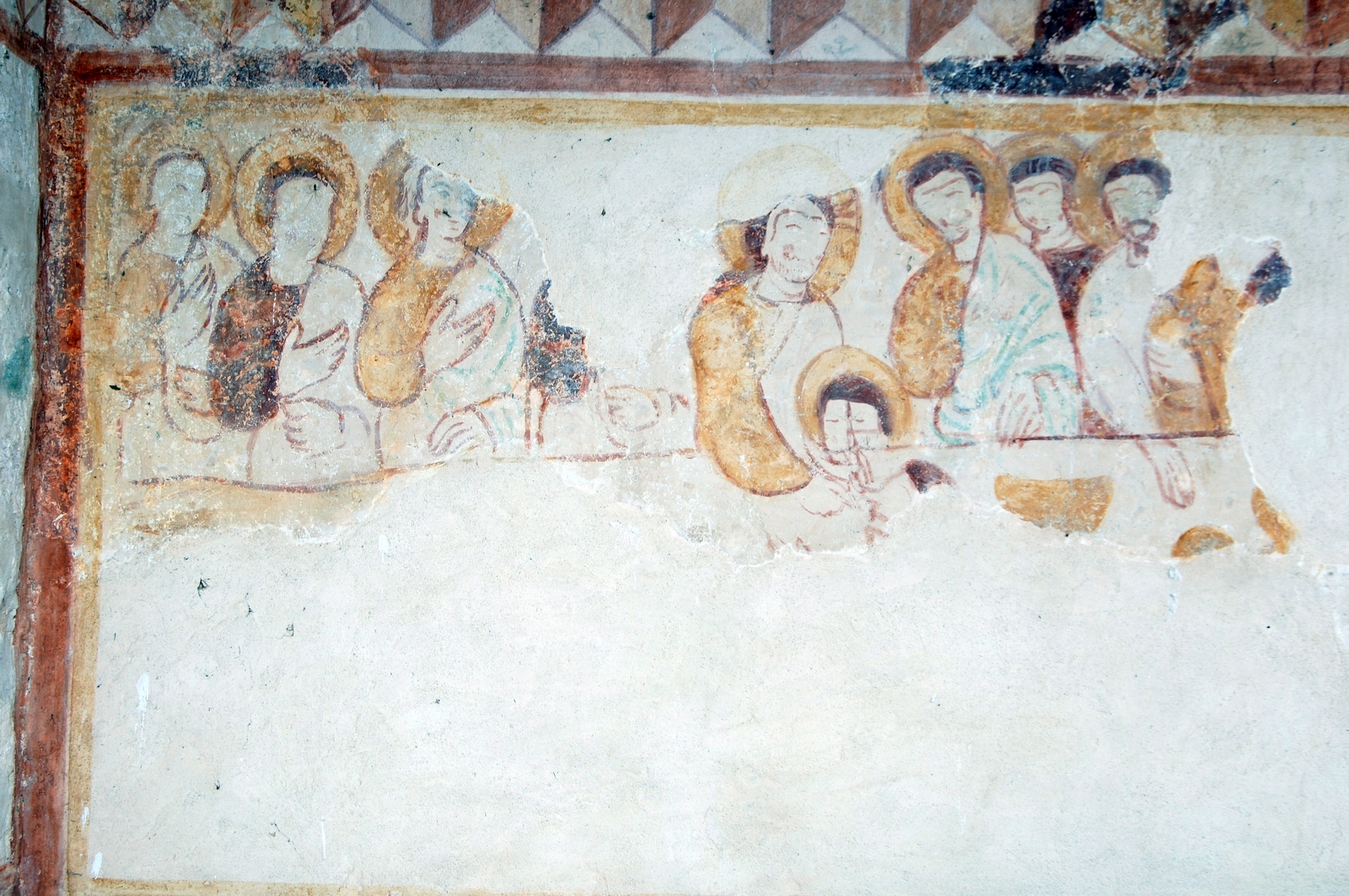
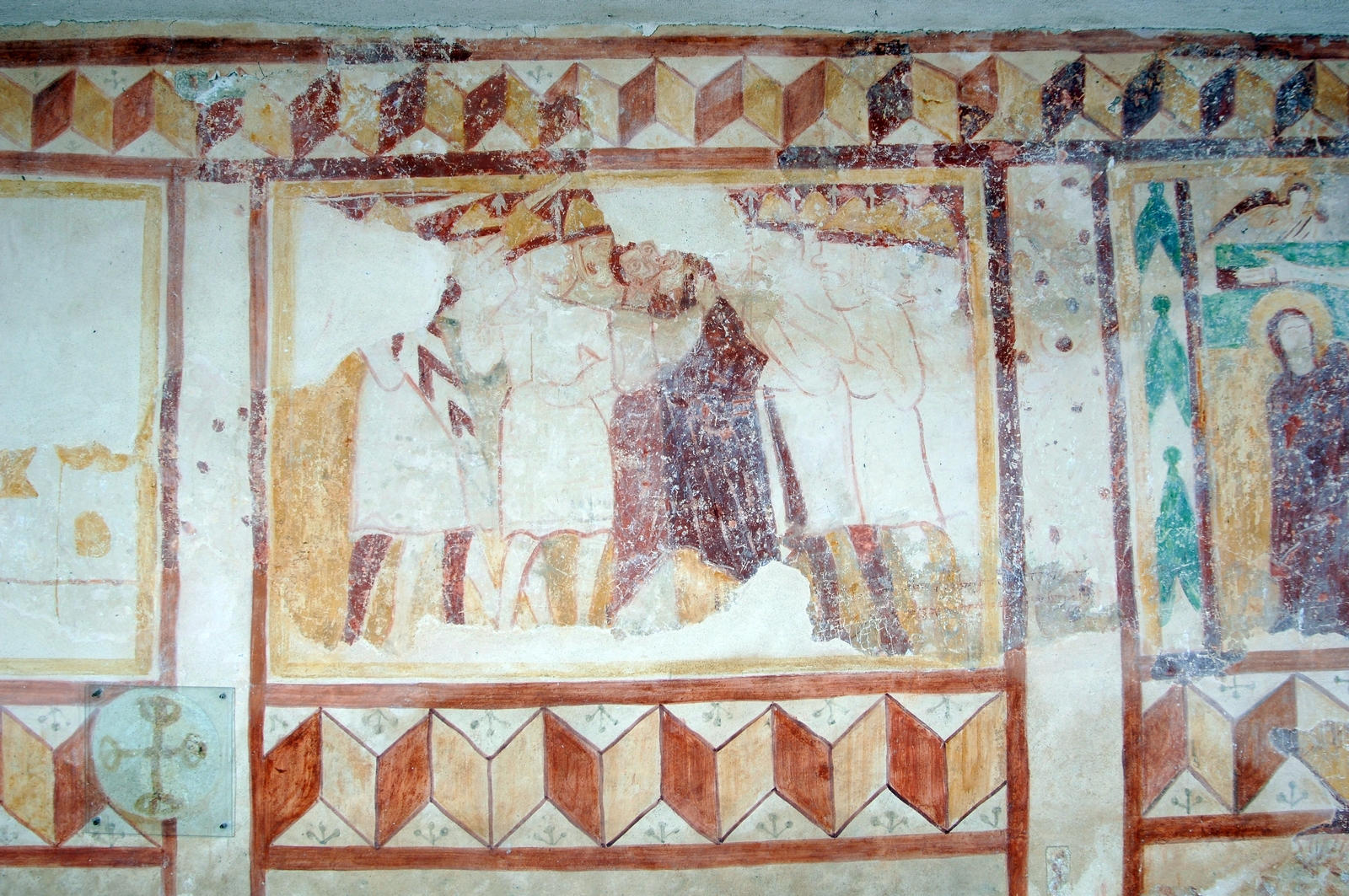
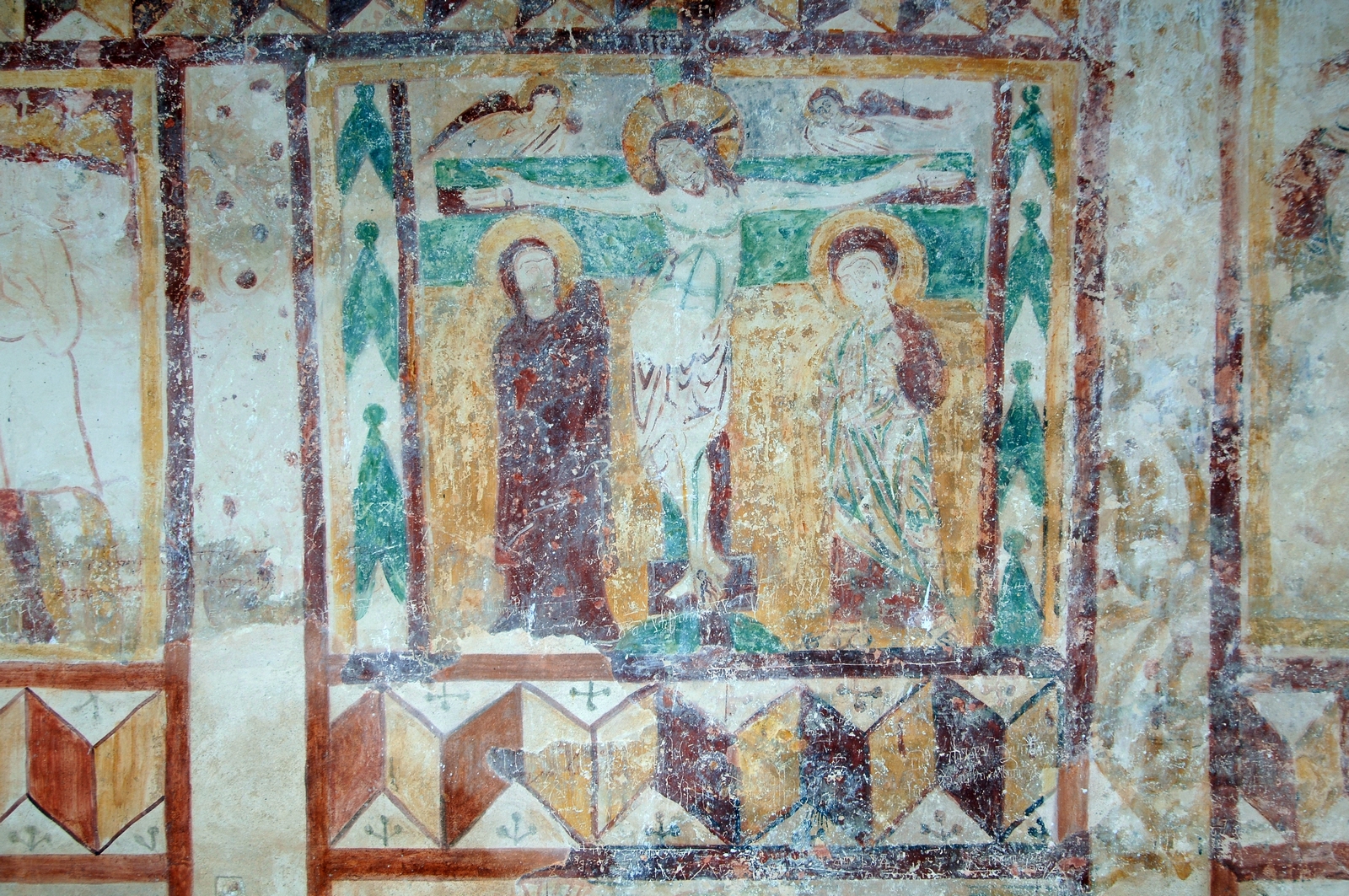
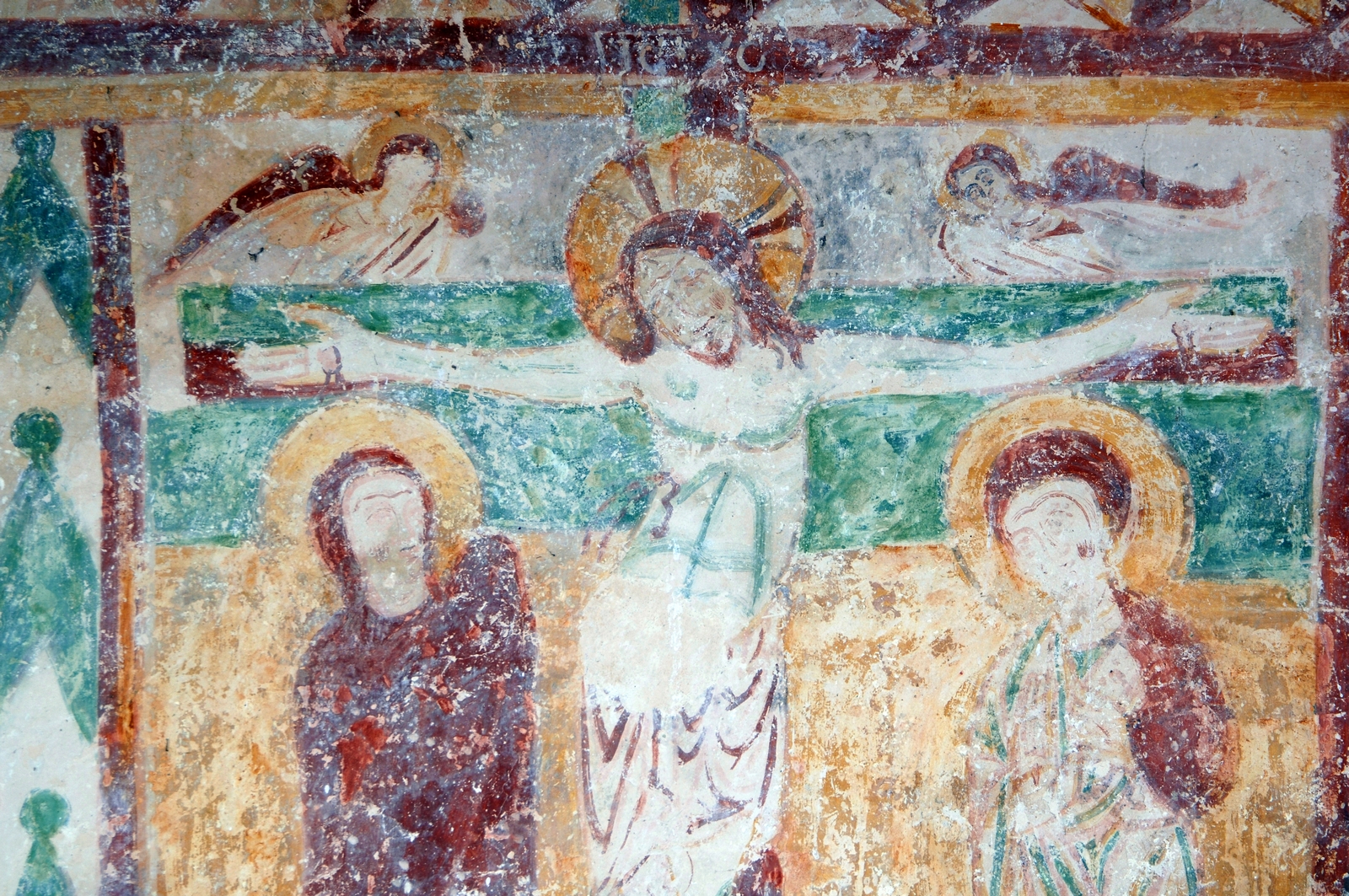
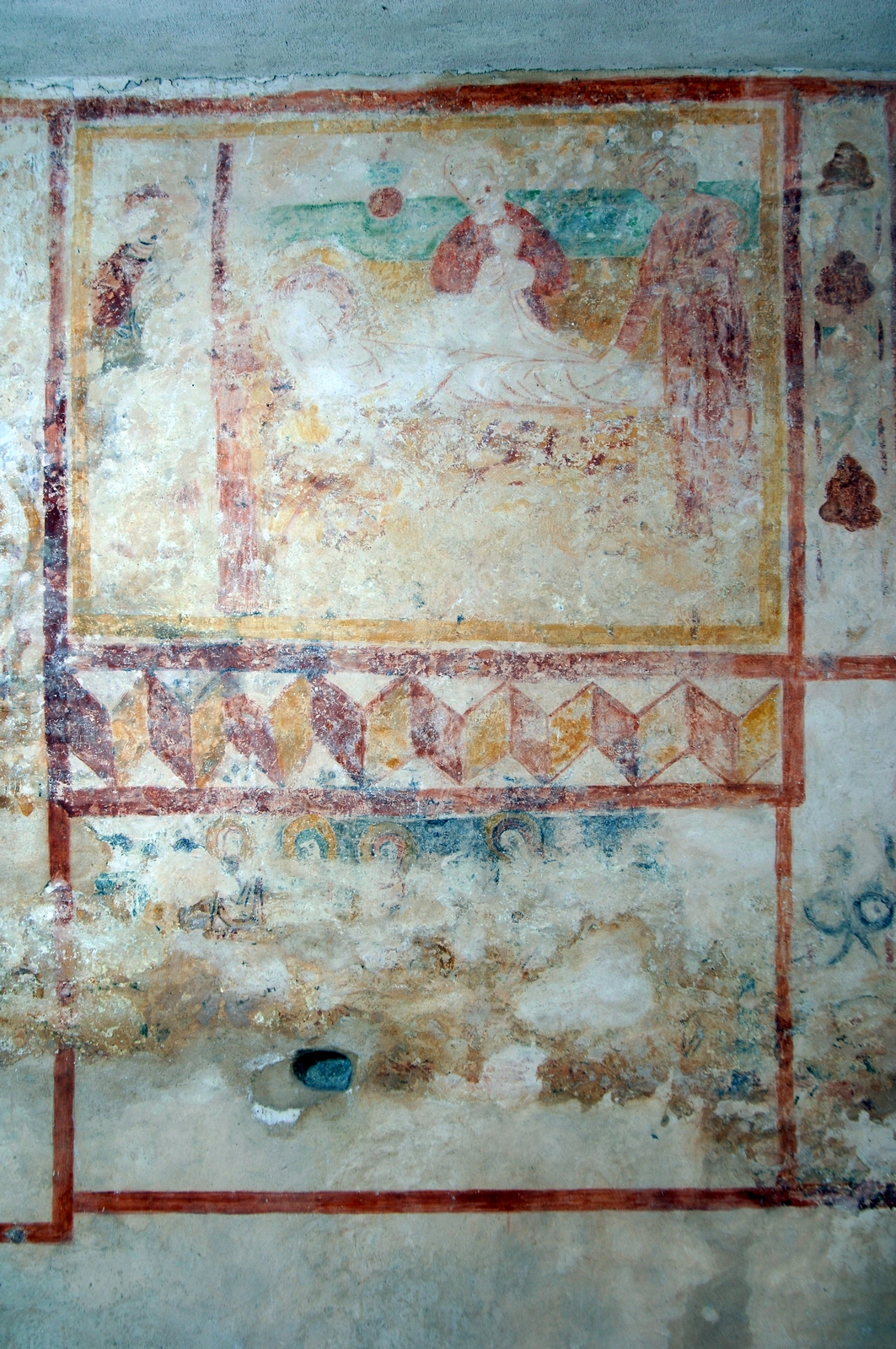
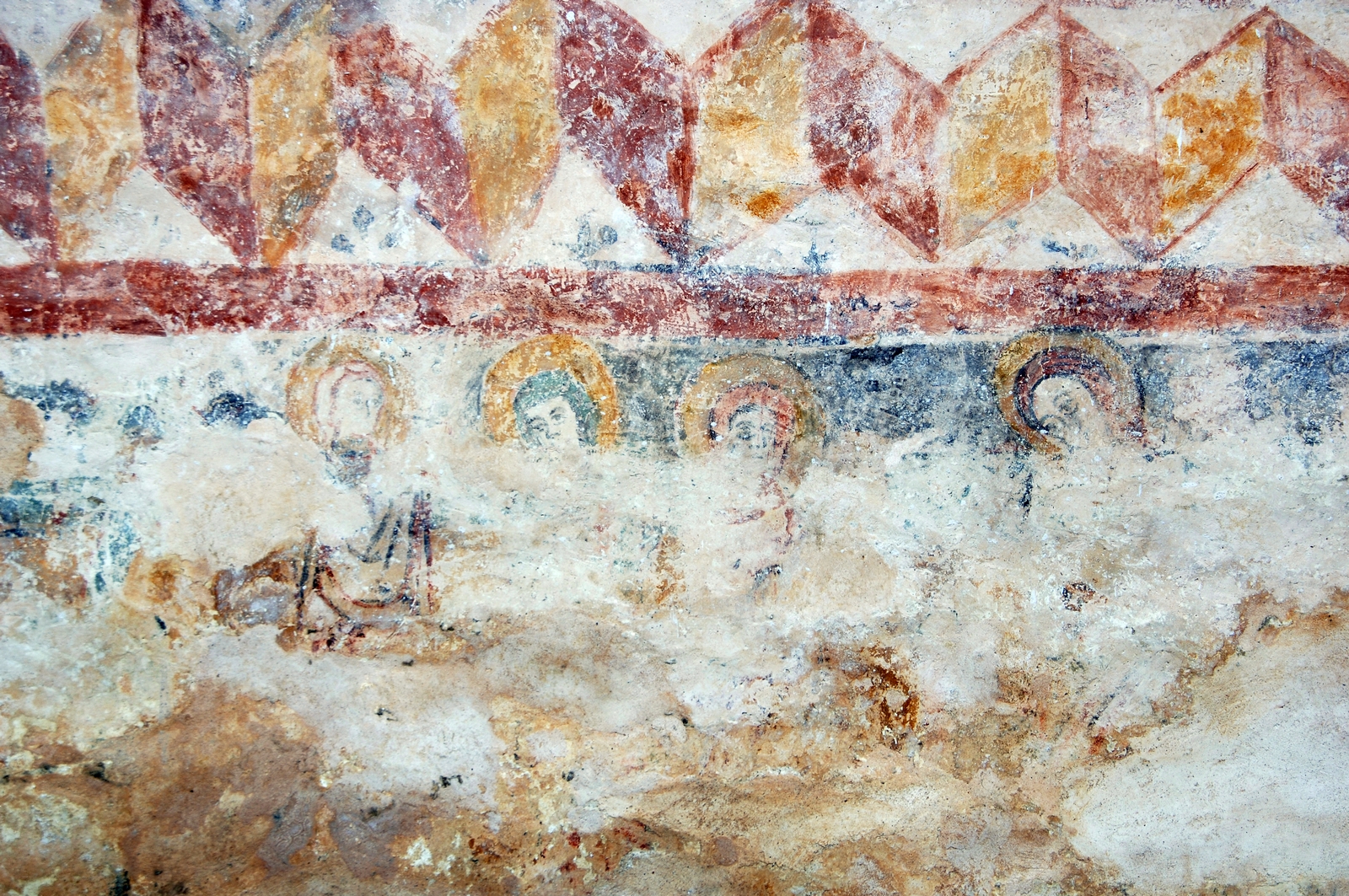
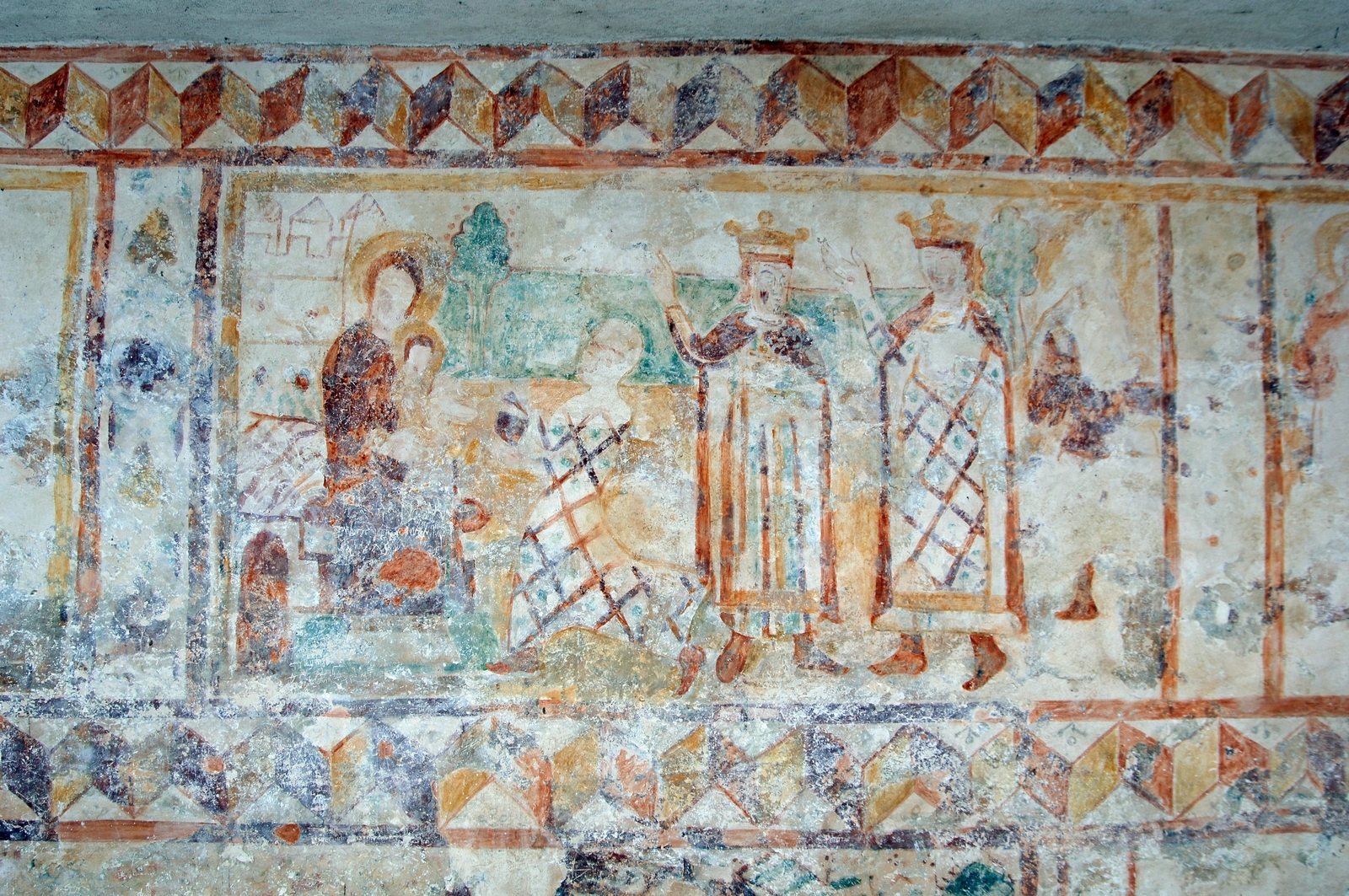
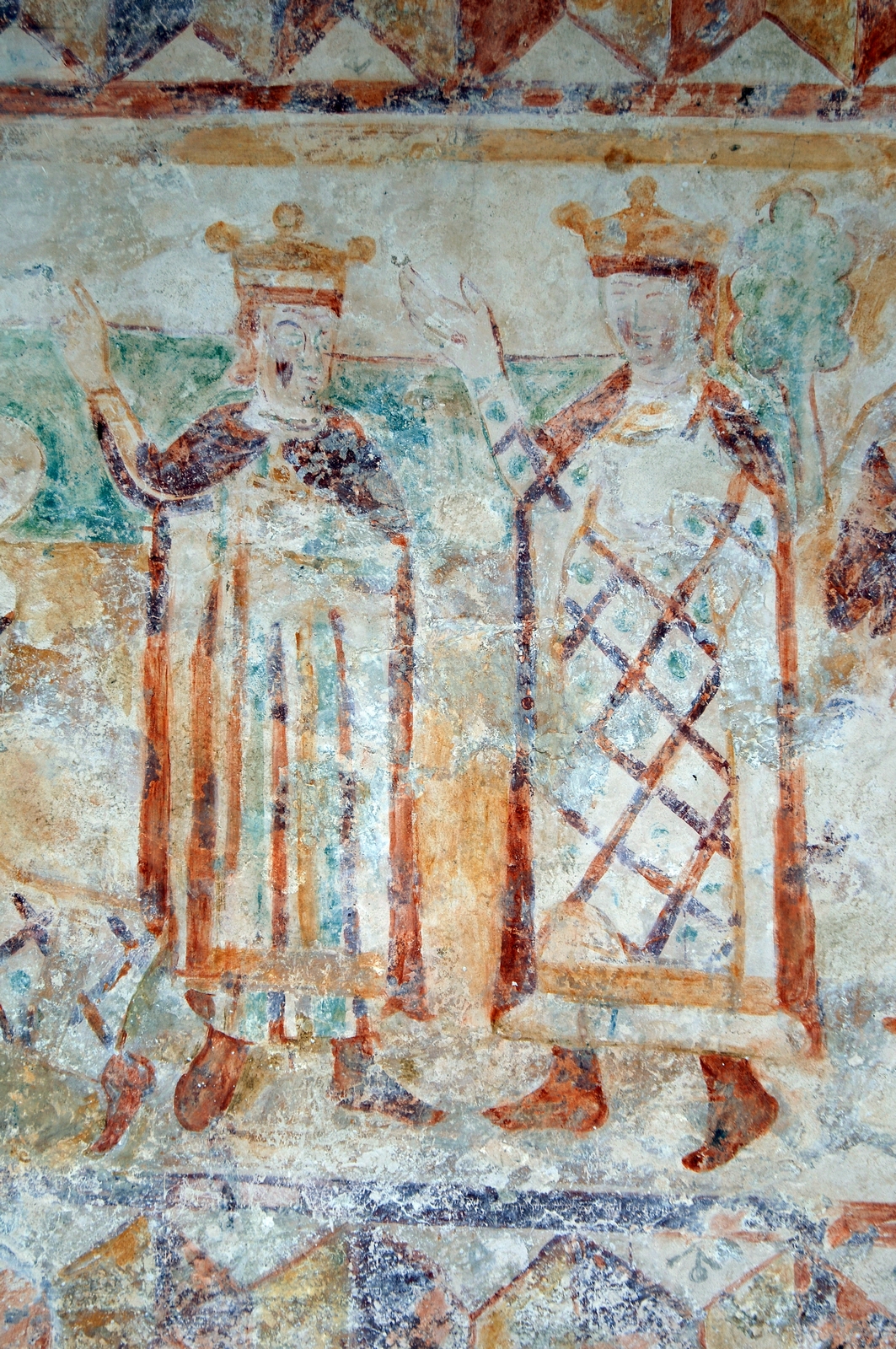
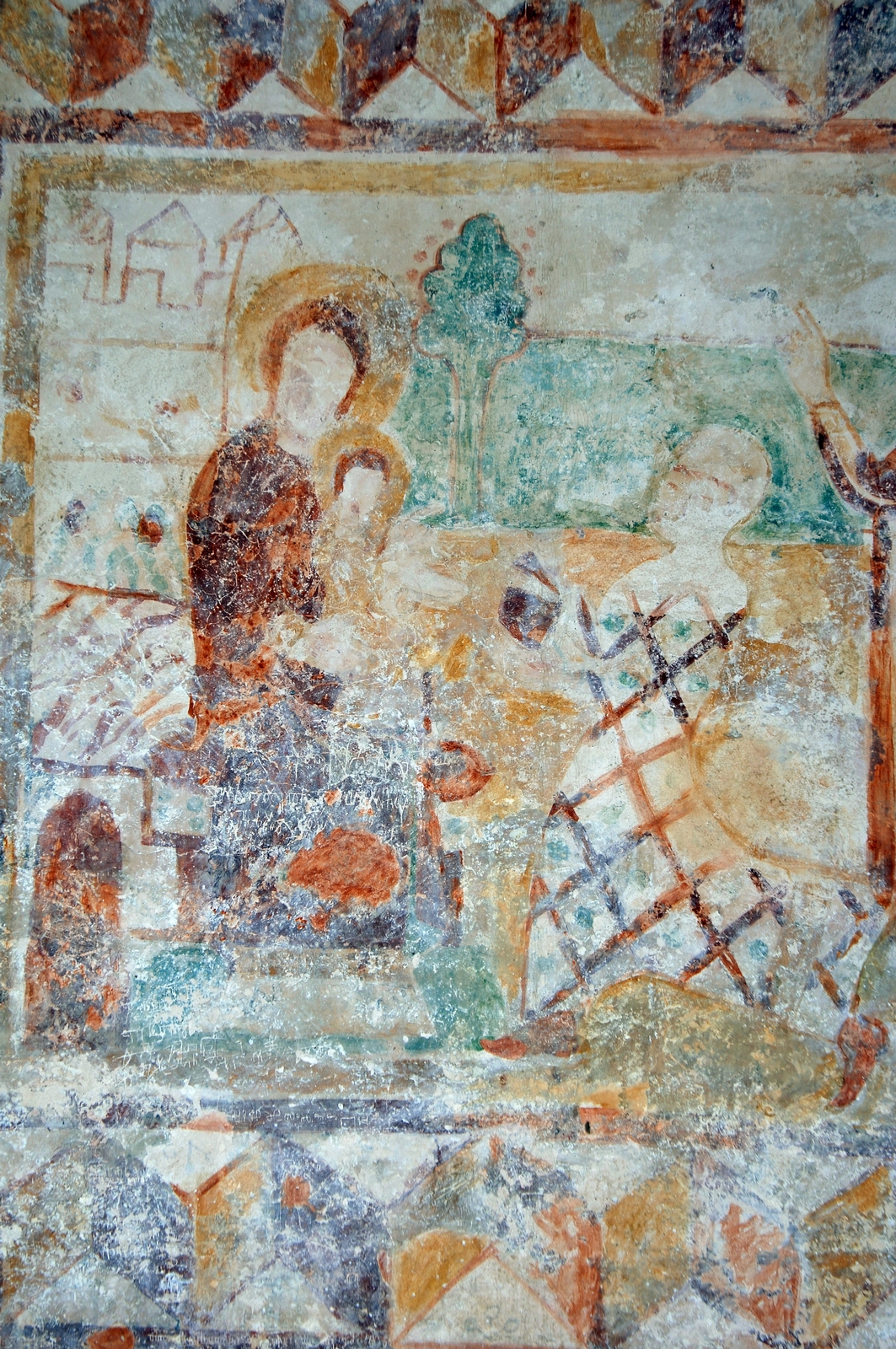
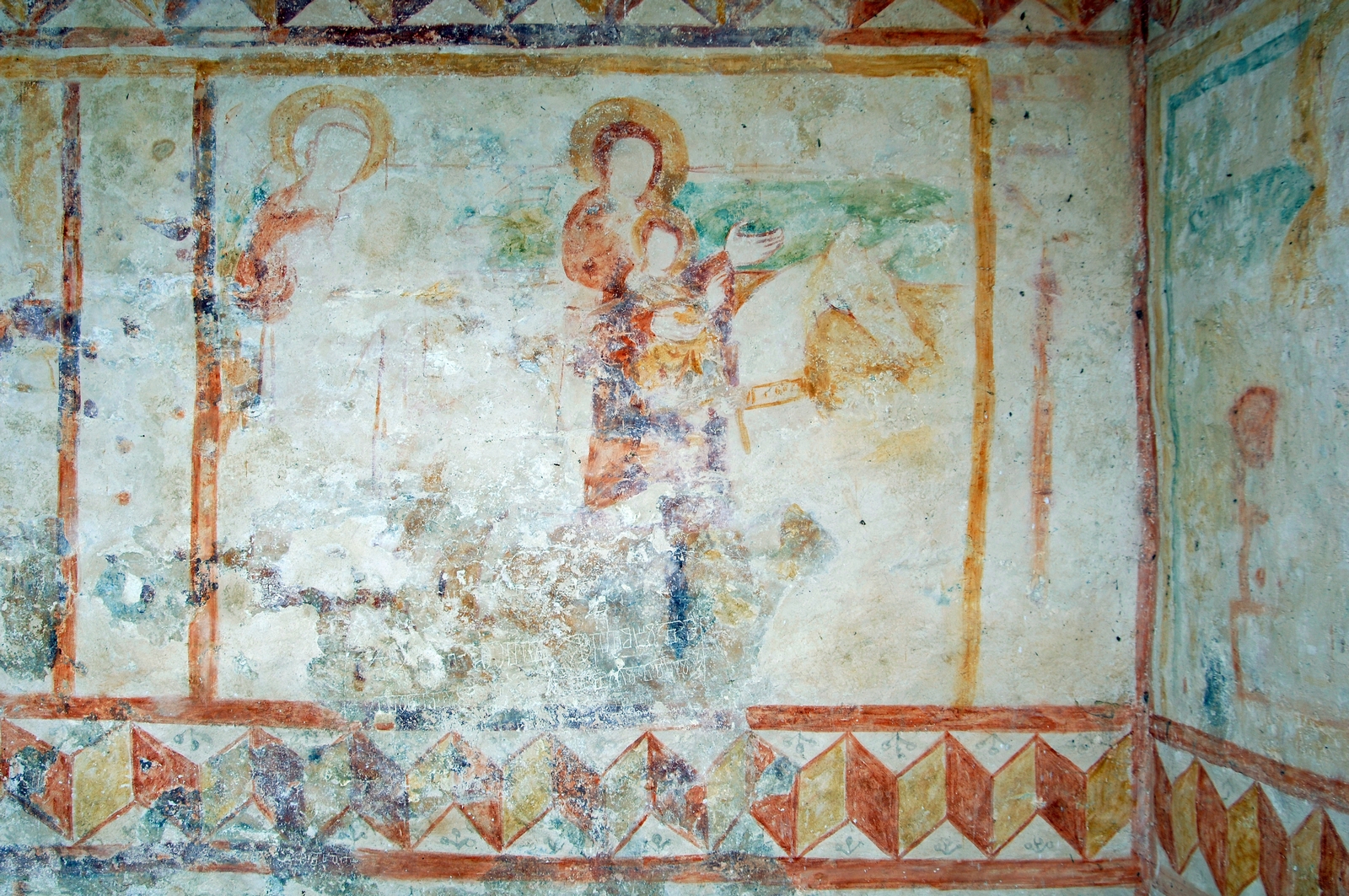
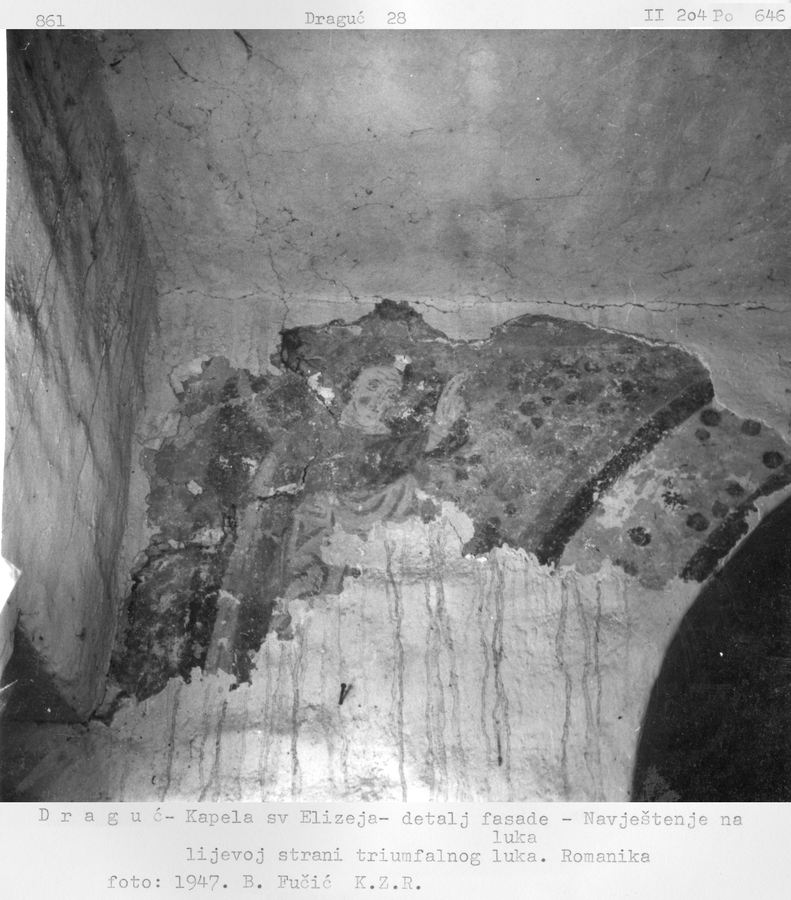
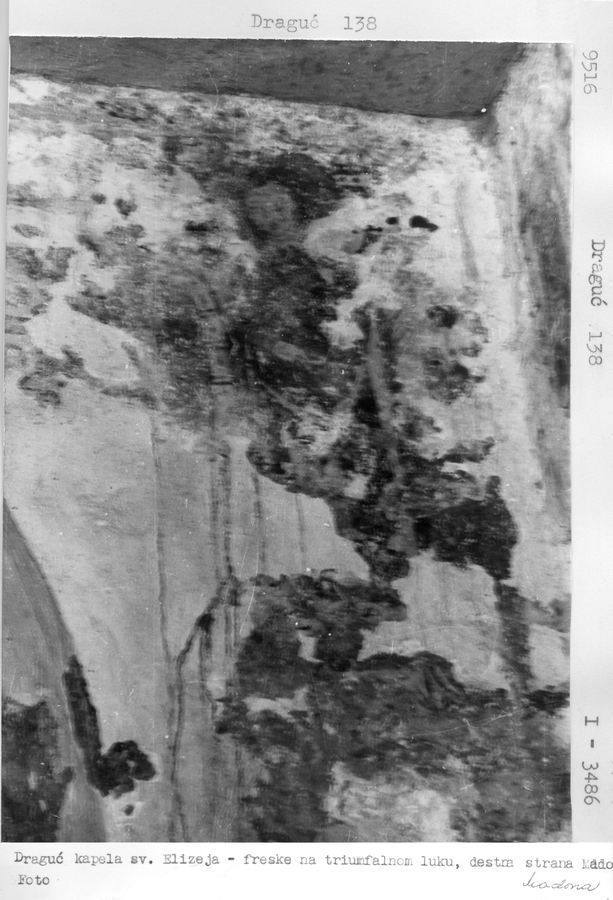
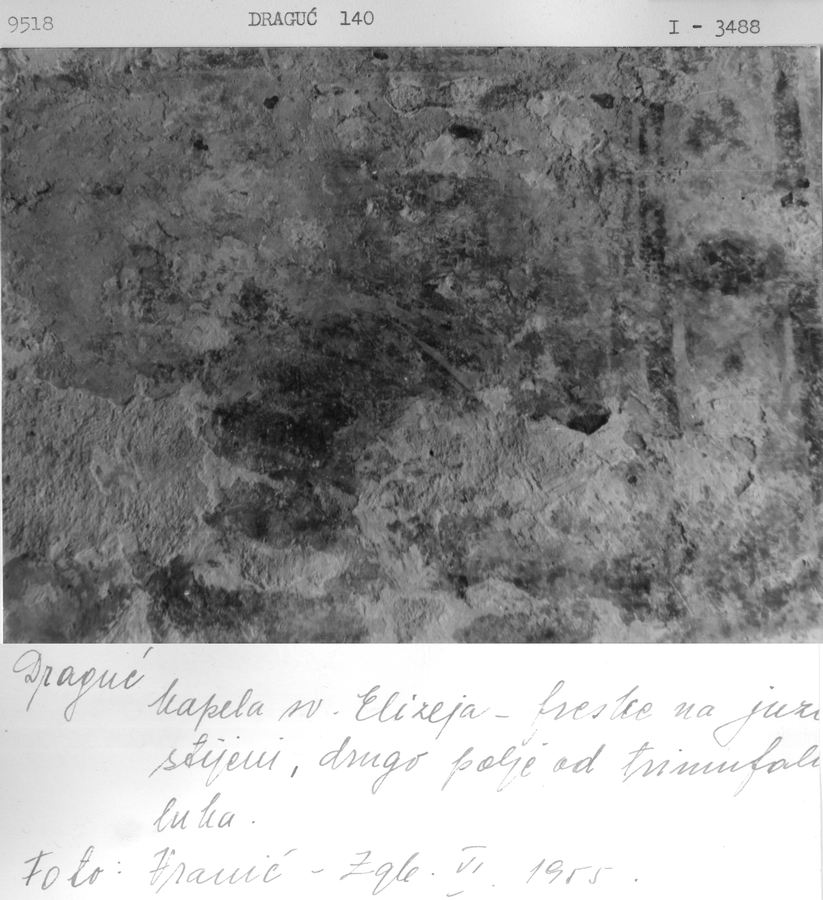
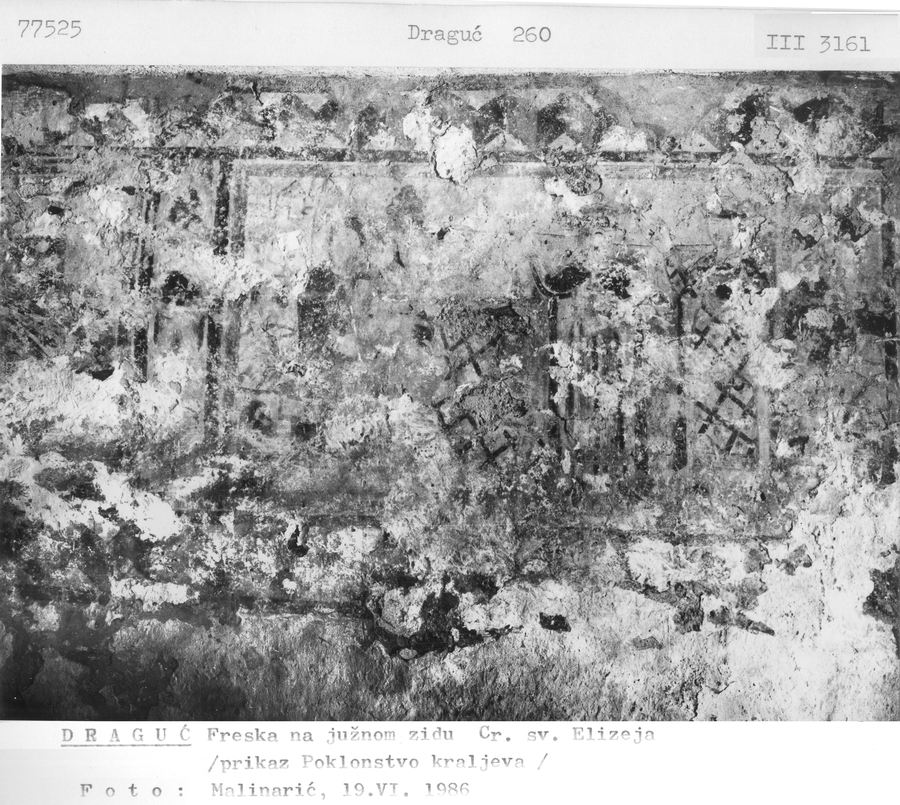
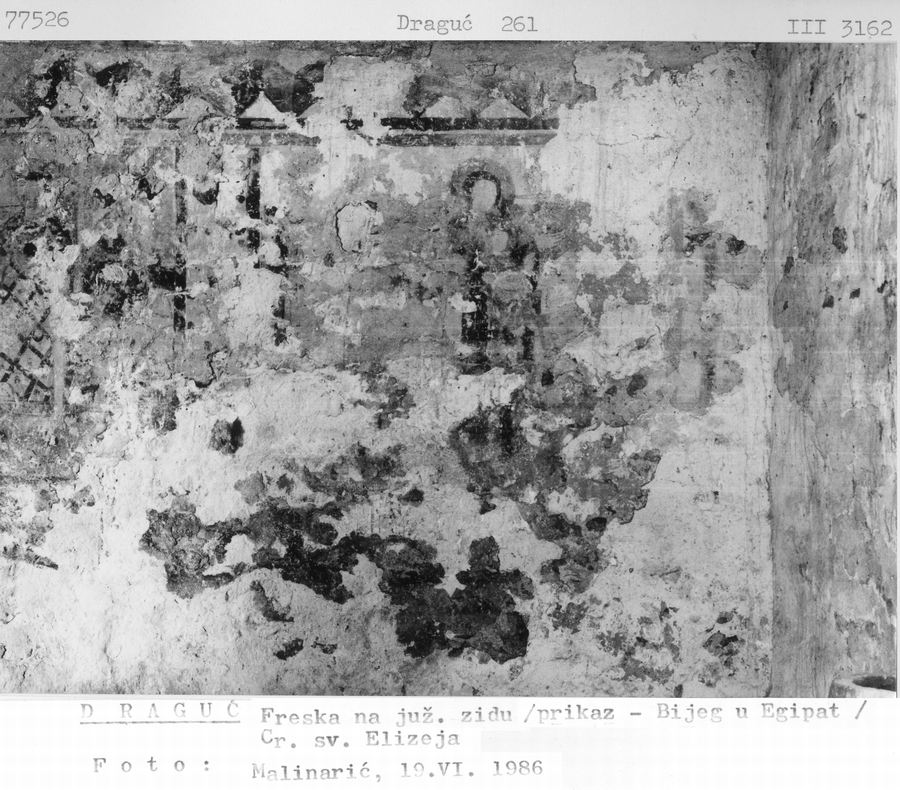
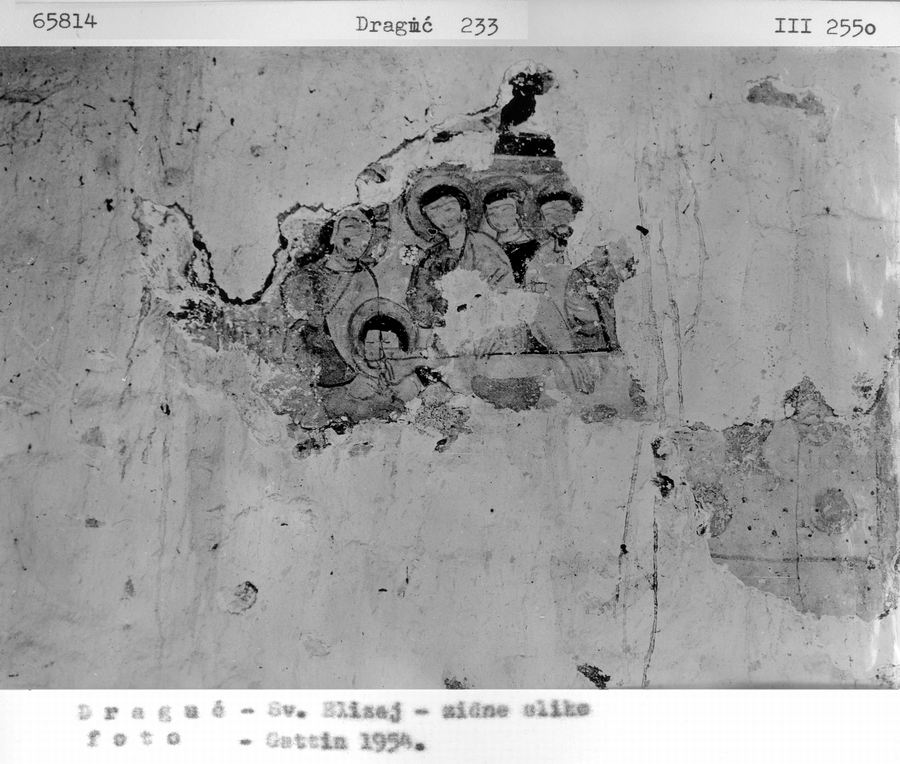
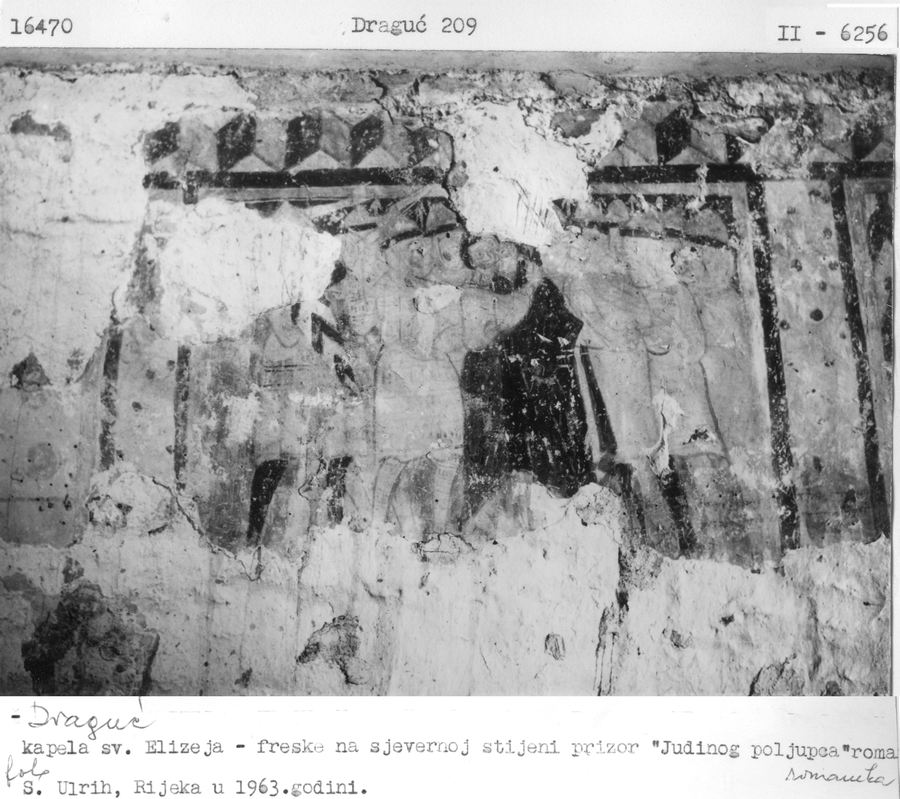
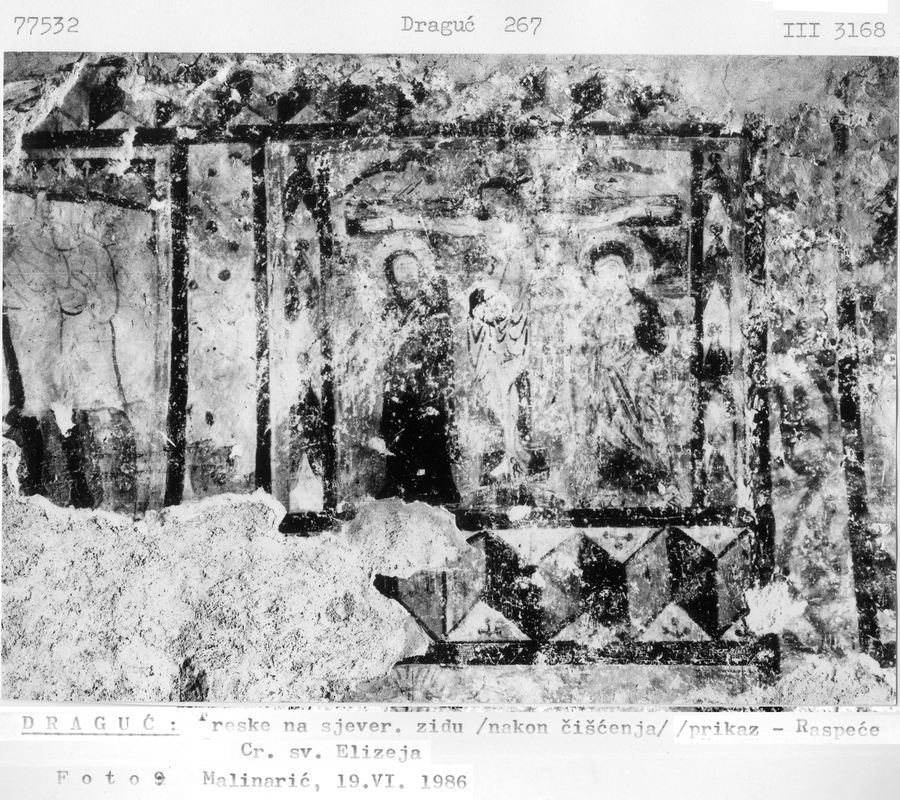
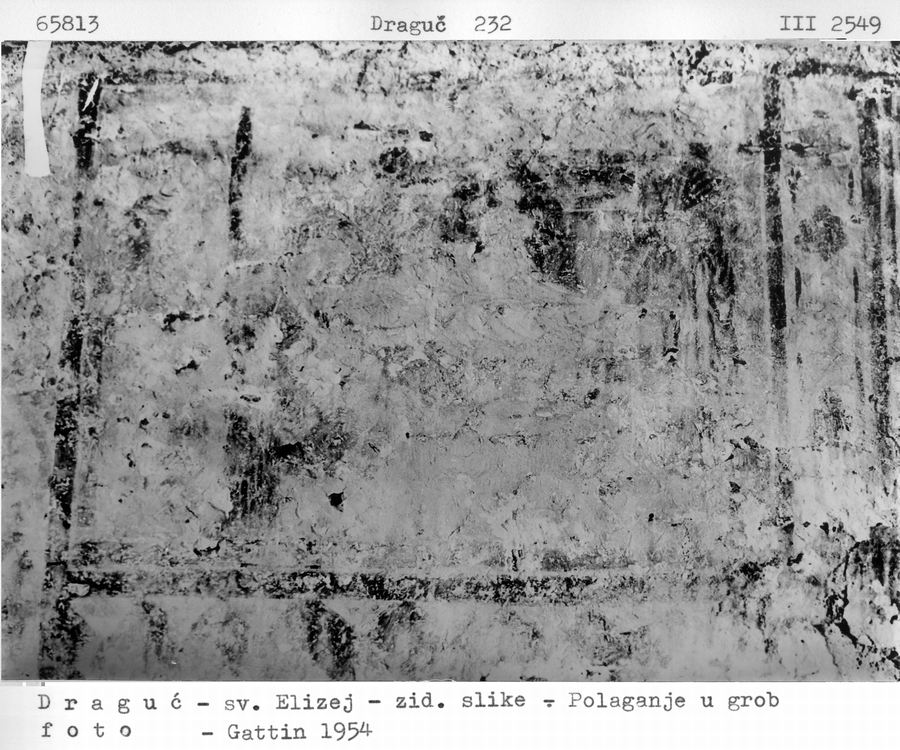
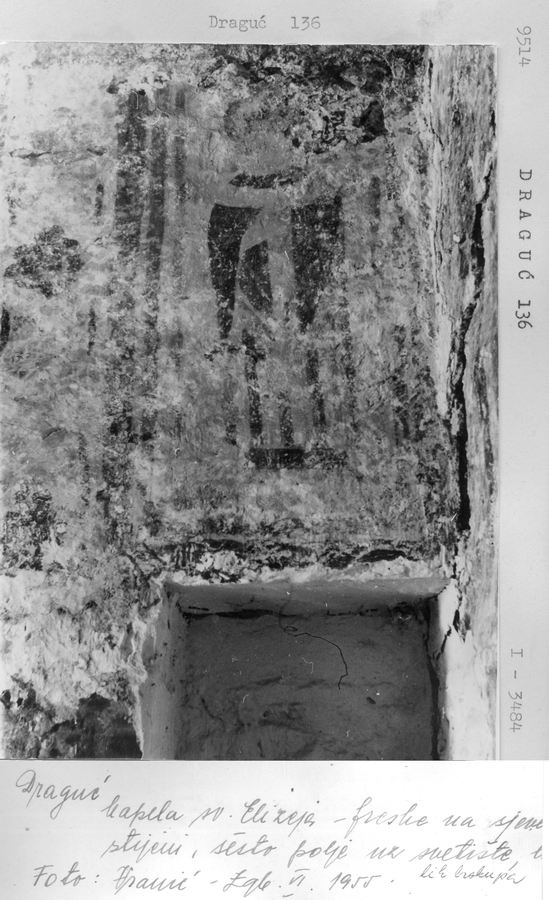
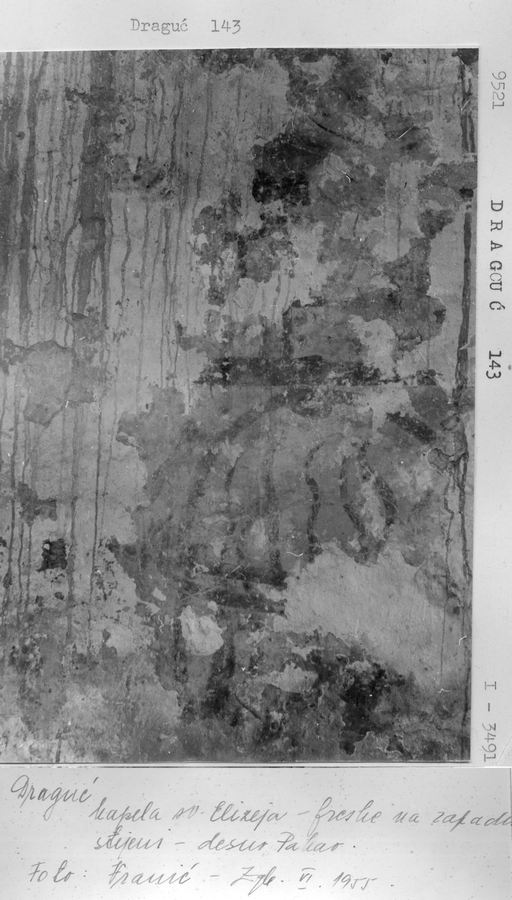
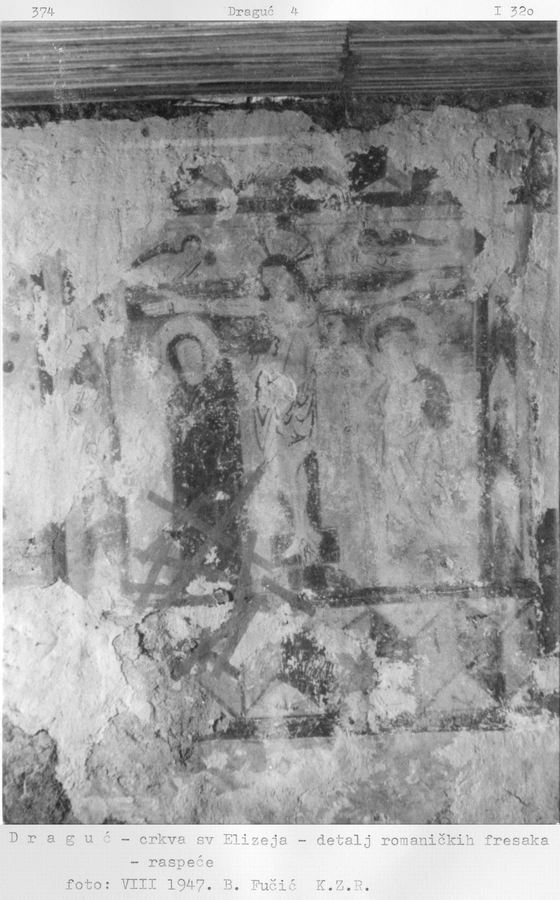
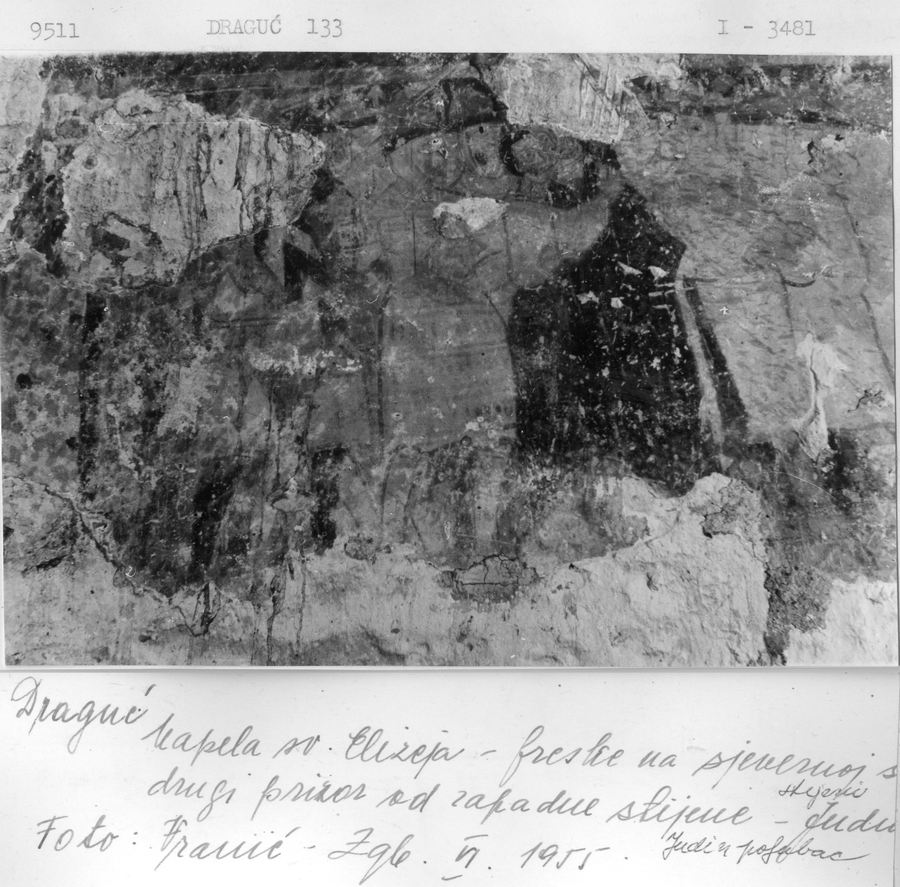
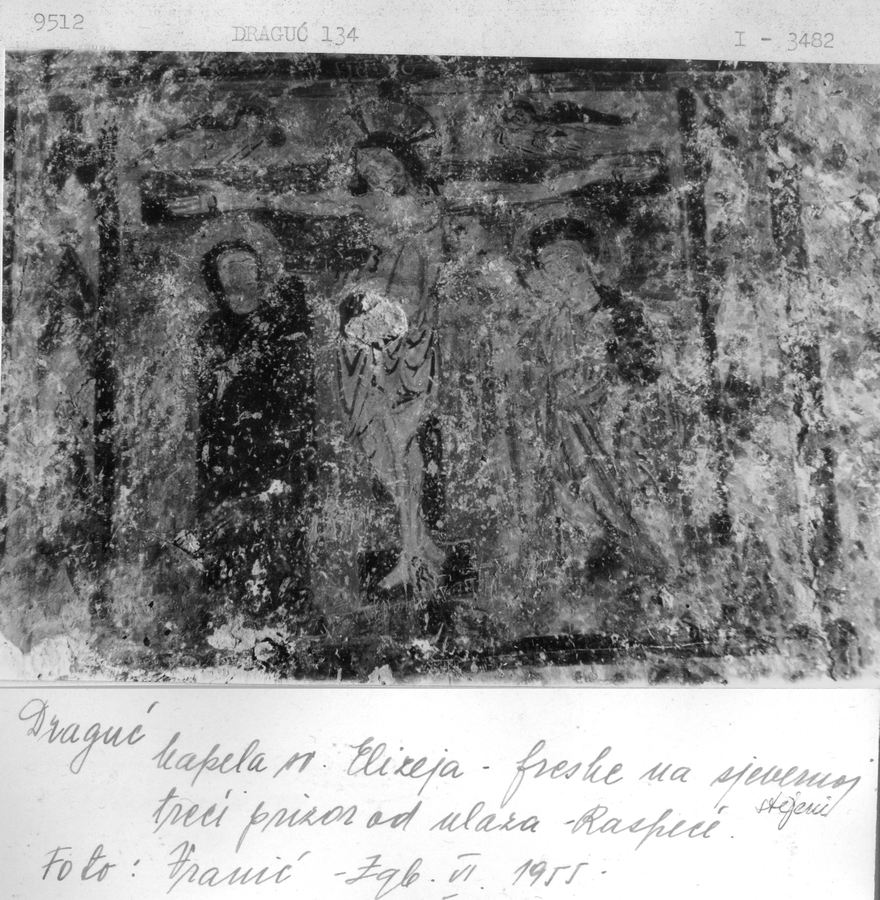
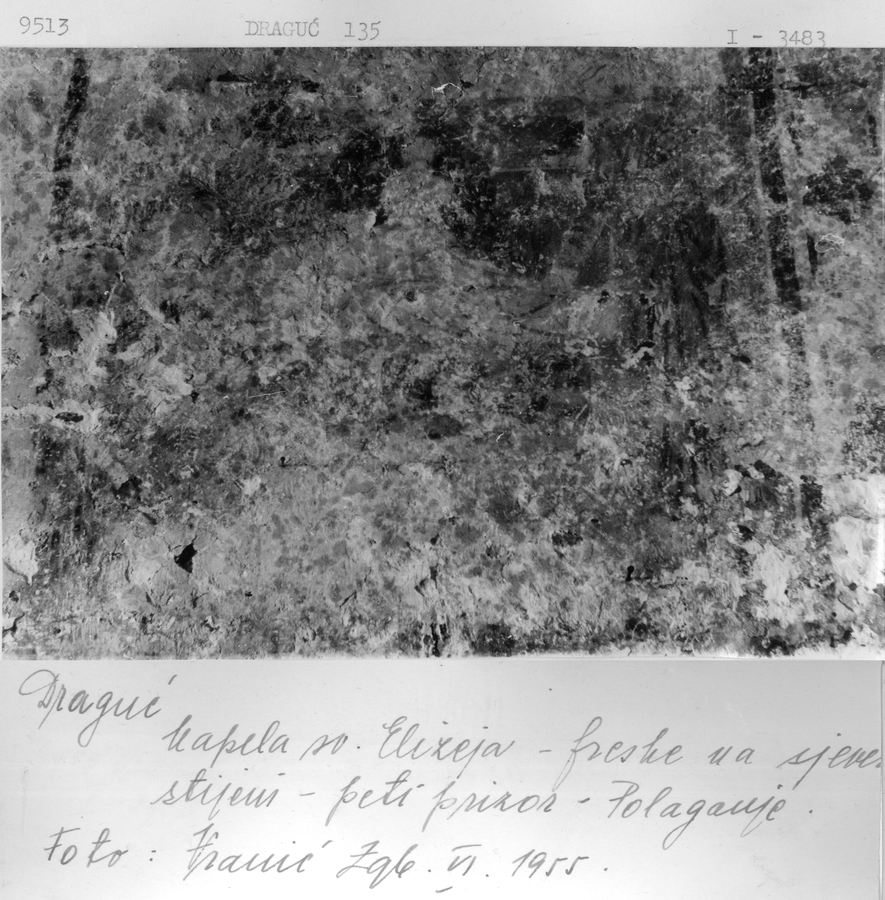
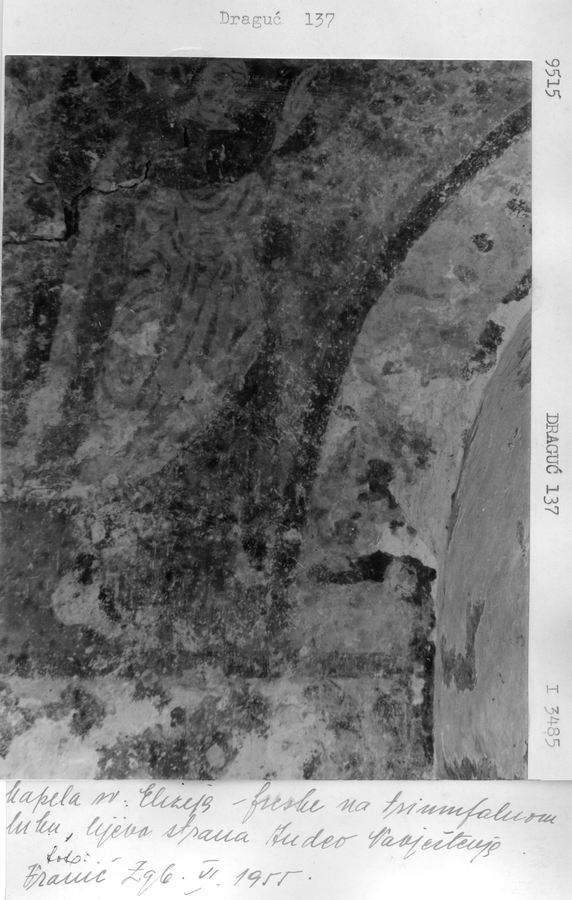
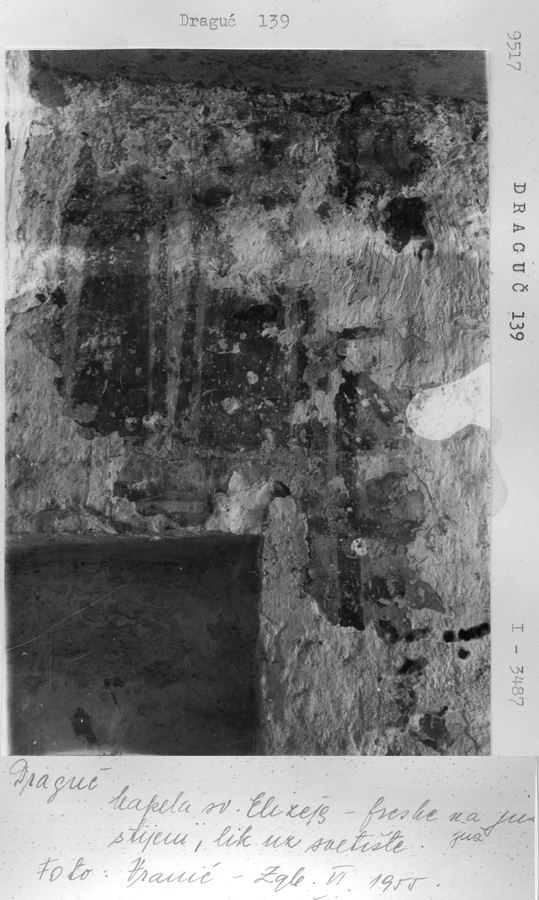
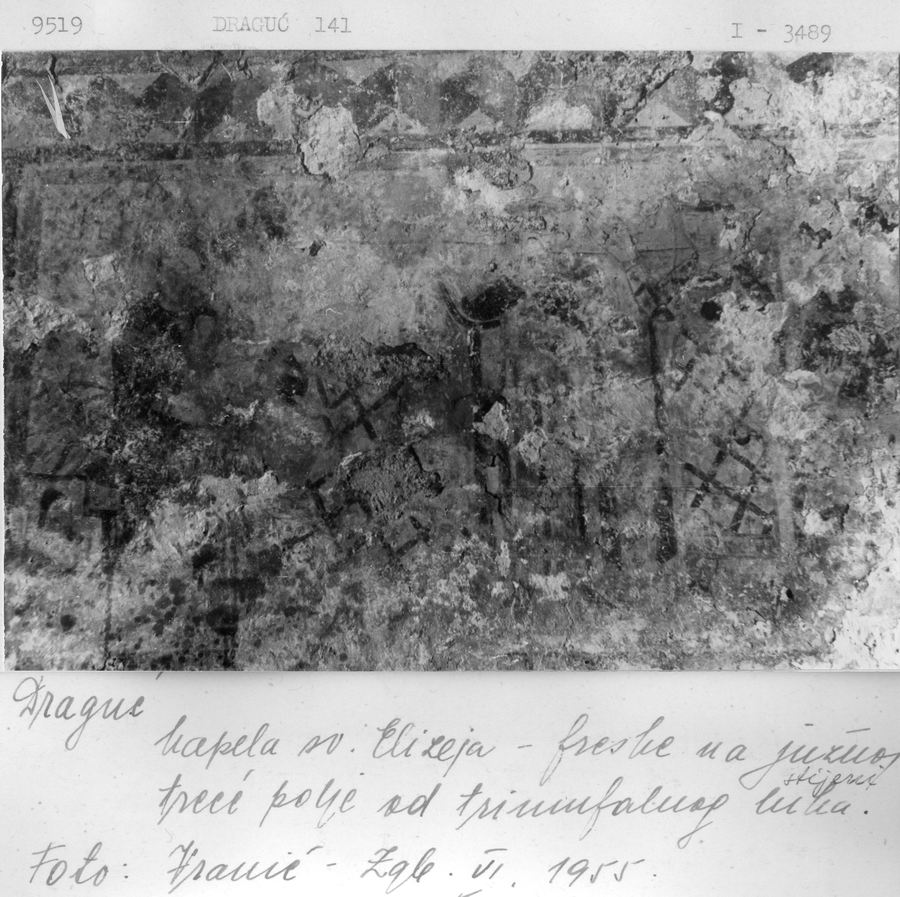
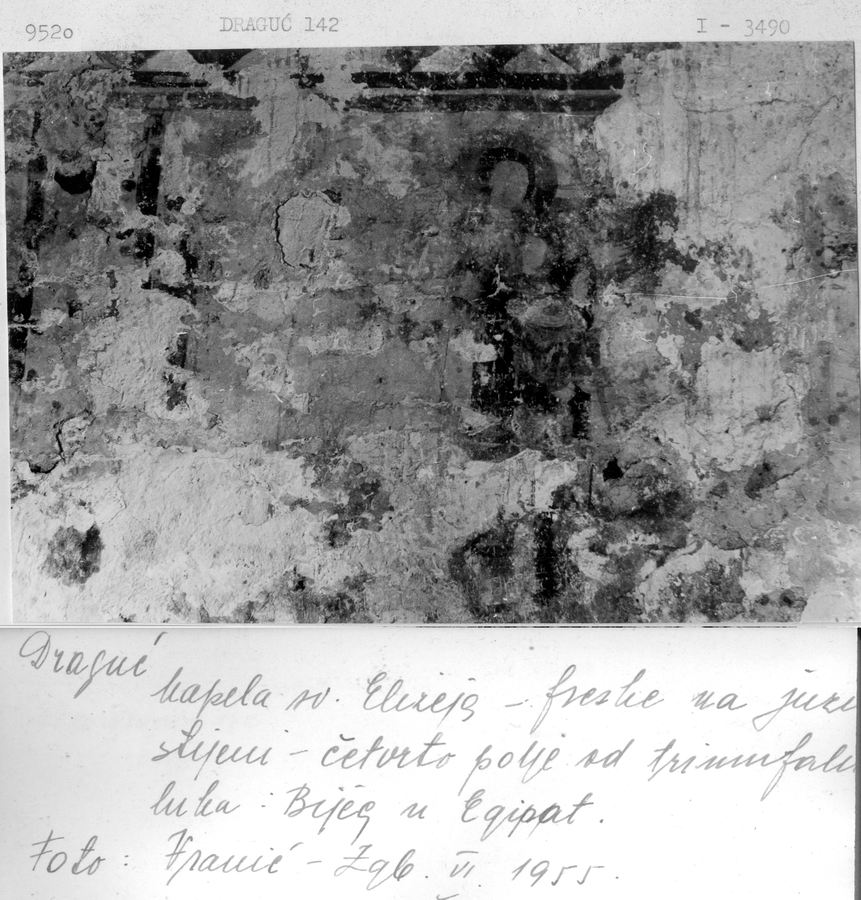
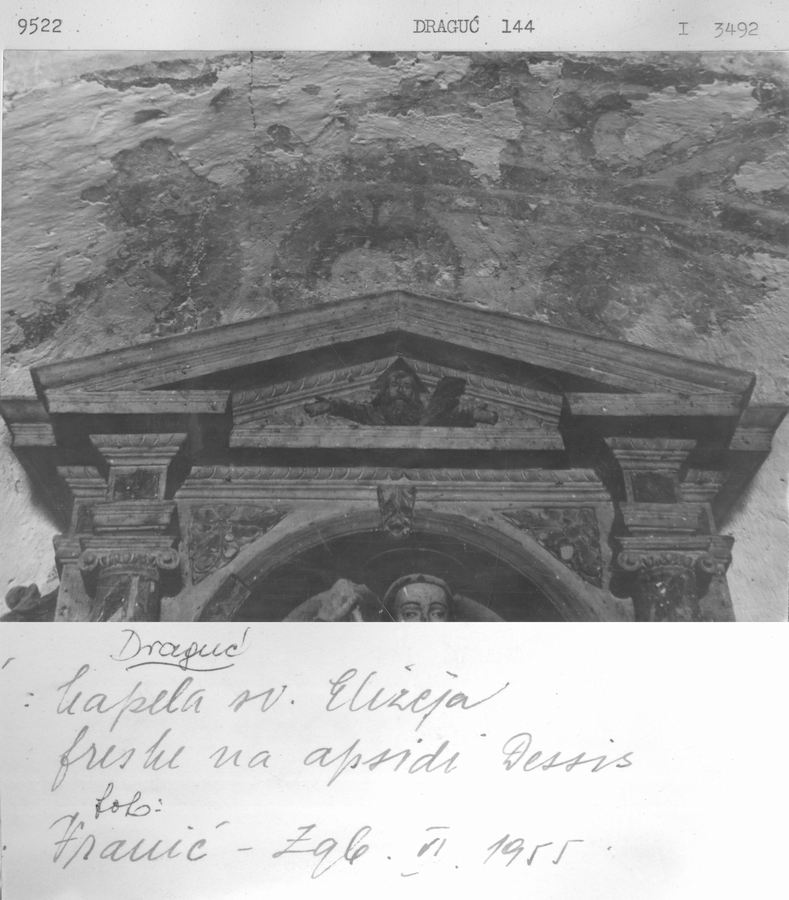
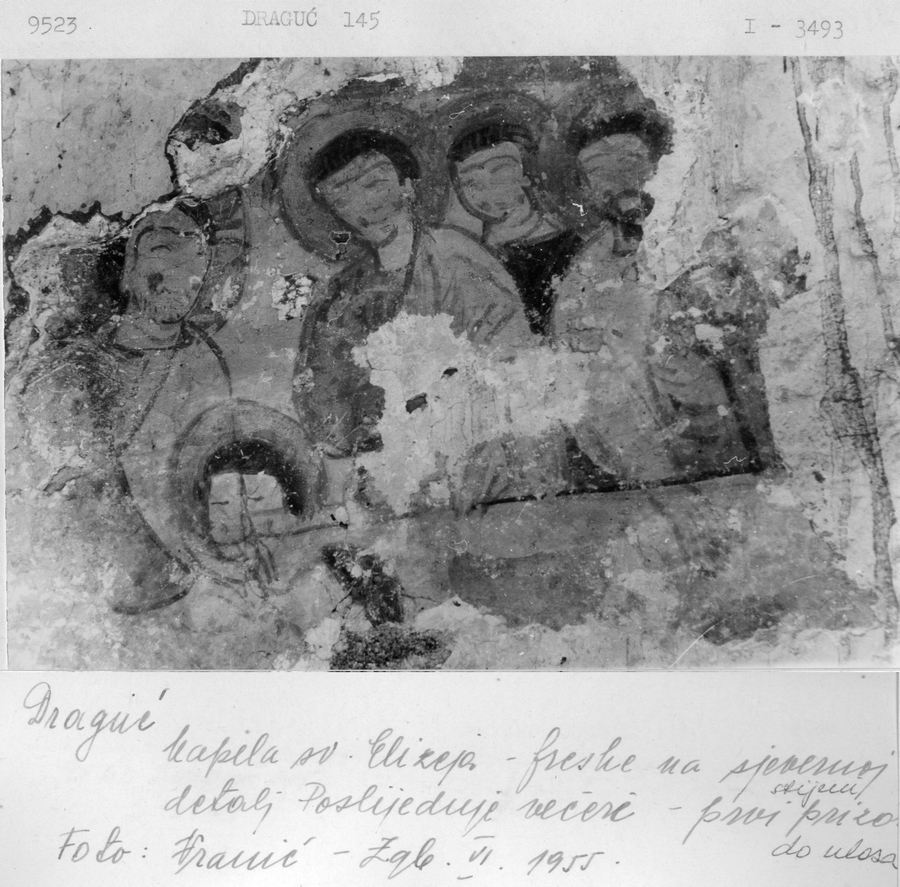
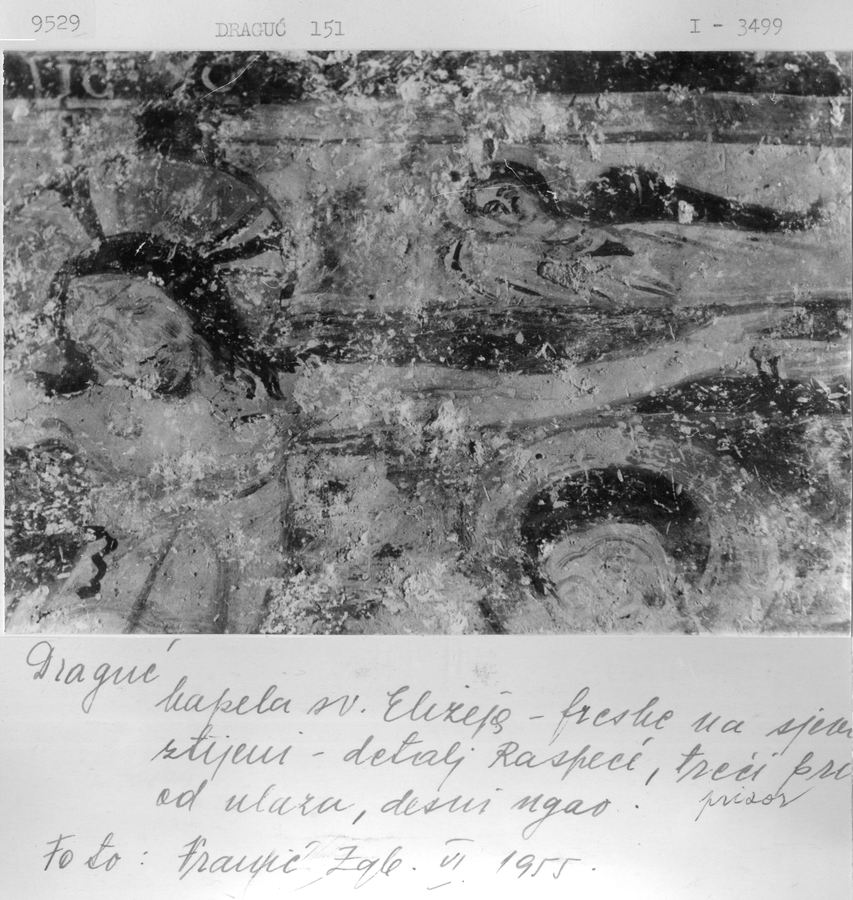
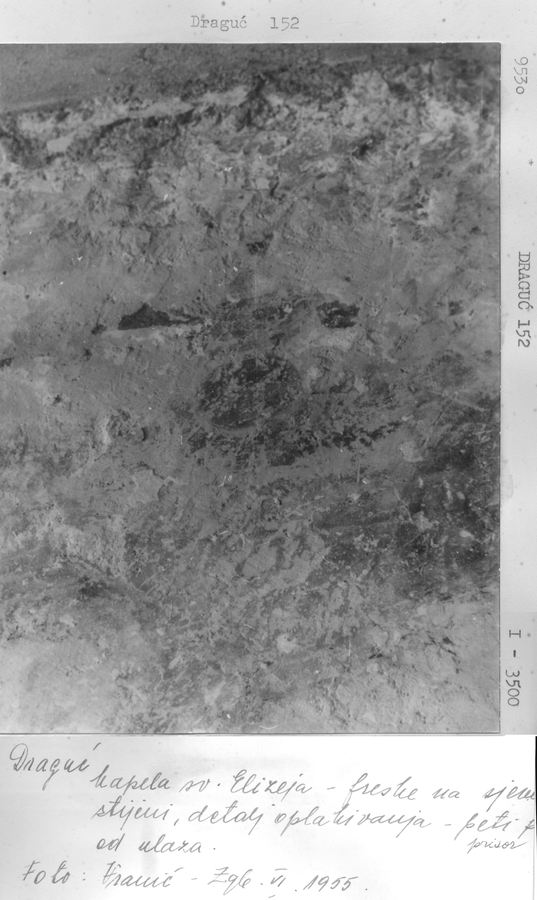
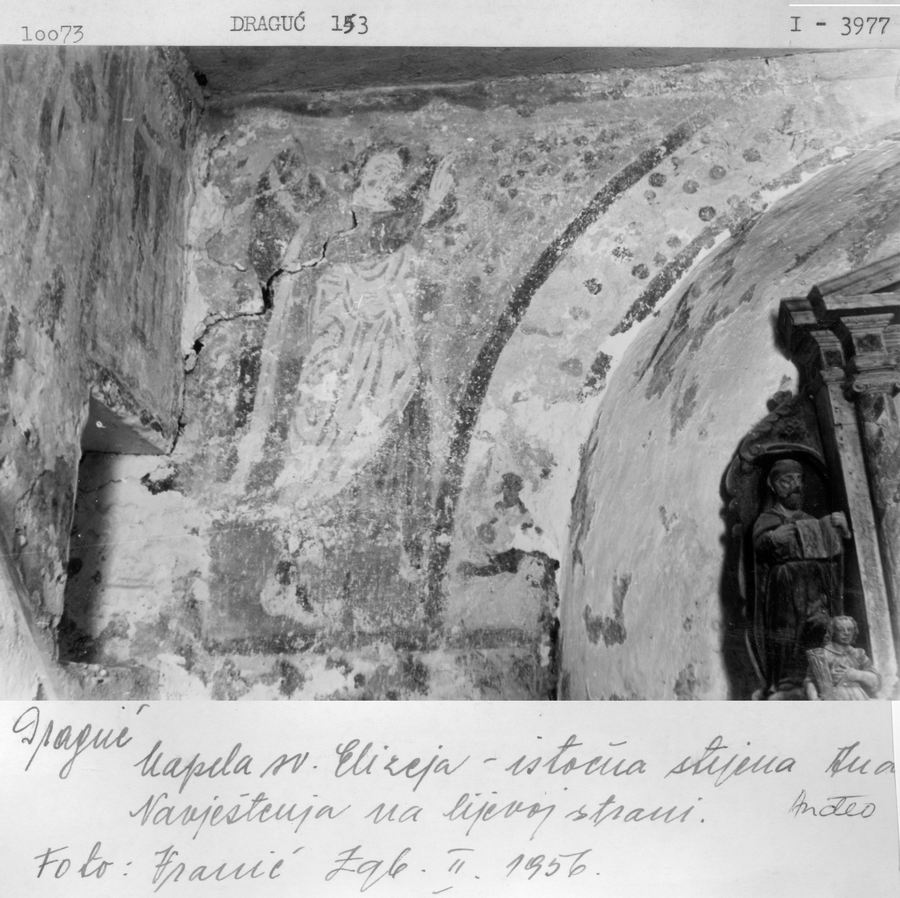
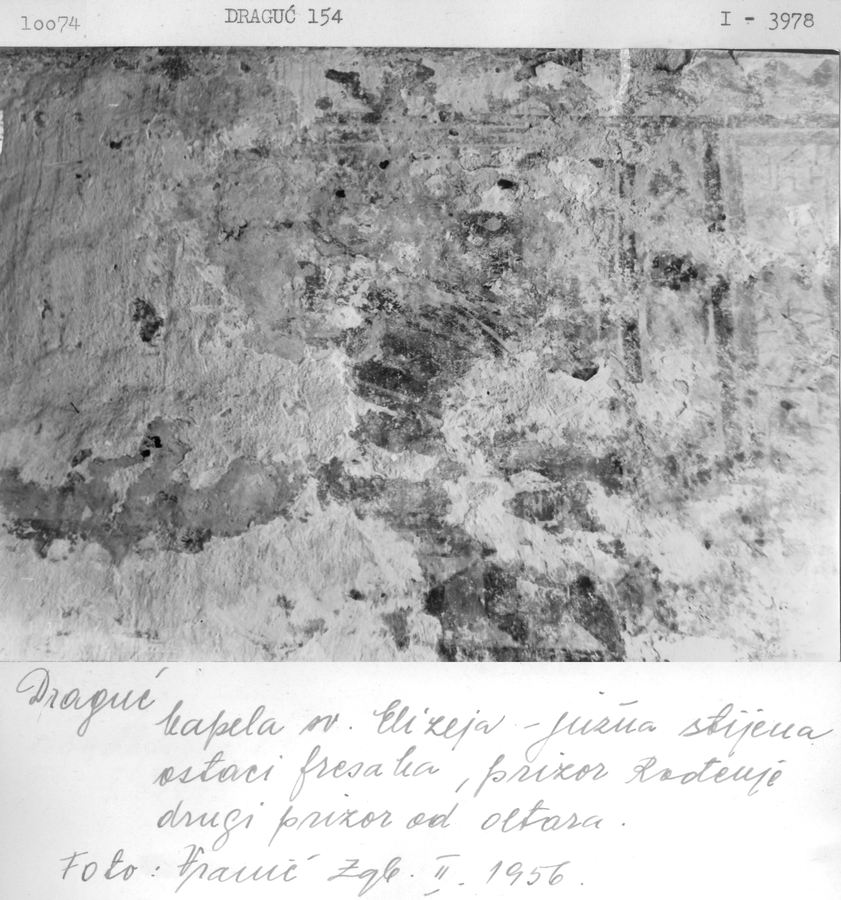
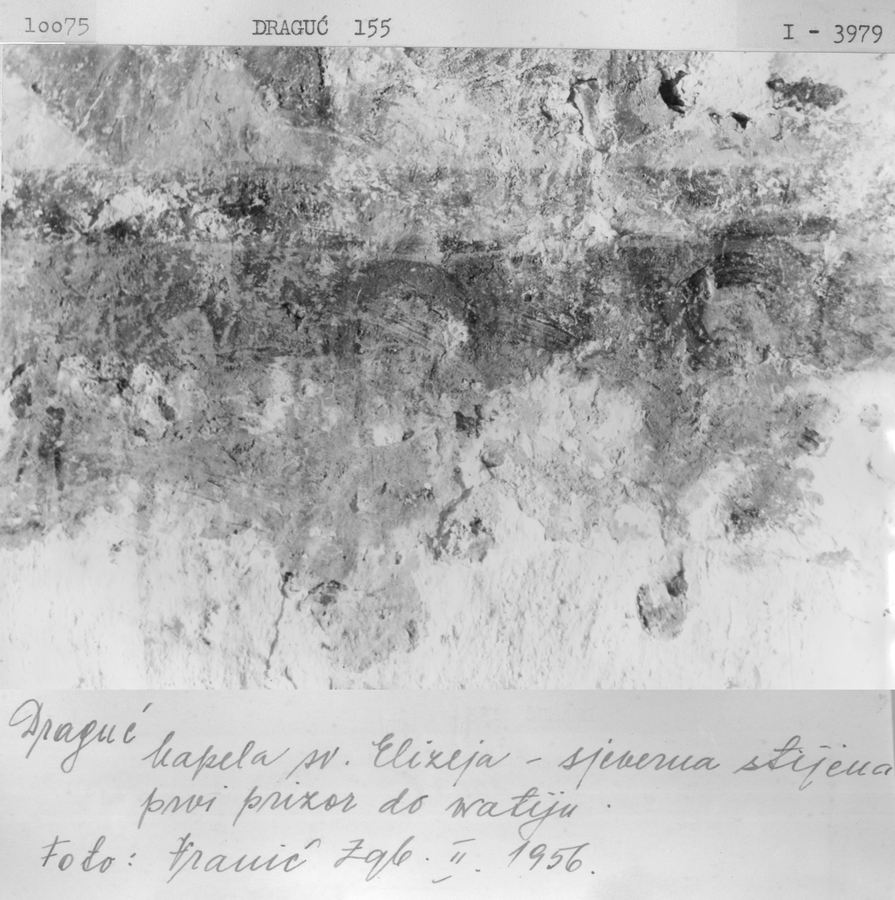
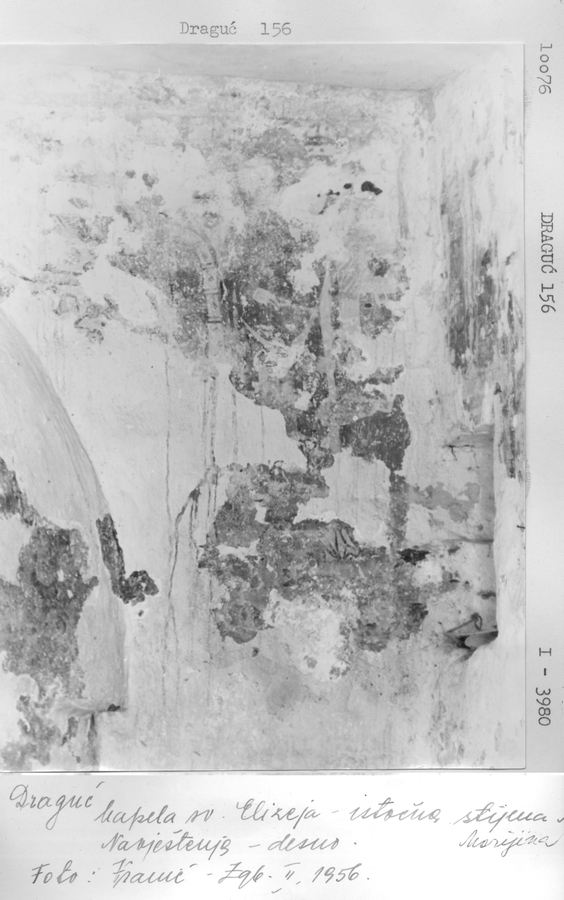
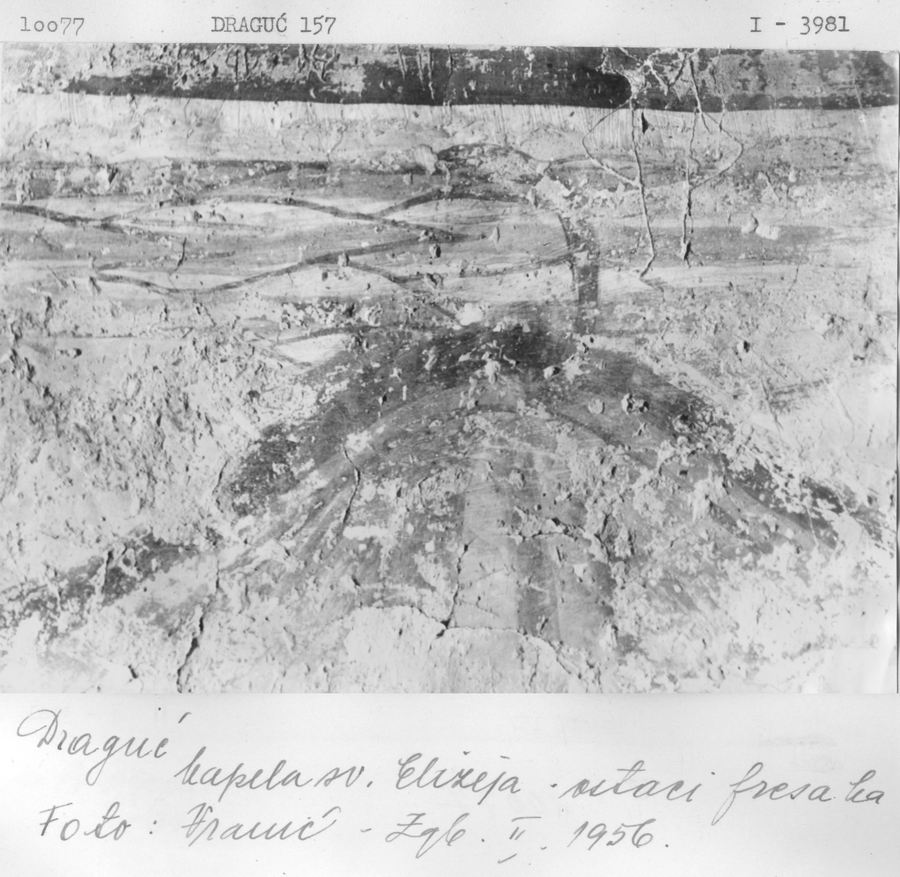
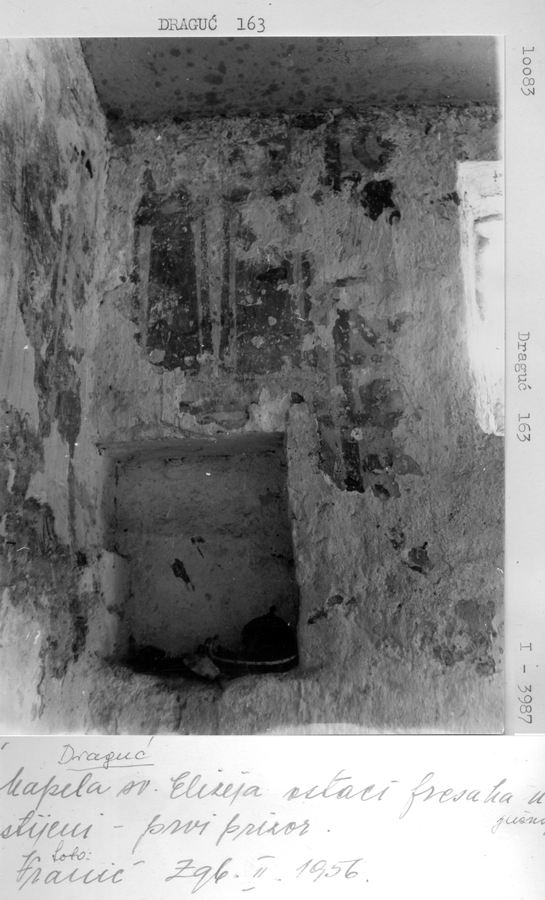
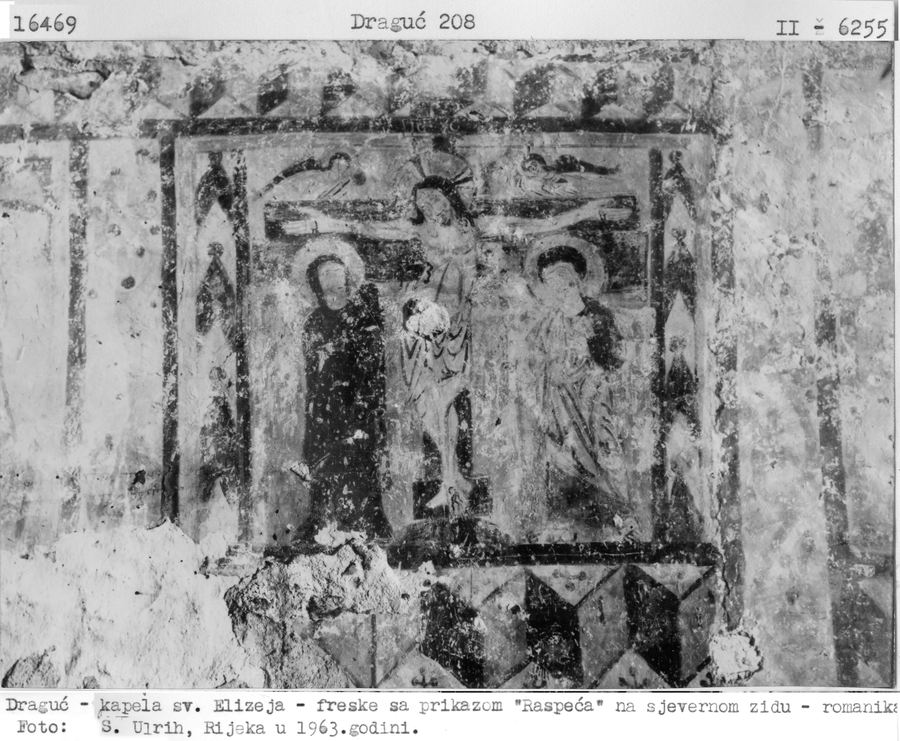
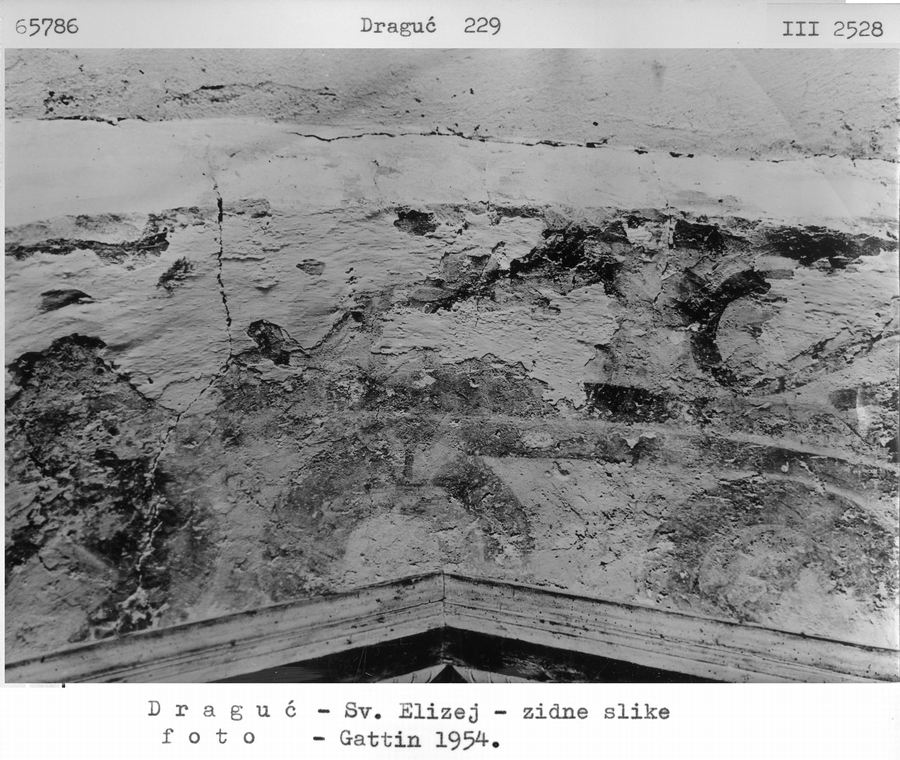
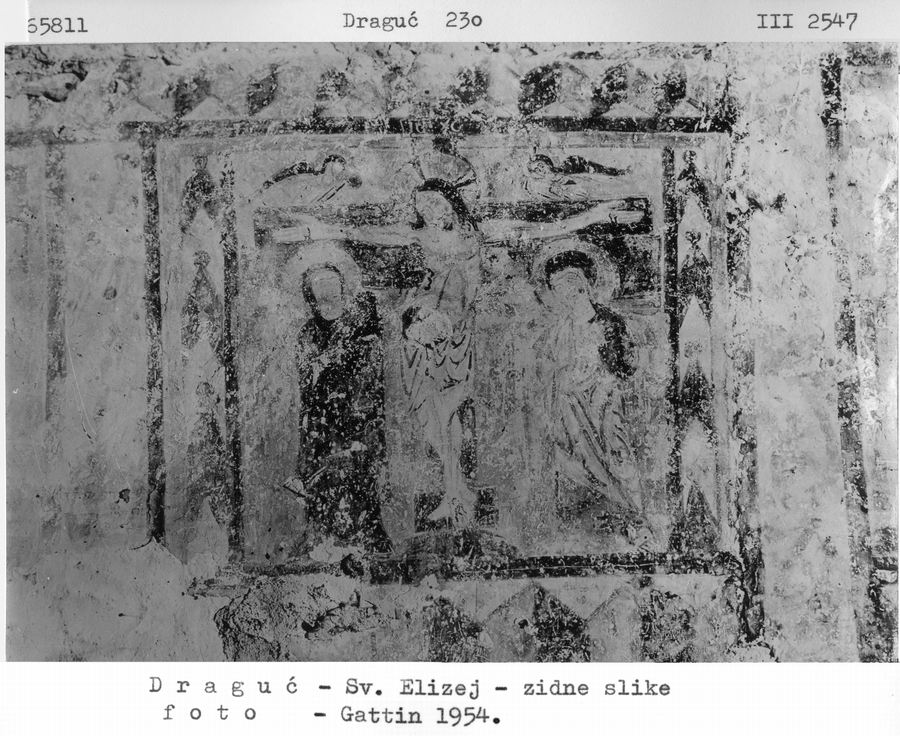
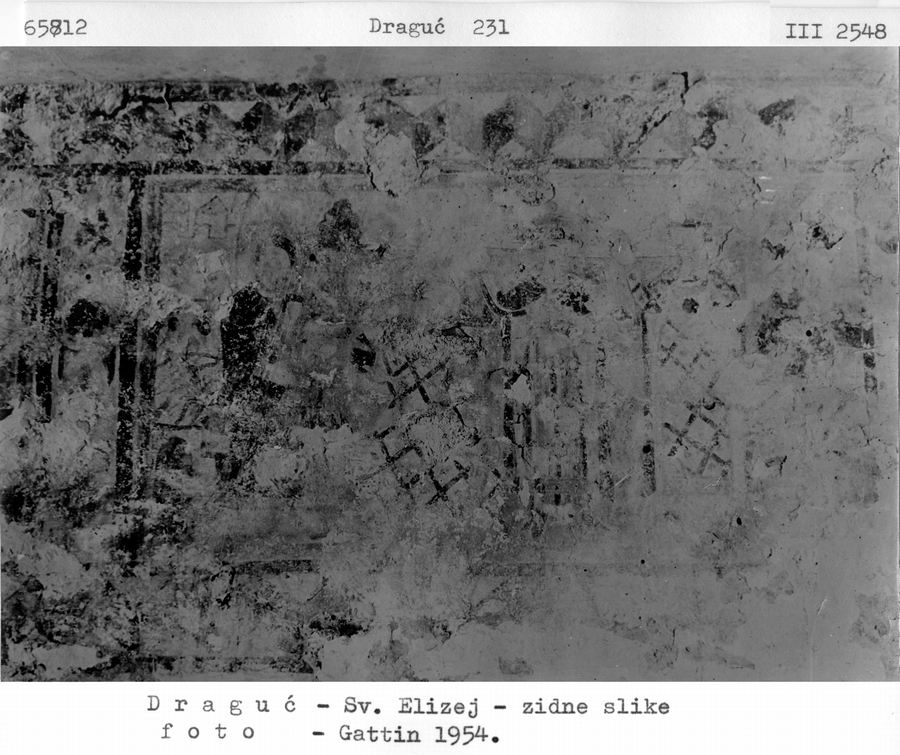
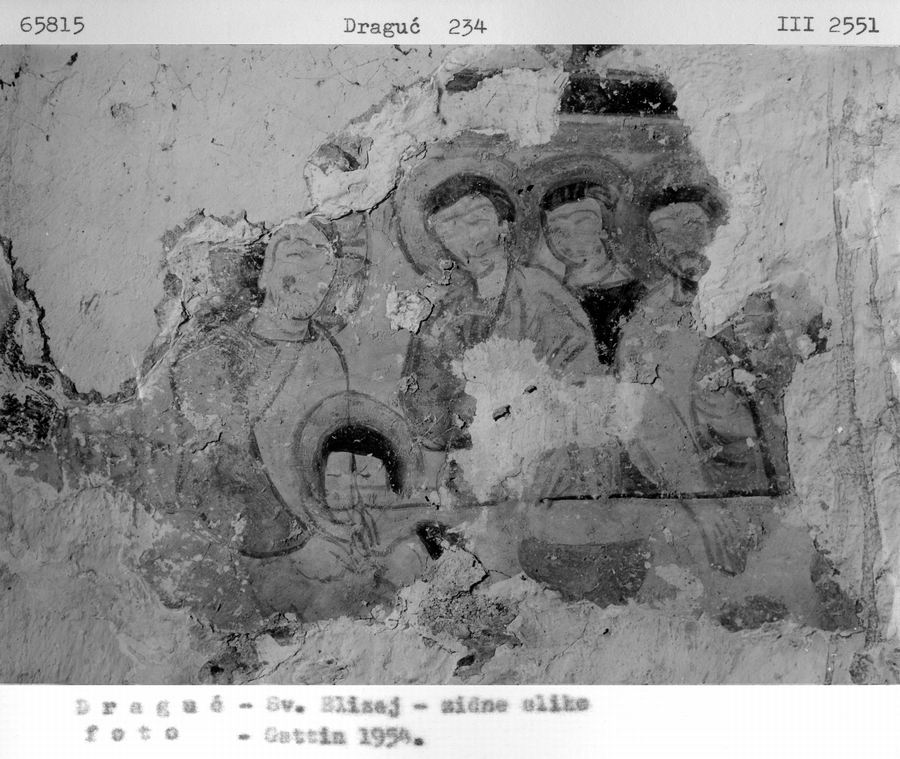
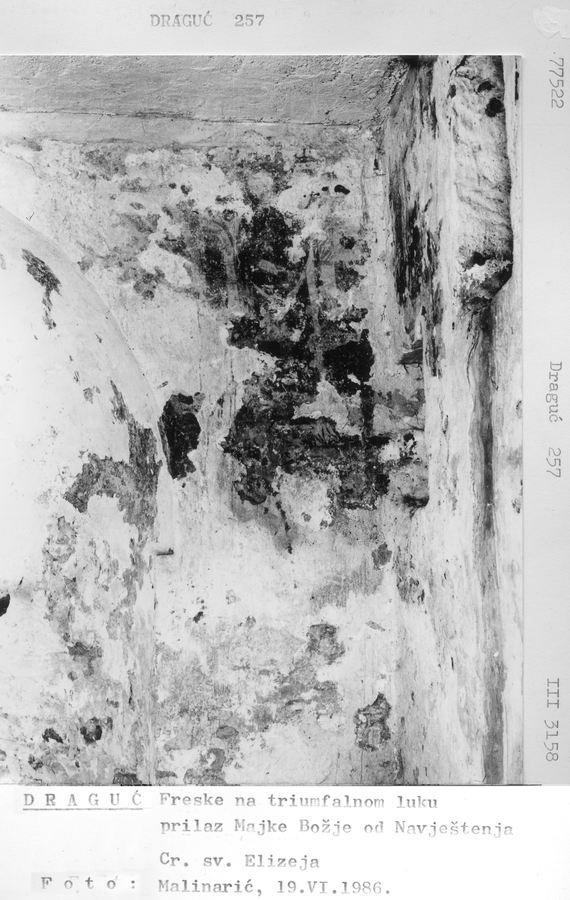
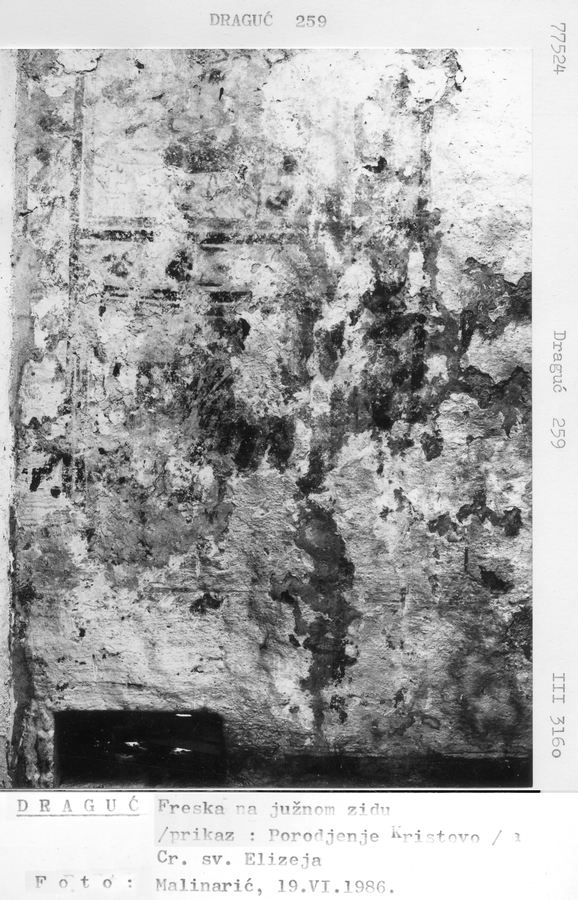
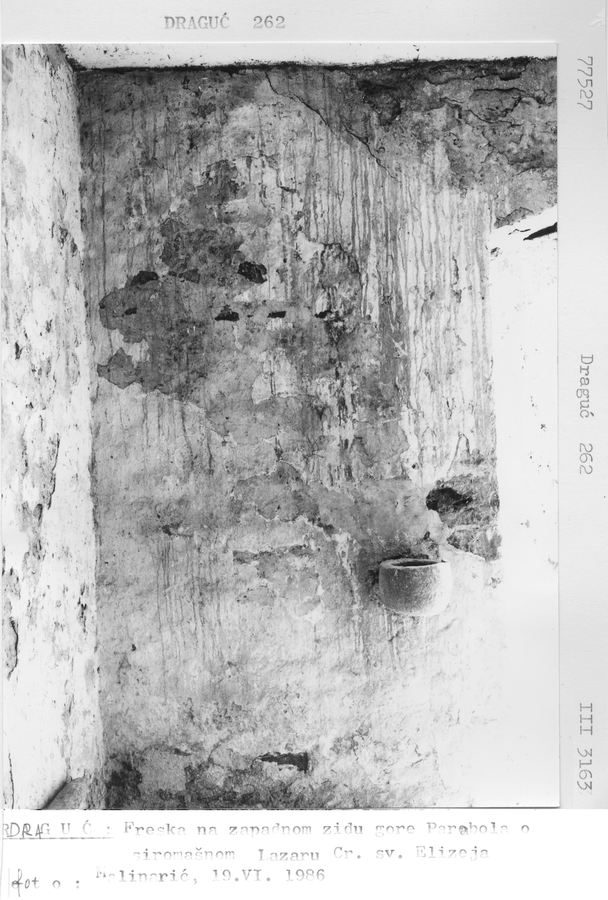
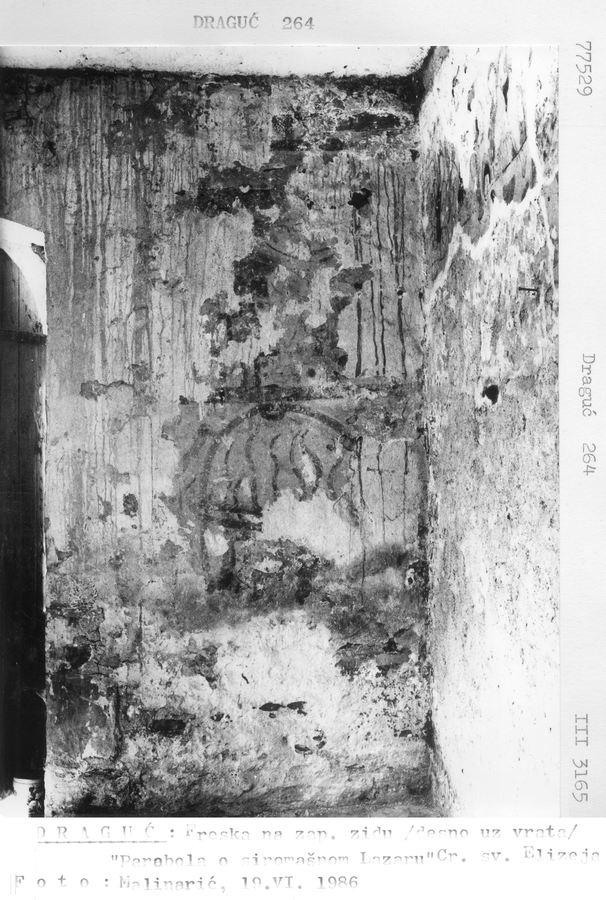
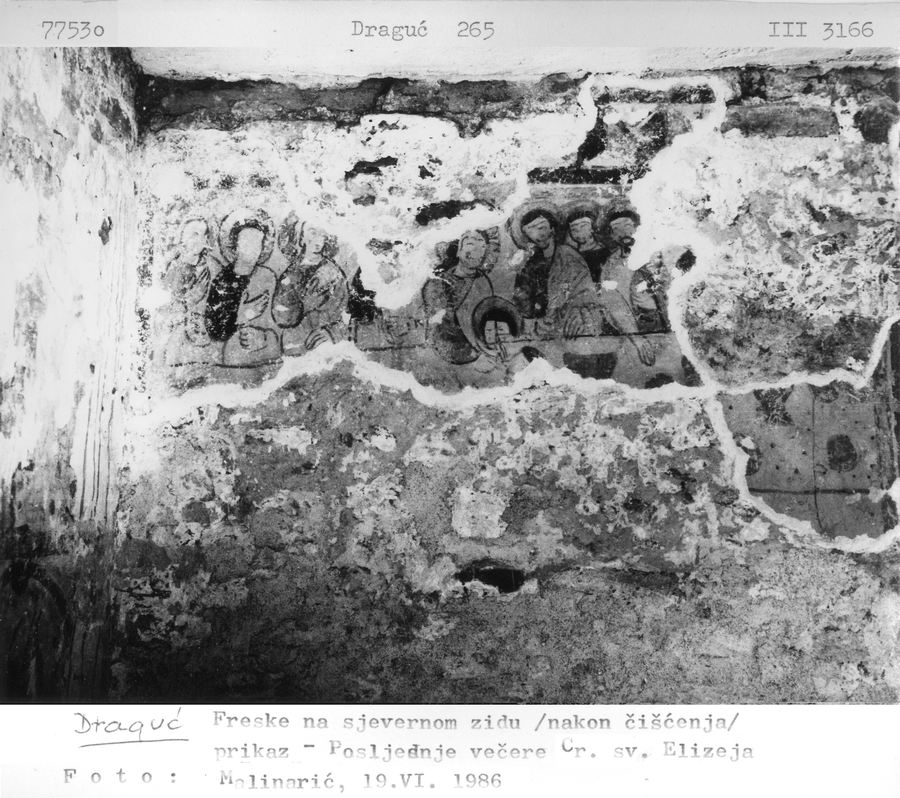
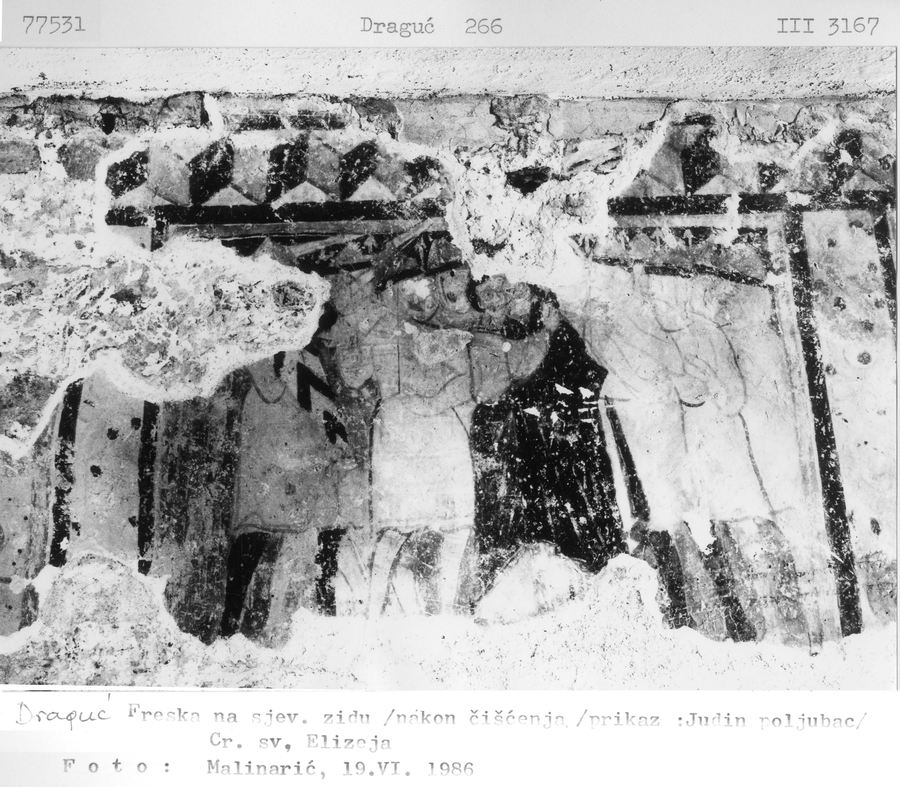
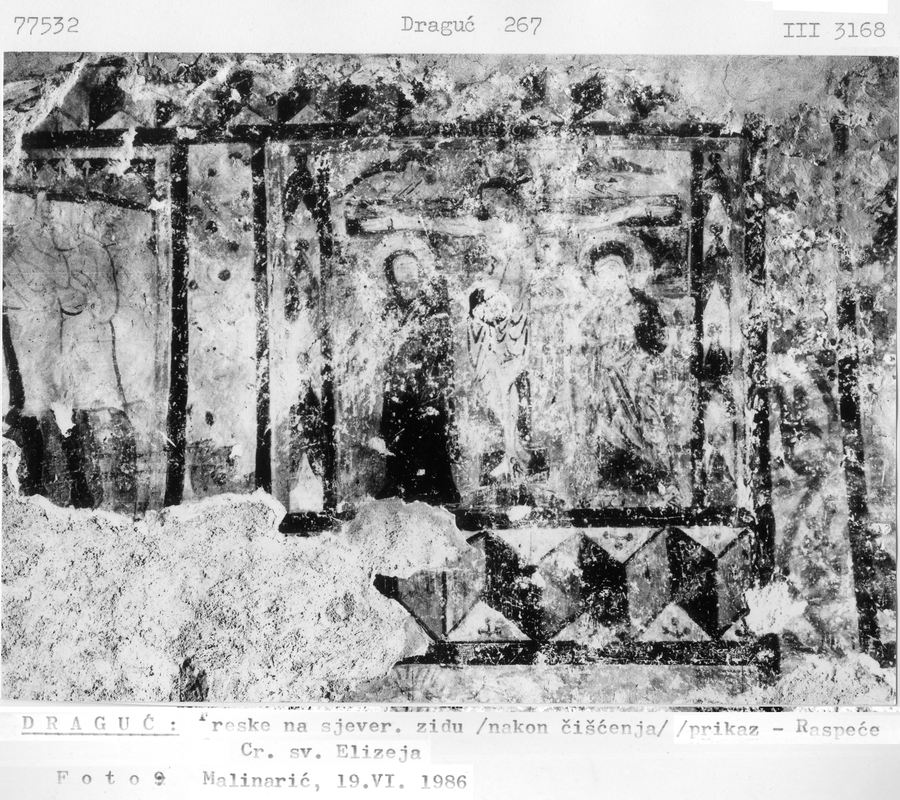
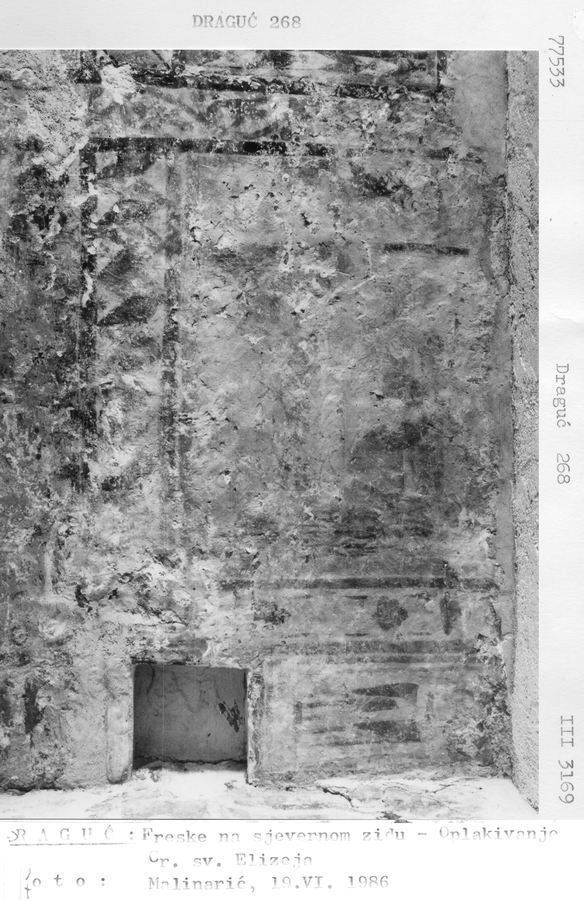
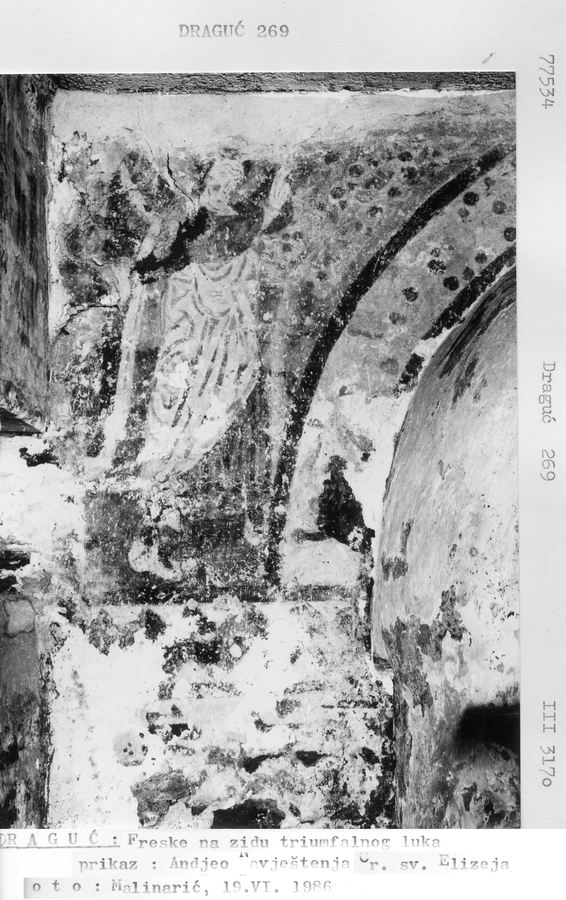
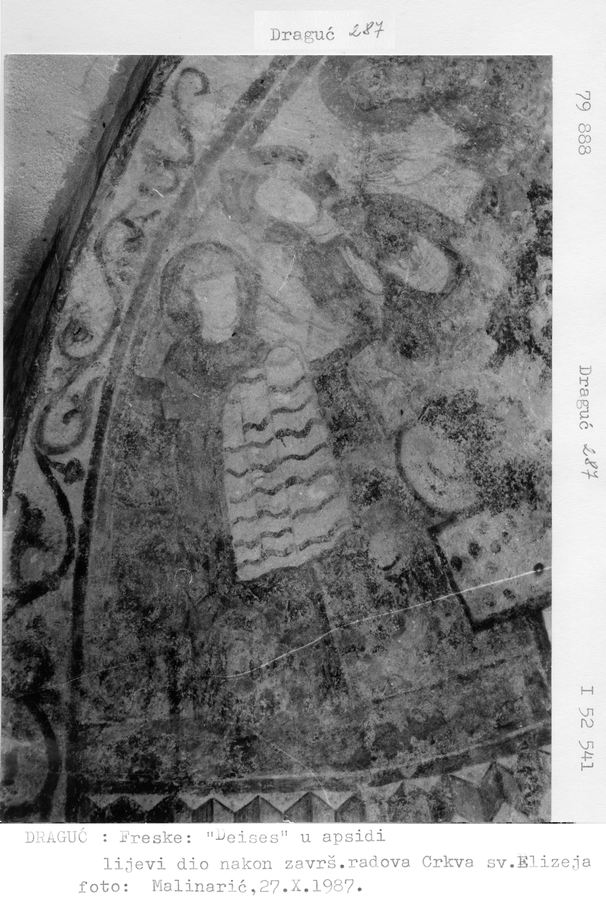
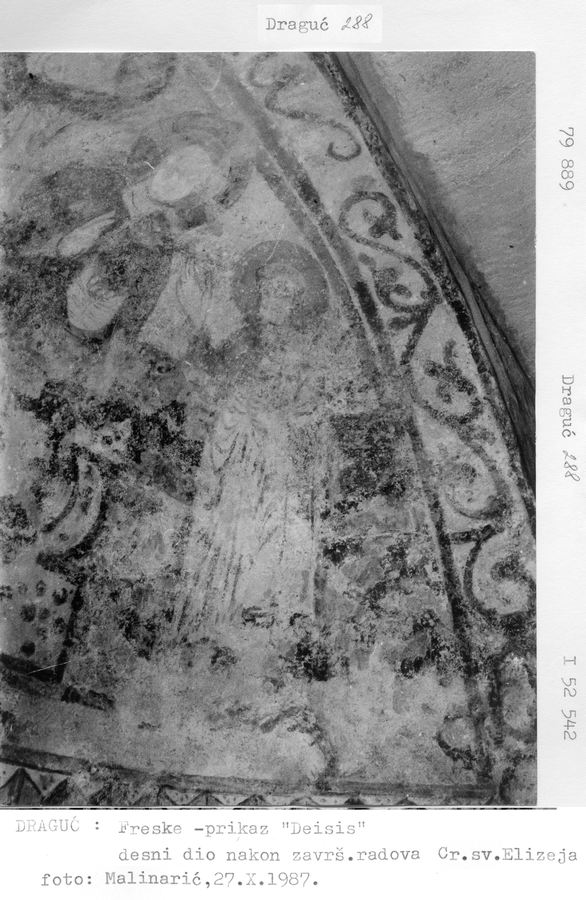
The interior was painted by an unknown local master at the end of the thirteenth or the beginning of the fourteenth century. In doing so, he adhered to the established iconographic programme of medieval mural painting, articulated through a clearly structured narrative sequence. Scenes from the Christological cycle are arranged in the upper register of the lateral walls. Chronologically, they extend from the Nativity of Christ on the southern wall to the Entombment on the northern wall. The scenes are framed by geometrically and florally ornamented borders. A broad horizontal border separates the upper from the lower register, the representations of the latter surviving only fragmentarily. The conch of the apse is occupied by a depiction of Christ Enthroned with Saints, while the triumphal arch bears the scene of the Annunciation. On the western wall, the upper register presents the Three Patriarchs, whereas the lower register is devoted to the eschatological scene of Hell.
The wall paintings were uncovered in 1947 and were first mentioned in scholarly literature by Ljubo Karaman in his article “O srednjovjekovnoj umjetnosti Istre,” published in 1949 in Historijski zbornik. The most comprehensive analysis of the mural ensemble was provided by Branko Fučić, who included it within the corpus of the so-called “painting of the Istrian countryside.”
Iconographic programme:
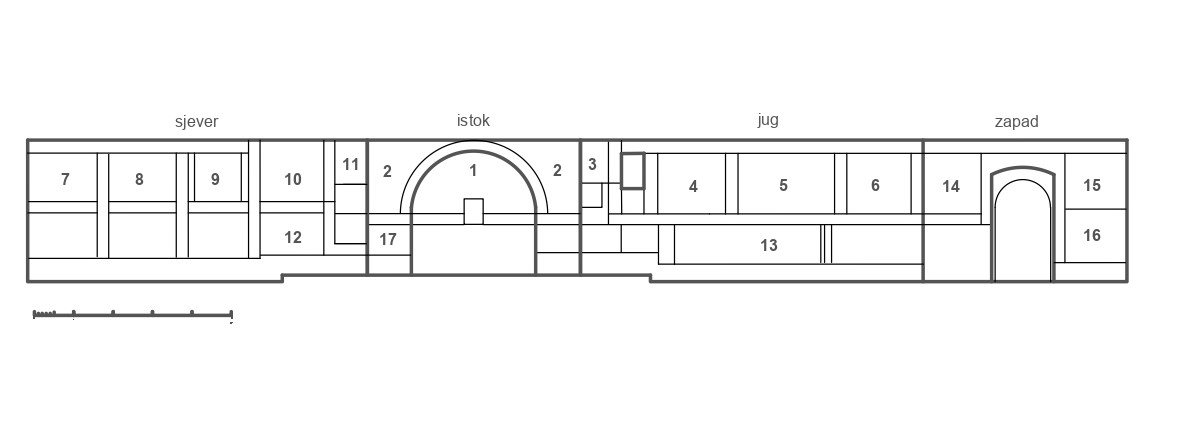
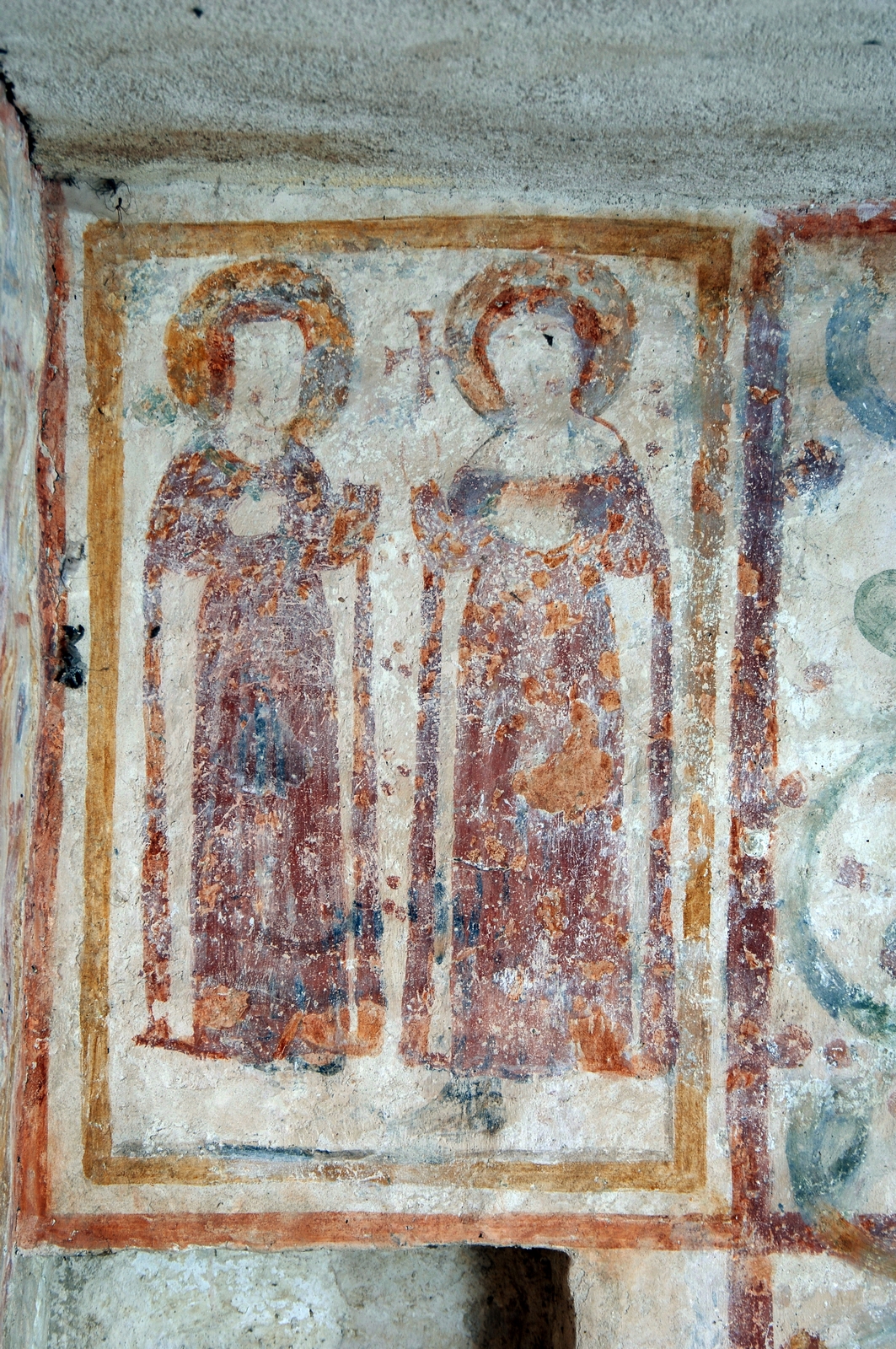
East wall: 1. Christ Enthroned with Saints, 2. Annunciation, 17. The Beast.
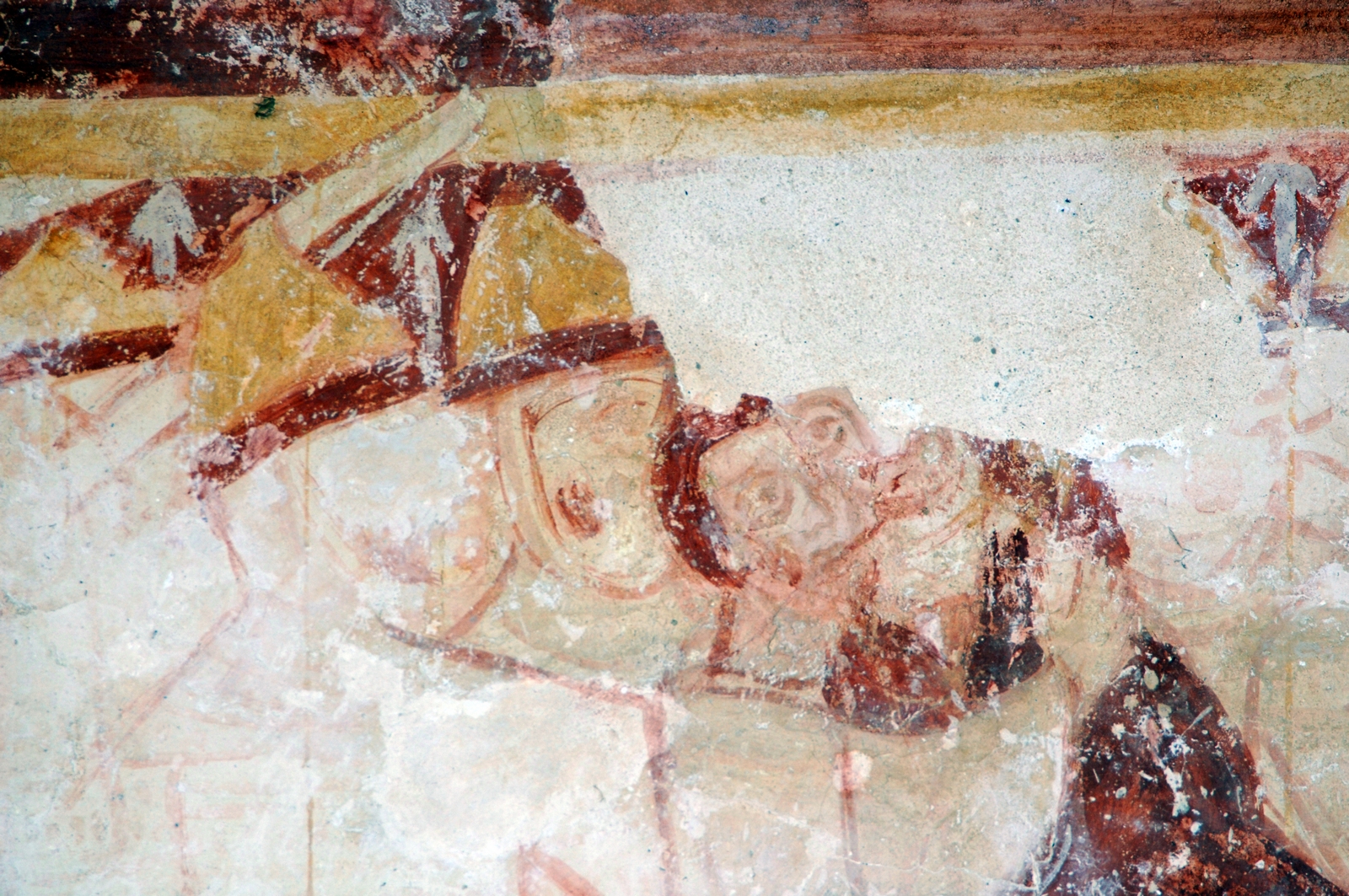
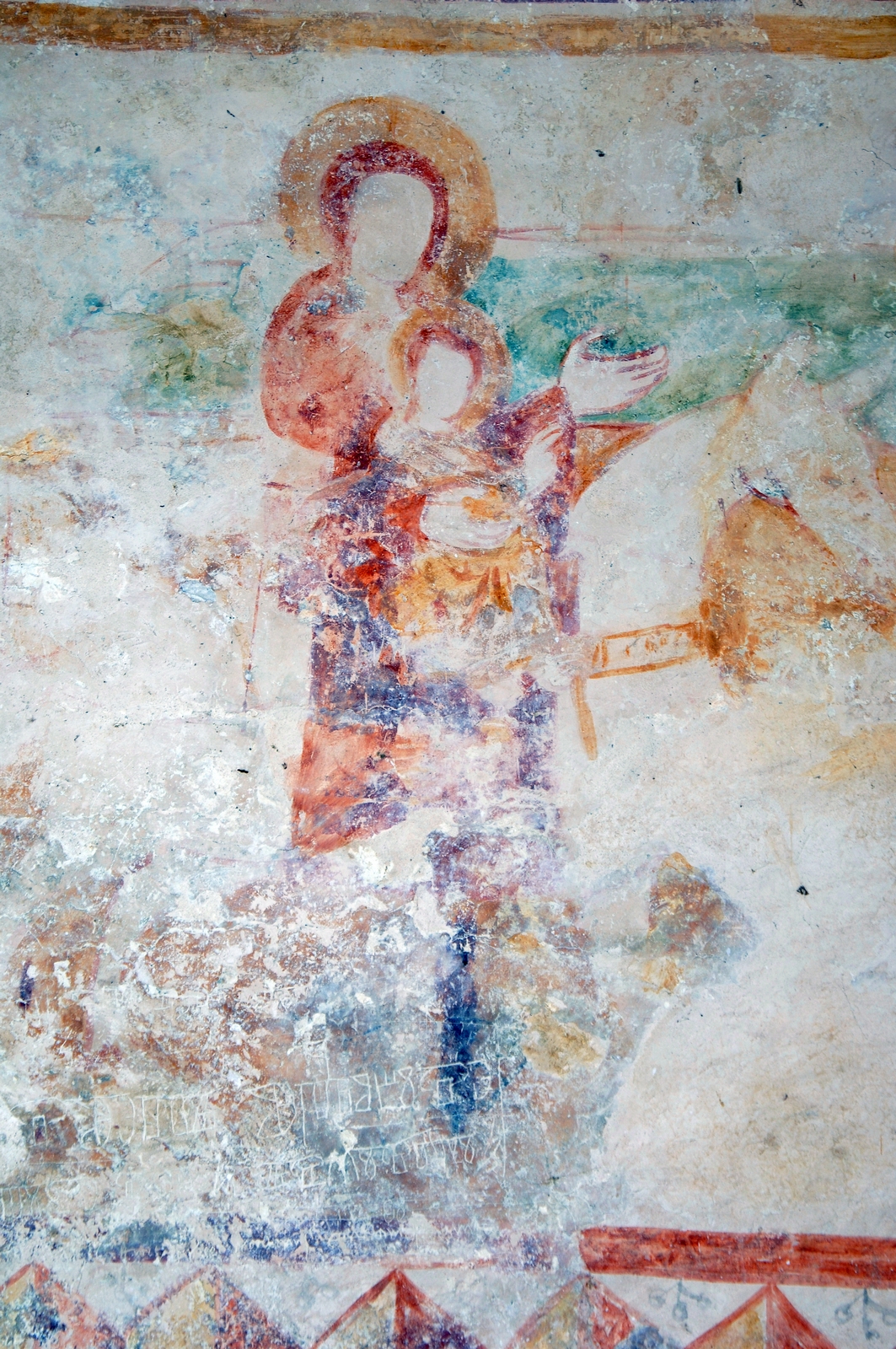
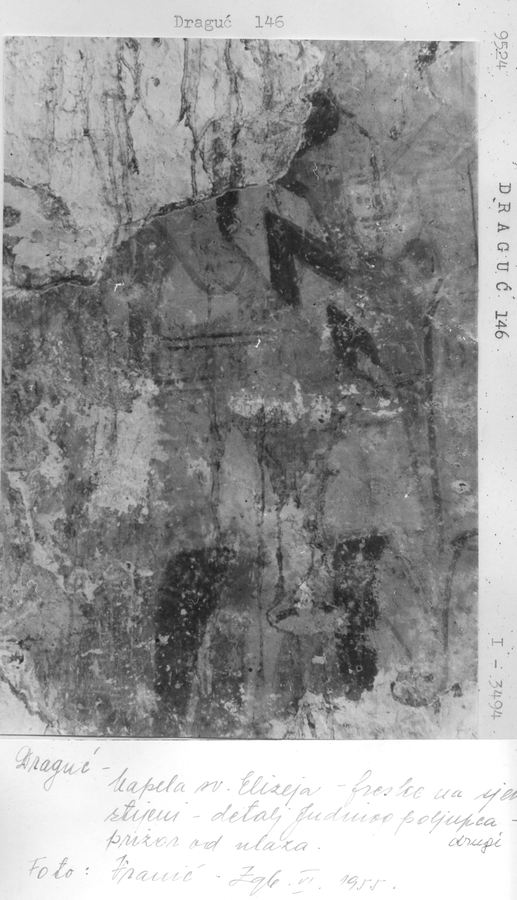
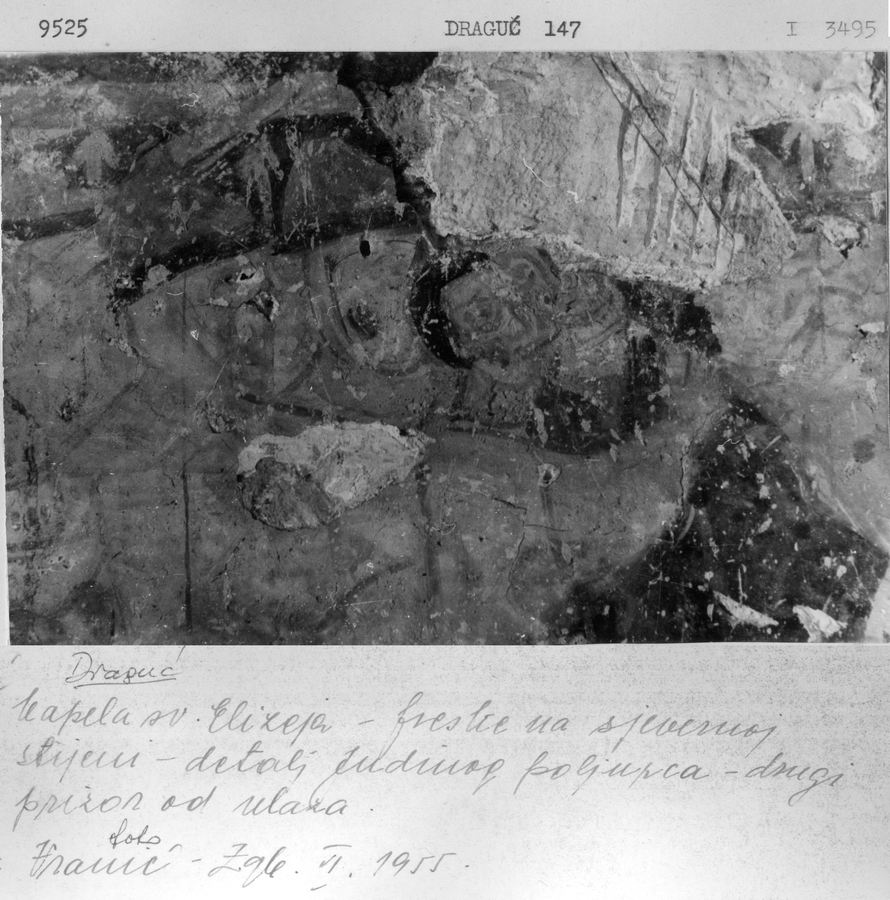
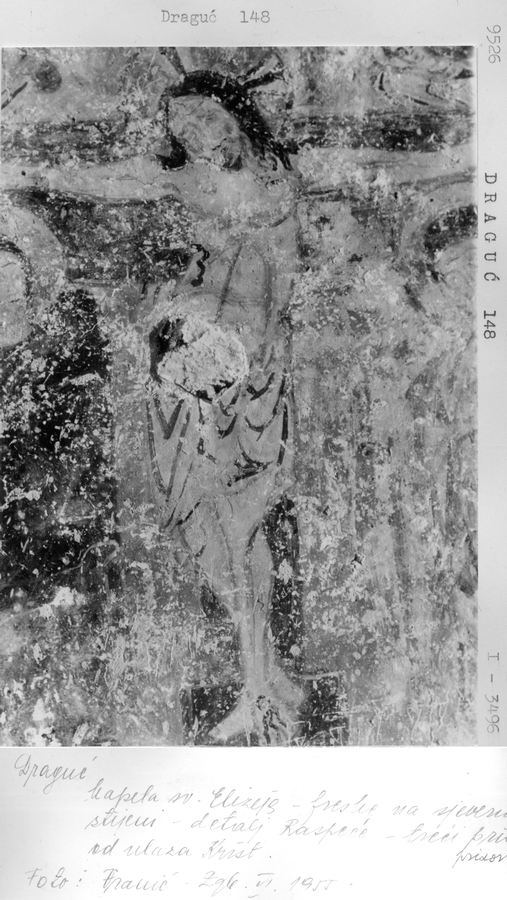
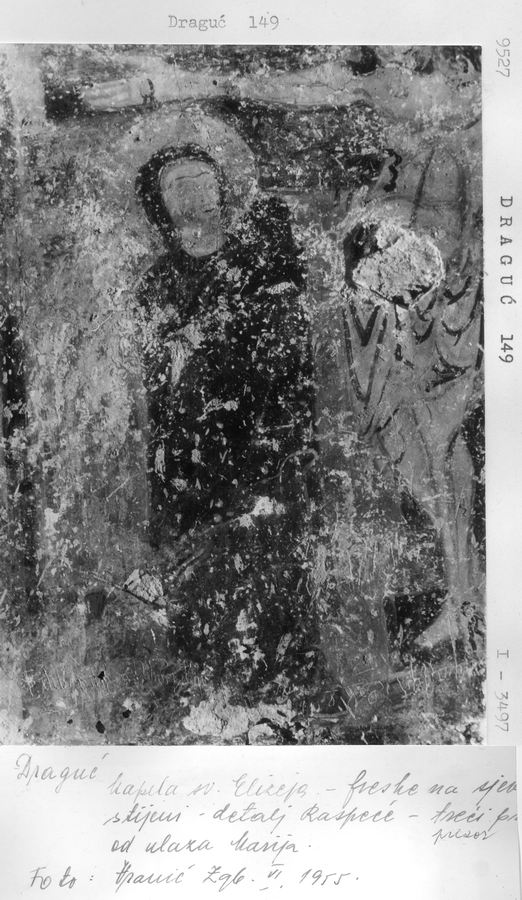
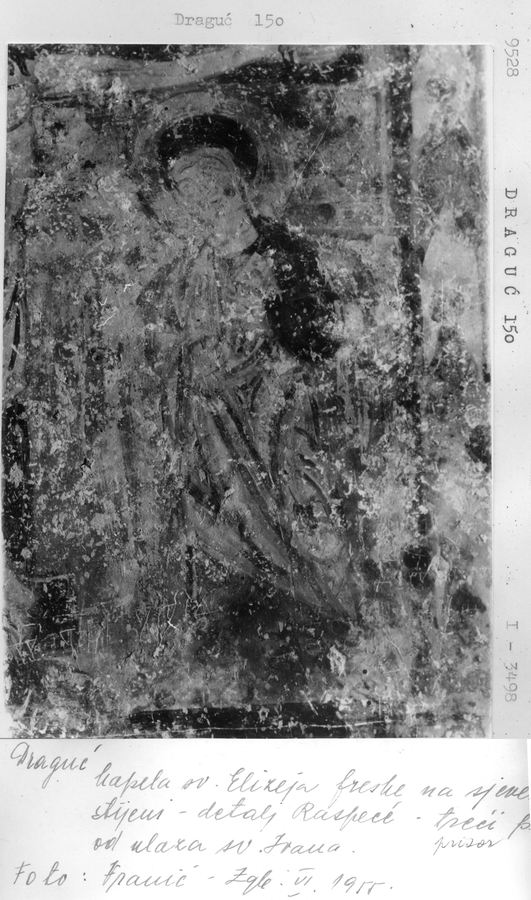
South wall: 3. Two Female Saints, 4. Nativity, 5. Adoration of the Magi, 6. Flight into Egypt, 13. Knight on Horseback. West wall: 14. – 15. Three Patriarchs with the Souls of the Blessed in their Bosom, 16. Hell. North wall: 7. Last Supper, 8. Kiss of Judas, 9. Crucifixion, 10. Entombment, 11. Holy Bishop.
Scene locations
LJ. KARAMAN, 1949, O srednjovjekovnoj umjetnosti Istre, Historijski zbornik, 2, 1949, 115-130. 121; F. STELÉ, 1953, Le bysantinisme dans la peinture murale yougoslave, u: Atti dello VIII Congresso Internazionale di Studi Bizantini, Palermo 3-10 aprile 1951, vol. II, Roma, 1953, 253-259., 258; LJ. KARAMAN, 1958, O putovima bizantskih crta u umjetnosti istočnog Jadrana, Starohrvatska prosvjeta, 6, 1958, 61-76., 64; F. STELÉ, 1960, Umetnost v Primorju, Ljubljana, 1960. 69; B. FUČIĆ, 1963, Istarske freske, Zagreb, 1963., 16-17, KAT. 7; I. PERČIĆ, 1963, Zidno slikarstvo Istre, katalog izložbe, Zagreb, 1963., KAT. 9; B. FUČIĆ, 1964a, Srednjovjekovno zidno slikarstvo u Istri, doktorska disertacija, Filozofski fakultet Sveučilišta u Ljubljani, Rijeka-Ljubljana, 1964., 185-212, 400-403; ISTI, 1964B, Romaničko zidno slikarstvo istarskog ladanja, Bulletin zavoda za likovne umjetnosti JAZU, 12/3, Zagreb, 1964, 50-85; I. PERČIĆ, 1964, Ikonografija srednjovjekovnih istarskih fresaka, doktorska disertacija, Filozofski fakultet Sveučilišta u Zagrebu, 1964., 99-102; B. FUČIĆ, 1966, Slika i arhitektonski prostor u srednjovjekovnom zidnom slikarstvu u Istri, u: Ljetopis JAZU, 71, Zagreb, 1966, 391-412., 394, 397; G. GHIRARDI, 1972, Affreschi Istriani del Medioevo, Padova, 1972., 74; M. L. CAMMARATA, 1975, Gli affreschi di S. Maria di Muggia Vecchia, u: Memorie storiche forogiuliesi, 55, 1975, 29-43., 42; B. FUČIĆ, 1982, Glagoljski natpisi, Zagreb, 1982., 132-136; I. FISKOVIĆ, 1987, Romaničko slikarstvo u Hrvatskoj, Zagreb, 1987., 93-94; V. SNOJ, 1994, Istarske freske, sjaj kristala, u: Istra –tirkizni sjaj kristala, ur. Armando Debeljuh, Pula, 1994, 29-93., 70-76; S. GRKOVIĆ, 1995. Bordure u srednjovjekovnome zidnome slikarstvu Istre, Peristil, 38, 1995, 43-50.; ISTA, 1995a., Odnos slike i arhitekture u srednjovjekovnom graditeljstvu Istre, magistarski rad, Filozofski fakultet Sveučilišta u Zagrebu, Zagreb, 1995; A. ALISI, 1997, Istria. Città minori (prir. G. Pavanello), Studi e richerche d'arte Veneta in Istria e Dalmazia I, Trst, 1997., 75; R. RATKOVČIĆ, 1998, Prostor i ornament u srednjovjekovnom zidnom slikarstvu Istre, magistarski rad, Filozofski fakultet Sveučilišta u Zagrebu, 1998., 65-68; Ž. BISTROVIĆ, 2009, Predromaničko i romaničko slikarstvo u Istri, Annales. Series Historia et Sociologia, 19/1, 2009, 21-30; N. MARAKOVIĆ, 2009, Zidno slikarstvo u Istri od 11. do 13. stoljeća. Revalorizacija lokalne umjetničke baštine u europskom kontekstu, doktorska disertacija, Filozofski fakultet Sveučilišta u Zagrebu, 2009., 285-292, KAT. 14; Ž. BISTROVIĆ, 2011, Šareni trag istarskih fresaka, Pula, 2011., 63-73; E. COZZI, 2016, Affreschi medievali in Istria, Trieste, 2016., 175-187.