


Batvači near Peroj, Church of St. Fosca
Century/year: mid-12th century
Historical-cultural period: Romanesque period
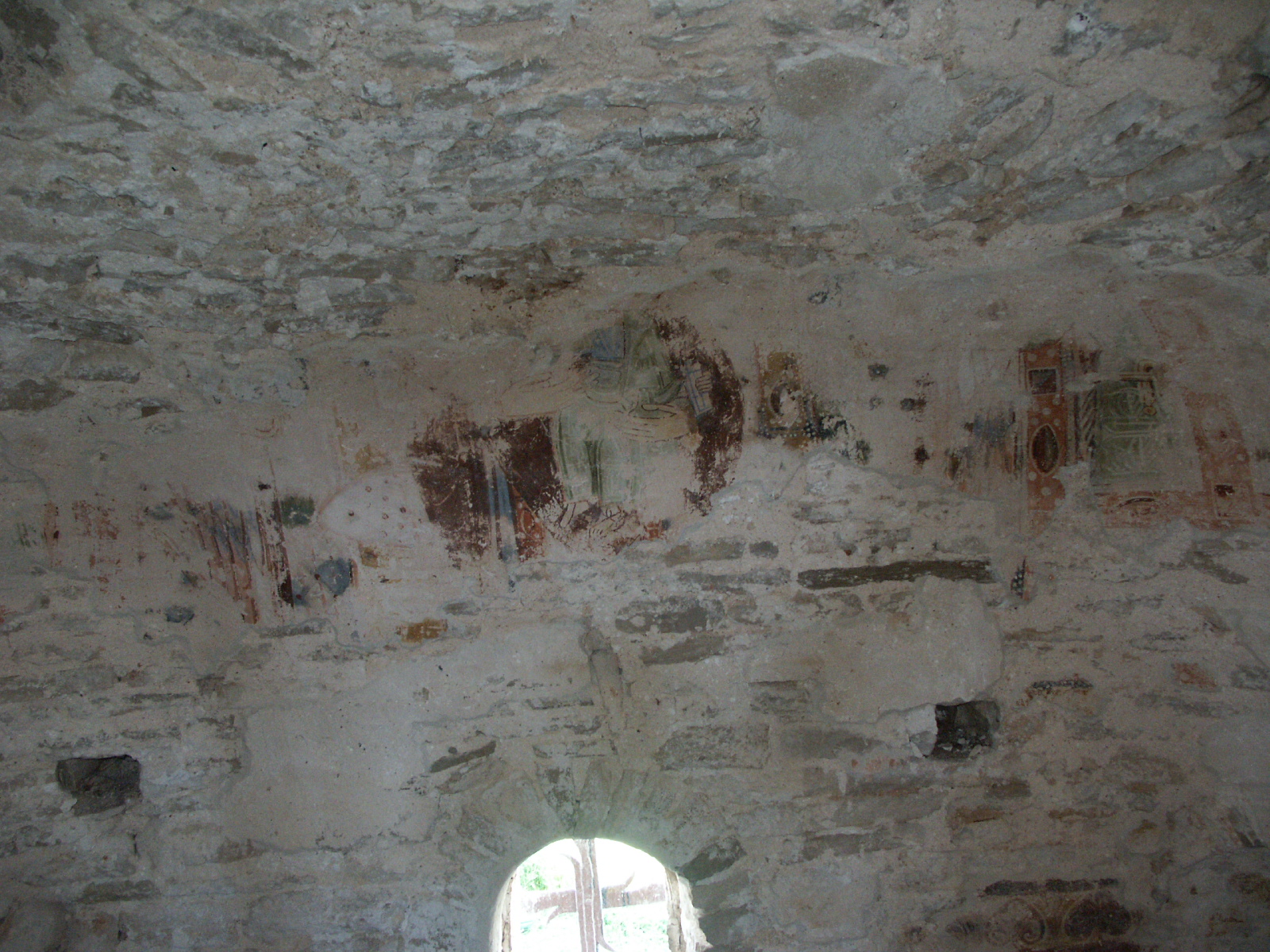
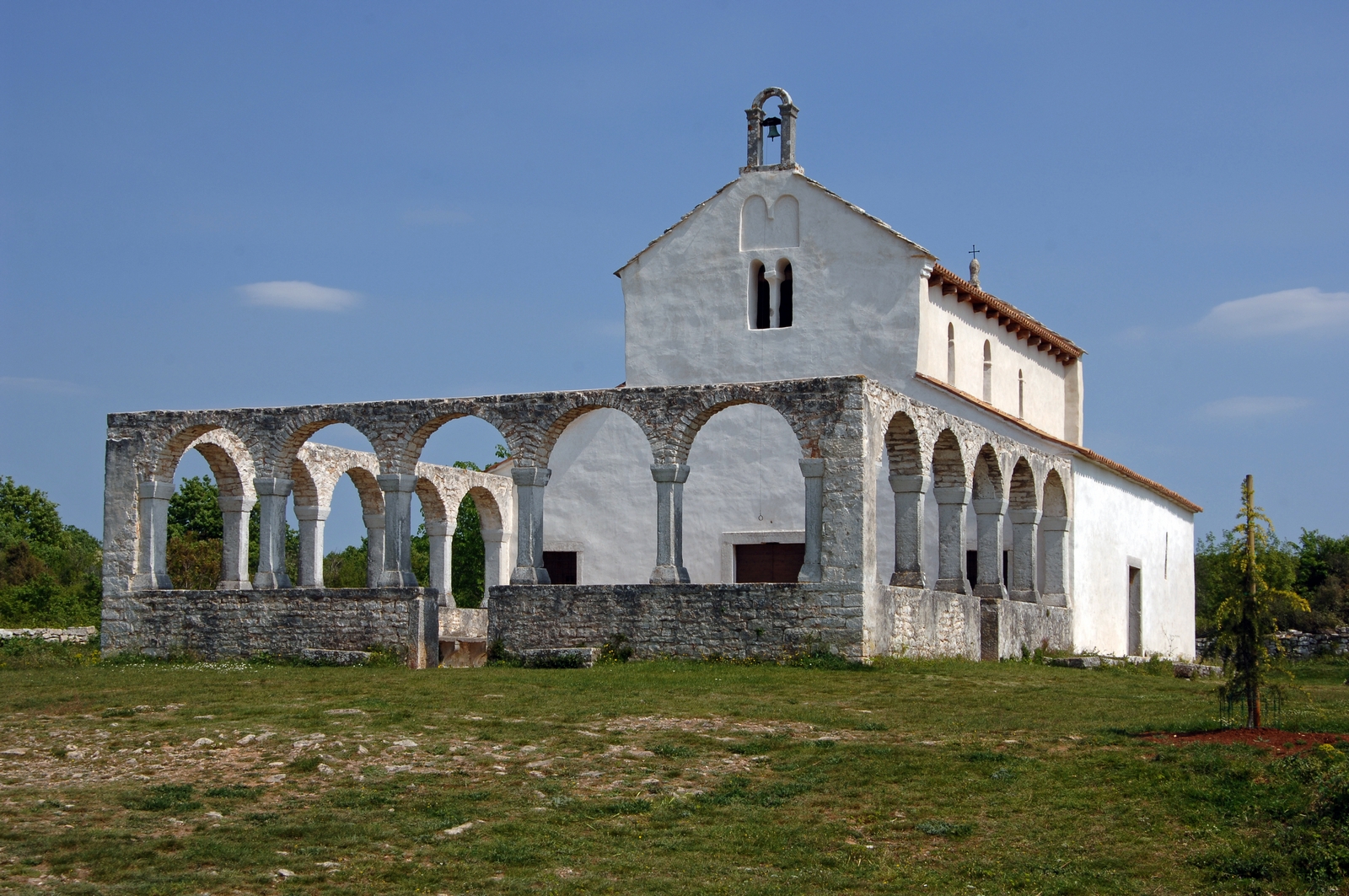
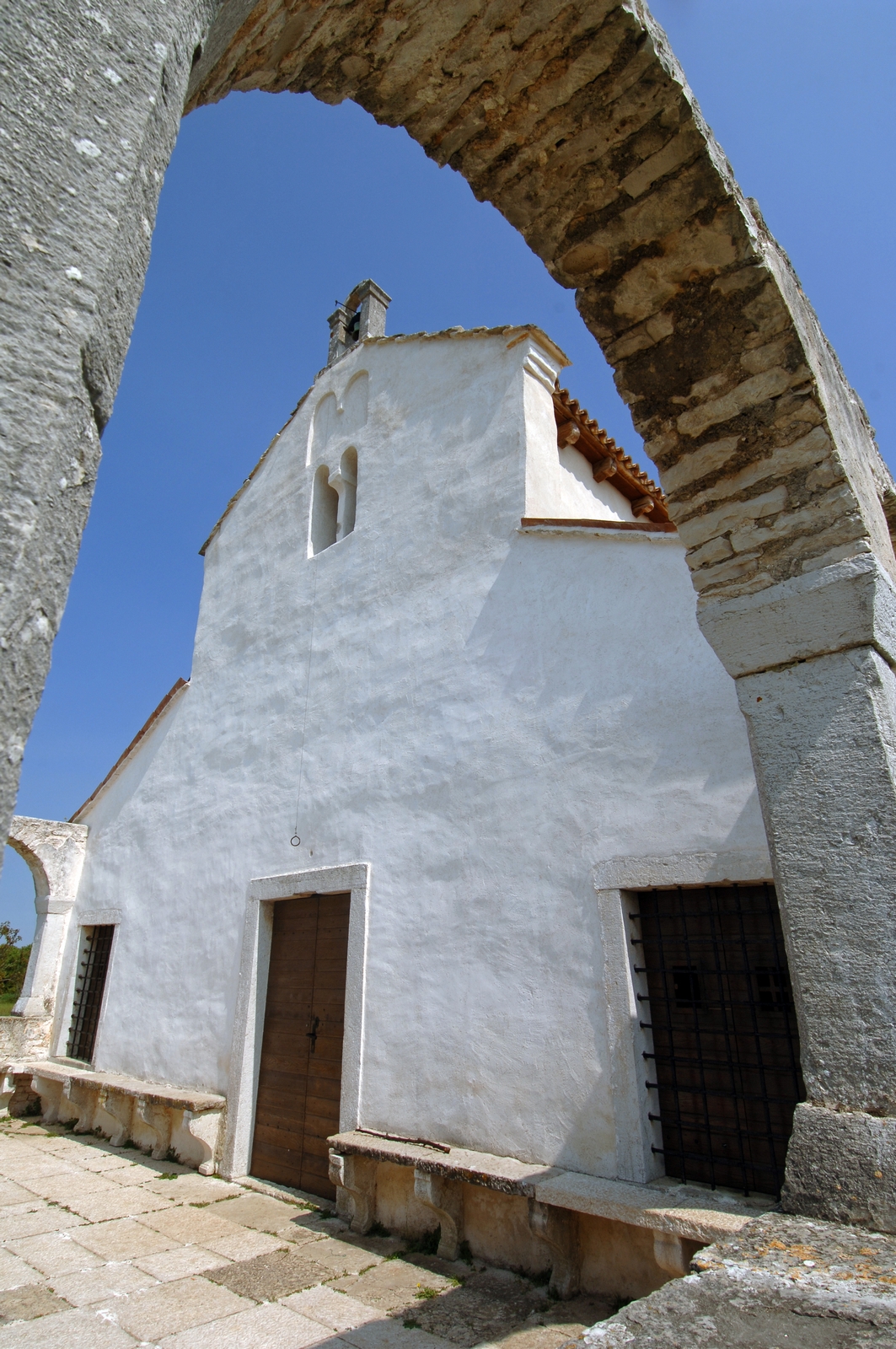
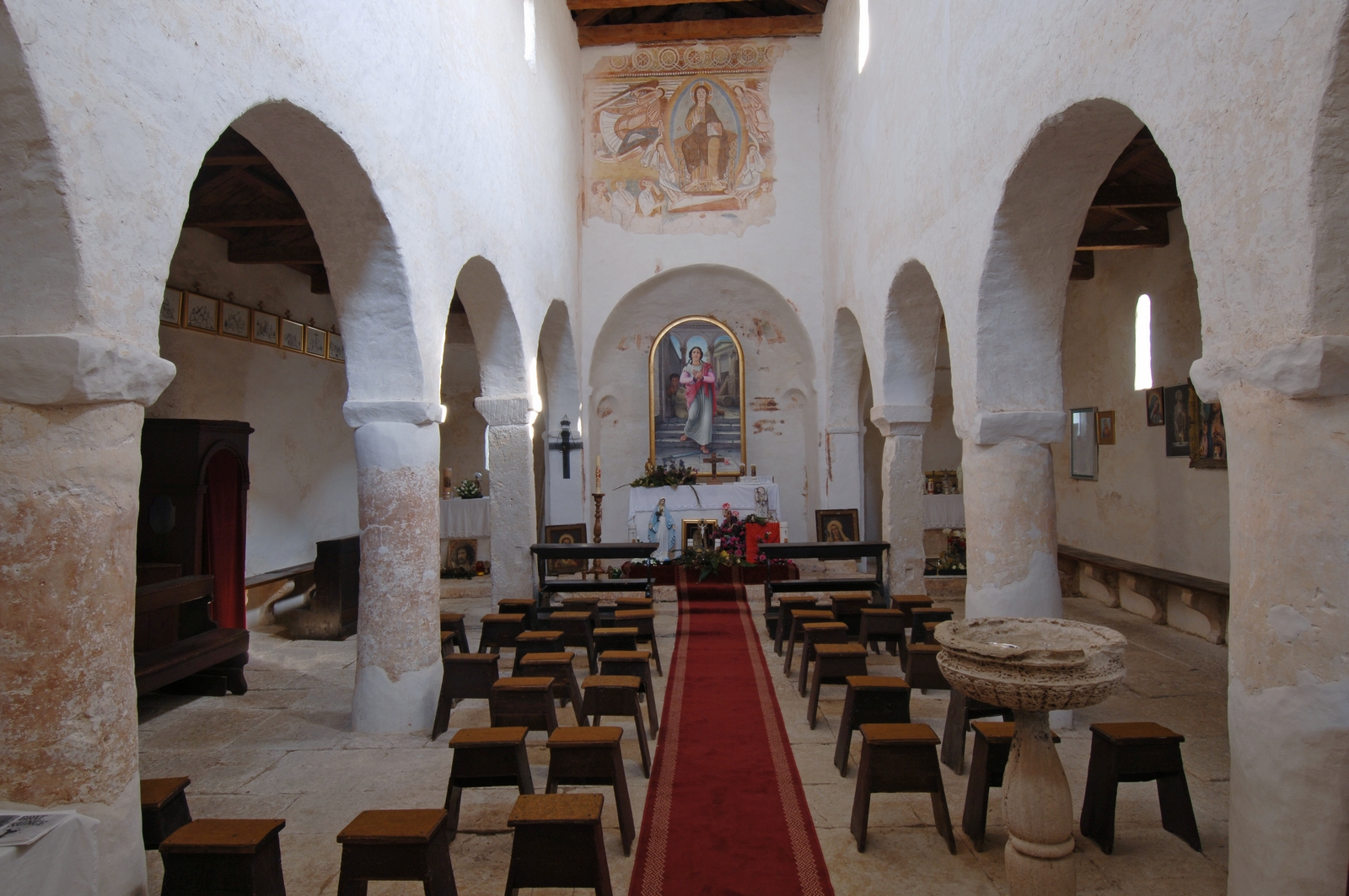
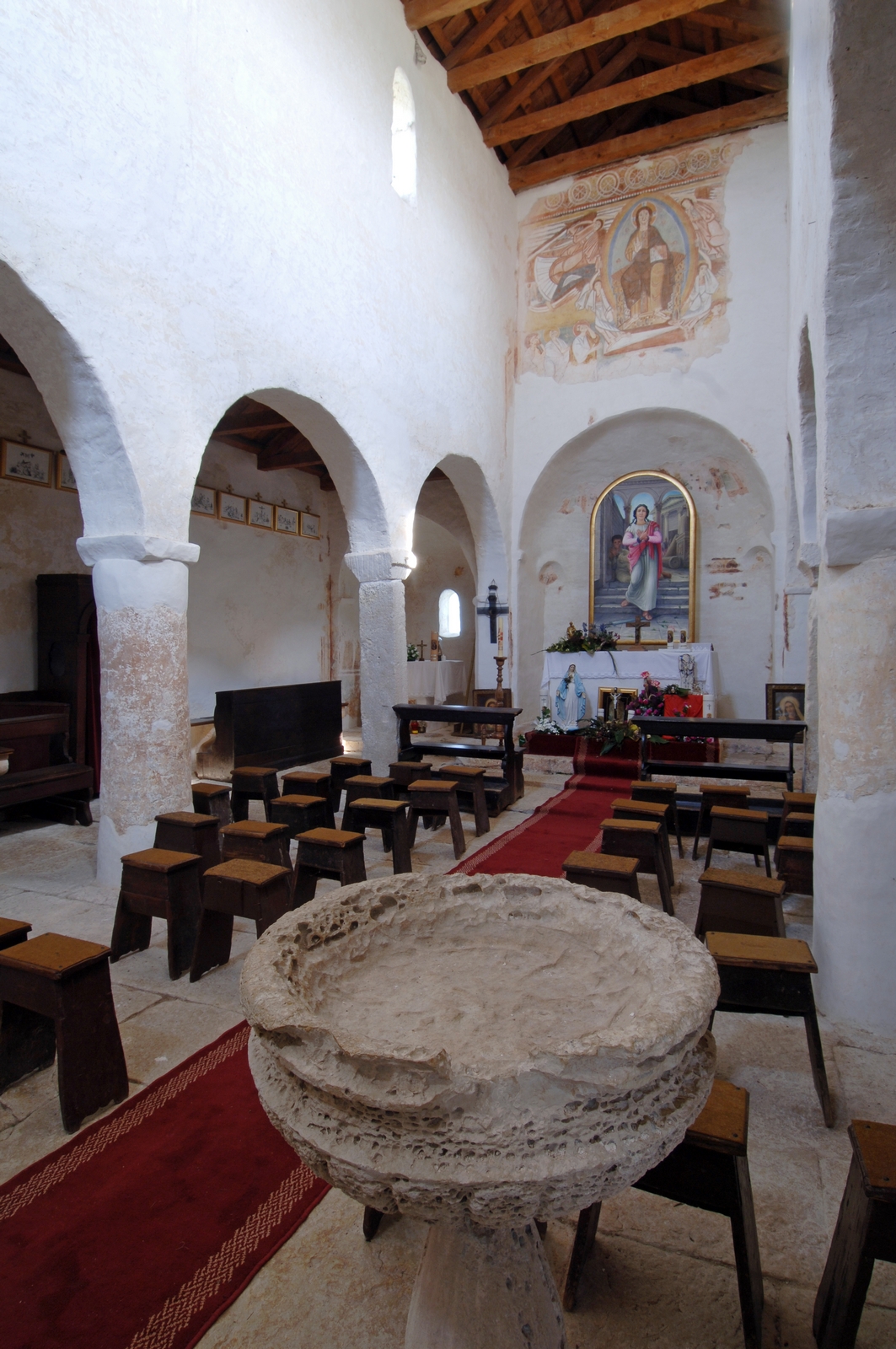
The Romanesque Church of St. Fosca is situated in the isolated rural landscape of Batvači near Peroj. In the Middle Ages, it represented one of the most important pilgrimage centres in Istria. It was constructed as a three-nave basilica with a rectangular ground plan, with the naves separated by two pairs of columns and two pillars. The sanctuary is designed as a triapsidal complex with inscribed rectangular apses that transition from a square base into a domed form by means of squinches. Recently discovered decorative arcades on the facade and the rear wall point to an Early Romanesque construction phase. In later periods, the side naves were heightened, and a porch from the 17th or 18th century was added. The elevation of the side naves is evident in the differences in masonry structure and the reduced wall thickness in the added sections. Despite subsequent interventions, parts of the frescoes from the first half of the 12th century have been preserved. They are located on the high wall above the triumphal arch and within the central and northern apses.
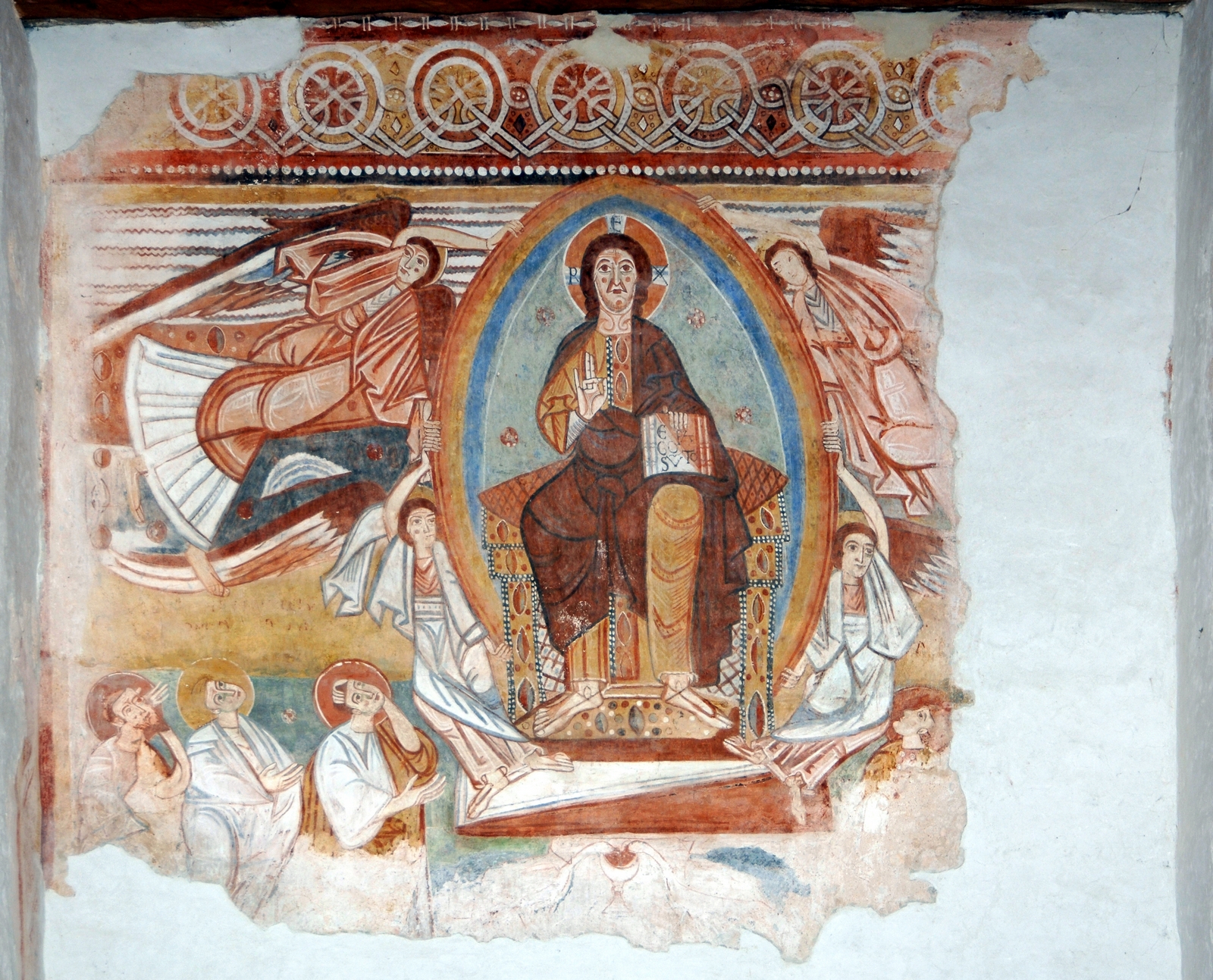
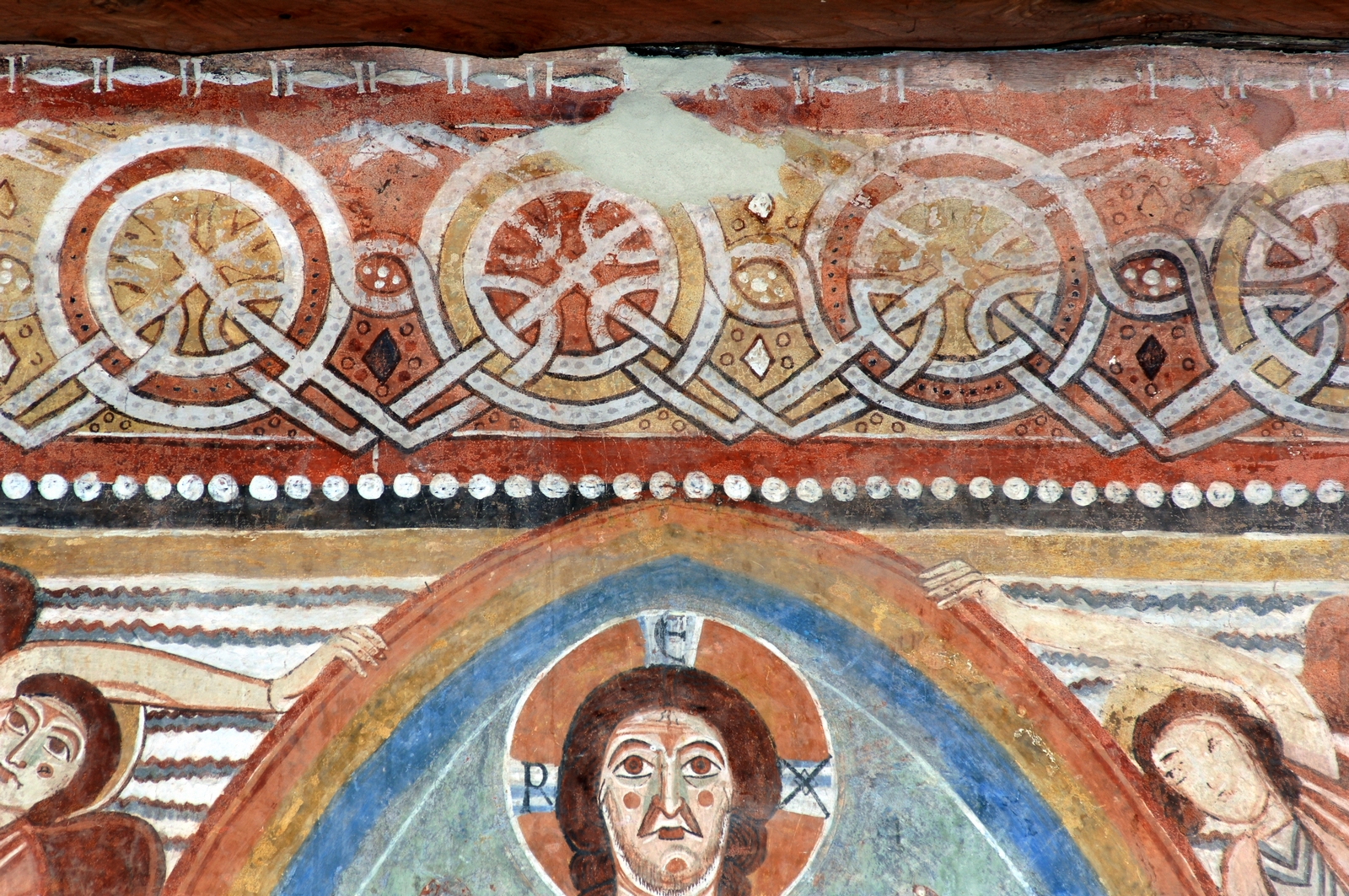
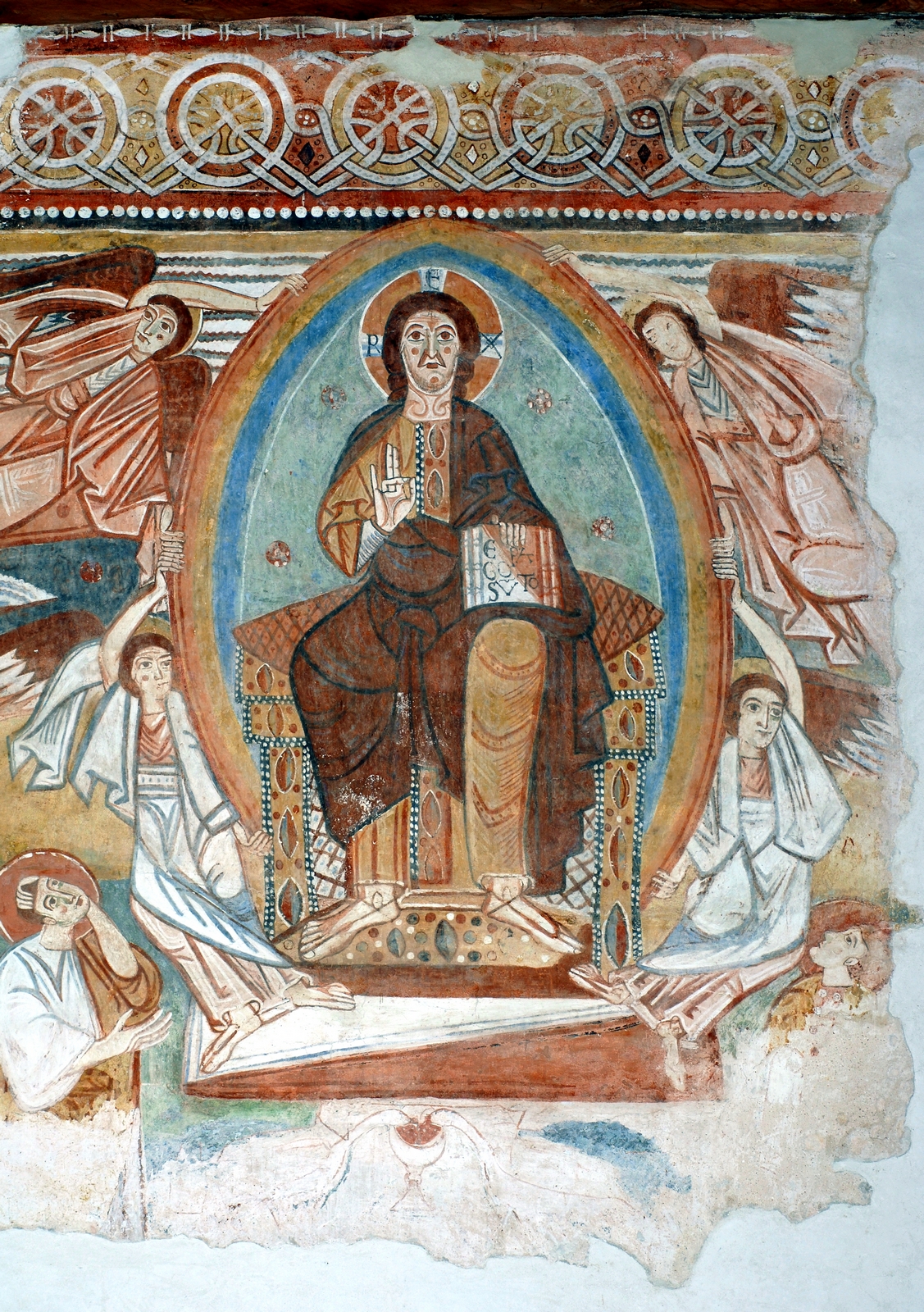
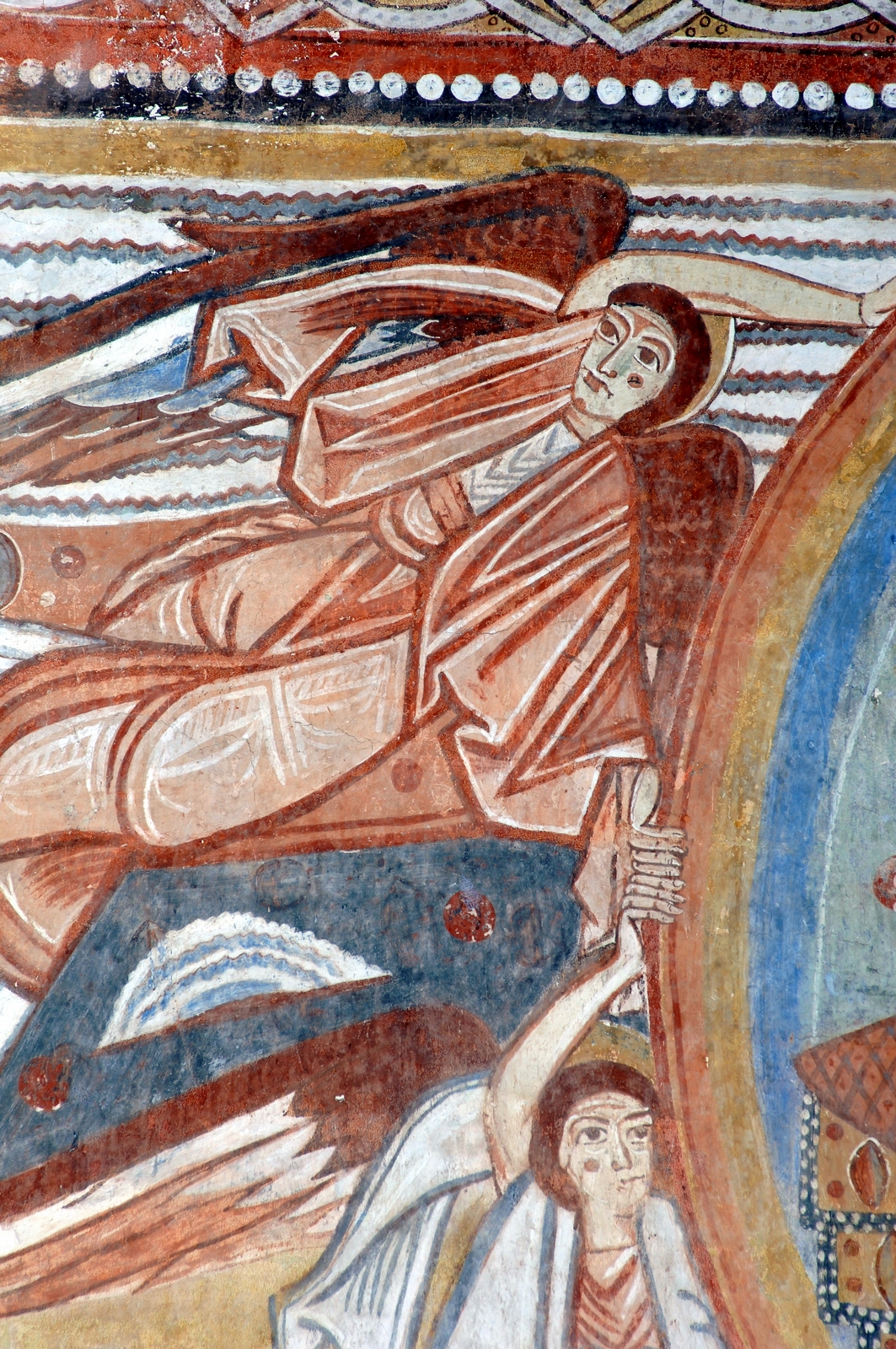
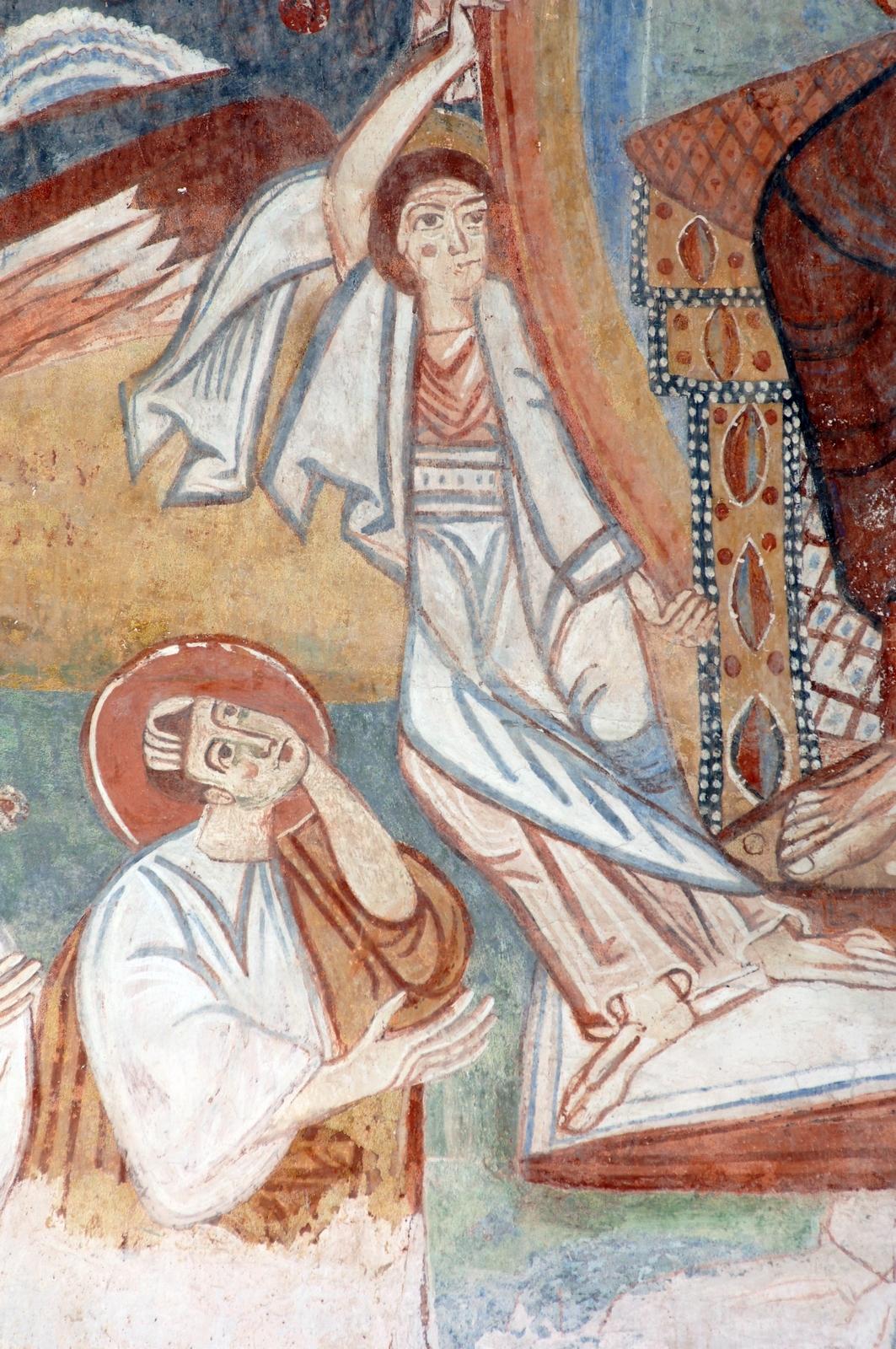
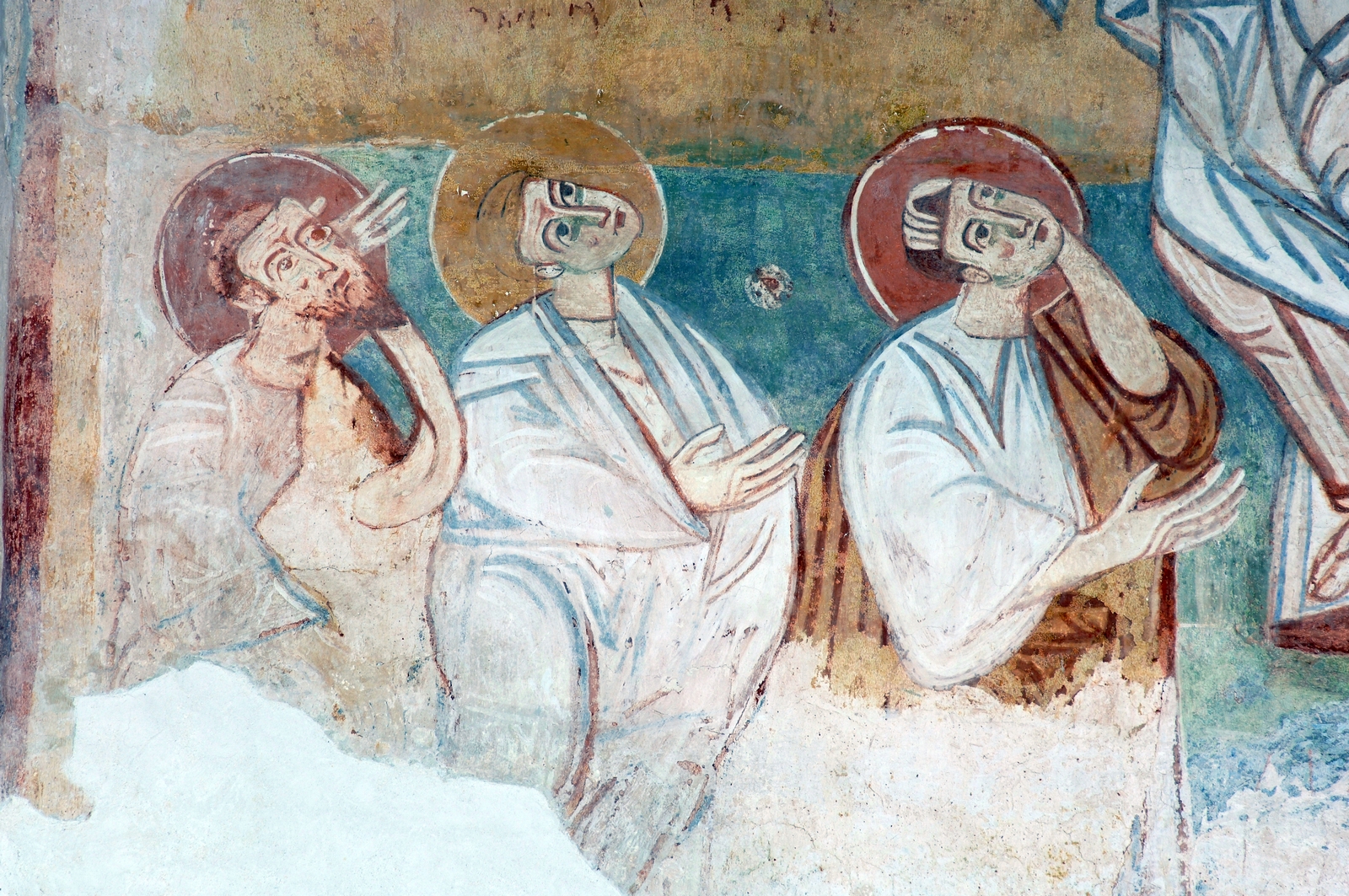
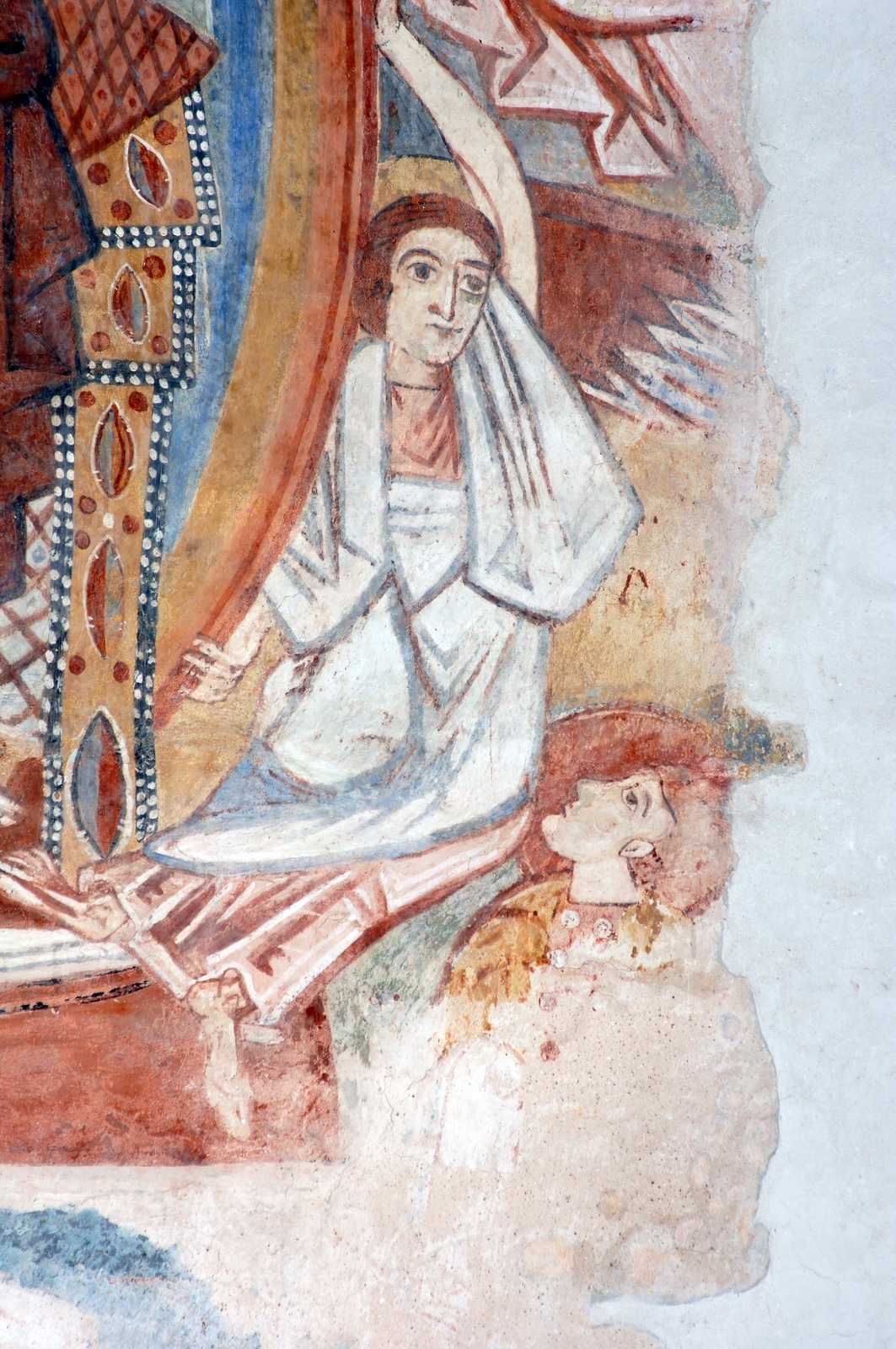
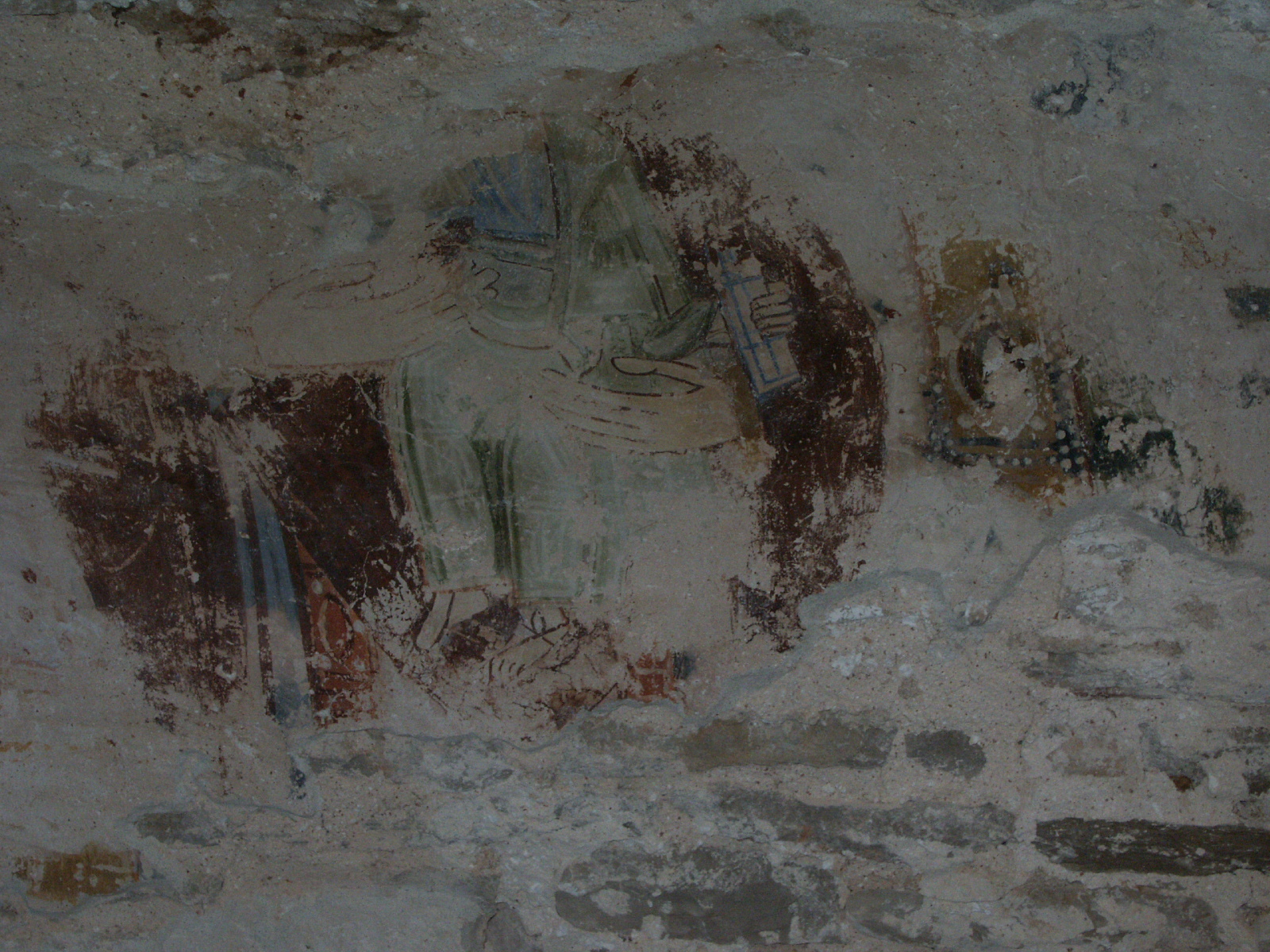
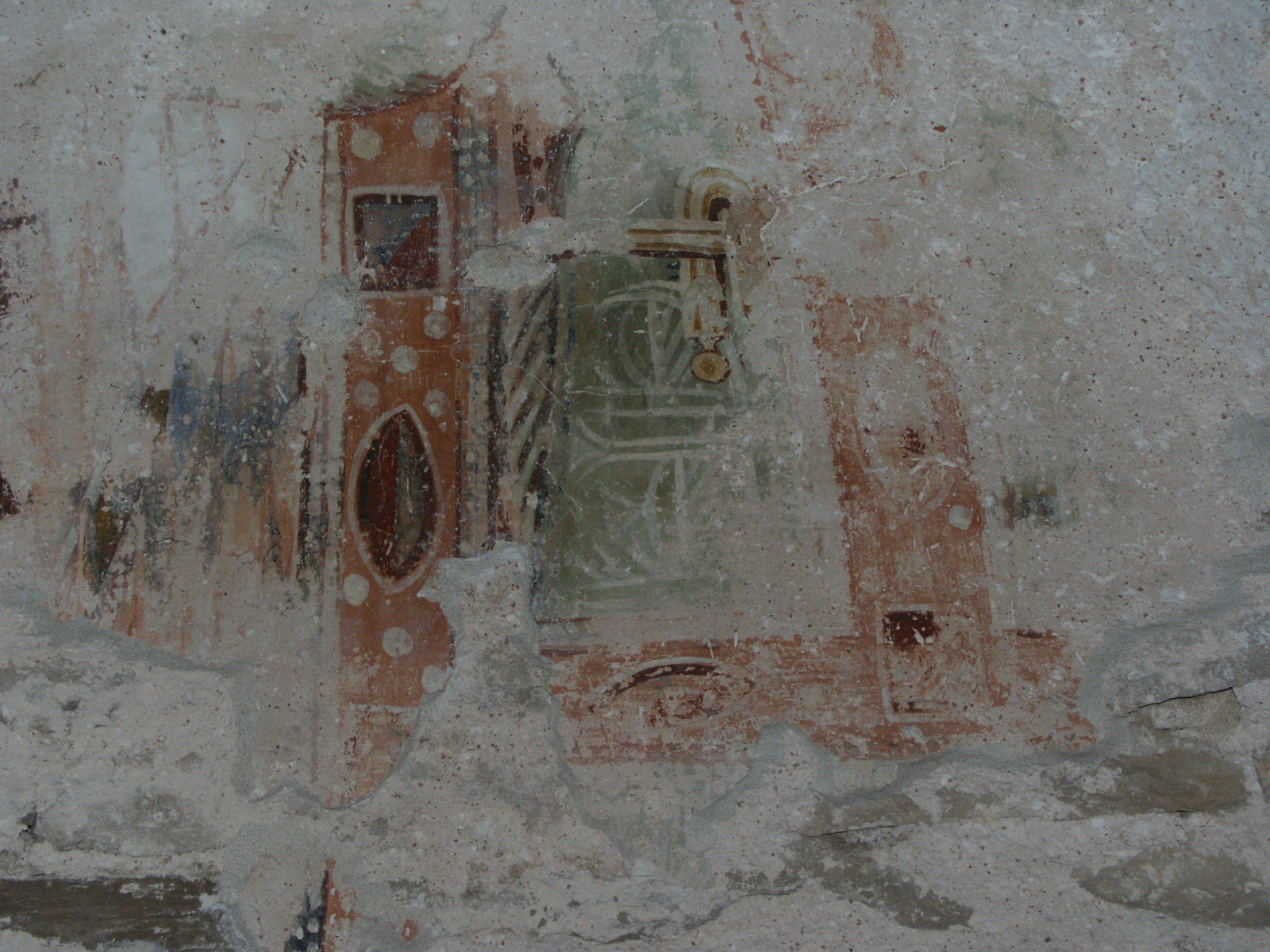
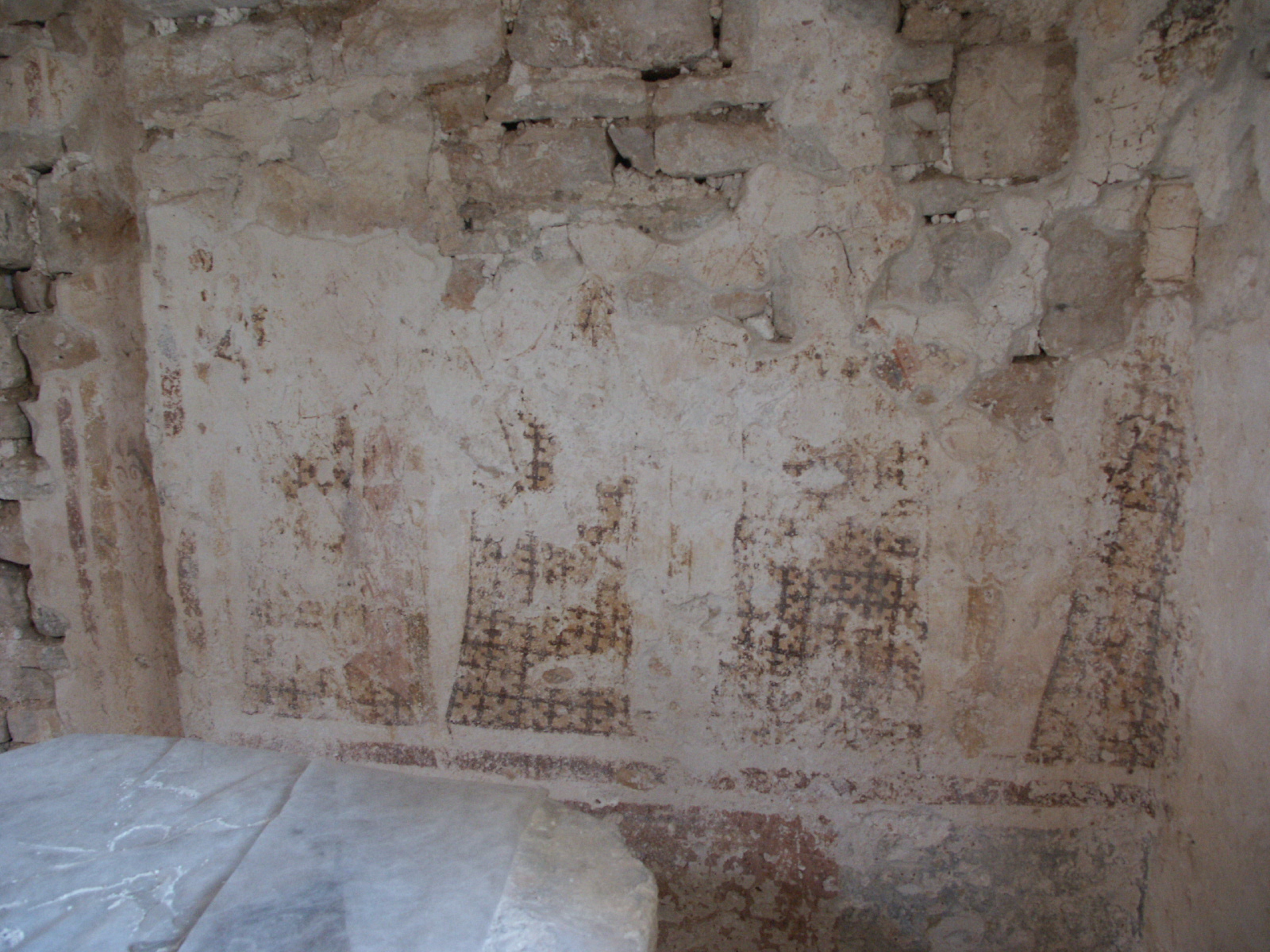
The central place of the iconographic program is occupied by the depiction of the Ascension on the wall above the triumphal arch. Christ is shown enthroned within a mandorla held by four angels. He blesses with his right hand while holding a scroll resting on his knee in his left. Below the figure of Christ, the figures of the Apostles are partially preserved, directed toward the central scene. Beneath Christ’s feet appears the Eucharistic symbol of two birds drinking from a chalice. The background of the scene consists of horizontal bands in green, yellow, and blue tones, topped by a red border with intertwined geometric motifs and rows of 'pearls'. In the conch of the apse, a depiction of the Virgin and Child enthroned is partially preserved. On the southern side of the apse wall, there is a fragment of a female saint's head in semi-profile, probably part of a larger composition with a row of holy figures. In the squinches, the wings of seraphim can be discerned. Fragmentary frescoes in the northern apse show parts of saints' garments and two-tone borders belonging to a second layer of Romanesque painting.
The iconography of these depictions relies on South Italian models, while formal and stylistic parallels can be found in the 11th and 12th-century wall paintings of Northern Italy. The author of these frescoes should, therefore, be associated with Lombard masters who incorporated South Italian iconographic solutions into their artistic expression.
The frescoes were documented as early as 1904 in the works of the Austrian conservator Anton Gnirs. A more comprehensive analysis was provided by Branko Fučić in 1965, in the article „Sv. Foška kod Peroja“, published in the Bulletin of Zavod za likovne umjetnosti JAZU.
Iconographic Program:
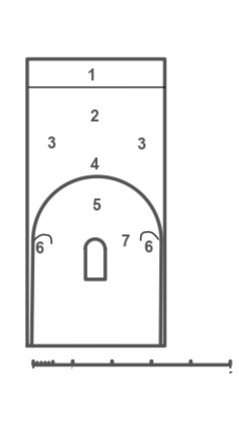
Central apse: 1 Painted interlace, 2 Christ in mandorla held by four angels, 3 Apostles, 4 Pair of ducks drinking from a chalice, 5 Virgin and Child, 6 Cherubim, 7 Remains of a border with floral ornaments.
Scene locations
A. GNIRS, 1906, Frühchristliche Denkmäler in Pola, Jahrbuch der K. K. Zentral-Kommission für Kunst- und Historischen Denkmale, 1, 1906, 229-256., 232; ISTI, 1914, „Sanvincenti“, Mittheilungen der K.K. Zentralkommission für Denkmalpflege, 13, 1914, 22, 147, 173, 226., 55; D. RISMONDO, 1937, Dignano d'Istria nei ricordi, Ravenna, 1937.,137; B. MARUŠIĆ, 1959, Stenska slika v cerkvi Sv. Foške pri Peroju, Zbornik za umetnostno zgodovino, 5-6, 1959, 135-146; F. STELÉ, 1960, Umetnost v Primorju, Ljubljana, 1960., 69; B. FUČIĆ, 1963, Istarske freske, Zagreb, 1963., 13, 15, KAT. 4; I. PERČIĆ, 1963, Zidno slikarstvo Istre, katalog izložbe, Zagreb, 1963., KAT. 1; B. FUČIĆ, 1964a, Srednjovjekovno zidno slikarstvo u Istri, doktorska disertacija, Filozofski fakultet Sveučilišta u Ljubljani, Rijeka-Ljubljana, 1964. 121-129, 484-485; I. PERČIĆ, 1964, Ikonografija srednjovjekovnih istarskih fresaka, doktorska disertacija, Filozofski fakultet Sveučilišta u Zagrebu, 1964., 219-221; S. BETTINI, 1964.-1965, La pittura veneta dalle origini al Duecento (II parte), dispense delle lezioni, Università degli Studi di Padova, Facoltà di Lettere e Filosofia, 1964-1965. 68; B. FUČIĆ, 1965, Sv. Foška kod Peroja, Bulletin zavoda za likovne umjetnosti JAZU, 13/1-3, Zagreb, 1965, 23-35; ISTI, 1966, Slika i arhitektonski prostor u srednjovjekovnom zidnom slikarstvu u Istri, u: Ljetopis JAZU, 71, Zagreb, 1966, 391-412., 392, 394; O. DEMUS, 1970, Romanesque Mural Painting, New York, 1970., 88; G. GHIRARDI, 1972, Affreschi Istriani del Medioevo, Padova, 1972., 53-58; F. SFORZA VATTOVANI, 1981, Apporti nordoccidentali nella pittura romanica dell'Altoadriatico, Antichità Altoadriatiche, 19, 1981, 377-393., 387 I DALJE; S. TAVANO, 1983, Presenze bizantine nella prima pittura romanica del territorio di Aquileia, u: Il Friuli dagli Ottoni agli Hohenstaufen. Atti del Convegno internazionale di studio, 4-8 dicembre 1983, Udine, 1984, 425-455., 455; I. FISKOVIĆ, 1987, Romaničko slikarstvo u Hrvatskoj, Zagreb, 1987., 21-22; G. BERGAMINI – S. TAVANO, 1991, Storia dell'arte nel Friuli Venezia Giulia, Udine, 1991., 198; S. GRKOVIĆ, 1995. Bordure u srednjovjekovnome zidnome slikarstvu Istre, Peristil, 38, 1995, 43-50., PASSIM; ISTI, 1995a Odnos slike i arhitekture u srednjovjekovnom graditeljstvu Istre, magistarski rad, Filozofski fakultet Sveučilišta u Zagrebu, Zagreb, 1995., PASSIM; M. WALCHER, 1997, u: ALISI, Antonio, Istria. Città minori (bilješke), Trieste, 1997. 164; R. RATKOVČIĆ, 1998, Prostor i ornament u srednjovjekovnom zidnom slikarstvu Istre, magistarski rad, Filozofski fakultet Sveučilišta u Zagrebu, 1998., 41-44, 51-53; E. COZZI, 1999, Bettini e la pittura murale romanica delle Venezie, u: Tempus per se non est. Giornata di studio per il decennale della scomparsa di Sergio Bettini (1905-1986), F. Bernabei i G. Lorenzoni ur., Padova, 1999, 81-112., 93; ISTA, 2000, La chiesa di San Michele Arcangelo di Pozzoveggiani, Viaggiare nei luoghi dello spirito: Antiche pievi, santuari e monasteri nelle province di Brescia, Verona, Vicenza e Padova, F. Flores d'Arcais ur., Vicenza, 2000, 54-57; I. MATEJČIĆ, 2005, Sveta Foška, Split-Pula, 2005., 18-24; N. MARAKOVIĆ, 2008, The Mural Paintings in St. Fosca's near Peroj (Istria) and Their Specific Place in the Context of European Romanesque, Hortus Artium Medievalium, 14, 2008, 141-157; Ž. BISTROVIĆ, 2009, Predromaničko i romaničko slikarstvo u Istri, Annales. Series Historia et Sociologia, 19/1, 2009, 21-30; N. MARAKOVIĆ, 2009, Zidno slikarstvo u Istri od 11. do 13. stoljeća. Revalorizacija lokalne umjetničke baštine u europskom kontekstu, doktorska disertacija, Filozofski fakultet Sveučilišta u Zagrebu, 2009., 125-172; E. COZZI, 2016, Affreschi medievali in Istria, Trieste, 2016., 97-125.